Light-hearted contribution following yesterday’s Presidential election.
I’m writing this at 5pm PDT on the 6th so the result is yet unknown to me and millions of others. In this afternoon’s email ‘in-box’ was this delightful story that, despite being widely distributed, isn’t harmed by being displayed today. So thank you Rob I.
While walking down the street one day a Corrupt Senator (that may be redundant) was tragically hit by a car and died.
His soul arrives in heaven and is met by St. Peter at the entrance.
“Welcome to heaven,” says St.. Peter. “Before you settle in, it seems there is a problem. We seldom see a high official around these parts, you see, so we’re not sure what to do with you.”
“No problem, just let me in,” says the Senator.
“Well, I’d like to, but I have orders from the higher ups. What we’ll do is have you spend one day in hell and one in heaven. Then you can choose where to spend eternity.”
“Really?, I’ve made up my mind. I want to be in heaven,” says the Senator.
“I’m sorry, but we have our rules.”
And with that, St. Peter escorts him to the elevator and he goes down, down, down to hell.
The doors open and he finds himself in the middle of a green golf course. In the distance is a clubhouse and standing in front of it are all his friends and other politicians who had worked with him. Everyone is very happy and in evening dress. They run to greet him, shake his hand, and reminisce about the good times they had while getting rich at the expense of the people.
They played a friendly game of golf and then dine on lobster, caviar and the finest champagne. Also present is the devil, who really is a very friendly guy who is having a good time dancing and telling jokes. They are all having such a good time that before the Senator realizes it, it is time to go.
Everyone gives him a hearty farewell and waves while the elevator rises.
The elevator goes up, up, up and the door reopens in heaven where St. Peter is waiting for him, “Now it’s time to visit heaven…”
So, twenty-four hours passed with the Senator joining a group of contented souls moving from cloud to cloud, playing the harp and singing. They have a good time and, before he realizes it, the hours have gone by and St. Peter returns.
“Well, then, you’ve spent a day in hell and another in heaven. Now choose your eternity.”
The Senator reflects for a minute, then he answers: “Well, I would never have said it before, I mean heaven has been delightful, but I think I would be better off in hell.”
So St. Peter escorts him to the elevator and he goes down, down, down to hell…
Now the doors of the elevator open and he’s in the middle of a barren land covered with waste and garbage. He sees all his friends, dressed in rags, picking up the trash and putting it in black bags as more trash falls to the ground. The devil comes over to him and puts his arm around his shoulders.
“I don’t understand,” stammers the Senator. “Yesterday I was here and there was a golf course and clubhouse, and we ate lobster and caviar, drank champagne, and danced and had a great time. Now there’s just a wasteland full of garbage and my friends look miserable. What happened?”
The devil smiles at him and says, “Yesterday we were campaigning. Today, you voted..”
A personal perspective on today’s American presidential election
Voting for truth!
In many ways, it’s helpful that despite being a resident of the USA I am not eligible to vote. That’s because my residency status as a ‘Green card’ holder does not give me such entitlement. That’s the domain of citizens, and rightly so.
The reason I find it helpful is that as a non-voter and still very much the ‘newcomer’ to this county, I view the proceedings from a different perspective; well that’s my take on things!
So here are two thoughts.
Integrity
The motivation behind Learning from Dogs came from the realisation that dogs offer mankind many lessons, especially the one of behaving with integrity. You can read more about this aspect of dogs here.
Maybe it’s a naive hope but politicians around the world must rapidly embrace the fact that without integrity in the political processes we are all lost. To underline this plea, go and read a recent essay that was introduced by Daniel Honan on The Big Think. Here’s a dip into that:
Larry Lessig: End Raging Cronyism, Save Our Republic
What’s the Big Idea?
If you are not planning to vote in the upcoming election, Larry Lessig has a good explanation why.
You, like most Americans, believe that money buys results in Congress. No matter who wins, you believe that corporate interests will still have too much power and prevent real change. You are correct in your belief that money buys results in Congress, Lessig says. However, he has a different prescription than non-participation.
What’s the Significance?
Lessig points out that .000015 percent, or 47 individuals, have given 42 percent of the Super PAC donations this election cycle. As a result of this “money election,” Lessig says a few powerful interests exert an influence that conflicts with the public good.
“… 47 individuals, have given 42 percent of the Super PAC donations this election cycle.” Just reflect on the power and influence that flows from such a distortion of fairness.
Truthfulness
My second thought is about being truthful.
The time for all our leaders, right across the world, to come together and face the reality of climate change is upon us. There is no time left to duck and weave.
Peter Sinclair of ClimateCrocks blogsite recently posted this video. Watch it and ask yourself how much longer the leader of the most powerful nation in the world can sit on the sidelines of the greatest threat to our civilisation ever seen.
Southwest forests are already in the early stages of a mega drought brought on by climate change.
Southwest forests are already in the early stages of a mega drought brought on by climate change that will result in massive tree die-offs and sweeping changes in Rim Country forests, according to an analysis published in the scientific journal Climate Change.
Severe drought will dominate much of this century, creating stresses on forests not seen for more than 1,000 years, according to the research that used tree ring samples from 13,000 trees, historical rainfall records and computer projections of future climate change.
The shifts will likely dramatically shrink the world’s largest ponderosa pine forest in northern Arizona, replacing pines with junipers at elevations like Payson and replacing junipers with chaparral and cactus at lower elevations.
The article concludes,
Unfortunately, the team’s climate prediction models suggest that within the next 40 years the region will fall deep into mega drought conditions. The models predict that even the wettest, coolest years in the late 21st century will exceed mega drought levels. In that case, the drought conditions of the past decade will prove the new normal rather than a bad stretch.
Williams noted that while winters in the past decade haven’t been exceptionally dry, summer temperatures have soared. As a result, the stress on the trees in the past 13 years has exceeded mega drought levels about 30 percent of the time — conditions not matched for the previous 1,000 years.
One of the clean little secrets about dealing with climate change, is that if we make our cities more efficient, and reduce their carbon footprint, we will also make them more resilient, quieter, more comfortable, more human scaled, more inviting, and more fun.
As global temperatures rise, urban areas are facing challenges in keeping their infrastructure and their residents cool. Chicago is tackling that problem with a green design makeover. This report is part of our Coping with Climate Change series.
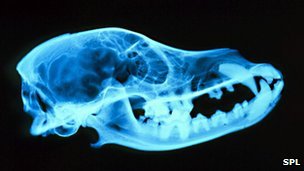
Dogs’ evolution shows why they ‘love’ gnawing on bones.
This is the second article on the BBC Nature website following yesterday’s item about why dogs enjoy a healthy breakfast.
oooOOOooo
Dogs’ evolution shows why they ‘love’ gnawing on bones
By Victoria Gill
Science reporter, BBC Nature, Ottawa, Canada
Social living drove dogs to evolve the “tools” for chewing bones, scientists say
Scientists say they have discovered why dogs love to eat meat and bones.
Ancient canines adopted pack-living about eight million years ago, to hunt larger prey, according to researchers.
The resulting evolution of their jaws gradually turned the ancestors of modern wolves, and ultimately our own pets, into “hypercarnivores”.
Dr Joao Munoz-Doran presented the findings at the First Joint Congress for Evolutionary Biology in Ottawa, Canada.
He and his colleagues from the National University of Colombia have created a canine “family tree”, piecing together the relationships between each of the more than 300 dog species.
“We compared species that have very different diets,” Dr Munoz-Doran explained to BBC Nature. “So we classified them as carnivores, hypercarnivores [animals that eat more than 70% meat] and omnivores [animals that eat meat and vegetation].”
The ancestors of modern wolves belong to this hypercarnivorous group.
The team’s analysis showed that the skull features that now distinguish a wolf – strong jaw muscles and enlarged canine teeth – first started to develop when their ancestors first began hunting in groups.
“We found a common evolutionary history for these traits,” Dr Munoz-Doran explained. “Eight million years ago was when [less forested, more] open habitats were spreading through Asia, Europe and North America. And when there are open habitats, the big prey group together. So there will be more eyes watching for a predator.”
The only way that dogs roaming the open plains could snatch very large prey from a herd was to work together.
“And after many generations of this grouping behaviour, there are new selective pressures on their [skull shape],” said the researcher.
This pressure meant that animals with larger teeth and stronger jaws were more likely to succeed in hunting, and to survive to pass on their large-toothed, strong-jawed genes to the next generation.
Animals with stronger jaws and larger canine teeth would have been more successful hunters
“They developed strength in their muscles – especially the muscles that close their mouth,” said Dr Munoz-Doran. “And bones that are more resistant to bending, so they could support the mechanical strains of biting the prey. “Over time, they became adapted to be ‘hypercarnivorous’.”
The researcher pointed out that domestic dogs had “very good evolutionary reasons to enjoy chewing a bone”.
“They have the tools to do that,” he told BBC Nature, “and they want to use their tools.”
oooOOOooo
Finally, to the side of that BBC Nature webpage were a few canine facts, as follows:
Common canines: Foxes, wolves, jackals, coyotes and dingoes are all members of this well-known group
Familiar faces: Wild canids are found on every continent except Antarctica
Communication is key: Previous studies of dog evolution have revealed that calls were essential for forming social groups and hunting larger prey
Pets’ past: All domestic dogs are descendants of the grey wolf
And don’t close without going here and listening to Steve Backshall howling with a wolf pack – (it’s a video as well – unmissable).
Nothing much changes. This post first published on the 4th November, 2009!
Debt stress in Middle Class America – how may this play out?
On Saturday, October 24th Yves Smith of Naked Capitalism ran a Post on her Blog about an anonymous couple who were over their heads in debt. (Yves has given me written permission to reproduce the Post.) The story of this couple then generated a huge response of comments. Read the comments, each and every one of them.
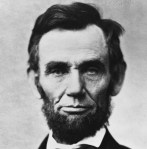
Then ask yourself where this is all heading? These comments may, almost certainly are, just be the tip of the iceberg. Seems a long way from Lincoln’s Gettysburg address in which he was reputed to have used the words: “… government of the people, by the people, for the people, shall not perish from the earth.”
Some days I worry; worry a lot!
The extract from Yves Post about this couple is reproduced below but far better is to go and read the whole Post and all the comments.
UPDATE: Since writing this Post Yves has published a further Post on the topic again generating a huge volume of comments. That was Sunday, November 1st. Then bright and early on November 2nd James Kwak of Baseline Scenario weighs in with his version, Do smart, hard-working people deserve to make more money? 150 comments (at the time of writing) for that one. Interestingly, as the days have gone on the mood of the commentators has become more reflective and thoughtful thus partly negating the theme behind this Post.
This is the original Post from Naked Capitalism:
Some readers like to demonize those who get in over there heads with debt as people who lived high on the hog and had their day of reckoning come upon them. This story, forwarded from a reader, shows the picture is more complicated.
When I was young, savings of six months of living expenses was considered to be a good cushion against risk. Is that true any more? I doubt it. Although this couple didn’t even have that much stashed away, the sort of buffers that worked a generation ago are insufficient now. People spend longer between jobs than in the past, and if/when they do find new work, it is often at a lower level of pay than before.
Job loss and major illness rather than an overly lavish lifestyle are still the biggest causes of bankruptcy. And now that the average tenure at a job has shrunken considerably, people need to have more in the way of savings, yet the high cost of unemployment means it is even harder than before to build up a big enough kitty.
Via one a correspondent:
Just like most everyone I know, my husband and I are in big debt with our credit card companies. My husband was laid off on New Year’s Eve last year. We were in total shock. I am retired from the USAF and receive a small monthly check, and my husband began collecting a meager unemployment check. He searched all over the US and made several trips out west knocking on doors and handing out his resume. NOTHING. Anyway, we had no saving and a little bit of stock which was cashed in at an all time low. No help there. Then we started living off our credit cards. Without them, we would have not made it, period. Our daughter and her family moved in upstairs and her husband was working of a whopping $8.50 an hour. No help there. So basically we were supporting them as well.
We have a mortgage payment of $1175 and $30,000 equity still in our home, but we are unable to refinance at a lower rate BECAUSE my hubby was unemployed!
Getting back to my B of A card, I have NEVER been late on a payment in 10 years (until last month). I have always paid more than the minimum (until January 1st). BUT, my interest rates have inched up and up in the last few months and then, BOW! I tried to use my card about 3 weeks ago at the grocery store and it was denied. Needless to say, I walked out without the food. We don’t waste anything, not money, not food, not heat or lights, nothing, but we are going down fast. The good news is that my husband got a job this week (at a much, much lower wage) and will finally get a pay next week after almost 10 months. The bad news is that B of A is killing me and will ruin me soon. I sent them a “token” $10 payment on the $450 monthly that I owed. The payment was on time, but the $10 sure didn’t make them happy. They slapped a “LATE FEE” of $39 even though my “payment” was not late AND of course the dreaded overdraft fee of $39. Yesterday I got a statement from them saying that my next payment due 11/11 is $950. I can see the snowball at the top of the hill ready to roll. What do I do? Do I revolt and refuse to pay? Do I keep sending them $10 as a promise to pay? OR do I write Kenneth Lewis and say I want some of their TARP/bonus money back so I can apply it to my B of A account? It’s not fair, although I know we lived off our credits cards and much of what I owe is money that I spent on essentials, BUT, the ultrahigh interests rates combined with their slap-on-every-extra-fee-we-can mentality is outrageous. We have worked all our lives to have and keep our excellent credit ratings and now all that is shot.
What do I do? What do we do? Like I mentioned before, my husband just got a job, but he will be making much, much less than he used to. Our mortgage is behind, the bank is on us about that, our credit cards a behind and they want even MORE blood, our kids and their families aren’t making it even though they work and pinch every penny, no insurance is within reach for them or their babies, so we have been shuffling payments to help our grandchildren, the list goes on and on and on and on…
Please, what do we do? How can we stop the madness that has engulfed us? We are good citizens, worked hard all our lives, paid all our bills on time and paid more than the minimum – until lately -, penny pinch, reheat the reheated leftovers, eat toast, never go out, never hurt anyone, love our family and served our country, and now this.
Operation Migration has played a leading role in the reintroduction of endangered Whooping cranes into eastern North America since 2001. In the 1940s the species was reduced to just 15 birds.
Operation Migration is a founding partner of the Whooping Crane Eastern Partnership (WCEP), the coalition of non-profit organizations and government agencies behind the project to safeguard the endangered Whooping crane from extinction.
A republication of a post first shown on 28th October, 2009 which still seems relevant as British Summer Time is due to end in a couple of days time.
oooOOOooo
An ancient idea may have run it’s course?
What is the purpose of “Daylight Saving”? [Interesting history of Daylight Saving on Wikipedia. Ed.]
This week we are in a particularly interesting situation as we are in the middle of a one week separation between the dates when Europe and US change their clocks back to “normal” winter time. I.e. Europe changed their clocks back at 2am last Sunday and most, but not all, US States change their clocks back at 2am this coming Sunday.
This is even more confusing than normal. But why are we doing this at all?
Is it to save fuel, to save lives, to save time or to save something else?
In my humble opinion it is all nonsense!
“Time management” is a myth
Time is time! People say that they do not have enough time to do this or that, as if they have ways to make some more; and, of course, there is much talk about “time management”. Yet we all have the same amount of time and no amount of management will change that!
We are certainly able to manage the things that we try to fit into the available time. That is, we can manage tasks, effort and so on. But, in everyday (Newtonian rather than Einsteinian) regimes, time is an inelastic independent variable. Fiddling about with the clocks and trying to “manage time” have no effect on the stuff whatsoever. Let it be!
There must be a better way!
Yes, I know! Some people make claims of wasted daylight or of the dangers to schoolchildren walking to or from school in the dark. These are valid areas of concern. If adjusting the times of business operations or schooling helps to deal with them, then by all means do so. But, for goodness, let’s not pretend the time is different.
Neil Kelly lives in the small South Devon village of Littlehempston. When I was living in Devon, just a few miles away in the village of Harberton, I got to know Neil well and enjoyed his creative talents including cartoons. A few days ago Neil emailed me the cartoon below, which Jean and I just had to share.
Today, Jean and I together with our 11 dogs and 5 cats start the 1,200 mile journey to Merlin, Oregon. While we have only lived in Payson since February, 2010, it has been a time of fantastic experiences. I had to work through the long process of getting a fiancee visa from the American Embassy in London. Until that was issued my ‘residence’ in Payson was that of a British tourist with me having to leave the USA every 90 days.
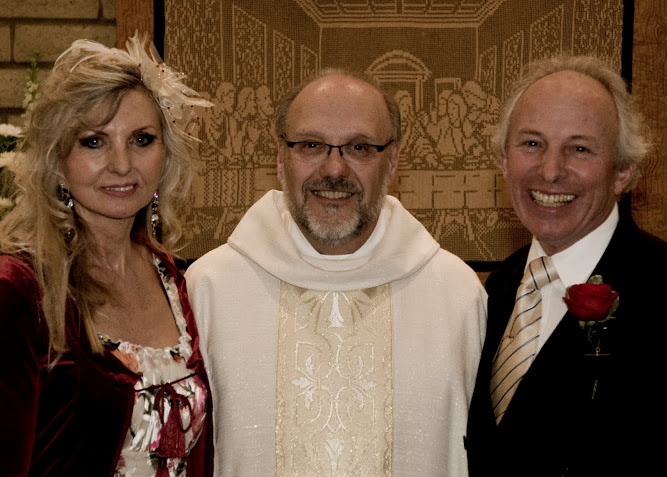
The visa was issued in October, 2010 and I flew immediately to Arizona. On the 8th November, 2010 Jean and I were issued with a Marriage License Certificate and we were married on the 20th November at St. Paul’s Episcopal Church in Payson.
Fr. Dan Tantimonaco with the newly weds!
We have made many very dear friends here in Payson but Oregon feels like the start of our home in every sense of the word, not just because it is the first home that Jean and I have bought jointly.
One of those dear friends here in Payson has been John Hurlburt, a devoutly spiritual man. A little over a week ago, he sent me a very thoughtful essay and I wanted to include it today as a guest post in recognition of the way that John and many, many others have embraced these couple of Brits over the last 32 months. Thank you all.
oooOOOooo
Unity
Everything fits together
The species of animals we know as human beings is a part of everything that exists. We are a very young consciously-aware species that does not begin to know all the answers. What little we do know has a Natural pattern. It would seem that there’s a lamplighter and a navigator in all of us. The lamplighter is our fundamental awareness of being and provides nature’s guidance along life’s pathways.
Our natural navigator is designed for evolutionary competition. There’s a biological survival kit in our DNA. Extreme demand for limited resources generates deadly combat; both within and between species. As a result of competition taken to wretched excess, our global economy is leveraged 22 times beyond any earthly foundation. The unspoken intent to destroy each other over what remains of our planet is becoming increasingly evident.
The human species is engaged in a global war over money, ideals and disappearing finite resources. Ninety-seven percent of the world scientific community has confirmed that the natural effects of heat and discharges generated by human machines and related human activities are the primary cause of recent rapid climate change.
These dedicated scientists are opposed in the media by three percent of their corporate energy-financed peers. An oppressive worldwide network of often offensive politicians is similarly supported and managed accordingly. Nature couldn’t care less about politics, emotions or idealistic arguments.
Human squabbles mean very little in the totality of universal life. The drumbeat of local natural disasters increases steadily. There are no two ways about it. No amount of human ifs or buts can or will change reality. Our human species is in deep serious trouble.
It has been six million years since the first humanoids emerged and two million years since the rise of human civilization. What a sorrow it is to realize what we have done to the earth in just the past two hundred and fifty years. We’ve reached the moon and are exploring Mars. It’s well past time to clean house and re-grow our local garden.
As an old navigator, there’s a sense of urgency regarding the course life on earth has taken. For those who continue to care about facts, the prognosis is not encouraging. We have the know-how for an alternative. We can avoid the perfect storm of going over the edge of an economic cliff and the crush of an environmental crisis in the midst of a war-fuelled, profit-driven, global, corporate fight to the end. The alternative is that we have the know-how to transition rapidly to a reality-based economy and a way of living that’s gentle to the earth. The solution is global, it’s industrial, it’s natural and it’s our best hope. It may well be our only hope. It’s time to light some lamps.
Conscious human awareness emerges as we relax, contemplate, meditate, and communicate openly. These are levels of awareness beyond the limits of our daily human musings. The wisdom which flows from enlightened awareness embraces humility, experience, knowledge, understanding, and faith. Life has never been easy. We’re fragile biological beings. Our mutual growth is the result of sustained efforts over millions of years.
Yet despite attaining a higher level of conscious awareness our human culture continues to operate on a material basis rather than a moral basis. We have become confused by our own importance or the apparent lack thereof. We all too often retreat into a rut, furnish it and turn on the electronics.
By definition, natural processes support species growth in harmony with all natural life. Those natural processes are indistinguishable from the planetary support systems within which all life interacts. Human interaction is local. We spend much of our lives unaware that we are unaware; initially as infants and throughout our lives in deep sleep. When caught up in the pressures of our daily lives, it’s easy to be unaware of being unaware.
It’s time to wake up. Cosmology is an eternal spring from which the waters of the earth still flow. When we turn ourselves inside-out and achieve higher awareness, we discover who, what and where we really and truly are. In a trinity of spirituality, nature and science, we’re cosmically energized beings; spiritual beings sharing a transitory human existence.
Ninety-eight percent of the human population believes in a power beyond species and self. The simplest understanding of this belief is that we humans did not originally create ourselves. All human wisdom and understanding leads to the conclusion that human beings don’t own the earth. We’re caretakers and we’re only passing through. Given that we have a systemic crisis, what do we have to work with?
We have a species that’s squabbling over diminishing resources, an environment and an infrastructure which both desperately require attention, a sustaining objective of equitable global employment, a world economy that’s about to collapse for lack of any real foundation, a burgeoning population which further strains the system and the clear need for a unifying purpose.
Put it all together and what do we have? The navigator is our guide to growth. The navigator shares our wholeness. The lamplighter is our guide to unity. Everything fits together. Each of us is a part of the unity of life. Unity has a natural purpose. It’s time to build a life boat.
John Hurlburt is a former U.S. Navy aviator and successful corporate executive who presently serves as a senior Christian educator and a founding member of an international Transition Town in Payson, Arizona.
oooOOOooo
Don’t know about you, dear reader, but I find those incredibly powerful words. Words that provide the truth. A truth the whole world needs. John set out in a personal email to me the three simple fundamentals of our lives. Just a few more words to sum up the truth.
“There’s an environmental crisis. There’s an inevitable global economic abyss touching us all on a daily basis. The need for a green economic transformation is obvious.“


 where this is all heading? These comments may, almost certainly are, just be the tip of the iceberg. Seems a long way from Lincoln’s

 This week we are in a particularly interesting situation as we are in the middle of a one week separation between the dates when Europe and US change their clocks back to “normal” winter time. I.e. Europe changed their clocks back at 2am last Sunday and most, but not all, US States change their clocks back at 2am this coming Sunday.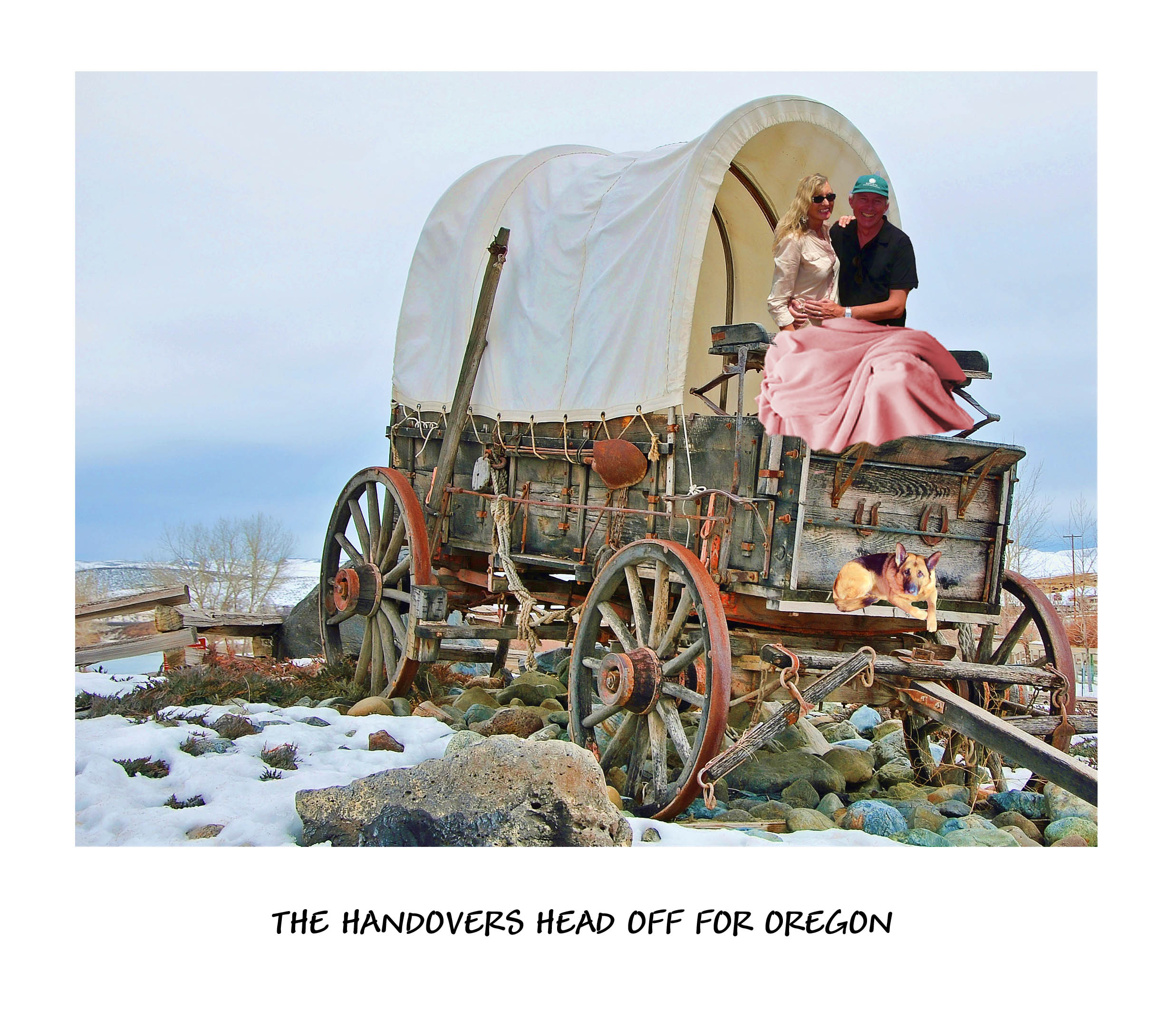
 Learning from Dogs