‘Twas brillig, and the slithy toves
Did gyre and gimble in the wabe;
All mimsy were the borogoves,
And the mome raths outgrabe. — Lewis Carroll, Jabberwocky.
To begin to understand nonsense it may help first if one has a good grasp of sense, for comparison between the two.
General education is obviously useful in this regard; after which perhaps the most important trait is critical thinking. One suggestion for a book that gives a good grounding in critical thinking is ‘What’s the Worst That Could Happen’, by Greg Craven.
Craving Understanding
Nonsense can be interpreted as communication that lacks any coherent meaning; it can be considered synonymous with absurdity and the ridiculous. Artists in many realms have long employed nonsense (though ironically, tragically, many suffer unemployment while doing so). Poets, novelists, lyricists and copywriters often seek refuge in it; and there are entire works that depend upon it as a foundation.
Swans Reflecting Elephants — Salvador Dali
When contemplating the antithesis of sense, one promising candidate for non-sense can be found lurking within surrealism.
And then there’s ‘common sense’, which is a thing to which people often appeal, and yet its use all too often can turn out to be oxymoronic. One example of ‘common sense’ that results in reality inversion is the persistent case of King Cnut.
In the philosophies of language and science, nonsense is distinguished from sense or meaningfulness. An understanding of nonsense is a necessary field of study in cryptography, as it is essential in separating a signal from noise. But attempts to come up with a coherent and consistent method of distinguishing sense from nonsense are troublesome at best; such may be a slippery chimaera, one that can even perhaps be spied on occasion chewing upon its own tail.
When all else is said and done, phlyarology can be a subject of crucial importance — especially when it comes to considering peak everything (to name but a few paltry aspects that, it would seem, appear to be irrelevant to ‘normal’ life).
Which is, of course, why we’re all here. Assuming, of course, that we are…
“Death is not an event in life: we do not live to experience death. If we take eternity to mean not infinite temporal duration but timelessness, then eternal life belongs to those who live in the present. Our life has no end in the way in which our visual field has no limits.” — Ludwig Wittgenstein, Tractatus, 6.431
I do not believe it is possible to ever fully grok nonsense; and so phlyarology is a never-ending pursuit. But I do believe that this doom can be a thoroughly rewarding and worthwhile one.
Or, to put it another way, stupid nonsense is a serious matter!
Any questions to be directed to Pendantry!
oooOOOooo
So how to close off a post about nonsense?
Well being a Brit sufficiently old to remember The Two Ronnies, a YouTube find that so perfectly shows the skill and professionalism of Ronnie Barker now follows.
Starting with Monday’s video of Carl Sagan reminding us all that Planet Earth is just a grain of sand in the vast cosmos right through to yesterday’s Dealing with madness post, much of the week has been reminding us all of one very fundamental truth. No better expressed than in a comment from Patrice Ayme [my emphasis]:
… there is no healthy man without a healthy world.
Regulars will have noted the high levels of debate this week. Thank you all for those comments.
I have also received a couple of emails with feedback and comments, sent to me on a personal basis. One of those emails had such a powerful message that I begged for permission to publish it on Learning from Dogs. I was asked to keep the author’s identity private but, trust me, it is from someone I know well who subscribes to ideas of integrity and honesty in spades.
The author also strongly recommended publishing in association with his personal essay an extract from Chris Hedges’ book “Death of the Liberal Class”. That extract follows straight on from the essay.
oooOOOooo
Reflections from a Vietnam Combat Veteran
War is an unnatural dichotomy. Both sides are morally and materially diminished. A future World War would most probably finish us as the self-appointed predominant intelligent species on planet earth. It seems worth noting that German industrialists coordinated fundamentalist propaganda to foster the bigotry, hatred and fear which fueled their profitable war engines prior to World War II.
United States commercial media today reflects a financially dominated military-industrial culture with liberty and justice for sale. The results are divisive and lead to both a declared international war against nebulous assailants we have been taught to dislike and an internal political war that has polarized our once fair nation.
We’ve stopped investing in the future in response to radicals who want to destroy government, human rights and what remains of the earth’s surface resources. There is an emerging police state mentality on display with a variety of candidates for local dictator.
It’s well past time for moderate republicans to ignore their uber-conservative brethren. It’s well past time for moderate democrats to renounce their corporate ties. This will only happen when our financial and political leaders awaken to the reality of what is in the best long-term interests for all life on this planet rather than our present unsustainable global economy.
To complicate the problem, our planet is under attack by a swarm of vociferous human locusts seeking profit without regard to the consequences. Meanwhile, despite human denial, the universe continues to emerge. Species which do not adapt to change do not survive.
It’s important to remember that we’re in the midst of a battle that’s as old as the conscious awareness of the human species. We generally have very little idea of the inclusive nature of our being; let alone the nature of our collective being as a species. We have as yet to learn how to surrender to reality. The battle is with our own species.
Committing collective suicide for quarterly profit is not a sane way of life. What we’ve created is a neo-feudal global economy without any foundation that feeds on an empire of consumption. When we combine a neo-feudal economy with neo-fascist politics we arrive at a moral and biological dead end.
The coup d’état of the current Corporate State is the Citizen’s United ruling that makes money a form of free speech. Money has no DNA. In case anyone missed how the “occupy” movement was crushed, there’s no question that we’re rapidly criminalizing all forms of dissent. These actions are being taking under the 1917 Espionage Act and related state secrets acts. No discernment of moral value is considered and no public hearings are conducted. People who speak up are locked up. We’ve become a fearful and secretive population.
Our self-appointed elite power structure is completely irrational in its belief that human reason is our ultimate power and money is its servant. We are made of the stuff of the stars. At best, we’re in our adolescence as a species. We think we know the answers rather than admitting our ignorance. What little we know is vastly less than what we have as yet to learn. We are often unaware of being unaware.
The lives we presently lead can not be sustained in ways that we have become accustomed to; ways we take for granted. What’s going to need to change? The simple answer is everything. Our species has systemically corrupted the small part of the cosmos which sustains our being. Nature has no sense of humor, no patience for human squabbles and no financial interest.
Fortunately, we already know what we need to do to adapt. We know how nature works through the wisdom of our earth sciences. The answer is simple. Love the earth. Love life. Share compassion. Educate, naturally energize, and transform. The resulting process of change will help re-establish a realistic world economic foundation.
The following selection is taken from the first chapter of the book, published in October 201 by Nation Books.
In a traditional democracy, the liberal class functions as a safety valve. It makes piecemeal and incremental reform possible. It offers hope for change and proposes gradual steps toward greater equality. It endows the state and the mechanisms of power with virtue. It also serves as an attack dog that discredits radical social movements, making the liberal class a useful component within the power elite.
But the assault by the corporate state on the democratic state has claimed the liberal class as one of its victims. Corporate power forgot that the liberal class, when it functions, gives legitimacy to the power elite. And reducing the liberal class to courtiers or mandarins, who have nothing to offer but empty rhetoric, shuts off this safety valve and forces discontent to find other outlets that often end in violence. The inability of the liberal class to acknowledge that corporations have wrested power from the hands of citizens, that the Constitution and its guarantees of personal liberty have become irrelevant, and that the phrase consent of the governed is meaningless, has left it speaking and acting in ways that no longer correspond to reality. It has lent its voice to hollow acts of political theater, and the pretense that democratic debate and choice continue to exist.
The liberal class refuses to recognize the obvious because it does not want to lose its comfortable and often well-paid perch. Churches and universities—in elite schools such as Princeton, professors can earn $180,000 a year—enjoy tax-exempt status as long as they refrain from overt political critiques. Labor leaders make lavish salaries and are considered junior partners within corporate capitalism as long as they do not speak in the language of class struggle. Politicians, like generals, are loyal to the demands of the corporate state in power and retire to become millionaires as lobbyists or corporate managers. Artists who use their talents to foster the myths and illusions that bombard our society live comfortably in the Hollywood Hills.
The media, the church, the university, the Democratic Party, the arts, and labor unions—the pillars of the liberal class—have been bought off with corporate money and promises of scraps tossed to them by the narrow circles of power. Journalists, who prize access to the powerful more than they prize truth, report lies and propaganda to propel us into a war in Iraq. Many of these same journalists assured us it was prudent to entrust our life savings to a financial system run by speculators and thieves. Those life savings were gutted. The media, catering to corporate advertisers and sponsors, at the same time renders invisible whole sections of the population whose misery, poverty, and grievances should be the principal focus of journalism.
In the name of tolerance—a word the Rev. Dr. Martin Luther King Jr., never used—the liberal church and the synagogue refuse to denounce Christian heretics who acculturate the Christian religion with the worst aspects of consumerism, nationalism, greed, imperial hubris, violence, and bigotry. These institutions accept globalization and unfettered capitalism as natural law. Liberal religious institutions, which should concern themselves with justice, embrace a cloying personal piety expressed in a how-is-it-with-me kind of spirituality and small, self-righteous acts of publicly conspicuous charity. Years spent in seminary or rabbinical schools, years devoted to the study of ethics, justice, and morality, prove useless when it comes time to stand up to corporate forces that usurp religious and moral language for financial and political gain.
Universities no longer train students to think critically, to examine and critique systems of power and cultural and political assumptions, to ask the broad questions of meaning and morality once sustained by the humanities. These institutions have transformed themselves into vocational schools. They have become breeding grounds for systems managers trained to serve the corporate state. In a Faustian bargain with corporate power, many of these universities have swelled their endowments and the budgets of many of their departments with billions in corporate and government dollars. College presidents, paid enormous salaries as if they were the heads of corporations, are judged almost solely on their ability to raise money. In return, these universities, like the media and religious institutions, not only remain silent about corporate power but also condemn as “political” all within their walls who question corporate malfeasance and the excesses of unfettered capitalism.
Unions, organizations formerly steeped in the doctrine of class struggle and filled with members who sought broad social and political rights for the working class, have been transformed into domesticated negotiators with the capitalist class. Cars rolling off the Ford plants in Michigan were said to be made by UAW Ford. But where unions still exist, they have been reduced to simple bartering tools, if that. The social demands of unions in the early twentieth century that gave the working class weekends off, the right to strike, the eight-hour workday, and Social Security, have been abandoned. Universities, especially in political science and economics departments, parrot the discredited ideology of unregulated capitalism and have no new ideas. The arts, just as hungry as the media or the academy for corporate money and sponsorship, refuse to address the social and economic disparities that create suffering for tens of millions of citizens. Commercial artists peddle the mythical narrative, one propagated by corporations, self-help gurus, Oprah and the Christian Right, that if we dig deep enough within ourselves, focus on happiness, find our inner strength, or believe in miracles, we can have everything we desire.
Such magical thinking, a staple of the entertainment industry, blinds citizens to corporate structures that have made it impossible for families to lift themselves out of poverty or live with dignity. But perhaps the worst offender within the liberal class is the Democratic Party.
The party consciously sold out the working class for corporate money. Bill Clinton, who argued that labor had nowhere else to go, in 1994 passed the North American Free Trade Agreement (NAFTA), which betrayed the working class. He went on to destroy welfare and in 1999 ripped down the firewalls between commercial and investment banks to turn the banking system over to speculators. Barack Obama, who raised more than $600 million to run for president, most of it from corporations, has served corporate interests as assiduously as his party. He has continued the looting of the U.S. Treasury by corporations, refused to help the millions of Americans who have lost their homes because of bank repossessions or foreclosures, and has failed to address the misery of our permanent class of unemployed.
Populations will endure the repression of tyrants, as long as these rulers continue to manage and wield power effectively. But human history has demonstrated that once those in positions of power become redundant and impotent, yet insist on retaining the trappings and privileges of power, their subject populations will brutally discard them. Such a fate awaits the liberal class, which insists on clinging to its positions of privilege while at the same time refusing to play its traditional role within the democratic state. The liberal class has become a useless and despised appendage of corporate power. And as corporate power pollutes and poisons the ecosystem and propels us into a world where there will be only masters and serfs, the liberal class, which serves no purpose in the new configuration, is being abandoned and discarded. The death of the liberal class means there is no check to a corporate apparatus designed to enrich a tiny elite and plunder the nation. An ineffectual liberal class means there is no hope, however remote, of a correction or a reversal. It ensures that the frustration and anger among the working and middle classes will find expression outside the confines of democratic institutions and the civilities of a liberal democracy.
“No excellent soul is exempt from a mixture of madness.”
So wrote Aristotle .
But it offers little comfort in response to some recent essays that I have been reading. I closed yesterday’s essay from ‘Our unsustainable way of life‘ with the comment, “If it strikes you as utter, complete madness trust me, you are not alone.” The madness is still coming! Stay with me!
George has a new book being published by Allen Lane today under the title of Feral: searching for enchantment on the frontiers of rewilding. I would offer you the link to the book on the Allen Lane website but at the time of writing this post that link is not functioning. It’s certainly a book I want to read. You may learn more here.
Anyway, some recent Monbiot essays in the UK Guardian newspaper have been setting the scene for his new book.
On the 22nd May, there was an essay published under the heading of What’s Missing from this Picture? (the link is to George Monbiot’s website). The essay starts, thus:
Somehow almost all of us have missed the real story behind the disappearance of our wildlife.
By George Monbiot, published on the Guardian’s website, 22nd May 2013
Even before you start reading the devastating State of Nature report, you get an inkling of where the problem lies. It’s illustrated in the opening pages with two dramatic photographs of upland Britain. They are supposed to represent the natural glories we’re losing. In neither of them (with the exception of some distant specks of scrub and leylandii in the second) is there a tree to be seen. The many square miles they cover contain nothing but grass and dead bracken. They could scarcely provide a better illustration of our uncanny ability to miss the big picture:
The majority of wildlife requires cover: places in which it can shelter from predators or ambush prey, places in which it can take refuge from extremes of heat and cold, or find the constant humidity that fragile roots and sensitive invertebrates require. Yet, in the very regions in which you might expect to find such cover (trees, scrub, other dense foliage) there is almost none. I’m talking about the infertile parts of Britain, in which farming is so unproductive that it survives only as a result of public money. Here, in the places commonly described as Britain’s “wildernesses”, almost nothing remains. And the “almost” has become radically smaller over the past 20 years.
Then a few paragraphs later, comes this:
The uplands of Britain are astonishingly unproductive. For example, 76% of the land in Wales is devoted to livestock farming, mostly to produce meat. But, astonishingly, by value Wales imports seven times as much meat as it exports. Six thousand years of nutrient stripping and erosion have left our hills so infertile that their productivity is miniscule. Even relatively small numbers of livestock can now keep the hills denuded.
Without subsidies, almost all hill-farming would cease. That’s not something I’m calling for, but I do believe it’s time we began to challenge the system and its outcomes. Among them is a policy that’s almost comically irrational and destructive.
So what was it that came at me as utter madness?
It was this:
The major funding that farmers receive is called the single farm payment, which is money given by European taxpayers to people who own land. These people receive a certain amount (usually around £200 or £300), for every hectare they own. To receive it, they must keep the land in what is called “Good Agricultural and Environmental Condition” (GAEC). It’s a term straight out of 1984.
Among the compulsory standards in the GAEC rules is “avoiding the encroachment of unwanted vegetation on agricultural land”. What this means is that if farmers want their money they must stop wild plants from returning. They don’t have to produce anything: to keep animals or to grow crops there. They merely have to prevent more than a handful of trees or shrubs from surviving, which they can do by towing cutting gear over the land.
Oh, and then we learn:
The government of Northern Ireland has been fined £64 million for (among other such offences) giving subsidy money to farms whose traditional hedgerows are too wide. The effect of these rules has been to promote the frenzied clearance of habitats. The system ensures that farmers seek out the remaining corners of land where wildlife still resides, and destroy them.
Leading to the bizarre (and that’s putting it kindly) situation where:
A farmer can graze his land to the roots, run his sheep in the woods, grub up the last lone trees, poison the rivers with sheep dip and still get his money. Some of the farms close to where I lived in mid-Wales do all of those things and never have their grants stopped. But one thing he is not allowed to do is what these rules call “land abandonment”, and what I call rewilding. For no good reason, public money is used both to engineer the mass destruction of habitats through grazing and clearing, and to prevent any significant recovery.
There’s nothing I can add. Except this. I am collecting ideas and essays that are going to focus on the positive aspects of this ‘new world order’. I’m going to offer some examples of the power of positive change because as Rebecca Solnit wrote recently there is a case for hope!
The second of two essays reflecting the ‘New World Order’.
Yesterday, I introduced the first essay from Patrice Ayme. Today, the second essay is a complete ‘copy and paste‘ as it appeared on TomDispatch. The importance of such writers as Patrice Ayme, the authors that are published on TomDispatch, and many more besides, is beyond measure. As the old saying goes, “The only thing required for evil to triumph is for good men to do nothing“.
So without further ado, here is that TomDispatch essay.
oooOOOooo
Tomgram: Mattea Kramer and Jo Comerford, Congress Tweeted While America Burned
[Note for TomDispatch Readers:Those of you who were struck by the recent TD piece “You Are a Guinea Pig: How Americans Became Exposed to Biohazards in the Greatest Uncontrolled Experiment Ever Launched” shouldn’t miss last Sunday’s fascinating Bill Moyers interview with its authors, David Rosner and Gerald Markowitz, who have written the new book Lead Wars: The Politics of Science and the Fate of America’s Children. Tom]
Three days after the terrorist attacks of September 11, 2001, Congress passed a joint resolution called an Authorization for Use of Military Force (AUMF). You might remember it. In layman’s terms, it was a carte blanche for the Bush administration to go to war wherever it wanted, whenever it wanted, however it wanted, under the guise of fighting anyone who “planned, authorized, committed, or aided” the September 11th attackers, or “harbored” any terrorists or terror organizations connected to the attacks. That document, more than any other, launched the Global War on Terror or GWOT. President Obama long ago ditched the name and acronym, but he kept the global war.
And don’t expect that to change. On Thursday, Assistant Secretary of Defense Michael Sheehan went before Congress and insisted that the Defense Department couldn’t be more “comfortable” with AUMF, as it was written, and that not a word should be altered or amended for changed circumstances. The Pentagon was so comfortable, in fact, that its officials foresee using that resolution to continue its drone-powered “dirty wars” in the Greater Middle East and Africa for years to come. “In my judgment,” Sheehan said, “this is going to go on for quite a while, yes, beyond the second term of the president… I think it’s at least 10 to 20 years.”
So there you have it. The military got its blank check for overseas wars, for sending out the drones and the special operations forces, and has no plans to change that before 2023, if not 2033. In other words, for at least the next decade, the GWOT, whatever label it’s given, will continue to be the central fixture of American foreign policy. It’s not going anywhere. Today, TomDispatch regulars Mattea Kramer and Jo Comerford of the invaluable National Priorities Project look at the “homeland” a decade into the future, as the effects of Congress’s austerity policies sink in. Put the two together and what a grim scene you have: a country investing in war in distant lands as it crumbles here at home. Andy Kroll
The streets are so much darker now, since money for streetlights is rarely available to municipal governments. The national parks began closing down years ago. Some are already being subdivided and sold to the highest bidder. Reports on bridges crumbling or even collapsing are commonplace. The air in city after city hangs brown and heavy (and rates of childhood asthma and other lung diseases have shot up), because funding that would allow the enforcement of clean air standards by the Environmental Protection Agency is a distant memory. Public education has been cut to the bone, making good schools a luxury and, according to the Department of Education, two of every five students won’t graduate from high school.
It’s 2023 — and this is America 10 years after the first across-the-board federal budget cuts known as sequestration went into effect. They went on for a decade, making no exception for effective programs vital to America’s economic health that were already underfunded, like job training and infrastructure repairs. It wasn’t supposed to be this way.
Traveling back in time to 2013 — at the moment the sequester cuts began — no one knew what their impact would be, although nearly everyone across the political spectrum agreed that it would be bad. As it happened, the first signs of the unraveling which would, a decade later, leave the United States a third-world country, could be detected surprisingly quickly, only three months after the cuts began. In that brief time, a few government agencies, like the Federal Aviation Administration (FAA), after an uproar over flight delays, requested — and won — special relief. Naturally, the Department of Defense, with a mere $568 billion to burn in its 2013 budget, also joined this elite list. On the other hand, critical spending for education, environmental protection, and scientific research was not spared, and in many communities the effect was felt remarkably soon.
Robust public investment had been a key to U.S. prosperity in the previous century. It was then considered a basic part of the social contract as well as of Economics 101. As just about everyone knew in those days, citizens paid taxes to fund worthy initiatives that the private sector wouldn’t adequately or efficiently supply. Roadways and scientific research were examples. In the post-World War II years, the country invested great sums of money in its interstate highways and what were widely considered the best education systems in the world, while research in well-funded government labs led to inventions like the Internet. The resulting world-class infrastructure, educated workforce, and technological revolution fed a robust private sector.
Austerity Fever
In the early years of the twenty-first century, however, a set of manufactured arguments for “austerity,” which had been gaining traction for decades, captured the national imagination. In 2011-2012, a Congress that seemed capable of doing little else passed trillions of dollars of what was then called “deficit reduction.” Sequestration was a strange and special case of this particular disease. These across-the-board cuts, instituted in August 2011 and set to kick in on January 2, 2013, were meant to be a storm cloud hanging over Congress. Sequestration was never intended to take effect, but only to force lawmakers to listen to reason — to craft a less terrible plan to reduce deficits by a wholly arbitrary $1.2 trillion over 10 years. As is now common knowledge, they didn’t come to their senses and sequestration did go into effect. Then, although Congress could have cancelled the cuts at any moment, the country never turned back.
It wasn’t that cutting federal spending at those levels would necessarily have been devastating in 2013, though in an already weakened economy any cutbacks would have hurt. Rather, sequestration proved particularly corrosive from the start because all types of public spending — from grants for renewable energy research and disadvantaged public schools to HIV testing — were to be gutted equally, as if all of it were just fat to be trimmed. Even monitoring systems for possible natural disasters like river flooding or an imminent volcanic eruption began to be shut down. Over time the cuts would be vast: $85 billion in the first year and $110 billion in each year after that, for more than $1 trillion in cuts over a decade on top of other reductions already in place.
Once lawmakers wrote sequestration into law they had more than a year to wise up. Yet they did nothing to draft an alternate plan and didn’t even start pointing out the havoc-to-come until just weeks before the deadline. Then they gave themselves a couple more months — until March 1, 2013 — to work out a deal, which they didn’t. All this is, of course, ancient history, but even a decade later, the record of folly is worth reviewing.
If you remember, they tweeted while Rome burned. Speaker of the House John Boehner, for instance, sent out dozens of tweets to say Democrats were responsible: “The president proposed sequester, had 18 mo. to prioritize cuts, and did nothing,” he typically wrote, while he no less typically did nothing. For his part, Senate Majority Leader Harry Reid tweeted back: “It’s not too late to avert the damaging #sequester cuts, for which an overwhelming majority of Republicans voted.” And that became the pattern for a decade of American political gridlock, still not broken today.
Destruction Begins
March 1st came and went, so the budgetary axe began to fall.
At first, it didn’t seem so bad. Yes, the cuts weren’t quite as across the board as expected. The meat industry, for example, protested because health inspector furloughs would slow its production lines, so Congress patched the problem and spared those inspectors. But meat production aside, there was a sense that the cuts might not be so bad after all.
They were to be doled out based on a formula for meeting the arbitrary target of $85 billion in reductions in 2013, and no one knew precisely what would happen to any given program. In April, more than a month after the cuts had begun, the White House issued the president’s budget proposal for the following year, an annual milestone that typically included detailed information about federal spending in the current year. But across thousands of pages of documents and tables, the new budget ignored sequestration, and so reported meaningless 2013 numbers, because even the White House couldn’t say exactly what impact these cuts would have on programs and public investment across the country.
As it happened, they didn’t have to wait long to find out. The first ripples of impact began to spread quickly indeed. Losing some government funding, cancer clinics in New Mexico and Connecticut turned away patients. In Kentucky, Oregon, and Montana, shelters for victims of domestic violence cut services. In New York, Maryland, and Alabama, public defenders were furloughed, limiting access to justice for low-income people. In Illinois and Minnesota, public school teachers were laid off. In Florida, Michigan, and Mississippi, Head Start shortened the school year, while in Kansas and Indiana, some low-income children simply lost access to the program entirely. In Alaska, a substance abuse clinic shut down. Across the country, Meals on Wheels cut four million meals for seniors in need.
Only when the FAA imposed furloughs on its air traffic controllers did public irritation threaten to boil over. Long lines and airport delays ensued, and people were angry. And not just any people — people who had access to members of Congress. In a Washington that has gridlocked the most routine business, lawmakers moved at a breakneck pace, taking just five days to pass special legislation to solve the problem. To avoid furloughs and shorten waits for airline passengers, they allowed the FAA to spend funds that had been intended for long-term airport repairs and improvements.
Flights would leave on time — at least until runways cracked and crumbled. (You undoubtedly remember the scandal of 2019 at Cincinnati International Airport, when a bright young candidate for Senate met her demise in a tragic landing mishap.)
And then, of course, the Pentagon asked for an exemption, too. We’re talking about the military behemoth of planet Earth, which in 2013 accounted for 40% of military spending globally, its outlays exceeding the next 10 largest militaries combined. It, too wanted a special exemption for some of its share of the cutbacks.
Meat inspectors, the FAA, and the Department of Defense enjoyed special treatment, but the rest of the nation was, as the history books recount, not so lucky. Children from middle-class and low-income families saw ever fewer resources at school, closing doors of opportunity. The young, old, and infirm found themselves with dwindling access to basic resources such as health care or even a hot dinner. Federal grants to the states dried up, and there was less money in state budgets for local priorities, from police officers to lowly streetlights.
And remember that, just as the sequestration cuts began, carbon concentration in the atmosphere breached 400 parts per million. (Climate scientists had long been warning that the level should be kept below 350 for human security.) Unfortunately, as with the groundbreaking research that led to the Internet, it takes money to do big things, and the long-term effects of cutting environmental protection, general research, and basic infrastructure meant that the U.S. government would do little to stem the extreme weather that has, in 2023, become such a part of our world and our lives.
Looking back from a country now eternally in crisis, it’s clear that a Rubicon was crossed back in 2013. There was then still a chance to reject across-the-board budget cuts that would undermine a nation built on sound public investment and shared prosperity. At that crossroads, some fought against austerity. Losing that battle, others argued for a smarter approach: close tax loopholes to raise new revenue, or reduce waste in health care, or place a tax on carbon, or cut excessive spending at the Pentagon. But too few Americans — with too little influence — spoke up, and Washington didn’t listen. The rest of the story, as you well know, is history.
Mattea Kramer is Research Director at National Priorities Project, where Jo Comerford is Executive Director. Both are TomDispatch regulars. They wrote A People’s Guide to the Federal Budget.
Two very different essays that, nonetheless, do sing to a common tune.
I sit here with a heavy heart. Why, you may ask?
Because I really wish I wasn’t setting the scene to a couple of disturbing essays. The first from Patrice Ayme. His essay is called Plutocracy: New World Order with the subtitle of The New World Thinking. The New World Emoting. The second essay is from Mattea Kramer and Jo Comerford under the TomDispatch umbrella. Their title is How America Became a Third World Country.
That heaviness comes from an emotional conflict. The conflict between never having been more contented in our beautiful Oregonian home and the tiny voice in my head that says that I shouldn’t throwing darts at the country that has been generous in welcoming me as a resident.
But I justify publishing these two essays in this manner. Just as Pharaoh leads the barking whenever the dogs sense something threatening their ‘territory’, then too should citizens (I use the term in the broadest sense) start barking when they sense something threatening the integrity of their country.
So today the Patrice Ayme essay and tomorrow the TomDispatch essay. I’m very grateful to both Patrice and Tom for their permission to republish their essays.
oooOOOooo
PLUTOCRACY: NEW WORLD ORDER
Obama just nominated Commerce Secretary the billionaire heiress who discovered him, and introduced him to the Rubin-Summers-Goldman-Sachs-Citigroup conspiracy. Penny Priztker was condemned to pay a 460 million dollar fine by the Federal government in 2001, for financial malfeasance. 460 million, that’s more than Mitt Romney’s fortune, that made small rank and file democrats huff and puff, in indignation, a few months ago, just like their mighty masters told them to do.
Now, if the 460 million dollars fine felon becomes chief, that’s fine, as long as the masters of the people don’t ask the People to huff and puff about the fine. The finer the fine, the finer the master, say the little People, and they bleat, satisfied. As Obama put it:”Priztker is one of the most eminent personalities of our country“. When Pluto reigns, down is up.
When Common Decency Is A Hindrance
Plutocracy is the New World Order. The New World Thinking. The New World Emoting.
To get some perspective on this, it’s good to have a retrospective look at the greatest plutocratic realms of the past, and ponder why extremely wealthy fascism rose, increasingly, in the Orient, while clever democracy rose, occasionally, in the West. And sometimes fell, disastrously, for reasons related.
It turns out that, when Rome became fascist and plutocratic, it turned to Oriental despotism, and criminals, indeed, came to command and control.
***
PERSIA REIGNED WITH ALL CRAFTS; YET NOT SMART ENOUGH:
Establishing giant, metastatic empires in the Orient is nothing new: the Hittites tried it, they proceeded to invade Lebanon and the rich valleys behind, Egyptian territory. However young Pharaoh Ramses II, defeated them at Qadesh, next to present day Damascus. Through courageous combat in that battle which defined his long rule, Ramses rescued victory from the jaws of defeat, somewhat miraculously.
Ramses lost ground, though, and later made a loving peace with his enemies. Then, the Hittites having been destroyed by the mysterious coalition of the Peoples of the Sea, the Assyrians tried to impose their own giant metastatic empire, using the harshest methods. That brought them so many enemies that they got invaded from all quarters, annihilated as a nation first, and an army, later.
Then the union of Medes and Persians, thanks to three remarkable leaders, established a giant fascist empire, from Ethiopia to Central Asia, Libya to India. The third emperor, Darius, besides being excellent at sword-play in the dark, and a great general, proved capable of using a free market economy, switching to so called Keynesianism, and then a command and control economy, as needed. Darius established a giant “Royal” road network (ancestral to the one the Romans would build, four centuries later).
A Persian Pony Express, with posts every five miles, would bring news from distant corners of the empire in a week. Darius went on to invade the Scythians, land of the Amazons, present day Ukraine.
Darius’ Persia was the greatest empire, so far, larger than the present day continental USA. It became so, thanks to a great variety of methods of socio-economic governance. Some of these methods would later be used by the West, massively. Not just the communication network, the free market, the command and control, but also a crafty diplomacy of seduction, cooptation and local autonomy (that’s how the Ionian Greeks and Phoenicians became collaborators of Persia; whereas Alexander would annihilate Tyr).
However, unbelievably, tiny Athens broke the Persian empire, inaugurating the next great event, still on-going, the rise of the West. Again and again, minuscule Greek armies routed the juggernauts of professional giant armies. Again and again, small democracies proved superior to large fascist foes. I claimed that mental superiority entailed military superiority.
***
FREE IN THE WEST, SLAVES IN THE EAST
Herodotus explained the Greeks’ military superiority: free men are more motivated in battle, as they fight for themselves, he said. But it’s not clear that elite Persian soldiers did not feel free.
So I hold something slightly different: free men are, living in an “open society” are not just more motivated, but, simply, more intelligent. Yes, intelligent.
Yet how come that the free men tended to be in the West, and the subjugated ones, in the East? And this for 4,000 years, defining the “West” as anything west of Mount Lebanon. Why did so much of the Mediterranean turn out propitious to freedom and individual initiative? What of the enormous Celto-German forests, from Spain to the Baltics?
Two factors played a role:
1) Trade, with the big man, the leader being the ship owner-captain (Tyr, Phoenicia, Crete, Athens, Carthage, etc.). This required to excel at technology and adaptative intelligence, confronting nature.
2) Small owner-peasants. The West’s agricultural system did better thanks to small, free owner-peasants. The owner peasant was captain of his own plot of land, and found himself in a situation roughly similar to the ship captain. Such people worked hard, and thought hard about outwitting nature. All of Germany was this way, until the military encroachment of Rome in the beginning of its plutocratic phase, brought, by reaction, a militarization of German society (this is what archeology shows).
A demographic core of owner-peasants was the core of the success of the Roman republic, and its successors, the Imperium Francorum, and France, or anything working along French lines (most of Europe). When enjoying this basic culture, of free, independent peasants, the West did very well. Why so? Because thinking by oneself, for oneself, makes one more intelligent.
***
WHY THE ORIENT IS DUMBER:
The Orient did better when the peasants could cultivate. That meant, when they had water. That was not obvious in the increasingly parched lands, from the Maghreb to India. First, there, one needed to bring water to agricultural lands. Whereas in the West, both water and arable land were in the same place, not so in the East. In the East water was on rocky mountains, arable lands in parts of plains at the bottom of said mountains. To bring the former to the latter, one needed great hydraulic works. Underground canalizations, sometimes fifty feet deep, could extend dozens of miles.
Such extensive works meant armies of workers and maintenance people. And also standing armies to establish and protect the necessary order. Plus a field army to roam around the empire, and keep the static defenses obedient.
In other words, food on the carpet in the parched, basin and range Orient meant a large fascist system to make it possible, and everybody enslaved to it, in a military organization (Christianity and Islam, both oriental religions, kept much of this essential psychological character: fascist god on top, giving absolute, even capricious orders to its slaves below).
***
ALL TOGETHER NOW, DOWN THE ROMAN ROAD TO HELL?
What consequences today? Western countries do not depend upon small owner-peasants anymore, but upon giant farms, or agribusinesses, for food procurement. Even trade has become unbalanced: production on one end of the Earth, increasing unemployment, at the other end.
Giant agribusinesses, and unbalanced trade became facts of empire in Rome, and lasted centuries. It was a deliberate plot of Roman plutocracy. At some point, six senatorial families owned most of North Africa. Seneca, Nero’s tutor, the plutocratic philosopher of note, used to boast that he had no idea how many giant properties he owned on the various continents.
That delocalization and globalization made Rome, and Italy into an empty shell of its former self. As those who had the power, the senatorial families, wished. What they feared first, was a proud, potent, empowered People.
(Part of) Italy would resurrect as independent republics, more than a millennium later.
What’s the morality of the story? Men have a strong instinct for doing things right. In a plutocratic system, though, men who do things wrong get rewarded, and this goes on, until the situation exponentiates and breaks down. Thus plutocratic systems are intrinsically pathological: they reward criminals. Not just criminal according to the laws of men, but criminals according to the laws of nature.
In the Orient, life is harder, less natural, militarization exploits part of the Dark Side, because human beings, by living there, live in a less optimal situation. In the West, the rise of plutocracy did not have these excuses.
The Romans knew this well. The Roman republic was the product of a revolution against Tarquinus Superbus, the king of Rome, of Etruscan origin. So the founding act of five centuries of Roman republic was an anti-plutocratic revolt. Same for Athens (several times, during the same centuries).
The Romans passed a strong anti-plutocratic law. That law limited, by force the size of a family’s fortune; it fixed an upper bound on how much one could own. The Second Punic war saw the death, on the battlefield, of too many of the best leading Romans. Meanwhile the conspirators of wealth, back behind the walls of the fortified cities, as Hannibal was roaming the countryside, established a New World order of rents.
When Carthage got defeated, those men of greed kept on pushing, and tried to grab control of the state. After several wars of distraction against Macedonia, Carthage, Numantia, Corinth, etc. it became clear that was what was going on to thousands of the best Romans, led by top nobles (in mind and ancestry), the Gracchi.
The Gracchis mostly tried to impose the wealth limitation law. They also succeeded to impose a land redistribution (an unthinkable socialist measure in the post Thatcher-Reagan world!). Yet, the Gracchi and their supporters lost a civil war. All got killed, by the private armies of the plutocrats. By 100 BCE, when Caesar was born, the dice had long been thrown. Only extreme measures could address the situation (extreme measures that Caesar and Cicero, on the good side, would try).
Now what? Losing democracy, means, ultimately, that we will lose not just freedom, but intelligence itself. It is difficult to imagine how the Americans will pull out of their present death spiral into furthering the wealth of the .1%. When bandits are called “philanthropists”, all values have been inverted in a country: gangsters are in control, the mafia has got metastatic. It will go on, all inverted, until it explodes, or get trampled over. The commerce chief will be a certified felon.
The situation in Europe is not as desperate: conditions for a revolt exist. Although Goldman Sachs has its servants in place all over, the Italians threw out one of them, a Goldman Sachs partner, Mario Monti, at the first chance they got.
Some may sneer, as they notice that, once again I used “Orient” and “Occident” according to old Greco-Roman semantics. What of the true Orient, the far-out East, China and company? Well, I will hide behind my usual observation: it’s Western culture that conquered the world. Present day China’s ideology has very little that is specifically Chinese, besides what the West and China had in common, such as the more or less free market. The idea of “People” (Populus) and “Republic” (Respublica) are Roman. So the very title of China, the “People Republic of China” is, well, (Greco-)Roman.
The dangers threatening China, accordingly, like those threatening us, are those that devastated the Roman republic. For the reasons exposed above, the development in the West, of a more advanced civilization was first, thus why everybody adopted it later. Rome was first to rise as high as it did. But, the greater the rise, the greater the fall. By 700 CE, the fall of Rome had been so great, that China had risen higher, on many indicators. The West, invaded by hordes of savages for more than six hundred years (beyond even 400 CE to 1000 CE) was fighting for survival.
Plutocracy as a New World Order is not just the end of many things. In the fullness of time, plutocracy is the end of everything.
Even the Will to Power. Slave masters are not so masterful. After all, they are enslaved to their slaves.
When Rome went down, Roman plutocrats whined that the “world was getting old“. By this they meant that resources were being exhausted, and that, in its stupidity plutocratic civilization could not find a technology out.
Right now, the world is not getting old, it’s getting killed. And that’s worst.
In my last essay on love that was published on Friday, I quoted Carl Sagan, “For small creatures such as we the vastness is bearable only through love.Carl Sagan” My conclusion about love was:
… that if we don’t love our planet with all the ardour and passion of a teenager’s first romance, all those other loves in our lives will ultimately become irrelevant.
In researching for that essay, I visited Carl Sagan’s website, a rich source of information and materials for anyone interested in the far Cosmos right down to our future on this planet.
Just a little over three months ago, I wrote a post with the title of Carl Sagan with the objective of promoting his beautiful and awe-inspiring film called Pale Blue Dot.
Back to the present. On YouTube I came across this short video that seems so relevant to our need to love the only planet we have.
Carl Sagan explains the immensity of space and time in this clip is from Carl Sagan’s Cosmos episode 8, “Journeys in Space and Time.
“Those worlds in space are as countless as all the grains of sand on all the beaches of the Earth. Each of those worlds is as real as ours. In every one of them, there’s a succession of incidence, events, occurrences which influence its future. Countless worlds, numberless moments, an immensity of space and time.
And our small planet, at this moment, here we face a critical branch-point in the history. What we do with our world, right now, will propagate down through the centuries and powerfully affect the destiny of our descendants. It is well within our power to destroy our civilization, and perhaps our species as well. If we capitulate to superstition, or greed, or stupidity we can plunge our world into a darkness deeper than time between the collapse of classical civilization and the Italian Renaissance.
But we are also capable of using our compassion and our intelligence, our technology and our wealth, to make an abundant and meaningful life for every inhabitant of this planet. To enhance enormously our understanding of the Universe, and to carry us to the stars.”
Today, in the USA it is Memorial Day. The day of remembering the men and women who died while serving in the United States Armed Forces. It doesn’t seem out of order to reflect that all those courageous men and women died with a belief in the future. That belief in the future surely must embrace “… using our compassion and our intelligence, our technology and our wealth, to make an abundant and meaningful life for every inhabitant of this planet.“
Five days of writing about love and none the clearer!
So here I am penning Friday’s post about love. You will recall that on Monday I wrote:
In last week’s telephone conversation MaryAnne spoke so easily about love that I promised her that I would dedicate a post on Learning from Dogs to her.
In fact, rather than one post, I’m setting myself the challenge of writing about love for the entire week, i.e. Monday to Friday. I will readily admit that over and beyond today’s post, I don’t have more than the vaguest inkling of how the week will pan out. You have been warned!
Ironically, up until yesterday things fell into place pretty easily. But I must confess that today’s post has been a struggle. I read the love quotes over on the Brainy Quote website to find some inspiration. None found. Not that there weren’t many, many beautiful sayings but the incredible spread of quotations just magnified the difficulty of pinning down something to write about.
Then I did a web search for ‘love stories’. Came across the story of The Lost Wallet. It was moving but seemed too perfect a love story – try it yourself if you want.
Then back to the Brainy Quote website and once more meandered through the love quotes. Saw this one.
For small creatures such as we the vastness is bearable only through love.Carl Sagan
That struck a chord. A few hours earlier I had been sorting out my photographs and came across this one.
The Herschel Horsehead Nebula.
I had grabbed this image a month ago from the announcement on ESA’s website:
19 April 2013 New views of the Horsehead Nebula and its turbulent environment have been unveiled by ESA’s Herschel space observatory and the NASA/ESA Hubble space telescope.
The Horsehead Nebula lies in the constellation Orion, about 1300 light-years away, and is a popular target for amateur and professional astronomers alike. It sits just to the south of star Alnitak, the easternmost of Orion’s famous three-star belt, and is part of the vast Orion Molecular Cloud complex.
The new far-infrared Herschel view shows in spectacular detail the scene playing out around the Horsehead Nebula at the right-hand side of the image, where it seems to surf like a ‘white horse’ in the waves of turbulent star-forming clouds.
It appears to be riding towards another favourite stopping point for astrophotographers: NGC 2024, also known as the Flame Nebula. This star-forming region appears obscured by dark dust lanes in visible light images, but blazes in full glory in the far-infrared Herschel view.
The image is staggeringly beautiful yet a potent reminder that man, even the totality of our planet, is such an irrelevance in the scheme of things. We are surrounded by beauty both within and without, yet the fragility of our existance is a ‘vastness’, both literally and psychologically.
Guess what! Writing that last sentence brought to mind a photograph that I took Wednesday afternoon. As part of the Land Stewardship course Jean and I are taking, the class had gone to the Limpy Creek Botanical area in the Rogue River-Siskiyou National Forest not far from Grants Pass, Oregon. Here’s that photograph.
Reflect on the delicate beauty and vulnerability of that small wild flower. A perfect metaphor for the entire natural world.
So I am going to close this week’s perambulation through love with the thought that if we don’t love our planet with all the ardour and passion of a teenager’s first romance, all those other loves in our lives will ultimately become irrelevant.
Many of you will be aware that I follow Tom Engelhardt over at TomDispatch. Tom has been very generous in granting Learning from Dogs blanket permission to republish essays that appear on TomDispatch. From time to time I do just that; the last one being TomGram: William deBuys, Exodus from Phoenix just a couple of months ago.
Today is another republication of an incredibly powerful essay by Rebecca Solnit, with the usual introduction from Tom. When you read it you will easily see why it was a must for this week’s focus on love.
To offer a small inducement to read Rebecca’s essay, here is a taste of her words:
If you take the long view, you’ll see how startlingly, how unexpectedly but regularly things change. Not by magic, but by the incremental effect of countless acts of courage, love, and commitment, the small drops that wear away stones and carve new landscapes, and sometimes by torrents of popular will that change the world suddenly. To say that is not to say that it will all come out fine in the end regardless. I’m just telling you that everything is in motion, and sometimes we are ourselves that movement.
Wow!
“… the incremental effect of countless acts of courage, love, and commitment, the small drops
that wear away stones and carve new landscapes …“
Read and be moved by the words that people write.
oooOOOooo
Rebecca Solnit, What Comes After Hope
I worked for years as an editor at Pantheon Books. Its publisher, maybe the most adventurous in the business, was André Schiffrin. Among his many accomplishments, he “discovered” Studs Terkel (already a well-known Chicago radio personality), published his first oral history (Division Street: America), and made him a bestseller. Sometime after I arrived at Pantheon in the mid-1970s, he asked me to take a last look at a new manuscript by Studs. It was the equivalent of sending the second team onto the field, but it began my own long relationship with the famed oral historian. He was an experience — a small man who, when he wasn’t listening professionally in a fashion beyond compare, never stopped talking. In doing so, he had an almost magical way of making those around him feel larger than life. Later, I would be the editor for two of his oral histories, one on death and the other on hope (in that splendid order and the second with the Studs-appropriate title Hope Dies Last).
Last October, Bill Moyers interviewed me about the dismal state of American politics. As our conversation was ending, he suddenly asked: “What keeps you going against all the evidence?” At that moment, Studs came to mind. I mentioned editing “one of the greats of our world” and responded this way: “It turned out that when he wrote his book about hope, it was all about activists and the basic point he made was: in good times you could just be hopeful about your life. You didn’t have to be an activist. You didn’t have to be an anything. In bad times, if you want to be hopeful, you have to take a step. You’ve got to take some step to do something in the world. And in that sense, TomDispatch is my medicine against despair. So what makes me hopeful is doing TomDispatch.”
All true. But I realize now that it wasn’t quite a full response. I had left out one crucial figure in my life: Rebecca Solnit, who taught me how to hope in a world that seemed dismal indeed. She was the one who — I’ve written about it before — slipped through the barely ajar door of my life in May 2003, at a moment as grim and dreary as any in my political experience. The largest antiwar movement ever to protest a war that had yet to happen had just packed its tents and gone home in despair, while Baghdad was occupied by American troops and George W. Bush and his top officials were in their “mission accomplished” triumphalist mode. Many activists then feared that they would remain so forever and would have dismissed out of hand someone who suggested that their Pax Americana dreams of domination would begin unraveling in mere weeks (as happened), not decades or centuries.
Ten years ago, exactly to the day, I published Rebecca’s miraculous piece “Acts of Hope,” which she would later expand into her book Hope in the Dark. It was written to welcome that “darkness” which seemed already to be enveloping us. It was written with a sense of how the expectable unravels, of how the future surprises us, often enough with offerings not of horror but of hope.
With few people can you ever say, she (or he) changed my life, changed the very way I understand our world. For me, she’s one of the few — and she’s still doing it with her miraculous new book (out in June), The Faraway Nearby. She taught me how to look into that future darkness with hope. Like Studs, she taught me that acting, even while not knowing, is a powerful antidote to despair. So it means the world to me that she’s returned to the subject of hope to celebrate the tenth anniversary of her arrival in my life and at TomDispatch. Tom
Too Soon to Tell The Case for Hope, Continued
By Rebecca Solnit
Ten years ago, my part of the world was full of valiant opposition to the new wars being launched far away and at home — and of despair. And like despairing people everywhere, whether in a personal depression or a political tailspin, these activists believed the future would look more or less like the present. If there was nothing else they were confident about, at least they were confident about that. Ten years ago, as a contrarian and a person who prefers not to see others suffer, I tried to undermine despair with the case for hope.
A decade later, the present is still contaminated by the crimes of that era, but so much has changed. Not necessarily for the better — a decade ago, most spoke of climate change as a distant problem, and then it caught up with us in 10,000 ways. But not entirely for the worse either — the vigorous climate movement we needed arose in that decade and is growing now. If there is one thing we can draw from where we are now and where we were then, it’s that the unimaginable is ordinary, and the way forward is almost never a straight path you can glance down, but a labyrinth of surprises, gifts, and afflictions you prepare for by accepting your blind spots as well as your intuitions.
The despairing of May 2003 were convinced of one true thing, that we had not stopped the invasion of Iraq, but they extrapolated from that a series of false assumptions about our failures and our powerlessness across time and space. They assumed — like the neoconservatives themselves — that those neocons would be atop the world for a long time to come. Instead, the neocon and neoliberal ideologies have been widely reviled and renounced around the world; the Republicans’ demographic hemorrhage has weakened them in this country; the failures of their wars are evident to everyone; and though they still grasp fearsome power, everything has indeed changed. Everything changes: there lies most of our hope and some of our fear.
I’ve seen extraordinary change in my lifetime, some of it in the last decade. I was born in a country that had been galvanized and unsettled by the civil rights movement, but still lacked a meaningful environmental movement, women’s movement, or queer rights movement (beyond a couple of small organizations founded in California in the 1950s). Half a century ago, to be gay or lesbian was to live in hiding or be treated as mentally ill or criminal. That 12 states and several countries would legalize same-sex marriage was beyond imaginable then. It wasn’t even on the table in 2003. San Francisco’s spring run of same-sex weddings in 2004 flung open the doors through which so many have passed since.
If you take the long view, you’ll see how startlingly, how unexpectedly but regularly things change. Not by magic, but by the incremental effect of countless acts of courage, love, and commitment, the small drops that wear away stones and carve new landscapes, and sometimes by torrents of popular will that change the world suddenly. To say that is not to say that it will all come out fine in the end regardless. I’m just telling you that everything is in motion, and sometimes we are ourselves that movement.
Unstoppabilities
Hope and history are sisters: one looks forward and one looks back, and they make the world spacious enough to move through freely. Obliviousness to the past and to the mutability of all things imprisons you in a shrunken present. Hopelessness often comes out of that amnesia, out of forgetting that everything is in motion, everything changes. We have a great deal of history of defeat, suffering, cruelty, and loss, and everyone should know it. But that’s not all we have.
There’s the people’s history, the counterhistory that you didn’t necessarily get in school and don’t usually get on the news: the history of the battles we’ve won, of the rights we’ve gained, of the differences between then and now that those who live in forgetfulness lack. This is often the history of how individuals came together to produce that behemoth civil society, which stands astride nations and topples regimes — and mostly does it without weapons or armies. It’s a history that undermines most of what you’ve been told about authority and violence and your own powerlessness.
Civil society is our power, our joy, and our possibility, and it has written a lot of the history in the last few years, as well as the last half century. If you doubt our power, see how it terrifies those at the top, and remember that they fight it best by convincing us it doesn’t exist. It does exist, though, like lava beneath the earth, and when it erupts, the surface of the earth is remade.
Things change. And people sometimes have the power to make that happen, if and when they come together and act (and occasionally act alone, as did writers Rachel Carson and Harriet Beecher Stowe — or Mohammed Bouazizi, the young man whose suicide triggered the Arab Spring).
If you fix your eye on where we started out, you’ll see that we’ve come a long way by those means. If you look forward, you’ll see that we have a long way to go — and that sometimes we go backward when we forget that we fought for the eight-hour workday or workplace safety or women’s rights or voting rights or affordable education, forget that we won them, that they’re precious, and that we can lose them again. There’s much to be proud of, there’s much to mourn, there’s much yet to do, and the job of doing it is ours, a heavy gift to carry. And it’s made to be carried, by people who are unstoppable, who are movements, who are change itself.
Too Soon to Tell
Ten years ago I began writing about hope and speaking about it. My online essay “Acts of Hope,” posted on May 19, 2003, was my first encounter with Tomdispatch.com, which would change my work and my life. It gave me room for another kind of voice and another kind of writing. It showed me how the Internet could give wings to words. What I wrote then and subsequently for the site spread around the world in remarkable ways, putting me in touch with people and movements, and deeper into conversations about the possible and the impossible (and into a cherished friendship with the site’s founder and editor, Tom Engelhardt).
For a few years, I spoke about hope around this country and in Europe. I repeatedly ran into comfortably situated people who were hostile to the idea of hope: they thought that hope somehow betrayed the desperate and downtrodden, as if the desperate wanted the solidarity of misery from the privileged, rather than action. Hopelessness for people in extreme situations means resignation to one’s own deprivation or destruction. Hope can be a survival strategy. For comfortably situated people, hopelessness means cynicism and letting oneself off the hook. If everything is doomed, then nothing is required (and vice versa).
Despair is often premature: it’s a form of impatience as well as certainty. My favorite comment about political change comes from Zhou En-Lai, the premier of the People’s Republic of China under Chairman Mao. Asked in the early 1970s about his opinion of the French Revolution, he reportedly answered, “Too soon to tell.” Some say that he was talking about the revolutions of 1968, not 1789, but even then it provides a generous and expansive perspective. To hold onto uncertainty and possibility and a sense that even four years later, no less nearly two centuries after the fact, the verdict still isn’t in is more than most people I know are prepared to offer. A lot of them will hardly give an event a month to complete its effects, and many movements and endeavors are ruled failures well before they’re over.
Not long ago, I ran into a guy who’d been involved in the Occupy Wall Street movement, that great upwelling in southern Manhattan in the fall of 2011 that catalyzed a global conversation and a series of actions and occupations nationwide and globally. He offered a tailspin of a description of how Occupy was over and had failed.
But I wonder: How could he possibly know? It really is too soon to tell. First of all, maybe the kid who will lead the movement that will save the world was catalyzed by what she lived through or stumbled upon in Occupy Fresno or Occupy Memphis, and we won’t reap what she sows until 2023 or 2043. Maybe the seeds of something more were sown, as they were in Czechoslovakia during the Prague Spring of 1968 and Charter 77, for the great and unforeseen harvest that was the Velvet Revolution of 1989, the nonviolent overthrow of the Soviet totalitarian state in that country.
Second, Occupy began to say what needed to be said about greed and capitalism, exposing a brutality that had long been hushed up, revealing both the victims of debt and the rigged economy that created it. This country changed because those things were said out loud. I can’t say exactly how, but I know it mattered. So much that matters is immeasurable, unquantifiable, and beyond price. Laws around banking, foreclosure, and student loans are changing — not enough, not everywhere, but some people will benefit, and they matter. Occupy didn’t cause those changes directly, but it did much to make the voice of the people audible and the sheer wrongness of our debt system visible — and gave momentum to the ongoing endeavors to overturn Citizens United and abolish corporate personhood.
Third, I only know a little of what the thousands of local gatherings and networks we mean by “Occupy” are now doing, but I know that Occupy Sandy is still doing vital work in the destruction zone of that hurricane and was about the best grassroots disaster relief endeavor this nation has ever seen. I know that Strike Debt, a direct offshoot of Occupy Wall Street, has relieved millions of dollars in medical debt, not with the sense that we can fix all debt this way, but that we can demonstrate the malleability, the artifice, and the immorality of the student, medical, and housing debt that is destroying so many lives. I know that the Occupy Homes foreclosure defenders have been doing amazing things, often one home at a time, from Atlanta to Minneapolis. (Last Friday, Occupy Our Homes organized a “showdown at the Department of Justice” in Washington, D.C.; that Saturday, Strike Debt Bay Area held their second Debtors’ Assembly: undead from coast to coast.)
Fourth, I know people personally whose lives were changed, and who are doing work they never imagined they would be involved in, and I’m friends with remarkable people who, but for Occupy, I would not know existed. People connected across class, racial, and cultural lines in the flowering of that movement. Like Freedom Summer, whose consequences were to be felt so far beyond Mississippi in 1964, this will have reach beyond the moment in which I write and you read.
Finally, there was great joy at the time, the joy of liberation and of solidarity, and joy is worth something in itself. In a sense, it’s worth everything, even if it’s always fleeting, though not always as scarce as we imagine.
Climates of Hope and Fear
I had lunch with Middle East and nonviolence scholar Stephen Zunes the other day and asked him what he would say about the Arab Spring now. He had, he told me, been in Egypt several months ago watching television with an activist. Formerly, the news was always about what the leaders did, decided, ordained, inflicted. But the news they were watching was surprisingly focused on civil society, on what ordinary people initiated or resisted, on how they responded, what they thought. He spoke of how so many in the Middle East had lost their fatalism and sense of powerlessness and awoken to their own collective power.
This civil society remains awake in Egypt and the other countries. What will it achieve? Maybe it’s too soon to tell. Syria is a turbulent version of hell now, but it could be leaving the dynasty of the Assads in the past; its future remains to be written. Perhaps its people will indeed write the next chapter in its story, and not only with explosives.
You can tell the arc of the past few years as, first, the Arab Spring, then extraordinary civil society actions in Chile, Quebec, Spain, and elsewhere, followed by Occupy. But don’t stop there.
After Occupy came Idle No More, the Canada-based explosion of indigenous power and resistance (to a Canadian government that has gone over to the far right and to environmental destruction on a grand scale). It was founded by four women in November of 2012 and it’s spread across North America, sparking new environmental actions and new coalitions around environmental and climate issues, with flash-mob-style powwows in shopping malls and other places, with a thousand-mile walk (and snowshoe) by seven Cree youth this winter. (There were 400 people with them by the time they arrived at Canada’s Parliament in Ottawa.)
Idle No More activists have vowed to block the construction of any pipeline that tries to transport the particularly dirty crude oil from the Alberta tar sands, whether it heads north, east, or west from northern Alberta. Each of those directions takes it over native land. This is part of the reason why tar sands supporters are pushing so hard to build the Keystone XL pipeline from Alberta to the U.S. Gulf Coast.
Thankfully, the push back is also strong. Our fate may depend on it. As climate scientist James Hansen wrote a year ago, “Canada’s tar sands, deposits of sand saturated with bitumen, contain twice the amount of carbon dioxide emitted by global oil use in our entire history. If we were to fully exploit this new oil source, and continue to burn our conventional oil, gas, and coal supplies, concentrations of carbon dioxide in the atmosphere eventually would reach levels higher than in the Pliocene era, more than 2.5 million years ago, when sea level was at least 50 feet higher than it is now.”
The news just came in that we reached 400 parts per million of carbon dioxide in our atmosphere, the highest level in more than five million years. This is terrible news on a scale that eclipses everything else, because it encompasses everything else. We are wrecking our world, for everyone for all time, or at least the next several thousand years. But “we” is a tricky word here. Some of the people I most love and admire are doing extraordinary things to save the world, for you, for us, for generations unborn, for species yet to be named, for the oceans and sub-Saharan Africans and Arctic dwellers and everyone in-between, for the whole unbearably beautiful symphony of life on Earth that is imperiled.
Part of what sustains me in the face of this potential cataclysm is remembering that, in 2003, there hardly was a climate movement. It was small, polite, mostly believed the troubles were decades away, and was populated with people who thought that lifestyle changes could save the planet — rather than that you have to get out there and fight the power. And they were the good ones. Too many of us didn’t think about it at all.
Only a few years later, things have changed. There’s a vibrant climate movement in North America. If you haven’t quite taken that in, it might be because it’s working on so many disparate fronts that are often treated separately: mountaintop coal removal, coal-fired power plants (closing 145 existing ones to date and preventing more than 150 planned ones from opening), fracking, oil exploration in the Arctic, the Tar Sands pipeline, and 350.org’s juggernaut of a campus campaign to promote disinvestment from oil, gas, and coal companies. Only started in November 2012, there are already divestment movements underway on more than 380 college and university campuses, and now cities are getting on board. It has significant victories; it will have more.
Some countries — notably Germany, with Denmark not far behind — have done remarkable things when it comes to promoting non-fossil-fuel renewable energy. Copenhagen, for example, in the cold gray north, is on track to become a carbon-neutral city by 2025 (and in the meantime reduced its carbon emissions 25% between 2005 and 2011). The United States has a host of promising smaller projects. To offer just two examples, Los Angeles has committed to being coal-free by 2025, while San Francisco will offer its citizens electricity from 100% renewable and carbon-neutral sources and its supervisors just voted to divest the city’s fossil-fuel stocks.
There are so many pieces of the potential solution to this puzzle, and some of them are for you to put together. Whether they will multiply or ever add up to enough we don’t yet know. We need more: more people, more transformations, more ways to conquer and dismantle the oil companies, more of a vision of what is at stake, more of the great force that is civil society. Will we get it? I don’t know. Neither do you. Anything could happen.
But here’s what I’m saying: you should wake up amazed every day of your life, because if I had told you in 1988 that, within three years, the Soviet satellite states would liberate themselves nonviolently and the Soviet Union would cease to exist, you would have thought I was crazy. If I had told you in 1990 that South America was on its way to liberating itself and becoming a continent of progressive and democratic experiments, you would have considered me delusional. If, in November 2010, I had told you that, within months, the autocrat Hosni Mubarak, who had dominated Egypt since 1981, would be overthrown by 18 days of popular uprisings, or that the dictators of Tunisia and Libya would be ousted, all in the same year, you would have institutionalized me. If I told you on September 16, 2011, that a bunch of kids sitting in a park in lower Manhattan would rock the country, you’d say I was beyond delusional. You would have, if you believed as the despairing do, that the future is invariably going to look like the present, only more so. It won’t.
I still value hope, but I see it as only part of what’s required, a starting point. Think of it as the match but not the tinder or the blaze. To matter, to change the world, you also need devotion and will and you need to act. Hope is only where it begins, though I’ve also seen people toil on without regard to hope, to what they believe is possible. They live on principle and they gamble, and sometimes they even win, or sometimes the goal they were aiming for is reached long after their deaths. Still, it’s action that gets you there. When what was once hoped for is realized, it falls into the background, becomes the new normal; and we hope for or carp about something else.
The future is bigger than our imaginations. It’s unimaginable, and then it comes anyway. To meet it we need to keep going, to walk past what we can imagine. We need to be unstoppable. And here’s what it takes: you don’t stop walking to congratulate yourself; you don’t stop walking to wallow in despair; you don’t stop because your own life got too comfortable or too rough; you don’t stop because you won; you don’t stop because you lost. There’s more to win, more to lose, others who need you.
You don’t stop walking because there is no way forward. Of course there is no way. You walk the path into being, you make the way, and if you do it well, others can follow the route. You look backward to grasp the long history you’re moving forward from, the paths others have made, the road you came in on. You look forward to possibility. That’s what we mean by hope, and you look past it into the impossible and that doesn’t stop you either. But mostly you just walk, right foot, left foot, right foot, left foot. That’s what makes you unstoppable.
Rebecca Solnit’s first essay for Tomdispatch.com turned into the book Hope in the Dark: Untold Histories, Wild Possibilities, since translated into eight languages. Portions of this essay began life as the keynote speech at the National Lawyers’ Guild gala in honor of attorney and human rights activist Walter Riley, whose own life is a beautiful example of unstoppability. Solnit’s latest book, The Faraway Nearby, will be published in June.
Love as seen through the Celtic spiritual belief of bonding souls.
Who hasn’t lifted their eyes to the skies above and become lost in themselves? Whether the drama of a turbulent daytime sky or the deep mystery of an endless, clear night, sky? Doesn’t matter who we are or where we have or haven’t been in our lives, experiencing that shift from ‘reality’ to a place of souls is familiar to all.
Right at the front of Richard Bach’s lovestory book The Bridge Across Forever, there’s this quotation from E.E. Cummings:
– how fortunate are you and I, whose home
is timelessness: we who have wandered down
from fragrant mountains of eternal now
to frolic in such mysteries as birth
and death a day (or maybe even less)
Then on page 9, Richard Bach writes as part of his introduction:
We think, sometimes, there’s not a dragon left. Not one brave knight, not a single princess gliding through secret forests, enchanting deer and butterflies with her smile.
We think sometimes that ours is an age past frontiers, past adventures. Destiny, it’s way over the horizon; glowing shadows galloped past long ago, and gone.
What a pleasure to be wrong. Princesses, knights, enchantments and dragons, mystery and adventure …. not only are they here-and-now, they’re all that ever lived on earth!
Our century, they’ve changed clothes, of course. Dragons wear government-costumes, today, and failure-suits and disaster-outfits. Society’s demons screech, whirl down on us should we lift our eyes from the ground, dare we turn right at corners we’ve been told to turn left. So crafty have appearances become that princesses and knights can be hidden from each other, can be hidden from themselves.
Yet masters of reality still meet us in dreams to tell us that we’ve never lost the shield we need against dragons, that blue fire voltage arcs through us now to change our world as we wish. Intuition whispers true: We’re not dust, we’re magic!
Copyright (1984) Richard Bach.
Richard Bach’s hugely popular lovestory is widely summarised, thus:
‘Did you ever feel that you were missing someone you had never met?’.
Haunted by the ghost of the wise, mystical, lovely lady who lives just around the corner in time, Richard Bach begins his quest to find her, to learn of love and immortality not in the here-after, but in the here and now. Yet caught in storms of wealth and success, disaster and betrayal, he abandons the search, and the walls he builds for protection become his prison. Then he meets the one brilliant and beautiful woman who can set him free, and with her begins a transforming journey, a magical discovery of love and joy.
Just pause and listen. Hear your intuition whispering to you: You are not dust, you are magic!
oooOOOooo
Now let’s turn to another author: John O’Donohue. WikiPedia has an entry that starts:
John O’Donohue (1 January 1956 – 4 January 2008) was an Irish poet, author, priest, and Hegelian philosopher. He was a native Irish speaker, and as an author is best known for popularizing Celtic spirituality.
His death in January 2008 just a few days past his 52nd birthday was a huge and tragic loss. Not just to his family and all who knew him, but to all those in the world who dream the spiritual bonding with another person.
John O’Donohue’s book is no better appreciated than by hugging the meaning of that Celtic phrase anam cara, assuming you aren’t a Celtic speaker! A quick web search finds an explanation typically like this:
In the Celtic Spiritual tradition, it is believed that the soul radiates all about the physical body. What some refer to as an aura. When you connect and become completely open and trusting with another person, your two souls begin to flow together. The forming of that deep bond is described as having found your anam cara or soul friend.
Your anam cara always accepts you as you truly are, holding you in beauty and light. Inevitably, to appreciate this relationship, you must first recognize your own inner light and beauty. This is not always easy to do! The Celts believed that forming an anam cara friendship would help you awaken to your own inner light and beauty, as a pathway to experiencing the joys of others.
According to John O’Donahue, an accomplished Irish poet, philosopher and Catholic priest, “…You are joined in an ancient and eternal union with humanity that cuts across all barriers of time, convention, philosophy and definition. When you are blessed with an anam cara, the Irish believe, you have arrived at that most sacred place: home.“
Do you sense how the writings of Richard Bach and John O’Donohue are two hues from the same rainbow?
Take a few minutes and explore the John O’Donohue website that has much to remember about this wonderful man. Embrace such profound insights on the universal themes of friendship, solitude, love, and death as:
Light is generous
The human heart is never completely born
Love as ancient recognition
The body is the angel of the soul
Solitude is luminous
Beauty likes neglected places
The passionate heart never ages
To be natural is to be holy
Silence is the sister of the divine
Death as an invitation to freedom
I’m going to offer two videos. They are both of John O’Donohue. One is 51 minutes and one is 5 minutes. Do watch them both but if for whatever reason you cannot do that, then please watch the shorter one.
Your beloved and your friends were once strangers. Somehow at a particular time, they came from the distance toward your life. Their arrival seemed so accidental and contingent. Now your life is unimaginable without them. Similarly, your identity and vision are composed of a certain constellation of ideas and feelings that surfaced from the depths of the distance within you. To lose these now would be to lose yourself.
and recognising this post is day three of writing about love, here’s another quotation:
If you send out goodness from yourself, or if you share that which is happy or good within you, it will all come back to you multiplied ten thousand times. In the kingdom of love there is no competition; there is no possessiveness or control. The more love you give away, the more love you will have.
oooOOOooo
Are Jean and I touched by the spirit of anam cara? Leave you, dear reader, to judge that. In fact, leave you with the sign that is on our front gate!


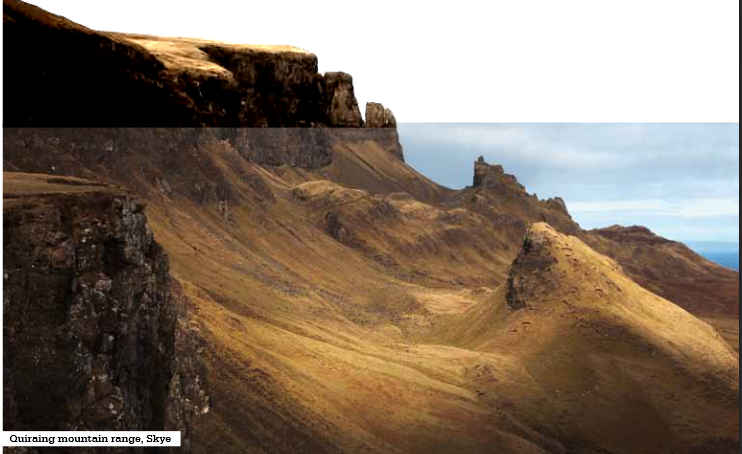
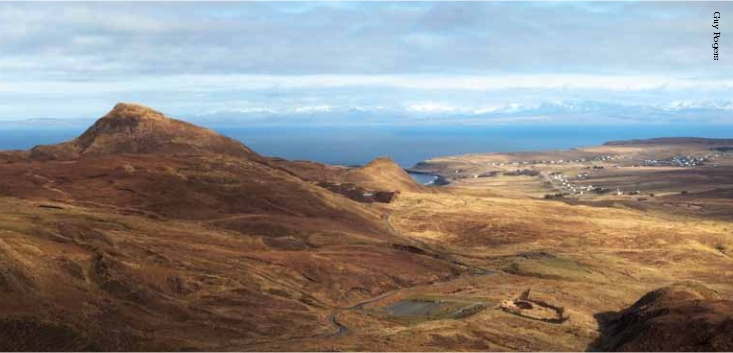


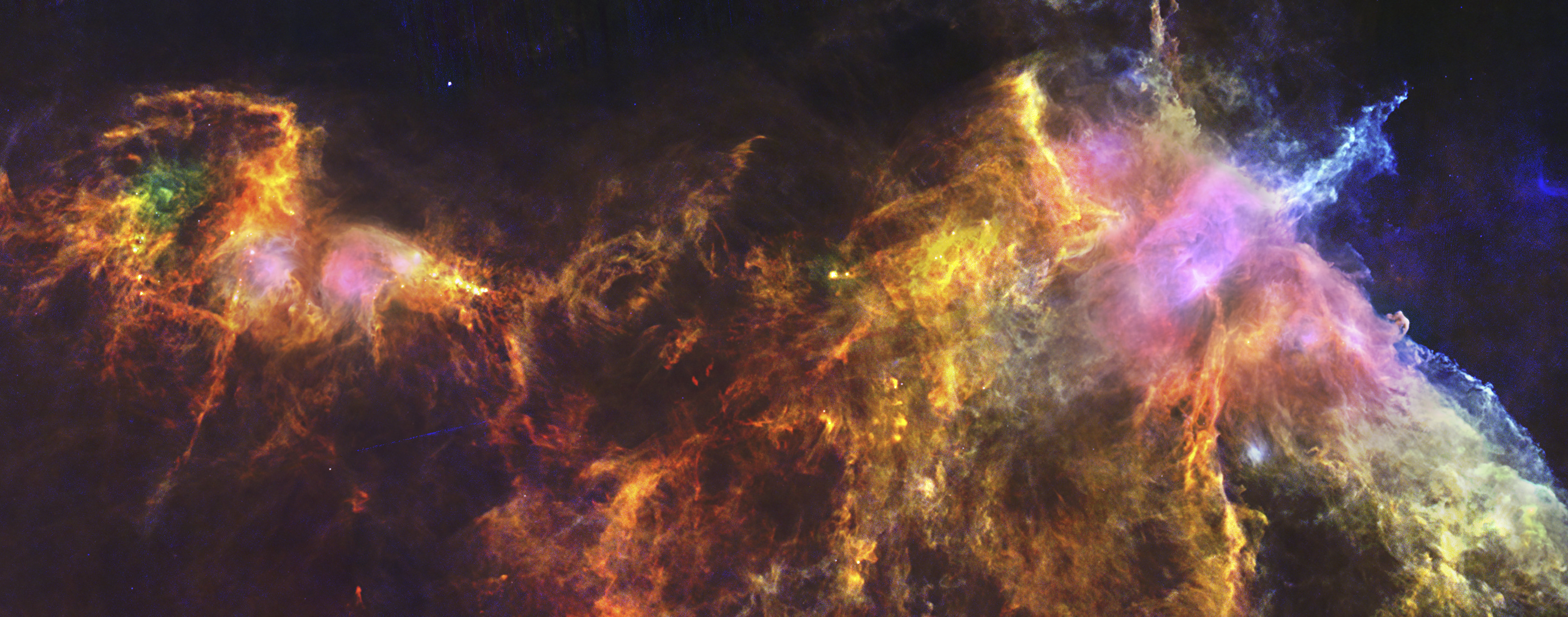


 Learning from Dogs