Category: People

My wish for the world

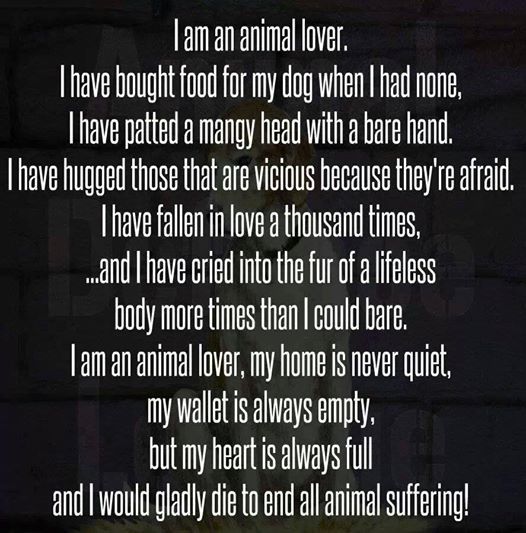
A most fitting guest essay after yesterday. The following is published with the kind permission of the author, Jeremy Nathan Marks.  I have done a ‘screen grab’ of the image associated with his blog post so you can experience it as you would see and read it from The Sand County.  It seemed perfect as a follow-on to yesterday’s post Life, and mortality.

ooOOoo

The Sand County

“In wildness is the preservation of the world.” -Henry David Thoreau Sand County

My Wish for the World

If I could leave behind but one lasting accomplishment from my life it would be to have changed the hearts and minds of all those people who accept or practice cruelty towards animals. Now there are a great many worthy causes in this world which fully deserve the attention of all those who believe in justice, in fairness, and in mercy. But I also know that each of us -perhaps- has a cause that stands above and beyond all of the other noble concerns that we know exist. For me this cause is the humane treatment of animals. And when I say animals I mean ALL animals. Permit me to explain. My wife and I have two dogs. Both are mutts and both were adopted through the Animal Rescue Foundation of Ontario (ARF). I have blogged about ARF before and can only offer the highest praise for the organization. Courtesy of ARF, we have been provided with free dog training classes which have proved to be an invaluable resource in learning about dog behaviour. Better yet, the dog trainer we have worked with has made herself available for our questions outside of class. Whenever we have encountered a behavioural challenge that we have not understood or have been unsure of a proper method of approach, this trainer has been very obliging. Importantly, she believes in positive reinforcement and does not believe in the use of pain, dominance, or stress as a means of conditioning dogs. For my wife and me, this fits in with our moral beliefs and our ethics. Our eldest dog, who just turned one year old, is a 60 lbs. shepherd mix who has a “leash anxiety,” if I may call it that. When we are out on a walk and she sees another dog she becomes quite agitated and will bark loudly and lunge at the other dog. This has puzzled us because our dog loves to play with others and is frequently socialized. We grew increasingly concerned because our use of treats and positive reinforcement was not working. And because our dog is a large shepherd, we both have worried that she might develop a reputation and become a source of fear or suspicion by other people in our neighbourhood. In due course, we contacted our trainer for advice. She suggested that rather than putting our dog in a stressful situation by repeatedly walking her past other dogs (and trying to control her behaviour when she becomes agitated) we should take her out of the situation instead. So, when we see another dog approaching we turn around and walk in a different direction, all the while rewarding our dog with treats and telling her she is a good girl. We have recently started doing so and the improvements are showing. So, let us fast forward to today. . . This afternoon we took both of our dogs on a 20 km hike along the Thames River. The trail is like so many other trails; it forms a narrow path through the woods which makes passing other trail goers challenging at points. If another dog were to come toward us this narrowness would pose something of a challenge because we cannot turn around (and head home). Also, because the trail runs through the woods, there aren’t often places to step aside and let other dogs pass by without our oldest detecting them. Inevitably we encountered another dog. We were approached by a small dog that was off leash (which is posted as unlawful, actually). We heard the dog before we saw it and prepared ourselves for some nervousness on the part of our oldest. When the dog approach some barking ensued and I tried to move our dog, as best I could, off the trail to let the family that was approaching us pass by with their dog. When we informed the family that our dog is uncomfortable around other dogs when she is leashed they did not seem to understand that we wanted them to pass by us quickly. When our eldest became excited one of the women turned to us and said that we should “knee our dog in her side to show her who is dominant.” I was appalled. Some woman, whom I have never met, who knows nothing about our dog or our relationship with our dog, was suggesting we use violence against her to show her who is boss. . . And this is a woman with a dog of her own! My wife later remarked to me, as we were driving home, that she would not feel entitled to the love and affection our dogs offer us if we used violence on them in any way. I thought what she said was beautiful and captured the principle of the matter perfectly. We want our dogs to love us and to trust us. How would we have any right to their love and affection if we were to lead them to believe that -at any moment and for no apparent reason- we might use painful force on them? Dogs do not understand why you use violence against them. They do not reason or understand cause-and-effect the same way that humans do. This is not a fault. It does not mean they are stupid or of lesser value than human beings. It does not mean they deserve to be treated with cruelty or brutality. Dogs experience violence as pain and suffering that is inflicted out of the blue. They are not only unprepared for it, but are often completely defenceless against it. How could we ever defend such an inhumane practice? It troubles me immensely that someone, whom I do not know, could so nonchalantly counsel me to violence against my dog. Her arrogant presumption aside, this was a monstrous act. It was barbaric. Nowhere in polite society would someone get away with counseling violence against a child. . . or against someone who is weaker. Yet violence against animals, even against dogs who supposedly occupy a place closer to human hearts than most other animals, is countenanced and even endorsed. (I won’t even begin to explain why the Dog Whisperer horrifies and saddens me.) If a young child was caught torturing animals we would all raise the alarm. The torture of animals, by a young child, is seen as an early warning sign of severe mental disturbance and has been linked to homicidal tendencies and highly violent behaviour. One of the great villains of American literature, the character Popeye from William Faulkner’s novel Sanctuary is depicted as a torturer of animals in his youth. Now I know that increasingly there are laws on the books in many nations that are designed to prevent cruelty to animals and to prosecute perpetrators. This is a positive development that I certainly applaud. But I would argue that there is something broader, more troubling in our relationship with animals that goes beyond the bounds of this current posting. It is a topic I will return to time and again at this blog. What troubles me is how animals are frequently seen as objects if they are even seen or thought of at all. The damage that our destruction of the forests, deserts, plains, and oceans of this world does to countless species is something that has been well documented. We do this because we are interested in acquiring the resources we feel are vital to ensuring our survival. . . but often it is our comfort or our “way of life” that really is the central reason for our pursuit of these things. There is a deep seated human arrogance which treats animals as inferior forms of life. We see them as less sophisticated because they cannot compete with us for power on this planet. We suffer from what Aldo Leopold called an “Abrahamic view” toward the land. Somewhere biblical “dominion” over nature became domination. This is tragic. And it is not necessary. I was deeply troubled by what I experienced today and it reminded me that if I could leave behind but one lasting accomplishment it would be to somehow awaken a sense of love, of mercy, and a thirst for justice where the animal life on this planet is concerned. Just imagine what realizing that love would really mean. By achieving a love that transcends the will to power, the will to control, and the will to domination our embrace of animals really is, after all, the achievement of that revelatory love that is at the heart of the great religions and the religious spirit. Love for animals is love for justice and mercy. It is reverence for life. And it is peace. I think Henry Beston captures these sentiments beautifully: “Remote from universal nature, and living by complicated artifice, man in civilization surveys the creature through the glass of his knowledge and sees thereby a feather magnified and the whole image in distortion. We patronize them for their incompleteness, for their tragic fate in having taken form so far below ourselves. And therein we err, and greatly err. For the animal shall not be measured by man. In a world older and more complete than ours they move finished and complete, gifted with extensions of the senses we have lost or never attained, living by voices we shall never hear. They are not brethren; they are not underlings; they are other nations, caught with ourselves in the net of life and time, fellow prisoners of the splendour and travail of the earth.” -from The Outermost House, by Henry Beston (quoted from Farley Mowat’s A Whale For The Killing) photos-1761

ooOOoo

I’m sure you will join me in thanking Jeremy for writing such a beautiful and heart-felt essay.
Life, and mortality.

Possibly the most important lesson we can learn from dogs!

I was aware when writing the concluding part of Meet the dogs – Pharaoh that the next day I would be faced with writing about a subject that is a whole degree more difficult.  Death!

It must have been in my mind when I wrote “of the need to smell the flowers in this short life of ours.

What has prompted today’s post?

Simply that Dhalia developed a limp in her front, right-hand, leg.  That was a few weeks ago.  Naturally, we took her to our local vet, Dr. Codd, who diagnosed a strained elbow joint probably as a result of arthritis; Dhalia is believed to be ten-years-old.  With the recommended medication, the limp came to an end.

Then about two weeks ago, the elbow weakness appeared in her left-hand, front leg.

On Monday, we returned to Dr. Codd who took further X-rays and sought a second opinion.  That second opinion came back with the probability that it was a “osteoproliferative neoplastic lesion” or bone cancer to you and me!  It’s not one-hundred-per-cent certain but likely.

It only seemed like yesterday that Jean wrote about Dhalia in our ‘Meet the dogs’ series. That post included this photograph.

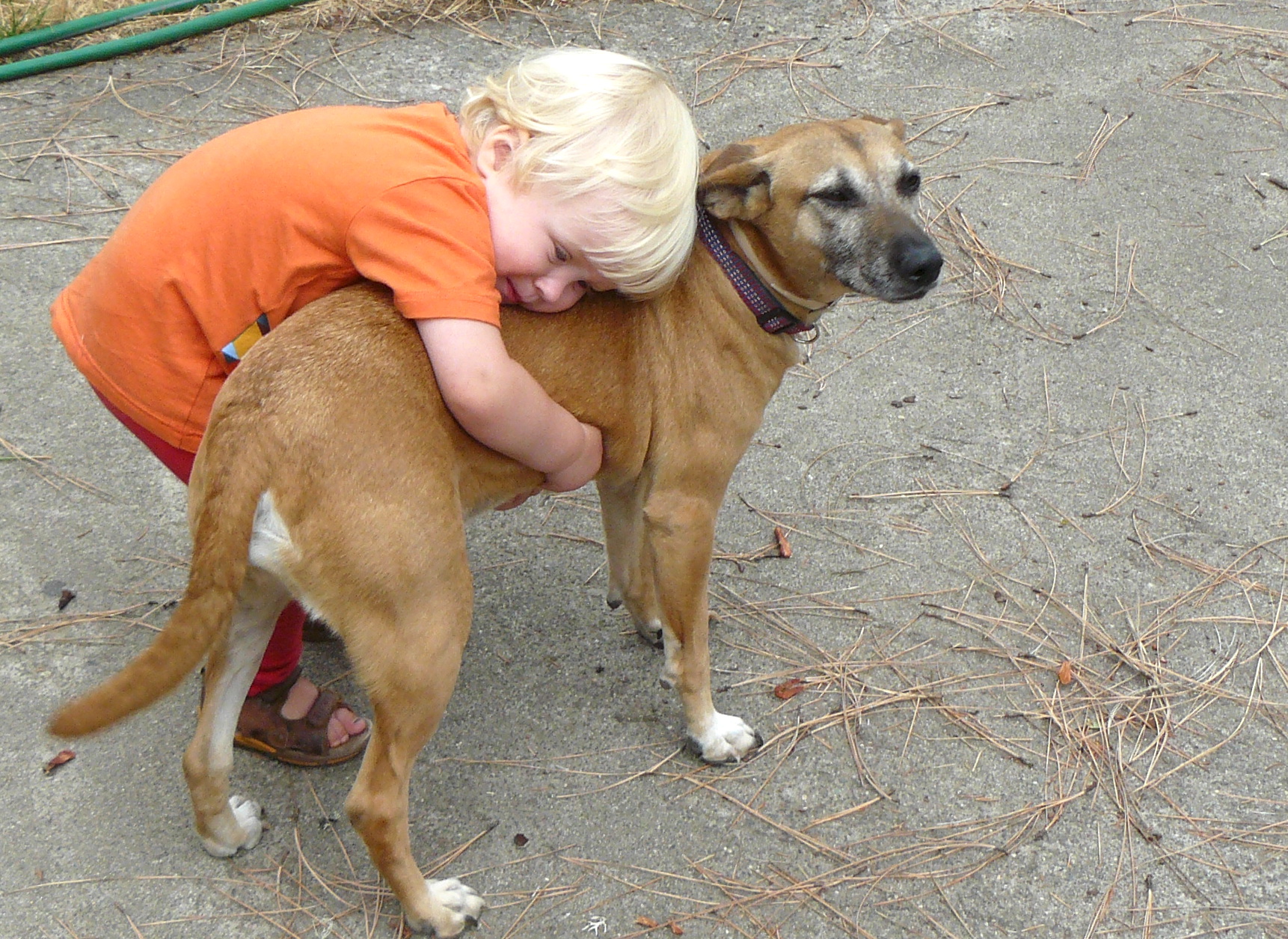
Love and Trust - Grandson Morten hugging Dhalia.
Love and Trust – Grandson Morten hugging Dhalia, September 2013.

Jean is very sad, as one would expect, nay we both are.  Dhalia, like Hazel and some of the other dogs here at home, has a loving openness towards humans that is truly remarkable when one learns of how these dogs came to be rescued: Dhalia being found by Jean living rough in a desolate part of a Mexican desert.  This is what Jean wrote in that ‘Meet the dogs‘ account:

I named her Dhalia and after treatments for mange she became quite beautiful. She was the pivotal part of a short story, Messages from the Night, Paul wrote back in 2011. Under her sweet exterior remains that same will to survive so evident when I rescued her all those years ago. There has been more than one occasion that she has brought me a recently killed squirrel or an ancient bone. We love our Dhalia: she still reaches out with her front paw when she seeks attention. Dhalia will be ten-years-old this year.

Somehow, Dhalia’s possible last few weeks of life resonated with much else going on.  Close to us, the recent death of a chicken, and one of our cats that does not have much longer to live.  In the wider world, the Washington State mud-slide, flight MH370, and the Ukraine.  The news media treat death as almost a trivial, incidental part of the scheme of things.

It takes others to offer words that elevate death to its deserved meaning.  Take, for example, author Brian Beker, who writes the blog The Dog in the Clouds.  Brian recently wrote the following post:

Prayer for an eagle

Please say a prayer for beautiful bald eagle who just died a death he did not deserve.

He was stuck on the ground near a concrete barrier on a stretch of interstate under construction in Arkansas. I spotted him with his head down, facing into the traffic that was passing a foot away from him.

He was an adult bald eagle-big and brave, facing down the oncoming 18 wheelers.

There was no place to pull off, concrete barriers on both sides, so I went to the next exit and backtracked. My adrenaline was rushing in horror and fear. My plan was just to stop and block traffic, and pick him up. But he had been killed by the time I got back to him three or four minutes later.

I failed that bird.

I hope he is circling over the lakes and trees he loves.

Back to learning about death from our dogs.

Dhalia’s possible terminal condition; my Pharaoh being the age he is; somewhere in there has come the recognition that we should embrace life yet also embrace our mortality; our death.  As Leonardo da Vinci was reputed to have said, “While I thought that I was learning how to live, I have been learning how to die.

What does death mean; truly mean?  I don’t know.  All I know is that death is the end of a life.  That our immortality is only an echo, a reverberation of who we were and what we stood for.  Or no better put than by American lawyer, Albert Pike, who left these words before he died on April 2nd, 1891 (Yes, I looked it up!)

What we have done for ourselves alone dies with us;

what we have done for others and the world remains and is immortal.

Last thought from our dogs. Recall that yesterday, I wrote, “Pharaoh has been my greatest inspiration of the power of unconditional love; of the need to smell the flowers in this short life of ours.

Day in, day out, anyone with dogs in their lives know how often they offer us simple acts of love.

A life of simple acts of love – now that does give death a meaning!

Dhalia - picture taken two days ago.
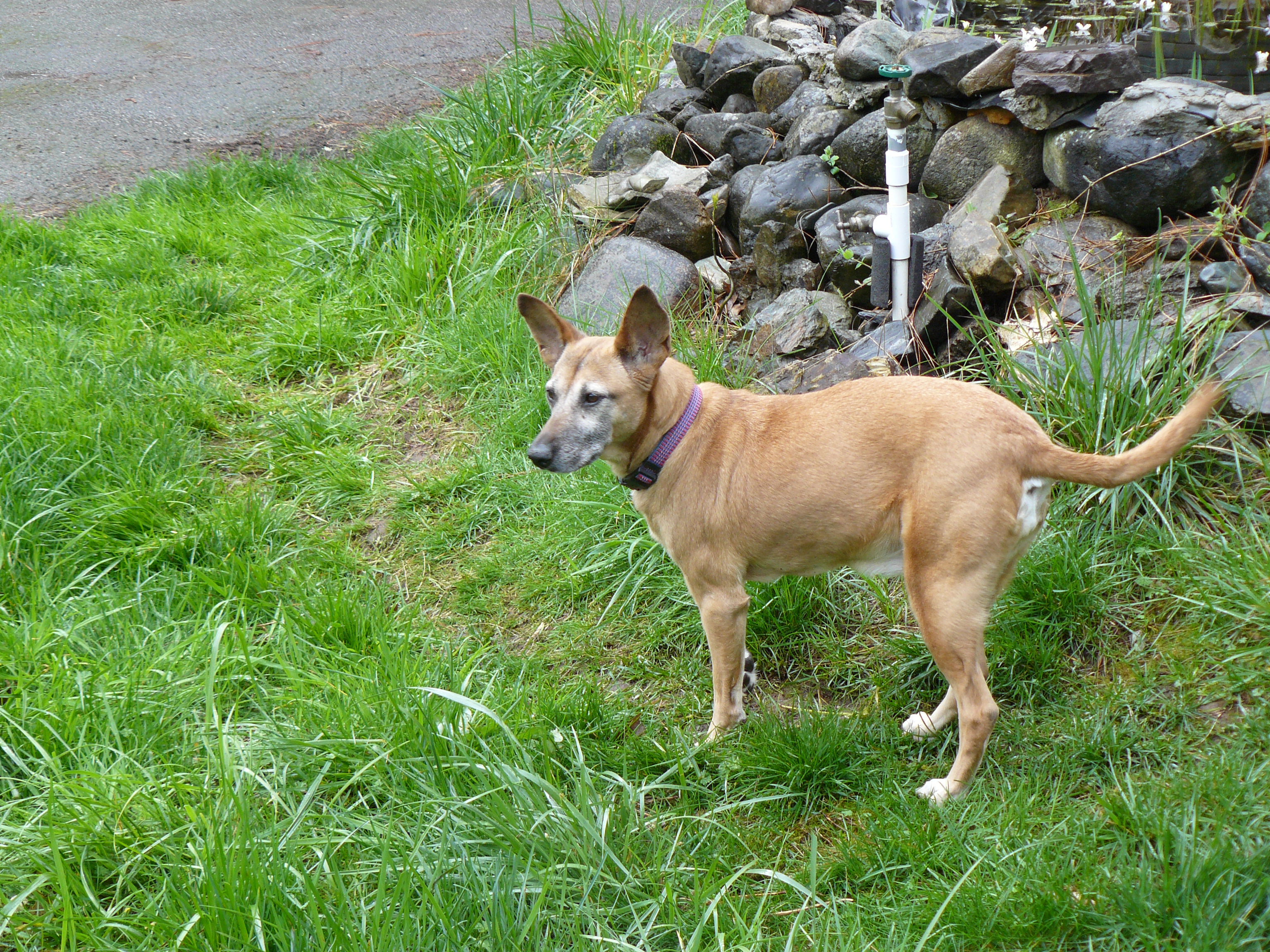
Dhalia – picture taken two days ago.

Once again – the need for integrity.

No apologies for another banging of this drum!

Last Friday’s post Has it always been like this? was comprised mainly of a republication of a recent George Monbiot essay.  The closing paragraph of that essay read:

Stories like this remind me that much of life is a struggle against disappointment. Perhaps I’m an idiot, but I expected a world that was so much better. I still believe it’s possible. But getting there requires a daily struggle against those who would mislead us.

George is certainly no idiot for expecting a better world, or to put it another way, if George is an idiot for such an expectation then there are millions of fellow idiots out there.

That essay from George Monbiot opened, thus:

Almost everything is fake. The brave proverbs with which we were brought up – the truth will out, cheats never prosper, virtue will triumph – turn out to be unfounded. For the most part, our lives are run and our views are formed by chancers, cheats and charlatans. [Ed. my emphasis!]

They construct a labyrinth of falsehoods from which it is almost impossible to emerge without the help of people who devote their lives to navigating it. This is the role of the media. But the media drags us deeper into the labyrinth.

So with those words still ringing in your ears, settle down for just sixteen minutes and watch anti-corruption activist, Charmian Gooch‘s recent TED Talk.

Anonymous companies protect corrupt individuals – from notorious drug cartel leaders to nefarious arms dealers – behind a shroud of mystery that makes it almost impossible to find and hold them responsible. But anti-corruption activist Charmian Gooch hopes to change all that. At TED2014, she shares her brave TED Prize wish: to know who owns and controls companies, to change the law, and to launch a new era of openness in business.

And if, having watched Charmian’s very compelling talk, you want to support her, then go to the Global Witness website.

Picture parade thirty-six.

The final set of pieces of wisdom.

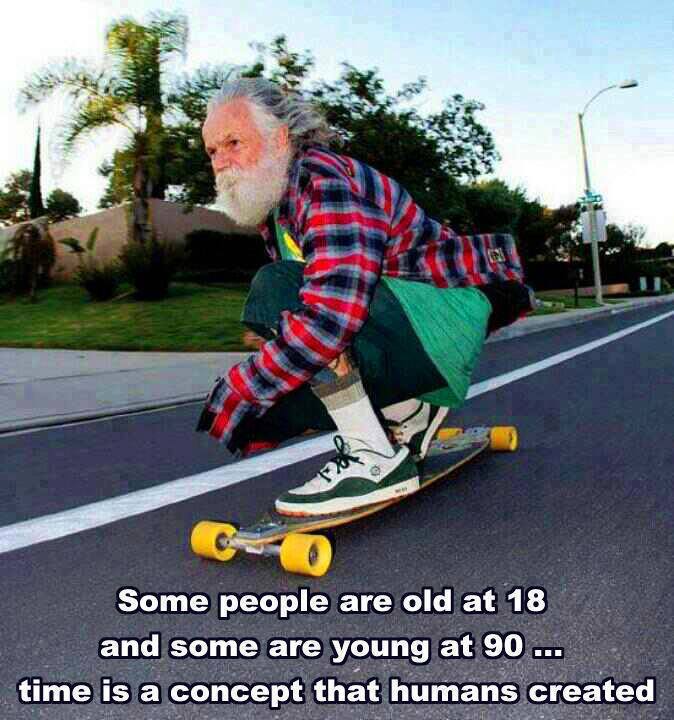
The two previous sets may be linked to via here.  Bob D., who sent them to me, will be delighted with the number of comments and ‘Likes’.  Fittingly, it’s dear Capt. Bob’s birthday today!

RD14

oooo

RD15

oooo

RD16

oooo

RD17

oooo

RD18

oooo

RD19

oooo

RD20

oooo

RD21

oooo

RD22

ooOOoo

Going to close today’s picture parade by adding a couple of pictures recently seen on Naked Capitalism.  Each day Yves inserts an ‘antidote du jour’ and in the last week two of them were so wonderful that they just had to be shared with you.

NK2

oooo

NK1

ooOOoo

You all have a great week!

Has it always been like this?

An essay from George Monbiot that highlights a world most would rather not think about.

It was past 4pm when I realised that I didn’t have a post for tomorrow (today!).  I went through my email folder that I devote for potential blog posts and came across this recent essay from George Monbiot.  Some time ago George gave me a general permission to republish his essays here on Learning from Dogs.

As it happens, this essay from George resonated unpleasantly with an article that I read this morning on the Permaculture Research Institute website.  It was called 10 Ways to Prepare for a Post-Oil Society.  Take this extract, for example:

2. We have to produce food differently.

The Monsanto/Cargill model of industrial agribusiness is heading toward its Waterloo. As oil and gas deplete, we will be left with sterile soils and farming organized at an unworkable scale. Many lives will depend on our ability to fix this. Farming will soon return much closer to the center of American economic life. It will necessarily have to be done more locally, at a smaller-and-finer scale, and will require more human labor. The value-added activities associated with farming — e.g. making products like cheese, wine, oils — will also have to be done much more locally. This situation presents excellent business and vocational opportunities for America’s young people (if they can unplug their iPods long enough to pay attention). It also presents huge problems in land-use reform. Not to mention the fact that the knowledge and skill for doing these things has to be painstakingly retrieved from the dumpster of history. Get busy.

When I read the full piece it made me feel angry that those in power both sides of ‘The Pond’ display no focus or interest in the future of modern societies over the next 25-years; well none that I can pick up!  Yet when you speak to friends, neighbours and people one meets when out-and-about, almost without exception people are nervous about just where it’s all heading – and that’s even before Russia and the Ukraine comes up!

Read George’s essay and see what comes to your mind.  Oh, and do leave a comment!

Follow the smoke trails!

ooOOoo

How the media gives Big Tobacco everything it wants.

By George Monbiot, published in the Guardian 18th March 2014

Almost everything is fake. The brave proverbs with which we were brought up – the truth will out, cheats never prosper, virtue will triumph – turn out to be unfounded. For the most part, our lives are run and our views are formed by chancers, cheats and charlatans. [Ed. my emphasis!]

They construct a labyrinth of falsehoods from which it is almost impossible to emerge without the help of people who devote their lives to navigating it. This is the role of the media. But the media drags us deeper into the labyrinth.

There are two kinds of corporate lobbyists in the UK. There are those who admit they are lobbyists but operate behind closed doors, and there are those who operate openly but deny they are lobbyists. Because David Cameron has broken his promise to shine “the light of transparency on lobbying in our country and … come clean about who is buying power and influence” we still “don’t know who is meeting whom. We don’t know whether any favours are being exchanged. We don’t know which outside interests are wielding unhealthy influence. … Commercial interests – not to mention government contracts – worth hundreds of billions of pounds are potentially at stake.” (All that was Cameron in 2010 by the way)(1). At the same time, the media is bustling with people working for thinktanks which refuse to say who is paying them, making arguments which favour big business and billionaires.

Perhaps the most prominent is the Institute of Economic Affairs. Like most groups of this kind, it refuses to disclose its funding. But there’s a trail of smoke. We now know that it has been taking substantial sums from British American Tobacco (BAT), Japan Tobacco International, Imperial Tobacco and Philip Morris International(2,3). BAT has funded the institute since 1963(4). By pure coincidence, the IEA has fiercely defended the tobacco companies from efforts to regulate their products.

In their indispensable new book A Quiet Word, Tamasin Cave and Andy Rowell explain why corporations want other people to front their campaigns. “The third party has the credibility of looking independent; seems to be motivated by something other than self-interest and profit; and therefore has a much greater chance of being believed. Credibility, authenticity and the impression of independence are key. It is about separating the message from the self-interested source.”(5) While many controversial companies use this tactic, it is particularly important for tobacco firms; first because no one trusts them; secondly because they are banned from seeking to influence public health policy, under the Convention on Tobacco Control, which the UK has ratified(6).

Last year a presentation made in 2012 by Philip Morris International (which sells Marlboro and other brands) was leaked(7). It explained how the company intended to fight the proposed plain packaging rules in the UK. Plain packaging is a misnomer: the packs show only horrible photographs of medical conditions caused by smoking. The evidence suggests that they’re a powerful deterrent(8). Philip Morris listed the arguments that should be made in the media to try to prevent the government from introducing plain packaging, identified the BBC as a key outlet, and named the Institute of Economic Affairs and the Tax Payers’ Alliance as potential “media messengers”(9).

So you might imagine that the media – and the BBC in particular – would exercise a certain amount of caution when interviewing think tanks funded by tobacco companies about the regulation of tobacco. Such as disclosing that they are, er, funded by tobacco companies. You would of course be wrong.

At the end of last year the BBC’s Today programme interviewed Mark Littlewood, the head of the Institute of Economic Affairs, about plain packaging(10). It failed to inform listeners that the IEA has received funding from tobacco companies. Mark Littlewood used two of the arguments recommended by Philip Morris in that leaked document: there’s no evidence that plain packaging affects the number of people who smoke, and it stimulates a black market in cigarettes.

I encouraged readers to complain, on the grounds that the BBC’s failure to disclose his interests in the issue he was discussing flatly contravenes three of its editorial guidelines. The BBC’s responses astonished me. First it claimed that it was not “appropriate or necessary” to include this information, on the grounds that the IEA doesn’t publish it(11). In other words, if you’re not candid about who funds you, you’re off the hook. Then, as the complaints continued, it maintained that “all we have to go on are newspaper reports. In the absence of any independent verification therefore, it remains an allegation”(12).

When the BBC was told that tobacco companies have admitted funding the IEA, the reasoning changed again. Now it argues that it would be wrong to assume “that an organisation adopts a particular position on an issue because it receives funding from an interested party”: it might have formed the position first and received the money as a consequence(13). That’s true, though it’s hard to see what difference it makes: if think tanks survive and prosper because their position just happens consistently to align with the grimmest of corporate interests, the politics of the relationship don’t change very much. In either case, surely listeners should be allowed to make up their own minds. Who would not wish to be told that an organisation whose spokesperson is defending Big Tobacco on the Today programme receives money from Big Tobacco? What kind of broadcaster does not see that as relevant information?

Since then, the IEA’s staff have been interviewed by the BBC about tobacco eight more times(14). In none of the interviews I have listened to are their interests declared. It’s all about to blow up again, as the government’s review of plain packaging reports at the end of this month, and the thinktanks will be trundling all over the media(15). The petition I published on change.org, calling on the BBC to disclose its contributors’ financial interests, has 11,000 signatures so far(16). If they reach 20,000, I’ll present it.

Stories like this remind me that much of life is a struggle against disappointment. Perhaps I’m an idiot, but I expected a world that was so much better. I still believe it’s possible. But getting there requires a daily struggle against those who would mislead us.

www.monbiot.com

References:

1. http://toryspeeches.files.wordpress.com/2013/11/david-cameron-rebuilding-trust-in-politics.pdf

2. http://www.theguardian.com/society/2013/jun/01/thinktanks-big-tobacco-funds-smoking

3. http://www.tobaccotactics.org/index.php/Institute_of_Economic_Affairs

4. As above.

5. Tamasin Cave and Andy Rowell, 2014. A Quiet Word: Lobbying, Crony Capitalism and
Broken Politics in Britain. Bodley Head, London.

6. Article 5.3. http://whqlibdoc.who.int/publications/2003/9241591013.pdf

7. www.tobaccotactics.org/index.php/PMI%E2%80%99s_Anti-PP_Media_Campaign

8. Crawford Moodie et al, no date give. Plain Tobacco Packaging: A Systematic Review. Report for the Department of Health by the Centre for Tobacco Control Research, University of Stirling. http://phrc.lshtm.ac.uk/papers/PHRC_006_Final_Report.pdf.

9. www.tobaccotactics.org/index.php/PMI%E2%80%99s_Anti-PP_Media_Campaign

10. Today, 28th November 2013. BBC Radio 4.

11. BBC Complaints, 4th December 2013.

12. BBC Complaints, 9th January 2014.

13. BBC Editorial Complaints Unit, 19th February 2014.

14. http://www.iea.org.uk/in-the-media/media-coverage

15. http://www.thelancet.com/journals/lancet/article/PIIS0140-6736%2814%2960480-3/fulltext?version=printerFriendly

16. https://www.change.org/en-GB/petitions/the-bbc-always-disclose-the-financial-interests-of-the-people-you-interview-in-the-issues-they-are-discussing

ooOOoo

Won’t be the first time, nor the last time, that I mention the need, the critical need, for human society to learn the value of integrity: the quality that we see coming from our animals day-in; day-out!

Welcome Ranger – and Ben!

Our new boys- the story of two horses!

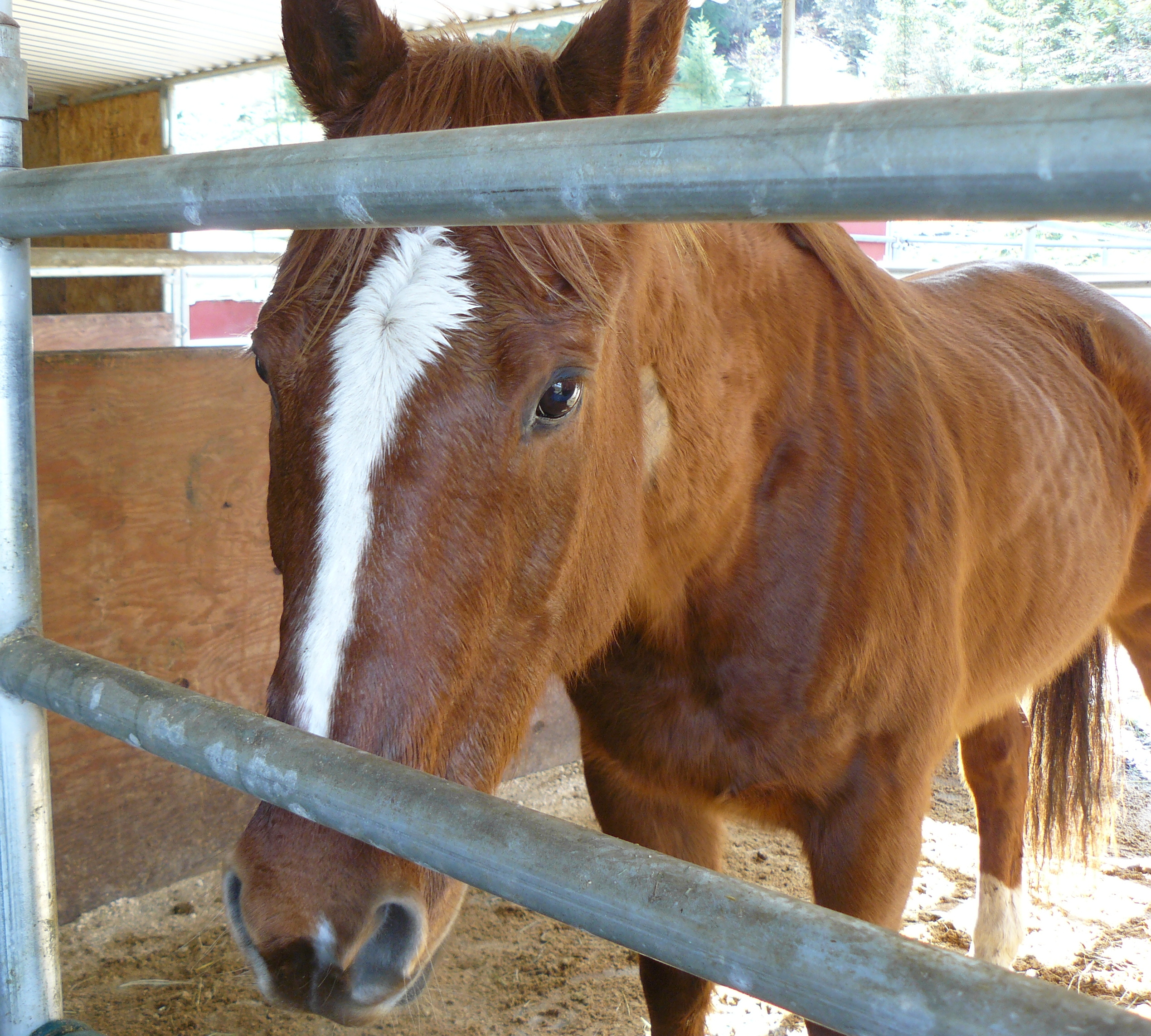
Regular readers of Learning from Dogs will remember a post just over a month ago The lone Ranger.  Essentially, that explained that we had visited Strawberry Mountain Mustangs in Roseburg, Oregon and, subject to their approval, had decided to adopt Ranger, a 15-year-old gelding.

Ranger, when first seen in February.

Thus it proceeded to the point where two-days ago Darla, of Strawberry Mountain, ably assisted by Cody, brought Ranger and Ben to us here in Merlin.  It’s been a wonderful twenty-four hours (at the time of writing this). Why Ben?  Please read on.

Destination!
Destination!

Darla and Cody making a safe and timely arrival a little before 10am last Tuesday.

Ben, our new foster.
Ben, our new foster, being coaxed out by Darla on the lead-line and Cody behind him.

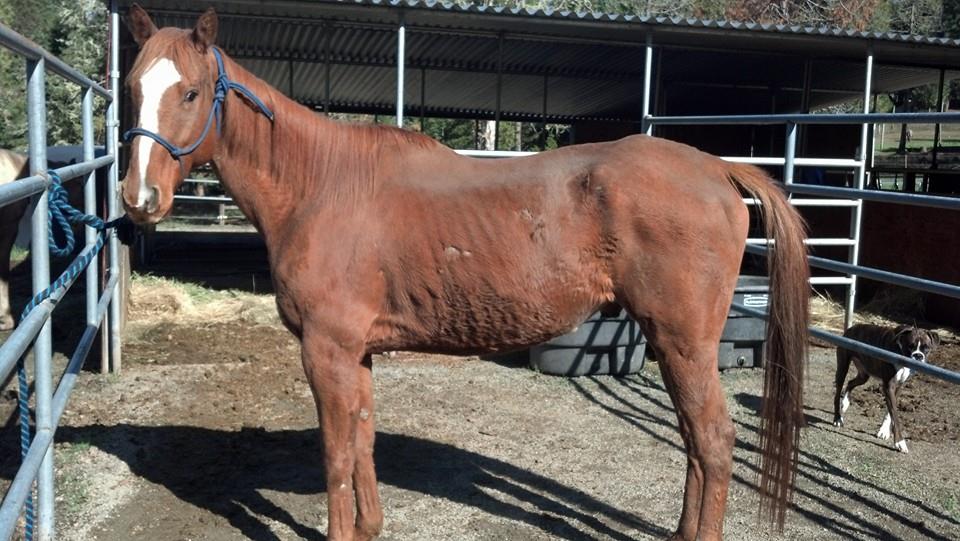
Why did we take the two?  Last October, Ben had been found starved and showing the signs of a great lack of confidence.   He was ‘rescued’ on orders of Darla’s local sheriff because of Ben’s condition despite being in private ownership.  Darla was certain that Ben had been physically beaten in recent times, hence him being very wary of strangers.  Thus his relationship with Ranger was part of his journey of returning to a healthy, confident horse. Darla offered us the opportunity of fostering Ben because Ranger had become a good companion for him. Darla explained that Ben was a very wary horse, especially of sudden movements from men.

Jean leading Ranger; Darla leading Ben.

Another 100 yards and the start of a new life for these two gorgeous animals.

Hey Ranger, is this for real!!

In the those first few minutes after Jean and Darla led the horses to the grass paddock, Ben seemed to have an expression on his face that suggested it was all too difficult to believe!  Ranger just got stuck into munching!  But not to the extent of not enjoying a back-rub!

"I think I'm going to like this, Ben!"
“I think I’m going to like this, Ben!”

In the afternoon, it was time to bring Ben and Ranger for an overnight in the top area where the stables, food and water were.  Ben was very nervous at coming through the open gate and for a while there seemed to be a complication in that Ranger kept thrusting at Ben as if to keep him away from the fence line separating the horses from Allegra and Dancer, our miniature horses.

But in the morning, yesterday, things seemed much more relaxed. To the point that when Ben and Ranger went back out to the grass, Ben was much more relaxed towards Jean and me, as the following pictures reveal.

Jean offering Ben some treats.

oooo

Yours truly doing likewise.

OK, want to turn back to Darla.

To give an insight into the awe-inspiring work of Darla and her team (and many others across the Nation) and to recognise the need of the authorities to have such outlets as Strawberry Mountain, here are two photographs of Ben shortly after he was removed from the people who had stopped loving and caring for him.

Ben2 when found
Ben as seen last October.

oooo

Ben as seen last October.
Ben close to starving.

Strikes me as only one way to end this post is with the following as seen on Darla’s Facebook page.

asasa
Author unknown.

Thus this post is offered in dedication to the good people all over the world who know the value of the unconditional love we receive from animals and do not hesitate to return the same.

Darla, Cleo and Cody setting a wonderful example of unconditional love.

How about giving the nearest animal, or human, a big hug telling them at the same time how much you love them!

Whose land is it?

This has the feel of a moral issue!

It shouldn't have the tragic ending it did have!
It shouldn’t have the tragic ending it did have!

Regular followers know that many of the items that get published here on Learning from Dogs are as a result of followers sending me stuff.

No less so than a recent item from Suzann where in a short email she included the link to a video.

Watch the video first.

I’m sure, like me, you were intrigued to find the background story.  The YouTube page offers that background.

Elk vs. Photographer | Great Smoky Mountains National Park

Published on Nov 12, 2013

Update: I’ve been in contact with the photographer in the above video and we would both like to issue a statement regarding the news of the National Park Service’s decision to put the elk down. Vince M Camilo.

My statement:
I am deeply saddened by the fate of the elk. It has certainly pulled a black cloud over this whirlwind “viral video” experience.

I spoke to the reporter who broke the story and she assured me the decision was based on a pattern of aggressive behavior that began prior to the incident documented in this video. The behavior was the result of visitors feeding the elk and conditioning them to seek food from humans. This video only serves as an example of the elk’s dangerous behavior, not an impetus to it.

Again, it brings me great sadness to learn of this beautiful animal’s demise and the unfortunate circumstances surrounding it. I’m looking into a destination for proceeds from this video to help the NPS educate visitors on the dangers and consequences of feeding wildlife.

I also want to be clear that James, the photographer, was not complicit in a behavior that led to the elk’s demise, but rather was made an example of the result of such behaviors. The elk approached him from behind, likely looking for food as he was conditioned to do.

Statement from James (the photographer):
I love and respect animals and that’s why I photograph them and don’t hunt them. I am deeply hurt by the loss of such a beautiful creature that in its own way bonded with me. I looked forward to watching him grow to a mature bull as the years passed.

I’m truly heartbroken to know he is gone.

Original video description:

While photographing elk at sunrise in the Cataloochee Valley of Great Smoky Mountains National Park I turned around to see what appeared to be just a curious young bull sniffing a photographer’s camera. I snapped a few frames of the apparent harmless encounter.

But the elk became more interested in making trouble than simply the scent of a camera. He started physically harassing the photographer, escallating to full on head-butts.

I quickly switched the camera to video and let it roll (much of the time wondering when I should seriously consider intervening).

Most people who see this ask why the photographer seems to just take the abuse. I asked him in an email what was going through his head. This is his response:

“My first thoughts were “wow, he’s getting pretty damn close here.” But I’ve been up close before without incident. I hoped being still and passive would see him pass on. When he lowered his antlers to me, I wanted to keep my vitals protected and my head down. I felt that standing up would provoke him more and leave me more vulnerable to goring. I think that while protecting myself with my head down, having my head down was a signal that I was rutting with him. I was concerned at first, but when he started rearing back and lunging at me later on, I got scared and pissed off. That’s when I wagged my finger at him to cut that shit out. I was relieved to see the Ranger coming.

So I guess at some point if the Ranger hadn’t of pulled up, I would have had to disengage the best I could. I’ve joked with my friends that at least he took me for a buck and not a cow!”

This video is managed by Newsflare. To use this video for broadcast or in a commercial player email newsdesk@newsflare.com or call +44 (0)843 2895191.

Please feel free to browse my stock archive at:
https://tandemstock.com/browse?q=vinc…

Or get more info at my site:
http://www.runvmc.com

Thanks for checking out the video!

That’s why I photograph them and don’t hunt them.”  Clearly, if I was to be objective in this post I would have to seek a explanation from the National Parks Service as to why the Ranger thought it necessary subsequently to kill the elk.  You can tell that I am more than saddened by the outcome.

“Study nature, love nature, stay close to nature. It will never fail you.” Frank Lloyd Wright.

Until we learn that we are part of the natural order, that we don’t stand above it, then there is little hope for humanity.

Just my two-cents worth.

Just words!

Odds are you have already seen this!

Reason I state that is, as of yesterday morning, some 19,070,066 viewings of the following video had taken place.

But so what!

That number shows that despite the advertising insertions, despite the video promoting a commercial concern at the close, there are plenty of us who want to be reminded of the power of words.

Whatever words we utter should be chosen with care

for people will hear them and be influenced by them

for good or ill.

Buddha.

Footnote:

Jean and I were pottering around yesterday afternoon getting everything ready for Ranger’s arrival planned for Tuesday.  In the back of my mind was some self-criticism for just sticking today’s post up in front of you, in the sense that it was just too easy.  Not that the message isn’t powerful but does it relate to the essence of this blog – exploring what we can learn from dogs?

Then it struck me as blindingly obvious! Of all the things that dogs offer us humans, the one key aspect of their integrity is their unconditional love.   The way that dogs love us acknowledges our existence at a ‘being-to-being’ level.

That’s the power of that short video. That the passing lady stopped and acknowledged the existence of the blind beggar-man.

We all need to be reminded of that all the time!

Real democracy.

This news really brightened my day!

Or, perhaps I should have written that sub-heading, “Adding a gloss to what are mostly bright days!”.

What on earth am I rabbeting on about?

From time to time on Learning from Dogs I have touched on the topic of democracy.  The most recent post of any relevance was on the 27th January this year in a post called Unconditional love.  In essence that blog post was recording an email exchange between Martin Lack, Chris Snuggs and Patrice Ayme. Let me reproduce a part of that ‘discussion’:

Paul: Chris/Martin, To my way of thinking, there is a more fundamental issue at work. That is the corrupting effect of power. I’m certain you know the famous saying. Thus whatever fine motives propel a person to enter politics, that person seems unable to avoid the call of power and its corrupting effect. The only hope is that key countries, and none so key as the USA, evolve a better, more representative, political process. Otherwise, I fear for the coming years.

Patrice: I agree with Paul 100%. I saw the call of power. Unimaginable. People just get insane. There are also filtering systems to insure they get that way (it starts right away with one week retreats in extremely posh resorts; does not matter if you are capitalist, socialist, blueist, reddist, ecologist, independentist, etc.).

Chris: Agreed. It has been clear time and time again throughout history. Well, so much is obvious, but WHAT TO DO about it?

A) We must end the practice of having career politicians: you serve a maximum of TEN years, at the end of which you go.

B) Inherited wealth allowing the building up of immensely powerful family dynasties over generations must be ended. It is simply untenable. The rich-poor gap is getting obscene everywhere, and money is of course power. My “Abolish inheritance” idea will be wildly unpopular because we are naturally acquisitive and “greedy” and of course would hit those with most to lose who also therefore have the most power.

Patrice:  With all due respect, Chris and Martin sound rather naïve… Huge wealth and power is where it’s at. And it attracts to politics first, foremost, and soon uniquely, those it attracts most, namely the basest sort.

Without in any way of knowing in a reliable manner, as in statistically reliable, the attitudes of folk, nonetheless there is no question that a huge number of the ordinary folk that live around us here in Merlin, Joesephine County, Oregon and others that one meets in the course of being ‘out and about’ are worried; frequently deeply worried.

Worried about the “Huge wealth and power ..” and the gross inequalities that flow from that.

So with that in mind, consider the pleasant surprise offered me when I read the day’s roundup from the Permaculture Research Institute email distribution and it included:

The Missing Part of the Internet – Collaborative Decision-Making Made Easy with Loomio

The world needs a better way to make decisions together

“The new era of digital democracy is one source of hope. New formats for web-based participation, like Loomio, and enablers of grassroots engagement… are flourishing.” —The Huffington Post

Democracy isn’t just about politics — it’s people getting together and deciding how things should be. It’s a skill we can practice with people wherever we are: in our workplaces, our schools, and our communities.

Loomio is a user-friendly tool for collaborative decision-making: not majority-rules polling, but actually coming up with solutions that work for everyone. We’re a small team in New Zealand, and we’ve built a prototype that people are already doing great things with. Now we’re crowdfunding so we can build the real thing: a new tool for truly inclusive decision-making.

It was but a hop and a skip to go to the Loomio website and read:

The world needs a better way to make decisions together.

Help us build it.

Loomio is free and open software for anyone, anywhere, to participate in decisions that affect them

and then with a further mouse-click on the Crowdfunding link to read:

THE WORLD NEEDS A BETTER WAY TO MAKE DECISIONS TOGETHER.

Democracy isn’t just about politics – it’s people getting together and deciding how things should be. It’s a skill we can practice with people wherever we are: in our workplaces, our schools, and our communities.

Loomio is a user-friendly tool for collaborative decision-making: not majority-rules polling, but actually coming up with solutions that work for everyone. We’re a small team in New Zealand, and we’ve built a prototype that people are already doing great things with. Now we’re crowdfunding so we can build the real thing: a new tool for truly inclusive decision-making.

At this point, I should declare an involvement.  Jean and I decided to donate a modest amount.  Thus it is not from an impartial position that I close today’s post with the following video.  Bet you will be impressed!

If you enjoyed that video then do watch the following TED Talk.

Published on Aug 4, 2013

Ben Knight is part of a cooperative social enterprise building Loomio, an online tool for collaborative decision-making being used by thousands of people in more than 20 countries. Ben will be picking through ideas around how technology can enable everyday democracy.

This could be a most interesting development!

Mid-week story

Too good to wait until the week-end!

(And a big thanks to Dan Gomez for sending it my way.)

ooOOoo

Went Fishing, Caught 4 Deer

A once in the history of mankind kind of thing. The Best Day Of Fishing Ever!

Some fishing stories are a little hard to believe but this guy has pictures to prove his story. Like me, you will heard of salmon jumping into boats, but never anything quite like this…

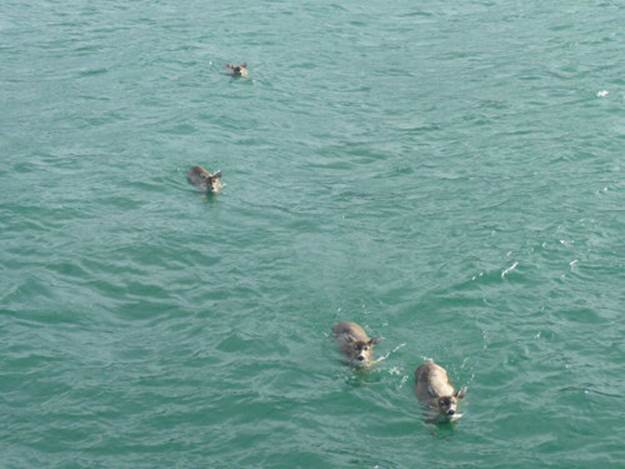
Tom Satre told the Sitka Gazette that he was out with a charter group on his 62-foot fishing vessel when four juvenile black-tailed deer swam directly toward his boat.

a_00t4

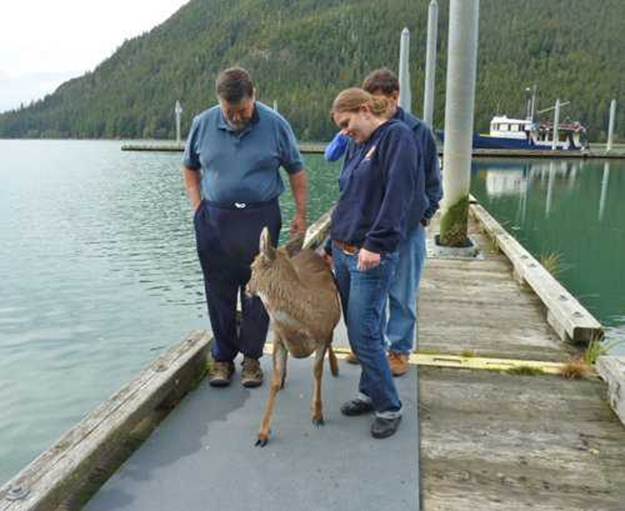
Once the deer reached the boat, the four began to circle the boat, looking directly at us. We could tell right away that the young bucks were distressed. I opened up my back gate and we helped the typically skittish and absolutely wild animals onto the boat. In all my years fishing, I’ve never seen anything quite like it! Once on board, they collapsed with exhaustion, shivering.

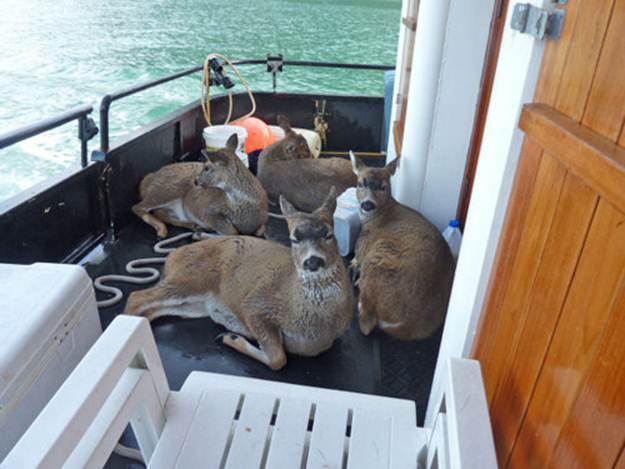
ass

This is a picture I took of the rescued bucks on the back of my boat, the Alaska Quest. We headed for Taku Harbour.  Once we reached the dock, the first buck that we had pulled from the water hopped onto the dock, looked back as if to say ‘thank you’ and disappeared into the forest. After a bit of prodding and assistance, two more followed, but the smallest deer needed a little more help.

a_sf003
This is me carrying the little guy.

oooo

a_00ff2

My daughter, Anna, and son, Tim, helped the last buck to its feet. We didn’t know how long they had been in the icy waters or if there had been others who did not survive.  My daughter later told me that the experience was something that she would never forget, and I suspect the deer felt the same way as well!”

Kindness is the language the blind can see and the deaf can hear.” – Mark Twain

Story dated October, 2010

ooOOoo

I have no idea if it is a true story, although the photographs suggest it is, but so what!  Any reminder of how precious our wild life is will always be welcomed on Learning from Dogs!