On September 1st, I published an update on Ruby’s condition with regard to her UTI. This was because Ruby had had a re-occurrence of blood in her urine. Dr. Jim took an xray and also wanted Ruby’s urine sent across to Three Rivers Hospital for a culture. As I explained in that post, using information found online:
A urine culture is a test to find germs (such as bacteria) in the urine that can cause an infection. Urine in the bladder is normally sterile. This means it does not contain any bacteria or other organisms (such as fungi). But bacteria can enter the urethra and cause a urinary tract infection (UTI).
A sample of urine is added to a substance that promotes the growth of germs. If no germs grow, the culture is negative. If germs grow, the culture is positive. The type of germ may be identified using a microscope or chemical tests. Sometimes other tests are done to find the right medicine for treating the infection. This is called sensitivity testing.
Late on Tuesday afternoon, the Clinic rang to say that the full results were in.
So yesterday morning, the air still heavy with the smoke from the forest fires, we called in to Lincoln Road.
The report from Rogue Regional Medical Center, as in Three Rivers Hospital, offered the following:
VET URINE CULTURE
SPECIMEN SOURCE: URINE
COMMENTS TO MICRO: URINE
CULTURE RESULTS: 20,000 CFU/ML PROTEUS MIRABILIS
REPORT STATUS: FINAL 09/02/2017
(My emphasis)
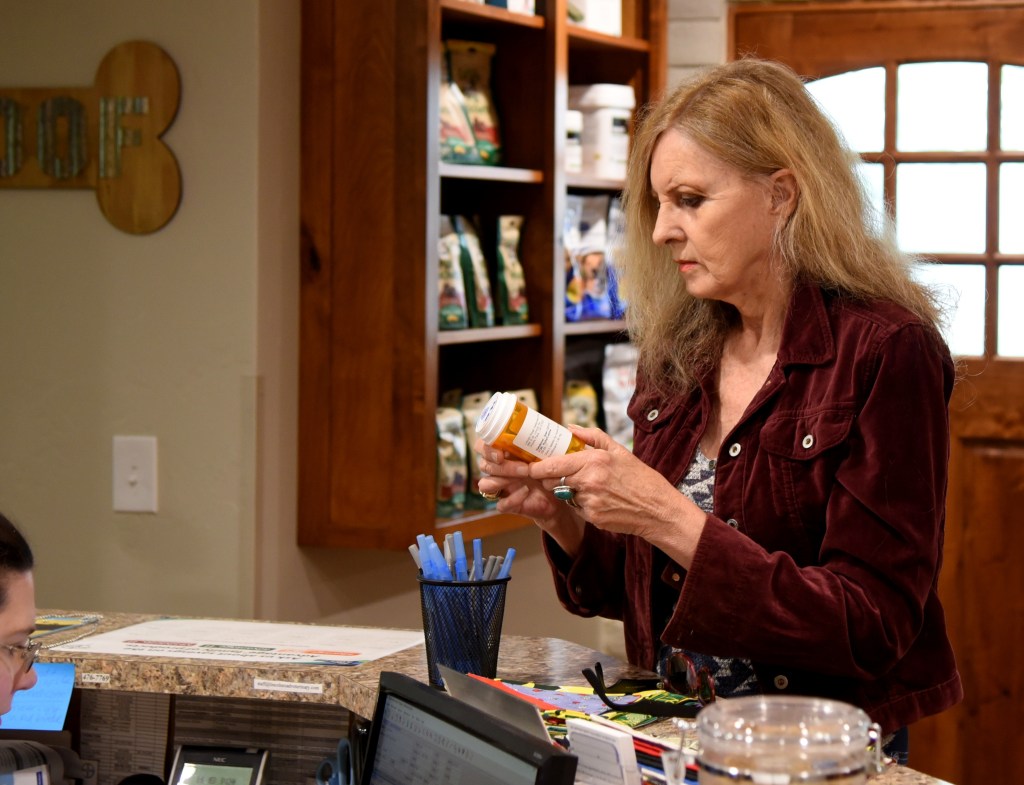
That translated into Ruby’s medicine being changed from her present course of Amoxicillin antibiotic to Enrofloxacin (Two 136 mg tablets by mouth every 24 hours for 10 days.)
Enrofloxacin (ENR) is a fluoroquinolone antibiotic sold by the Bayer Corporation under the trade name Baytril. Enrofloxacin is currently approved by the FDA for the treatment of individual pets and domestic animals in the United States.
But I wanted to inform all you wonderful readers that for the next 6 days I am going to be rather distracted by a book event. I have prepared posts through to the 12th, my first clear day ‘back at my desk’ but if in the meantime you wonder why I am being unresponsive that’s the reason.
I saw the following not too long ago and asked if I might have permission to republish it here. Lea said “Of course”. Thus I am delighted to republish what appeared on Paws Give Me Purpose blog earlier this year.
ooOOoo
Doggie Language
By Lea
Most dog owners wish their pup could speak to them and tell them exactly what they want, how they’re doing and how they’re feeling. I honestly believe dogs can talk, but only to those who know how to listen. Their body language and behaviors are the language they use to speak to you. Do you ever wonder if your dog loves their life? If they’re happy?
This is a picture of Phoebe, a Maltese that was rescued by Yorkie911 Rescue Inc. This was her first day in my home, look at that smile! She knew she was safe and was expressing her happiness.
Here are some ways to know your pup is relaxed and happy:
Your dog gets excited! Excited to see you, to play, to eat, to go for walks. If for some reason your dog doesn’t get excited for these things your pup may be telling you they are not be feeling well.
Your dog sleeps well. A happy relaxed dog sleeps well. A stressed dog, or if your dog is not feeling well, will be restless and change spots often trying to get comfortable during the night.
A healthy dog is a happy dog 🙂 Obviously if your pup isn’t feeling well the signs of happiness won’t show.
Pay attention to your dog’s eyes, when your pup is happy his eyes are bright and are their “regular” shape. If your dog is uncomfortable or in pain his eyes will tell you, he may squint.
When your dog is happy and relaxed their mouth will be closed or slightly opened with a relaxed tongue hanging out. A panting dog could be hot or stressed, so pay attention to this body language.
A destructive dog is a bored dog 🙁 If your dog is content they will play with their toys and bones rather than eat your shoes or anything else.
If your dog’s body language is relaxed he/she is happy. Relaxed posture, not tense or stiff. When a dog places it’s head in your lap it’s a relaxed happiness being with his/her person.
When your dog is relaxed he/she will carry their tail in its natural position. When they are happy they will wag it from side to side. They may even wiggle their entire body with joy! A tail that is held low or between the legs signals a lack of confidence, nervousness, or fear. (A dog’s tail can tell you a great deal about their moods. A wagging tail does not always mean they are happy, don’t assume that’s always the case. Pay attention to the rest of the dog’s body and actions. Believe me, just the tail itself can be a full post on its own).
Happy dogs are active. They love to play with you, with their toys, chew on their bones, explore, and solicit attention from you. They may play bow or initiate physical contact with you by rolling over for a belly rub, this also shows trust. A happy dog wants to hang out with his/her people!
A happy dog likes to eat. Some dogs, like one of mine, can be picky eaters when it comes to meals, but in general when they are happy, he/she will enjoy eating. What dog can resist a cookie.
Some dogs rarely bark, but those that do have a higher-pitched bark when they’re happy than they usually do. Sometimes it’s even a high pitched howl in this house.
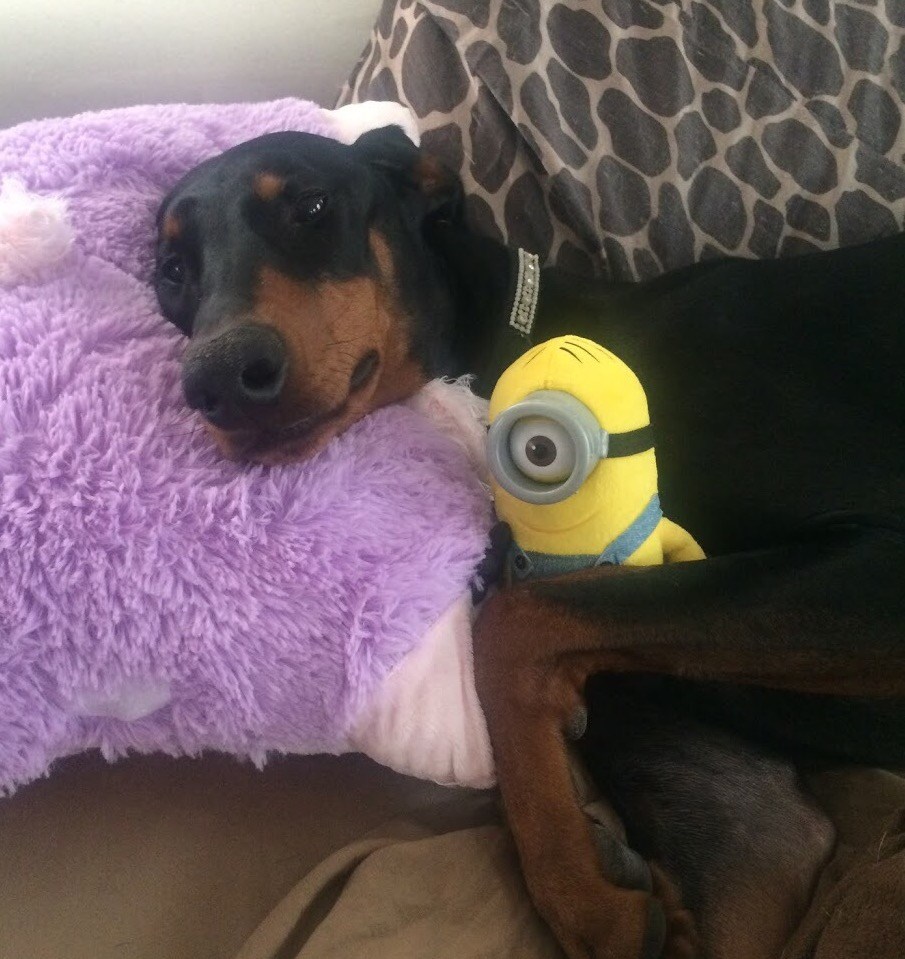
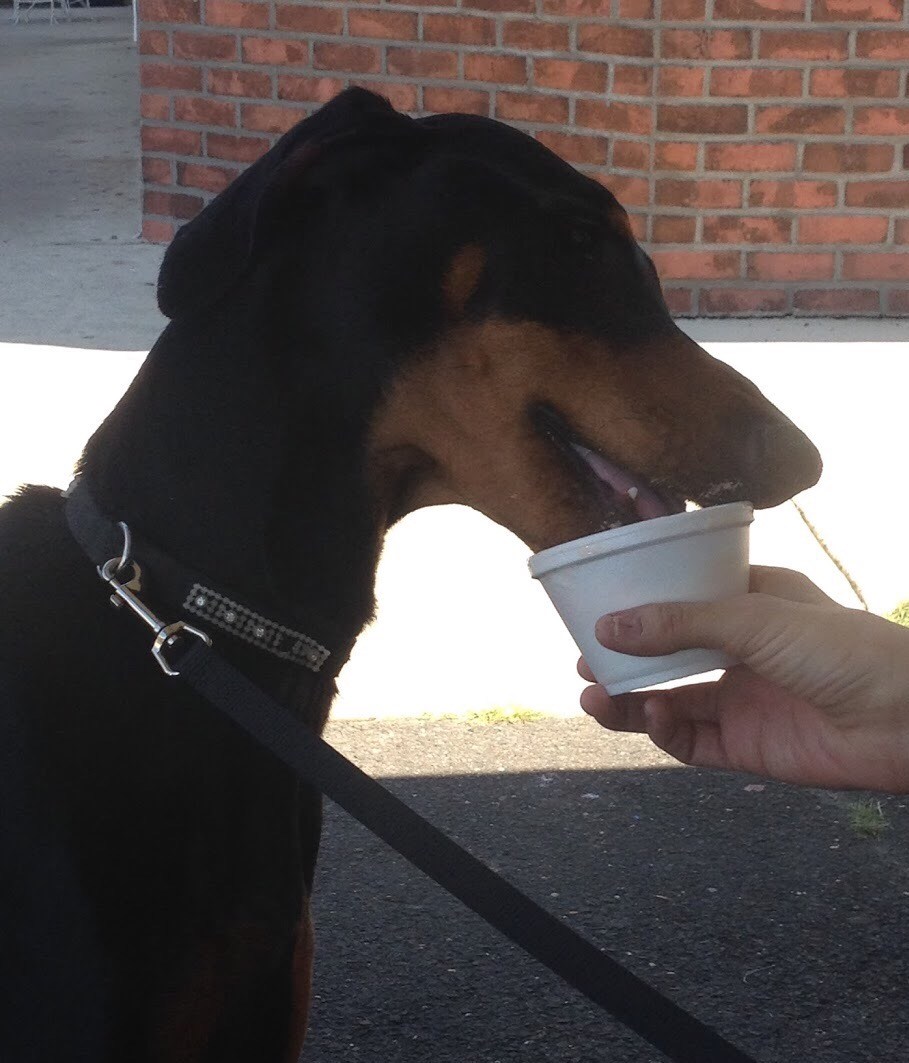
Spirit, a Doberman I rescued from a backyard breeder myself, smiling as she eats some doggie ice cream. Look at her joyful expression!
While you obviously know your dog best, these are the ways I see my dogs express their relaxed and happy mood. Having a rescue dog in my home that was labeled “aggressive” has taught me a great deal about my pups body language and what they are trying to tell me. There really is a great deal we can learn from our furry friends body language and we can understand what they are saying by simply watching closely.
Just a few days ago I was contacted by June Frazier who offered me (and all of you!) a couple of topics for a guest post to be written by June. The two topics were 5 Common Winter Illnesses in Dogs (And How To Treat Them) and Why Now Is The Right Time To Change Your Dog’s Diet.
Of course I said ‘Yes’ and chose the second one thinking it was a tad too early for a post about Winter illnesses.
Here it is.
ooOOoo
Why Now Is The Right Time To Change Your Dog’s Diet.
3 Critical Signs That You Need To Change
by June Frazier.
Today, 96% of all dog owners in the world feed their dog’s commercial pet food. A good number of this population believes that the dried pet food is all their dog needs to stay healthy. Hence, the dogs are fed one type of food all the time.
In fact, they never consider introducing their dog to the many homemade dog food recipes available. Many dog owners are unaware of the fact that as a dog’s body changes, it requires different diets to stay healthy. If you are one of these dog owners, it is time to change your dog’s diet.
Three major reasons why now is the right time to change your dog’s diet:
1. The Age of the dog
As your dog ages, he needs extra diet considerations to stay nimble. At the age of 5, your dog is considered to be middle aged. You need to change their diet at this point as they need fewer calories and more fiber. This is because middle aged dogs are less active and their new lifestyle does not require the same diet they were on when they were younger. In addition, high calorie foods may do them more harm than good. Also, avoid giving your dog too much protein since it can damage his liver and kidneys.
Feed your dog with the right food that will benefit his joints to stay stronger, or foods that have plenty of antioxidants. Your middle aged dog may also need supplements to keep his joints and organs working optimally.
2. Obesity
Most dog parents do not realize that even in moderation, some food types contribute more to their pet’s weight than others. When your dog starts to put on a few extra pounds in their midsection, this is a clear indication that you need to change his diet.
The additional weight can easily slow down your dog. Obesity in dogs also opens them up to a variety of potential health problems. Change his diet to foods that can give them all the essential nutrients, vitamins and minerals without adding some extra kilos.
There are special diets for dogs that are specially designated for weight loss. These diets take advantage of the latest research in pet weight management, to ensure your dog leads a healthy, happier life. If your pet dog is extremely overweight, you are advised to consult with your veterinarian for a detailed and therapeutic nutritional solution.
3. Allergies and Skin conditions
On average, an itchy dog is an allergic dog. Most times, the reason behind their allergy and skin condition is their food or environment. You need to switch your dog’s diet to something a little simpler or less processed food.
In a case of an allergy, vets prescribe non-allergen diets or foods that do not trigger your dog’s allergic reaction. Homemade dog food recipes are ideal as you can mix the ingredients on your own as well as do an easy control experiment to figure out which foods cause his allergy. Also, make sure to alter one food ingredient per time until you get the culprit.
Although the transition may take a long time before you figure out what your dog is allergic to, the diet you end up with will be far healthier and nutritional to help him lead a better life. You can also take your dog to the vet to find out more about their allergy and skin condition.
Sometimes, the reason behind your dog’s skin condition may be due to a deficient diet. If your dog has a dull, matted coat, make sure you feed your dog foods rich in Omega-3 fatty acids to help improve their coat quality and gastric health.
Choosing the right food for your pet is essential for your dog’s long-term health. However, it is not a substitute for medical care.
Make sure you visit a veterinarian on a regular basis to ensure your pet is healthy and happy. Along with your new diet, make sure your dog has plenty of fresh, clean water available at all times.
It is also advisable that you change your dog’s diet gradually and systematically. Substitute a little of the new diet with the old food. Swap out a little more of the old with the new until your dog is comfortable with the new diet.
ooOOoo
No question in my mind that this was a useful and informative article. I did ask June to offer a little about herself and this is what she wrote me:
June is the founder of the blog Toby’s Bone where she shares her passion for writing and love for dogs. She wants to help you deal with your dog’s behavior issues, grooming and health needs, and proper training. Through her blog, you can find informative and reliable posts, tips and tricks, and a lot of interesting reads that will help you maintain a close bond with your furry companion.
Well this gets my vote and I sincerely hope this isn’t the last time we hear from June.
On Tuesday the Visiting the Vet post was about our Ruby. As was explained in the early part of that post:
Back on the 11th August Jean and I took Ruby into Lincoln Road Vet because there was blood in her urine. Ruby is one of our six dogs that we have at home. Ruby is the last of the Mexican ex-rescue dogs and is an eleven-year old Sharpei mix.
Dr Jim thought that Ruby had a straightforward Urinary Tract Infection (UTI) and that a course of antibiotic would fix that.
All of that was reported in my previous post and, indeed, it did look as though it was all resolved.
Then on Tuesday night we discovered a pee in the house that had blood in it. Repeated yesterday. Although we hadn’t caught Ruby in the act, so to speak, we were pretty sure that it was her with the blood in her urine (again).
So yesterday morning back we went to Lincoln Road Vet Clinic to be seen by Dr. Jim.
Jim and his assistant, Cianna, first took Ruby through to a lab at the back of the clinic to take an X-ray and draw some of Ruby’s urine directly from her bladder.
That urine was going to be cultured by Three Rivers Hospital in Grants Pass for that was the only reliable way of seeing what might be the cause of the infection. A quick web search found more information about a urine culture:
A urine culture is a test to find germs (such as bacteria) in the urine that can cause an infection. Urine in the bladder is normally sterile. This means it does not contain any bacteria or other organisms (such as fungi). But bacteria can enter the urethra and cause a urinary tract infection (UTI).
A sample of urine is added to a substance that promotes the growth of germs. If no germs grow, the culture is negative. If germs grow, the culture is positive. The type of germ may be identified using a microscope or chemical tests. Sometimes other tests are done to find the right medicine for treating the infection. This is called sensitivity testing.
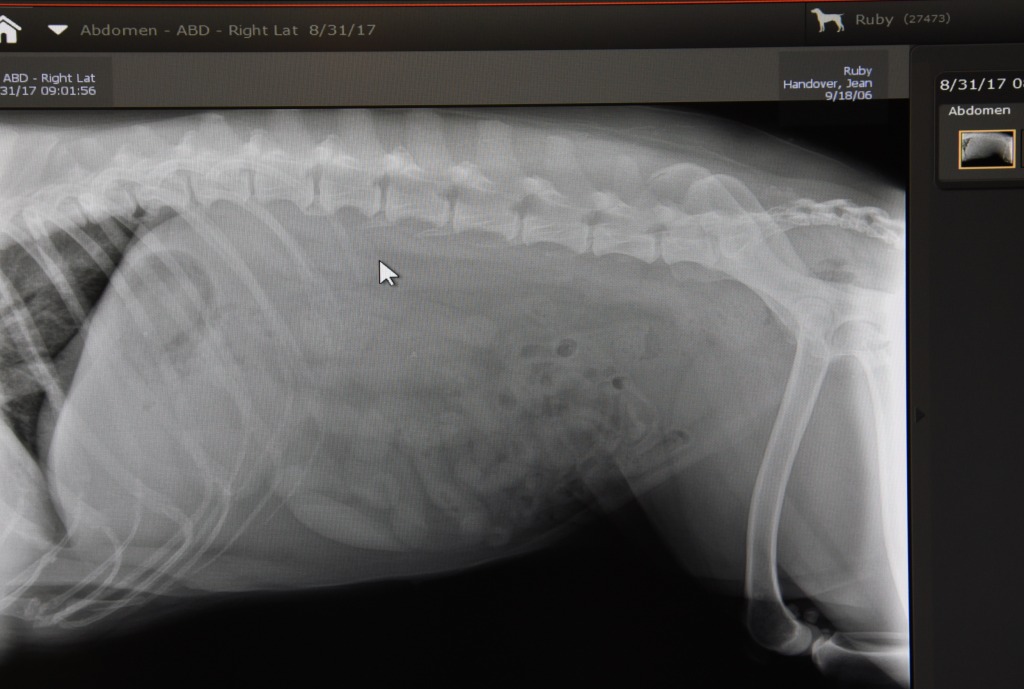
In no time at all the images from the X-ray were available to be viewed.
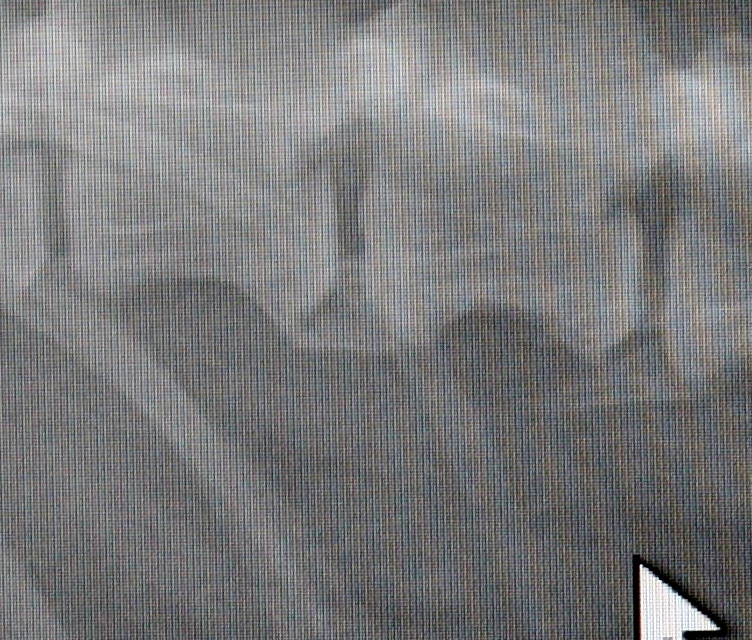
Jim was delighted to report that there was no sign of stones or a tumor. Ruby is an eleven-year old dog and what Jim did see on the X-ray was ‘bridging’ along parts of Ruby’s spine. The technical term for this is spondylosis and, again, a quick web search found more:
Spondylosis in dogs, also called spondylosis deformans, is a degenerative condition that usually occurs most along the spine in older dogs. There, degenerative disks cause bone spurs to develop. These bone spurs can form bridges from one vertebrae to the next, limiting flexibility and range of motion.
Most cases of spondylosis require minor pain relief, and dogs can live out healthy, comfortable lives with this condition.
It’s not a very good image but here is an enlargement of that first X-ray picture (or rather my photograph of same) showing that bridging.
Jim offered some general information regarding idiopathic cystitis that is more commonly seen in female cats but can also be seen in dogs. In cats the cause is more likely to be stress but in dogs the more likely cause is an infection; as in a UTI. In both cats and dogs the signs are frequent peeing but cats are more likely to incur some pain when urinating compared to dogs.
Back to Ruby.
The second X-ray image (below) did nothing to change Jim’s mind that Ruby might have a UTI that requires a change of antibiotic to accurately combat the infection.
While waiting for the results of the urine culture, Jim recommended putting Ruby on a second course of Amoxicillin.
When we get those results I will add the details to this post.
Back on the 11th August Jean and I took Ruby into Lincoln Road Vet because there was blood in her urine. Ruby is one of our six dogs that we have at home. Ruby is the last of the Mexican ex-rescue dogs and is an eleven-year old Sharpei mix.
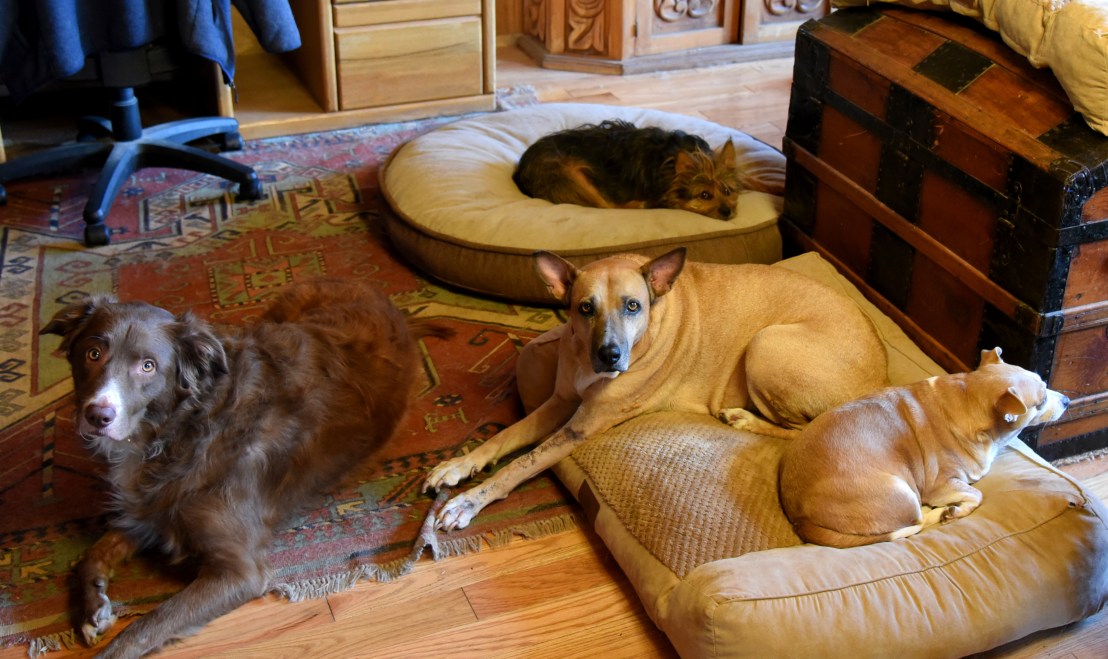
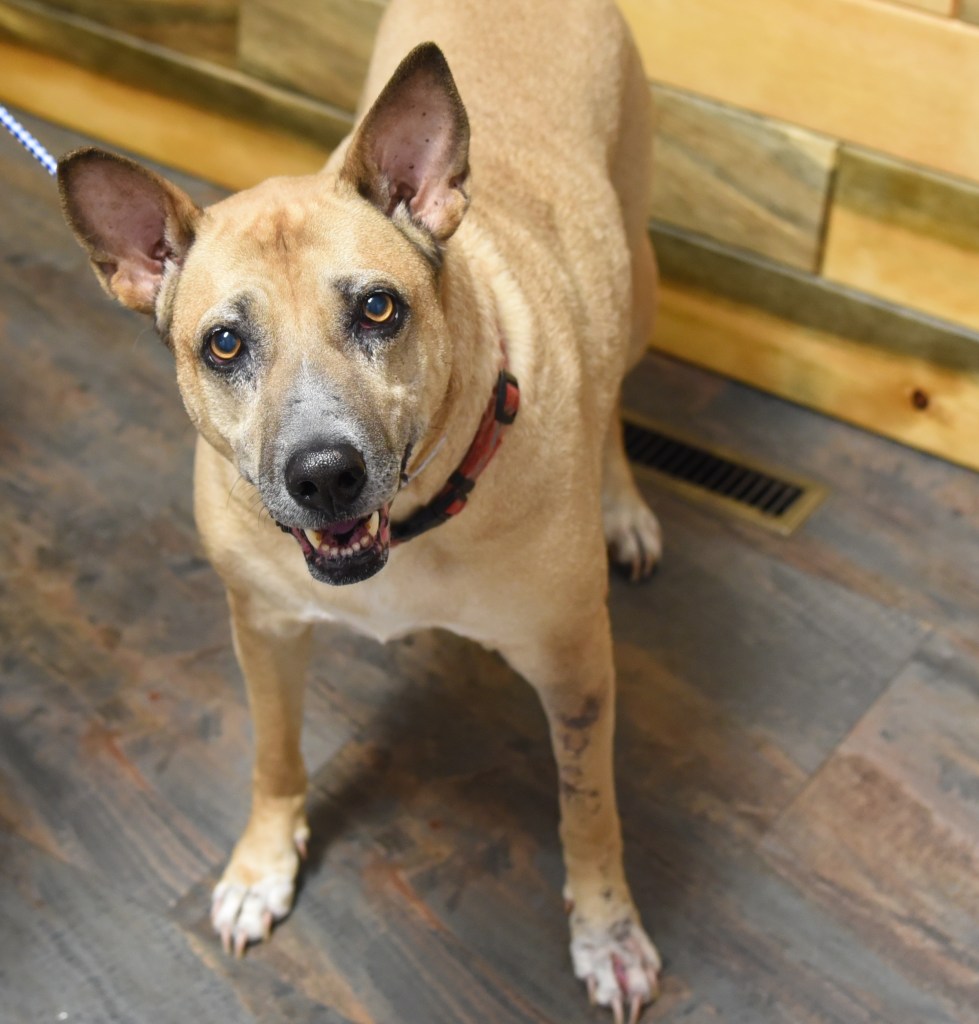
Here she is staring up at me to the right of Oliver in the picture below .
In clockwise order: Oliver; Sweeny; Ruby; Pedy.
Because of Ruby’s age and background and the fact that there was significant blood in her urine we were bracing ourselves for some bad news.
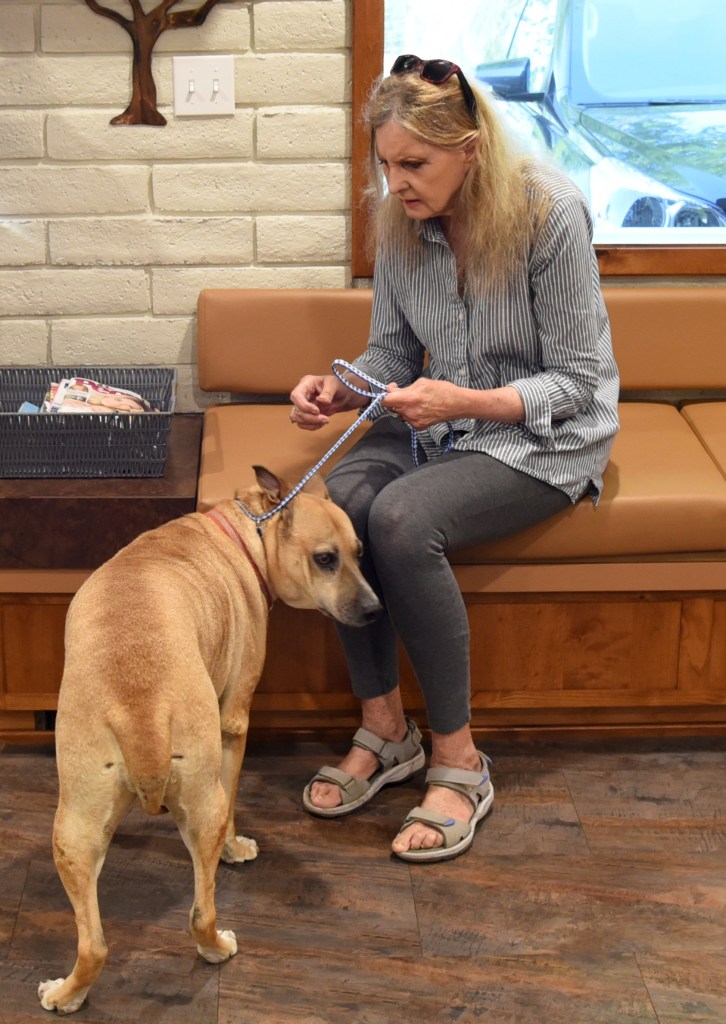
Once checked in it wasn’t too long a wait before we were shown in to Dr. Jim’s room.
There Jim took some urine for analysis and then started examining Ruby. Jim was worried that Ruby might have kidney stones.
However, and thankfully, the urine test revealed an infection, nothing worse! A urinary tract infection or UTI.
Therefore, the first move would be to start Ruby on a course of Amoxillin.
Jim explained that Amoxillin was an antibiotic that he thought would be good for Ruby and would quickly determine whether or not Ruby had a simple urinary tract infection (UTI) or if it was something more challenging (my words).
Maybe my initial reluctance to publish this Visiting the Vet post was down to me not wanting to do that before the results of the antibiotic treatment were clear.
Ergo, Jean and I are overjoyed to report that the Amoxicillin course did sort everything out and that Ruby is over her UTI and back to being her normal, healthy, happy self.
When Jim called us at home a week later he was just as pleased to hear the good news!
A comprehensive guide to the body language of our beautiful dogs.
Back in August 2016 I shared a post with you all from Vetstreet.com about interpreting the growls of a dog. It seemed to be liked by many of you.
Now fast forward to eleven days ago and an email that came in from Emma.
Dear Learning from Dogs Team,
My name’s Emma, a blogger at Hello Cute Pup.
I have been reading your blog for some time, and I absolutely love what you have been doing! Your content inspires me on a daily basis, and I’m really in love with your website.
I’ve been thinking about how I could help add value to you and your blog and I would love to contribute a guest post on your site.
I was inspired to write this article after reading your great piece “Why Dogs Are Friendly”.
I promise that I will provide HIGH-quality content that you won’t find anywhere else.
As a pet parent myself, I’ve had tons of amazing experience that I could bring to your audience.
Here are some links to other pieces that I have written to give you an idea of the quality that I am bringing to the table.
Let me know if you are interested. I already know your blogging style, plus I understand what your readers love as I am one.
Looking forward to hearing from you.
Cheers and have a good day!
Emma
Well you all know me sufficiently well to know that I couldn’t resist. Especially after seeing how nicely Emma had presented those pieces she linked to above.
Here is Emma’s article.
ooOOoo
A Comprehensive Guide to Basic Dog Body Language
Understanding your loved ones’ body language is always important. If you understand how your partner, sister, mother, or father acts when they feel a certain way, you can more accurately meet their emotional needs. This is the same as it is with the canine members of your family.
Understanding how your dog behaves when he or she feels certain things will help you bond, and help build trust, as well as make both you and your dog happier.
How do you decode dog behavior? There are a few ways, and a few certain body signals that your dog will give you that you should understand. Here are a few of them.
Play Bow
You may have noticed that when a dog is feeling frisky and energetic, he or she will bow their front end to the ground and push their rear end into the air. Typically, this means that the dog wants to play.
Tail Wagging
It’s a common belief that tail wagging means that a dog is happy. While this can be true, tail wagging can also mean a few other things.
A tail that wags low can mean your dog is scared or unsure.
A high and stiff tail wag can mean that your dog feels irritated, scared, or unsure. This kind of tail wagging can often lead to a dog becoming aggressive if pushed.
Freezing
Dogs often “freeze” when they are scared or guarding something like food, water, a toy, or their owner. This means that the dog will stop what he or she is doing and stand in one position without moving. When a dog is frozen, he or she is more likely to bite.
Rolling
When a dog rolls over, it usually means that he or she is submissive- but it’s important to pay attention to the dog’s whole body. If your dog’s tail and mouth are hanging loose, it can mean that he or she wants a belly rub or some attention. If the tail is tucked in or his or her mouth is stiff, it can mean that your dog is scared or nervous. Before you touch a dog who is rolled over, look for the signs of comfort. Perked Ears
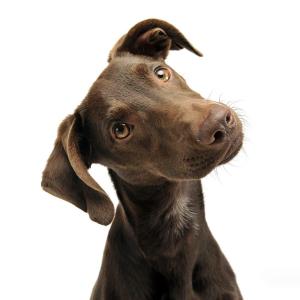
Chances are, if you own a dog, you’ve seen him or her with his ears perked up. This means that your dog is alert and attentive. Tail Between Legs
When a dog tucks his or her tail between his legs, this is a classic sign of fear. Dogs who are scared, as a general rule of thumb, are prone to becoming aggressive in an attempt to protect themselves- so be careful when getting too close to a dog who is acting fearful. Signs of stress
Like humans, dogs can become stressed. Stress in dogs can make them act in certain ways and exhibit specific body language. Some of the signs that mean that a dog is stressed are:
Yawning in new situations
Panting when it isn’t hot
Licking their front paws as someone new approaches
Licking of the lips despite not recently having eaten or drank
Scratching
Avoiding eye contact
Shaking himself off after someone new touches him
Highly audible exhales that can be accompanied by whining or avoiding eye contact
Lying down and refusing to participate
Signs of fear
Dogs exhibit easy-to-read signs of fear. Some of these signs are:
Drooling
Pacing
Tucking his tail while moving away from something
Whining
His or her feet start to sweat
Growling and moving away
Curling his or her lips and showing teeth
Trying to hide
Running away
Signs of Happiness
Along with taking up the play bow position, dogs offer us other physical signs that they are happy. These include:
Energetic tail wagging
Tail thumping on the floor or ground
Lying in a relaxed, one paw tucked under, position
Bumping or pressing against you
Initiating physical contact
Jumping up
Smiling (yes, sometimes it really does look as if your dog smiles)
Playful barking to get your attention
Although the above behaviors are common in most dogs, it’s important to remember that dogs have individual personalities – what one dog does in a situation, isn’t necessarily what another does in that same situation. For example, if your dog reacts well with some dog shampoo, another dog might hate it. This shampoo might make him panic and he could fear baths forever.
To truly understand what your dog’s body is trying to tell you, pay attention to how he or she acts. He may react in the ways that are listed above, or he may have his own unique way of expressing to you how he feels.
Context is also a key point to focus on when you’re trying to determine how your dog feels based on his body language. For example, if your dog is being cornered by another, bigger and more intimidating dog and he wags his tail, chances are that he isn’t happy. In this situation, he more than likely is gearing up for a fight or is feeling scared.
ooOOoo
My hopes are that Emma will be writing many more guest posts for this place.
Oh, want to know a little more about Emma?
Emma is the founder of HelloCutePup. As the owner of 3 dogs, Emma has had the pleasure of learning the ins and outs to becoming a pet owner. With years of experience working on training, at-home dog health care, and aesthetic maintenance, she has the real-world experience that every pet owner is looking for. She is an avid blogger who enjoys giving realistic tips and tricks to help dog owners understand their pet’s personalities and to help pets easily become a part of the family.
We are chilling out for a couple of days giving our attention to Mark and Debbie who are staying with us. They came over to view the eclipse and I shall feature a few of Mark’s photographs for this coming Sunday’s Picture Parade.
Marc who blogs at Healthy Pawz recently decided to follow this place. I went across to Healthy Pawz to leave my thanks for the follow, as I always try to do, and read a most wonderful post. Wanted to republish it here today.
Pets have an amazing ability to change our lives for the better. They find that special place in our heart and latch on with incredible amounts of unconditional love. When we regularly give our pets undivided attention, we build a bond and connection that will last a lifetime.
Every moment we spend with our pets is an opportunity to observe them and learn more about their personality, nuances or needs. Notice the simple and basic things about your pet like when they are relaxed, comfortable, happy, anxious, etc., just as you would a child. Those moments of observation will teach you so much about the little being that wants nothing more than to provide you with unconditional love and attention.
Another great benefit to having a pet is that they can sometimes see in us what we cannot see in ourselves. We know about service pets that support people in different ways for sight, comfort, seizures, autism, etc. But, our own pets are also in tune to our needs and emotions. However, we are sometimes so rushed with life that we fail to recognize the great gift our pets are offering us (me included). We have a rescue kitten with one eye and in my opinion, she’s amazing. This little cat noticed inflections in my voice that indicated stress of some sort. For me it was business as usual, but for her it was climb on my chest and rub her little face against mine. After a few hundred times of this (exaggerated of course) I finally realized that she was trying to calm me down. And I learned to better recognize when I needed to take a step back with a deep breath throughout the day.
We live in a very fast paced, get it done kind of society. That kind of daily grind can strip away some of our compassion and empathy because we are so overwhelmed with other aspects of life that we may not notice when we are stuck in that vortex spinning around aimlessly. Whether we realize it or not our pets are a great conduit to restoring that which we need to sustain us in our human relationships. Compassion and empathy are easily understood, but not always easily lived out. Our pets are a daily reminder of this because they provide both compassion and empathy daily. Because of this, we have an opportunity to reciprocate compassion and empathy back to them and to those around us.
Whether you have a dog, cat, hamster, etc., pets can enhance our lives in so many ways. Carve out some daily time to spend with your furry loved one, observe them on their terms and take some time to reflect about how they are benefiting your life. Watch over time as your emotional intelligence evolves through this process.
ooOOoo
There is so much wise advice in that post!
Hard to highlight any particular sentence but this one spoke to me early on: “When we regularly give our pets undivided attention, we build a bond and connection that will last a lifetime.”
Yes, we know that they are but the science as to why this is nonetheless is fascinating!
Inevitably when you think about my cultural roots you would not be surprised to hear that I use the BBC News website as a key source of staying in touch with the world. But very rarely would I think of sharing a news item with you via these pages.
One of those rare exceptions greeted my eyes back on July 20th. It was an article published by Helen Briggs of the BBC under the Science & Environment news classification. I can’t imagine any reason why I can’t republish it here.
ooOOoo
Why dogs are friendly – it’s written in their genes
By Helen Briggs – BBC News, 20 July 2017
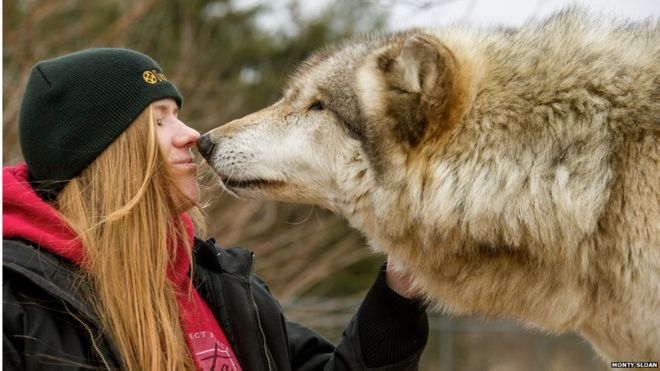
Some wolves are more sociable than others.
Being friendly is in dogs’ nature and could be key to how they came to share our lives, say US scientists.
Dogs evolved from wolves tens of thousands of years ago.
During this time, certain genes that make dogs particularly gregarious have been selected for, according to research.
This may give dogs their distinctive personalities, including a craving for human company.
“Our finding of genetic variation in both dogs and wolves provides a possible insight into animal personality, and may even suggest similar genes may have roles in other domestic species (maybe cats even),” said Dr Bridgett vonHoldt of Princeton University.
The researchers studied the behaviour of domestic dogs, and grey wolves living in captivity. They carried out a number of tests of the animals’ skills at problem-solving and sociability.
Captive wolves gave humans only brief attention.
These showed that wolves were as good as dogs at solving problems, such as retrieving pieces of sausage from a plastic lunchbox.
Dogs, however, were much more friendly. They spent more time greeting human strangers and gazing at them, while wolves were somewhat aloof.
DNA tests found a link between certain genetic changes and behaviours such as attentiveness to strangers or picking up on social cues.
Similar changes in humans are associated with a rare genetic syndrome, where people are highly sociable.
Dr Elaine Ostrander of the National Institutes of Health, who was a co-researcher on the study, said the information would be useful in studying human disease.
“This exciting observation highlights the utility of the dog as a genetic system informative for studies of human disease, as it shows how minor variants in critical genes in dogs result in major syndromic effects in humans,” she said.
Wolves playing at Yellowstone.
Dogs were domesticated from wolves between 20,000 and 40,000 years ago.
This process began when wolves that were tolerant of humans sneaked into hunter gatherer camps to feed on food scraps.
Over the course of history, wolves were eventually tamed and became the dogs we know today, which come in all shapes and sizes.
The finding of genetic changes linked to sociability in dogs shows how their friendly behaviour might have evolved.
“This could easily play into the story then of how these wolves leave descendants that are also ‘friendlier’ than others, setting the path for domestication,” said Dr vonHoldt.
Lisa Mae DeMasi offers you all a beautiful guest post.
Not going to allow my words to delay you reading this wonderful essay from Lisa.
ooOOoo
How this Handler and Service Dog Nurture One Another
by Lisa Mae DeMasi
At two years old, Lady’s ribs protruded from her coat and her belly was swollen with milk.
Like the thirteen other Labs that had arrived at a rest stop in Union, CT on the straight 12½-hour drive from Muncie, IN, she was presented to us on a crisp autumn day amid the chaos of respective adopters.
My husband Dennis had never experienced the warmth and companionship of having a dog and well, I surprised him with Lady, who we quickly renamed to Sabrina. The very afternoon we picked her up, we raced to the park, wanting her to feel the joy of freedom and play. My husband’s face lit up and while I was thrilled at the opportunity to befriend and care for Sabrina; it meant closing the 20-year gap since our beloved German Shepard from my childhood passed away.
Until laying my eyes on Sabrina’s profile, my heart couldn’t entertain loving another dog.
And what canine isn’t after the same love?
In Sabrina’s case, she couldn’t know of the family members that awaited to embrace her presence. Within days of the initial hair-raising excitement, the cat sought out occasions to groom her ears. Our pet rat was free to waddle the kitchen floor un-bothered, and the pair of bonded bunnies in want of company stretched out beside her on the living room floor.
Dog, cat, rat, rabbit?
You bet.
And Dennis and me?
Like kids again.
Sabrina settled into the folds of our lives, well-nourished and exercised in Boston’s epic snowfall in the winter of 2009-2010, taking careful watch over all of us. The fear expressed in her eyes pre-adoption disappeared. Eight years later, she watches over me in particular. Thirty years ago, I was struck and thrown from the passenger side of a car until my abdomen collided with the steering wheel—blunt force that called for iterative repair to my digestive system and caused permanent damage to the nerves that signal my bladder is full.
Today when I’m busy working away, Sabrina will alert me to get up every couple of hours to make a trip to the restroom by gently placing her head in my lap.
When I suffer acute intestinal cramping, Crohns-like symptoms, she’ll sit at my side and lean her body against mine. Her calm and steady source of nurturing, helps me to relax and mitigates the cramps.
In 2008, the Department of Justice amended the Americans with Disabilities Act (ADA). This was amended to include digestive, bowel and bladder impairments that limit major life activities as the disabled, calling for employers to make reasonable accommodations and if the individual elects, to allow task-oriented service animals [dog or miniature horse] to accompany them on the job.
Sabrina, serving in the capacity of a sensory/medical assist – alerting me to get up and take care of myself – qualifies.
The HR Director, Debra Susler of Reputation Institute in Cambridge, MA this past April would not allow Sabrina to accompany me on-the-job. I sent her an elaborate email explaining my condition and Sabrina’s certification. She did not reply to me but to my supervisor.
She said “no”.
My response?
I walked out of the place
Sabrina: rescue dog to devoted helper dog.
Respectively, Sabrina’s competencies and understanding of language cease to astound us and her behavior on-the-job at Dell EMC is so well-mannered, coworkers never run out of compliments.
And bystanders in public? The grocery store, pharmacy, gym, dentist, doctor?
Gazes from cell phones are broken, conversations fall short.
Then, come the smiles. A question. Praises. The feel-good moment.
Sabrina brings people together.
I recently read a distressing post from a woman who said every time she looks into a service dog’s eyes, she sees sadness. Even Ingrid Newkirk, CEO and Co-Founder of PETA, has told me, “the life of a typical service dog is a terrible one.”
It’s true. Any canine enslaved to servitude is doomed a dog’s life unlived.
Service animals are working animals, not pets.
The ADA confirms it.
But that’s not the relationship Sabrina and I share [and I understand it can’t be the same with other handlers and service dogs]. In addition to being my devoted helper, Sabrina teaches me to exist in the moment — just like she does. To enjoy the sight of the sun shimmering through the trees, the call of the birds, the fragrance of wildflowers, the feel of the soft soil I tread a few yards behind her when we’re on our hikes.
What more could a dog do for a girl?
ooOOoo
There is something rather special about Lisa’s guest post; special in an introspective way!
That will be better appreciated if you go across to Lisa’s blog site at Nurture Is My Nature.
In particular when you read, via her ‘About’ link, what Lisa offers about herself. Republished here in full.
ooOOoo
As time goes by and you’re getting older and stuff like that—getting older sucks. You know, I hear all this crap about, ‘Oh, you can age with dignity.’ Really? —Mickey Rourke
Lisa’s creative work has recently placed second in Fiftiness’s 2017 Writing Contest (Why I Love Bike Commuting in Boston) and been featured in the anthologies, Unmasked, Women Write About Sex & Intimacy After Fifty (9/17, print) and The Best of Vine Leaves Literary Journal (11/17, print). Her essays have been published in the lit journals and several other media outlets. She considers Massachusetts her home, but has lived in Connecticut, Vermont, New York State and two other planets called Wyoming and Arizona. She earned a B.A. from Regis College and an MBA from Babson College, and holds a Master certificate in Reiki.
Lisa is seeking a development editor [that gets her] to work on her collection of essays and her memoir.



 There Jim took some urine for analysis and then started examining Ruby. Jim was worried that Ruby might have kidney stones.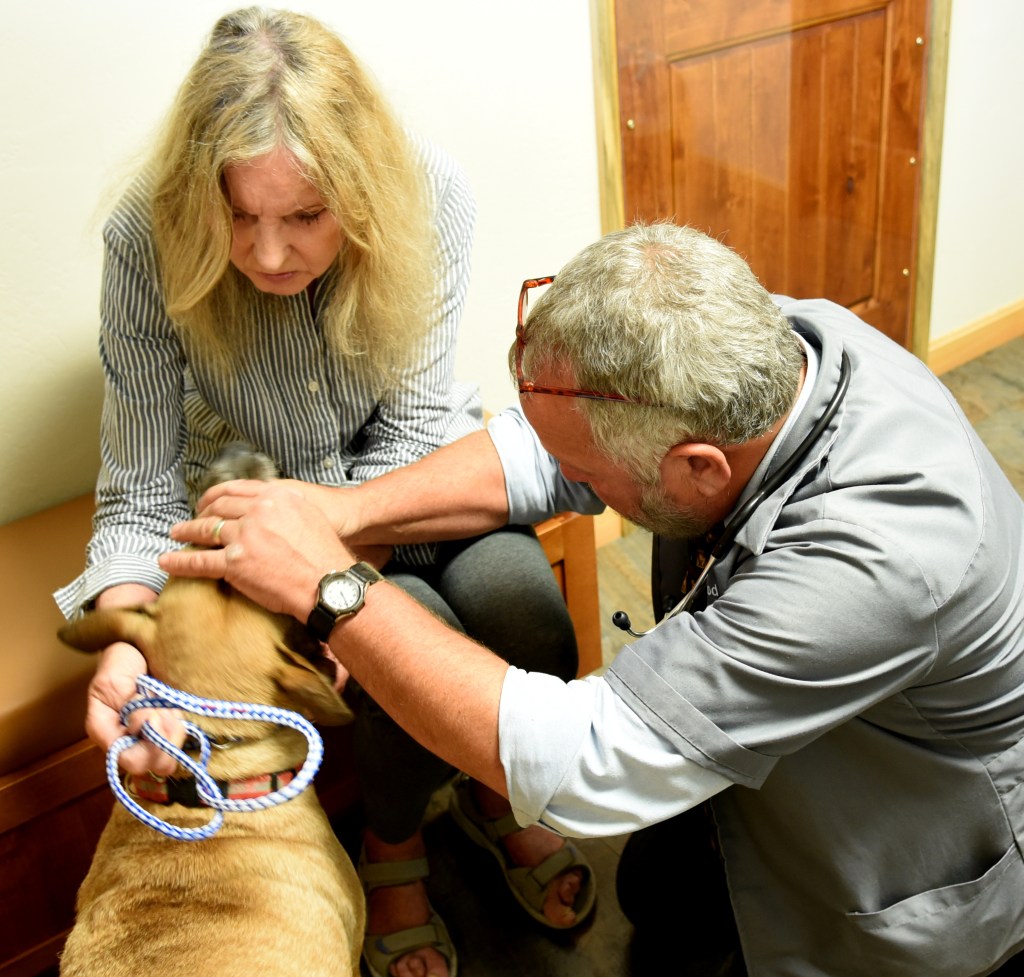
 You may have noticed that when a dog is feeling frisky and energetic, he or she will bow their front end to the ground and push their rear end into the air. Typically, this means that the dog wants to play.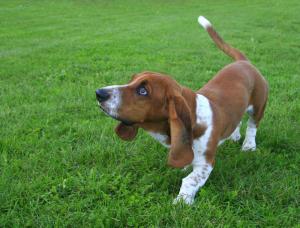

 When a dog rolls over, it usually means that he or she is submissive- but it’s important to pay attention to the dog’s whole body. If your dog’s tail and mouth are hanging loose, it can mean that he or she wants a belly rub or some attention. If the tail is tucked in or his or her mouth is stiff, it can mean that your dog is scared or nervous. Before you touch a dog who is rolled over, look for the signs of comfort.
 Chances are, if you own a dog, you’ve seen him or her with his ears perked up. This means that your dog is alert and attentive.
 When a dog tucks his or her tail between his legs, this is a classic sign of fear. Dogs who are scared, as a general rule of thumb, are prone to becoming aggressive in an attempt to protect themselves- so be careful when getting too close to a dog who is acting fearful.
 Like humans, dogs can become stressed. Stress in dogs can make them act in certain ways and exhibit specific body language. Some of the signs that mean that a dog is stressed are:
 Dogs exhibit easy-to-read signs of fear. Some of these signs are:
 Emma is the founder of



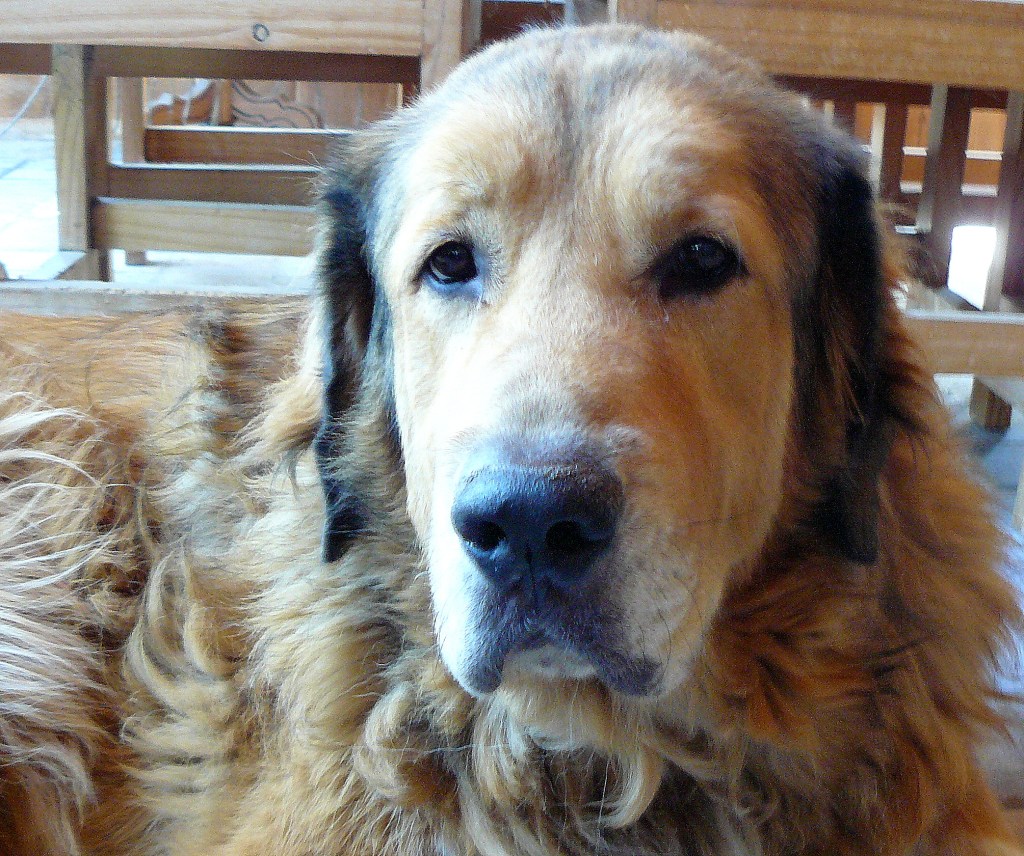
 At two years old, Lady’s ribs protruded from her coat and her belly was swollen with milk.
 In Sabrina’s case, she couldn’t know of the family members that awaited to embrace her presence. Within days of the initial hair-raising excitement, the cat sought out occasions to groom her ears. Our pet rat was free to waddle the kitchen floor un-bothered, and the pair of bonded bunnies in want of company stretched out beside her on the living room floor.
 Eight years later, she watches over me in particular. Thirty years ago, I was struck and thrown from the passenger side of a car until my abdomen collided with the steering wheel—blunt force that called for iterative repair to my digestive system and caused permanent damage to the nerves that signal my bladder is full.
 calling for employers to make reasonable accommodations and if the individual elects, to allow task-oriented service animals [dog or miniature horse] to accompany them on the job.
 Sabrina brings people together.

 Learning from Dogs