I have taken it from BoredPanda, not a site that I frequent, but this is such a marvellous account of how dogs make, every day, a real difference to the lives of people.
It’s been taken from a Twitter account so my apologies for the ‘staccato’ effect.
ooOOoo
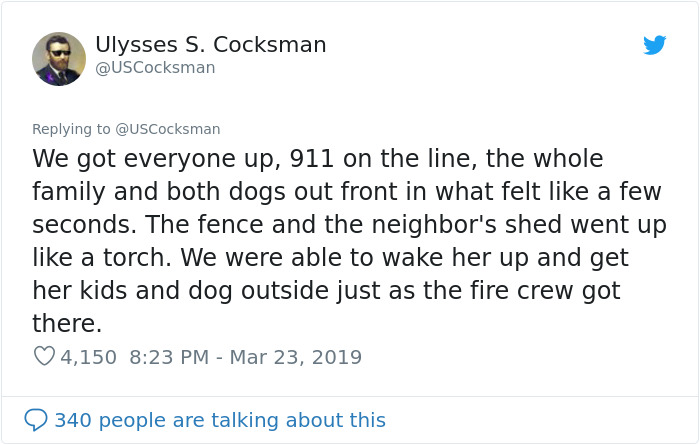
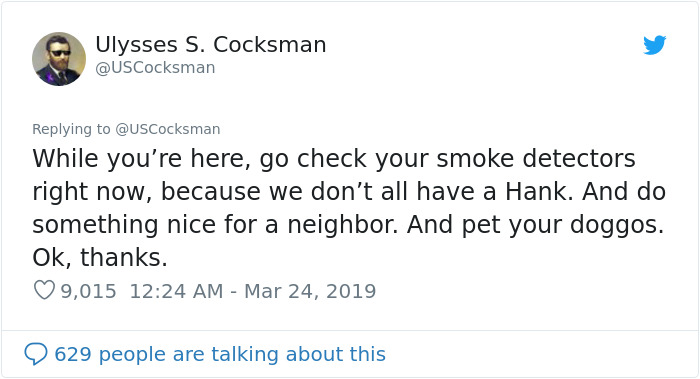
Man Shares A Heartwarming Story About How His Dog Saved His House From Burning Down
Dogs… if only there was a word that would show how much we adore these adorable creatures that we get to call our most loyal friends and also beloved family members. Here at Bored Panda, dogs (amongst other animals) have a very special place, despite the fact that they can do the worst things, we still adore them. Also, today’s story teaches us that just because your puppy did something wrong, don’t be too quick to punish them since they might compensate it by doing something truly heroic.
Recently, one Twitter user shared a heartwarming story about his dog Hank saving his entire family from fire
Hank even got some presents dedicated to his heroic act
People online were not only touched by this story, but they also think Hank deserves to chew all of the shoes in the world.
Not only did Cengiz rescue her beloved pet from the streets years ago, she also maintains a cozy little oasis in front of her pharmacy for all the homeless dogs she’s unable to adopt herself.
Cengiz does it out of kindness, not for attention — but evidently word has spread among the local strays that she’s someone who truly cares.
Photo Credit: Banu Cengiz
Last week, Cengiz was at work like usual when she noticed a dog outside acting unlike the rest. Rather than, say, lounging in the beds she kindly provides to them, this pup was standing expectantly at the door.
“She was looking at me,” Cengiz told The Dodo. “I said, ‘Baby, is there a problem?'”
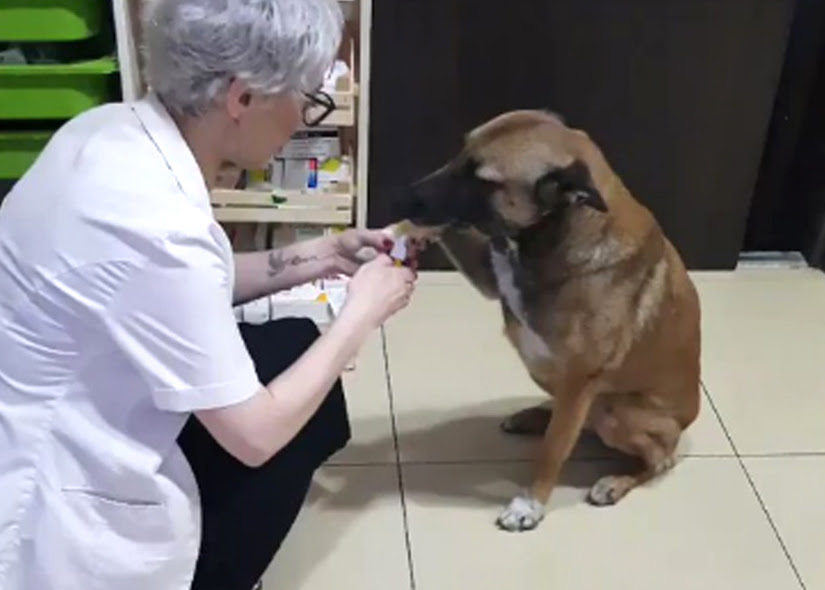
She welcomed the dog inside and realized there indeed was a problem: The poor pup was bleeding from a small cut on her paw.
She was asking for help — and as seen in a sweet video of what happened next, Cengiz was more than happy to provide it.
Photo Credit: Twitter/Badores
The pharmacist cleaned the pup’s wound with antiseptic and, when the bleeding stopped, gave her antibiotics. All the while, the dog appeared to understand Cengiz’s good intentions, acting like the perfect patient.
“When I was done, she laid down as if to thank me,” Cengiz said. “She was saying, ‘I trust you.'”
For the remainder of the day, Cengiz’s pharmacy served as a little recovery area of sorts, giving the weary dog a chance to rest in peace.
Cengiz gave the dog food and water, and use of a dog bed she keeps inside.
She’d come to the right place — and she knew it.
By closing time, the furry patient appeared to be on the mend, her eyes and energies compelling her back to the street outside — sadly, the setting of life to which she seemed well-acquainted.
Cengiz had helped the dog more than most. Yet she still wished she could do more.
Photo Credit: Banu Cengiz
“Unfortunately, I couldn’t take her home,” Cengiz said, no doubt a frequent lament for one so compassionate in a region where strays are far from uncommon. “I’ve been dealing with street animals for years. I feed them and heal them, and help them find homes when I can.”
In the meantime, the little refuge in front of her pharmacy serves as the next best thing. It’s Cengiz’s way of letting less-fortunate dogs, like her patient that day, know they’re still loved.
“I do it because they feel. We need to help those who need it,” Cengiz said. “People should teach their children to love and respect animals and nature. Then we can all live together in a beautiful world.”
ooOOoo
It’s stories like this that make my day. Plus sharing them with you means a great deal and is the reason I stay with Learning from Dogs. To that end it won’t be very long before this blog is 10 years old!
These photographs are a few that were carried by The Guardian.
Thanks to Neil.
A selection of works at the exhibition Photographic Dog Show includes images from some of the world’s finest photographers, including Elliott Erwitt, Bruce Weber, Martin Usborne among others, who all happen to have a love of canines
Christ Church & St Stephen, Battersea Park Road, London, from 20-23 June. Proceeds go to Battersea Dogs
John Boorman at the Museum of the Moving Image Photograph: Barry Lewis
oooo
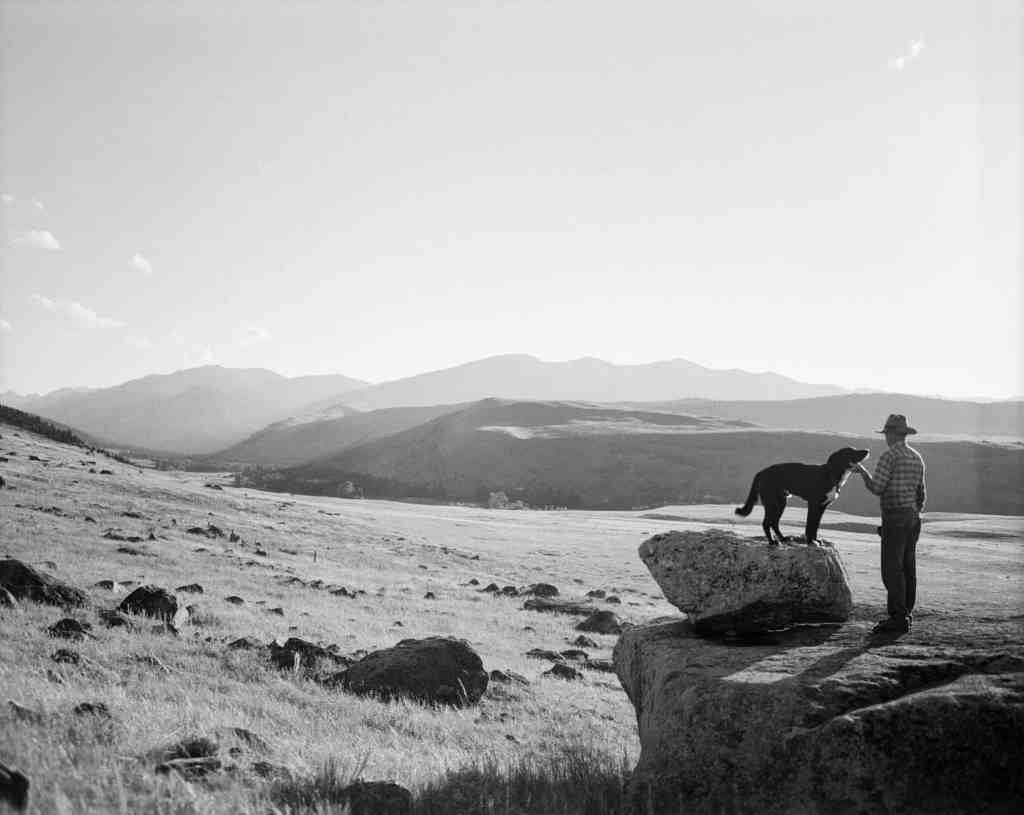
My neighbor John Hoiland and his dog, Zippy, McLeod, Montana 1997 Photograph: Bruce Weber
oooo
Sex workers keeping a lookout for their pet terrier playing outside their brothel which faced the Krupp works, Rhur Valley, Germany, 1985 Photograph: Barry Lewis
oooo
South Beach, Miami: a polecat is held up to a labrador by a woman as her daughter looks on Photograph: Barry Lewis/Network
oooo
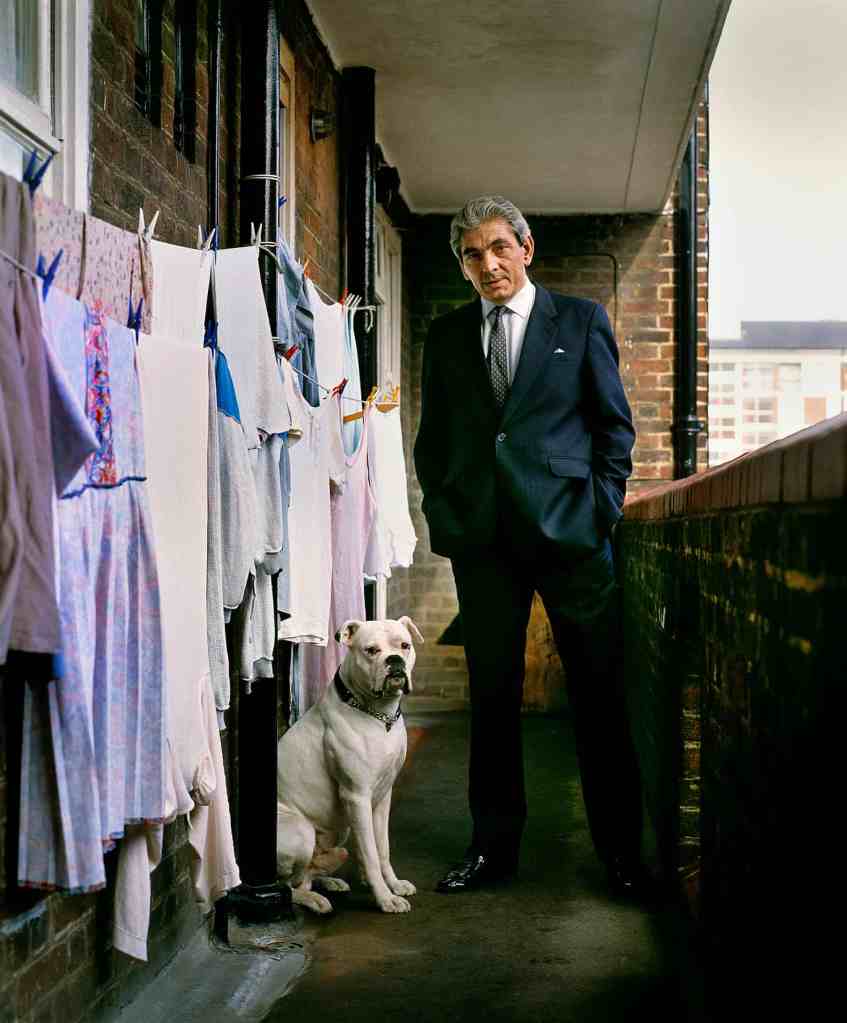
Tony Lambrianou, enforcer for the Krays with his dog outside his mum’s flat in the Elephant & Castle where he was staying in 1983 after his release from 15 years in prison Photograph: Barry Lewis
oooo
Dog waiting in car, North Circular Road, Wembley, 1979 Photograph: Barry Lewis
Humans and Dogs May Have Hunted Together in Prehistoric Jordan
Bones at a settlement called Shubayqa 6 show clear signs of having been digested—but were much too large to have been eaten by humans
Selection of gazelle bones from Space 3 at Shubayqa 6 displaying evidence for having been in the digestive tract of a carnivore. ( Credit: University of Copenhagen)
When and where dogs came to be domesticated is a subject of scientific debate, but there is a wealth of research that attests to the long, intertwined history of humans and their best animal buddies. One theory about the early origins of this relationship posits that dogs were used to help early humans hunt. And, as Ruth Schuster reports for Haaretz, a new study suggests that this may have been the case among prehistoric peoples of what is now Jordan.
A team of archaeologists from the University of Copenhagen and University College London studied a cache of animal bones at an 11,500-year-old settlement called Shubayqa 6, which is classified as “Pre-Pottery Neolithic A,” or belonging to the first stage of Neolithic culture in the Levant. In the Journal of Anthropological Archaeology, the researchers write that they found bones from a canid species, though they could not identify which one because the remains were poorly preserved. They also unearthed the bones of other animals that had been butchered. But perhaps most intriguing were the bones of animals—like gazelle, for instance—that bore clear signs of having passed through a digestive tract.
These bones were too big for humans to have eaten, leading the researchers to surmise that they “must have been digested by dogs,” says lead study author Lisa Yeomans, a zooarchaeologist at the University of Copenhagen. And the researchers don’t think this was a case of wild carnivores sneaking into the settlement to grab a bite.
For one, archaeological evidence indicates that Shubayqa 6 was occupied year-round, suggesting that “dogs were allowed to freely roam around the site picking over the discarded waste, but also defecating in the vicinity of where humans were inhabiting,” the study authors write.
There was also a noticeable surge in hare bones around the time that dogs started to appear at the site, and the researchers think this may be because the dogs were helping humans hunt small prey. Previously, the people of Shubayqa 6 might have relied on tools like netting to catch hares and other animals, says Yeomans, but it wouldn’t have been very effective. Dogs, on the other hand, could selectively target elusive prey.
Humans and dogs thus appear to have forged a reciprocal relationship in Jordan more than 11,000 years ago. There is in fact evidence to suggest that dogs were domesticated by humans in the Near East as early as 14,000 years ago, and some of that evidence seems to point to dogs being used during hunts. Rock art from a site near Shubayqa, for instance, seems to show dogs driving gazelle into a trap.
In light of such archaeological finds, “it would be strange not to consider hunting aided by dogs as a likely explanation for the sudden abundance of smaller prey in the archaeological record,” Yeomans says. Among the ancient peoples of Jordan, in other words, the complex history of dog domestication may have been well underway.
ooOOoo
That scientific debate mentioned in the first line of the article has been published in this place before. But I’m going to republish it tomorrow as it so perfectly goes with today’s post.
I first received notice of this story from a news release put by Uppsala University. That news release is what I publish as it is a short-form of the full scientific report. But I will also include an extract of the report as there may be some of you that will want to go further into this.
ooOOoo
Owning a dog is influenced by our genetic make-up
NEWS RELEASE
UPPSALA UNIVERSITY
A team of Swedish and British scientists have studied the heritability of dog ownership using information from 35,035 twin pairs from the Swedish Twin Registry. The new study suggests that genetic variation explains more than half of the variation in dog ownership, implying that the choice of getting a dog is heavily influenced by an individual’s genetic make-up.
Dogs were the first domesticated animal and have had a close relationship with humans for at least 15,000 years. Today, dogs are common pets in our society and are considered to increase the well-being and health of their owners. The team compared the genetic make-up of twins (using the Swedish Twin Registry – the largest of its kind in the world) with dog ownership. The results are published for the first time in Scientific Reports. The goal was to determine whether dog ownership has a heritable component.
“We were surprised to see that a person’s genetic make-up appears to be a significant influence in whether they own a dog. As such, these findings have major implications in several different fields related to understanding dog-human interaction throughout history and in modern times. Although dogs and other pets are common household members across the globe, little is known how they impact our daily life and health. Perhaps some people have a higher innate propensity to care for a pet than others.” says Tove Fall, lead author of the study, and Professor in Molecular Epidemiology at the Department of Medical Sciences and the Science for Life Laboratory, Uppsala University.
Carri Westgarth, Lecturer in Human-Animal interaction at the University of Liverpool and co-author of the study, adds: “These findings are important as they suggest that supposed health benefits of owning a dog reported in some studies may be partly explained by different genetics of the people studied”.
Studying twins is a well-known method for disentangling the influences of environment and genes on our biology and behaviour. Because identical twins share their entire genome, and non-identical twins on average share only half of the genetic variation, comparisons of the within-pair concordance of dog ownership between groups can reveal whether genetics play a role in owning a dog. The researchers found concordance rates of dog ownership to be much larger in identical twins than in non-identical ones – supporting the view that genetics indeed plays a major role in the choice of owning a dog.
“These kind of twin studies cannot tell us exactly which genes are involved, but at least demonstrate for the first time that genetics and environment play about equal roles in determining dog ownership. The next obvious step is to try to identify which genetic variants affect this choice and how they relate to personality traits and other factors such as allergy” says Patrik Magnusson, senior author of the study and Associate Professor in Epidemiology at the Department of Medical Epidemiology and Biostatistics at Karolinska Insitutet, Sweden and Head of the Swedish Twin Registry.
“The study has major implications for understanding the deep and enigmatic history of dog domestication” says zooarchaeologist and co-author of the study Keith Dobney, Chair of Human Palaeoecology in the Department of Archaeology, Classics and Egyptology at the University of Liverpool. “Decades of archaeological research have helped us construct a better picture of where and when dogs entered into the human world, but modern and ancient genetic data are now allowing us to directly explore why and how?”
ooOOoo
Now here’s the full report as published by Nature.com. And below I present the Introduction.
ooOOoo
Evidence of large genetic influences on dog ownership in the Swedish Twin Registry has implications for understanding domestication and health associations
The relationship between humans and dogs is the longest of all the domestic animals, yet the origin and history of perhaps our most iconic companion animal remains an enigma, and a topic of much ongoing scientific debate1. Decades of archaeological and more recent genetic investigations across the world have so far failed to resolve the fundamental questions of where, when and why wolves formed the transformational partnership with humans that finally resulted in the first domestic dog.
Although recent claims for the existence of so-called “Palaeolithic dogs”2,3,4,5 as early as 30,000 years ago remain controversial6,7, there is incontrovertible evidence for the existence of domestic dogs in pre-farming hunter-gatherer societies in Europe at least 15,000 years ago, the Far East 12,500, and the Americas 10,000 years ago8,9,10.
Over the subsequent millennia this ‘special relationship’ developed apace throughout most cultures of the world and is as strong and complex today as it has ever been. Dogs have long been important as an extension to the human ‘toolkit’, assisting with various tasks such as hunting, herding, and protection, as well as for more social activities such as ritual and companionship. The diverse roles that dogs fulfilled most likely introduced a range of selective advantages to those human groups with domesticated dogs. The anthropologist Dr. Pat Shipman went so far as to suggest that the close connection between dogs, other animals and their domesticators had a significant and tangible influence on our bio-cultural history – the animal connection hypothesis11. A number of experimental studies demonstrate that the view of dogs and other animal stimuli influence human behavior and interest from early childhood onward implicating innate mechanisms12,13, whilst others conversely highlight innate adverse responses to spiders and snakes in humans, indicating the evolutionary benefits of avoiding snakes and spiders14.
Inspired by assumed physical and psychosocial benefits of dog ownership, pet dogs are now increasingly being used in interventions for the rehabilitation of prisoners15, in-patient care16 and during pediatric post-surgical care17. A large number of studies have shown dog owners to be more physically active18,19,20, leading to acquisition of a dog being recommended as an intervention to improve health. There is also evidence that dog-owners feel less lonely21 and have an improved perception of wellbeing, particularly with regard to single people and the elderly22,23,24. We have previously shown that dog ownership is associated with longevity25 and lower risk of childhood asthma26. However, there are studies showing no relation (or even an inverse one) between dog ownership and these health outcomes27,28,29. One of the important limitations of the available evidence regarding health effects of dog ownership is that it is uncertain whether health differences between dog owners and non-dog owners reflect effects of dog ownership itself, or underlying pre-existing differences in personality, health and genetics. Such factors may impact the choice to acquire a dog in adult life as well as health outcomes – although these factors are difficult to disentangle.
Previous research has indicated that exposure to pets during childhood is positively associated with more positive attitudes towards pets30 and ownership in adulthood31,32, but it is unclear if genetic differences between families contribute to this association. The heritability of a trait can be estimated from studies comparing concordance of the trait in monozygotic (MZ) and dizygotic twins (DZ) using structural equation modeling. These estimations rely on the underlying assumptions that MZ and DZ twin pairs share environment to a similar degree, that MZ twins share their entire genome, and that DZ twins on average share 50% of their segregating alleles33. A previous study of twin pairs aged 51–60 indicated that genetic factors account for up to 37% of the variation in the frequency of pet play and that less than 10% is attributable to the shared childhood environment34 indicating a strong contribution of genetic factors to the amount of playful interaction with pets.
Increased understanding of a potential genetic adaption towards dog ownership would support theories of co-evolution of humans and dogs and could also aid the understanding of differences in health outcomes today. However, there are no empirical data supporting a genetic contribution to dog ownership, likely due to lack of information on dog ownership in large twin cohorts. However, it is now possible to study this using register data in Sweden. It is mandatory by law that every dog in Sweden is registered with the Swedish Board of Agriculture. Moreover, all dogs sold with a certified pedigree are also registered with the Swedish Kennel Club. A survey conducted by Statistics Sweden in 2012 estimated that 83% (95% confidence interval (CI), 78–87) of dogs are registered in either or both of the two registers35. In this study, we aimed to estimate the heritability of dog ownership in the Swedish Twin Registry, the largest twin cohort in the world.
ooOOoo
If you wish to follow up the references that appear above then please go here.
Also if you wish to examine the Tables and Figure 1 that appear in the Results then you also need to go to the same place.
We like to think of our relationship with dogs as a moderately recent affair. Not the time since dogs and humans have mixed together, that was a very long time ago, but having a dog as a pet.
But even that view needs to be updated.
Try 4,000 years ago!
ooOOoo
New Study Looks at Why Neolithic Humans Buried Their Dogs With Them 4,000 Years Ago
Analysis of the remains of 26 dogs found near Barcelona suggest the dogs had a close relationship with ancient humans
Specimen of a dog skull ( Wagner Souza e Silva / Museum of Veterinary Anatomy FMVZ USP via Wikicommons under Creative Commons Attribution-Share Alike 4.0 International )
Humans have enjoyed a long history of canine companions. Even if it’s unclear exactly when dogs were first domesticated (and it may have happened more than once), archaeology offers some clues as to the nature of their relationship with humans.
The latest clue suggests that humans living in Southern Europe between 3,600 to 4,200 years ago cared for dogs enough to regularly share their gravesites with them. Barcelona-based researchers studied the remains of 26 dogs from four different archaeological sites on the northeastern Iberian Peninsula.
The dogs ranged in age from one month to six years old. Nearly all were buried in graves with or nearby humans. “The fact that these were buried near humans suggests there was an intention and a direct relation with death and the funerary ritual”, says lead author Silvia Albizuri, a zooarchaeologist with the University of Barcelona, in a press release.
To better understand the dogs’ relationship with the humans they joined in the grave, Albizuri and her colleagues analyzed isotopes in the bones. Studying isotopes—variants of the same chemical element with different numbers of neutrons, one of the building blocks of atoms—can reveal clues about diet because molecules from plants and animals come with different ratios of various isotopes. The analysis showed that very few of the dogs ate primarily meat-based diets. Most enjoyed a diet similar to humans, consuming grains like wheat as well as animal protein. Only in two puppies and two adult dogs did the samples suggest the diet was mainly vegetarian.
This indicates that the dogs lived on food fed to them by humans, the team reports in the Journal of Archaeological Science. “These data show a close coexistence between dogs and humans, and probably, a specific preparation of their nutrition, which is clear in the cases of a diet based on vegetables,” says study co-author Eulàlia Subirà, a biological anthropologist at the Autonomous University of Barcelona.
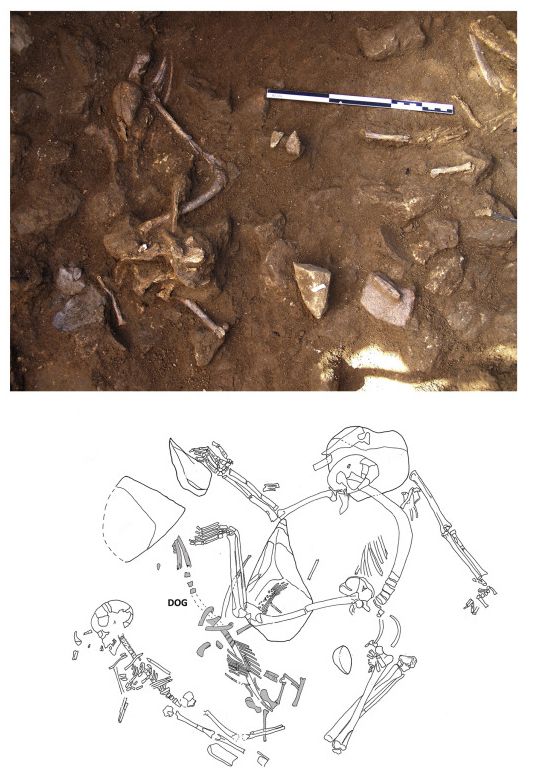
Top: remains of a dog found at the archeological site called La Serreta. Bottom: drawing of dog skeleton found between human skeletons in the necropolis Bòbila Madurell. (UB-UAB)
The archaeological sites all belong to people of the Yamnaya Culture, or Pit Grave Culture. These nomadic people swept into Europe from the steppes north of the Black and Caspian Seas. They kept cattle for milk production and sheep and spoke a language that linguists suspect gave rise to most of the languages spoken today in Europe and Asia as far as northern India.
The buried dogs aren’t the oldest found in a human grave. That distinction belongs to a puppy found in a 14,000-year-old grave in modern-day Germany. The care given to that puppy to nurse it through illness was particularly intriguing to the researchers who discovered it. “At least some Paleolithic humans regarded some of their dogs not merely materialistically, in terms of their utilitarian value, but already had a strong emotional bond with these animals,” Liane Giemsch, co-author on a paper about the discovery and curator at the Archäologisches Museum Frankfurt, told Mary Bates at National Geographic in 2018.
The fact that the researchers in the new study found so many dogs in the region they studied indicates that the practice of burying dogs with humans was common at the time, the late Copper Age through the early Bronze Age. Perhaps the canine companions helped herd or guard livestock. What is certain is that ancient humans found the animals to be important enough to stay close to even in death.
ooOOoo
That last sentence is precious. “What is certain is that ancient humans found the animals to be important enough to stay close to even in death.”
Vitamin D, when consumed at very high levels, can lead to serious health issues in dogs including kidney dysfunction.
The following products and lot numbers are affected by the recall.
Items marked with * are new product SKUs that were added to the list on March 20, 2019. The item marked with ** is one additional lot code of recalled product updated on May 15, 2019.
While vitamin D is an essential nutrient for dogs, ingestion of elevated levels can lead to potential health issues depending on the level of vitamin D and the length of exposure.
Dogs may exhibit symptoms such as vomiting, loss of appetite, increased thirst, increased urination, excessive drooling, and weight loss.
Pet parents with dogs who have consumed any of the products listed and are exhibiting any of these signs should contact their veterinarian.
In most cases, complete recovery is expected after discontinuation of feeding.
For More Complete Information
On March 21, 2019, the U.S. Food and Drug Administration published an announcement containing more complete information about this recall.
What to Do?
If your SKU, Date and Lot codes are found in the list above, you have an affected product.
You should stop feeding it and should return to the place of purchase for a full refund.
If you have questions, you may contact Hill’s Consumer Affairs at 800-445-5777.
U.S. citizens can report complaints about FDA-regulated pet food products by calling the consumer complaint coordinator in your area.
Here is the text of an email that was received yesterday morning.
ooOOoo
Dear Fellow Dog Lover,
Because you signed up on our website, I’m sending you this recall update report. If you no longer wish to receive these emails, please click the “unsubscribe” link at the bottom of this message.
Over the past 60 days, the FDA has announced 2 dog food recalls:
Thogersen Family Farm recalled its raw frozen pet food due to contamination with Listeria bacteria (4/8/2019)
Hill’s Pet Nutrition recalled multiple lots of Prescription Diet and Science Diet wet dog foods due toxic levels of vitamin D(3/20/2019)
Anyone who has ever tried to convince even one dog to sit still for a photo knows just how difficult it can be — but one woman has managed to do the impossible with — wait for it — 11 dogs.
Melissa Lentz
Melissa Lentz, who fosters dogs through Releash Atlanta, told The Dodo in a rundown about who is in this photo.
“Top from left: Mia, Pancake, Paxton,” Lentz said. “Bottom from left: Benji, Gizmo, Alex, Penny, Donny, Lula, Monroe and Rudy.”
Lentz added that seven of the depicted dogs are fosters waiting for homes, while “Gizmo, Donny, Monroe and Rudy are mine,” she said.
Even more remarkable, perhaps, is the fact that that perfect portrait is far from a one-time fluke.
Melissa Lentz
“I have tons of these photos,” Lentz said.
Melissa Lentz
Sometimes, Lentz even manages to join the pack for that perfect shot.
But how does she get such perfect family portraits — something that’s hard enough even for humans?
Melissa Lentz
Lentz’s secret seems to have to do with the particular relationships she forms with the dogs. One can almost see the bond reflected in the way the dogs look at her as she’s snapping the photos.
Melissa Lentz
“I literally just put them on the couch one by one and they situate themselves!” Lentz said. “I don’t use food [or] treats or anything. I just tell them to look at me.”
Melissa Lentz
The pictures aren’t only adorable — they’re also pretty emotional, since they capture the fosters at a very important time in their lives — when they’re learning how to be comfortable in a home with the longer-term hopes that they’ll soon find forever homes of their own.
Thankfully, they’ve landed with this dog whisperer to help them on their journey.
It always amazes me that dogs can so quickly learn that they have a human friend in their midst. Plenty of us would find it very difficult to make the change.



































 Learning from Dogs