Category: Musings

The power of the bleedin’ obvious!

Musings for a Monday morning!

Let me start with this:

A self-affirmation

For today, I am in charge of my life.

Today, I choose my thoughts.

Today, I choose my attitudes.

Today, I choose my actions and behaviours.

With these, I create my life and my destiny

I hasten to add that I am not the author of these wonderful words; just been aware of them for many years.

OK, to the muse!

I subscribe to Christine’s excellent blog 350 or bust.  Last Friday, Christine published a post that she called: Despite Pleas In Doha, Our Governments Have Failed Us & Our Children.

In that post, Christine included this video,

The lead negotiator for the Philippines at the Climate Conference in Doha, Naderev Saño, could not keep back the tears as he made a passionate appeal for real action on climate change.

“I appeal to all, please, no more delays, no more excuses. Please, let Doha be remembered as the place where we found the political will to turn things around…

The outcome of our work is not about what our political masters want. It is about what is demanded of us by 7 billion people…

I ask of all of us here, if not us, then who? If not now, then when? If not here, then where?”

Christine also included a short video of 19-year-old Syrian-American student Munira Sibai addressing the delegates.

“So let me now speak beyond the negotiators in this room to the people who I represent. Your governments are failing you. They are afraid that offering visionary pathways to low-carbon economies will make them look foolish, that taking responsibility will make them look weak, that standing up to the money and power of polluters will cost them political support. Unchecked, this cowardice will cost lives. Here in the halls of the United Nations, the voices of global citizens are limited, regulated and relegated to these short, symbolic statements. Outside these walls, these walls, there is a global movement, growing up from the grassroots, calling for climate justice. Join us.”

So young Munira Sibai offered the answer to Naderev Saño’s plea, “I ask of all of us here, if not us, then who? If not now, then when? If not here, then where?”  That answer being so beautifully encompassed in the opening self-affirmation.  Stay with me a little longer.

Many of you readers know that a little over 5 weeks ago Jean and I and our 11 dogs and 5 cats moved from Payson in Arizona up to Merlin, Southern Oregon.  The reason I refer to Payson is that not long before we left, a group concerned about the environment and climate change decided to form Transition Town Payson.

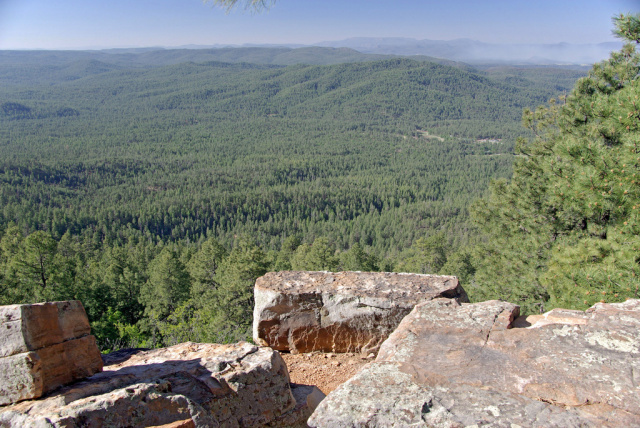
If you go to the ‘About‘ page of their website, you will see this beautiful photograph.

TTPvista

It’s a view from the Mogollon Rim Trail that would inspire anyone to want to care for our planet.  The trail passes close to Payson and is a very popular walking area.

Back to TTP.  If you go to their website and start browsing the articles and seeing what information is already there, you get a clear idea of what a group of people can do.  That key word ‘DO‘!

Last Thursday, I offered a reflection on Learning from Dogs about what feels like a new world order.  The penultimate paragraph offered this:

I sense that we, as in the peoples on this planet, are well into a period of such change that even by the end of 2013, a little over 50 weeks away, the precipice for humanity will be within sight.  I hold out zero hope that any time soon our leaders and politicians will stop ‘playing games’ and focus on doing what’s right.  The time for truth, for integrity, for sound debate is NOW!

However, all the truth, integrity and debate in the world comes to nothing without ACTION.

It really is the bleedin’ obvious!

A few reflections on a new world order

Maybe the power of open communications is our only way forward.

A number of disparate ideas have flown into my ‘in-box’ and left me with these thoughts.

The first was the last essay on TomDispatch.  This one from the hands of Mr. Engelhardt himself.  I’m referring to Tomgram: Engelhardt, The Washington Straitjacket.  As many of you know, Tom has been generous in granting me blanket permission to republish his posts and I frequently so do;  as yesterday’s post written by Professor Michael Klare demonstrated.

Let me give you a idea of where Tom was coming from with this personal essay,

The Barack Obama Story (Updated) 
How a Community Organizer and Constitutional Law Professor Became a Robot President
By Tom Engelhardt

President Barack Obama
The White House
1600 Pennsylvania Avenue, NW
Washington, D.C. 20500

Dear President Obama,

Nothing you don’t know, but let me just say it: the world’s a weird place. In my younger years, I might have said “crazy,” but that was back when I thought being crazy was a cool thing and only regretted I wasn’t.

I mean, do you ever think about how you ended up where you are? And I’m not actually talking about the Oval Office, though that’s undoubtedly a weird enough story in its own right.

The next paragraph opens, thus:

After all, you were a community organizer and a constitutional law professor and now, if you stop to think about it, here’s where you’ve ended up: you’re using robots to assassinate people you personally pick as targets.

Then there’s a comprehensive description of all the outcomes that have taken place in the last few years as in this paragraph,

Still, who woulda thunk it?  Don’t these “accomplishments” of yours sometimes amaze you? Don’t you ever wake up in the middle of the night wondering just who you are? Don’t you, like me, open your eyes some mornings in a state of amazement about just how you ended up on this particular fast-morphing planet? Are you as stunned as I am by the fact that a tanker carrying liquid natural gas is now making a trip from Norway to Japan across the winter waters of the Arctic? Twenty days at sea lopped off an otherwise endless voyage via the Mediterranean Sea, and the Indian and Pacific Oceans. Did you ever think you’d live to see the opening of the Northeast Passage in winter? Don’t you find it ironic that fossil fuels, which helped burn that oceanic hole in the Arctic ice, were the first commercial products shipped through those open waters? Don’t you find it just a tad odd that you can kill someone in distant Yemen without the slightest obstacle and yet you’ve been able to do next to nothing when it comes to global warming? I mean, isn’t that world-championship weird, believe-it-or-not bizarre, and increasingly our everyday reality?

Tom’s essay comes to this conclusion,

And don’t you ever wonder whether a labyrinth of 17 (yes, 17!) major agencies and outfits in the U.S. “Intelligence Community” (and even more minor ones), spending at least $75 billion annually, really makes us either safe or smart? Mightn’t we be more “intelligent” and less paranoid about the world if we spent so much less and relied instead on readily available open-source material?

I mean, there are so many things to dream about. So many ghostly possibilities to conjure up. So many experimental acts that offer at least a chance at another planet of possibility. It would be such a waste if you only reverted to your community-organizer or constitutional-law self after you left office, once “retirement syndrome” kicked in, once those drones were taking off at the command of another president and it was too late to do a thing. You could still dream then, but what good would those dreams do us or anyone else?

It’s a very powerful analysis that I really encourage you to read.

Then thanks to a mailing from the WordPress team, I was drawn to a recent account of life by Ruth Rutherford.  In an essay from the 13th November, Ruth writes about living in the dark, as this sample evocatively describes,

Dating in the dark

Just got back from visiting my ol’ stomping grounds in New Jersey where I spent the weekend with my parents and grandparents, just talking, eating and enjoying good company. And all this was done in the dark. Yep, that’s right. Even nearly two weeks after Hurricane Sandy unleashed her fury, the Garden State is still struggling to recover. And let me tell you: Living without power for that long will quickly make you appreciate the little things.

Like walking into a dark room and then transforming it with just the flip of a switch. Or turning on a faucet and seeing water actually pour out. Or pulling into a gas station on any day you choose, not just the days you’re allowed to based on the numbers on your license plate. Or just using the bathroom without strategically planning your “number twos” based on how much water is in the tank. Or not having to wake up at two o’clock in the morning to wander outside in your pajamas to fill the generator with gas. (Okay, fine. My dad did that part. But still…)

When you’re without electricity for a while, your mind tends to do a lot of thinking. There are no reality shows to turn your brain into mush, no hair dryers to block out the noise of everyday life, and no steaming hot baths to drown your worries in. Basically, it’s you, alone, with a candle, a flashlight and your thoughts. So I spent the time brain blogging.

At the heart of this essay is the concept that ‘dating’ as in finding one’s life partner has become too complex.  This is how Ruth concludes her ideas.

Yep, I’m telling you to be shallow.

Forget the deep end, folks. Jump, cannonball style, into the shallow end and let the fun begin!

Shared interests. Favorite movies. Local hot spots. Interesting hobbies. Recent vacations. Current music playlists. Boring work stories. Embarrassing childhood memories. Stupid jokes. Mutual attraction. Sparks. Chemistry.

Because if you can’t relate on these basic levels, then who the heck cares if you both want two boys, one girl and a yellow Labrador named Minnie?

Start small. Start simple. Grab a lantern and meet during a power outage. It’s amazing what you’ll find out about your date in the dark. (With your clotheson, people! Get your minds out of the gutter.)

~Ruth

Finally, closer to home. Patrice Ayme and Martin Lack have been exchanging views in comments to my recent post Unintended Consequences.  Patrice ended a comment with this: ” If goodness is to win, it has to be smarter than the enemy.

So what’s this all coming to?  According to WordPress there are over 500,000 people blogging about the world as they see it.  The number of others who read all those words must be well into many, many millions.  Even humble old Learning from Dogs received over 45,000 viewings in November alone bringing the total viewings to over 785,000!

As the saying goes, “the only thing required for evil to win, is for good people to do nothing.”

Go and read the latest from Bill McKibben on 350.org.

The_New_York_Times

The article in The New York Times tells the story of students, faculty and alumni around the country who are demanding divestment from fossil fuels. On a few campuses, like Swarthmore, they’ve been at it for semesters — but all of a sudden, as the article says, they find themselves “at the vanguard of a national movement. In recent weeks, college students on dozens of campuses have demanded that university endowment funds rid themselves of coal, oil and gas stocks. The students see it as a tactic that could force climate change, barely discussed in the presidential campaign, back onto the national political agenda.”

The picture that accompanies the article comes from our Minneapolis roadshow last Friday night, and the article concisely lays out the demands and the strategy of the campaign. It’s precisely the boost we need. So please, go read it here: www.nyti.ms/SESrfr

We’re quickly getting traction, but we can get more if we have your help.

So, first things first: please email the article by clicking the “E-Mail” button on the New York Times website — if we can get it on the newspaper’s “most emailed list”, we can help make sure it goes as far as possible, as fast as possible.

For full instructions on how to email the article, click here: www.350.org/nyt

I sense that we, as in the peoples on this planet, are well into a period of such change that even by the end of 2013, a little over 50 weeks away, the precipice for humanity will be within sight.  I hold out zero hope that any time soon our leaders and politicians will stop ‘playing games’ and focus on doing what’s right.  The time for truth, for integrity, for sound debate is NOW!

The sharing of ideas, thoughts and emotions that this ‘virtual’ world of blogging offers (despite me regarding the word ‘blogging’ as ugly) is going to be the only tool, the only channel to carry sufficient weight and power for the wishes and desires of the ‘common man’ to live peacefully and safely to the end of this century and beyond!

The naming of creeks!

Funny old world at times!

Last Thursday and yesterday have seen huge amounts of rainfall in this part of Southern Oregon.  In fact it was a swipe from the massive storm that was featured in a recent Climate Crocks article, from which one can read:

Meteorologist Paul Douglas has more:

I’m seeing some signs of a potentially historic storm for portions of the western USA between Friday and Wednesday of next week as a series of very moist storms push inland from the Pacific. I expect some flash flooding (and river flooding) for the San Francisco Bay Area, but the most severe flooding (and mountain snows) will take place from Marin county into the mountains of northern California and the Coastal/Cascade range of Oregon.

The ECMWF model, which seems to be doing the best job overall in this new weather-on-steroids environment, prints out some 16-20″ rainfall amounts over northern California and southern/western Oregon by Sunday; two surges: one Friday, a second front pushing in Sunday. WSI’s high-res RPM model confirms this as well, which increases my confidence level. The ECMWF model prints out 4-5” for San Francisco, but 8-10” for Marin county, just north of SFO.

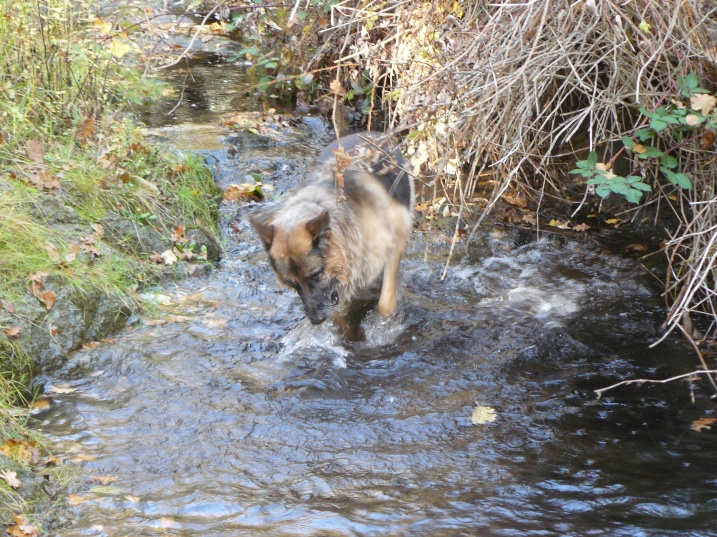
The driveway from our road to the house, about a quarter-of-a-mile long, within 300 feet crosses a creek that flows right across our property.  Most of the time it’s a quiet, idyllic place for a dog to play.

BummerCk

But when the volume of water reaches the sorts of proportions that we have seen in the last 48 hours, it turns into a nasty torrent.

bummerck2

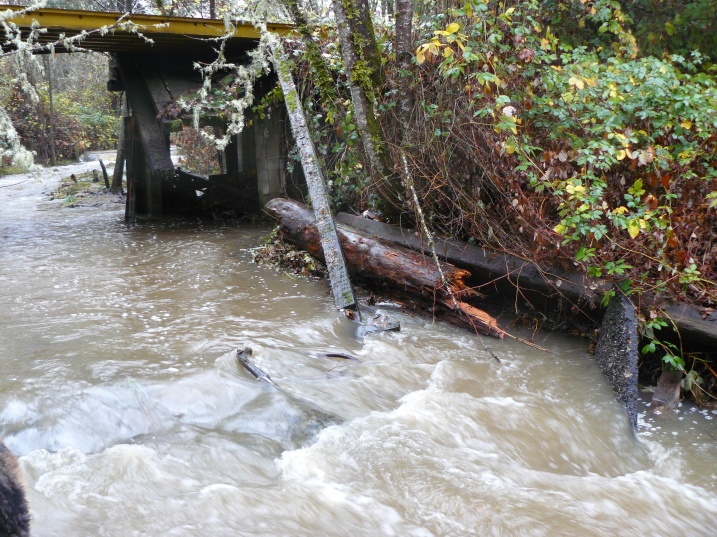
Not only that, the driveway across the creek relies on a bridge.  Rather, it did rely on a bridge. But Mother Nature, as always, had her say!
bummerck3

Most, if not all, the wooden support structure that held up the steel platform has been swept away.

So all the well-laid plans for the week-end now on hold as we play Marooned!  At least our dogs are taking an active interest …

Oh, Daddy, that looks expensive!

And the name of the creek?

BUMMER CREEK

I kid you not!

No signs of intelligent life!

Sometimes one just has to scratch one’s head and wonder about life!

I can’t recall when and where I first heard the muse as to why Planet Earth has not been visited by aliens, but I recall the answer: “Because alien passers-by have not found any signs of intelligent life!

The reason that this comes to mind is that the damage that we are doing to our planet, nay to life on our planet, if we don’t embrace the reality of climate change is truly ‘gob-smacking’!

The evidence for this statement is over-powering.  Just last Friday, I republished a recent essay from Tom Engelhardt under the title of ‘The more it changes, the more it’s the same thing.”  Tom’s essay focused on the lack of any change that came out of the recent Presidential election.  That essay closed, thus:

But stop waiting for change, “big” or otherwise, to come from Washington.  It won’t.  Don’t misunderstand me: as the residents of the Midwestern drought zone and the Jersey shore now know all too well, change is coming, like it or not.  If, however, you want this country to be something other than its instigator and its victim, if you want the U.S. to engage a world of danger (and also of opportunity), you’d better call yourself and your friends and neighbors to the colors.  Don’t wait for a Washington focused on its own well-being in 2014 or 2016.  Mobilize yourself.  It’s time to occupy this country before it’s blown away in a storm.

An inciteful comment from reader Jules was this:

“Don’t count on anyone doing the obvious: launching the sort of Apollo-style R&D program that once got us to the moon and might speed the U.S. and the planet toward an alternative energy economy, or investing real money in the sort of mitigation projects for the new weather paradigm that might prevent a coastal city like New York — or even Washington – from turning into an uninhabitable disaster zone in some not so distant future.”

A pity. Americans can do some things very well, the kind of stuff that merits some of the hyperbole of being the greatest nation, the ability to mobilise a nation and lead the world being one of them. We need heroes maybe it’s time for you lot to don that cape and be one.

Americans have such a potential for positive change – I just can’t imagine why this Nation isn’t leading the world to a more Earth-friendly environment.

This then came into my ‘in-box’ on Friday: Could NDAA be the Death of Biofuels in America?  The article opened thus:

The US military is one of the most important developers of new technologies leading them to a point where they can be released onto the market for public and private use. Currently the Department of Defense, led by the Navy, is attempting to reduce its dependence on oil by as much as 50% by 2020, by producing US-made biofuels.

and the author concluded:

Nicole Lederer, the co-founder of E2, despaired that, “the military often leads major economic transitions in our country. Yet right now in Washington, some shortsighted lawmakers are poised to block a potentially major transformation of our national energy supply – and also hold back the significant economic growth and job gains that would come with it.”

Russ Teal, founder of the biorefinery builder Biodico, warned that, “the military is the biggest driver of the biofuels industry right now. If Congress stops the military from doing what the military knows is best, Congress also could threaten the growth of the Made-in-America biofuels industry.”

By. Joao Peixe of Oilprice.com

Then more or less the same time as I read the piece above, in came the latest from 350.org, an essay by Naomi Klein.

Naomi Klein: Do The Math, The Fossil Fuel Industry Is Destroying Our Future

Naomi Klein was out in the shattered neighbourhood of Rockaway Park Queens last weekend, participating in the Occupy relief efforts there. In this interview she underscores the importance of both increasing local resilience as a response to our changing climate and addressing the fossil fuel industry’s business model directly. As 350.org’s Do The Math campaign makes clear, the fossil fuel industry’s business plan will destroy the planet. Bill McKibben reminded the “Do The Math”audience in Seattle this month that the global warming math is quite simple: we can burn 565 more gigatons of carbon dioxide and stay below 2 degrees of warming. Anything more than that risks catastrophe for life on earth. The only problem? Fossil fuel corporations now have 2,795 gigatons in their reserves, 5Xs the safe amount. And they are planning to burn it all, unless we rise up & stop them.

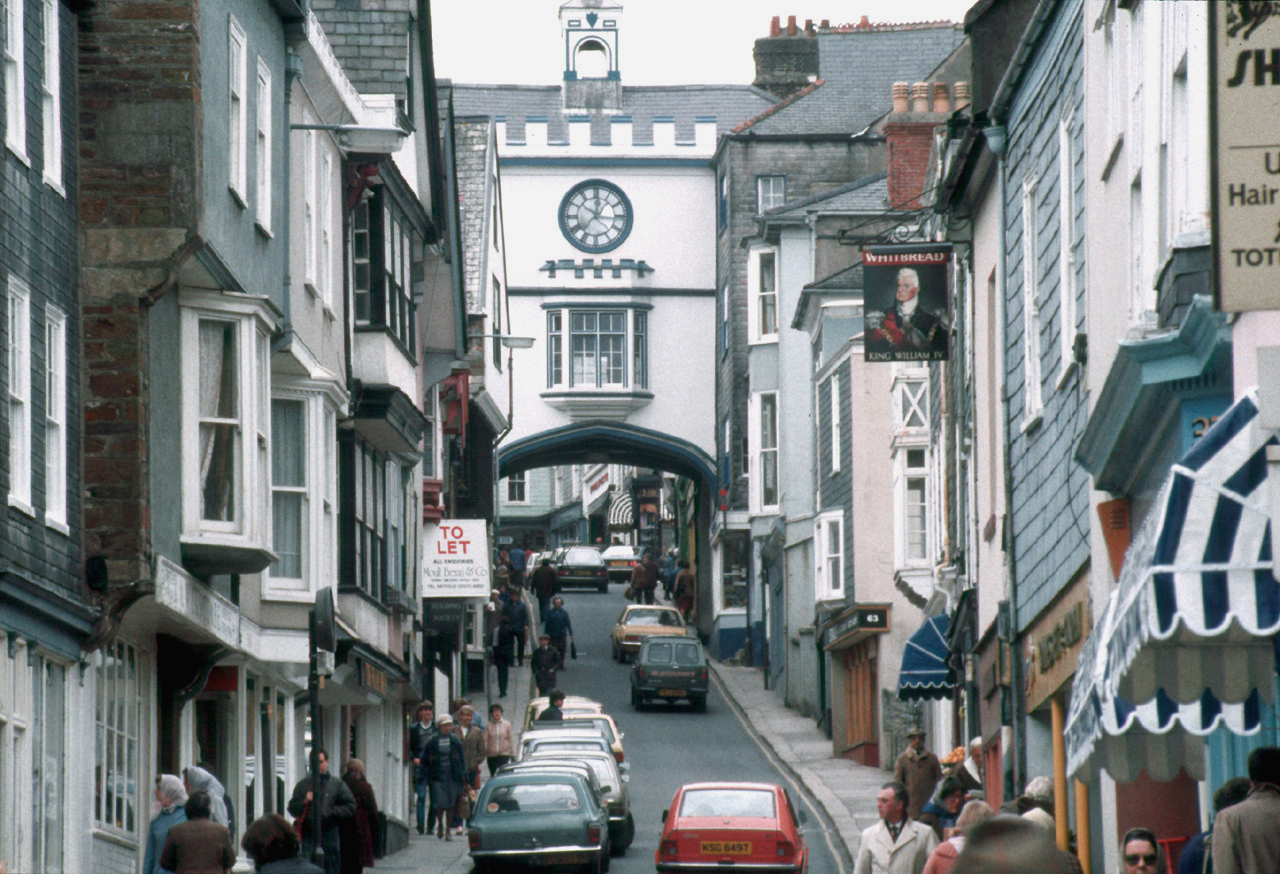
So is there any hope?  So easy to think not.  But in terms of hope the answer is “Yes, yes and yes!”  Because the decent peoples of the world are way ahead of their politicians.  Take the transition movement.  I used to live in the village of Harberton, just 3 miles from the town of Totnes, Devon, in the South-West of England.

Totnes High Street

Totnes was the site of the world’s first transition movement: Transition Town Totnes.  But as the Transition US website reveals, there are now:

126 official US initiatives
437 official initiatives worldwide
33 US states
34 countries
13 languages

One of the latest has just been formed in the city where Jean and I were living until just a few weeks ago, namely Payson, Arizona.  Here’s a reflection from John Hurlburt in Payson, one of a group of committed citizens who, like so many millions of others around the world, just can’t wait for governments to ‘lead’ and was one of the founding members of Transition Town Payson.

Keep it Simple

We share a living planet as a living species. Corporate finance fuels political hate and denial. The divisiveness of global and national politics reflects an unprecedented escalating global crisis. We live in a world of constant sorrow.

Our stubborn ignorance is the greatest threat to the objectives of peace and well-being. We have become so entrenched in the ‘ruts’ of our conditioned opinions that any semblance of balanced responsibility is immediately numbed by the deliberate stupidity of well-paid spin-doctors across a global electronic media.

The recovery process is truly simple. Surrender to the scientific facts of our inclusive reality, clean house, and have compassion for each other.  The good news is that a basic natural instinct of all life forms is to survive through adaptation.

John Hurlburt

So, on reflection, I was wrong to open with the degree of irony in my ‘voice’ that I had.  This is now a world of wonderful and amazing communication channels, many of them directly ‘person to person’.  The views of the world’s peoples are now so much louder than in previous times.  I am confident that right, rather than might, will prevail.

Animals in love

The beautiful hidden depths of the consciousness of animals

Back in the Summer of 2011, I published a couple of posts on the subject of consciousness.  The first one was called Consciousness, science or God? and the second one about a month later continued the theme under the heading of And more on consciousness.

In that second article, I concluded with these words:

Finally, do you have a dog at home?  If you do, ponder on how their conscious world engages them.  If science can’t explain human consciousness then all we have is our own intuition with regard to animals.  Not sure about you but when one is feeling a little low and a dog comes up and lays a head across you I feel a very strong conscious connection.

Hazel and Pharaoh

The dog to the left of Pharaoh in the above picture is Hazel.  Shortly before we left San Carlos, Mexico to move up to Arizona in February, 2010, this dog was dumped outside Jean’s house.  She was still in milk and Jean explained that it was common practice for female dogs to be cast out shortly after they had had pups.  The pups would have been sold for a few pesos and the mother dog was no longer of any use or value and was ‘disposed’.

We took her in, of course, and she joined the other dozen dogs on our journey to our new Arizonan home.  Hazel has the sweetest of dispositions and frequently sleeps snuggled up against me at night.  As I write these words, Hazel is sleeping just to the left of my feet.  There are times when Hazel looks into my eyes with what I can’t lable as anything other than the look of a dog in love.

So with that in mind, let me introduce you to Kate and Pippin.  As their website proposes  Kate & Pippin is “An unlikely love story“.

THE STORY

Pippin, a helpless baby fawn was abandoned by her mother on the property of Isobel Springett. Isobel’s Great Dane, Kate, adopted Pippin immediately and they have been best friends ever since.

The story of Kate’s and Pippin’s loving relationship is charmingly chronicled in a handsome book featuring the beautiful photography of Isobel Springett.

Here’s Martin Springett, author of the book.

While there’s a small degree of overlap with the first video, you’ll still love to watch this.

A collection of photos from pips’s early days. She was just a few days old when she found us. Music is by my brother Martin Springett.

To close, here’s Pip at about two and a half months old. She’s just lost her spots and is looking like a teenager, all legs! She loves grapes and bananas after her bottle. (And the music is fabulous – Artist: Jelengue “Amar Mi Verdad”)

Reminds me of that great book from Jeffrey Masson, Dogs never lie about love!

Deeper insights into who we are.

Two fascinating perspectives.

1. A conversation with Charles Taylor – THE 2008 KYOTO PRIZE

Video Messages from Dr. Charles MargraveTaylor, the Laureate of 2008 KYOTO PRIZE, Arts and Philosophy. “Feelings on receiving the Kyoto Prize” “What philosophers can do for society” “Future interest and theme”(2008/11/11)

Wikipedia describes Charles Taylor thus,

Charles Margrave Taylor, CC GOQ FRSC (born November 5, 1931) is a Canadian philosopher from Montreal, Quebec best known for his contributions to political philosophy, the philosophy of social science, and intellectual history. This work has earned him the prestigious Kyoto Prize and the Templeton Prize, in addition to widespread esteem among philosophers. In 2007, Taylor served with Gérard Bouchard on the Bouchard-Taylor Commission on Reasonable Accommodation with regard to cultural differences in the province of Quebec. Taylor currently teaches at McGill University in the Department of Religious Studies. He is a practicing Roman Catholic.

There is also a fuller biography presented here.

2. How we see circumstances is so much more important – Rory Sutherland on Perspectives.

The circumstances of our lives may matter less than how we see them, says Rory Sutherland. At TEDxAthens, he makes a compelling case for how reframing is the key to happiness.

The TED profile of Rory Sutherland explains that:

From unlikely beginnings as a classics teacher to his current job as Vice Chairman of Ogilvy Group, Rory Sutherland has created his own brand of the Cinderella story. He joined Ogilvy & Mather’s planning department in 1988, and became a junior copywriter, working on Microsoft’s account in its pre-Windows days. An early fan of the Internet, he was among the first in the traditional ad world to see the potential in these relatively unknown technologies.

Postscript to the result

Will we see the renewed President Obama take notice of what we are doing to the planet?

But don’t hold your breath! The BBC reported that President Obama in his victory speech had “pledged to work with Republican leaders in Congress to reduce the government’s budget deficit, fix the tax code and reform the immigration system.”  All well and dandy but, perhaps, missing the big one – climate change.

OK, on to the meat of this post.

“Frankenstorm”

I first came across this reflection on Hurricane Sandy in Christine’s great blog 350 or bust.  It’s an essay written by Colin Beavan, aka “No Impact Man“, who lives in New York City and wrote a response after experiencing Hurricane Sandy last week.  I then asked Colin if I could republish his essay on Learning from Dogs and promptly received his approval.

What to do if Hurricane Sandy scared you

Dear friends,

I don’t say this often but I am scared. Not scared to the point of paralysis. Not scared enough to run away. Not scared enough to stop trying to help. Not scared enough to think we’re doomed. Just scared enough to feel worried for myself, my family, my friends, my community, my country, and my world.

I was lucky when Hurricane Sandy hit. My daughter Bella and I put on our waterproofs in the early hours and ran around Brooklyn’s Fort Greene park in the wind and rain with Frankie–our dog–and our Occupy Wall Street activist friend/hero Monica Hunken.

That night, the lights flickered a couple of times. I lost my internet for three hours. Frankie the dog hid in the upstairs bathroom bathtub. That was the extent of it.

But when I woke up, lower Manhattan was flooded and without power. All the coastal parts of Brooklyn and Queens from Red Hook to Coney Island through the Rockaways and Hamilton Beach were hammered. The wind had driven a fire through Queens that destroyed so many houses. And the world’s most amazing subway system was brought to its knees. To say nothing of poor Staten Island and coastal New Jersey.

We in the Tri-State Area didn’t get Katrina. But we got a taste of her.

Yes, there are some good parts. New Yorkers have been showing up some of the emergency shelters in such numbers that they have been turned away. There are donation drives and volunteer efforts. And about a gazillion New Yorkers have taken to cycling.

But there is a lot of suffering. And a lot of fear not of what Sandy brought. But of what next year’s storm will bring. And the year after that. And after that. First Irene, now Sandy, for how many years in a row can New York City withstand a “once in a century” storm, people are asking?

I hung up the phone with a friend just a few minutes ago. She said, “In some ways, this is way more scarey than 9/11, because you get the feeling that it could happen again and again and again.”

In a coffee shop this afternoon, everyone at every table was talking about climate change. People are talking about where they will go next time. To an aunt’s in New Hampshire. A friend with three cottages in Maine. People are talking about their escape plan for when New York stops functioning.

Katrina, Irene, Sandy, droughts all summer, busted corn crops, water shortages in the southwest: it’s hard to believe we aren’t seeing what the climate scientists predicted. But sooner. Way sooner than they said.

It feels ironic and sad. That the war in Iraq sparked by 9/11 may have got us what we wanted–control over more oil. But that burning that self-same oil has brought us another mini-9/11. Except that this one we are kind of doing to ourselves.

Fracking–the drilling for natural gas by injecting poisonous chemicals into the same rock formations that our drinking comes from. Fighting in the Middle East. Drilling in the arctic. Mountaintop removal in Appalachia. Mining the Canadian tar sands. Building the pipelines. This is bonkers.

Especially when the sun shines everywhere. The wind blows everywhere. The rivers run everywhere. We can generate our power in better, cheaper, safer ways.

Of course, there are reasons for resistance. Our economy is based on fossil fuels. Changing it would be a gargantuan effort. There would be a cost to a transition. But the costs of not making the transition will be much higher. Ask the NY Mass Transit Authority, which is still pumping out the tunnels. Or ask the citizens of New Orleans.

But this isn’t a bitch fest. It’s an appeal.

Years ago, when I did the No Impact Man experiment, I went on the Good Morning America show and I said it wasn’t important that all Americans did as much as I did. “We must each just do something,” I said.

I was mistaken. We must each do a lot.

We all–including me–have a tendency to think that shaking our fist at the TV news or leaving an angry comment on a blog or “clictivism” is some sort of an expression. We need to do more. Not just more at home, but more in our civic engagement, more in the citizen guiding of how our society moves forward.

In fact, I’d argue that we–all of us–need to find a way to dedicate at least some part of our lives to solving our problems. Climate change we need to fix, yes. But also we need to accept that the economic system we live in is driving that climate change. Consumption, as the basis for economy, has become like a winter coat that needs to be shed. It no longer serves us.

Now, I’m not going to claim that I know what each of us should do, how each of us should help to bring about the Great Transformation. I don’t think anyone exactly knows. This, by the way, was the great criticism of Occupy Wall Street, back in the day. That they didn’t say exactly what we should do. They didn’t make their demands clear, the press kept saying.

That was Occupy’s strength in my view. The willingness to bring attention to problems we don’t quite know the solutions for. Occupy didn’t have concrete demands because none of us quite know what we should be demanding quite yet. Occupy was saying “stop ignoring problems just because we don’t know the solution!!!!!!”

You may disagree with me. You may say, we know the solution, it’s renewable energy. But where is the political will to bring that change about when the fossil fuel industry has spent $150 million in this election cycle?

You may say, the solution is getting corporate money out of politics. But how do we do that when the politicians we need to vote for such a thing are the beneficiaries of that self-same corporate money?

You may say, the solution lies in measuring Gross National Happiness instead of Gross Domestic Product. But how do we get that done?

We have lots of ideas about what would fix things, but we have no idea how to actually get those ideas instituted. That’s kind of where we are at a loss. How do we actually bring about the change?

It’s not to say we can’t bring it about. But it is to say that a lot more of us are going to have to join the search for the solutions and the effort to institute them.

In a way, what I am saying is the same as what Occupy said: “Stop pretending that you can’t help just because you don’t know exactly how to help!!!!!!”

We all have to start dedicating some of our lives to these problems. Not just voting for the right people. Not just leaving comments on blogs. Not just having intense conversations over coffee.

So what then?

Here’s a thought. Decide to dedicate five to ten hours a week to helping figure out what to do. Then use those five to ten hours to bring your personal gifts to the search for societal solutions and the means of implementing them.

If you are political then, whatever side of the aisle you are on, start going to your party’s meetings and insist that they address themselves to the major, new-world problems we are facing instead of grumbling over the same stuff they have for 50 years. Get them to try to be leaders instead of winners.

If you are an artist or musician or writer, use your talents to bring more and more attention to our problems and the quest for the solution. Be a constant reminder of the peril our society and world faces.

If you are a therapist or life coach, find a way to introduce to your clients the idea that the problems they face are the same problems all of us are facing. Financial insecurity, for example, is something we can fix together better than any one of us can fix alone.

If you are a banker, bring your personal values and your heart and soul to work with you. The expression “it’s only business” has to be jettisoned. This idea that the free market will fix things so we can ignore the dictates of our conscience needs to be fixed.

If you have a spare bedroom, find an activist who can’t drag themselves away from the work they are doing for all of us long enough to earn themselves some rent. Home and safety for those on the front line of social change is a wonderful service.

If you have two feet, march with my friends at 350.org whenever you have a chance.

All of us have our own ways to help.

One thing is clear, whatever our individual contribution, every one of us needs to be moving back into the political system and the democracy. We are all so disgusted by it that our instinct is to abandon it. In this case, our instinct is wrong. We totally need to Occupy our democracy. We need to flood it with people, with us.

Overall, though, my point here is that all of us have a role to play in our cultural healing. There is no leader who can tell us how to contribute. Each of us has to look around us and use our own minds and souls to see what needs doing and how we are best suited to do it. Each of us must contribute in our own way.

I began this piece by saying that I’m scared. Because I am. But my fear is just a sign that I need to do something. There is really only one thing I know how to do–to write. And so I’m doing it. I don’t know if if will help. But it is the one thing I know how to do.

What is the one thing you know how to do? What is the one thing you can dedicate a slice of your life to?

We can’t leave it to the politicians or the designers or the Occupiers or the activists. It’s up to each of us.

Because–and I’ve said and written this many times–the question is not whether each of us is the type of person who can make a difference. The question is whether we are the type of people who want to try to make a difference. And Sandy has told us we all need each other to try.

Love,
Colin

Nothing much to argue about that! Thanks Colin for letting me republish your essay.

And the result is …

Light-hearted contribution following yesterday’s Presidential election.

I’m writing this at 5pm PDT on the 6th so the result is yet unknown to me and millions of others. In this afternoon’s email ‘in-box’ was this delightful story that, despite being widely distributed, isn’t harmed by being displayed today.  So thank you Rob I.

While walking down the street one day a Corrupt Senator (that may be redundant) was tragically hit by a car and died.

His soul arrives in heaven and is met by St. Peter at the entrance.

“Welcome to heaven,” says St.. Peter. “Before you settle in, it seems there is a problem. We seldom see a high official around these parts, you see, so we’re not sure what to do with you.”

“No problem, just let me in,” says the Senator.

“Well, I’d like to, but I have orders from the higher ups. What we’ll do is have you spend one day in hell and one in heaven. Then you can choose where to spend eternity.”

“Really?, I’ve made up my mind. I want to be in heaven,” says the Senator.

“I’m sorry, but we have our rules.”

And with that, St. Peter escorts him to the elevator and he goes down, down, down to hell.

The doors open and he finds himself in the middle of a green golf course. In the distance is a clubhouse and standing in front of it are all his friends and other politicians who had worked with him. Everyone is very happy and in evening dress. They run to greet him, shake his hand, and reminisce about the good times they had while getting rich at the expense of the people.

They played a friendly game of golf and then dine on lobster, caviar and the finest champagne. Also present is the devil, who really is a very friendly guy who is having a good time dancing and telling jokes. They are all having such a good time that before the Senator realizes it, it is time to go.

Everyone gives him a hearty farewell and waves while the elevator rises.

The elevator goes up, up, up and the door reopens in heaven where St. Peter is waiting for him, “Now it’s time to visit heaven…”

So, twenty-four hours passed with the Senator joining a group of contented souls moving from cloud to cloud, playing the harp and singing. They have a good time and, before he realizes it, the hours have gone by and St. Peter returns.

“Well, then, you’ve spent a day in hell and another in heaven. Now choose your eternity.”

The Senator reflects for a minute, then he answers: “Well, I would never have said it before, I mean heaven has been delightful, but I think I would be better off in hell.”

So St. Peter escorts him to the elevator and he goes down, down, down to hell…

Now the doors of the elevator open and he’s in the middle of a barren land covered with waste and garbage. He sees all his friends, dressed in rags, picking up the trash and putting it in black bags as more trash falls to the ground. The devil comes over to him and puts his arm around his shoulders.

“I don’t understand,” stammers the Senator. “Yesterday I was here and there was a golf course and clubhouse, and we ate lobster and caviar, drank champagne, and danced and had a great time. Now there’s just a wasteland full of garbage and my friends look miserable. What happened?”

The devil smiles at him and says, “Yesterday we were campaigning. Today, you voted..”

Only a humourous story, or course!

Gnawing on a bone!

Dogs’ evolution shows why they ‘love’ gnawing on bones.

This is the second article on the BBC Nature website following yesterday’s item about why dogs enjoy a healthy breakfast.

oooOOOooo

Dogs’ evolution shows why they ‘love’ gnawing on bones

By Victoria Gill
Science reporter, BBC Nature, Ottawa, Canada

Social living drove dogs to evolve the “tools” for chewing bones, scientists say

Scientists say they have discovered why dogs love to eat meat and bones.

Ancient canines adopted pack-living about eight million years ago, to hunt larger prey, according to researchers.

The resulting evolution of their jaws gradually turned the ancestors of modern wolves, and ultimately our own pets, into “hypercarnivores”.

Dr Joao Munoz-Doran presented the findings at the First Joint Congress for Evolutionary Biology in Ottawa, Canada.

He and his colleagues from the National University of Colombia have created a canine “family tree”, piecing together the relationships between each of the more than 300 dog species.

“We compared species that have very different diets,” Dr Munoz-Doran explained to BBC Nature. “So we classified them as carnivores, hypercarnivores [animals that eat more than 70% meat] and omnivores [animals that eat meat and vegetation].”

The ancestors of modern wolves belong to this hypercarnivorous group.

The team’s analysis showed that the skull features that now distinguish a wolf – strong jaw muscles and enlarged canine teeth – first started to develop when their ancestors first began hunting in groups.

“We found a common evolutionary history for these traits,” Dr Munoz-Doran explained. “Eight million years ago was when [less forested, more] open habitats were spreading through Asia, Europe and North America. And when there are open habitats, the big prey group together. So there will be more eyes watching for a predator.”

The only way that dogs roaming the open plains could snatch very large prey from a herd was to work together.

“And after many generations of this grouping behaviour, there are new selective pressures on their [skull shape],” said the researcher.

This pressure meant that animals with larger teeth and stronger jaws were more likely to succeed in hunting, and to survive to pass on their large-toothed, strong-jawed genes to the next generation.

Animals with stronger jaws and larger canine teeth would have been more successful hunters

“They developed strength in their muscles – especially the muscles that close their mouth,” said Dr Munoz-Doran. “And bones that are more resistant to bending, so they could support the mechanical strains of biting the prey. “Over time, they became adapted to be ‘hypercarnivorous’.”

The researcher pointed out that domestic dogs had “very good evolutionary reasons to enjoy chewing a bone”.

“They have the tools to do that,” he told BBC Nature, “and they want to use their tools.”

oooOOOooo

Finally, to the side of that BBC Nature webpage were a few canine facts, as follows:

  • Common canines: Foxes, wolves, jackals, coyotes and dingoes are all members of this well-known group
  • Familiar faces: Wild canids are found on every continent except Antarctica
  • Communication is key: Previous studies of dog evolution have revealed that calls were essential for forming social groups and hunting larger prey
  • Pets’ past: All domestic dogs are descendants of the grey wolf

And don’t close without going here and listening to Steve Backshall howling with a wolf pack – (it’s a video as well – unmissable).

Bedtime prayers

First published on 1st November, 2009.

Time for bed

dog and boy praying

Thanks to Dan Gomez for forwarding it. Classic!