Category: Musings

Dream on my beautiful dog

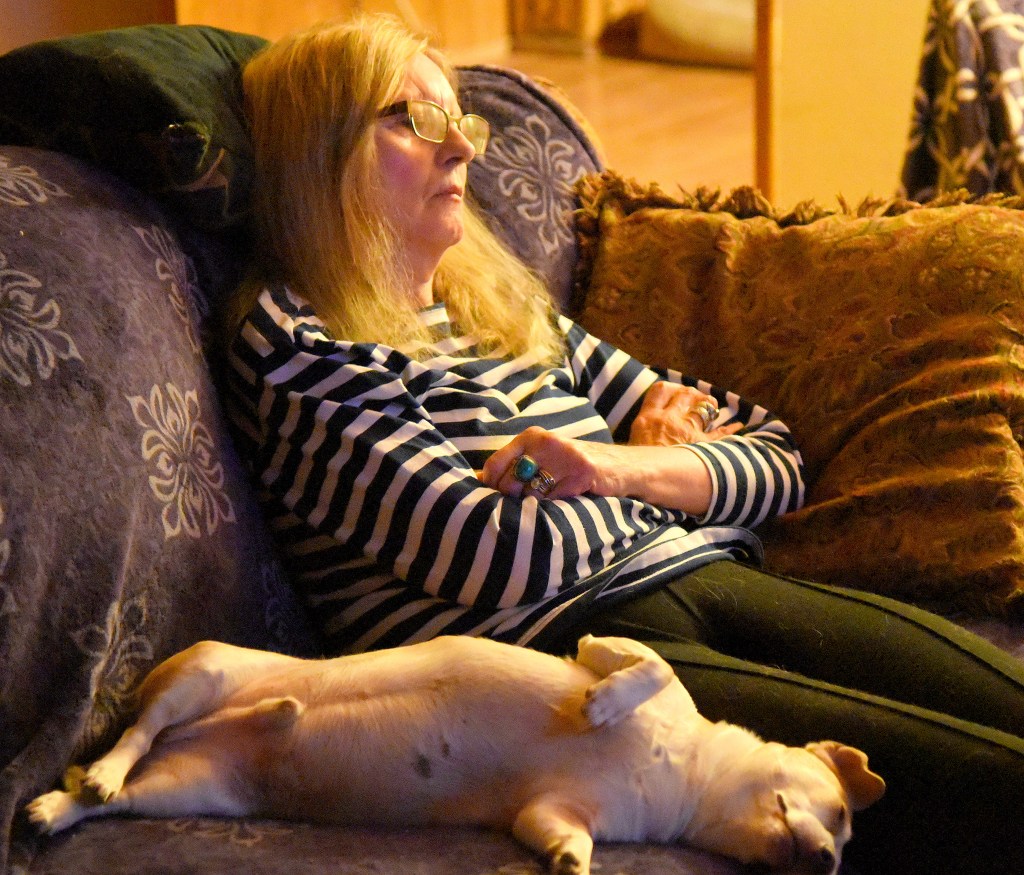
Science shows that animals, including dogs, do dream!

I wanted to republish a recent and serious article written by George Monbiot but couldn’t bear to push back against the wonderful video of yesterday. Those loving ripples are still spreading across my consciousness and, I’m sure, that’s the same for you.

Consciousness, sleep, and dreaming are fascinating states of the mind. Previously thought exclusively the states of human minds. But not so!

ooOOoo

Do Animals Dream?

By: Care2 Causes Editors October 22, 2017

About Care2 Follow Care2 at @care2

Written by Sy Montgomery, coauthor of Tamed and Untamed: Close Encounters of the Animal Kind

The electric eel exhibit at the New England Aquarium has a feature that makes it a favorite. Whenever the eel is hunting or stunning prey, the charge powers a voltmeter above his tank. It lights up when the eel is using his electricity, and allows you to see the invisible—like magic.

One day I saw another magical thing happen in the tank. Thanks to the voltmeter, I was able to watch the eel dream.

It happened when I was standing in front of the exhibit with Scott Dowd, the lead aquarist for the freshwater gallery, watching the eel resting motionless at the bottom of the tank. “I think he’s asleep,” I said to my companion.

“Yes, that eel is catching some serious z’s,” he agreed.

Being hard-core fish enthusiasts, we continued to watch transfixed while the electric eel slept. And that’s when it happened: A big flash shot across the voltmeter display—and another and another.

Electric eels hunt while swimming forward, wagging their heads to and fro, sending out electric signals that bounce back to them, sort of like a dolphin’s echolocation. But he was still motionless. So what was the flash for?

“I thought the eel was asleep!” I said to Dowd.

“He is asleep,” he replied.

We realized at once what we were almost surely witnessing. The electric eel was dreaming.

“It would appear that not only do men dream,” Aristotle wrote in History of Animals, “but horses also, and dogs, and oxen; aye, and sheep and goats. . . .”

It was obvious: Like most of us, Aristotle had watched sleeping dogs twitch their ears, paddle their paws, and bark in their sleep. Surely other animals dreamed as well.

But since Aristotle’s day, more “modern” thinkers denied that animals could dream. Complex and mysterious, dreams were considered the exclusive province of so-called higher minds.

As brain research advanced, however, researchers were forced to concede that Aristotle was right. Animals do dream.

And now we are even able to glimpse what they dream about.

Since the 1960s scientists have understood that our dreams happen during the rapid eye movement (REM) phase of the sleep cycle. During this time our muscles are normally paralyzed by the pons of the brain stem, so that we don’t act out our dreams. In 1965 researchers removed the pons from the brain stems of cats.* They discovered the cats would get up and walk around, move the head as if to follow prey, and pounce as if on invisible mice—all
while asleep.

By 2007 we would get an even more vivid picture of animals’ dreams. Massachusetts Institute of Technology scientists Matthew Wilson and graduate student Kenway Louie recorded the activity of rats’ brains while the animals were running a maze. Neurons fire in distinct patterns while a rat in a maze performs particular tasks. The researchers repeatedly saw the exact same patterns reproduced while the rats slept—and they saw this so clearly they could tell what point in the maze the rat was dreaming about and whether an individual rat was running or walking in his dreams.

The rats’ dreams arose from the hippocampus, the same area in the brain that seems to drive humans’ dreams. It’s an area known to record and store memories, and that supports the notion that one important function of dreams is to help us remember what we have learned. Of course, it’s important to a lab rat to remember the right way to run a maze.

So if rats dream of running mazes, what do birds dream about? Singing.

University of Chicago professor Daniel Margoliash conducted experiments on zebra finches. Like most birds, zebra finches aren’t born knowing their songs; they learn them, and young birds spend much of their days learning and rehearsing the song of their species. While awake, neurons in the forebrain known as the robustus archistrialis fire when the bird sings particular notes. The researcher was able to determine the individual notes based on the firing pattern of the neurons. While the birds were asleep, their neurons fired in the same order—as if they were singing in their dreams.

Much less work has been done on fish than on mammals and birds. No one has found REM sleep in fish—yet. But that does not mean they don’t dream. Interestingly, no one has discovered REM sleep in whales, either. But whales almost surely dream. They are long-lived, social animals with very big brains much like our own, and for whom long-term memory consolidation is crucial.

And if you were looking for rapid eye movement in sleeping owls, you’d never see it—because owls’ eyes are fixed in their sockets. That’s why they need to turn their heads around, Exorcist-style. Yet owls’ brain waves show they dream, too.

Fish do sleep, however—that much is well known. It’s been carefully documented that if zebra fish are deprived of sleep (because pesky researchers keep waking them up), they have trouble swimming the next day—just as a person would have trouble concentrating after a dreamless night.

What might an electric eel dream about? The voltmeter at the New England Aquarium showed us the answer: hunting and shocking prey.

This excerpt is from Sy Montgomery and Elizabeth Marshall Thomas Tamed and Untamed: Close Encounters of the Animal Kind (Chelsea Green Publishing, October 2017) and is printed with permission from the publisher.

*Care2 stands firmly against animal testing and believes it to be a cruel and unnecessary practice for which there are viable alternatives, such as computer modeling.

ooOOoo

A young Pharaoh asleep, and dreaming?? September, 2003.

Togetherness!

As beautiful as it ever gets!

(First seen over on Sue Dreamwalker’s blogsite.)

No words required from me!

We must never forget the power of true love!

(Thanks Sue!)

Loyalty with a capital “D”!

As in Dog!

Towards the end of September in came an email addressed to learningfromdogs.

Hi Paul,

Pete here from The Goody Pet.

Firstly – A big thank you for writing all those amazing articles on dogs. Been sharing these articles with my friends and they really enjoyed reading them. Was wondering if I could contribute a guest post for your website? I have been a dog owner for the past 15 years and would love to share some of my tips to your readers.
If you are interested, please let me know? I will be more than happy to prepare a few topics to send across to you.
Kind Regards,
Pete

Goes without saying that I was delighted to receive Pete’s email and his offer of an article. Here it is!

ooOOoo

DOGS: A LESSON IN LOYALTY

by Pete Decker, October 8th, 2017

Dog is a man’s best friend, this is something we have said and heard enough number of times. They can be better friends that any human can ever be, this is a fact that almost all dog owners can surely vouch for.

A dog’s loyalty has been seen and heard of in many famous incidents as well as stories like Hawkeye, the dog who grieved the death of his Navy SEAL owner by lying down near his casket day in and out. Or the story of Hachiko, the dog who greeted his owner at the train station every day and continued to look for his owner at the same place daily even after the sudden death of the owner.

What makes dogs so loyal?

There have been some people who say that they depend on humans for food and shelter and so have to be loyal without a choice. But when you see the dog of a street dweller loving him unconditionally or when you see the reaction of a dog after meeting his master who has been away for a long time, you know it’s not just about food and shelter.

They are colonial creatures who like to live together, whether it is a colony of humans, dogs or even other animals. They just want to love and be loved back.

Dogs are not like human beings, they are much better. They do not cheat or betray. They only need one master and that is enough for them to live happily. Unknowingly, dogs teach us many important lessons that help us be better and more loyal people. Let us consider some of them:

They teach you never to betray

Your closest human friend or companion may betray you when the time comes, but a dog never ever will. If needed he will lay his life for you, but betraying is out of question. A human being is capable of telling lies, manipulating, or twisting facts, a dog is not capable of any of that.

A dog can never lie

No matter how close you are to a person, they still may not tell you everything or all the truth. As humans, we think withholding information is not considered lying and do that all the time. But a dog can never lie, he doesn’t even know how to. There is no pretense or withholding information with a dog. For a dog the world is only about you. And it only has ways to show you how much it loves you, nothing more.

They teach you never to judge

Your dog does not care whether you are rich or poor, whether you are ugly or beautiful. It does not even care if you are thin, fat, or what nationality you belong to. A dog will not judge if you have failed at anything, or hold prejudices against you. With a dog you can never be scared of being ridiculed or humiliated. As long you it is with you, you mean the world to him, and he will never leave you no matter what.

Forgiving is another lesson they teach us

A dog is not capable of holding grudges, or being revengeful. These qualities are for us humans. Even if you hurt your dog knowing or unknowingly they will still forgive you at all times. They will not hold your mistakes against you. They will forget your flaws and love you as it always did.

Love is beyond everything

This is one thing that differentiates a human from a dog. Your best friend of one time may not be the same anymore, but a dog will be your best friend as long as you live. They will be by your side at all times, through thick or thin.

You can always repay the favor by ensuring that your dog is responsibly cared for, well fed with regular grooming.

These are some important lessons of loyalty that a dog teaches us. If only we humans imbibe even a part of their qualities, the world will be a much happier place to live in.

ooOOoo

That closing photograph, that was also supplied by Pete, says it all.

Naturally, I asked Pete to offer a little background information on his goodself and this is what he wrote me:

The author of this post is Pete Decker, the Lead Editor at The Goody Pet. Pete loves to share his passion for pets through snippets of interesting and helpful information. You can find more of Pete at his website, Twitter or Facebook.

The loyalty of dogs continues tomorrow!

Frequency change!

But not of the RF kind!!

When I published my conclusions from the feedback from you good people to the survey of attitudes to this place, overall I wrote:

My overall conclusions

  1. Maintain the mix between dog and non-dog posts more or less as it is.
  2. But focus on increasing the number of dog story topics that are about animal rescues and dog training.
  3. Then when it comes to non-dog posts be more selective and choose stories that feature Environmental issues, Philosophy, and Regional articles from around the world.
  4. Last, but by no means least, explore reducing the number of posts published each week.

I went on to say:

Then this coming October I have to keep my head down for a couple of months because I want to finish the draft of my second book by the end of November. Thus, reducing the number of posts published would be a great help in the book-writing department!

Well here we are already almost a week into October and I have been thinking carefully about reducing the number of posts I publish each week.

Here’s what I am going to do.

With effect from this coming Saturday, the 7th, I shall change to not publishing a post on Saturday and Monday.

My thinking was that I frequently struggle to come up with a decent Saturday post and there are many times when I don’t feel like being in ‘blog’ mode on a Sunday.

Let’s see how it goes and how well it is embraced by your good people!

Return to the movies!

Another movie, another dog! Correction: another world-famous dog!

Monday’s post Hail the Hero was about Max.

Max, a feature film by the producers of the doggie classic Marley and Me, intends to explore a soldier dog’s journey that doesn’t end with this heartbreaking image of a pup chasing down his fallen brother, but rather begins with it.

So it’s rather nice to welcome a guest post from Emily Ridgewell that features a dog that became known far and wide thanks to television and the cinema.

ooOOoo

An Incredible Rescue: An Often Forgotten “Tail” From The Golden Age Of Hollywood

By Emily Ridgewell

In the shadow of recent world tragedies, and long before cute puppies and kittens graced the internet, there were former movie legends in the form of incredible canines that found their way onto the big screen in the golden age of Hollywood. Think of adorable dogs like Toto from The Wizard of Oz or Lassie from many different types of these movies and television shows.

But there’s another “tail” (pardon the pun) about a German Shepherd named Rin Tin Tin who stole America’s heart and eventually had millions of fans all around the world long before the advent of the internet. Few of us today know the real-life story of this precious little puppy who was rescued from a war zone long before Toto or Lassie gained their fame and fortune as canine celebrities.

According to a historically-related biography published long-after this rag-tag dog shot to fame in the late twenties and early thirties, there was a young American soldier stationed in Europe shortly before the end of World War I. Corporal Lee Duncan was traipsing through the aftermath of formerly German-occupied farming village in France when he came across a single building, actually it was a kennel, that remained somewhat intact after a devastating bombing had leveled the entire town.

After cautiously entering the building, the young trooper painfully walked over more than a dozen dead German Shepherd dogs. These canine soldiers were trained for combat and left behind by the Third Reich. Corporal Duncan heard whimpering coming from deeper inside this solitary structure and continued on with his mission. To his amazement, Lee discovered some unlikely survivors of this terrible tragedy.

AFTER THE UNTHINKABLE – LIVING & LOVABLE

Lying in the rubble, there Lee saw a female shepard with five young puppies who were just a few days old. Corporal Duncan was no stranger to abandonment since his own father had left him and his mother to fend for themselves back in 1898. Just a year later, his Mom took him and a younger sibling to an orphanage. Perhaps this tugged on his heartstrings and he couldn’t leave behind this young family so he took them all underneath his wing.

He took the entire brood back to his barracks in a living and loving rescue effort. The young Corporal quickly realized he couldn’t care for all of them and found loving homes for all but two of the pups. He kept a little boy and girl, named them Nanette and Rin Tin Tin, both titles given to good luck charms found in France.

THE CANINES AFTER CHAOS

Lee continued to care for his beloved best buddies as the chaos of the war continued. After the conflict had concluded, Corporal Duncan was bound and determined to take his little war refugees home with him. Imagine the red-tape he was faced with and, long story short, he lost Nanette to pneumonia after bringing them both home to the states.

The WWI veteran got a job in his home state of California and began training Rin Tin Tin to perform some tricks in their spare time. After some filming occurred, the former Corporal wrote a screenplay and the rest (as they say) is history.

There’s an old saying (later turned into a Beatles song – also from many days gone by) that rings true in this case, you “Can’t Buy Me Love.” And that’s the whole point.

You can’t purchase the love and affection of an animal, but if you rescue one, you’ll find unconditional love that lasts forever. You might not become rich and famous after rescuing an animal, but you’ll never find a deeper love and connection with your four-legged best friend.

ooOOoo

Emily Ridgewell is an arts professional and a pet enthusiast from sunny LA. Emily has a creative energy and an aesthetic sense of living, where everything beautiful is worth sharing. She loves her yorkie Olivia and writes original and fun articles on ways to learn and improve your pet-best friend’s life. She finds exciting new things to explore and experience! Don’t forget to connect with her on Twitter: @ridgewell_j

Picking up on that ‘old saying’ with regard to The Beatles makes it easy to close today’s post. (And sorry if this makes some of you feel old!)

Here’s a little bit of music history:

Written by: Lennon-McCartney
Recorded: 29 January; 25 February; 10 March 1964
Producer: George Martin
Engineers: Norman Smith, Geoff Emerick

Released: 20 March 1964 (UK), 16 March 1964 (US)

Can’t Buy Me Love was The Beatles’ sixth British single, released with the b-side You Can’t Do That. It was written while the group were in Paris for a 19-date residency at the city’s Olympia Theatre.

Ah! Nostalgia!

Tell me what you think!

Introduction

Dear Reader of Learning from Dogs,

The first post in this blog was published on the 15th July 2009, now more than 8 years ago. In my wildest imagination, I would not have predicted that I would still be publishing posts today. Or, indeed, that more than 3,300 posts have been published since that day, that the blog has received more than 1.3 million viewings in that time, and that over 2,500 good people now follow this place.

But what that does say to me that it is about time that I listened to what you like and, better still, how this blog could even better communicate with you.

So here’s a short survey that I would dearly love for you to complete. No personal details are being asked for or recorded and the results of the survey will be shared with you all in this place.

By the way, these polls (I’m using PollDaddy via WordPress) will expire in seven days time.

Question One

Question Two

Question Three

Question Four

Please indicate to what extent having a dog improves your life? (Please answer even if you currently do not have a dog in your life but, nonetheless, have a view.)

Question Five

On the ‘About’ page of the blog, it is stated that:

The underlying theme of Learning from Dogs is about truth, integrity, honesty and trust in every way. We use the life of dogs as a metaphor.

Question Six

Not infrequently blog posts are published that do not refer to dogs. Please indicate your views on these other ‘non-dog’ posts?

Question Seven

Please read the following statement and then record your reaction to it:

Having one or more dogs in my life allows me a much better connection with and awareness of my inner self.

Question Eight

Please indicate, by ticking the relevant boxes, which dog and animal topics you would like to read more of on Learning from Dogs.

Question Nine

Please indicate, by ticking the relevant boxes, which non-animal topics you would like to read more of on Learning from Dogs.

Question Ten

Do you believe the Learning from Dogs blog could be improved for you?

Finally, if you answered “Yes” to this last question do please explain how it could be improved via a reply to this post.

I going to leave this as the current post right through to Friday for two reasons:

  1. Your views and opinions are really important and not every reader and follower comes here every day, and,
  2. These polls expire in seven days time.

Thank you all so very, very much!

Letting go of the glass.

Another vital lesson from our dogs.

I saw the following video on Facebook from a dear friend back in my days of living and working in Colchester, Essex, England.

There’s nothing mind-blowing about the message but nevertheless it’s a good reminder to learn to chill out as our dogs do.

Or as Jeannie and Pedy were doing last Thursday evening!

(Oh, and this will be the first time that Jeannie knew of me taking this picture!)

Thanks Roger.

So who is Sam?

You loved Sam Grant’s photos of Casper and Scotland. Learn more about her.

Last Sunday my Picture Parade was primarily a recent item that appeared on the BBC website.

Meet Scotland’s ‘most well-travelled dog’

By Ewan Murrie, BBC Scotland news website, 3rd June 2017

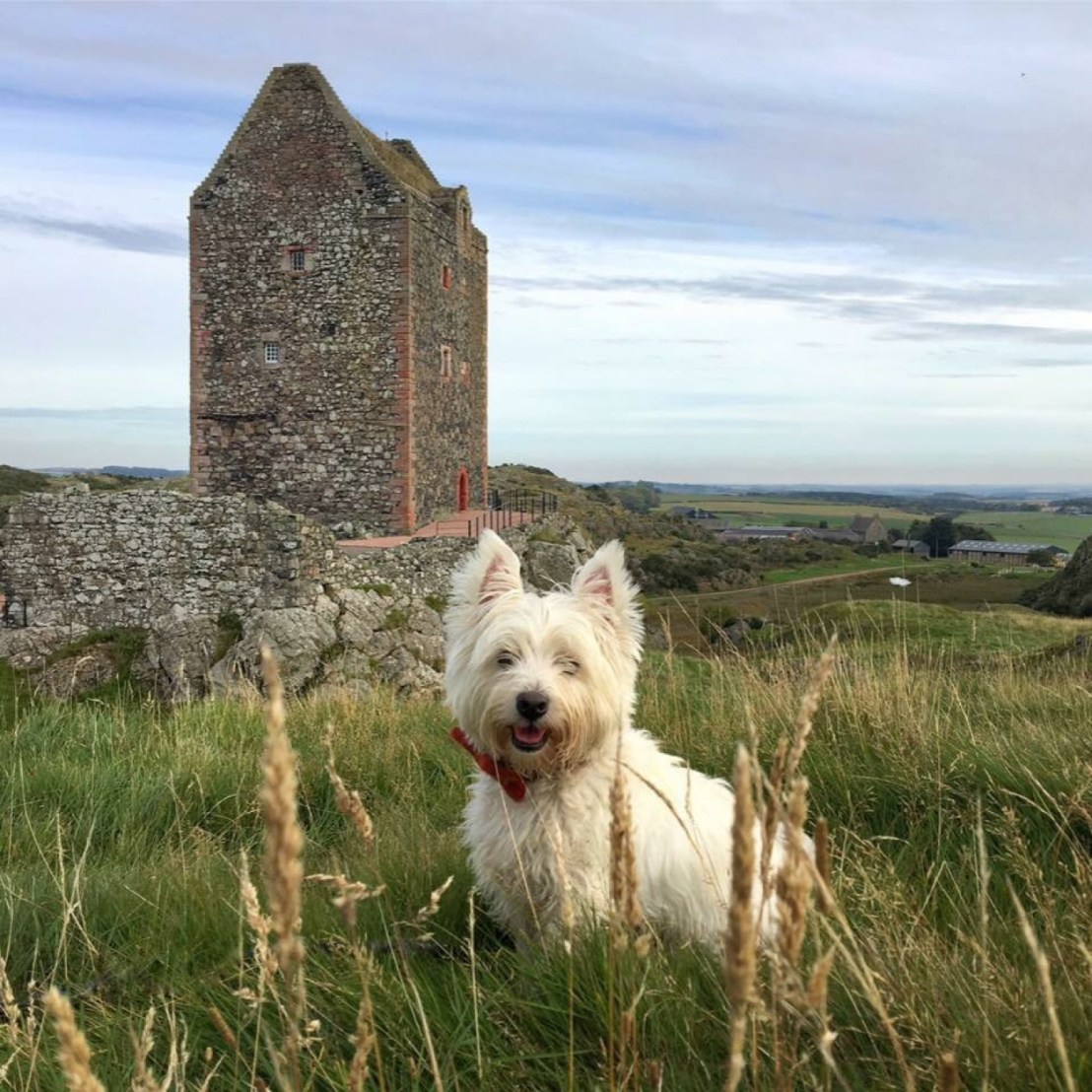
After photographs of her West Highland Terrier received more “likes” on social media than even the most stunning Glencoe landscapes she could capture, Sam Grant conceded that “the wee white dug” should star in her Scottish travel blog.

I went on to republish a wonderful set of photographs that had been taken by Sam. You all loved them and that led me to ask Sam if I could republish her About Me page on her blog. Sam very kindly said that would be fine.

ooOOoo

Scotland with the Wee White Dug

A Scottish travel blog showcasing the best of Scotland. Scotland with the Wee White Dug is a comprehensive and informative guide to Scotland, covering history, outdoor activities, events, visitor attractions, accommodation, eating out and more.

About Me

A little bit about me

Hello and welcome to my Scottish travel blog which I hope you’ll find informative and interesting, but most of all fun.

I’m Samantha but am generally known as Sam, Mrs G or Mum.  I’m married to Alex (Mr G) and we live in Edinburgh with a well travelled wee white dug called Casper.  We also share our home with the The Teen, Casper’s sloth like and gadget obsessed big sister.

All of my free time is spent road-tripping around Scotland.  I’ve travelled extensively throughout the country and never tire of its jawdropping and diverse beauty.

I have a vast knowledge of where to stay, eat and what to do in Scotland. Whether it be an afternoon out, a day trip or an extended tour. I also know all of the best places to go with your four legged friend.

I’m a Visit Scotland Ambassador and I helped launch their online Community in the spring of 2016.  The Community is a Scottish travel forum for sharing insider hints and tips about visiting Scotland.  Visit Scotland’s Ambassadors were selected for their expert knowledge of the country.

In January 2017 I took up the role of resident blogger for East Lothian Council on their Visit East Lothian website.  I write a fortnightly post for their blog, highlighting the delights of East Lothian.

I’m passionate about the history, language, literature, customs and myths of Scotland. I read History at the University of Edinburgh and during my time there I studied Scottish History, Literature and Politics which gave me an excellent understanding of how Scotland became the country that it is today.

I absolutely adore the great outdoors – it’s my happy place.  I love hiking, have been known to summit a Munro or two and am happiest when surrounded by lochs, moors and mountains.

My photography

I’ve been an avid hobby photographer since joining Instagram several years ago.  I’m part of a diverse group of Scottish Instagrammers with a passion for sharing Scotland with the World.

My feed @bean_nighe has appeared on Instagram’s prestigious Suggested User list.  You’ll find the Wee White Dug on Instagram too @theweewhitedug.  His feed is also dedicated to sharing our Scottish travels.

I’ve featured in articles recommending the best Scottish Instagram accounts to follow by The ScotsmanMatador Network and the award winning travel blog Stories my suitcase could tell.

My photos appear regularly on various social media channels including those of Canon UK, BBC, Skyscanners, Scottish Memories Magazine, Scotrail, Historic Scotland, Visit Scotland and The Guardian.

I share my Scottish travels on Facebook and Twitter too so if you’re on those sites stop by and say hello.

I’m passionate about promoting Scotland as a wonderful place to visit.  It’s a country with a rich history and heritage. A country full of stories just waiting to be told.

I appreciate you taking the time to stop by my blog to join me on my travels.  I hope ‘Scotland with the Wee White Dug’ inspires you to visit Scotland, helps you to plan for a forthcoming trip or makes you reminisce fondly about a past visit.

If you’re interested in working with me you can find out more here.

Sam

ooOOoo

Just glorious!

More doggie language.

Preceded by some human language!

Sorry to be a little obtuse with my sub-heading.

But I wanted to inform all you wonderful readers that for the next 6 days I am going to be rather distracted by a book event. I have prepared posts through to the 12th, my first clear day ‘back at my desk’ but if in the meantime you wonder why I am being unresponsive that’s the reason.

I saw the following not too long ago and asked if I might have permission to republish it here. Lea said “Of course”. Thus I am delighted to republish what appeared on Paws Give Me Purpose blog earlier this year.

ooOOoo

Doggie Language

By Lea

Most dog owners wish their pup could speak to them and tell them exactly what they want, how they’re doing and how they’re feeling. I honestly believe dogs can talk, but only to those who know how to listen. Their body language and behaviors are the language they use to speak to you. Do you ever wonder if your dog loves their life? If they’re happy?

This is a picture of Phoebe, a Maltese that was rescued by Yorkie911 Rescue Inc. This was her first day in my home, look at that smile! She knew she was safe and was expressing her happiness.

Here are some ways to know your pup is relaxed and happy:

  • Your dog gets excited! Excited to see you, to play, to eat, to go for walks. If for some reason your dog doesn’t get excited for these things your pup may be telling you they are not be feeling well.
  • Your dog sleeps well. A happy relaxed dog sleeps well. A stressed dog, or if your dog is not feeling well, will be restless and change spots often trying to get comfortable during the night.
  • A healthy dog is a happy dog 🙂 Obviously if your pup isn’t feeling well the signs of happiness won’t show.
  • Pay attention to your dog’s eyes, when your pup is happy his eyes are bright and are their “regular” shape. If your dog is uncomfortable or in pain his eyes will tell you, he may squint.
  • When your dog is happy and relaxed their mouth will be closed or slightly opened with a relaxed tongue hanging out. A panting dog could be hot or stressed, so pay attention to this body language.
  • A destructive dog is a bored dog 🙁 If your dog is content they will play with their toys and bones rather than eat your shoes or anything else.
  • If your dog’s body language is relaxed he/she is happy. Relaxed posture, not tense or stiff. When a dog places it’s head in your lap it’s a relaxed happiness being with his/her person.
  • When your dog is relaxed he/she will carry their tail in its natural position. When they are happy they will wag it from side to side. They may even wiggle their entire body with joy! A tail that is held low or between the legs signals a lack of confidence, nervousness, or fear. (A dog’s tail can tell you a great deal about their moods. A wagging tail does not always mean they are happy, don’t assume that’s always the case. Pay attention to the rest of the dog’s body and actions. Believe me, just the tail itself can be a full post on its own).
  • Happy dogs are active. They love to play with you, with their toys, chew on their bones, explore, and solicit attention from you. They may play bow or initiate physical contact with you by rolling over for a belly rub, this also shows trust. A happy dog wants to hang out with his/her people!
  • A happy dog likes to eat. Some dogs, like one of mine, can be picky eaters when it comes to meals, but in general when they are happy, he/she will enjoy eating. What dog can resist a cookie.
  • Some dogs rarely bark, but those that do have a higher-pitched bark when they’re happy than they usually do. Sometimes it’s even a high pitched howl in this house.
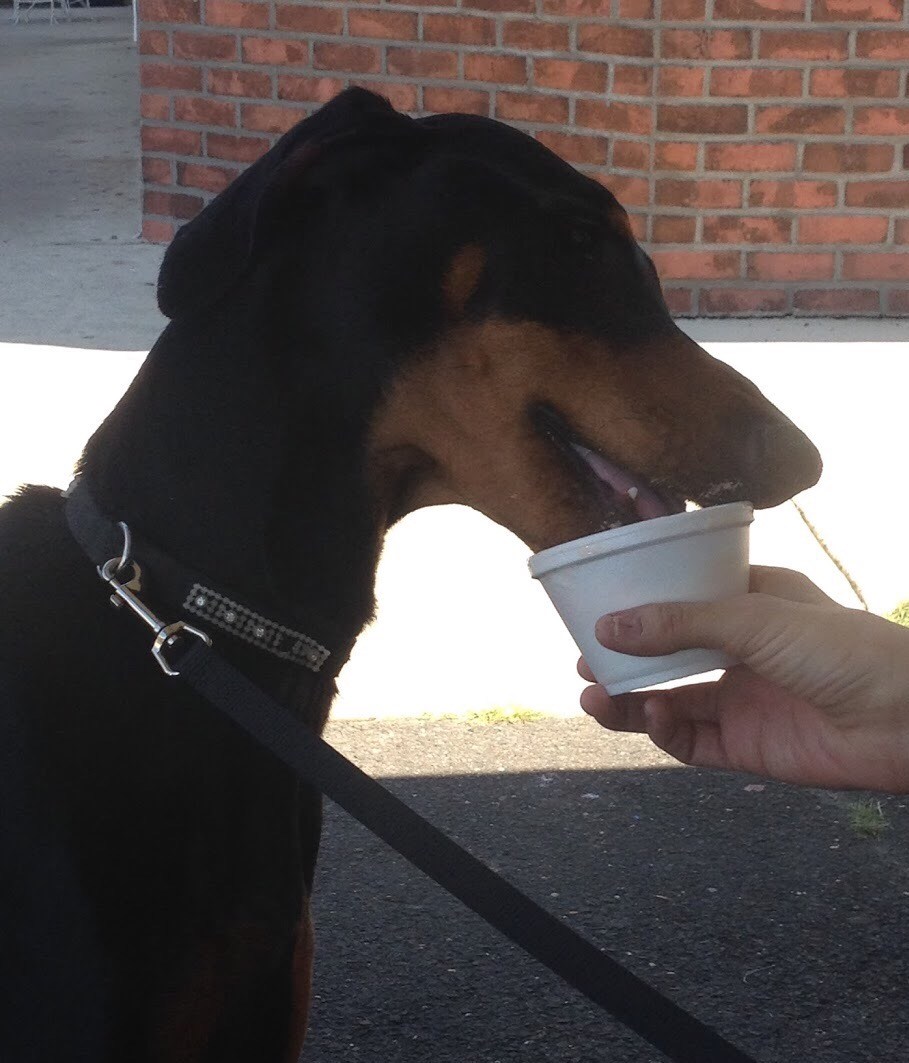
Spirit, a Doberman I rescued from a backyard breeder myself, smiling as she eats some doggie ice cream. Look at her joyful expression!

While you obviously know your dog best, these are the ways I see my dogs express their relaxed and happy mood. Having a rescue dog in my home that was labeled “aggressive” has taught me a great deal about my pups body language and what they are trying to tell me. There really is a great deal we can learn from our furry friends body language and we can understand what they are saying by simply watching closely.

Further reading:

http://pets.webmd.com/dogs/features/what-is-your-dog-telling_you

http://www.aspcapro.org/resource/7-tips-canine-body-language

http://www.petplace.com/article/dogs/behavior-training/understanding-your-dog/is-your-dog-happy

ooOOoo

The world would be a much, much sorrier place without our gorgeous dogs.

Thanks Lea.

Picture Parade Two Hundred and Ten

Pictures of Casper.

(All will become clear shortly!)

Dear friend of this place, Margaret K. from Tasmania (MargfromTassie), recently sent me an email with a link to a story that had appeared on the BBC website.

I thought the photographs would make a fabulous Picture Parade.

But first sufficient of the news story for the photographs to be seen in proper context.

Meet Scotland’s ‘most well-travelled dog’

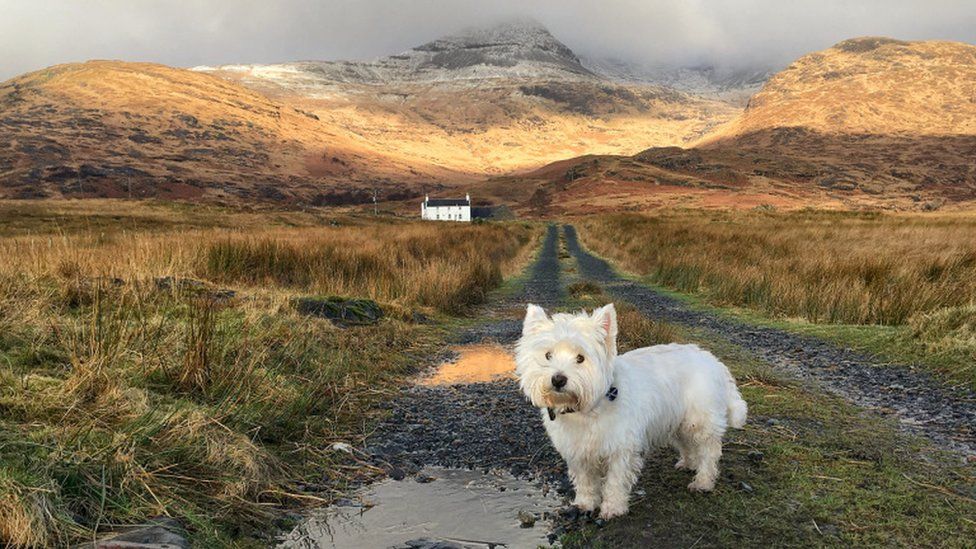
After photographs of her West Highland Terrier received more “likes” on social media than even the most stunning Glencoe landscapes she could capture, Sam Grant conceded that “the wee white dug” should star in her Scottish travel blog.

“Casper is my unique selling point,” says Sam Grant, an Edinburgh-based VisitScotland ambassador who spends her spare time travelling the country with her pet.

She adds: “There are lots of travel bloggers out there who are very good writers, but they don’t have the wee white dug.”

Here are almost all of those photographs that the BBC presented.

You will love them.

Please note that all of the photographs were taken by Sam Grant who, I am sure, retains copyright ownership of them. Sam’s blogsite is Scotland With The Wee White Dug and well worth a visit.

The village of Crianlarich is located in Glen Strathfillan to the north of the Trossachs, around eight miles north of the head of Loch Lomond

oooo

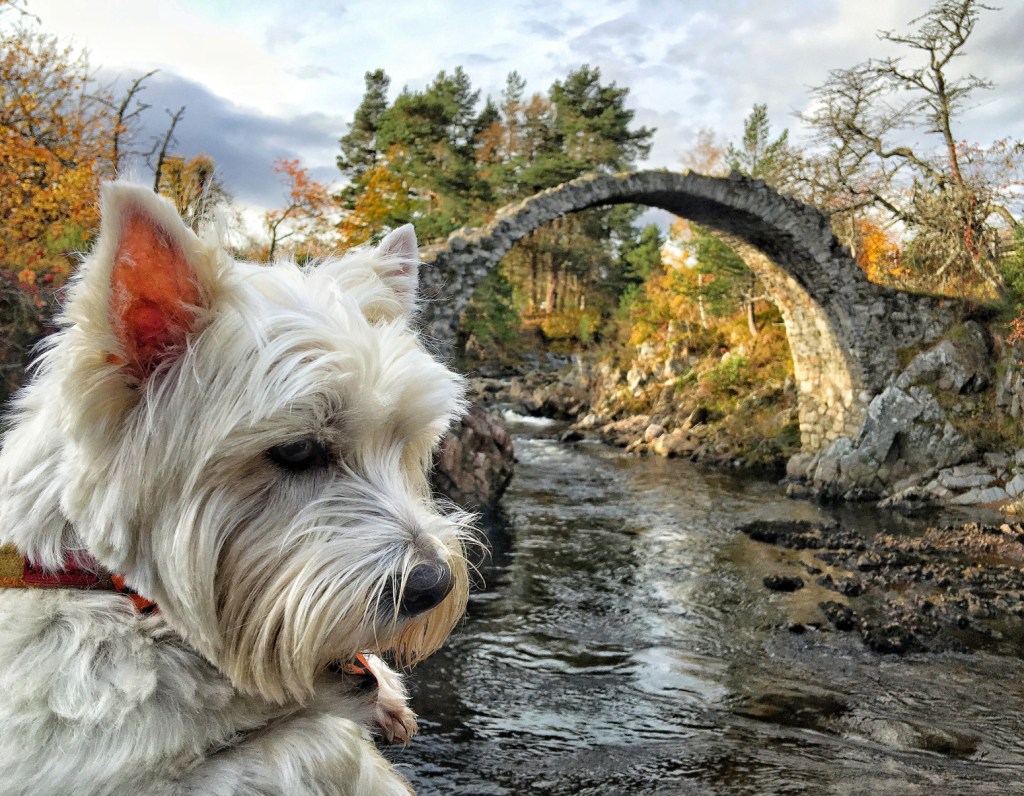
The village of Carrbridge, in the Scottish Highlands is famous for its 18th Century packhorse bridge.

oooo

Whiting Bay, Isle of Arran, offers views across to Holy Isle.

oooo

Culzean Castle is perched on the Ayrshire cliffs.

oooo

Culloden Moor in the Highlands is where the Battle of Culloden took place in 1746.

oooo

Iona, Inner Hebrides, is often described as a “tiny island paradise”.

oooo

The Tomb of the Eagles, Orkney, is thought to be more than 5,000 years old.

oooo

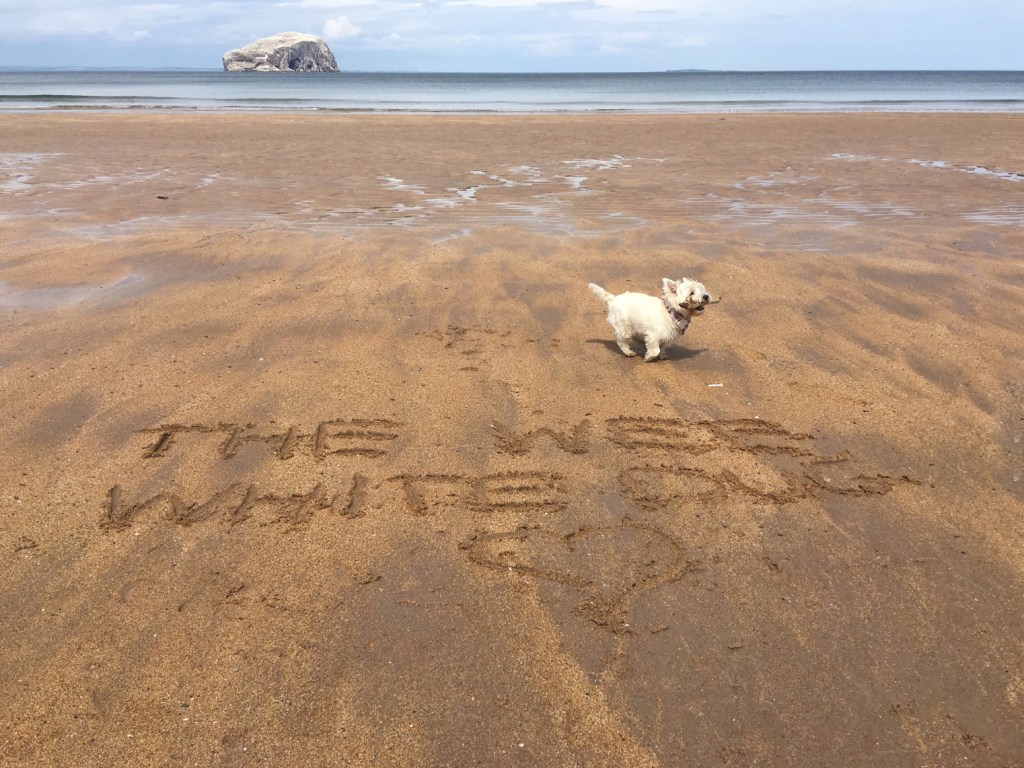
North Berwick, East Lothian, boasts many great beaches and coastal scenery.

oooo

“Dolphin Spirit” is a boat to take tourists onto the waters of the inner Moray Firth to see the dolphin pods.

oooo

Bow Fiddle Rock is a natural sea arch near Portknockie on the north-eastern coast of Scotland.

oooo

Kilchurn Castle is a ruined castle on a rocky peninsula at the northeastern end of Loch Awe, Argyll and Bute.

oooo

Snow capped Ben More in Glen More, Isle of Mull, Western Isles.

oooo

Balnakeil Bay is near Durness, Scottish Highlands.

I can’t resist including the rest of the text that the BBC published for the photographs are strengthened enormously by Sam’s words.

Her eccentric website details places of interest in areas including Orkney, Loch Lomond and the Scottish Borders.

It was launched in 2015 after an Instagram account written from Casper’s perspective proved popular with followers.

The social media profile has nearly 4,000 followers, who Sam says “can’t get enough” of the wee white dug’s quirky anecdotes about his travels.

Sam says travelling with Casper has given her lots of insight into Scotland’s best pet-friendly tourist attractions and holiday accommodation.

She says: “There are loads of good places that you can visit nowadays where you can bring along your four-legged friends.”

Sam hopes the blog could encourage more Scots to look around their own country, as well as attracting other visitors.

She says: “If you visit the beaches in the Outer Hebrides, you’ll see there’s really no need to go to the Caribbean – unless you’re a sun worshipper.

“Scotland’s a country with a rich history and heritage. A country full of stories just waiting to be told.”

Sam says most traffic to her website comes from the UK and US but she has had visitors from more than 100 countries – including China.

“When I see that I’ve had visitors from far-flung countries, I imagine them on the other side of the world reading about Scotland and the wee white dug,” the writer adds.

Asked if she thinks some people could say her pictures are a bit twee, Sam replied: “I did worry about that at first, so I try to make a joke of it.

“But if people like my pictures and they bring a bit of happiness to someone’s day, then why not?”

I guarantee that all of you dear people who view these photographs will have much happiness brought to you. As was brought to Jeannie and me.