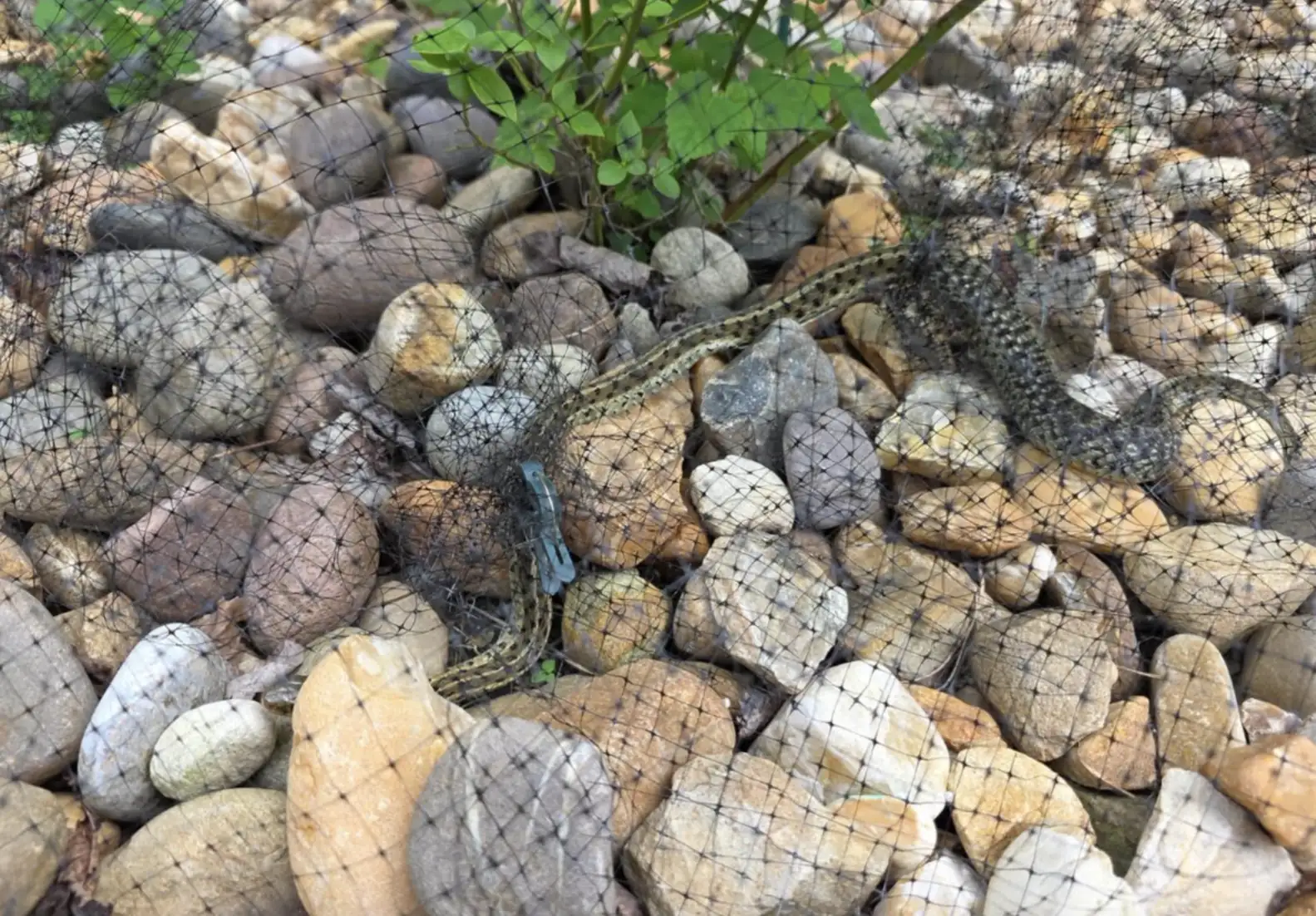
Earlier this month, a homeowner called Tidewater Wildlife Rescue with an urgent request. A common garter snake was hopelessly tangled in a piece of netting in their yard. Could someone come help?
Rescue volunteer Serenity Reiner quickly headed to the scene.
TIDEWATER WILDLIFE RESCUE
Reiner and her rescue partner, Daniel, used scissors to cut away big pieces of the net. Then, Daniel gently held the snake as Reiner snipped away netting closer to the animal’s body.
“We were very focused,” Reiner told The Dodo. “We wanted to be as fast as possible to limit [her] stress.”
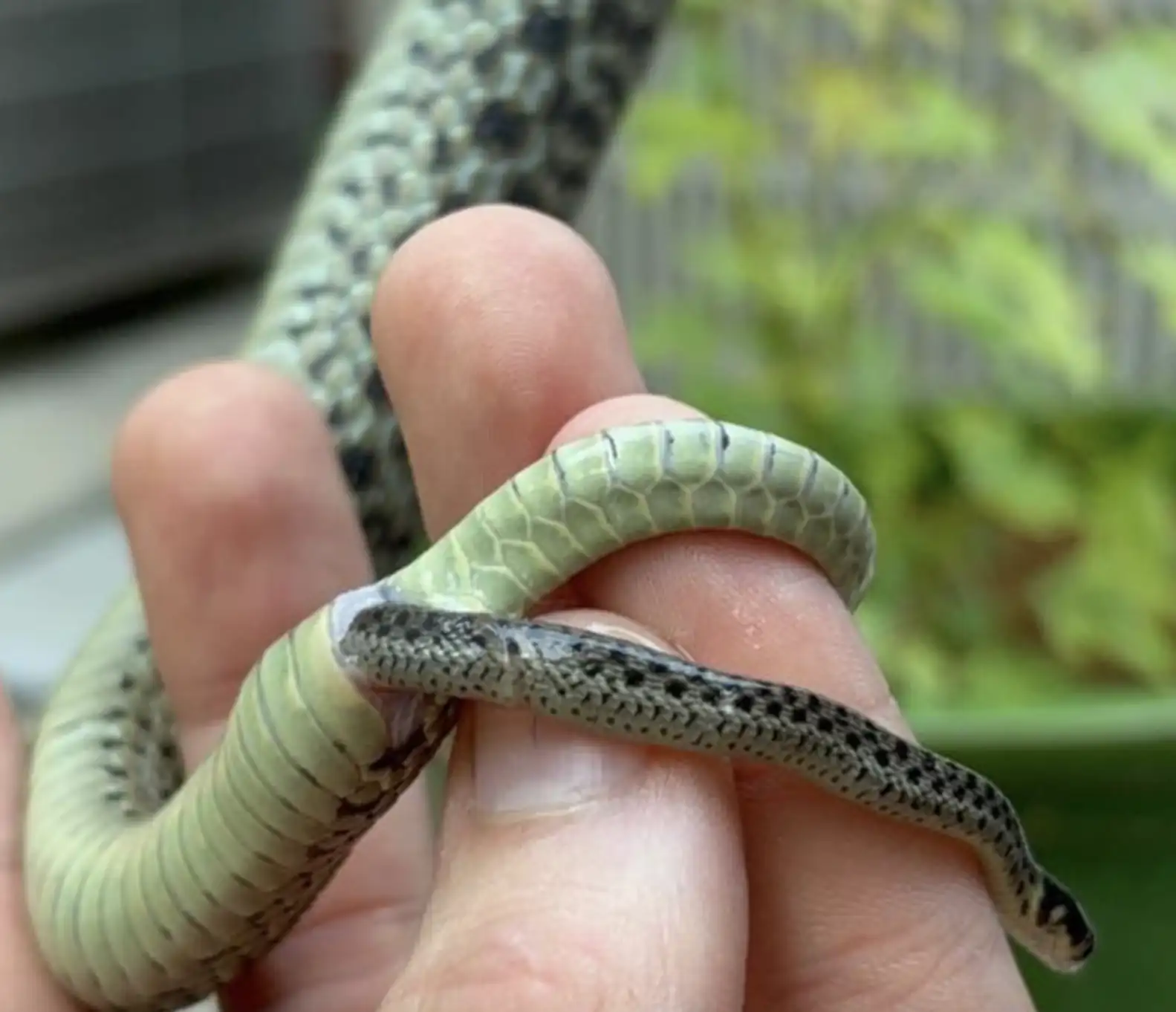
The rescuers were almost finished when they noticed something amazing — the snake was giving birth in their hands.
TIDEWATER WILDLIFE RESCUE
Reiner hastily removed the remaining netting as the mama snake birthed two babies. Then, she took the snake and her little ones to a wooded area behind the house and released them back into the wild.
Surprisingly, despite their size, baby garter snakes don’t need to live with their mom for very long. In fact, as the rescue notes, these young snakes are completely independent from the moment they’re born and can immediately find food on their own.
TIDEWATER WILDLIFE RESCUE
According to the U.S. National Park Service, garter snakes typically give birth to 15-40 babies at a time. Reiner suspects this mama welcomed many more little ones into the world once she was safe in the forest.
The rescuer encouraged the homeowners to use animal-safe netting next time. She’s grateful that, in this case, everything turned out OK.
“I felt so much joy knowing that she was able to go back to her normal life unharmed,” Reiner said.
It is seemingly a simple question but in practice not so.
Listening to danger or telling others of a danger is a very ancient practice. For it is better to share a potential danger than not to. It was easy to look this up:
Modern sense of “risk, peril, exposure to injury, loss, pain, etc.” (from being in the control of someone or something else) evolved first in French and was in English by late 14c. For this, Old English had pleoh; in early Middle English this sense is found in peril. For sound changes, compare dungeon, which is from the same source.
Thus a post on The Conversation that was about happiness caught my eye.
I am delighted to share it with you.
ooOOoo
Philly psychology students map out local landmarks and hidden destinations where they feel happiest
I am the director of the Happiness Lab at Drexel University, where I also teach a course on happiness. The Happiness Lab is a think tank that investigates the ingredients that contribute to people’s happiness.
Often, my students ask me something along the lines of, “Dr. Z, tell us one thing that will make us happier.”
As a first step, I advise them to spend more time outside.
Achieving lasting and sustainable happiness is more complicated. Research on the happiest countries in the world and the places where people live the longest, known as Blue Zones, shows a common thread: Residents feel they are part of something larger than themselves, such as a community or a city.
So if you’re living in a metropolis like Philadelphia, where, incidentally, the iconic pursuit of happiness charge was ratified in the Declaration of Independence, I believe urban citizenship – that is, forming an identity with your urban surroundings – should also be on your list.
He believed that this relationship was crucial to our psychological well-being.
More recent research in neuroscience and functional imaging has revealed a vast, intricate and complex neurological architecture underlying our psychological perception of a place. Numerous neurological pathways and functional loops transform a complex neuropsychological process into a simple realization: I am happy here!
For example, a happy place should feel safe.
The country of Croatia, a tourist haven for its beauty and culinary delights, is also one of the top 20 safest countries globally, according to the 2025 Global Peace Index.
The U.S. ranks 128th.
The availability of good food and drink can also be a significant factor in creating a happy place.
However, according to American psychologist Abraham Maslow, a pioneer in the field of positive psychology, the opportunity for social connectivity, experiencing something meaningful and having a sense of belonging is more crucial.
Furthermore, research on happy places suggests that they are beautiful. It should not come as a surprise that the happiest places in the world are also drop-dead gorgeous, such as the Indian Ocean archipelago of Mauritius, which is the happiest country in Africa, according to the 2025 World Happiness Report from the University of Oxford and others.
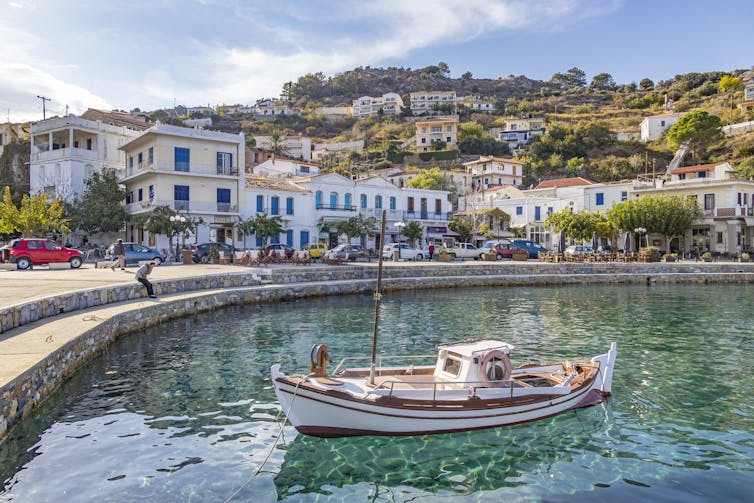
Happy places often provide access to nature and promote active lifestyles, which can help relieve stress. The residents of the island of Ikaria in Greece, for example, one of the original Blue Zones, demonstrate high levels of physical activity and social interaction.
I asked my undergraduate psychology students at Drexel, many of whom come from other cities, states and countries, to pick one place in Philadelphia where they feel happy.
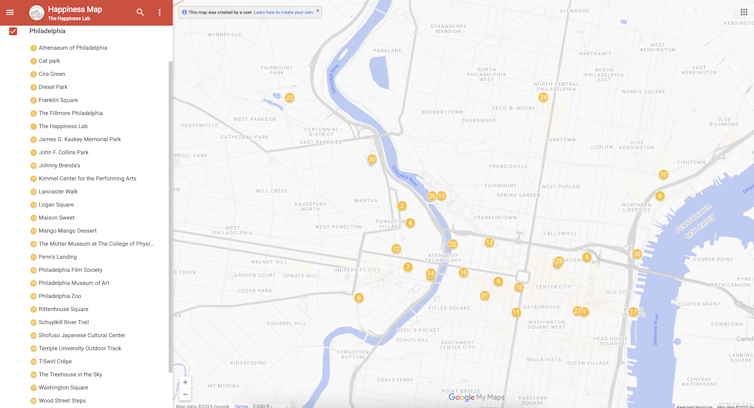
From the 243 student responses, the Happiness Lab curated 28 Philly happy places, based on how frequently the places were endorsed and their accessibility.
Philadelphia’s founder, William Penn, would likely approve that Rittenhouse Square Park and three other public squares – Logan, Franklin and Washington – were included. These squares were vital to Penn’s vision of landscaped public parks to promote the health of the mind and body by providing “salubrious spaces similar to the private garden.” They are beautiful and approachable, serving as “places to rest, take a pause, work, or read a book,” one student told us.
My students said these are small, unexpected spots that provide an excellent opportunity for a quiet, peaceful break, to be present, whether enjoyed alone or with a friend. I checked them out and I agree.
The students also mentioned places I had never heard of even though I’ve lived in the city for over 30 years.
The “cat park” at 526 N. Natrona St. in Mantua is a quiet little park with an eclectic personality and lots of friendly cats.
Mango Mango Dessert at 1013 Cherry St. in Chinatown, which is a frequently endorsed happiness spot among the students because of its “bustling streets, lively atmosphere and delicious food,” is a perfect pit stop for mango lovers. And Maison Sweet, at 2930 Chestnut St. in University City, is a casual bakery and cafe “where you may end up staying longer than planned,” one student shared.
I find that Philly’s happy places, as seen through the eyes of college students, tend to offer a space for residents to take time out from their day to pause, reset, relax and feel more connected and in touch with the city.
Happiness principals are universal, yet our own journeys are very personal. Philadelphians across the city may have their own list of happy places. There are really no right or wrong answers. If you don’t have a personal happy space, just start exploring and you may be surprised what you will find, including a new sense of happiness.
See the full Philly Happiness Map list here, and visit the exhibit at the W.W. Hagerty Library at Drexel University to learn more.
When my son, Alex, and Lisa, were with us in the second half of last month, they spoke of the tremendous joy they experienced in visiting Yellowstone before they came to us.
How then do we practice gratitude during such times?
I am a social psychologist who runs the Positive Emotion and Social Behavior Lab at Gonzaga University. I teach courses focused on resilience and human flourishing. I have researched and taught about gratitude for 18 years.
At the best of times, awareness of the positive may require more effort than noticing the negative, let alone in times of heightened distress. There are, however, two simple ways to work on this.
Generally, negative information captures attention more readily than the positive. This disparity is so potent that it’s called the negativity bias. Researchers argue that this is an evolutionary adaptation: Being vigilant for life’s harms was essential for survival.
Yet, this means that noticing the kindnesses of others or the beauty the world has to offer may go unnoticed or forgotten by the end of the day. That is to our detriment.
Gratitude is experienced as a positive emotion. It results from noticing that others − including friends and family certainly, but also strangers, a higher power or the planet − have provided assistance or given something of value such as friendship or financial support. By definition, gratitude is focused on others’ care or on entities outside of oneself. It is not about one’s own accomplishments or luck.
Thus, it may assist in counteracting the negativity bias by helping us find and remember the good that others are doing for us every day − the good that we may lose sight of in the best of times, let alone in times when Americans are deeply stressed.
But it’s also clear that gratitude can be cultivated through practice. People can improve their ability to notice and feel this positive emotion.
One way to do this is to try a gratitude journal. Or, if the idea of journaling is daunting or annoying, perhaps call it a daily list instead. If you have given this a try and dislike it, skip to the second method below.
Gratitude lists are designed to create a habit in which you scan your day looking for the positive outcomes that others have brought into your life, no matter how small. Writing down several experiences each day that went well because of others may make these positive events more visible to you and more memorable by the end of the day − thus, boosting gratitude and its accompanying benefits.
While the negative news − “The stock market is down again!” “How are tariffs going to affect my financial security?” − is clearly drawing attention, a gratitude list is meant to help highlight the positive so that it doesn’t go overlooked.
The negative doesn’t need help gaining attention, but the positive might.
A second method for practicing gratitude is expressing that gratitude to others. This can look like writing a letter of gratitude and delivering it to someone who has made a positive impact in your life.
When my students do this exercise, it often results in touching interactions. For instance, my college students often write to high school mentors, and those adults are regularly moved to tears to learn of the positive impact they had. Expressing gratitude in work settings can boost employees’ sense of social worth.
In a world that may currently feel bleak, a letter of gratitude may not only help the writer recognize the good of others but also let others know that they are making a beautiful difference in the world.
I like the suggestions for practicing gratitude and I am going to reproduce that last sentence from Monica, namely: ‘In a world that may currently feel bleak, a letter of gratitude may not only help the writer recognize the good of others but also let others know that they are making a beautiful difference in the world.
I would add sending an email to that person as well is a good move.
Every week, millions of Americans toss their recyclables into a single bin, trusting that their plastic bottles, aluminum cans and cardboard boxes will be given a new life.
But what really happens after the truck picks them up?
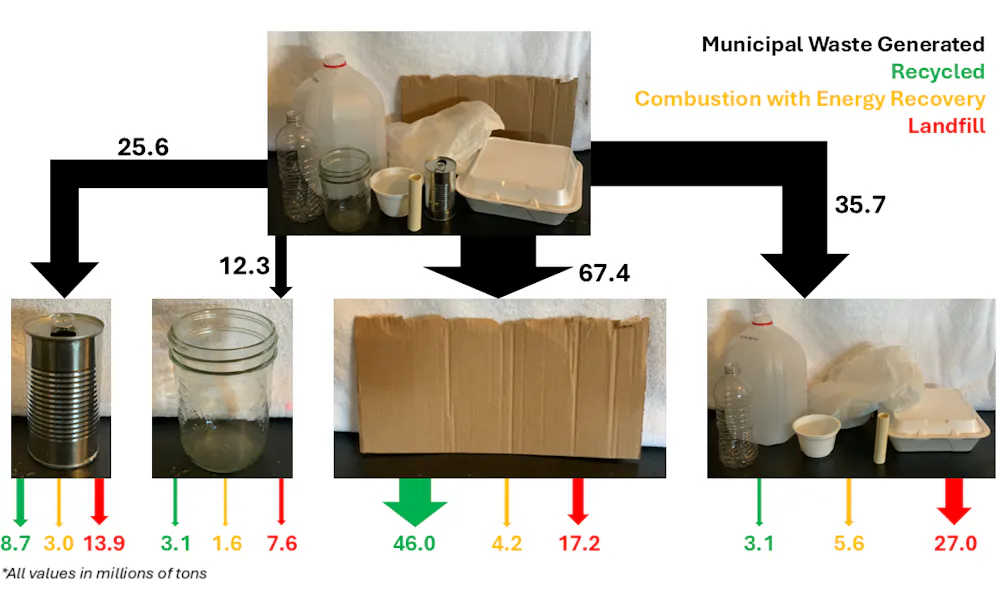
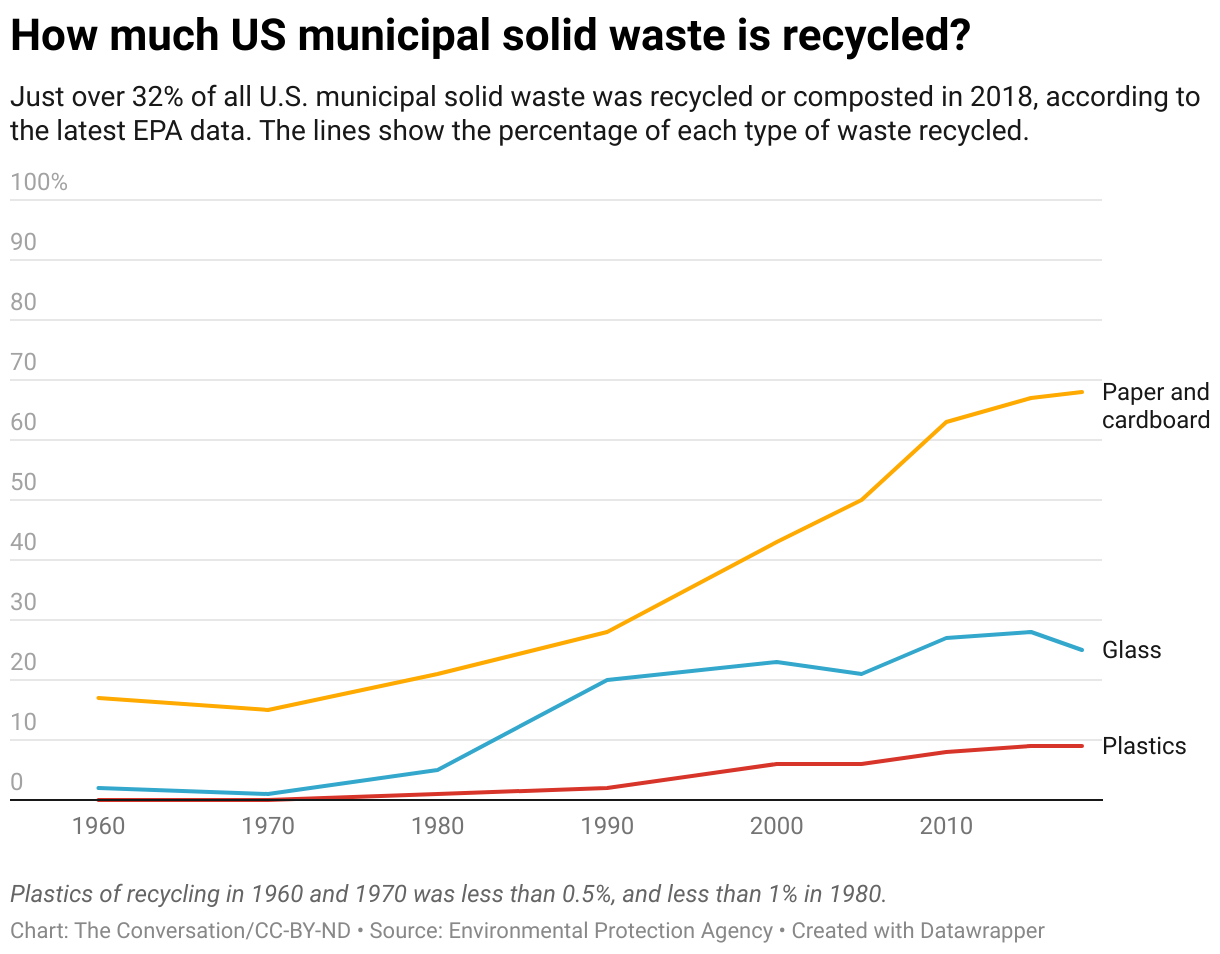
Plastics are among the biggest challenges. Only about 9% of the plastic generated in the U.S. actually gets recycled, according to the Environmental Protection Agency. Some plastic is incinerated to produce energy, but most of the rest ends up in landfills instead.
A breakdown of U.S. recycling by millions of tons shows about two-thirds of all paper and cardboard gets a second life, but only about a third of metal, a quarter of glass and less than 10% of plastics do. Alex Jordan/University of Wisconsin-Stout
So, what makes plastic recycling so difficult? As an engineer whose work focuses on reprocessing plastics, I have been exploring potential solutions.
How does single-stream recycling work?
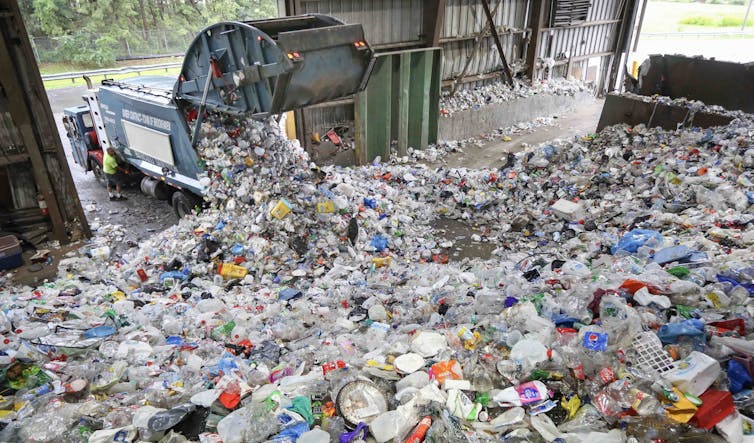
In cities that use single-stream recycling, consumers put all of their recyclable materials − paper, cardboard, plastic, glass and metal − into a single bin. Once collected, the mixed recyclables are taken to a materials recovery facility, where they are sorted.
First, the mixed recyclables are shredded and crushed into smaller fragments, enabling more effective separation. The mixed fragments pass over rotating screens that remove cardboard and paper, allowing heavier materials, including plastics, metals and glass, to continue along the sorting line.
The basics of a single-stream recycling system in Pennsylvania. Source: Van Dyk Recycling Solutions.
Magnets are used to pick out ferrous metals, such as steel. A magnetic field that produces an electrical current with eddies sends nonferrous metals, such as aluminum, into a separate stream, leaving behind plastics and glass.
The glass fragments are removed from the remaining mix using gravity or vibrating screens.
That leaves plastics as the primary remaining material.
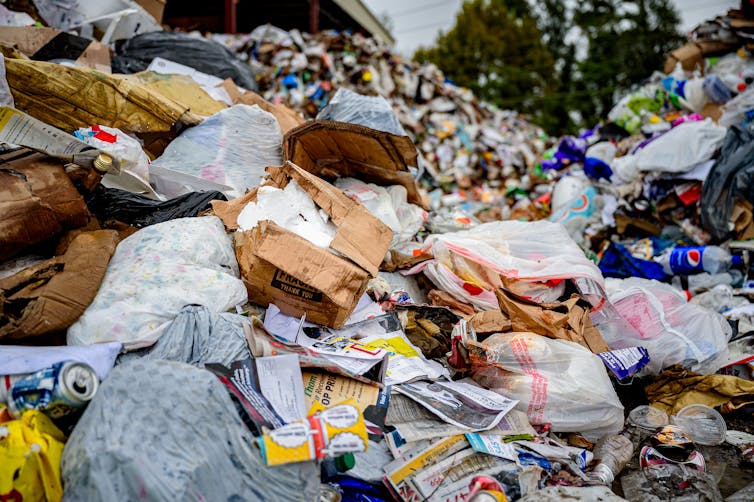
While single-stream recycling is convenient, it has downsides. Contamination, such as food residue, plastic bags and items that can’t be recycled, can degrade the quality of the remaining material, making it more difficult to reuse. That lowers its value.
Having to remove that contamination raises processing costs and can force recovery centers to reject entire batches.
Plastic bags, food residue and items that can’t be recycled can contaminate a recycling stream. City of Greenville, N.C./Flickr
Which plastics typically can’t be recycled?
Each recycling program has rules for which items it will and won’t take. You can check which items can and cannot be recycled for your specific program on your municipal page. Often, that means checking the recycling code stamped on the plastic next to the recycling icon.
These are the toughest plastics to recycle and most likely to be excluded in your local recycling program:
Symbol 3 – Polyvinyl chloride, or PVC, found in pipes, shower curtains and some food packaging. It may contain harmful additives such as phthalates and heavy metals. PVC also degrades easily, and melting can release toxic fumes during recycling, contaminating other materials and making it unsafe to process in standard recycling facilities.
Symbol 4 – Low-density polyethylene, or LDPE, is often used in plastic bags and shrink-wrap. Because it’s flexible and lightweight, it’s prone to getting tangled in sorting machinery at recycling plants.
Symbol 6 – Polystyrene, often used in foam cups, takeout containers and packing peanuts. Because it’s lightweight and brittle, it’s difficult to collect and process and easily contaminates recycling streams.
Which plastics to include
That leaves three plastics that can be recycled in many facilities:
Symbol 5 – Polypropylene, PP, used in products such as pill bottles, yogurt cups and plastic utensils.
However, these aren’t accepted in some facilities for reasons I’ll explain.
Taking apart plastics, bead by bead
Some plastics can be chemically recycled or ground up for reprocessing, but not all plastics play well together.
Simple separation methods, such as placing ground-up plastics in water, can easily remove your soda bottle plastic (PET) from the mixture. The ground-up PET sinks in water due to the plastic’s density. However, HDPE, used in milk jugs, and PP, found in yogurt cups, both float, and they can’t be recycled together. So, more advanced and expensive technology, such as infrared spectroscopy, is often required to separate those two materials.
Once separated, the plastic from your soda bottle can be chemically recycled through a process called solvolysis.
It works like this: Plastic materials are formed from polymers. A polymer is a molecule with many repeating units, called monomers. Picture a pearl necklace. The individual pearls are the repeating monomer units. The string that runs through the pearls is the chemical bond that joins the monomer units together. The entire necklace can then be thought of as a single molecule.
During solvolysis, chemists break down that necklace by cutting the string holding the pearls together until they are individual pearls. Then, they string those pearls together again to create new necklaces.
Other chemical recycling methods, such as pyrolysis and gasification, have drawn environmental and health concerns because the plastic is heated, which can release toxic fumes. But chemical recycling also holds the potential to reduce both plastic waste and the need for new plastics, while generating energy.
The problem of yogurt cups and milk jugs
The other two common types of recycled plastics − items such as yogurt cups (PP) and milk jugs (HDPE) − are like oil and water: Each can be recycled through reprocessing, but they don’t mix.
If polyethylene and polypropylene aren’t completely separated during recycling, the resulting mix can be brittle and generally unusable for creating new products.
Chemists are working on solutions that could increase the quality of recycled plastics through mechanical reprocessing, typically done at separate facilities.
One promising mechanical method for recycling mixed plastics is to incorporate a chemical called a compatibilizer. Compatibilizers contain the chemical structure of multiple different polymers in the same molecule. It’s like how lecithin, commonly found in egg yolks, can help mix oil and water to make mayonnaise − part of the lecithin molecule is in the oil phase and part is in the water phase.
In the case of yogurt cups and milk jugs, recently developed block copolymers are able to produce recycled plastic materials with the flexibility of polyethylene and the strength of polypropylene.
Improving recycling
Research like this can make recycled materials more versatile and valuable and move products closer to a goal of a circular economy without waste.
However, improving recycling also requires better recycling habits.
You can help the recycling process by taking a few minutes to wash off food waste, avoiding putting plastic bags in your recycling bin and, importantly, paying attention to what can and cannot be recycled in your area.
An extremely powerful new essay from George Monbiot.
While this post from G. Monbiot is about politics, I think it goes far beyond that. Hence my reason for republishing this essay, with George Monbiot’s permission. When I will die is not known but surely I will in the next ten years or so. I really want to leave this world seeing everything improving, from the lessening of the change in our climate, to a reduction in world fighting, to a greater equality for all.
Please, please be wrong, Mr. Monbiot.
ooOOoo
The Urge to Destroy
Posted on14th April 2025
It’s a cast-iron relationship: the more unequal a society becomes, the better the far right does. Here’s why.
By George Monbiot, published in the Guardian 13th April 2025
“He’s really gone and done it this time. Now everyone can see what a disaster he is.” How many times have we heard this about Donald Trump? And how many times has it been proved wrong? Well, maybe this time he really has overstepped. After all, his clowning around with tariffs, sparking trade wars, then suddenly reversing his position, could provoke a global recession, perhaps even a depression. Surely his supporters will disown him? But I’m not banking on it, and this is why.
Already, Trump has waged war on everything that builds prosperity and wellbeing: democracy, healthy ecosystems, education, healthcare, science, the arts. Yet, amid the wreckage, and despite some slippage, his approval ratings still hold between 43 and 48%: far higher than those of many other leaders. Why? I believe part of the answer lies in a fundamental aspect of our humanity: the urge to destroy that from which you feel excluded.
This urge, I think, is crucial to understanding politics. Yet hardly anyone seems to recognise it. Hardly anyone, that is, except the far right, who see it all too well.
In the US, a high proportion of the population is excluded from many of the benefits I’ve listed. Science might lead to medical breakthroughs, but not, perhaps, for people who can’t afford health insurance. A university education might open doors, but only if you’re prepared to carry tens or hundreds of thousands of dollars of debt. Art and theatre and music improve our lives: good for those who can buy the tickets. So do national parks, but only if you can afford to visit them.
Democracy, we are told, allows people a voice in politics. But only, it seems, if they have a few million to give to a political party. As the political scientist Prof Martin Gilens notes in his book Affluence and Influence: “Under most circumstances, the preferences of the vast majority of Americans appear to have essentially no impact on which policies the government does or doesn’t adopt.” GDP growth was strong under Joe Biden, but as the economics professor Jason Furman points out: “From 2019 to 2023, inflation-adjusted household income fell, and the poverty rate rose.” GDP and social improvement are no longer connected.
All those good things? Sorry, they’re not for you. If you feel an urge to tear it all down, to burn the whole stinking, hypocritical, exclusive system to the ground, Trump is your man. Or so he claims. In reality his entire performance is both a distraction from and an accelerant of spiralling inequality. He can hardly lose: the more he exacerbates inequality, the more he triggers an urge for revenge against his scapegoats: immigrants, trans people, scientists, teachers, China.
But such killer clowns can’t pull this off by themselves. Their most effective recruiters are centrist parties paralysed in the face of economic power. In hock to rich funders, terrified of the billionaire media, for decades they have been unable even to name the problem, let alone address it. Hence the spectacular uselessness of the Democrats’ response to Trump. As the US journalist Hamilton Nolan remarks: “One party is out to kill, and the other is waiting for its leaders to die.”
In the UK, Labour, like the Democrats, has long assured itself that it doesn’t matter how wide economic disparities are, as long as the poorest are raised up. Now it has abandoned even that caveat: we can cut benefits, so long as GDP grows. But it does matter. It matters very much. A vast array of evidence, brought together in 2009 in The Spirit Level by Richard Wilkinson and Kate Pickett and updated in 2024, shows that inequality exerts a massive influence on social, economic, environmental and political outcomes, regardless of people’s absolute positions.
If there is a such a thing as Starmerism, it collapses in the face of a paper published by the political scientists Leonardo Baccini and Thomas Sattler last year, which finds that austerity increases support for the radical right in economically vulnerable regions.(My emboldening. PH) Austerity, they found, is the key variable: without it, less-educated people are no more likely to vote for rightwing demagogues than highly educated people are. In other words, Keir Starmer and Rachel Reeves are busily handing their core constituencies to Nigel Farage.
Of course, they deny they’re imposing austerity, using a technical definition that means nothing to those on the sharp end. Austerity is what the poor experience, while they must watch the rich and upper middle classes, under a Labour government, enjoy ever greater abundance.
Starmer and his minions suggest there’s nothing they can do: wealthy people are already taxed to the max. As private jets and helicopters cross the skies, anyone can see this is nonsense. Of all the remarkable things I stumbled across while researching this column, the following is perhaps the most jaw-dropping. On the most recent (2022) figures, once benefits have been paid, the Gini coefficient for gross income in the UK scarcely differs from the Gini coefficient for post-tax income. In other words, the gap between the rich and the poor is rougly the same after taxes are levied, suggesting that taxation has no further significant effect on income distribution. How could this possibly be true, when the rich pay higher rates of income tax? It’s because the poor surrender a much higher proportion of their income in sales taxes, such as VAT. So much for no further options. So much for Labour “realism”.
The one thing that can stop the rise of the far right is the one thing mainstream parties are currently not prepared to deliver: greater equality. The rich should be taxed more, and the revenue used to improve the lives of the poor. However frantically centrist parties avoid the issue, there is no other way.
George writes about Britain but my judgement is that this issue is not limited to that country; I suspect it is a far wider problem. Did you know that Finland is the world’s happiest country?
An extract of that article: “Finland has been ranked as the world’s happiest country for the eighth successive year, with experts citing access to nature and a strong welfare system as factors.
It came ahead of three other Nordic countries in this year’s UN-sponsored World Happiness Report, while Latin America’s Costa Rica and Mexico entered the top 10 for the first time.
Both the UK and the US slipped down the list to 23rd and 24th respectively – the lowest-ever position for the latter.”
Even engaging in what’s known as “informal helping” – lending a hand to friends, neighbors or community members in need, without getting paid or participating in an organized program – can help you in similar ways.
There are also health benefits for those who start volunteering much earlier in life.
Children and teens who volunteer tend to have better health and lower levels of anxiety and fewer behavioral problems than those who don’t volunteer.
Changing demographics
The number of U.S. adults at least 62 years old – the earliest age at which you can claim Social Security retirement benefits – has grown by nearly 35 million since 2000, while the number of children and teens under 18 has fallen by nearly 1.5 million. There are now about 76 million Americans over 62 and 71 million under 18.
This change has been gradual. Following a long-term demographic shift, record numbers of Americans are reaching retirement age.
Benefits for society and the economy
The benefits of volunteering aren’t just for the volunteers themselves.
And participating in community service programs can lead to better job prospects for volunteers, that same agency has found.
AmeriCorps Seniors, which focuses on engaging volunteers ages 55 and older, runs programs that offer major benefits to their communities. These include the Foster Grandparent program, which connects older adult mentors to children, and the Senior Companion program, which connects volunteers to older adults seeking some help to continue living independently in their own homes.
People of all ages can get together through volunteering. Some organizations intentionally encourage this kind of intergenerational cooperation, including CoGenerate and Generations United.
Rebuilding communities
Researchers have also found that volunteering may increase trust within a community, especially when it brings together people from different backgrounds.
It can strengthen “social cohesion,” a term researchers use to describe how much people bond and help each other, and reduce prejudice.
Volunteers’ views on social issues may change through their work, too: More than 4 in 5 adults over 55 who tutored public school students to strengthen their reading skills in the national Experience Corps program, for example, stated that their views on public education evolved as a result. Those volunteers expressed more support for public education and said they’d be more likely to vote in favor of spending on schools.
An American pastime
Our findings are backed by science, but they also have roots in American history.
Alexis de Tocqueville – a French philosopher and diplomat who arrived in the United States in 1831 to study the new nation’s penal system – was so impressed by the scale of volunteering in the U.S. that he wrote about it in his 1835 book “Democracy in America.”
Tocqueville observed that “Americans of all ages, all conditions, all minds” were likely to unite in many kinds of groups or associations.
More recently, former U.S. Surgeon General Vivek Murthy has said that volunteering can strengthen communities, and that “community is a powerful source of life satisfaction and life expectancy.”
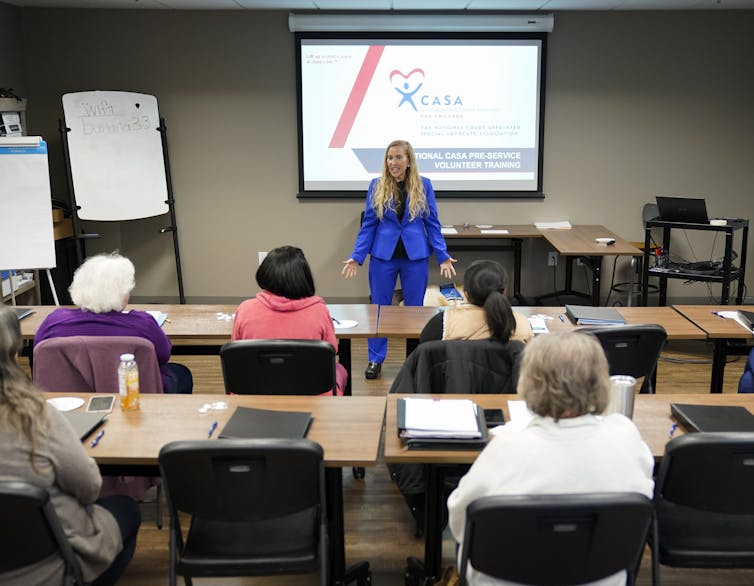
If you aren’t volunteering today, here are a few ideas to help you begin.
Start small. Try joining an organization or association in your community, taking part in neighborhood cleanups or volunteering at your local senior center, animal shelter or museum. Love gardening? You can take care of local parks, conservation areas, community gardens and more.
And consider a more extensive level of commitment to organizations or causes you care deeply about. This might include joining a nonprofit board of directors, volunteering more hours, or taking on a volunteer leadership role.
At a time when trust is eroding and divisions seem insurmountable, volunteering offers something rare: an evidence-backed way to reconnect with communities, institutions and each other.
Reach out to your favorite nonprofit, visit Volunteer.gov or VolunteerMatch.org, or connect with a nonprofit resource center, a regional United Way or a community foundation to find volunteer opportunities near you.
The challenge is I no longer have a driver’s license. Plus Jean has Parkinson’s Disease. But if there is a way to overcome these obstacles and doing some volunteering then that would be a very positive way ahead.
UPDATE: Here is the service, sent to me on Sunday by Julie.
ooooo
In Loving Memory and to
Celebrate the Life of
Richard Julian Maugham
28th October 1946 – 9th February 2025
————–
Entrance Music –
Theme from Out of Africa (Flying Scene)
By John Barry
——————–
A very warm welcome as we unite in both love and friendship to say, not just goodbye, but more importantly to pay tribute and to celebrate the life of Richard Julian Maugham.
———————-
Richard was a true character, one of a kind, sociable, funny and a wonderful raconteur who led a varied and interesting life which we will hear more about shortly but even then, we will barely scratch the surface of all he was, but I hope when you leave here this afternoon that you will do so with a real sense of having shared in something special, for a friendly, popular and unique individual.
——————-
Reflection Music
We start today by playing a song from one of Richard’s favourite bands The Eagle’s, please sit back, listen and enjoy – ‘It’s Your World Now’
——————
Eulogy
The word Eulogy refers to a tribute of somebody’s life and it’s a pleasure for me share these words on behalf of Richard’s family and friends.
Richard was welcomed into this world on 28th October 1946 to parents Phylis and Lesley, born in Chiswick he would join his elder sister Vivienne who aged 4 was quizzed if she would prefer a brother or sister, prompting her response ‘I don’t really mind as long as it’s NOT a boy!’
But fortunately, it didn’t matter as Richard and Vivienne forged a wonderful relationship over the years and although not spending a lot of time together early on, Vivienne has such fond memories of cycling together with a picnic to the local swimming pool and also their cycle trips out with their dad too, Vivienne still recalls seeing Richard with his legs pedalling rapidly as he sped across the ground on the popular child’s bike of that era nicknamed the ‘fairycycle’.
They both appreciated their safe and secure upbringing enjoying quiet Christmas’s together with a few close relatives and even when their paths took them in different directions, they remained good friends with a great rapport and comfortable in each other’s company. Richard was always very fond of his sister but also couldn’t wait for her to get married and leave home so he could inherit her bedroom however after waiting patiently for this happen his plan was scuppered when his grandma moved in instead! This gave Vivienne a little chuckle at the time having been pestered constantly to tie the knot.
Growing up in Twickenham, Richard passed his eleven plus with ease and attended the best Boy’s Grammer School in the area which would certainly hold him in good stead throughout his career, Richard was sharp as a knife, a confident lad and already showing signs of having the gift of the gab plus a real knack of making friends, with some of you here today as his lifelong friends for over 65 years namely Ken and Robin who formed part of the group known as the Young Pretenders, all meeting annually in the summer for the past 30 years and to Richard this was a very important and a valued friendship group that he held with a great deal of affection.
Richard’s career path would typify his character a hard worker, charming, good with people and a fantastic communicator but the ideal person equipped to give us the best insight into Richard’s background is one of his best friends Tony, who shared these wonderful memories with me about the various sides to Richard having meet him in 1968 when working together in the Olivetti Sales and Management Training Centre in Haslemere. Tony was there to replace Richard or Dick as he was known then and to create a smooth transition within the workplace. But little did anyone know just what an impact this would have on the 2 of them and their future as friends, Tony for the first 3 months or so watched his every move, listened to his advice and even copied his jokes especially as they both shared the same sense of humour! Tony mused that Richard was your true dapper gentlemen, always extremely smartly dressed and often took on the role as Tony’s personal shopper, costing Tony a fortune in the process but it ensured he looked the part too, ready for their many nights out in Guildford or Haslemere and needless to say with that gift of the gab again, his looks and witty personality they had some memorable and extremely fun times through the years, Tony even recalls the time they attended the Cannes Film Festival, staying in a slightly sleazy apartment they nevertheless donned their best evening suits and walked the red carpet, a treasured memory.
This chance meeting at Olivetti really was the start of something very special, even when Richard went off to become a manager in Croydon and his career took him on a different pathway via some office supplies companies, a spell in Oman in the Middle East which certainly left an impression on him and onto roles in the car industry with Audi and VW as part of the Inchcape Group, Tony will forever remember the fond memories of their shared flats, shared holidays, shared clothing and a shared love of being just little rascals when together, so as you can imagine Tony was beyond proud when Richard asked him to be his Best Man when he married Jane in 1986, returning the compliment when Tony married as well some years later.
But Tony wasn’t the only lifelong friend that Richard would make during his salesmen years, for in 1982, whilst both selling the Commodore ‘PET’, he would encounter a fellow salesman, Paul, meeting in the Petjet, the private small jet owned by Jack Tramiel, the CEO of Commodore, they hit it off immediately while travelling to the Hannover International Fair.
Richard and Paul took the pilots out for dinner that evening which inspired Paul to start gliding and later power flying, Richard flew on many occasions with Paul, as both being members of a private aircraft club, they would often hire a plane to fly to Jersey or Scotland but one memorable flight was their trip to visit Tony, who had recently relocated to South West France, flying to Bergerac airport they stayed a few nights enjoying Tony’s hospitality before flying back home.
Richard by now had also developed a passion for all things aeronautical, often visiting air shows in later years and was visibly moved to tears whilst witnessing a Spitfire fly past when attending a Remembrance celebration at Seagry near Chippenham, a very special moment for him.
Paul’s friendship with Richard would continue to grow, living in Oregon now, he still recalls that meeting Richard in the way he did gave him a gift that he has treasured forevermore and a cherished relationship that also included meeting The Prince of Wales, this whilst both volunteering for the Prince’s Trust Charity where they helped many young people start their own businesses, one in particular being a gardening venture which Richard being the type of generous person he was duly employed the appreciative couple to work on his own garden, cementing Richard’s thoughtful and helpful approach to others.
Working until he was 77 years old, Richard will always be known as a hard worker, a great salesman, a fantastic speaker and presenter who was highly thought off across all his companies he graced but it was never all work and no play for Richard, helped by being a self-confessed petrol head, not only from working in the trade but also from the pure joy he experienced in his leisure pastimes with his passion for cars, watching the Monaco Grand Prix with a friend in the 70’s to his own Ferrari and Formula 3 Race Track Driving Experiences that he absolutely adored were just 2 of his highlights, as well as owning a MGB and Porsche that he loved.
Approaching his 60’s, Richard would also find love again, introduced by a friend, he met a lovely lady, Julie who subsequently relocated to Wiltshire to be with Richard. They would also go on to purchase a property in South West France to renovate, named Mason DeFrere which was once part of a Friary, used by the monks to study and pray whilst it was also located not far from his friend Tony and his wife Caroline, travelling regularly to France they enjoyed many good times, strolling around the markets and spending quality time as a foursome together.
Richard and Julie also enjoyed a shared love of music, at times Richard could be moved to tears demonstrating a real sensitive side to him not often seen but he could lose himself to the tunes of The Eagles or Hollies and seeing live music from the likes of Fleetwood Mac, Eric Clapton, Tony Bennett, Simply Red and Billy Joel are particular fond memories for Julie.
Julie appreciated Richard’s sharp wit which was often fuelled by his love of the radio programme recently chaired by Jack Dee called ‘I’m sorry I haven’t a clue’, he would cry with laughter and often use the one liners himself to entertain his friends, he was an out and out ‘wordsmith’ loving his crosswords and an avid reader of the humorous dictionary ‘Meaning of Liff’ which again would have him in stitches and characterised his sense of humour perfectly.
Richard and Julie relocated to Essex to be closer to her son and grandchildren but Richard’s heart always remained in Wiltshire so a decision was made for him to return and continue to spend time with his friends, he had always professed that his Parkinson diagnosis would not define him but as the time moved on and following a fall, he was very much grateful to his wonderful friends Gillie and Colin who visited every other day and remained by his side as he sadly lost his battle last month.
We have lost a truly respected and loved man who gave so much to so many and lived a full life surrounded by people who cared for him, so we can be comforted in the knowledge that he has left us all with some treasured memories of time spent in his company.
Thank you, Richard
——————–
Reflection Music
How we love by Beth Neilson Chapman
We have shared some lovely memories and I have no doubt you will all have you own personal memories from times spent with Richard, we would now like to give you a little time to reflect on those while we listen to a lovely tune by Beth Neilson Chapman
——————
Poem
I would now like to share a poem chosen by Julie especially for today’s service and dedicated to Richard and his love of aviation –
High Flight
Oh! I have slipped the surly bonds of Earth
And danced the skies on laughter-silvered wings;
Sunward I’ve climbed, and joined the tumbling mirth of sun-split clouds – and done a hundred things you have not dreamed of—wheeled and soared and swung high in the sunlit silence.
Hov’ring there, I’ve chased the shouting wind along, and flung my eager craft through footless halls of air ….
Up, up the long, delirious, burning blue
I’ve topped the wind-swept heights with easy grace
Where never lark, or even eagle flew—
And, while with silent lifting mind I’ve trod
The high untrespassed sanctity of space,
Put out my hand, and touched the face of God.
——————-
Tributes
I would now like to invite Ken and Robin to share their tributes to their special friend while we hear in the background a popular song of Richard’s by The Hollies
——————
Farewell
“We are all visitors to this time, this place. We are just passing through. Our purpose here is to observe, to learn, to grow, to love…and then we return home.”
Richard, we have heard the impact that you had on so many people. Your character, humour and individuality that were so much a feature of your life will live on in our memories and create a beautiful legacy of love for your family and friends for much longer than the acute desolation we are feeling here today.
Richard it is with such sadness we say goodbye to you, but we thank you so much for every little gift you have contributed to this life.
But most of all we thank you for your love and for your friendship; your warmth and care, and for your kind and humble heart.
We thank you Richard for everything you were and all that you gave, and may you now forever rest in peace with the certain knowledge that you were, are, and will always be, dearly loved and terribly missed.
Farewell Richard Farewell
——————
“Always remember you matter, you’re important and you are loved, and you bring to this world things no one else can.”
——————–
Exit Music
Don’t Stop Thinking About Tomorrow
By Fleetwood Mac
oooo
Now a selection of my photos.
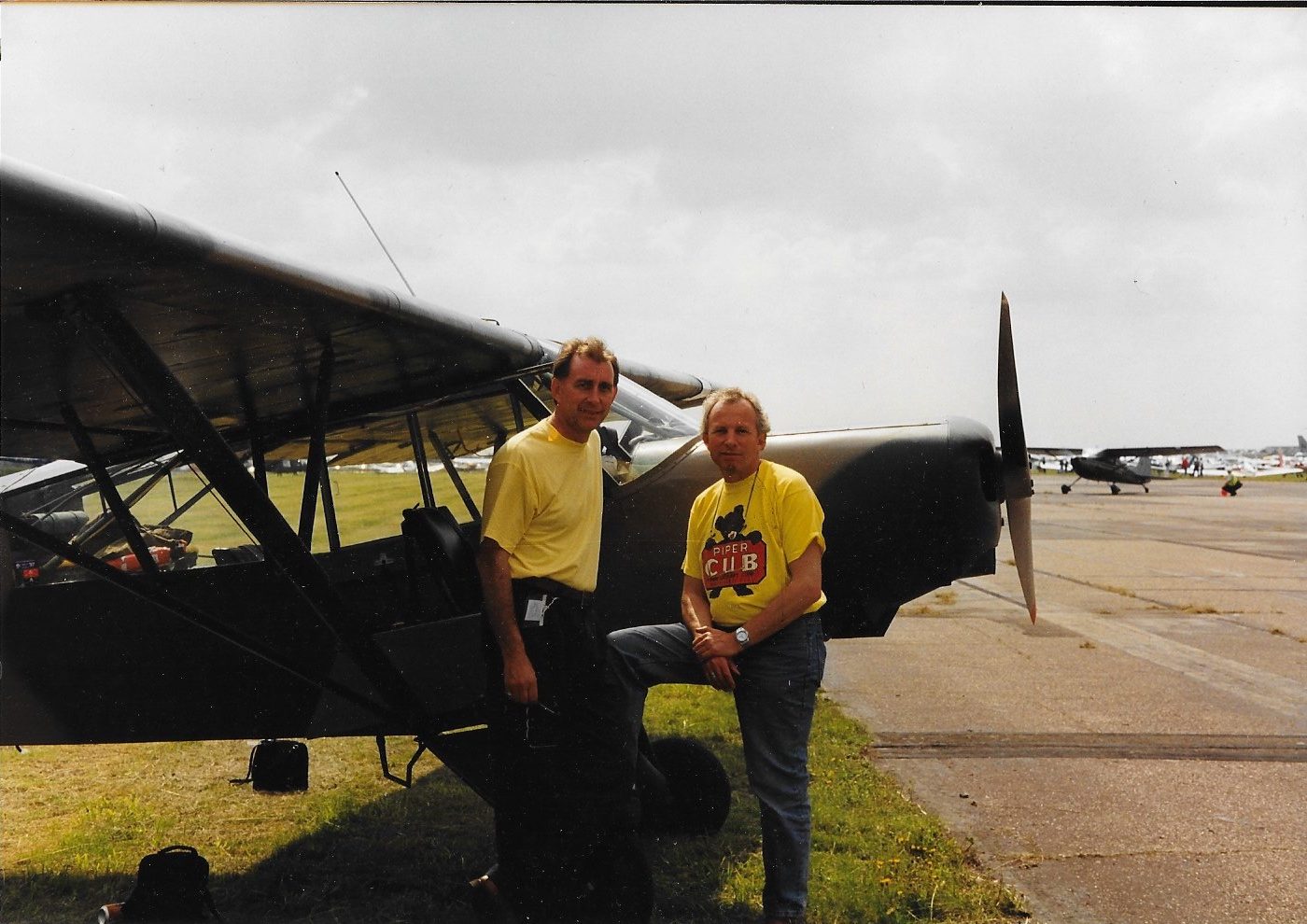
Richard and me by the Piper Super Cub, registration R151.
oooo
Richard and Alex, my son, in front of G-BPAS, a TB20, at another air show.
oooo
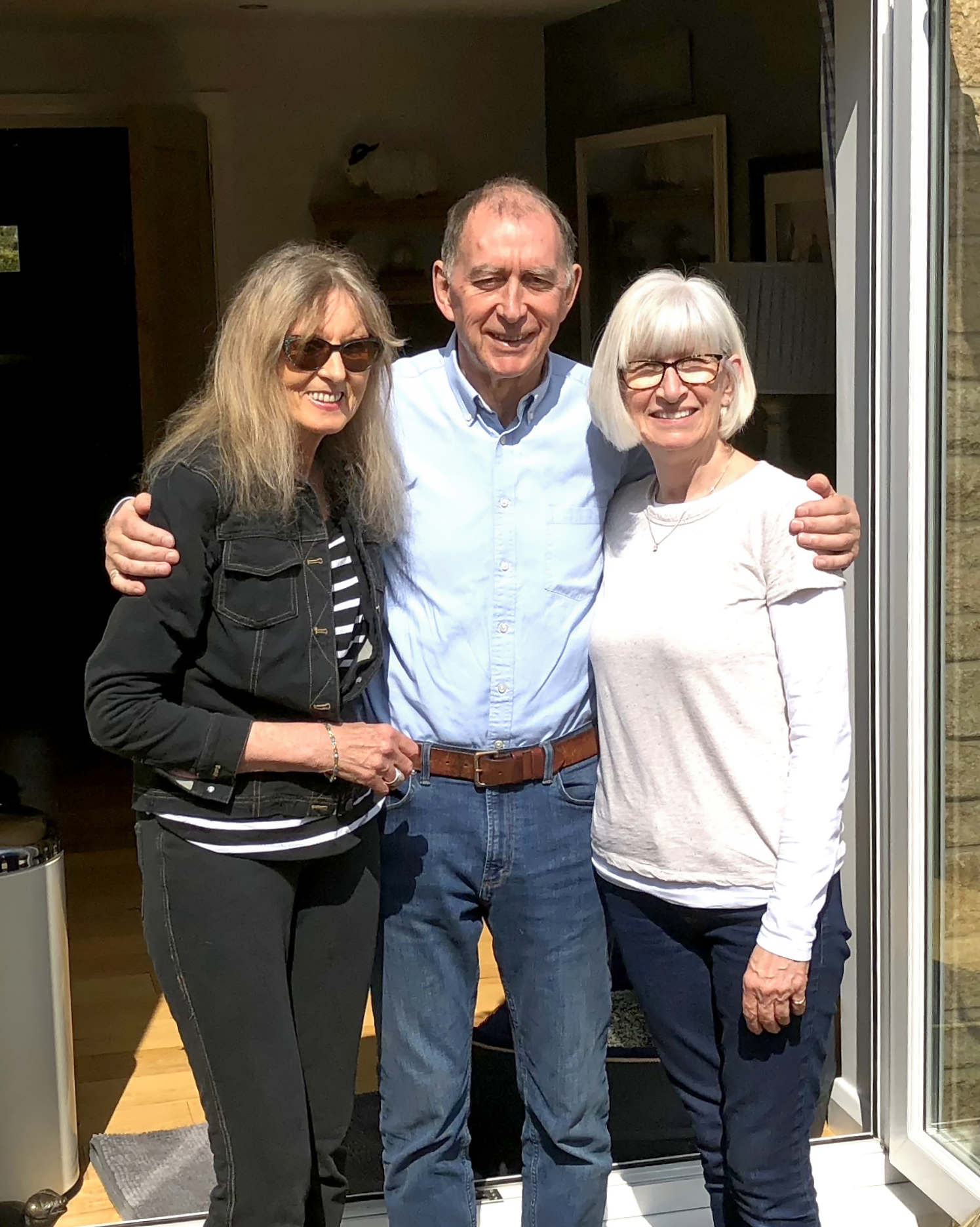
Jeannie, Richard and Julie.
oooo
R151 taking me and Richard to see Mont Blanc. It was the 25th August, 2006.
oooo
Another view of the same valley; again the 25th August, 2006.
oooo
The final photograph of Richard and me meeting the then Prince of Wales.
Background to the friendship.
(Previously published on LfD.)
I first met Richard Maugham when we were being treated to a private jet flight to the Hannover International Fair in 1982, some 43 years ago. We were both English and I was living in Tollesbury, Essex, near Colchester and Richard living near Ealing, West London.
The common thread was that all the passengers were major sellers of the Commodore ‘PET’.
Richard and I hit it off straight away. Richard was a fellow salesman. I was ex-IBM Office Products Division and Richard was ex-Olivetti.
Both of us also volunteered for the Prince’s Youth Business Trust, a charity headed by Prince of Wales, as he was then, helping young people start their own business.












 Learning from Dogs
