Category: Musings

Johnathan Wilson Lewis – another thinker.

Fourier approaches to the theory of volume holography.

Anyone who takes a doctorate with the above subject title has to have a well-functioning brain.  I know John.  He does.

John Lewis, as I have always known him until reading his Blog, and I met a good many years ago when we both were members of a private flying group that operated a Socata (French) TB20, G BPAS.

TB20 G-BPAS
TB20 G-BPAS

It was based at Exeter in Devon, SW England.  Both of us were/are private pilots.

We flew together on many an occasion and it was clear from the start that John approached everything in life from, well in his own words, “…. motivated by an interest in what things are, how they work and how they are used.”  Say no more!

Well, as luck would have it, the joys of social networking brought us back in touch recently and we had a jolly good chin-wag.  With a bonus.

Read more about John Lewis

Just pause a while

Patrick’s landscapes are breath-taking.

Isla Mujeres, near Cancun, Mexico. Reproduced with permission. Copyright (c) 2009 Patrick Smith, all rights reserved

The only real voyage of discovery consists not in seeking new landscapes

but in having new eyes. Marcel Proust (1871-1922)

By Paul Handover

A little later than I would have wished!

Jon Lavin.

You will see from the Hello World post at the head of Learning from Dogs that the idea of integrity being a topic for wider discussion arose a while ago.  Busy lives (and a big misunderstanding about Blogging!) put off us doing something until Paul got the Blog under way in July, this year.

I still have, thank goodness, plenty of work demands on my time and a busy family life but, at last, will be finding time to explore the importance of integrity.

As I say in About this Blog, I had noticed that businesses that were operating largely with integrity, tended to be happier places, got better results and it was possible to develop levels of awareness within teams that enabled them to work together far more effectively. Levels of self-awareness are important because they allow people to develop closer business relationships with everyone internal and external and this leads to increased levels of trust.

By Jon Lavin

More on that Vulcan

Vulcan XH558 and Red Arrows, Dawlish, Devon, England, August 20th 2009

A few weeks ago, a Post featured the Avro Vulcan, a Cold War nuclear bomber returned to flying condition.  Well here it is again, with friends.

Dawlish is a lovely, typical sea-side town in the county of Devon in the SW of England.  It is less than 15 miles away from Totnes in Devon which, for many years, was my local town.

Dawlish
Dawlish

The weather in Dawlish can be delightful – sometimes!

But the setting is perfect for an air show.

Read more about the Dawlish Airshow

Health care.

Being healthier seems too obvious!

Not being either a US Citizen or even a resident takes away my right to contribute an opinion.  The matter is entirely a domestic one for those living in the USA.

But my life-long Californian buddy, Dan, recently sent me an article published in the Wall Street Journal on the 12th August.  The article was written by John Mackey, the CEO of Whole Foods Market Inc. so this isn’t an impartial perspective.  (And see an important foot-note at the end of this Post)

But the last part of the article is good common sense, as you can read:

Read more of this Post

The stuff of life?

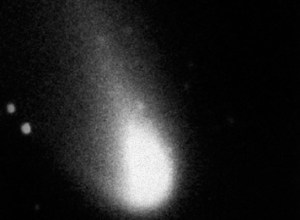
The amino acid glycine is found on a comet.

There’s a fascinating article on Reuters, published on the 18th.  It is that scientists have finally proved that an amino

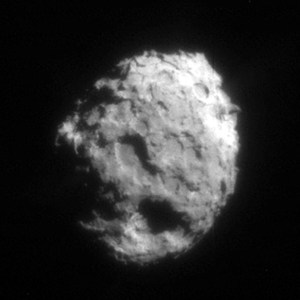
Comet Wild 2 from 147 miles away
Comet Wild 2

acid found on a comet is extraterrestrial in origin and, therefore, supports the theory that life came to Planet Earth from the stars.

Microscopic traces of glycine were discovered in a sample of particles retrieved from the tail of comet Wild 2 by the NASA spacecraft Stardust deep in the solar system some 242 million miles (390 million km) from Earth, in January 2004.

Samples of gas and dust collected on a small dish lined with a super-fluffy material called aerogel were returned to Earth two years later in a canister that detached from the spacecraft and landed by parachute in the Utah desert.

There’s a fuller and more scientific description of the NASA Stardust spacecraft mission here. That site is well worth a visit if you are in the slightest way interested in space.

Comet Wild 2 from 147 miles away!

Stardust completed its 2.88 billion mile round-trip journey to a comet and back, bringing comet and interstellar dust particles back to Earth on January 15, 2006.

So when you next look into the eyes of your loved one,

and see starlight there,

it may not be entirely a romantic notion!

By Paul Handover

10:27 August 14th 2009

A glimpse into the soul of a Nation

My view is that this Blog should be (much) less about the lives of the Blog authors and more about the world we live in within the self-imposed theme of the Blog; integrity.

However, what happened at 405 West Congress in Tucson, Arizona, last Friday morning is an exception to the rule.

The entrance to the Courthouse in Tucson

405 West Congress is the address of the Courthouse in Tucson.

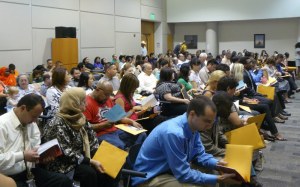
Future citizens, families and friends

So what brings 50 people, family and friends to a court house in Tucson on a Friday morning in August?

The swearing-in of a group of people to be US Citizens or more properly described as the Order of Admission to Citizenship; the actual process of becoming a US Citizen, other than having been born in the Nation.

It gave me an amazing insight into the generosity of the United States of America and, indeed, of all other free countries in the world that welcome incomers.

Let me explain.

Read more of this Post

Storytelling

Something almost as old as mankind itself

We have returned from being in Tucson for a few days and while there we spent many hours one day at the Arizona-Sonora Desert Museum.  But this is no dusty place with fossilised remains behind glass cabinets.  No, the Desert

A Bobcat at the Desert Museum

Museum is an honest attempt to give visitors an insight into the complex and beautiful world of a desert. As the Musuem’s web site puts it,

The mission of the Arizona-Sonora Desert Museum is to inspire people to live in harmony with the natural world by fostering love, appreciation, and understanding of the Sonoran Desert.

That particular evening the programme mentioned an hour’s storytelling by the Native American Gerard Tsonakwa.

Tsonakwa is a member of the Abenaki tribe who live in the Algonquin area of Ontario, Canada.   Originally an active participant in Native American politics and a published author as well, Tsonakwa showed that evening the power and mystery of storytelling.

It’s only in recent times, relatively speaking, that books have been widely available (the book as we know it today dates from the fifteenth century) and in the last hundred years the art of passing information to others through storytelling has practically disappeared.

But listening to Gerard Tsonakwa speak to a packed auditorium in the Warden Oasis Theatre at the Desert Museum was compelling, to say the least.  Compelling because sitting in a group listening to an ‘elder’ tell the secrets of life and the universe seemed to resonate with very deep memories of long time ago.

By Paul Handover

This is a spoof, isn’t it?

Big brother may be watching

But in this case it is a mythical pizza house.  (Includes sound as well)

Anyway, watch this futuristic scene courtesy of the American Civil Liberties Union.

By Paul Handover

Technology and electronics, a personal muse.

The amazing development of electronics over 50 years.

The calendar reliably informs me that this is my 65th year.  My brain, of course, lags somewhat in accepting this!

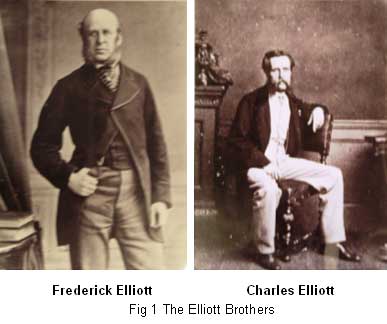
My step-father during my early teenage years worked for Elliott Brothers (the link goes to an interesting history of the firm that started in 1804) in Borehamwood, just north of London.  He encouraged me to fiddle with ‘steam’ radios and

Frederick and sa Elliot

try and understand how these basic circuits worked.  It was then a small step to deciding to become a radio amateur, popularly known as a radio ham!  In those days it was a case of some pretty intensive studying to pass a Theory exam as well as being able to pass an exam in sending and receiving Morse code.

Read more of this Post