Wikipedia have an interesting, and well referenced, entry on Air Safety. Within that entry is a table showing comparing deaths by air to other forms of travel.
The table in Wikipedia is much easier to read, it’s here, but the data is shown below for those that do not want to click through.
—————–
There are three main statistics which may be used to compare the safety of various forms of travel:
It is worth noting that the air industry’s insurers base their calculations on the number of deaths per journey statistic while the industry itself generally uses the number of deaths per kilometre statistic in press releases.
————————
Interesting to see how air travel varies in terms of comparative safety depending on how it is measured. But also interesting to see that however it is measured, riding a motorbike doesn’t come out so well.
Finally, that word’ billion’ is too easy to throw away, as it were. A billion hours ago was over a 114,000 years ago – when mankind was living in the Stone Age. A billion kilometres would represent 114,285 trips between London and Los Angeles.
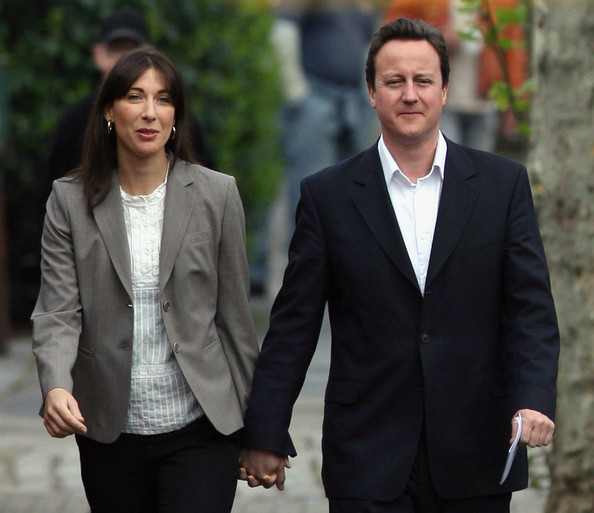
In the latest development in his campaign to show how dramatically the Tories have changed, David Cameron has published the party’s first-ever official list of openly gay MPs.
The Conservatives say they have 20 openly gay candidates standing in the Election. Of those, 11 told party chiefs they were ‘happy’ to be named in the first authorised list of gay Conservative candidates.
David Cameron
Homosexuality is no longer – thankfully – a crime. It has always existed and no doubt always will. It is therefore – logically – a normal feature of human society. Isn’t it time to accept it as such and stop flaunting it constantly in the media? Can we not keep private those parts of our lives which are private? Do heterosexuals go around flaunting their heterosexuality?
Why on earth does a potential government-forming party feel obliged to publish lists of people’s sexuality? Why do I suddenly feel as if I am bizarre in thinking that one’s sexuality should be something private? Personally I haven’t got the faintest interest in other people’s sexual inclinations. Like religion, it should be personal and not eternally flaunted in the media.
And it is all illogical. Either homosexuality is normal or it isn’t. If it is (as it is), then why the constant need to bang on about it, as for example in the Tory party? What on earth has it got to do with running the country? Are the Tories supposed to be better-qualified to run the country the more homosexuals they have? Is there a point at which having TOO MANY becomes a negative point? Would they then start to proclaim how many heterosexuals they had? On a personal level, I keep my sexuality to myself. It is nothing to do with you and certainly not with running the country.
It is analagous to sex in the media. It is overdone. The endless superficial titillation and flaunting of sexuality is demeaning of the Human Spirit. Sex is – or should be – a private matter. It’s better that way. It is more mature that way, but the media – and now the political parties – sink to the lowest denominator instead of focusing on what really matters.
Please, please give us some politicians with common-sense.
Yves’ Blog Naked Capitalism has been mentioned many times on Learning from Dogs. Indeed, she was one of the Blog authors highlighted recently in this Post.
Yves Smith
I fail to understand how she finds the hours in the day to write in such detail – but those of us interested in getting under the skin of our present economic situation are all the better for it. Here’s a great example that was published on the 23rd February. I quote the opening paragraphs and then link to the rest of her post. From here on is her piece:
———————–
Martin Wolf, the Financial Times’ highly respected chief economics editor, weighs in with a pretty pessimistic piece tonight. This makes for a companion to Peter Boone and Simon Johnson’s Doomsday cycle post from yesterday.
Now, after the implosion, we witness the extraordinary rescue efforts. So what happens next? We can identify two alternatives: success and failure.
By “success”, I mean reignition of the credit engine in high-income deficit countries. So private sector spending surges anew, fiscal deficits shrink and the economy appears to being going back to normal, at last. By “failure” I mean that the deleveraging continues, private spending fails to pick up with any real vigour and fiscal deficits remain far bigger, for far longer, than almost anybody now dares to imagine. This would be post-bubble Japan on a far wider scale.
Yves here. Notice he associates success and failure with polar options. But how can you “reignite the credit engine” when the financial system is undercapitalized even before allowing for the need to take further writedowns? The IMF has found the converse in its study of 124 banking crises, that purging bad debt is a painful but necessary precursor to growth. So I fail to understand how Wolf envisages that “skip Go, collect $200″ of releveraging quickly comes about. And in fact, it turns out that Wolf’s “success” is a straw man:
Don’t know what time it is? Hardly surprising in Spring and Autumn.
Today is exactly one month before the United Kingdom ‘moves’ its clocks forward and enters British Summer Time; 1am (UTC) on Sunday 28th March 2010. Is that date the same across the world? One would think so because it makes life, especially international air transport, so much easier.
But no! In fact the way that time zones are applied and changed for Daylight Saving is a complete hotch-potch.
In the United States of America, daylight saving starts at 2am on March 14th, 2010. And just three years ago that start time would have been the first Sunday in April. Changes were made in the US Energy Policy Act of 2005.
Other parts of the world observe Daylight Saving Time as well. While European nations have been taking advantage of the time change for decades, in 1996 the European Union (EU) standardized an EU-wide “summertime period.” The EU version of Daylight Saving Time runs from the last Sunday in March through the last Sunday in October. During the summer, Russia’s clocks are two hours ahead of standard time. During the winter, all 11 of the Russian time zones are an hour ahead of standard time. During the summer months, Russian clocks are advanced another hour ahead. With their high latitude, the two hours of Daylight Saving Time really helps to save daylight. In the southern hemisphere where summer comes in December, Daylight Saving Time is observed from October to March. Equatorial and tropical countries (lower latitudes) don’t observe Daylight Saving Time since the daylight hours are similar during every season, so there’s no advantage to moving clocks forward during the summer.
Of course, someone had to create a web-site to track all these various time zones and changes. Here it is.
Last year, the BBC News website published an interesting article about the Greenwich Meridian aka The Prime Meridian. The setting of the Prime Meridian was done just over 125 years ago, in October 1884. When one thinks of the importance in having a standard meridian, both for time keeping and navigation, I would have guessed that it went back much further in time.
The other aspect that was news to me was that the conference had been convened at the request of the American President Chester Arthur.
From that BBC article:
Until the 19th Century, many countries and even individual towns kept their own local time based on the sun’s passage across the sky and there were no international rules governing when the day would start or finish.
However, with the rapid expansion of the railways and communications networks during the 1850s and 1860s, setting a standard global time soon became essential.
“The world was in a very big mix-up,” explains Dr Avraham Ariel, author of Plotting the Globe. “People had lots of prime meridians. Earlier in Europe there were 20 prime meridians. The Russians had two or three, the Spanish had their own and so on.”
Thus that famous line in the grounds of the National Maritime Museum at Greenwich, London is not as old as many might have thought.
The American magazine Popular Mechanics had an interesting piece on some of the more bizarre airports around the world. As the article says,
Engineers tasked with building an airport are faced with countless challenges: The ideal location needs ample space, endless flat ground, favorable winds and great visibility. But spots in the real world are rarely ideal, and engineers are forced to work with what they have, making sure that the end product is the safest possible structure for pilots. A survey of airports around the world turns up a mixed bag, ranging from dangerous and rugged landing strips to mega-size facilities that operate like small cities.
Apart from the general interest in these airports, there is also a personal resonance as three of them are in my aviation log-book: Barra; Gibralter; Courchevel. Indeed my experiences of flying into Barra were the subject of a Post on this Blog a few months ago.
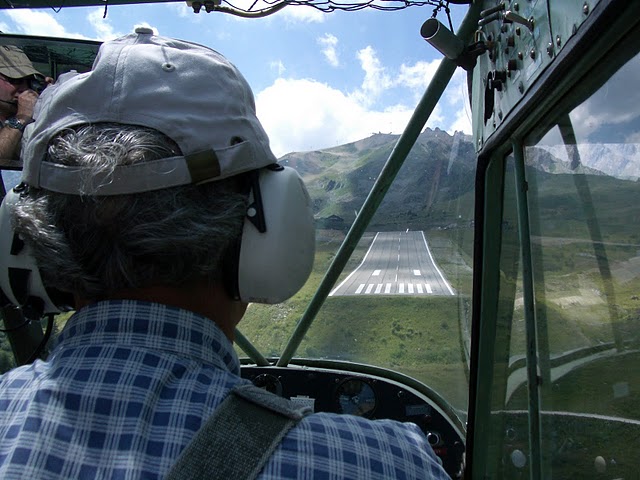
Courchevel in the French Alps is, for all pilots, one of the most amazing, butt-clenching arrivals one could ever imagine.
Courchevel’s airport also has a certain degree of infamy in the aviation industry as home to one of the shortest runways in the world, with a length of 525 metres and a gradient of 18.5% in order to help slow landing aircraft. The airport has a dangerous approach through deep valleys which can only be performed by specially certified pilots. On landing there is no go-around procedure, as most of the worlds airports have – there is merely a very steep hill which has seen a few accidents since the airport first opened.
Quite so!
Here’s an interesting video from YouTube
and a few personal memories:
Start of the approach into Courchevel'short final' CourchevelAuthor & aircraft on the apron - Courchevel
A piece of Internet fiction still carries an important message
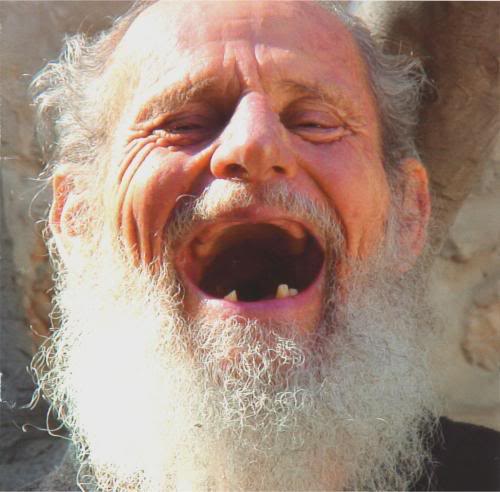
One of the features of the Internet is that stories can circulate widely across the globe. This poem is one such example. The ‘story’ behind the poem would appear to be fiction but so what! It serves as a good reminder of something that affects us all (except those tragically cut off before they grow old!).
But before getting the poem, the reason that it was decided to publish the Post is that old age, whatever that really means, is a much bigger issue for societies than many care to acknowledge. Because, I guess, the ‘many’ tend not to be old, or let us say, the right side of 60.
And look how even the terminology is so biased towards youth. Why should it be the ‘right’ side of 60? What is ‘wrong’ with being older than 60, or 70 or whatever age?
Of course, in so many ways nature’s purpose is for us to breed the next generation to continue our gene pool and once we have achieved that then our ‘natural’ use is limited. But that is to ignore the value of wisdom, the huge advantage the next generation has in being able to tap into the experience and knowledge of the ‘ancients’.
Here’s an interesting piece from Aging and the Elderly by Hampton Roy MD and Charles Russell PhD
Wisdom has been attributed to older people in nearly all world societies from ancient times, but modern research on the psychology of aging has paid little attention to this quality of the late years
………………..
A number of researchers, however, have assessed the psychology of aging quite differently. Instead of measuring decline, their aim has been to measure the unique and special characteristics of mind possessed by older people.
………………….
These researchers might typically define wisdom as Kenyon did when he described it as “the ability to exercise good judgement about important but uncertain matters of life” -where “uncertain matters” refers to problems that may not have come up before, or to which there are competing or conflicting solutions, and so forth. These researchers describe the old as having “self-creating” powers because they seem to be more independent in their decisions, and less subject to external influences like the fads and trends that sweep over the young.
They propose also that the old are better able to live with contradictions in life and that they quickly see the essentials of situations because of their greater experience. Wisdom, they observe, includes the intent to do good, which in turn depends on holding favorable attitudes toward other people.
Then again, popular culture defines the ancient American Indian warrior as many things but old and decrepit doesn’t figure in that list!
Sioux warrior
So here’s that poem – may you live to a great age!
Ever since I can remember, the biblical life span has always been three score years plus ten, and 70 sounds quite old to me !
Sometimes if people attempt to guess my age, older folks might be generous and say something kind with a built in feel good factor, children on the other hand will come up with huge numbers, which might be not so much of a joke !
In reality the above is just a simple sum of 365 x 70 = 25,550 plus some 15 to 19 days to cover leap years, lets say 25,570 days in all.
For me it is currently 365 x 12 plus the few days to my birthday, plus 3 leap year days, which if all goes well is 4,425 days left. This I have found to be somewhat sobering, but it has also helped me to become focused, something which until recently has never been the case. [Not as sobering as the 1,730 left for the editor!]
I try and make use of each day, being more careful to enjoy the time, exercise, keep up to date with tasks, and make headway with things that count. My priorities have changed, and now spending time with the family, and not wasting
No, not the author!
time with trivia has become my motivation.
This is not doom and gloom, it is reality, but it also helps me stick to the important things, rather than being side-tracked on something which is a waste of time.
The count down is on, and I am reminded of a little saying which used to be on the mantle piece of my Grand Parents home, which read.
Help!! Is there a financial Wizard out there somewhere? I need your input! My bank, the Société Générale, is advising
Société Générale
its customers that “a global economic collapse” is very possible within the next two years and that we should make “defensive preparations” for it.
Is this a sign of the bank losing its mind (and they did lose £5 billion a few years ago at the hands of a rogue trader) or do they know something that other pundits don’t?
Where is the Guru that can tell me where I should put my money now? Under the mattress? And in which form? Shirt buttons?
They say gold will skyrocket as the only thing buyable worth buying! And there’s me having just sold all mine at what I thought was the top of the market!!!! Oh Dear …..
Once again the British Broadcasting Company, BBC, has put together a spectacular television production; the epic story of how geology, geography and climate have influenced mankind. It is remarkable and fabulous viewing as you can sample in these opening minutes from the first episode on Deep Earth.
The four programmes, Deep Earth; Water; Wind; Fire, are testament to both the incredible symbiosis between mankind and the elements and how that relationship is critically balanced in a way that allows us to survive. Some of the images are truly outstanding, for example, the section on Prof. Iain Stewart exploring the Naica Cave system in Mexico.
Naica Cave system, Mexico
This theme of the balance of geological circumstances that allows, just, mankind to survive comes across time and time again in these films. For example, our relationship with fresh water which we all take completely for granted.
Have any of us really pondered how long we would survive if there was insufficient clean, safe drinking water to go around?
The programmes also reveal something of the technological prowess that mankind has achieved to allow the way these films have been produced.
So why, oh why, are we also such a stupid, stupid species – so stupid that we foul our own nest to an incredible degree.
I was waiting for a flight to London one day in January, a spare seat opposite me at the table in the lounge.
A middle-aged German woman asked to sit down. She was she stopping briefly in Dubai on her way back from Australia and it seemed from the conversation that her month long trip had been some sort of possible life changing experience. By her simple back pack and even her shoes I could tell she was an individual with character.
In the minutes that passed by she talked about Tasmania and how different life was there from the one she knew at home. I don’t recall exactly what I said to share the pleasure of her trip but did agree that it was possible to make major changes in one’s life; it obviously struck a chord.
Not so long after this brief meeting, I received an email. She had made those big changes and she sent me a picture that she took in Tasmania as a thank you.
A Tasmanian bird greeting the morning sun
You never know how sometimes people just need someone who can see that their dreams are possible!




 Enlarge Image






 Learning from Dogs