Category: Music

The power of hope!

It really is about good people refusing to let evil dominate our world.

The response to yesterday’s post was incredible and very gratifying.

For I was conscious that many would simply reject the proposition that I saw in John Zande’s book, namely that, “there was an evil origin to the universe and, more directly, that the deep, and growing, suffering of the pinnacle of evolution, us humans, can be traced back to that evil origin.”

The emotional challenge, of which I am acutely aware, is recognising that core proposition, that as we humans evolve so too does the capacity for human suffering, yet not wanting to give up on my personal core belief that better times ahead are possible, given sufficient people sharing that power of hope. Echoing what Sue wrote as a response to yesterday’s post that motivated me to reply, in part, thus:

If there was one sentence of yours that struck me as spot on, it was your declaration that what we think is what we create. Or as I often reflect, we are what we think.

Jean and I last night watched the latest BBC Panorama report about the migrant/refugee crisis in Europe. It was profoundly upsetting for reasons that many will understand.

George Monbiot’s essay that follows shortly is also profoundly upsetting.

But if hope is to be translated into a determination to make a difference, then it demands that we don’t ignore the pain but use our anger to fuel our passion to behave appropriately: We are what we think! Or in the much more eloquent words of Albert Einstein:

Learn from yesterday, live for today, hope for tomorrow. The important thing is not to stop questioning.

George Monbiot is to be saluted for his commitment to questioning and I am privileged to have his permission to republish the following.

ooOOoo

Inhospitable Planet

29th September 2015

There may be water on Mars. But is there intelligent life on Earth?

By George Monbiot, published in the Guardian 30th September 2015

Evidence for flowing water on Mars – this opens up the possibility of life; of wonders we cannot begin to imagine. Its discovery is an astonishing achievement. Meanwhile, Martian scientists continue their search for intelligent life on Earth.

We might be captivated by the thought of organisms on another planet, but we seem to have lost interest in our own. The Oxford Junior Dictionary has been excising the waymarks of the living world. Adders, blackberries, bluebells, conkers, holly, magpies, minnows, otters, primroses, thrushes, weasels and wrens are now surplus to requirements.

In the past four decades, the world has lost 50% of its vertebrate wildlife. But across the latter half of this period, there has been a steep decline in coverage. In 2014, according to a study at Cardiff University, there were as many news stories broadcast by the BBC and ITV about Madeline McCann (who went missing in 2007) as there were about the entire range of environmental issues.

Think of what would change if we valued terrestrial water as much as we value the possibility of water on Mars. Only three percent of the water on this planet is fresh, and of that two-thirds is frozen. Yet we lay waste to the accessible portion. Sixty percent of the water used in farming is needlessly piddled away by careless irrigation. Rivers, lakes and aquifers are sucked dry, while what remains is often so contaminated that it threatens the lives of those who drink it. In the UK, domestic demand is such that the upper reaches of many rivers disappear during the summer. Yet still we install clunky old toilets and showers that gush like waterfalls.

As for salty water of the kind that enthralls us when apparently detected on Mars, on Earth we express our appreciation with a frenzy of destruction. A new report suggests that fish numbers have halved since 1970. Pacific bluefin tuna, that once roamed the seas in untold millions, have been reduced to an estimated 40,000, yet still they are pursued. Coral reefs are under such pressure that most could be gone by 2050. And in our own deep space, our desire for exotic fish rips through a world scarcely better known to us than the red planet’s surface. Trawlers are now working at depths of 2000 metres. We can only guess at what they might be destroying.

A few hours before the Martian discovery was announced, Shell terminated its Arctic oil prospecting in the Chukchi Sea. For the company’s shareholders, it’s a minor disaster: the loss of $4 billion. For those who love the planet and the life it sustains, it is a stroke of great fortune: it happened only because the company failed to find sufficient reserves. Had Shell succeeded, it would have exposed one of the most vulnerable places on Earth to spills that are almost inevitable, where containment is almost impossible. Are we to leave such matters to chance?

At the beginning of September, two weeks after he granted Shell permission to drill in the Chukchi Sea, Barack Obama travelled to Alaska to warn Americans about the devastating effects that climate change, caused by the burning of fossil fuels, might catalyse in the Arctic. “It’s not enough just to talk the talk”, he told them. “We’ve got to walk the walk.” We should “embrace the human ingenuity that can do something about it.” Human ingenuity is on abundant display at Nasa, which released those astounding images. But when it comes to policy, the search for intelligent life goes on.

Let the market decide: this is the way in which governments seek to resolve planetary destruction. Leave it to the conscience of consumers, while that conscience is muted and confused by advertising and corporate lies. In a near-vacuum of information, we are each left to decide what we should take from other species and other people; what we should allocate to ourselves or leave to succeeding generations. Surely there are some resources and some places – such as the Arctic and the deep sea – whose exploitation should simply stop?

All this drilling and digging and trawling and dumping and poisoning – what is it for anyway? Does it enrich human experience, or stifle it? A couple of weeks ago, I launched the hashtag #extremecivilisation, and invited suggestions. They have flooded in. Here are just a few of the products my correspondents have found. All of them, as far as I can tell, are real.

An egg tray for your fridge, that syncs with your phone to let you know how many eggs are left. A gadget for scrambling them – inside the shell. Wigs for babies, to allow “baby girls with little or no hair at all the opportunity to have a beautifully realistic hair style”. The iPotty, that permits toddlers to keep playing on their iPads while toilet training. A £2000 spider-proof shed. A snow sauna, on sale in the United Arab Emirates, in which you can create a winter wonderland with the flick of a switch. A refrigerated watermelon case on wheels: indispensable for picnics. Or perhaps not, as it weighs more than the melon. Anal bleaching cream, for … to be honest, I don’t want to know. An “automatic watch rotator” that saves you the bother of winding your luxury wrist candy. A smart phone for dogs, with which they can take pictures of themselves. Pre-peeled bananas, in polystyrene trays covered in clingfilm. Just peel back the packaging …

Every year, clever new ways of wasting stuff are devised, and every year we become more inured to the pointless consumption of the world’s precious resources. With each subtle intensification, the baseline of normality shifts. It should not be surprising to discover that the richer a country becomes, the less its people care about their impacts on the living planet.

Our alienation from the world of wonders with which we evolved has only intensified since David Bowie described a girl stumbling through a “sunken dream”, on her way to be “hooked to the silver screen”, where a long series of distractions diverts her from life’s great questions. The song, of course, was Life on Mars.

www.monbiot.com

ooOOoo

David Bowie’s track Life on Mars from the album Hunky Dory was released in 1971. Courtesy of YouTube, here it is again:

One can’t have too many smiles in a life!

The infectious spirit of music – for people and dogs!

Good friend, John Hurlburt, forwarded an email to me the other day that contained a link to this YouTube video.

Watched over 1.4 million times and with very good reason!

Published on Oct 11, 2012
Mary Ray performs her ‘Hooked on Swing’ routine at Crufts. – Visit Mary’s site at http://www.maryray.co.uk

Our dogs – what wonderful, incredible friends.

The art of stillness.

Another fabulous lesson we can learn from our dogs.

Stillness. It is a very simple, single word yet, somehow, it sounds as though it belongs to a different age. As though stillness is a very long way from the modern society that millions and millions of us subscribe to.

The dog is the master of being still. Being still, either from just laying quietly watching the world go by, or being still from being fast asleep. The ease at which they can find a space on a settee, a carpeted corner of a room, the covers of a made-up bed, and stretch out and be still, simply beggars belief. Dogs offer us humans the most wonderful quality of stillness that we should all practice. Dogs reveal their wonderful relationship with stillness.

Now watch this entrancing talk from Pico Iyer.

Published on Nov 26, 2014
The place that travel writer Pico Iyer would most like to go? Nowhere. In a counterintuitive and lyrical meditation, Iyer takes a look at the incredible insight that comes with taking time for stillness. In our world of constant movement and distraction, he teases out strategies we all can use to take back a few minutes out of every day, or a few days out of every season. It’s the talk for anyone who feels overwhelmed by the demands for our world.

Why you should listen.

Acclaimed travel writer Pico Iyer began his career documenting a neglected aspect of travel — the sometimes surreal disconnect between local tradition and imported global pop culture. Since then, he has written ten books, exploring also the cultural consequences of isolation, whether writing about the exiled spiritual leaders of Tibet or the embargoed society of Cuba.

Iyer’s latest focus is on yet another overlooked aspect of travel: how can it help us regain our sense of stillness and focus in a world where our devices and digital networks increasing distract us? As he says: “Almost everybody I know has this sense of overdosing on information and getting dizzy living at post-human speeds. Nearly everybody I know does something to try to remove herself to clear her head and to have enough time and space to think. … All of us instinctively feel that something inside us is crying out for more spaciousness and stillness to offset the exhilarations of this movement and the fun and diversion of the modern world.”

What others say

“[Iyer] writes the kind of lyrical, flowing prose that could make Des Moines sound beguiling.” — Los Angeles Times

Nothing to do with dogs, women or men!

Enough of this introspection!

Dear friend, Suzann, sent me the link to this video a few days ago, it’s just fabulous.

Here’s the description of what the video is about:

The KFPS Friesian Horse: beautiful, versatile, athletic, kind, willing, and able to do anything! May the world see that this breed is loved and enjoyed by all.  Too magnificent not to send on, you’ll love the music as well, beautifully played.

These horses were originally bred as “war horses” in the days of knights and armor. As armor got heavier, bigger horses were needed and the Friesian almost became extinct. They are black and are one of the most beautiful horses in stature as well as gait. What gorgeous animals! Just watching them becomes an emotional experience. Can you imagine what it would be like to ride one? Their manes and tails are the longest that I have seen and I noticed that when performing on grass, their hoofs do not kick up a divot, as they land flat footed. Creatures such as these are what makes this world so special. These horses are native to the Netherlands. Amazing Music is by E.S. Posthumus titled “Manju“.

Dogs – What incredible companions!

Meet Lizzy The Dancing Dog and her Human Sandra Roth.

Last Saturday, I posted Let’s dance today!

It showed a dog dancing to music, or quite possibly, a dog scratching its back against a wall that someone had cleverly set to music.  The video had been sent to me by Chris Gomez.

Then Dan, a brother to Chris, and a close personal friend of mine for 35+ years, sent me the following. This is in a different league to Saturday’s little video. This raises questions as to how the dog was trained to perform like this? How long did it take? What’s the story behind the display?

All I could discover, from the blog Sun Gazing was, “This dog dance was performed at The Open European Championships and totally blew the crowd away.”

Trust me, this is going to have you spellbound!

Enjoy!

If anyone can provide the answers to my earlier questions then Dan and I would love to hear from you.

Love is the Bridge

This fabulous world of blogging.

When I first started writing Learning from Dogs, some six years ago this coming July 15th, I didn’t have a clue. Not a clue about how addictive it would become, how eventually it would motivate me to write a book of the same name as the blog (not yet published), and, above all, what a wonderful family feeling would develop. Not only between me and my followers but also, and just as importantly, from the many wonderful blogs that I follow in turn.

One of those mutual friendships is with Val Boyco and her blog Find Your Middle Ground. Two days ago, Val published a beautiful post entitled Love is the Bridge for Understanding.

In a world that offers so many examples of everything that we don’t love, it’s a great pleasure to republish Val’s post, done so with her very kind permission. Thank you, Val.

ooOOoo

Love is the Bridge for Understanding – and Action

Posted on July 1, 2015 by Val Boyko

Valslide1

Diana over at Talk to Diana wrote a moving post today that has stayed with me. “He Deserves Better Than This” is about her father who has been in chronic back pain for years and has not received treatment to alleviate it. Diana decided that enough was enough and made several calls until she spoke to an administrator in the health service.

Diana’s intention was clear. “They know his medical history, but I wanted to tell them about the man who is my dad, who worked hard all his life, who deserves better than this; who deserves to live his last years with some enjoyment and quality of life.”
Wow.

Sometimes we let ourselves think that others have our best interests in mind… And we suffer in silence. It is up to us to ensure that they understand what our needs are and support us in getting them met. (Having a caring daughter as an advocate also helps!)

So, how do we make ourselves be seen, heard and understood?

Having a good argument doesn’t cut it. Bringing all the facts to the discussion won’t either. Getting angry could also backfire.

I believe that in Diana’s case, her passion and love for her father touched the goodness inside a fellow human being. The administrator wanted to help and she did. He gets treatment on Friday. Yeah!

Love is the bridge for understanding. It moves us from being “one of them” in the eyes of another to become “us” in our common humanity and caring.

val2

Here’s an other story that touched me deeply. Daniel Gottlieb is a family therapist, psychologist and award winning radio host. Thiry years ago he survived a traumatic car accident. He is paralyzed from the neck down and gets around in a special wheelchair.

In his book The Wisdom We’re Born With he shares a personal story. While staying at a hotel on business, the manager approached him and said “I hope you are enjoying your stay”. As it turned out there had been several hurdles that he had had to overcome in order to find a room that was easily accessible and comfortable. He asked to meet with the manager the next day to go on a guided tour with him. The manager seemed sincerely interested.

Gottlieb then asked the manager “Who do you love most in the world?” The manager quickly responded “My daughter.” Gottlieb then said “Okay, could you do this before we meet tomorrow morning? Imagine your daughter is visiting your hotel…. and she is in a wheelchair.”

They did meet the next morning but there really was no need, the manager had already seen the obstacles and hurdles. He was eager for more input from Gottlieb so that he could make it right.

When we reach out with love, we touch the innate love and compassion in others. We come together in our common humanity and caring. We hear each other and understand. We are all connected by love.

And then we know what is to be done.

ooOOoo

Revealing my age, what comes immediately to mind after having read Val’s post is this song:

Standing for our trees

Can we stop this madness?

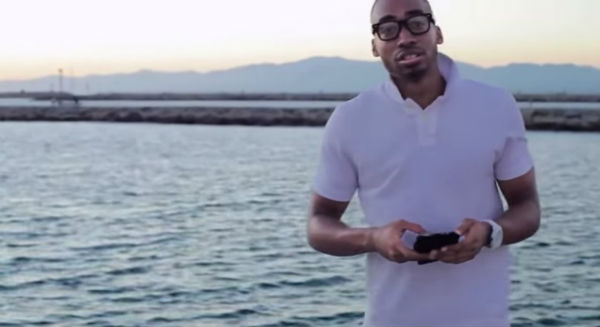
The name Richard Williams is not an uncommon one. But that doesn’t devalue what one Richard Williams has put his name to. I am referring to the Mr. Richard Williams who will be better known to many by his stage name Prince Ea; an American rapper and activist.

Mr. Richard Williams aka Prince Ea.

Here’s a little from Wikipedia:

Early life

Prince Ea was born as Richard Williams on September 16, 1988 in St. Louis, Missouri, the youngest of three children, and has resided there his whole life. The alias Prince Ea is derived from Sumerian mythology (“The prince of the Earth”). He has also graduated from the University of Missouri-St. Louis with an Anthropology degree and Latin honors.

So this particular Richard Williams is no slouch when it comes to what’s between his ears. Plus, he is of an age (27 this coming September) where the effects of what my generation has done, and is still doing, to Mother Earth will be unmissable.

Now watch this video.

Published on Apr 20, 2015
Activist and Artist Prince Ea Releases New Video on Earth Day supporting Stand for Trees campaign

Celebrity activist and spoken word artist Prince Ea launched his newest online video entitled “Dear Future Generations: Sorry” to motivate individuals to take immediate action to stop climate change by Standing for Trees.

Prince Ea was inspired to produce the video by the Stand for Trees campaign, an innovative new way for individuals to take real and effective action to protect threatened forests and help mitigate global climate change, all with the press of a button on their smart phones.

I sense so much angst inside me that it’s difficult to calm myself down and think rationally and calmly about what me and hundreds of thousands of others of my era must do.

But one thing is very clear: doing nothing is not an option!

Those who have watched the video will be aware that it serves as a promotion for an organisation Stand for Trees and for making donations in the form of Trees Certificates. The website’s How it works section explains:

Purchasing Stand For Trees Certificates is one of the most effective actions an individual can take to halt deforestation and combat climate change. Here’s how it works:

How-It-Works-Step-1-v03

You buy a Stand For Trees Certificate — a unique, high-quality, verified carbon credit that protects a specific endangered forest and offsets a tonne of CO2 from entering the earth’s atmosphere. Because of your purchase, forests are left standing to do what they do best — store carbon, produce oxygen, provide habitat, and support local communities.

I strongly recommend you read everything that is available on that website including a helpful FAQs section.

It also needs to be said that neither Jean nor I have any connection with the organisation and, like many others, are considering how effective this is.  But we are minded to purchase a number of Trees Certificates in addition to a number of things that we are already doing here at home.  I was also comforted by coming across support for Stand For Trees Certificates from Richard Branson’s Virgin Group. Their web page includes this:

How does this work?

The second largest source of climate-changing CO2 emissions is the destructive clearing of the worlds’ forests. When you purchase a Stand For Trees Certificate, you prevent one tonne of CO2 from entering the atmosphere by supporting local and indigenous communities who are protecting that forest in a developing country. This creates new opportunities for communities that do not wish to choose between alleviating poverty or protecting their forests.

Each of these Certificates is verified to rigorous third-party standards for their climate, community, and biodiversity benefits. Independent auditors verify with satellite and ground data that each Certificate has indeed prevented one tonne of CO2 from reaching our atmosphere and that your money is reaching communities on the ground.

That second paragraph offers key information to my way of thinking.

Because if we don’t halt this destruction of our forests in the foreseeable future then it’s not just humans that will pay the price.

11134461_dog20pee

Hope Has A Place

The message from Enya’s beautiful song.

Before you read any further please listen to Enya’s mesmerisingly beautiful track whilst reading the lyrics.

One look at love and you may see
It weaves a web over mystery,
All ravelled threads can rend apart
For hope has a place in the lover’s heart.
Hope has a place in a lover’s heart.

Whispering world, a sigh of sighs,
The ebb and the flow of the ocean tides.
One breath, one word may end or may start
A hope in a place of the lover’s heart.
Hope has a place in a lover’s heart.

Look to love you may dream,
And if it should leave then give it wings.
But if such a love is meant to be;
Hope is home, and the heart is free

Under the heavens we journey far,
On roads of life we’re the wanderers,
So let love rise, so let love depart,
Let hope have a place in the lover’s heart.
Hope has a place in a lover’s heart.

Look to love and you may dream,
And if it should leave then give it wings.
But if such a love is meant to be;
Hope is home, and the heart is free.

I have this notion in my head that we humans are predisposed to give priority to bad news over good news. I guess it does make sense especially when one reflects on likely times a few centuries back; or more.

However, I am certain that I am not alone in disliking intensely the predominance of ‘alarmist’ news headlines in all forms of media. We neither have broadcast television here at home nor subscribe to a daily newspaper although I do admit to dropping in regularly to the BBC News website.

The other morning I awoke a little before 5am and not wanting to awaken Jeannie decided to listen to some music using my iPod and earphones. I had a couple of Enya albums on the iPod and soon was listening to her album The Memory of Trees. Then up came track seven, Hope Has A Place, sung by Enya, composed by Roma Ryan.

I had forgotten how incredibly beautiful was the track.

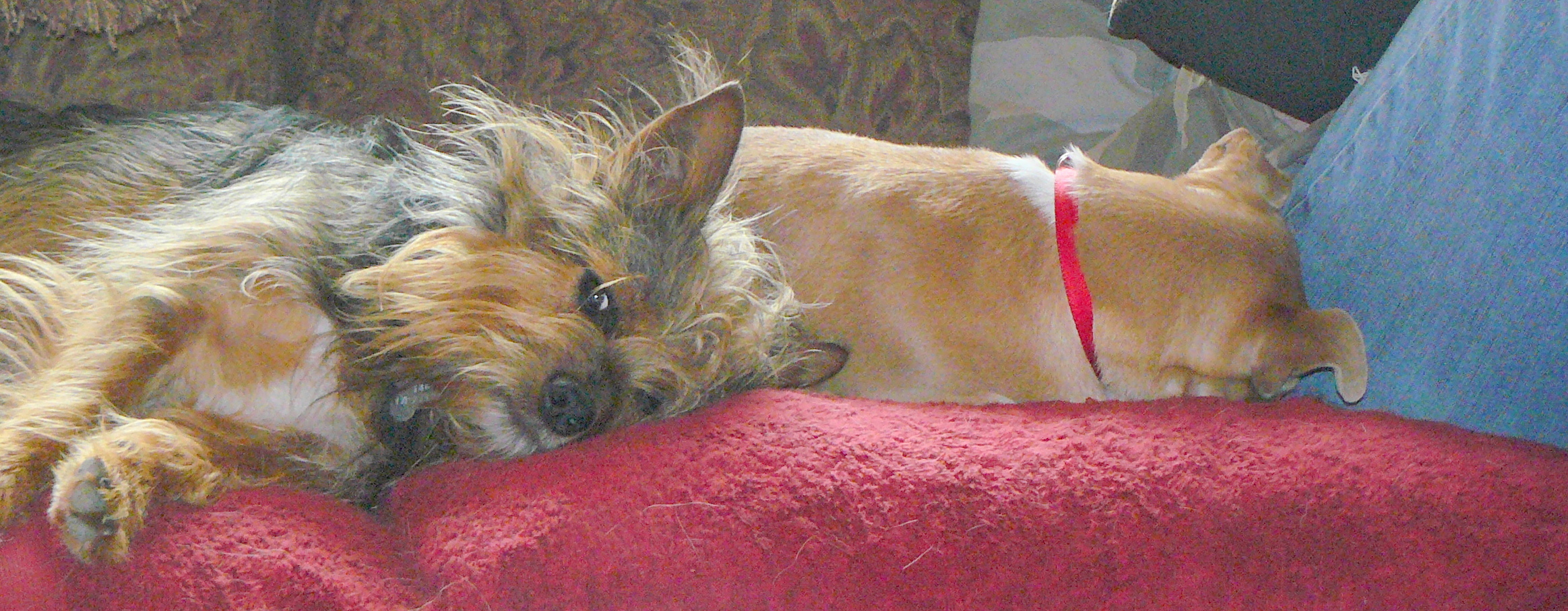
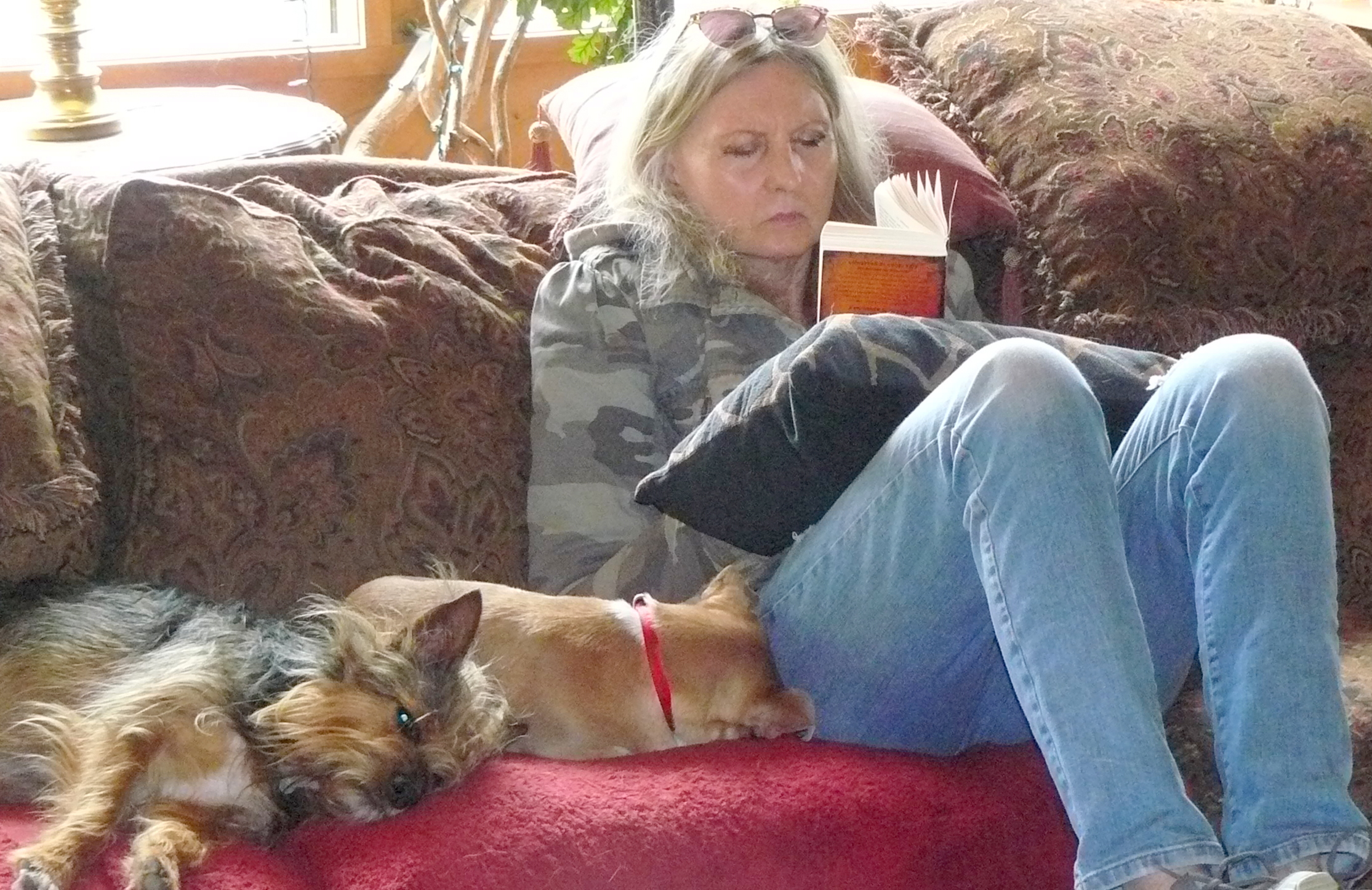
Then my mind moved to reflecting on the life I have here at home with Jean and the dogs. There were three dogs sleeping on the bed while the track was playing: Hazel, Sweeny and Pedy.

How the love I receive from the dogs and the love I receive from Jean give me such freedom. Such emotional freedom to be the person I truly want to be. So perfectly expressed in the closing line of the lyrics: Hope is home, and the heart is free.

At this juncture I paused in writing this post, it was a little after 2pm yesterday, grabbed my camera and went into the living room. The two photographs below reinforce my message.

P1150640

oooo

P1150639
Sweeny, Pedy and Jeannie – bountiful, unconditional love!

Hope Has A Place.

We must never forget that!

Our beautiful, life-giving trees.

Today we sing for our trees.

I’m very grateful to a recent post over on Dreamwalker’s Sanctuary; Sing for the Trees. This is how the post opens.

dsc01947_thumb

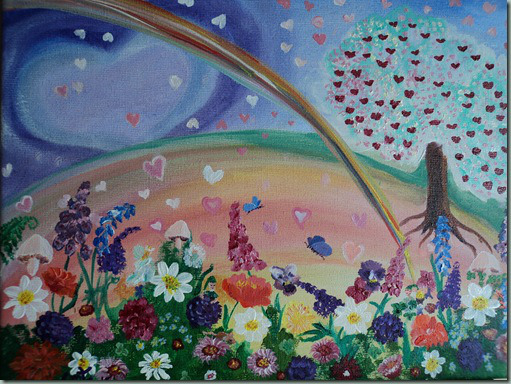
My Earth Day Painting, in tribute to our Earth Mother and Nature

You can find out more about Singing for our Trees Here and why its important to honour our sacred trees which are fast disappearing from our Earth.

In celebration of connecting with Gaia, our Earth Mother, I spent the weekend Painting. I wanted something Light, bright and showing the love.. Hence all the hearts and flowers.

But can you spot a Fairy two little elves and a new born, mouse and pot of gold in there?

That link in Sue’s second paragraph goes across to Songkeeper.net where one reads:

Earth Day – Sing for the Trees
April 22, 2015

Noon, wherever you are on the planet

Sing for the Trees You Love

A Single Idea Planted With Hope

In January 2010 a single idea was planted on the fertile ground of Facebook. It was a simple call: Create your own Woodstock. On Earth Day, April 22, 2010 sing to your favorite tree.

The Response

Since then over 8,000 people from 45 countries and 48 U.S. States have sung to trees

The Need

Every day a rain forest the size of Central Park is destroyed.

Every year a rain forest area larger than England is cut down.

15% of deforestation is caused by cutting down trees for toilet paper.

Why Sing?

The Civil Rights Movement, Apartheid and more recently Pete Seeger’s Ship of Hope to clean the Hudson River have used song to create awareness and galvanize action.

Singing:

  • Helps create community
  • Gives us a way to have a voice in saving what we love
  • Is an offering of our life force and spirit
  • Connects us to ancient traditions
  • Nourishes trees by giving them carbon dioxide
  • Is part of the joy of being human
  • Helps us relax and tune into nature and to each other
  • Reminds us we are part of the chorus of life

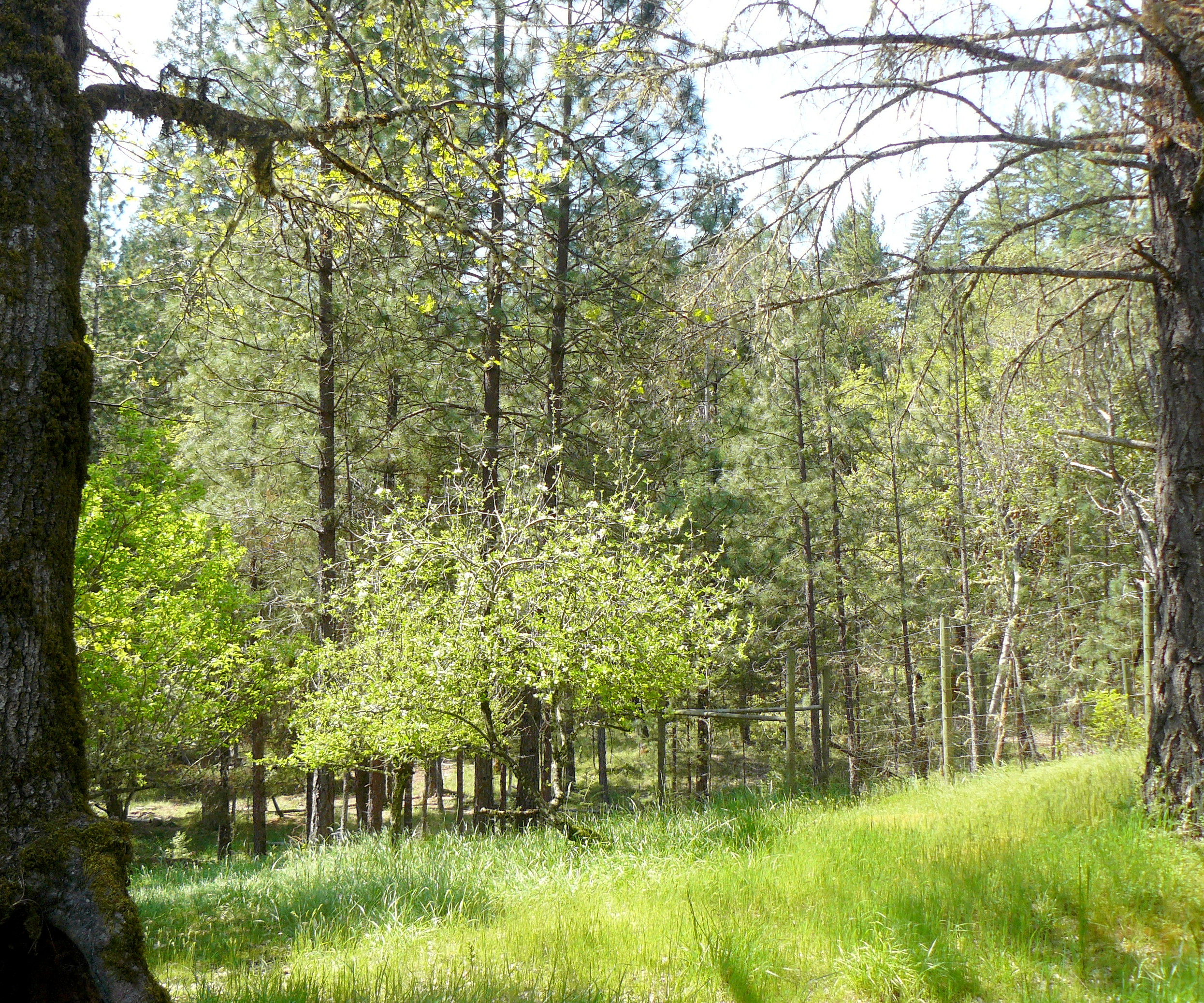
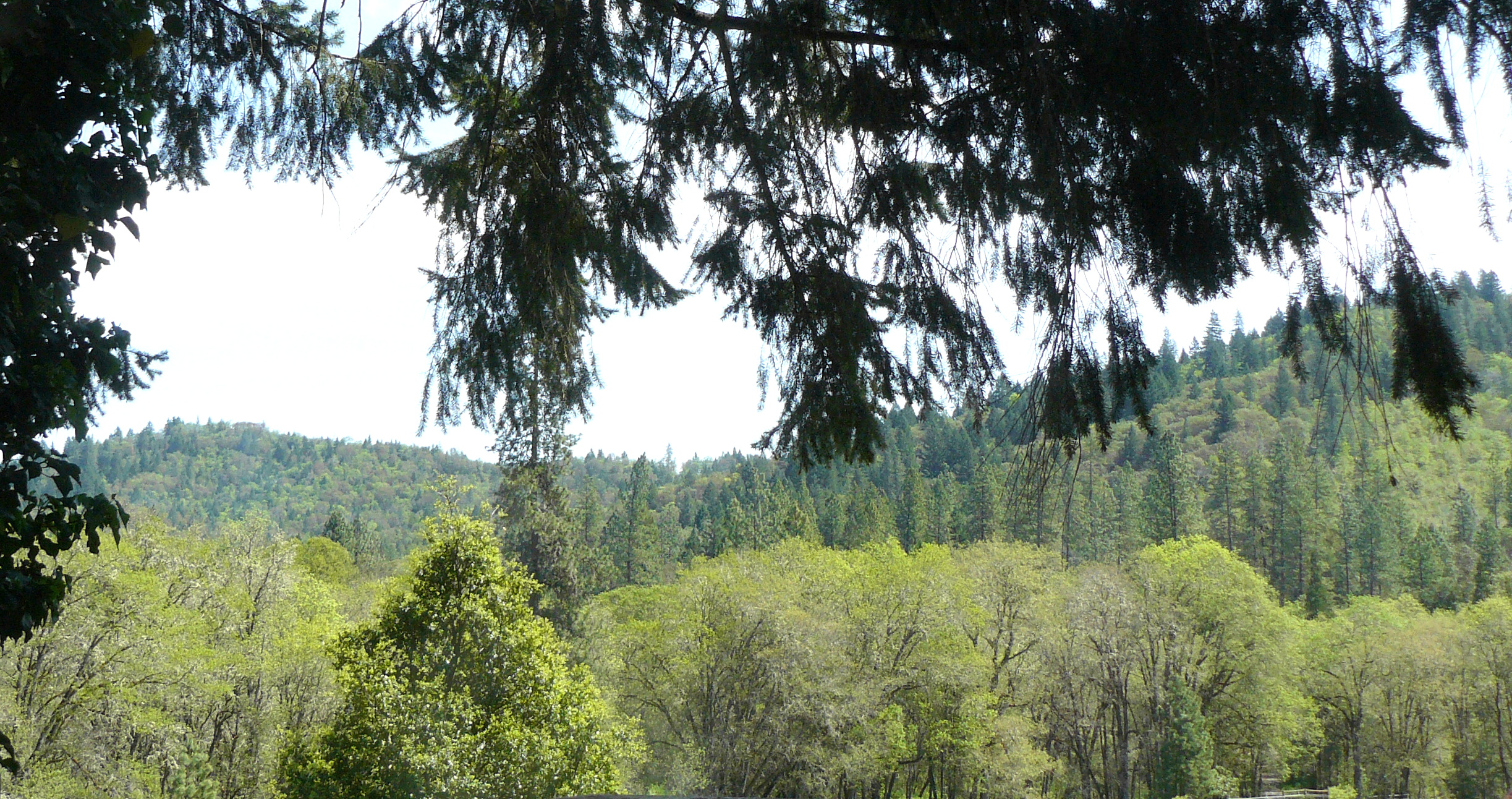
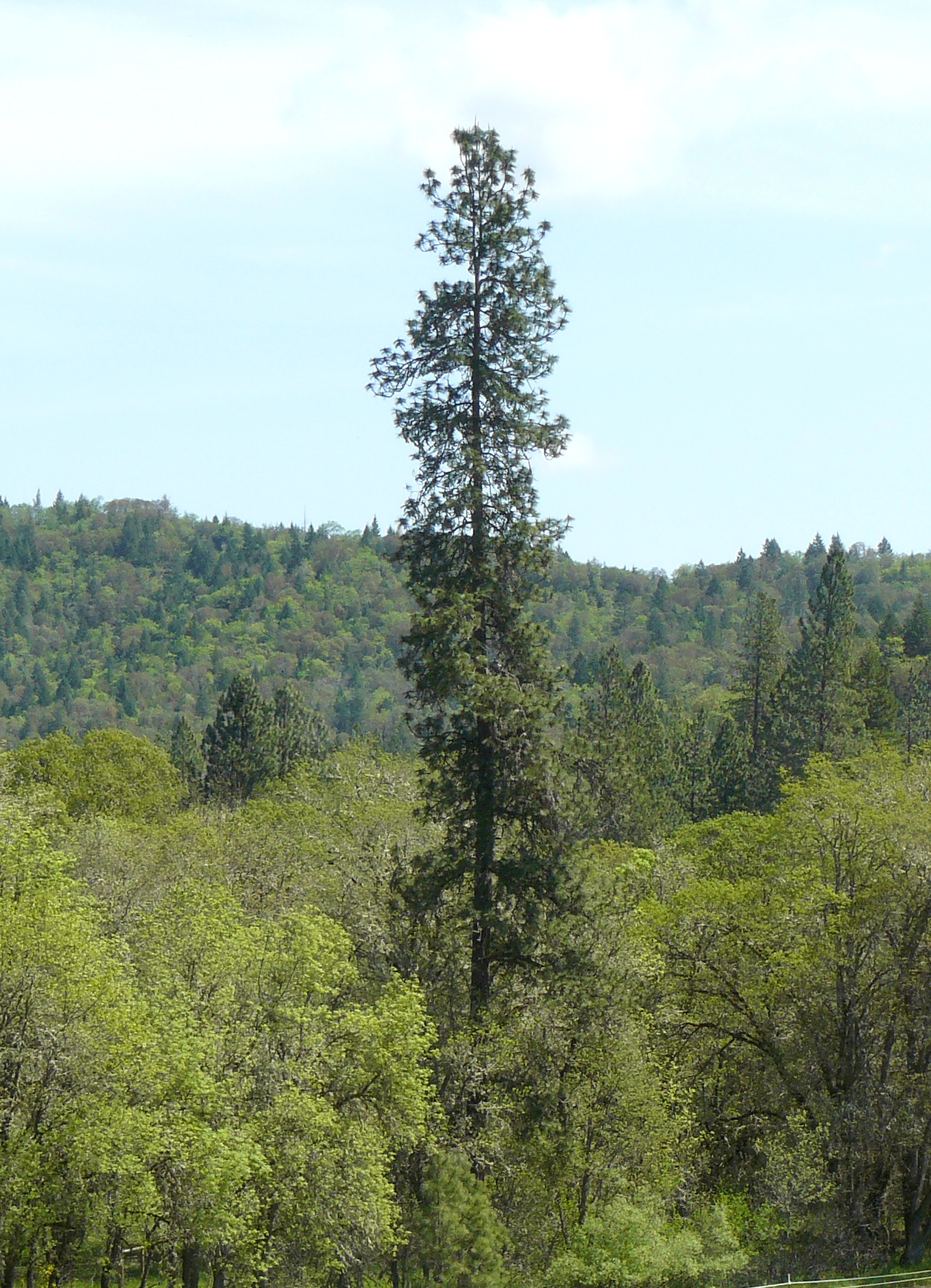
What more can I add other than offer some pictures of the trees here at home.

P1150587

oooo

P1150584

oooo

P1150585

 oooo

P1150588

oooo

P1150589

Yes, we will sing for the trees today, and not just today!

And there is one more thing I can offer; a song.