Category: Morality

The peculiar nature of H. sapiens

Just a few recent items to underline what a strange species we are!

This is being written on the 8th, not too many hours after the successful launch of the very last Shuttle space flight.  Forget the [valid] question of cost, this launch sufficiently inspired nearly a million people to travel to the Kennedy Space Center to watch this historic flight.  That adventuring drive is a wonderful aspect of mankind.

Now to another view of mankind.

Washington’s Blog of the 3rd July, 2011 has an in-depth review of how “the Japanese government, other governments and nuclear companies have covered up the extent of the Fukushima crisis.”  In that excellent piece, there is a reference to material in the British Guardian newspaper (I’m taking the liberty of re-publishing quite a long extract from Washington’s Blog).

British Shenanigans

It’s not just the Japanese. As the Guardian notes:

British government officials approached nuclear companies to draw up a co-ordinated public relations strategy to play down the Fukushima nuclear accident just two days after the earthquake and tsunami in Japan and before the extent of the radiation leak was known.

Internal emails seen by the Guardian show how the business and energy departments worked closely behind the scenes with the multinational companies EDF Energy, Areva and Westinghouse…

Officials stressed the importance of preventing the incident from undermining public support for nuclear power.

***

The Conservative MP Zac Goldsmith, who sits on the Commons environmental audit committee, condemned the extent of co-ordination between the government and nuclear companies that the emails appear to reveal.

***

The official suggested that if companies sent in their comments, they could be incorporated into briefs to ministers and government statements. “We need to all be working from the same material to get the message through to the media and the public.

***

The office for nuclear development invited companies to attend a meeting at the NIA’s headquarters in London. The aim was “to discuss a joint communications and engagement strategy aimed at ensuring we maintain confidence among the British public on the safety of nuclear power stations and nuclear new-build policy in light of recent events at the Fukushima nuclear power plant”.

Other documents released by the government’s safety watchdog, the office for nuclear regulation, reveal that the text of an announcement on 5 April about the impact of Fukushima on the new nuclear programme was privately cleared with nuclear industry representatives at a meeting the previous week. According to one former regulator, who preferred not to be named, the degree of collusion was “truly shocking”.

The Guardian reports in a second article:

The release of 80 emails showing that in the days after the Fukushima accident not one but two government departments were working with nuclear companies to spin one of the biggest industrial catastrophes of the last 50 years, even as people were dying and a vast area was being made uninhabitable, is shocking.

***

What the emails shows is a weak government, captured by a powerful industry colluding to at least misinform and very probably lie to the public and the media.

***

To argue that the radiation was being released deliberately and was “all part of the safety systems to control and manage a situation” is Orwellian.

And – as the Guardian notes in a third article – the collusion between the British government and nuclear companies is leading to political fallout:

“This deliberate and (sadly) very effective attempt to ‘calm’ the reporting of the true story of Fukushima is a terrible betrayal of liberal values. In my view it is not acceptable that a Liberal Democrat cabinet minister presides over a department deeply involved in a blatant conspiracy designed to manipulate the truth in order to protect corporate interests”. -Andy Myles, Liberal Democrat party’s former chief executive in Scotland

“These emails corroborate my own impression that there has been a strange silence in the UK following the Fukushima disaster … in the UK, new nuclear sites have been announced before the results of the Europe-wide review of nuclear safety has been completed. Today’s news strengthens the case for the government to halt new nuclear plans until an independent and transparent review has been conducted.” -Fiona Hall, leader of the Liberal Democrats in the European parliament

It’s us, all of us, that create the systems, the political and government systems that are at the heart of this approach to life.

But it’s also us, all of us, that ‘write’ such beautiful stories as this one from NPR Music.

Paul Simon has brought joy to so many for so long, but on this night he made Rayna Ford’s dream come true. During a show in Toronto on May 7, Rayna Ford, a fan from Newfoundland, called out for Simon to play “Duncan,” and said something to the effect that she learned to play guitar on the song. In a moment of astonishment and disbelief, Paul Simon invited her on stage, handed her a guitar and asked her to play it for the crowd. When she strapped on the guitar, the audience went crazy. In a few strums, the band played along, tears ran down Rayna Ford’s cheeks and Simon stood by her side in smiles.

It was an absolute moment of sobbing joy for Ford and for the crowd. It was a moment so beautiful, so human, it could almost be a story in a Paul Simon song. Excuse me while I wipe my own tears. Go Rayna and all the Raynas out there with dreams. As the song says:

Oh, oh, what a night
Oh, what a garden of delight
Even now that sweet memory lingers
I was playing my guitar
Lying underneath the stars
Just thanking the Lord
For my fingers,
For my fingers

What a strange lot we are!
What exactly is the truth?

What makes an open society function healthily?.

I suspect very few of you regular readers will recall that in 2009 (24th June to be precise) I ran a very short article under a similar title.  This is what was published.

A simple heading but, in truth, a very complex subject.  This was brought home by a recent article in The Economist by Bagehot.  That is “Politicians frequently lie. So does everyone else. Why all the fuss?”

Bagehot writes a Blog so those who don’t read the newspaper can read the rest of his thesis here.

Here’s some of that essay by Bagehot,

On lying

Jun 30th 2009, 14:43 by Bagehot

THE WORD “lie” means something very specific. It doesn’t mean a misleading statement, or an exaggeration, or a half-truth: it is a falsehood advanced intentionally and knowingly. That is why, in my column last week, I wrote that probably only Tony Blair and his crew could know whether they “lied” about Iraq’s weapons of mass destruction. Only they can know what was in their heads, and how far their public utterances diverged from their inner convictions. For that reason the question of lying over Iraq seems to me a bit of a red herring and distraction. What can be proved about their sloppiness and embellishments, and has been, is bad enough.

Lying is back in the news this week. Gordon Brown stands accused by various newspapers and columnists of deliberately misleading the public about the government’s fiscal position. Ditto Ed Balls, the prime minister’s henchman, who evidently doesn’t take kindly to having his integrity impugned in this way. David Cameron is a bit more periphrastic, knowing that in political parlance the “l” word is a nuclear accusation; but he came pretty close to it yesterday with his talk of “a thread of dishonesty” running through Mr Brown’s premiership.

There are (at least) two big questions provoked by this revived interest in lying. First and most obviously, are Mr Brown, Mr Balls and others really and indisputably liars? Do the fiscal figures they cite and twist in any way support the interpretation they put on them–at least enough to make it credible that they believe what they are saying, even if no-one else does? If so, they may not be lying. They may be over-optimistic, incompetent or deluded. But they are not obviously liars.

Just re-read those last few sentences, “Do the fiscal figures they cite and twist in any way support the interpretation they put on them–at least enough to make it credible that they believe what they are saying, even if no-one else does? If so, they may not be lying. They may be over-optimistic, incompetent or deluded. But they are not obviously liars.

Delay your judgement for just a few minutes while we go to this next item.  This next item is a recent essay from John Maudlin, the financial expert, about the latest jobs report in the US.

What Happened to the Jobs?

By John Mauldin

July 7, 2011

The US jobs report came out this morning, and it was simply dismal. This week we look at not only the jobs report but also “what-if” proffers for the US and global economies. There’s a lot to cover, so let’s jump in.

First, there were only 18,000 jobs created in June, the lowest since September 2010. While private employment rose by 57,000, government workers dropped by 39,000, continuing a trend as governments at all levels work to cut their budgets. Long-time readers know I think it is important to look at the direction of the revisions, and we got no help. May was revised down by 29,000 jobs and April a further down 15,000.

I saw some headlines and talking heads in the mainstream media saying the poor number was due to “seasonals,” and I just shook my head. If you are that reflexively bullish when presented with what was clearly a bad report, how can you be taken seriously? You know who you are. And then Philippa Dunne of the Liscio Report sent the following note. She is one of the best data mavens there is on jobs and employment.

John M. then includes quite a long extract from Philippa’s note. You can read it and the rest of John’s article here.  Here’s how that extract from Philippa Dunne ends,

Also, there is no adjustment to the headline number – the sectors are adjusted separately (96 different industries at the 3-digit NAICS level, to be precise) and the total is the sum of those components. The whole argument is bogus.

Notice that last sentence, “The whole argument is bogus.” [My emboldening, Ed.]

OK, clearly not lying, in the strict definition of the term.  But still delay your judgement.

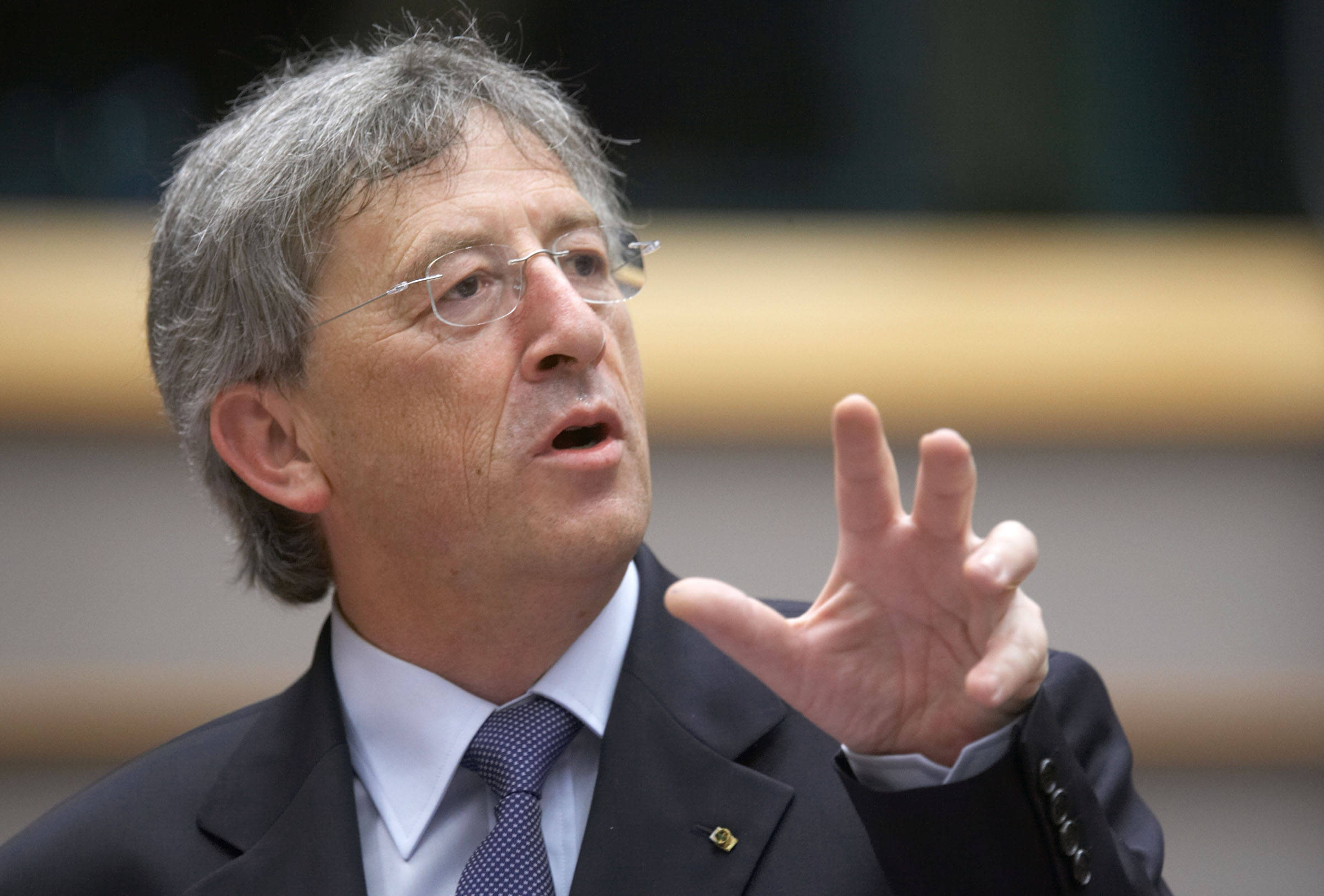
Back on the 25th June this year, I wrote a piece with the title of Lying is OK, that’s official! Duh!  I stated very clearly that lying is wrong!  Mind you, one could at least congratulate Jean Claude Juncker for honestly admitting being a liar. (Jean Claude Juncker is the Prime Minister of Luxembourg and the head of the Eurogroup council of eurozone finance ministers.)  Here’s that video clip with Juncker admitting that when it’s serious one has to lie!  (Listen carefully, the words are quietly spoken.)

Finally, I have long followed Yves Smith’s excellent Blog, Naked Capitalism. Just yesterday, Yves wrote a powerful piece,

MONDAY, JULY 11, 2011

More Proof That Obama is Herbert Hoover

Not only is Obama assuring that he will go down as one of the worst Presidents in history, but for those who have any doubts, he is also making it clear that his only allegiance is to the capitalist classes and their knowledge worker arms and legs.

It’s an angry essay that has, at it’s heart, an anger at the lack of true representative government, remember the one that Abraham Lincoln had in mind when he wrote, “Government of the people, by the people, for the people, shall not perish from the Earth.

Yves concludes in that article thus,

Even knowing how dedicated to bad ends Obama is, I still feel like I’ve walked into a parallel universe. He’s now determined to make these horrific entitlement cuts a sign of his manhood. This is “Change” for sure, to a more brutal, grasping, dog eat dog society, all administered by self serving elites. They will in the end reap the whirlwind they are creating, but not before it mows a path of destruction through our social order.

Right, time to draw it all together.

Despite my chest-beating on the subject of politicians and leaders deliberately lying in that recent piece about Juncker, there’s something much more fundamental.  What defines lying is really not that important.  It’s whether or not we trust that our leaders are doing their best for their constituents, to the best of their abilities.

Whether you support left-leaning or right-leaning policies is unimportant; indeed political differences and the ability to vote for one’s beliefs is at the heart of an open democracy.

But if we don’t trust that our leaders are doing their best for our country then that causes the destruction of faith.  If we do not have faith in those that lead us then the breakdown of a civilised social order becomes a very real risk.

These are such difficult times impacting us across so many fronts. Scarily, one seems to find many who have lost much faith in their leaders.

That, my friends, is the truth.

What is freedom? Part Three

The Trap – 3 – We Will Force U 2 Be Free

[Note: Part Two of The Trap is available to watch in my post of the 7th where one can also link back to Part One. Ed.]

This is another brilliant Adam Curtis documentary originally produced for the BBC. It talks about the modern political realities, where the policies came from and the massive failures of those ideals and how they have ended up exactly where they did not want to be. What is discussed in this episode is the alternative idea to freedom that currently exists and traps the western societies in which we live.

What is freedom? Part Two

The Trap – 2 – The Lonely Robot

Part One of The Trap is available to watch in my Post of the 4th, US Independence Day.  It also provides some background thoughts.  It really is a most powerful set of programmes so, if you haven’t already done so, best to watch Part One first.

This is Part 2 of the brilliant Adam Curtis documentary originally produced for the BBC. It talks about the modern political realities, where the policies came from and the massive failures of those ideals and how they have ended up exactly where they did not want to be. This episode focuses on the 1990’s and how the politicians decided to apply the model of a free market economy to the rest of society and consequences of these actions being felt all over the world in western democracies.

What is freedom?

As a US resident since just mid-April, perhaps no better day than July 4th to pose this question.

As a British citizen, born in London towards the end of WWII, I am well aware that Britain has had a long tradition of ‘owning’ colonies.  In 1770 explorer James Cook charted the East coast of Australia and returned to Britain recommending colonisation in the area that became known as Botany Bay, now part of Sydney.  Britain’s response was to set up a penal colony in 1778.

In 1617 the British East India Company was given permission by an Indian rajah to trade in India.  Via lots of convolutions that I don’t understand, that led to the British Crown taking over in 1857.

So far as America is concerned, the British ended up with 13 colonies along the Eastern seaboard during the period 1607 to 1733.  Then we had the British West Indies and Canada and …… well, you get the message!

Wikipedia has a summary of the US independence timetable,

During the American Revolution, the legal separation of the Thirteen Colonies from Great Britain occurred on July 2, 1776, when the Second Continental Congress voted to approve a resolution of independence that had been proposed in June by Richard Henry Lee of Virginia.  After voting for independence, Congress turned its attention to the Declaration of Independence, a statement explaining this decision, which had been prepared by a Committee of Five, with Thomas Jefferson as its principal author. Congress debated and revised the Declaration, finally approving it on July 4. A day earlier, John Adams had written to his wife Abigail:

The second day of July, 1776, will be the most memorable epoch in the history of America. I am apt to believe that it will be celebrated by succeeding generations as the great anniversary festival. It ought to be commemorated as the day of deliverance, by solemn acts of devotion to God Almighty. It ought to be solemnized with pomp and parade, with shows, games, sports, guns, bells, bonfires, and illuminations, from one end of this continent to the other, from this time forward forever more.

Adams’s prediction was off by two days. From the outset, Americans celebrated independence on July 4, the date shown on the much-publicized Declaration of Independence, rather than on July 2, the date the resolution of independence was approved in a closed session of Congress.

Thomas Jefferson April 13, 1743 – July 4, 1826

Thomas Jefferson became the third President of the United States of America.  As one of the founding fathers, Jefferson envisioned America as an “Empire of Liberty”.

So it came to pass that Independence Day is annually celebrated on July 4.   The celebrations have deep roots in the American tradition of political freedom.

Reflect then on that notion of liberty and freedom as you watch the first episode from a most compelling series from Adam Curtis that was broadcast by the BBC in 2007. The series is called The Trap, the first programme entitled “F**k You Buddy” (11 March 2007)

Individual freedom is the dream of our age. It’s what our leaders promise to give us, it defines how we think of ourselves and, repeatedly, we have gone to war to impose freedom around the world. But if you step back and look at what freedom actually means for us today, it’s a strange and limited kind of freedom.

Politicians promised to liberate us from the old dead hand of bureaucracy, but they have created an evermore controlling system of social management, driven by targets and numbers. Governments committed to freedom of choice have presided over a rise in inequality and a dramatic collapse in social mobility. And abroad, in Iraq and Afghanistan, the attempt to enforce freedom has led to bloody mayhem and the rise of an authoritarian anti-democratic Islamism. This, in turn, has helped inspire terrorist attacks in Britain. In response, the Government has dismantled long-standing laws designed to protect our freedom.

The Trap is a series of three films by Bafta-winning producer Adam Curtis that explains the origins of our contemporary, narrow idea of freedom. It shows how a simplistic model of human beings as self-seeking, almost robotic, creatures led to today’s idea of freedom. This model was derived from ideas and techniques developed by nuclear strategists during the Cold War to control the behavior of the Soviet enemy.

Part Two of this article is being published on the 7th, next Thursday, and Part Three next Monday, the 11th.

The Trap, Adam Curtis

This coming next couple of weeks is going to see me reflecting on some of the powerful messages that flow from three one-hour documentaries by Adam Curtis during a series of programmes for the BBC in 2007.

For today, just enjoy the BBC trailer. (Assuming ‘enjoy’ is the right expression!)

Lying is OK, that’s official! Duh!

I find this utterly unacceptable – here’s the story

Jean Claude Juncker, lying for Europe!

I was talking to someone in the UK just a couple of days ago, Martin J., about investment matters and we were generally ‘slagging’ off the quality, or rather the lack of quality, of the statements of leading political persons in many fields of government.  Martin then made the statement that Jean Claude Juncker, the Prime Minister of Luxembourg, and the head of the Eurogroup council of eurozone finance ministers had recently stated that “When it becomes serious, you have to lie,”  I was staggered to hear this and asked Martin to supply the details.  Here they are.

Mr. Juncker’s remark had been widely reported and I have chosen the Wall Street Journal’s report to quote from in Learning from Dogs.

MAY 9, 2011, 10:54 AM ET

Luxembourg Lies on Secret Meeting

By Charles Forelle

Is lying considered an appropriate mode of communication for euro-zone leaders?

We have to wonder after a strange episode on Friday evening. Here’s what happened:

Just before 6 p.m., German news magazine Spiegel Online distributed a report saying that euro-zone finance ministers were convening a secret, emergency meeting in Luxembourg that evening to discuss a Greek demand to quit the euro zone.

Calls from reporters flooded in to Guy Schuller, the spokesman for Luxembourg Prime Minister Jean-Claude Juncker, the man who is the head of the Eurogroup council of euro-zone finance ministers.

In a phone call and text messages with two reporters for Dow Jones and the Wall Street Journal, Mr. Schuller repeatedly said no meeting would be held. He apparently said the same to other news outlets; at least one more moved his denials on financial newswires.

Of course, there was a meeting–although not, apparently, to talk about Greece quitting the currency, which would be an extreme step to say the least. Mr. Juncker even said a few words to reporters who had hustled to Luxembourg to stake out the gathering.

Anyway, do read the article in full here.

In that article there is a YouTube video in which Mr. Juncker says “When it becomes serious, you have to lie.”  You can hear it yourself, about 20 seconds into the video despite the sound level being a tad low.

So that’s official then!  Politicians have to lie!  Grand job.  Talking about jobs, don’t suppose Mr. Juncker will lose his.  Or that he will show that, deep down, he is an integrous man and resign his post.

Yes, of course we all understand that what high-profile people say can affect markets and that, at times, one must be careful in terms of what is said.  But lying?  Sorry, for me that will never, ever be acceptable!

What has this to do with dogs?  Simply, dogs don’t lie.

The inadequacy of words

Alice and Mabel

Think you have had a bad day/week/month/year/life?  Want to see your life in perspective? Go here and reflect.  This is one very brave and incredibly inspiring young woman.

Those of you who see this and are in the UK, do read Alice’s Bucket List and help if you are at all able.  If not, just hold Alice and all her family, and Mabel, in your prayers.

More on Bill McKibben’s book, eaarth.

Some very telling points.

I first mentioned this book on the 13th May when I was about a third of the way in.  Because I thought there might be material useful to the course that has been running here in Payson, I did skip around the book looking for ‘attention-grabbing’ points.  It wasn’t difficult to find numerous extracts.

Try this on page 214 from the Chapter Afterword.

As it turns out, however, the BP spill was not the most dangerous thing that happened in the months after this book was first published.  In fact, in the spring and summer of 2101, the list of startling events in the natural world included:

  • Nineteen nations setting new all-time high temperature records, which in itself is a record.  Some of those records were for entire regions – [then some of the details]
  • Scientists reported that the earth had just come through the warmest six months, the warmest year, and the warmest decade for which we have records; it appears 2010 will be the warmest calendar year on record.
  • The most protracted and extreme heat wave in a thousand years of Russian history (it had never before topped 100 degrees in Moscow) led to a siege of peat fires that shrouded the capital in ghostly, deadly smoke.  [Then goes on to mention the effect of this heat on global grain prices.]
  • Since warm air holds more water vapour that cold air, scientists were not surprised to see steady increases in flooding.  Still, the spring and summer of 2010 were off the charts.  We saw “thousand-year storms” across the globe [goes into details]
  • Meanwhile, in the far north, the Petermann Glacier on Greenland calved an iceberg four times the size of Manhattan.
  • And the most ominous news of all might have come from the pages of the eminent scientific journal Nature, which published an enormous study of the productivity of the earth’s seas. [More details follow – not good news!]
That last point can be read in more detail from Nature‘s website.  It’s here.
The book closes thus (referring to how the BP oil spill was, ultimately, an accident),
But the greatest danger we face, climate change, is no accident.  It’s what happens when everything goes the way it’s supposed to go.  It’s not a function of bad technology, it’s a function of a bad business model: of the fact that Exxon Mobil and BP and Peabody Coal are allowed to use the atmosphere, free of charge, as an open sewer for the inevitable waste from their products.  They’ll fight to the end to defend that business model, for it produces greater profits that any industry has ever known.  We won’t match them dollar for dollar: To fight back, we need a different currency, our bodies and our spirit and our creativity.  That’s what a movement looks like; let’s hope we can rally one in time to make a difference.
Powerful stuff from a powerful book.
Fired up?  Then go and join:  350.org

Greece, or grease?

The agony of watching a country (and a planet) slip.

Readers will be aware that I very rarely stroll through the tangled pastures of international politics and finance.  The only reason that I do so today is on the back of a very impressive letter published in the German newspaper  Handelsblatt.  That was brought to my attention by my subscription to Mike Shedlock’s (Mish) Blog Mish’s Global Economic Trend Analysis.  You will see that I muse at two levels about where we are today.

Earlier, I had read in last Saturday’s, The Economist a leader on Greece’s debt crisis, entitled Trichet the intransigent.   That started thus,

The European Central Bank’s refusal to consider a restructuring of Greek debt could wreck the euro zone
May 12th 2011 | from the print edition

IF THE stakes were not so high, Europeans’ incompetence in the euro-zone debt crisis would be comic.

and concluded thus,

It is time for the Germans and the IMF to call the ECB’s bluff. Together they should demand, and instigate, a restructuring of Greek debt. Germany should push other European governments to cough up money to support Greek banks and, if necessary, to make whole the ECB. The fund, which knows how to restructure debt, must ensure the process is run in a competent manner. The ECB will then be faced with a choice: go along with an orderly restructuring, or trigger a much greater mess by in effect forcing Greece out of the euro zone. Surely Mr Trichet does not want that to be his legacy.

So with that as background, the letter to Georgios Papandreou, Prime Minister of Greece written by Gabor Steingart is powerful and hard hitting.  Here it is in full.

Mr. Prime Minister,

Dear Mr. Papandreou,

With the greatest respect, the Western world is monitoring your efforts to master your country’s debt crisis. No other democratic country has ever managed anything like that in peacetime. You are shrinking the state apparatus; you are fighting corruption; you are teaching your fellow countrymen how to become honest tax-payers.

You are a modern hero. You are attempting the impossible. As the son of a persecuted and ostracized politician who was chased by the military junta you grew up close to danger. When the officers were looking for your father who was hiding in the attic, they threatened you by putting an unlocked pistol to your forehead and challenged you to betray your father. You denied your father’s presence until he, worried about his son’s life, left his hiding place.Later you fled with him to America where you spent your adolescence. You are alarger-than-life-character.

Preceding governments almost ruined your country. Debts amounting to 340 billion Euros are burdening the Greek state,equaling 155 times the profit of the 60 largest companies of your country and 1.5 times the amount of debts the Maastricht Treaty allows. A year ago, this newspaper, Germany’s biggest Business Daily, appealed to the public to buy Greek government bonds in order to give to the country what Greece needs just as urgently as money: confidence. We also wanted to assist in breaking through the negative spiral of growing doubt and increasing interest rates. Everyone who granted you guarantees and loans wanted it, the European Union, the International Monetary Fund, the heads of state and government.

But since then, the spiral has picked up in speed instead of slowing down. In May 2010 the interest rate at which your country was given money on a ten year basis was at eight per cent. Today, it is at 16 per cent. And in all probability, it will be going up further. The bitter truth to which you and all parties who wanted to help Greece have to admit is that the help doesn’t help. Your country is getting deeper and deeper into the mess. Debts are growing, the gross national product will decrease by at least three per cent in 2011. But it would have to grow by three per cent instead if you were to lower your debt to the allowedlimit until 2040. This is becoming more and more unrealistic. You can’t starve and build up your muscles at the same time.

The truth that Greece has to cut back and save has turned into an untruth. The right thing has turned into the wrong thing. You already cut pensions, lowered the salaries of civil servants by 30 per cent and raised the prices of gas by almost 50 per cent. You can’t restore the health of your country by saving. And the European Union can’t restore your country’s health by again and again injecting new loans.

Soon, the day will come when the tortured body will surrender. The Greek construction industry already shrank by 70 per cent. Sales of car dealers sank by half. A daily export volume of 50 million Euros Greece is achieving  far too little.  Soon the day will come which investors fear in their nightmares. Then the word “insolvency” will be on everyone’s lips.

But it is also the day when a new truth will be born: Don’t save but invest, they will tell you – so that the Greek economy will grow again. Do not service debt with debt, you then will be recommended, but spread out the debt service, cut it and maybe even completely suspend it for a while. It will be a day of impositions, especially for those who lendmoney to you and your people. Financial markets will grind to a halt in horror – and then they will turn to embrace the future. Because Argentina in 2001, Mexico at the beginning of the eighties and Germany after World War II taught us that there is a life after death – at least, in the case of highly indebted states.

Mr. Papandreou, so far, you attempted the impossible. Now you should do the possible. Just as you deceived the officers as a boy and denied to know where your father was hiding you now must repudiate the pride of the Greeks – in order to save your country. Come to meet the new uncomfortable truth before it knocks at your door. It’s already on its way.

Respectfully yours,

Gabor Steingart

The author is an award winning Journalist, the former White House Correspondent of “Der Spiegel” and now Handelsblatt’s  Editor-in-Chief.  His book “The war for wealth. The true story of globalization or while the flat world is broken” was  published in the US, GB, China and several other countries by McGraw Hill, New York, in 2008.

You may contact him at

steingart@handelsblatt.com


Powerful, as I said.

In a sense, in a very real sense, this illustration of the end game of our love affair with debt is symptomatic of the end game in terms of mankind’s love affair with, well with mankind.  The following was written by an inmate of Oklahoma Prison in 1998.

At the root of my humanity lies a potentially insatiable self-centredness.  Given its way, it can become unquenchable. Nothing, not even the richest of imagination, will put out its fire.

This ‘what’s in it for me’ mindset is at the root of all my problems and is where my fears live.  From those fears come anger, greed, intolerance, and a host of other shortcomings.

It is no accident that all religions point to the forgetting of self, because all religions know salvation lies in self-forgetting.

As we head relentlessly towards a level of 400 parts per million (PPM) of carbon dioxide in the atmosphere, 50 PPM above the highest safe limit determined by climate scientists, the time for mankind to move on from the debt-laden, over-leveraged, disconnected life from Planet Earth, is now.

That’s now!