Category: Morality

Labelling and form over substance.

A providential sequel to yesterday’s post.

It was after 3pm yesterday when I turned on my computer and wondered what today’s post was going to be; I wasn’t feeling especially creative!

But sitting in my ‘in-box’ was a link to the latest newsletter from The Smithsonian and within that newsletter was a perfect sequel to yesterday’s post What’s In A Name?

I’ll go straight to that article. (Apologies if you notice that there is a fair degree of overlap between the two articles.)

ooOOoo

Call a Dog a Pit Bull and He May Have Trouble Finding a Home

Dogs labeled as pit bulls at shelters may wait three times longer to be adopted—even when they aren’t actually pit bulls
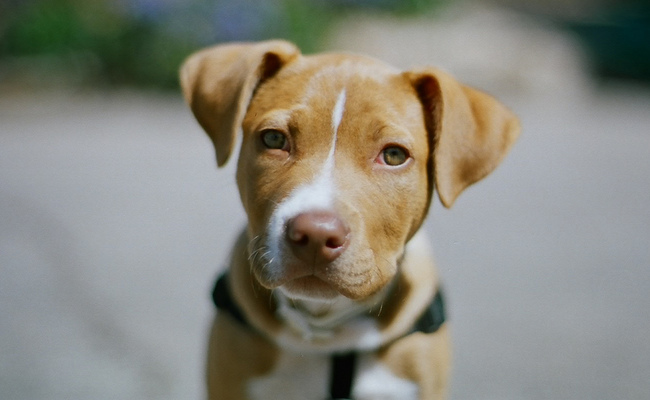
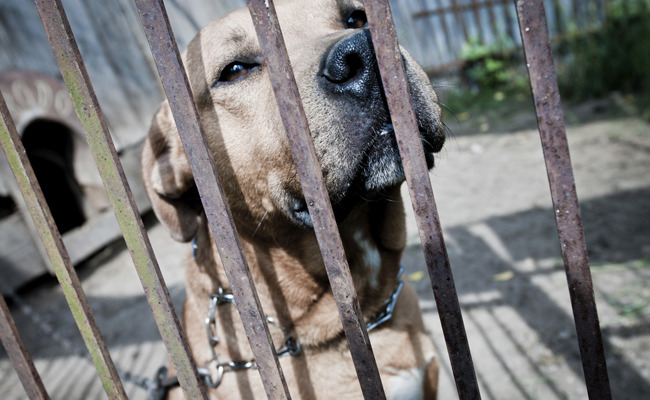
An adorable shelter dog shouldn’t have a difficult time finding a home—but it might if it comes with the label “pit bull.” (LeticiaRose / iStock)

By Rachel Nuwer, March 23, 2016

Regardless of a canine’s actual breed, simply labeling a dog a “pit bull” can condemn it to a significantly longer stay in a shelter and make it less attractive to potential adopters, concludes a new study in PLOS One.

Pit bulls are often stereotyped as aggressive and dangerous toward humans, though there is little evidence that those characteristics are inherent to the breed. The breed is popular among the dog fighting crowd, however, which contributes to its reputation for aggressiveness. To complicate matters, when attacks do occur, dogs may be labeled as pit bulls even when they are not. Indeed, in the United States, “pit bull” often serves as a catchall for a handful of breeds ranging from English bulldogs to American Staffordshire terriers; one person’s pit bull is another’s American bulldog mix.

This reputation follows the canines when they land in shelters. When potential adopters look at available dogs, they “don’t rate pit bulls any differently than look-alike dogs,” says the study’s lead author, Lisa Gunter, a graduate student in psychology at Arizona State University. “It’s only when we start attaching labels that people begin to perceive them more negatively.”

Most shelter dogs are of unknown origin, so employees often have to guess at an animal’s breed. Over a 10-year career working in shelters, Gunter noticed that she and her co-workers frequently arrived at different conclusions about a dog’s breed. And genetic studies have found significant discrepancies between descriptions of shelter dogs and their actual breed. One study found, for example, that half of the dogs that had been labeled as pit bulls at four Florida shelters had no pit bull ancestry in their DNA.

Gunter and her colleagues undertook a series of studies to find out how those potentially flawed labels might impact an animal’s chance of finding a home. They started by showing college students in California and users of the website Reddit photos of three dogs—a Labrador retriever, a pit bull-like dog and a border collie—without attached breed labels and asked questions about each, such as whether the dog looked smart or if the person would feel comfortable approaching it. The team found that participants ranked the pit bull-type dog as lowest on intelligence, friendliness, approachability and adoptability, and highest on aggressiveness and difficulty to train. When the pit bull appeared in a photo with an elderly woman or a child, however, it was rated more favorably.

Next, the researchers asked potential adopters at an Arizona shelter to rank dogs that appeared in photos and short videos on the animals’ approachability, intelligence, aggressiveness, friendliness, difficulty to train and adoptability. These scores were then summed to create an “attractiveness” composite for each pooch. To get around possible biases, such as apartment rules about animal sizes or bans on certain breeds, the team used phrases such as, “If circumstances allowed, I would consider adopting this dog,” to assess willingness to take a canine home.
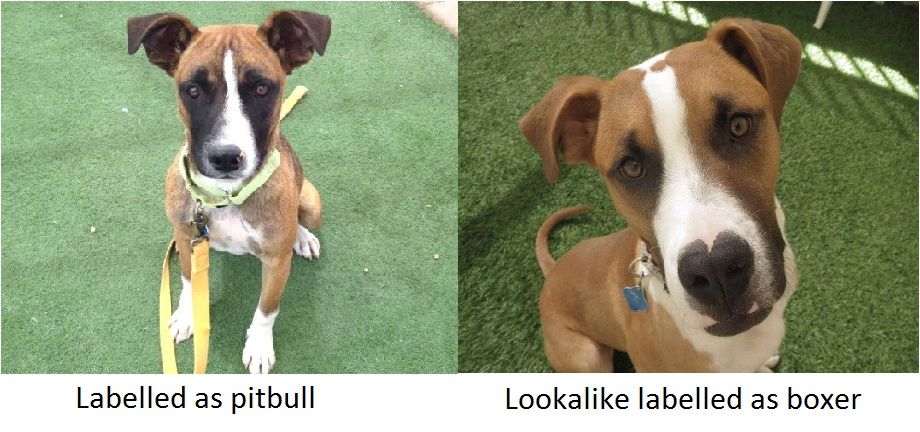
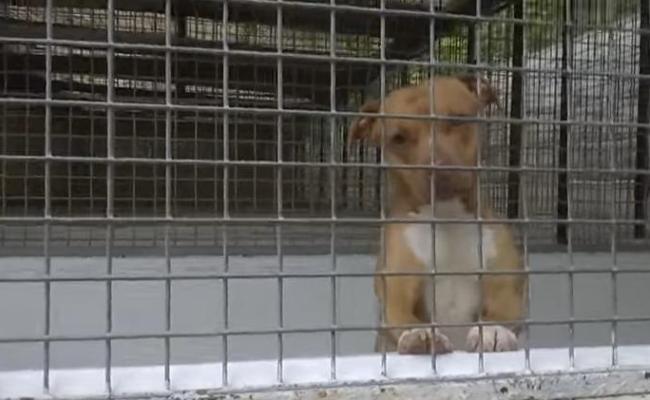
These two dogs may look similar, but the pit bull label could mean that the one on the left may wait a lot longer to find a home. (Arizona Animal Welfare League)

When the dogs were not labeled as any particular breed, participants ranked pit bulls and look-alikes (dogs that were the same size and color as the pit bulls) as equally attractive. Potential adopters even ranked the pit bulls in video recordings as more attractive than the non-pit bull matches. When the researchers introduced breed labels, however, that trend reversed, with participants ranking the same dog as significantly less attractive than similar dogs without the label.

The researchers also found that pit bulls at that shelter waited over three times as long to find a home as their matched counterparts.

Finally, the team analyzed a set of data from an animal shelter in Florida that recently removed breed descriptions altogether. When freed from the loaded label, pit bull-like dogs were much more likely to find a home. Adoptions of these dogs increased by more than 70 percent, compared with the prior year, and the shelter’s euthanasia rate for the same group dropped by 12 percent, probably because more of them were finding homes.

Taken together, these results “are very convincing that breed labels negatively impact any dog that is labeled as ‘pit bull,’” says Erica Feuerbacher, who studies dogs at Carroll College in Montana and was not involved in the study. “Furthermore, we know from other studies that humans are quite bad at correctly labeling breeds, so many dogs could be erroneously labeled pit bull—even though they are not—and by that label they become less adoptable.”

Eliminating breed labels, which people seem to be using as poor proxies for stereotyped traits, may be the key to banishing a significant amount of dog discrimination—and getting more dogs into homes, Feuerbacher and the other researchers argue. There is also a need to devise better means of measuring dogs’ true personalities, including their potential for aggression, and of ensuring those assessments are valid not just in the shelter environment but also in homes, Gunter notes.

“We want to drive the adoption conversation toward evaluating whether an individual dog, regardless of the breed, is a suitable candidate for adoption,” she says. “Then we can match-make between the personality of the dog and that of the person, instead of just relying on labels.”

ooOOoo

You can see why it so perfectly followed on from yesterday!

Not just my post but yesterday’s comments. Such as this from Tony:

Another example of form over substance. When will we learn?

So I know you will all cheer Erica Feuerbacher who is quoted towards the end of that Smithsonian essay and I will close with her words, in part: “We want to drive the adoption conversation toward evaluating whether an individual dog, regardless of the breed, is a suitable candidate for adoption. Then we can match-make between the personality of the dog and that of the person, instead of just relying on labels.

Oh, and a very Happy April Fool’s Day!
What’s in a name?

“What’s in a name? That which we call a rose by any other name would smell as sweet”.

That very well-known quotation from Wm. Shakespeare was the obvious sub-title to today’s post.

You will be aware that I have written several times previously about Pit Bull dogs. But I would like to draw your attention to a post that was published here back in 2013. It was called In praise of Pit Bull dogs and featured a guest post from Noella Schink, in Portland, Maine, where she then lived and played with her 3-year-old pit bull mix, Addie, 8-year old shih-tzu, Brutus, and 2-year old hound, Lula. Apart from all of them being a little older I trust nothing else has changed.

That post in 2013 also included a picture of our gorgeous Casey, as follows.

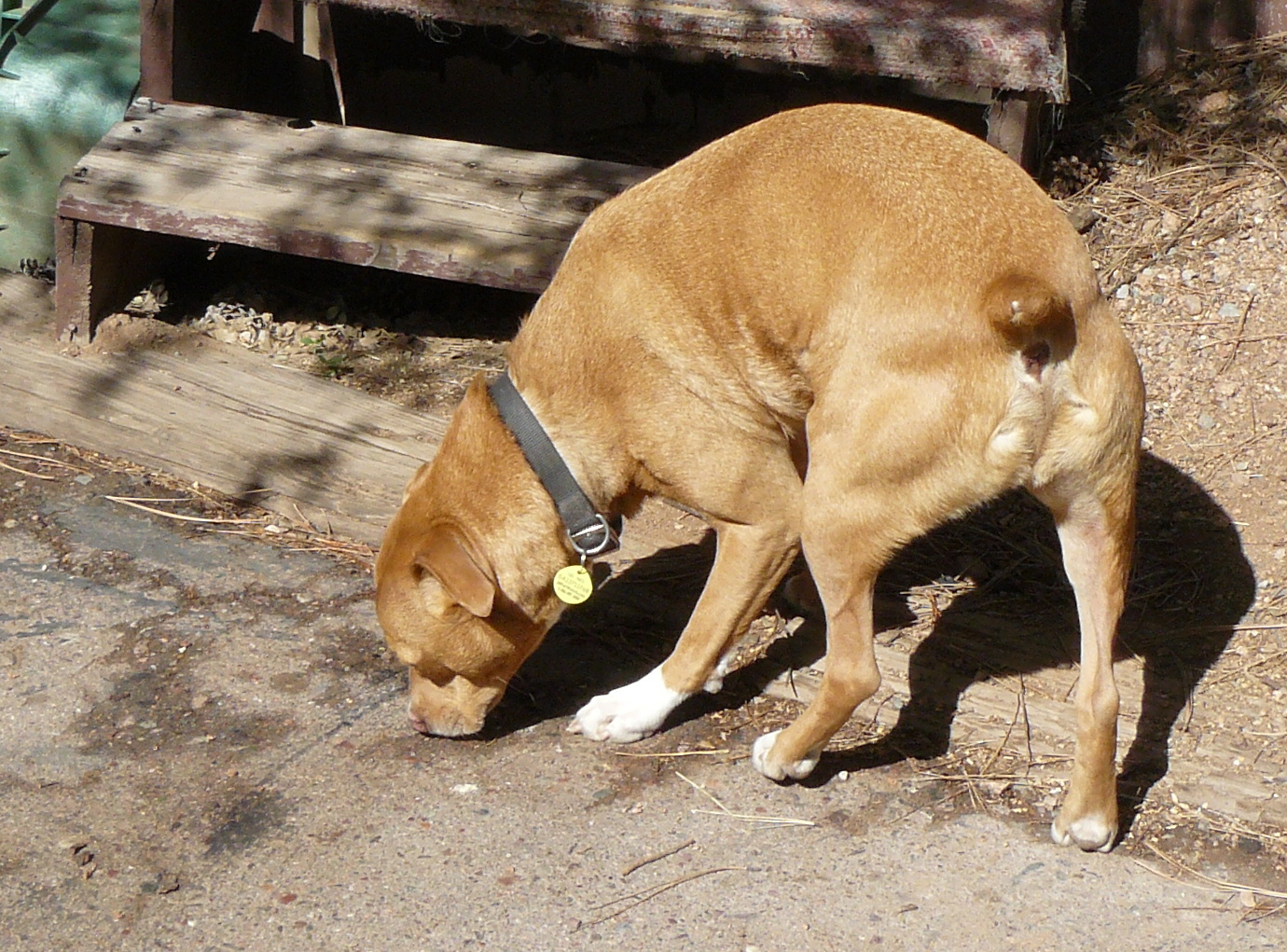
Casey doing what dogs do so well – picking up a scent.
Casey doing what dogs do so well – picking up scents around his home.

Over on the Care2 petition site there was a compelling case being made for Pit Bulls to be given a different name. Read it and see if you are convinced of the need.

ooOOoo

How We Could Save More Dogs From Death Row by Changing One Thing

By: Jessica Ramos, March 29, 2016

About Jessica

3172603.large

Whether we like it or not, labels matter — even for dogs. New research from Arizona State University published in PLOS ONE, suggests labels could even lead to a potential death sentence, if you’re a pit bull.

Pit Bulls Wait 3 Times as Long to be Adopted

The pit bull went from America’s darling dog to one of the most feared (and misunderstood) dogs today. Their fall from grace is evident in stories like Olive’s. Olive the Pit Bull was brought in as a stray and stayed in the shelter for approximately 11 years. Olive was lucky enough to find her forever home, but so many dogs like her aren’t — and our arbitrary labels aren’t helping their cause.

According to Science Daily, researchers from Arizona State University wanted to know if breed identification influences adoption. The researchers found that dogs labeled as “pit bulls” could wait three times as long to be adopted from shelters into their forever homes compared to their lookalikes without the label or labelled as another breed.

Compared to other breeds, like Labradors, pits were perceived as less friendly and more aggressive. They also were considered less “attractive” than their lookalikes. Weird, right?

Even the researchers were surprised by how much the pit bull label influences perception and, ultimately, adoption. As researcher Lisa Gunter from Arizona State University explains, “We were surprised how very similar looking dogs sometimes get labelled ‘pit bull’ and other times as something completely different. These dogs may look and act the same, but the pit bull label damns them to a much longer wait to adoption,” reports Science Daily.

Ultimately, the researchers recommend losing the pit bull label to stop inadvertently penalizing these dogs in the shelter setting.

Heartbreaking Pit Bull Statistics

If you thought that Olive’s story was sad, she’s actually one of the lucky ones — not only for getting adopted, but for staying in the shelter system for the 11 years that she did.

According to Pit Bull Rescue Central (PBCR) 200 pit bulls are euthanized in Los Angeles County animal shelters every single day.

PBCR emphasizes that “for homeless pit bulls the death sentence is almost always automatic.”

Villalobos Rescue Center (made popular by the TV show Pit Bulls and Parolees) had this to say about the pit bull plight in Los Angeles: “The pit bull population has now risen to 40% of all the dogs in 12 shelters in Los Angeles. That means that almost half of the entire Los Angeles dog population is pits or pit mixes! Most are strays, tossed out like dirty laundry. It’s heartbreaking.”

Sadly, the plight of pit bulls is not limited to Los Angeles County. A 2013 Nat Geo Wild infographic reveals that:

  • 60 percent of the total dogs euthanized in U.S. shelters are pit bulls
  • 30 percent of the total dogs admitted to shelters are labeled pit bulls
  • 86.7 percent of pit bulls admitted to open admission shelters are euthanized

Do you know what the worst part of this sad situation is? There’s no such thing as a pit bull.

As Bark Post explains, the pit bull label is just “an umbrella term that most people use to refer to different types of dogs – the American Pit Bull Terrier, the American Staffordshire Terrier, the Staffordshire Bull Terrier, any mixes thereof, and any dog that vaguely resembles these dogs.”

The breed isn’t real, but the stigma has real consequences. And time and again pit bulls prove that they can be great dogs with the correct guidance and training when they get a second chance. Remember how Jericho the Pit Bull went from death row to being an amazing service dog?

Take Action!

Sign and share this petition urging animal rescuers to lose the stigmatizing pit bull label that unnecessarily penalizes innocent dogs. It’s a matter of life and death.

Photo Credit: Max Schneider

ooOOoo

I can’t better the comment to that Care2 item left by Sheri.

Only idiots believe that pit bulls are bad! When are some morons going to finally wake up and realize bad owners are responsible for bad dogs! BSL should be banned everywhere. We must never stop fighting to end the senseless killing of this breed.

Say no more!

Where to for democracy?

Good people must resist what is going on!

My sub-heading was prompted by that very well-known saying, “All that evil requires to succeed is for good people to do nothing.”

That saying came to me when I was reading a recent essay published by Professor Richard Murphy over in the UK. I am referring to his article entitled: Nature reckons science is watching as democracy rides over a cliff.

Here’s the extent of Richard’s short post:

This comes from Colin Macilwain in the latest edition of the massively influential journal ‘Nature’, and I quote in the public interest and as it reinforces the arguments I have made today:

But at the top [of science] there is paralysis: leading scientific organizations do little except chase money and reinforce the ruling nexus of politics and finance — even since the financial crisis of 2008, which discredited the free-market philosophy that underpins that nexus. I argued years ago (see Nature479, 447; 2011) that scientific leaders had failed to respond in any meaningful way to that collapse, and I’m still waiting.

The political structure of the West is in deep trouble, and should it fall apart, there will be plenty of blame to go around. Most will go to political and financial elites, or to rowdy mobs. But some will belong to people in the middle who have taken public funds, defended elites and then stood back and watched as democracy got ridden over a cliff.

I think that fair comment and recommend the rest.

If one now goes across to that post from Colin here’s what one would read in the opening paragraphs:

The elephant in the room we can’t ignore

16 March 2016

The annual meeting of the American Association for the Advancement of Science (AAAS) in Washington DC last month was one of the best I’ve witnessed in more than 20 years of regular attendance. The policy sessions were packed and genuinely stimulating. I met tons of smart, influential people I hadn’t seen for ages, and we all enjoyed a good chinwag about how better to engage with the public — the meeting’s theme for 2016.

The only trouble was what was going on outside the hotel — in the United States and the world at large.

Colin then makes the point that is neatly articulated in the extract that was published by Professor Murphy and is republished above.

I don’t have any answers other than wanting to share this with you, dear reader. For decent, ordinary folk must be aware of the multiple threats to our Western democracy that are taking place.

Just as I want to share with you an example of what a good honest person and his adorable Labrador get up to. An example from my old country (and Richard Murphy’s home country).

ooOOoo

Dog Refuses to Leave the Side of Near-Death Man Trapped in Mud

3171690.large

When one false step left Martin Kay literally drowning in ice-cold mud in the English countryside, he quickly found out who his two best friends are. Turns out one of them is a dog.

Holly Blue is a typical Labrador who has never met a tree trunk or a blade of grass that doesn’t smell good. So when Martin took out her leash one recent afternoon, his dog was over-the-moon with expectation of the crisp afternoon air and a landscape of wintery fields. Neither of them had any inkling that this simple walk would soon turn catastrophic.

This day, the two set out along a different route through England’s historic Thornham Parva village. Though it was a very cold day, the skies were clear and there was no reason for concern, or so it seemed.

“I hadn’t walked that route for about two years,” Martin said. “When I came across the mud, I tested the ground at the side and it felt firm, but as I walked into the middle the ground began to sink. I called for help but nobody heard me.”

Minutes turned into hours and Martin simply couldn’t extricate himself from the mud. Holly Blue circled anxiously, but there was nothing the dog could do except to stand guard beside her friend. She never left his side.

“I eventually drifted off,” Martin said. “I wasn’t optimistic about being found, but I wasn’t panicking – it was too cold for that!”

Fortunately, Martin’s good friend was scheduled to pick him up that day and when Martin didn’t return home, his friend grew concerned enough to call the police. Martin was reported missing to the police at 7:30 in the evening. Other friends and neighbors had already begun searching for Martin themselves, but they were all focused on his usual route, not realizing that he’d gone in a different direction.

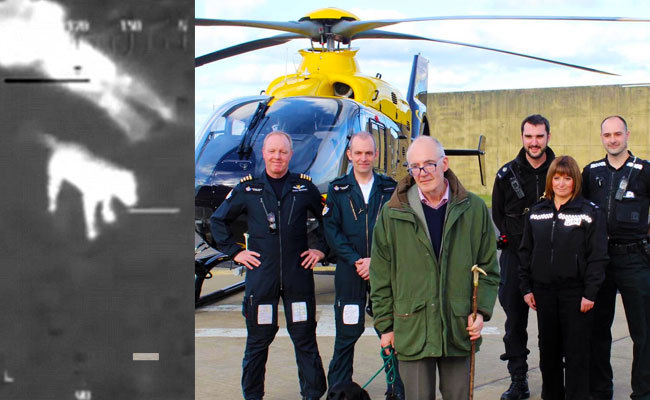
Police used a thermal imaging camera during helicopter sweeps from above. After some time they came across a heat signature that appeared to be the warm body of dog curled up at the edge of the bog. According to police, indeed Holly Blue was found first, and sighting her led them to Martin. Watch a portion of the rescue below.

Police Constables Luke Allard and Clare Wayman were the first on the ground.

“The field was in the middle of nowhere and we were relying on the light from the helicopter and torch light,” Allard said. “When I got to Mr Kay I took hold of his hand and he wouldn’t let go – I told him he would have to let go or I wouldn’t be able to help him.”

Unfortunately Allard and Wayman began getting stuck themselves while trying to extricate Martin, so they covered him with their own jackets to keep him warm while waiting for reinforcements.

Martin was in and out of consciousness as he was taken to West Suffolk Hospital. When he awoke, he was told how Holly Blue had helped save his life.

“It was the first and the last time she had been called into action,” Martin said in an interview with Global News. “She’s a very loyal dog.”

ooOOoo

Now compare the behaviourial values of Martin Kay, Holly Blue and everyone else who ensured this had a happy ending with those being demonstrated in the first part of this post!

It’s no sinecure to say, once again, how urgent it is for humankind to learn from our fabulous dogs!

More about the RVHS.

What incredible jobs are done by our humane societies!

In yesterday’s post, there was a comment left by John Zande:

I have so much admiration for the rescuers, like Jean was in Mexico. They have the biggest hearts, and see the absolute worst of things.

Then a few moments later, a further reply from John:

And to rescue the abused ones. To find them, then live in that lag time before they are freed. I wouldn’t be able to sleep. I don’t have the disposition for it. I’d be physically ill.

Thus the minimum that I can do is to promote the incredible work done by the Rogue Valley Humane Society; just one among many.

For example, by republishing what they present on their About page.

ooOOoo

About The Rogue Valley Humane Society

Our Vision

The Rogue Valley Humane Society envisions a community where every healthy adoptable companion animal has a lifetime, loving home and all homeless animals receive the care and compassion they deserve until they are adopted by their forever family.

Our Story

Fifty years ago homeless animals in the Rogue Valley faced a death sentence if no one adopted them within a few days. In 1965 a small group of animal lovers decided to try to change that, and they started a rescue to give homeless, abused, and abandoned pets in Josephine County a safe haven without a time limit. The Rogue Valley Humane Society grew out of this grassroots effort. RVHS was incorporated in 1965 as a non-profit public benefit corporation dedicated to providing love, food, shelter, and medical attention to these animals until they can find new lifetime homes.

Thirty-five years later the current facility opened with the capacity to house 14 dogs and 80 cats plus litters of puppies and kittens. Our main building houses all of the cats plus the office, laundry and medical room. The separate kennel building has indoor/outdoor runs. The Robert E. and Jennifer Murphy Canine Care Building was built in 2013 to house newborn puppies and any dog needing a quiet place to heal.

Throughout the years we’ve had one singular goal: to improve the lives of animals. We are proud to show RVHS to visitors so they can see first-hand the standard of care we give to every homeless companion animal, from an elderly, blind dog to a day old kitten.

The Rogue Valley Humane Society is a 501(c)(3) non-profit corporation. We provide shelter, food, medical care and personal attention for hundreds of homeless dogs and cats every year. We are here for the young and cuddly, the old, sick and neglected, and everything in between.

We receive no county, state or federal funds and rely solely on individual and foundation grants to carry out our mission.

Our Mission

The Rogue Valley Humane Society provides compassionate care for stray, unwanted, displaced, and abandoned animals and works toward ending pet overpopulation so that there will be no more homeless pets. We are committed to placing every healthy, adoptable animal in a loving lifetime home, teaching responsible pet guardianship, and maintaining community spay-neuter programs.

Our Core Values

  • We believe that every animal’s life has value and is worthy of respect and protection.
  • We believe that euthanizing healthy, adoptable animals is not acceptable.
  • We believe that animals contribute to the health, happiness and quality of human life.
  • We believe that we must manage our resources to assure the long-term future of our organization.
  • We believe in providing quality medical and shelter care by following evidence-based animal welfare practices.
  • We believe that through humane education we can help foster compassion, protection and guardianship for companion animals.
  • We believe that we should treat everyone with dignity and respect. Community members, staff, and volunteers are partners in improving the welfare of animals and helping us fulfill our Mission.
  • We believe that we can end pet overpopulation by adhering to our commitment to spay/neuter all of our animals before adoption and by providing community-assistance spay-neuter programs.
  • We believe that we best serve our community by placing healthy companion animals in responsible, loving homes.

ooOOoo

By promoting their Facebook page (look them up).

By enjoying some of the pictures on their website of dogs looking for homes:

photos.petfinder.com
Rudy

Rudy

Age: Young
Sex: Male
Size: Medium
My name is Rudy. I WAS extremely shy and nervous in the beginning. After a little love and patience, as you can see in the video I have come out of my shell. I love to hang out with both my human and furry friends and to be kept busy. I cherish my daily walks and because I’m a thinking I have a great fondness for brain toys.
  • Border Collie
  • Spayed/Neutered
  • Up-to-date with routine shots
  • Spayed/Neutered

And …

photos.petfinder.com

 . Margo .  . Margo .
  • Labrador Retriever, American Staffordshire Terrier
  • Up-to-date with routine shots
  • Spayed/Neutered
Age: Young
Sex: Female
Size: Medium
My name is Margo. I am sweet girl looking for a new lease on life. I promise to give you lots of love and attention, if you promise me the same thing. I’m sure we can come to an agreement and live happily ever after! Sounds good to me!

Please don’t overlook that just as importantly as the dogs they have cats that are looking for loving homes!

Finally, by enjoying this recent promotional video.

(To help maintain their wonderful profile I will be publishing more RVHS stories from time to time.)

Rogue Valley Humane Society!

Well done the team!

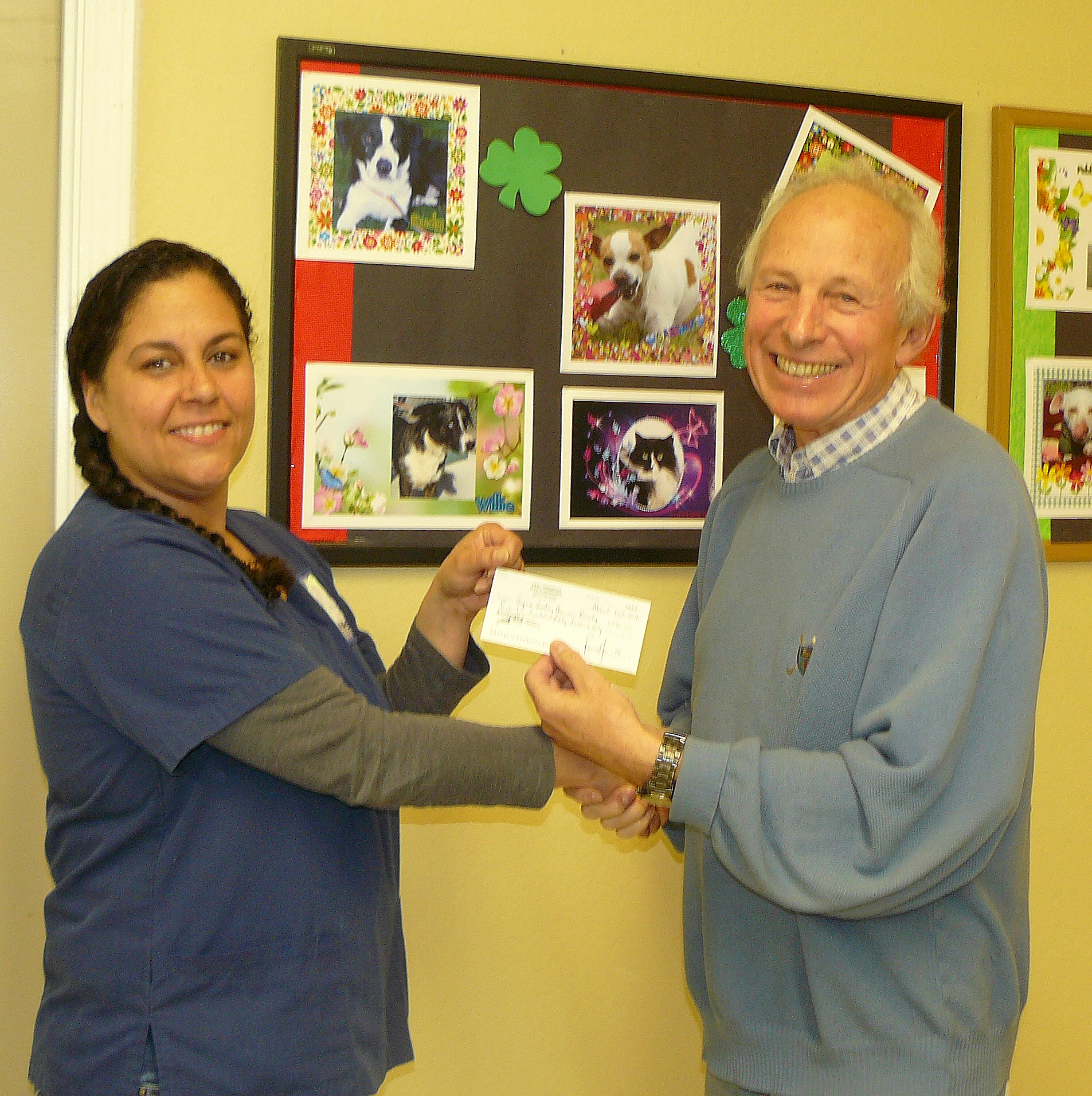
Yesterday morning Jean and I travelled the short distance into Grants Pass to visit Margaret and the rest of the team at Rogue Valley Humane Society, RVHS. As their website proclaims: Helping Our Community, Four Paws at a Time.

Here’s why we went to meet the team.

If you drop across to my page where I offer my book for sale you will read that:

Please do find your way to supporting our pets in need. For 50% of the net proceeds from the sale of my book are being donated to our local Rogue Valley Humane Society. Every cent makes a positive difference!

Well many of you, dear people, have made a positive difference, as the following pictures illustrate.

Yours truly passing a cheque to the value of $750 to Margaret Varner, Director of Facility Operations.
Yours truly passing a cheque to the value of $750 to Margaret Varner, Director of Facility Operations at RVHS.

oooo

Explaining what had just been donated to Autzen in the office of RVHS.
Explaining to Authentic the dog in the office of RVHS what has just been donated.
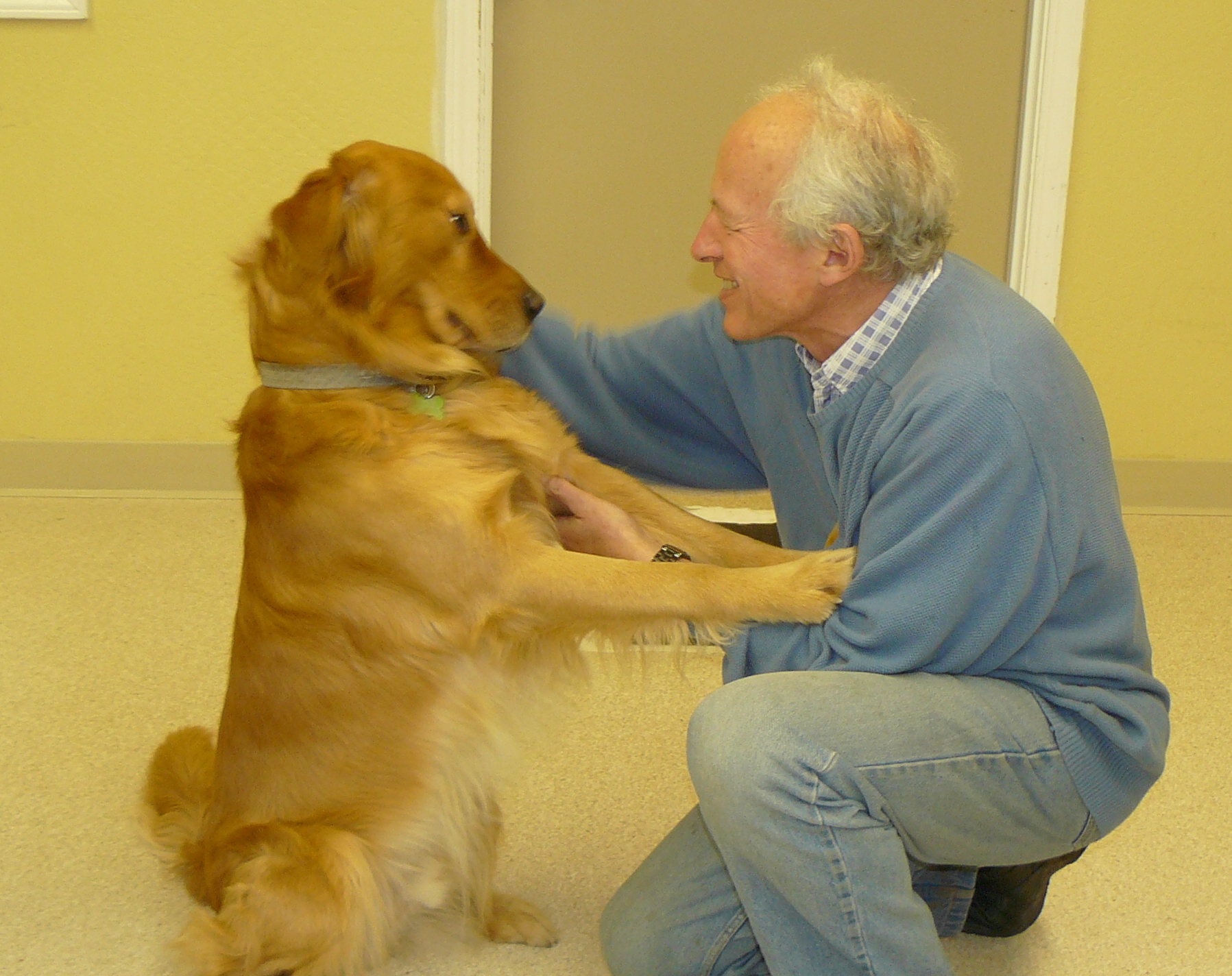
Being thanked in only a way that dogs can properly thank someone!
Being thanked in the only way that dogs can properly thank someone!

oooo

Gorgeous shot of Jeannie and Autzen.
Gorgeous shot of Jeannie and Authentic.

So a tremendous vote of thanks to everyone that has purchased my book for this is what your generosity delivers!

Going to write a little more about the Humane Society tomorrow.

Living on.

They will always live on in our hearts and minds.

I follow the blog belas bright ideas.

Recently, she posted a beautiful poem to commemorate the nine years of having Susami in their lives. It is republished here with Bela’s kind permission.

ooOOoo

dscn0130

There is a presence, here
and now; the bellows of breath,
warmth of blood, the feeling,
even if imagined,
that we are connected, one
to the other.

We each have our memories,
after all.

Your passing removes that utterly,
and somehow the same hand
lying on the same fur and flesh
will sense void, not even spirit,
not even that.

One can forgive the athiest,
or even theist their doubts,
props, religions. For this
at least is real:
This. Here. Now.
Tomorrow it will be gone.

And no matter in visions I linger
in the numinous; despite
in the garden I witness the alchemy
of decay transforming
into green and vibrant,
the loss of a loving companion
is egregious, indeed.

ooOOoo

Bela explained how Susami came to them:

This sweet being has been with us only nine years, since she was about 10-12 weeks old. Her previous steward, a multiply-pierced and -tattooed young woman, had to find a home for her. We were on our way to the east coast to deal with some business, and I had taken our good friend Kevin with me to the local feed store to get the horse stocked up on alfalfa pellets (it was during a long drought). I saw the pup with a bandage on her leg before, and asked the gal what was wrong with her. I later learned from the store owner (who thanked me many, many times for giving Susami a good home) that the dog had been severely abused. (She never did tell me specifics, so I was left to wonder.) The young woman tried her best, but there were forces beyond her control in her environment. When I saw Susami again, we had to take her, but how? I asked Kev if he would watch yet one more animal for us while we were gone, and he happily agreed! So she joined our chocolate Lab who we brought with us to Hawaii from northern Maine (a Non-rescue). He was Thrilled to have that little creature’s companionship.

Going to close with the exquisite words from Suzanne Clothier that Dr. Jim Goodbrod used in the foreword to my book:

There is a cycle of love and death that shapes the lives of those who choose to travel in the company of animals. It is a cycle unlike any other. To those who have never lived through its turnings or walked its rocky path, our willingness to give our hearts with full knowledge that they will be broken seems incomprehensible. Only we know how small a price we pay for what we receive. Our grief, no matter how powerful it may be, is an insufficient measure of the joy we have been given.

(Suzanne Clothier: Bones Would Rain from the Sky: Deepening Our Relationships with Dogs.)

Suzanne’s words cannot be bettered when it comes to the death of a beloved dog.

Susami, you will not be forgotten.

Caring does make a difference.

“All that evil needs to succeed is for good people to do nothing.”

You will recall that on the 8th March I published a post called Anger Alert. It was about raising awareness for “Stella has spent the last two years locked in a 3-by-9 foot cage in a kennel in Devon, England. She has never been let out to exercise or play.”

I included a link to a Care2 Petition that as of now has been signed by nearly 38,000 persons including many who read this blog. Thank you. Keep Stella in your thoughts.

Regretably, Stella’s imprisonment has not yet come to an end but here is a good news story that underlines why we must always keep fighting for the things we believe need to be changed.

ooOOoo

Over 61,000 Care2 Activists Want To Save These Dogs From Euthanasia

3170931.large

When Kirstyn Smith heard that 31 pit bulls had been rescued from a dog-fighting ring in her native Ontario, Canada, she was thrilled, but then she learned there was a catch: Officials had plans to euthanize the dogs, rather than free them. That’s when she jumped into action and decided to create a Care2 petition.

That petition now has over 61,000 signatures, as people around the world react to the horrifying and deeply unfair death sentence.

Here’s what Smith wrote in her petition:

“My name is Kirstyn Smith and I have been following a very heart-breaking story since October 2015. The town of Chatham-Kent, ON fell victim to a horrible and cruel act where 31 pitbull-type dogs were seized from an alleged dog fighting-ring.

 These animals need our help.

Please sign and share this petition to demand that these dogs are treated humanely, medically taken care of and rehabilitated in order to live out their lives away from torture and neglect.”

Close To Victory

On March 10, she issued this update to her petition:

“We are so close! The accused have agreed to hand over ownership to Dog Tales Sanctuary in King City, ON. This is incredible news, but we still need the Ministry of Community Safety & Correctional Services to give proper designation which will allow the dogs to legally reside in Ontario. Thank you to each and every one of you for your support on this long journey!!”

Smith is referring to the fact that pit bulls are banned in the province of Ontario, and only a pound can take in pit bull-type dogs. However, Dog Tales is not a pound, so the sanctuary must make a special application in an effort to get the designation that will allow them to take in the pit bulls.

This of course is not unique to Ontario. Pit bulls are banned or restricted in most Canadian provinces; in the U.S., over 700 cities have enacted breed-specific legislation which is any ordinance, or dog law, that relates to specific dog breeds but does not affect any others.

The next court date will be March 18, and there will likely be another one after that, but things are moving forward in a positive way, thanks largely to Smith’s persistence and the awesome support of those 61,000 Care2 activists.

An Awesome Sanctuary

If justice prevails, these dogs will move to their new home, which CTV News London describes as an “opulent sanctuary in King City, Ontario, which is owned by one of Canada’s richest families.”

“The issues present are nothing that we haven’t seen before, and nothing that we feel cannot be changed with time, patience, and the proper technique,” says Clare Forndran, a spokesperson at Dog Tales Rescue and Sanctuary.

“At Dog Tales we are fortunate enough to have the facilities and the resources to provide for our dogs in ways that many other shelters cannot,” owner Danielle Eden said in an email.

While this story has come a long way and is very close to a happy ending, it’s not quite there yet.

You can help rescue these dogs from a death sentence by signing Smith’s petition, asking the authorities to treat these animals humanely, and take care of them so that they can live out their lives away from torture and neglect. 

And if you have a cause that you care deeply about, and want to make a difference in the world, you can create your own petition, just as Kirstyn Smith did. You’ll soon find the Care2 community of activists ready to join you in your cause. And if you’d like to read more about petitions, you can check out this handy guide.

ooOOoo

So, please, if you are not one of those 61,000 who have already signed this petition then, without delay, go here and add your support to this wonderful cause.

Yet more on Pit Bulls

Let’s embrace those who seek out and love our lost dogs!

Just going to include today two videos from the Hope for Paws charity both of them about rescuing and restoring love to Pit Bulls.

Pit Bull rescue on the beach

Mountain rescue of an abandoned injured Pit Bull

I can’t close this post without thinking of the amazing quality of forgiveness that our dogs demonstrate. It would be a rare person who suffered this pain and rejection and wasn’t scarred for the rest of their days.

So much we must learn from our dogs!

Anger alert!

This report from my old country is despicable!

Before leaving England in 2008 to be with my Jeannie, I lived in South Devon. Lived in the small village of Harberton, just a few miles west of Totnes. But never had cause to form an opinion, good or bad, of my local police force: The Devon and Cornwall Police. Until now!

ooOOoo

Why Did Police Keep a Dog Locked in a Cage for 2 Years?

3169853.largeBy: Laura Goldman, March 6, 2016

Follow Laura at @lauragoldman

Stella has spent the last two years locked in a 3-by-9 foot cage in a kennel in Devon, England. She has never been let out to exercise or play.

In 2014, Stella was taken away by police from her owner, Antony Hastie, because she was “potentially dangerous.” Did she bite or attack someone? No. Under the UK’s Dangerous Dogs Act 1991, Stella is illegal and considered a threat to public safety – but only because of her breed. Stella is a pit bull mix.

Stella was taken to a private kennel owned by Devon and Cornwall Police. She was put in a cage that she has only been allowed to leave twice in the past two years, and only for behavior assessments.

“We were always told not to exercise or go into a kennel with any dogs, regardless of character, that had been brought in under the Dangerous Dogs Act,” Laura Khanlarian, who worked at the kennel, told BBC News.

“We were under no circumstances allowed to touch any of those dogs — which was hard,” Khanlarian said. “Animal welfare comes before anything, and that was my job. I don’t believe I would be doing it properly if I would sit back and think that’s okay. It wasn’t okay — it’s not okay.”

The dogs that were “so kind and needed us the most for reassurance – we were never able to give that to them,” she told SWNS TV.

Khanlarian lost her job when she breached her employment contract by interacting with the seized dogs.

Contrary to Khanlarian’s eyewitness account, Devon and Cornwall Police issued a statement claiming that of the hundred or so dogs they’ve seized over the past two years, Stella was the only one deemed too dangerous to be exercised by kennel staff.

Apparently Devon and Cornwall Police haven’t read “The Welfare of Dogs Seized in Kennels: A Guide to Good Practice,” created for police departments by the Royal Society for the Prevention of Cruelty to Animals (RSPCA) in collaboration with animal welfare officers, local authority dog wardens and police dog legislation officers.

All dogs “must have daily access to outdoor safe and secure areas, away from the kennel area and this should be at least 30 minutes per day,” the guide states (yes, “must” is emphasized in bold).

The Dangerous Dogs Act is breed-specific legislation (BSL), laws that apply only to certain breeds (usually pit bulls). BSL is opposed in the United States by virtually every major animal welfare organization because it punishes well-behaved dogs and responsible owners. Besides, it’s expensive to enforce and has not proven to increase public safety anywhere that it’s been enacted.

“It’s terrible. It’s unjustified. It’s wasting huge amounts of money and it’s not doing a single thing to prevent dog bites,” Kendal Shepherd, a veterinarian and animal behavior expert with 30 years of experience working with dogs, told BBC News. “It’s cruel. But it’s what our system forces us to do.”

Stella’s owner has gone to court 11 times over the past two years, trying in vain to get his beloved dog back. She had never showed any signs of aggression before she was seized, he said.

But Cornwall and Devon Police said — in the same statement in which they claimed Stella was the only dog in their kennel not let out of her cage – that Stella had “threatened and shown aggressive behavior toward two Police Community Support Officers,” had shown “aggressive behavior prior to being seized” and “attempted to bite a court appointed independent expert during the dog’s assessment.”

Last month, Torquay Magistrates’ Court ordered Stella to be destroyed.

Stella’s heartbreaking situation is similar to that of Lennox, a therapy dog from Northern Ireland that was seized because he was perceived to be a pit bull mix. Despite an international outcry and pleas for his life from dog experts like Victoria Stilwell, Lennox was euthanized in 2012.

Several rescue organizations in the United States had offered to take in Lennox, to no avail.

Perhaps Animals R Family will have better luck with Stella. The nonprofit rescue has offered to fly her to its headquarters in Connecticut, where BSL is banned.

“Breed specific legislation is wrong and ineffective. In the US, pit bulls are one of the most popular dogs for family pets,” the rescue wrote on its Facebook page.

Please sign and share the petition asking for Stella to be released.

Photo credit: YouTube

ooOOoo

Inevitably, this was signed by Jean and me seconds after it was read. Please do everything in your power to support this petition and stand behind Sharon, the originator of the Care2 Petition.

Thank you from all of my being. This is wrong on just so many levels it makes me ashamed to be a human or English. You can not torture and destroy animals because of outdated laws. Henry VIII killed people for not being Christian, where would we be if that was still lawful????? Animals only EVER ask for love. I have been around more animals than I have had hot dinners in my life and I’m 50 now. Someone please help me make this a happy ending.

Sincerely,
sharon smart

Please also send a message of support to AnimalsRFamily because it might just make a difference. Their contact page is here.

The behaviour of dogs is always a product of the humans who are around them, it is never a function of the dog alone! (And please see my post tomorrow about our own Pit Bull mix.)

In praise of Monarchs!

But not of the royal variety.

Last week, author and blogger (4am Writer) Kate Johnston published a post about getting 1 million supporters to help save the monarch butterfly. Kate was very happy for me to republish that here on Learning from Dogs. Please read it and sign up.

ooOOoo

Join the Monarch Squad

World Wildlife Fund has set a goal – getting 1 million supporters to help save the monarch butterfly.

Threatened by illegal logging, global warming, herbicide use, and vanishing food source (milkweed) for caterpillars, monarchs are in serious danger.

“Now more than ever, Mexico, the United States, and Canada should increase their conservation efforts to protect and restore the habitat of this butterfly along its migratory route,” said Omar Vidal, Director General for WWF-Mexico.

Last year, I began planting my own butterfly garden in an effort to help provide a habitat for monarch butterflies, and any other form of wildlife that might seek food and shelter there.

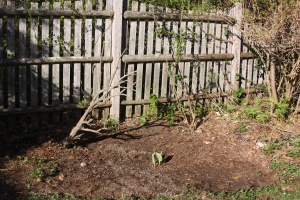
BEFORE

Ready for planting!
Ready for planting!

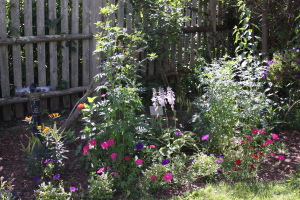
AFTER

Not very organized and probably have too much in there, but I didn’t expect everything to take off the way it did!
Turtles come through my backyard every summer to lay their eggs in the same place. Each generation of turtle somehow knows the exact route, like they have their own inner GPS.
See the butterfly in the middle of the milkweed? This is not a monarch, as it has no white spots. I think it might be a fritillary, maybe the variegated species.
This is a harmless garter snake, and they love my garden!
Just a baby, though. Hubs still took off, so my son had to take the pics.
Hubs nearly ran over this guy with the mower. I had to come and get it ‘cuz it’s a snapping turtle!

Spring is just around the corner in the US, and the monarch butterflies will be heading along their migratory route, back to their northern homes. They will be in search of food and shelter. They will need milkweed, the only plant on which they lay their eggs and the one food source for their babies.

If you have a backyard, won’t you consider providing a home for some beautiful monarchs? Even if you’re sans yard, you can still fight for their survival.

Join the Monarch Squad

ooOOoo

So, please sign up and share this as widely as you can.

For everyone’s sake!

dog-nose