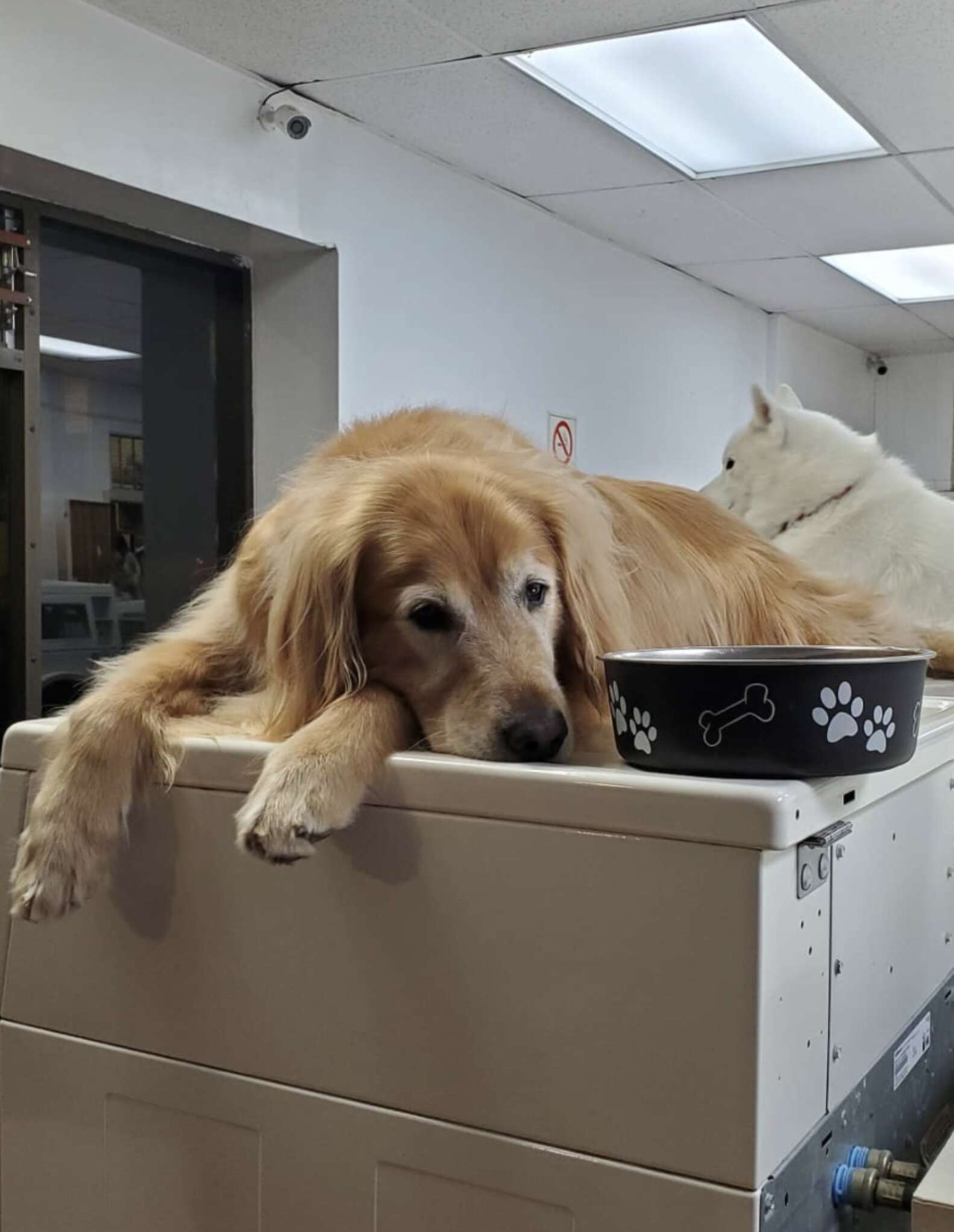
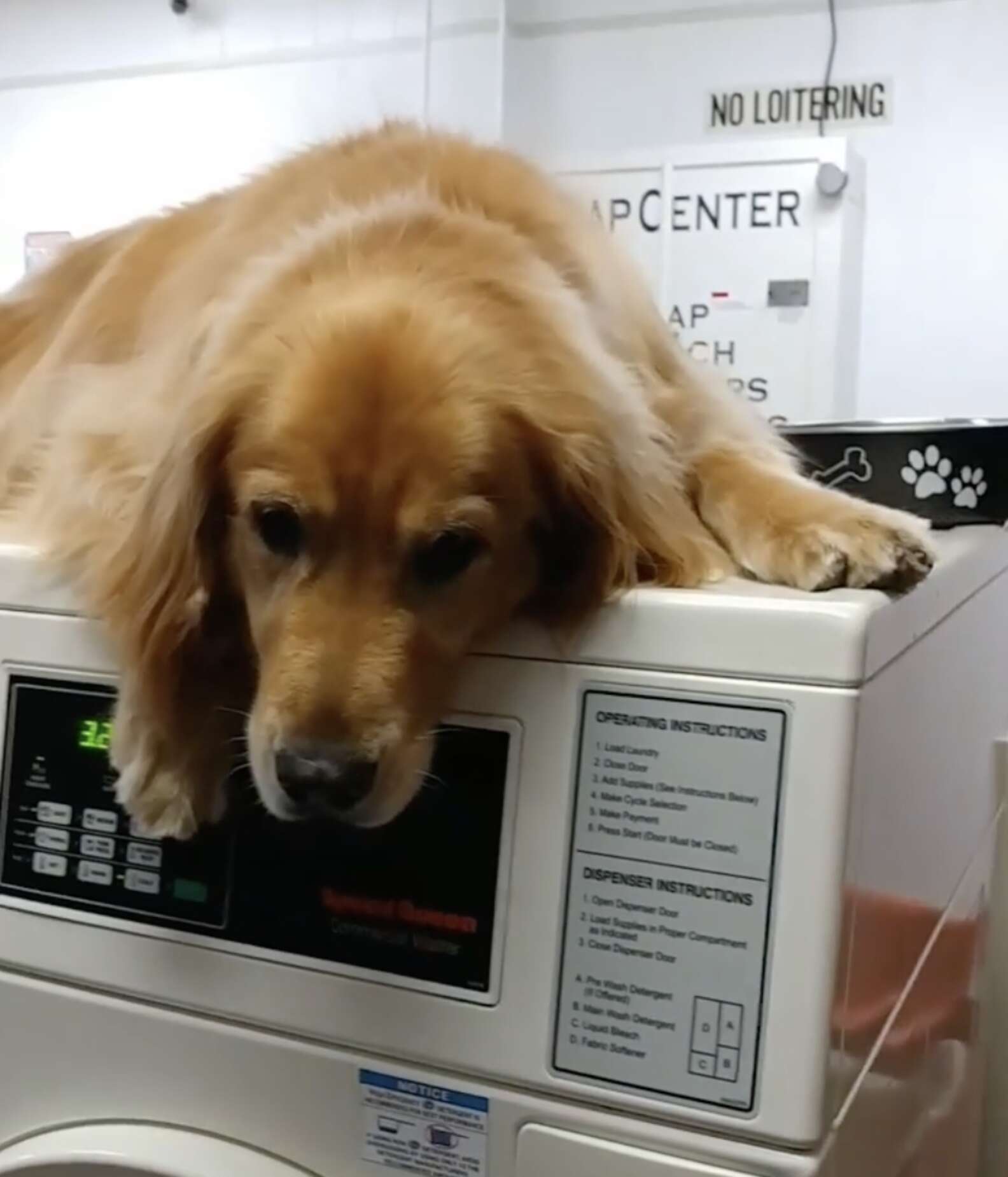
The following photographs were sent to me by Jess Anderson. But first here is the story:
For years, photographer Tanja Brandt has made it her mission to capture magnificent photos of animals and wildlife and has drawn accolades in the German and international photography world with her heart-warming animal portraits.
Recently, the German artist found a new challenge when she photographed the unique bond between two unlikely friends: Ingo, a Belgian Shepherd, and Poldi (Napoleon), a one-year-old owlet.
The owlet and canine have a special protector-protected relationship. Their affection toward each other couldn’t be any more evident. Ingo lovingly guards Poldi, who apparently doesn’t know how to live free.
The owlet hatched two days after his six brothers and sisters, therefore, has always been very vulnerable due to his small size. They respect each other and they can read each other, says the photographer.
oooo
oooo
oooo
oooo
oooo
oooo
oooo
oooo
oooo
These photographs are truly unique. Plus they are astoundingly beautiful.
Glittery and graceful, hummingbirds hover and flit in midair as they gather nectar. But it’s not just their athleticism that helps them source food.
New research finds that these tiny birds have a great sense of smell that helps them detect potential danger when they are hunting for nectar.
“In the last 10-15 years, researchers have just now begun to realize the importance of smell in birds in general. For a very long time, it has been known that some birds, such as vultures, have a keen sense of smell and use it to find food,” study co-author Erin Wilson Rankin, an associate entomology professor at the University of California Riverside, tells Treehugger.
“However, the role of olfaction in most birds has only been recently recognized. That may be in part because many birds do not appear to use odor to help them locate food.”
In earlier studies, researchers were unable to show that hummingbirds preferred the smell of flowers that contained nectar. Also, flowers that have been pollinated by birds don’t have strong aromas, like those that have been pollinated by insects. That’s why scientists didn’t believe that birds had the ability to smell odors.
But with this new study, researchers believe otherwise.
For their experiment, Rankin and her colleagues observed more than 100 hummingbirds in the wild and in aviaries. The birds were given the choice between feeders that contained just sugar water, or sugar water with the addition of one of several chemicals with a scent that meant there was an insect present. The feeders otherwise looked exactly the same.
The scents included one deposited on flowers by European honeybees, a chemical produced by Argentine ants, and formic acid, which is released defensively by some formica ants and can injure birds and mammals.
“If a bird has any exposed skin on their legs, formic acid can hurt, and if they get it in their eyes, it isn’t pleasant,” Rankin said in a statement. “It’s also extremely volatile.”
In the experiments, the hummingbirds avoided the feeders with the sugar water that contained the ant-derived chemicals. They didn’t react to the sugar water with the honeybee scent, even though it’s been known to keep other bees from visiting flowers.
To make sure the bees weren’t avoiding the feeders due to a fear of a new smell, the researchers performed an extra test with sugar water and ethyl butyrate, which is a common additive in human food.
“It smells like Juicy Fruit gum, which is not a smell known in nature,” Rankin said. “I did not enjoy it. The birds did not care about it though and didn’t go out of their way to avoid it.”
For hummingbirds, recognizing smells isn’t just about finding a meal. They use their sense of smell much differently than vultures. These birds use the massive olfactory bulb in their brain like an “airborne bloodhound” to detect decaying carcasses.
Instead, hummingbirds use their excellent vision to locate flowers from which they collect nectar.
“Flowers, while specific species may be patchy in distribution, are much more common and numerous than the animal carcasses that vultures rely on. Thus, it is not surprising that vultures use their sense of smell to find carcasses which they then scavenge,” Rankin explains.
Hummingbirds use their ability to smell in a different way.
“Rather than using odors to find flowers, they will avoid flowers or feeders that have specific insect odors on them, such as formic acid or an Argentine ant aggregation pheromone. A hummingbird can use the chemical cues associated with ants to help them determine if the hummingbird should feed from there, or avoid it because it’s already occupied by ants, which can drink the nectar first or potentially harm them,” Rankin says.
“Ants are also very hard for hummingbirds to see until they are up close, so being able to smell them even when they are hidden deep in a flower could be advantageous. By avoiding defensive chemicals, hummingbirds can avoid interactions with ants and focus on feeding at safer food resources.”
ooOOoo
As long as I shall live I will never stop being amazed at what science discovers and then reports. And the photograph is gorgeous!
I heard yesterday from Erik Hoffner who is responsible for the Mongabay website that Bill McKibben is stepping up to the mark in wanting to take action regarding climate change.
I very quickly signed up and received the following email:
Dear Friend,
Many thanks for signing up to be a part—and we hope a big part—of Third Act.
My name is Bill McKibben, and I’m one of the volunteers helping to launch this effort for Americans 60 and older who want to build a fairer and more sustainable nation and planet.
We’re very much in the early days of this, and we need your help—especially if you’re good at the behind-the-scenes tasks like administration, development, and project management. If you’ve got some time to donate right now, write to us at info@thirdact.org.
And we will be back in touch as autumn rolls on, with some early campaigns focused on climate action and on ending voter suppression. As you can tell, we’re making this up as we go along. So it should be interesting, and also a little bumpy!
If you can assemble a sizable group of people, I’ll do my best to join you for a virtual talk to explain more about this idea. (And when the pandemic ends, we’ll try to do it in person!).
And if you can donate some small sum of money to help with the launch, here’s the place.
Thank you. This is our time to make some powerful change—we’ve got the skills, the resources, and the desire. So let’s try.
We’re over 60—the Baby Boomers and the Silent Generation. We have skills, we have resources, we have time—and many of us have kids and grandkids. We also have a history. In our early years we saw remarkable shifts in politics and society; now, in our latter years, we want to see those changes made real and lasting.
We were there for the first Earth Day, and we’ve been glad to see cleaner air and water—but now we know that the climate crisis presents an unparalleled threat. The heat is on and we must act quickly to turn it down.
We watched or participated in the civil rights movement—and now we know that its gains were not enough, and that gaps in wealth have only widened in our lifetimes. We’ve got to repair divisions instead of making them worse. We saw democracy expand—and now we’re seeing it contract, as voter suppression and gerrymandering threaten the core of the American experiment. We know that real change can only come if we all get to participate.
You are the key to this work. Maybe you’ve asked yourself: how can I give back on a scale that matters? The answer is, by working with others to build movements strong enough to matter. That’s why we hope you’ll join us.
Clearly I have signed up and I hope an enormous number of other people will do as well.
Because the time left is not very long and even me at the age of 76 fear for the near future if nothing is done urgently.
They are incredibly intuitive but not in such a broad way as us humans.
On Friday morning Oliver got lifted up onto the bed. It’s a daily routine and one that Jeannie and I love.
Oliver – He has magnificent eyes.
On this particular early morning I decided to switch the lamp off next to me and snuggle under the covers for a bit more shuteye. At the moment the light went out Oliver moved from his regular position somewhere over my knees to the bottom of the bed in between me and Jean. He has never done that before.
Of all our dogs Oliver is the one that seems to sense what is happening. That is not to say that the other dogs are dumb, far from it, but that Oliver is extra intuitive.
So that’s why this from Science magazine is being republished today. Because it is right on the money, so to speak.
ooOOoo
Dogs Know When You’re Lying to Them
By the BEC Crew, 25th February, 2015
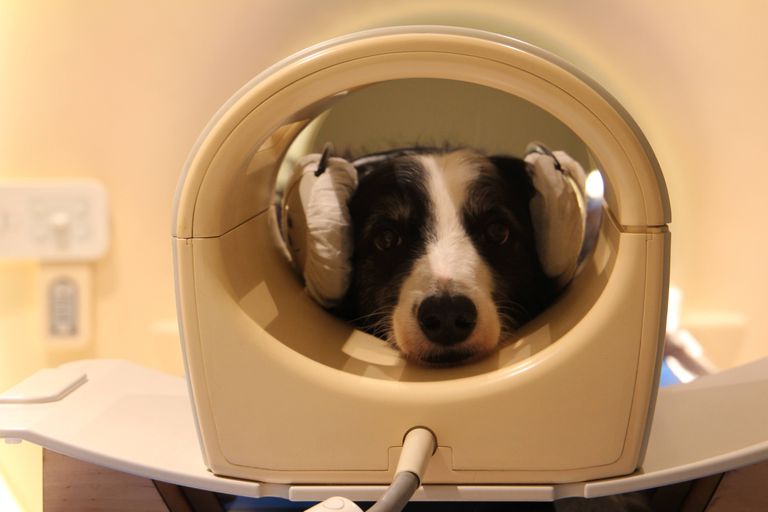
We all know that dogs can sense our emotions, whether happy, sad or angry, but now researchers have found that they can also tell when you’re lying, and will stop following the cues of someone they deem untrustworthy.
Researchers led by Akiko Takaoka from Kyoto University in Japan figured this out by using the old ‘point and fetch’ trick – a human points at the location of something, like a ball, a stick, or some food, and the dog runs off to find it. They wanted to figure out if dogs were just blindly following these cues, or if they were adjusting their behaviour based on how reliable they perceived the person giving the cues to be. And if they didn’t perceive this person as being reliable, how quickly would they learn to mistrust and disobey the humans who pointed in the wrong direction?
Working with 34 dogs, the team went through three rounds of pointing. The first round involved truthfully pointing out to the dogs where their treats and toys were hidden in a container. In the second round, after showing the dogs what’s in the container, they pointed out the location again, but this time, it was a trick – the container was empty. In the third round, the team pointed to the location of the box, which was filled with treats again.
They found that the dogs were following the age-old adage, “Fool me once, shame on you, fool me twice, shame on me,” because by round three, many of them were done believing the actions of the pointing volunteers.
A second experiment was performed in exactly the same way as the first one, except the person was replaced by an entirely new one. The dogs happily started the process all over again, and were fully open to trusting their new ‘friend’. “That suggests, says Takaoka, that the dogs could use their experience of the experimenter to assess whether they were a reliable guide,” Melissa Hogenboom writes for BBC News. “After these rounds, a new experimenter replicated the first round. Once again, the dogs followed this new person with interest.”
What’s going on here, the researchers report in the journal Animal Cognition, is that the dogs were ‘devaluing’ the reliability of the human when they experienced their lies. “Dogs have more sophisticated social intelligence than we thought,” Takaoka told Hogenboom. “This social intelligence evolved selectively in their long life history with humans.”
The experiment reaffirms what we know about the nature of dogs – they love routine, but they also love new things. In round one, they learnt how the activity goes: the human points, I sniff out something great. But in round two, the rules changed and the dogs became stressed out. But when round three came along, the human who broke the rules was replaced by a different human, and the dogs were happy to trust this one because of their love of trying new things.
“Dogs are very sensitive to human behaviour but they have fewer preconceptions,” Bradshaw told the BBC. “They live in the present, they don’t reflect back on the past in an abstract way, or plan for the future.” And they certainly don’t approach a situation by “thinking deeply about what that entails”, he said.
Something to think about when you consider inflicting the ‘fake tennis ball’ game on your dog. It might work a few times for hilarious effect, because your dog trusts you way more than the dogs in the experiment trusted the strangers they just met, but how long will it last?
It also explains why dogs are so unsure about magicians:
ooOOoo
So to all the dogs in the world I say this: “Keep on trusting us humans!” And to the millions of dog owners in the world, I say this: “Never lie, especially to a dog!”
Time and time again stories surface about the very special bond between humans and dogs.
I would like to say that this is very unusual but it isn’t. Maybe Lorenzo did something for his dog that many would not but that is not to say that Lorenzo’s love for Myles is unique or even close to unique. There is something very special about the bond between us humans and our dogs. We all have mystical moments with our dogs!
Have a read of this story recently published by The Dodo.
ooOOoo
Guy Buys A Cabin In The Woods As A Retirement Home For His Dog
Lorenzo met his dog, Myles, 13 years ago completely by accident, and that’s how he knows they were meant to be together. A local shelter used to take their dogs to the park on Fridays, and Lorenzo would always watch from afar, his heart breaking knowing that none of the dogs had loving homes. One afternoon, though, Lorenzo locked eyes with one of the dogs — and he knew he had to take him home.
“I saw him and he saw me, and his ears went straight up,” Lorenzo (who asked that his last name not be included) told The Dodo. “I knew he chose me!”
Lorenzo
Ever since then, Lorenzo and Myles have been best friends. They love doing everything together, from hiking and swimming to napping together and playing with toys. Myles has always been such a happy dog and just loves being able to enjoy life with his dad by his side.
Lorenzo
As Myles has gotten older, it’s become a lot harder for him to get around. Slowly, the diagnoses started to come in. Cataracts, arthritis, heart failure. Through it all, though, Myles was still enjoying life, just at a much slower pace. Lorenzo wanted to make Myles’ life as easy and comfortable as possible — so he decided to find the perfect “retirement home.”
Lorenzo
“I had always told him I would give him land and retire him to the woods,” Lorenzo said. “I always figured by my mid-30s, I would have left the city. The pandemic really showed me what I value and that both he and I need to move towards a simpler life.”
Lorenzo
Lorenzo found and bought the perfect cabin in the woods, named it “Camp Myles” and set about renovating it to make it into the perfect home for him, Myles and his two cats, Tofu and Mama. Now the whole little family is all settled in, and so far, everyone is absolutely loving cabin life — especially Myles.
“I think [his favorite part is] both being lazy on the deck or porch and relaxing in nature, as well as roaming the property and going on walks,” Lorenzo said. “So much to smell, no cars, no sirens — it’s perfect for both of us!”
Lorenzo
Since moving, Myles has been responding incredibly well to his meds, new foods and all the fresh air that cabin life provides. He’s been there for his dad for 13 years now, and Lorenzo has vowed that in return, he’ll be with him until the very end.
“We are both so happy,” Lorenzo said.
oooOOoo
It is a beautiful tale and many of us know what Lorenzo is feeling. Indeed what Myles is also feeling albeit in the special way that dogs feel.
Please, let me use the power of the internet to spread the word!
On the face of it this has nothing to do with dogs. Or does it? Because the stream and the forest will most certainly be favourite walks for people and their dogs. (Indeed a very quick search online brought up the following picture🙂
Why Your Dog Will Love A Trip To Klamath As Much As You Do.
So this post is to drum up support for this critically important area. Please also sign the petition. Thank you.
ooOOoo
Protect Pipe Fork
Pipe Fork is a compelling example of lush, mature riparian forest in the Klamath-Siskyou Bioregion of Southern Oregon. Pipe Fork Creek originates from pure-water springs nestled in ancient forest on the east flank of Grayback Mountain, and flows cold and clear and abundantly year-round through a narrow canyon wilderness into the Williams Valley. There it provides generously for farms and homes as well as for rich spawning and nursery grounds vital to chinook and coho salmon.
Designated a Research Natural Area (RNA) of Critical Environmental Concern by the Bureau of Land Management, the upper reaches of Pipe Fork have also been nominated for designation as a Federal Wild and Scenic River. Rare Pacific fishers and martens, spotted owls, elk, bear, and many other animals, as well as numerous species of rare plants, live in the undisturbed forests of the RNA.
Josephine County has had plans to sell a 320-acre parcel right next to the BLM RNA that encompasses both sides of Pipe Fork, and to clearcut 114 acres on the north side of the creek. The devastation that would result from clearcutting on the steep slopes above Pipe Fork would do lasting damage to the sensitive riparian forest and would greatly diminish the quality and quantity of water that flows into the Williams Valley.
But we will not let this happen! We are determined and optimistic that by all of us working together, this precious place will be saved for the benefit of present and future generations.
Williams Community Forest Project invites you to watch our brand new 7-minute film showcasing the wonders of Pipe Fork and our efforts to preserve it, and to sign the petition at the bottom of the page. Please share this page with like-minded friends and family, allies and colleagues!
Did you just adopt a new dog and now you’re super excited to introduce her to all the awesome people and animals in your life?
While you might want to bring her everywhere you go right away, it’s also important to take the right steps inorder to set her up for success — especially when it comes to dog training and socialization skills.
To understand how to socialize your dog, The Dodo reached out Juliana Willems, head trainer at JW Dog Training in Washington, D.C., for some insight.
What does it mean to socialize a dog?
Socialization is the process of helping a dog enjoy and feel comfortable with people, other animals, places, novel objects and environments.
It means bringing your dog out into the world and introducing her to various kinds of people and situations — which helps to make sure she learns how to be a happy, friendly pup (with manners!), and can reduce fear in unknown situations.
It also helps to give your dog the skills she needs to learn about boundaries — meaning she’s not running around and bulldozing other dogs who clearly just want to sleep whenever she’s around them.
What’s the best age to socialize a dog?
According to Willems, the best age to socialize your dog is when she’s a puppy — because there’s a critical socialization window in a dog’s life between 3 and 16 weeks.
“This is the age where puppies are like sponges, soaking up information and using the experiences during this time to determine how they feel about the world later in life,” Willems said.
Experiences — or a lack of experiences — during this critical socialization window can have a direct impact on a dog’s behavior as an adult.
So what happens if you adopt an older dog outside of the socialization window?
Unless you adopt a puppy who’s 4 months old or younger, Willems said that the dog you’re bringing home is well outside the critical socialization period.
“What this means is you won’t be able to undo what did or didn’t happen during that window when they were a puppy,” Willems said. “That being said, a goal with newly adopted rescue dogs is always to introduce them to new people, animals, places and activities in a positive way.”
Of course, there’s a good chance your pup was already socialized, especially if she was living happily with a foster family before she went up for adoption. But no matter what stage she’s in socially, it doesn’t hurt to be aware of what to look out for.
As with puppies, being exposed to people, animals and places isn’t enough if you’re hoping to get your pup to truly love and be comfortable with these experiences. You should be paying attention to how she’s reacting to these situations as well.
According to Willems, simple exposure without looking at if your dog is having fun, feeling comfortable and enjoying herself leaves the door open for a negative experience.
That means it’s important you don’t overwhelm your dog by going to too many new places — or meeting too many new people — when she first comes home.
How to socialize your dog
According to Willems, the best way to socialize a new rescue dog is to go at her pace, use treats and always pay attention to body language.
“When you let your new rescue dog approach situations at their pace — allowing them to approach or retreat when they need to — you’re giving them choice in the interaction and you’re decreasing the chances that your dog will feel overwhelmed and scared,” Willems said.
And make sure you have some of your dog’s favorite treats ready to go during the process!
If you give your dog high-value treats when she meets new people or new animals or goes somewhere new, you’re increasing the chances that she ends up really liking those experiences. Why? Because she’s learning that new people, animals or places equal tasty treats!
While you’re keeping her happy with yummy treats, make sure you’re also paying attention to how she might be feeling in this new situation — and always give her the opportunity to take a breather if she needs one.
She should always have the option to leave a new situation if she’s uncomfortable — especially when it comes to meeting new people and dogs.
How can you tell if your dog’s uncomfortable?
According to Willems, your best bet is to look at your pup’s body language — and it’s helpful to be able to understand what certain signals mean.
Obvious ones include:
A tucked tail
Trying to move away
Avoiding interactions
Growling or barking
More subtle stress signals include:
Lip licking
Yawning
Ears back
Stiffening
If your dog exhibits stress signals like these, it’s important you advocate for her and move her out of the situation.
What should you do if your dog’s uncomfortable?
If you find yourself in a situation that’s making your dog uncomfortable, you’ll want to get her some relief by moving away — and you can also try adding something your dog loves to the equation.
“The most effective tool here is high-value treats — something squishy and stinky that your dog really enjoys,” Willems suggested.
Keep in mind, though, that you won’t want to give your pup a high-value treat or toy around a dog she isn’t comfortable with, to avoid sparking any possessive aggression.
Take your time — and socialize her slowly
It’s definitely worth it to put in the work with your new dog to help her get comfortable with her new life — but make sure to resist the urge to take her to tons of new places or introduce her to a bunch of new people or animals right away.
“Aggressive behaviors are rooted in fear, so all the more reason to be very intentional, patient and positive in your socialization practice to help your dog learn their world with you is not a scary place!” Willems said.
Your new dog has been through so many changes — so let her decompress and get acclimated to her new home, routine and family.
All those couch snuggles will be worth it.
ooOOoo
I don’t know about you but I found this article very useful and very informative. Now many books have been written on the subject and the odd blogpost or twenty.
But I hope that some readers found it informative. It would be lovely to hear from you if you are one of those people.
As can happen from time to time, I was contacted by Ray Dunthorne in England. He very kindly said that he had been following Learning from Dogs for a while and also was aware of my previous interest in flying.
So I emailed Ray saying that I would love to publish his account as a guest post and lo and behold in came the following story.
ooOOoo
The Story of Lulu
Ah hello again, I’ll try ever so hard not to give you my full life story, but just stuff you might find interesting and relevant, but can’t promise to get the balance right!
Willows Activity Farm St Albans
My adult dog journey began with Lulu, 15 years ago, but the seed was sown some 5 years earlier at a city farm. We’d gone with the then middle-born five-year-old for his birthday party. The shepherd who did herding demonstrations was over from New Zealand and had two dogs who’d just had a litter of puppies, which we were shown. We’d never heard of the New Zealand Huntaway, it was described as a combination of German Shepherd, Border Collie and Labrador, with a few other breeds thrown in for good measure.
They’d been consistently bred in, yes, you guessed it, New Zealand for over 100 years, specifically to help move large herds of sheep or cattle over long distances. The agile New Zealand Huntaway became known for its ability to move across packed, penned herds by leaping from the back of one sheep to another. Its loud LOUD bark was also required, as if not busy barking to get cattle or sheep moving, the Huntaway would be sent after a sheep or lamb that had strayed out of sight, hold it down (I don’t know how) and BARK so the shepherd could locate the unruly pair.
Little thought was given to the New Zealand Huntaway for a few years, when – on the other side of divorce – my then ex-wife and I decided to get a dog to raise collaboratively, to keep the disparate family united in some way. Divorce-wise, it wasn’t so amicable initially, as these things usually aren’t, but soon settled down with the three growing boys being the priority.
Lime End Farm, Sussex
Of course we couldn’t agree on the type of dog. I’d always wanted a German Shepherd, madame a Border Collie and a Labrador was a popular choice with Stanley, Arthur and Sidney (the aforementioned three boys). I bet you can tell where this is going. Yes, I remembered the New Zealand Huntaway. In 2006, it was a lot harder to find a litter in the UK than it is now, but I did. Down on a farm in Sussex. Lulu’s mum and dad were also over from New Zealand with a shepherd, this one herding cattle at Lime End Dairy Farm.
Lime End is in Herstmonceux, East Sussex, which is as Olde English countryside as it sounds, with a castle and an annual Medieval festival to complete the picture.
As soon as we arrived in the classic farm yard, all the puppies bumbled out to say hello, emerging three at a time from under an old caravan where they’d been sheltering from the sun. Their dad, Lord Toro was tied to a nearby barn, doing some general barking ‘he’s frightened of the puppies’ the lady told us. The nine puppies all toppled about us for a few minutes, then all rushed off to find dinner. All except one.
Eight week old Lulu came back with me, Sidney and Helen, my new girlfriend at the time, who I’d charmingly had to borrow the £300 needed to secure Lulu from. It was a four or five hour round trip for the three of us, four including Lulu. A bonding opportunity all round.
I always remember that – to add to the idyllic Sussex farm scene, as if it wasn’t enough like a scene from a film Hugh Grant drives a Mini in – just as we were leaving, an old barn door got pushed open from the inside and a litter of Border Collie puppies and their mum and dad ran out, to say hello to the remaining Huntaways and good bye to us.
Best Laid Plans
The wisdom of bringing that hard-working herding dog into two separate St Albans houses didn’t cross my mind. It probably should have, especially as my ‘house’ was a rented Maisonette, no dogs aloud. The theory was Lulu would be at the children’s house in the week, mine along with the children at the weekends. It didn’t turn out like that.
After a few months both me and my ex-wife got short contracts that meant heading off to work in an office for the day. Far from ideal, but no money at that point meant no choice. At least it was only temporary. Lulu would have been about six months old by then and absolutely should not have been left alone FOR A SECOND.
The office was just 15 minutes away (PC World, Maylands, Hemel Hempstead). I did manage to pop back at lunchtime most days and a child would pop round a few hours later after school. New Zealand Huntaways are like any puppy only more so. They need a lot of exercise and mental stimulation, or else you will pay.
A novice dog guardian then, I learned everything the hard way. Before her first birthday, Lulu had removed the floor covering in the kitchen and the lounge. She’d moved a large old cathode ray TV across the room, knocked bookshelves over and generally done over £1,000 of damage. I know it was that much because I got a bill from the landlord. I paid.
What dogs do
I will cut to the end here. That was in the first year of Lulu’s life.
The contract I mentioned was my first proper BIG company for the digital stuff I was doing, without it I wouldn’t have been able to have the career I’ve had, which started late as I accidentally tried to be a musician for ten years. Not too successfully. That doesn’t matter though.
The 14 years has gone by and even Sidney, who was about five years old when he came with us to East Sussex to meet Lulu, has gone off to university, the older two long-since moved away, to Nottingham and London respectively, leaving me, Lulu and my Helen, that new girlfriend who’d come to Sussex with us on that early date, who moved in a year or so later and is still here.
What Lulu did was tie us all together. Yes, she was a nightmare initially. Yes, she would run away, out of sight chasing imaginary deer, for 30 or 40 minutes at a time. Yes, she’d bark at everything, constantly herding the children when they were small, stopping them from fighting among each other as they got bigger, becoming more and more generally in control and charming with each year. Almost without us noticing. All of a sudden, she was one of us. Not a pet, not a ‘furry friend’, not even a dog really.
She could sense when someone was ill or in distress and would attend accordingly. She loved small children and even when in a fierce mood, if a small child the same size as her approached, she would sit down and raise her head waiting for a pair of tiny arms to be thrown around her. It had all just got normal for us. Pretty much every time when we were out with her, she’d do something that would further add to our respect for her understanding of what’s going on. She WAS one of us.
Lulu loved an air show, going to several with us over the years. Here she is at Eastbourne air show, enjoying the Lancaster Bomber and a Spitfire from the Battle of Britain Memorial Flight.
Now it’s all gone
It’s only when Lulu was finally gone I noticed everything else that’s passed too. All that time, pretty much my entire career, moving from acrimoniously divorced to getting along just fine and concentrating on giving the three boys as good a start as we could manage. The three boys no longer the children they were when Lulu was working out her role in the family, now all long-since scarpered and working harder than I ever have.
My career is pretty much done too. I’m finding it harder to get new contracts or jobs in digital. ‘What are you doing working in digital? I thought that was a young man’s game’ one marketing director interviewing me for a dull digital role I didn’t want tactfully said, almost ten years ago too. I won’t say where, for reasons of professional discretion (David Lloyd Leisure, Hatfield, Monday 4th March 2013)
When I was working from home and madame, who I now call Mrs Tagmaster, was coming home from London, me and Lulu would go and pick her up. I trained Lulu to sit in the middle of the station and wait for Mrs Tagmaster for as long as 10 minutes, which meant several packed commuter trains unloaded past her. I’d hide out of sight, watching to see how many pats on the head she got. Usually several.
Lulu’s Legacy is Ten Year Tags
Phew, we’re getting up to date at last. Lulu lost dog name tags like it was something she was born to do. Sometimes in a few months, sometimes in a few days. We got through dozens. I’m a bit slow on the uptake, it took me a while to work out the dog name tags on the market just might not be up to the job.
It took about a year of fact-finding, market assessment and trying to work out how to make a better dog name tag before I was ready to start planning the equipment we needed. Having wasted months liaising with companies in China to get the tags made in volume, I gave up on that idea to both keep our carbon footprint down AND have more control over any supply chain and not have to worry about any one critical supplier.
With over 9 million dogs in the UK alone, there’s a good sized market. Research quickly revealed this ubiquitous, low price point product has largely been ignored, especially digitally. Consequently many competitors are getting away with minimal product quality and poor customer experience (I’ll come back to this). This surprised me, as not many products pretty much anyone can manufacture are actuallyrequired by law in the UK courtesy of a stupidly out of date Dog Tag Law.
I pretty much, at least subliminally, thank Lulu for every tag I press out and when it’s a busy day that started at 6 am and is only drawing to a close with a 6pm trip to the sorting office with a sack of 50 or more orders, I’m ever so grateful to Lulu, as without her showing us the flaws in all those substandard products over the years, patiently waiting until Raymond here got the hint, we probably wouldn’t be coping at all right now. Lulu is still looking after us.
ooOOoo
Thank you, Ray.
This is such a delightful story. So much so that I am going to post another story for Saturday. Namely, a short article, broadly written by Ray, and featuring the Spitfire.
Ray’s company Ten Year Tags is linked to Ray’s website.
I was looking for something to share with you and went back through my file. By way of explanation, I put into a separate email file anything that is great for Learning from Dogs.
I found this from some time ago and thought it wonderful.