Category: Innovation

Dogs can sniff out these medical conditions.

Thank you Mother Nature Network

Our dogs are tremendous!

And a particular credit must go to the dog’s nose. It is many more times more sensitive than our nose, as the following article taken from Mother Nature Network shows. (And I really must stop republishing articles from MNN!)

ooOOoo

6 medical conditions that dogs can sniff out

From cancer to migraines and even seizures, dogs can give us a heads up about a range of human diseases.

Jaymi HeimbuchJAYMI HEIMBUCH   April 10, 2019.

Dogs have millions of smell receptors that can detect countless smells, including the smells of changes going on inside our bodies. (Photo: RedTC/Shutterstock)

Dogs are famous for their sense of smell. With about 220 million scent receptors (compared to our 5 million), dogs can smell things that seem unfathomable to us. They can detect some odors in parts per trillion, and they can detect countless subtleties in scents.

As PBS points out, “Experts have reported incredible true stories about the acuteness of dogs’ sense of smell. There’s the drug-sniffing dog that ‘found’ a plastic container packed with 35 pounds of marijuana submerged in gasoline within a gas tank. There’s the black lab stray from the streets of Seattle that can detect floating orca scat from up to a mile away across the choppy waters of Puget Sound.”
And yes, there are the dogs who have sniffed out medical issues that even doctors weren’t aware of. Dogs can pick up on tiny changes in the human body, from a tiny shift in our hormones to the release of volatile organic compounds, or VOCs, released by cancer cells. Researchers and dog trainers are just beginning to understand how dogs do this and how we might put them to work in being our helpers in health care. Here are six medical conditions that dogs are able to smell.
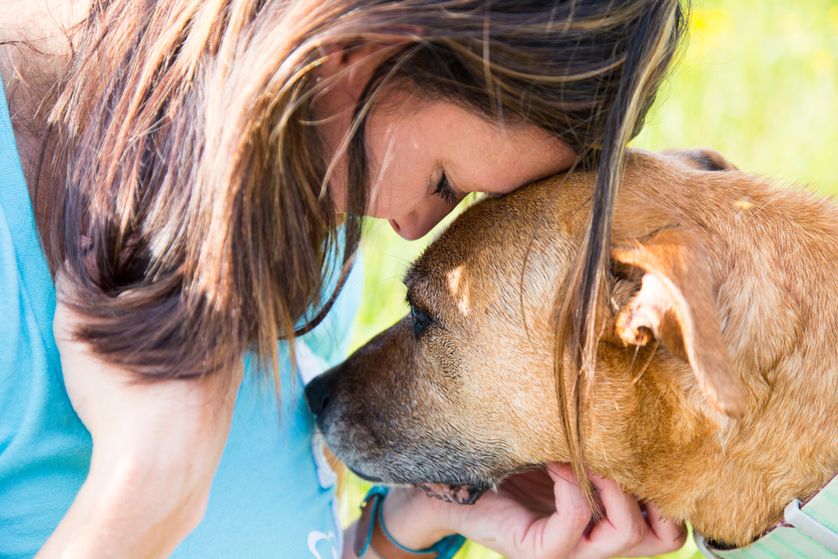
Dog are naturally tuned into their owner’s emotions, but what about signs of ill health? (Photo: sherwood/Shutterstock)

Cancer

Perhaps the condition dogs are currently most famous for detecting is cancer. Dogs have been able to sniff out a variety of types including skin cancer, breast cancer and bladder cancer.

There are quite a few stories of a pet dog obsessing about an owner’s mole or some part of their body, only to discover in a doctor’s appointment that the dog was actually sensing cancer. For example, Canada Free Press writes of a 1989 instance when a woman’s “dog kept sniffing at a mole on her thigh, but ignored other moles. In fact, the dog had actually tried to bite off the mole when she was wearing shorts. The woman consulted her doctor, the mole was excised and the diagnosis confirmed a malignant melanoma.”

In the last couple decades, researchers have looked seriously into dogs’ sniffing abilities when it comes to cancers. In studies, dogs have successfully been trained to detect the disease using samples from known cancer patients and people without cancer.

The newest study offers the most startling statistics: Dogs can correctly pick out blood samples from people who have cancer with 97% accuracy, a 2019 study published in Experimental Biology found. Heather Junqueira, the lead researcher at BioScentDx who performed the study, used clicker training with four beagles. The dogs focused their efforts on blood samples from patients with lung cancer, and with one exception, they were highly successful. The sample was small, so BioScentDx plans to continue its work, according to Science Daily.

In a 2006 study, five dogs were trained to detect cancer based on breath samples. Once trained, the dogs were able to detect breast cancer with 88 percent accuracy, and lung cancer with 99 percent accuracy. They could do this across all four stages of the diseases.

Sometimes the dogs can do an even better job than the humans in these studies. According to Penn State News, Nancy Dreschel, a veterinarian in Dairy and Animal Science at Penn State University, tells of an illuminating example: “A scientist was training dogs to detect bladder cancer in humans by smelling their urine. She said a dog alerted them to a sample from a supposedly healthy person who was being used as a control. On reexamination that person was found to have bladder cancer, so the dog caught it before anyone else did.”

Study after study has shown that dogs can detect cancer in people, but it may a while before your doctor employs a hound for your annual checkup. Researchers still don’t know exactly what chemical compounds for different types of cancers the dogs are sensing in these samples to alert to the presence of the disease, and this remains a hurdle both for better training of cancer-sniffing dogs and for creating machines that can more accurately detect cancer in the early stages.

Narcolepsy

Narcolepsy is a brain disorder that affects the ability to control sleep-wake cycles. This can mean a person suddenly falls asleep, even in the middle of a task. It’s a dangerous condition, as someone who has an attack could be injured falling to the ground or could have a car accident if it happens while driving.

Mary McNeight, Service Dog Academy director of training and behavior, has been working with narcolepsy service dogs since 2010, and she notes that there’s a scent the dogs pick up on when an attack is coming on. “It’s a biochemical change in the body. We do not know what the particular odor smells like due to the difference between human scent perception and dog scent perception,” she tells Sleep Review.

In a study published in 2013, Luis Dominguez-Ortega, M.D., Ph.D., found that two trained dogs detected 11 of 12 narcolepsy patients using sweat samples, demonstrating that dogs can detect a distinct scent for the disorder.

Service dogs help people with narcolepsy by performing several different types of tasks. They can stand over the person’s lap when an attack comes on, which prevents them from sliding out of a chair onto the floor; they can also stand over the person to protect them if they are out in public, or they can go get help. And most importantly, they can provide a warning up to 5 minutes before an attack comes on, giving their handler a chance to get to a safe place or a safe position.

While large dogs can be helpful in giving a narcoleptic sufferer extra support in balance and mobility after an attack, these dogs don’t have to be big. According to Petful, even medium-sized dogs can do the job. “Theo, a 2-year-old cocker spaniel, has virtually put an end to [Kelly] Sears’ suffering. He can sense when she is about to have a narcoleptic episode and warn her so that she can sit or lie down, waking her after a few seconds with a kiss on her chin. Since arriving two months ago from Medical Detection Dogs, the only organization in Europe that trains narcolepsy service dogs, Theo has proven himself indispensable.”

Dogs can smell all sorts of chemical changes in our bodies, including a drop in blood sugar or the onset of a migraine. (Photo: WilleeCole Photography/Shutterstock)

Migraines

For those who suffer migraines, having a warning before one comes on can mean the difference between managing the problem or succumbing to hours or days of intense pain. Fortunately, some dogs have a talent for sniffing out the signs that a migraine is on the way.

Psychology Today reports on a recent study that asked migraine sufferers with dogs if they noticed a change in their dogs’ behavior before or during a migraine. The results show that “54 percent of the 1027 participants indicated they had noticed changes in the behavior of their pets during or preceding migraines. Nearly 60 percent of these subjects indicated that their dog had alerted them to the onset of a headache — usually an hour or two in advance.” The results are fascinating, though it’s important to point out that the study was conducted with self-reports rather than observation by researchers. Even so, the study shows evidence that many dogs seem to detect and point out a change in their human companion’s health.

According to Kendall Winship, a migraine sufferer with a service dog, “These [migraine alert service] dogs are highly valued because the ability to tell when a migraine is approaching is an innate talent; it can’t be taught. Similar to diabetic alert dogs that can smell when their handler has low blood sugar, migraine alert dogs can hone in on the scent of serotonin, a chemical that skyrockets when the body is about to have a migraine. By alerting to the danger long before their handlers might feel any symptoms, these dogs can warn them to take preventative medication. When Rally looks up at me and whines, I know I have about two hours before the migraine will strike, and if I can take my medication early enough, I might be able to avoid the stroke-like symptoms and incapacitating pain.”

Low blood sugar

Increasingly, dogs are helping diabetics know when their blood sugar level is dropping or spiking. Dogs4Diabetics is one organization that trains and places service dogs with insulin-dependent diabetics. These dogs undergo extensive training to be able to detect and alert their handlers to changes in blood sugar levels.

A 2016 study published in the journal Diabetes Care found that the dogs detect isoprene, a common natural chemical found in human breath that rises significantly during episode of low blood sugar. People can’t detect the chemical, but the researchers believe that the dogs are particularly sensitive to it and can tell when their owner’s breath has high levels of it.

Medical News Today reports that dogs are trained to discriminate between the scent from a previous episode and the scent of a current episode. They detect when their handler is having an issue and alert the person, giving them time to test their blood sugar and take the insulin they need.

A 2013 study published in PLOS One showed that having a diabetic alert dog seems to provide significant improvements in both the safety and quality of life of insulin-dependent diabetics. “Since obtaining their dog, all 17 clients studied reported positive effects including reduced paramedic call outs, decreased unconscious episodes and improved independence.”

There’s still some skepticism about whether or not dogs can accurately alert handlers to a blood sugar change at a level beyond chance, something that can be determined with more studies. Even so, for those diabetics living with alert dogs, the sniffing ability of their companions seems to be a big help.

Seizure

One of the more controversial areas where dogs are used to alert to a medical condition is with seizures. There is growing evidence that dogs can and do detect the onset of a seizure; however, the level of accuracy and, most importantly, our ability to train dogs to alert a handler to an oncoming seizure remains a bit questionable.

As is the case with some other conditions, dogs cannot be trained to predict seizures. We don’t have a way to provide them with a scent or information that can be used for training. We can, however, train dogs how to respond to and assist a handler when a seizure occurs. Some service dogs that are placed with seizure patients do develop the ability to detect when a seizure is coming and can provide an alert if the handler pays close attention to the signals the dog provides. WebMD reports, “Jennifer Arnold, founder of Canine Assistants in Georgia, … says about nine out of 10 of the service dogs her organization has placed develop the ability on their own within a year of placement.”

A small 2019 study found that dogs were able to clearly discriminate a general epileptic “seizure odor.” However the study only involved a handful of dogs and involved odor samples that were collected during a seizure. Researchers pointed out that much more extensive testing would need to be done to see if other dogs would respond similarly and if dogs could predict seizures before they happened.

However, there is some question about how dogs are responding. How Stuff Workspoints out that in 2007, “two small studies in the journal Neurology reported that four out of seven seizure alert dogs studied turned out to be warning their masters of psychological, rather than epileptic seizures. This may not seem like a big deal, but the two disorders are different. A 2006 study revealed that up to 30 percent of patients who suffer from psychogenic nonepileptic seizures (PNES) are misdiagnosed with epilepsy. PNES, which results from emotional difficulties and can often be successfully treated with counseling, rather than unnecessary and harsh epilepsy drugs. The 2007 study also revealed one instance of seizures being triggered by the patient’s dog’s warning behaviors, indicating another flaw in the reliability of canine seizure prediction.”

A 2003 study concluded that “findings suggest some dogs have innate ability to alert and/or respond to seizures” however, it notes that further research is needed to uncover which seizure patients would benefit from the help of a dog. We also need more research to learn how to train dogs to be as effective as possible. We have to first learn how dogs know when a seizure is coming — are they smelling a change in body chemistry, or are they picking up on behavior changes? — before we can reliably train them to alert handlers before a seizure happens.
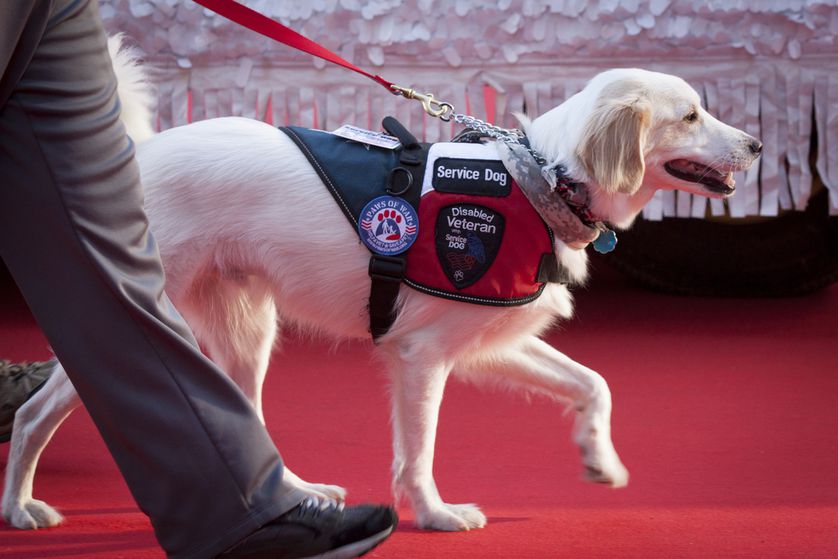
Dogs can smell fear and stress, and they can use that ability to help people with issues such as PTSD. (Photo: Glynnis Jones/Shutterstock)

Fear and stress

The age-old notion that dogs can smell fear is an accurate one. Dogs can smell when we are feeling fear or are experiencing an increased level of stress, even if we aren’t showing outward signs. What dogs are smelling is the surge of hormones our bodies release to respond to stressful situations, including adrenalin and cortisol.

Thankfully, this can be used to humans’ benefit, as dogs can signal a handler that they (or someone else) needs to take a few deep breaths. Dogs that alert handlers of the change in their emotional state — a change that often people aren’t even aware they’re experiencing — can help prevent panic attacks and other possible episodes associated with post-traumatic stress disorder or other issues.

Cali is one such dog. DogTime writes:

“This 18-month Rhodesian ridgeback is the first cortisol-sniffing dog on staff at a school. Cortisol is known as the ‘stress hormone,’ and people on the autism spectrum tend to have higher levels of cortisol in their blood. Cali is employed to detect rising cortisol levels in the students. She waits outside of school each morning as the students file by. If she notices anyone with a high level of cortisol in their blood, she will signal to her handler, Casey Butler, a health teacher on staff at The Calais School who is a certified specialist in natural canine behavior rehabilitation and in animal adaptive therapy. When Cali stares at a child, Butler knows that is the signal. She then takes that child aside and works with him or her before a meltdown occurs.”

We still have a long way to go to discover exactly what dogs are smelling about us, let alone how we can train them to be as accurate as possible about a change in our bodies. Even though many details are not yet known, it’s clear that dogs have an uncanny ability to sniff out certain medical issues, and that’s a skill that could be a real lifesaver.

Editor’s note: This story was originally published in 2016 and has been updated with new information.

Jaymi Heimbuch ( @jaymiheimbuch ) focuses on wildlife conservation and animal news from her home base in San Francisco.

ooOOoo

Where on earth would we be without these wonderful, clever dogs! Seriously, whether you love dogs or not you cannot deny that they are incredible creatures!

 

The dog’s nose!

Yet another amazing story about the dog’s nose.

There is so much about dogs in general to be amazed at.

But the nose is something to really marvel at.

There are many sources of information about how incredible is the dog’s nose. For example, I am looking at the page on The Dogington Post that speaks of the dog’s nose.

Nature has provided dogs with a nearly perfect sense of smell. If you have a dog, you probably already know that your dog will smell something long before you can. In fact, the average dog has over 300 million olfactory receptors in their noses (compared to a relatively tiny six million for humans). That means, your dog’s sense of smell is over fifty times greater than your own!

It’s a great article, by the way, and one you should read.

But for now read this:

ooOOoo

Very Good Dogs Can Detect the Scent of Seizures, Study Finds

But can they predict seizures before they occur?

(David Osberg / iStock)
smithsonian.com
April 1, 2019
Service dogs can offer vital assistance to those who suffer from epilepsy, helping to prevent injury and signal for help when a seizure episode occurs. Whether dogs can detect seizures before they happen is another, more complicated question; anecdotal reports suggests that they can, but the evidence is inconclusive, and it hasn’t been clear what signals might trigger dogs to anticipate an oncoming seziure. But as Megan Schmidt reports for Discover, a small and intriguing new study suggests that people with epilepsy emit a specific odor when they are having seizures—and dogs can be trained to detect it.
The study’s very good subjects were five service dogs from Medical Mutts in Indianapolis, trained to respond to the bodily odors of people with diabetes, anxiety and epilepsy. To test the dogs’ seizure-detecting abilities, researchers recruited five patients with different types of epilepsy to collect sweat samples at various intervals: either during or right after a seizure, after moderate exercise and at random points in the day during calm activity. Seven samples from each patient were then placed in opaque cans, which the dogs were given a chance to sniff. Each dog underwent nine trials in total: five of those trials were repeat tests with the odor of one patient, and the rest were conducted with samples from the four remaining patients. The dogs had not been exposed to the patients’ scents prior to the experiment.

The results, the study authors write in Scientific Reports “were very clear: all dogs discriminated the seizure odor.” Some of the pooches had a better track record than others—the dogs correctly identified the seizure samples between 67 and 100 percent of the time—but all of their performances were “well above” the margins of chance, according to the researchers.

It’s not entirely surprising that dogs have super-powered noses when it comes to detecting human ailments. Our best animal buddies have been used to sniff out diseases like cancer and diabetes “with some success,” the researchers note. The new study, however, not only shows that dogs can smell seizures, but also offers the first known proof that different types of seizures are associated with common scents; the patients, after all, did not all have the same kind of epilepsy.

Granted, the study was small and limited in scope. It suggests that dogs can smell seizures as they happen, but the verdict is still out on whether the animals can detect seizures that are about to happen. Further research is also needed to determine precisely what bodily chemicals the dogs are smelling in the sweat of epileptic patients. But “[a]s far as implications go, the results are very exciting,” Tim Edwards, a behavioral analyst and senior lecturer at New Zealand’s University of Waikato, who was not involved in the study, tells Scientific American’s Emily Willingham. Perhaps understanding how dogs detect seizures can help pave the way for artificial intelligence technology that is able to do the same.

Additionally, the study authors maintain that their findings dispel the “belief that epilepsy and seizure types were too individual-specific for a general cue to be found.” And this, the researchers say, offers “hope” that people with epilepsy can be warned of oncoming seizures by their furry, faithful friends.

ooOOoo

Wouldn’t that be fabulous! That people with epilepsy could be warned of oncoming seizures. All as a result of a dog’s keen, very keen, sense of smell.

This is just so beautiful!

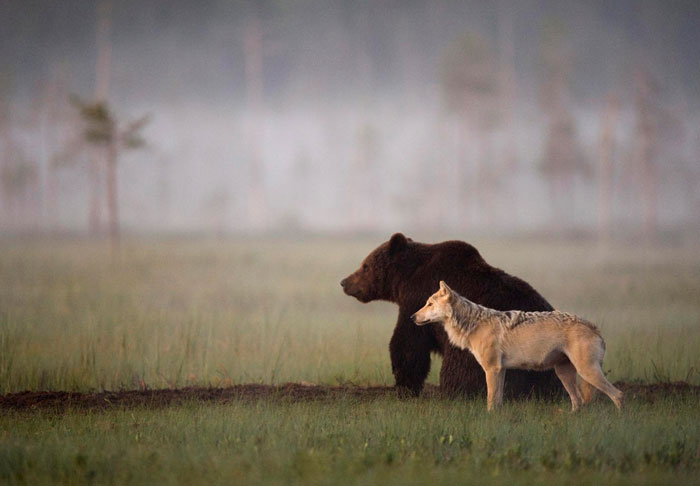
A wolf and a bear!

It’s fair to say that whilst people send me a whole range of items, as yesterday’s post demonstrated, what I am about to republish is the high-water mark for everything! Well it is for me!

But you be the judge!

ooOOoo

Unusual Friendship Between Wolf And Bear Documented By Finnish Photographer

By ​Dainius

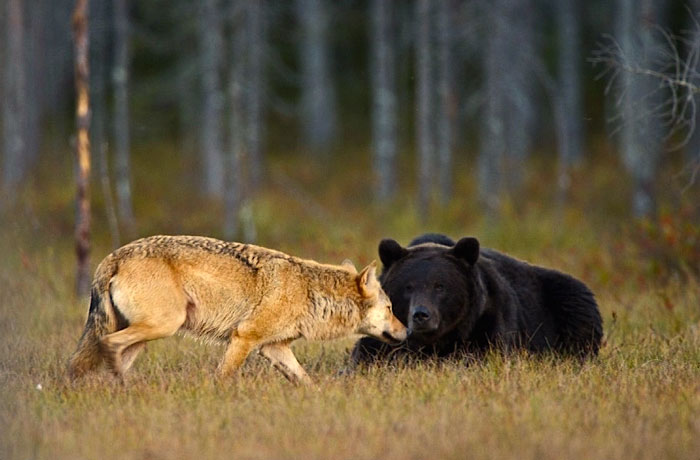
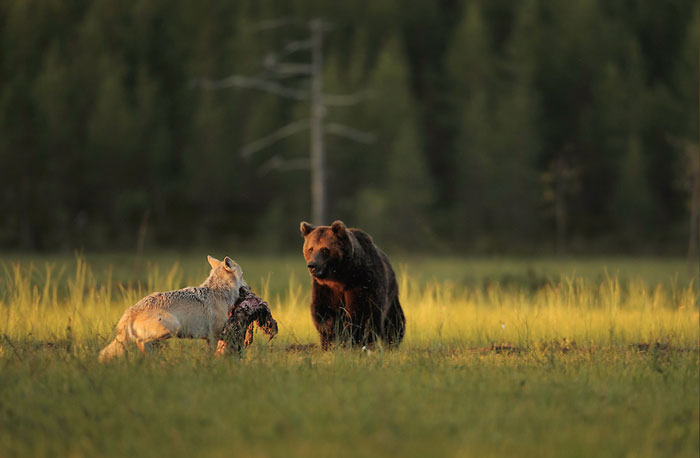
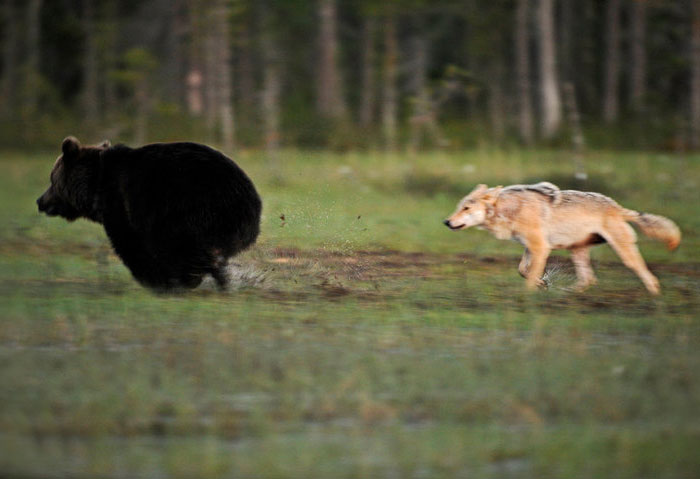
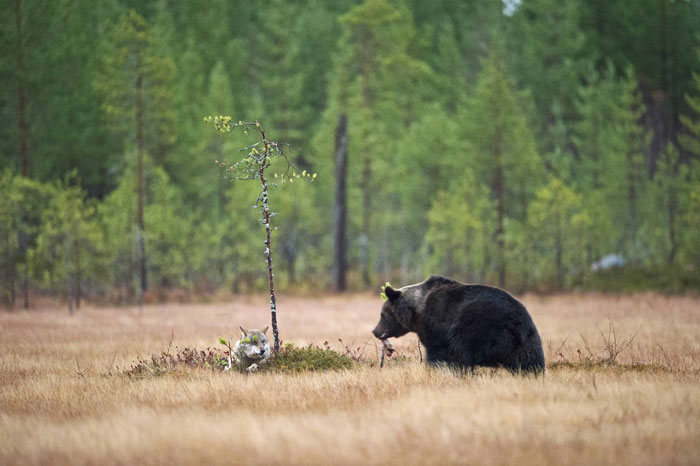
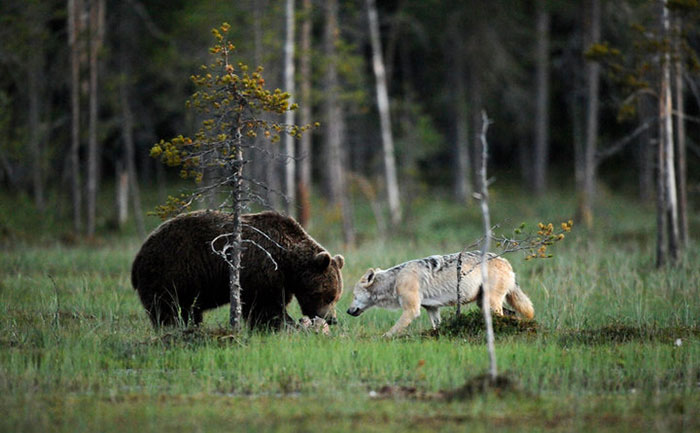
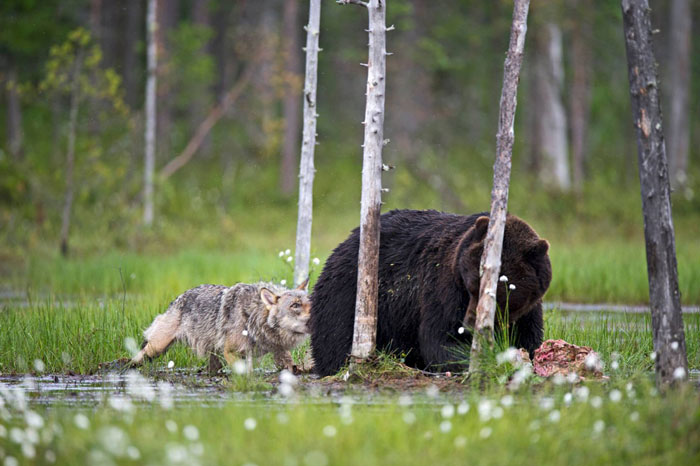
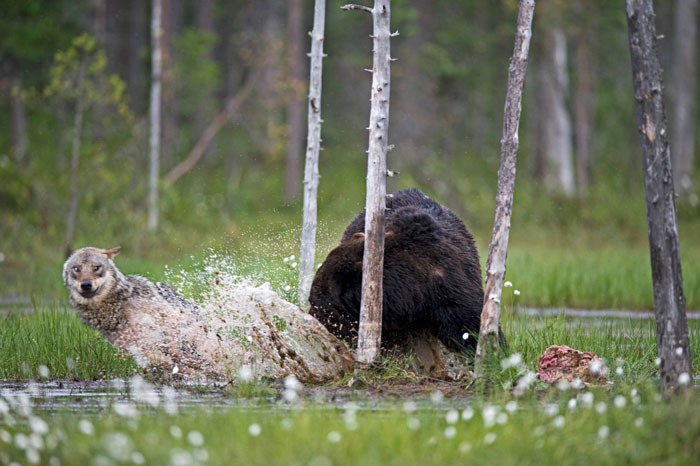
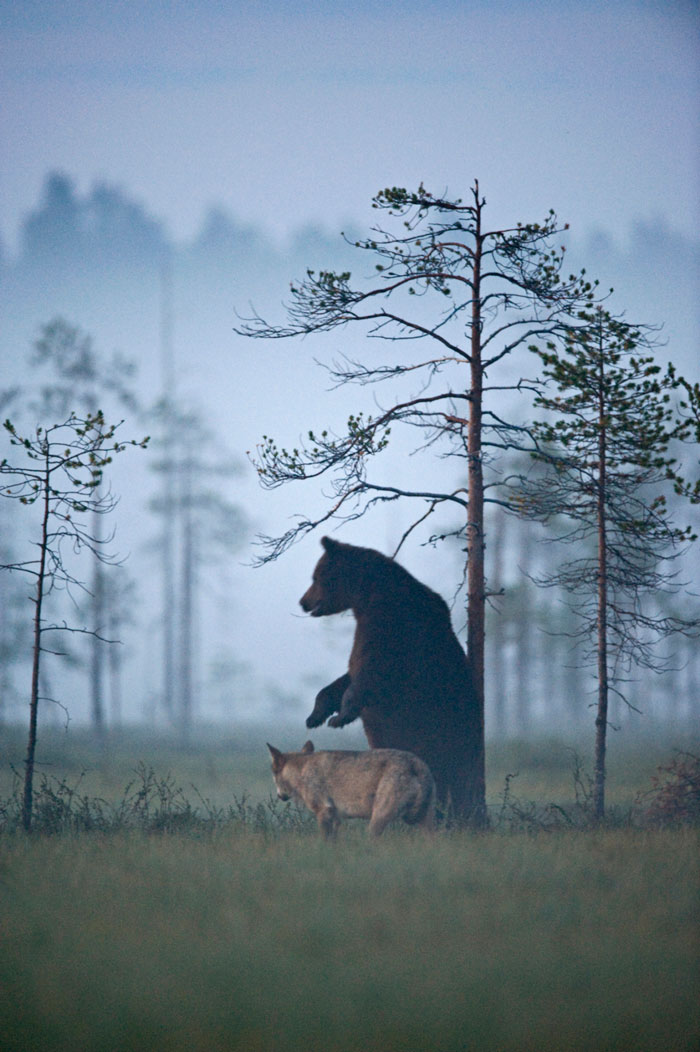
“It’s very unusual to see a bear and a wolf getting on like this” says Finnish photographer Lassi Rautiainen, 56, who took these surprising photos. The female grey wolf and male brown were spotted every night for ten days straight, spending several hours together between 8pm and 4am. They would even share food with each other.

“No-one can know exactly why or how the young wolf and bear became friends,” Lassi told the Daily Mail. “I think that perhaps they were both alone and they were young and a bit unsure of how to survive alone…It is nice to share rare events in the wild that you would never expect to see.”

“It’s very unusual to see a bear and a wolf getting on like this”

This unlikely pair was spotted by Finnish photographer Lassi Rautiainen

He photographed the female grey wolf and male brown bear every night for ten days straight

“No one had observed bears and wolves living near each other and becoming friends in Europe”

The two “friends” were even seen sharing food

“No one can know exactly why or how the young wolf and bear became friends”

“I think that perhaps they were both alone when they were young and a bit unsure of how to survive alone”

“I came across these two and knew that it made the perfect story”

oooo

“It seems to me that they feel safe being together”

ooOOoo

Taken from here but I wouldn’t have known about this beautiful story if Margaret K. hadn’t sent me the link. Thank you, Margaret!

A good news story!

We welcome with open arms this change in the law!

From the BBC.

ooOOoo

Californian law change means pet shops can sell only rescued animals

December 30th, 2018.

It is hoped the law will encourage pet adoptions.

California is set to become the first state in the US to ban the sale of non-rescue animals in pet shops.

The new law, known as AB 485, takes effect on 1 January. Any businesses violating it face a $500 (£400) fine.

The change means cats, dogs and rabbits sold by retailers cannot be sourced from breeders, only from animal shelters.

Animal rights groups have heralded it as a step forward against so-called “kitten factories” and “puppy mills”.

They say the current “high-volume” industries, where pets are bred for profit, can lead to inhumane treatment and long-term emotional and physical health problems in some animals.

The new state-wide law, approved in late 2017, will now require shops to maintain sufficient records of where they sourced each animal, for periodic checks by authorities.

It does not, however, affect sales from private breeders or owner-to-owner sales.

Some Californian shop owners have raised concern the law could put them out of business. The measure has also seen resistance from the American Kennel Club, which said it limits pet owners.

According to American Society for the Prevention of Cruelty to Animals (ASPCA) estimates, more than 6.5 million pets enter shelters across the country every year, of which about 1.5 million are put down.

It is estimated that more than than 860,000 cats are euthanised in the US every year

The California assembly member who introduced the legislation, Patrick O’Donnell, has insisted the legislation is not just “a big win” for “four-legged friends”, but for California taxpayers too, as they spend hundreds of millions on sheltering animals across the state.

A couple hoping to adopt a cat from a San Diego shelter on Friday, told NBC News the move was a step forward for the state.

“It takes the emphasis off the profit of animals and puts the emphasis back on caring for and getting these cats and dogs a good home,” prospective owner Mitch Kentdotson said.

AB 485 is the first state-wide law of its kind, although other places have enacted similar regulations on pet sales on a local level.

Earlier this month, a similar ban on third-party puppy and kitten sales was confirmed in England.

Lucy’s law, named after a mistreated cavalier King Charles spaniel, also aims to combat low-welfare animal breeding.

ooOOoo

Slowly but surely we are recognising that these animals are more, much more, than ‘belongings‘.

The NYC Subway

A very unlikely venue for some dog art.

In my travels around for items about dogs I came across this one.  It’s not your usual item. For it features dog art at the 23rd Street station on the IND Sixth Avenue Line in Manhattan’s Chelsea neighbourhood.

ooOOoo

This NYC subway station has gone to the dogs

With more than a little help from William Wegman’s Weimaraners
By MATT HICKMAN
December 24, 2018.

William Wegman’s iconic Weimaraner portraits have been rendered into stunning mosaic art in a somewhat unlikely Manhattan venue. (Photo: Patrick J. Cashin / Metropolitan Transportation Authority/Flickr)

Dogs aren’t that unusual of a sight in the bowels of the New York City subway system.

There are service dogs and law enforcement dogs; dogs being transported in tote bags, baskets, backpacks and baby carriages; dogs swaddled beneath heavy winter jackets; very small dogs that come scurrying from the darkest corners of the platform towards … oh wait.
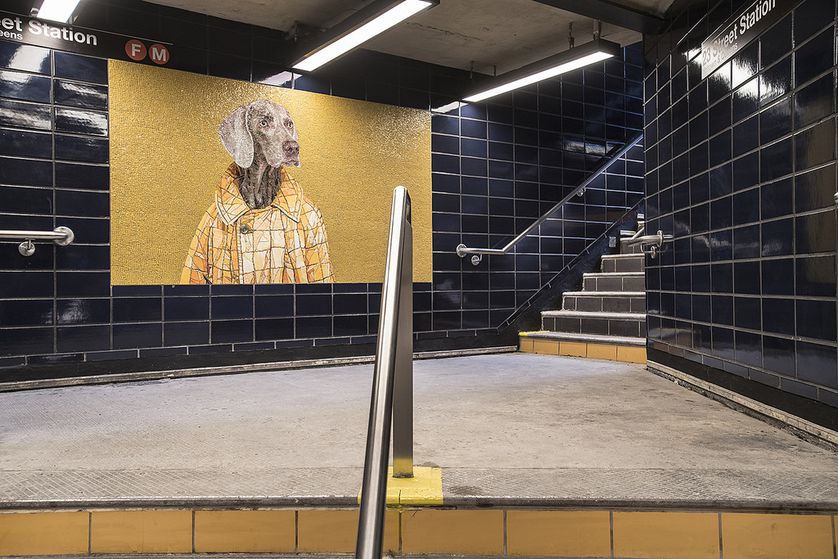
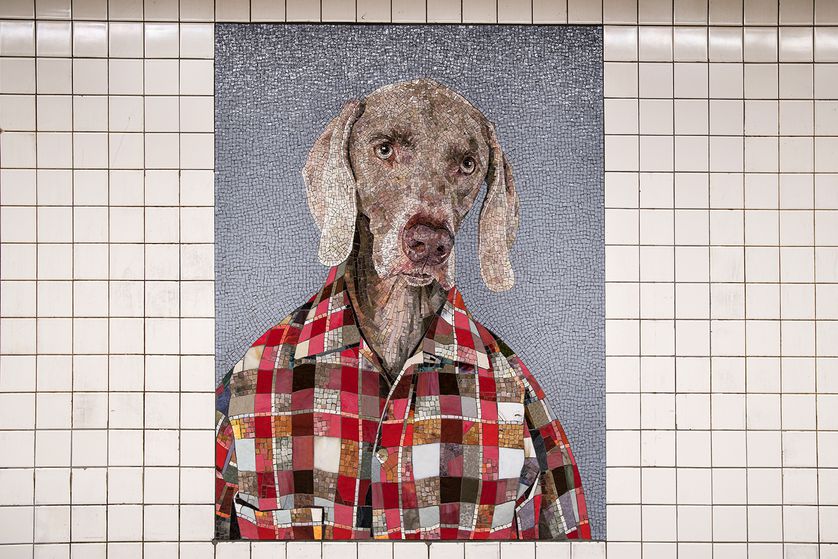
What you don’t see beneath the streets of New York are dogs depicted in public art. This has all changed with the unveiling of “Stationary Figures,” a collection of 11 glass mosaic pooch portraits now on permanent display at the 23rd Street station on the IND Sixth Avenue Line in Manhattan’s Chelsea neighborhood.

No doubt a number of straphangers passing through 23rd Street station, which services the F and M trains and was closed for several months earlier this year while undergoing a major revamping, will find that the pooches in question look familiar — maybe a bit like the average New York commuter: stoic, alert, borderline restless. But it’s mostly because the mosaics, fabricated in stunning detail by Mayer of Munich, are based on images created by none other than Mr. Weimaraner himself, William Wegman.

That’s one nattily attired Weimaraner. (Photo: Patrick J. Cashin / Metropolitan Transportation Authority/Flickr)

Although Wegman’s subjects have varied over his lauded career as a photographer, painter and video artist, he’s best known for whimsical compositions that depict his beloved pet Weimaraners in humanlike poses (and sometimes donning wigs and costumes). It all began in the 1970s with Wegman’s first true four-legged muse, the leggy and camera-loving Man Ray. It wasn’t until the mid-1980s, however, that Wegman’s second Weimaraner, Fay Ray, achieved true art world stardom. Fay’s descendants — they include Battina, Crooky, Chundo, Chip, Bobbin, Candy and Penny — have all also modeled for their human.

Wegman’s pet Weimaraners — a German hunting breed dating back to the early 19th century — have the distinction of appearing in the permanent collections of numerous top art museums and being a regular feature on “Sesame Street.” That’s no small feat for an extended family of very good boys and girls.

The dogs depicted in “Stationary Figures” are Flo and her brother, Topper — Wegman’s ninth and 10th Weimaraners, respectively. As the Metropolitan Transportation Authority (MTA), which commissioned the portraits as part of its MTA Arts & Design program, explains: “The portraits highlight Wegman’s deadpan humor by juxtaposing Flo and Topper in poses that suggest the way customers group themselves with waiting for a train at the platform. In some portraits, they’re dressed in human clothes and others they’re in their natural state.”

The floppy-eared Grey Ghosts of 23rd Street. (Photo: Patrick J. Cashin / Metropolitan Transportation Authority/Flickr)

In addition to showcasing the work of a world-renowned artist (and local Chelsea resident) in an unexpected venue, “Stationary Figures” is meant to bring joy to — and lower the blood pressure of — harried commuters passing through 23rd Street station, which ranks amongst the 50th busiest in the Big Apple. After all, who wouldn’t crack a smile when chancing across a mosaic portrait of a handsome pooch, especially when said handsome pooch is gussied up in a bright red rain slicker and matching cap?

As Mark Byrnes points out for CityLab, this isn’t the first time Wegman’s dogs have brightened up an American subway station. In 2005, two Weimaraners, both outfitted in NASA spacesuits, became permanent fixtures as circular murals above exits at L’Enfant Plaza Metro station in Washington, D.C.

Very good dogs, very poor service

It goes without saying that New York City subway stations, while teeming with various forms of microbial life, have never exactly been known as hotbeds of contemporary art and design.

That, however, began to change with the long-anticipated January 2017 opening of the first phase of the Second Avenue subway line, which features eye-catching new works by Chuck Close, Vik Muniz, Sarah Sze and Jean Shin spread out across four different stations on Manhattan’s Upper East Side. Gov. Andrew Cuomo heralded the Second Avenue line’s secondary function as subterranean contemporary gallery (price tag: $4.5 million) as the “the largest permanent public art installation in New York history.”

A very good boy in plaId. (Photo: Patrick J. Cashin / Metropolitan Transportation Authority/Flickr)

And this is all fine and good — great in fact. The more public art in the subways, the better — especially when it involves local artists of international renown, dapper-looking dogs and an ample dose of wit. Flo and Topper are the best thing to hit the 23rd Station since, well, forever.

Critics, however, have been left wondering as to when significant, tangible improvements to the MTA’s declining service will finally be instituted. And this is especially true with new fare hikes on the horizon.

As is the case with the 23rd Street station, which also received new benches, lighting, tile work, countdown clocks and digital screens as part of its extensive overhaul, what does it matter if the platforms and other public areas look fantastic but the trains aren’t running efficiently? (Byrnes points out that accessibility, or a lack thereof, also remains a major issue at 23rd Street station.)

Next stop Herald Square. (Photo: Patrick J. Cashin / Metropolitan Transportation Authority/Flickr)

The MTA needs to do more than outfit stations with delightful distractions to keep straphangers — who mainly just want to get from point A to point B in a minimal amount of time with minimal headache — happy. While mosaics, murals and the like do act as a sort of soothing balm and improve the user experience, public art is ultimately best enjoyed while also not on the verges of tears because three completely packed F trains have gone by and you’re running 30 minutes late.

As for Wegman, described by the New York Post as a “frequent subway commuter,” he doesn’t offer any specific thoughts as to how the MTA can also improve its service.

“I really like what they’re doing as far as making it look better,” he tells the Post. “But how to make them run better, that’s out of my area.”

ooOOoo

Now I can’t really comment any more as the odds of me being on the New York Subway are slim to none. Plus, it’s many years since I travelled on the British Underground.

But that doesn’t stop me from applauding this. Both the authorities for permitting it to happen and especially to William Wegman for such beautiful and outstanding work.

Now here’s a thing!

Dogs eating insects and helping climate change.

I had to look twice at this but it wasn’t April 1st and it appeared to be a serious article. It’s from the BBC website.

Will say no more. You have a read of it.

ooOOoo

Climate change: Will insect-eating dogs help?

By Roger Harrabin, BBC environment analyst

10th January, 2019

Do you fret that your pet pooch is blamed by environmentalists for turning rainforests into poo in the park?

Have no fear – you can now fatten Fido on black soldier flies instead of Brazilian beef.

A pet food manufacturer now claims that 40% of its new product is made from soldier flies.

It’s one of many firms hoping to cash in on the backlash against beef by people concerned that the cattle are fed on soya.

These soya plantations are responsible for the release of greenhouse gases in significant quantities.

Is it good for the dog?

The key question is whether a diet of 40% soldier flies meets the nutritional needs of your beloved canine.

We put the question to a pet diet expert at the Royal Veterinary College, Aarti Kathrani. Her conclusion was a cautious “yes”.

“Insects can be a very useful source of protein,” she told us. “More studies are needed to show how much of these nutrients can actually be absorbed by a dog’s body – but some studies suggest that insects can provide nutrients for dogs.”

Does it help the climate if dogs eat flies?

At first sight it seems obvious that feeding your dog meaty food is bad for the environment. The link between humans eating meat and the allied emissions of CO2 and methane is well established – and pets are estimated to eat 20% of global meat.

It’s also true that flies produce protein much more efficiently than cows – using a small percentage of the water and land.

But actually the analysis is more subtle than that – because as societies become more wealthy, people often turn to muscle meat and reject the animal’s offal.

The flies are brought to maturity in about 14 days

That offal is just as nutritious – and it gets made into pet food. That means that dog food is just as sustainable – or unsustainable – as humans eating meat.

In fact, if dogs were weaned off meat and on to insects, the industry would have to find another purpose for the offal. More sausage, perhaps? Or more humans eating insect protein. Or more going vegan?

Could cat food be made out of insects, too?

Dogs are omnivores – they eat more or less anything. Cats are much more choosy, because they can’t make an essential amino acid, taurine. They find it instead in meat and fish.

But Dr Kathrani says studies show that insects do contain taurine, so it’s possible that insects could also form a useful part of the moggie diet.

The new product is from Yora, a UK start-up. The insect grubs are fed on food waste in the Netherlands.

There are several competitors which also produce pet food incorporating fly protein. They include Insectdog, Entomapetfood, Chippin and Wilderharrier.

ooOOoo

Now I have heard of some strange things but in essence this does make very good sense.

Well done, Ikea!

That is Ikea in Italy.

This is such a wonderful idea and one that should be seen a lot farther and wider than just Catania, Italy.

ooOOoo

At this Ikea store in Italy, homeless dogs get a meal and a safe place to rest

Mary Jo DiLonardo
MARY JO DILONARDO
November 19, 2018
A dog naps in the Ikea store in Catania, Italy. (Photo: rewintageboudoir/Instagram)

There’s something particularly homey about the living room vignettes and kitchen setups in the Ikea store in Catania, Italy. Sprawled on the occasional braided rug or curled up under the sleek dining tables are sleeping homeless dogs. They’ve been welcomed into the store by employees who offer them comfort when the temperatures drop.

Giovanna Pecorino says she takes a photo of the dogs each time she visits the store.

“I know those dogs well,” says Pecorino, who owns a vintage clothing shop in Catania. “You find them at the entrance sleeping between the racks, or at the exit between the tables of their restaurant, always with their sweet eyes. I love them. They give me a sense of peace.”

[There are two more photographs on Instagram that I am unable to copy into this post.]

Linda Chartier Scala, an American from Rhode Island who now lives in Noto, Italy, also photographed one of the dogs that made a temporary home in a makeshift Ikea living room. She is very familiar with the pups, who are mainstays in the store through the seasons.

“Dogs are there year-round,” says Chartier Scala. “They love the air conditioning during the summer. They are sterilized and looked after by an animal welfare group. Fat and happy, they don’t wander from there.”

Shoppers like Scala often post photos of the resting pets on social media, lauding the store and its employees for feeding the homeless dogs and offering them shelter.

“Yesterday, going to the Ikea of Catania I came across this sweet scene, a stray puppy had found shelter in one of the store’s exhibits, this image was wonderful!” wrote mannilvers. “Giving shelter to a stray dog and making it feel at home is simply amazing!”

According to reports on some posts, the dogs are well cared for and quite popular with visitors, who often stop by the store just to check on their favorite canines. And the dogs, who seem to be very respectful of their surroundings, enjoy the attention.

“This is the best story I’ve read in a long time. Human kindness at it’s best,” writes ihelpanimals12018. “THANK YOU.”

ooOOoo

“Human kindness at it’s best … ”

This is such a wonderful account of people being loving towards dogs that were homeless.

Last, but no means least, Happy Birthday to Jeannie!

The mind-body question.

Is how you think the same as how she thinks?

The challenge of how you think, and whether or not it is similar to how others think has long intrigued us.

Tam Hunt has written an article that now ponders on whether how we think, how we are conscious of the world around us, depends on how that ‘thing’ vibrates.

Over to Tam.

ooOOoo

Could consciousness all come down to the way things vibrate?

By    Affiliate Guest in Psychology, University of California, Santa Barbara

Why is my awareness here, while yours is over there? Why is the universe split in two for each of us, into a subject and an infinity of objects? How is each of us our own center of experience, receiving information about the rest of the world out there? Why are some things conscious and others apparently not? Is a rat conscious? A gnat? A bacterium?

These questions are all aspects of the ancient “mind-body problem,” which asks, essentially: What is the relationship between mind and matter? It’s resisted a generally satisfying conclusion for thousands of years.

The mind-body problem enjoyed a major rebranding over the last two decades. Now it’s generally known as the “hard problem” of consciousness, after philosopher David Chalmers coined this term in a now classic paper and further explored it in his 1996 book, “The Conscious Mind: In Search of a Fundamental Theory.”

Chalmers thought the mind-body problem should be called “hard” in comparison to what, with tongue in cheek, he called the “easy” problems of neuroscience: How do neurons and the brain work at the physical level? Of course they’re not actually easy at all. But his point was that they’re relatively easy compared to the truly difficult problem of explaining how consciousness relates to matter.

Over the last decade, my colleague, University of California, Santa Barbara psychology professor Jonathan Schooler and I have developed what we call a “resonance theory of consciousness.” We suggest that resonance – another word for synchronized vibrations – is at the heart of not only human consciousness but also animal consciousness and of physical reality more generally. It sounds like something the hippies might have dreamed up – it’s all vibrations, man! – but stick with me.

How do things in nature – like flashing fireflies – spontaneously synchronize? Suzanne Tucker/Shutterstock.com

All about the vibrations

All things in our universe are constantly in motion, vibrating. Even objects that appear to be stationary are in fact vibrating, oscillating, resonating, at various frequencies. Resonance is a type of motion, characterized by oscillation between two states. And ultimately all matter is just vibrations of various underlying fields. As such, at every scale, all of nature vibrates.

Something interesting happens when different vibrating things come together: They will often start, after a little while, to vibrate together at the same frequency. They “sync up,” sometimes in ways that can seem mysterious. This is described as the phenomenon of spontaneous self-organization.

Mathematician Steven Strogatz provides various examples from physics, biology, chemistry and neuroscience to illustrate “sync” – his term for resonance – in his 2003 book “Sync: How Order Emerges from Chaos in the Universe, Nature, and Daily Life,” including:

  • When fireflies of certain species come together in large gatherings, they start flashing in sync, in ways that can still seem a little mystifying.
  • Lasers are produced when photons of the same power and frequency sync up.
  • The moon’s rotation is exactly synced with its orbit around the Earth such that we always see the same face.

Examining resonance leads to potentially deep insights about the nature of consciousness and about the universe more generally.

External electrodes can record a brain’s activity. vasara/Shutterstock.com

Sync inside your skull

Neuroscientists have identified sync in their research, too. Large-scale neuron firing occurs in human brains at measurable frequencies, with mammalian consciousness thought to be commonly associated with various kinds of neuronal sync.

For example, German neurophysiologist Pascal Fries has explored the ways in which various electrical patterns sync in the brain to produce different types of human consciousness.

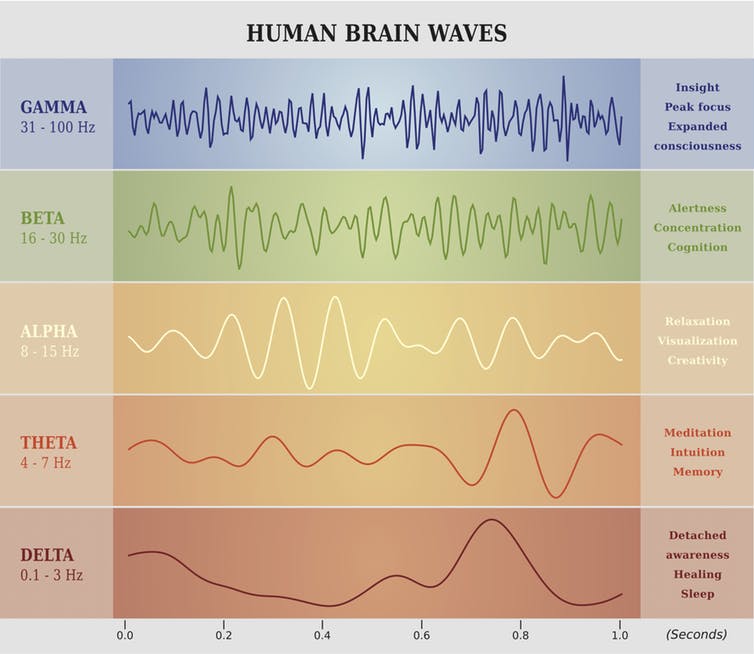
Fries focuses on gamma, beta and theta waves. These labels refer to the speed of electrical oscillations in the brain, measured by electrodes placed on the outside of the skull. Groups of neurons produce these oscillations as they use electrochemical impulses to communicate with each other. It’s the speed and voltage of these signals that, when averaged, produce EEG waves that can be measured at signature cycles per second.

Each type of synchronized activity is associated with certain types of brain function. artellia/Shutterstock.com

Gamma waves are associated with large-scale coordinated activities like perception, meditation or focused consciousness; beta with maximum brain activity or arousal; and theta with relaxation or daydreaming. These three wave types work together to produce, or at least facilitate, various types of human consciousness, according to Fries. But the exact relationship between electrical brain waves and consciousness is still very much up for debate.

Fries calls his concept “communication through coherence.” For him, it’s all about neuronal synchronization. Synchronization, in terms of shared electrical oscillation rates, allows for smooth communication between neurons and groups of neurons. Without this kind of synchronized coherence, inputs arrive at random phases of the neuron excitability cycle and are ineffective, or at least much less effective, in communication.

A resonance theory of consciousness

Our resonance theory builds upon the work of Fries and many others, with a broader approach that can help to explain not only human and mammalian consciousness, but also consciousness more broadly.

Based on the observed behavior of the entities that surround us, from electrons to atoms to molecules, to bacteria to mice, bats, rats, and on, we suggest that all things may be viewed as at least a little conscious. This sounds strange at first blush, but “panpsychism” – the view that all matter has some associated consciousness – is an increasingly accepted position with respect to the nature of consciousness.

The panpsychist argues that consciousness did not emerge at some point during evolution. Rather, it’s always associated with matter and vice versa – they’re two sides of the same coin. But the large majority of the mind associated with the various types of matter in our universe is extremely rudimentary. An electron or an atom, for example, enjoys just a tiny amount of consciousness. But as matter becomes more interconnected and rich, so does the mind, and vice versa, according to this way of thinking.

Biological organisms can quickly exchange information through various biophysical pathways, both electrical and electrochemical. Non-biological structures can only exchange information internally using heat/thermal pathways – much slower and far less rich in information in comparison. Living things leverage their speedier information flows into larger-scale consciousness than what would occur in similar-size things like boulders or piles of sand, for example. There’s much greater internal connection and thus far more “going on” in biological structures than in a boulder or a pile of sand.

Under our approach, boulders and piles of sand are “mere aggregates,” just collections of highly rudimentary conscious entities at the atomic or molecular level only. That’s in contrast to what happens in biological life forms where the combinations of these micro-conscious entities together create a higher level macro-conscious entity. For us, this combination process is the hallmark of biological life.

The central thesis of our approach is this: the particular linkages that allow for large-scale consciousness – like those humans and other mammals enjoy – result from a shared resonance among many smaller constituents. The speed of the resonant waves that are present is the limiting factor that determines the size of each conscious entity in each moment.

As a particular shared resonance expands to more and more constituents, the new conscious entity that results from this resonance and combination grows larger and more complex. So the shared resonance in a human brain that achieves gamma synchrony, for example, includes a far larger number of neurons and neuronal connections than is the case for beta or theta rhythms alone.

What about larger inter-organism resonance like the cloud of fireflies with their little lights flashing in sync? Researchers think their bioluminescent resonance arises due to internal biological oscillators that automatically result in each firefly syncing up with its neighbors.

Is this group of fireflies enjoying a higher level of group consciousness? Probably not, since we can explain the phenomenon without recourse to any intelligence or consciousness. But in biological structures with the right kind of information pathways and processing power, these tendencies toward self-organization can and often do produce larger-scale conscious entities.

Our resonance theory of consciousness attempts to provide a unified framework that includes neuroscience, as well as more fundamental questions of neurobiology and biophysics, and also the philosophy of mind. It gets to the heart of the differences that matter when it comes to consciousness and the evolution of physical systems.

It is all about vibrations, but it’s also about the type of vibrations and, most importantly, about shared vibrations.

ooOOoo

Well, I’m not sure of the relevance but I’m bound to say that I am going to the doctor once a week for Alpha-Sim resetting. The reason I mention it is the Alpha frequency in the above brain wave chart.  I sit very quietly for about 90 minutes and it does seem to provide some benefit.

Out of this world

The text, and more photographs, of that Sunday Picture Parade.

ooOOoo

33 out-of-this-world images of the Milky Way, aurora borealis and more

Astronomy Photographer of the Year contest reveals dozens of photos before winners are announced.

By JACQUELINE GULLEDGE   July 20, 2018

‘Rigel and the Witch Head Nebula’ (Photo: Mario Cogo)

An aurora borealis that lights up the night sky in Iceland. The Milky Way that illuminates in a remote area in Australia. Even nebulae that display dazzling colors. All these phenomena have delighted astronomy enthusiasts for years, and many people travel the globe to capture such events.

The Astronomy Photographer of the Year competition honors amateur astronomy photographers who capture stunning images of space. The organization released several dozens images out of the more than 4,200 entries it received ahead of its announcement this October of this year’s winners. The competition began in 2009 and is organized by the Royal Observatory Greenwich in the United Kingdom.

The photographers featured here are a mixture of amateurs and professionals, but their images are universally stunning.

The photo above entitled “Rigel and the Witch Head Nebula” was taken by Mario Cogo in Namibia. “The dark Namibian sky was the perfect location to capture the wonder of the Witch Head Nebula and Rigel,” said Cogo in his submission. “The Witch Head Nebula is a very faint molecular gas cloud which is illuminated by supergiant star Rigel, the seventh brightest star of the sky and the brightest star in the constellation of Orion.”

The caption listed below each photo was written by the photographer and provides additional context.

‘Thunderstorm under milky way’ (Photo: Tianyuan Xiao)

“A glorious Milky Way looms over a thunderstorm that lights up the Florida sky. The photographer wanted to show the great contrast between stable (Milky Way) and moving (thunderstorm) objects in the sky.” — Tianyuan Xiao

‘The Orion Nebula in 6-Filter Narrowband’ (Photo: Bernard Miller)

“One of the brightest nebulae, the M42 or the Orion Nebula, is located in the Milky Way south of Orion’s belt. It is an emission nebula about 1500 light years away in the constellation Orion. This image was produced by combining 36 hours of total exposure using six different filters; Ha, SII, OIII, Red, Green, and Blue. The central Trapezium cluster of the nebula is so bright that it is usually over exposed with the long exposures needed for the nebula. In this image a series of short 3-second exposures in each filter were blended with the long exposures to create a high dynamic range image that produces detail in the faint nebula and bright Trapezium.” — Bernard Miller

The neglected neighbour’ (Photo: Kfir Simon)

“Taken from Tivoli Southern Sky Guest Farm in Namibia, the great Horsehead nebula is overlooking the striking and often overlooked Nebula NGC 2023. At 4 light years in diameter it is one of the largest reflection nebulae ever discovered.” — Kfir Simon

‘The Hidden Galaxy’ (Photo: Tom O’Donoghue and Olly Penrice)

“Camelopardalis, also known as the Hidden Galaxy is one of the largest Galaxies visible from the Northern Hemisphere; however it is also obscured by foreground stars and dust, as it lies in the Milky Way plane. The photographer added a Ha filter to this LRGB image in order to enhance the emission nebula regions in the galaxy and after stacking single exposures (subs) the brilliant spiral arms at the core were revealed.” — Tom O’Donoghue and Olly Penrice

‘The Eagle nebula’ (Photo: Marcel Drechsler)

“The Eagle Nebula, also known as Messier 16, is a young open cluster of stars, surrounded by hot hydrogen gas in the constellation Serpens and lies at a distance of 7,000 light years from Earth. Taken at the Baerenstein Observatory in Germany, the photo is a RGB-Ha-OIII image and shows off the radiant red and blue colours of the nebula. In the centre you can spot the famous Pillars of Creation.” — Marcel Drechsler

‘Stars over Sacred Mongolian Ovoo’ (Photo: Qiqige Zhao)

“Taken during a summer night in Mingantu in Inner Mongolia, star trails are sweeping over the colourful and extraordinary sacred altars, called Ovoo, creating a spectacular painting.” — Qiqige Zhao

‘NGC 6726 and NGC 6727’ (Photo: Mark Hanson, Warren Keller, Steve Mazlin, Rex Parker, Tommy Tse, David Plesko, Pete Proulx)

“These spectacular reflection nebulae in the Corona Australis constellation depict the characteristic vivid blue color produced by the light of hot stars, reflected by silica-based cosmic dust. A rare high resolution view of the cores NGC 6726 and 6727 is captured on camera. The data was acquired by Star Shadows Remote Observatory at CTIO’s PROMPT2, using LRGB filters, stacked with CCDStack and post-processed in Photoshop and PixInsight.” — Mark Hanson, Warren Keller, Steve Mazlin, Rex Parker, Tommy Tse, David Plesko and Pete Proulx

‘Mosaic of the Great Orion & Running Man Nebula’ (Photo: Miguel Angel García Borrella and Lluis Romero Ventura)

“The Orion Nebula, also known as Messier 42, M42, or NGC 1976, is a diffuse nebula situated in the Milky Way, south of Orion’s Belt in the constellation of Orion. It is one of the brightest nebulae and is visible to the naked eye during a clear night sky. M42 is 1270 light years from our planet and is the closest region of massive star formation to Earth. It is estimated to be 24 light years across and it has a mass of about 2,000 times more than that of the Sun. This image is the result of the efforts of two astrophotographers using different equipment from their observatories. Located hundreds of kilometres away from each other, they chose the Orion Sword are as a common target to render. The software suites used in this image are Maxim DL, Pixinsight and Photoshop CC 2017.” — Miguel Angel García Borrella and Lluis Romero Ventura

‘Milky Way shining over Atashkooh’ (Photo: Masoud Ghadiri)

“The Milky Way stretches across the night sky between four columns in the ancient Atashkooh Fire Temple near Mahllat city in Iran. The camera was placed on the ground in the centre of the four columns, and with no use of any other equipment, the photographer managed to capture our magnificent galaxy using just one image.” — Masoud Ghadiri

‘Magic’ (Photo: Jingyi Zhang)

“The magical Aurora Borealis explodes from the clouds and looms over the mountains in Stokknes on the south coast of Iceland. Snow has melted and created pools of water between the dunes, creating a perfect foreground for this image.” — Jingyi Zhang

‘Kynance cove by night’ (Photo: Ainsley Bennett)

“On a family trip to Cornwall after visiting Kynance Cove, on the Lizard Peninsula, the beautiful landscape seemed to be the ideal place for the photographer to capture the glimmering stars and the striking colours of the Milky Way illuminating the beautiful rocky coastline. This is a composition of two separate exposures, one for the sky and one for the foreground blended together post-processing to achieve the desired result, producing a more even exposure.” — Ainsley Bennett

‘Keeper of the Light’ (Photo: James Stone)

“The Milky Way rises above an isolated lighthouse in Tasmania. The photographer planned his position to shoot the perfect composition positioning the Milky Way in conjunction with the lighthouse and observing how to best light the tower for artistic effect. This image is part of a time-lapse sequence, allowing the photographer some time to climb the tower into the lantern room of the lighthouse and reflect on the hard and lonely, yet incredible life the former lighthouse keepers would have lived.” — James Stone

‘ISS sunspots’ (Photo: Dani Caxete (Fernández Méndez))

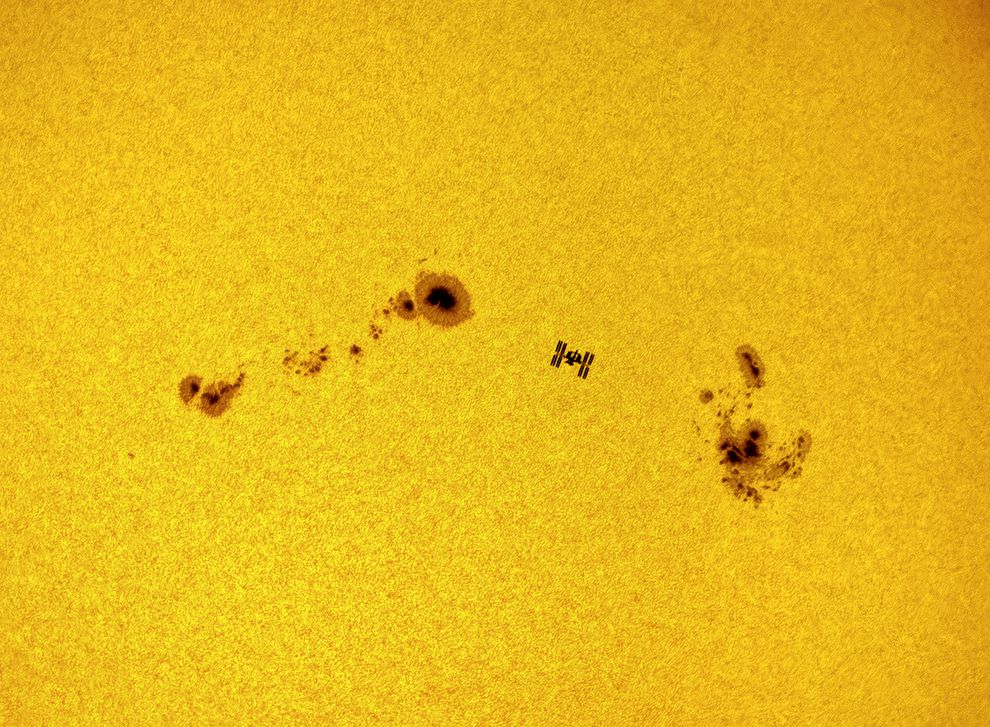
“The International Space Station (ISS) was captured between two massive sunspots, the AR 12674 and AR 12673, during its solar transit. The image was taken in Madrid and it took ISS less than a second to cross the solar disk.” — Dani Caxete

‘Ice Castle’ (Photo: Arild Heitmann)

“A remarkable display of the Northern Lights reflecting shades of green and yellow on the snow. Squeezed into a tiny cave on Lake Torneträsk, in Swedish Lapland, in minus 26 degrees with the camera lens just a few centimeters away from the icicles, it was a challenge well worth it for the photographer.” — Arild Heitmann

‘Holy Light II’ (Photo: Mikkel Beiter)

“The Black Church at Búðir in Iceland beneath the stripes of the Aurora Borealis and the bright stars in the night sky. Fighting the worst weather the photographer had ever encountered in Snæfellsnes Peninsula and with strong gale winds around 30 meters per second on the night the image was taken, his hard work paid off.” — Mikkel Beiter

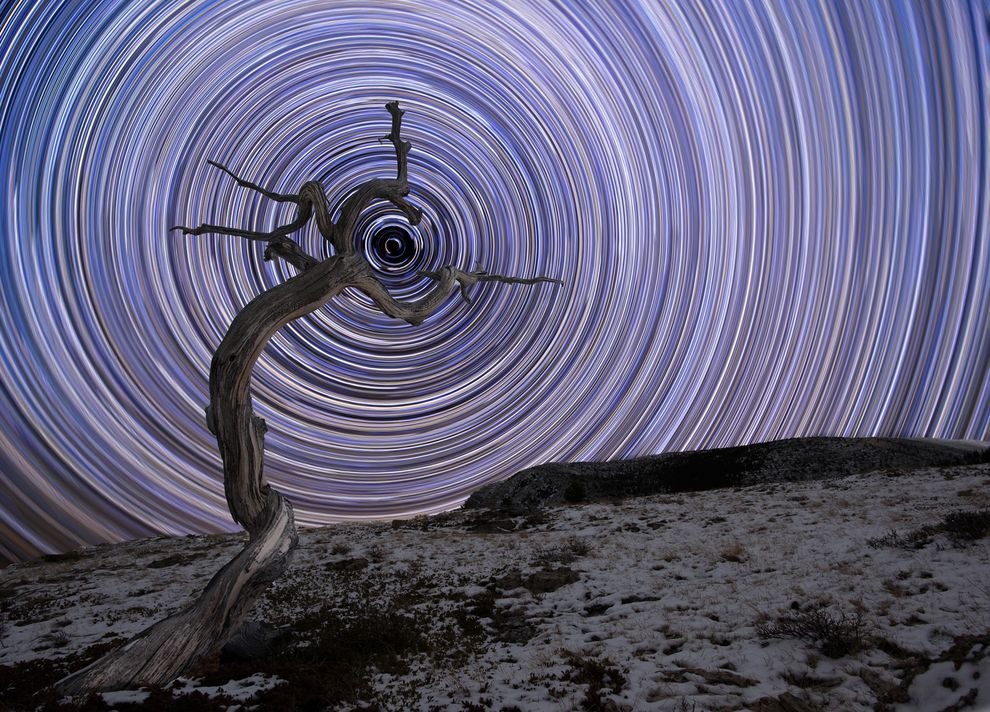
‘Holding Due North’ (Photo: Jake Mosher)

“A weathered juniper tree in Montana’s northern Rocky Mountains is filled with arced star trails and in the centre sits Polaris, the brightest star in the constellation of Ursa Minor. It took several test frames of long exposures to make sure that Polaris was in the right position, but eventually things lined up and the Moon provided enough light to the foreground, yet plenty of dark skies to allow a high enough ISO to capture lots of stars.” — Jake Mosher

‘Guarding the galaxy’ (Photo: Jez Hughes)

“The Milky Way rises over some of the oldest trees on Earth in the Ancient Bristlecone Pine Forest, set within the Inyo National Forest along the White Mountains in California. Growing at altitudes of over 10,000 feet, these trees can live for over 4,000 years. The high elevation also results in thin air and incredibly dark skies on display. This photograph was taken in between rolling thunderstorms which were passing through the Eastern Sierras, leaving time for only a few exposures.” — Jez Hughes

Guardian of Tre Cime’ (Photo: Carlos F. Turienzo)

“This panoramic image, composed out of eight photos, depicts the Milky Way emerging over the rocky Dolomites in Tre Crime on the left and on the right the lights from a house illuminating the beautiful terrain. The photographer noted that the image represents sharing unforgettable moment with the ones you love.” — Carlos F. Turienzo

‘First Impressions’ (Photo: Casper Kentish)

“After a few days of cloudy skies the photographer finally got the chance to use his birthday present, a new telescope. The clouds were moving fast so there was not much time to capture the Moon. With the help of his grandfather who kept moving the telescope and trying to keep an iPad at the right position, he managed to capture this wonderful and artistic image of his first viewing of our Moon.” — Casper Kentish

‘Expedition to Infinity’ (Photo: Jingpeng Liu)

“The photographer captured the splendor of our galaxy in Badlands National Park, in South Dakota and is a panoramic view of a 6-shot composite, three for the sky and three for the foreground, all of which were taken successively using the same gear and equivalent exposure settings, from the same location, within a short period. The raw files were initially processed in Lightroom for lens correction only, followed by merging to panorama in Photoshop. Final retouching was applied back in Lightroom, including WB correction, basic toning and local adjustments.” — Jingpeng Liu

‘Empyreal’ (Photo: Paul Wilson)

“A flared up Aurora reflects bright pink and yellow colours on the water at Southern Bays near Christchurch, New Zealand. The incredible combination of the radiant Aurora colours, the wide green fields and the dark blue, starry night sky paint a spectacular picture and accentuates the wonders of our galaxy.” — Paul Wilson

‘Earth Shine’ (Photo: Peter Ward)

“During a solar eclipse, the brightness of the solar corona hides the details of the moon. By layering 9 exposures ranging from 2 seconds to 1/2000th of a second and with Extreme High Dynamic Range photography or XHDR the image shows not just the radiant solar corona, but the newest possible of new moons, seen here illuminated by sunlight reflecting off the earth.” — Peter Ward

‘Deep Space’ (Photo: Dave Brosha)

“Exploring the remarkable underbelly of the Breiðamerkurjökull glacial tongue in Iceland. With this image the photographer wanted to pay tribute to the serenity and wonder he felt while he spent some time in this peaceful and magnificent place.” — Dave Brosha

‘Daytime Moon’ (Photo: Helen Schofield)

“Earth’s only natural satellite is situated above the horizon of our planet so it is visible during daytime and the waxing gibbous phase can clearly be seen in the sky. The photographer captured this imposing image in Malaga, Spain while vacationing with her children.” — Helen Schofield

Color-Full Moon’ (Photo: Nicolas Lefaudeux)

“A phenomenal image depicting the incredible colours and details of the surface of the Moon. The photographer applied a similar procedure he used for capturing the solar eclipse and noted that this lit up the full Moon like a Christmas tree ornament, with a great variety of hues and shades.” — Nicolas Lefaudeux

‘Cable Bay’ (Photo: Mark Gee)

“The magnificent Milky Way stretches across the night sky reflecting on the Cable Bay near Nelson, New Zealand. The photographer had to take the picture before the light washed out the sky. 42 individual images were stitched in to a large multi row panorama to create this image.” — Mark Gee

‘Aurorascape’ (Photo: Mikkel Beiter)

“The conditions the night the image was taken were not ideal because of the bright moon lighting up the sky. The photographer managed to overcome this obstacle and capture the incredible Aurora Borealis above the fjord at Haukland in the gorgeous Lofoten archipelago, Northern Norway. The small pool of water with rocks made the perfect foreground and a natural leading line into the frame.” — Mikkel Beiter

‘Aurora Borealis on the coast of the Barents sea’ (Photo: Michael Zav’yalov)

“From the city of Yaroslavl in Russia to the coast of the Barents Sea in the Arctic Circle, a party of three travelled 2000 kilometers to capture the magnificent Northern Lights. The photographer stayed in the village of Teriberka in the Murmansk Oblast district for five days. After four days of bad weather, with heavy snow and thick clouds the sky finally cleared on the last day and the Northern Lights appeared in all their glory.” — Michael Zav’yalov

‘AR 2665 and Quiescent Prominence’ (Photo: Łukasz Sujka)

“The sunspot AR2665 was one of the most active regions in 2017 on the right you can see a phenomenal quiescent prominence extending from our star, the Sun. This type of prominence lasts for a very long time and its structure is quite stable. The photo is a composition of two images: one of the magnificent prominence and one of the Sun’s surface. The surface is much brighter than the prominence so it is a negative to reveal details of Sun chromosphere (spicules and filaments).” — Łukasz Sujka

‘Andromeda Galaxy’ (Photo: Péter Feltóti)

“Andromeda Galaxy has always amazed the photographer. The dust lanes and bright star clusters in its arms, the emblematic galaxy shape of it, and the magnificent look of this great star city make it one of his most desired objects to photograph. This image was taken using a 200mm mirror and creating a three panel mosaic.” — Péter Feltóti

‘A Magnificent Saturn’ (Photo: Avani Soares)

“In high resolution planetary photography having a good view of a planet is a key factor but also completely out of a photographer’s control. In this image the photographer was lucky to capture our second largest planet, Saturn, in all its glory. After stacking 4,000 out of 10,000 frames we can admire details such as the beautiful polar hexagon, the Encke Division and even the crepe ring.” — Avani Soares

ooOOoo

These are the most beautiful images of the cosmos that I have ever seen!

A complex relationship

Slowly getting back to normal!

And posts like this help.

ooOOoo

Wolves on Michigan’s Isle Royale reveal new info about predator-prey relationships

This we know: Top carnivores profoundly influence local ecosystems.

By STARRE VARTAN  October 26, 2018.

Dawn breaks over Moskey Basin, at Isle Royale National Park, Michigan. Canadian wolves colonized the island in 1949. (Photo: Steve Lagreca/Shutterstock)

The American people’s relationship with top predators — especially wolves — is complex and ever-evolving. About three decades ago, it was mostly just animal-rights groups and their supporters who fought for the wolves’ right to exist; they were often considered a nuisance. But now there’s plenty of scientific evidence proving what’s good for wolves is good for their prey, the plants those prey eat, and indeed, positively affects the entire ecosystem. That’s ultimately good for humans too — unless you’re competing with the wolves, like a rancher who grazes animals or a hunter who wants to shoot the same deer or moose that wolves need to eat. But at this point, even some ranchers and hunters have come over to the pro-predator side.

Much of that change in the perception of predators is down to studies that have proven how precisely cougars, wolves, bears, tigers, lions, bald eagles, alligators and other apex predators affect the land around them. None have been studied longer than the wolves and moose in Isle Royale National Park, a Guam-sized island in Lake Superior. For almost 60 years, the populations of these two groups have been tracked — as well as their effects on the plants and other animal communities on the island. (You can read the reports here, including the recent 59th annual report.)

As the video above explains, there used to be as many as 50 wolves on Isle Royale; however, that number has dwindled, mostly due to inbreeding that caused a debilitating spinal condition to proliferate among the too-closely-related wolves. Just 10 years ago, there were still around 30 wolves but by 2015, there were only three wolves left. Now, there are just two, a closely related male-female pair that probably won’t breed. (The female of the pair has aggressively fought back when the male attempted to breed with her.)

Already, the moose population on the island has boomed, “undoubtably because of lack of predation,” John Vucetich, a wildlife ecologist from Michigan Technological University told Science magazine, adding that the two remaining wolves are now “… swimming in moose.” Despite the wolves’ regular predation on moose, there’s been a 20 percent increase in moose in just one year, which scientists estimate is about five to 10 times higher than on mainland areas. Beaver populations have also risen sharply. There’s just not enough wolves to keep either population in check.

So what’s so bad about so many moose? Well, as most ungulates do, moose spend their days browsing on vegetation, so the more moose, the more food they need — and the plants on the island can only take so much nibbling. An aquatic plant, which was found in abundance just six years ago, is now only found in places where moose are not. Long-term, this means the island will soon run out of food to keep the ever-larger moose population alive, and many will starve once food becomes scarce. Previously, the wolves have kept moose populations low enough so they didn’t overeat the vegetation, keeping the system in balance.

A plan to rebalance the ecosystem

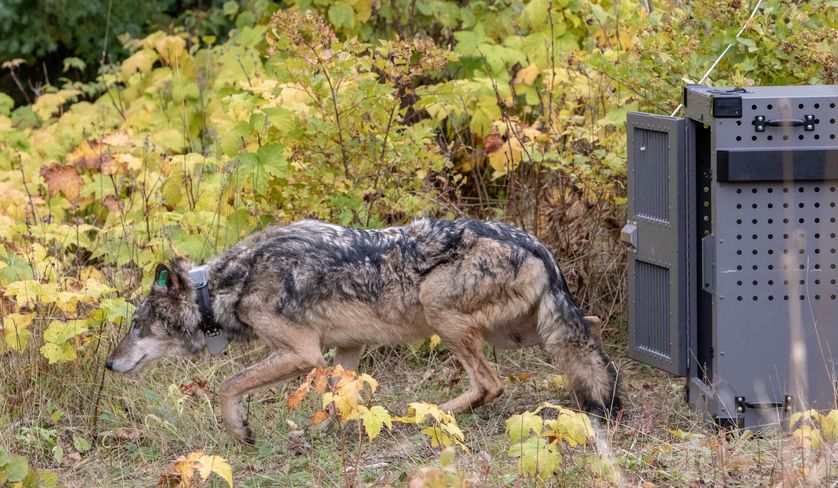
This female wolf arrived at Isle Royale on Oct. 2, 2018. (Photo: NPS/Jim Peaco)

This is why some people think the best solution is to bring a fresh influx of wolves to Isle Royale National Park. The plan is to release 25-30 wolves over the next three to five years. So far, park officials have trapped four wolves on the mainland beginning in late September and released them on the island. Three of the wolves are female — with the hope they will successfully breed.

This new blood would potentially rebalance the predator-prey relationship and the idea is that the rest of the ecosystem would follow. Introducing so many wolves over several years is hardly natural either, others argue, saying that humans should just be hands off and let nature take its course. The original 50 wolves had found their way to the island on their own, having moved in from Canada; perhaps they could do so again if given the chance.

Editor’s note: This article has been updated since it was originally published in April 2017.

ooOOoo

This is the real news!