Category: History

Fate is the Hunter, part one

A theme about flying, pilots and fate.

Many, many pilots whether civil or military or private, have read the book by Ernest K. Gann entitled Fate is the HunterErnest Gann was born a little under a hundred years ago, on October 13th 1910 and died, aged 81, in 1991.  HeGann is known, in the main, as an aviation writer and airline pilot pioneer but achieved much more besides.

Fate is the Hunter is a book about the workings of fate. And this Post is more than a reminder of Ernest Gann’s book and the message it carries, it is also about fate, as Part Two published tomorrow reveals.

Fate or serendipity has happened along to cause a number of recent Posts to be about flying.  We had the Post about low-level RAF flight training in North Wales – Mach Loop.  Then we had three Posts about air carrier operations prompted by the PBS Series, the first one being published on the 2nd October.  Today, circumstance brought me to the Blog  of another naval aviator, published by Neptunus Lex.  More about him and links to the Blog later.

I want to set the scene by using the words of Ernest K Gann as he starts the preface to his book.

Read more about this Post

Integrity: adding up to something

Integrity as an idea that can deliver more than the sum of the parts

People who add up to something are remarkable, while at the same time being more common than we might think.

As I’ve discussed elsewhere, integrity is also about “wholeness”. The “adding up” aspect is relevant, because it links the parts to the whole. Many people achieve extreme and, sometimes, amazing feats; these are typically formed from many steps. But then to do that repeatedly, and continually exceeding one’s earlier achievements, has the effect of generating an overall record of achievement which is much greater than the sum of its parts.

Read more about the wholeness of integrity

Defence forces and integrity

A personal reflection on the emotions stirred by the PBS series on the USS Nimitz

The last three days have seen Posts on the USS Nimitz.  On the 2nd there was the first part of air carrier operations specifically looking at the challenges of a pitching deck.  On the 3rd came the second part as the pilots and crew operated into night, still with the deck of the USS Nimitz pitching significantly. Yesterday, the Post carried links to background information including the excellent web site that PBS have on the USS Nimitz series.

So why raise the question of integrity?

Read more of this Post

“What does economics mean?” by an economist

Keynes, macro economics and other terms need to be more widely understood.

Macroeconomics as a field is not very impressive, frankly.

In my view, it is more glorified accounting and policy than anything remotely related to testable economic theory!

Keynesian economics — the stuff that most macro courses are made of — smacks of a model created to justify a pre-conceived belief that government can run businesses better than private industry can.  Keynes spoke strictly of demand-side policies, namely fiscal and monetary policies, which create a large role for government intervention, as opposed to supply side policies, which basically get government out of the way by lowering taxes, fees, paperwork, and restrictions, and allow private industry to take risks and create value and manifest economic freedom.

Read more about economics

Very few really saw this crisis coming; are we still in the dark?

Who really understood the forces of destruction building up in the global economy?

(This Post is longer than usual but doesn’t lend itself to being divided into multiple Posts – trust it is worth the read.)

Part One – How investing in the 80s was so hit and miss.

My education with respect to the sound management of one’s wealth came from a propitious mistake by a global insurance company, one of Britain’s largest insurance companies as it happens.  Here’s the story.

Read the rest of this Post

Another one of the few who saw the crisis coming.

Steve Keen – Associate Professor of Economics & Finance at the University of Western Sydney.

I know didly squat about economics.  I know a lot about the effect of economics in the sense of government policies, of inflation and debt, international trade and much more only in how they have impacted me over a lifetime of working, buying homes, raising a family, running a couple of businesses and now contemplating retirement.  I can sum up my personal strategy – LUCK!  I have been lucky.  The other Post out today shows an example of that luck.

Frankly, economists haven’t figured widely in my role call of people that I admired, probably because I don’t really understand what they are talking about.  (That’s why this Blog has a real live economist as part of the team, to help educate me and all the rest of the readers who come to this Blog!)

The other Post on this subject spoke of David Kauders, who clearly saw it coming.  Now here’s an economist who also saw it coming, Steve Keen.

Read more about Steve Keen

Chancellor Angela Merkel

Important lessons from former East Germans.

Have you ever noticed how the most ardent supporters of capitalism and free markets are those who’ve experienced a world without them?

How those who speak out most poignantly against health care reform in the U.S. are those who’ve experienced nationalized health care?  No?

Angela Merkel
Angela Merkel

If you can, then, take a moment and think back to the coverage, the news, the sound bites.  Take a look, perhaps a second look, behind the headlines and I venture that you will find endless examples of this phenomenon.    It is those who have done without freedom of choice, free markets, and self-determination who treasure it most, who most understand its value, who’ve lived with the consequences of its absence.

We need look no further than Chancellor Angela Merkel and her recent victory in Germany’s national election.

Chancellor Merkel grew up in communist East Germany and is now leading Germany out of recession with tax cuts and reduced government spending.

We should be listening to what the world is telling us.  Very hard, and very quickly.  We don’t want to have to lose it before we appreciate what we have.

By Sherry Jarrell

Share

Septembers

How clear, crisp September days echo 1940.

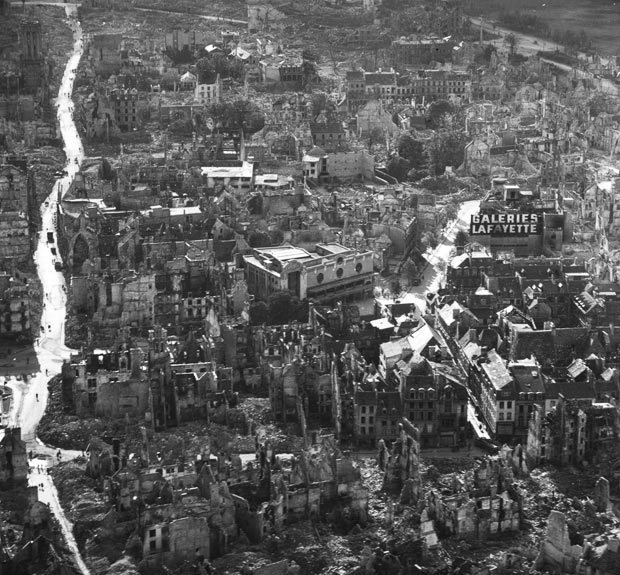
I was born in London some 6 months before the end of World War II.  The echoes of that tragic event in human history rang around the torn roadways and ripped buildings of London for many years, certainly for sufficiently long that I was able to remember as a young boy, away on his bicycle, the bomb sites and and the gaps where once buildings had stood.

Sometimes, when the September weather is as it was during the Battle of Britain, it’s almost as though those echoes can still be faintly heard.  Maybe all Londoners over a certain age hear them?

Read more about September days

Dogs really are smarter!

Fascinating research coming out of Duke University

This Post was stimulated by a link sent to me by Chris Snuggs, who will be joining the author’s team at Learning from Dogs in due course.

The link was to an article published in Time Magazine on September 21st and is available in their online version.

Brian Hare of Duke
Brian Hare of Duke

The article is about the extraordinary social skills that have been developed by dogs over the millennia that they have been associated with man.  It featured Brain Hare (sort of seems an appropriate name!) Assistant Professor, Evolutionary Anthropology at Duke.

The article is also rather timely as only a few days ago, there was a Post on this Blog about the befriending of a man with a wild wolf, or was it the other way around!

Back to the Time magazine article,

“Understanding a pointed finger may seem easy, but consider this: while humans and canines can do it naturally, no other known species in the animal kingdom can. Consider too all the mental work that goes into figuring out what a pointed finger means: paying close attention to a person, recognizing that a gesture reflects a thought, that another animal can even have a thought.”

Read more about Dogs

The Jaguar XK120 Motor Car

You’ll never feel this way about a modern car!

A few weeks ago I attended a 70th Birthday celebration for a cousin.

70! Hey this chap has been riding bicycles at competition level, and running marathons for many years, so the surprise party was very upbeat, with two bands keeping everybody dancing. Everything from the Shadows to Roy Orbison.

It was a lovely day so I took my old XK120 Roadster, mainly because another cousin was going along, and he had helped rebuild this car 30 years previously. Actually we arrived together. The XK was running beautifully, but my cousin’s Mercedes had burst a water pipe, and the car park was flooded with coloured radiator water. We laughed that it was the new car that had broken down.

Read more about the XK120