Some people seem to have a knack for saying it how it should be!
My sub-heading, above, applies to many people right across the world. But the reason that this was triggered in my mind for today’s post, was a recent item on Christine’s excellent Blog, 350 or bust. Read more about that Blog here. I subscribe to that Blog.
Gene Roddenberry, the creator of the amazingly popular Star Trek series, was a man ahead of his time. Here is one of the things he had to say about humanity and our problems (with one editorial comment from me!):
“I believe in humanity. We are an incredible species. We’re still just a child creature, and we’re still being nasty to each other [Stephen Harper: are you listening?]. And all children go through those phases. We’re moving into adolescence now. When we grow up, man, we’re going to be something!”
But what caught my eye were these comments to the Post.
The first one from a Mickey Haist that read,
It’s a nice goal, but would clenching our teeth and willing progress be of any effect? After all, children don’t spontaneously mature – they’re raised.
Have to say that I was left unsure by what Mr. Haist was trying to convey. But not so Christine! This was the first of her two replies,
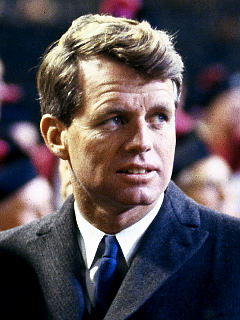
No teeth clenching allowed! Robert Kennedy once said “Each time a person stands up for an ideal, or acts to improve the lot of others, or strikes out against injustice, he or she sends forth a tiny ripple of hope. And crossing each other from a million different centers of energy and daring, those ripples build a current that can sweep down the mightiest walls of oppression and resistance.”
It’s not about everyone doing everything, it’s about each of us doing what we can. Not taking action because the problem is too big is not the answer.
And her second reply,
And Mickey – if the challenge of climate change/ocean acidification/biodiversity loss that we are facing as a species (taking the rest of the natural world with us) doesn’t make us mature, then nothing will. But I believe it will – as Paul Gilding says, humans are slow but not stupid!
Paul Gilding’s excellent website is always a great read, by the way.
But do reread those words of Robert Kennedy, they are powerfully inspiring.
Robert Kennedy
Each time a person stands up for an ideal, or acts to improve the lot of others, or strikes out against injustice, he or she sends forth a tiny ripple of hope. And crossing each other from a million different centers of energy and daring, those ripples build a current that can sweep down the mightiest walls of oppression and resistance.
Despite the fact that these words were said in response when South Africans suffered the tyranny of apartheid, the words are, perhaps, even more relevant today. Mankind has to combine the many ‘ripples of hope’ and build that current that will sweep away the crazy selfishness that is preventing us from living in harmony with this beautiful planet for hundreds of years ahead.
It was called “the most influential environmental photograph ever taken.” Rightly so!
Those words were spoken by the late Galen Rowell, the famous Californian wilderness photographer, commenting about the Earthrise photograph taken from Apollo 8 on December 24th, 1968 during the first manned mission to the Moon.
No one who saw that picture of the planet we all live on could fail to be moved. Indeed, none more so than onboard NASA astronaut Frank Borman who uttered the words as the Earth rose above the horizon of the moon, “Oh my God! Look at that picture over there! Here’s the Earth coming up. Wow, is that pretty.” It was fellow Apollo 8 crew-member, Bill Anders, who then took the ‘unscheduled’ photograph.
Who hasn’t gazed into a night sky and been lost in the beauty above our heads. Or felt the wind, flowing across our ancient lands, kiss our face. We stand so mite-like, so insignificant in all this immensity of creation. Our planet is ‘pretty’. Indeed, Planet Earth is good, beautiful, and so precious to life. Life that arose in just a fraction of time after our Solar System formed 3.7 billion years ago; the oldest traces of life have been found in fossils dating back 3.4 billion years. Our miracle of life.
But the one thing we cannot do is to take that miracle of life for granted. Here’s a perspective on that. Just a couple of months after that famous Earthrise photograph, in February 1969, America’s National Oceanic and Atmospheric Administration (NOAA) recorded the level of CO2 in the Earth’s atmosphere as 324.42 parts per million (PPM).
From 43 years ago we fast forward to February of 2012. NOAA now recorded that CO2 level as 393.65 PPM, some 21% higher than the 1969 level, but even more importantly over 12% higher than the figure of 350 PPM which is regarded by climate scientists as the maximum safe level for our Planet. And the trend upwards is steepening. Not just for CO2 but also for Methane and Nitrous Oxide which have the potential to be incredibly more damaging to our beautiful planet than CO2.
Across the face of the world people are waking up to the fact that something has to be done. While some Governments and many industries are providing great leadership, the complexities of these modern institutions means that progress is slow; far too slow. People are now taking action for themselves and for their communities.
The most notable group is the worldwide Transition Movement. It started in the UK in September 2006, indeed started in the town of Totnes, Devon, just three miles from where I used to live.
Less than 6 years later across the world there are 975 initiatives! Including nearly 500 Transition Communities in Europe and 392 in the UK.
In the USA, there are a staggering 285 initiatives with 26 in California and three here in Arizona: Tucson, Pima and and East Valley in Phoenix ‘mulling’ it over. The ideas behind the Transition concept are powerfully simple and can be easily summarised thus:
That it is inevitable that our lives will soon have to adapt to a dramatically lower energy consumption, especially carbon-based energy, and that it’s better to plan for it than to be taken by surprise.
That the over-whelming majority of communities, currently lacks resilience.
That we have to act now to rebuild our community resilience and prepare for life without fossil fuels.
That by tapping into the collective potential of the community, it is possible to develop new ways of living that are nourishing, fulfilling and ecologically sustainable.
Reduce our energy use, increase our resilience, switch away from carbon-based fuels and go back to the strength of communities. No mystery about what to do!
We do not have another 43 years. Indeed, some say we are very close to the tipping point of runaway climate consequences.
My message for this Earth Day and, indeed, for every day of the rest of our lives.
On April 10, 1912, the Titanic, largest ship afloat, left Southampton, England on her maiden voyage to New York City. The White Star Line had spared no expense in assuring her luxury. A legend even before she sailed, her passengers were a mixture of the world’s wealthiest basking in the elegance of first class accommodations and immigrants packed into steerage.
She was touted as the safest ship ever built, so safe that she carried only 20 lifeboats – enough to provide accommodation for only half her 2,200 passengers and crew. This discrepancy rested on the belief that since the ship’s construction made her “unsinkable,” her lifeboats were necessary only to rescue survivors of other sinking ships. Additionally, lifeboats took up valuable deck space.
Four days into her journey, at 11:40 P.M. on the night of April 14, she struck an iceberg. Her fireman compared the sound of the impact to “the tearing of calico, nothing more.” However, the collision was fatal and the icy water soon poured through the ship.
It became obvious that many would not find safety in a lifeboat. Each passenger was issued a life jacket but life expectancy would be short when exposed to water four degrees below freezing. As the forward portion of the ship sank deeper, passengers scrambled to the stern. John Thayer witnessed the sinking from a lifeboat. “We could see groups of the almost fifteen hundred people still aboard, clinging in clusters or bunches, like swarming bees; only to fall in masses, pairs or singly, as the great after part of the ship, two hundred and fifty feet of it, rose into the sky, till it reached a sixty-five or seventy degree angle.” The great ship slowly slid beneath the waters two hours and forty minutes after the collision
The next morning, the liner Carpathia rescued 705 survivors. One thousand five hundred twenty-two passengers and crew were lost. Subsequent inquiries attributed the high loss of life to an insufficient number of lifeboats and inadequate training in their use.
Read more of this fascinating account, especially the story of Elizabeth Shutes who, aged 40, was governess to nineteen-year-old Margaret Graham who was traveling with her parents. As Shutes and her charge sit in their First Class cabin they feel a shudder travel through the ship. At first comforted by her belief in the safety of the ship, Elizabeth’s composure is soon shattered by the realization of the imminent tragedy.
Also grateful to my cousin, Rose F., who sent me a link to a story in the British newspaper The Telegraph that came out in September, 2010. I don’t have permission to reproduce that story but hope that it being 18 months since it was published by the Telegraph makes my act forgiveable!
Titanic sunk by steering blunder, new book claims
It was always thought the Titanic sank because its crew were sailing too fast and failed to see the iceberg before it was too late.
But now it has been revealed they spotted it well in advance but still steamed straight into it because of a basic steering blunder.
According to a new book, the ship had plenty of time to miss the iceberg but the helmsman panicked and turned the wrong way.
By the time the catastrophic error was corrected it was too late and the side of the ship was fatally holed by the iceberg.
Even then the passengers and crew could have been saved if it had stayed put instead of steaming off again and causing water to pour into the broken hull.
The revelation, which comes out almost 100 years after the disaster, was kept secret until now by the family of the most senior officer to survive the disaster.
Second Officer Charles Lightoller covered up the error in two inquiries on both sides of the Atlantic because he was worried it would bankrupt the liner’s owners and put his colleagues out of job.
Since his death – by then a war hero from the Dunkirk evacuation – it has remained hidden for fear it would ruin his reputation.
But now his granddaughter the writer Lady (Louise) Patten has revealed it in her new novel. “It just makes it seem all the more tragic,” she said. “They could easily have avoided the iceberg if it wasn’t for the blunder.”
The error on the ship’s maiden voyage between Southampton and New York in 1912 happened because at the time seagoing was undergoing enormous upheaval because of the conversion from sail to steam ships.
The change meant there were two different steering systems and different commands attached to them.
Some of the crew on the Titanic were used to the archaic Tiller Orders associated with sailing ships and some to the more modern Rudder Orders.
Crucially, the two steering systems were the complete opposite of one another.
So a command to turn “hard a starboard” meant turn the wheel right under the Tiller system and left under the Rudder.
When First Officer William Murdoch spotted the iceberg two miles away, his “hard a-starboard” order was misinterpreted by the Quartermaster Robert Hitchins.
He turned the ship right instead of left and, even though he was almost immediately told to correct it, it was too late and the side of the starboard bow was ripped out by the iceberg.
“The steersman panicked and the real reason why Titanic hit the iceberg, which has never come to light before, is because he turned the wheel the wrong way,” said Lady Patten who is the wife of former Tory Education minister, Lord (John) Patten.
Whilst her grandfather Lightoller was not on watch at the time of the collision, her book Good as Gold reveals that a dramatic final meeting of the four senior officers took place in the First Officer’s cabin shortly before Titanic went down.
There, Lightoller heard not only about the fatal mistake, but also what happened next, up on the bridge.
While Hitchins had made a straightforward error, what followed was a deliberate decision.
Bruce Ismay, chairman of Titanic’s owner, the White Star Line, persuaded the Captain to continue sailing. For ten minutes, Titanic went “Slow Ahead” through the sea.
This added enormously to the pressure of water flooding through the damaged hull, forcing it up and over the watertight bulkheads, sinking Titanic many hours earlier than she otherwise would have done.
“Ismay insisted on keeping going, no doubt fearful of losing his investment and damaging his company’s reputation,” said Lady Patten. “The nearest ship was four hours away. Had she remained at ‘Stop’, it’s probable that Titanic would have floated until help arrived.”
The truth of what happened on that historic night was deliberately buried.
Lightoller, the only survivor who knew precisely what had happened, and who would later go on to be a twice-decorated war hero, decided to hide what he knew from the world, including two official inquiries into the sinking.
By his code of honour, he felt it was his duty to protect his employer – White Star Line – and its employees.
Lady Patten said: “The inquiry had to be a whitewash. The only person he told the full story to was his beloved wife Sylvia, my grandmother. As a teenager, I was enthralled by the Titanic. Granny revealed to me exactly what had happened on that night and we would discuss it endlessly.
She died when I was sixteen and, though she never told me to keep the knowledge to myself, I didn’t tell anyone. My mother insisted that everything remained strictly inside the family: a hero’s reputation was at stake.
Nearly forty years later, with Granny and my mother long dead, I was plotting my second novel and it struck me that I was the last person alive to know what really happened on the night Titanic sank.
My grandfather’s extraordinary experiences felt like perfect material for Good As Gold.
Sue has been a wonderful supporter of Learning from Dogs for which I am very grateful. Sue is the author of the blog, Dreamwalker’s Sanctuary and I do recommend that you pop across there and read her wonderful Posts. Recently, I read a beautiful poem that Sue had written and not only did she give me permission to republish that Post but also offered the following introduction. Thank you, Sue. The rest is all Sue!
First my thanks go to Paul who continues to awaken our knowledge to the Earth and our environment and whose posts are in-depth and informative posts on subjects which we should all be immersed in.
For Planet Earth is our Home and she is dying. And we Humans are still in a slumber as to the destruction we have inflicted upon her.
Our Native American Brothers knew long ago that we have to balance nature and we should only take that which we need.. But we have used Greed as our cutting tools and we as a species have become out of balance with nature and ourselves.
Paul has kindly asked if he could re-blog my poem . This poem speaks of those changes we all feel is happening within our world. I firmly believe like the Native Americans that we are united in Consciousness and that extends to our Earth Mother. We are linked together As One.
…oooOOOooo…
The Winds Of Change
The Winds of Change.
The Winds of Change flow across our land
Sweeping us up like the grains of sand
Twisting us round to look in the mirror
Cutting us deep to make us consider…
~
Our past which holds so many stains
As Ego rules in a world full of pain
The winds of Change are here to uplift
It’s time for Humanity to embrace all her gifts
~
But before we fly along with the wind
Mankind is reaping all his sown sins
The Anger, the Hatred, the Greed and his Pride
Will no longer have any places to hide
~
For the Winds of Change a tornado will swirl
As into the Abyss the Material will hurl
A river so deep into Oceans will run
With all tears cried from when time first begun
~
A cleansing of hearts as each soul will cry
As the Winds of Change blows into our eyes
Eyes that will open as we come awake
And Mankind will realise he can no longer take
~
The road of discovery can often be hard
A lonely walk as the Winds they bombard
It strips us bare to reveal our true souls
In a journey we’ve walked from Millennia of old
~
And as our tears fall they wash us all clean
Of the lies of the Past and all that has been
The Winds of Change it whistles in our Hearts
Get ready to fly – for we’re soon to depart.
~~~
Many things are happening around our world right now, and for many we are all going through some personal changes.. Change is always hard, and painful, for we resist it as we cling onto that which is familiar. But without Change we do not grow, or progress..
Some of those Changes which are taking place around our Earth are bringing with it tears..
Tears we weep help cleanse our inner-most souls as we wash ourselves from within and we release our emotions.
So, too, our Earth Mother is getting ready for Change… her Winds too are blowing a warning, as she is releasing her tears as she lets them spill as rain..
Too long has she held them within…
We are One with Mother Nature… Watch her, as she is stirring..
Be Ready..
She is Changing, and as she does we will feel her shake, as her body sobs.
By sending out your love,
By loving your selves we are helping each other over these Changes..
We are helping Unite ourselves and Mother Earth once again in Harmony
~~~~
A tree knows how to bend in the wind, or it breaks and falls..
Water finds its path as it flows into ALL to find its own level
So too we must go within that flow and follow our hearts
We need to be that Oneness,
We need to stop hurting one another,
We need to breath in that Light of Love
And Share it in Unity of Oneness
This is the Time of Change
Let the Winds blow
Love into your
Hearts
Native American Indian Quote
“You must teach your children that the ground beneath their feet is the ashes of your grandfathers. So that they will respect the land, tell your children that the earth is rich with the lives of our kin. Teach your children what we have taught our children, that the earth is our mother. Whatever befalls the earth befalls the sons of the earth. If men spit upon the ground, they spit upon themselves.”
~ Unknown ~
Don’t worry, this is not going to be some chest-banging Post! I leave those for Monday to Friday. 😉 No, I just wanted to offer a couple of examples of the power of goodness and how making a positive difference is no more than wanting it. As Perfect Stranger commented last Tuesday, “A single candle may light a thousand others and they in turn many thousands more” – Buddha
The first example is about how a group of upstanding citizens rescue a school of dolphins that became stuck on a beach in Brazil.
The second example comes from closer to home. Ginger I. is a Board Member of the Humane Society of Central Arizona and is based at Payson. Jean has been a volunteer at the Society’s Thrift Store for some time and has got to know Ginger well.
Ginger recently emailed me this; it has already done the rounds of the WWW, and quite rightly so. It reminds me of the book Dogs Never Lie About Love, written by Jeffrey Masson, from which comes the following,
This ambiguity, which includes a certain ambivalence as well, has been memorialized in our speech, in our sayings, and in our tributes to and about dogs. Sir John Davies, in his epigram In Cineam (written in 1594), observed:
Thou sayest thou art as weary as a dog,
As angry, sick, and hungry as a dog,
As dull and melancholy as a dog,
As lazy, sleepy, idle as a dog.
But why dost thou compare thee to a dog?
In that for which all men despise a dog,
I will compare thee better to a dog.
Thou art as fair and comely as a dog,
Thou art as true and honest as a dog,
Thou art as kind and liberal as a dog,
Thou art as wise and valiant as a dog.
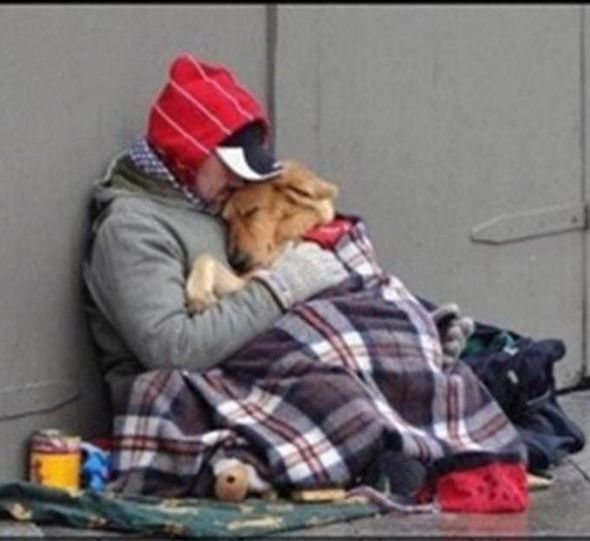
Ever since Madame Roland said in the eighteenth century “Plus je vois les hommes, plus j’admire les chiens” (The more I see of men, the more I admire dogs), generally what has been written about dogs tends to be positive. Sometimes it is even wonderful, as in William James’s statement “Marvelous as may be the power of my dog to understand my moods, deathless as is his affection and fidelity, his mental state is as unsolved a mystery to me as it was to my remotest ancestor.” Or it may be delicious, like Ambrose Bierce’s definition in his Devil’s Dictionary, “Dog, n. A kind of additional or subsidiary Deity designed to catch the overflow and surplus of the world’s worship.” Samuel Coleridge, in Table-Talk (May 2, 1830), was one of the first to note that “the best friend a man has in the world may turn against him and become his enemy. His son or daughter … may prove ungrateful. Those who are nearest and dearest to him … may become traitors to their faith…. The one absolutely unselfish friend that man can have in this selfish world, the one that never deserts him, the one that never proves ungrateful or treacherous, is his dog.”
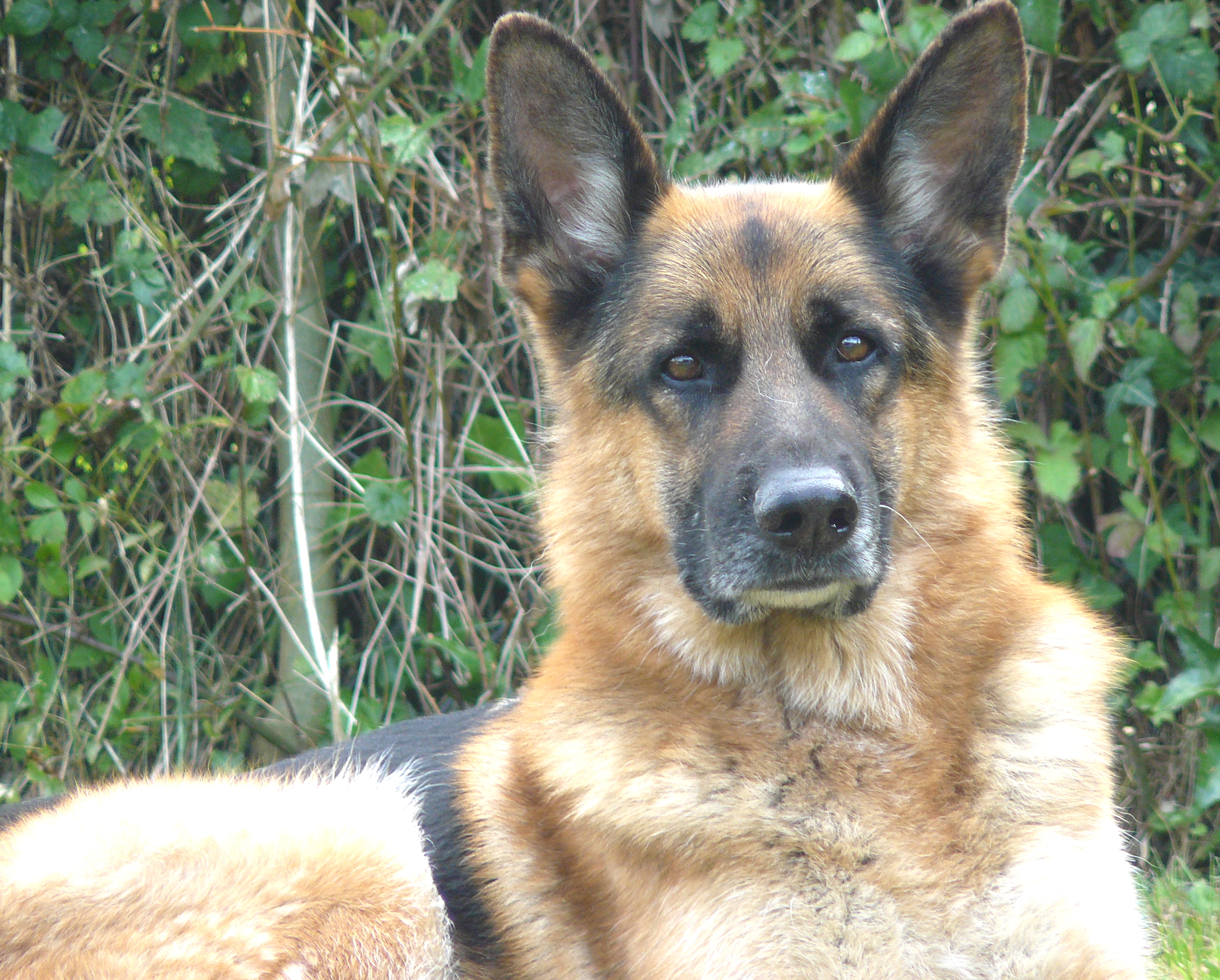
Just read that last sentence again from Samual Coleridge as you look at the photograph below, “The one absolutely unselfish friend that man can have in this selfish world, the one that never deserts him, the one that never proves ungrateful or treacherous, is his dog.”
There has been a wealth of information going past my ‘desk’ in the last couple of days that gives plenty of cause to worry. But I’m going to spend a few days mulling it all over rather than react in some ‘knee-jerk’ fashion.
However, a couple of stories caught my eye a few days ago on the BBC News website and seemed worthy of sharing with you.
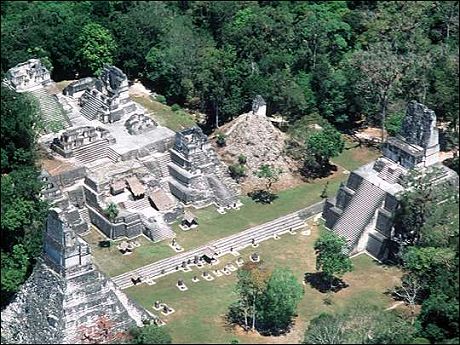
Mild drought caused Maya collapse in Mexico, Guatemala
Relatively mild drought conditions may have been enough to cause the collapse of the Classic Maya civilisation, which flourished until about AD950 in what is now southern Mexico and Guatemala.
Scientists have long thought that severe drought caused its collapse.
But Mexican and British researchers now think that a sustained drop in rainfall of only 25-40% was enough to exhaust seasonal water supplies in the region.
The findings were published in the journal Science.
The research was conducted by the Yucatan Centre for Scientific Research in southern Mexico and the University of Southampton in the UK.
The second piece published by the BBC within 24 hours went as follows,
Drought conditions in England ‘set to widen’
Ongoing dry weather over the spring and summer threatens to place more areas of England in a state of drought, the Environment Agency (EA) has warned.
It singled out parts of western, central and south western England and parts of south east Yorkshire.
The agency said time was running out for rain to restore groundwater levels before the new growing season begins.
Earlier this week the South East joined most of East Anglia in a state of official drought.
In parts of south-east England groundwater levels are lower than in the infamously dry summer of 1976.
Again, read the full article on the BBC website here.
And closer to home?
The historical (30-year average) precipitation for Payson up here in the Rim Country is 2.30 inches for January, and 2.41 inches for February. Today, February 29th 2012, we have had less than 0.5 inches for the whole of 2012 so far! Interesting times!
Last mutterings for now regarding man’s effect on our Planet!
There’s been a string of items on Learning from Dogs in recent days about mankind’s footprint changing our planet but this Blog is not a single issue Blog unless learning the values of life from dogs is to be seen as a single issue.
So I’m going to include a few more items about climate change/global warming here and leave it for a while. (But, please, don’t let that stop you sending me interesting stuff, as so many of you lovely readers do!)
So more evidence about how the planet has warmed up in this video released by NASA.
Global temperatures have warmed significantly since 1880, the beginning of what scientists call the “modern record.” At this time, the coverage provided by weather stations allowed for essentially global temperature data. As greenhouse gas emissions from energy production, industry and vehicles have increased, temperatures have climbed, most notably since the late 1970s. In this animation of temperature data from 1880-2011, reds indicate temperatures higher than the average during a baseline period of 1951-1980, while blues indicate lower temperatures than the baseline average. (Data source: NASA Goddard Institute for Space Studies. Visualization credit: NASA Goddard Space Flight Center Scientific Visualization Studio)
The global average surface temperature in 2011 was the ninth warmest since 1880, according to NASA scientists. The finding continues a trend in which nine of the 10 warmest years in the modern meteorological record have occurred since the year 2000.
NASA’s Goddard Institute for Space Studies (GISS) in New York, which monitors global surface temperatures on an ongoing basis, released an updated analysis that shows temperatures around the globe in 2011 compared to the average global temperature from the mid-20th century. The comparison shows how Earth continues to experience warmer temperatures than several decades ago. The average temperature around the globe in 2011 was 0.92 degrees F (0.51 C) warmer than the mid-20th century baseline.
“We know the planet is absorbing more energy than it is emitting,” said GISS Director James E. Hansen. “So we are continuing to see a trend toward higher temperatures. Even with the cooling effects of a strong La Niña influence and low solar activity for the past several years, 2011 was one of the 10 warmest years on record.”
The difference between 2011 and the warmest year in the GISS record (2010) is 0.22 degrees F (0.12 C). This underscores the emphasis scientists put on the long-term trend of global temperature rise. Because of the large natural variability of climate, scientists do not expect temperatures to rise consistently year after year. However, they do expect a continuing temperature rise over decades.
The first 11 years of the 21st century experienced notably higher temperatures compared to the middle and late 20th century, Hansen said. The only year from the 20th century in the top 10 warmest years on record is 1998.
Higher temperatures today are largely sustained by increased atmospheric concentrations of greenhouse gases, especially carbon dioxide. These gases absorb infrared radiation emitted by Earth and release that energy into the atmosphere rather than allowing it to escape to space. As their atmospheric concentration has increased, the amount of energy “trapped” by these gases has led to higher temperatures.
Global temperature difference
The carbon dioxide level in the atmosphere was about 285 parts per million in 1880, when the GISS global temperature record begins. By 1960, the average concentration had risen to about 315 parts per million. Today it exceeds 390 parts per million and continues to rise at an accelerating pace.
The temperature analysis produced at GISS is compiled from weather data from more than 1,000 meteorological stations around the world, satellite observations of sea surface temperature and Antarctic research station measurements. A publicly available computer program is used to calculate the difference between surface temperature in a given month and the average temperature for the same place during 1951 to 1980. This three-decade period functions as a baseline for the analysis.
Hansen said he expects record-breaking global average temperature in the next two to three years because solar activity is on the upswing and the next El Niño will increase tropical Pacific temperatures. The warmest years on record were 2005 and 2010, in a virtual tie.
“It’s always dangerous to make predictions about El Niño, but it’s safe to say we’ll see one in the next three years,” Hansen said. “It won’t take a very strong El Niño to push temperatures above 2010.”
Finally, the blogsite Skeptical Science have recently published a fascinating graphic that shows how a single set of data can be interpreted in different ways. That graphic may be seen by clicking here and it comes from a revealing article Still Going Down the Up Escalator. Go read it!
Charles Dickens was born on the 7th February, 1812.
Just a short item from me today.
Charles Dickens
Inevitably, the bicentenary of someone as well known as Charles Dickens is going to be widely celebrated. WikiPedia has a nice summary for someone, such as me, who isn’t too familiar with the writings or life history of Charles Dickens, from which I quote,
Charles John Huffam Dickens (7 February 1812 – 9 June 1870) was an English novelist, generally considered the greatest of the Victorian period. Dickens enjoyed a wider popularity and fame than had any previous author during his lifetime, and he remains popular, having been responsible for some of English literature’s most iconic novels and characters.
Many of his writings were originally published serially, in monthly instalments, a format of publication which Dickens himself helped popularise. Unlike other authors who completed novels before serialisation, Dickens often created the episodes as they were being serialised. The practice lent his stories a particular rhythm, punctuated by cliffhangers to keep the public looking forward to the next instalment. The continuing popularity of his novels and short stories is such that they have never gone out of print.
From the BBC website, there is a podcast that can be downloaded, introduced thus,
Docs: Dreaming Dickens: Feb 03 12
Fri, 3 Feb 12
Duration: 24 mins
In this documentary-fantasy we bring the danger back to Dickens. Slipping in and out of his weird and brilliant imagination, we see modern London as he might have done, travelling through the city’s streets at night to crack dens and strip-joints as the police sirens wail. We meet characters from his novels and characters who would be in his novels if he were still alive today.
By Bryony Jones, CNN
updated 9:16 AM EST, Mon February 6, 2012
London (CNN) — Charles Dickens is one of the world’s best-loved writers, whose books — and the countless film and TV adaptations they inspire — still keep readers (and viewers) on the edge of their seats.
Now, 200 years on from his birth, his genius is to be feted with a host of events marking the bicentenary of one of Britain’s most famous sons.
Dickens 2012 will see everything from readings to royal visits, celebrating the man who gave the world “Oliver Twist,” “David Copperfield” and “Great Expectations.”
In London, the special events will begin with a celebrity performance, by actors Simon Callow and Joanna Lumley, at the Dickens family’s graves in Highgate Cemetery on Monday.
And on Tuesday, the anniversary of Dickens’ birth, the Prince of Wales will lay a wreath at Dickens’ grave in Poet’s Corner, Westminster Abbey, while actor Ralph Fiennes, Dickens’ biographer Claire Tomalin and the author’s great-great-grandson, Mark Dickens give readings.
So, quite rightly, a broad appreciation for the great man.
Two days ago, I wrote a piece about how the evolution of the domestic dog has been reliably re-calibrated back to around 33,000 years ago. I quoted from an article in the Arizona Republic, here are the opening paragraphs of that article.
Tamed dogs may go back 33,000 years
by Anne Ryman – Jan. 24, 2012 11:33 PM
The Republic | azcentral.com
Dogs have been “man’s best friend” longer than any other animal. And, as it turns out, longer than previously thought.
A pair of research papers published in the past few years, one most recently by a team that includes the University of Arizona, significantly pushes back the timeline for domestication of dogs from about 14,000 years ago to more than 30,000 years ago.
Researchers at UA and universities in England and the Netherlands used radiocarbon dating to determine that the skull of a Siberian dog was about 33,000 years old. Slightly older dog remains were identified in Belgium a few years ago by a separate research team.
So moving on, and apologies for a bit of a personal muse.
Last night (the night of the 30th/31st Jan.) a single, gentle yelp from Pharaoh had me instantly awake. Initially hadn’t a clue about the time but instinctively knew it was an un-Godly hour! Jean and I had been late to bed and I was pretty tired when the lights went out – off to sleep in an instant. Ergo, waking up at 2am as it turned out to be, the classic deep-sleep time of the night, was challenging! It is also relevant to mention that Pharaoh is reliably a very good sleeper at night.
Yet, in literally an instant of time, I had transitioned from being totally asleep to being mentally alert wondering what had caused him to cry out. Pharaoh came to the side of the bed and let me rub his head, then went back to near the door and uttered another soft yelp. I knew without any doubt at all that he was in pain and lay on my back anticipating what would be coming – putting a dressing-gown on and leading his nibs out into a very cold and dark night!
Then a clawed paw on the door told me to get moving, and within moments of Pharaoh being outside, it was clear that he had a badly upset tummy.
The whole episode was repeated around 4.45 am.
It was later in the morning that I was reflecting with Jean about the evolution of the dog-human relationship that a) gave the dog the instinctive confidence to call out to his ‘master’ in a different ‘I need help‘ tone, and b) that the call was so rapidly interpreted by a human as a call for help from another species.
But dogs sleeping near or around their human companions for more than 30,000 years allows plenty of time for species bonding to develop in ways that are both beautiful and mysterious. Long may that bonding remain beautiful and mysterious.
Fabulous animals!
Pharaoh. June 2008, 3 months before we both left for Mexico!
Some recent published research shows just how far back goes man’s relationship with the domesticated dog!
First, a big thank you to Merci O. who originally sent me the link to the item that I will refer to later on. But first, a recap as to the origins of this Blog Learning from Dogs.
Dr David Hawkins of Veritas Publishing, Sedona, Arizona.
Way back in 2007 I was working with a good friend of mine who lives in SW England who, professionally, makes good use of the philosophies of Dr. David Hawkins. David Hawkins has written a number of books including Truth vs Falsehood: How to Tell the Difference which I read a few years ago and found very convincing. Here’s how Amazon describes the book,
The exploration into the truth of man’s activities is unique, intriguing, and provocative. From a new perspective, one quickly grasps the levels of truth expressed by the media, the arts, writers, painters, architecture, movies, TV, politics, and war, as well as academia and the greatest thinkers and philosophies through the ages and up to present-day science and advanced theories of the nature of the universe. Most importantly, the ego and its structure are revealed to facilitate the understanding of religious and spiritual truths expressed by the mystics and enlightened sages over the centuries. It becomes apparent why the human mind, unaided, has been intrinsically incapable of discerning truth from falsehood. A simple test is described that, in seconds, can solve riddles that have been irresolvable by mankind for centuries. This book delivers far more than it promises.
Reveals a breakthrough in documenting a new era of human knowledge. Only in the last decade has a science of Truth emerged that, for the first time in human history, enables the discernment of truth from falsehood. Presented are discoveries of an enormous amount of crucial and significant information of great importance to mankind, along with calibrations of historical events, cultures, spiritual leaders, media, and more.
A science of consciousness developed which revealed that degrees of truth reflect concordant calibratable levels of consciousness on a scale of 1 to 1,000. When this verifiable test of truth was applied to multiple aspects of society (movies, art, politics, music, sociology, religion, scientific theories, spirituality, philosophy, everyday Americana, and all the countries of the world), the results were startling.
Trust me, I am (slowly) getting to the point!
Dr. Hawkins created a ‘map’ of those calibrated levels of consciousness, see details of that map here. Also, it wasn’t too difficult to find a plain B&W version on the Web, reproduced below.
As you can see when you study the map, the boundary between ‘truth’ and ‘falsehood’ is the calibrated level of 200, the blue line in the above described as ‘The beginning of integrity’.
Anyway, back to my psychotherapy friend, Jon, in SW England. When I used to visit him, I always had Pharaoh with me and he would settle down behind my chair and let the human talk just flow over him, happy at some dog level to be included.
One day Jon was talking about the different levels on consciousness and looked over at Pharaoh asleep on the floor and said, “Do you that dogs are integrous!” I responded that I didn’t know that, please tell me more.
Jon continued, “Yes, dogs have been calibrated as having a level of consciousness in the zone of 205 to 210.”
Wow! What a revelation, that in a way didn’t strike me as foolish. After 4 years of having Pharaoh as my companion, qualities such as unconditional love towards me, trust, courage, integrity and forgiveness were an obvious part of his character. See where those levels and emotions appear on the map above.
Later back home, I was idly browsing domain names and saw that ‘learningfromdogs’ was available! Little did I realise then that in September 2008, Pharaoh and I would move out to live with Jeannie and her 12 other dogs in San Carlos, Mexico and subsequently in February, 2010, all of us move to Payson, Arizona. I started writing the Blog Learning from Dogs on July 15th, 2009 when still down in Mexico.
Still awake out there? 🙂
As part of my research into the domesticated dog in the early days of putting the Blog together, I explored the science behind the separation, or perhaps better described as the evolution, of the domestic dog (Canis lupus familiaris) from the wolf (Canis lupus). That the domesticated dog was originally a form of the gray wolf, a member of the Canidae family of the order Carnivora.
It was clear that scientists were divided on when this happened. Some argue it occurred 100,000 years ago, others that it was a far more recent development, closer to 15,000 years ago. I wrote here under the heading of Dogs and Integrity,
Dogs are part of the Canidae, a family including wolves, coyotes and foxes, thought to have evolved 60 million years ago. There is no hard evidence about when dogs and man came together but dogs were certainly around when man developed speech and set out from Africa, about 50,000 years ago. See an interesting article by Dr. George Johnson.
On the Home Page, I say,
Yet they have been part of man’s world for an unimaginable time, at least 30,000 years. That makes the domesticated dog the longest animal companion to man, by far!
As man’s companion, protector and helper, history suggests that dogs were critically important in man achieving success as a hunter-gatherer. Dogs ‘teaching’ man to be so successful a hunter enabled evolution, some 20,000 years later, to farming, thence the long journey to modern man.
Those words were more of an instinctive assessment than based on hard science. Now we have the science!
by Anne Ryman – Jan. 24, 2012 11:33 PM
The Republic | azcentral.com
Dogs have been “man’s best friend” longer than any other animal. And, as it turns out, longer than previously thought.
A pair of research papers published in the past few years, one most recently by a team that includes the University of Arizona, significantly pushes back the timeline for domestication of dogs from about 14,000 years ago to more than 30,000 years ago.
Researchers at UA and universities in England and the Netherlands used radiocarbon dating to determine that the skull of a Siberian dog was about 33,000 years old. Slightly older dog remains were identified in Belgium a few years ago by a separate research team.
The two findings indicate the process of domestication was occurring in separate regions at a time when early humans, including Neanderthals, in Europe and Siberia were small-group hunter-gatherers. About 14,000 years ago, Neanderthals were gone and humans were more mobile, living and hunting in larger groups.
The latest study’s co-author, UA professor Gregory Hodgins, said the finding broadens the timeline of humans interacting with the natural world. While humans have depended on animals since the dawn of the human species, domestication of animals indicates a symbiotic relationship between the two.
“It suggests living in close quarters and some sort of emotional bond,” he said.
Then just a couple of paragraphs later, came confirmation of my speculative position,
Before the most recent discoveries in Siberia and Belgium, the first signs of dog domestication appeared about 14,000 years ago. At some point, humans began relying on dogs for things like protection, hunting and companionship.
Dogs allowed humans to become a different, more effective predator, said Michael Barton, an Arizona State University anthropology professor who was not a co-author of either recent study. A dog’s keen sense of smell allowed humans to track animals better.
“They give us an edge,” he said.
The article closes,
The UA research on dogs was published recently in Public Library of Science One, a peer-reviewed journal. The team included scientists in Russia, Canada, England and the Netherlands. Research on the Belgian dog was published in 2008 in the Journal of Archeological Science.
It really is worth reading in full and a brilliant find by Merci. It may be entirely the case that without dogs man could not have evolved beyond hunter-gatherers to farmers.






 Learning from Dogs