On the 21st., I published a post Be in peace this day! It was noting this year’s International Peace Day. One of the comments left by Patrice Ayme, in response to an earlier comment from Alex Jones, was this:
Alex: I read your message, and I approve it. Very well put. As Lord Keynes said: ”In the end, we are all dead.” Death seems pretty violent to me. Yet, one can live with it, and embrace it, because, as there is no choice, we may as well.
War is not anymore a problem than peace is. What matters most is the harmony of the society with the environment, not strife within. Plutocrats have unbalanced the environment, so they should be reduced, and that means war, because peace certainly will not reduce them.
Force is the truth of man. Everything else is delusion, even the vegetarian style.
To which I replied:
Patrice, as much as I deeply respect your intellect, I fundamentally am at odds with the sentiments you express. But rather than hide behind a short reply that few will read and even fewer take notice of, I’m going to write a post exploring my reactions in detail. As always, your comments are welcomed.
This, then, is that post.
But where oh where to start? Perhaps by me setting out this general premise.
Wherever one looks, it seems there are examples of madness bordering on the criminally insane.
In so many ways and at so many levels we are running the very real risk that by 2050 the end of this present era of human civilisation by the end of the century will be unavoidable. Ergo: Born after 1980? Then brace yourself for the end times.
The only solution is to adopt the core values of humanity. Very soon!
So on to a few examples of the present madness (and I would be the first to admit that I am, perhaps prejudicially, inclined to see the darkness of our present times).
First: Climate Change
The recent IPCC report made it clear that climate change is most likely a result of man’s activities on this planet. As the summary for policy makers says (selected extracts):
Warming of the climate system is unequivocal, and since the 1950s, many of the observed changes are unprecedented over decades to millennia. The atmosphere and ocean have warmed, the amounts of snow and ice have diminished, sea level has risen, and the concentrations of greenhouse gases have increased.
and
Human influence on the climate system is clear. This is evident from the increasing greenhouse gas concentrations in the atmosphere, positive radiative forcing, observed warming, and understanding of the climate system.
and [my emboldening]
Human influence has been detected in warming of the atmosphere and the ocean, in changes in the global water cycle, in reductions in snow and ice, in global mean sea level rise, and in changes in some climate extremes (Figure SPM.6 and Table SPM.1). This evidence for human influence has grown since AR4. It is extremely likely that human influence has been the dominant cause of the observed warming since the mid-20th century.
But denial is only part of the problem. More significant is the behaviour of powerful people who claim to accept the evidence. This week the former Irish president Mary Robinson added her voice to a call that some of us have been making for years: the only effective means of preventing climate breakdown is to leave fossil fuels in the ground. Press any minister on this matter in private and, in one way or another, they will concede the point. Yet no government will act on it.
As if to mark the publication of the new report, the Department for Business, Innovation and Skills has now plastered a giant poster across its ground-floor windows: “UK oil and gas: Energising Britain. £13.5bn is being invested in recovering UK oil and gas this year, more than any other industrial sector.”
The message couldn’t have been clearer if it had said “up yours”. It is an example of the way in which all governments collaborate in the disaster they publicly bemoan. They sagely agree with the need to do something to avert the catastrophe the panel foresees, while promoting the industries that cause it.
It doesn’t matter how many windmills or solar panels or nuclear plants you build if you are not simultaneously retiring fossil fuel production. We need a global programme whose purpose is to leave most coal and oil and gas reserves in the ground, while developing new sources of power and reducing the amazing amount of energy we waste.
But, far from doing so, governments everywhere are still seeking to squeeze every drop out of their own reserves, while trying to secure access to other people’s. As more accessible reservoirs are emptied, energy companies exploit the remotest parts of the planet, bribing and bullying governments to allow them to break open unexploited places: from the deep ocean to the melting Arctic.
And the governments who let them do it weep sticky black tears over the state of the planet.
Kevin Anderson, professor of energy and climate change at the University of Manchester
What has changed significantly since the last report is that we have pumped an additional 200 billion tonnes of CO2 into the atmosphere. Annual emissions are now 60% higher than at the time of the first report in 1990 and atmospheric CO2 levels are the highest they have been for over two million years.
So what are we doing in the UK to help reverse this reckless growth in emissions? Record levels of investment in North Sea oil, tax breaks for shale gas, investment in oil from tar sands and companies preparing to drill beneath the Arctic.
Against this backdrop, the UK Treasury is pushing for over 30 new gas power stations, whilst the government supports further airport expansion and has dropped its 2030 decarbonisation target – all this alongside beleaguered plans for a few wind farms and weak energy efficiency measures. Governments, businesses and high-emitting individuals around the world now face a stark choice: to reduce emissions in line with the clear message of the IPCC report, or continue with their carbon-profligate behaviour at the expense of both climate-vulnerable communities and future generations.
OK, let’s move to another example of our collective madness.
Second: The way we treat the natural wildlife.
Last Thursday, the New York Times published an item about a recent report confirming the terrible cost to our wildlife of fragmenting their habitat. Here are the opening paragraphs, including the leading photograph in that NYT piece.
In Fragmented Forests, Rapid Mammal Extinctions
An isolated forest in the Chiew Larn reservoir. A Thai government project to supply hydroelectric power to the area transformed 150 forested hilltops into islands. ANTONY LYNAM
By CARL ZIMMER
September 26, 2013
In 1987, the government of Thailand launched a huge, unplanned experiment. They built a dam across the Khlong Saeng river, creating a 60-square-mile reservoir. As the Chiew Larn reservoir rose, it drowned the river valley, transforming 150 forested hilltops into islands, each with its own isolated menagerie of wildlife.
Conservation biologists have long known that fragmenting wilderness can put species at risk of extinction. But it’s been hard to gauge how long it takes for those species to disappear. Chiew Larn has given biologists the opportunity to measure the speed of mammal extinctions. “It’s a rare thing to come by in ecological studies,” said Luke Gibson, a biologist at the National University of Singapore.
Over two decades, Dr. Gibson and his colleagues have tracked the diversity of mammals on the islands. In Friday’s issue of the journal Science, they report that the extinctions have turned out to be distressingly fast.
“Our results should be a warning,” said Dr. Gibson. “This is the trend that the world is going in.”
On a similar theme, many will recall my post back on the 19th, Pity the bees; pity us when I drew attention to the drastic reduction in the numbers of wild bees, including the quote “the vanishing honeybee could be the herald of a permanently diminished planet.“
Guard their future – and ours!
Third: Money and power.
Again from The New York Times but this time an essay by Paul Krugman.
Robert Benmosche, the chief executive of the American International Group, said something stupid the other day. And we should be glad, because his comments help highlight an important but rarely discussed cost of extreme income inequality — namely, the rise of a small but powerful group of what can only be called sociopaths.
For those who don’t recall, A.I.G. is a giant insurance company that played a crucial role in creating the global economic crisis, exploiting loopholes in financial regulation to sell vast numbers of debt guarantees that it had no way to honor. Five years ago, U.S. authorities, fearing that A.I.G.’s collapse might destabilize the whole financial system, stepped in with a huge bailout. But even the policy makers felt ill used — for example, Ben Bernanke, the chairman of the Federal Reserve, later testified that no other episode in the crisis made him so angry.
And it got worse. For a time, A.I.G. was essentially a ward of the federal government, which owned the bulk of its stock, yet it continued paying large executive bonuses. There was, understandably, much public furor.
So here’s what Mr. Benmosche did in an interview with The Wall Street Journal: He compared the uproar over bonuses to lynchings in the Deep South — the real kind, involving murder — and declared that the bonus backlash was “just as bad and just as wrong.”
OK, that’s enough ‘copying’ from me so please go and read more about the plight of those poor billionaires. But if the NYT and Paul Krugman will forgive me, here’s the paragraph towards the end of the Krugman essay that makes me sick [my emboldening]:
The thing is, by and large, the wealthy have gotten their wish. Wall Street was bailed out, while workers and homeowners weren’t. Our so-called recovery has done nothing much for ordinary workers, but incomes at the top have soared, with almost all the gains from 2009 to 2012 going to the top 1 percent, and almost a third going to the top 0.01 percent — that is, people with incomes over $10 million.
Staying with the struggles of our billionaires for a moment longer, try the recent report on Bloomberg about the recent Monaco Yacht Show that included this:
As the yacht size has stretched — this year saw the launch of a record-holding 590-footer called the Azzam — so has the list of distractions onboard. Soaking in a jacuzzi, shooting hoops on a floating court or playing a baby grand Steinway piano no longer cut it.
“There is a change in attitude of super-yacht owners,” said Bert Houtman, founder and chairman of the Netherlands-based U-Boat Worx, surveying two of his submarine models on display quai-side in Monaco. “They’re fed up with drinking white wine and riding jet skis so they’re looking for another thrill.”
later including:
“A lot of guys who are billionaires have profound financial accomplishments and are now concerned about their legacy,” said Deppe. (Marc Deppe, Triton Subs vice-president of sales and marketing.)
It’s enough to make one weep!
Fourth: Politicians and governments not serving their peoples.
Making this my last example. Simply because a recent item published on Naked Capitalism had so much detail on what is wrong with our leaders; in this particular case regarding the American Affordable Care Act (ACA). This is how the article opens:
Many people, and especially Obama supporters, characterize the ACA (ObamaCare) as “just starting” or a “work in progress” and then go on to urge that the program will have “glitches,” needs to be “tweaked,” isn’t yet “fully implemented,” and so forth. We think it’s a mistake to see the ACA as just starting. We also think it’s a mistake not to weigh the costs of ObamaCare’s stately three-year progress toward partial coverage for the the American people, and just as important to weigh the opportunity costs.
The ACA was passed in March 2010, incorporating many features designed to meet Republican objections to the Bill. Yet, in the end, Democrats never put Medicare for All on the table, abandoned the public option and many other features, and did not get a single Republican vote in either chamber.
The Democrats even saw to it that the bill was fiscally neutral over a 10 year projection at a time when the tanked economy needed more deficit spending and the jobs that would have brought. And to do that, they postponed implementation of most of the bill for more than three years, until now, allowing people to go without care, to die, to divorce, and to lose their homes or go bankrupt due to medical bills, just so they could argue that the bill was fiscally neutral. In gauging the record of the bill, these 3 to 3.5 years of waiting for its implementation and their real costs to the people of the United States must be taken into account.
It also must be taken into account that in the year before the ACA was passed there were some 45 million Americans uninsured, and they were dying at the rate of 1,000 more for every million than in the general population. That is, lack of insurance was causing more than 45,000 fatalities per year. (The cost of those deaths in money terms: $1.38 trillion).
That’s what we’ve lost by not trying to pass HR 676 and by trying instead to take a bipartisan insurance company conciliation approach to passing the ACA. This post, gives the total for the anticipated opportunity cost by comparing Romney’s 2012 alternative to the ACA, the baseline of no reform at all, the ACA, and Medicare for All over the period 2010 – 2022. Bottom line: the ACA is projected to cost 286,500 lives through 2022, assuming no change. That’s a lot better than the baseline and a lot better than Romney’s 2012 alternative. But it’s still terrible compared to what we might have had if we had a President who really represented people rather than Wall Street.
What if an effort to pass HR 676 had failed in 2009 because too many Democrats in the Senate defected to pass it? Well, I think this would have been very unlikely with the very large Democratic majority and the popularity of the president at its height, but even if it would have failed, then the Democrats could still have compromised with members of their party to pass enhanced Medicare for All for everyone under 26 and over 45, or under 26 and over 50, or whatever compromise would have moved those wayward Democrats up to the 50 vote mark. Such a compromise bill would still have lowered the fatalities substantially by providing insurance for those who needed it most and by enhancing the Medicare program for seniors (full coverage and no co-pays). It would also have been something Democrats could have run on and built upon in each successive election year, rather than having to defend the sorry ACA with its package of inadequate goodies, silly mandate, IRS enforcement, high cost for lousy coverage, and Rube Goldberg eligibility determination. Again there would have been no Tea Party, because Tea Partiers like Medicare, and there would have been no Republican nationwide sweep in 2010, no gerrymandering, no voter suppression, no anti-woman bills, and none of all the rest of the nonsense we’ve seen because the Democrats did what they did.
Earlier in the post I offered a general premise that included, “Wherever one seems to look there are examples of madness bordering on the criminally insane.”
To my mind, these examples support that premise. Trust me, there are countless more examples.
So what to do? Because I am fundamentally at odds with the sentiment expressed by Patrice Ayme; “Force is the truth of man. Everything else is delusion, even the vegetarian style.”
The answer takes us to tomorrow’s post, A return to integrity.
And, yes, it does mention dogs! Rather a lot as it happens!
Anyone, anywhere can celebrate Peace Day. It can be as simple as lighting a candle at noon, sitting in silent meditation, or doing a good deed for someone you do not know. Or it can involve getting your co-workers, organization, community or government engaged in a large event.
The impact if millions of people in all parts of the world, coming together for one day of peace, is immense, and does make a difference.
International Day of Peace is also a Day of Ceasefire – personal or political. Take this opportunity to make peace in your own relationships as well as impact the larger conflicts of our time. Imagine what a whole Day of Ceasefire would mean to humankind.
Can’t argue with that or with this year’s UN Secretary-General Ban Ki-moon’s message for today’s International Day of Peace.
So don’t forget!
Wherever you are in the world, take a minute off at mid-day and be at peace.
The fact that the Fukushima reactors have been leaking huge amounts of radioactive water ever since the 2011 earthquake is certainly newsworthy. As are the facts that:
If one of the pools collapsed or caught fire, it could have severe adverse impacts not only on Japan … but the rest of the world, including the United States. Indeed, a Senator called it a national security concern for the U.S.:
The radiation caused by the failure of the spent fuel pools in the event of another earthquake could reach the West Coast within days. That absolutely makes the safe containment and protection of this spent fuel a security issue for the United States.
Nuclear expert Arnie Gundersen and physician Helen Caldicott have both said that people should evacuate the Northern Hemisphere if one of the Fukushima fuel pools collapses. Gundersen said:
Move south of the equator if that ever happened, I think that’s probably the lesson there.
Former U.N. adviser Akio Matsumura calls removing the radioactive materials from the Fukushima fuel pools “an issue of human survival”.
So the stakes in decommissioning the fuel pools are high, indeed.
But in 2 months, Tepco – the knuckleheads who caused the accident – are going to start doing this very difficult operation on their own.
Thousands of workers and a small fleet of cranes are preparing for one of the latest efforts to avoid a deepening environmental disaster that has China and other neighbors increasingly worried: removing spent fuel rods from the damaged No. 4 reactor building and storing them in a safer place.
Tom Snitch, a senior professor at the University of Maryland and with more than 30 years’ experience in nuclear issues, said “[Japan officials] need to address the real problems, the spent fuel rods in Unit 4 and the leaking pressure vessels,” he said. “There has been too much work done wiping down walls and duct work in the reactors for any other reason then to do something…. This is a critical global issue and Japan must step up.”
Apologies, that’s more than sufficient to ruin your day! If you really want to read to the end, the item is here.
However, the next item carries a much more positive thread. It was an essay that was highlighted on Linked-In back in June.
The Number One Job Skill in 2020
What’s the crucial career strength that employers everywhere are seeking — even though hardly anyone is talking about it? A great way to find out is by studying this list of fast-growing occupations, as compiled by the U.S. Bureau of Labor Statistics.
Sports coaches and fitness trainers. Massage therapists, registered nurses and physical therapists. School psychologists, music tutors, preschool teachers and speech-language pathologists. Personal financial planners, chauffeurs and private detectives. These are among the fields expected to employ at least 20% more people in the U.S. by 2020.
Did you notice the common thread? Every one of these jobs is all about empathy.
In our fast-paced digital world, there’s lots of hand-wringing about the ways that automation and computer technology are taking away the kinds of jobs that kept our parents and grandparents employed. Walk through a modern factory, and you’ll be stunned by how few humans are needed to tend the machines. Similarly, travel agents, video editors and many other white-collar employees have been pushed to the sidelines by the digital revolution’s faster and cheaper methods.
But there’s no substitute for the magic of a face-to-face interaction with someone else who cares. Even the most ingenious machine-based attempts to mimic human conversation (hello, Siri) can’t match the emotional richness of a real conversation with a real person.
Coincidentally, that thought about the ‘magic of a face-to-face interaction’ really echoed in me. Why? Because, I was ruminating on the wonderful world of human interaction this world of blogging delivers. It seems to combine all the benefits of meeting real people with a global consciousness of those same real people spread way beyond our own local domains.
Hence the reason why I offer the next seemingly unrelated item. The recent post from Sue Dreamwallker that I am republishing in full.
This is just a short post to say a Big thank you to all of my readers and to those who visit regular and comment upon my posts. You Bring with you such light and encouragement, and I often at a loss to say how much your kind support means.
I logged onto my Blog today and discover that my readership has swelled to 400 followers and so I just want to say a Big thank you for all of my oldest friends who have been with me since my beginnings of Windows Live Spaces days when I started in 2007, My first real post after transferring was called Finding Answers here on WordPress. And I remember well spending the best part of a Day getting to know and personalise my header and Blog back then as everything was alien that day was in Oct 2010. A move I am so pleased to have made, as I just love the W.P. Community of friends we have gathered here and whom I have got to know and love.
And I just want to say a big thank you to all of my newest arrivals who have clicked the follow button.. I hope to get around to discovering your blogs as soon as time allows.And to say thank you to my email subscribers also.. And Welcome, I hope you enjoy my thoughts and if not please don’t be shy to air your opinions for that’s how we grow and learn by sharing knowledge and understanding.
Today I just want to post what I have been up to in recent days besides the ‘Day-job’ in picture format.. So if you click the photos, you should be able to read more in the caption headings.. [Photos available on Sue’s blogsite.]
Take care all of you and I have a busy week a head in my Day Job, so I will catch you when I can…
Love and Blessings
~Sue~
Still the resonances continued. For Rebecca Solnit published yesterday an incredibly powerful essay over on TomDispatch. It was called Victories Come in All Sizes. As always, Tom writes a wonderful introduction. Let me skip to Rebecca’s opening paragraphs.
Joy Arises, Rules Fall Apart Thoughts for the Second Anniversary of Occupy Wall Street
By Rebecca Solnit
I would have liked to know what the drummer hoped and what she expected. We’ll never know why she decided to take a drum to the central markets of Paris on October 5, 1789, and why, that day, the tinder was so ready to catch fire and a drumbeat was one of the sparks.
To the beat of that drum, the working women of the marketplace marched all the way to the Palace of Versailles, a dozen miles away, occupied the seat of French royal power, forced the king back to Paris, and got the French Revolution rolling. Far more than with the storming of the Bastille almost three months earlier, it was then that the revolution was really launched — though both were mysterious moments when citizens felt impelled to act and acted together, becoming in the process that mystical body, civil society, the colossus who writes history with her feet and crumples governments with her bare hands.
She strode out of the 1985 earthquake in Mexico City during which parts of the central city collapsed, and so did the credibility and power of the Institutional Revolutionary Party, the PRI that had ruled Mexico for 70 years. She woke up almost three years ago in North Africa, in what was called the Arab Spring, and became a succession of revolutions and revolts still unfolding across the region.
Such transformative moments have happened in many times and many places — sometimes as celebratory revolution, sometimes as terrible calamity, sometimes as both, and they are sometimes reenacted as festivals and carnivals. In these moments, the old order is shattered, governments and elites tremble, and in that rupture civil society is born — or reborn.
However, this further extract covering the closing paragraphs explains why it resonated so strongly with me in terms of the rising consciousness of all the millions of ordinary people just trying to leave the world in a better place:
Part of what gave Occupy its particular beauty was the way the movement defined “we” as the 99%. That (and that contagious meme the 1%) entered our language, offering a way of imagining the world so much more inclusive than just about anything that had preceded it. And what an inclusive movement it was: the usual young white suspects, from really privileged to really desperate, but also a range of participants from World War II to Iraq War veterans to former Black Panthers, from libertarians to liberals to anarchist insurrectionists, from the tenured to the homeless to hip-hop moguls and rock stars.
And there was so much brutality, too, from the young women pepper-sprayed at an early Occupy demonstration and the students infamously pepper-sprayed while sitting peacefully on the campus of the University of California, Davis, to the poet laureate Robert Hass clubbed in the ribs at the Berkeley encampment, 84-year-old Dorli Rainey assaulted by police at Occupy Seattle, and the Iraq War veteran Scott Olsen whose skull was fractured by a projectile fired by the Oakland police. And then, of course, there was the massive police presence and violent way that in a number of cities the movement’s occupiers were finally ejected from their places of “occupation.”
Such overwhelming institutional violence couldn’t have made clearer the degree to which the 1% considered Occupy a genuine threat. At the G-20 economic summit in 2011, the Russian Prime Minister, Dmitry Medvedev, said, “The reward system of shareholders and managers of financial institution[s] should be changed step by step. Otherwise the ‘Occupy Wall Street’ slogan will become fashionable in all developed countries.” That was the voice of fear, because the realized dreams of the 99% are guaranteed to be the 1%’s nightmares.
We’ll never know what that drummer girl in Paris was thinking, but thanks to Schneider’s meticulous and elegant book, we know what one witness-participant was thinking all through the first year of Occupy, and what it was like to be warmed for a few months by that beautiful conflagration that spread across the world, to be part of that huge body that wasn’t exactly civil society, but something akin to it, perhaps in conception even larger than it, as Occupy encampments and general assemblies spread from Auckland to Hong Kong, from Oakland to London in the fall of 2011. Some of them lasted well into 2012, and others spawned things that are still with us: coalitions and alliances and senses of possibility and frameworks for understanding what’s wrong and what could be right. It was a sea-change moment, a watershed movement, a dream realized imperfectly (because only unrealized dreams are perfect), a groundswell that remains ground on which to build.
On the second anniversary of that day in lower Manhattan when people first sat down in outrage and then stayed in dedication and solidarity and hope, remember them, remember how unpredictably the world changes, remember those doing heroic work that you might hear little or nothing about but who are all around you, remember to hope, remember to build. Remember that you are 99% likely to be one of them and take up the burden that is also an invitation to change the world and occupy your dreams.
Rebecca Solnit, author most recently of The Faraway Nearby spent time at Occupy San Francisco, Occupy Oakland, and Occupy Wall Street in 2011 and wrote about Occupy often for TomDispatch in 2011-2012. This essay is adapted from her introduction to Nathan Schneider’s new book, Thank You, Anarchy(University of California Press).
Copyright 2013 Rebecca Solnit
The final element was from an email yesterday in from Chris Snuggs. Chris has previously written guest posts on Learning from Dogs, the last one being In Defence of Politics back on July 8th. In that email was the following photograph.
“You touch my mate and I’ll have ya.”
Let me draw out the thread that I saw in all these items.
That is that the 1% that Rebecca Solnit wrote about are incredibly powerful people, with access to more power, money and control than one can even imagine. But what that 1% cannot control is the growing consciousness, the growing mindfulness and awareness of millions of people across this planet that something as simple and pure and beautiful as unconditional love will conquer all.
The most fundamental lesson that we can learn from dogs!
John Hurlburt is a frequent contributor to Learning from Dogs, as a quick search through the blog will reveal.
A few days ago, John sent Jean and me a film to watch. It was the documentary Surviving Progress. We watched it on Monday evening. Here’s more on the film and related information.
Here’s the trailer.
Published on Apr 6, 2012
Surviving Progress Trailer (Documentary 2012).
Directed by Mathieu Roy, Surviving Progress documentary film is based on the best selling book A Short History of Progress. From Executive Producer Martin Scorsese, this provocative documentary explores the concept of progress in our modern world, guiding us through a sweeping but detailed survey of the major “progress traps” facing our civilization in the arenas of technology, economics, consumption, and the environment….
“Every time history repeats itself the price goes up.”
Surviving Progress presents the story of human advancement as awe-inspiring and double-edged. It reveals the grave risk of running the 21st century’s software — our know-how — on the ancient hardware of our primate brain which hasn’t been upgraded in 50,000 years. With rich imagery and immersive soundtrack, filmmakers Mathieu Roy and Harold Crooks launch us on a journey to contemplate our evolution from cave-dwellers to space explorers.
Ronald Wright, whose best-seller, “A Short History Of Progress” inspired this film, reveals how civilizations are repeatedly destroyed by “progress traps” — alluring technologies serve immediate needs, but ransom the future. With intersecting stories from a Chinese car-driving club, a Wall Street insider who exposes an out-of-control, environmentally rapacious financial elite, and eco-cops defending a scorched Amazon, the film lays stark evidence before us. In the past, we could use up a region’s resources and move on. But if today’s global civilization collapses from over-consumption, that’s it. We have no back-up planet.
Surviving Progress brings us thinkers who have probed our primate past, our brains, and our societies. Some amplify Wright’s urgent warning, while others have faith that the very progress which has put us in jeopardy is also the key to our salvation. Cosmologist Stephen Hawking looks to homes on other planets. Biologist Craig Venter, whose team decoded the human genome, designs synthetic organisms he hopes will create artificial food and fuel for all.
Distinguished Professor of Environment Vaclav Smil counters that five billion “have-nots” aspire to our affluent lifestyle and, without limits on the energy and resource-consumption of the “haves”, we face certain catastrophe. Others — including primatologist Jane Goodall, author Margaret Atwood, and activists from the Congo, Canada, and USA — place their hope in our ingenuity and moral evolution.
Surviving Progress leaves us with a challenge: To prove that making apes smarter was not an evolutionary dead-end.
To say that it was compelling watching is both correct and, yet, emotionally disconnected.
The blunt truth is that the film is scary beyond belief. Like watching a giant wave about to engulf you, or a snake about to strike; nothing to do but be transfixed; to be mesmerized by these last few moments of your life.
Because a reasonable conclusion to the weight of evidence put forward by the film is that the time left to pull back from the certainty of the end of life on Planet Earth is minuscule. By that I mean we are speaking of a decade, perhaps two at most. Ninety-nine percent of the people reading this, living in your neighborhood, or your region, or your country will suffer the terrible consequences of the impending end of this planet as a home for life.
Unless?
Unless there is most incredible awakening of global consciousness in the next two or three years. Unless the free world, from the highest in those lands to the vast masses of decent, working people, say, “Enough is enough.”
Unless every level of society, from local and national Governments, from Universities, from Churches, from employers both large and small, recognize that this time it’s different. This is about to become a global crisis.
I taken the following from the Amazon page for Ronald Wright’s book A Short History of Progress, that inspired the film:
From Neanderthal man to the Sumerians to the Roman Empire, A Short History of Progress dissects the cyclical nature of humanity’s development and demise, the 10,000-year old experiment that we’ve unleashed but have yet to control. It is Wright’s contention that only by understanding and ultimately breaking from the patterns of progress and disaster that humanity has repeated around the world since the Stone Age can we avoid the onset of a new Dark Age.
“the 10,000-year old experiment that we’ve unleashed but have yet to control.”
Our world is increasingly spiritually, morally, mentally, physically and economically bankrupt. Many people would like to change the world one way or another. Most don’t really know why. Some folks simply don’t care. The idea is to leave life a bit better than we found it when we were born.
The fact is we’re all intrinsically sacred in a universe we didn’t create. We tend to prioritize illusion and delusion above reality. Playing God is a precursor of evil. A supreme faith in Money is self contradictory and ultimately fatal. Arrogance compounds the problem.
We connect in unified awareness through serene meditation. We experience harmony within an emerging celestial symphony. Answers flow from the inside out as we surrender to the eternal energy flow.
Be still and know…
an old lamplighter
I was going to close with a quotation from that most famous of Brits, Winston Churchill. The one that goes: “To improve is to change; to be perfect is to change often.”
But after I had put the post ‘to bed’, so to speak, I started to read the Transition Primer from Transition US. It was such a positive message that I decided to write about Transition tomorrow. Then there was a quote in the Primer that just had to be the one to close today’s post.
“Never doubt that a small group of thoughtful, committed citizens can change the world. Indeed, it is the only thing that ever has.”
Margaret Mead.
Ever noticed how quickly a dog returns to wagging its tail!
The immensity of the universe and what it means for Planet Earth.
Jean and I have been watching the astounding BBC Series Wonders of Life presented by Professor Brian Cox. Here’s the BBC trailer:
and there are more clips from the programmes on the relevant part of the BBC website. There is so much about the series that is breath-taking. So much that reminds one of what a beautiful and fragile planet we live on. Quite rightly, the series received great reviews. Here, for example, is a little of what the UK Daily Telegraph newspaper wrote:
Wonders of Life, BBC Two, review
Sarah Crompton reviews the first episode of Brian Cox’s latest series, Wonders of Life (BBC Two).
When it comes to presenting styles, Professor Brian Cox is hard to keep still. There isn’t a beach he won’t feel compelled to stroll on, a mountain he won’t climb, or a river he won’t jump into. And what does he carry in that bag?
Once you got beyond these irritating stylistic tropes, however, Wonders of Life (BBC Two) was Cox at his absolute best, using his natural enthusiasm to communicate complicated ideas in very simple ways. He decided, for example, to show us his own DNA by spitting in a test tube – and missed.
“A physicist doing an experiment,” he giggled, with unforced charm. But when he actually succeeded, those little strands of white that you suddenly see brought everything he subsequently said to life.
He was brilliant at explaining his thesis, which was actually about the second law of thermodynamics, so not that much of a doddle to grasp. If I’ve got it right, what Cox thinks is that life itself may have been the inevitable consequence of the laws of physics and can be explained in the same terms as we explain “the falling of the rain and the shining of the stars”.
Sarah rounds off her review, thus:
The programme’s sophisticated use of graphics, and Cox’s patient repetition of his conclusions, all added to the sensation that this is a series that is actually going to tell you something. For the BBC to unveil both this and The Story of Music over a single weekend reveals a pretty impressive commitment to public service broadcasting. Long may it last.
One of the clear messages that comes from the program is the fact that our universe and the formation of life are intimately connected. That the ‘big bang’ some 3.2 billion years ago, the huge interstellar gas clouds, the formation of the carbon atom and the subsequent long-chained molecules, the collapse of those gas clouds to form suns and planets, the start of life, evolution through natural selection to ever more complex life forms, and on and on and on were and are inevitable. The science is clear. There is nothing mystical about it.
Yes, of course, anyone with half-an-ounce of sensitivity will be in awe of it all; the power and beauty of nature and of the natural world.
But here’s the rub.
As another BBC television programme explained, the universe is bigger than beyond imagination. That was from the BBC Horizon broadcast of August, 2012: How Big is the Universe? Here’s the trailer for that programme.
Stay with me a little longer! Just look at the following image.
The Andromeda galaxy.
This image of the Andromeda galaxy, taken in infrared and X-ray, consists of over a trillion stars.
The detailed Spitzer Space Telescope view above features infrared light from dust (red) and old stars (blue) in Andromeda, a massive spiral galaxy a mere 2.5 million light-years away. In fact, with over twice the diameter of our own Milky Way, Andromeda is the largest nearby galaxy. Andromeda’s population of bright young stars define its sweeping spiral arms in visible light images, but here the infrared view clearly follows the lumpy dust lanes heated by the young stars as they wind even closer to the galaxy’s core. Constructed to explore Andromeda’s infrared brightness and stellar populations, the full mosaic image is composed of about 3,000 individual frames. Two smaller companion galaxies, NGC 205 (below) and M32 (above) are also included in the combined fields. The data confirm that Andromeda (aka M31) houses around 1 trillion stars, compared to 4 hundred billion for the Milky Way.
Please stay with me for a few more minutes. Keeping the Andromeda galaxy in mind, now read this:
ESA astronomers say that for every ten far galaxies observed, a hundred go undetected.
Astronomers estimate that there are between 100 billion and 200 billion galaxies in the known universe. A single galaxy such as the Milky Way contain upwards of 200 billion normal stars. About 75 percent of all stars in the Milky Way are less than half as massive as our Sun. In the universe at large, the majority of galaxies are classified as dwarfs, each with less than a few hundred million stars. The image above is a computer simulation of a colliding dwarf galaxy triggering the formation of the Milky Ways spiral arms.
The largest project ever undertaken to map out the Universe in three dimensions using ESO telescopes has reached the halfway stage. An international team of astronomers has used the VIMOS instrument on the ESO Very Large Telescope to measure the distances to 55,000 galaxies as part of the VIPERS survey (VIMOS Public Extragalactic Redshift Survey). This has already allowed them to create a remarkable three-dimensional view of how galaxies were distributed in space in the younger Universe.This reveals the complex web of the large-scale structure of the Universe in great detail. The light of each galaxy is spread out into its component colours within VIMOS. Follow up analysis then allows astronomers to work out how fast the galaxy appears to move away from us — its redshift. This in turn reveals its distance and, when combined with its position on the sky, its location in the Universe.
Wow!
Millions of galaxies, trillions of suns, inconceivable numbers of planets.
Please pause and let the numbers sink in.
Now back to that Wonders of Life BBC series, during which Professor Brian Cox, said, “that it is inconceivable that there isn’t life elsewhere, that life is not present on countless other planets circling countless other suns …“.
In other words, if mankind is so intent on ‘fouling our nest’ on this most beautiful of planets, so what!
In the bigger scheme of things, it matters not. Find that tough? Then go and hug a dog and enjoy the moment. For tomorrow may never come.
Tom Engelhardt of TomDispatch and the clarity of looking backwards.
A few weeks ago, I said that I was trying to move away from writing about the big issues in our lives and refocus on the meanings, both literal and figurative, on what we can learn from dogs. Not been entirely successful with that ambition!
For example, yesterday’s post that included the most incredible video illustrating the size of the universe didn’t mention the ‘dog’ word at all. However, what yesterday did do is to remind us that even the grandest aspect of mankind’s behaviours, of the rise and fall of empires, is a very long way from the the grandness of the universe.
So with that preamble, let me move on to Tom’s recent essay, again published with Tom’s permission. As so often with essays that are published on TomDispatch this one sets out a reality of the America of today that is surely unsustainable. Interesting times!
oooOOOooo
Tomgram: Engelhardt, Alone and Delusional on Planet Earth
And Then There Was One –Delusional Thinking in the Age of the Single Superpower
By Tom Engelhardt
In an increasingly phantasmagorical world, here’s my present fantasy of choice: someone from General Keith Alexander’s outfit, the National Security Agency, tracks down H.G. Wells’s time machine in the attic of an old house in London. Britain’s subservientGovernment Communications Headquarters, its version of the NSA, is paid off and the contraption is flown to Fort Meade, Maryland, where it’s put back in working order. Alexander then revs it up and heads not into the future like Wells to see how our world ends, but into the past to offer a warning to Americans about what’s to come.
He arrives in Washington on October 23, 1962, in the middle of the Cuban Missile Crisis, a day after President Kennedy has addressed the American people on national television to tell them that this planet might not be theirs — or anyone else’s — for long. (“We will not prematurely or unnecessarily risk the costs of worldwide nuclear war in which even the fruits of victory would be ashes in our mouth, but neither will we shrink from the risk at any time it must be faced.”) Greeted with amazement by the Washington elite, Alexander, too, goes on television and informs the same public that, in 2013, the major enemy of the United States will no longer be the Soviet Union, but an outfit called al-Qaeda in the Arabian Peninsula (AQAP), and that the headquarters of our country’s preeminent foe will be found somewhere in the rural backlands of… Yemen.
Yes, Yemen, a place most Americans, then and now, would be challenged to find on a world map. I guarantee you one thing: had such an announcement actually been made that day, most Americans would undoubtedly have dropped to their knees and thanked God for His blessings on the American nation. Though even then a nonbeliever, I would undoubtedly have been among them. After all, the 18-year-old Tom Engelhardt, on hearing Kennedy’s address, genuinely feared that he and the few pathetic dreams of a future he had been able to conjure up were toast.
Had Alexander added that, in the face of AQAP and similar minor jihadist enemies scattered in the backlands of parts of the planet, the U.S. had built up its military, intelligence, and surveillance powers beyond anything ever conceived of in the Cold War or possibly in the history of the planet, Americans of that time would undoubtedly have considered him delusional and committed him to an asylum.
Such, however, is our world more than two decades after Eastern Europe was liberated, the Berlin Wall came down, the Cold War definitively ended, and the Soviet Union disappeared.
Why Orwell Was Wrong
Now, let me mention another fantasy connected to the two-superpower Cold War era: George Orwell’s 1948 vision of the world of 1984 (or thereabouts, since the inhabitants of his novel of that title were unsure just what year they were living in). When the revelations of NSA contractor Edward Snowden began to hit the news and we suddenly found ourselves knee-deep in stories about Prism, XKeyscore, and other Big Brother-ish programs that make up the massive global surveillance network the National Security Agency has been building, I had a brilliant idea — reread 1984.
At a moment when Americans were growing uncomfortablyaware of the way their government was staring at them and storing what they had previously imagined as their private data, consider my soaring sense of my own originality a delusion of my later life. It lasted only until I read an essay by NSA expert James Bamford in which he mentioned that, “[w]ithin days of Snowden’s documents appearing in the Guardian and the Washington Post…, bookstores reported a sudden spike in the sales of George Orwell’s classic dystopian novel 1984. On Amazon.com, the book made the ‘Movers & Shakers’ list and skyrocketed 6,021 percent in a single day.”
Nonetheless, amid a jostling crowd of worried Americans, I did keep reading that novel and found it at least as touching, disturbing, and riveting as I had when I first came across it sometime before Kennedy went on TV in 1962. Even today, it’s hard not to marvel at the vision of a man living at the beginning of the television age who sensed how a whole society could be viewed, tracked, controlled, and surveiled.
But for all his foresight, Orwell had no more power to peer into the future than the rest of us. So it’s no fault of his that, almost three decades after his year of choice, more than six decades after his death, the shape of our world has played havoc with his vision. Like so many others in his time and after, he couldn’t imagine the disappearance of the Soviet Union or at least of Soviet-like totalitarian states. More than anything else, he couldn’t imagine one fact of our world that, in 1948, wasn’t in the human playbook.
In 1984, Orwell imagined a future from what he knew of the Soviet and American (as well as Nazi, Japanese, and British) imperial systems. In imagining three equally powerful, equally baleful superpowers — Oceania, Eurasia, and Eastasia — balanced for an eternity in an unwinnable global struggle, he conjured up a logical extension of what had been developing on this planet for hundreds of years. His future was a version of the world humanity had lived with since the first European power mounted cannons on a wooden ship and set sail, like so many Mongols of the sea, to assault and conquer foreign realms, coastlines first.
From that moment on, the imperial powers of this planet — super, great, prospectively great, and near great — came in contending or warring pairs, if not triplets or quadruplets. Portugal, Spain, and Holland; England, France, and Imperial Russia; the United States, Germany, Japan, and Italy (as well as Great Britain and France), and after World War II, the United States and the Soviet Union. Five centuries in which one thing had never occurred, the thing that even George Orwell, with his prodigious political imagination, couldn’t conceive of, the thing that makes 1984 a dated work and his future a past that never was: a one-superpower world. To give birth to such a creature on such a planet — as indeed occurred in 1991 — was to be at the end of history, at least as it had long been known.
The Decade of the Stunned Superpower
Only in Hollywood fantasies about evil super-enemies was “world domination” by a single power imaginable. No wonder that, more than two decades into our one-superpower present, we still find it hard to take in this new reality and what it means.
At least two aspects of such a world seem, however, to be coming into focus. The evidence of the last decades suggests that the ability of even the greatest of imperial powers to shape global events may always have been somewhat exaggerated. The reason: power itself may never have been as centrally located in imperial or national entities as was once imagined. Certainly, with all rivals removed, the frustration of Washington at its inability to control events in the Greater Middle East and elsewhere could hardly be more evident. Still, Washington has proven incapable of grasping the idea that there might be forms of power, and so of resistance to American desires, not embodied in competitive states.
Evidence also seems to indicate that the leaders of a superpower, when not countered by another major power, when lacking an arms race to run or territory and influence to contest, may be particularly susceptible to the growth of delusional thinking, and in particular to fantasies of omnipotence.
Though Great Britain far outstripped any competitor or potential enemy at the height of its imperial glory, as did the United States at the height of the Cold War (the Soviet Union was always a junior superpower), there were at least rivals around to keep the leading power “honest” in its thinking. From December 1991, when the Soviet Union declared itself no more, there were none and, despite the dubious assumption by many in Washington that a rising China will someday be a major competitor, there remain none. Even if economic power has become more “multipolar,” no actual state contests the American role on the planet in a serious way.
Just as still water is a breeding ground for mosquitos, so single-superpowerdom seems to be a breeding ground for delusion. This is a phenomenon about which we have to be cautious, since we know little enough about it and are, of course, in its midst. But so far, there seem to have been three stages to the development of whatever delusional process is underway.
Stage one stretched from December 1991 through September 10, 2001. Think of it as the decade of the stunned superpower. After all, the collapse of the Soviet Union went unpredicted in Washington and when it happened, the George H. W. Bush administration seemed almost incapable of taking it in. In the years that followed, there was the equivalent of a stunned silence in the corridors of power.
After a brief flurry of debate about a post-Cold War “peace dividend,” that subject dropped into the void, while, for example, U.S. nuclear forces, lacking their major enemy of the previous several decades, remained more or less in place, strategically disoriented but ready for action. In those years, Washington launched modest and halting discussions of the dangers of “rogue states” (think “Axis of Evil” in the post-9/11 era), but the U.S. military had a hard time finding a suitable enemy other than its former ally in the Persian Gulf, Iraq’s Saddam Hussein. Its ventures into the world of war in Somalia and the former Yugoslavia were modest and not exactly greeted with rounds of patriotic fervor at home. Even the brief glow of popularity the elder Bush gained from his 1990-1991 war against Saddam evaporated so quickly that, by the time he geared up for his reelection campaign barely a year later, it was gone.
In the shadows, however, a government-to-be was forming under the guise of a think tank. It was filled with figures like future Vice President Dick Cheney, future Secretary of Defense Donald Rumsfeld, future Deputy Secretary of Defense Paul Wolfowitz, future U.N. Ambassador John Bolten, and future ambassador to Afghanistan Zalmay Khalilzad, all of whom firmly believed that the United States, with its staggering military advantage and lack of enemies, now had an unparalleled opportunity to control and reorganize the planet. In January 2001, they came to power under the presidency of George W. Bush, anxious for the opportunity to turn the U.S. into the kind of global dominator that would put the British and even Roman empires to shame.
Pax Americana Dreams
Stage two in the march into single-superpower delusion began on September 11, 2001, only five hours after hijacked American Airlines Flight 77 smashed into the Pentagon. It was then that Secretary of Defense Donald Rumsfeld, already convinced that al-Qaeda was behind the attacks, nonetheless began dreaming about completing the First Gulf War by taking out Saddam Hussein. Of Iraq, he instructed an aide to “go massive… Sweep it all up. Things related and not.”
And go massive he and his colleagues did, beginning the process that led to the March 2003 invasion of Iraq, itself considered only a precursor to transforming the Greater Middle East into an American protectorate. From the fertile soil of 9/11 — itself something of a phantasmagoric event in which Osama bin Laden and his relatively feeble organization spent a piddling $400,000-$500,000 to create the look of an apocalyptic moment — sprang full-blown a sense of American global omnipotence.
It had taken a decade to mature. Now, within days of the toppling of those towers in lower Manhattan, the Bush administration was already talking about launching a “war on terror,” soon to become the “Global War on Terror” (no exaggeration intended). The CIA would label it no less grandiosly a “Worldwide Attack Matrix.” And none of them were kidding. Finding “terror” groups of various sorts in up to 80 countries, they were planning, in the phrase of the moment, to “drain the swamp” — everywhere.
In the early Bush years, dreams of domination bred like rabbits in the hothouse of single-superpower Washington. Such grandiose thinking quickly invaded administration and Pentagon planning documents as the Bush administration prepared to prevent potentially oppositional powers or blocs of powers from arising in the foreseeable future. No one, as its top officials and their neocon supporters saw it, could stand in the way of their planetary Pax Americana.
Nor, as they invaded Afghanistan, did they have any doubt that they would soon take down Iraq. It was all going to be so easy. Such an invasion, as one supporter wrote in the Washington Post, would be a “cakewalk.” By the time American troops entered Iraq, the Pentagon already had plans on the drawing board to build a series of permanent bases — they preferred to call them “enduring camps” — and garrison that assumedly grateful country at the center of the planet’s oil lands for generations to come.
Nobody in Washington was thinking about the possibility that an American invasion might create chaos in Iraq and surrounding lands, sparking a set of Sunni-Shiite religious wars across the region. They assumed that Iran and Syria would be forced to bend their national knees to American power or that we would simply impose submission on them. (As a neoconservative quip of the moment had it, “Everyone wants to go to Baghdad. Real men want to go to Tehran.”) And that, of course would only be the beginning. Soon enough, no one would challenge American power. Nowhere. Never.
Such soaring dreams of — quite literally — world domination met no significant opposition in mainstream Washington. After all, how could they fail? Who on Earth could possibly oppose them or the U.S. military? The answer seemed too obvious to need to be stated — not until, at least, their all-conquering armies bogged down in Iraq and Afghanistan and the greatest power on the planet faced the possibility of defeat at the hands of… well, whom?
The Dark Matter of Global Power
Until things went sour in Iraq, theirs would be a vision of the Goliath tale in which David (or various ragtag Sunni, Shiite, and Pashtun versions of the same) didn’t even have a walk-on role. All other Goliaths were gone and the thought that a set of minor Davids might pose problems for the planet’s giant was beyond imagining, despite what the previous century’s history of decolonization and resistance might have taught them. Above all, the idea that, at this juncture in history, power might not be located overwhelmingly and decisively in the most obvious place — in, that is, “the finest fighting force that the world has ever known,” as American presidents of this era came to call it — seemed illogical in the extreme.
Who in the Washington of that moment could have imagined that other kinds of power might, like so much dark matter in the universe, be mysteriously distributed elsewhere on the planet? Such was their sense of American omnipotence, such was the level of delusional thinking inside the Washington bubble.
Despite two treasury-draining disasters in Afghanistan and Iraq that should have been sobering when it came to the hidden sources of global power, especially the power to resist American wishes, such thinking showed only minimal signs of diminishing even as the Bush administration pulled back from the Iraq War, and a few years later, after a set of misbegotten “surges,” the Obama administration decided to do the same in Afghanistan.
Instead, Washington entered stage three of delusional life in a single-superpower world. Its main symptom: the belief in the possibility of controlling the planet not just through staggering military might but also through informational and surveillance omniscience and omnipotence. In these years, the urge to declare a global war on communications, create a force capable of launching wars in cyberspace, and storm the e-beaches of the Internet and the global information system proved overwhelming. The idea was to make it impossible for anyone to write, say, or do anything to which Washington might not be privy.
For most Americans, the Edward Snowden revelations would pull back the curtain on the way the National Security Agency, in particular, has been building a global network for surveillance of a kind never before imagined, not even by the totalitarian regimes of the previous century. From domestic phone calls to international emails, from the bugging of U.N. headquarters and the European Union to 80 embassies around the world, from enemies to frenemies to allies, the system by 2013 was already remarkably all-encompassing. It had, in fact, the same aura of grandiosity about it, of overblown self-regard, that went with the launching of the Global War on Terror — the feeling that if Washington did it or built it, they would come.
I’m 69 years old and, in technological terms, I’ve barely emerged from the twentieth century. In a conversation with NSA Director Keith Alexander, known somewhat derisively in the trade as “Alexander the Geek,” I have no doubt that I’d be lost. In truth, I can barely grasp the difference between what the NSA’s Prism and XKeyscore programs do. So call me technologically senseless, but I can still recognize a deeper senselessness when I see it. And I can see that Washington is building something conceptually quite monstrous that will change our country for the worse, and the world as well, and is — perhaps worst of all — essentially nonsensical.
So let me offer those in Washington a guarantee: I have no idea what the equivalents of the Afghan and Iraq wars will be in the surveillance world, but continue to build such a global system, ignoring the anger of allies and enemies alike, and “they” indeed will come. Such delusional grandiosity, such dreams of omnipotence and omniscience cannot help but generate resistance and blowback in a perfectly real world that, whatever Washington thinks, maintains a grasp on perfectly real power, even without another imperial state on any horizon.
2014
Today, almost 12 years after 9/11, the U.S. position in the world seems even more singular. Militarily speaking, the Global War on Terror continues, however namelessly, in the Obama era in places as distant as Pakistan, Yemen, and Somalia. The U.S. military remains heavily deployed in the Greater Middle East, though it has pulled out of Iraq and is drawing down in Afghanistan. In recent years, U.S. power has, in an exceedingly public manner, been “pivoting” to Asia, where the building of new bases, as well as the deployment of new troops and weaponry, to “contain” that imagined future superpower China has been proceeding apace.
At the same time, the U.S. military has been ever-so-quietly pivoting to Africa where, as TomDispatch’s Nick Turse reports, its presence is spreading continent-wide. American military bases still dot the planet in remarkable profusion, numbering perhaps 1,000 at a moment when no other nation on Earth has more than a handful outside its territory.
The reach of Washington’s surveillance and intelligence networks is unique in the history of the planet. The ability of its drone air fleet to assassinate enemies almost anywhere is unparalleled. Europe and Japan remain so deeply integrated into the American global system as to be essentially a part of its power-projection capabilities.
This should be the dream formula for a world dominator and yet no one can look at Planet Earth today and not see that the single superpower, while capable of creating instability and chaos, is limited indeed in its ability to control developments. Its president can’t even form a “coalition of the willing” to launch a limited series of missile attacks on the military facilities of the Syrian regime of Bashar al-Assad. From Latin America to the Greater Middle East, the American system is visibly weakening, while at home, inequality and poverty are on the rise, infrastructure crumbles, and national politics is in a state of permanent “gridlock.”
Such a world should be fantastical enough for the wildest sort of dystopian fiction, for perhaps a novel titled 2014. What, after all, are we to make of a planet with a single superpower that lacks genuine enemies of any significance and that, to all appearances, has nonetheless been fighting a permanent global war with… well, itself — and appears to be losing?
What with spending too much time getting the new Apple set up, plus other domestic demands, I ran out of time to write a post for today.
Dan Gomez recently forwarded me an email that contained an amazing collection of historical photographs.
So going to leave you with these.
Black physicians treating in the ER a member of the Klu Klux Klan.
oooo
Recording the MGM Lion.
oooo
Charlie Chaplin meets Hellen Keller.
oooo
This is one of five known X-rays of Hitler’s head, part of his medical records compiled by American military intelligence after the German’s surrendered and declassified in 1958. The records also include doctor’s reports, diagrams of his teeth and nose and electrocardiograms. He had bad teeth, lots of fillings and crowns.
oooo
Market Street, San Francisco after the earthquake, 1906.
oooo
Leather gloves worn by Lincoln to Ford’s Theater on the night of his assassination. Blood stains are visible at the cuffs.
oooo
Three days before his 19th birthday, George H.W. Bush became the youngest aviator in the US Navy.
oooo
Marilyn Monroe meets Queen Elizabeth II, London, 1956 Both women are 30 years old. (And yours truly was 12!)
oooo
Sergeant Stubby (1916 or 1917 – April 4, 1926), was the most decorated war dog of World War I and the only dog to be promoted to sergeant through combat. America’s first war dog, Stubby, served 18 months ‘over there’ and participated in seventeen battles on the Western Front. He saved his regiment from surprise mustard gas attacks, found and comforted the wounded, and even once caught a German spy by the seat of his pants (holding him there until American Soldiers found him).
Warning! Today’s post has almost nothing to do with dogs plus if you are not into computing then you may want to come back tomorrow! 😉
A little over a week ago I ordered an Apple Mac computer.
So what, I hear you say.
Well one way or another, I have been associated with personal computing for too many years and with the Microsoft Windows operating system equally for a long time.
Here’s that history and, be warned, I do go on a tad!
In 1970 I joined the Office Products (OP) Division of IBM in the United Kingdom. I joined as an office products salesman and after my initial training was based at IBM OP’s London North branch in Whetstone in the London Borough of Barnet. I loved both the job (remember the Selectric ‘Golfball’ typewriter?) and the company and conspired to win the prize of top UK salesman for the year 1977. By that time, IBM was selling dedicated word-processing (WP) machines. They offered powerful benefits for companies of many sizes and, as an experienced WP salesman, I was enjoying the fruits of that success. Thus it was that in 1978 I attended IBM’s Golden Circle celebrations for 1977 country winners from all around the world. The Golden Circle celebrations were held in Hawaii!
I returned from Hawaii with the clear idea in my mind that this was the time to move on; my ego didn’t like the idea of not being number one again! So within a couple of days of returning to my sales branch, I announced to my manager, David Halley, that I wished to give three months notice. I can still recall David’s rather shocked response with him saying, “But I always thought Golden Circle was an incentive event!”
In those days New Scientist magazine was a regular read for me. During my time of working out my notice I read in the magazine about this new personal computer from Commodore Business Machines that had been launched in the UK. It was called the Commodore PET (Personal Electronic Transactor) and had been unveiled in 1977 at the US West Coast Computer Faire. I was captivated by what I had read.
I had casually mentioned it to Richard Maugham; a good friend and fellow office-products salesman working for Olivetti UK. Richard said that coincidentally a close friend of many years had just been appointed sales manager for CBM UK Ltd. That friend was Keith Hall and on making contact with Keith, I was invited to go and meet him and learn more about this funny device. What I hadn’t bargained for was that Keith was yet another smart salesman; Keith and Richard had met when they were both salesmen working for Olivetti.
When I asked Keith the retail price of the ‘PET”, his immediate reply was, “Well why don’t you become a dealer and I can sell you one for 30% less!” Like most salesmen, I was always a sucker to a good sales pitch! I signed the necessary paperwork. (It is very sad to say that Keith died a few years ago, at far too young an age.)
So it was that towards the end of 1978, I became the sixth Commodore computer dealer in the UK, opening my small store in what had once been a Barber’s shop in Church Street, off Head Street in the centre of Colchester, Essex. I called my business Dataview Limited.
Frankly, I hadn’t a clue as to what I was doing! If it hadn’t been for a gigantic stroke of luck I would not have lasted long!
That piece of luck was meeting someone who was a programmer for a large, traditional computing company, ICL, who had bought himself a Commodore PET and, just out of fun, was writing a word-processing program. Now if I didn’t know about computers, personal or otherwise, I certainly knew about word-processing. When I looked at what Peter D. had written I practically wet myself. Because, I was looking at a program that even incomplete already offered three-quarters, give or take, of the functionality of a £20,000 IBM Word Processor.
I offered to guide Peter in refining and honing his software which he graciously accepted. Then a few weeks later Peter casually asked me if I would like to sell the software. I jumped at the opportunity and in due course Wordcraft was launched under the Dataview umbrella. (And do see my footnote!)
But back to my Windows journey.
In 1981 IBM announced the release of their own personal computer.
IBM PC
With my love affair with IBM not even dimmed, becoming an IBM PC dealer was a must. An IBM PC version of Wordcraft was developed by Peter and now things were really rocking and rolling. Then in 1983 Microsoft announced the development of Windows, a graphical user interface (GUI) for the operating system MS-DOS. MS-DOS was the existing operating system on the IBM PC.
By the time I sold Dataview in 1986, Windows was well on its way to evolving into a full personal computer operating system and ever since that time my own PCs have been Windows based. (Difficult to imagine now how in those early years Windows didn’t achieve any popularity!)
OK, fast forward 27 years to my present machine running Windows 7, Google Chrome web browser and all the fancy ‘cloud’-based applications of today.
Much of my time spent writing and blogging relies on me being online. Like so many others, as soon as I turn on my computer it becomes an online PC. On average, I am working in front of my PC for about 3 to 4 hours per day. However, slowly but surely over the past few months I have become aware of a number of strange occurrences, the most annoying of which is the regular ‘hanging’ of my Chrome browser. This was happening at least on a daily basis and required the complete rebooting of my PC – a right pain in the posterior!
Muttering about this to friends who know a lot more about computing than I, raised my awareness that the privacy and security of one’s computer was no longer to be assumed. Then just recently, I read online,
“A Special Surveillance Chip”
According to leaked internal documents from the German Federal Office for Security in Information Technology (BSI) that Die Zeit obtained, IT experts figured out that Windows 8, the touch-screen enabled, super-duper, but sales-challenged Microsoft operating system is outright dangerous for data security. It allows Microsoft to control the computer remotely through a built-in backdoor. Keys to that backdoor are likely accessible to the NSA – and in an unintended ironic twist, perhaps even to the Chinese.
The backdoor is called “Trusted Computing,” developed and promoted by the Trusted Computing Group, founded a decade ago by the all-American tech companies AMD, Cisco, Hewlett-Packard, IBM, Intel, Microsoft, and Wave Systems. Its core element is a chip, the Trusted Platform Module (TPM), and an operating system designed for it, such as Windows 8. Trusted Computing Group has developed the specifications of how the chip and operating systems work together.
Its purpose is Digital Rights Management and computer security. The system decides what software had been legally obtained and would be allowed to run on the computer, and what software, such as illegal copies or viruses and Trojans, should be disabled. The whole process would be governed by Windows, and through remote access, by Microsoft.
Then a few paragraphs later:
It would be easy for Microsoft or chip manufacturers to pass the backdoor keys to the NSA and allow it to control those computers. NO, Microsoft would never do that, we protest. Alas, Microsoft, as we have learned from the constant flow of revelations, informs the US government of security holes in its products well before it issues fixes so that government agencies can take advantage of the holes and get what they’re looking for.
Now I’m using Windows 7 so imagine my angst when I then read:
Another document claims that Windows 8 with TPM 2.0 is “already” no longer usable. But Windows 7 can “be operated safely until 2020.” After that other solutions would have to be found for the IT systems of the Administration.
That did it for me – time to move on from Windows.
Many Apple-user friends said that I should switch to the Apple Mac; that it was the only logical way to go. I checked that all my important software applications that I used under Windows were compatible with the Apple Mac Operating System and thankfully they were. I was speaking of Open Office, WordPress, Scrivener, Picasa, Skype. Then I started to browse the Apple website. I was clear about wanting a desktop machine, an iMac, and pretty soon realised that my change of personal computing was going to cost me around $1,500, perhaps a little more.
Then Dan Gomez, both long-time friend and Apple user, in browsing the web came across the Mac mini. He called me and I took a look. For well under half the price of an iMac, I could get a great alternative to my Windows PC and use many of my existing peripherals.
A quick conversation with Zachary of the Apple Mac mini sales team and the deed was done! So all that remained was the great transition!
The box arrived last Wednesday.
Surely too small for a full-blooded personal computer?
I resisted opening the box until last Friday when I had some decent spare time.
This is a long, long way from the Commodore PET!
Plugging it all together was easier than I feared.
Just screen and keyboard/mouse and we are good to go!
Then the acid test. Could I even understand how to operate it? I put that off until Saturday!
The new Mac mini system on the right, all ready for me to play with!
I have to say that first impressions, especially of the elegance of the display and the icons, were great.
But this had to be a fully functional machine for me. Where to start? By downloading and installing the most critical of my software needs: Scrivener, my writing software.
Imagine my great pleasure and huge relief when less than a couple of hours later, not only had I downloaded and installed Scrivener for Apple Mac OS but had passed the latest backup file across from my Windows PC and accessed it on the Apple.
My (very) draft book file installed and running on the Mac mini!
So, all in all, despite this being very early days, it’s starting to look like a great change.
However, I mustn’t close without thanking a few people:
Dan Gomez and John Hurlburt, friends and Apple users, and in John’s case experienced on both Windows and Apple systems. Guys, I couldn’t have made the decision to change without your kind, generous and supportive advice.
Zachary Brown of Apple sales, Mac mini team. Zach, I know it’s your job but nonetheless you did and said all the right things. (And the new screen is much better than my existing one!)
Last but not least, my dearest wife Jean, who just let me get on with things and even though I knew she didn’t have a clue as to what I kept muttering on about, never let on.
Footnote:
Earlier on I wrote about launching Wordcraft, the word-processing software for personal computers. That was in early 1979 and later that year I was invited to present Wordcraft at an international gathering of Commodore dealers held in Boston, Mass.
During my presentation, I used the word ‘fortnight’ unaware that Americans don’t know this common English word. Immediately, someone about 10 rows back in the audience called out, “Hey, Handover! What’s a fortnight?”
It released the presenter’s tension in me and I really hammed my response in saying, “Don’t be so silly, everybody knows the word fortnight.” Seem to remember asking the audience at large who else didn’t know the word. Of course, most raised their arms!
Now on a bit of a roll, I deliberately started using as many bizarre and archaic English words that came to me. Afterwards, the owner of the voice came introduced himself. He was Dan Gomez, a Californian based in Costa Mesa near Los Angeles and also involved in developing software for the Commodore.
Dan became my US West Coast distributor for Wordcraft and was very successful. When Dataview was sold, Dan and I continued to see each other regularly and I count him now as one of my dear friends. Through knowing Dan I got to know Dan’s sister Suzann and her husband Don. It was Su that invited me to spend Christmas 2007 with her and Don at their home in San Carlos, Mexico. Jean also lived in San Carlos and was close friends with Su. Together they had spent many years rescuing feral dogs from the streets of San Carlos and finding new homes for them.
Thus it was that I met Jean. Both Jean and I were born 20 miles apart in London!
So from ‘Hey, what’s a fortnight’ to living as happily as I have ever been in the rural countryside of Oregon. Funny old world!
The ‘voice’ Dan Gomez – Best Man at the marriage of Jean and me, November 20th 2010.
In order to help meet the conditions for joining the Single European currency, all citizens of the United Kingdom of Great Britain and Northern Ireland must be made aware that the phrase ‘Spending a Penny’ is not to be used after 31st December 2013 .
From this date, the correct terminology will be: ‘Euronating’.
oooOOOooo
To all readers who are unfamiliar with the phrase ‘spend a penny’ it effectively means going to the bathroom, in American speak.
An English penny, circa 1912
My understanding is that when the first public lavatories were opened in the cities of England, one had to place a penny in the mechanism in order to open the door to the toilet. Hence the expression of spending a penny.
A fascinating study on human empathy strikes a chord with man and dog, perhaps.
Let me start with a true account from the evening of Monday, 19th August.
That evening, at 7pm, I had an appointment with my doctor in Grants Pass. Jean stayed at home looking after our guests and preparing the evening meal.
The journey from the doctor’s clinic back to home, a distance of 20 miles, takes a little over half-an-hour. The last 3 miles are along Hugo Road; about 6 minutes including opening and closing the gate across our driveway.
Anyway, according to Jean shortly after 8pm Pharaoh sprang up barking and went across to put his nose against one of the windows that looks out over our front drive and garden. Jeannie looked at the clock on the kitchen wall and made a note of the time: it was 8:10pm. She also came over to the window that Pharaoh was looking out of and searched for any reason for his outburst of barking: squirrels, deer, any kind of wildlife or other distraction. There was none.
A little before 8:20pm Jeannie saw the headlights of my car pull up and moments later I came in through the front door.
It appeared that Pharaoh had sensed the point where I had turned into Hugo Road.
One could easily dismiss this, perhaps by thinking that Jean had unconsciously signalled to Pharaoh that I was on my way home. But Jean had only the vaguest idea of when I might be back.
Or one could be drawn to the research undertaken by Dr. Rupert Sheldrake, as this extract from a post back in May, 2011 explains.
What an amazing book this is.
Amazing!
I have written about Dr Rupert Sheldrake a few times on Learning from Dogs for pretty obvious reasons! You can do a search on the Blog under ‘sheldrake’ but here are a couple of links. Serious Learning from Dogs on January 10th, 2011 and Time for a rethink on the 14th April, 2011.
Anyway, I am now well towards the end of Sheldrake’s revised book, Dogs That Know When Their Owners Are Coming Home and it is more than fascinating. Bit short of time just now so please forgive me if I do no more than show this video which sets out some of the background to the book. Sheldrake’s website is here, by the way.
Anyway, what’s this all leading up to?
I can’t recall where it was that I read about a report posted on the Forbes website about the new findings of the power of human empathy.
Study: To The Human Brain, Me Is We
A new study from University of Virginia researchers supports a finding that’s been gaining science-fueled momentum in recent years: the human brain is wired to connect with others so strongly that it experiences what they experience as if it’s happening to us.
This would seem the neural basis for empathy—the ability to feel what others feel—but it goes even deeper than that. Results from the latest study suggest that our brains don’t differentiate between what happens to someone emotionally close to us and ourselves, and also that we seem neurally incapable of generating anything close to that level of empathy for strangers.
The research revealed:
“The correlation between self and friend was remarkably similar,” said James Coan, a psychology professor in U.Va.’s College of Arts & Sciences who co-authored the study. “The finding shows the brain’s remarkable capacity to model self to others; that people close to us become a part of ourselves, and that is not just metaphor or poetry, it’s very real. Literally we are under threat when a friend is under threat. But not so when a stranger is under threat.”
The findings back up an assertion made by the progenitor and popularizer of “Interpersonal Neurobiology,” Dr. Daniel Siegel, who has convincingly argued that our minds are partly defined by their intersections with other minds. Said another way, we are wired to “sync” with others, and the more we sync (the more psycho-emotionally we connect), the less our brains acknowledge self-other distinctions.
Later in that Forbes article Professor Coan is reported:
“A threat to ourselves is a threat to our resources,” said Coan. “Threats can take things away from us. But when we develop friendships, people we can trust and rely on who in essence become we, then our resources are expanded, we gain. Your goal becomes my goal. It’s a part of our survivability.”
So if science is discovering that our subconscious minds are connecting “psycho-emotionally” with the minds of others whom we trust, then it doesn’t seem like too great a leap to embrace human minds psycho-emotionally connecting with the animals that we trust, and vice versa. Because for thousands upon thousands of years, the domesticated dog and man have depended on each other for food, protection, warmth, comfort and love.
Footnote.
References for those who wish to follow up on this article are:
Professor Robin Ian MacDonald Dunbar, British anthropologist, evolutionary psychologist and a specialist in primate behaviour. His theory known as Dunbar’s Numberexplained here.








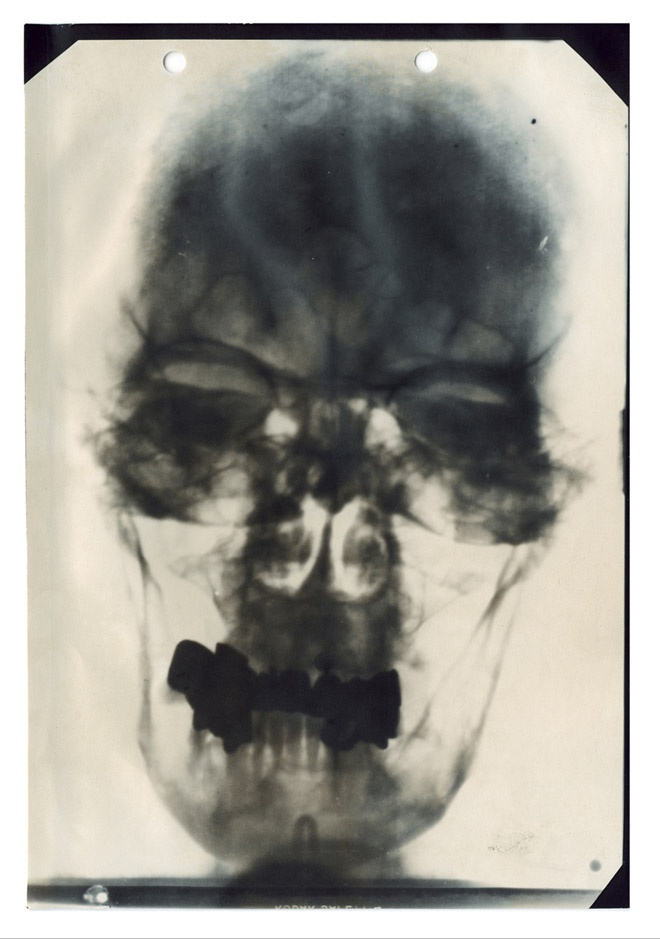



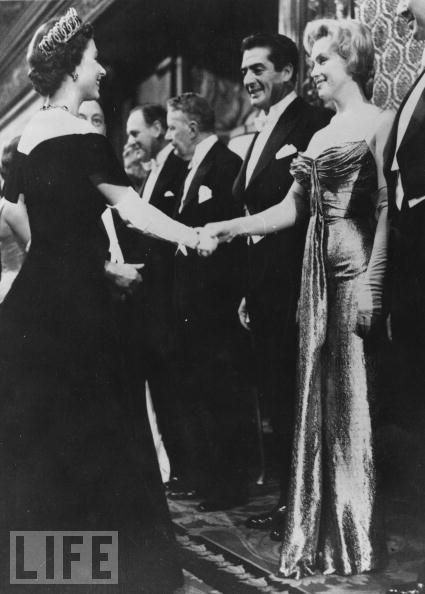

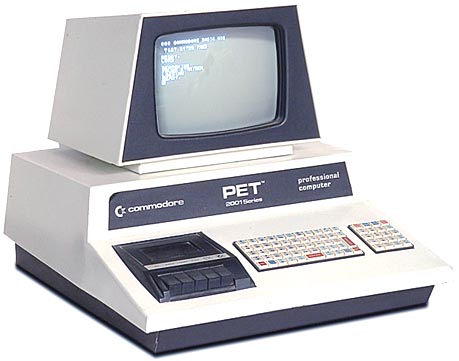

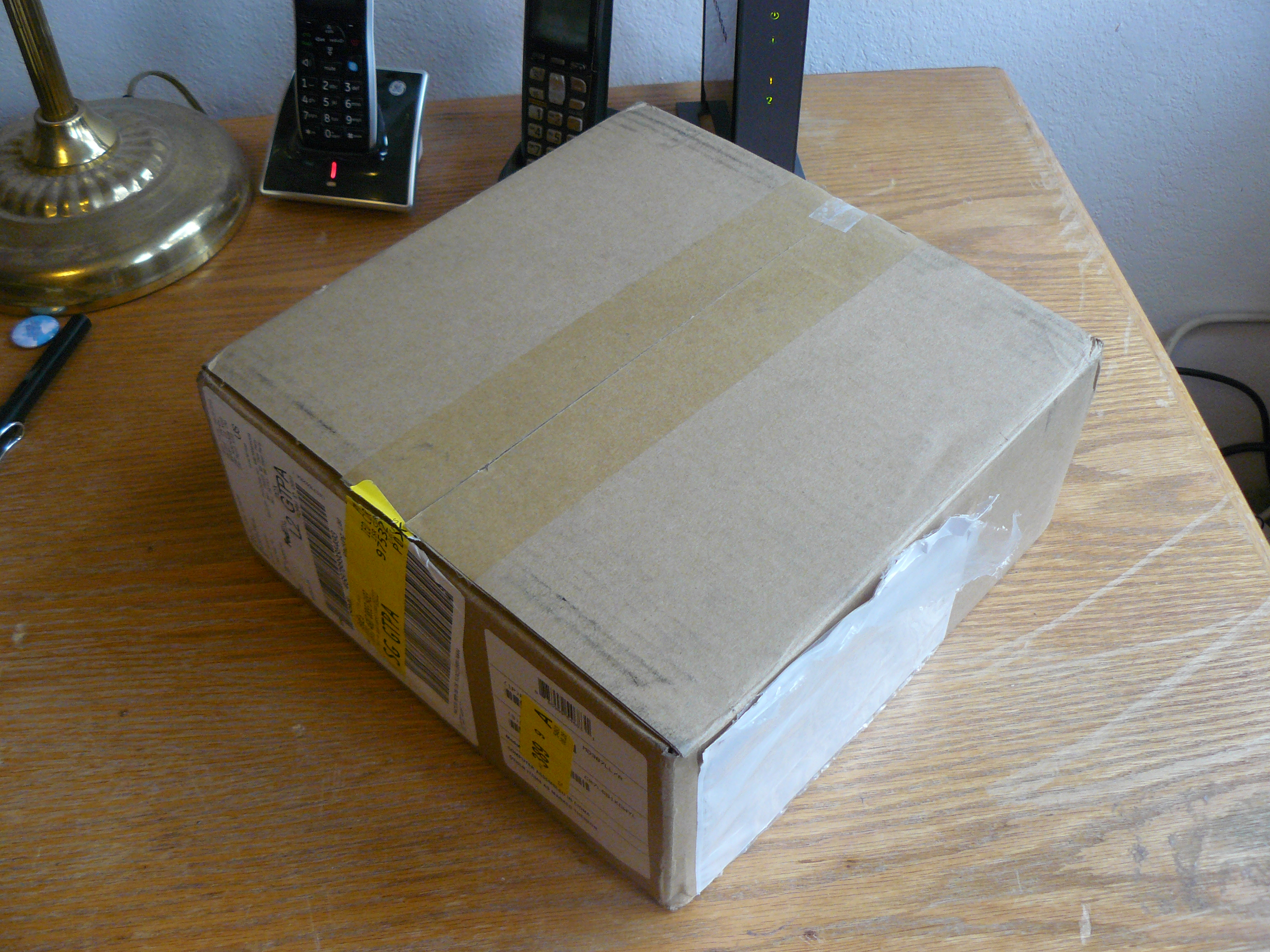

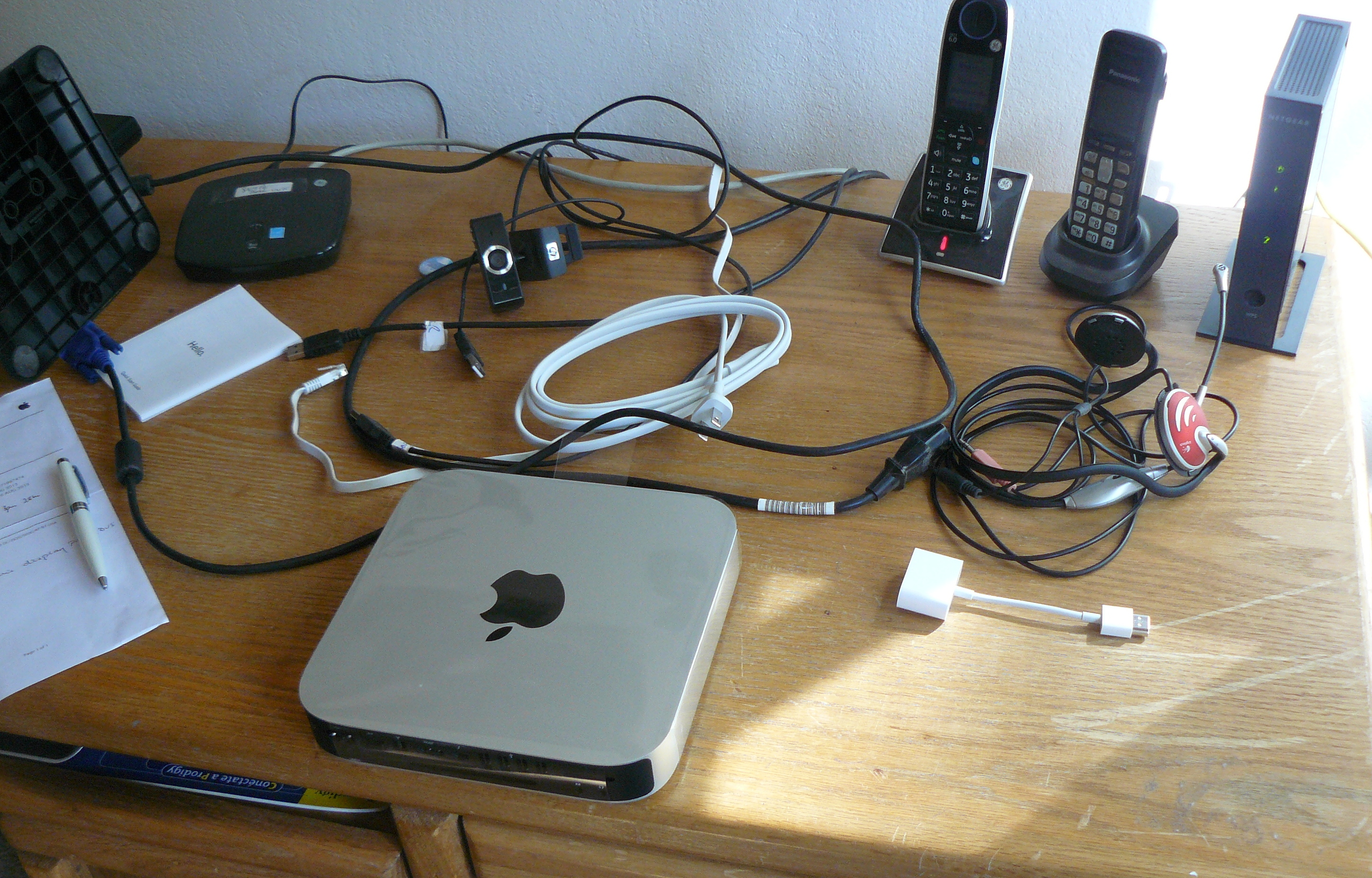

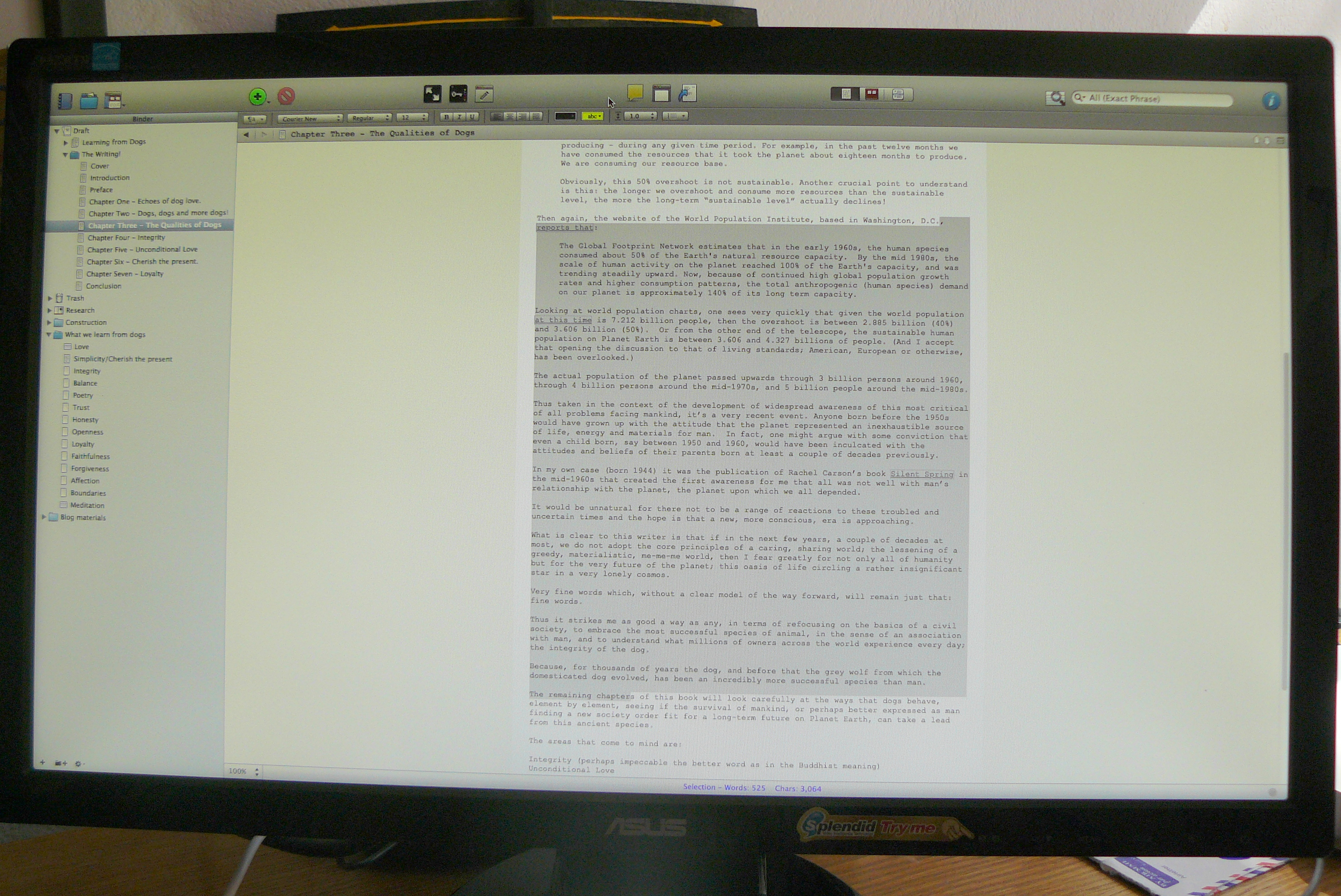
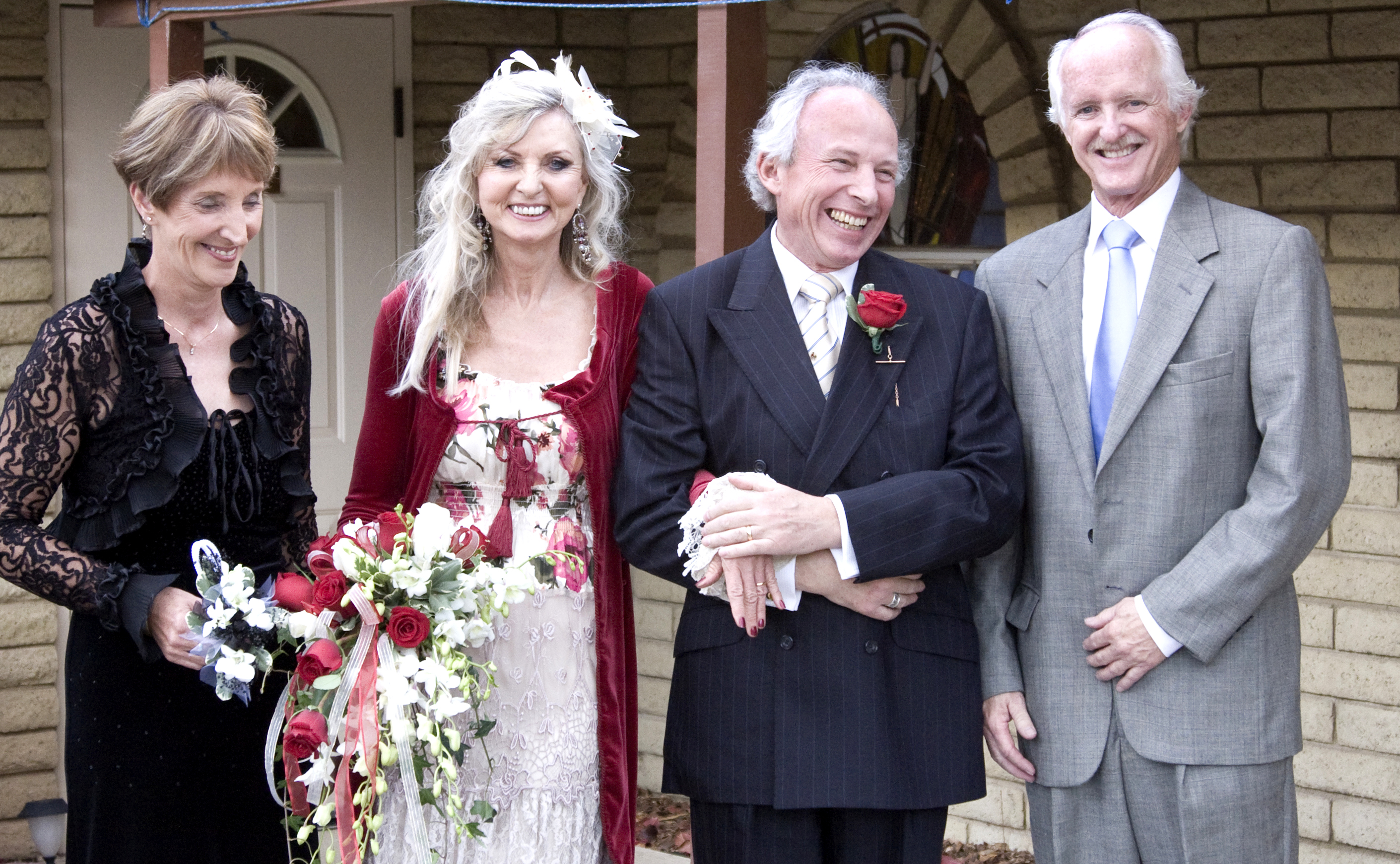


 Learning from Dogs