Category: History

Who pulls the strings?

Or, more specifically, do we believe we have free will?

One of the endless benefits of this wired-up, digital world is how easy it is to have one’s mind opened and stretched a little.

Take this, for instance, as an intriguing start to a new day.

Do we have free will?

This isn’t a question I can answer, but what I am interested in is “what happens if we do (or do not) believe in free will?” In other words, does believing in free will matter in your daily life?

Just let one’s mind float around that idea, not only as it applies to us humans but also to the animals that share our human intuition, such as dogs and horses.

So what’s got me bubbling along today? Nothing less than an article that appeared on The Conversation blog-site back last September.

I found it fascinating and hope you do as well. It is republished within the terms of The Conversation site.

ooOOoo

Believing in free will makes you feel more like your true self

September 1, 2016

By Elizabeth Seto, Ph.D. Candidate in Social and Personality Psychology, Texas A&M University .

image-20160830-28235-1xkam7s
Believing in free will makes us feel more like ourselves. Man walking via http://www.shutterstock.com

Do we have free will? This is a question that scholars have debated for centuries and will probably continue to debate for centuries to come.

This isn’t a question I can answer, but what I am interested in is “what happens if we do (or do not) believe in free will?” In other words, does believing in free will matter in your daily life?

My colleagues and I at the Existential Psychology Lab at Texas A&M University study the psychological outcomes of belief in free will. While contemplating my next research project, I realized at some point in our lives, we all want to understand who we are – it’s human nature. So, we decided to explore how believing in free will influences our sense of self and identity.

 One way or another? Feet image via www.shutterstock.com.
One way or another? Feet image via http://www.shutterstock.com.

What is free will?

Free will is generally understood as the ability to freely choose our own actions and determine our own outcomes. For example, when you wake up in the morning, do you hit snooze? Do you put on your workout gear and go for a run? Do you grab a hot cup of coffee? While those are simple examples, if you believe in free will, you believe there are a limitless number of actions you can engage in when you wake up in the morning, and they are all within your control.

Believing in free will helps people exert control over their actions. This is particularly important in helping people make better decisions and behave more virtuously.

For instance, research has found that promoting the idea that a person doesn’t have free will makes people become more dishonest, behave aggressively and even conform to others’ thoughts and opinions. And how can we hold people morally responsible for their actions if we don’t believe they have the free will to act any differently? Belief in free will allows us to punish people for their immoral behaviors.

So, not only is there a value to believing in free will, but those beliefs have profound effects on our thoughts and behaviors. It stands to reason that believing in free will influences how we perceive ourselves.

You might be thinking, “Of course believing in free will influences how I feel about myself.” Even though this seems obvious, surprisingly little research has examined this question. So, I conducted two studies to suss out more about how believing in free will makes us feel.

What believing in free will makes us feel about ourselves

In the first study, I recruited 304 participants from Amazon Mechanical Turk and randomly assigned them to write about either personal experiences reflecting a high belief in free will, like changing career paths or resisting drugs or alcohol, or experiences reflecting a low belief in free will, such as growing up in poverty or working under an authoritative boss. Then, they were all asked to evaluate their sense of self.

Participants who wrote about experiences reflecting low belief in free will reported feeling less “in touch” with their true selves. In other words, they felt like they did not know themselves as well as the participants who wrote about experiences reflecting high belief in free will.

Then, I conducted a follow-up study testing one’s sense of authenticity, the feeling that one is behaving according to their own beliefs, desires and values.

I recruited another group of participants from Amazon Mechnical Turk, and like the first experiment, randomly assigned them to write about personal experiences demonstrating high belief in free will or low belief in free will. Then, they all completed a decision-making task where they had to make a series of choices about whether to donate money to charity or to keep the money for themselves.

Afterwards, participants were asked how authentic they felt while making their decisions. Participants in the low free will group reported feeling less authentic than participants in the high free will group.

 Up and at it. Female runner image via www.shutterstock.com.
Up and at it. Female runner image via http://www.shutterstock.com.

So, what does this all mean?

Ultimately, when people feel they have little control over their actions and outcomes in life, they feel more distant from their true, authentic selves. They are less in touch with who they are and do not believe their actions reflect their core beliefs and values.

We believe this is because belief in free will is linked to feelings of agency, the sense that we are the authors of our actions and are actively engaged with the world. As you can imagine, this sense of agency is an important part of a person’s identity.

The importance of feeling like you are in charge of your life applies to significant actions like moving or getting a new job or pondering the big questions in life. But it also applies to the minor decisions we make throughout the day.

Here’s one simple, though relatable, decision I am faced with every morning. When I wake up in the morning and decide to put on my workout gear and go for a run instead of hitting snooze, I might feel like I am the primary decision-maker for this morning routine. Additionally, I am most likely acting on the part of me that values physical health.

But what if I wake up, and I feel like I can’t exercise because I have to go to work or some other external factor is making it difficult to go? I might feel as if someone or something else is controlling my behavior, and perhaps, less like my true self.

So, do you have free will? Do any of us? Remember, the question isn’t whether it exists or not, but whether you believe it does.

ooOOoo

Now thinking of dogs having their own free will might seem a little bizarre, but I do not intend it to be seen as such. Many of you will have dogs (and horses) that have ‘minds of their own’.

For our family here at home, if there’s one of our dogs that exhibits free will it is our Brandy.

Our Brandy is a Pyrenean Mastiff!

Without warning or any other indication, he will suddenly decide it is time to go ‘walk-about’. Mainly during the day but sometimes at night, whatever the weather, he will disappear. He will always return but can be wandering around our thirteen acres for up to an hour.

Does he have free will?

Does he believe he has free will?

Do we believe he has free will?

What, dear reader, do you think?

The history of dogs and humans

The secret life of the dog.

No, that subtitle is wrong. It should be: Science brings to light the wonderful history of dogs and humans!

Approximately seven years ago I published a series of posts. Each post was a segment of a BBC Horizon documentary entitled: The Secret Life of the Dog. Inevitably as so often happens when BBC programmes unofficially find their way on to YouTube those videos have long disappeared from sight.

So imagine the joy when Jean and I were browsing the web site Top Documentary Films to find that the full BBC Horizon episode was available.

The documentary is an hour long and is unmissable viewing for anyone who is interested in the history of mankind back in the days of hunting and gathering. If you are also a lover of dogs and you haven’t seen the programme then, in two words WATCH IT!

Here’s a clip from the Horizon episode. A deeply emotional and moving clip.

Now I can’t insert the Top Documentary video as I can with a YouTube video.

But I can link to it, and republish the written introduction.

Here it is: BBC Horizon: The Secret Life of the Dog

Storyline

secret-life-dogWe have an extraordinary relationship with dogs – closer than with any other animal on the planet. But what makes the bond between us so special?

Research into dogs is gaining momentum, and scientists are investigating them like never before. From the latest fossil evidence, to the sequencing of the canine genome, to cognitive experiments, dogs are fast turning into the new chimps as a window into understanding ourselves.

Where does this relationship come from? In Siberia, a unique breeding experiment reveals the astonishing secret of how dogs evolved from wolves. Swedish scientists demonstrate how the human/dog bond is controlled by a powerful hormone also responsible for bonding mothers to their babies.

Why are dogs so good at reading our emotions? Horizon meets Betsy, reputedly the world’s most intelligent dog, and compares her incredible abilities to those of children. Man’s best friend has recently gone one step further – helping us identify genes responsible for causing human diseases.

Trust me, if you haven’t seen this documentary and you have dogs in your life it will change the way you appreciate and love your wonderful dogs.

I’m going to close this post with a photograph you have seen many times before, via the home page of this blog.

Simply because I know for thousands of you who have dogs in your lives there is nothing more special, nothing more intimate, nothing more magical than the eye-to-eye bond between your dog and you.

Pharaoh - just being a dog!

Pharaoh!

Knowing you is special beyond words!

Our best friend is really here to help

The most incredibly relationship we humans have ever had with an animal.

Tomorrow, I am going to repeat a post that first appeared on Learning from Dogs seven years ago. A beautiful documentary explaining in clear, scientific ways how important has been the relationship between the dog and humans.

But for today, as a ‘warm up’ to tomorrow’s post, I wanted to share an essay that appeared on The Conversation blogsite a little over a week ago and is republished within the terms of The Conversation site.

ooOOoo

How man’s best friend is helping cancer treatment

By    Professor of Veterinary Medicine, Colorado State University

February 2, 2017
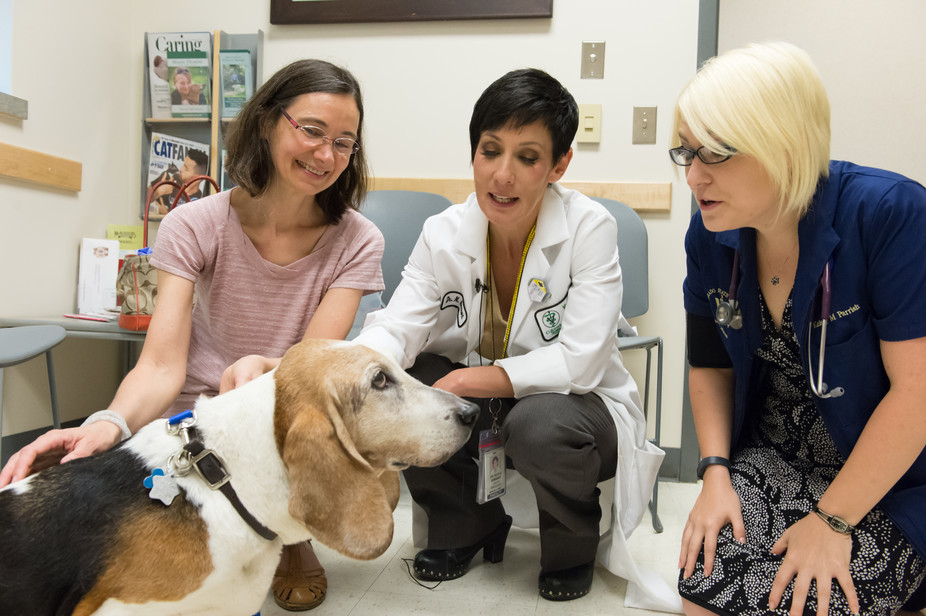
The author, center, and Dr. Anna Conti, left, and student Kelsey Parrish with Conti’s Basset hound, Picasso, who had surgery for cancer. Via Colorado State University. William Cotton/CSU Photography, Author provided

“A person can learn a lot from a dog, even a loopy one like ours. Marley taught me about living each day with unbridled exuberance and joy, about seizing the moment and following your heart… Mostly, he taught me about friendship and selflessness and, above all else, unwavering loyalty.”

John Grogan, “Marley and Me: Life and Love With the World’s Worst Dog.”

Isn’t it true? We learn so much from our dogs. But beyond what man’s best friend can teach us about enjoying life, they share something else with us. Cancer diagnoses in dogs are on the rise, as are cancer diagnoses in people. In fact, canine cancer is the leading cause of death in pets over the age of 10 years.

This confluence, it turns out, can be beneficial to cancer research. A field of study known as “comparative oncology” has recently emerged as a promising means to help cure cancer. Comparative oncology researchers study the similarities between naturally occurring cancers in pets and cancers in people in order to provide clues to treat cancer more effectively.

In fact, phase 1 and 2 clinical trials in comparative oncology are underway at 22 sites across the country, including Colorado State University, where I conduct research and am a surgical oncologist for animals.

Research in this field, involving veterinarians, physicians, cancer specialists and basic scientists, is leading to improved human health and more rapid access to effective cancer treatment than has been previously possible through traditional cancer research approaches.

More like your dog than you know

 Man and his best friend. From www.shutterstock.com
Man and his best friend. From http://www.shutterstock.com

As a species, dogs have strong physiologic and genetic similarities to people, much more so than mice, who do not typically live long enough for us to know whether they naturally get cancer. We do know that some rodent species, such as pet rats, can get cancer, but predators typically end a field mouse’s life while it is still young. The laboratory mice typically used by scientists are injected with cancer rather than it occurring naturally in their bodies.

Just as scientists officially mapped the human genome, or the complete set of genetic instructions, in 2003, scientists decoded the canine genome. They discovered that dogs have greater than 80 percent genetic similarity to humans, versus only 67 percent for mice.

In addition, cancers such as bone cancer, lymphoma and bladder cancer that spontaneously arise in pet dogs are microscopically and molecularly identical to cancers in people. Many of the genetic mutations that drive cells to become cancerous in people are the same mutations that cause cancer in dogs. In fact, when viewed under a microscope, it is impossible to distinguish between a tumor from a human and a dog.

In addition, dogs provide a large and varied population to study, important in the study of medicine. Individual dogs who develop cancer are as different from one another as are humans. Whereas laboratory mice are essentially identical twins to each other and live in a highly regulated environment, the variation among different dog breeds, home environments, diet and overall lifestyle translate into a population diversity very similar to that in humans.

Today, most pet dogs receive high-quality health care into old age and dog owners are highly motivated to seek out improved options for the management of cancer in their companions, and are also motivated to minimize side effects.

Similarities in response to treatment, too

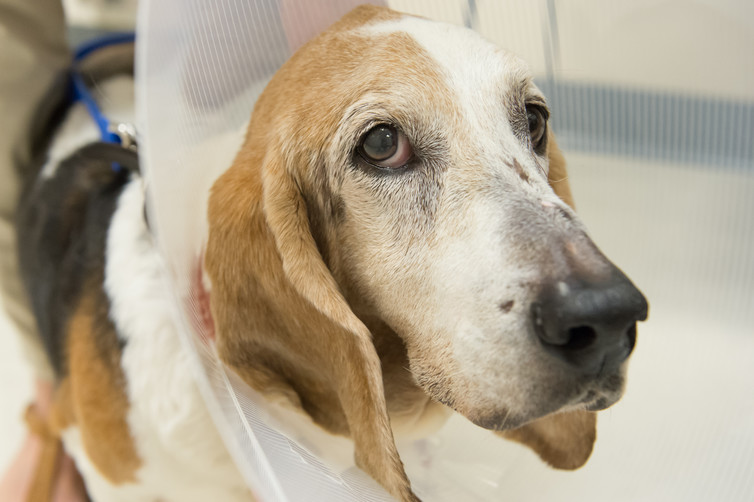
 Picasso at the James L. Voss Veterinary Teaching Hospital, Colorado State University. Author provided., Author provided
Picasso at the James L. Voss Veterinary Teaching Hospital, Colorado State University. Author provided., Author provided.

This genetic diversity and sharing of similar DNA, physiology, microscopic structure and molecular features between dogs and humans has presented cancer researchers with a key opportunity. Dogs not only develop similar types of cancers as humans, but their cancer responds to treatments in similar ways.

This means that new cancer treatments first shown to be effective in canine cancers can frequently be predicted to have a similar benefit in human cancer patients. As a result, researchers now recognize that new drug trials in dogs with cancer will result in therapeutic discoveries that are highly “translatable”; that is, more likely to predict “real-life” medical responses in human cancer patients.

By studying how cancer responds in dogs, scientists are gaining a better understanding of how new cancer drugs not only treat the cancer but also influence the patient’s overall quality of life during treatment. This benefits dog owners, by providing access to promising new cancer treatments for their pets with cancer, and benefits human cancer patients by providing a rapid way to collect crucial data needed for FDA approval.

Dogs with cancer are helping kids

For example, a bone cancer known as osteosarcoma is so similar between dogs and people that

 The author performing surgery on a dog. Author provided. Colorado State University., Author provided.
The author performing surgery on a dog. Author provided. Colorado State University., Author provided.

intensive research in canine osteosarcoma has led to several breakthroughs in treating osteosarcoma in children. Limb-saving surgical techniques for safe and effective reconstruction following bone tumor surgery in dogs are now the standard of care in children following bone tumor surgery.

More recently, a form of immunotherapy was shown to drastically improve survival in dogs with bone cancer by delaying or altogether preventing spread of the cancer to the lungs. As a result of the success in dogs, the FDA granted fast-track status to the same treatment for use in humans last April.

Fast-tracking was developed by the FDA to support accelerated approval for promising treatments, especially for serious and life-threatening conditions. A clinical trial in children with osteosarcoma is scheduled to begin this year at multiple pediatric cancer centers throughout the United States.

These types of discoveries demonstrate that our furry companions have a crucial role in teaching us new ways to help all victims in the war against cancer – with two legs or four.

ooOOoo

As I said in my introduction, more on this theme tomorrow.

What a fabulous relationship!

The teaching dog in action

How Cleo was taught by Pharaoh

This post should be read in conjunction with the post that came out an hour ago: Dogs and Learning. It was first published on Learning from Dogs on March 19th, 2014.

Cleo

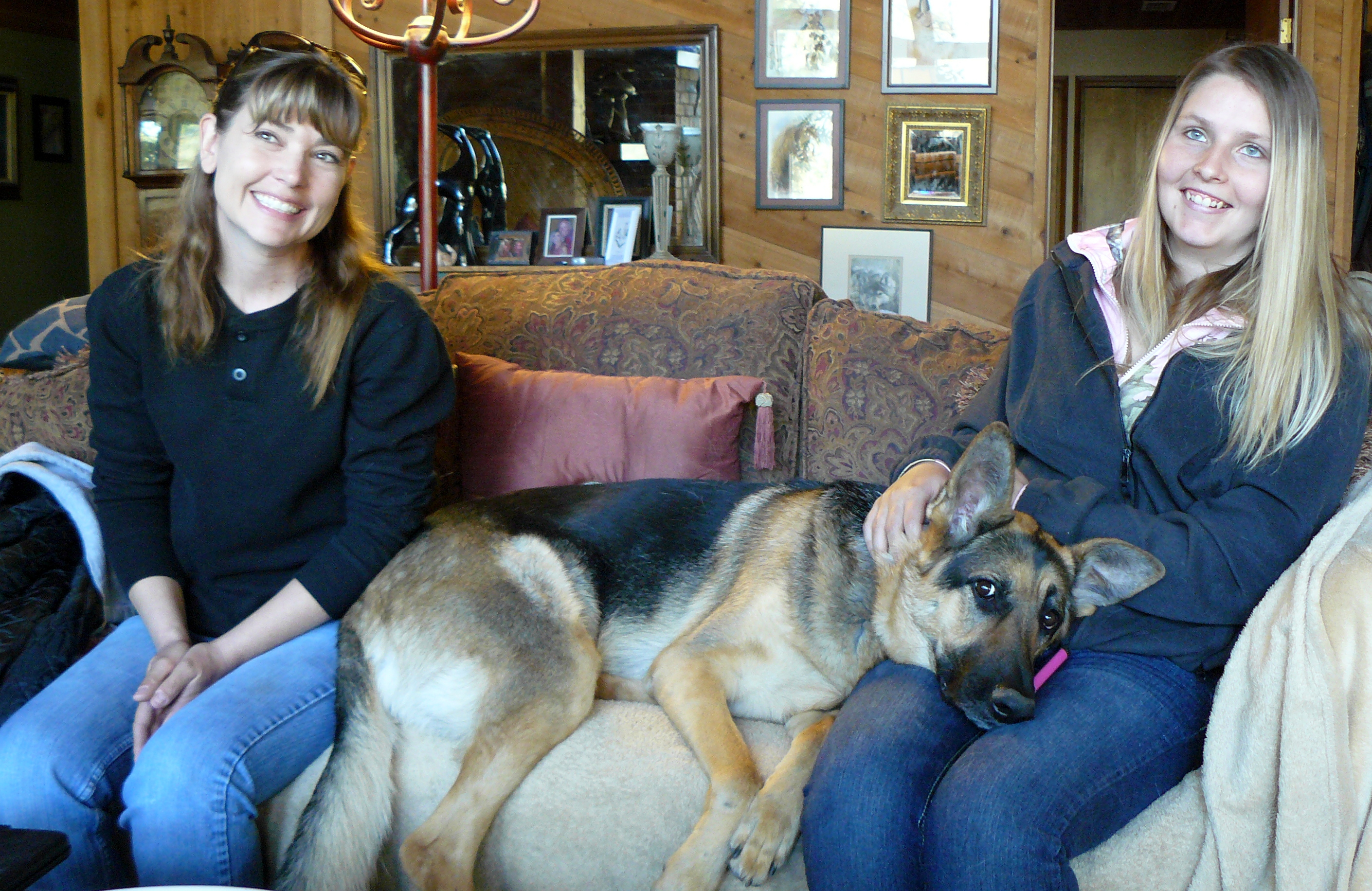
Cleo between guests Darla and Cody- picture taken yesterday.
Cleo between guests Darla and Cody- picture taken yesterday (March 18th, 2014).

Where to start this story about Cleo?

I guess by going back to the days when I was living in the village of Harberton, near Totnes in South Devon, England. That means going back to 2003, the year when it seemed the right time for me to get a dog. (Jean and I first met in December, 2007) There was always only one breed to be considered; the German Shepherd dog.

Thus that desire for a German Shepherd led me to Sandra Tucker who lived not too many miles away who owned the GSD breeders Jutone. It was at Jutone where I saw the wonderful puppy dog who became my Pharaoh.

But Sandra did better than breed the dog that has meant more to me than words can ever describe, she gave me some fantastic advice. That being that when Pharaoh was getting on in life, then bring in a German Shepherd puppy. There were two solid reasons why this made sense. The first was that Pharaoh would teach the new puppy many of the skills and disciplines that Pharaoh had learnt as a young dog and, secondly, the puppy would keep Pharaoh active.

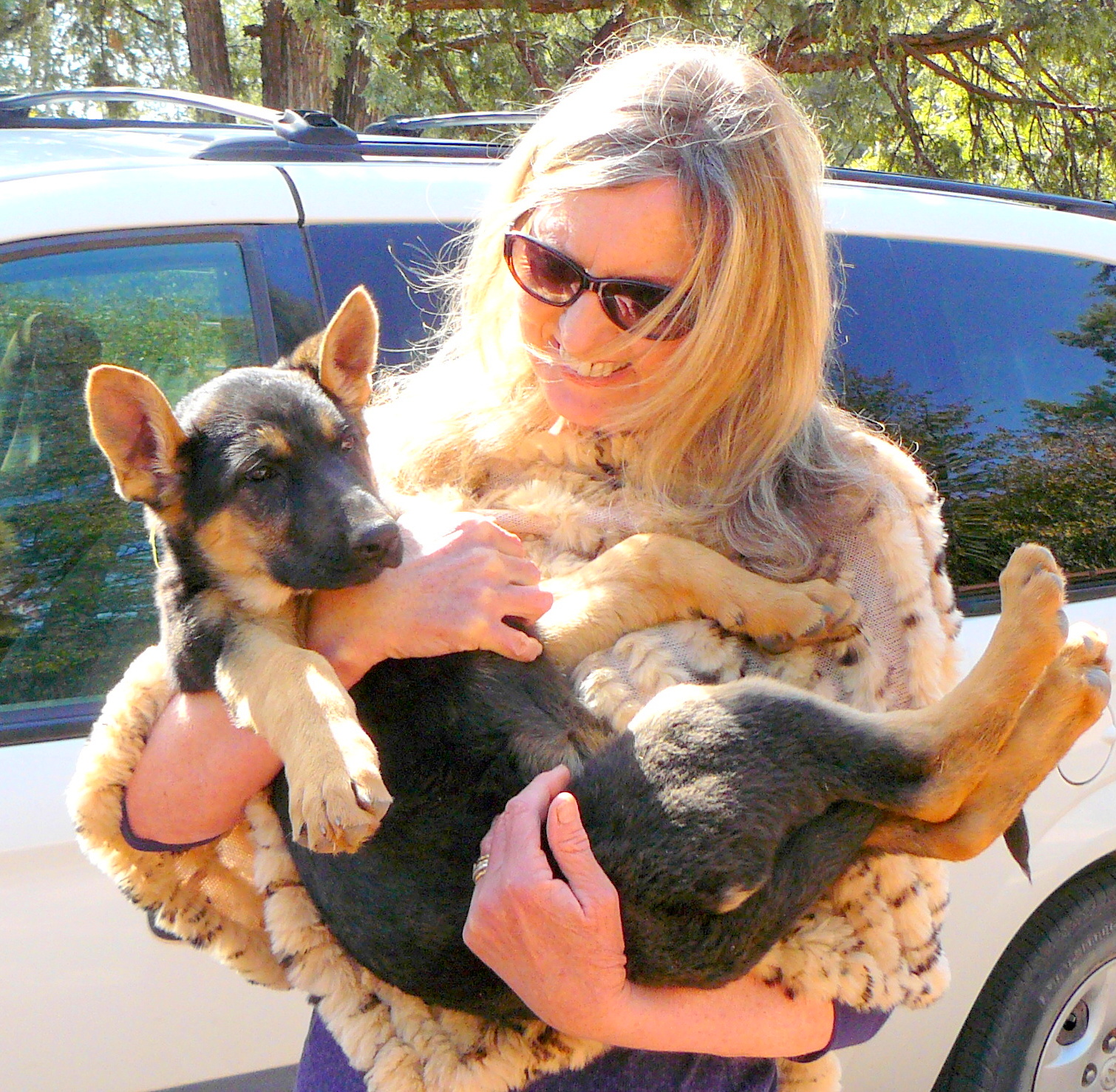
That puppy was Cleo.

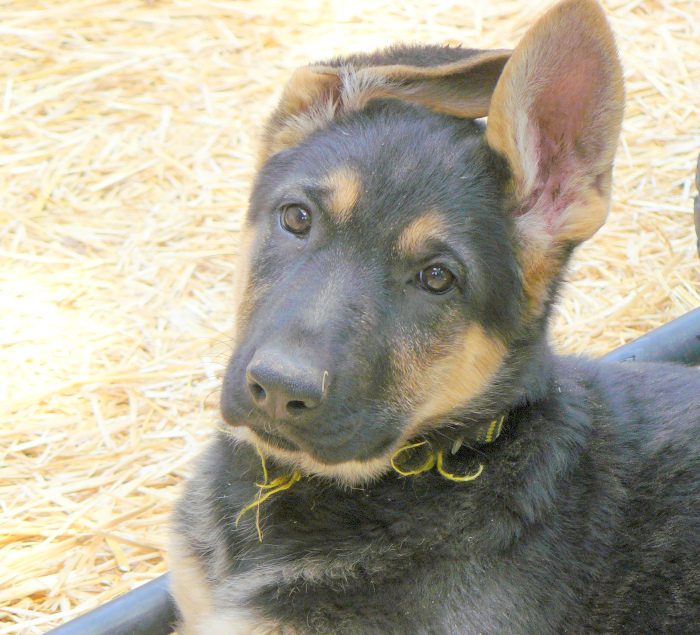
First picture of our puppy - taken two days before we brought her home: 4th April, 2012
First picture of what was to be our puppy – 4th April, 2012, just two days before we brought her home.

oooo

Puppy Cleo coming home - April 6th, 2012
Puppy Cleo coming home – April 6th, 2012

Cleo was born on the 23rd January, 2012. At that time we were still living down in Payson, Arizona. Right from the start she was, and still is, the most joyful, loving dog one could imagine. That top photograph shows in her eyes the openness of her heart and soul.

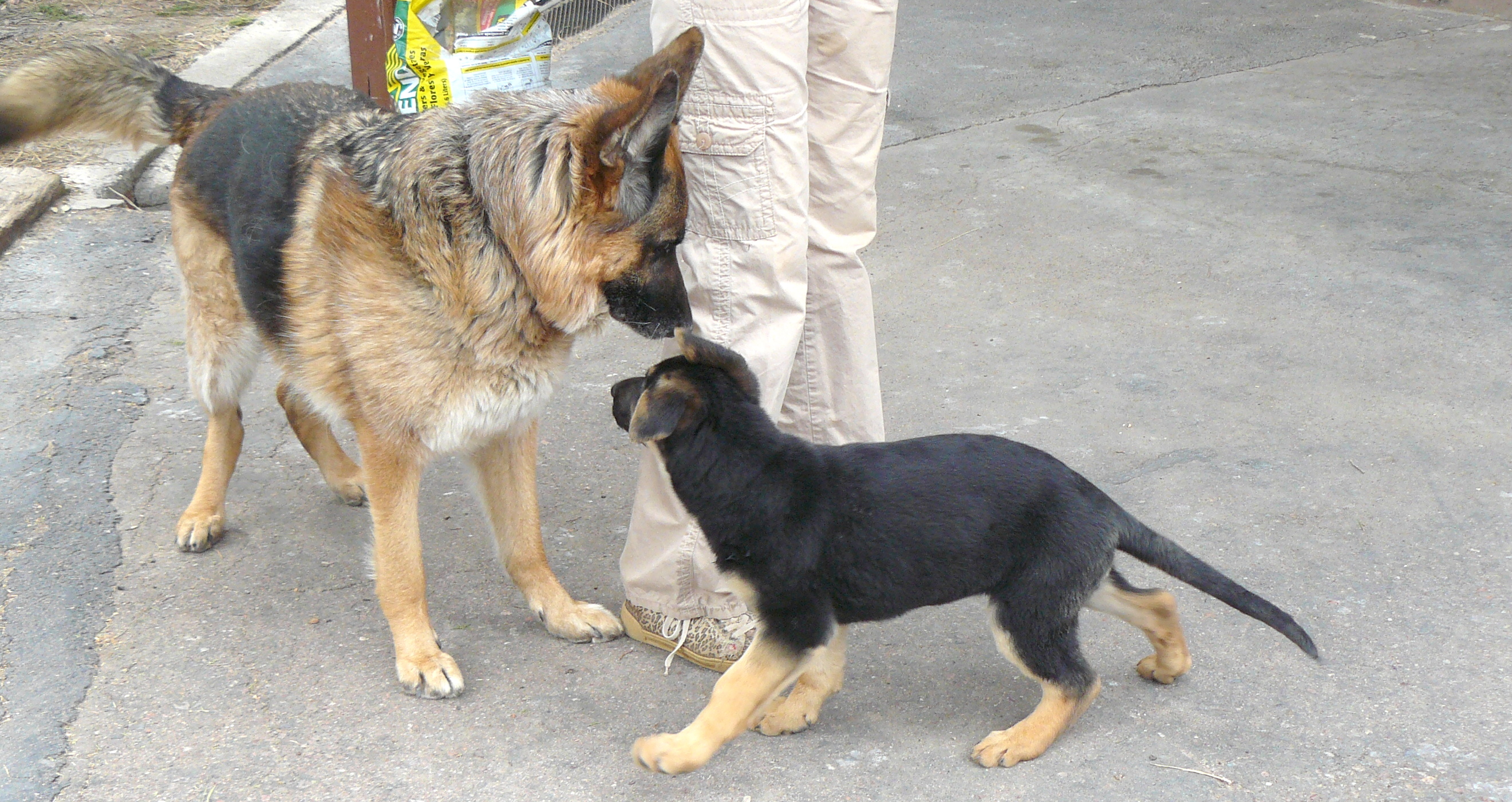
First meeting between Pharaoh and Cleo; April 7th, 2012.

So here we are coming rapidly up to the two-year anniversary (6th April, 2014) of when Cleo entered our lives.

Cleo continues to be the most loving, gentle, sweet German Shepherd.

However, as Sandra so correctly predicted, Pharaoh has ‘taught’ Cleo a number of commands such as Sit, Stay, Lie Down, Come, and more. Not a minute’s training of Cleo has come from Jean and me.

Cleo is very fond of Pharaoh and it’s obvious that Pharaoh gets a huge amount from having Cleo around him.

ooOOoo

Fast forward to now, as in January, 2017, and the relationship between Pharaoh and Cleo is still incredibly important. Cleo senses that Pharaoh is in the last ‘phase’ of his life but still shows him incredible respect.

Cleo is a very intuitive dog who appears at times to really understand what Jean and I are talking about, even when it has nothing to do with dogs. For instance, Cleo knows when I am finishing up my lunch and that the next thing that will follow is Jeannie and me taking the dogs out for their afternoon walk.

Cleo is almost certainly the most knowledgeable and obedient of all of our dogs and it’s all down to Pharaoh’s skills as a teaching dog.

What amazing animals they are!

Dogs and Learning

In thanks to Yvonne over at Pets, People and Life for prompting me to write this.

In yesterday’s post Yvonne Daniel, the author of the blog Pets, People and Life, said in a comment (my highlights):

Interesting article. When training any of my dogs to learn something ( I should write when TRYING to train my dogs something) I use a high pitched happy voice. I read about the voice thing many years ago and have no idea what book or article that was in. The motive is: to get the dog to understand that you sound happy and enthused. I’m not sure why the high pitched voice is needed, in fact I don’t use it all the time. Maybe I’m not consistent enough. Being able to train a dog is an art. I’m not good at it but my dogs come when I call and generally behave. I’ve taught a few tricks but I wish that I were really good at it.

That motivated me to blow the dust off a couple of blog posts from many years back. Firstly, this one coming up now and then in an hour’s time I will publish a further post about Cleo.

So here’s the first one that goes back to November 2014, when I wrote a post, Understanding the Dog’s World, that included this:

In 2012, the American Veterinary Medical Association reported that there were over 43 million [ 43,346,000] dog-owning households in the USA. That translated to over 36% of the total households in America. With an average of 1.6 dogs per household that came to the astonishing total of 62,926,000 dogs. In just one country!

It is therefore beyond doubt that millions and millions of people, of all ages, all around the world, understand what it is like to have a dog close to them. Likewise, those millions of dogs know what us humans are capable of. But of those millions of humans who have dogs in their lives, how many understand, really understand, the world of the dog?

In my book, in the next chapter after my Prologue, the Puppyhood chapter, I speak of the circumstances that brought me into contact with Angela Stockdale of The Dog Partnership in Devon and how from that association I became aware of the three roles that dogs could be born with: mentor, monitor and nanny.

How, generally speaking, out of every fifty dogs born there were just three born, on average, with those roles and that the bulk of dogs born were straightforward pack members all of equal status.

Irrespective of the fact that we don’t normally own anything like the number that would constitute a natural pack of dogs in the wild, around fifty animals, that doesn’t alter the fact that when a puppy is born it’s social place, from a pack perspective, is ‘hard-wired’ into that puppy.

I am indebted to Angela Stockdale for granting me permission to republish her descriptions of the mentor, monitor and nanny that are available on her website. In terms of man understanding the world of the dog, these descriptions are invaluable.

Here they are:

ooOOoo

What is a Teaching Dog?

A Teaching Dog is a dog who has an instinctive desire to guide and support dogs in their learning canine communication.

A Teaching Dog helps other dogs develop their canine communication skills by displaying different body language to convey different messages. Such as lowering their heads and curving on approach as a polite way to introduce themselves. These essential etiquette skills are invaluable in preventing social issues.

A Teaching Dog teaches dogs canine etiquette to other dogs so they develop their communication skills as they go through the natural ageing process i.e. the transition from puppyhood to adolescence and from adolescence to adulthood. At these essential times, their pupils develop their skills in canine communication to a high level, hence again preventing social issues.

A Teaching Dog has an instinctive desire to guide and support dogs who find communicating difficult. If a dog has an established social issue, a Teaching Dog will actively incite interaction with them in order to teach them how to relax and communicate with them. They will assess how the other dog feels and react accordingly. Keeping their distance if the dog is concerned and approaching thoughtfully when the dog relaxes. I say thoughtfully because that is really important to understand; they think about how to work with a dog.

When a Teaching Dog works, whilst there are some elements of instinctive body language, in the main they will consciously use appropriate body language for the specific situation. They will always maintain control of an interaction but will change their posture from assertive to more inviting in accordance to the other dog’s behaviour.

On sighting the dog they are working with, they will first watch and assess them. This can be done from quite a distance with an experienced Teaching Dog. Eye contact is made but the eyes are averted intermittently whilst the Teaching Dog decides how assertive they need to be, or not as the case may be, with that particular dog. What follows from thereon is purely dependent on the other dog and that particular Teaching Dog’s way of working.

Do all Teaching Dogs teach in the same way?

No. Different Teaching Dogs have different teaching skills and different preferred roles. It is essential to recognise the role each particular Teaching Dog prefers to take. There are three primary Teaching Dog roles – Mentor, Minder and Nanny.

Mentor

A Mentor is normally quietly assertive by nature. They rarely play unless flirting with the opposite sex. However, they generally build the strongest bonds with high ranking dogs of the same sex.

As a Teaching Dog they are passively dominant. They always meet a dog with assertiveness but never hostility. They tend not to use body language to relax a dog as such but often just their presence has a calming effect on most dogs anyway.

If working in a group, they watch from the sidelines and only become involved if absolutely necessary. Mentors can be quite lazy! They will support other Teaching Dogs where needed, showing by example what to do in difficult situations if the other Teaching Dog is not coping.

Other dogs reaction to Mentors vary. Some dogs take great confidence in a Mentor and whilst not necessarily submissive towards them, they are very respectful. Some dogs find a Mentor intimidating and will avoid making contact with them.

Minder

A Minder is totally different to a Mentor in their interaction with dogs they are teaching. When a Minder meets another dog, they actively approach with the intent of interacting with them. A Minder is also naturally assertive but not as strong as a Mentor. When they meet another dog, in the Teaching Situation, they assess the new dog as they approach and use appropriate body language in accordance to the other dog’s reaction to them.

They are more generally more demonstrative than a Mentor and will actively seek interaction within a few minutes of meeting a new dog. This does not necessarily mean that they invite play. If they feel the dog is not ready for that level of interaction, they will converse with them in a more subtle manner.

If the other dog is worried but shows signs of being ready to rush at them, the Minder will stand firmly with their head side on to the dog. Eye contact is made intermittently as the Minder ascertains whether the other dog is calming down or intending to rush at them.

They can stand firm and openly display assertiveness if they need to. Once ‘control’ of the situation has been achieved, a Minder will generally incite status based activities from the other dog. These can be by marking then walking away allowing them to investigate their scent. Or they may invite the other dog into a status game, often instigating a chase.

If the other dog shows signs at trying to drive them away, the Minder will turn their head towards them and eye contact becomes stronger. They do not reposition the rest of their body. If the other dog shows signs of moving away, the Minder will totally drop their body language and move away. They will then reassess the other dog from a distance, before approaching again.

In a group situation, a Minder will monitor the group closely and interrupt any unsociable or unruly behaviour. They interrupt unacceptable behaviour by physically placing themselves between the dogs and will remain there until the tension has reduced. When the dogs in question have calmed down, the Minder will usually walk away and monitor them from a distance. They tend not to interact with the other dogs after harmony has been restored. In effect, they police a group.

Other dog’s reaction to a Minder is either respectful or challenging. Most dogs recognise a Minder as a strong dog and usually respect them. Sometimes polite status games may be played when they first meet.

As the Minder does not naturally command respect in the way a Mentor does, some dogs who have limited canine communication skills and/or adolescents can challenge them. Once the dogs have learned how to ascertain status in a polite manner from the Minder, they will usually then settle and look to the Minder for guidance in future situations.

Nanny

The Nanny is the most amazing of all the Teaching Dogs. Although not their preferred choice, a strong Nanny can take the role of a Minder or Mentor if they need to. They are unique.

They are extremely generous dogs and are at their happiest when everyone else is happy, including other Teaching Dogs. They work very differently to a Mentor and a Minder.

They not only relax a dog who is uncomfortable or anti-social but they also help relax any Mentor or Minder in a group. Few Mentors get overly stressed in a teaching situation but Minders tend to take their job quite seriously, unless really experienced and so can become tense when working.

If they see another Teaching Dog, usually a Minder, showing stress they will also consciously use body language to reduce their tension as well.

Being happier working on a one to one basis or in a group is down to each dog’s personal preference. Although, of all the Teaching Dogs they are more likely to be equally happy in either situation.

When meeting a new dog, they will observe from a distance before making a thoughtful approach. Thoughtful being the operative word as everything a Nanny does is done with thought. The Nanny tends to assess a dog in more depth than the other Teaching Dogs. This means they often take longer in their approach. They rarely communicate with instinctive responses but with conscious body movements, using the eyes in particular, when conversing with another dog.

If a dog is confrontational with them, they will remain strong in their attitude but will incite play, in particular chase games. The game of chase can be a challenge, like the ‘Chase me Charlie’ game children play. Or a game of chase can be used to loosen up a dog who is so stressed they feel unable to move.

The Nanny knows exactly what distance to keep between them and the other dog. If they feel the other dog is too close for comfort or who is becoming too unsociable, they will stop and face the dog and take control again. Once they see the other dog is more relaxed, they will stop running and attempt to converse with them again. They repeat this routine until the other dog stays relaxed and sociable with them.

In a group situation, initially they will monitor from the edge of the group and then actively walk up to each dog individually and check they’re comfortable. This also gives the other dogs confidence as they know the Nanny is there for support should they need it.

Once they have seen every group member, including any other Teaching Dogs, they will then focus on the dogs that feel the most uncomfortable, this is not necessarily the dog who shows outwardly unsociable behaviour.

It could be a dog who becomes withdrawn because they are so stressed. Sometimes they will simply follow and walk alongside a dog who is not comfortable and other times they may invite play. It totally depends on the other dog and how, at that moment, they are feeling. The Nanny may walk alongside another dog and then invite play.

The Nanny will resolve conflict by approaching in a calmer manner than a Minder usually to interrupt the unsociable behaviour. Not necessarily by physically splitting the dogs. They may bark and then play bow and/or literally pat them on the shoulder to attract their attention. A strong confident Nanny will split if they need to but prefer to resolve any conflict by mediation.

When other dogs meet a Nanny, if they have a good command of the canine language they will greet them in friendly, but not submissive manner. A Nanny’s first response to a dog displaying aggression, is to increase the distance between them. But they do not turn their back on the other dog. This would show vulnerability.

They will move away at an angle and stand sideways on to the other dog. This indicates to the other dog that whilst they are not offended and are not going to retaliate, they are also not intimidated. Initially, this can be most confusing for the other dog.

A Nanny excels at being able to recognise signals of stress in other dogs. They will only advance towards the dog to the level the other dog can cope with. As the dog learns that the Nanny will not be coming close enough to pose a threat to them, they begin to relax. In time, the other dog will take confidence from the Nanny and will look to them for guidance in difficult situations.

Is a Teaching Dog the same as the Alpha, Beta and Omega in a wild dog pack?

No. The Teaching Dog is unique to the dog world. Whilst a Mentor is usually a dog of natural Alpha status, an Alpha is not necessarily a Mentor. In fact, many dogs of natural Alpha status can not or do not want to teach. They can not be compared to wolves or any other wild dogs. Teaching Dogs working together are not a pack. They can not be compared to dogs living in a group at home. Some Teaching Dogs do not want to work together with their own group but enjoy working with dogs they know from another family. All Teaching Dogs have equally important roles. There are situations where a Mentor is better able to resolve a conflict and another time a Nanny may be the better dog to the resolve the situation.

How can I find out more about these amazing dogs?

It may sound that it is impossible for dogs to consciously work in this way, particularly the Nanny. Seeing is believing and even then it is almost unbelievable. I run a four-day introductory course on the world of the Teaching Dog. On these courses, participants can bring along their own dog for assessment. But it is important to understand and to recognise that this is not whether your dog can teach but do they want to.

You will see experienced Teaching Dogs in practice. And also those who are at the beginning of their career. I can not, of course, guarantee how they will work as I have not met their pupils yet! You will learn about the Teaching Dog as an individual, see experienced and apprentice Teaching Dogs working on video as well where you can study their conscious body language in different teaching situations.

At this first level, we will cover identifying Teaching Dogs and offering them the right learning ground to develop their natural skills. You can not train a Teaching Dog. A Teaching Dog is born a Teaching Dog. It is dependent on their life’s experiences and living environment as to whether they develop to their full potential. Many allegedly aggressive dogs are actually true Teaching Dogs. In domestic society such dogs have not been able to do what they were born to do; help other dogs without the interference of people trying to tell them how to speak their own language. Their life of frustration has resulted in aggression. Once given the time and freedom to develop their natural teaching skills, any aggressive behaviour disappears.

Time to stop talking and start listening to the real teachers – The dogs themselves

Copyright © 2005 Angela Stockdale

ooOOoo

Thus one of the key learning aspects that Angela offers us humans is that dogs (and horses) learn most effectively when being taught by other dogs (and horses). This was observed countless times by me when Pharaoh was working as a minder teaching dog and using his natural pack instinct to teach puppy dogs their social skills and breaking up squabbles between dogs.

Some closing words from Angela.

I consider myself so lucky for dogs alone to have been my teachers. I learnt from watching how my own dogs responded to another dog’s body language and vice versa their language. Watching, learning and working with Teaching Dogs was the only way I knew. Seeing how these special dogs change the lives of less fortunate dogs, who never had the opportunity to really understand how to communicate with their own species.

I was and always will be in awe of a Teaching Dog’s ability consciously to adapt their body language in accordance to how the other dog was feeling. The result being that they could relax nervous dogs but at the same time maintain control of a problem situation. Remember, dogs talk dog far better than we do.

It came as quite a shock to me when I learnt about other approaches. It seemed foreign for people to have so much input in resolving what were described as ‘ behavioural’ issues. For me, working with these dogs was far more than resolving a behavioural issue. It was about improving the quality of lives of dogs who were not coping with everyday life. If they found dogs or people worrying, sometimes this was shown in displays of aggression. It is important to understand, these dogs were not aggressive, they simply displayed aggressive behaviour.

How on earth to follow that, you might be wondering?

Very simply! By recognising that as much as we have had dogs in our lives, for thousands of years, we do not understand their world, how they truly think, what they feel, and we probably never will.

My second post that was published a while ago follows in an hour’s time.

 

Economic marginalisation.

For those looking for answers to the crisis in liberal democracy, this may well be it.

In yesterday’s post Tensions abound in many societies I offered a viewpoint that the ‘left’ arguing with the ‘right’ in politics was utterly inappropriate. Simply for we, as in the people who live on this planet, have to start working together if we wish to have a future for mankind on Planet Earth.

Yesterday’s post also referred to Inductive and Deductive Reasoning with me proposing that the future had to be built on a universally acknowledged relationship between ’cause’ and ‘effect’. A relationship that was built on a clear axiom, or theorem; as we see all around us in both the physical and natural worlds.

This idea does take a little time to filter through and I would be the first to say that I had to spend quite a while reflecting on the idea to fully understand the difference, the power, of deductive reasoning. Plus how something that was a behaviourial ‘law’ could be seen as much as an axiom as is, for example, the calculation of the speed of light, or the relationship of gravity to mass.

So returning to economics.

Quite recently there was an essay published on The Conversation blogsite written by Professor Andrew Cumbers of the University of Glasgow.

His thesis is that there is a direct relationship between “… about how well dispersed economic decision-making power is and how much control and financial security people have over their lives.

That relationship is the core message of his essay.

In other words, as I see it, there is an axiom, a theorem, that governs the relationship between the leadership process of a country and the degree to which that country’s society could be classed as a democratic society.

Here is Professor Cumbers’s essay as published by The Conversation blogsite and republished here within the terms of The Conversation.

ooOOoo

New index of economic marginalisation helps explain Trump, Brexit and alt.right

January 12, 2017 10.03am EST

Author:
image-20170111-4585-12s1o8d
“My fellow disenfranchised Americans …” EPA

If 2016 brought Brexit, Donald Trump and a backlash against cosmopolitan visions of globalisation and society, the great fear for 2017 is further shocks from right-wing populists like Geert Wilders in Holland and Marine Le Pen in France. A new mood of intolerance, xenophobia and protectionist economics seems to be in the air.

In a world of zero-hour contracts, Uber, Deliveroo and the gig economy, access to decent work and a sustainable family income remains the main fault line between the winners and losers from globalisation. Drill into the voter data behind Brexit and Trump and they have much to do with economically marginalised voters in old industrial areas, from South Wales to Nord-Pas-de-Calais, from Tyneside to Ohio and Michigan.

These voters’ economic concerns about industrial closures, immigrants and businesses decamping to low-wage countries seemed ignored by a liberal elite espousing free trade, flexible labour and deregulation. They turned instead to populist “outsiders” with simplistic yet ultimately flawed political and economic narratives.

Much has been said about the crisis of liberal political democracy, but these trends look inextricably linked with what is sometimes referred to as economic democracy. This is about how well dispersed economic decision-making power is and how much control and financial security people have over their lives. I’ve been involved in a project to look at how this compares between different countries. The results say much about the point we have reached, and where we might be heading in future.

The index

Our economic democracy index looked at 32 countries in the OECD (omitting Turkey and Mexico, which had too much missing data). While economic democracy tends to focus on levels of trade union influence and the extent of cooperative ownership in a country, we wanted to take in other relevant factors.

We added three additional indicators: “workplace and employment rights”; “distribution of economic decision-making powers”, including everything from the strength of the financial sector to the extent to which tax powers are centralised; and “transparency and democratic engagement in macroeconomic decision-making”, which takes in corruption, accountability, central bank transparency and different social partners’ involvement in shaping policy.

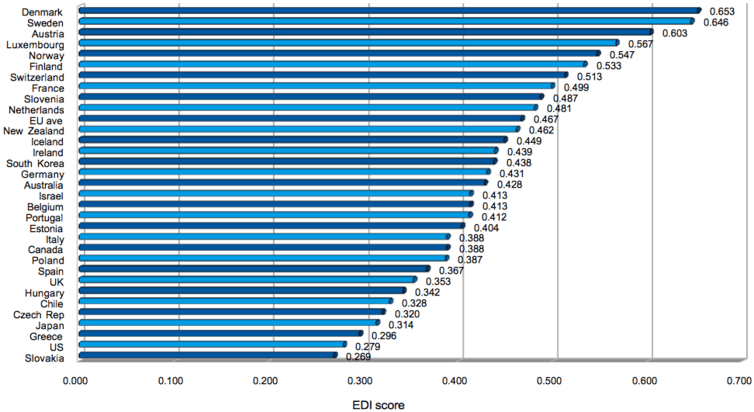
What is striking is the basic difference between a more “social” model of northern European capitalism and the more market-driven Anglo-American model. Hence the Scandinavian countries score among the best, with their higher levels of social protection, employment rights and democratic participation in economic decision-making. The reverse is true of the more deregulated, concentrated and less democratic economies of the English-speaking world. The US ranks particularly low, with only Slovakia below it. The UK too is only 25th out of 32.

 Economic Democracy Index, figures from 2013. Andrew Cumbers
Economic Democracy Index, figures from 2013. Andrew Cumbers

Interestingly, France ranks relatively highly. This reflects its strong levels of job protection and employee involvement in corporate decision-making – the fact that the far right has been strong in France for a number of years indicates its popularity stems from race at least as much as economics.

Yet leading mainstream presidential candidates François Fillon and Emmanuel Macron are committed to reducing France’s protections. These are often blamed – without much real evidence – for the country’s sluggish job creation record. There is a clear danger both here and in the Netherlands that a continuing commitment to such neoliberal labour market policies might push working class voters further towards Le Pen and Wilders.

One other notable disparity in the index is between the scores of Austria and Germany, despite their relatively similar economic governance. Germany’s lower ranking reflects the growth of labour market insecurity and lower levels of job protection, particularly for part-time workers as part of the Hartz IV labour market reforms in the 1990s that followed reunification.

The index also highlights the comparatively poor levels of economic democracy in the “transition” economies of eastern Europe. The one very interesting exception is Slovenia, which merits further study. It might reflect both its relatively stable transition from communism and the civil war in the former Yugoslavia, and the continuing presence of active civil society elements in the trade union and cooperative movements. Southern European economies also tend to rank below northern European countries, as does Japan.

Poverty and inequality

The index provides strong evidence that xenophobic politics may be linked to changing levels of economic participation and empowerment – notwithstanding the French data. We found that the greater the poverty and inequality in a country, the lower the rates of economic democracy.

These findings suggest, for example, that the Anglo-American-led attack on trade unions and flexible labour policies may actually drive up poverty and inequality by cutting welfare benefits and driving up individual employment insecurity. While the OECD itself advocated these policies until recently, countries with high levels of economic democracy such as Norway, Denmark and Iceland have much lower levels of poverty than countries such as the US and UK.

 Far right activists in Budapest, Hungary, February 2016. EPA
Far right activists in Budapest, Hungary, February 2016. EPA

Far-right populism is on the march everywhere, including the Nordic countries. But Brexit, Trump and the more serious shift to the far right in Eastern Europe have been accompanied by diminishing economic security and rights at work, disenfranchised trade unions and cooperatives, and economic decision-making concentrated among financial, political and corporate elites.

We will monitor these scores in future to see what happens over time. It will be interesting to see how the correlations between economic democracy, poverty and voting patterns develop in the coming years. For those looking for answers to the crisis in liberal democracy, this may well be it.

ooOOoo

 I shall be writing to Professor Cumbers asking if my analysis of that relationship is supported by his research.

For if it is then we do have a very clear axiom that few would disagree with. That is the political consensus this world needs now.

Oh, and we will be back to dogs tomorrow! 😉

Tensions abound in many societies.

Reader alert: This has nothing to do with dogs!

Then as soon as I started to write today’s post (as of yesterday afternoon) I realised the error in my sub-title. For one might argue that this does have a connection with how our dogs behave as a cohesive group. But I’m going to be ‘an arse’ (‘ass’ in American speak) and ask you to hold out until the end of today’s post to read the ‘doggie’ connection. (Note that today’s post is Part One. Part Two continues tomorrow.)

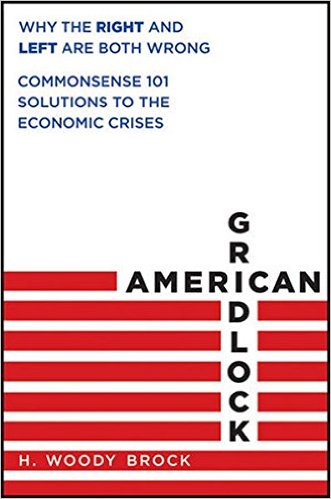
american-gridlock_0I am in the middle of reading American Gridlock written by H. Woody Brock and published in 2012. Here’s an extract of what the book is about, courtesy of Amazon:

A sensible solution to getting our economy back on track

Pessimism is ubiquitous throughout the Western World as the pressing issues of massive debt, high unemployment, and anemic economic growth divide the populace into warring political camps. Right-and Left-wing ideologues talk past each other, with neither side admitting the other has any good ideas. In American Gridlock, leading economist and political theorist H. Woody Brock bridges the Left/Right divide, illuminating a clear path out of our economic quagmire.

Arguing from first principles and with rigorous logic, Brock demonstrates that the choice before us is not between free market capitalism and a government-driven economy. Rather, the solution to our problems will require enactment of constructive policies that allow “true” capitalism to flourish even as they incorporate social policies that help those who truly need it.

Brock demonstrates how deductive logic (as opposed to ideologically driven data analysis) can transform the way we think about these problems and lead us to new and different solutions that cross the ideological divide. Drawing on new theories such as game theory and the economics of uncertainty that are based upon deductive logic, Brock reveals fresh ideas for tackling issues central to the 2012 U.S, Presidential election and to the nation’s long-run future:

It greatly influenced me and I sat down and wrote an essay. Mainly to clarify my own thinking ahead of a meeting last Saturday of our local Freethinkers Group where the topic was “Ideas for Improving our Democratic Processes”. The “our” being the US democratic process but just as valid for many other countries.

I first set out to see if there was a clear, unambiguous definition of what a democratic society is. Surprise, surprise there isn’t one. Very quickly I came up with three:

The first:

A democracy by definition is government through elected representatives. It is a form of society which favours equal rights, freedom of speech and a fair trial and tolerates the views of minorities. Civics and Citizenship website

The second:

A DEMOCRACY IS a society in which all adults have easily accessible, meaningful, and effective ways:

(a) to participate in the decision-making processes of every organization that makes decisions or takes actions that affect them, and;

(b) to hold other individuals, and those in these organizations who are responsible for making decisions and taking actions, fully accountable if their decisions or actions violate fundamental human rights, or are dishonest, unethical, unfair, secretive, inefficient, unrepresentative, unresponsive or irresponsible;

(c) so that all organizations in the society are citizen-owned, citizen-controlled, and citizen-driven, and all individuals and organizations are held accountable for wrongdoing. Democracy Watch website

And the third:

Better democracy, everywhere.

The Democratic Society (Demsoc) works for more and better democracy, where people and institutions have the desire, opportunity and confidence to participate together.

We work to create opportunities for people to become involved in the decisions that affect their lives and for them to have the skills to do this effectively. We support governments, parliaments and any organisation that wants to involve citizens in decision making to be transparent, open and welcoming of participation. We actively support spaces, places and processes to make this happen. Democratic Society website.

I went on to say in my essay:

Yes, there is some harmony between all three definitions but there are also significant differences in tone and language.

I am sure many of you are familiar with the book by H. Woody Brock American Gridlock. I started reading it a few days ago and cannot now put it down.

For the core message of the book is that we, as in society, must distinguish between inductive and deductive reasoning. Let me use the definitions as found on the Live Science website.

Deductive reasoning

Deductive reasoning is a basic form of valid reasoning. Deductive reasoning, or deduction, starts out with a general statement, or hypothesis, and examines the possibilities to reach a specific, logical conclusion, according to the University of California. The scientific method uses deduction to test hypotheses and theories. “In deductive inference, we hold a theory and based on it we make a prediction of its consequences. That is, we predict what the observations should be if the theory were correct. We go from the general — the theory — to the specific — the observations,” said Dr. Sylvia Wassertheil-Smoller, a researcher and professor emerita at Albert Einstein College of Medicine.

In deductive reasoning, if something is true of a class of things in general, it is also true for all members of that class. For example, “All men are mortal. Harold is a man. Therefore, Harold is mortal.” For deductive reasoning to be sound, the hypothesis must be correct. It is assumed that the premises, “All men are mortal” and “Harold is a man” are true. Therefore, the conclusion is logical and true.

That is, we predict what the observations should be if the theory were correct.

Let that really work it’s way through your consciousness. It’s an idea that is rooted in the great scientists and philosophers of many thousands of years ago. Think of Euclid, the Greek Socratic philosopher who founded the Megarian school of philosophy. He was a pupil of Socrates in the late 5th century BCE, and was present at his death. (I cheated and looked it up.)

It was Euclid who through Euclidian geometry came to understand the principles of angles and straight lines; as in the shortest distance between two points.

Moving on:

Inductive reasoning

Inductive reasoning is the opposite of deductive reasoning. Inductive reasoning makes broad generalizations from specific observations. “In inductive inference, we go from the specific to the general. We make many observations, discern a pattern, make a generalization, and infer an explanation or a theory,” Wassertheil-Smoller told Live Science. “In science there is a constant interplay between inductive inference (based on observations) and deductive inference (based on theory), until we get closer and closer to the ‘truth,’ which we can only approach but not ascertain with complete certainty.”

Even if all of the premises are true in a statement, inductive reasoning allows for the conclusion to be false. Here’s an example: “Harold is a grandfather. Harold is bald. Therefore, all grandfathers are bald.” The conclusion does not follow logically from the statements.

Inductive reasoning has its place in the scientific method. Scientists use it to form hypotheses and theories. Deductive reasoning allows them to apply the theories to specific situations.

Now for some of you this side trip into reasoning may have seen more like a complete departure. But the point is that, as American Gridlock makes so powerfully: There are two main problems to be solved if this nation is to get back on track. First, win-win policy solutions must be identified for the five real-world problems addressed in Chapters 2 through 6. Second, the Dialogue of the Deaf must come to an end, policy gridlock with it, and these solutions must be implemented. (Pages 7-8)

I closed my essay by setting out the following proposition:

Until we have a clear, universally acknowledged definition of what a democratic society is then it is impossible and utterly futile to debate the various processes including what is the best process for American society.

Is this relevant to the world outside the USA? You bet it is. For better or for worse, what the USA does today the rest of the world does soon thereafter.

And as you will see in Part Two that comes tomorrow democratising the economy is key.

For when we look at the way that dogs, and wolves, operate as a pack in the wild there are only three animals with status:

  • The alpha female who has first choice of the male dogs for mating purposes and makes the decision, as and when necessary, to move her pack to a new territory,
  • The beta dog, always a male, whose role is to keep the pack running smoothly as a cohesive group and not letting squabbles get out of hand, and,
  • The omega dog, that can be of either gender, whose role is to keep the pack happy.

All the other animals in the pack of around fifty are of equal status and work for the benefit of the pack. Now that is something we should learn from dogs!

The rights and wrongs of hunting!

The philosophy of hunting in terms of it being ‘right’ or ‘wrong’.

Anyone who comes here for more than a couple of visits will know that both Jean and I are opposed to hunting completely. Period!

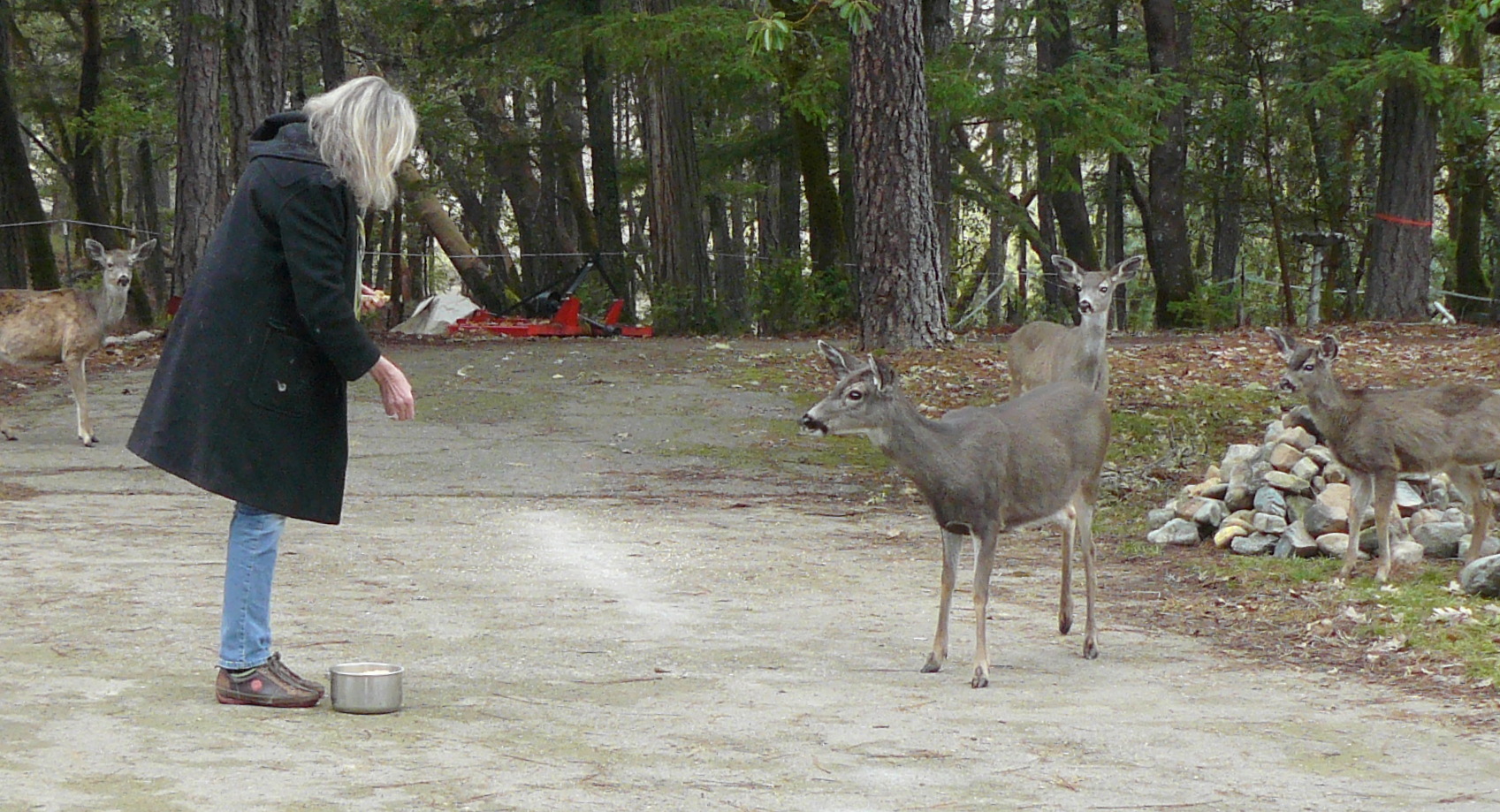
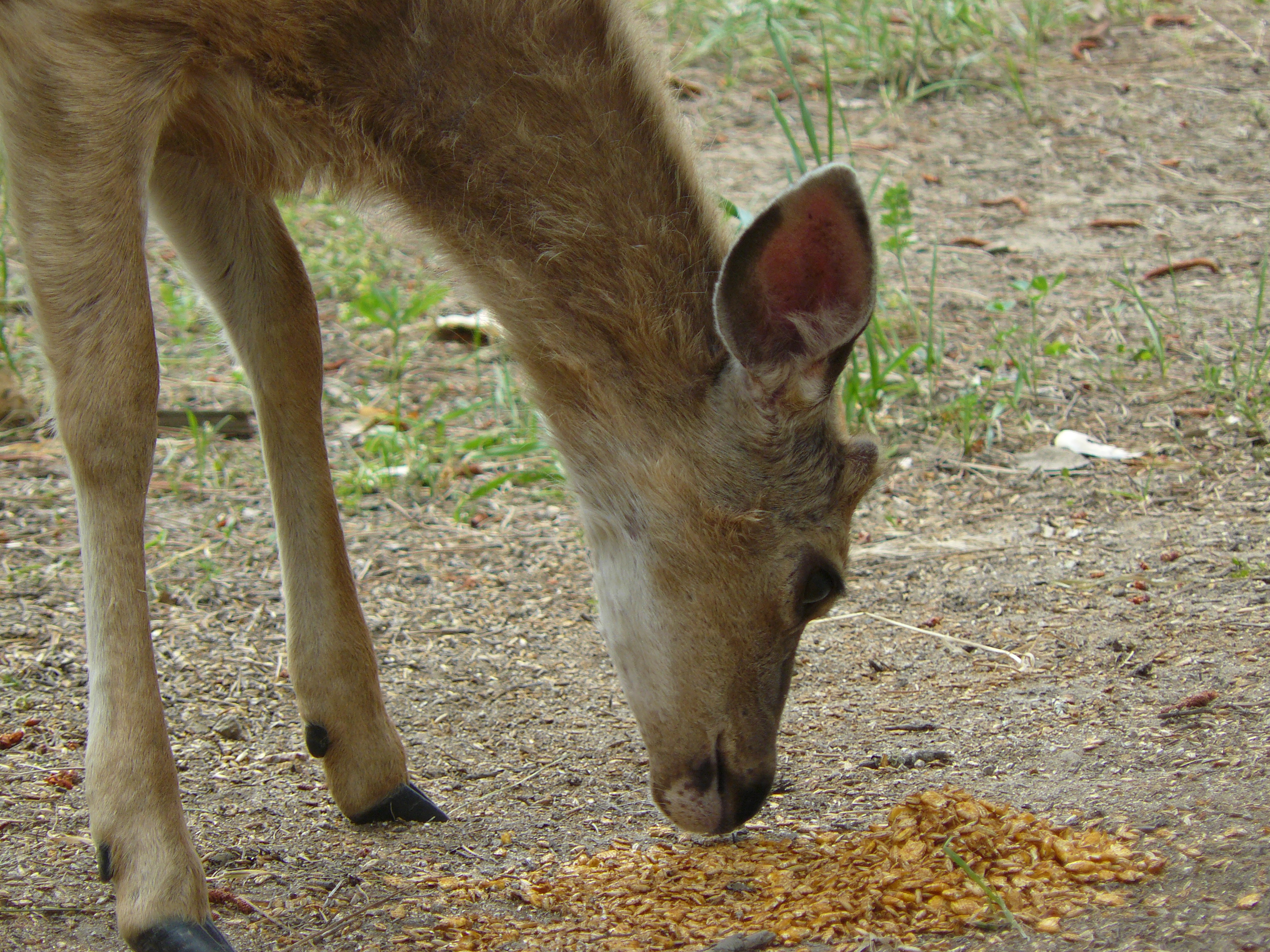
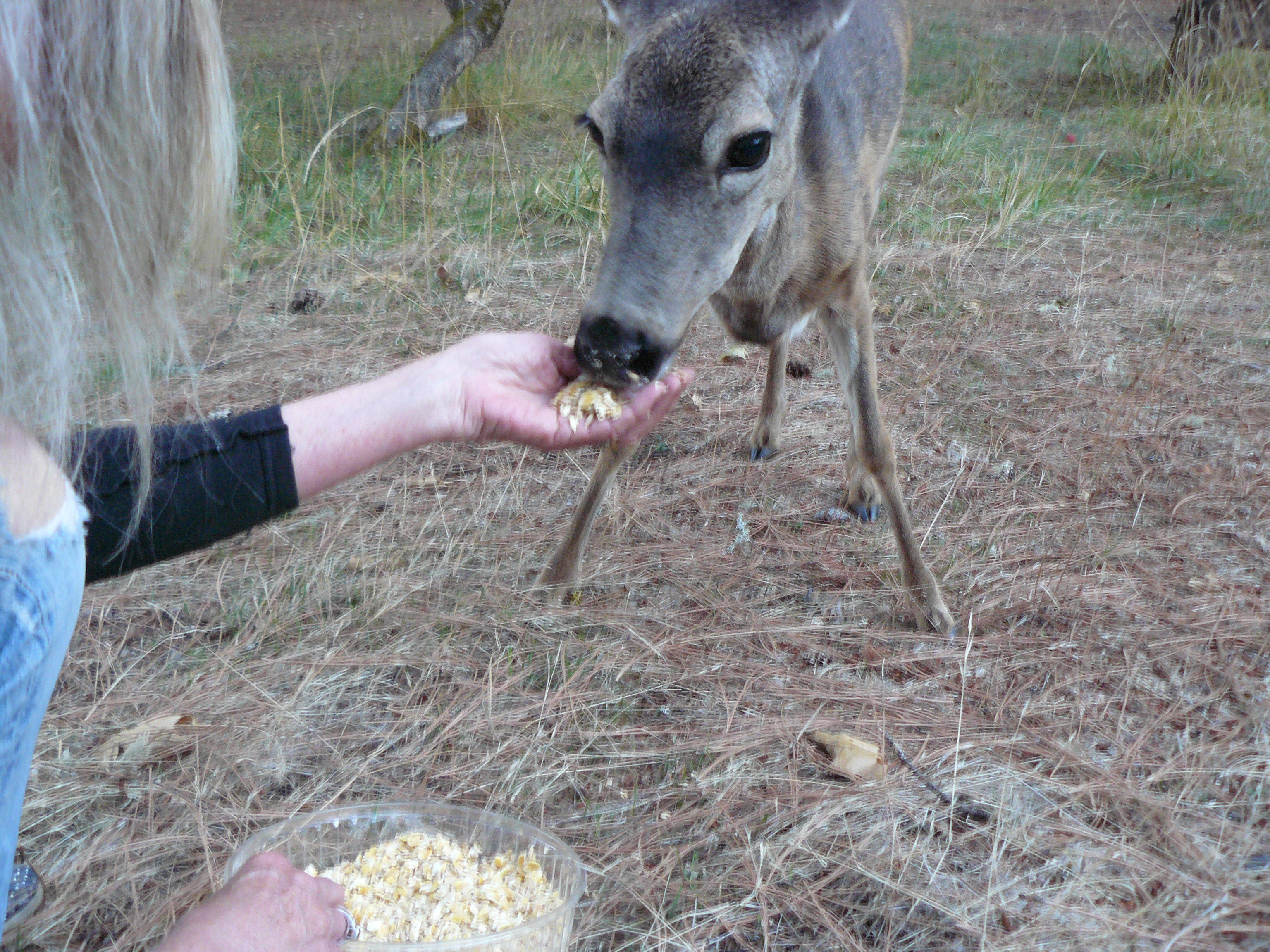
That’s not surprising as there have been a number of posts over the years describing how we feed the wild deer. Here’s three more photographs that haven’t previously been shared with you.

p1140238oooo

p1160189oooo

p1150179But, of course, the opinions of Jean and me are not, and should not be, the rule for the wider population of this part of Oregon.

All I would ask is that there is a proper, mature discussion as to the pros and cons of hunting wild animals in this, the twenty-first century.

All of which leads me to a recent essay posted on The Conversation site and republished here within the terms of that site.

ooOOoo

Is hunting moral? A philosopher unpacks the question

January 4, 2017 8.37pm EST

by
Three generations of a Wisconsin family with a nine-point buck. Wisconsin Department of Natural Resources/Flickr, CC BY-ND

Every year as daylight dwindles and trees go bare, debates arise over the morality of hunting. Hunters see the act of stalking and killing deer, ducks, moose and other quarry as humane, necessary and natural, and thus as ethical. Critics respond that hunting is a cruel and useless act that one should be ashamed to carry out.

As a nonhunter, I cannot say anything about what it feels like to shoot or trap an animal. But as a student of philosophy and ethics, I think philosophy can help us clarify, systematize and evaluate the arguments on both sides. And a better sense of the arguments can help us talk to people with whom we disagree.

Three rationales for hunting

One central question is why people choose to hunt. Environmental philosopher Gary Varner identifies three types of hunting: therapeutic, subsistence and sport. Each type is distinguished by the purpose it is meant to serve.

Therapeutic hunting involves intentionally killing wild animals in order to conserve another species or an entire ecosystem. In one example, Project Isabella, conservation groups hired marksmen to eradicate thousands of feral goats from several Galapagos islands between 1997 and 2006. The goats were overgrazing the islands, threatening the survival of endangered Galapagos tortoises and other species.

Subsistence hunting is intentionally killing wild animals to supply nourishment and material resources for humans. Agreements that allow Native American tribes to hunt whales are justified, in part, by the subsistence value the animals have for the people who hunt them.

 Crawford Patkotak, center, leads a prayer after his crew landed a bowhead whale near Barrow, Alaska. Both revered and hunted by the Inupiat, the bowhead whale serves a symbol of tradition, as well as a staple of food. AP Photo/Gregory Bull
Crawford Patkotak, center, leads a prayer after his crew landed a bowhead whale near Barrow, Alaska. Both revered and hunted by the Inupiat, the bowhead whale serves a symbol of tradition, as well as a staple of food. AP Photo/Gregory Bull

In contrast, sport hunting refers to intentionally killing wild animals for enjoyment or fulfillment. Hunters who go after deer because they find the experience exhilarating, or because they want antlers to mount on the wall, are sport hunters.

These categories are not mutually exclusive. A hunter who stalks deer because he or she enjoys the experience and wants decorative antlers may also intend to consume the meat, make pants from the hide and help control local deer populations. The distinctions matter because objections to hunting can change depending on the type of hunting.

What bothers people about hunting: Harm, necessity and character

Critics often argue that hunting is immoral because it requires intentionally inflicting harm on innocent creatures. Even people who are not comfortable extending legal rights to beasts should acknowledge that many animals are sentient – that is, they have the capacity to suffer. If it is wrong to inflict unwanted pain and death on a sentient being, then it is wrong to hunt. I call this position “the objection from harm.”

If sound, the objection from harm would require advocates to oppose all three types of hunting, unless it can be shown that greater harm will befall the animal in question if it is not hunted – for example, if it will be doomed to slow winter starvation. Whether a hunter’s goal is a healthy ecosystem, a nutritious dinner or a personally fulfilling experience, the hunted animal experiences the same harm.

But if inflicting unwanted harm is necessarily wrong, then the source of the harm is irrelevant. Logically, anyone who commits to this position should also oppose predation among animals. When a lion kills a gazelle, it causes as much unwanted harm to the gazelle as any hunter would – far more, in fact.

 Lions attack a water buffalo in Tanzania. Oliver Dodd/Wikipedia, CC BY
Lions attack a water buffalo in Tanzania. Oliver Dodd/Wikipedia, CC BY

Few people are willing to go this far. Instead, many critics propose what I call the “objection from unnecessary harm”: it is bad when a hunter shoots a lion, but not when a lion mauls a gazelle, because the lion needs to kill to survive.

Today it is hard to argue that human hunting is strictly necessary in the same way that hunting is necessary for animals. The objection from necessary harm holds that hunting is morally permissible only if it is necessary for the hunter’s survival. “Necessary” could refer to nutritional or ecological need, which would provide moral cover for subsistence and therapeutic hunting. But sport hunting, almost by definition, cannot be defended this way.

Sport hunting also is vulnerable to another critique that I call “the objection from character.” This argument holds that an act is contemptible not only because of the harm it produces, but because of what it reveals about the actor. Many observers find the derivation of pleasure from hunting to be morally repugnant.

In 2015, American dentist Walter Palmer found this out after his African trophy hunt resulted in the death of Cecil the lion. Killing Cecil did no significant ecological damage, and even without human intervention, only one in eight male lions survives to adulthood. It would seem that disgust with Palmer was at least as much a reaction to the person he was perceived to be – someone who pays money to kill majestic creatures – as to the harm he had done.

The hunters I know don’t put much stock in “the objection from character.” First, they point out that one can kill without having hunted and hunt without having killed. Indeed, some unlucky hunters go season after season without taking an animal. Second, they tell me that when a kill does occur, they feel a somber union with and respect for the natural world, not pleasure. Nonetheless, on some level the sport hunter enjoys the experience, and this is the heart of the objection.

Is hunting natural?

In discussions about the morality of hunting, someone inevitably asserts that hunting is a natural activity since all preindustrial human societies engage in it to some degree, and therefore hunting can’t be immoral. But the concept of naturalness is unhelpful and ultimately irrelevant.

A very old moral idea, dating back to the Stoics of ancient Greece, urges us to strive to live in accordance with nature and do that which is natural. Belief in a connection between goodness and naturalness persists today in our use of the word “natural” to market products and lifestyles – often in highly misleading ways. Things that are natural are supposed to be good for us, but also morally good.

Setting aside the challenge of defining “nature” and “natural,” it is dangerous to assume that a thing is virtuous or morally permissible just because it is natural. HIV, earthquakes, Alzheimer’s disease and post-partum depression are all natural. And as The Onion has satirically noted, behaviors including rape, infanticide and the policy of might-makes-right are all present in the natural world.

Head-Smashed-In Buffalo Jump, a UNESCO World Heritage Site in Alberta, Canada, commemorates a place where indigenous peoples of the North American Plains killed buffalo for more than 6,000 years by driving them over a cliff.

Hard conversations

There are many other moral questions associated with hunting. Does it matter whether hunters use bullets, arrows or snares? Is preserving a cultural tradition enough to justify hunting? And is it possible to oppose hunting while still eating farm-raised meat?

As a starting point, though, if you find yourself having one of these debates, first identify what kind of hunting you’re discussing. If your interlocutor objects to hunting, try to discover the basis for their objection. And I believe you should keep nature out of it.

Finally, try to argue with someone who takes a fundamentally different view. Confirmation bias – the unintentional act of confirming the beliefs we already have – is hard to overcome. The only antidote I know of is rational discourse with people whose confirmation bias runs contrary to my own.

ooOOoo

This is a very important essay from Joshua. Well done, that man!

I will just leave you all with this further image.

Two young stags keeping it together. (xxx)
Two young stags keeping it together. (Taken here at home in July, 2016.)

Best wishes to each of you; irrespective of your view on hunting!

If there’s any doubt ….

…. there’s no doubt!

My title and sub-title comes from commercial aviation. It’s one aspect of the safety culture that safely the millions of passengers who embark on a commercial flight each year. (IATA estimate that it will be 3.6 billion in 2016.) In other words, if the flight crew have even an inkling of an issue with the aircraft while in flight they will make an immediate decision to land.

Why I chose this title will become clearer as you read on.

The end of the Second World War so far as Europe was concerned came on May 8th, 1945. In other words: VE Day. London was not a pretty sight in 1945.

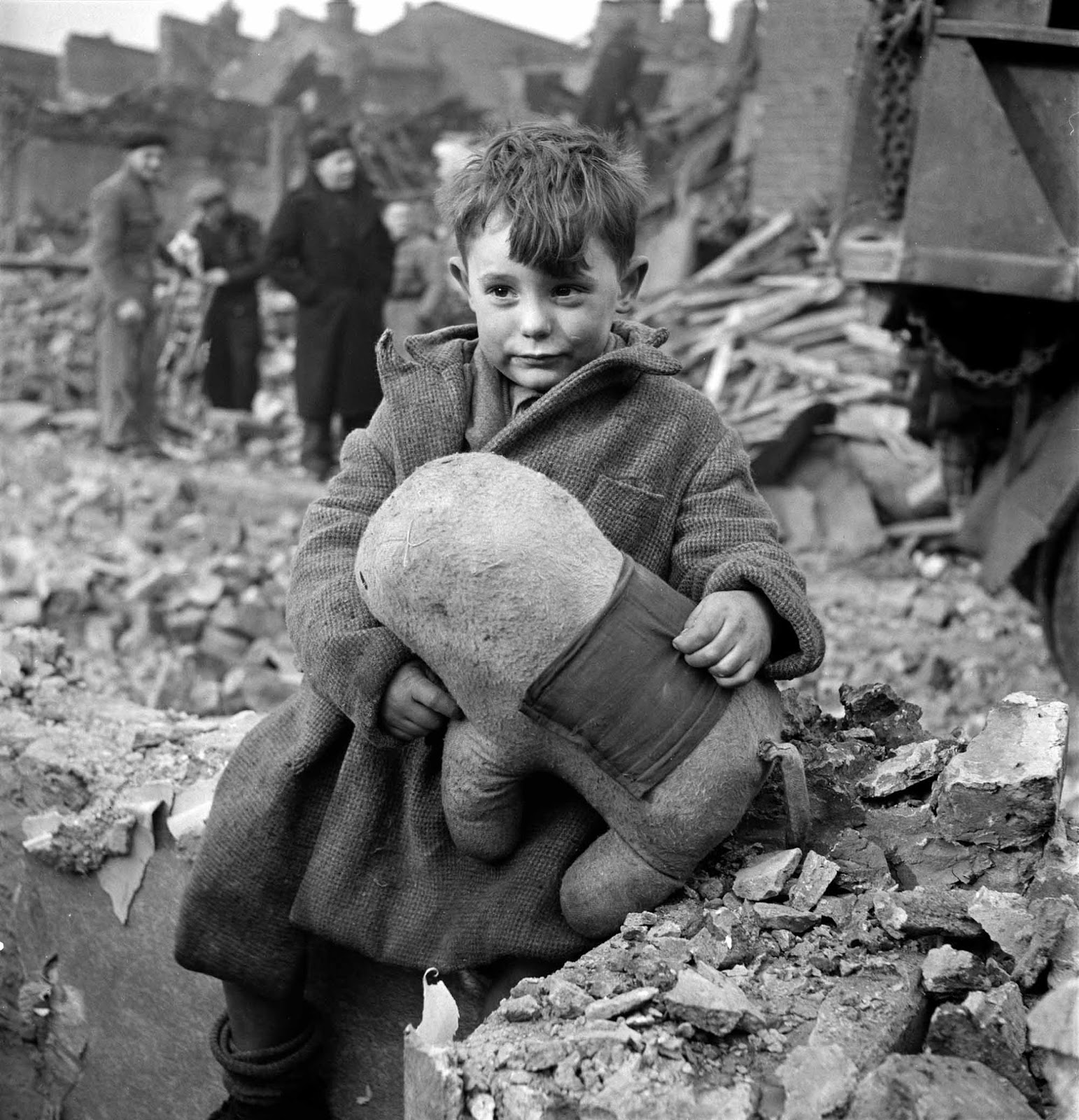
Toni Frissell’s famous image of an abandoned boy clutching a stuffed animal in the rubble of 1945 London.
Toni Frissell’s famous image of an abandoned boy clutching a stuffed animal in the rubble of 1945 London. (Image taken from this website page.)

What’s the relevance of May 8th, 1945 to me? Well exactly six months, to the day, before VE Day yours truly was born in Acton which was just six miles West of Marble Arch in the centre of London.

It has been a family legend that when VE Day was announced my mother looked at her six-month-old baby son and announced that he was going to live! For those first six months of my life in London were very dangerous. From that same website page where that photograph above came from one can read (my emphasis):

Nazi Germany continued to bomb London up until 1945 using a variety of delivery methods including V-1 and V-2 rockets. In total 1,115 V-2s were fired at the United Kingdom. The vast majority of them were aimed at London, though about 40 targeted (and missed) Norwich. They killed an estimated 2,754 people in London with another 6,523 injured.

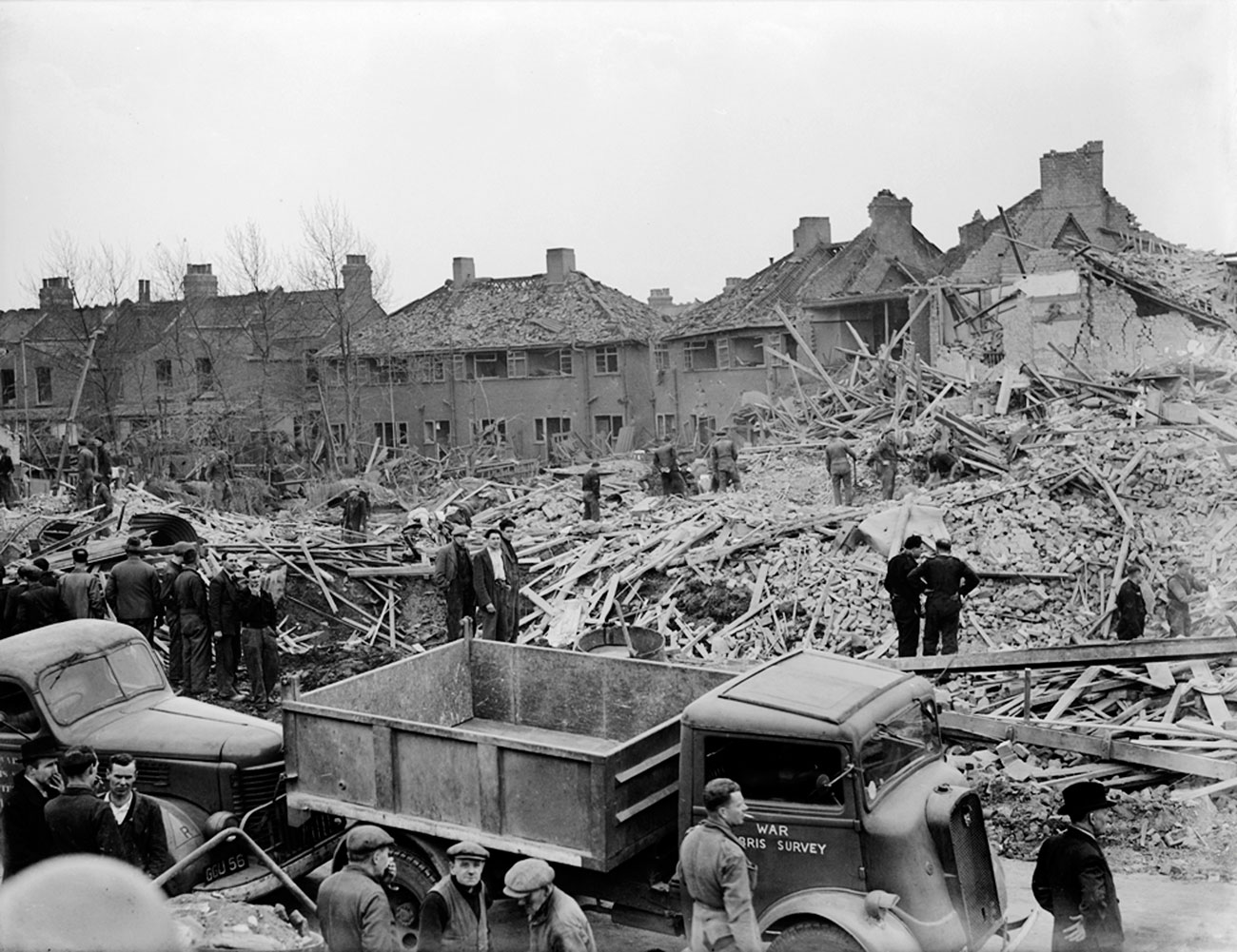
I have very clear mental images of playing in and around bomb sites near our home right up to 1953 when there was a real push to clear the sites away ahead of the Queen’s Coronation on June 2nd, 1953.

German V-2 bomb damage on Uppingham Avenue, Stanmore, just a few miles from home
German V-2 bomb damage on houses in Uppingham Avenue, Stanmore, just a few miles from home. The bomb exploded on March 16th, 1945.

So what’s this all about and why do I see it as relevant to today’s world? Stay with me for a little longer.

Yesterday, Patrice Ayme left a comment to my Private Power post. He opened that comment by saying:

With all due respect, and abundant apologies for the daring image, we can’t write exclusively about dogs, lest we want to finish as dog food. As Paul is suggesting. Indeed I view seriousness in global inquiry as a basic moral duty.

Imagine Jews worrying just about dogs, while Auschwitz was being built; it’s arguably what happened, said Hannah Arendt (I’m paraphrasing; she was hated for it, though…) Some will scoff, but Kim in Korea is building one new H bomb every 5 weeks… One single H bomb, in the ‘right’ place, can kill more than Auschwitz.

On December 27th, Patrice published a post under the title of Isaac Asimov’s Foundation Trilogy. It started:

In the Real World, Foundations Saved Civilization Before:

The combination of imperial collapse followed by re-birth from Foundations within happened several times already, for real.

Civilizations collapsing into Dark Ages from the actions of dozens of millions of people occurred more than once. And then very small groups arose, often within the collapsing empire, and imposed new ways of thinking which enabled civilization to restart.

After I read his post I left a question as a comment: “Are you saying that our present civilization is on the point of collapse?”

Patrice replied:

Well, we are certainly tottering at the edge:
http://www.newyorker.com/news/news-desk/world-war-three-by-mistake
Playing Russian roulette works only that long. Unfortunately demoncrats did not care.

I then went across to that article carried by The New Yorker. It was an article written by Eric Schlosser, author of the book Command and Control: Nuclear Weapons, the Damascus Accident, and the Illusion of Safety and a producer of the documentary Command and Control from 2016.

It’s a long article but an extremely important read. Here are some of the key extracts:

ooOOoo

World War Three, by Mistake

Harsh political rhetoric, combined with the vulnerability of the nuclear command-and-control system, has made the risk of global catastrophe greater than ever.

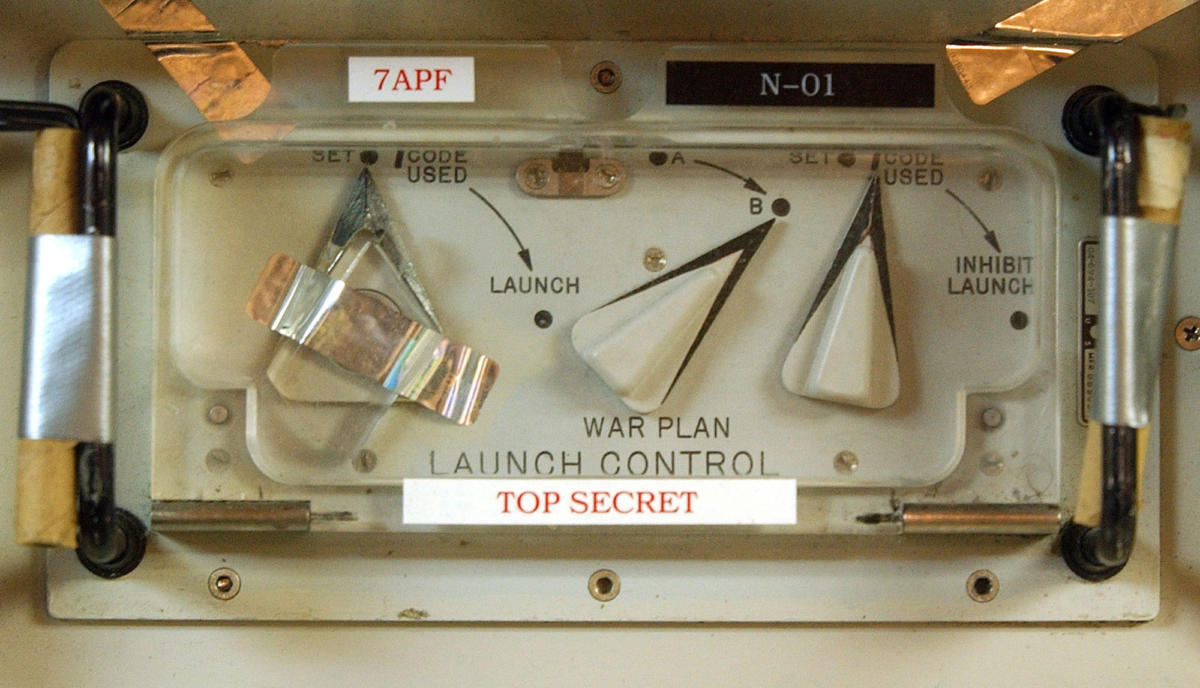
 A dilemma has haunted nuclear strategy since the first detonation of an atomic bomb: How do you prevent a nuclear attack while preserving the ability to launch one?PHOTOGRAPH BY ANDY CROSS / THE DENVER POST VIA GETTY
A dilemma has haunted nuclear strategy since the first detonation of an atomic bomb: How do you prevent a nuclear attack while preserving the ability to launch one? PHOTOGRAPH BY ANDY CROSS / THE DENVER POST VIA GETTY

On June 3, 1980, at about two-thirty in the morning, computers at the National Military Command Center, beneath the Pentagon, at the headquarters of the North American Air Defense Command (NORAD), deep within Cheyenne Mountain, Colorado, and at Site R, the Pentagon’s alternate command post center hidden inside Raven Rock Mountain, Pennsylvania, issued an urgent warning: the Soviet Union had just launched a nuclear attack on the United States. The Soviets had recently invaded Afghanistan, and the animosity between the two superpowers was greater than at any other time since the Cuban Missile Crisis.

U.S. Air Force ballistic-missile crews removed their launch keys from the safes, bomber crews ran to their planes, fighter planes took off to search the skies, and the Federal Aviation Administration prepared to order every airborne commercial airliner to land.

President Jimmy Carter’s national-security adviser, Zbigniew Brzezinski, was asleep in Washington, D.C., when the phone rang. His military aide, General William Odom, was calling to inform him that two hundred and twenty missiles launched from Soviet submarines were heading toward the United States. Brzezinski told Odom to get confirmation of the attack. A retaliatory strike would have to be ordered quickly; Washington might be destroyed within minutes. Odom called back and offered a correction: twenty-two hundred Soviet missiles had been launched.

Brzezinski decided not to wake up his wife, preferring that she die in her sleep. As he prepared to call Carter and recommend an American counterattack, the phone rang for a third time. Odom apologized—it was a false alarm. An investigation later found that a defective computer chip in a communications device at NORAD headquarters had generated the erroneous warning. The chip cost forty-six cents.

[Two paragraphs later]

My book “Command and Control” explores how the systems devised to govern the use of nuclear weapons, like all complex technological systems, are inherently flawed. They are designed, built, installed, maintained, and operated by human beings. But the failure of a nuclear command-and-control system can have consequences far more serious than the crash of an online dating site from too much traffic or flight delays caused by a software glitch. Millions of people, perhaps hundreds of millions, could be annihilated inadvertently. “Command and Control” focusses on near-catastrophic errors and accidents in the arms race between the United States and the Soviet Union that ended in 1991. The danger never went away. Today, the odds of a nuclear war being started by mistake are low—and yet the risk is growing, as the United States and Russia drift toward a new cold war. The other day, Senator John McCain called Vladimir Putin, the President of the Russian Federation, “a thug, a bully, and a murderer,” adding that anyone who “describes him as anything else is lying.” Other members of Congress have attacked Putin for trying to influence the Presidential election.  On Thursday, Putin warned that Russia would “strengthen the military potential of strategic nuclear forces,” and President-elect Donald Trump has responded with a vow to expand America’s nuclear arsenal.  “Let it be an arms race,” Trump told one of the co-hosts of MSNBC’s “Morning Joe.” “We will outmatch them at every pass and outlast them all.”

The harsh rhetoric on both sides increases the danger of miscalculations and mistakes, as do other factors. Close encounters between the military aircraft of the United States and Russia have become routine, creating the potential for an unintended conflict. Many of the nuclear-weapon systems on both sides are aging and obsolete. The personnel who operate those systems often suffer from poor morale and poor training. None of their senior officers has firsthand experience making decisions during an actual nuclear crisis. And today’s command-and-control systems must contend with threats that barely existed during the Cold War: malware, spyware, worms, bugs, viruses, corrupted firmware, logic bombs, Trojan horses, and all the other modern tools of cyber warfare. The greatest danger is posed not by any technological innovation but by a dilemma that has haunted nuclear strategy since the first detonation of an atomic bomb: How do you prevent a nuclear attack while preserving the ability to launch one?

[Going to the closing paragraph]

Every technology embodies the values of the age in which it was created. When the atomic bomb was being developed in the mid-nineteen-forties, the destruction of cities and the deliberate targeting of civilians was just another military tactic. It was championed as a means to victory. The Geneva Conventions later classified those practices as war crimes—and yet nuclear weapons have no other real use. They threaten and endanger noncombatants for the sake of deterrence. Conventional weapons can now be employed to destroy every kind of military target, and twenty-first-century warfare puts an emphasis on precision strikes, cyberweapons, and minimizing civilian casualties. As a technology, nuclear weapons have become obsolete. What worries me most isn’t the possibility of a cyberattack, a technical glitch, or a misunderstanding starting a nuclear war sometime next week. My greatest concern is the lack of public awareness about this existential threat, the absence of a vigorous public debate about the nuclear-war plans of Russia and the United States, the silent consent to the roughly fifteen thousand nuclear weapons in the world. These machines have been carefully and ingeniously designed to kill us. Complacency increases the odds that, some day, they will. The “Titanic Effect” is a term used by software designers to explain how things can quietly go wrong in a complex technological system: the safer you assume the system to be, the more dangerous it is becoming.

ooOOoo

My greatest concern is the lack of public awareness about this existential threat, the absence of a vigorous public debate about the nuclear-war plans of Russia and the United States, the silent consent to the roughly fifteen thousand nuclear weapons in the world.

Is there a dog angle to all of this? You bet! For dogs as well as people are all innocents caught up in the madness of war.

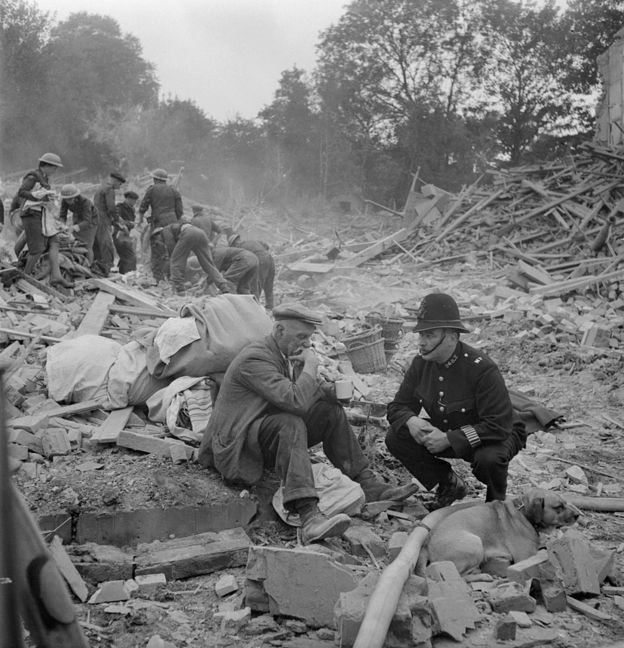
nd sympathy to a now homeless man, who returned home from walking his dog to find his house destroyed and wife killed by a V1 flying bomb. London 1944
A policeman offering sympathy to a now homeless man, who returned home from walking his dog to find his house destroyed and wife killed by a V1 flying bomb. London 1944. (The dog is just below the Policeman’s left shin.)

Now do you see why I entitled today’s post If there’s any doubt. there’s no doubt.

For if we were the flightcrew of the good ship Earth we would be urgently looking for a diversion airfield upon which to land; and land now!

Wherever you are in the world, whatever you are doing, if you share the concern expressed so clearly by Patrice don’t do nothing. Even if all you do is to send a message on one of the social media apps that’s far better than doing nothing. All that evil requires to succeed is for good people to do nothing!

For I haven’t a clue as to when and how my life will come to an end but, as sure as hell, I would prefer that it isn’t six months to the day after the start of World War III.

Especially if that war came about as a mistake!

Private power.

The power of corporations must never be permitted to override democratic choice.

The main thrust in yesterday’s post was a plea by , Lecturer on Anthropology, University of Colorado, Denver for our natural lands to be given the legal status of a person. Here’s how Prof. Colwell concluded his essay (my emphasis):

In New Zealand, the Te Urewera Act offers a higher level of protection, empowering a board to be the land’s guardian. The Te Urewera Act, though, does not remove its connection to humans. With a permit, people can hunt, fish, farm and more. The public still has access to the forest. One section of the law even allows Te Urewera to be mined.

Te Urewera teaches us that acknowledging cultural views of places as living does not mean ending the relationship between humans and nature, but reordering it – recognizing nature’s intrinsic worth and respecting indigenous philosophies.

In the U.S. and elsewhere, I believe we can do better to align our legal system with the cultural expressions of the people it serves. For instance, the U.S. Congress could amend the NHPA or the American Indian Religious Freedom Act to acknowledge the deep cultural connection between tribes and natural places, and afford better protections for sacred landscapes like New Mexico’s Mount Taylor.

Until then, it says much about us when companies are considered people before nature is.

Chip Colwell was alerting us, as in humanity, that our natural resources are way, way too important for them to be considered corporate assets.

The days between a Christmas Day and a New Year’s Day are frequently a time for introspection; well they are for me! A few days to reflect on what did or did not work in the year just coming to an end and to find some clarity about the important issues for the new year.

That mood of introspection, of reflection, seems to be creeping into my blog posts this last week of 2016. For following Chip Colwell comes George Monbiot and an essay he published on the 6th December, 2016, that is republished here with Mr. Monbiot’s very kind permission.

Regarding the power of corporations there are strong echoes between Prof. Colwell and Mr. Monbiot.

ooOOoo

The Golden Arches Theory of Decline

Why is there a worldwide revolt against politics as usual? Because corporate globalisation has crushed democratic choice.

By George Monbiot, published in the Guardian, 6th December 2016

A wave of revulsion rolls around the world. Approval ratings for incumbent leaders are everywhere collapsing. Symbols, slogans and sensation trump facts and nuanced argument. One in six Americans now believes that military rule would be a good idea. From all this I draw the following, peculiar conclusion: no country with a McDonald’s can remain a democracy.

Twenty years ago, the New York Times columnist Thomas Friedman proposed his “golden arches theory of conflict prevention”. This holds that “no two countries that both have McDonald’s have ever fought a war against each other since they each got their McDonald’s”.

Friedman’s was one of several end-of-history narratives suggesting that global capitalism would lead to permanent peace. He claimed that it might create “a tip-over point at which a country, by integrating with the global economy, opening itself up to foreign investment and empowering its consumers, permanently restricts its capacity for troublemaking and promotes gradual democratization and widening peace.” He didn’t mean that McDonald’s ends war, but that its arrival in a nation symbolised the transition.

In using McDonalds as shorthand for the forces tearing democracy apart, I am, like him, writing figuratively. I do not mean that the presence of the burger chain itself is the cause of the decline of open, democratic societies (though it has played its part in Britain, using our defamation laws against its critics). Nor do I mean that countries hosting McDonald’s will necessarily mutate into dictatorships.

What I mean is that, under the onslaught of the placeless, transnational capital McDonald’s exemplifies, democracy as a living system withers and dies. The old forms and forums still exist – parliaments and congresses remain standing – but the power they once contained seeps away, re-emerging where we can no longer reach it.

The political power that should belong to us has flitted into confidential meetings with the lobbyists and donors who establish the limits of debate and action. It has slipped into the dictats of the IMF and the European Central Bank, which respond not to the people but to the financial sector. It has been transported, under armed guard, into the icy fastness of Davos, where Mr Friedman finds himself so warmly welcomed (even when he’s talking cobblers).

Above all, the power that should belong to the people is being crushed by international treaty. Contracts such as NAFTA, CETA, the proposed TransPacific Partnership and Trade in Services Agreement and the failed Transatlantic Trade and Investment Partnership are crafted behind closed doors in discussions dominated by corporate lobbyists. They are able to slip in clauses that no informed electorate would ever approve, such as the establishment of opaque offshore tribunals, through which corporations can bypass national courts, challenge national laws and demand compensation for the results of democratic decisions.

These treaties limit the scope of politics, prevent states from changing social outcomes and drive down labour rights, consumer protection, financial regulation and the quality of neighbourhoods. They make a mockery of sovereignty. Anyone who forgets that striking them down was one of Donald Trump’s main promises will fail to understand why people were prepared to risk so much in electing him.

At the national level too, the McDonalds model destroys meaningful democracy. Democracy depends on a reciprocal sense of belief, trust and belonging: the conviction that you belong to the nation and the nation belongs to you. The McDonalds model, by rooting out attachment, could not have been better designed to erase that perception.

As Tom Wolfe observes in his novel A Man in Full, “the only way you could tell you were leaving one community and entering another was when the franchise chains started repeating and you spotted another 7-Eleven, another Wendy’s, another Costco, another Home Depot.” The alienation and anomie this destruction of place promotes are enhanced by the casualisation of labour and a spirit-crushing regime of monitoring, quantification and assessment (at which McDonald’s happens to excel). Public health disasters contribute to the sense of rupture. After falling for decades, for example, death rates among middle-aged white Americans are now rising. Among the likely causes are obesity and diabetes, opioid addiction and liver failure, diseases whose vectors are corporations.

Corporations, released from democratic constraints, drive us towards climate breakdown, an urgent threat to global peace. McDonald’s has done more than its fair share: beef production is among the most powerful causes of climate change.

In his book The Globalisation Paradox, the Harvard economist Dani Rodrik describes a political trilemma. Democracy, national sovereignty and hyperglobalisation, he argues, are mutually incompatible. You cannot have all three at once. McDonalisation crowds out domestic politics. Incoherent and dangerous as it often is, the global backlash against mainstream politicians is, at heart, an attempt to reassert national sovereignty against the forces of undemocratic globalisation.

An article about the history of the Democratic party by Matt Stoller in The Atlantic reminds us that a similar choice was articulated by the great American jurist Louis Brandeis. “We may have democracy, or we may have wealth concentrated in the hands of a few, but we can’t have both.” In 1936, the congressman Wright Patman managed to pass a bill against the concentration of corporate power. Among his targets was A&P, the giant chainstore of his day, that was hollowing out towns, destroying local retailers and turning “independent tradesmen into clerks”.

In 1938, President Roosevelt warned that “the liberty of a democracy is not safe if the people tolerate the growth of private power to a point where it becomes stronger than their democratic state itself. That, in its essence, is fascism.” The Democrats saw concentrated corporate power as a form of dictatorship. They broke up giant banks and businesses and chained the chainstores. What Roosevelt, Brandeis and Patman knew has been forgotten by those in power, including powerful journalists. But not by the victims of this system.

One of the answers to Trump, Putin, Orban, Erdogan, Salvini, Duterte, Le Pen, Farage and the politics they represent is to rescue democracy from transnational corporations. It is to defend the crucial political unit that’s under assault by banks, monopolies and chainstores: community. It is to recognise that there is no greater hazard to peace between nations than a corporate model which crushes democratic choice.

http://www.monbiot.com

ooOOoo

It’s very easy to pick out from Mr. Monbiot’s essay what the theme should be for 2017, and beyond. What each and every one of us who cares about the future and understands the huge changes that have to take place if our grandchildren are to have a viable future.

It was that compelling quotation by Louis Brandeis:

We may have democracy, or we may have wealth concentrated in the hands of a few, but we can’t have both.

It’s as simple as that!