Category: History

No room for being wrong!

Getting to the truth of what is or is not good for our dogs.

As many will understand so very often I am acting more as a messenger than an authoritative source in this place. It is very difficult for me, almost impossible indeed, for me to verify the validity of what is posted here.

On January 11th, I published a guest post from Kathreen Miller. Her article was called Is Organic Food Really Good For Your Dog To Eat?

Yesterday, local good friend and neighbour, Jim Goodbrod, sent me an email pointing out a number of weaknesses in Kathreen’s article and giving me permission to republish what he wrote as a post on Learning from Dogs.

Jim is an experienced Doctor of Veterinary Medicine (DVM) and has frequently advised us, both professionally and informally, about our own dogs and cats. We trust him fully. Jim attends a couple of local vet clinics including Lincoln Road Veterinary Clinic in Grants Pass to where we take our pets when required.
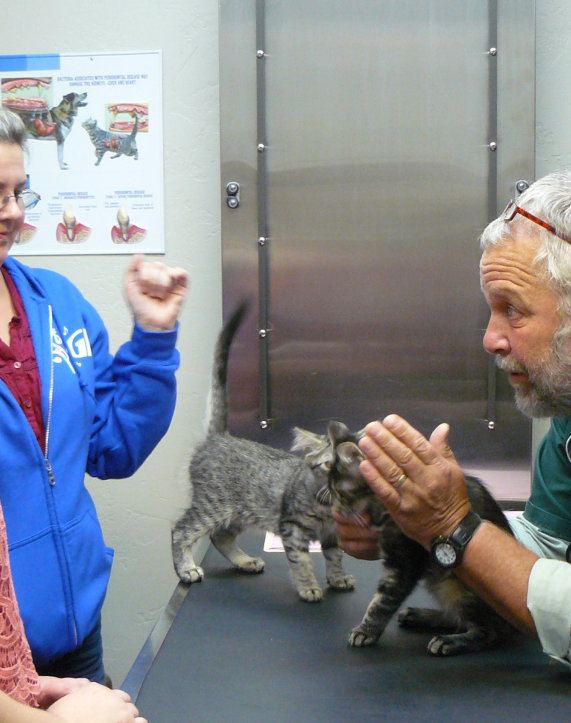
Dr. Jim seeing a patient at Lincoln Road Vet.

Here is Jim’s update published with his kind permission and unchanged by me apart from some minor formatting amendments including italicising some phrases.

ooOOoo

Hey Paul …

Regarding your post of 1-11-18, a guest post by Kathreen Miller concerning canine diet, I feel the need (justified or not) to clarify a few points. She seems to be a big proponent of “organic diets” and lest your readers be misled, I think we need to define what is meant by “organic”.

The legal definition of “organic” is codified by the USDA National Organic Program (NOP) in 7 CFR 205. Pet foods and pet treats must comply with these regulations or they may not legally use the word “organic” on the label. If you read these regulations, you will find that “organic” refers only to the handling and processing of ingredients and products.

These regulations cover: ingredient sourcing, ingredient handling, manufacturing, and labeling & certification of products wanting to use the word “organic” in their labeling.

However, these rules are not considered by NOP as a means to ensure safer, healthier, or more nutritious foods. In fact, there is no regulatory distinction in the tolerable levels of pesticides, drugs, or other residues allowed in organic vs conventional products (even though lower residues may in fact be a result).

Rather, the “organic” label is viewed as a confirmation of the organic production process, and the purchaser is left to his or her own determination as to whether the costs merit the perceived benefits. The bottom line is that “organic” refers to the processing of a product, and makes no guarantees as to the quality or digestibility of ingredients, safety, nutritional value or health benefits of the product.

A savvy pet owner, in order to ensure her dog’s optimal nutritional health, would be better advised to follow guidelines outlined by WSAVA or AAHA (or other reputable source) rather than to reflexively reach for the dog food that says “organic” on the label. The “organic” label does not necessarily mean a diet is good or bad, but it has nothing to do with the nutritional adequacy of the diet and hence your dog’s health.

Another point: Kathreen seems to buy into the popular myth that plant-based ingredients (like corn) are poorly digested fillers that provide little nutritional value and can cause allergies. Corn provides a good source of carbohydrates, essential amino acids, protein, and essential fatty acids in the diets of dogs and cats. It is highly digestible and is not a common cause of allergies. It is actually a very good nutrient as an ingredient in pet food.

My last point is regarding the product “Pet Bounce” that Kathreen endorses as a treatment for arthritic pain in dogs. This product is labelled as homeopathic and as such is nothing more than a placebo.

It has been proven over and over and over again that homeopathic remedies are nothing but water and perform no better than placebos in numerous clinical trials. Reading the list of ingredients, one can see that it contains:

  • 1) Belladonna 6X
  • 2)Caulphyllum 6C
  • 3) Colchicum autumnale 200C
  • 4) Apis mellifica 30C
  • 5) Rhus toxicodendron 200C
  • 6) Ruta graveolens 6X.

Anyone familiar with homeopathic nomenclature knows that, for example, the Apis mellifica 30C designation means that this particular herb is diluted in water 1 to  or   (that’s 1 followed by 60 zeroes!).

To put it into perspective, that’s equivalent to 1 molecule of this substance in a sphere of water 90 million miles in diameter (approximately the distance of the earth to the sun). That’s a 30C dilution.

At a 200C dilution, the treating substance is diluted more than the total number of atoms in the known universe!

Regardless of any medicinal properties these herbs may have, they are so fantastically diluted that there is not one molecule present in the final solution.

I defy any reasonable person to tell me that this so-called remedy is effective to treat anything and consists of anything more than a water placebo.

My problem with this kind of snake oil is that well-meaning pet owners waste their money (~$50.00 per bottle!) on this useless product, believing all the hype and thinking that they are improving the quality of their dog’s life, meanwhile squandering the opportunity to actually help their dog with an effective and evidence-based treatment.

Kathreen seems to be a nice and well-intentioned woman, but I don’t know what qualifies her as a “pet health expert”, other than her own opinion. According to her profile (from your blog) she lives in Chicago with her daughter and dog “Buddy” and listens to music, watches TV, and travels. That’s it? Nothing more??

Again, your readers, Paul, would be well advised to visit professional veterinary nutrition websites (and there are dozens of them) for their veterinary nutritional information.
Below are a couple good places to start:
http://www.wsava.org/sites/default/files/Nutrition%20on%20the%20Internet%20dogs.pdf

http://www.wsava.org/sites/default/files/Recommendations%20on%20Selecting%20Pet%20Foods.pdf

Regards, Jim

ooOOoo

I know you will join me in thanking Jim for spending the time in writing this update.

This is home!

It continues to feel very special!

Last Wednesday I was signed off in terms of being over my medical challenge and the good doctor said I was clear to return to driving; I drove home that afternoon from Eugene to Merlin.

I wanted to offer you good people a sense of what being home, more or less compus mentus , feels like.

I offer you this YouTube video.

It is a very beautiful world!

Continuing those easiest breeds!

Part Two of those breeds!

ooOOoo

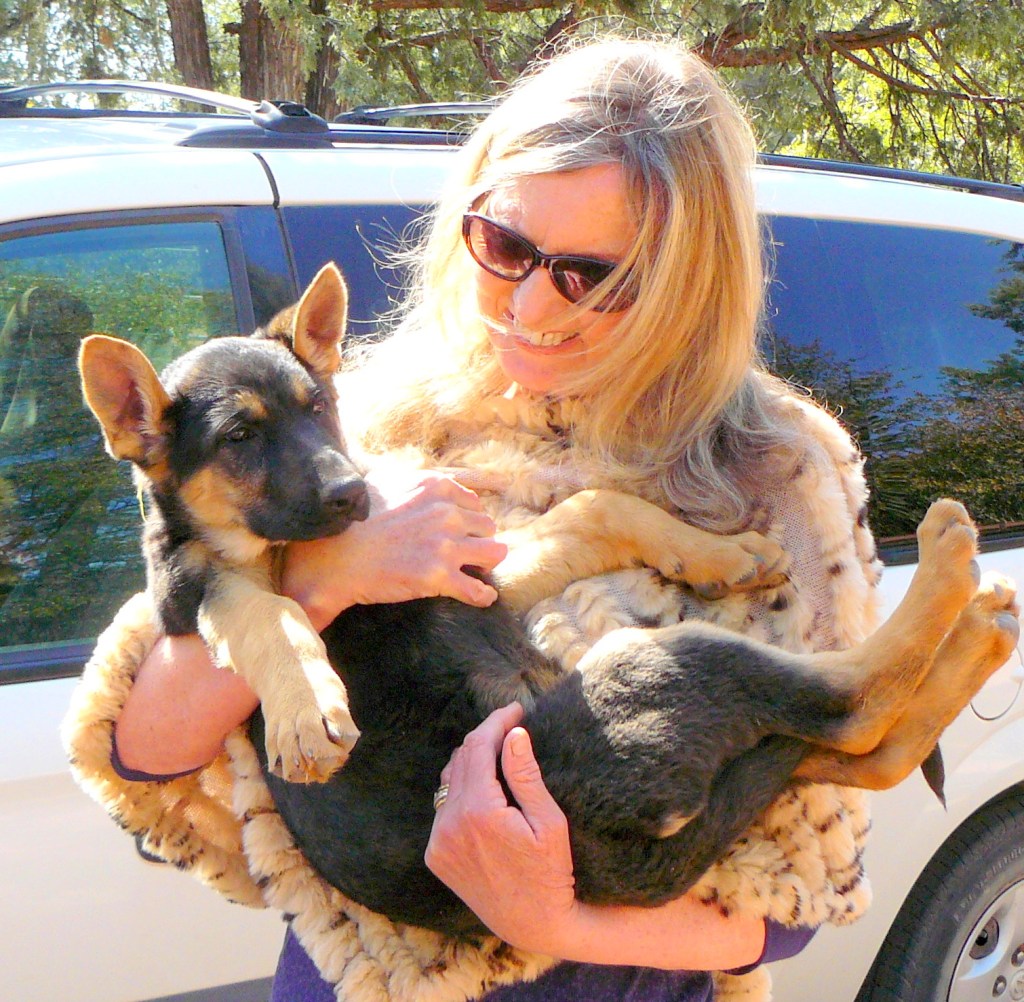
11. German shepherd

German shepherd | iStock.com/pyotr021

The German shepherd is another intelligent and active breed. Though German shepherds are large, the AKC reports they have a medium energy level. And the organization characterizes the German shepherd as “a loyal family pet and a good guard dog, the ideal choice for many families.” The AKC notes with a German shepherd (and other breeds), “Training is one of the most important responsibilities you have as a dog owner. Basic obedience training will make your dog a better companion and strengthen the bond between the two of you.”

Poorly trained German shepherds can develop behaviors, such as excessive barking, digging, and food stealing. But this dog breed responds well to training. According to the German Shepherd Dog Club of America, your German shepherd needs “you to be the leader of the pack, providing structure and guidance.” Another way to bond with your dog? Regular grooming. The German shepherd’s thick coat requires weekly grooming.

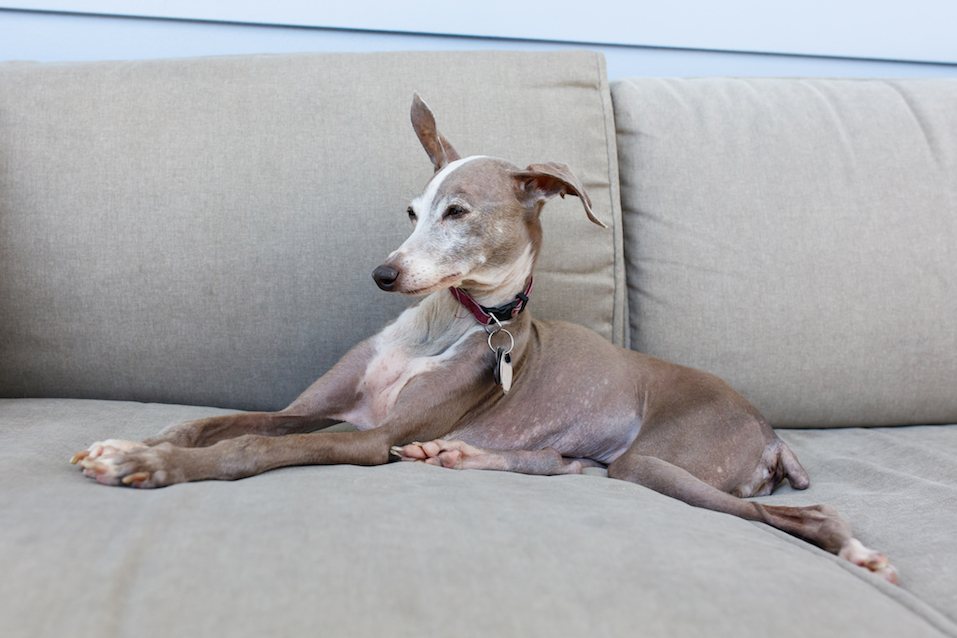
12. Italian greyhound

Italian greyhound | iStock.com/Rauluminate

Don’t be intimidated by the Italian greyhound’s speed or graceful looks. The AKC reports this breed is “generally easy to train and prefers to spend most of his time with his owner. They like attention and affection, and are a peaceful, gentle friend to adults and children.” If you have large dogs or active children, you’ll need to make sure your Italian greyhound doesn’t get injured by rough play. But for the most part, this dog breed will be happy to run and play — before curling up with you to be a couch potato.

Because of their small size, Italian greyhounds can live happily in an apartment just as well as in settings with more space. The breed generally stays quite healthy. And because these dogs have a short coat, they need only weekly grooming with a soft brush. In fact, the AKC characterizes them as one of the easiest dog breeds to groom. They love to cuddle and don’t want to be ignored. And in general, they’d prefer to chill in your lap or on your bed, rather than on the floor.

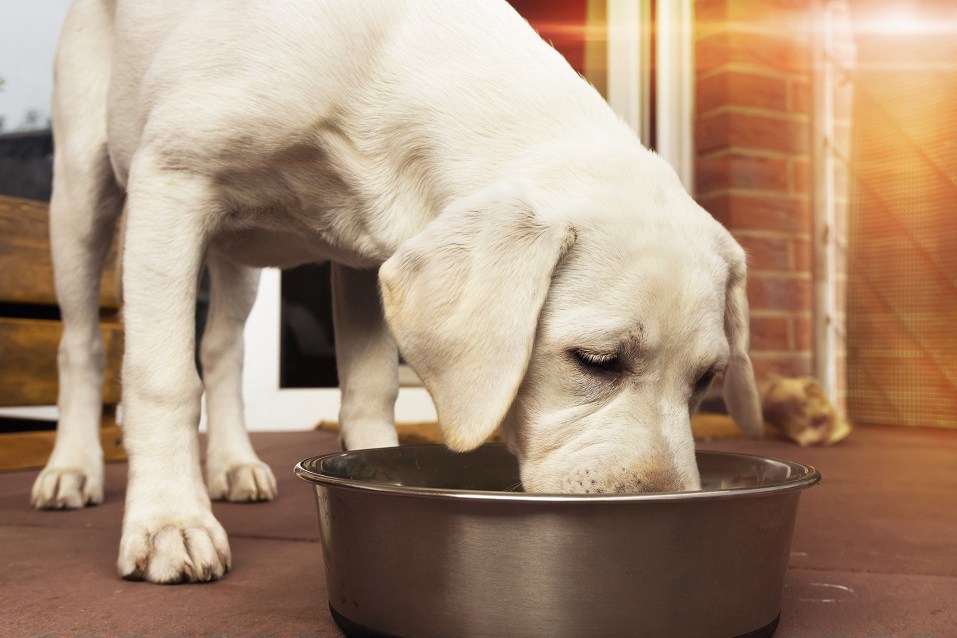
13. Labrador retriever

Labrador | iStock.com/manushot

America loves Labs. So it probably doesn’t surprise you to hear these adorable dogs are easy to own. Labs can learn just about anything that you throw at them. The AKC reports Labs are friendly and outgoing. They make great companions, show dogs, hunting dogs, guide dogs, and service dogs. Labs also make great family dogs because they get along easily with children and with other pets. Plus, they have a short coat that requires only occasional grooming.

So it’s no accident the Labrador retriever is the most popular dog in America. They live long and healthy lives. They have playful personalities, and they want to entertain and help you. Plus, they’re good companions for athletic people and can even train as canine athletes themselves.

However, Labrador retrievers qualify as what the AKC calls a “very active” dog breed. So don’t expect them to lounge on the couch all day. “Don’t confuse his laid-back personality for low energy,” the organization warns. “The Labrador retriever is extremely active — he’s never met a backyard he didn’t like.”

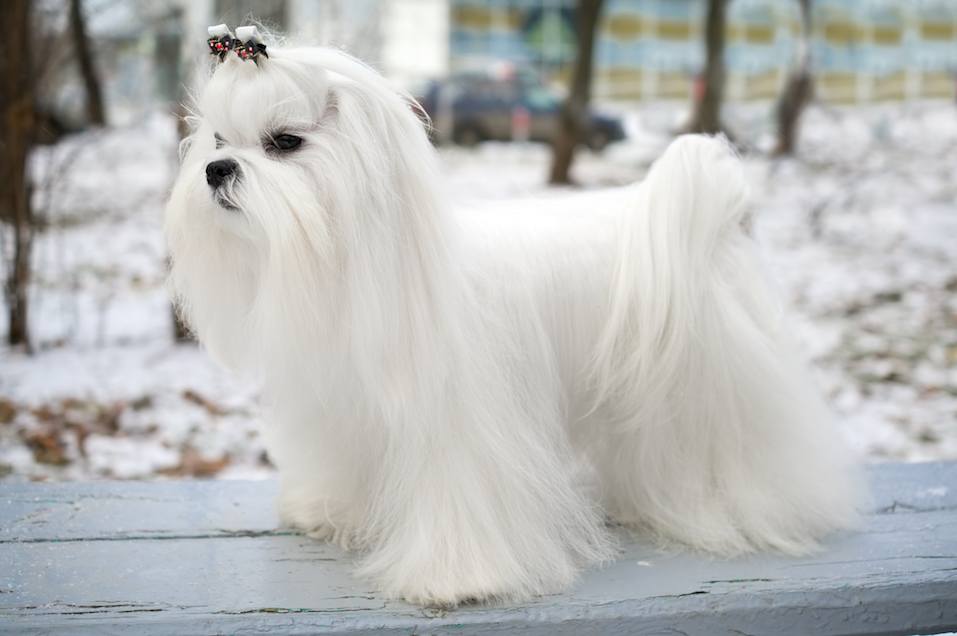
14. Maltese

Maltese | iStock.com/Laures

Another people-pleasing dog who will be easy to own and spend time with is the Maltese. According to the AKC, the Maltese is a “classic lapdog” who’s “somewhat active.” These dogs like brisk walks, playtime, and learning new tricks. However, the organization warns that Maltese are “highly intelligent and know very well how to use their charm to get their way. If given the chance, they become easily spoiled. This isn’t a problem for dog-savvy owners, but many pet owners will give in, often resulting in a pet with poor manners.”

Though they’re energetic and playful — which makes them great family dogs — many breeders don’t sell them to homes with young children. As a tiny puppy, a Maltese can be seriously injured if stepped on or dropped by a child. However, the Maltese is known as one of the few small dogs who aren’t susceptible to any major genetic ailments. So if it’s important to you that you choose a dog likely to stay in good health, the Maltese might be a good match for you.

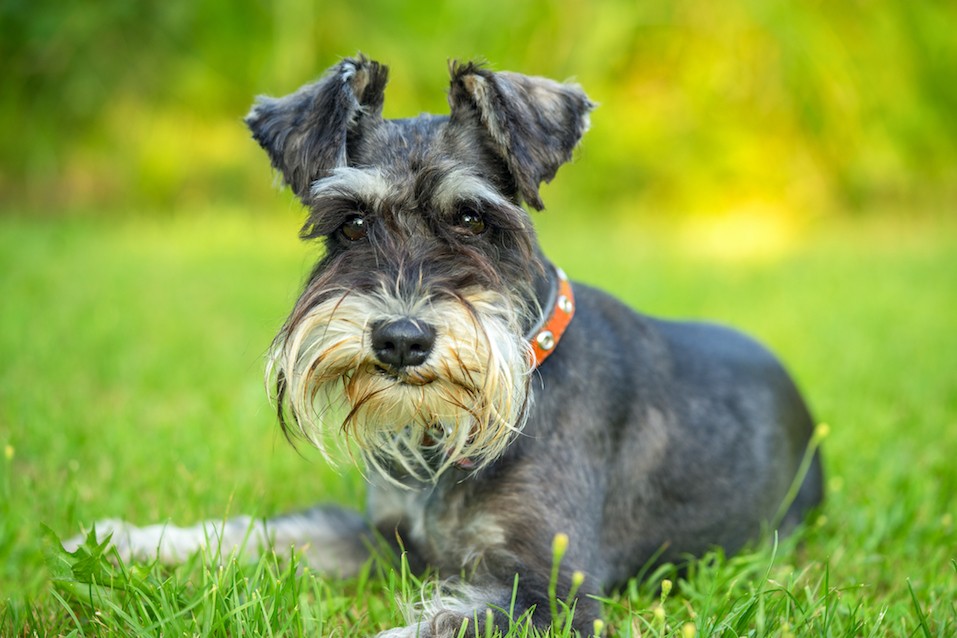
15. Miniature schnauzer

Miniature schnauzer | iStock.com/Elen11

The miniature schnauzer is a fast learner. The AKC characterizes the breed as “friendly,” “obedient,” and “smart” — three characteristics that many pet owners want in a dog. Another desirable trait? According to the AKC, the miniature schnauzer is “highly adaptable.” He can “make himself at home anywhere as long as his people are close by.” This small dog breed has a moderate energy level. And because these dogs crave human companionship, they are “obedient to commands” and can be trained for all kinds of activities.

According to the AKC, this dog breed is “small enough to adapt to apartment life but tireless enough to patrol acres of farmland.” The breed is generally healthy and long-lived. They have outgoing personalities and will stay loyal to their family. Just keep in mind this terrier likes to bark. So proper training will play an essential part in helping him to curb that behavior.

16. Papillon

A young papillon | iStock.com/Bigandt_Photography

Unlike many other small dogs, the papillon has a big appetite for exercise and activity. The AKC reports this dog breed has a medium energy level and generally needs to stay “very active.” In fact, these dogs “love to play outdoors but they can be easily entertained and exercised indoors as well.” This dog breed is very intelligent, but the AKC promises these alert and friendly dogs are “easily trained.”

Plus, Animal Planet characterizes the papillon as “one of the most obedient and responsive of the toy breeds.” Though some can be timid, they are often friendly toward strangers and other animals. And the papillon also makes a good family dog because the breed likes children. They have a medium-length coat without an undercoat, though they still require regular brushing.

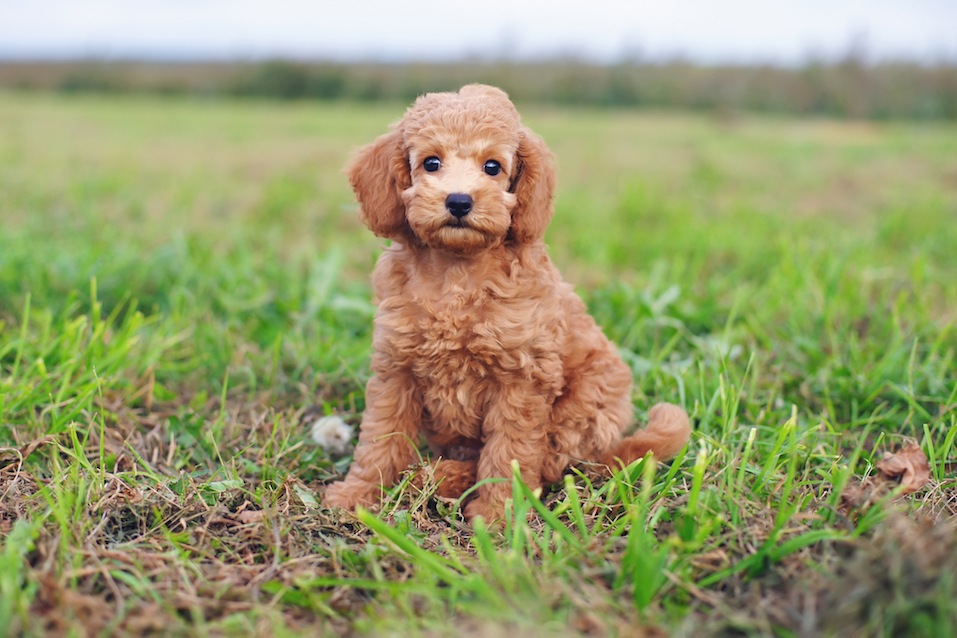
17. Poodle

Many people know the poodle is a highly intelligent dog breed. And even though intelligence doesn’t always ensure a dog responds well to training, the AKC promises that the poodle “excels in obedience training.” Although some poodles can be stubborn, proper training mitigates that trait.

The AKC notes, “There’s the old stereotype of poodles as a foofy velvet-pillow dogs looking down their long noses at us. Not true. Poodles are eager-to-please, highly trainable ‘real dogs.’ They like to work closely with their humans and can master all kinds of tricks and dog sports.”

Modern Dog Magazine reports of the standard, miniature, and toy poodle, “All poodles are lively, fun-loving, affectionate, and intelligent, and many owners say the breed has a sense of humor to rival Seinfeld’s.” The miniature poodle can be shy around strangers. But the standard is outgoing. They have a medium energy level and enjoy walking, running, and swimming. Just be aware this dog breed’s long coat, while somewhat hypoallergenic, does require regular professional grooming.

18. Pug

Like the bulldog, the pug has a grumpy face that might make you think he’s not so friendly. But don’t let looks deceive you. The AKC characterizes the pug as “even-tempered, charming, mischievous and loving.” These dogs aren’t natural athletes, but the AKC advises that “they do have strong legs and endless curiosity — exercise both.” These extroverted dogs love children and adults alike. And according to the AKC, “Pug people say their breed is the perfect house dog. Pugs are happy living in the city or country, with kids or grandparents, and as the family’s only pet or among other animals.”

This dog breed has no problem making friends with complete strangers. PetWave calls this dog breed a “shadow” because pugs “love to glue themselves to their owners’ sides and stay close to the action.”

And though some people think they’re more difficult to train than other dog breeds, that’s largely because they’re easily distracted. The pug sheds but needs minimal grooming. And you will need to monitor your dog’s diet to keep him healthy because, according to the AKC, “pugs live to eat.”

19. Rottweiler

Rottweiler puppy | iStock.com/Carmelka

The AKC also recommends the Rottweiler as one of the smartest dog breeds. This medium-sized dog also has a medium energy level, according to the AKC. But let’s just get this out of the way: A Rottweiler won’t be one of the easiest dog breeds for you if you can’t give him two solid workouts each day. But their need for daily exercise is at least somewhat offset by their minimal grooming needs.

PetWave reports though this breed has gained something of a reputation as an attack dog, “this is not their true nature.” The publication explains that for Rottweilers “to be vicious, they must be trained that way.”

Often, dogs who spend their days isolated from people are the ones who develop unpleasant traits. The AKC explains, “Obedience training and socialization are musts” for this dog breed. “Rottweilers love their people and may behave in a clownish manner toward family and friends, but they are also protective of their territory and do not welcome strangers until properly introduced.”

20. Shetland sheepdog

Sheltie | iStock.com/lgerghi

The Shetland sheepdog also has a reputation for intelligence. But that won’t work against you with a Sheltie, as it can in other dog breeds. According to the AKC, this dog loves “learning new tricks. Shelties are easy to train and are world-class competitors in obedience, agility, and herding trials.” And the AKC advises, “The Sheltie will reach his best potential [as] a companion when given training in basic manners at the very minimum.”

PetWave characterizes the Shetland sheepdog as “an all-around family dog.” They like indoor and outdoor activities. And they get along well with children, as well as with other pets. These small dogs can live in an apartment if they get daily walks and regular opportunities to run. Shelties have a dense double coat and need weekly grooming.

21. Mutt

A lovable mutt | iStock.com/suemack

Not everybody wants to buy a purebred dog from a breeder or search for one at the local shelter. And you don’t have to pick a purebred dog, even if you’re a novice dog owner just hoping for a pup who will be easy to train and care for. The AKC, of course, notes you can better predict a dog’s traits if you know his lineage. But you can often make an educated guess at which breeds are in a mutt’s genetics. And there are some very good reasons to choose a mixed-breed dog instead of a purebred.

For one, the incidence of many genetic disorders is higher in purebred dogs than in mixed-breed dogs. Plus, by staying open to adopting a mixed-breed dog instead of a pedigreed dog, you’ll be able to adopt a shelter dog who needs a home, not just a puppy who was specifically bred to be sold for top dollar. Additionally, purebred and mixed-breed dogs show no significant differences in terms of their trainability. So a mutt is just as likely to learn to be obedient and attentive as a pedigreed dog.

ooOOoo

What better way than to close this short series with a Mutt!

And welcome to the Winter Solstice!

Consuming the living planet.

The eating habits of us humans have to change!

Funny how things go!

For just two days ago I published a post under the heading of Meat is Heat. It featured an essay by Michael Greger. He of the website NutritionFacts.org. That essay promoted the message:

What we eat may have more of an impact on global warming than what we drive.

Just cutting out animal protein intake one day of the week could have a powerful effect. Meatless Mondays alone could beat out a whole week of working from home and not commuting.

Many of you read that post.

On the same day that I published that post, George Monbiot published an article in The Guardian newspaper that offered the same message, albeit coming at it from a different place but nonetheless just as critically important.

Here it is republished with Mr. Monbiot’s very kind permission.

ooOOoo

We Can’t Keep Eating Like This

This is the question everyone should be attending to – where is the food going to come from?

By George Monbiot, published in the Guardian 11th December 2017

Brexit; the crushing of democracy by billionaires; the next financial crash; a rogue US president: none of them keeps me awake at night. This is not because I don’t care – I care very much. It’s only because I have a bigger question on my mind. Where is the food going to come from?

By mid-century there will be two or three billion more people on Earth. Any one of the issues I am about to list could help precipitate mass starvation. And this is before you consider how they might interact.

The trouble begins where everything begins: with soil. The UN’s famous projection that, at current rates of soil loss, the world has 60 years of harvests left, appears to be supported by a new set of figures. Partly as a result of soil degradation, yields are already declining on 20% of the world’s croplands.

Now consider water loss. In places such as the North China Plain, the central United States, California and north-western India – among the world’s critical growing regions – levels of the groundwater used to irrigate crops are already reaching crisis point. Water in the Upper Ganges aquifer, for example, is being withdrawn at 50 times its recharge rate. But, to keep pace with food demand, farmers in South Asia expect to use between 80 and 200% more water by 2050. Where will it come from?

The next constraint is temperature. One study suggests that, all else being equal, with each degree Celsius of warming the global yield of rice drops by 3%, wheat by 6% and maize by 7%. This could be optimistic. Research published in the journal Agricultural & Environmental Letters finds that 4°C of warming in the US Corn Belt could reduce maize yields by between 84 and 100%.

The reason is that high temperatures at night disrupt the pollination process. But this describes just one component of the likely pollination crisis. Insectageddon, caused by the global deployment of scarcely-tested pesticides, will account for the rest. Already, in some parts of the world, workers are now pollinating plants by hand. But that’s viable only for the most expensive crops.

Then there are the structural factors. Because they tend to use more labour, grow a wider range of crops and work the land more carefully, small farmers, as a rule, grow more food per hectare than large ones. In the poorer regions of the world, people with less than 5 hectares own 30% of the farmland but produce 70% of the food. Since 2000, an area of fertile ground roughly twice the size of the United Kingdom has been seized by land grabbers and consolidated into large farms, generally growing crops for export rather than the food needed by the poor.

While these multiple disasters unfold on land, the seas are being sieved of everything but plastic. Despite a massive increase in effort (bigger boats, bigger engines, more gear), the worldwide fish catch is declining by roughly 1% a year, as populations collapse. The global land grab is mirrored by a global seagrab: small fishers are displaced by big corporations, exporting fish to those who need it less but pay more. Around 3 billion people depend to a large extent on fish and shellfish protein. Where will it come from?

All this would be hard enough. But as people’s incomes increase, their diet tends to shift from plant protein to animal protein. World meat production has quadrupled in 50 years, but global average consumption is still only half that of the UK – where we eat roughly our bodyweight in meat every year – and just over a third of the US level. Because of the way we eat, the UK’s farmland footprint (the land required to meet our demand) is 2.4 times the size of its agricultural area. If everyone aspires to this diet, how do we accommodate it?

The profligacy of livestock farming is astonishing. Already, 36% of the calories grown in the form of grain and pulses – and 53% of the protein – are used to feed farm animals. Two-thirds of this food is lost in conversion from plant to animal. A graph produced last week by Our World in Data suggests that, on average, you need 0.01m2 of land to produce a gram of protein from beans or peas, but 1m2 to produce it from beef cattle or sheep: a difference of 100-fold.

It’s true that much of the grazing land occupied by cattle and sheep cannot be used to grow crops. But it would otherwise have sustained wildlife and ecosystems. Instead, marshes are drained, trees are felled and their seedlings grazed out, predators are exterminated, wild herbivores fenced out and other lifeforms gradually erased as grazing systems intensify. Astonishing places – such as the rainforests of Madagascar and Brazil – are laid waste to make room for yet more cattle.

Because there is not enough land to meet both need and greed, a global transition to eating animals means snatching food from the mouths of the poor. It also means the ecological cleansing of almost every corner of the planet.

The shift in diets would be impossible to sustain even if there were no growth in the human population. But the greater the number of people, the greater the hunger meat eating will cause. From a baseline of 2010, the UN expects meat consumption to rise by 70% by 2030 (this is three times the rate of human population growth). Partly as a result, the global demand for crops could double (from the 2005 baseline) by 2050. The land required to grow them does not exist.

When I say this keeps me up at night, I mean it. I am plagued by visions of starving people seeking to escape from grey wastes, being beaten back by armed police. I see the last rich ecosystems snuffed out, the last of the global megafauna – lions, elephants, whales and tuna – vanishing. And when I wake, I cannot assure myself that it was just a nightmare.

Other people have different dreams: the fantasy of a feeding frenzy that need never end, the fairytale of reconciling continued economic growth with a living world. If humankind spirals into societal collapse, these dreams will be the cause.

There are no easy answers, but the crucial change is a shift from an animal to a plant-based diet. All else being equal, stopping both meat production and the use of farmland to grow biofuels could provide enough calories for another 4 billion people and double the protein available for human consumption. Artificial meat will help: one paper suggests it reduces water use by at least 82% and land use by 99%.

The next Green Revolution will not be like the last one. It will rely not on flogging the land to death, but on reconsidering how we use it and why. Can we do this, or do we – the richer people now consuming the living planet – find mass death easier to contemplate than changing our diet?

http://www.monbiot.com

ooOOoo

As many of you know Jeannie and I changed our diet to a vegan diet some four weeks ago. It was done more for personal health reasons than from an awareness of the difference that it made to the future of the planet. But over the last few weeks we have had our eyes opened to the broader benefits of not eating meat. George Monbiot spells out the urgency of change for all of us, especially the richer people in the richer countries.

Am I hopeful that there will be a mass awareness of the need to change? I truly just don’t know. I will close be repeating Mr. Monbiot’s closing sentence.

Can we do this, or do we – the richer people now consuming the living planet – find mass death easier to contemplate than changing our diet?

Interesting times!

Get lost in one’s dreams!

A very beautiful photograph.

I’m sure I have mentioned previously the fun, education and sheer enjoyment that I, and many, many others, get from the photography forum Ugly Hedgehog.  I drop into the forum several times a day.

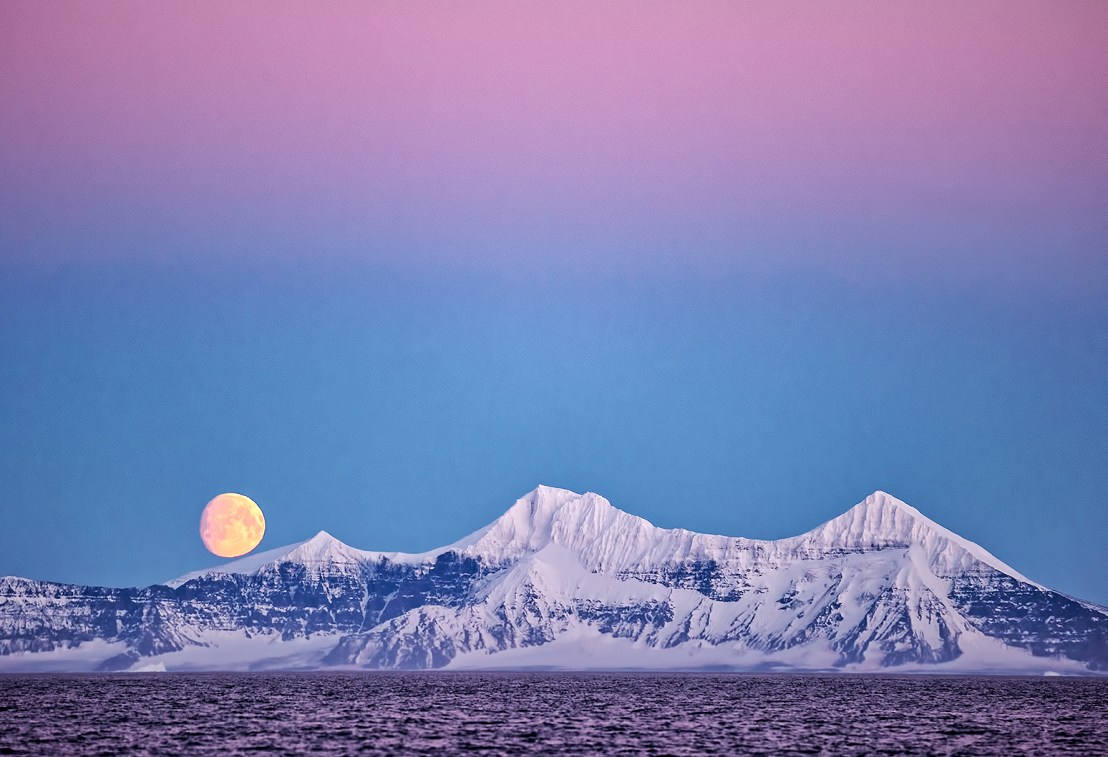
Thus it was that yesterday morning I went to an item posted by Kalina. It was called Moonset in Greenland.

This is the photograph that Kalina had shared on the forum:

And how that photograph was described by Kalina.

This is a moon, not a supermoon, not a fancy moon, not even a full moon, just a moon rising outside of Scoresby Sound, Greenland. What a magical place..

Later on, as I was seeking, and being given, permission to share the image with all you good people, Kalina answered my question as to what had brought her to Greenland. Her answer:

I love the absolute raw beauty in Greenland. I was on a schooner built in 1909 sailing through the largest fjord system in the world, words cannot describe the beauty. We never encountered another soul the entire time, there is no evidence of humans..polar bears and musk ox but no people. I will add that this image is not photoshopped..

Just go back to that image and get lost in it.

Get lost in one’s dreams!

Then when you return to your real world, go across to WikiPedia and read more about this magical place. Here’s an extract from that WikiPedia entry.

ooOOoo

Scoresby Sound

Scoresby Sund (Danish: Scoresby Sund, Greenlandic: Kangertittivaq) is a large fjord system of the Greenland Sea on the eastern coast of Greenland. It has a tree-like structure, with a main body approximately 110 km (68 mi)[2] long that branches into a system of fjords covering an area of about 38,000 km2 (14,700 sq mi). The longest of the fjords extends 340–350 km (210-216 mi) inland from the coastline.[1] The depth is 400–600 m (1,310-1,970 ft) in the main basin, but depths increase to up to 1,450 m (4,760 ft) in some fjords.[1] It is one of the largest and longest fjord systems in the world.[3][4][5]

On the northern side of the mouth of the Scoresby Sund stands Ittoqqortoormiit, the only permanent settlement in the region, with a population of 469 (in 2010). The name of the sound honours English explorer William Scoresby, who in 1822 mapped the fjord area in detail.

ooOOoo

Plus wanted to share another photograph of Scoresby Sund taken by Hannes Grobe, seen on that WikiPedia page.

Dr. Hannes Grobe 20:10, 16 December 2007 (UTC) – Own work

More details of Dr. Hannes Grobe may be read here.

Life and Dogs

Or more specifically living a long and healthy life assisted by our dogs!

Recently the Care 2 site published a wonderful item about the real benefits of having a dog in our life when we are the ‘wrong’ side of (fill in your own number!).

So here it is for all you good people. I know without a doubt that there will be many nodding heads out there as the article is being read.

ooOOoo

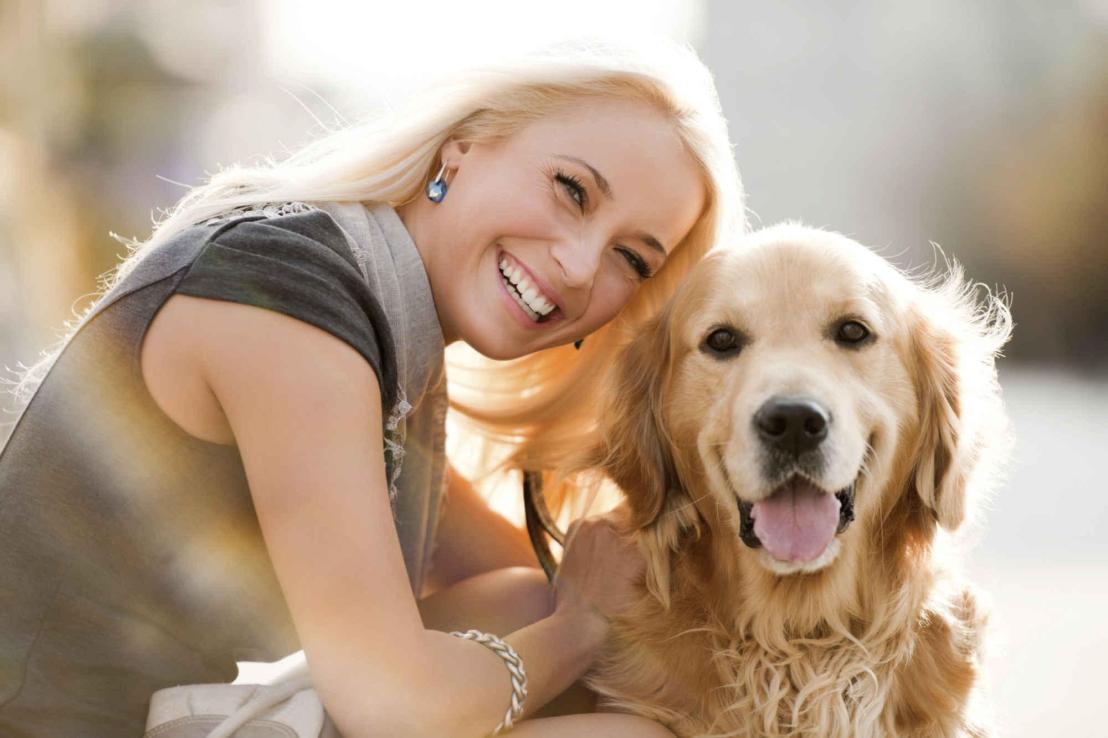
Owning a Dog May Help You Live Longer

According to a 2016 Gallup poll, 44 percent of Americans own a dog. That is a pretty significant number. In fact, dogs are easily the most popular pet among US pet owners—sorry cat lovers. But what is it that makes dogs so great? Well, they’re fun loving, energetic, make excellent companions and… may actually help you live longer.

A recent Swedish study suggested that owning a dog may be linked to a reduced risk of cardiovascular disease and premature death. According to the study, owning a dog was associated with a 20 percent reduced risk of overall death and a 23 percent reduced risk of dying from cardiovascular disease. The study tracked 3.4 million people over the course of 12 years, including both dog owners and non-dog owners. Interestingly, the effects of dog ownership were most pronounced when subjects lived alone and were the sole caretakers for the dog, as they experienced a 33 percent reduced risk of death.

So what is it that makes dogs so beneficial to our health and our lives? Here are a few theories:

EXERCISE

Dogs need exercise as much as we do, but, oftentimes people prioritize their pup’s needs above their own. Many people would more readily take their dog on a walk than walk alone down the block to get some fresh air and take care of themselves. But lucky for us, exercising a dog means exercising yourself, too! It is well established that regular exercise reduces your likelihood of developing cardiovascular disease. A dog may provide irrefutable motivation to get you off the couch and on a walk, which could be saving your life.

OUTDOOR TIME

Along the same lines, dogs encourage us to get outside more. Being outside reduces stress, can increase vitamin D levels and promotes happiness. It can be easy for us to get lazy and stay snuggled up inside when the weather is less than ideal, but dogs need regular outside access. Our pups encourage us to get outside on a regular basis, which can have a small but significantly healthful impact on overall mood and stress levels.

BENEFICIAL BACTERIA

Having a dog is essentially like consuming a powerful probiotic every single day. Dogs go out in nature, roll in mud and grass, chew on sticks, sniff all sorts of bacteria-ridden substances and then track little microscopic bits of this array of bacteria back into our homes. But that may actually be a good thing. According to the New York Times, “Epidemiological studies show that children who grow up in households with dogs have a lower risk for developing autoimmune illnesses like asthma and allergies — and it may be a result of the diversity of microbes that these animals bring inside our homes.” The wider the spectrum of bacteria we subject ourselves to, the more balanced our own microbiomes will become. Since the microbiome can affect all areas of our health, including the likelihood of developing cardiovascular disease, the long term health benefits of diverse bacterial populations should not be underestimated. Dogs, and other pets, do an incredible job of strengthening our microbiomes, which has a profound impact on our health.

EMOTIONAL SUPPORT

There is something to said for the emotional stability a dog provides. Chronic stress has been linked to increased risk of cardiovascular disease and premature death, which makes it even more significant that dogs are great at reducing our stress and anxiety levels. They are like our little furry therapists—they are always there for us, through good times and bad, and they always love us indiscriminately. The companionship of a dog and a human is one of the purest, most mutually beneficial relationships one can have. It’s pretty powerful.

Of course, just giving your parents a dog doesn’t mean they will necessarily live longer—especially if they aren’t ‘dog people.’ But for those who are, next time you come home to a wagging tail and a wild tongue, be grateful to your pup pal for all the amazing things they bring to your life.

ooOOoo

Again and again one realises just how incredible it is to have a dog, or several!, in one’s life!

Beautiful animals!

Let us always remember them.

Another wonderful guest post from Susan Combs

Some eighteen months ago I published a guest post from Susan entitled: How To Meet The Nutritional Needs Of Pregnant Dogs

I am delighted to offer another guest post from Susan.

ooOOoo

7 Wonderful Ways to Cherish and Honor the Memories of Your Beloved Dog

by Susan Combs.

Our relationship with our dogs is arguably the most genuine and pious one. The shear nature of dogs to shower unconditional love to their owners makes them no less a family member. Their honesty, faithfulness and a deep sense of belonging to their families is the reason as to why they are so adored across all the cultures, communities and societies.

Since it is also the hard truth that dogs tend to live much shorter lives than their owners; which renders the relationship end abruptly in their passing away. This is certainly not a happy stage for any pet owner either.

Therefore, losing a beloved pet, especially a dog is one of the most painful situations for owners. Their affection towards owners in the times of adversity is the most nostalgic part of their memories long after they have gone. By being together through thick and thin with relentless love their owners’ lives are impacted in many ways, and their absence is deeply felt.

If you are also mourning the loss of your dog, it must be difficult for you to cope with this undesirable situation. However, we have some wonderful ways with which you can cherish and honor the memories of your beloved dog.

Here are they:

  1. Plant a tree in his honor

Planting a tree in the honor of your dog is an excellent way to let his legacy live on for a long time to come. Choose a nice spot in your garden or backyard and plant a young tree, preferably an eternity plant. As the day will pass, it will grow up signifying a new life form from the previous one. Eventually, you will witness a sapling grow into a beautiful and strong tree. Till the time you live, this tree will remind you about that special bond with your canine friend.

  1. Make jewelry with his ashes

If you want to keep your furry pal all the time with you, creating jewelry with his remains would be a perfect idea. You can turn his ashes into diamond and wear it in the form of a ring. So there cannot be a better way to pacify his soul than this. Whether you make a ring or wear it as a locket, the shine of the diamond will keep on reflecting his memories. Your friends will also see in awe that the sparkle of the diamond was once your dog himself.

  1. Donate in the name of your dog

You dog meant everything to you, he still does. So, what else would be more heart-felt gesture than to donate for a good cause in the name of your dog? It is also a great way to give back what your dog gave you unflinchingly. You can give money to animal shelters because donating to these organizations is the best possible way to support the lives of other pets. In the situation of cash crunch, you can still donate another valuable asset: time. You can be there, spend some time with them and take care of them. Helping an animal in need is the best chance to remember your beloved dog.

  1. Create a picture book

Since you spent a lot of time with your dog, you must also have taken plenty of pictures of his. So collect all the past photos of your dog at one place; you can also ask your friends and family members if in case they had also taken his pictures. With these photographs you can either create a photo album or a picture book by forming a large collage. It would be better if you take printouts of these pictures and cut & paste them on the wall.

  1. Write an obituary

Didn’t you ever think to pen down the journey of your dog since he was cute little puppy? Now is the time since he is not there with you anymore. So document an insightful journey from the moment when you took him in your hands for the first time to his final moments. Write down how you used to spend time with him, how you used to play with him, what activities did he do at home, and whose life did he touch besides yours. You can post this personal obituary online.

  1. Bury him with honor

From giving him a memorable funeral to making his cemetery, your dog deserves honor in his last rites. Gather all your friends and family in order to say final goodbye to him.

You can also often visit his burial site whenever you like. You can place a gravestone at this spot and write your message for him or whatever you used to feel about him.

  1. Adopt again

If the pain of separation is not endurable for you or if you do not want to let go off your happy life with him, adopting again is the only option for you. This is also a good way to pay your tribute to him as he would also want to pass on a chance to another dog in need.

ooOOoo

As was mentioned in Susan’s previous guest post here again is her background:

Susan works as a Pet Health and Safety Expert and holds expertise in the area of animal/pet care. She has over 6 years of experience in pet healthcare and is a pet parent to a dog named chilly.

Finally, I would like to add a wonderful way of my own to remember our dear dogs. That is write up your own memories of your dog and post them to the special section on this blog: We Shall Not Forget Them.

Happy Birthday, my darling Jeannie.

Philosophising about this ageing lark!

A few days ago Jean and I listened to an episode from the BBC Radio 4 series The Art of Living. Or as the home page of the programme’s website explains, The Art of Living is a …

Documentary series revealing how engagement with art has transformed people’s lives.

Anyway, the episode that we listened to was a delightful 30-minute discussion between Marie-Louise Muir and the Belfast-born poet Frank Ormsby. The reason we selected this episode to listen to in particular is revealed by republishing how the BBC introduced the programme. (For Jean was diagnosed with Parkinson’s Disease in December, 2015.)

Frank Ormsby’s Parkinson’s

The Art of Living

When the poet Frank Ormsby was diagnosed with Parkinson’s Disease, his response was unexpected. He embarked on a newly fertile creative period, documenting his experiences and finding a voice in his poetry that he was beginning to lose in his daily communications.
His first act was to search Google – for jokes. “Which would you rather have, Parkinson’s or Alzheimer’s. Obviously Parkinson’s! I’d rather spill half my pint than forget where I left it.”

As he discusses with Marie-Louise Muir, the illness has changed him. It’s mellowed him. After a career as a school teacher, his daily life is now quieter and more solitary. There’s a poetry, almost, in his pauses and silences.
Frank belongs to the generation of Northern Irish writers that has followed in the footsteps of Seamus Heaney and Michael Longley. His medication, he believes, has aided his creativity. But it has also induced hallucinations. He finds himself sitting on his own in his study but surrounded by people, by the ghosts of his mother-in-law and unidentified visitors. And he’s also haunted by a fear that the earth will open up and swallow him.
But if you ask how he’s doing, he writes, “I’ll tell you the one about ‘parking zones disease’.
I’ll assure you that the pills seem to be working”.

Photo credit: Malachi O’Doherty, With readings by Frank himself and Ciaran McMenamin from The Darkness of Snow. Produced by Alan Hall. A Falling Tree production for BBC Radio 4.

That wonderful joke offered by Frank, this one: “Which would you rather have, Parkinson’s or Alzheimer’s. Obviously Parkinson’s! I’d rather spill half my pint than forget where I left it.” comes a little after the 5-minute point in the interview. I strongly encourage you to listen to the full interview. Here’s the link to the radio programme.   

Jean and I were sitting up in bed a couple of mornings ago reflecting on how recent it has been since we ‘got it’ in terms of what becoming old really means. For me and Jean, for different reasons, it is only in the last twelve months that ageing, the process of becoming older, the decline in one’s faculties, and more and more, has been truly understood. Yes, before then of course one understood that we were getting old. But it was an intellectual understanding not the living it on a daily basis understanding we now experience.

Back to Frank Ormsby. Or rather to a feature in the Belfast Telegraph published in 2015.

Frank Ormsby: Life at Inst was very different from my upbringing

Leading Belfast poet and former Inst. Head of English Frank Ormsby on his tough Fermanagh upbringing, losing his father when he was 12 and how humour has helped him cope with a Parkinson’s diagnosis.

Write stuff: Frank Ormsby at his home in north Belfast

March 23, 2015

As Frank Ormsby sits in the study of his beautifully-appointed 1930s home in north Belfast there is no hint of his much more austere upbringing. As befits the workspace of a poet and long-time English teacher at one of Belfast’s leading schools, the bookcases that line the walls are crammed with a wide range of literature.
It could not be a more different environment from the rural home where he grew up just after the Second World War.

When Frank was born in 1947, his father Patrick was already in his 60s. “I remember him as an old, grey-haired man”.

It was Patrick’s second marriage. His first had produced 10-12 children. “I was never totally sure of the exact number”, Frank recalls.

“I never met them as they had dispersed to Scotland and other places by the time my father, by then a widower, had married my mother. As far as I know the last one of them died last year.”

Frank’s home was about a mile and half outside Irvinestown. His mother Anne had worked on a relative’s farm – “she could build hay or cut turf as well as any man” – and his father as a farm labourer who occasionally sought work in the factories in Scotland.

“The conditions in which we lived were lacking in luxury. We had no running water. We had to carry it in buckets from a well half a mile away. There was no electricity and it was a long time before we even had a radio, or wireless as it was called then,” Frank says.

You may read the rest of that article here.

Here’s one of Frank’s poems that was published by The New Yorker in March, 2013.

BOG COTTON

By Frank Ormsby

They have the look
of being born old.
Thinning elders among the heather,
trembling in every wind.
My father turns eighty
the spring before my thirteenth birthday.
When I feed him porridge he takes his cap off. His hair,
as it has been all my life, is white, pure white.

Maybe that’s how it is. Having the look of being born old!

But there’s one thing that I treasure beyond gold itself. Having the fortune to be living out my final days, however many there are, in the company of my beautiful Jeannie and all the loving dogs around me.

Puppy Cleo coming home – April 6th, 2012


Happy Birthday, sweetheart!

Our beautiful planet.

It is the only lovely planet that we all have.

That ‘we’ being all the animals, plants, insects and humans there are.

I’m not saying anything new and not making this plea for the first time in this place.

But just take a few minutes out of your busy day to reflect that for you, for me, for everyone wherever they are in the world, physically and culturally, doing nothing is not an option.

More of that in a minute.

First I want to share with you a few autumnal photographs of our home here in Oregon.

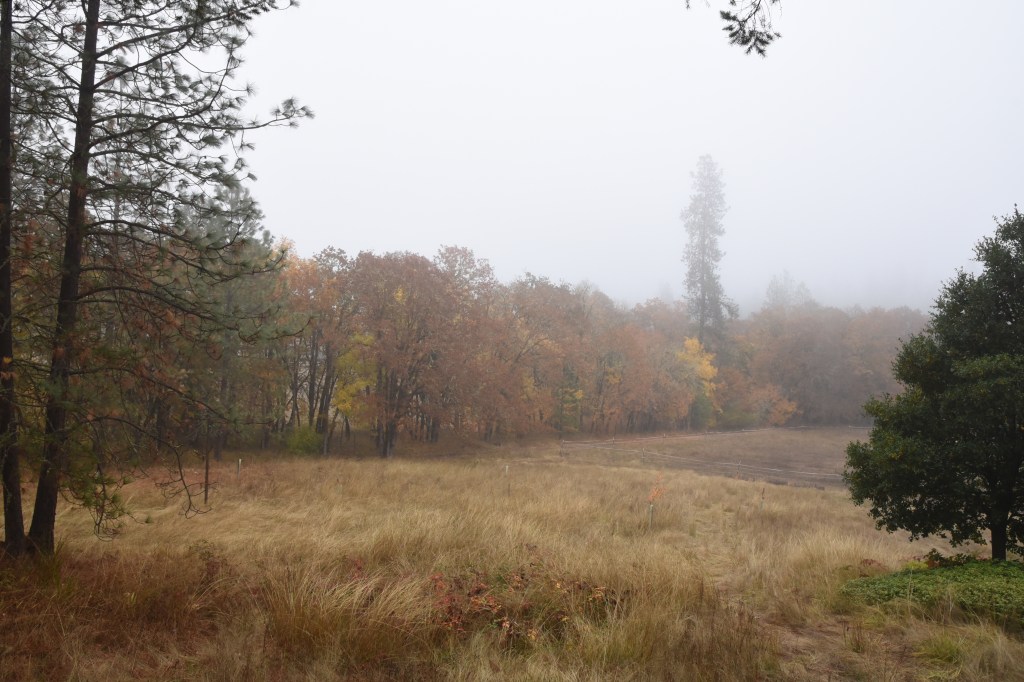
Below was taken at 9am on October 24th showing the  mountain mist right down to the tops of our trees that mark the edge of our driveway from the house to our Hugo Road entrance.

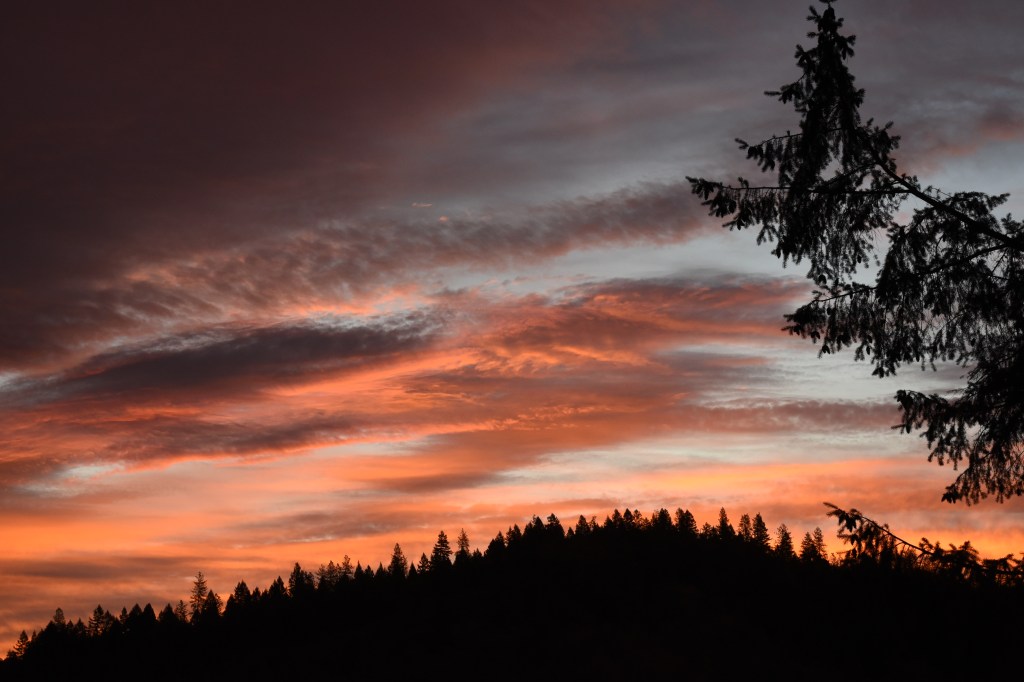
Next, a sunrise photograph with the camera pointing to the East. The tree line follows the ridge of some hills the other side of Hugo Road. The picture taken on the 19th October at 07:20.
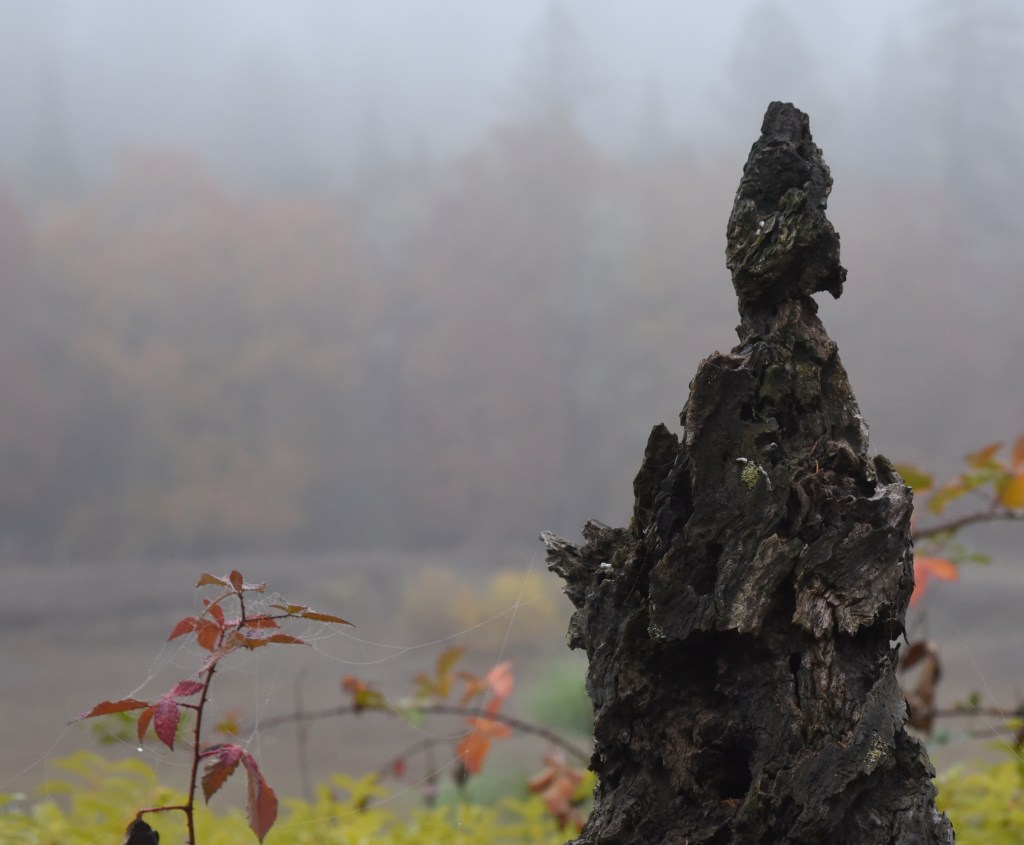
Now a close-up of the remains of a very old tree trunk with the trees that border Bummer Creek, that runs through our land, just showing through the morning mist. Taken on the 24th October at 09:05.
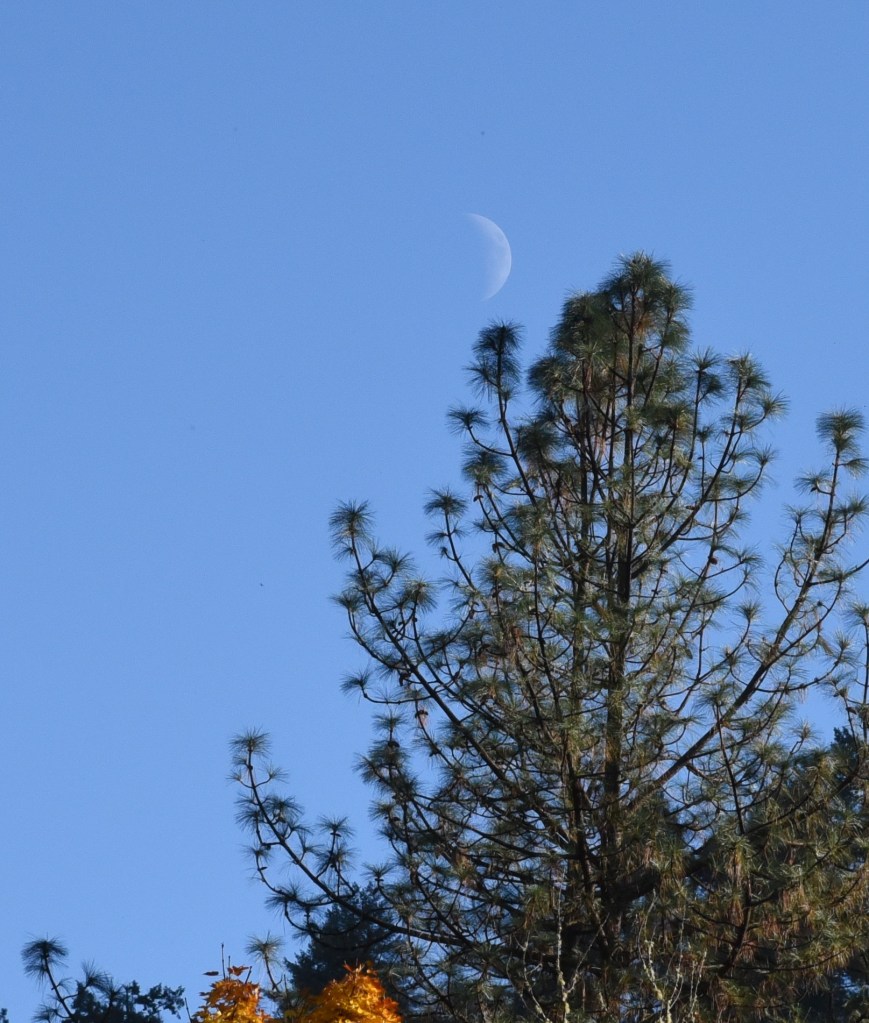
Final photograph I wanted to share with you is this beautiful sight of the moon taken from our property at 16:05 on the 25th. October.

Regular readers will know that Jean and I are not believers in any religion; we are atheists. But to my way of thinking that puts even more pressure on me and Jean to try to make a difference. We do all that we can but there’s no doubt that we can do more.

Yesterday, I referred to Bill Ripple, or to give him his full signature: William J. Ripple, Distinguished Professor of Ecology, Department of Forest Ecosystems and Society, Oregon State University, Corvallis, Oregon.

I sent Bill an email:

Dear Bill (and forgive the over familiarity if that offends),
I am a Brit, just turned 73, living with my beautiful wife, Jean, London-born as I was, down in Merlin, Oregon.

We live on 13 wonderful acres of rural property with 6 dogs (down from 12 when we moved here 5 years ago) and 4 horses, the majority of whom are ex-rescues.

I am the author of the blog Learning from Dogs and want to publish a post highlighting that viewpoint article. Because I believe with every neuron left in my ageing brain that the political changes that this world so urgently needs can only come when 99.9% of the public are screaming out “enough is enough”!

But there’s another saying that comes to mind, the one about being the change you want to see or something like that.

Is there information anywhere online that spells out, almost in words of one syllable, what lifestyle changes each of us can and need to commit to today? Changes that are as appropriate for elderly authors living in the country as young people seeking their first job or those up to their necks in working and raising families?

For that is what I want to publish on my blog!

If it would be easier for me to make an appointment to call you and take notes over the phone then I am just as happy to do that.

Sincerely,

Paul Handover
Hugo Road, Merlin,

Bill promptly replied:

Hi Paul, how long of a list of lifestyle changes do you want to make? Would three or four be enough? Bill

then followed that up with another email:

Paul, Consider suggesting that if people want to help, they could have fewer children, reduce energy consumption such as driving autos and flying, avoid meat and eat mostly plant-based foods and avoid wasting food. Below are quotes from our paper. Bill

“It is also time to re-examine and change our individual behaviors, including limiting our own reproduction (ideally to replacement level at most) and drastically diminishing our per capita consumption of fossil fuels, meat, and other resources ….

… reducing food waste through education and better infrastructure; promoting dietary shifts towards mostly plant-based foods

Now watch this video

I will close this post by listing out all the things that you and I can do now!

  • Set a target for reducing your car mileage next year compared to 2017,
  • If you are a regular aircraft passenger, then set a target for flying fewer hours in 2018 compared to 2017,
  • reduce or stop eating meat,
  • do not waste food,
  • reduce the use of heating and cooling in your home/s for next year,
  • commit to a dietary change away from meats and processed foods to a plant-based diet.

Then for younger couples who want a family around them, limit the number of children to a “replacement level” at most. Adopt??

A plea for this planet!

I feel compelled to ‘bang the drum’!

The recent news that many scientists have signed an open letter warning about how soon it will be too late to “save Earth” has been widely broadcast; not that this stops me from republishing the version of the news story that I read on the EarthSky blog site.

Here it is.

oooooh

Scientists warn: Soon it will be too late to save Earth

By Eleanor Imster in EARTH | HUMAN WORLD | November 16, 2017
More than 15,000 scientists in 184 countries have signed a letter urging the world to address major environmental concerns. “Soon it will be too late to shift course away from our failing trajectory, and time is running out.”

A letter to all of us, signed by more than 15,000 scientists (and counting) in 184 countries, warns that human well-being will be severely jeopardized by continuing trends in environmental harm, including our changing climate, deforestation, loss of access to fresh water, species extinctions and human population growth.

Entitled World Scientists’ Warning to Humanity: A Second Notice, it was published in the international journal Bioscience on November 13, 2017.

In 1992, more than 1,700 scientists signed a World Scientists’ Warning to Humanity published by the Union of Concerned Scientists. But global trends have worsened since 1992, the authors wrote in the new letter. In the last 25 years, trends in nine environmental issues suggest that humanity is continuing to risk its future.

Read the letter here.

The scientists wrote:

Soon it will be too late to shift course away from our failing trajectory, and time is running out. We must recognize, in our day-to-day lives and in our governing institutions, that Earth with all its life is our only home.

The letter also says …

By failing to adequately limit population growth, reassess the role of an economy rooted in growth, reduce greenhouse gases, incentivize renewable energy, protect habitat, restore ecosystems, curb pollution, halt defaunation, and constrain invasive alien species, humanity is not taking the urgent steps needed to safeguard our imperiled biosphere.

The article was written by an international team led by William Ripple of Oregon State University led the international team of scientists who created the letter. Ripple said in a statement:

Some people might be tempted to dismiss this evidence and think we are just being alarmist. Scientists are in the business of analyzing data and looking at the long-term consequences. Those who signed this second warning aren’t just raising a false alarm. They are acknowledging the obvious signs that we are heading down an unsustainable path. We are hoping that our paper will ignite a wide-spread public debate about the global environment and climate.

Progress in some areas — such as a reduction in ozone-depleting chemicals and an increase in energy generated from renewable sources — shows that positive changes can be made, the authors wrote. There has been a rapid decline in fertility rates in some regions, which can be attributed to investments in education for women, they added. The rate of deforestation in some regions has also slowed.

The warning came with steps that can be taken to reverse negative trends, but the authors suggested that it may take a groundswell of public pressure to convince political leaders to take the right corrective actions. Such activities could include establishing more terrestrial and marine reserves, strengthening enforcement of anti-poaching laws and restraints on wildlife trade, expanding family planning and educational programs for women, promoting a dietary shift toward plant-based foods and massively adopting renewable energy and other “green” technologies.

Scientists who did not sign the warning prior to publication can endorse the published warning here.

Bottom line: A letter entitled World Scientists’ Warning to Humanity: A Second Notice, urging the world to address major environmental concerns. was signed by more than 15,000 scientists in 184 countries.

Read more from Oregon State University

ooOOoo

As is the way with this modern inter-connected world it was but a moment to track down said William Ripple, find his email address and ask him what he recommended as the top things that you and I should be doing now.

Not just for you and me but for all the animals as well on this very beautiful planet.

Bill’s reply is part of tomorrow’ post. See you then!