Category: History

Stonehenge

A fascinating account of this English site.

Although I was born in London in 1944, as a result of an affair between my father and mother, my father had two daughters with his wife, Maud, and Rhona and Corinne, for they were their names, took me under their wing. In the 50s Maud, Rhona and Corinne all moved to Devon and I started going regularly to Totnes. When I started driving I usually stopped for a break close by Stonehenge so the site has a special interest to me.

So when I saw this article in The Conversation it had to be shared.

ooOOoo

Stonehenge may have aligned with the Moon as well as the Sun

Stonehenge during winter solstice sunset Chuta Kooanantkul/Shutterstock

Fabio Silva, Bournemouth University; Amanda Chadburn, Bournemouth University, and Erica Ellingson, University of Colorado Boulder

When it comes to its connection to the sky, Stonehenge is best known for its solar alignments. Every midsummer’s night tens of thousands of people gather at Stonehenge to celebrate and witness the rising Sun in alignment with the Heel stone standing outside of the circle. Six months later a smaller crowd congregates around the Heel stone to witness the midwinter Sun setting within the stone circle.

But a hypothesis has been around for 60 years that part of Stonehenge also aligns with moonrise and moonset at what is called a major lunar standstill. Although a correlation between the layout of certain stones and the major lunar standstill has been known about for several decades, no one has systematically observed and recorded the phenomenon at Stonehenge.

This is what we are aiming to do in a project bringing together archaeologists, astronomers and photographers from English Heritage, Oxford, Leicester and Bournemouth universities as well as the Royal Astronomical Society.

There is now an abundance of archaeological evidence that indicates the solar alignment was part of the architectural design of Stonehenge. Around 2500 BC, the people who put up the large stones and dug an avenue into the chalk seemed to want to cement the solstice axis into the architecture of Stonehenge.

Archaeological evidence from nearby Durrington Walls, the place where scientists believe the ancient people who visited Stonehenge stayed, indicates that of the two solstices it was the midwinter one that drew the largest crowd.

But Stonehenge includes other elements, such as 56 pits arranged in a circle, an earthwork bank and ditch, and other smaller features such as the four station stones. These are four sarsen stones, a form of silicified sandstone common in Wiltshire, that were carefully placed to form an almost exact rectangle encompassing the stone circle.

Only two of these stones are still there, and they pale in comparison to their larger counterparts as they are only a few feet high. So what could their purpose be?
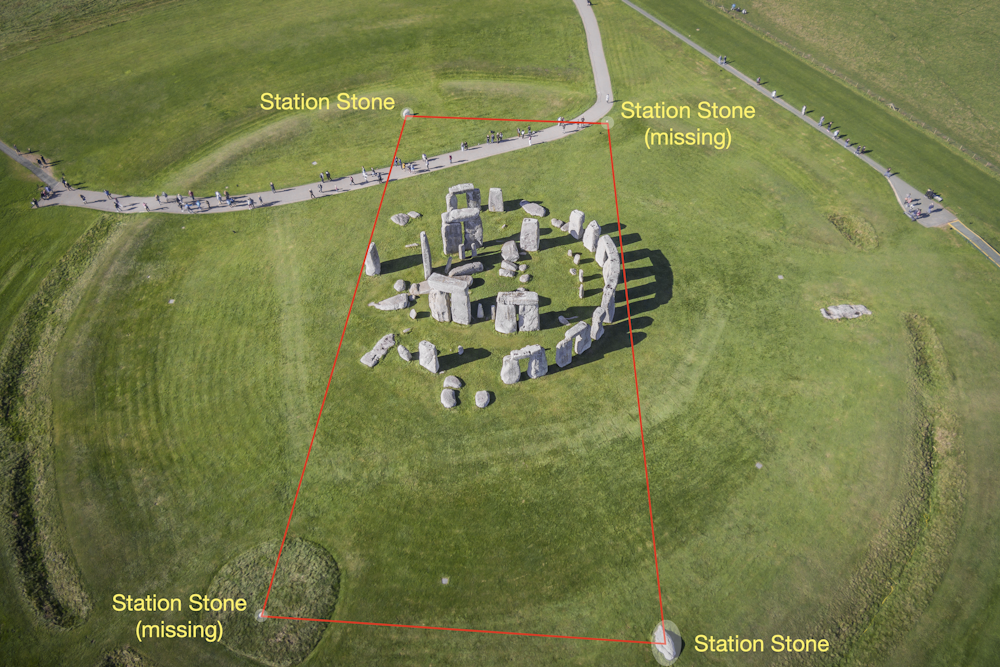
Aerial view of Stonehenge
Only two of the station stones are still there. Drone Explorer/Shutterstock

Lunar standstill

The rectangle that they form is not just any rectangle. The shorter sides are parallel to the main axis of the stone circle and this may be a clue as to their purpose. The longer sides of the rectangle skirt the outside of the stone circle.

It is these longer sides that are thought to align with the major lunar standstill. If you marked the position of moonrise (or set) over the course of a month you would see that it moves between two points on the horizon. These southern and northern limits of moonrise (or set) change on a cycle of 18.6 years between a minimum and a maximum range – the so-called minor and major lunar standstills, respectively.

The major lunar standstill is a period of about one and a half to two years when the northernmost and southernmost moonrises (or sets) are furthest apart. When this happens the Moon rises (and sets) outside the range of sunrises and sets, which may have imbued this celestial phenomenon with meaning and significance.
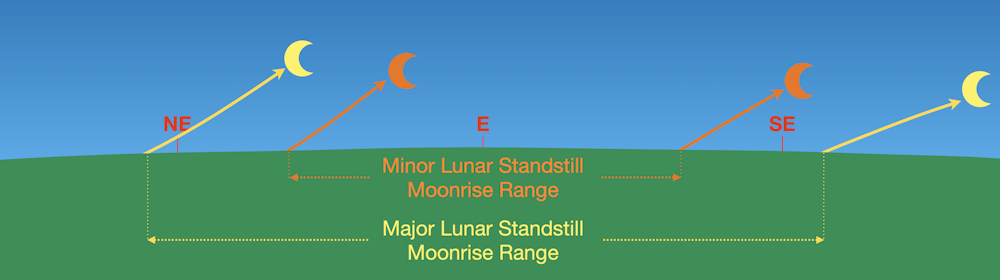
Diagram showing Moonrise positions on a horizon.
The range of Moonrise positions on the horizon during minor and major lunar standstills. Fabio Silva, CC BY-NC

The strongest evidence we have for people marking the major lunar standstill comes from the US southwest. The Great House of Chimney Rock, a multi-level complex built by the ancestral Pueblo people in the San Juan National Forest, Colorado, more than 1,000 years ago.

It lies on a ridge that ends at a natural formation of twin rock pillars – an area that has cultural significance to more than 26 native American tribal nations. From the vantage point of the Great House, the Sun will never rise in the gap between the pillars.

However, during a major standstill the Moon does rise between them in awe-inspiring fashion. Excavations unearthed preserved wood that meant researchers could date to the year episodes of construction of the Great House.

Of six cutting dates, four correspond to major lunar standstill years between the years AD1018 and AD1093, indicating that the site was renewed, maintained or expanded on consecutive major standstills.

Returning to southern England, archaeologists think there is a connection between the major lunar standstill and the earliest construction phase of Stonehenge (3000-2500 BC), before the sarsen stones were brought in.

Several sets of cremated human remains from this phase of construction were found in the southeastern part of the monument in the general direction of the southernmost major standstill moonrise, where three timber posts were also set into the bank. It is possible that there was an early connection between the site of Stonehenge and the Moon, which was later emphasised when the station stone rectangle was built.

The major lunar standstill hypothesis, however, raises more questions than it answers. We don’t know if the lunar alignments of the station stones were symbolic or whether people were meant to observe the Moon through them. Neither do we know which phases of the Moon would be more dramatic to witness.

A search for answers

In our upcoming work, we will be trying to answer the questions the major lunar standstill hypothesis raises. It’s unclear whether the Moon would have been strong enough to cast shadows and how they would have interacted with the other stones. We will also need to check whether the alignments can still be seen today or if they are blocked by woods, traffic and other features.

The Moon will align with the station stone rectangle twice a month from about February 2024 to November 2025, giving us plenty of opportunities to observe this phenomenon in different seasons and phases of the Moon.

To bring our research to life, English Heritage will livestream the southernmost Moonrise in June 2024, and host a series of events throughout the year, including talks, a pop-up planetarium, stargazing and storytelling sessions.

Across the Atlantic, our partners at the US Forest Service are developing educational materials about the major lunar standstill at Chimney Rock National Monument. This collaboration will result in events showcasing and debating the lunar alignments at both Stonehenge and at Chimney Rock.

Fabio Silva, Senior Lecturer in Archaeological Modelling, Bournemouth University; Amanda Chadburn, Member of Kellogg College, University of Oxford and Visiting Fellow in Archaeology, Bournemouth University, and Erica Ellingson, Professor in Astrophysics, Emeritus, University of Colorado Boulder

This article is republished from The Conversation under a Creative Commons license. Read the original article.

ooOOoo

Well I learnt something from this, which just goes to show that we are never too old to learn.

To come back to the article, the skills of those ancient peoples were just awe-inspiring.

We humans!

No clear reaction comes to mind.

I came across this post yesterday and thought that it would make a good article for today. But the truth is that I, and I expect many other readers, do not understand the article.

ooOOoo

Employees Heartbroken When They See Someone Tied To ‘Do Not Abandon Animals’ Sign

She waited there 11 hours 💔

By Caitlin Jill Anders, Published on the 11th April, 2024.

Outside the front door of the Harbor Humane Society sits a sign. “Do not abandon an animal here,” the sign reads. “Wait until business hours. No fee for bringing an animal to HHS. For the sake of the animal, please be humane.” An older, outdated version of the same sign sits at the back of the shelter, too, near some picnic tables where employees can take a break. When they arrived at work one morning recently, there were no animals waiting for them out front.

Harbor Humane Society

Sadly, the same could not be said for the sign in the back.

Tied to the base of the “do not abandon animals” sign was a tiny dog who had been abandoned there the night before. Security footage showed the dog, later named Trixie, had been tied to the sign around 9 p.m. and wasn’t found until 7:30 a.m. the next morning, meaning she’d waited there for 11 hours.

Harbor Humane Society

“Our team member was just about to unarm the building (had just arrived to start their morning shift) when she noticed the dog tied to the signpost near our intake door located toward the back side of the shelter,” Jen Nuernberg, director of marketing and strategic initiatives at Harbor Humane Society, told The Dodo. “Initially, she was nervous and scared, barking at her. But once she crouched down and gave her some time, she quickly warmed up and crawled right into her lap. She has been very friendly ever since!”

Harbor Humane Society

Trixie was terrified out there all alone, wondering why she’d ended up there. As soon as she met her rescuer, though, all was well. She was rushed inside and eventually met the rest of the staff members, who were just as heartbroken by the situation. Thankfully, Trixie seemed to be pretty healthy, just a little confused — as was everyone at the shelter.

“When someone abandons an animal without any information, we are just left to guess,” Jen Self Aulgur, executive director at Harbor Humane Society, told The Dodo. “So we can assume she is about 3 to 4 years old, but we don’t know her story, her name, her likes, her favorite treats or toys. This is all information we try to get on animals when they are surrendered to the shelter.”

Harbor Humane Society

The shelter employees are still hoping someone might come forward to give them some information about Trixie before she’s adopted, just to make sure she’s getting the best care possible.

“This pup deserves to have her story and history known,” Self Aulgur said. “We do not want to shame or get you in trouble — we just want to help this poor pup.”

Harbor Humane Society

Trixie is safe now and will be available for adoption in about a week or so. Until then, she’s getting as many kisses and cuddles as the staff can give her while she dreams of her loving forever family.

ooOOoo

Let me add my wishes to the Harbor Humane Society in hoping that very soon Trixie will be adopted by that loving family.

A tribute to Julie Christie

Just a fabulous video!

There were so many things that I could have written about for today but they were all swept aside by an email that came in from an old friend of mine, Chris Snuggs.

Chris and I go back many years to the time when I was a visiting teacher at Isuga in France.

But the point of this post is to share the video that Chris provided about Julie Christie. Here is the first part of a WikiPedia article:

Julie Frances Christie (born 14 April 1940)[1] is a British actress. An icon of the Swinging Sixties, Christie is the recipient of numerous accolades including an Academy Award, a BAFTA Award, a Golden Globe, and a Screen Actors Guild Award. She has appeared in six films ranked in the British Film Institute‘s BFI Top 100 British films of the 20th century, and in 1997, she received the BAFTA Fellowship for lifetime achievement.

Now to the video:

Fantastic!

A good night’s sleep?

This article has some deeper implications.

As 99% of you know, Jean, my wife, has Parkinson’s Disease. One of the characteristics of the disease is the effect it has on sleeping; Jean frequently has a bad night. Plus, our two dogs, Cleopatra and Oliver sleep in the bedroom on dog beds.

But if I was on my own I would find it difficult not to encourage our dogs to sleep on our double bed. That’s my assessment, at least! Over to The Conversation on the topic.

ooOOoo

Could sharing a bedroom with your pets be keeping you from getting a good night’s sleep?

Your dog may not be the best sleep partner. gollykim/E+ via Getty Images

Brian N. Chin, Trinity College

Sleeping with your dog in the same room could be negatively affecting your sleep quality, according to my team’s recently published research in Scientific Reports.

We recruited a nationally representative sample of more than 1,500 American adults who completed questionnaires assessing their sleep habits. Overall, about half of the participants reported co-sleeping with pets – defined in our study as sleeping in the same room with your pet for at least part of the night.

Next, our research team compared the sleep habits of people who did and didn’t co-sleep with pets. Our analyses revealed that participants who co-slept with pets had poorer sleep quality and more insomnia symptoms than those who did not. These findings persisted even after accounting for demographic differences between these groups. When considering pet type, we found evidence for a negative effect on sleep when co-sleeping with dogs but no evidence for a negative effect on sleep when co-sleeping with cats.

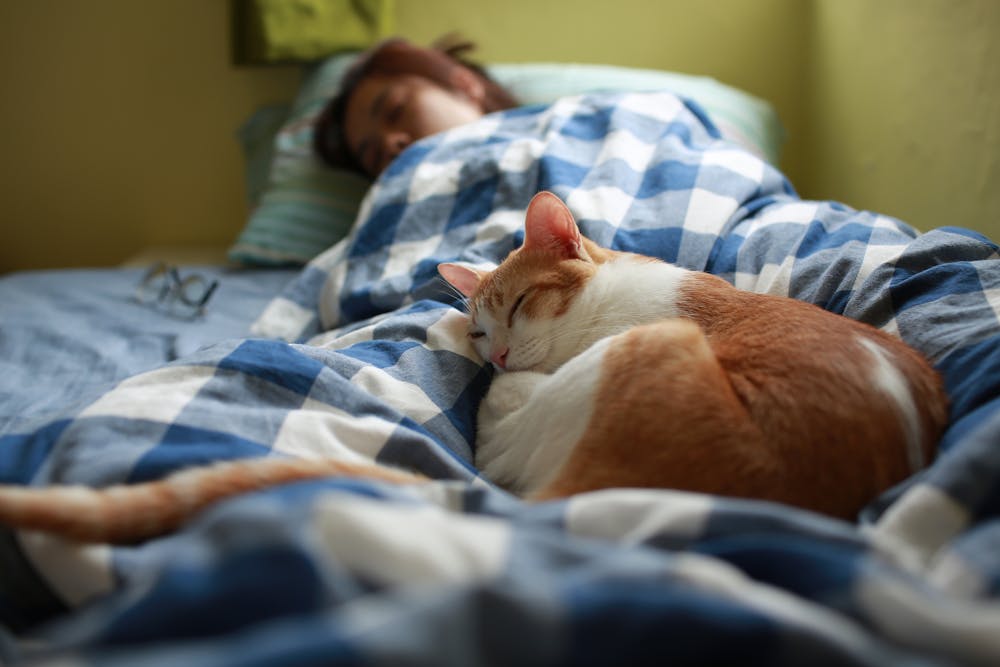
Orange and white cat sleeping against the covered legs of their owner sleeping in bed
Cats may have less of a negative effect on sleep than dogs when sharing the same room with their owners. Lewis Tse Pui Lung/iStock via Getty Images Plus

Surprisingly, 93% of people in our study who co-slept with their pets believed that their pets had either a positive or neutral overall effect on their sleep. Although more research is needed, these findings could suggest that most people are unaware of the potential negative effects their pets may have on their sleep.

Why it matters

Most pet owners report that their pets have a generally positive effect on their mental health. Pets can improve their owners’ health in numerous ways during the day, such as by encouraging physical activity, promoting a daily routine and providing love and companionship.

However, our study fills an important knowledge gap by indicating that co-sleeping with pets can affect sleep quality. Good sleep is a pillar of health and wellness. Even though pets may have an overall positive effect on mental health, it is possible that some of this benefit may be undermined if they are also causing you to lose sleep at night.

Although some people report that co-sleeping with their pets can provide them with a sense of comfort or intimacy, it is important for people sharing a bedroom with their pets to be aware of their potential to serve as a source of nighttime noise, heat or movement that can disrupt your ability to fall or stay asleep.

What still isn’t known

Survey-based studies like ours are unable to prove that co-sleeping with pets causes disrupted sleep, although there is some evidence suggesting that this could be the case.

One important factor that our study did not assess was whether participants were also co-sleeping with other people like a spouse or child. Previous research suggests that sharing a bed with other people can also affect our sleep and that the mental health benefits of pet ownership could be stronger for people with a romantic partner.

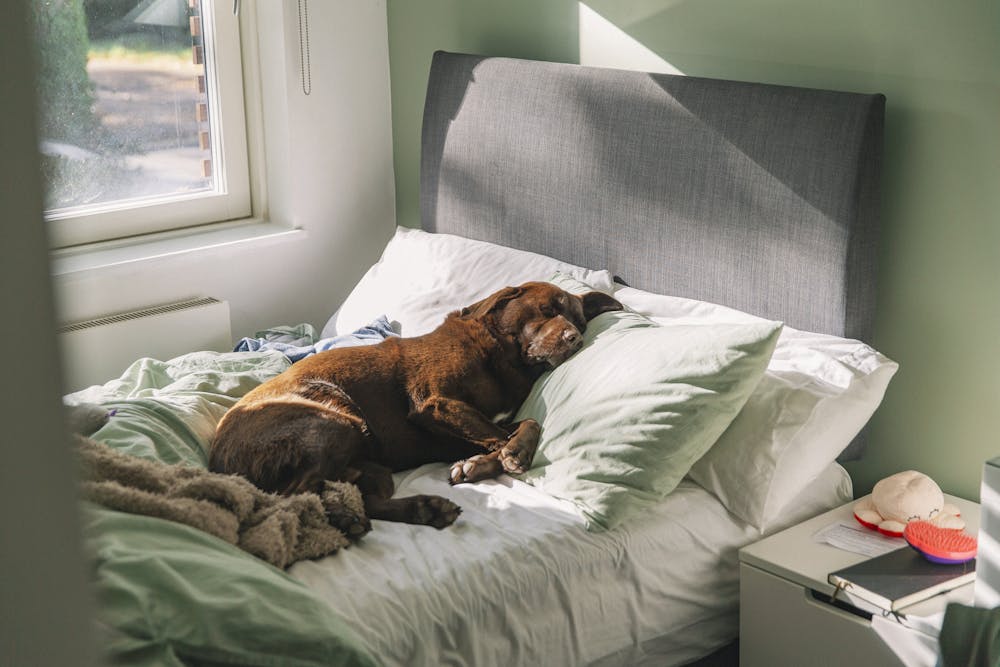
Chocolate Labrador dog sleeping on owner's bed, sunlight streaming in through window
Pets provide many health benefits during the day, but consider keeping them out of your bed at night. Justin Paget/DigitalVision via Getty Images

What’s next

It probably isn’t realistic for most people to just stop co-sleeping with their pets. So, what should someone do to improve their sleep if they already share a bed with their pets?

Some expert tips include choosing a mattress that is large enough for you and your pets, washing and changing your bedding regularly, and establishing and maintaining a consistent bedtime routine with your pets. Further research is needed to identify more specific habits and routines that pet owners can adopt to ensure a good night’s sleep when sharing the bedroom with their pets.

The Research Brief is a short take about interesting academic work.

Brian N. Chin, Assistant Professor of Psychology, Trinity College

This article is republished from The Conversation under a Creative Commons license. Read the original article.

ooOOoo

Coming back to Jean and me at least we have a pretty regular routine with us going to our bedroom around 7pm to 8pm. In the morning over our daily coffees I always ask Jean what sort of night she had. Yesterday morning Jean replied that she had had a poor night. My judgement is that Jean has roughly one in two poor nights.

To state the obvious, it’s in the numbers!

A wonderful, and educational, item on The Conversation.

I was listening to an item on the BBC yesterday morning and counting came up. The need for counting was incredibly early on in our history. Here is a copy of the part of the introduction to The Universal History of Numbers: From Prehistory to the Invention of the Computer.

A riveting history of counting and calculating from the time of the cave dwellers to the late twentieth century, The Universal History of Numbers is the first complete account of the invention and evolution of numbers the world over. As different cultures around the globe struggled with problems of harvests, constructing buildings, educating their citizens, and exploring the wonders of science, each civilization created its own unique and wonderful mathematical system. 

Dubbed the “Indiana Jones of numbers,” Georges Ifrah traveled all over the world for ten years to uncover the little-known details of this amazing story. From India to China, and from Egypt to Chile, Ifrah talked to mathematicians, historians, archaeologists, and philosophers. He deciphered ancient writing on crumbling walls; scrutinized stones, tools, cylinders, and cones; and examined carved bones, elaborately knotted counting strings, and X-rays of the contents of never-opened ancient clay accounting balls. Conveying all the excitement and joy of the process of discovery, Ifrah writes in a delightful storytelling style, recounting a plethora of intriguing and amusing anecdotes along the way.

Now to that article on The Conversation.

ooOOoo

From thousands to millions to billions to trillions to quadrillions and beyond: Do numbers ever end?

The number zero was a relatively recent and crucial addition − it allows numbers to extend in both directions forever. pixel_dreams/iStock via Getty Images Plus

Manil Suri, University of Maryland, Baltimore County

Curious Kids is a series for children of all ages. If you have a question you’d like an expert to answer, send it to curiouskidsus@theconversation.com.


Why don’t numbers end? – Reyhane, age 7, Tehran, Iran


Here’s a game: Ask a friend to give you any number and you’ll return one that’s bigger. Just add “1” to whatever number they come up with and you’re sure to win.

The reason is that numbers go on forever. There is no highest number. But why? As a professor of mathematics, I can help you find an answer.

First, you need to understand what numbers are and where they come from. You learned about numbers because they enabled you to count. Early humans had similar needs – whether to count animals killed in a hunt or keep track of how many days had passed. That’s why they invented numbers.

But back then, numbers were quite limited and had a very simple form. Often, the “numbers” were just notches on a bone, going up to a couple hundred at most.

How numbers evolved throughout the centuries.

When numbers got bigger

As time went on, people’s needs grew. Herds of livestock had to be counted, goods and services traded, and measurements made for buildings and navigation. This led to the invention of larger numbers and better ways of representing them.

About 5,000 years ago, the Egyptians began using symbols for various numbers, with a final symbol for one million. Since they didn’t usually encounter bigger quantities, they also used this same final symbol to depict “many.”

The Greeks, starting with Pythagoras, were the first to study numbers for their own sake, rather than viewing them as just counting tools. As someone who’s written a book on the importance of numbers, I can’t emphasize enough how crucial this step was for humanity.

By 500 BCE, Pythagoras and his disciples had not only realized that the counting numbers – 1, 2, 3 and so on – were endless, but also that they could be used to explain cool stuff like the sounds made when you pluck a taut string.

Zero is a critical number

But there was a problem. Although the Greeks could mentally think of very large numbers, they had difficulty writing them down. This was because they did not know about the number 0.

Think of how important zero is in expressing big numbers. You can start with 1, then add more and more zeroes at the end to quickly get numbers like a million – 1,000,000, or 1 followed by six zeros – or a billion, with nine zeros, or a trillion, 12 zeros.

It was only around 1200 CE that zero, invented centuries earlier in India, came to Europe. This led to the way we write numbers today.

This brief history makes clear that numbers were developed over thousands of years. And though the Egyptians didn’t have much use for a million, we certainly do. Economists will tell you that government expenditures are commonly measured in millions of dollars.

Also, science has taken us to a point where we need even larger numbers. For instance, there are about 100 billion stars in our galaxy – or 100,000,000,000 – and the number of atoms in our universe may be as high as 1 followed by 82 zeros.

Don’t worry if you find it hard to picture such big numbers. It’s fine to just think of them as “many,” much like the Egyptians treated numbers over a million. These examples point to one reason why numbers must continue endlessly. If we had a maximum, some new use or discovery would surely make us exceed it.

The symbols of math include +, -, x and =.

Exceptions to the rule

But under certain circumstances, sometimes numbers do have a maximum because people design them that way for a practical purpose.

A good example is a clock – or clock arithmetic, where we use only the numbers 1 through 12. There is no 13 o’clock, because after 12 o’clock we just go back to 1 o’clock again. If you played the “bigger number” game with a friend in clock arithmetic, you’d lose if they chose the number 12.

Since numbers are a human invention, how do we construct them so they continue without end? Mathematicians started looking at this question starting in the early 1900s. What they came up with was based on two assumptions: that 0 is the starting number, and when you add 1 to any number you always get a new number.

These assumptions immediately give us the list of counting numbers: 0 + 1 = 1, 1 + 1 = 2, 2 + 1 = 3, and so on, a progression that continues without end.

You might wonder why these two rules are assumptions. The reason for the first one is that we don’t really know how to define the number 0. For example: Is “0” the same as “nothing,” and if so, what exactly is meant by “nothing”?

The second might seem even more strange. After all, we can easily show that adding 1 to 2 gives us the new number 3, just like adding 1 to 2002 gives us the new number 2003.

But notice that we’re saying this has to hold for any number. We can’t very well verify this for every single case, since there are going to be an endless number of cases. As humans who can perform only a limited number of steps, we have to be careful anytime we make claims about an endless process. And mathematicians, in particular, refuse to take anything for granted.

Here, then, is the answer to why numbers don’t end: It’s because of the way in which we define them.

Now, the negative numbers

How do the negative numbers -1, -2, -3 and more fit into all this? Historically, people were very suspicious about such numbers, since it’s hard to picture a “minus one” apple or orange. As late as 1796, math textbooks warned against using negatives.

The negatives were created to address a calculation issue. The positive numbers are fine when you’re adding them together. But when you get to subtraction, they can’t handle differences like 1 minus 2, or 2 minus 4. If you want to be able to subtract numbers at will, you need negative numbers too.

A simple way to create negatives is to imagine all the numbers – 0, 1, 2, 3 and the rest – drawn equally spaced on a straight line. Now imagine a mirror placed at 0. Then define -1 to be the reflection of +1 on the line, -2 to be the reflection of +2, and so on. You’ll end up with all the negative numbers this way.

As a bonus, you’ll also know that since there are just as many negatives as there are positives, the negative numbers must also go on without end!


Hello, curious kids! Do you have a question you’d like an expert to answer? Ask an adult to send your question to CuriousKidsUS@theconversation.com. Please tell us your name, age and the city where you live.

And since curiosity has no age limit – adults, let us know what you’re wondering, too. We won’t be able to answer every question, but we will do our best.

Manil Suri, Professor of Mathematics and Statistics, University of Maryland, Baltimore County

This article is republished from The Conversation under a Creative Commons license. Read the original article.

ooOOoo

This article was written for those a great deal younger than I am. But, to be honest, it is a fascinating account of something so utterly basic to humans and human cognition.

Enjoy!

A dog train, no less!

Looking after their ex-rescue dogs.

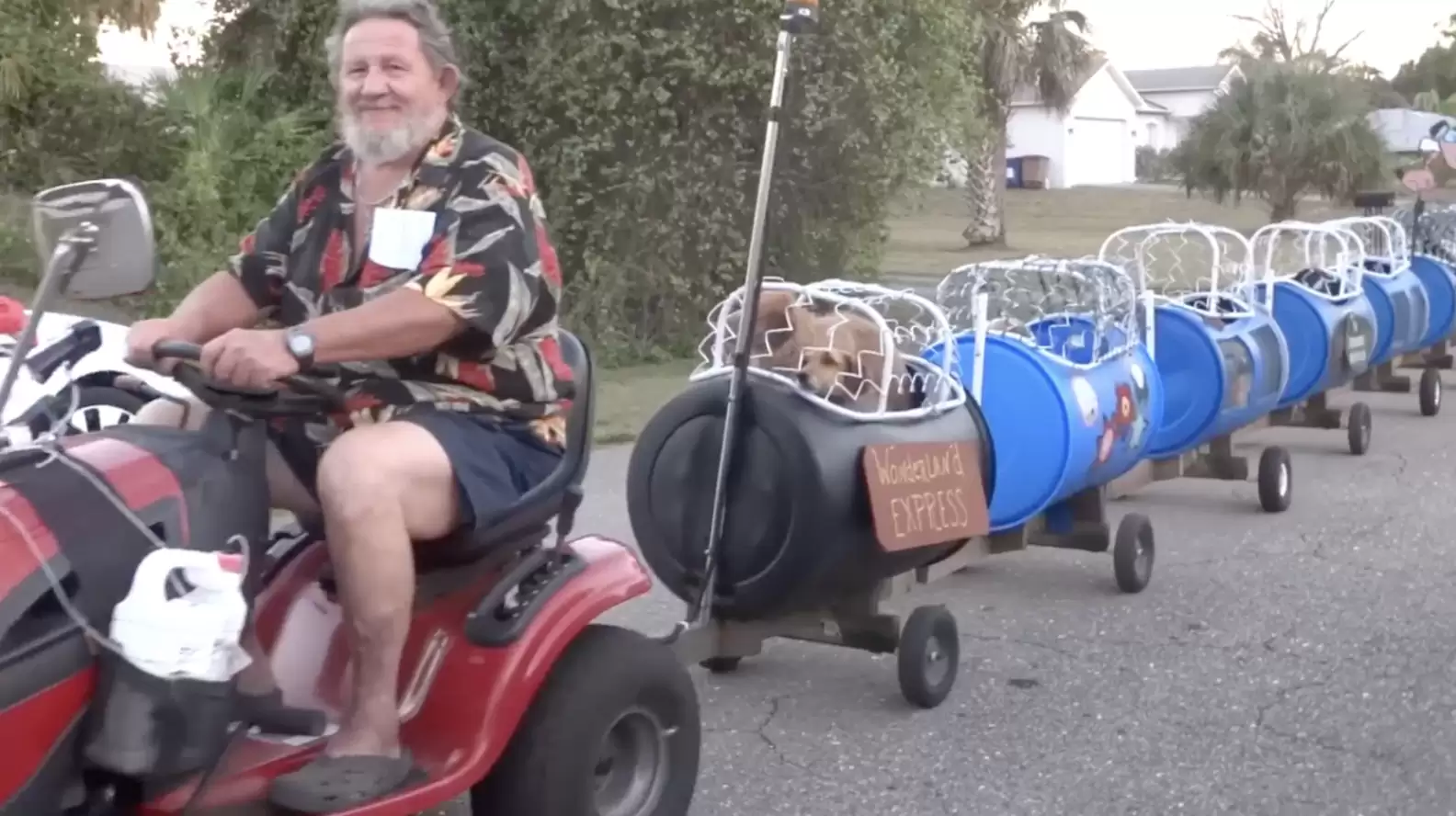
This was an article on The Dodo and I thought it should be shared with you because it is a wonderful way of transporting their dogs.

ooOOoo

Couple Builds A ‘Dog Train’ To Take Their Rescue Pups Out On Little Adventures

“They just love it. They absolutely love it.”

By Stephen Messenger Published on the 15th March, 2022.

On Friday evenings, just before sunset, the din of traffic on the roads around Lehigh Acres, Florida, gives way to a sound far more pleasing — the cheerful chorus of happy pups on the move.

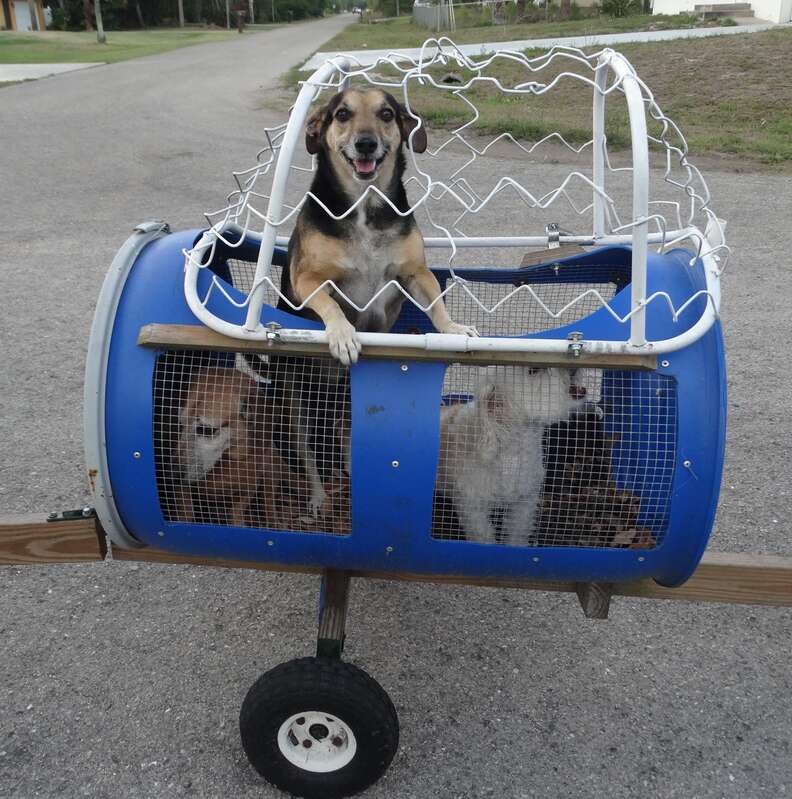
It’s at this time, like clockwork, a dog train takes to the streets just to brighten the lives of its furry passengers.

Alice E. Herrick

Alice Johnston and her husband, Paul, moved to Lehigh Acres about eight years ago, after years spent operating an animal rescue shelter in Costa Rica. But they didn’t relocate alone. They also brought along the more than a dozen dogs under their care there — all of whom had been saved from the streets.

Now in the suburbs, the Johnstons decided to get creative.

Alice E. Herrick

“We have so many dogs, of course we couldn’t walk them all or put them in the car to take them for a ride,” Alice Johnston told The Dodo. “So, my husband build a train so that we could take them out, drive around the community. He pulls the train with a lawnmower, and I ride a little scooter behind him to keep an eye on things, to make sure they’re safe.”

The happy gang is a sight to behold.

The idea for the Wonderland Express, as its known, was inspired by a Texas man who built a dog train for his own rescue pups. And the Johnstons’ dogs love it just as much.

“The dogs get so excited. They just love it. They absolutely love it,” Johnston said. “They know it’s Friday better than we do. It’s amazing how they know.”

But the pups aren’t the only ones thrilled about their weekly trips.

“We have people who wait for us every week [to pass by on the street],” Johnston said. “Some people come out and give the dogs treats. They really enjoy it.”

The Johnstons have put all that attention the train gets to some very good use.

“My husband has signs all over the train encouraging people to adopt, and not shop,” Johnston said. “There are so many homeless dogs, and they make wonderful pets. Anything we can do to encourage people to give these dogs a chance, we are happy to do it.”

The Johnstons don’t aim to publicize their Wonderland Express dog train, though they are glad people are happy to see it. For them, it’s all about their dogs’ enjoyment — and spreading the word about the joy of adopting.

“It gives us so much joy to know that dogs are getting a second chance,” Johnston said. “And it really gives us satisfaction knowing we’re giving our dogs a good life.”

ooOOoo

That last image I had real trouble with but I left it in the post just in case when it is published it comes out. But even without that photograph one gets the clear idea of the pleasure the Johnstons give to their dogs.

Perfect!

Dogs!

Just a reminder how special they are.

The first day that Pharaoh was passed across to me. Devon, June 2003.

That was before I met Jean. We met in December 2007 in San Carlos, Mexico. Jean’s husband had died in 2005.

(Believe it or not Jean and I were both born in London some 26 miles apart; albeit I was born a tad before Jean.)

Now the next photo is at our home in Merlin, showing Pharaoh standing in Bummer Creek just above the old dam wall.

I’ll just stand here and watch the goings-on!
Jeannie collecting Oliver

oooo

Jean caressing Brandy

Dogs are so precious, and I am extraordinarily fortunate to have met Jean in 2007, when she had over twenty dogs.

More on our existence.

The Einstein-Freud Letters

I was born in London in November, 1944. Exactly six months before the Second World War ended in April, 1945.

Thus it was of great interest to me that yesterday Jean and I listened to a BBC Radio 4 programme about the letters that were exchanged between two great Jewish men: Einstein and Freud, in 1932. The programme was called Why War? The Einstein-Freud Letters.

The programme ends with offering the listener a fundamental choice, which I won’t spoil for you now. But to me it is an extension of my post (or Patrice’s post) that I published recently on March 19th.

I believe, and hope, you can listen to it by clicking on this link. Here also is the text that is at that link:

In 1932 the world-famous physicist Albert Einstein wrote a public letter to the founder of psychoanalysis, Sigmund Freud. Einstein, a keen advocate of the League of Nations and peace campaigner, asked Freud if he thought war and aggression was forever tied to human psychology and the course of international relations: could we ever secure a lasting world peace? 

Einstein’s letter is deeply prescient, as is Freud’s extraordinary response. The exchange was titled ‘Why War?’. The two thinkers explore the nature of war and peace in politics and in all human life; they think about human nature, the history of warfare and human aggression and the hope represented by the foundation of the League of Nations (precursor to the UN) and its promise of global security and a new architecture of international law. 

At the time of their exchange, Freud is in the last great phase of his career and has already introduced psychoanalysis into the field of politics and society. Einstein, the younger of the two, is using his huge international profile as a physicist for political and pacifist intervention.

For Einstein, future world security means a shared moral understanding across the global order – that humankind rise above the ‘state of nature’ never to devolve into total war again. He wrote to Freud, as ‘a citizen of the world…immune to nationalist bias…I greatly admire your passion to ascertain the truth. You have shown how the aggressive and destructive instincts are bound up in the human psyche with those of love and the lust for life. At the same time, you make manifest your devotion to the goal of liberation from the evils of war…’ Is it possible, Einstein asks Freud, to make us ‘proof against the psychoses of hate and destructiveness?’. Freud’s answer is fascinating and quite unexpected. 

The exchange of letters was sponsored by the International Institute of Intellectual Cooperation, an organisation promoting global security by using prominent thinkers, drawing on multiple fields of knowledge (from science to psychology, politics and law) to achieve a new language for international peace, following the lessons learned from the Great War of 1914-18. 

But even as Einstein wrote to Freud in the summer of 1932, the Nazi party became the largest political party in the German Reichstag. Both men felt a sense of apprehension about what was coming; both were pacifist, both Jewish, both would be driven into exile (both Einsteinian physics and Freudian psychoanalysis were denounced by the new regime). The letters were finally published in 1933 when Hitler came to power, suppressed in Germany, and as a result never achieved the circulation intended for them. 

Featuring readings from the Einstein–Freud letters and contributions from historians of warfare and psychoanalysis, war journalism and global security, this feature showcases the little-known exchange between two of the 20th century’s greatest thinkers, ‘Why War?’ – a question just as relevant in today’s world.

Contributors include historian of war and peace Margaret MacMillan, BBC chief international correspondent Lyse Doucet, defence and security expert Mark Galeotti, historian of international relations Patrick O Cohrs, author Lisa Appignanesi, who has written on Freud and the history of psychoanalysis, and Faisal Devji, historian of conflict and political violence in India and the Middle East. 

Readings are by Elliot Levey (Einstein) and Henry Goodman (Freud) 

Produced by Simon Hollis

A Brook Lapping production for BBC Radio 4

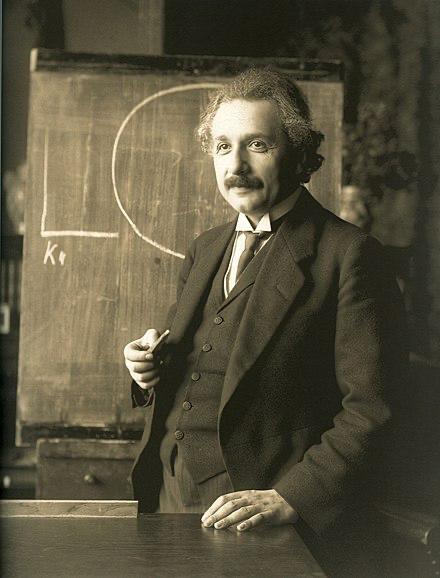
Albert Einstein

Portrait by Ferdinand Schmutzer, 1921

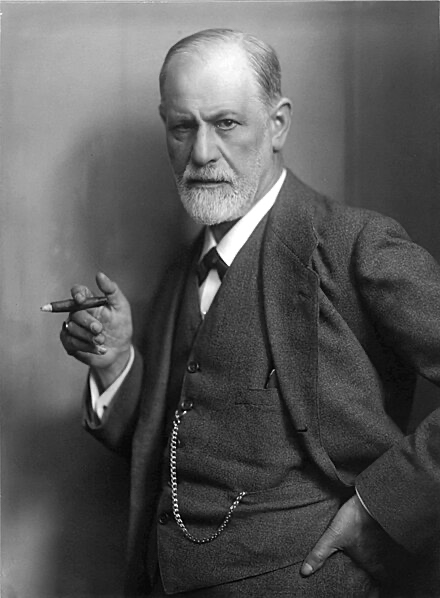
Sigmund Freud

Freud, 1921

Two very great men.

Our human existence!

We are a very strange bunch.

Jean and I live in an ideal part of America: Merlin in Southern Oregon. We did not plan to come here but in 2012 we wanted to move from Payson, Az. and fortune brought us here. However, I started this blog in 2009 when I had seen the integrity and happiness of dogs and wanted to write about them.

However the wider world is far, far from just the integrity and happiness of dogs.

On March 17th Patrice Ayme posted yet another post on his blog about war and I felt that it was important to be read by as many followers of Learning from Dogs as is possible. (The few small typographical changes are mine.)

ooOOoo

Want No War? A Symptom That Nazism Perdures

Do not whine that war is bad. Ask instead what it is for.

Friend of a friend Manfred Krieger: Will mankind ever learn that wars do no good to anyone?

Patrice Ayme: All over the world, the vermin helping Putin claim that war does not do any good. Similarly the Nazis, after claiming for years that they were the party of peace and minorities, accused big bad France of having launched WW2. France did, indeed, but that was after the Nazis had invaded a few countries, including two democracies, and officially killed a few hundred thousands of alleged mental retards and genetically defective (including a relative of Hitler).

Vermin helping Putin vermin has been crawling around the French and German leadership for a quarter of a century. That Putin was a war criminal was obvious as early as 1999. 

The Putinists claim that war never helped anyone. So the war to stop Hitler did not do good to anyone? Only an obdurate Nazi would hold that opinion.

My family was hunted by the Gestapo: I am delighted that more than five million Nazis got exterminated like the vicious vermin they were. It would have been better if the French Republic had declared war on the Nazi gangrene earlier. Destroying the vermin when it was weaker would have saved the lives of in excess of 50 million thoroughly innocent people who got killed as a result of having let the Axis fly from victory to victory, gathering alliances with nearly as equally repulsive tyrannies in the process.

This may well be happening now: the Chinese dictatorship is sitting on a fence, not trying to help the Kremlin tyrant too much. The fascist Iranian theocracy retreated a bit when threatened recently by the West after attacks in the Red Sea, the Gulf of Aden and Syria. 

This hesitancy on the part of fascists also happened in World War Two; for a long time Mussolini did not dare to join Hitler, but then they militarily cooperated attacking Spain and three years later, attacking France. But ultimately, except for Franco who looked degenerate, but was smarter, fellow dictators, even Stalin, sided with the Axis. 

In final analysis, WW2, and also WW1, happened because, primarily, not enough Germans fought the forces of fascist imperialistic plutocracy inside Germany.

So it is a lack of war, not an excess of it, which brought disaster.

That happened because not enough Morally Correct Germans realized in a timely manner that it would do some good to destroy the fascist imperialistic plutocratic mentality. 

None of this deplorable meta-mentality is obsolete; France and Germany encouraged and empowered the Kremlin vermin in the last quarter of a century, by building its economy and financing it with advantageous trade. Now the Kremlin vermin is potentially the greatest threat against humanity and civilization, ever. And what does the German government do? Claim that one should not fight the Kremlin gangrene too much, to not aggravate matters too much.

But that appeasement in face of the unacceptable only encourages the latter. Germans still have to understand the biggest lessons of history.

‘An appeaser is one who feeds the crocodile quality food, hoping

that the ferocious creature will die of indigestion.’

Patrice Ayme

ooOOoo

Water, water, everywhere, but …

A dramatic article from George Monbiot about water!

I read the latest from George Monbiot yesterday morning and was startled. Startled because I hadn’t thought of it before. Startled because here in Merlin, Southern Oregon we have had so much rain since the beginning of November, 2023 that our acres are swimming in the wet. Startled since that time also our Bummer Creek, which flows across our land, has been at record depths.

But this report is incredibly important and I wanted to share it with you, as I have Geo. Monbiot’s permission for so doing.

ooOOoo

Dry Run

Posted on11th March 2024

The mega-droughts in Spain and the US are a portent of a gathering global water crisis.

By George Monbiot, published in the Guardian 4th March 2024

There’s a flaw in the plan. It’s not a small one: it is an Earth-sized hole in our calculations. To keep pace with the global demand for food, crop production needs to grow by at least 50% by 2050. In principle, if nothing else changes, this is feasible, thanks mostly to improvements in crop breeding and farming techniques. But everything else is going to change.

Even if we set aside all other issues – heat impacts, soil degradation, epidemic plant diseases accelerated by the loss of genetic diversity – there is one which, without help from any other cause, could prevent the world’s people from being fed. Water.

A paper published in 2017 estimated that to match crop production to expected demand, water use for irrigation would have to increase by 146% by the middle of this century. One minor problem. Water is already maxed out.

In general, the dry parts of the world are becoming drier, partly through reduced rainfall; partly through declining river flow as mountain ice and snow retreats; and partly through rising temperatures causing increased evaporation and increased transpiration by plants. Many of the world’s major growing regions are now threatened by “flash droughts”, in which hot and dry weather sucks moisture from the soil at frightening speed. Some places, such as the southwest of the US, now in its 24th year of drought, may have switched permanently to a drier state. Rivers fail to reach the sea, lakes and aquifers are shrinking, species living in freshwater are becoming extinct at roughly five times the rate of species that live on land and major cities are threatened by extreme water stress.

Already, agriculture accounts for 90% of the world’s freshwater use. We have pumped so much out of the ground that we’ve changed the Earth’s spin. The water required to meet growing food demand simply does not exist.

That 2017 paper should have sent everyone scrambling. But as usual, it was ignored by policymakers and the media. Only when the problem arrives in Europe do we acknowledge that there’s a crisis. But while there is understandable panic about the drought in Catalonia and Andalusia, there’s an almost total failure among powerful interests to acknowledge that this is just one instance of a global problem, a problem that should feature at the top of the political agenda.

Though drought measures have triggered protests in Spain, this is far from the most dangerous flashpoint. The catchment of the Indus river is shared by three nuclear powers – India, Pakistan and China – and several highly unstable and divided regions already afflicted by hunger and extreme poverty. Today, 95% of the river’s dry season flow is extracted, mostly for irrigation. But water demand in both Pakistan and India is growing rapidly. Supply – temporarily boosted by the melting of glaciers in the Himalayas and the Hindu Kush – will, before long, peak and then go into decline.

Even under the most optimistic climate scenario, runoff from Asian glaciers is expected to peak before mid-century, and glacier mass will shrink by about 46% by 2100. Some analysts see water competition between India and Pakistan as a major cause of the repeated conflicts in Kashmir. But unless a new Indus waters treaty is struck, taking falling supplies into account, this fighting could be a mere prelude for something much worse.

There’s a widespread belief that these problems can be solved simply by enhancing the efficiency of irrigation: huge amounts of water are wasted in agriculture. So let me introduce you to the irrigation efficiency paradox. As better techniques ensure that less water is required to grow a given volume of crops, irrigation becomes cheaper. As a result, it attracts more investment, encourages farmers to grow thirstier, more profitable plants, and expands across a wider area. This is what happened, for instance, in the Guadiana river basin in Spain, where a €600m investment to reduce water use by improving the efficiency of irrigation has instead increased it.

You can overcome the paradox through regulation: laws to limit both total and individual water consumption. But governments prefer to rely on technology alone. Without political and economic measures, it doesn’t work.

Nor are other technofixes likely to solve the problem. Governments are planning massive engineering schemes to pipe water from one place to another. But climate breakdown and rising demand ensure that many of the donor regions are also likely to run dry. Water from desalination plants typically costs five or 10 times as much as water from the ground or the sky, while the process requires masses of energy and generates great volumes of toxic brine.

Above all, we need to change our diets. Those of us with dietary choice (in other words, the richer half of the world’s population) should seek to minimise the water footprint of our food. With apologies for harping on about it, this is yet another reason to switch to an animal-free diet, which reduces both total crop demand and, in most cases, water use. The water demand of certain plant products, especially almonds and pistachios in California, has become a major theme in the culture wars, as rightwing influencers attack plant-based diets. But, excessive as the watering of these crops is, more than twice as much irrigation water is used in California to grow forage plants to feed livestock, especially dairy cows. Dairy milk has much higher water demand even than the worst alternative (almond milk), and is astronomically higher than the best alternatives, such as oat or soya milk.

This is not to give all plant products a free pass: horticulture can make massive demands on water supplies. Even within a plant-based diet, we should be switching from some grains, vegetables and fruit to others. Governments and retailers should help us through a combination of stronger rules and informative labelling.

Instead, they do the opposite. Last month, at the behest of the EU’s agricultural commissioner, Janusz Wojciechowski, the European Commission deleted from its new climate plan the call to incentivise “diversified” (animal-free) protein sources. Regulatory capture is never stronger than in the food and farming sector.

I hate to pile yet more on to you, but some of us have to try to counter the endless bias against relevance in politics and most of the media. This is yet another of those massive neglected issues, any one of which could be fatal to peace and prosperity on a habitable planet. Somehow, we need to recover our focus.

http://www.monbiot.com

ooOOoo

Oh dear, oh dear!

One hates to be alarmist and yet Monbiot is a very smart reporter and this is truly important.

Oh dear, oh dear!