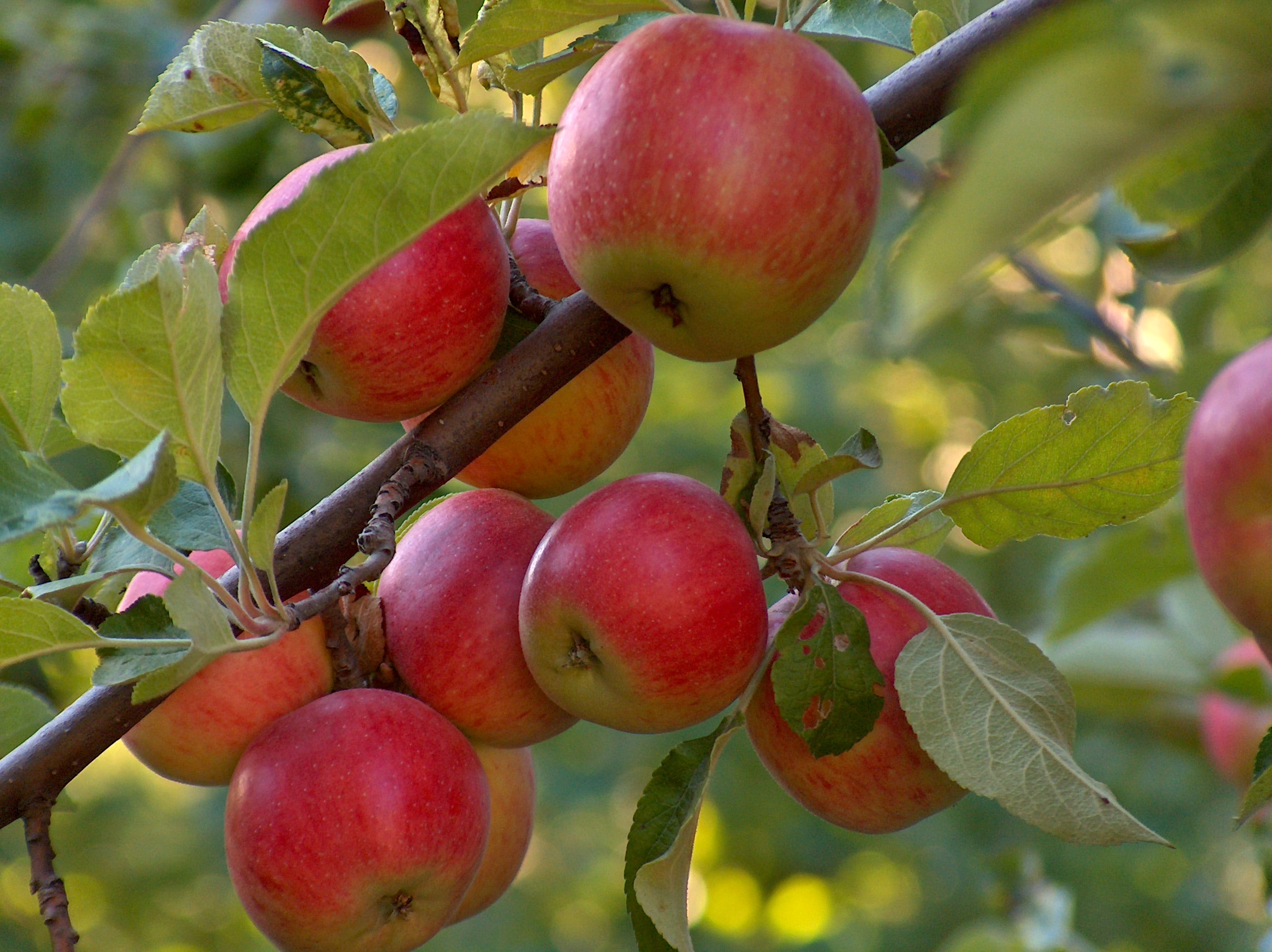
Martin Luther once said, “even if I knew that tomorrow the world would go to pieces, I would still plant my apple tree.” New research gives more reasons than ever to plant apple trees and enjoy their delicious and nutritious fruit. Here are ten surprising reasons to sink your teeth into an apple today:
1.Research found that when healthy adults consumed an apple fifteen minutes before eating a meal, they ate 15 percent less at the meal. This simple habit can result in weight loss for anyone looking for an easy and healthy way to lose weight.
2. In other studies, apples have been shown to significantly alter the amounts of the bacteria Clostridiales and Bacteroides in the large intestine, conferring gastrointestinal health benefits.
3. Thanks to their phytonutrient content, apples have been show to lower the risk of asthma and lung cancer in numerous studies.
4. In a study funded by the USDA, postmenopausal women who ate dried apples daily experienced a 23 percent reduction in LDL cholesterol (the one known as “bad cholesterol”) and a 4% increase in HDL cholesterol (“the good cholesterol”) within six months.
5. In a British study published in BMJ, researchers found that eating an apple a day was as effective as statin drugs to lower cholesterol levels, without the harmful side-effects. They also found that if 70% of the British population simply ate an apple on a daily basis, 8500 lives would be spared every year from heart attacks or strokes.
6. Researchers at Tufts University found that catechin polyphenols found in apples speed abdominal fat loss by 77 percent and double weight loss in overweight individuals. Catechins also improve the body’s ability to use insulin, thereby preventing wild blood sugar fluctuations that effect energy, mood, and cravings.
7. Apples contain flavonoids (including catechin polyphenols and quercetin), which have been shown to interfere with the development of cancer cells and preventing their ability to multiply.
8. Research in the journal Nutrition Reviews found that a diet that’s too low in magnesium increases the risk of cancer. Apples are a good source of magnesium.
9. According to research in the International Journal of Biological Macromolecules scientists found that apple oligosaccharides showed an ability to inhibit human colon cancer cells. Oligosaccharides are complex carbohydrates. The apple compound induced a process known as apoptosis, which is the body’s mechanism to kill damaged or cancerous cells. They also found that the apple oligosaccharide stopped the growth of new cancer cells. They concluded: “Apple oligosaccharide is a potential chemoprevention agent or anti-tumor agent and is worthy of further study.”
10. Apples contain a natural compound known as malic acid, which helps improve energy production in the body. It has been found to aid fibromyalgia and chronic fatigue syndrome.
ooOOoo
Amazing what one reads and learns on ‘the internet’ these days. If it wasn’t such crap weather just now I would go outside and take a photograph of our three delicious apple trees! Trust me, Jean and I and the deer love to eat them!
I never thought of myself as a small-dog person. When I was growing up, I much preferred my dad’s German Shepherds to my stepmom’s Toy Poodles. The first dog I acquired as an adult was a retired racing Greyhound. But although Greyhounds are wonderful apartment and condo dogs, we have stairs, and it became difficult to get Savanna up and down them after she lost a leg to bone cancer.
The next dog, we decided, would be smaller. That’s how we ended up with Cavalier King Charles Spaniels (and one Chihuahua mix). But although they are more portable, small dogs come with their own set of issues. If you are considering acquiring a small-breed dog because you think one will be easier to live with, here’s what you should know.
It Ain’t Easy Being Small
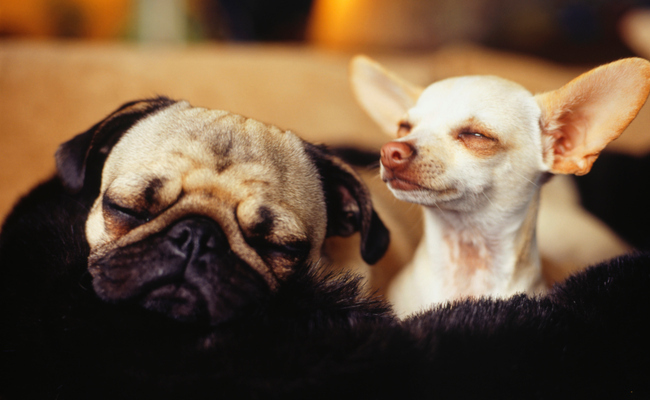
Small dogs are, well, small. It’s easy to step on them, no matter how careful you try to be. It’s not so bad with the larger Toy breeds such as Pugs and Cavaliers — at least, not once they reach adult size — but smaller dogs such as Chihuahuas, Papillons and Yorkies run the risk of getting stepped on or kicked not just by the humans in the home but also by other pets. We frequently joke about attaching a balloon on a long string to the collar of our Chihuahua mix so we’ll be more likely to notice where she is.
Other pets may bully them. Lots of small dogs rule the roost, but when they have a gentle personality, their size can work against them. Esmeralda, a Papillon, was stalked by her owner’s much larger cat, who seemed to view the small, fluffy dog as a toy at best, potential dinner at worst. It was a painful dilemma for the owner, who finally ended up placing her cat in a new home to save her dog’s life.
Little dogs can hurt themselves jumping on and off furniture. It’s an especially common problem with breeds such as Italian Greyhounds, who have long, thin legs, or Japanese Chin, who often enjoy being on high places such as the back of the sofa. This is more common in young dogs, who are not only still growing but also tend to be fearless, but any small dog can suffer a broken bone if he lands the wrong way jumping off the furniture, is stepped on by an errant guest or is dropped to the floor by a child.
For this reason, it is often necessary to buy steps so small dogs can get off furniture safely and easily (getting up on their own can be an issue, too). It’s better to teach them this habit at an early age than to risk a broken bone.
Tiny dogs often think they’re bigger than they actually are. In their head, they’re just as big and badass as that Rottweiler down the street. It’s not uncommon to see a Yorkshire Terrier, Chihuahua or Miniature Pinscher take his life in his hands by challenging a bigger dog. Owners must always be prepared to keep their small dogs out of harm’s way — especially when their dogs try to bring it on themselves.
Too Cute To Train?
Little dogs can be just as smart as big ones — sometimes more so. But people often don’t make the effort to train them. That’s a shame, because small dogs are just as much in need of manners as large ones.
There are a couple of issues with training small dogs. One is that they’re so low to the ground it can be difficult to get their attention or to reach down and reward them with treats.
Another is that some can be slow to learn house training. But it doesn’t have to be that way. As with any other dog, perseverance and consistency win the day.
By Kim Campbell Thornton | Vetstreet.com
ooOOoo
I’m not completely sure whether I totally agree with everything that Kim writes about: what do you think?
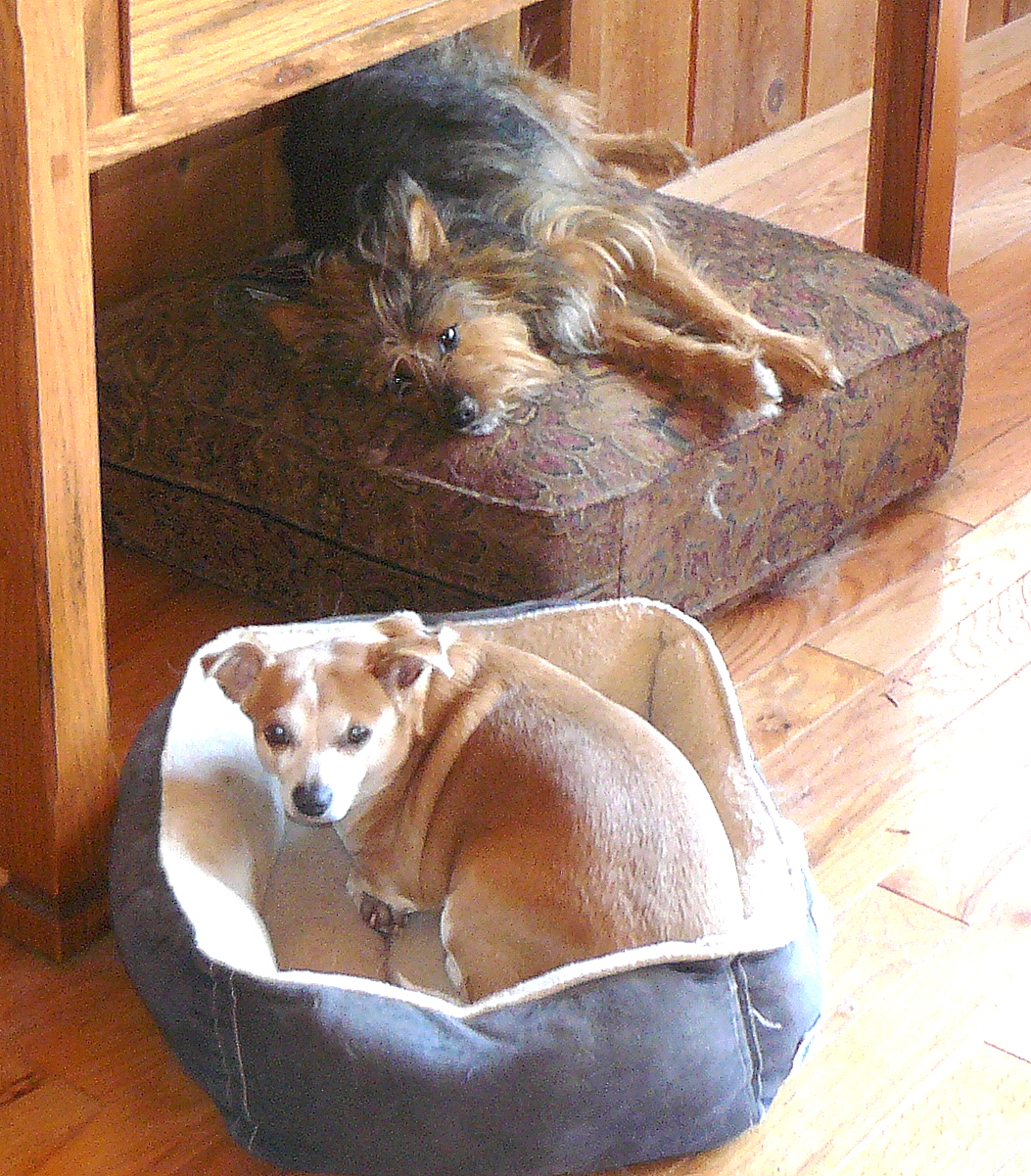
So far as me and Jean are concerned our Sweeny and Pedy are adorable and at this time of the year are most welcome as all-night sleepers on our bed!
Pedy in front of Sweeny. Picture taken yesterday afternoon.
Back in September, I received an email from a Paige Johnson. He offered to write a guest post for Learning from Dogs. Now I love guest posts simply because I think that different perspectives are always valuable, and let’s face it you get enough of me ‘rabbiting on’ most days.
This is what Paige’s email said:
I reached out to your recently with a guest article offer and just wanted to send a quick note to follow up.
I’ve had my dog, GG, since my early 20s, and though it wasn’t easy — in fact, it was quite the trial and error process for both of us! — I’m happy to report that she has become a well-trained pup, great with kids, adults, and other animals.
That said, GG and I are about to face another challenge together. Moving. I know that uprooting her from the only home she’s ever known won’t be easy for her so I’ve been doing some research on how to make the process go as smoothly as possible for both of us.
I run LearnFit.org with some friends, and collectively, we love helping readers find balance in their life. Adding a dog to the mix definitely brings happiness, but it can be a tough adjustment, especially when you face another big life event, like moving or having a child.
Who wouldn’t warm to that approach!
So here is Paige’s guest post.
ooOOoo
4 Tips for New Dog Owners Who Need to Break Up with Your Vet
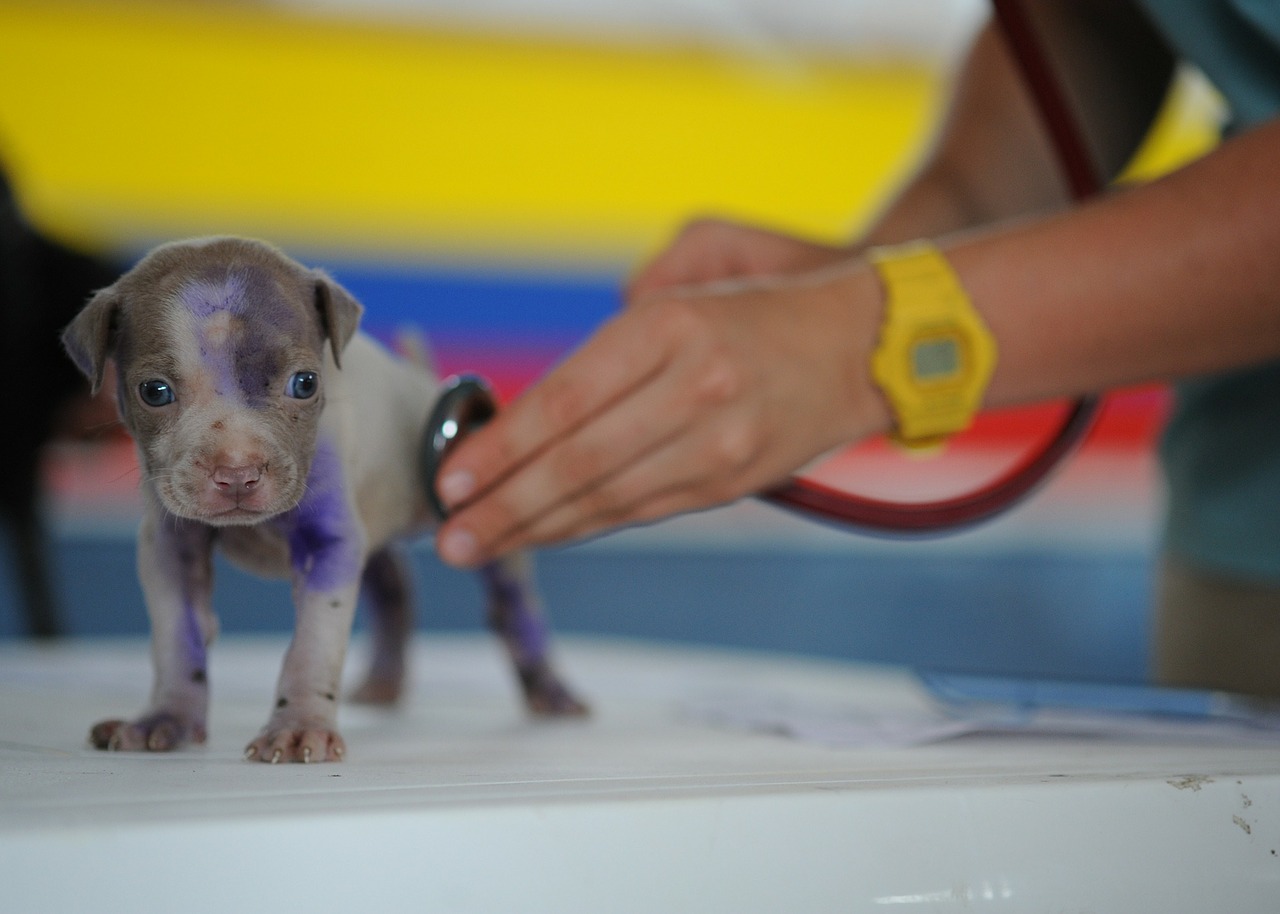
When you become a new dog owner, you worry about what to feed him, how often to bathe him, the best type of flea and tick treatment to use to protect him, and a litany of other things involved in caring for him. You also need to make sure that your veterinarian is on the same page with you so that you are comfortable with relying on him to deliver the best quality care for him and advice for you. Sometimes, however, you need to break up with your vet for one reason or another. If you are a new dog owner who needs to break up with your vet, we offer four tips to help you do it as quickly and painlessly as possible.
1. Consider all of the interactions you have had with your veterinarian
If you are having a difficult time deciding whether to leave your veterinarian, think about how you have been treated by the vet and his office staff and how your new dog has been cared for at the office. If your vet has been pushing you to purchase pet food and care products from him, or he has a policy that you must board your dog only at his office when you go out of town, you most likely are justified in thinking that it is time to break up with him. Vets who try to monopolize services unfortunately are in the business more for making money than for providing quality animal care.
As a new dog owner, you need to be aware of your right to feed your dog whatever food you feel is best for his nutrition and health and not just what your vet sells. You also have the right to choose a dog boarding provider who will provide one-to-one care for your dog while you are out of town, rather than put your dog in an impersonal kennel at the vet’s office. When you leave the vet, you should consider all of the interactions you have had with him, and if you feel that you are being pushed into choosing products and services that he offers without having a freedom of choice, you should break up with him.
2. Break up sooner, rather than later
As soon as you feel that you need to break up with your vet, you should take action. Breaking up with your vet sooner rather than later will make the process much easier on you. Prolonging your relationship with your vet when you are considering cutting ties with him will increase your uneasiness and make an awkward situation even more uncomfortable.
You especially need to break up with your vet as soon as your instincts tell you to do so if you are concerned that he is not providing adequate care for your dog. The last thing you want is to put your dog’s health in jeopardy because you are afraid to break up with your vet. As a new dog owner, it is your responsibility to put your dog’s health above everything else when you deal with your veterinarian and make decisions regarding his treatment and care.
3. Ask office personnel to transfer your records to a new veterinarian
You want to be sure you have a new veterinarian on board with your new dog before you leave your old vet’s office, so that your dog’s health is never at risk during the transition. Call your current veterinarian’s office and politely ask office personnel to transfer your records to your new vet. Even if you have had issues with office staff before, it is well within your rights as a pet owner to switch vets and have your records sent to the vet of your choice. The staff should treat you with professional courtesy as long as you are straightforward and polite as well during the interaction.
4. Explain the situation to your veterinarian if you are leaving because of extenuating circumstances
Sometimes, even people who love their veterinarians need to break up with them because of extenuating circumstances. For example, you may be moving to a new town and cannot take the time to drive to your current vet’s office from your new home. If you have been happy with the care from your veterinarian and are sad to leave his care, explain the situation to him and ask for some recommendations for your new area. Your vet may be able to refer you to a new office that shares his level of care and commitment to your new dog. Your vet also may be able to refer you to other services for your dog in your new area, such as reputable dog walkers or accommodating dog parks.
Breaking up with your veterinarian is not a fun thing to do for new dog owners, especially if you love your vet and don’t want to leave his care. However, you need to put your dog’s health first, and if your current veterinarian cannot meet your dog’s needs, it is time to break up and go elsewhere. Our four tips will make the process easier for you.
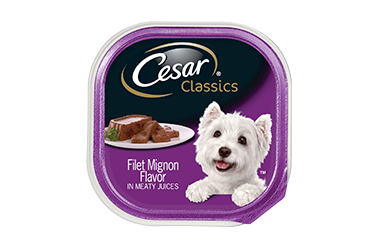
October 7, 2016 — Mars Petcare has announced it has initiated a voluntary recall of a limited number of Cesar Filet Mignon Flavor wet dog food due to a potential choking risk from small pieces of plastic which entered the food during the production process.
What’s Recalled?
Cesar Classics Filet Mignon can be purchased individually as well as in flavor variety multipacks.
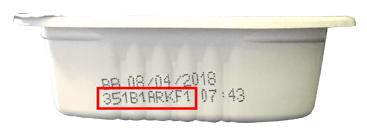
The affected dog food can be identified by checking the Best Before and Lot Code on the product lid.
Each product will have a lot code printed on the side of the tray that begins with 631FKKC or 631GKKC and best before date that falls between 08/04/18 and 08/05/18.
The Cesar Classics Filet Mignon Flavor can also be found in variety packs with the following lot codes:
632D14JC
633B24JC
634A14JC
634A24JC
634B14JC
634B24JC
634E14JC
635A24JC
635B14JC
636D24JC
636E14JC
Lot Code is indicated by the red box below:
The Lot Codes listed above are the only affected products. All other Cesar products can be safely consumed.
Why the Recall?
Select packages of this product may contain small pieces of plastic, which entered the food during the production process.
What to Do?
Mars Petcare encourages consumers who have purchased affected product to discard the food or return it to the retailer for a full refund or exchange.
While a small number of consumers have reported finding the plastic pieces, we have not received any reports of injury or illness associated with the affected product.
At Mars Petcare, we take our responsibility to pets and their owners seriously and are working with all of our distributors and retail customers to ensure the recalled products are no longer sold and are removed from inventory.
Consumers can reach the company at 800-421-6456.
U.S. citizens can report complaints about FDA-regulated pet food products by calling the consumer complaint coordinator in your area.
These four kittens were rescued and reunited with their mother. (Photo: Celia Hammond/Facebook)
The owner of a dry-cleaning shop got a surprise recently when he heard crying and mewing from the back of one of his machines. Fortunately, this on-the-ball dry-cleaner called an animal rescue squad who rescued the four small kittens and reunited them with their mother.
According to the BBC , the dry cleaning shop where the kittens were found is located in Forest Gate, a residential suburb of London. The shop owner called animal rescuers from the Celia Hammond Animal Trust, a local animal rescue center, to help identify the source of the sounds.
Rescuers dismantled the tumble dryer where the noises were coming from and found four small ginger kittens inside. They also located the kittens’ mother when they noticed a distressed cat pacing outside the shop.
The shop owner told rescuers that a nearby resident had moved and left the pregnant cat behind. That poor distressed mama clearly needed a warm, dry place to give birth and she found it inside the dry-cleaning tumble machine.
One of the animal rescuers noted on their Facebook page that the kittens were in bad shape when they were found, “[w]hen we picked them up they were filthy, covered in grease and dirt and had been breathing carbon tetrachloride fumes since they were born in the back of the machine.”
Thankfully, the kittens and their mother are now being well cared for in a foster home.
ooOOoo
One might ponder about the kittens having a clean start to their young lives! (Sorry!)
Loneliness and the feeling of being unwanted is the most terrible poverty.
Those words above are attributed to Mother Teresa and I have no reason to doubt that.
George Monbiot
I selected them because they seemed to capture the mood that flowed out at me from a recent essay by George Monbiot.
Many will know George for he is a British writer very well-known for his environmental and political activism. He writes a weekly column for The Guardian, and is the author of a number of books.
Way back in the early days of this blog I was moved to republish some of GM’s essays and sought his permission to do just that. He responded promptly giving me blanket permission to republish any of his essays.
Now it’s a long time since I have availed myself of that permission for the simple reason that so very often George writes about matters that are tough to read and I choose not to share with you because there’s no shortage of tough commentaries about today’s world. That’s no criticism, actual or implied, into George Monbiot’s integrity as a reporter and writer.
By George Monbiot, published in the Guardian 3rd October 2016
Two years ago, I wrote a column for the Guardian in which I argued that what distinguishes our age from those preceding it is an epidemic of loneliness. Throughout human history, we have been hyper-social animals, dependent on each other for both physical and psychic survival. Thomas Hobbes’s claim – that our natural state is a war of “every man against every man” – is a myth proposed by someone whose understanding of human evolution was confined to the book of Genesis. But the myth is now being realised through the religion of our time: a celebration of extreme individualism and universal competition. The resulting loneliness, I argued, is a deadly condition, which kills as many people as smoking or obesity.
To my astonishment, the article exploded, and the ripples can still be felt today. A documentary it inspired, called the Age of Loneliness, aired recently on BBC1. Several publishers asked me to write books on the topic, but I could think of nothing more depressing than spending three years sitting on my backside, documenting social isolation. There was plenty I wanted to say on the topic. But how?
A few weeks later, I dashed out to buy some screws from a hardware shop. Ahead of me in the queue was an elderly woman. She lent on the counter, dithering about what she wanted and trying to engage the sales assistants in a riveting conversation about her state of health. Stuck behind her, I quietly fumed: it seemed as if she would never leave.
But as I cycled home, and my frustration ebbed away, I saw what should have been obvious: here was a person who seemed desperately lonely. “Where’s your empathy?”, I asked myself. “Isn’t that what you were writing about?”. What if that conversation was the only one she would have all day? I felt guilty about my feelings in the shop.
When I returned to my desk, I began dashing out a rough poem about a woman living with little to keep her company but memories, who goes to the shops in the hope that she might talk to someone, but discovers that the tills have been replaced with automatic checkouts. As I wrote, it seemed to me that it was trying to become something else: a ballad. Suddenly I knew what I wanted to do with the topic: I wanted to write an album.
There were just a couple of minor hitches. I can’t read music, I don’t play an instrument and my singing is banned under international law. But I knew who to ask.
I first heard Ewan McLennan while listening to Late Junction on Radio 3, in 2011. I was transfixed by his voice, his playing and what seemed to be an almost supernatural ability to find the heart of a song. He was just 25. I bought his first album, Rags and Robes, and listened to it over and again. Three years later, I heard him interviewed by Mary Ann Kennedy, whose programmes I’ve followed since she began broadcasting on Radio Scotland. He spoke with the same ease of expression I had heard in his music. He was relaxed and funny, politically engaged and plainly fascinated by the roots and text of songs and poems. He came across as a cracking bloke.
I did something I have seldom done: I sent him a fan letter. I invited him to a talk I was giving in his home city, Bristol. He came, and over dinner afterwards we clicked. So, a few months later, with some trepidation, it was to him that I sent my idea of collaborating on a themed album.
To my delight, he agreed. I would start by thinking up a story and writing a rough sketch, which might incorporate some potential hooks, rhymes and choruses. I would send it to him on the understanding that he could do whatever he liked with it. I did not try to write to his style, as I knew he would take from each sketch what he wanted and make the song his own.
I wasn’t wrong. A couple of weeks after I emailed the first sketch to him, I found an audio file in my inbox, and opened it with the excitement of a child at Christmas. It was wonderful – he had turned my base metal into gold. The songs he sent back to me were riveting and heart-wrenching, capturing sensations I have long struggled to express.
The album is a mixture of dark shades and light: sad ballads and stirring anthems. We want to use it as a means of not only talking about loneliness, but, in a small way, addressing it. With advice from charities working on the issue, we are designing our gigs to try to bring people together. I will talk about the themes and Ewan will perform the songs. We will encourage people in the audience to talk to each other; then it will end up with a party in the nearest willing pub. Music naturally makes connections; we want to take it a step further.
In one respect, the album is already succeeding, as the collaboration has relieved the usual solitude in which we both work, making our lives less lonely. I hope it has the same effect on other people.
Breaking the Spell of Loneliness, by Ewan McLennan and George Monbiot, is released on October 14 by Fellside Records.
Here’s a short video about the project, featuring some of the music:
This remarkable collaboration between author George Monbiot and musician Ewan McLennan seeks to address the curse of our age: a crowded planet stricken by loneliness. Using music and the written word, it seeks to make connections in a splintered world.
Now, dear reader, you would be disappointed if I didn’t close today’s post without reference to the value of a dog or two in one’s life, and I have no intention of delivering such disappointment!
From the dozens of pictures that have been presented here over the years I chose this one.
Because I have this notion that one can never be truly alone if there is a dog in one’s life.
Here Are Some Heavy Duty Dog Toys You Can Make Yourself
#1: “Indestructible Dog Toy (Made with Dried Sweet Potato)
I love this toy because it’s both healthy for my dog and has no unnecessary additives. It’s a great chew toy and treat all in one.
Shesparticular on instructibles.com came up with this idea for a DIY chew toy for her mom’s dog. Her mom’s dog, Molly, loves to play. She says when Molly plays it “usually involves rounding up all her toys and ripping them to shreds.”
In Shesparticular’s pictures of Molly, you can tell she’s a little dog. It may seem surprising, but little dogs can do just as much damage as big ones. So this recipe she’s come up with is pure genius if you want to make strong dog toys that are healthy for your dog.
Here’s what you’ll need and instructions on how to make this toy at home:
Hemp or jute rope. Nine 2 1/2 foot ropes braided together to make a larger rope works for medium sized dogs. You’ll need to adjust the length of the rope based on your dog’s size.
Sweet potatoes or yams. One potato for a smaller toy, two for a medium toy and three to four for a larger toy
Sheet pan and parchment or foil
A sharp knife
Round cookie cutter a bit larger than the diameter of your rope
Vegetable peeler (optional)
Instructions:
Preheat your oven to 250 degrees Fahrenheit
Wash your sweet potatoes well. Peeling them isn’t necessary unless you prefer it.
Slice the sweet potato into rounds approximately 1/2″ thick
Using the cookie cutter, remove the center of each round
Place rounds on cookie sheet and bake for 2 1/2 hours then flip them over and bake for another 2 1/2 hours.
They’re done when they’re dried out and hard. If there are any soft parts, bake them longer and check them every 30 minutes.
Once they’re done, allow them to cool.
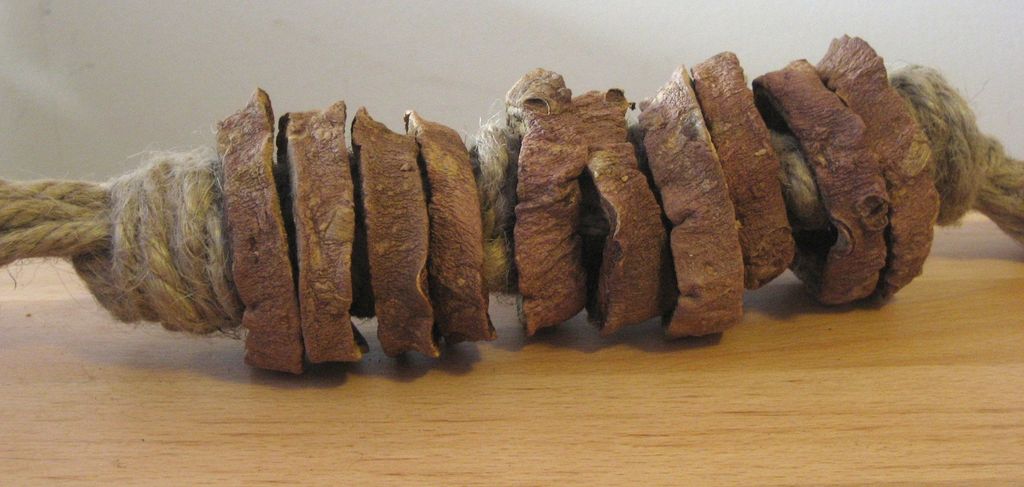
These sweet potato rings look like hollowed out dog bones, without the risk of splintering
Once your sweet potato rings have cooled, you can start making your toy.
Start by tying a knot at the end of your hemp rope. If you’re using many thinner pieces, braid them together. This will make it easier to string the sweet potato pieces on.
String two potato rings onto your rope then tie a knot in the rope. Continue adding two rings at a time and tying a knot after each pair until you reach the end of the rope.
When you’ve finished, hand this toy over to your dog and watch them chew for hours.
# 2: Knotted Hand Towel Toy
I have so many old hand towels that I didn’t know what to do with until I saw this clever idea.
This toy’s so easy to make, even a dog could do it. Taylor Martin from cnet.com came up with this simple way to repurpose old linens and make a great dog toy.
All you have to do is take an old, tattered hand towel and tie a knot in the middle. You can even use a full sized towel and make several knots.
My dog is a Pitbull mix, so though this is a tough toy, he would likely still rip it to shreds. The good news is, it doesn’t cost a cent. So even if it only lasts a few days, you didn’t lose any money on it.
#3: Ring Dog Toy
Just looking at this toy, you can tell it’s tough. No way my Pitt mix will be able to destroy this.
A user called J3443RY at instructables.com designed this indestructible dog toy. This is just a basic rope knot toy.
If you know how to tie a crown knot, all you need to do is create two lengths of rope by tying 4 lengths of rope in crown knots. All you need to make this toy is some nylon repelling rope.
Here are some step by step instructions for creating this toy
Cut 4 equal lengths of rope. You can adjust the size of the toy based on the size of your dog. 4 Inches of rope is equal to 1 inch of the finished toy. For example; for a 6 inch finished knot you would need 24 inches of rope to start.
Use 2 of the 4 ropes to create a 7″ long finished crown knot.
For step three, the user has included an instructional video. This will help you to combine the two finished knots into one ring.
When you’re finished with this toy, you will have a nearly chew proof dog toy that your dog can enjoy for hours.
For more advice on caring for your dog and other great recipes, visit metroeastrba.com.
Now Check Out Some Cool Doggy Dental Treats
#4: Darla Cook’s Homemade Greenies
I can’t get over how adorable these little tooth brush shapes are.
Darla Cook is a blogger and a lover of culinary arts. She is a student at The Culinary Institute of America, so you know her recipes must be the best.
Darla’s blog focuses on general cooking and there aren’t many dog recipes on her blog. But I found a pretty great recipe there for homemade Greenies for dogs. She calls these adorable toothbrush shaped treats Franks Breath Brushes.
If you’re a pet owner, you know that Greenies are a great dental treat for your dog, but they’re expensive to buy.
If you want to save money and have more control over what goes into your dog’s treats, make them yourself at home.
Here is Darla’s recipe.
Franks Breath Brushes
Ingredients:
3 1/2 brown rice flour plus 2 cups more (rice flour for crunch)
1 tablespoon of activated charcoal (I opened 12 capsules for 1 tablespoon.)
Preheat over to 400F. Line your baking sheet with parchment paper.
Combine the charcoal with 3 1/2 cups brown rice flour and set it aside.
Put parsley, mint oil and 1/4 cup of broth or water into food processor. Process until chopped, like pesto. Add 3-4 droppers full of chlorophyll. Pulse a few times to mix. Add this green paste to flour mixture and mix well. Beat egg and mix in. Knead adding the rest of water/broth. By this time you should have a sticky dough ball. Flour the work surface and knead dough until an even green color. Divide dough into workable portions and roll out to about 1/4 inch thick. Add flour to the work surface and dough surface as needed to take away stickiness as you work. Cut out with your favorite shapes, and dock with a fork to keep puffiness down. Bake for 25 or 20 minutes. Cool and store in an airtight container in the fridge.
I will be trying these treats on my dog, for sure. I feel much more confident in the treats I feed my dog when I can make them myself and I know what’s in them.
#5 DIY Doggy Breath Mints
These treats look good enough for even humans to eat.
I’ve found yet another great dog breath freshening recipe. This recipe, by Clifford Genece at skinnyms.com, has something in common with Darla’s recipe. It doesn’t contain any wheat flour.
It is so important to avoid giving your dog anything that contains wheat flour. Many dogs are allergic to wheat products. It can cause some pretty intense itching and skin irritation.
Rather than using flower at all, this recipe calls for oatmeal. This recipe also calls for eggs. So Clifford even provides advice for people whose dogs are allergic to poultry products.
Here’s Clifford’s simple recipe for these yummy treats.
Ingredients:
2 1/2 cups old-fashioned oats
1/2 cup fresh parsley, finely chopped
1/2 cup fresh mint, finely chopped
1 large egg
1/4 cup of water, plus 1 teaspoon
3 tablespoons coconut oil (unrefined extra-virgin is best)
Directions:
Preheat the oven to 325° F
Add oats to a blender and pulse to a flour like consistency. In a large bowl whisk together diced parsley and mint, egg, water, and oil. Add oat flour and stir to combine. Knead dough a few times then turn out onto a lightly floured surface.
Using your hands or a rolling pin, flatten dough to about 1/8″ thick. Using a cookie cutter or knife cut out approximately 40 (1-inch mints) mints. Place mints about 1/4-inch apart on a parchment lined or non-stick cookie sheet. Bake 35-40 minutes, or until golden and crispy.
Allow mints to cool completely before serving. Store in an airtight container.
Tip: For dogs with allergies to chicken products, substitute one large egg with 1/4 cup unsweetened applesauce.
These are some of my favorite DIY dental treats and dog toys for powerful chewers. These treats and toys are a great way to keep your dog’s jaws strong and breath fresh. Don’t forget to take a look in your dog’s mouth every now and then and make sure their teeth are in good condition.
Description: Dental treats and dog toys for powerful chewers can be expensive, so why not make your own at home? Give these helpful recipes and DIY dog toys a try.
ooOOoo
Don’t know about you but we think this has been a very valuable and useful article from Sarah!
I was contacted by Sarah a few weeks ago with regard to her writing a guest post for you good people. For reasons that have escaped me I kept overlooking to publish it. That is now being corrected; indeed it has so much great information that I am splitting it over today and tomorrow.
ooOOoo
Top 5 Homemade Treats and Dog Toys for Powerful Chewers
I’ve never met a dog that didn’t love to chew, but it’s not just a fun canine pastime. It’s necessary for their dental health and for training Fido to stay away from your shoes. Are you too busy to brush your dog’s teeth every day? There’s no need to feel guilty, I am too.
Not everyone has time to do a full dental routine for their dog every day. However, there are other ways to ensure your dog’s dental health. I’ve done some research and found that there are many ways to do this without lifting a finger. Including some dog toys for powerful chewers and even some yummy dental treats.
Why Your Dog’s Dental Health is Important
Dogs aren’t in the habit of brushing and flossing. Most dog owners don’t even realize how important a dog’s dental health is. In fact, I didn’t even know that it was necessary to brush my dog’s teeth until I did some research on the subject.
There are other things you can do to keep your dog’s teeth sparkling if you don’t have time to brush them every day. You need to give them fun things to chew on and snack on in place of regular brushing. Such as some sturdy dog toys or rawhide chews.
According to PetMD “Actively encouraging the dog to utilize chew treats that require some “exercising” of the teeth, such as is provided by compressed rawhide chewies, hard rubber or nylon chew toys, can assist in keeping the mouth structures vital.”
If you do have time to brush your dog’s teeth, it’s important that you do it correctly. Here is how you should do it, according to Banfield.com.
Use a toothbrush that is just for dogs.
Never use your toothpaste to brush your dog’s teeth. There is toothpaste that you can buy just for your dog that is not toxic if swallowed.
Give Fido a small sample of the toothpaste so that they become familiar with the flavor.
Lift your dog’s lips to expose the gums and teeth. Brush the teeth like you would your own, but be gentle.
Most dogs won’t allow you to brush the inside surface of the teeth. Focus on the outside surfaces.
The molars and canines tend to build up tartar, so make sure you give them a good brushing. And of course, reward your dog for letting you put them through that. They are likely confused to why you were all in their mouth, so pats, play, and healthy treats are in order.
Now that you know how to brush your dog’s teeth, let’s learn other ways to improve their dental health.
Rawhide Treat Benefits
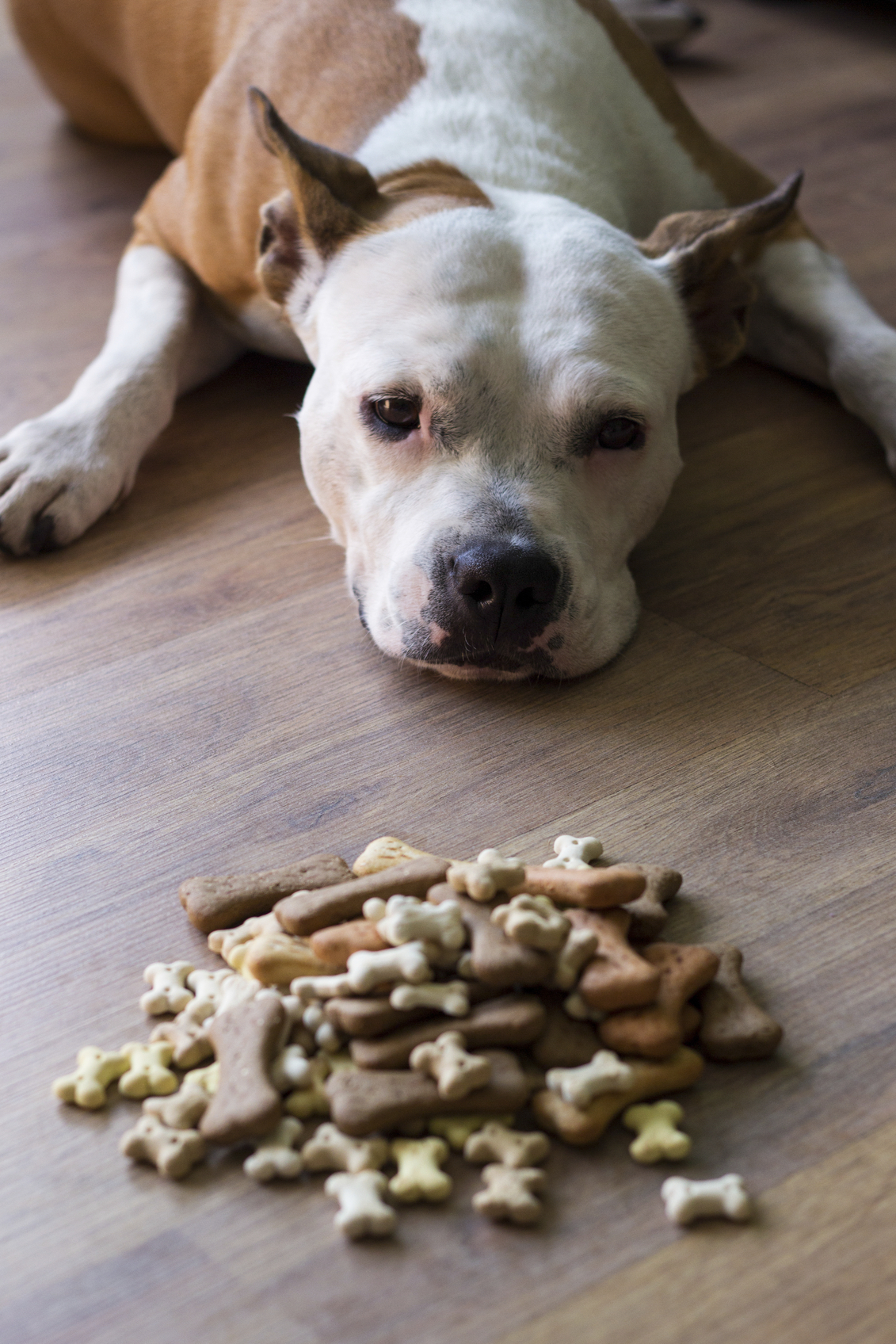
Dog tired of waiting to eat a treats
Rawhide treats and chews are a tasty way for your dog to keep their teeth clean and jaws strong. It’s good for cleaning their teeth and keeping their breath fresh but it also gives their jaws a good workout.
All dogs need to chew. Providing treats like rawhide keeps them from chewing on your nice leather shoes.
There’s not a whole lot of risk to letting your dog chew on rawhide. But there are some risks you should know about. For example, rawhide can sometimes contain small amounts of chemicals, according to Pets. WebMD. Your dog can even come in contact with E. Coli or Salmonella when chewing on rawhide.
Some dogs can be allergic to rawhide anything that’s used to make rawhide treats. This can cause unpleasant discomfort associated with diarrhea.
Sometimes rawhide can be a choking hazard. If a piece breaks off it can become lodged in the esophagus. If this happens, in some cases, a vet can remove any lodged pieces through the throat.
You should always talk to your vet before you decide to introduce any new treats into your dog’s diet. Here Are Some Heavy Duty Dog Toys You Can Make Yourself
ooOOoo
Come back tomorrow to learn how to make these great toys.
Founded in 1998, Animals Asia promotes compassion and respect for all animals and works to bring about long-term change. We work to end the barbaric bear bile trade, which sees over 10,000 bears kept on bile farms in China, and, according to official figures, about 1,200 suffering the same fate in Vietnam.
Animals Asia has rescued over 500 bears, caring for them at its award-winning bear sanctuaries in China and Vietnam.
Animals Asia also works to end the trade in dogs and cats for food in China and Vietnam, and lobbies to improve the welfare of companion animals, promote humane population management and prevent the cross border export of “meat dogs” in Asia.
In addition, Animals Asia campaigns for an end to abusive animal practices in zoos and safari parks in Asia, and works closely with governing authorities to improve animal management and increase awareness of the welfare needs of captive animals.
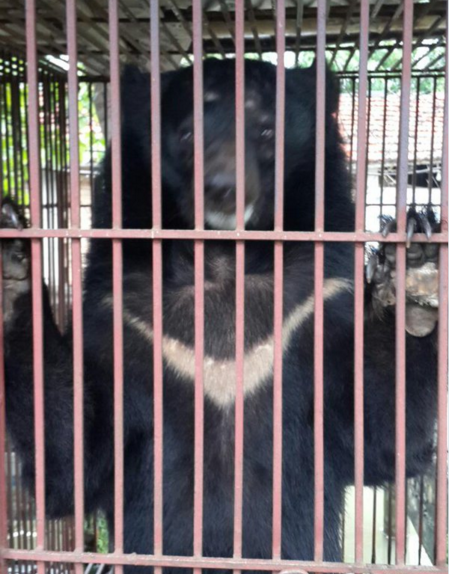
Freed from a bile farm – is this the happiest bear ever?
Watch Tuffy jump for joy in his first days outside – after being rescued from a bear bile farm where he’d spent years of torture in a tiny cage.
Rescued in September last year on the same day as six other bears, Tuffy’s paws have hardly hit the ground since arriving at Animals Asia’s Vietnam sanctuary.
The vet team has been working hard to rehabilitate him after years of having his bile extracted. In fact his gall bladder was so damaged it had to be removed. Examinations had found numerous gallstones, meaning he’d lived in pain for years.
That wasn’t the only surgery Tuffy faced. In addition he had three fractured teeth removed. He also had painful, dry, cracked paws.
Animals Asia Bear Manager Louise Ellis said:
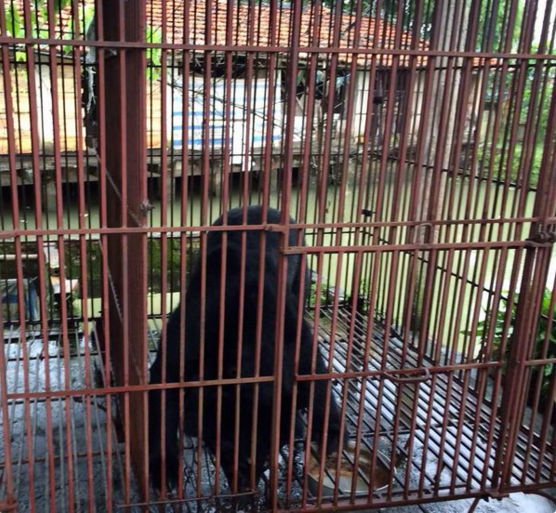
“The cracked paws are common to bile farm bears as they only walk on bars, not grass. Dehydration is likely to have contributed to this too. So for his carers to see him take to the pool so quickly after he first became ready to face the outdoors was an amazing moment.
“Coming from years of little or no water, for Tuffy this must feel like a true oasis after being parched and in pain for so long. It must have felt like such a relief to have the freedom to splash around in the water after only being able to stand on the hard metal bars of the bile farm cage.”
In fact Tuffy loved being outdoors so much he decided not to return to his den in the evening – choosing instead to sleep under the stars.
There are still around 1,200 bears in bile farms in Vietnam and over 10,000 more in China. Animals Asia has rescued nearly 600 bears from the bile industry and continues to care for almost 400.
Bear bile is used in traditional medicine.
ooOOoo
Dearest Tuffy! One of the lucky ones.
But that doesn’t diminish the anger and the disgust I feel at the way too many so called human beings can have such disregard for our beautiful animals!
The September equinox marks the moment the Sun crosses the celestial equator – the imaginary line in the sky above the Earth’s equator – from north to south and vice versa in March.
That moment is at precisely 14:21 UTC today, September 22nd. Welcome to Autumn, or Fall in American speak!
oooo
I was contacted by Susan Leighton recently offering me a guest post. Susan is a regular follower of this place and frequently drops in with responses and comments. Susan is also the founder of the blog: Woman on the Ledge (I can recommend her blog, by the way!)
Here is Susan’s guest post.
ooOOoo
Life Lessons from Maggie
I have walked this earth for fifty years and I have been a proud dog parent several times over. My latest child is an incredibly exuberant eight-year-old Boston Terrier named Maggie. Maggie Mae’s Up, Up, and Away is her full name. My husband and I got her in New Mexico which is the site of a world famous hot air balloon festival so hence the nod to the 5th Dimensions song.
Maggie was actually a surprise. I was going through an exceptionally rough time (unfortunately it was the beginning of several trying years) and my husband thought that she would cheer me up. The moment she was placed in my arms, a love affair and deep bond began. I looked into her expressive brown eyes and knew that I had just met my canine BFF.
When she was a puppy, we had a bit of a health scare with her. She was diagnosed with a severe case of giardia. The medication we were given to combat the illness wasn’t working. Our vet decided to treat her with a round of shots. It was touch and go for a few days but she came through with flying colors.
From an early age, she was our little toughie. Small in stature, she refused to let her bigger sisters get the best of her. Their long legs might have surpassed hers but she never gave up and would constantly compete to be number one in back yard games.
Dogs are amazing creatures. They are incredibly intuitive and sometimes I think they just might be smarter than us. In the years that I have been privileged to know Maggie she has taught me many life lessons. I would like to share some of that knowledge with you.
Every day is an adventure – don’t be a slave to routine. Maggie definitely isn’t one. Yesterday, she had an impromptu game of keep away with her stuffed animal. Today she was feeling like playing tug of war with her rope. Try something new. Even if you work 8 hours a day, you can still incorporate little surprises into your schedule. Maybe you always eat the same lunch every day. Change it up. Instead of that boring sandwich, opt for a salad or even a taco! Have a break between meetings or conference calls? Go outside and take a brisk walk for 10 minutes. Every day is new, treat it that way!
Make time to play – you know what I dislike the most about being an adult next to paying bills? I miss not having recess. That was my favorite time of the day when I was a kid. School stopped for an hour and I could run around with my friends and have fun. Why is it that we lose our sense of play when we grow older? Maggie has helped me to realize that it is possible to metaphorically return to the school yard. Every day we go outside and play catch in the back yard. Not only is it good bonding time for us but it is also a chance for me to relax and let go of the stress of the day.
Love unconditionally – this seems simple right? It really isn’t. So many people make it their mission to change the ones they love. Their significant other has a personality quirk that is less than endearing, why not try to lessen it or eliminate it altogether? I understand that life is about compromise but at the expense of not being able to be comfortable in your own skin? Maggie has been with me through many changes and throughout those changes, she has done nothing but support me. She loves me if I am having a bad hair day or if I have gained a few pounds. She loves the real me blemishes and all!
Be curious – whenever we take Maggie on a jaunt to the local pet store, she is more than willing to approach other dogs and other people. She wants to know more about everything in life. I jokingly tell her that she suffers from FOMO (fear of missing out) because she wants to be involved in every activity. I guess this is why I challenge myself to learn about new technologies, new books, new music, etc. The more engaged I feel, the more alive I am. I have never stopped learning.
Give thanks – whenever Maggie is presented with food, a treat, her ball, a toy, she is thankful. She is just glad that she is able to enjoy these things but mostly she is thrilled that she gets to have time with her family. As the years pass by, I am acutely aware of how tenuous life is and how in the blink of an eye, the people that we cherish may not be around for us to tell them how much we value their presence in our life. I make it a point to let the people closest to me know that I am thankful for them each and every day.
Hug your dog and let him or her know how grateful you are for the life lessons that they have shared with you. That is what I will be doing with Maggie. I could not have asked for a better teacher.