Category: Health

Days Thirteen and Fourteen of Tom and Chica’s walk

The photographs are stunning as well!

Dear people, I cannot really add anything to these beautiful posts that, as always, are republished from here.

ooOOoo

Days 13 and 14: Cuevas del Becerro to east of Ardeles* 32k

By Tom and Chica, 5th February, 2020

Written by Tom’s wife.

Authors note: As Tom is now having to send me the details of his walk, it seems better to write in his voice – so that is what I have done here.

Considerable pondering this morning over whether I should take Chica or Merlin. Chica seemed fine but this was going to be a four or five day stint with no chance of a change-over. In the end, decided best to let Merlin do this one. The next stretch would be much longer so best that Chica is in top form.

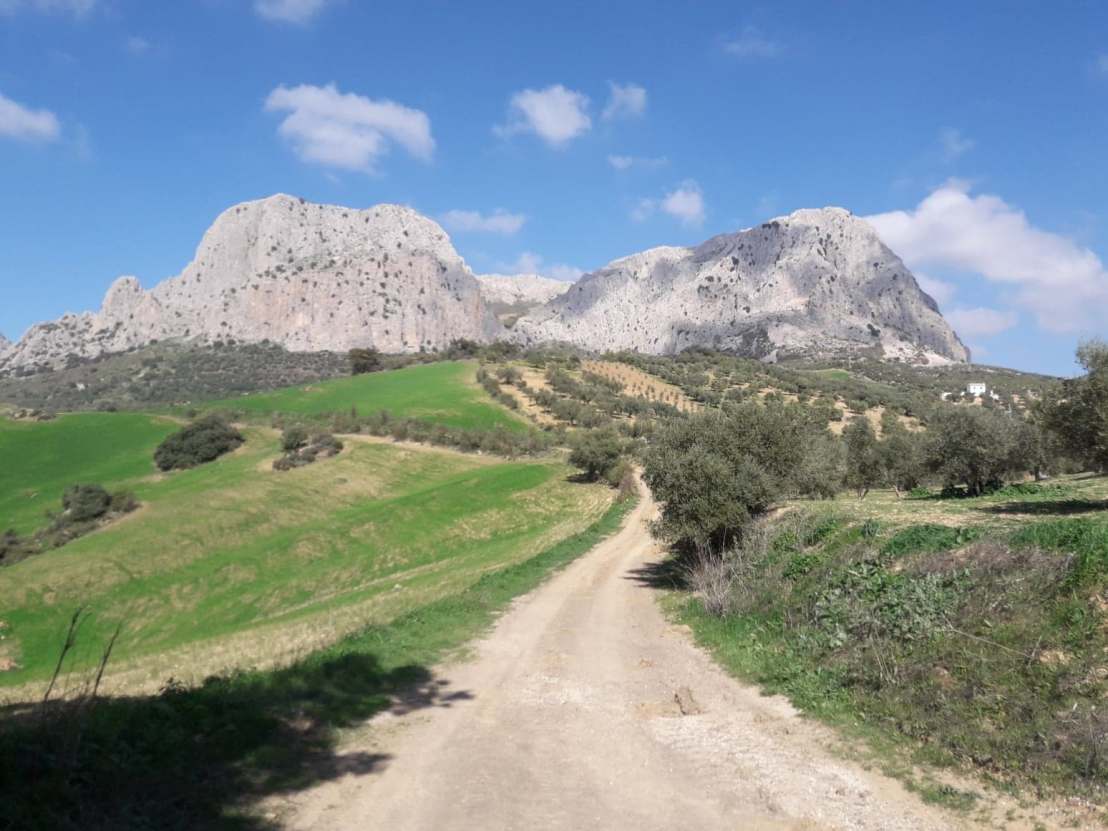
From the last drop off location, we all walked the first stretch through scrubby terrain with holme oaks and some abandoned road works. Here Gill, Arfy and Chica turned back, Chica looked pretty miffed. Me and Merlin carried on over a rise and down into the next valley.

A long walk along the valley followed, heading east and steadily climbing past a goat farm and some derelict buildings. The temperature was climbing too and we stopped for water and a rest. Hearing a low buzzing, I spotted hundreds of bee hives hidden in valley below.

The rough track was now very exposed with more goats and olive groves. We were both very hot and I was getting worried; we were short of water and Merlin was looking a bit weary. Eventually we found a hole dug to pump water to crops so he was able to drink.

The village of Serrato had no bars or shops but we found a wrought iron bench in the shade by a fuente (fountain). I brewed up coffee whilst Merlin drank and ate treats and was quickly revived and happy again. A local farmer turned up to fill his water flagon and told me how good the water was, knocking some back to prove it. After a halting conversation in Spanish he walked off, but then came back to give me directions for the GR7. What a gent!

Rehydrated, we hiked out of village then up and up into the hills to a wonderful camp site above the tree line with great views in every direction. Merlin was very alert and on guard. Bolognese noodles for my supper, and chicken and treats for Merls. Absolutely knackered, everything aches!

Day 14

Made coffee at 8am then went back to the tent to do physio exercises, listen to my audio book and luxuriate in the quiet. Merlin also very chilled. Set off at 11 feeling fairly fit and strong as we climbed steadily.

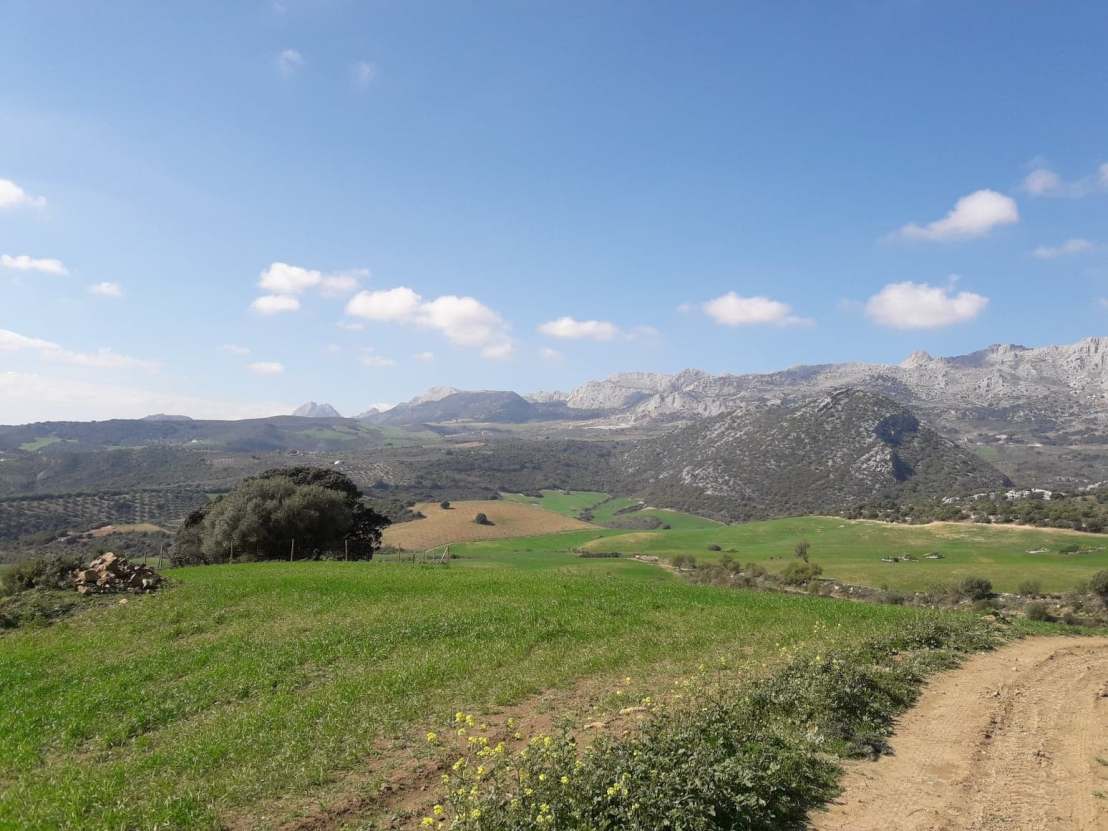
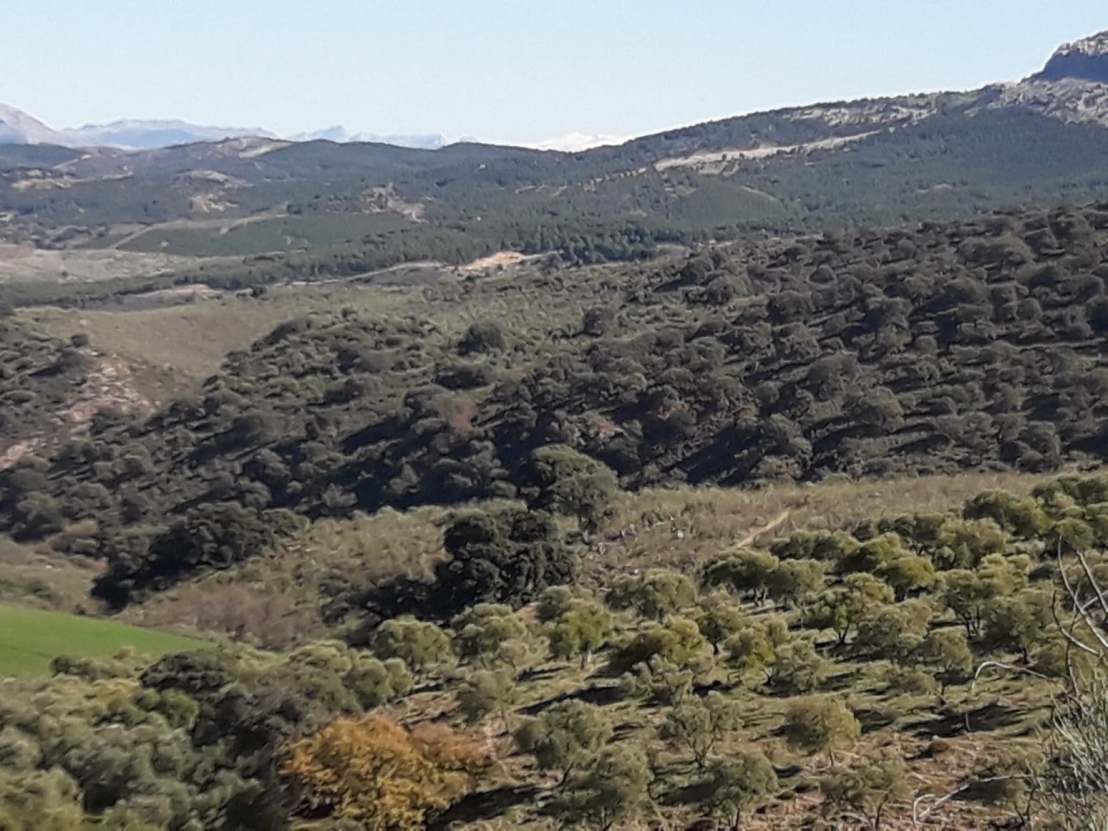
The Sierra Nevada came into view as we followed the washed out track. It then turned downhill out of pine trees towards open farmland, passing farms with more goats, free range and intensive chicken buildings and cultivated land.

There were fields of regimented rows of olives and blossoming almonds, and the sound of chain saws at work trimming and thinning the olives. It was now very hot and exposed, and water was at premium again. We were very grateful to reach the outskirts of Ardales and a welcome water tap by a shady stone seat.

Some friendly locals asked what I was doing and then directed me to a bar for food. Unfortunately, it was closed but we continued out of town to Hotel el Cruce for lunch. It was 3pm and 28deg.

Beer, olives, bread, fish and chips, coffee and cookie for €13.50. The lovely waitress filled my water bottles and it was with some reluctance that we went on our way at around 4pm. Another 1k on the road then upwards again on tracks for two hours to find an excellent camping spot with views in all directions. Merlin is getting into this camping lark! El Chorro tomorrow!

* Final location WTW bath.wrenches.presets

ooOOoo

The two photographs of Merlin are terrific. As Gilliwolfe writes:

Merlin is a tough little Patterdale and is loving being on the trail. He is getting on for nine years old so we didn’t really think he’d manage. But looks like we were wrong.

I know I am repeating myself but so what: The photographs are stunning!

More tomorrow!

Day Twelve of Tom and Chica’s walk

It continues to be perfect!

Once again, it is my pleasure to republish this and, as usual, it is taken from here.

ooOOoo

Day 12: Arriate to Cuevas del Becerro 10k

By Tom and Chica, 31st January, 2020

Written by Tom’s wife.

Day 12 saw a late start as Tom headed for the station with Chica for the 12.50 train. Again, no problem boarding with a dog. The guard even ruffled her ears as he collected the fare.

After a quick coffee in Arriate, the trail headed out into the countryside past large chicken sheds, piggeries and posh houses, one still apparently celebrating Navidad!

They reached the railway station at Parchit, all of which remains is the platform. The station house and bar were gone and a new road was in the process of construction. Nosing around here, Tom spotted a very grand entrance to a vineyard. Oddly here, gates are one extreme or another; either grandiose like this one or an old bedstead wired to a pole or even more rustic, a couple of strands of wire held up by small branches. You very rarely see a common-or-garden functional gate.

The route turned into a delightful country lane and with Chica breaking trail, still heading north-easterly, they continued through mostly holm oak and olive trees. Eventually meeting the main road they found the path ran alongside so they chose to keep to one a bit further away. Here stonemason Tom was happy to see a beautifully constructed dry stone wall, not unlike those seen at home on the Mendip Hills.

As the sun was going down, around 6pm, Tom texted to say they were somewhere on the A367. Fortunately, the What Three Words location (built.orangey.juicy) was more accurate and I was there shortly afterwards. Home before dark.

ooOOoo

It hardly seems relevant for me to add some words at the end. The description of the walk stands up on its own.

But what I will say is that there is another episode tomorrow!

Day Eleven of Tom and Chica’s walk

What can I say but it’s beautiful!

Coming up to two weeks and thanks to Tom and Gilliwolfe we, too, have shared every step of the way. As usual, taken from here.

Enjoy Day Eleven!

ooOOoo
Day 11: Indiana to Arriate 14k

By Tom and Chica, 30th January, 2020

Written by Tom’s wife.

After her two day camping adventure, we gave Chica a day off and once again Merlin stepped into the breach. Also, Synnove, our lovely neighbour here in Jimera was going along for the day.

Starting from Indiana and heading towards the city of Ronda, this was gentler country of pasture and olive orchards. The cliffs that surround the city drew nearer and seemed particularly impressive when viewed from below.

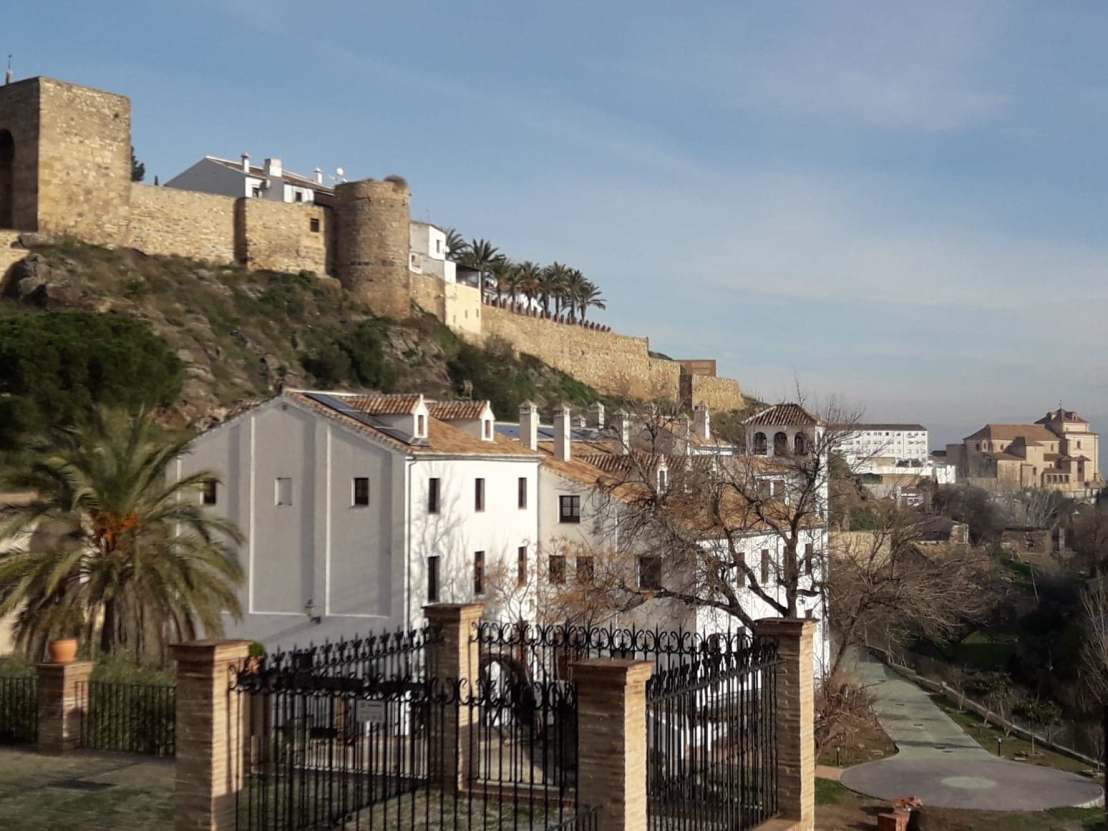
A steep winding path took them up to the top of the cliffs and into the old town. They crossed the famous Puente Nuevo bridge which separates the ‘new’ town built around the 12th century from the ancient Moorish old town. The view is spectacular and you have to jostle for position the get the essential ‘me on the bridge in Ronda’ pic.

After a coffee here, they headed to the top of the town, past the railway station, through the industrial area and back into the countryside. Merlin took all this in his stride and it became clear that he was the better option for the urban parts of the journey. Chica would have found this quite stressful.

After a slight map reading error leading to an unscheduled tour of the surrounding area, they resorted to GPS and found their way back to the route, which headed north-east towards Arriete. The going was easy; tarmacked road though cultivated fields and grazing land. Every property here seems to be guarded by a gang of barking dogs and most have ‘Beware of the Dog’ signs of varying degrees of crudity, but this one was rather good, they thought.

Reaching Arriete, they headed to the station. Technically, dogs are not allowed on trains in Spain but we have managed to take ours a short distance by looking pathetic and saying “No entiendo” (I don’t understand) a lot. This was unnecessary here as the lady in the ticket office was clearly a dog lover and made a huge fuss of Merlin. We’ll see if they’re as lucky tomorrow when Tom and Chica try and get the train back to Arriate. Then I can have a lie-in!

ooOOoo
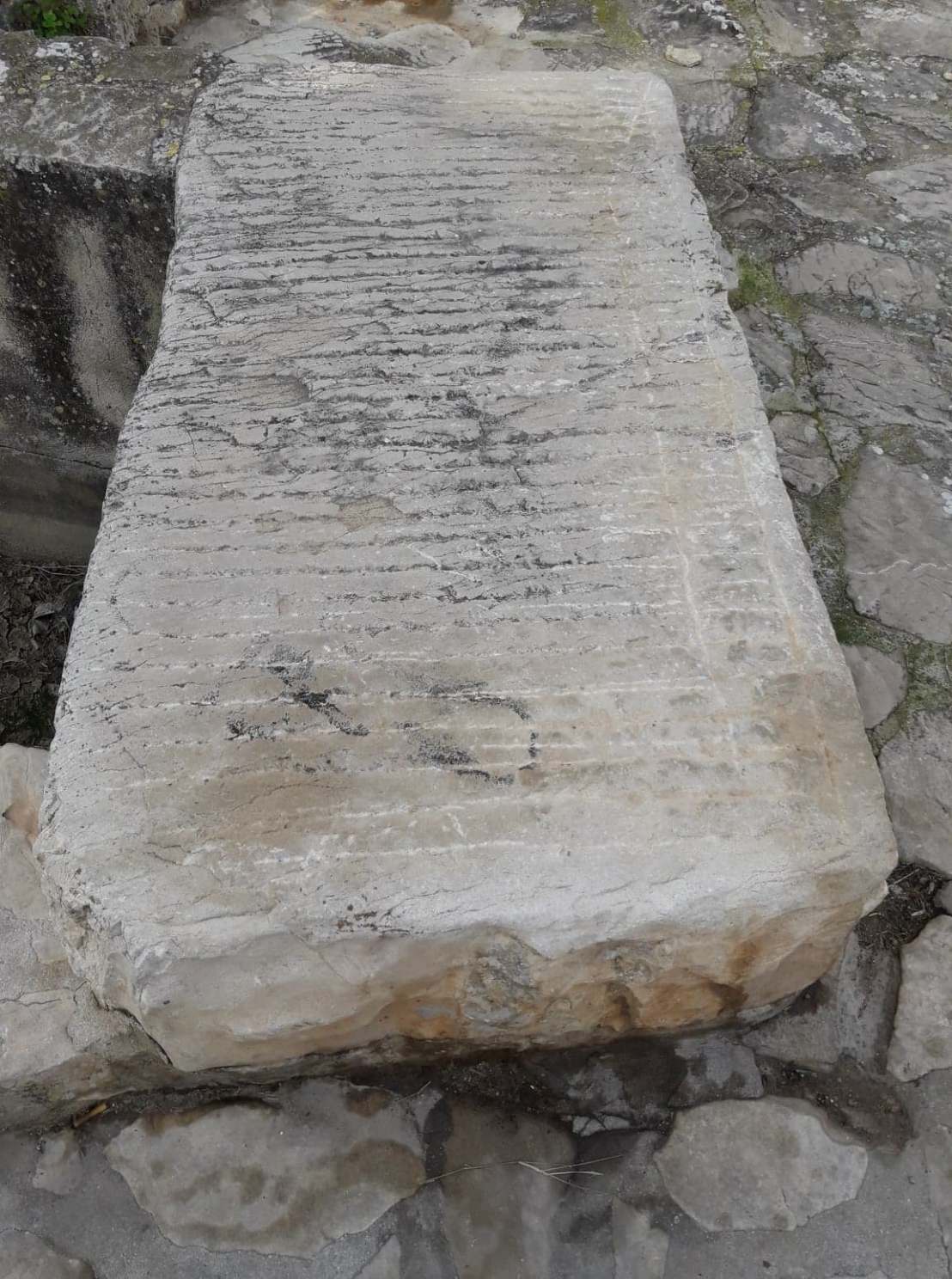
I love that about putting the dog on the train! 🙂

Just a small but fascinating item on this amazing walk. The walk along GR7.

Keep it coming, Tom!

Day Eight of Tom and Chica’s walk

Now it gets very interesting!

This is a longer post and with great interest.

For it covers the Park at Los Alcornacales as well as the Spanish cork industry.

As always, the post is a republication of the original and is gratefully offered to my readers.

ooOOoo
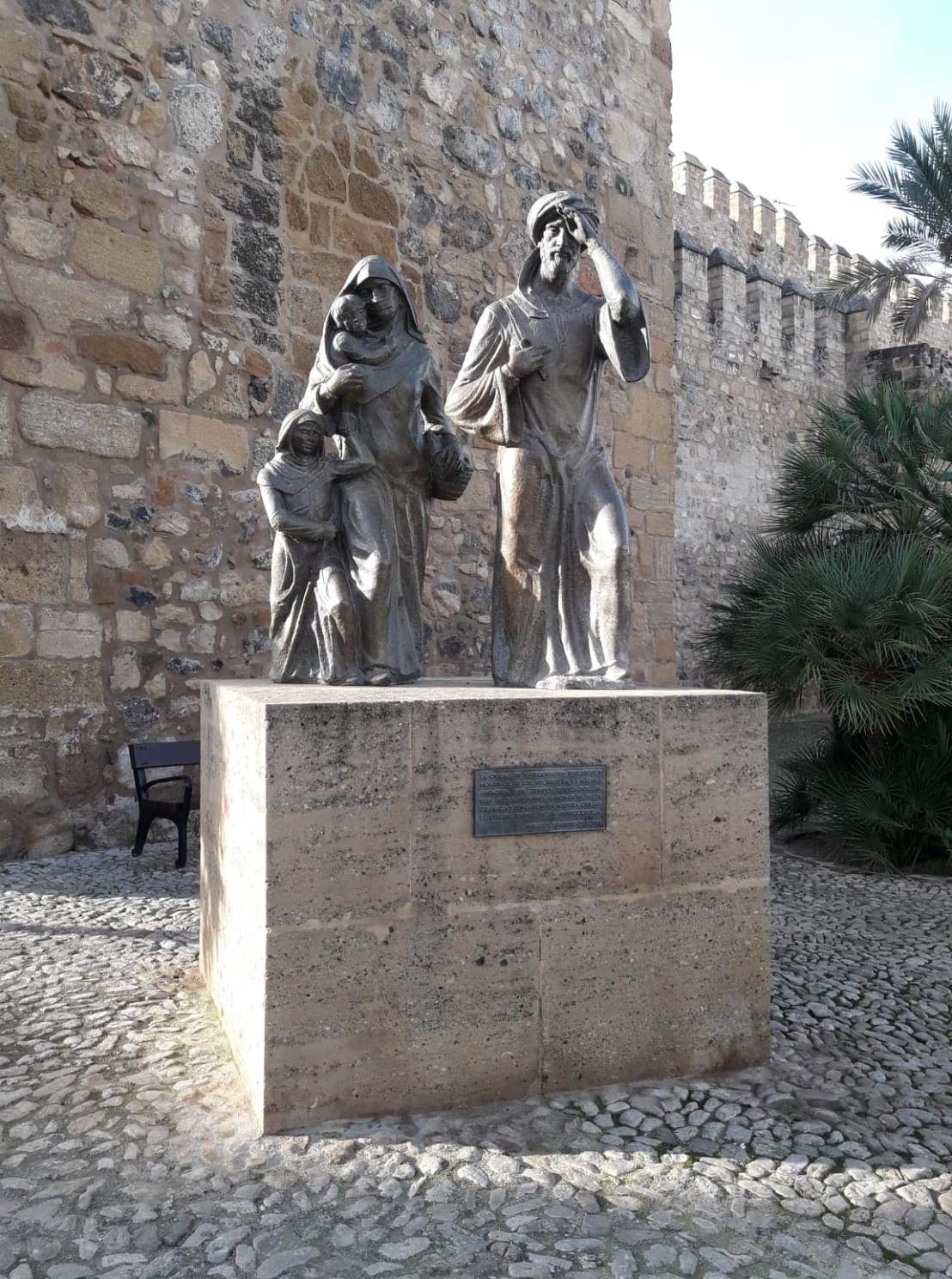
Los Alcornacales – cork and pork and much, much more.

By Tom and Chica, 24th January, 2020

Written by Tom’s wife.

So far, during this part of the walk, Tom and Chica have been travelling through the unique habitat of Los Alcornacales. We fell in love with this beautiful area the first time we visited back in 2013. As we are rained off at the moment, I thought I’d take the opportunity to research more about the area, especially the amazing cork oaks which comprise large areas of the forest.

 Granted natural park status in 1989, Natural Park Los Alcornacales occupies a protected area of 170,025 hectares in Andalusia. Soil, moisture and traditional uses have been the main factors in the conservation of the largest productive area of cork trees anywhere on the Iberian Peninsula. Located in the province of Cadiz and part of Malaga (mainly in the municipality of Jimena de la Frontera, where we have just been walking), it runs from the mountains down to the recently created Estrecho Nature Park on the coast and is home to a variety of landscapes, flora, fauna, history and folklore.

This rich diversity is mainly due to the many rivers, streams and reservoirs but also the moisture that comes from the coast. This latter accumulates to form banks of mist in the deep, narrow gorges known as ‘canutos’. In these conditions, the ancient laurel forest flora has flourished. Characterised by smooth, bright leaves, it can make the most of the moisture and limited light that penetrates the alders growing on the edge of the gorges. So, amidst the scent of laurel and the beauty of flowering rhododendrons, you can walk through this dense forest accompanied by the sound of dippers, kingfishers, blackcaps and finches.

Egyptian mongoose
Griffon vulture

In the more clay-rich areas lower down you can see the wild olive tree, cleared from time immemorial to make way for pasture for the region’s most typical livestock, the brown Retinta cow. On the valley sides, the Mediterranean scrub of rockrose, heather, lavender, daphne and hawthorn is perfect for Andalusian deer, as well as buck, roe deer and carnivores such as genets, badgers and also the Egyptian mongoose – the largest population anywhere on the Iberian Peninsula.

Cork production

Los Alcornacales and the surrounding areas are home to the Iberian cork industry. As well as its most well-recognised use as bottle-stoppers, cork is also found in many products from car construction to aeroplane insulation.

The cork oak, quercus suber, is a native of both the northern and southern shores of the Mediterranean. Its age is unknown, but quercus suber or its ancestors have been around for at least 147 million years. It is a prophyte, ie a species adapted to survive fire. While other species rely on seed propagation to survive fires, the cork layer protects the stem of the tree so it only has to regenerate branches. This makes it very well adapted to the fire-prone forest of southern Spain.

Archaeologists have found evidence of tribes actively working with cork oak in northern Africa before 6,000 BC. Early man would have used the various species of oak for fire wood, tools, weapons; and for building as the hunter-gatherers began to settle. Similar evidence has been found in Andalucía and other parts of southern Spain dating back 4,000 years BC or more.

However, it would take a few thousands more years before the special sealant qualities of cork would be utilised. This property is due solely to the presence of one particular constituent: suberin. Suberin is a fatty substance found in the cells of the denser forms of cork which stops the passage of air or liquid.

Cork was probably first used as a sealant in containers by the Greeks and Phoenicians, for wines and other liquids in pottery containers but it would take the invention of the glass bottle, a fairly recent innovation in historical terms, for cork to finally meet glass. Legend claims that Friar Perignon, a French monk, discovered this use for cork on a slender glass bottle neck in the seventeenth century. As news of its efficacy spread, so a new industry appeared.

Cutting the cork is a highly skilled task and requires two years training. It is unusual for a tree to survive ring barking (the bark being removed around the complete circumference) and it needs to be done with care and at the right time. The cutters’ experience tells them how far to cut up the tree to avoid harming it.  Cutting is only legally permitted between 15 June and 15 August which is when gangs roam the oak forests, each of the usually five members having a specific role, from chief cutter to lowly carrier.

These gangs traverse the forest in a nine-year cycle, allowing the trees they cut to regenerate the cork in the intervening period. Their mules roam free in the forest except for the two month harvest period when they trek back and forth between harvest site and cork factory. So expert is their knowledge of the routes that, once loaded, a tap on the back will send them off unaccompanied. The town of Cortes de la Frontera actually holds burro-loading contests at its annual summer feria, with a prize for the most ingenious loading of a burro.

What we see lying curled on the ground is still many stages away from fitting into the neck of a bottle. At the factory the cork is boiled in a vast, deep pool of water, which renders it malleable for flattening and then processing by machine. The cork then goes through several levels of compression, depending on its destination. It emerges as very thin sheets of varying sizes, perhaps thinner than a child’s little finger. It is then checked for quality – the oak trade has five levels, from excellent to poor – and the oak is assigned to an appropriate use.

Most interestingly, however, is how it does reach the bottles we uncork. Bottle corks are stamped out by machines at different widths for wine, champagne and cognac (Spanish cork is treasured by French brandy producers). When they pile up in the dumpers beneath the pressing machines, they look like big wooden pennies. These are graded by quality, and then carefully fed into further compressing machines. Cork makers reckon that it would be a waste of good cork to use it throughout a wine or champagne cork, so lower quality cork is placed in the middle, highest quality at either end, where the cork meets both wine and outside air. These layers are then compressed so tightly we do not even notice that a cork we pull is not one single unit but a compression of up to eight layers crushed together. The finished corks are then dispatched to bottling plants across Europe and beyond.

There have, of course, been concerns about the rise of the plastic cork. Its proponents say that it prevents a bottle being ‘corked’, ie, spoiled, by air penetrating the old-fashioned cork. Its detractors argue that, beyond the aesthetics of levering a wad of white plastic out of your favourite wine, it doesn’t allow the alcohol to breathe naturally. (French brandies breathe so profusely that the distilleries are wreathed in fumes which promote fungi on the roofs and keep nearby cattle happily sozzled year-round.) Yet with even the British supermarket buyer seemingly moving upmarket in their choice of corked drinks, and the Spanish and French keeping their noses in the air over plastic stoppers, it seems the Iberian peninsula can hold on to its two billion euro cork industry yet.

Other uses for cork include flooring. We have some of this in our bathroom at home. A long way from the basic dull cork tiles of old, now it comes in stunning patterns and looks beautiful. It is also sustainable, provides excellent insulation and is lovely and warm to walk on. If I could, I’d floor the whole house with this.

Iberian pigs

The Iberian pig is a traditional breed of the domestic pig (Sus scrofa domesticus) that is native to the Iberian Peninsula and is currently found in herds clustered in the central and southern part of Portugal and Spain. Its origins can probably be traced back to the Neolithic, when animal domestication started.

The most commonly accepted theory is that the first pigs were brought to here by the Phoenicians from the Eastern Mediterranean coast, probably along the old droving tracks one of which our route, the GR7, roughly follows. They interbred with wild boar and this cross gave rise to the ancestors of what are today’s Iberian pigs.

Prized Iberico ham

The production of Iberian pork is deeply rooted to the Mediterranean ecosystem. It is a rare example in world pig farming where the pig contributes so decisively to the preservation of the ecosystem. The Iberian breed is currently one of the few examples of a domesticated breed which has adapted to a pastoral setting where the land is particularly rich in natural resources, in this case acorns from the holm oak, gall oak and cork oak.

The numbers of the Iberian breed had been drastically reduced since 1960 due to several factors such as the outbreak of African swine fever and the lowered popularity of animal fats. In the past few years, however, the production of pigs of the Iberian type has increased to satisfy a renewed demand for top-quality meat and cured products. Now, though, there is controversy over the providence of the highly prized Iberico ham as breeders cash in on the market and produce a similar but much less sustainable product more cheaply, thus threatening this ancient livelihood.

The Iberian pig can be either red or black or in between. In traditional management, animals ranged freely in sparse oak forest (dehesa in Spain, montado in Portugal).  They are constantly on the move and therefore burn more calories than confined pigs. This, in turn, produces the fine bones typical of this kind of jamón ibérico. At least a hectare of healthy dehesa is needed to raise a single pig. True dehesa is a richly diverse habitat with four different types of oak that are crucial in the production of prime-quality ham. The bulk of the acorn harvest comes from the holm oak (Quercus ilex) but also the Pyrenean oak (Quercus pyrenaica) and Portuguese or gall oak (Quercus lusitanica) and the late cork oak season, which extends the acorn-production period from September almost to April.

Some recent research from Cordoba university concluded {the translation isn’t perfect but you get the idea}:

‘The couple Iberian pig and dehesa has proved to be very effective; so much [so] the Iberian pig is called the dehesa jewel, but the first needs this agro-ecosystem to reach its highest quality properties (organoleptic and nutritional ones); and the second needs a clear commercial differentiation for Iberian pork and cured products in order to receive a high price to maintain and conserve the dehesa. Spanish authorities should be responsible for protecting this traditional system from fraud and unfair competition. In this way, farmers economy could be enough to conserve this unique ecosystem and its values for the whole society.’*

Whether you eat pork or not you may still believe as I do, that this traditional and sustainable way of producing it is better for the ecosystem and the pigs than intensive farming on a huge scale. And we love seeing the black pigs snuffling through the forest. I hope it can be protected along with the rest of this remarkable and stunningly beautiful area.

ooOOoo
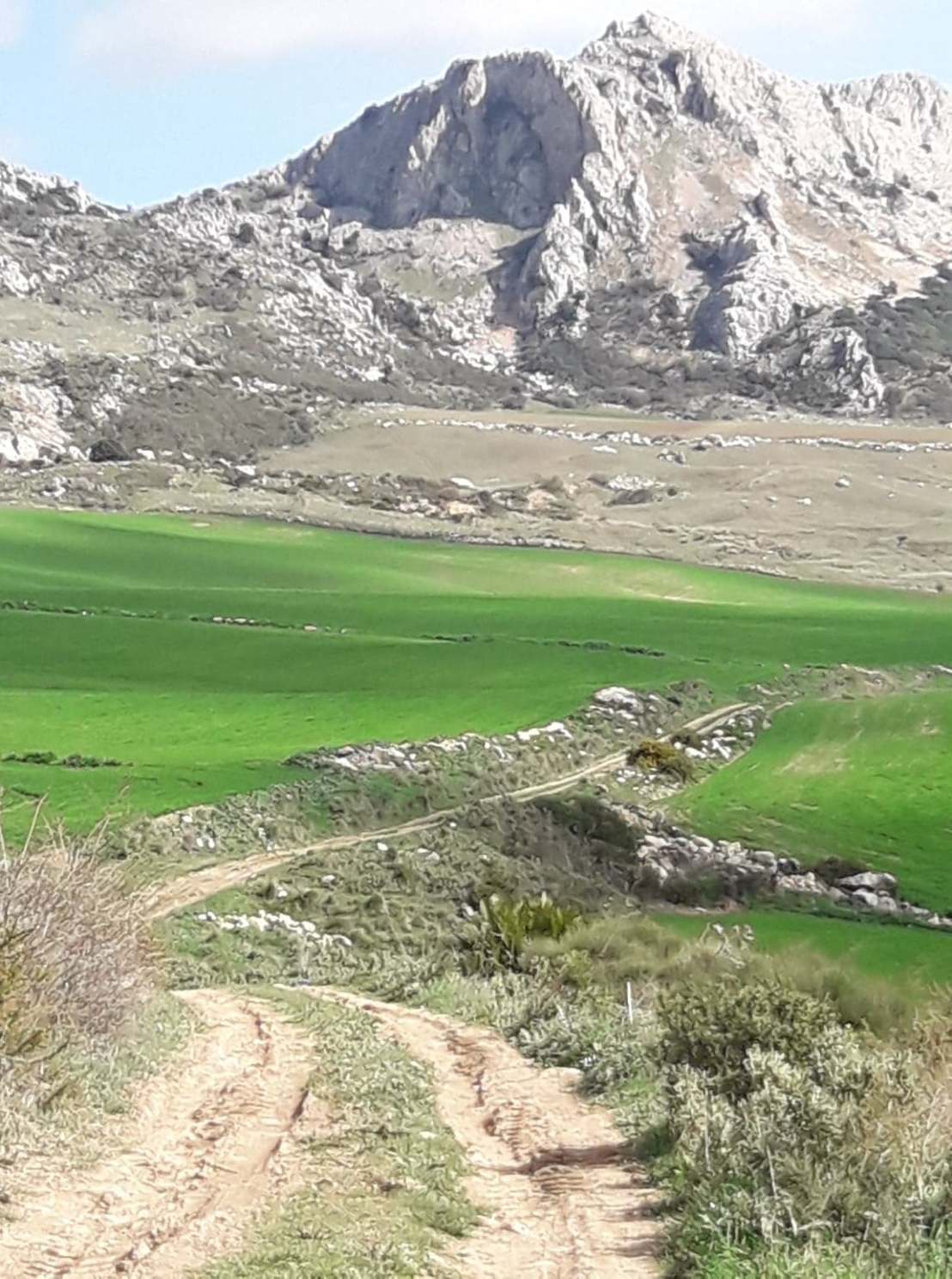
Well I must say that this is a tremendous post and a privilege to be able to republish it.

Gilliwolfe did an incredible job in composing the post and inserting all the photographs. Well done!

Well done!


Day Seven of Tom and Chica’s walk.

I’m republishing three in three days!

I want to get further ahead in the story of this walk and I get the very clear impression that you are in agreement with this.

My readership numbers have been high and there have been no negative responses to the generous offer from Tom and his wife to republish Tom’s long and interesting walk along the Spanish pathway GR7.

So on we go!

ooOOoo

Day 7: Jimena de la Frontera to Cerra de la Fantasia 20k

By Tom and Chica, 22nd January, 2020

Written by Tom’s wife.

The last two days were non-walking days, one for bad weather and another to move base again. Now we have the luxury of being in a house for a while in Jimera de Libar, a village we know well.

So the day started with the drive back to Jimena and the weather looked reasonable. Again, Merlin refused to be left so the three of them set off up the path, climbing steadily for the first hour and a half.

Climbing path.
Spanish Fir / Pinsapo (Abies Pinsapo) in the background

The path eventually levelled out and passed beneath the rocky outcrops of the Altos de Paneron and Cerro de Marin. After a bare rocky sections where the route was harder to determine, they went into dense forest of oak and Spanish fir (we love these and call them lollipop trees because of their shape). Both dogs in great form, but Tom was mean and moody :).

Dark clouds were gathering from all directions but the view to the coast was still impressive. However, it wasn’t long before the rain began and the temperature dropped.

Looking south – you can just see the sea.

Fortunately the rest of the route was on a well-defined and signposted track, winding down through the cork oaks in the midst of the Los Alcornacales. It was here deep in the forest that I eventually picked them up. I had forgotten that smaller Spanish roads aren’t always roads as I know them and the last five and a half miles I was driving along a rough track with no mobile signal, not at all sure I was in the right place. Even though we have a 4×4, I made very slow progress and it was with considerable relief that I found them, damp but completely unconcerned.

ooOOoo
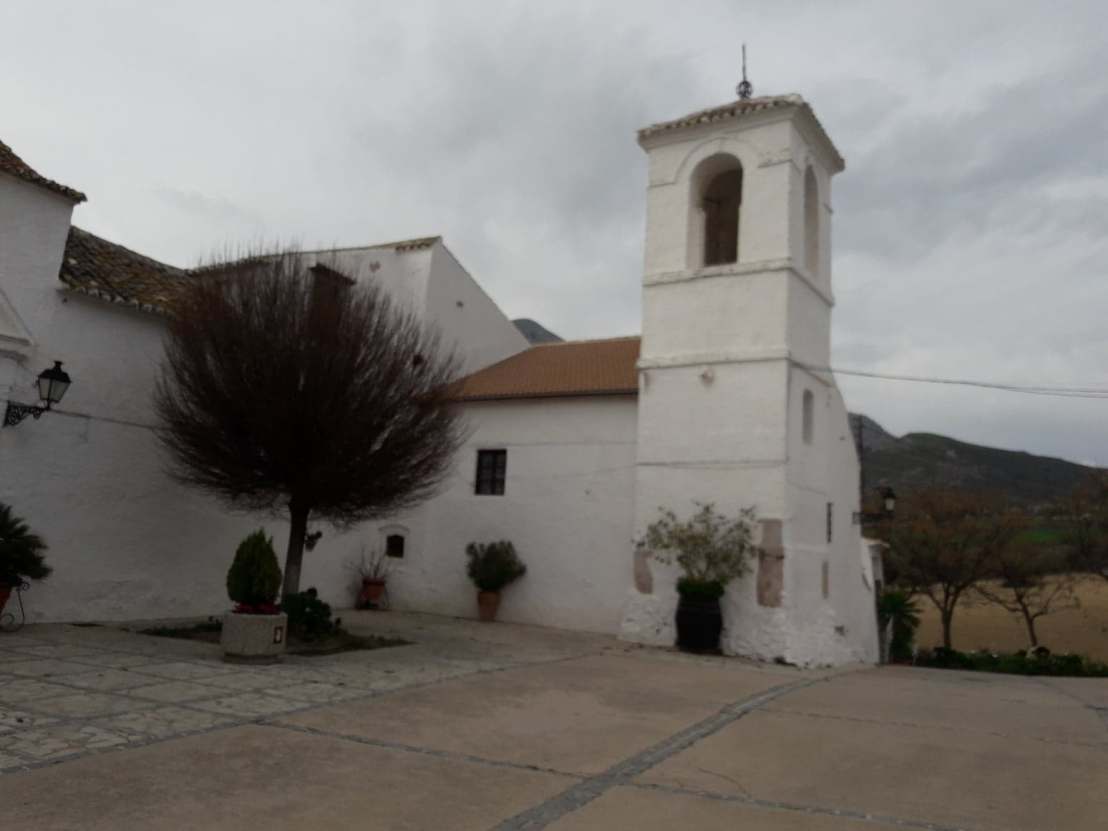
I wonder why Tom felt “mean and moody”? Gilliwolfe doesn’t say.

But it is still a most fascinating walk.

Day Six of Tom and Chica’s walk

The walking tour of Spain continues!

Once more I will keep my introduction very short. Except to say that the original was here.

It’s turning into a fabulous walk!

ooOOoo

Day 6: Castillo de Castellar to Jimena de la Frontera 22k

By Tom and Chica, 18th January, 2020

Written by Tom’s wife.

Today was the longest walk so far and didn’t actually start until late as we decided to shift base. By the time we had the caravan installed on a site in Jimena de la Frontera and I’d driven Tom and Chica back to Castillar it was 2pm. Chica was obviously refreshed after her day off and keen to go. Castillar again looked amazing and it was great to know the start is downhill on a tarmac path through more lovely woodland.

As it levelled out, the tarmac gave way to a gravel track through scrub and grazing land occupied mainly by local brown retinto beef cattle. A huge old farmhouse had seen better days and seemed unoccupied, at least by humans. The scenery changed again as they entered the first cultivated area they had come across since the start. No idea what the crop is though.

The route met up with the railway track and would stay with it all the way to Jimena. There was a pony grazing here. Despite having a rug and being quite friendly, the white hairs on its nose indicate it has been put in a seraton – a noseband with spikes that dig into the soft flesh of the muzzle. These are still used a lot in Spain. Nearby there was a donkey that was hobbled – which is now illegal. Equines get a rough deal here sometimes.

A grand entrance

There were a few dwellings as they approached Jimena – one with a very impressive gate. The shell motif is associated with St James and is a common one on caminos (pilgrim trails) although more usually found on the famous Santiago de Compostela in northern Spain.

The light was fading fast and the last hour or so was done in virtual darkness with Jimena castle luminations acting as beacon to the weary traveller.

ooOOoo

Wonderful. And what a lovely job of writing it all up.

Keep it coming, Mrs. Tom.

There’s no escaping it!

Getting old is inevitable.

Becoming wiser as one ages less so!

I am minded to start today’s post with that reflection because quite simply it was the way to introduce my republication of Wibble’s post.

The article is about Dexter and is just lovely. It is called Older or wiser.

Enjoy!

ooOOoo

Older or wiser

By Dexter, February 19th, 2020

I’m sitting here and the rain is drizzling down the window. It’s February, its windy, we’ve had two winter storms in quick succession and they are digging up the road outside my house. Do they not know I am trying to sleep. Even more surprising but equally as joyous, Lenny isn’t trying to bite me. Now if you have read some of my recent blogs, you will know I have been somewhat contemplative. If you are hoping for shenanigans in this article, then I fear you will again be somewhat disappointed. Earlier today I was wondering to myself about becoming older and, apparently, wiser.

Being older is a bit obvious really. I have more grey hair, I eat my dinner more slowly and I don’t need to walk as far as I used to. I’ve even missed scenting rabbits and squirrels according to assorted parents I have been attached to when these alleged missed sightings have taken place. I can still play bitey face with Lenny, and give him what for, but I tend to duck out of said prolonged snout jousting after a short time. Being beagles we are docile chaps and even when we are in full cry with sofa covers flying around, furniture being rearranged and rugs being ruffled, we manage to stop for a breather on fairly regular occasions. Sometimes it takes a parent stepping in between us to remind the warring parties that its time for a break but, on the whole, we tend to cease and desist quite readily. I am then happy to retire to one of my six or so beds to snooze. However Lenny seems to have a little extra bounce in his paws although I think that is because he is around eighteen months old and I am, allegedly, going to be ten next birthday. No one truly knows how old I am due to me being a rescue but the wise money is on nearly ten now. I am happy for him to run around a little longer, chew what remains of one of my toys and then fall asleep on the sofa. Usually this is interspersed with trying to bite me but again, being docile, I try and fend him off without sending clear signals that I just want to rest.

Older?

As for being wiser, I don’t really know what that entails. If it means that I have seen things, been places and done stuff, then yes I am wiser. If it means that having done said activities, I have learned from the experiences, then not necessarily. For example I have been on the tube and train to London quite a few times, however I still want to investigate what those wonderful smells are down on the track. Thank goodness for a lead and attached human apparently. Another example, is that I have lived here for seven Christmases and, despite the jolly red faced man delivering me many wonderful things but nothing closely resembling a pizza tasting gift, it is wrapping paper I am still fascinated by. I can’t eat it, I know I can’t, but does it stop me from trying? Of course not. Many winters have I seen here, many dirty puddles have I walked through in a Moses style and many times have I been told “Dex, no, ugh good grief you look like the Creature from the Black Lagoon”. Does it stop me stomping through puddles in the most triumphal fashion? No, of course not. I have stopped chasing pigeons in the garden and that’s not because I am banned from the garden. Far from it, for I merely allow my protege to chase them for me. Young whipper-snapper legs are faster than these old bones of mine. I have stopped chewing my toys to a misshapen soggy jumble of fabric, with an accompanying scene of death and destruction wrought across the rugs. Again I leave the dental lobotomisation of toys to Lenny, as he seems to have picked up the baton fairly quickly and extremely proficiently.

Wiser?

If growing older and wiser means seeing things, going places, enjoying the view, smelling more flowers and generally knowing that I should take my time to appreciate and immerse myself in all the things I rushed to see previously, then I am older and wiser. I still have adventures, I still walk and pull on the lead, stick my head down rabbit holes and try to climb the banks along the lanes and byways I explore. I still look in awe at the beauty of the countryside I visit, gaze at the buildings and people in the city. But I let it sink in now, I actually look at what is in front of me and then usually fall asleep soon after, twitching and dreaming. I am trying to pass on my perceived wisdom to Lenny. He is often too busy bouncing around, trying to sniff everything, meet every fur and being a very lovable pest in as quick a time as possible. I see much in Lenny that I had in my youth and this gives me a warm feeling. I hope I can help him to understand that, at some point, he will sit and watch the world go by, with a peace and calmness that I seem to be achieving more often.

Who knows, maybe that is the secret to being older and wiser.

ooOOoo

Just read that last paragraph again. Especially the first sentence: “If growing older and wiser means seeing things, going places, enjoying the view, smelling more flowers and generally knowing that I should take my time to appreciate and immerse myself in all the things I rushed to see previously, then I am older and wiser.

In my opinion dogs do this so much better than we humans. Yet another lesson to be learned from dogs!

Because both for dogs and their human friends, it’s only a matter of time!

A further word about natural supplements

Stick to the major brands and you should be alright!

Following my republication of the article in The Conversation two days ago, I have now come to a conclusion. That is that if one sticks to major brands or supplements made in the USA then one should be perfectly safe.

Margaret of Tasmania made a recommendation to use ConsumerLab.com and it appears a brilliant suggestion.

Day Five of Tom and Chica’s Walk

Seeing parts of Spain that the tourists rarely see.

Again, I’ll keep my introduction really short. After all you came here to read of Tom and Chica’s walk along GR7.

ooOOoo

Day 5: Castillo de Castellar (new town) to Castillo de Castellar (old town and castle) 14k

By Tom & Chica, 17th January, 2020

Written by Tom’s wife

After his adventure yesterday, Merlin was up early this morning bounding around shouting ” Me! Me! Me!” Chica opened one eye (she’s not good in the morning) and made it clear that she was happy for him to deputise for her today. She had a lie-in while Tom and Merlin headed back up to Castillar and as you can see, later she helped me deal with her social media fans!

Day 6 started as day 5 ended, by the road. This proved less hazardous than the next section which was on a track by the main road along which groups of lycra-clad cyclists flew in both directions. It was with relief that T & C were able to turn onto a lovely quiet road that wound through the oak forest towards the castillo (castle) high on a rocky outcrop ahead.

Inviting paths
Inviting paths

After a few kilometres, a very inviting track appeared to the right of the road and despite the marker not being for the GR7, Tom couldn’t resist, wanting to be off tarmac for a while. A bit further on, a post bearing the red and white stripes of the GR routes was a welcome sight and the path through the wood was cool and easy on the feet (all six).

A short cut.
Yay, A cold beer after a steep climb.

The path eventually came back out onto the road and the castle could now be seen high above. As it started to climb, the road also started to wind so Tom thought he’d try and cut off the corners. But we all know that cutting corners rarely works and sure enough, he soon had to retrace his steps. Eventually, a cobbled path did appear but it proved a steep slog. Plucky little Merlin who’d been trotting along happily up until now started to flag. His tail had been vertical all the way but now began to droop a little. Both were very pleased to see the bar at the top.

The castle
Information sign.

It is beautiful spot with wonderful views and the history of the village goes back to the Bronze Age. The prehistoric presence is still evident in the many caves around the area, where enthusiasts can see the wonderful cave drawings. It played an important role in the wars between the Spanish and the Muslims. In such an advantageous strategic position, many cultures wanted to control this strong vantage point.

In the 1960s the new town, where we started today, was built 7 km away in a more convenient location next to the road and the train station. This new model Andalucian town was inaugurated in 1971.

Two years later the Rumasa Group acquired the old village and in 1983 the Spanish government expropriated Castellar and declared it an ‘Historical and Artistic Monument’. By this time, the place was in a state of neglect and the Town Hall invested the equivalent of around £100,000 to restore the old castle and village.

If you ever find yourself in this part of Spain, we strongly recommend a visit.

ooOOoo

I can’t do any better than to repeat what I said after the last:

Keep it going, Tom. For the description of your walk is very engaging. To be honest, it is Tom’s wife, Gilliwolfe, who deserves as much credit. For without her then we would not be reveling in Tom’s walk.


What to make of natural supplements

Yet another dog-free post!

I read this a few days ago and vowed to republish it in this place. Because I had assumed that supplements were safe to take. This copy of a recent article in The Conversation suggests otherwise.

Read it and then let me know your thoughts.

ooOOoo

Natural supplements can be dangerously contaminated, or not even have the specified ingredients

February 14, 2020 5.23pm EST. Updated February 17, 2020 5.43pm EST
By Professor Michael White, Professor and Head of the Department of Pharmacy Practice, University of Connecticut

Some supplement products contain substances that are harmful. Getty Images / David Malan

More than two-thirds of Americans take dietary supplements. The vast majority of consumers – 84% – are confident the products are safe and effective.

They should not be so trusting.

I’m a professor of pharmacy practice at the University of Connecticut. As described in my new article in the Annals of Pharmacotherapy, consumers take real risks if they use diet supplements not independently verified by reputable outside labs.

What are the risks?

Heavy metals, which are known to cause cancer, dementia and brittle bones, contaminate many diet supplements. One study of 121 products revealed 5% of them surpassed the safe daily consumption limit for arsenic. Two percent had excess lead, cadmium and aluminum; and 1% had too much mercury. In June 2019, the Food and Drug Administration seized 300,000 dietary supplement bottles because their pills contained excessive lead levels.

Bacterial and fungal contamination in dietary supplements is not uncommon. In one assessment, researchers found bacteria in all 138 products they investigated. Toxic fungi were also in many of the supplements, and counts for numerous products exceeded the acceptable limits set by the United States Pharmacopeia. Fungal contamination of diet supplements has been linked to serious liver, intestinal and appendix damage.

From 2017-18, dozens were hospitalized with salmonella poisoning after ingesting kratom, a highly addictive natural opioid. Thirty-seven of the kratom products studied were contaminated.

There are ways consumers can verify the quality and safety of supplements. Getty Images / Tanya Constantine

Some dietary supplements contain drugs, yet the manufacturers don’t disclose that information to consumers. Frequently, the concealed drugs are experimental and, in some cases, removed from the market because they’re dangerous. Hundreds of weight-loss, sexual-dysfunction and muscle-building products are adulterated with inferior or harmful substances.

Sometimes, the herb you think you’re buying contains little to no active ingredient. Occasionally, another herb is substituted.

The consequences for consumers are considerable. When manufacturers replaced the herb Stephania tetrandra with the herb Aristolochia fangchi in 2000, more than 100 patients developed severe kidney damage; 18 more got kidney or bladder cancer. Although the herb is now banned by the U.S., a 2014 investigation found Aristolochia fangchi in 20% of the Chinese herbal products sold on the internet.

In an assessment of CBD products, only 12.5% of vaporization liquids, 25% of tinctures and 45% of oils contained the promised amount of CBD. In most cases they held far less. A few CBD products had enough THC to put the user in legal jeopardy of marijuana possession.

Embarrassed by a New York Attorney General’s Office investigation suggesting widespread and fraudulent under-dosing of active ingredients in dietary supplements, CVS pharmacies analyzed 1,400 products that it previously sold in its stores. Seven percent, or about 100 products, failed, resulting in updates to the supplement facts panel or removal of the product from shelves.

It can be difficult for the FDA to adequately oversee supplements. Associated Press / Andrew Harnik

What should consumers do?

The Dietary Supplement Health and Education Act of 1994 allows manufacturers to sell dietary supplements without providing proof of their quality to the FDA. Instead, it’s up to the FDA to prove a product is unsafe and take it off the market. That’s an incredibly tall order, and woefully inadequate. But it’s unlikely to change.

In the meantime, I recommend that consumers should not purchase supplements without verification from one of three highly regarded independent laboratories: the aforementioned United States Pharmacopeia, NSF International and ConsumerLabs.com. The United States Pharmacopeia is an organization that sets reference and quality standards for prescription medication and food in the U.S.; the NSF International is an independent group that assesses safety and risk for food, water and consumer products; and ConsumerLabs.com is a company started to verify product quality for consumers that are paying members. These laboratories conduct an initial analysis and then perform periodic unannounced assessments of the products; those with the appropriate amount of active ingredient, and without contamination or adulteration, can put the United States Pharmacopeia, NSF and ConsumerLabs.com seals on their bottles. CVS announced that all products sold at its stores going forward will need to provide the company proof of quality. Other major retailers should follow suit.

Some manufacturers conduct quality testing and post certificates of analysis on their websites. But the autonomy of the laboratory, and its standards, are often not known. Sometimes, labs may select an inappropriate testing method, intentionally or unintentionally. Sometimes they perform the test incorrectly, or simply make up results.

Because the FDA can’t fully protect you from quality issues in dietary supplements – at least not right now – you must protect yourself. Even if a celebrity or “health guru” recommends a product, that doesn’t mean it’s high-quality. Before you put any supplement into your body, demand proof.

[Deep knowledge, daily. Sign up for The Conversation’s newsletter.]

ooOOoo

I was about to close it there and then I saw another report, in the same vein, come up on the Harvard Health Blog.  Now I can’t republish it in full but essentially it is a reprint of the above. But here’s a taster:

Harmful effects of supplements can send you to the emergency department

Susan Farrell, MD

Contributing Editor

For many people, a healthy lifestyle means more than eating a good diet and getting enough exercise — vitamins, supplements, and complementary nutritional products are also part of the plan. But though there is much publicity about their potential benefits, there is less awareness of their possible harmful effects.

In fact, using these products can land you in the emergency department.

A study published today in The New England Journal of Medicine found that adverse effects of supplements were responsible for an average of about 23,000 emergency department (ED) visits per year. That’s a lot for something that is supposed to be good for you.

Now we too take a fair handful of supplements.

I’ve stopped all of them while I do more research.

I shall be happy to share our findings.