Category: Health

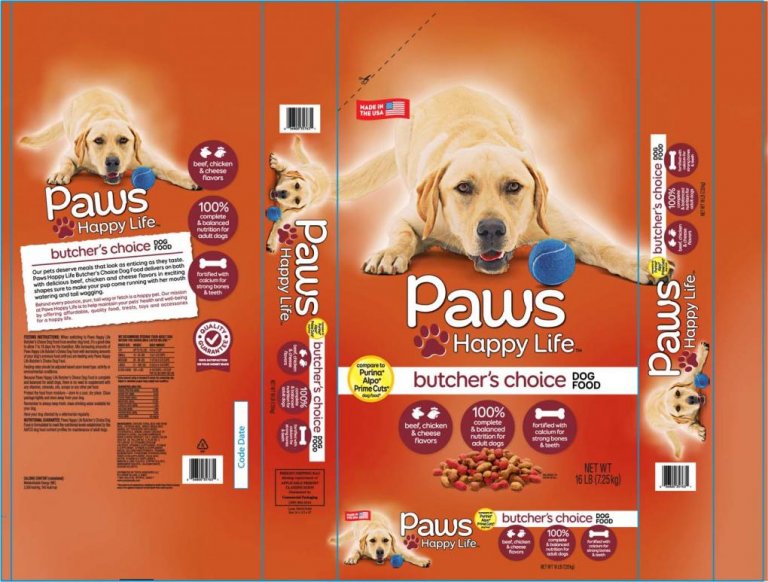
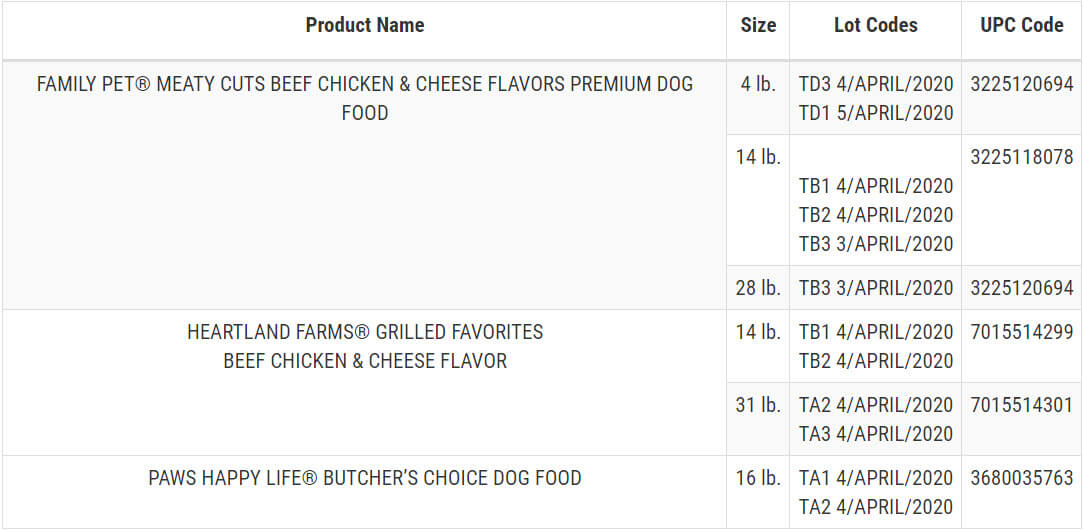
Sunshine Mills recall

Yet another dog food recall!

This came in 9 days ago. I put it in my ‘blog’ file and then got waylaid by other stuff.

Here it is:

ooOOoo


Sunshine Mills Recalls Nature’s Menu Dog Food

August 24, 2020 — Sunshine Mills, Inc. is issuing a voluntary recall of Nature’s Menu Super Premium Dog Food with a Blend of Real Chicken and Quail because it has the potential to be contaminated with Salmonella bacteria.

What’s Being Recalled?

The recalled Nature’s Menu dog foods were distributed in retail stores nationwideand can be identified with the following UPC 7015514363 and UPC 7015514365.

The product comes in a 3-pound bag with the following lot codes:

TE1 20/April /2020, TE1 21/April/2020, TE1 22/April/2020, TE2 20/April /2020, TE2 21/April/2020, TE2 22/April/2020, TE3 20/April/2020, TE3 21/April/2020, TE3 22/April/2020.

The product comes in a 13.5-pound bag with the following lot codes:

TB1 20/April /2020, TB1 21/April/2020, TB1 22/April/2020, TB2 20/April /2020, TB2 21/April/2020, TB2 22/April/2020, TB3 20/April/2020, TB3 21/April/2020, TB3 22/April/2020.

There are no other Nature’s Menu® products or other lot codes of the Nature’s Menu® Super Premium Dog Food with a Blend of Real Chicken & Quail affected by this precautionary recall.

No illnesses, injuries or complaints have been reported to date.

About Salmonella

Salmonella can affect animals eating the products and there is risk to humans from handling contaminated products, especially if they have not thoroughly washed their hands after having contact with the products or any surfaces exposed to these products.

Healthy people infected with Salmonella should monitor themselves for some or all of the following symptoms: nausea, vomiting, diarrhea or bloody diarrhea, abdominal cramping and fever.

Rarely, Salmonella can result in more serious ailments, including arterial infections, endocarditis, arthritis, muscle pain, eye irritation, and urinary tract symptoms.

Consumers exhibiting these signs after having contact with this product should contact their healthcare providers.

Pets with Salmonella infections may be lethargic and have diarrhea or bloody diarrhea, fever, and vomiting.

Some pets will have only decreased appetite, fever and abdominal pain.

Infected but otherwise healthy pets can be carriers and infect other animals or humans.

If your pet has consumed the recalled product and has these symptoms, please contact your veterinarian.

What Caused the Recall?

According to the company…

The potential for contamination was noted after the firm was notified by the Georgia Department of Agriculture when a sample of a single 3-pound bag of the product was collected and tested positive for Salmonella.

The firm conducted testing of multiple samples of the same lot which all tested negative for Salmonella.

Salmonella may not be evenly distributed throughout a lot which is why it could have been found on one sample and not on multiple other samples of the same lot.

However, out of an abundance of caution, Sunshine Mills, Inc. has chosen to issue a voluntary recall of the above-referenced lots of Nature’s Menu Super Premium Dog Food with a Blend of Real Chicken and Quail in furtherance of its commitment to the safety and quality of its products.

What to Do?

Retailers who received the recalled lots have been contacted and asked to pull these lots from their inventory and shelves.

Consumers who have purchased Nature’s Menu® Super Premium Dog Food with a Blend of Real Chicken & Quail from the recalled lots should discontinue use of the product and may return the unused portion to the place of purchase for a full refund.

Consumers may contact Sunshine Mills, Inc. customer service at (800) 705-2111 from 7 am to 4 pm Central Time, Monday through Friday… or by email at customer.service@sunshinemills.com for additional information.

This is a voluntary recall being conducted in cooperation with the U.S. Food and Drug Administration.

U.S. citizens can report complaints about FDA-regulated pet food products by calling the consumer complaint coordinator in your area.

Or go to the FDA’s “Report a Pet Food Complaint” page.

Canadians can report any health or safety incidents related to the use of this product by filling out the Consumer Product Incident Report Form.

ooOOoo

As always, please share this if you can!

That ‘D’ word

And I don’t mean dog!

Still continuing with another dog-free day because this is a supremely important topic: Dementia.

I’m well into my 75th year and have poor recall. I do everything to fight the loss of memory. We are vegan, or technically pescatarian, we both go to the nearby Club Northwest twice a week and I ride my bike every other day.

In the current issue of The Economist magazine there is a special report on Dementia:

As humanity ages the numbers of people with dementia will surge

The world is ill-prepared for the frightening human, economic and social implications

Recently we took delivery of a REDjuvenator because it holds out hope, and is claimed, to offset the more disastrous aspects of ageing.

It’s early days but there are indications that it is doing some good.

So it was with great interest that I read the other day the following article and even more grateful that it comes with permission to republish.

ooOOoo

Does forgetting a name or word mean that I have dementia?

Your medical team should determine whether you have dementia or just normal memory loss due to aging.
Fred Froese via Getty Images

Laurie Archbald-Pannone, University of Virginia

The number of cases of dementia in the U.S. is rising as baby boomers age, raising questions for boomers themselves and also for their families, caregivers and society. Dementia, which is not technically a disease but a term for impaired ability to think, remember or make decisions, is one of the most feared impairments of old age.

Incidence increases dramatically as people move into their 90s. About 5% of those age 71 to 79 have dementia, and about 37% of those about 90 years old live with it.

Older people may worry about their own loss of function as well as the cost and toll of caregiving for someone with dementia. A 2018 study estimated that the lifetime cost of care for a person with Alzheimer’s, the most common form of dementia, to be US$329,360. That figure, too, will no doubt rise, putting even more burdens on family, Medicare and Medicaid.

There’s also been a good deal of talk and reporting about dementia in recent months because of the U.S. presidential election. Some voters have asked whether one or both candidates might have dementia. But, is this even a fair question to ask? When these types of questions are posed – adding further stigma to people with dementia – it can unfairly further isolate them and those caring for them. We need to understand dementia and the impact it has on more than 5 million people in the U.S. who now live with dementia and their caregivers. That number is expected to triple by 2060.

First, it is important to know that dementia cannot be diagnosed from afar or by someone who is not a doctor. A person needs a detailed doctor’s exam for a diagnosis. Sometimes, brain imaging is required. And, forgetting an occasional word – or even where you put your keys – does not mean a person has dementia. There are different types of memory loss and they can have different causes, such as other medical conditions, falls or even medication, including herbals, supplements and anything over-the-counter.

Older people wonder and worry about so-called senior moments and the memory loss they perceive in themselves and others. I see patients like this every week in my geriatric clinic, where they tell me their stories. They forget a word, get lost in a story, lose keys or can’t remember a name. Details vary, but the underlying concern is the same: Is this dementia?

A doctor looks at images of a brain scan.
Your doctor may want to do a brain scan to determine if there are any issues.
Andrew Brookes via Getty Images

Normal memory loss

As we age, we experience many physical and cognitive changes. Older people often have a decrease in recall memory. This is normal. Ever have trouble fetching a fact from the deep back part of your “mind’s Rolodex”? Suppose you spot someone at the grocery store you haven’t seen in years. Maybe you recognize the face, but don’t remember their name until later that night. This is normal, part of the expected changes with aging.

What’s more of a potential problem is forgetting the name of someone you see every day; forgetting how to get to a place you visit frequently; or having problems with your activities of daily living, like eating, dressing and hygiene.

When you have troubles with memory – but they don’t interfere with your daily activities – this is called mild cognitive impairment. Your primary care doctor can diagnose it. But sometimes it gets worse, so your doctor should follow you closely if you have mild cognitive impairment.

You want to note the timing of any impairment. Was there a gradual decline? Or did it happen all of a sudden? This too you should discuss with your doctor, who might recommend the MoCA, or Montreal Cognitive Assessment test, which screens for memory problems and helps determine if more evaluation is needed.

Also, the Centers for Disease Control and Prevention lists problems in these areas as possible signs of dementia:

  • Memory
  • Attention
  • Communication
  • Reasoning, judgment and problem solving
  • Visual perception beyond typical age-related changes in vision

[Deep knowledge, daily. Sign up for The Conversation’s newsletter.]

More severe issues

When memory loss interferes with daily activities, see your doctor about what to do and how to make sure you’re safe at home.

There are numerous types of severe memory loss. Dementia tends to be a slow-moving progression that occurs over months or years. Delirium is more sudden and can occur over hours or days, usually when you have an acute illness. Depression can also cause memory changes, particularly as we get older.

A computer illustration of amyloid plaques, characteristic features of Alzheimers disease.
A computer illustration of amyloid plaques among neurons. Amyloid plaques are characteristic features of Alzheimer’s disease.
Juan Gaertner/Science Photo Library via Getty Images

Dementia and other brain issues

Alzheimer’s dementia is the most common type of dementia, followed by vascular dementia. They have similar symptoms: confusion, getting lost, forgetting close friends or family, or an inability to do calculations like balance the checkbook. Certain medical conditions – thyroid disorders, syphilis – can lead to dementia symptoms, and less common types of dementia can have different kinds of symptoms. Alzheimer’s has a distinct set of symptoms often associated with certain changes in the brain.

Focusing on safety and appropriate supervision, particularly in the home, is critical for all people with dementia. Your doctor or a social worker can help you find support.

It’s also important to be aware of two other things that can lead to decreased mental functioning – delirium and depression.

Delirium, a rapid change in cognition or mental functioning, can occur in people with an acute medical illness, like pneumonia or even COVID-19 infection. Delirium can occur in patients in the hospital or at home. Risk for delirium increases with age or previous brain injuries; symptoms include decreased attention span and memory issues.

Depression can happen at any time, but it’s more common with aging. How can you tell if you’re depressed? Here’s one simple definition: when your mood remains low and you’ve lost interest or joy in activities you once loved.

Sometimes people have recurring episodes of depression; sometimes, it’s prolonged grieving that becomes depression. Symptoms include anxiety, hopelessness, low energy and problems with memory. If you notice signs of depression in yourself or a loved one, see your doctor. If you have any thoughts of harming yourself, call 911 to get help instantly.

Any of these conditions can be frightening. But even more frightening is unrecognized or unacknowledged dementia. You must, openly and honestly, discuss changes you notice in your memory or thinking with your doctor. It’s the first step toward figuring out what is happening and making sure your health is the best it can be.

And, as with any disease or disease group, dementia is not a “character flaw,” and the term should not be used to criticize a person. Dementia is a serious medical diagnosis – ask those who have it, the loved ones who care for them or any of us who treat them. Having dementia is challenging. Learn what you can do to support those with dementia in your own community.The Conversation

Laurie Archbald-Pannone, Associate Professor Medicine, Geriatrics, University of Virginia

This article is republished from The Conversation under a Creative Commons license. Read the original article.

ooOOoo

Please, if you are of the age where this is more than an academic interest then read the article carefully and especially that piece of advice towards the end:

But even more frightening is unrecognized or unacknowledged dementia. You must, openly and honestly, discuss changes you notice in your memory or thinking with your doctor. It’s the first step toward figuring out what is happening and making sure your health is the best it can be.

As is said growing old is not for cissies.

None of us can put off the fateful day when we will die and in our case we do not believe in any form of afterlife, in other words we are confirmed atheists, so all we can do is to live out our remaining years as healthily as possible and loving each other and our precious animals.

But having said that I know that all of us want to live out our lives with healthy, active brains and it’s clear that we can’t leave it to chance.

In closing, I recently purchased the book Outsmart Your Brain written by Dr. Ginger Schechter (and others). It was just $9.99 and contains much advice regarding the best foods and exercise for a healthy brain. I recommend it!

Elizabeth Ann Johnson-Murphree.

For the last day of August a very special post.

I came upon Elizabeth when she left a comment to my post on the 26th August, The science of dog learning.

This is what she wrote:

Reblogged this on The Last Chapter and commented:
Please visit Paul’s website, something new to read and learn each day. Thank you Paul for bringing your site to the blogging world.

Naturally, I replied:

Elizabeth, thank you for leaving your response, and thank you so much for your republication of my post. I read a little about yourself and, I must say, found it fascinating. And your poem The Last Chapter – wow!

Now I will hopefully republish The Last Chapter for another day. (And I have now heard that I have permission to republish it!)

But today, I want to publish the words of Elizabeth in writing about her dear, dear, recently departed dog.

ooOOoo

Mason Murphree

A tribute

Mason Murphee

Mason Murphree was born on January 31, 2012; what can one say about Mason, I bought him off the back of a pick-up truck, only two pups left out of the litter I held both in my hands as they lay upon my chest; one yellow and the other white.  I did not see their mother or father; I was told that the father was Bichon Frise and his mother Shih Tzu.  The white one instantly begins to crawl into my sports bra, nuzzled himself against my warm flesh and I was instantly in love.

I did not believe that he was six-weeks-old he was still wobbly on his feet when trying to walk.  I made him what the old folks call a “Sugar Tit”, a rag rolled on the end tightly and the tip soaked in warm sweet milk.  I fed him laying on his back in my hand for a week, the second week I started him on baby food.  Then, what I thought to be the seventh-week, he begins to walk with unsteady confidence and I thought was ready for the big world around him.

I found quickly that he had a set of razor-sharp teeth, yep, time for the hard bits of puppy food.  I took him to the Vet when I brought him home, and he was given an “A” in health.  But, I am getting ahead of myself.  When I brought him home I sat him on a potty pad he used until he was six-months-old, then he discovered grass.  I might add that in the nine years he was with me he never did his business in the house.

Alas, it was his six-month birthday, and his first time to the groomer, which I found that he had to be calmed down by medicine to get groomed.  It was not too long until the Vet announced that he was out of this world’s atmosphere with anxiety.  He had “MaMa” withdrawal big time when he was not with me.  He would bark for half-an-hour before settling down to wait for me to come back from the store, gym, or anywhere I had gone!  He disliked children, anyone less than teenagers.  He loved every adult he met.  He begins life attached to my hip and me to his.

Mason loved paper products; he would wait patiently to see if anyone would drop a Kleenex, paper towel, or napkin.  The pursuit would begin chasing a four-legged speed demon around the floor, me never winning.  We called him the Tasmanian devil, and he looked like it when he tried to defend his catch of the day.  It was impossible to go on vacation without him; he would stay with one of his two-legged siblings.  Of course, that was only for one day, he would accept his situation for about twenty-four-hours, then once again turn into the Tasmanian devil, the telephones would ring trying to find him another place to stay, he traveled back and forth from house to house until my return.  A chore to his brothers and sisters, but finally he must have thought he had caused enough trouble for me to return home, and he did.

He loved everyone he met except children, let me explain; when he was six-months-old I took him to the park.  On the playground were about a dozen small children, when they spied him, they came running.  He jumped up for me to protect him, and that was that.  He loved his favorite human friends and his family.

He was the best companion anyone could have; his personality was so individual those who would see him thought he would start talking at any moment.  He look intently at you when you were talking, always smiling.  He thought he was a Great Dane when in his protection mode, but a clap of lighting and boisterous thunder would send him under my feet.  He loved to walk; he loved all the trees on his block and several other blocks.

I won’t describe Mason’s death other than it was quick and painless, he got to spend one day saying good-bye to his two-legged brothers and sisters.  We covered our faces and our tears and sadness until we walked away, he knew.  As his MaMa, I watched him go from a lively, wonderful, sweet little dog to one that was holding on to every minute waiting for his family to arrive.  There are not enough words for me to describe the heartache and loneliness with him gone.

My heart feels much like a patchwork quilt, many little pieces sewn back together after being shattered.  Saying good-bye, he took a piece of my heart and soul with him.  I know that I will see him again, that is the only thing I have to hold on to this moment.   And, that is how I am living my life one moment at a time until I see my four-legged fur baby again.  He loved and he was loved.

Sweet dreams little boy.

ooOOoo

How we become so attached to our dogs. Elizabeth not only was beautifully attached to Mason but also wrote perfect words in her tribute.

So who is Elizabeth Ann Johnson-Murphree?

This is her biography but it doesn’t really tell me who she is; in a feeling, living, emotional sense. I suspect one has to read her writings to learn more.

Born in Alabama to a Native American father and an emotionally absent mother.
Raised by her father, her Native American Great-grandmother, her Aunt, and an African-American woman, all magnificent storytellers.  Her childhood was filled with listening to the stories her great-grandmother would tell about the grandfathers and grandmothers that perished on the Trail of Tears, of she and the grandmother living in the slave quarters in northern Alabama.
Aunt Francis needed a home when her son went to prison, she would tell the stories of her parents being slaves and how she survived the Civil War.  Aunt Vina, her father’s sister a fantastic storyteller; she could bring together characters and build a story that would have you at the edge of your chair, only to find it was all fiction.
As a child, Elizabeth ran free in the woods, fields, and the caves below Burleson Mountain where she grew up.  Elizabeth has been writing all of her life, seriously since 2010.  She has published a memoir about her daughter who passed in 2010; a small coffee table book filled with pictures of her precious Mason, and ten books of poetry.  Her poetry is filled with happiness, sadness, spirit, and anger. The memoir is the private life of her daughter, living with bipolar, and schizophrenia.  The books of poetry range from light to darkness that appeared during the creation of each book.

That is a special post, as I said at the start.

I look forward immensely to sharing with you Elizabeth’s poetry.

Picture Parade Three Hundred and Fifty-Two

Smaller than usual but still charming!

oooo

oooo

oooo

oooo

oooo

oooo

Gorgeous!

Haircut!

How hard could it be, really? Just a few snips here and there should do it.

I hadn’t intended to publish a post for today. But then I saw Stephen Messenger’s post over at The Dodo and I thought that it was far too good not to share with you.

ooOOoo

Well-Meaning Mom Decides To Try Cutting Dog’s Hair Herself

“I fell on the floor laughing.”

By Stephen Messenger
Published on 8/15/2020

How hard could it be, really? Just a few snips here and there should do it.

That, apparently, was what one well-meaning dog mom thought when she decided to cut her dog’s overgrown hair herself at home.

And, well, you’ll see how that turned out.

SUSANA SOARES

The other week, Susana Soares was hanging out with her dog, Mano, when she realized his hair had gotten rather overgrown. It’d been a while since Mano had been to the groomers, and his shag was becoming a bit of an issue.

“Hair was getting in his eyes,” Soares told The Dodo.

Mano wasn’t loving it.

SUSANA SOARES

Soares, who’s actually worked as a hair stylist for humans, figured that taming Mano’s unruly mane would be no sweat.

“I decided to cut his hair at home,” she said.

So, Soares grabbed some scissors and got down to business — and this is what resulted:

SUSANA SOARES

Soares had solved Mano’s hair-in-the-eyes issues sure enough.

She gave him bangs — bangs that inadvertently gave Mano a questionable new look.

It was almost as if the little dog had cut his bangs himself. Without a mirror.

SUSANA SOARES

Mano didn’t have to ask Soares how she thought his new ‘do’ turned out.

“I fell on the floor laughing,” she said.

SUSANA SOARES

Did the cut look ridiculous? Yes, of course it did. But Mano’s not vain. He could see clearly again, after all.

“He likes it,” Soares said.

Fortunately, when tussled, Mano’s haircut looks less silly. If only slightly so.

SUSANA SOARES

Despite how things turned out, Soares did have the best intentions — and that’s what matters most.

SUSANA SOARES

Bad haircuts come and go. And thankfully, in time, Mano’s bangs will grow back into a more natural look.

When it comes time to trim them again, Soares plans to keep her scissors in the drawer and leave it to the pros.

“I will not be repeating that!” she said.

ooOOoo

See what I mean. This was a delightful story and I really have nothing to add other than joining in with the laughter!

Wonderful story of a reunited dog and its owner.

This is just a beautiful story!

Dog lovers have two fears in their hearts: their dog dying and their dog going missing.

I think in many ways a dog going missing is the more difficult of the two to handle. There are so many questions unanswered!

So when The Dodo published this story earlier this Summer I immediately put it in my ‘blog’ folder. Somehow I overlooked the story but that is remedied today!

ooOOoo

Dog Is Overjoyed To Reunite With His Mom After 2 Years Apart.

“[He] looked me straight in the eyes as if he was saying, ‘I gotta see that this is really you.’”

By Lily Feinn
Published on 7/1/2020.
Two years ago, Linda Harmon’s beloved dog Twixx went missing from her yard.

Twixx had been a bit of an escape artist, known for digging tunnels under the fence. That’s how he ended up with a little scar on the top of his head.

Harmon’s husband had recently installed metal posts around the fence making it impossible for Twixx to get out. After checking the gate and the fence, they couldn’t find any signs of tampering — it was as if Twixx had just disappeared.

Linda Harmon

Harmon began searching the neighborhood, making posters, posting on Facebook and checking with the local animal control. Then a woman who had been following Twixx’s story on Facebook reached out to Harmon via text.

“She said, ‘I’m so sorry to send you this, but I found your Twixx. He’s been hit on the side of the road and here’s his picture,’” Harmon told The Dodo. The woman sent Harmon a photo of the top of the dog’s head, and there was Twixx’s little scar.

Linda Harmon

Harmon reported Twixx as deceased to the microchip company, but still had difficulty accepting that he was really gone. “I never truly believed it in my heart,” Harmon said. “My husband said, ‘You’ve got to let this go. You’re grieving over him.’ But I said I would never get another dog and I didn’t for two years.”

Then, earlier this month, Harmon was sitting with her church group when a miracle happened — she received a call from the local animal shelter asking if she had ever owned a chipped pet.

“I just started bawling. I was crying endlessly, and I was around quite a few church members and they rushed to me, thinking I had bad news,” Harmon said. “But when they looked at me I was smiling.”

FACEBOOK/MOBILE COUNTY ANIMAL SHELTER

After so long apart, Harmon worried that Twixx wouldn’t remember her. And the last thing she wanted was to make her dog feel scared or uncomfortable.

So the shelter came up with a plan: When Harmon came to pick up Twixx, they would hold him behind the gate while she called his name, and shelter staffers would watch the dog’s reaction.

FACEBOOK/MOBILE COUNTY ANIMAL SHELTER

When Twixx arrived at the shelter gate, Harmon began to gently say his nickname — Tootaroota — and as soon as the dog heard her, he put his snout on the ground as if sniffing for his mom.

“Finally, when I bellowed out ‘Twixx’ he ran to the gate and stood at attention,” Harmon said. “And I heard the lady say, ‘Let him out because he’s trying to find her.’”

As soon as they opened the gate, Twixx turned the corner and ran straight to his mom. It was as if he remembered every minute they had spent together, and the two years apart faded away.

“He couldn’t stop wiggling — oh my goodness — and he just jumped on me,” Harmon said. “Then he laid his head in my arms and looked me straight in the eyes as if he was saying, ‘I gotta see that this is really you.’”

FACEBOOK/MOBILE COUNTY ANIMAL SHELTER

Soon everyone watching the reunion had tears in their eyes — including Harmon.

Now, Twixx is home safe and sound with the family that loves him. And he hasn’t dug another hole since.

ooOOoo

Dogs store the scents of humans that have loved them forever. In a very real sense it is part of their memory system albeit it is very different to the memories that you and I have. For dogs have a scenting ability, call in a nose, that is 100 million times better than ours. It is impossible for us humans to truly comprehend what that means to a dog.

But Twixx demonstrated this superbly because the first thing he did was to “put his snout on the ground as if sniffing for his mom.

So many stories about our wonderful dogs!


Creative thinking!

Now that’s what I call a good idea!

And not one that would immediately have occurred to me. For I am not the world’s greatest thinker in the sense of thinking around the problem.

So this post captures the essence of that ‘alternative’ view; for and on behalf of their dog.

It comes from the Daily Dodo.

ooOOoo

Family Decorates Dog’s Special Spot To Entertain All The Neighbors

“People walk up and take selfies with the fence and Burger.”

A few months after he was adopted last year, Burger started digging under his family’s fence. He wanted to be able to watch all the people going by, and after thinking about it for a while, his dad came up with the best idea.

He decided to cut a hole in the fence to make a little window for Burger so he could watch the world go by, and Burger instantly fell in love with it.

BRIAN STANLEY

“As soon as I was done, Burger had his head through it and immediately stopped digging,” Brian Stanley, Burger’s dad, told The Dodo. “Best decision ever!”

Now, every time he goes outside, Burger goes straight to his little window. He loves greeting people as they pass by, and he definitely brings a smile to all his neighbors whenever they see his little head peeking out through the window.

BRIAN STANLEY

When the coronavirus pandemic forced things to shut down in March, Stanley and his family noticed that there were suddenly a lot more people out and about walking past their fence than there had been before. The family hoped that seeing Burger would help bring a smile to everyone’s faces during such a hard time — and then Stanley had an idea to take it to the next level.

Brian Stanley

“At first it started as a joke with my wife that I was going to paint something on the street side of the fence around the dog window, but then the idea of painting an actual picture and hanging it up to frame the hole started to form in my mind,” Stanley said. “The shutdown brought an obvious black cloud along with it. Even though more people were out on the street walking or biking, we knew it was due to job loss and uncertain times. I first talked about it to my son who was 100% behind the idea of putting something up on the fence to hopefully bring a smile to people’s faces.”

BRIAN STANLEY

With the idea cemented in their minds, Stanley and his 7-year-old son Cameron got to work on their first painting. They decided to create a version of the famous painting “The Scream” and call it “The Bark.” They hung up the painting and admired their work. They hadn’t been planning on making any more paintings, but after the first one, the ideas just kept coming — and now the artwork framing Burger’s window is constantly changing.

So far they’ve done “Paws” …

Brian Stanley

… “Jurassic Bark” …

BRIAN STANLEY

… and even a Pac-Man-themed painting.

BRIAN STANLEY

Every time his family puts up a new creation, Burger is always right there, and quickly sticks his head out of his window to admire their work.

Of course, the initial goal of the paintings was to help brighten people’s days, and so far that’s absolutely been achieved.

BRIAN STANLEY

“People have told us that they plan their walks and bike rides to go by our fence and some people will even alter their drives so it takes them past it,” Stanley said. “I have been outside on multiple days with the dogs and see people walk up and take selfies with the fence and Burger. People bring treats to him and he just soaks up the attention. Both my wife and I have been stopped by people when they see us outside so they can tell us how much they love what we are doing and that they hope we don’t stop.”

BRIAN STANLEY

Stanley and his family currently have new painting ideas planned all the way through January 2024. They’re so happy that their paintings and Burger are able to bring a little joy to their community. Of course, Burger probably loves the paintings most of all, because they’ve brought so many new people to his fence who he can watch and say hello to.

“All in all, it’s brought us closer to the community and the community closer to us while making everyone happy … it doesn’t get much better than that,” Stanley said.

ooOOoo

This post comes with a good number of fabulous photographs. Makes one really think of Burger as the dog next door. And it shows the ingenuity of Brian Stanley and his wife and son, Cameron; first class!

It is a very nice article. A’hh, that’s too tame. It’s a brilliant article! Much better.

Weddings!

Thought this would get your attention but read on:

There is no end to the love that so many people bestow on their dogs. I have said it before and there’s absolutely no doubt that I will say it again; many times!

One could go deeper into the human psychology to understand why, about the joy of having an animal who is sensitive to our moods but never rejects us. About the devotion and loyalty that dogs give us, well the vast majority of us, and who never expect anything in return other than a stroke or a cuddle.

I’m minded to be in this mood because today (ergo yesterday) I had to deal with an infestation of ants in the house. Luckily we had an unopened packet of Diatomaceous earth and, hopefully, that has put a stop to it. One of the issues of living in a rural part of the world.

So the following post spoke to me!

ooOOoo

Kids Hold A Wedding For Senior Dog So He Can Marry His Best Friend

Photo Credit: Jennifer Burke

When Toby first arrived at Newman Nation: Senior Pets United, he needed a lot of help. He was 15 and had been severely neglected for most of his life. His fur was extremely matted. The rescue knew he would need a special family to foster him, and immediately thought of Jennifer Burke.

Burke and her family have experience with hospice animals, and were immediately on board to take in Toby.

“When Toby first joined our family, he was really scared and timid, in addition to being very sick,” Burke told The Dodo. “He was such a little pathetic mess and we fell in love with him immediately. Shortly after getting Toby, we discovered he was blind, and deaf, which was quite a surprise.”

They soon discovered that he had cancer, but the little dog recovered surprisingly well after treatment, and the family quickly decided he’d be staying with them forever.

Photo Credit: Jennifer Burke

Toby quickly fell in love with every member of his new family — especially Zoey.

Zoey was rescued from a puppy mill where she had been bred over and over again. She was never properly socialized so she’s often a little awkward around other dogs, but for some reason, she and Toby just work. Over the past two and a half years the two dogs have fallen completely in love with each other, and do absolutely everything together.

“It was really poignant to see two misfits start to figure out friendship and eventually fall in love,” Burke said. “They really are an awkward match made in heaven.”

Toby is now 17 years old, and his family recently discovered that he has cancer again. This time, he was only given a few months to live. His family knew this day would come eventually, but they were still so heartbroken — and then they had the best idea.

Photo Credit: Jennifer Burke

“After giving my kids the devastating news of his prognosis, my 8-year-old son, Dillon, said, ‘Well, I think Toby and Zoey should get married before Toby dies,’” Burke said. “Immediately, our family agreed. It was a perfect way to celebrate Toby and the really meaningful role he has played in our lives.”

All five family members began planning out the wedding together, as everyone wanted to be involved in making sure Toby and Zoey had the most perfect day.

“My daughter helped pick out Zoey’s wedding dress and she wrote the dogs’ vows,” Burke said. “My boys helped prep the backyard for the ceremony. My husband suggested throwing the wedding on the date of our 12-year anniversary, making the day even more special.”

Finally, everything was ready. The backyard was decorated, the cake was made and the entire family was dressed up and ready to celebrate the love of Toby and Zoey.

Photo Credit: Jennifer Burke

The wedding was absolutely perfect. While Toby and Zoey maybe weren’t as huge fans of getting dressed up and posing for pictures, they absolutely loved getting to kiss each other, eating cake and of course being together. That’s always been their most favorite thing of all.

Toby may not have a ton of time left, but his family is determined to make sure that what time he does have is filled with so much love. Toby has meant so much to his family over the past few years, especially to Zoey, and they’re so glad they were able to spend a day celebrating him and his best friend.

“Toby has enhanced our family so much in the last 2.5 years, but we had never realized the impact it could have on Zoey,” Burke said. “She is the one who has gained the most by having Toby in our lives. And I have no doubt that having Zoey in his life has enabled Toby to live so long. While I know Zoey will have a sad and difficult adjustment after Toby’s death, he has made her life so much fuller than we could have ever expected.”

ooOOoo

Just read that last paragraph again: “Toby has enhanced our family so much in the last 2.5 years, but we had never realized the impact it could have on Zoey,” That was said by Jennifer Burke. Then she said how beneficial Toby was on the life of fellow dog Zoey.

It is a very lovely story and, once again, we have to thank The Daily Dodo.

Our very dear, beloved dogs!

Friendships across the miles!

A chance encounter online!

I was browsing the photographic forum Ugly Hedgehog the other day and saying thank you to some people who had said kind things about a few photographs I had shared. One person who had left a comment put in his signature block that he came from Adelaide, Australia. Part of my thank you was to inquire how things were in Adelaide.

Well blow me down when that person, Ron, came back to me and we then transferred to email and shared our backgrounds.

This is what Ron said in his first email:

Hi Paul,
You have had an interesting life over the years…
Love the Shepherd, we had one after we first got married..
Broke my heart so badly when he went I could never have another one.
I still think about him after all the years.
I retired at 55 years of age as I was with the government; I was a mechanical engineer with CSIRO designing new welding technologies along with many other projects over the years.
Sadly not the way I wanted to retire as my spinal injuries made it impossible to do the things I wanted to.
One of my biggest disappointments was having to give up my archery.
I’ve been doing photography for many and it has been a god send as it’s something I can still do.
We moved into a Lifestyle Village ( semi retirement) six and a half years ago as I was unable to look after the old house any more so I thought I’d let someone else worry about that..LOL
We try to get over to Sydney and Melbourne every year for a week or so but this year we missed out due to you know what.
Well, off to the shops now,
Cheers,
Ron.

And when I asked about the spinal injury, Ron added:

Hi Paul,
Hopefully you had no damage from your storm…
My spine, mostly my cervical spine, was damaged about 50 years ago in car stupidity.
I refuse to call it an accident.
I was sitting at a red light and a guy ran into my rear doing about 80-90 kilometers an hour without touching his brakes.
He was actually looking out of his side window!!
Over the years, and several operations and ongoing treatments, the pain got worse.
I’m now in pain all day every day.
At least the plates and screws keep things together.
Lorraine (wife) is my carer and when I get really bad, she gives me an injection of morphine mixed with some other “stuff”.
They discovered some years ago that my body doesn’t absorb oral meds very well.
My neurosurgeon then put me onto morphine.
Usually have one jab every two to three weeks.
At least I get one or two days of relief.
The rest of the time I just grin and bare it…LOL

I joined the Hog in 2012, November I think.

Sadly, my good friend, also a Hog, died earlier this year.
He lived in north NSW in a small coastal town called Maclean.
Say Hi to Jeannie for us.
Cheers,
Ron.

This is a photograph of Lorraine.

And this is a photograph of Harry.

And let me treat you with a few more photographs, some from “very old scanned film shots so not the best.”

oooo

oooo

oooo

oooo

But that’s a sharp reminder of the consequences of not paying attention to the road in front of you. All those years ago!

Dogs bring people together from all over the world!

What a nose, again!

Why should we not be surprised!

At the power of smell that a dog has.

I have written about the dog’s nose before. Or rather I have written about the dog’s sense of smell;

Dogs’ noses just got a bit more amazing. Not only are they up to 100 million times more sensitive than ours, they can sense weak thermal radiation—the body heat of mammalian prey, a new study reveals. The find helps explain how canines with impaired sight, hearing, or smell can still hunt successfully.

But I wanted to draw your attention to an article in 2017; June 26th to be precise. In an article called What a nose!

Here’s how that post opened.

Two items that recently caught my eye.

The power of a dog’s nose is incredible and it is something that has been written about in this place on more than one occasion.

But two recent news items reminded me once again of the way we humans can be helped by our wonderful canine partners.

The first was a report that appeared on the Care2 website about how dogs are being used to search for victims in the burnt out ruins following that terrible Grenfell Tower fire. That report opened, thus:

By: Laura Goldman June 24, 2017
About Laura Follow Laura at @lauragoldman

Wearing heat-proof booties to protect their feet, specially trained dogs have been dispatched in London’s Grenfell Tower to help locate victims and determine the cause of last week’s devastating fire that killed at least 79 people.

Because they’re smaller and weigh less than humans, urban search-and-rescue dogs with the London Fire Brigade (LFB) are able to access the more challenging areas of the charred 24-story building, especially the upper floors that sustained the most damage.

Because I read recently, on the EarthSky website, about dogs in Australia that are being trained to detect Covid-19 in humans.

ooOOoo

These dogs are trained to sniff out the coronavirus

Posted by in Human World, August 10, 2020

Scientists have been working with professional trainers in South Australia, Victoria and New South Wales to train dogs to sniff out Covid-19. Most of the dogs have a 100% success rate.

Image via Shutterstock/ The Conversation.

Susan Hazel, University of Adelaide and Anne-Lise Chaber, University of Adelaide

What does a pandemic smell like? If dogs could talk, they might be able to tell us.

We’re part of an international research team, led by Dominique Grandjean at France’s National Veterinary School of Alfort, that has been training detector dogs to sniff out traces of the novel coronavirus (SARS-CoV-2) since March.

These detector dogs are trained using sweat samples from people infected with Covid-19. When introduced to a line of sweat samples, most dogs can detect a positive one from a line of negative ones with 100% accuracy.

Across the globe, coronavirus detector dogs are being trained in the United Arab Emirates (UAE), Chile, Argentina, Brazil and Belgium.

In the UAE, detector dogs – stationed at various airports – have already started helping efforts to control Covid-19’s spread. This is something we hope will soon be available in Australia too.

A keen nose

Our international colleagues found detector dogs were able to detect SARS-CoV-2 in infected people when they were still asymptomatic, before later testing positive.

On average, dogs have about 220 million scent receptors. Image via Shutterstock/ The Conversation .

When it comes to SARS-CoV-2 detection, we don’t know for sure what the dogs are smelling.

The volatile organic compounds (VOCs) given off in the sweat samples are a complex mix. So it’s likely the dogs are detecting a particular profile rather than individual compounds.

Sweat is used for tests as it’s not considered infectious for Covid-19. This means it presents less risk when handling samples.

Covid-19 sniffing dogs in Australia

Here in Australia, we’re currently working with professional trainers of detector dogs in South Australia, Victoria and New South Wales. The most common breed used for this work so far has been the German shepherd, with various other breeds also involved.

We are also negotiating with health authorities to collect sweat samples from people who have tested positive for the virus, and from those who are negative. We hope to start collecting these within the next few months.

We will need to collect thousands of negative samples to make sure the dogs aren’t detecting other viral infections, such as the common cold or influenza. In other countries, they’ve passed this test with flying colors.

Once operational, detector dogs in Australia could be hugely valuable in many scenarios, such as screening people at airports and state borders, or monitoring staff working in aged care facilities and hospitals daily (so they don’t need repeat testing).

To properly train a dog to detect SARS-CoV-2, it takes:

– 6-8 weeks for a dog that is already trained to detect other scents, or
– 3-6 months for a dog that has never been trained.

Coronavirus cases recently peaked in Victoria, Australia. Having trained sniffer dogs at hand could greatly help manage future waves of Covid-19. Image via Daniel Pockett/ AAP/ The Conversation.

Could the dogs spread the virus further?

Dogs in experimental studies have not been shown to be able to replicate the virus (within their body). Simply, they themselves are not a source of infection.

Currently, there are two case reports in the world of dogs being potentially contaminated with the Covid-19 virus by their owners. Those dogs didn’t become sick.

To further reduce any potential risk of transmission to both people and dogs, the apparatus used to train the dogs doesn’t allow any direct contact between the dog’s nose and the sweat sample.

The dog’s nose goes into a stainless steel cone, with the sweat sample in a receptacle behind. This allows free access to the volatile olfactory compounds but no physical contact.

Furthermore, all the dogs trained to detect Covid-19 are regularly checked by nasal swab tests, rectal swab tests and blood tests to identify antibodies. So far, none of the detector dogs has been found to be infected.

Dogs are not susceptible to the negative effects of the novel coronavirus. Image via Eyepix/ Sipa USA/ The Conversation.

Hurdles to jump

Now and in the future, it will be important for us to identify any instances where detector dogs may present false positives (signaling a sample is positive when it’s negative) or false negatives (signaling the sample is negative when it’s positive).

We’re also hoping our work can reveal exactly which volatile olfactory compound(s) is/are specific to Covid-19 infection.

This knowledge might help us understand the disease process resulting from Covid-19 infection – and in detecting other diseases using detector dogs.

This pandemic has been a huge challenge for everyone. Being able to find asymptomatic people infected with the coronavirus would be a game-changer – and that’s what we need right now.

A Covid-19 detector dog enrolled in the NOSAIS program led by professor Dominique Grandjean and Clothilde Julien from the Alfort Veterinary School (France). Image via The Conversation.

A friend to us (and science)

Perhaps we shouldn’t be surprised about dogs’ ability to detect Covid-19, as we already know their noses are amazing.

Dogs can help detect hypoglycemia in diabetics, warn people who are about to have an epileptic seizure and have been used to sniff out some cancers.

Their great potential in dealing with the current pandemic is just one of myriad examples of how dogs enrich our lives.

We acknowledge Professor Riad Sarkis from the Saint Joseph University (Beirut) and Clothilde Lecoq-Julien from the Alfort Veterinary School (France) for first conceiving the idea underpinning this work back in March.

Susan Hazel, Senior Lecturer, School of Animal and Veterinary Science, University of Adelaide and Anne-Lise Chaber, One Health Lecturer, School of Animal and Veterinary Science, University of Adelaide

This article is republished from The Conversation under a Creative Commons license. Read the original article.

Bottom line: Dogs are being trained to use their sense of smell to detect the novel coronavirus that causes Covid-19.

ooOOoo

To be honest, we humans just cannot fathom out what it is like to have a sense of smell that is 100 million times more sensitive than us!

So I can republish articles, such as this one, and we can be amazed, or whatever. But in truth we don’t have a clue. Not a clue!

I hope those scientists down under have a smooth experience with their very clever dogs!