Category: Government

Pebble Bay in Alaska

The challenge of what to ‘farm’ from our planet.

Last Sunday, after the mid-morning service, one of the congregation passed me a letter she had received from the Natural Resources Defense Council.  It was all about the proposed mine in Alaska known as the Pebble Mine.  She asked if I might write about it on Learning from Dogs.  WikiPedia introduces the project thus,

Pebble Mine is the common name of an advanced mineral exploration project investigating a very large porphyry copper, gold, and molybdenum mineral deposit in the Bristol Bay region of Southwest Alaska, near Lake Iliamna and Lake Clark. The proposal to mine the ore deposit, using large-scale operations and infrastructure, is controversial. Proponents argue that the mine will create jobs, provide tax revenue to the state of Alaska, and reduce American dependence on foreign sources of raw materials. Opponents argue that the mine would adversely affect the entire Bristol Bay watershed; and that the possible consequences to fish populations, when mining effluents escape planned containments, are simply too great to risk. Much of this debate concerns the tentative plan to impound large amounts of water, waste rock, and mine tailings behind several earthen dams at the mine site.

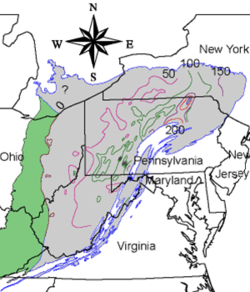
Proposed mine location

My instinct is to join the side of those protesting because, once again, it seems like another example of mankind working hard to exhaust every natural jewel in the planet’s crown.

Yet, I was also conscious that I’m sitting in front of a computer that will have it’s fair share of copper inside it and that we, as in Jean and me, use a whole range of sophisticated materials in our daily lives, ergo leading a life that genuinely reduces our footprint on Planet Earth is easier said than done.

Here’s one ‘protest’ website that sets out the reasons for not proceeding with this mine,

1. Bristol Bay is home to the world’s largest sockeye salmon run.
2. Pebble mine would generate toxic waste in a seismically active region.
3. A majority of the people of Bristol Bay do not want the mine.
4. Native people live in Bristol Bay, and they subsist off the land.
5. Bristol Bay is home to an abundance of animals that need pristine habitat.
6. Bristol Bay has thousands of rivers and streams that would be degraded.
7. Commercial and sport fishing jobs would be jeopardized.
8. Wild salmon provide us with omega-3 fatty acids.
9. The Pebble Limited Partnership is untrustworthy.
10. Future generations depend on us to protect their most important and lasting legacy–the land.

There is a website that supports the project, where you will read their ‘core value’ expressed as, “Responsible mining technologies that actively support a healthy, respectful and sustainable co-existence with the environment and Southwest Alaska culture.

Ultimately, it all comes down to there being too many people competing for too few resources.  Nay, worse than that.  It comes down to too many people living on this small planet, over-consuming what the planet can deliver and running out of time.  There are millions who instinctively feel very uncomfortable about the future but, as yet, no global movement with real political power to make a difference.

That, I regret, is the core issue for humanity.

The collapse of the biosphere.

Further to my Please help! post.

On Monday of this week, I posted an item called Please help!  It was to demonstrate how easily two people, with a long-standing friendship, both interested in the world around them, can differ over something so fundamental as man’s affect on our Planet.

I hoped that it would attract those who see things more clearly, and I was not mistaken.  Not only did the item receive 1,334 readings on that day, there were a number of focused comments, plus emails to me personally.  One of those comments was from Patrice Ayme, a long-standing friend of this Blog, who referred me to an article he had written in 2009, called BIOSPHERE COLLAPSE.  I gratefully republish that article with the written permission of Patrice.

BIOSPHERE COLLAPSE, not “Climate Change”.

by Patrice Ayme.

It is a curious thing to observe how far some humans will go to make themselves the center of attention. Maybe it’s out of cowardice. After all, to become the center of something, however illusory, however silly, allows one to forget the fragility of the human condition.

A handful of top notch elite scientists can be found, who are among those who are skeptical about the fact that burning the fossil fuel accumulated in the last 400 million years is causing a dangerous warming of the climate. Those who belong to the elite are generally not climate scientists, but, unsurprisingly geologists or geophysicists (that means, paid by the burning of fossil fuels).

Moreover, when one looks at their arguments, or even their graphs, one generally find obvious bias. I have explained before that denial is big business, and that the sun itself has conspired with the giant fossil fuel business (the ultimate conspiracy theory!)

But this streak of solar cooling is not enough for the partisans of atmospheric poisoning. It seems as if they were hell bound not only to poison the air and the oceans, but reason itself. (I have explained in other essays that reason itself is the preferred target of the plutocrats and their agents.)

A preferred trick of those tricksters is to cut the graph depicting the concentration of CO2 at, say, 360 parts per million (ppm), when we are actually at 390 ppm! This has the undeniable advantage of masking the exponential growth of atmospheric CO2 in the last few years…

image

What we see in this graph is a basically flat line, followed by an exponential (the famous “hockey stick”, as a climate scientist dubbed it).

From studying ocean sea shells, we now know that the CO2 concentration did not exceed 300 ppm for the last 25 million years. That means that the basically flat line in the graph above extends considerably to the left. The basically flat line actually extends 2 kilometers to the left, at the scale of the graph above. Yes, more than a mile!

So there is no doubt that the recent CO2 exponential climb is man-made, and tied up to industry.

A related trick of the deniers is to “forget” that man has generated a lot of other gases than CO2. Those artifical, man-made gases can be up to 10,000 times better than CO2 at blocking infrared light.

A greenhouse consists of allowing visible light in, while blocking the exit of the light that heat makes, the infrared light. Three large greenhouses are Mars, Earth and Venus. All planets are greenhouses, and earth-like planets in other solar systems will have water, thus water vapor and CO2, two most powerful and natural greenhouse gases: these gases allow light in, but tend to block infrared.

Thus the heat gets trapped close to the ground, and the high atmosphere, now less warmed by infrared light on its way to space, cools down. Some ignorant fools have heard of that cooling, and screamed that it proved that there was no greenhouse, because a cooling has been demonstrated. Whereas, in truth, that high altitude cooling is expected, and proves the exact opposite, namely a greenhouse next to the ground!

When one is considering the man-made greenhouse, one has therefore to also include these exotic industrial gases and evaluate their contribution to the greenhouse. For example, the Greenhouse Warming Potential (GWP) for methane over 100 years is 25 and for nitrous oxide it is 298. This means that emissions of 1 million metric tons of methane and nitrous oxide respectively warm up the lower atmosphere as much as the emissions of 25 millions and 298 millions metric tons of carbon dioxide, respectively, over the following century.

Perfluorocarbons (CFCs) are the worst. They are used in refrigeration. The most frequent is tetrafluoromethane. Its GWP is 6,500 times that of CO2. The GWP of hexafluoroethane is 9,200 times that of carbon dioxide. Over ten years, the GWP of methane is higher than what it is over a century, because methane oxydizes quickly. Over ten years the GWP of methane is 100 times that of CO2. This means that a “methane burp“  would have a tremendous warming effect. There are reasons to believe that such “methane burps” have happened, and could happen again. They are catatastrophically violent events, complete with giant tsunamis, I know you wanted to know…

In any case we are around 450 ppm in CO2 equivalent (the exact number is fiercely debated, and irrelevant, because the yearly augmentation is so fast).  We started from 280 ppm of CO2 equivalent in 1850 and at this rate we will pass a DOUBLING within twenty years.

Recent research on marine fossils has allowed us to find out the CO2 concentration over the last 25 million years: it never exceeded 300 ppm durably. (There were short spikes due to occasional major volcanic activity, but that’s always accompanied by marked and brutal drops in temperature, so Antarctic records show the two contrary effects wash each other out!)

I would go as far as saying that many papers in Nature and Science, when they deal about the climate, systematically underemphasize the planetary danger we seem to be getting in. Typically the authors’ research reveals an ominous evolution, but, then, rather meek conclusions are modestly drawn. There is no doubt an implicit pressure from the powers that be to not disrupt big business as usual, and climate scientists prefer to not bite the hand that feeds them (considering where the money, hence power, goes, that would be Goldman Sachs, or, at least, the fossil fuel/pollution establishment, which is somewhere near Goldman Sachs in the Pantheon that rules over us).

The IPCC, the world panel on “Climate Change” is the number one exhibit of meekness, and lack of common sense as far as viewing a “small” global temperature rise as tolerable. In its computations, the IPCC has refused to enter the melting of the polar ice shields, and the possibility of methane clathrate  eruptions. Yet, it is known, from computing the sea level rise, and its acceleration, that the giant ice shields at the poles are melting.

It is also known that the methane (CH4) density in the atmosphere has doubled, or, maybe, quadrupled. During the last significant warm-up, methane eruption occured, causing a giant tsunami in the North Atlantic (in places, water went an incredible 80 kilometers inland!) The IPCC ignores all this superbly, preferring naively to stick to proven, observed and incontrovertible facts, and scrupulously rejecting inchoating, or probable events.

The IPCC claims to believe that limiting the global temperature rise at 2 degrees Celsius would be fine. Instead, it would be a dangerous stupidity to approach a two-degree Celsius of global temperature rise (yes, I thought carefully before using the word “stupidity“: all alternatives were found wanting).

Indeed the whole problem is not to warm up the poles too much. The global temperature rise is irrelevant. Two degrees more in Texas or Australia would just lead the offending natives to crank the air conditioning higher, and pour more prehistoric aquifer water on their greens.

Whereas the frozen poles constitute the planet’s air conditioning system. The frozen poles reflect light out into space, and make the atmosphere in a Carnot engine, with a warm source (the tropics) and a cold sink (the frozen poles). Heat is transported from warm to cold, from tropics to poles, by enormous oceanic currents, such as the Gulf Stream. Melt the poles, remove the heat reflectors, and shut down the currents.

But most of the warming, so far, is at the poles, and it has already reached nearly 5 degrees Celsius in parts (the Antarctica peninsula, for example). Yet, the global temperature rise, so far, is roughly ONLY one tenth of that. Scaling up, on present evidence, a global planetary rise of two degrees Celsius may mean a rise of twenty degrees Celsius in many glaciated polar areas (yes, a rise of 40 degrees Fahrenheit). So the poles would melt, and the Earth would lose its reflectors. Tipping points would tip, and things would get worse from there. Oceanic currents would stop. Europe would freeze in winter. Golbal temperatures would shoot up. Oxygen would disappear from huge parts of the tropical oceans, which would die. (Several of the preliminaries of these effects are tentatively observed.)

Many people reading this will scoff and say that this will not happen, because it did not happen before. Paleontologically, this is not true.  Although there was no human industry to start a CO2 bubble, they have happened before (they can be generated by continental drift or super giant volcanic eruptions known as “supertraps”).

When dinosaurs flourished, the poles were warm. Dinosaurs were roaming the forests of Antarctica. Crocodiles terrorized Northern Greenland. However, the world had dozens of millions of years to adapt. Polar dinosaurs saw with the lights of the stars for months on end. Right now, we are going to hit the biosphere with the heat shock from hell.

Besides, it’s not all about “climate change”. Half of the CO2 is presently dissolving in the oceans, so a rise of two degrees Celsius means extremely acid oceans (CO2 turns into carbonic acid after it reacts with water). At the present rate of acidification, marine life will dissolve big time by 2100. That’s how a lot of the oxygen is produced, by photosynthesizing unicellular animals, with acid sensitive skeletons. Atmospheric poisoning deniers do not want just to warm us up.

Ah, also, just a reminder, some gigantic, and deep, parts of the oceans got too warm to contain enough oxygen to support life, and they have already died.

And yes, the oceans are rising, and the icecaps are melting, both in Greenland, and Antarctica.  The rise of sea level is itself augmenting at the rate of 5% a year (as many of the facts in this post, published in summer or fall of 2009). It’s an exponential!

When something augments at a rate proportional to its own value, it’s an exponential. The exponential is the most important function in analysis, if not mathematics. The exponential augments extremely fast, because the bigger it is, the faster it becomes bigger. Peons who know the exponential not, have no idea the danger we are in! They have no mathematical understanding of the danger we are in. They need to take those mathematic classes they never took, to realize how immoral their ignorance is.

Figure 1

Accelerating down. The trend line of Greenland ice mass (green) curves downward with time, suggesting that ice losses have been accelerating.

[Credit: Isabella Velicogna, geophysical research letters.]

The more fossil fuels burned, the more hot air, the less oxygen. But not to worry!  American politicians will be pleased to inform you that their super private, super bank, the one which advises the White House always, and pays bonuses with taxpayer money, Goldman Sachs, will make a future oxygen market, and will sell it short. Trust American capitalism, White House style, to adapt. Down to the last gulp of air.

On a slightly more serious note, the expression “climate change” is thus a misnomer.

In truth, we are facing a man-made collapse of the biosphere, just because full grown men want to keep on playing with fire. There ought to be an IPCB: Intergovernmental Panel on the Collapse of the Biosphere.

Atmospheric poisoning deniers want to heat us up in acid, while cutting our air supply. By 2100 CE. Of course, when that apocalypse has become the future no one can deny, there will be only one solution: nuke the coal plants. More seriously, Asia plans an enormous augmentation of its CO2 production, and that may very well become a casus belli, when the runaway exponential nature of the man-made greenhouse becomes blatant.

Patrice Ayme

http://patriceayme.wordpress.com/

***

Technical annex 1: To calculate the radiative forcing for a 1998 gas mixture, the IPCC in 2001 gave the radiative forcing (relative to 1750 CE) of various gases as: CO2=1.46 (corresponding to a concentration of 365 ppm), CH4=0.48, N2O=0.15 and other minor gases =0.01 W/m2. The sum of these is 2.10 W/m2. One obtains COequivalent = 412 ppm. That was in 2001, we are in 2010 (about). CO2 concentration is now 290 ppm, which means that CO2 equivalent is above 440 ppm.

***

Technical annex 2: Quoting straight from Science:

“Climate Change: Fixing a Critical Climate Accounting Error.

The accounting now used for assessing compliance with carbonlimits in the Kyoto Protocol and in climate legislation contains a far-reaching but fixable flaw that will severely undermine greenhouse gas reduction goals (1). It does not count CO2 emittedfrom tailpipes and smokestacks when bioenergy is being used,but it also does not count changes in emissions from land use when biomass for energy is harvested or grown. This accounting erroneously treats all bioenergy as carbon neutral regardlessof the source of the biomass, which may cause large differences in net emissions. For example, the clearing of long-established forests to burn wood or to grow energy crops is counted as a 100% reduction in energy emissions despite causing large releases of carbon.”

[Science 23 October 2009: Vol. 326. no. 5952, pp. 527 – 528.]

It is hard to believe that errors of such magnitude, committed by scientists (and implemented by the European Union and the US Congress) are not deliberate.

***

Ecology and faith

The National Preach-In held the week-end of February 11th/12th.

Some while ago, I signed up for a week-end organised by the Arizona Interfaith Power & Light.  It was part of a national programme inviting faith leaders from across the country to give sermons and reflections on climate change over the weekend of February 10-12, 2012.  My interest was simply to learn more about the week-end.

Then I quickly discovered that Father Dan from our church, St. Paul’s, had also signed up.  In my innocence I offered to help in any way which was quickly met by a response that bowled me over, “Well, you can be the homilist and give the sermon!”  Thus it came about that at yesterday’s 8am and 10am services yours truly rather uncertainly delivered the sermon.  John H., who with my dear wife Jeannie, did so much to turn my rambling thoughts into a coherent theme, encouraged me to publish the sermon as today’s Post on Learning from Dogs.  It now follows.

oooOOOooo

St. Paul’s Episcopal Church, Payson, Arizona

The 6th Sunday after the Epiphany

Year B

February 12th, 2012

2 Kings 5:1-14 X Psalm 30 1:13 X 1 Corinthians 9:24-27 X Mark 1:40-45

It was just a photograph. OK, one taken 43 years ago but, so what! Well, the late Galen Rowell, the famous Californian wilderness photographer called it, “the most influential environmental photograph ever taken.”

We are talking about the photograph called ‘Earthrise’ taken from Apollo 8 on December 24th, 1968 during the first manned mission to the Moon. Each of you should have a copy of that picture close by. Look at it now and let your imagination be carried back to that Apollo 8 capsule and that momentous experience.

As the Earth rose above the horizon of the moon, NASA astronaut Frank Borman uttered the words, “Oh my God! Look at that picture over there! Here’s the Earth coming up. Wow, is that pretty.” Bill Anders then took the ‘unscheduled’ photograph.

Then recall that evening, Christmas Eve 1968, when the three NASA crew members took turns reading from the book of Genesis to what was probably the biggest audience ever in the history of television, Frank Borman finishing with the words, “God called the dry land earth, and the gathering of the waters He called seas; and God saw that it was good.

Our planet is good, and so beautiful, and so precious to life. Life that arose in just a fraction of time after the Solar System formed 3.7 billion years ago; the oldest traces of life have been found in fossils dating back 3.4 billion years. That miracle of life.

Who hasn’t gazed into a clear, Arizonan, night sky and been lost in the beauty above our heads. Or felt the wind, flowing across ancient lands, kiss our face. We stand so mite-like, so insignificant in all this immensity of creation; God’s creation.

Our dreams, our hopes and failures, everything we are, have ever been and ever will be, nothing more than a swirl of dust across a desert track.

Jeremiah was called to be a prophet in 626 BC, some 2,638 years ago. In Jeremiah 12:4 he wrote, “How long will the land mourn, and the grass of every field wither? For the wickedness of those who live in it, the animals and the birds are swept away…

Words from so long ago! But Jeremiah would, surely, have gasped with disbelief had he realised how, some 2,600 years later, ‘the land now mourns and the grasses so wither’.

Jeremiah reveals much that we all could learn about ourselves. The other prophets couldn’t be accused of hiding behind their work but Jeremiah, out of all of them, allowed us to see the evidence of his own spiritual condition. He was a man of deep feelings and sensibilities and in his book there are five laments over the serious spiritual and moral condition of God’s people. That’s us, by the way!

In that time of Jeremiah, the world population was 100 million persons; slightly less than the population of Mexico today.

Some 1,350 years later, 1,000 A.D., the global population was 265 million.

But by the year 2,000 A.D., our population had increased to 6,000 millions! Put another way, that’s an increase of 5.7 million people every year for a 1,000 years !

Any guesses on the increase in the last 12 years, since 2,000? Well, the global population has increased by 990 million. About 90 million every year!

It is utterly unsustainable at present levels of Western consumption, let alone with poorer nations trying to ‘catch up’.

Last September, our House of Bishops issued A Pastoral Teaching. Our Bishops believe those ancient words of Jeremiah describe these present times. They call us to repentance, to change.

That Pastoral Teaching, in part, says, “Christians cannot be indifferent to global warming, pollution, natural resource depletion, species extinctions, and habitat destruction, all of which threaten life on our planet. Because so many of these threats are driven by greed, we must also actively seek to create more compassionate and sustainable economies that support the well-being of all God’s creation.

Our bishops refer to The Anglican Communion Environmental Network that calls to mind the dire consequences that our environment faces, again I quote: “We know that we are now demanding more than the earth is able to provide. Science confirms what we already know: our human footprint is changing the face of the earth and because we come from the earth, it is changing us too. We are engaged in the process of destroying our very being. If we cannot live in harmony with the earth, we will not live in harmony with one another.

Let those words enter our souls: “If we cannot live in harmony with the earth, we will not live in harmony with one another.” Planet Earth mirrors our souls! Nothing new about that. In 1975, Berkeley physicist Fritjof Capra wrote in his book The Tao of Physics, “we can never speak of nature without, at the same time, speaking about ourselves”.

Fr. Dan reflected in his January 22nd sermon on the questions, “Am I really free? Can I really change?” ….. and continued with the words from Jesus, “The time is fulfilled, the Kingdom of God has come near, Repent.” Fr. Dan reminded us that the word ‘repent’ indicates that we can change. We can change, we must, and we will.

Otherwise we will learn the truth of that Cree prophecy, “When all the trees have been cut down, when all the animals have been hunted, when all the waters are polluted, when all the air is unsafe to breathe, only then will you discover you cannot eat money.

OK, from out of the mouths of North American Braves to out of the mouths of English babes.

The ‘eat money’ phrase reminds me of a story I heard years ago, back in England. You need to imagine a dilapidated, rural Anglican church with a dwindling congregation. A young boy was given a five pound note to put in the collection plate. When the offering came around, he didn’t put it in. However, after the end of the service, he went up to the vicar, shook his hand and gave him the five pound note. The vicar asked him, “Why are you giving me this money? Why didn’t you put it in the collection plate?”

The young boy answered, “Because my Mummy told me you’re the poorest vicar we’ve ever had!”

Let me stay in Britain. Martin Rees is a British cosmologist and astrophysicist and has been Britain’s Astronomer Royal since 1995.

Sir Martin Rees, indeed Lord Rees as he is now, has been Master of Trinity College, Cambridge since 2004 and was President of the Royal Society between 2005 and 2010.

In a presentation in 2005, he said this, “We can trace things back to the earlier stages of the Big Bang, but we still don’t know what banged and why it banged.

Lord Rees continued, “But the unfinished business for 21st-century science is to link together cosmos and micro-world with a unified theory. And until we have that synthesis, we won’t be able to understand the very beginning of our universe. You want to not only synthesise the very large and the very small, but we want to understand the very complex. And the most complex things are ourselves, midway between atoms and stars.”

Hang on to that word ‘midway’ as I continue reading from Rees’ presentation.

We depend on stars to make the atoms we’re made of. We depend on chemistry to determine our complex structure. We clearly have to be large, compared to atoms, to have layer upon layer of complex structure. We clearly have to be small, compared to stars and planets — otherwise we’d be crushed by gravity.

And in fact, we are midway. It would take as many human bodies to make up the sun as there are atoms in each of us. The geometric mean of the mass of a proton and the mass of the sun is 50 kilogrammes (110 lbs), within a factor of two of the mass of each person here. Well, most of you anyway!

Back to me! Just reflect on the magnificence of that fact! Science and poetry so beautifully woven together. We, as in humankind, the poetic manifestations of God’s unbelievable creation. Our relationship with the atoms perfectly balanced with our relationship with the sun. Brings a whole new meaning to seeing starlight in the eyes of the one you love!

It is all so beautiful, so magical, so spiritual, so God-like. It is also so fragile and vulnerable.

There is a copy of that Pastoral Teaching available for you on your way out of Church. I implore you to read it, nay more than read it, hold it close to your heart. Within that teaching all of us are invited to join our Bishops in a 5-point commitment for the good of our souls and the life of the world, our beautiful planet; the essence of those 5 points being:

That we, as brothers and sisters in Christ, commit ourselves:

  • To repent all acts of greed, over-consumption, and waste;
  • To pray for environmental justice, for sustainable development;
  • To practice environmental stewardship and justice, energy conservation, the use of clean, renewable sources of energy; and wherever we can to reduce, reuse, and recycle;
  • To uproot the political, social, and economic causes of environmental destruction and abuse;
  • To advocate for a “fair, ambitious, and binding” climate treaty, and to work toward climate justice through reducing our own carbon footprint and advocating for those most negatively affected by climate change.

As our Bishops wrote, “May God give us the grace to heed the warnings of Jeremiah and to accept the gracious invitation of the incarnate Word to live, in, with, and through him, a life of grace for the whole world, that thereby all the earth may be restored and humanity filled with hope.”

I started with the taking of a photograph 43 years ago that forever changed our view of our planet. Now is the time to change our relationship with our planet, to love it and cherish it; it’s the only one we have. Otherwise, we may not have another 43 years left.

Or in the words from today’s Psalm, “O LORD my God, I cried out to you, and you restored me to health.

Amen.

The truth about (pet) food!

We are what we eat! A sobering assessment of the food industry this Friday, the 13th!

This saying, which has been around for some time, reminds us that the foods we eat break down into elements that our bodies absorb. What we eat literally becomes part of us, and not just us humans but our dogs and cats as well.  That’s why I haven’t differentiated between us humans and our pets in this Post.

Let’s start off with our pets.

On the 28th December, just a couple of weeks ago, I wrote an article about the possible harm to dogs from Jerky treats coming in to the USA from China.  Kenneth Bryant of TriPom Chews added a comment that included a link to a news story about 353 dogs possibly being made sick.  Since then he and I have been in email correspondence including Ken passing the web address of Susan Thixton’s website Truth about Pet Food.  If you have a pet, go to this website!

I’m sure Susan wouldn’t mind me giving you a flavour (pardon the pun!) of what she has on this important website.  Try this.

Is there Chicken in Chicken Pet Foods?

One of the newest trends of pet food marketing is a tag line something like ‘Chicken is the first ingredient’.  Sounds good doesn’t it?  Chicken, first or second on the ingredient list surely means this pet food contains lots of quality meat doesn’t it?  No wonder this ‘chicken’ pet food is a little more expensive – it contains more meat.  Right?  Maybe not.

Just because petsumers think meat when the ingredient ‘chicken’ is listed on a label, doesn’t mean the pet food actually contains chicken meat.  Pet food can have a very different definition of ‘chicken’.  Thanks to very broad Association of American Feed Control Officials (AAFCO) ingredient definitions, the ingredient ‘chicken’ listed on a pet food label could be nothing more than skin, bone, cartilage, and maybe a few tiny fragments of meat.

Here is the AAFCO definition of poultry (quoting the 2011 AAFCO Official Publication): “Poultry is the clean combination of flesh and skin with or without accompanying bone, derived from the parts or whole carcasses of poultry or a combination thereof, exclusive of feathers, heads, feet and entrails.  It shall be suitable for use in animal food.  If it bears a name descriptive of its kind, it must correspond thereto.”

Problems with this pet food ingredient definition…
#1  This ingredient (which includes all types of poultry including chicken) can be “a combination thereof” of any part of poultry.  This means that a pet food, proudly claiming Chicken as the #1 ingredient, can include ONLY chicken bones and/or skin (left over from the human food industry).

#2  “It shall be suitable for use in animal food” means that animals rejected for use in human food for reasons including (but not limited to) disease and drug residues are approved for use in pet food.  This we can thank the FDA for.  Federal Food Safety Laws should make it illegal for pet food to include whole or parts of diseased or rejected animals, but FDA Compliance Policies tell pet food it is acceptable to use diseased and drugged animals in pet food [My emboldening, PH.] (“it shall be suitable for use in animal food”).

Chicken Meal/Poultry Meal is very similarly defined – except ‘meal’ implies moisture removed.  However the very same end result can apply – the meal can consist of little more than skin and bones — no meat.

Other pet food meat ingredient definitions are a bit more descriptive, however all meat pet food ingredient definitions include the “it shall be suitable for use in animal food” disclaimer.  Thus any pet food meat ingredient – thanks to FDA Compliance Policies and AAFCO ingredient definitions – can be the same quality as human meats or can be sourced from diseased, rejected animals.  But, regulations do NOT provide petsumers with a means to determine which is which.

Read the rest of this article on Susan’s website.  Even better subscribe to her newsletters.

I could go on and on but will close this section by saying ‘thanks’ to Ken of TriPom for providing this awareness of what we all may be feeding our beloved cats and dogs.

So, humans next!

Just a few days ago there was an article on The Atlantic magazine website about The Very Real Danger of Genetically Modified Foods.  It’s a detailed article that, nonetheless, needs to be read by the widest possible audience.  Here are some extracts,

Chinese researchers have found small pieces of ribonucleic acid (RNA) in the blood and organs of humans who eat rice. The Nanjing University-based team showed that this genetic material will bind to proteins in human liver cells and influence the uptake of cholesterol from the blood.

The type of RNA in question is called microRNA, due to its small size. MicroRNAs have been studied extensively since their discovery ten years ago, and have been linked to human diseases including cancer, Alzheimer’s, and diabetes. The Chinese research provides the first example of ingested plant microRNA surviving digestion and influencing human cell function.

Should the research survive scientific scrutiny, it could prove a game changer in many fields. It would mean that we’re eating not just vitamins, protein, and fuel, but information as well.

Later on the article says,

Monsanto’s claim that human toxicology tests are unwarranted is based on the doctrine of “substantial equivalence.” This term is used around the world as the basis of regulations designed to facilitate the rapid commercialization of genetically engineered foods, by sparing them from extensive safety testing.

According to substantial equivalence, comparisons between GM and non-GM crops need only investigate the end products of DNA translation: the pizza, as it were. “There is no need to test the safety of DNA introduced into GM crops. DNA (and resulting RNA) is present in almost all foods,” Monsanto’s website reads. “DNA is non-toxic and the presence of DNA, in and of itself, presents no hazard.”

The Chinese RNA study threatens to blast a major hole in that claim. It means that DNA can code for microRNA, which can, in fact, be hazardous.

And the closing two paragraphs,

The OECD’s 34 member nations could be described as largely rich, white, developed, and sympathetic to big business. The group’s current mission is to spread economic development to the rest of the world. And while that mission has yet to be accomplished, OECD has helped Monsanto spread substantial equivalence to the rest of the world, selling a lot of GM seed along the way.

The news that we’re ingesting information as well as physical material should force the biotech industry to confront the possibility that new DNA can have dangerous implications far beyond the products it codes for. Can we count on the biotech industry to accept the notion that more testing is necessary? Not if such action is perceived as a threat to the bottom line.

Please read the whole article as my extracts do not give justice to the importance of these findings.

Finally, let me turn to a recent item on the BBC website about the decline of brain function from as soon as age 45!  (I’m 67!)  The item starts,

The brain’s ability to function can start to deteriorate as early as 45, suggests a study in the British Medical Journal.

University College London researchers found a 3.6% decline in mental reasoning in women and men aged 45-49.

What caught my eye were these concluding paragraphs,

Dr Simon Ridley, head of research at Alzheimer’s Research UK, said he wanted to see similar studies carried out in a wider population sample.

He added: “Previous research suggests that our health in mid-life affects our risk of dementia as we age, and these findings give us all an extra reason to stick to our New Year’s resolutions.

“Although we don’t yet have a sure-fire way to prevent dementia, we do know that simple lifestyle changes – such as eating a healthy diet, not smoking, and keeping blood pressure and cholesterol in check – can all reduce the risk of dementia.”

Professor Lindsey Davies, president of the Faculty of Public Health, said that people should not wait until their bodies and minds broke down before taking action.

“We need only look at the problems that childhood obesity rates will cause if they are not addressed to see how important it is that we take ‘cradle to grave’ approach to public health.”

Let me repeat this sentence, “we do know that simple lifestyle changes – such as eating a healthy diet, not smoking, and keeping blood pressure and cholesterol in check – can all reduce the risk of dementia.”

Understanding what food is healthy for us and our animals ought to be straightforward.  But it’s not, when one understands the terrible lack of integrity in the industries that make our food!

Keystone XL pipeline

Spread the word as far and wide as possible!

Yesterday I received an email from 350.org as part of their mailing to all 350.org supporters.  I have previously written a number of times, for example see here and here, about this proposed project and why it is so important to have it rejected.

Yesterday I published a lecture given in Melbourne by Britain’s eminent Astronomer Royal, Lord Martin Rees.  Lord Rees concluded his lecture with the call for us to take better care of our own planet. He, like many others, recognises the unique place in history that we occupy. For the first time a single species is capable of exerting profound changes on the Earth’s natural and physical environments.

Over and over again, scientists are reporting the rise in climate temperature of Planet Earth and the implications thereof if we do not wakeup soon to changing our ways.  The Keystone pipeline is a huge potential mistake!

Bill McKibben of 350.org

Anyway, to the letter issued by 350.org – note the link to send a message to President Obama works – please use it!

Direct threats from Big Oil over Keystone XL

01/05/12, 11:43am

Here’s the email that Bill McKibben just sent to US 350.org supporters who have been working on Keystone XL:

Just in case you thought there was anything subtle about the Keystone battle, you need to hear what the president of the American Petroleum Institute — the oil industry’s #1 front group — said yesterday: if the President doesn’t approve the project there will “huge political consequences.”

That’s as direct a threat as you’re ever going to hear in DC, and it shows just how mad you made the oil industry last year by exposing Keystone for the climate-killing danger it is.  And the oil industry can obviously make good on their threats — they’ve got all the money on earth, and thanks to Citizens United they can use it without restriction in our elections. They’re not used to ever losing.So far the Obama administration is standing firm in the face of Big Oil’s bullying — the White House made it completely clear last month that if the oil industry and its harem in Congress forced a speeded-up review, it would lead to an outright rejection of the permit for the pipeline. We expect they’ll keep their word.

Here’s what I think we need to do.

1- Let the president know you’ve got his back when he rejects the pipeline. Tell him that addressing climate change is the key to our future, and that you’re glad he’s not bending.

2- Take the offensive against the oil industry. If they’re going to try and ram Keystone down our throats we’re going to try and take away something they hold dear, the handouts that Congress gives them each and every year. They’re the richest industry on earth, they’re doing great damage to the planet — and they expect us to pay for it with our tax dollars.

Can you send a quick note to President Obama covering those two key points? 

Click here to send a message to the President: www.350.org/stand-strong

Here’s the note I’m sending:

President Obama: Thank you for opposing the rushed Keystone XL pipeline permit. Responding to climate change is critical to preserving our collective future, and I hope this is a first step towards the dramatic changes we need to avoid catastrophe. PS: Please take handouts for the fossil fuel industry out of next year’s budget. There are people in America who need that money more.

There’s lots more to be done, of course. In the slightly longer run, we’ve got to take on the greatest subsidy of all: the special privilege that Congress gives the fossil fuel industry to use the atmosphere as an open sewer into which to dump its carbon for free.But today — right now, in the face of this kind of straight-up bullying — it’s time to punch back. We’re nonviolent, but we’re not wimps.

Bill

The coming new year!

Be warned, one of my more reflective muses!

Tomorrow is the last day of the year 2011.

For reasons that I am not clear about, there is a mood of pessimism about my person.  Whether it is the scale of global issues that I see ahead that drags me down, whether the year of an American Presidential election will remind me of the loss of reason that afflicts so many modern democracies, whether the messages in Kunstler’s book The Long Emergency still resonate in my mind well, who knows?

But when one does look at the broader picture of modern society, there is much that troubles.

So forgive me if I provide a couple of examples of these troubles.  I do so on the grounds of communication – the more that understand the risks ahead of us, the more likely we, as in the peoples of this planet, will say to our leaders, “Enough of this!  For the sake of my children, my grandchildren and all of humanity we have to change our priorities, and soon!”

Here’s my first example.

The US National Resources Defense Council recently published an item about severe weather including an interactive Extreme Weather Map, introduced thus,

Climate change increases the risk of record-breaking extreme weather events that threaten communities across the country. In 2011, there were at least 2,941 monthly weather records broken by extreme events that struck communities in the US.

That was backed up by an article on the Onearth website that opened,

By many measures, 2011 was the most extreme weather year for the United States since reliable record-keeping began in the 19th century — and the costs have been enormous. According to the National Oceanic and Atmospheric Administration, 2011 set a record for the most billion-dollar disasters in a single year. There were 12, breaking the old record of nine set in 2009. The aggregate damage from these 12 events totals at least $52 billion, NOAA found.

And that just for the USA.  But will climate change be the Number One political issue in 2012?  And if not in 2012, when will it be?

Let me move on to my second example, very different from the one above but, in a sense, just as scary.  This is an interview that was in a recent article on the Food Freedom website ( brilliant website, by the way).  Dr. Joseph Mercola, the leading natural health practitioner, interviews Dr. Don M. Huber, one of the senior scientists in the U.S about the area of science that relates to genetically modified organisms (GMO). Here’s an extract from the article on Food Freedom,

Toxic botulism in animals linked to RoundUp

Dr Mercola recently interviewed Dr Don Huber, whose letter to the USDA warning that Monsanto’s RoundUp, a broad-spectrum “herbicide” that has been linked with spontaneous abortion in animals, continues to be ignored by food and environmental safety authorities. In this important hour-long discussion, Huber, a plant pathologist for over 50 years, explains how RoundUp is destroying our healthy soils by killing needed microorganisms.

Not only did his team discover a new soil pathogen, but he reports that animals are coming down with over 40 new diseases, like toxic botulism. Huber explains that before the widespread use of herbicides, pesticides and genetically modified food and feed, natural probiota would have kept Clostridium botulinum in check

The video, below, of the interview is included in the article.  Please don’t be put off by the length, the material covered is riveting and critical to our general knowledge about the threats to our society.

So that’s enough from me for one day!  On Monday, I shall include another video relating to the RoundUp issue that reveals, both directly and metaphorically, how the only solution to pessimism is to embrace the need to make change happen.  Be inspired by this poem by Sam Keen, included in the latest Sabbath Moment from Terry Hershey,

I Want to Surrender

God, I want to surrender
to the rhythm of music and sea,
to the seasons of ebb and flow,
to the tidal surge of love.

I am tired of being hard,
tight, controlled,
tensed against tenderness,
afraid of softness.
I am tired of directing my world,
making, doing, shaping.

Tension is ecstasy in chains.
The muscles are tightened to prevent trembling.
Nerves strain to prevent trust,
hope, relaxation….

Surrender is a risk no sane man may take.
Sanity never surrendered
is a burden no man may carry.

God give me madness
that does not destroy
wisdom,
responsibility,
love.

Sam Keen

Dog treats – possible harm for your dog!

This important information came to hand an hour ago.

Stephanie from our local Payson Humane Society Thrift Shop sent me and Jean an email a short while ago.  While the potential issue goes back to 2007 that is no reason not to keep this in mind when it comes to what commercial treats you give your dog.  Indeed, the US FDA updated their recall information only last November.

Please circulate this to all dog owners that you know.

Here’s a full copy of the release made by the American Veterinary Medical Association,

Jerky treats from China could be causing illness in pets

The AVMA staff has been in communication with veterinarians who believe certain brands of jerky treats from China could be causing illness in pets. Signs of illness have included vomiting, lethargy, and anorexia.

The Food and Drug Administration is aware of consumer complaints relevant to chicken jerky for dogs. Laura Alvey, director of the communications staff at the FDA Center for Veterinary Medicine, said the agency is actively investigating the situation.

Alvey said the FDA has analyzed products for multiple microbiologic and chemical contaminants, but the agency had not detected any contaminants as of Sept. 14.

Wal-Mart pulled a type of chicken jerky for pets off store shelves July 26 after receiving complaints about the product, manufactured by both Import-Pingyang Pet Product Co. and Shanghai Bestro Trading. A laboratory that tested the jerky product reported finding low concentrations of melamine, one of the contaminants that led to massive recalls of pet food earlier this year.

Alvey said the FDA has reviewed the laboratory report, which found 20 ppm of melamine in one sample. The agency has not been able to verify the finding. Alvey added that the FDA would not expect the low concentration of melamine to result in any illness.

Dr. Richard Goldstein, an associate professor of small animal medicine at Cornell University College of Veterinary Medicine, has been collecting data on cases of pets that became ill after ingesting jerky treats from China. He is the primary author of an informational document available on the Web site of the American College of Veterinary Internal Medicine, www.acvim.org.

According to the document, ACVIM diplomates who work in nephrology and urology became aware of an unusual number of dogs with similar presenting complaints and clinicopathologic testing results in association with the ingestion of various brands of jerky treats, mostly chicken jerky. The dogs are typically small and have a history of vomiting, lethargy, and anorexia.

Blood chemistry in many cases has revealed hypokalemia and a mild increase in liver enzymes. Blood gas analysis indicates acidosis. Urinalysis has consistently shown glucosuria and granular casts. The findings suggest an acquired Fanconi syndrome, according to ACVIM diplomates, and Fanconi screens on urine have been positive.

The ACVIM document recommends treatment consisting of supportive care, electrolyte supplementation, and blood gas monitoring. These cases appear to warrant liberal potassium supplementation. In some cases, veterinarians should consider long-term bicarbonate supplementation.

Most of the dogs have recovered from their acute disease and have not required long-term treatment. Dr. Goldstein at Cornell asks veterinarians who can contribute data on these cases to e-mail him at rg225@cornell.edu. The AVMA will provide updates about the situation at www.avma.org as new information becomes available.

Veterinarians who see any illnesses that they suspect might relate to a pet food should contact an FDA consumer complaint coordinator and the manufacturer or retailer. A list of phone numbers for FDA complaint coordinators in each state is available at www.fda.gov/opacom/backgrounders/complain.html.

As I mentioned, the US. Food and Drug Administration website updated their recall information on November 15th, 2011.  The link is here, from which is reproduced,

List of recalls for Pet Food Products from Jerky Treats

Information current as of noon November 15, 2011
1065 entries in list

Recalls & Withdrawals for Animal & Veterinary Products
Melamine Pet Food Recall of 2007: Main Page

The recalls on this list are primarily Class I. Definitions of Class I, II, and III recalls. Additional information about how recalls are conducted can be found at FDA 101: Product Recalls – From First Alert to Effectiveness Checks.

Note: This compiled list represents all pet food recalled since March 2007. If and when new information is received, this list will be updated. The “Information Current as of” date provided above indicates when this Web page was updated; it does not indicate the date when the pet food recalls listed below were initiated. Once listed, each of the recalled pet food products remains listed, even if there are no new recalls associated with that product. Although we have taken care to make sure the information is accurate, if we learn that any information is not accurate we will revise the list as soon as possible. For initiation dates of specific recalls, click on the brand name and then product description links that appear on these pages. For recalls that occurred before September 1, 2008, a date range might appear in the initiation date field. The date range indicates the timeframe within which multiple recalls of this product were initiated. For recalls that occur September 1, 2008 and after, the actual initiation date of each recall event is provided for each product. If a new recall is initiated for a product that had previously been recalled before September 1, 2008, the food product will be listed again, with the new recall initiation date. If a new recall is initiated for a product that had previously been recalled after September, 1, 2008, the initiation date of the new recall event will be added to the previous date listed.

The recall number is V-095-2007  The Trade Name is Jerky Treats

The Product Description is: Jerky Treats Beef Flavor Dog Snacks. The product is sold in 3.75 oz bags and shipped in cases containing 12 bags; sold in 7.5 oz bags shipped in cases containing 6 bags & 12 bags; sold in 11.25 oz bags shipped in cases containing 8 bags; sold in 15 oz bags (which is buy one get one free of the 7.5 oz size) shipped in cases containing 12 bags; sold in 170 g bags shipped in cases containing 12 bags (Canadian only); and sold in 567 g canisters shipped in cases containing 8 canisters (Canadian only).

Finally, I reproduce an item on the Animal Health Foundation website about Treats for Dogs.

Treats for Dogs are Potentially Dangerous

Check the label for country of origin, and be observant if you give your dog chicken jerky treats. The American Veterinary Medical Association was notified last week by the Canadian VMA that several Canadian veterinarians have seen dogs with a condition that resembles Fanconi syndrome, and it may be associated with the consumption of chicken jerky treats manufactured in China. Similar incidents were reported in the United States in 2007 and investigated by the U.S. Food and Drug Administration, which issued a further warning in 2008.

It’s unknown if the problem is limited to Canada. The AVMA reports that it has not received any recent reports from U.S. veterinarians about pets with illness that may be related to chicken jerky treats, and there have been no recalls of any chicken jerky treat products associated with the Canadian complaints. Brand names of the products involved are not available.

Fanconi syndrome affects the kidney tubes and can be heritable or acquired. The heritable form is rare and usually is seen only in certain breeds, including basenjis and Norwegian elkhounds. The acquired form can be caused by heavy metal poisoning or certain chemicals. Dogs affected with the acquired syndrome usually have signs that include vomiting, listlessness and lack of appetite. According to the FDA’s 2008 report, extensive chemical and microbial testing did not turn up any contaminant or a definitive cause for the reported illness. Most dogs recover, but some reports to the FDA involved dogs that died.

After checking the information on the Veterinary Information Network, Lake Forest veterinarian Scott Weldy of Serrano Animal and Bird Hospital said that so far, the reports have been anecdotal, with no evidence tying the problems to the chicken jerky treats.

“Right now they’re basically not blaming anything,” he says. “They’re saying it might be from chicken treats, but they don’t know yet.”

According to the comments on VIN, Weldy says, veterinarians are reporting cases infrequently, “maybe one case every week or two or three.” Some cases have a reasonably suspicious history.

“Right now it is speculation,” he says. “Everybody wants to jump on a cause for everything that happens, and they’ll look for some common link. Cheap treats and cheap foods are by far more popular than more expensive things because people are trying to save money. A lot more people are using cheaper products or are being sold products that are marketed better, so they’re more common in the market. Sometimes those get blamed first when they have nothing to do with anything.”

Nonetheless, it doesn’t hurt to be cautious.

“I would be skeptical to put a cause-and-effect relationship on the chicken treats right now, but I also wouldn’t feed my dog a chicken jerky treat right now,” he says. “It’s an easy thing to avoid.”

Limit the amount of jerky treats you give to a small dog. If you give your dog chicken jerky treats, pay attention if the dog’s appetite or activity level decreases, if it vomits or has diarrhea, or starts to drink more water and urinate more frequently. Signs can occur within hours to days of giving the treats.

Stop giving the jerky if your dog shows any of these signs, and take him to the veterinarian if the signs are severe or continue for more than a day. Blood tests should be run to check for kidney failure or an increase in liver enzymes and urine tests to check for increased glucose levels. Treatment involves supportive care, such as fluids and electrolyte supplements.


Big money – update

After writing, last Friday, the Post that came out an hour ago, called The Power of Big Money, there was a further email from Duncan Meisel of 350.org.  It is reproduced in full.

RED ALERT: Obama caving on Keystone?!

Friends,

It all comes down to Barack Obama.

As I type this, Big Oil’s representatives in the House and Senate are pushing legislation that would rush approval of the Keystone XL tar sands pipeline. Up until now President Obama has stood strong, threatening to reject any bill that includes the pipeline. But in the last hour, some terrible news has begun to leak from DC: President Obama seems to be on the verge of caving on Keystone.

The next few hours will be absolutely crucial — the President needs to hear from you that cutting a back-room deal with Big Oil on Keystone XL is unacceptable. If he steps up makes a public threat to veto this bill, he can stop this pipeline in its tracks.

Can you make a call right away? Here’s the White House number: 202-456-1111

Feel free to say what you want on the call, but remember to drive this one message home: to keep his promises, President Obama needs to veto legislation that would rush approval of Keystone XL. This pipeline is a threat to our climate and jobs and needs to be stopped.

After you’ve called the White House, let us know how it went by clicking here.

(Don’t worry if you get a busy signal — it’s actually a good sign: it means we’ve flooded the White House switchboard and that the movement is sending an overwhelming message to the President. Just keep on trying until you get through.)

President Obama came into office promising to “end the tyranny of oil.” This is his chance to prove he was serious. If he’s not, he needs to know right now that there will be real consequences.

Big Oil cut a back-room deal with the dirtiest Members of Congress to attach this legislation to a must-pass tax cut bill. These kinds of deals exemplify the tyranny Big Oil exercises over our government, and underscores why the President needs to threaten a veto.

We have just a few hours to convince him to stand strong and veto any legislation to rush the Keystone pipeline. Can you make a call right now and tell him that we expect nothing less? Here’s the number again: 202-456-1111

Your calls right now are absolutely crucial, and you should also be getting ready to get back into the streets in the days and weeks to come. We’re dusting off our plans to go to Obama 2012 offices and raise a ruckus. Call the White House, but also get in touch with your friends to start plotting your next steps locally.

Thanks to you, this fight isn’t over yet — not by a long shot.

Let’s go,

Duncan Meisel for the team at 350.org

P.S. Many of your friends cheered you on when you buried this pipeline the first time — share this red alert with a few clicks onFacebookand Twitter to bring them back into the game.

And then a short while later, this further email from Duncan,

Hey friends,

Just wanted to pass along an update: today, we completely flooded the White House phone lines with thousands of calls opposing this deal on Keystone XL oil pipeline.

The good news: this means we overwhelmed the White House with our calls. The bad news: it also means that a lot of people didn’t get through, and that the comment line is now shut down for the weekend.

If you weren’t able to get through or make a call, you can leave a short message for the President on the White House website here.

Thanks again — we’ll be in touch soon.

Onwards,

Duncan Meisel for the 350.org Team

P.S. In your comment to the White House, make sure you include some form of this message:

To keep his promises, President Obama needs to veto legislation that would rush approval of Keystone XL. This pipeline is a threat to our climate, our communities, and the creation of a new clean energy economy. and jobs and needs to be stopped.

When I sat down at my PC around 2.30pm (MT) on Saturday, there was a further email this time from Bill McKibben, as follows:

Dear Friends,

As you might know, the Keystone tar sands pipeline is back in play. 

This morning, the Senate passed a bill that requires a 60-day, expedited approval process for the pipeline in return for a payroll tax cut, and the President has said he will sign it.

The news has been swirling around Washington the last few days, with one report after another of deals and deadlines. (It’s a little weird to think that six months ago, when we started the campaign to stop this pipeline, almost no one had even heard of this thing and now it’s the center of frantic bargaining — that’s a real tribute to your efforts).

Here’s what we do know: 

1) The dirty energy industry wants the pipeline fast-tracked, and is demanding that the President grant or deny a permit within two months. They’re going to do all they can to make that happen.

2) The administration knows that Americans don’t want that permit granted. They know because many of you encircled the White House in November,  and submitted more public comments than on any energy project in history, and because yesterday the climate movement flooded the White House switchboard with so many phone calls that the busy signal was the sound of the day. For all that work, thank you.

Here’s what we don’t know: what happens next. 

Our hope — and what you should ask the President for when you write him — is that when he signs the bill he will say the obvious thing:

“Two months is not long enough to review the pipeline. The Canadians themselves have just delayed review of their tar sands pipelines over safety concerns, and we’ve just come through a year that set a record for billion-dollar climate-related disasters; I’m not going to do a rush job just to please the oil industry lobbyists. So this pipeline is dead.”  

Since the State Department has already, in essence, said two months is not enough time, this should be pretty straightforward.

We should know how it’s going to play out within 48 hours or so. We’re of course ready to fight like heck.  

But for this weekend? Well, the switchboard is now closed, so to contact the White House you’ll need to send them a message here.  And click here to spread the word on Facebook, and click here to share the news on on Twitter. 

Once you’ve done that, I recommend eggnog, football, caroling, Hannukah-shopping — and checking the email every once in a while? We’re hanging fire on this, and we’ll let you know when we find out what’s going down and if rapid reaction of some kind is required.

So so many thanks for your continued good hearted work,

Bill McKibben for 350.org Team

P.S. We know one other thing too. On Thursday night the Republican debating society came out in favor the pipeline, which is easy for them to do since they’ve all now denied climate science. Newt Gingrich in particular blamed “San Francisco environmental extremists” with holding things up. I’m sure our California crew is happy for the shout-out, but it seemed a little unfair to Nebraska farmers, Texas ranchers, Florida College students, New York trade unionists, Wall Street occupiers, and even us Vermont granola eaters. We’re a big broad bunch and we’re going to stay that way!

Please do everything to circulate this information.  Thank you!

The power of big money!

Disappointing news about the Keystone XL pipeline project.

I have previously written about the madness of this proposed project, in fact have written six or seven times before.  You may like to dip back into this Post.  This one, too, shows starkly how our relationship with oil is changing the world we live in.

So it is with some sadness that I reproduce in full a recent circulation from Duncan Meisel from 350.org.

Dear friends,

I’m writing to share some disappointing news: yesterday, the U.S. House of Representatives voted in favor of rushing approval of the Keystone XL oil pipeline.

This doesn’t mean the pipeline is getting built — not by a long shot. The bill would still have to pass the Senate and be signed by the President, neither of which are likely to happen. It does show that we need to be vigilant after our temporary victory to stop Keystone XL — the corporate polluters pushing this climate disaster never sleep.

Since we blocked the front door, Big Oil is now trying to bring Keystone in through the back — their representatives in Congress are attaching the pipeline as an amendment to a crucial bill about taxes and the economy. If we want to make sure the pipeline never gets built, once again we need to get loud and bring this fight back into the public.

Here’s the truth: much of our Congress is bought and sold by corporations. The 234 members of the House who supported this bill took $42,374,100 from corporate polluters in the last decade. If we want Congress to start working for us, and for the planet, we need to call them out on this corruption whenever it happens.

Can you share this image (with a quote from Bill McKibben) on Facebook or Twitter to show just how much this corrupt attempt to revive the pipeline stinks?

We’ll never have the money and the lobbyists of Big Oil, so we’ve got to use our voices and our bodies to make our point.

Over the past six months, we’ve signed petitions, led actions in communities coast-to-coast, and organized large-scale civil disobedience against this pipeline. All that work added up. President Obama’s announcement about the pipeline delay was HUGE, and gave us the chance to shut Keystone XL down for good.

Ultimately, we’re in a long term fight to save the planet from the polluters who would buy their way to total catastrophe. It’s up to us to use this moment to show just how dangerous they have become, and begin making the case that corporate control over government must end. Let’s make sure all of our friends know how much their latest Keystone XL stunt stinks.

Many thanks for raising your voice,

Duncan Meisel, for the 350.org team

P.S. In case you were wondering, we’re not only spreading the word online — folks in certain states are calling their senators and we’re continuing to ratchet up our actions across the country. As I type this, activists in Ohio are staging a “human oil spill” to House Speaker Boehner’s front door. We’ll need all sorts of creative tactics on the road ahead — more on that in a future email!

Please do everything to spread this message.  Thank you.

Finally, go and put your arms around your dog, give him or her a very big hug, and pray that mankind might learn something about truth and integrity from the humble dog!

Learning from dogs!

The Long Emergency, part one

A reflection on the huge changes facing our global society.

I am reading James Howard Kunstler’s book The Long Emergency.  On the front cover there is a quote from a review in The Independent newspaper, “If you give a damn, you should read this book.”  On the back cover, the quote, “Stark and frightening.  Read it soon.” – Daily Camera.  The quotes are spot on!

Rather than give my own opinion at this stage (I should finish the book first!), let me quote from the opening of Chapter Five, Nature Bites Back.

I was a at a four-day conference called Pop Tech in the seaside village of Camden, Maine, at the peak of the fall foliage season in October 2003, having a pretty good time at the talks, and enjoyiong a series of extravagant dinners – one featuring a free oyster raw bar and gratis Grey Goose vodka – not to mention all the lobsters, steaks, and other products of our bountiful cheap-oil economy.  Then, on Saturday afternoon, a scientist from the University of Washington, Peter D. Ward, got up in the old-time opera house where the conference was held and did a presentation about the life and death of the planet Earth,  Using a series of vivid artist’s renderings delivered on PowerPoint, Ward showed us how, hundreds of millions of years hence, all land animals would become extinct, the green forests and grasslands would broil away, the oceans would evaporate, and eventually our beloved planet would be reduced to a pathetic ball of inert lifeless lint – prefatory to being subsumed in the expanded red giant heat cloud of our baking sun.  Few members of the audience had any appetite for the spread of cookies and munchables laid out for the break that followed.  Personally, I was so depressed that I felt like gargling with razor blades.

The human spirit is remarkably resilient, though.  A few hours later, the horror of it all was forgotten and the conference-goers reported to the next supper buffet with the appetites recharged, happy to scarf more lobster and beef medallions and guzzle more liquor, while chatting up new friends about their various hopes and dreams for the continuing story of civilized life here on good old planet Earth, which, it was assumed, had quite a ways to go before any of us needed to worry about its fate, if ever.

Wasn’t it John Maynard Keynes who famously remarked to a group of fellow economists dithering about the long-term this and the long-term that: “Gentlemen, in the long term we’re all dead.”  Our brains are really not equipped to process events on a geological scale – at least in reference to how we choose to live, or what we choose to do in the here-and-now.  Five hundred millions years is a long time, but how about the mad rush of events in just the past 2,000 years starring the human race?  Rather action-packed, wouldn’t you say?  Everything from the Roman Empire to the Twin Towers, with a cast of billions – emperors, slaves, saviors, popes, kings, queens, navies, rabbles, conquest , murder, famine, art, science, revolution, comedy, tragedy, genocide, and Michael Jackson.  Enough going on in a mere 2,000 years to divert anyone’s attention from the ultimate fate of the earth, you would think.  Just reflecting on the events of the twentieth century alone could take your breath away, so why get bent out of shape about the ultimate fate of the earth?  Yet, I was not soothed by these thoughts, nor by the free eats, and even the liquor failed to lift me up because I couldn’t shake the recognition that in the short term we are in pretty serious trouble, too.

OK, that’s enough for today – I’ll continue this important extract on Monday.  Let me close by inviting you to watch James Kunstler in interview.