Category: Government

More than a book review,

a whole new way of looking at you and me, and the rest of humanity.

Back on September 16th, I published the post Of paradoxes, and headaches! It included the fact that I was about 20% of the way through John Zande’s book The Owner of All Infernal Names.

John Zande cover_zpsz7wuq9cc

On Tuesday evening of this week, I finished the book and, without doubt, I shall be publishing a review on Amazon books by the end of the week. First, I wanted to share a longer reflection of Zande’s book with all of you dear readers.

ooOOoo

One of the many five-star reviews of this book that has been published on the relevant Amazon page opens simply: “This is a beautifully written, terribly uncomfortable book to read.” I couldn’t better that summary. This is, indeed, a beautifully written book. Yet it is also a book that will forever change the way you think about species: Homo sapiens.

Zande offers a powerful argument that, “Following then the Principle of Sufficient Reason, the observer concludes with a level of argued certainty that a Creator must exist.” Then sets out to demonstrate that this Creator, far from being an expression of universal love, is fundamentally an expression of universal suffering. Reminding the reader that, “This world was never good. It was never peaceful, and never without suffering.”

For the first time in my life, Zande’s words had cause for me to reflect on something that, hitherto, had never dawned on me. That if there is a God, why have I, and countless others, assumed that this God be necessarily benevolent. The evidence presented in Zande’s book is comprehensive: that there was an evil origin to the universe and, more directly, that the deep, and growing, suffering of the pinnacle of evolution, us humans, can be traced back to that evil origin. Better than that, frequently the book is almost scientific. And in the best of scientific traditions, Zande adopts the position of a neutral witness.

Whether or not you are relaxed about that previous paragraph, and I suspect many readers will not, it is impossible not to be in awe of the beauty, the power, and the eloquence of Zande’s words. Take this opening paragraph of Zande’s chapter titled A SIGHTLESS CREATION.

It is a basal vagary, a question that screams for attention and if left unresolved – if left problematic – could invalidate all practicalities of a functioning Creation lorded by a maximally wicked Creator: Would sentient, attentive, self-respecting life choose to live in a world underwritten by evil? Could self-aware life endure a thoroughly hopeless reality?

Whether one is a believer in a religious god or not, it will also be impossible not to have one’s deepest emotions and beliefs about the nature of humankind stirred very deeply around. No-one who reads this book will be left unchanged.

If you have ever pondered about the way the world is heading, or more accurately put, about the way that we humans are managing our existence on Planet Earth, then you need to read this book. Period!

ooOOoo

Reinforcing what I have just written is the latest essay from George Monbiot, that will be published on Learning from Dogs on Friday.

No way to run a world!

Why we have to learn integrity from our dogs, and soon!

After yesterday’s post about the ice dagger poised to fall on the heads of humanity, I was hoping to offer something more cheerful for today. Indeed, I had a guest post ready for publication but then ran into a small technical hitch that stopped it being scheduled for today.

So I turned to this recent article that appeared on The Conversation blogsite that is, unfortunately, another reminder of these mad times. It is republished within the terms of articles that appear on The Conversation.

ooOOoo

How could VW be so dumb? Blame the unethical culture endemic in business.

Author: Edward L Queen, Director of Ethics and Servant Leadership Program, Emory University.

How much can corporate culture explain VW’s deception? Jim Young/Reuters

That far too much of the world’s corporate leadership is driven by moral midgets who have been educated far beyond their capacities for good judgment should be obvious after observing the events of the past week.

The financial industry-led economic collapse of 2008 should have taught us this lesson, but the specificity and clarity of it was brought home by news of price-gouging in the pharmaceutical industry and, even more blatantly, by the announcement that Volkswagen intentionally programmed thousands of its diesel automobiles to cheat emissions testing.

We should be outraged by such behavior and demand appropriate punishments and sanctions as well as restitution and correction. But we should not be shocked. As an ethicist who has looked at the behavior of individuals in business and corporations, I can point to a number of troubling trends that help explain these transgressions.

Impaired moral imaginations

For the past five to six decades, epigones of Milton Friedman have been emphasizing that the only duty of a corporation is return on investment (regularly ignoring his caveat of doing so within the law and social norms).

This lesson, drilled into generations of business school graduates, now drives tsunamis of corporate malfeasance. Data regularly demonstrate that business school students are more likely to cheat on examinations and assignments than their peers, although – and this is of interest for the Volkswagen case – they are closely followed by engineering students.

Are business school teaching the right values? mleiboff/flickr, CC BY-NC-ND

Additionally, some evidence suggests that not only are business students more impaired in their moral judgments in a broader sense than are those in other majors and professional schools, but that business schools themselves may be responsible.

More disturbing, observational and anecdotal evidence suggests that business students are not only impaired in their moral judgments but that significant percentages of them have severely impaired moral imaginations. By this I mean not only do they make bad ethical decisions, but they actually are incapable of identifying an ethical situation when they are presented with one.

Numerous interviews with business ethics faculty I have had over the past decade suggest that when business students are presented with an ethics case, that is a case where they have been told that there is an ethical problem, 20% to 30% of the students cannot find or identify the ethical issue. This has been borne out by my personal experience when teaching business students.

Unmistakable malfeasance

With regards to the Volkswagen scandal, let us be clear about the nature of the company’s activities. This was not a mistake, an error, an ethical lapse or poor judgment. This was an intentionally designed and executed violation of the law in both its letter and its spirit. It also was an ethical violation of the highest level.

Volkswagen intentionally deceived those to whom it owed a duty of honesty. It fraudulently misrepresented its automobiles to be other than what they were. Most significantly, it intentionally chose to do so and went out of its way to commit the wrong.

This last fact may make it far more difficult for VW to recover from the reputational hit than it perhaps has been for GM or Toyota. Even though the latter’s product defects cost people their lives, they did not intentionally produce such parts.

The sheer brazenness and conniving that went into Volkswagen’s actions are probably what shocked people the most. This was a highly technical and sophisticated operation that basically taught the emissions system how to distinguish between road travel, typical idling and idling while undergoing an emissions test.

No spin can mitigate that fact. There is and can be no claims of confusion or misunderstanding, no failures to communicate. This will erode people’s trust in Volkswagen as a company to a degree that the failures of other companies may not have experienced. In the Volkswagen scandal, just like the story about price gouging in pharmaceuticals that broke the same week, consumers are confronted with the stark reality of corporate malfeasance.

In both instances, the wrongdoing was exacerbated by the responses of the companies’ CEOs. The now former CEO of Volkswagen, Martin Winterkorn, basically acknowledged his incompetence and failure of leadership by claiming that he was unaware of the actions taken by his employees. Martin Shkreli, the CEO of Turing Pharmaceuticals, in a series of tweets responding to criticisms of its pricing of the drug Daraprim demonstrated a level of knowledge of moral and social norms that can only be described as clueless.

Redefining success

These events – and others – make clear that there is a need to look at the broader cultural realities that drive unethical decisions in business, particularly the perception that the only way of determining value and worth is money.

This situation is not new – as early as 1906 William James wrote in a letter to H G Wells, “The moral flabbiness born of the exclusive worship of the bitch-goddess SUCCESS. That – with the squalid cash interpretation put on the word success — is our national disease.”

When a person’s worth is determined only by money, only by success as it is and can be monetized, when one has no sense of being without the BMW, the Rolex, the Armani suits, the yacht, etc, the moral flabbiness emerges. Indeed, it engulfs entire organizations and perhaps even entire societies.

ooOOoo

Those last two sentences of that essay need repeating over and over again. This may just be a blog about learning from our beloved dog companions but as my home page spells out, this is not some silly romantic notion:

As man’s companion, protector and helper, history suggests that dogs were critically important in man achieving success as a hunter-gatherer. Dogs ‘teaching’ man to be so successful a hunter enabled evolution, some 20,000 years later, to farming, thence the long journey to modern man. But in the last, say 100 years, that farming spirit has become corrupted to the point where we see the planet’s plant and mineral resources as infinite. Mankind is close to the edge of extinction, literally and spiritually.

Dogs know better, much better! Time again for man to learn from dogs!

So there!

The most beautiful dagger of them all!

This is the wake-up call that we humans simply can’t afford to sleep through.

img_9627-1024x768

This stunningly beautiful image is of an Antarctic iceberg, with a cavity. It belies the power of ice to destroy the world that we currently experience, and that “we” is not just humans but vast tracts of nature and, of course, our dogs.

So what has got “my knickers in a twist“? Answer: A reminder that the potential melting of the Antarctic ice sheet is a real and tangible threat; something that mankind has understand within the next few years.

First, let me share some of the material from the website of Antarctic Glaciers.

Ice shelves, icebergs and sea ice

Ice shelves

An ice shelf is a floating extension of land ice. The Antarctic continent is surrounded by ice shelves. They cover >1.561 million km2 (an area the size of Greenland)[1], fringing 75% of Antarctica’s coastline, covering 11% of its total area and receiving 20% of its snow.

The difference between sea ice and ice shelves is that sea ice is free-floating; the sea freezes and unfreezes each year, whereas ice shelves are firmly attached to the land. Sea ice contains icebergs, thin sea ice and thicker multi-year sea ice (frozen sea water that has survived several summer melt seasons, getting thicker as more ice is added each winter).

You can see the flat, floating ice shelf is almost featureless.
You can see this flat, floating ice shelf is almost featureless.

With this in mind, let me turn now to a recent post from Patrice Ayme in which he spells out very clearly the metaphorical dagger hanging above all our heads.

ooOOoo

Ice Sheets Melt: Academics Waking Up; New York Times In Denial

There has never been a more important moral, philosophical, military, civilizational, psychological, sociological and economic issue than the concerted holocaust of the biosphere by Homo Sapiens, presently passing one tipping point after another. Thus I will not present excuses for keeping abreast of any advance in understanding in the field. Even if it is just to confirm what I have long said.

The first scientific paper including computerized models of ice sheets melt predicts the obvious: if we burn all PROVEN fossil fuels reserves, ice will completely melt, all over Earth. Yet it is a big surprise to most scientists

This is humanity as a geologic force,” said Ken Caldeira, a researcher at the Carnegie Institution for Science in Stanford, California, an author of the paper. “We’re not a subtle influence on the climate system – we are really hitting it with a hammer.”

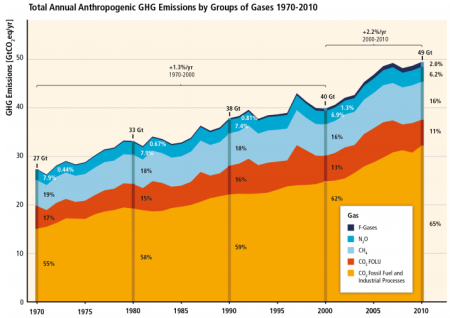
Nice to read. Nietzsche was doing philosophy with a hammer, we went further: we are doing climate with a hammer. Hopefully, it will crack soon: nothing like a great catastrophe to bring further fascism. Nihilism is bad thing, naivety, even worse. To please the powers that be, and thus to be taken seriously, serious climate scientists have made unwarranted, profoundly unscientific, over-optimistic declarations about the ice sheets. Now their time is up. In truth the GreenHouse emissions are completely out of control, and still increasing… At a geological scale, every year:

global_greenhouse_gas_emissions
50 Gigatons Per Year: This GreenHouse Is Bigger Than CO2 Alone.

I didn’t expect it would go so fast,” Dr. Caldeira said. “To melt all of Antarctica, I thought it would take something like 10,000 years.” Didn’t they all. Why? Because only then would one be invited at the White House. Thinking correctly means, first, to think in a way that pleases those with power.

“Combustion of available fossil fuel resources sufficient to eliminate the Antarctic Ice Sheet” [Ricarda Winkelmann, Anders Levermann, Andy Ridgwell,, Ken Caldeira]:

“The Antarctic Ice Sheet stores water equivalent to 58 meters in global sea-level rise. We show in simulations using the Parallel Ice Sheet Model that burning the currently attainable fossil fuel resources is sufficient to eliminate the ice sheet. With cumulative fossil fuel emissions of 10,000 gigatonnes of carbon (GtC), Antarctica is projected to become almost ice-free with an average contribution to sea-level rise exceeding 3 m per century during the first millennium. Consistent with recent observations and simulations, the West Antarctic Ice Sheet becomes unstable with 600 to 800 GtC of additional carbon emissions. Beyond this additional carbon release, the destabilization of ice basins in both West and East Antarctica results in a threshold increase in global sea level. Unabated carbon emissions thus threaten the Antarctic Ice Sheet in its entirety with associated sea-level rise that far exceeds that of all other possible sources.”

The famous Doctor Hansen and his collaborators upset the establishment two months ago by predicting a rise of three meters within 85 years (they use the reasoning I have used before, namely that paleontological data show sea level rise of 5 to 9 meters, with a rise of just one degree Celsius; actually the reasoning was obvious since 2009, when I pointed out that “2C Is Too Much“). The new paper potentially confirms Hansen’s findings. As I said, the new paper tries to NOT upset the powers that be (differently from yours truly, who view most individuals and institutions in power more than suspiciously, and it shows). Thus, one has to read between the lines to deduce that, from the paper itself, interpreting it optimistically is completely unwarranted.

The paper says: “Consistent with recent observations and simulations, the West Antarctic Ice Sheet becomes unstable with 600 to 800 GtC of additional carbon emissions.” Hmm… Let’s see, how long would that take, at the present increasing rate? Now emissions of CO2 itself are around 35 Gt, per year. That’s a number often brandished, but, left at that, it’s disinformation. With other GreenHouse Gases, we are at 50 Gigatons of CO2 equivalent emission, per year. Sorry for taxing the mathematical capabilities of our great leaders: 12 x 50 = 600. This fits perfectly my “Ten Years To Catastrophe” essay. Thus, the West and EAST Antarctic Ice Sheet becomes unstable in TWELVE YEARS (according to this paper; I obtained the same rough estimate with a paleoclimate approach).

The United Nations has said that the rise of the sea would not likely exceed three feet in this century. Some island nations will be wiped out (oops). Yet experts officially hope that major cities could be protected from it, in the richest countries that is (re-oops), though at a cost in the trillions of dollars (contemplate the enormous works to protect London or Venice).

The New York Times mentioned the paper above, which say the ice sheets will start melting irreversibly within a decade, to argue, in Politically Correct fashion, that ice sheets respond slowly enough to changes in the climate that it simply takes longer than a century for large-scale melting to begin. As if that notion was in the paper. It is not. Far from it. As I have argued before, that notion is ridiculous.

Indeed, warm water will rush below the ice sheets in West Antarctica, and East Antarctica’s immense Wilkes and Aurora subglacial basins.

antarctica-subglacial-basins
Subglacial Basins Are The Achilles’ Heel Of The Biosphere.

{WAIS = West Antarctica Ice Shelf; WB = Wilkes Basin; AB = Aurora Basin.]

Yet from that (tipping) point on, the paper found that thereafter, the sea would rise at the rate at a foot per decade, ten times faster than now, the New York Times admitted.

However the real text is much more alarming. Here is an extract:

The Antarctic Ice Sheet is severely affected by high carbon emissions through both the marine ice-sheet instability and surface elevation feedbacks. On the time scale of millennia, large parts of the ice sheet melt or drain into the ocean, raising global sea level by several tens of meters. Most of the ice loss occurs within the first millennium, leading to high rates of sea-level rise during this period (Fig. 3; for more details, see also fig. S6). Our simulations show that cumulative emissions of 500 GtC commit us to long-term sea-level rise from Antarctica of 1.15 m within the next millenium, which is consistent with the sensitivity of 1.2 m/°C derived with a different ice-sheet model (33, 34). Paleo data suggest that similar rates of sea-level rise have occurred during past warm periods (35). If the 2°C target, corresponding to about 600 GtC of additional carbon release compared to year 2010, were attained, the millennial sea-level rise from Antarctica could likely be restricted to 2 m. In our simulations, this would keep the ice sheet below the threshold for the collapse of the Wilkes Basin. However, if that threshold is crossed, the Antarctic ice cover is significantly reduced in thickness and area (Fig. 4). If we were to release all currently attainable fossil fuel resources, Antarctica would become almost ice-free. It is unclear whether this dynamic discharge would be reversible and, if so, on which time scales.”

As I already said, since 2010, we have added another 230 Gigatons. So we are within eight year of the Wilkes ice sheet, the largest in the world, to become unstable. The paper admitted that about half the Antarctic ice sheet would melt or fall into the sea in the first thousand years.”

The New York Times’ interpretation that it will take nearly a century for dramatic melting to start was obviously tainted. It is just driven by political Machiavellianism: let’s admit there is climate “change” just as there is sea level “change”, and misinform about the unfolding catastrophe (although Main Stream Media had to recently admit the snow pack in California last April was the lowest in at least 500 years). How do I know this? The scientific paper used computerized models of the huge ice sheets covering Antarctica and Greenland. It is the first paper to do so. Yet, according to the biased New York Times, it would have found exactly what the UN found, during this century… Although the UN did not incorporate the ice sheet melt models.

Once the ice sheet melting is incorporated, faster melting ought to have been predicted, for THIS century. However that grim prediction would have upset the powers that be. We don’t want that to happen. Now that they have the drone habit, killing throngs of people they know nothing about, who knows what’s coming next if one disparages them? Beheading and crucifixion at the most esteemed Saudi plutocracy?

For plutocrats, the Saudis are a model of Human Rights: thus they elected them to head the UN panel on Human Rights. And ice sheet melting is perfect: all great catastrophes call onto what Obama calls “leaders” (our masters). If a bit of engineered inflation could bring Hitler, imagine what an inflating ocean can bring! A great future for the few who rule us, tax free.

Patrice Ayme’

ooOOoo

Let me close with two pictures:

sea-ice
That is a very great deal of water locked up in that ice!

and this one that shows how at least one would have a wonderful view of the sea from your room at the Boston Harbour Hotel!

The dagger has fallen!

 Interesting times!

Never stop fighting for a better world.

Protecting our right to breathe good, clean air.

robertgreeningersoll118442

Fundamentally, today’s post is not about dogs. But it is about the qualities that we can see in our dogs: trust, honesty, openness, and the core quality that inspires my writings about dogs: integrity.

I’m speaking of the disgusting news that has been headlined in the world’s media in recent days, no better summarised than by this extract from a current (1pm PDT yesterday)) BBC news report:

Volkswagen chief executive Martin Winterkorn has resigned following the revelation that the firm manipulated US diesel car emissions tests.

Mr Winterkorn said he was “shocked” by recent events and that the firm needed a “fresh start”.

He added that he was “not aware of any wrongdoing on my part” but was acting in the interest of the company.

VW has already said that it is setting aside €6.5bn (£4.7bn) to cover the costs of the scandal.

The world’s biggest carmaker admitted last week that it deceived US regulators in exhaust emissions tests by installing a device to give more positive results.

The company said later that it affected 11 million vehicles worldwide.

As ever, the voice of George Monbiot speaks a little clearer than most, and I am referring to his recent essay published both on his blog and in The Guardian newspaper.  I am very pleased to have Monbiot’s permission to republish his essay here on Learning from Dogs.

ooOOoo

Smoke and Mirrors

22nd September 2015

Pollution, as scandals on both sides of the Atlantic show, is a physical manifestation of corruption.
By George Monbiot, published in the Guardian 23 September 2015

In London, the latest figures suggest, it now kills more people than smoking. Worldwide, a new study estimates, it causes more deaths than malaria and HIV-Aids together. I’m talking about the neglected health crisis of this age, that we seldom discuss or even acknowledge. Air pollution.

Heart attacks, strokes, asthma, lung and bladder cancers, low birth weight, low verbal IQ, poor memory and attention among children, faster cognitive decline in older people and – recent studies suggest – a link with the earlier onset of dementia: all these are among the impacts of a problem that, many still believe, we solved decades ago. The smokestacks may have moved to China, but other sources, whose fumes are less visible, have taken their place. Among the worst are diesel engines, sold, even today, as the eco-friendly option, on the grounds that their greenhouse gas emissions tend to be lower than those of petrol engines. You begin to wonder whether any such claims can still be trusted.

Volkswagen’s rigging of its pollution tests is an assault on our lungs, our hearts, our brains. It is a classic example of externalisation: the dumping of costs that businesses should carry onto other people. The air that should have been filtered by its engines is filtered by our lungs instead. We have become the scrubbing devices it failed to install.

Who knows how many people have paid for this crime already, with their health or with their lives? In the USA, 200,000 deaths a year are attributed to air pollution. For how many of those might Volkswagen be responsible? Where else was the fraud perpetrated? Of what proportion of our health budgets has this company robbed us?

The fraud involves the detection of nitrogen oxides (NOx), of which diesel engines are the major source in many places. This month, for the first time in our history, the UK government estimated the impact of NOx emissions on public health, and discovered that they are likely almost to double the number of deaths from air pollution, adding 23,000 to the 29,000 attributed to particulates (tiny particles of soot).

The government released this discovery, alongside its useless proposals for dealing with the problem, on Saturday 12 September, a few minutes before Jeremy Corbyn’s election as Labour leader was announced. How many government press releases are published on a Saturday? How many are published on a Saturday during an event on which everyone is focused? In other words, as a Labour press officer once notoriously advised, this was “a good day to bury bad news”. Not only was the number of deaths buried by this means, but so was the government’s consultation on its feeble plans for reducing this pollution: a consultation to which it evidently wanted as few respondents as possible. Liz Truss, the environment secretary, has some explaining to do.

She has her reasons for keeping us in the dark. In April, the Supreme Court ruled that the UK is in breach of the European air quality directive, and insisted that the government draw up a plan for compliance by the end of this year. Instead, Truss produced a plan to shed responsibility. Local authorities, her consultation suggests, should create clean air zones in at least eight cities, in which diesel engines are restricted or banned. But she has given them neither new money nor new powers. Nor has she offered an explanation of how this non-plan is going to address the issue in the rest of the country, as the ruling demands.

Already, the UK has missed the European deadline by six years. Under Truss’s proposals, some places are likely still to be in breach by 2025: 16 years after the original deadline. I urge you to respond to the consultation she wanted you to miss, which closes on November 6.

The only concrete plan the government has produced so far is to intensify the problem, through a new programme of airport expansion. This means more nitrous oxides, more particulates, more greenhouse gas emissions.

Paradoxically, the Volkswagen scandal may succeed where all else has failed, by obliging the government to take the only action that will make a difference: legislating for a great reduction in the use of diesel engines. By the time this article is published, we might know whether the company’s scam has been perpetrated in Europe as well as North America: new revelations are dripping by the hour. But whether or not this particular deception was deployed here, plenty of others have been.

Last week the Guardian reported that nine out of ten new diesel cars break European limits on nitrous oxides – not by a little but by an average of sevenfold. Every manufacturer whose emissions were tested had cars in breach of the legal limit. They used a number of tricks to hotwire the tests: “stripping components from the car to reduce weight, using special lubricants, over-inflating tyres and using super-smooth test tracks.” In other words, the emissions scandal is not confined to Volkswagen, not confined to a single algorithm and not confined to North America: it looks, in all its clever variants, like a compound global swindle.

There are echoes here of the ploys used by the tobacco industry: grand deceptions smuggled past the public with the help of sophisticated marketing. Volkswagen sites advertising the virtues of “clean diesel” have been dropping offline all day. In 2009, the year in which its scam began, the TDI engine at the centre of the scandal won the Volkswagen Jetta 2.0 the green car of the year award. In 2010, it did the same for the Audi A3.

There’s plenty that’s wrong with corporate regulation in the United States, but at least the fines, when they occur, are big enough to make a corporation pause, and there’s a possibility of guilty executives ending up in prison. Here, where corruption, like pollution, is both omnipresent and invisible, major corporations can commit almost any white-collar crime and get away with it. Schemes of the kind that have scandalised America are, in this country, both commonplace and unremarked. How can such governments be trusted to defend our health?

www.monbiot.com

ooOOoo

I found myself having two emotional reactions to Monbiot’s essay. The first was that for many years, when I was living and working in England, I drove diesel-powered cars on the (now false) belief that they were better for the environment.

My second reaction was to Monbiot listing the likely impacts from air pollution,”Heart attacks, strokes, asthma, lung and bladder cancers, low birth weight, low verbal IQ, poor memory and attention among children, faster cognitive decline in older people and – recent studies suggest – a link with the earlier onset of dementia. . . “, for the reason that at the age of 70, I am already noticing the creeping onset of reduced verbal IQ, cognitive decline, and worry about the onset of dementia. To think that my earlier decisions about what cars to drive might be a factor in this is disturbing.

I am going to close this post by highlighting how fighting for what we want is important, critically so. By republishing an item that was posted on AmericaBlog just over a year ago, that fortuitously is a reward for living in the State of Oregon.

ooOOoo

Climate win: Appeals court in Oregon rules state court must decide if atmosphere is a “public trust”

6/16/14 10:00am by Gaius Publius

Two teenagers from Eugene, Ore. filed suit against Governor Kitzhaber and the State of Oregon for failing to protect the “atmosphere, state waters, and coast lines, as required under the public trust doctrine.”

They lost the first round, where the state court said that climate relief was not a judicial matter. But they won on appeal. The case goes back to the original court, which now has orders to decide the case on its merits and not defer to the executive or legislature.

The gist of the appeals court decision:

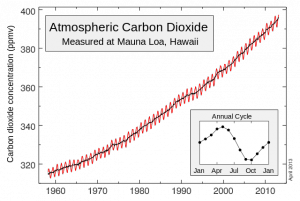
Their lawsuit asked the State to take action in restoring the atmosphere to 350 ppm of CO2 by the end of the century. The Oregon Court of Appeals rejected the defenses raised by the State, finding that the youth could obtain meaningful judicial relief in this case.

That’s quite a nice victory. Here’s the full story, from the Western Environmental Law Center (my emphasis throughout):

Keeling-curve_CO2_ppm_Mauna_Loa_Carbon_Dioxide_Apr2013.svg_-300x201

In a nationally significant decision in the case Chernaik v. Kitzhaber, the Oregon Court of Appeals ruled a trial court must decide whether the atmosphere is a public trust resource that the state of Oregon, as a trustee, has a duty to protect. Two youth plaintiffs were initially told they could not bring the case by the Lane County Circuit Court. The trial court had ruled that climate change should be left only to the legislative and executive branches. Today, the Oregon Court of Appeals overturned that decision.

Two teenagers from Eugene, Kelsey Juliana and Olivia Chernaik, filed the climate change lawsuit against Governor Kitzhaber and the State of Oregon for failing to protect essential natural resources, including the atmosphere, state waters, and coast lines, as required under the public trust doctrine. Their lawsuit asked the State to take action in restoring the atmosphere to 350 ppm of CO2 by the end of the century. The Oregon Court of Appeals rejected the defenses raised by the State, finding that the youth could obtain meaningful judicial relief in this case. …

In reversing the Lane County trial court, the Oregon Court of Appeals remanded the case ordering the trial court to make the judicial declaration it previously refused to make as to whether the State, as trustee, has a fiduciary obligation to protect the youth from the impacts of climate change, and if so, what the State must do to protect the atmosphere and other public trust resources.

The implications of this are broad, and similar cases are pending in other states, as the article describes.

Make no mistake; decisions like this matter. It places the court squarely in the mix as a power player in the climate war, the fight for “intergenerational justice” as James Hansen puts it — or the war against intergenerational betrayal, as I put it.

This is a cornerstone decision from the Oregon Court of Appeals in climate change jurisprudence. The court definitively ruled that the question of whether government has an obligation to protect the atmosphere from degradation leading to climate change is a question for the judiciary, and not for the legislative or executive branches. The Court did not opine as to how that question should be answered, only that it should be answered by the judiciary.

We can win this; it’s not over. If we reach 450 ppm and we’re still not stopping with the CO2, then it’s over and I become a novelist full-time. But we’re not there yet, and please don’t surrender as if we were.

The courts are now a powerful tool, as is divestment. James Hansen has a way to restore the atmosphere to 350 ppm CO2 in time to stop slow feedbacks from kicking in. It’s a doable plan, but we’ll need to use force. Using the courts, as with using divestment campaigns, counts as force. Stay tuned.

(Want to use force at the national level? Find a way to challenge Obama publicly to stop leasing federal land to coal companies. He’s a hypocrite until he stops federal coal from being mined and sold abroad. A simple and obvious challenge for him. You too can be the activist.)

GP

Twitter: @Gaius_Publius
Facebook: Gaius Publi

(Facebook note: To get the most from a Facebook recommendation, be sure to Share what you also Like. Thanks.)

ooOOoo

 Never forget that you, me and every other good-minded person on this planet can make a positive difference. Need inspiration? Gain it from our dogs! Let’s use the liberty we enjoy to make a difference.

Honouring our rescue dogs.

In this case, honouring one particular one.

As many know, yesterday was the fourteenth anniversary of when those two planes struck the towers of the World Trade Centre. Thus it seemed beautifully appropriate to recognise the life of the last living 9/11 rescue dog by republishing the article just published on Mother Nature News.

ooOOoo

Last living 9/11 rescue dog rewarded with epic day

Bretagne traveled to NYC to be honored for her weeks of service at Ground Zero.

By: Laura Moss, September 11, 2015.

At 16, Bretagne is a senior dog, but that hasn't slowed her down. She now volunteers at schools. (Photo: BarkPost)
At 16, Bretagne is a senior dog, but that hasn’t slowed her down. She now volunteers at schools. (Photo: BarkPost)

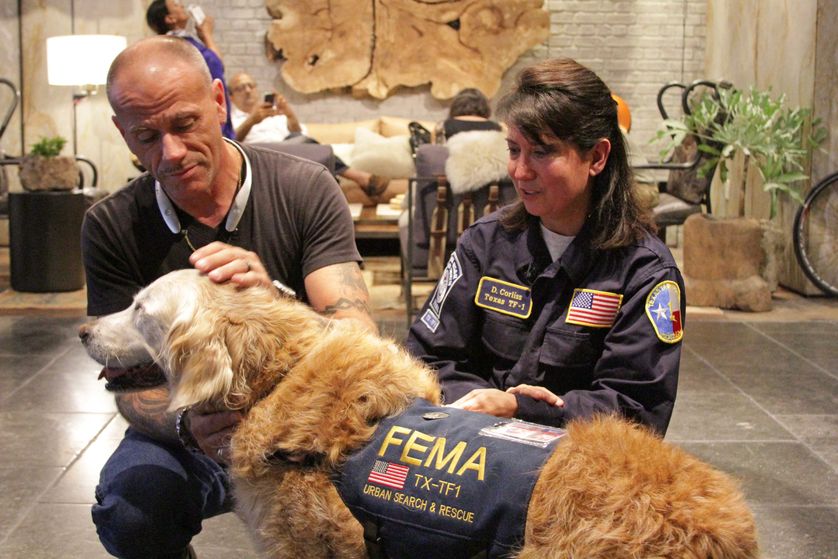
About 100 search-and-rescue dogs scoured the twisted steel beams and crumbled concrete of the World Trade Center in the aftermath of the 9/11 attacks, and today, Bretagne (pronounced “Brittany”) is the last known living 9/11 search-and-rescue dog. And she just had the best day ever.

To honor Bretagne for her service and celebrate her 16th birthday, BarkPost teamed up with the dog-friendly 1 Hotel Central Park to give the golden retriever a “Dog’s Best Day” that included a full day of treats and activities in New York City.

When Bretagne arrived in New York with her owner and handler Denise Corliss, she was greeted by a personalized billboard in Times Square.

Photo: BarkPost
Photo: BarkPost

Then she was off to play in the water at Hudson River Park, where she was presented with the doggie version of the Key to the City.

Former search-and-rescue teammates attended Bretagne’s sweet-16 party later that day, where she received a variety of toys and treats — and her very own birthday cake.

Photo: BarkPost
Photo: BarkPost

Corliss was also presented with a $1,000 donation for Texas Task Force 1, Bretagne’s search-and-rescue team, which is the most active one in the country.

In addition to her recovery work at Ground Zero, Bretagne and Corliss also worked in New Orleans following Hurricane Katrina, and today, the senior dog serves her community by volunteering at school programs that teach children to read.

Corliss adopted Bretagne as an 8-week-old puppy in 1999, and after undergoing rigorous training, the two joined Texas Task Force 1. Their first deployment was to Ground Zero, where a search for survivors quickly turned into a search for human remains.

Bretagne with a firefighter and her owner and handler, Denise Corliss during her "Dog's Best Day." (Photo: BarkPost)
Bretagne with a firefighter and her owner and handler, Denise Corliss during her “Dog’s Best Day.” (Photo: BarkPost)

For two weeks, the golden retriever tirelessly worked 12-hour shifts at the former site of the World Trade Center, and one day, Bretagne walked away from Corliss, ignoring commands to come back. The 2-year-old dog made her way to a firefighter sitting on the ground, laid next to him and put her head in his lap.

“When we deploy to some of the disasters, what I didn’t anticipate is the role that they take on as a therapy dog,” Corliss told BarkPost. “It provides an opportunity for people to have support from the dog and comfort from the dog in a real difficult environment.”

Watch Bretagne enjoy her best day in the video below.

ooOOoo

Don’t these wonderful, fabulous animals just make your heart ache!

Jean and I salute Bretagne and all the other Search & Rescue dogs both here in America and all around the world.

Two views of the United Kingdom

The very good and the very ugly.

Yesterday was the moment when Queen Elizabeth II became the longest-reigning UK monarch. As the BBC reported (in part) yesterday:

Queen Elizabeth II becomes longest-reigning UK monarch

The Queen has thanked well-wishers at home and overseas for their “touching messages of kindness” as she becomes Britain’s longest-reigning monarch.

Speaking in the Scottish Borders, the 89-year-old monarch said the title was “not one to which I have ever aspired”.

At 17:30 BST she had reigned for 23,226 days, 16 hours and approximately 30 minutes – surpassing the reign of her great-great-grandmother Queen Victoria.

David Cameron said the service the Queen had given was “truly humbling”.

Dressed in turquoise with her trusty black handbag at her side, the Queen spoke briefly to the gathered crowds earlier.

“Inevitably a long life can pass by many milestones – my own is no exception – but I thank you all and the many others at home and overseas for your touching messages of great kindness,” she said.

Newly released official photographs show the Queen with her official red box, containing the day's policy papers, cabinet documents, Foreign Office papers and other letters.
Newly released official photographs show the Queen with her official red box, containing the day’s policy papers, cabinet documents, Foreign Office papers and other letters.

Here’s a video that is worth viewing:

So that was the ‘good’ news.

Now here is the ‘ugly’ news; the latest essay by George Monbiot republished here with Mr. Monbiot’s kind permission.

ooOOoo

Britain’s Mafia State

8th September 2015

Where does legitimate business end and organised crime begin?

By George Monbiot, published in the Guardian 9th September 2015

Be reasonable in response to the unreasonable: this is what voters in the Labour election are told. Accommodate, moderate, triangulate, for the alternative is to isolate yourself from reality. You might be inclined to agree. If so, please take a look at the reality to which you must submit.

To an extent unknown since before the First World War, economic relations in this country are becoming set in stone. It’s not just that the very rich no longer fall while the very poor no longer rise. It’s that the system itself is protected from risk. Through bail-outs, quantitative easing and delays in interest rate rises, speculative investment has been so well cushioned that, as Larry Elliott puts it, financial markets are “one of the last bastions of socialism left on earth.”

Public services, infrastructure, the very fabric of the nation: these too are being converted into risk-free investments. Social cleansing is transforming inner London into an exclusive economic zone for property speculation. From a dozen directions, government policy converges on this objective. The benefits cap and the bedroom tax drive the poor out of their homes. The forced sale of high-value council houses creates a new asset pool. An uncapped and scarcely regulated private rental market turns these assets into gold. The freeze on council tax banding since 1991, the lifting of the inheritance tax threshold and £14 billion a year in breaks for private landlords all help to guarantee stupendous returns.

And for those who wish simply to sit on their assets, the government can help here too, by ensuring that there are no penalties for leaving buildings empty. As a result, great tracts of housing are removed from occupation. Agricultural land has proved an even better punt for City money: with the help of capital gains, inheritance and income tax exemptions, as well as farm subsidies, its price has quadrupled in 12 years.

Property in this country is a haven for the proceeds of international crime. The head of the National Crime Agency, Donald Toon, notes that “the London property market has been skewed by laundered money. Prices are being artificially driven up by overseas criminals who want to sequester their assets here in the UK.”

It’s hardly surprising, given the degree of oversight. Private Eye has produced a map of British land owned by companies registered in offshore tax havens. The holdings amount to 1.2 million acres, including much of our prime real estate. Among those it names as beneficiaries are a cast of Russian oligarchs, oil sheikhs, British aristocrats and newspaper proprietors. These are the people for whom government policy works, and the less regulated the system that enriches them, the happier they are.

The speculative property market is just one current in the great flow of cash that sluices through Britain while scarcely touching the sides. The financial sector exploits an astonishing political privilege: the City of London is the only jurisdiction in the UK not fully subject to the authority of parliament. In fact, the relationship seems to work the other way. Behind the Speaker’s chair in the House of Commons sits the Remembrancer, whose job is to ensure that the interests of the City of London are recognised by the elected members. (A campaign to rescind this privilege – Don’t Forget the Remembrancer – will be launched very soon). The City has one foot in the water: it is a semi-offshore state, a bit like the UK’s Crown dependencies and overseas territories, tax havens legitimised by the Privy Council. Britain’s financial secrecy undermines the tax base while providing a conduit into the legal economy for gangsters, kleptocrats and drug barons.

Even the more orthodox financial institutions deploy a long succession of scandalous practices: pension mis-selling, endowment mortgage fraud, the payment protection insurance con, Libor rigging. A former minister in the last government, Lord Green, ran HSBC while it engaged in money laundering for drugs gangs, systematic tax evasion and the provision of services to Saudi and Bangladeshi banks linked to the financing of terrorists. Sometimes the UK looks to me like an ever-so-civilised mafia state.

At next month’s Conservative party conference, corporate executives will pay £2,500 to sit with a minister. Doubtless, because we are assured that there is no link between funding and policy, they will spend the day discussing the weather and the films they have seen. If we noticed such arrangements overseas, we might be inclined to regard them as corruption. But that can’t be the case here, not least because the invitation explains that “fees associated with business day & dinner are considered a commercial transaction and therefore do not constitute a political donation.”

The government also insists that there is no link between political donations and seats in the House of Lords. But a study by researchers at Oxford University found that the probability of so many major donors arriving there by chance is 1.36 x 10-38: roughly “equivalent to entering the National Lottery and winning the jackpot 5 times in a row”. Why does the Lords remain unreformed? Because it permits plutocratic power to override democracy. Both rich and poor are kept in their place.

Governed either by or on behalf of the people who fleece us, we cannot be surprised to discover that all public services are being re-engineered for the benefit of private capital. Nor should we be surprised when governments help to negotiate, without public consent, treaties such as TTIP and CETA (the Comprehensive Economic and Trade Agreement), which undermine the sovereignty of both parliament and the law. Aesop’s observation that “we hang the petty thieves and appoint the great ones to public office” remains true in spirit, though hanging has been replaced by community payback.

Wherever you sniff in British public life, something stinks: I could fill this newspaper with examples. But, while every pore oozes corruption, our task, we are told, is merely to trim the nails of the body politic.

To fail to confront this system is to collaborate with it. Who on the left would wish to stand on the sidelines as this carve-up continues? Who would vote for anything but sweeping change?

www.monbiot.com

ooOOoo

Going to close with this picture:

Ma'am's best friend: The Queen has owned corgis for more than 60 years. Picture seen on in the UK's Daily Mail newspaper.
Ma’am’s best friend: The Queen has owned corgis for more than 60 years. Picture seen in the UK’s Daily Mail newspaper.

Taking the two stories together, all that comes to mind is that we could do much better if the United Kingdom, and other countries, were governed by dogs!

For safer, cheaper pest control, just add ants!

A very interesting report that recently appeared on Mother Nature Network (MNN).

We live in Josephine County here in Southern Oregon. Our next door neighbours to the East are Jackson County. Josephine and Jackson Counties share one very noble attribute: each is only one of just nine GMO-free counties in the entire United States of America.  Plus, as evidenced at our local Grants Pass Farmers’ Market every Saturday, the growing of organic fruit and vegetables is widespread in our county.  We feel very happy to have ended up in this part of America.

All of which makes a logical introduction to a report that appeared on MNN on September, 1st.  It is republished below.

ooOOoo

For safer, cheaper pest control, just add ants

Ants offer a surprisingly effective alternative to synthetic pesticides on crops ranging from cashews to sugar cane, according to a new review of more than 70 scientific studies.

By: Russell McLendon, September 1, 2015, 9:30 a.m.

Weaver ants can not only protect tree crops from pests, but may also benefit the quality of produce. (Photo: Rushen/Flickr)

Sometimes ants are pests, marching through our kitchens on an industrious quest for crumbs. But when faced with more serious pests — namely those that destroy crops on which people’s livelihoods depend — we can also use ants to our advantage.

Published in the Journal of Applied Ecology, a new research review suggests ants can control agricultural pests as efficiently as synthetic pesticides, with the bonus of being more cost-effective and generally safer. And since many pesticides pose a danger to helpful wildlife like birds, bees and spiders — not to mention humans — ants might be a key ally in feeding the planet’s booming human population.

The review covers more than 70 scientific studies on dozens of pest species that plague nine crop varieties in Africa, Southeast Asia and Australia. Because ants are organized as “superorganisms” — meaning the colony itself is like an organism, with individual ants acting as “cells” that can move around independently — they are uniquely capable of hunting down pests and then overwhelming them.

“Ants are great hunters and they work cooperatively,” says author Joachim Offenberg, a biologist at Aarhus University in Denmark, in a press release about the research. “When an ant finds its prey, it uses pheromones to summon help from other ants in the nest. By working together, they can subdue even large pests.”

Most studies in the review focused on weaver ants, a tropical genus of tree-dwelling ants that weave ball-shaped nests using leaves and larval silk. Since they live in the canopy of their host trees, near the fruit and flowers that need protection, weaver ants have a natural tendency to control pest populations in orchards.

A colony of weaver ants in India works on converting leaves into a nest. (Photo: Raghu Mohan/Flickr)

In one three-year study, Australian cashew growers recorded yields 49 percent higher in trees guarded by weaver ants versus trees treated with synthetic chemicals. But higher yields were only part of the prize: The farmers also got higher-quality cashews from the trees with ants, resulting in a 71 percent higher net income.

Similar results were reported in mango orchards. While mango trees with ants had roughly the same yields as those with synthetic chemicals, the ants were cheaper — and the trees they inhabited grew higher-quality fruit. That led to a 73 percent higher net income compared with pesticide-treated trees. Not all crops had such dramatic results, but studies on more than 50 pests showed that ants can protect crops including cocoa, citrus and palm oil at least as effectively as pesticides.

“Although these are rare cases where the ants were superior to chemicals, many studies show that ants are just as efficient as chemical controls,” Offenberg says. “And of course ant technology is much cheaper than chemical pest control.”

To recruit weaver ants in their orchards, farmers just collect nests from the wild, hang them in plastic bags from tree branches and feed them a sugar solution while they build new nests. Once the ants establish their colony, farmers can help them expand by connecting target trees with aerial walkways made from string or vines.

The ants are mostly self-sufficient from there, needing only some water during the dry season — provided via plastic bottles in the trees — and pruning of non-target trees that host different ant colonies to prevent fights. Farmers can also help their ants by avoiding broad-spectrum insecticide sprays, researchers say.

Ants protect mango trees about as effectively as pesticides, but at less cost, research suggests. (Photo: Shutterstock)

It’s worth noting that ants can also be detrimental to some plants, such as when they herd sap-feeding insects like aphids and leafhoppers. But if they still fend off fruit-ruining flies and beetles, their net impact may be positive nonetheless. Not only do weaver ants kill pest insects on their trees, but their presence alone is reportedly enough to scare away marauders as large as snakes and fruit bats. And research suggests their urine even contains important plant nutrients.

The use of ants for pest control isn’t new. As early as 300 B.C., Chinese farmers could buy weaver ants in markets to release in their citrus groves, a practice that has faded over time, especially after the advent of chemical pesticides. But it may be coming back, both because ants are cheaper than pesticides and because certified organic produce can fetch higher prices, due to concerns that broad-spectrum pesticides harm more than just pests. Aarhus University is studying the use of weaver ants as pest control in Benin and Tanzania, for example, where the insects could lead to increased export revenue of $120 million and $65 million, respectively.

“To kill the flies with pesticides, you have to make the mango so poisonous that it can kill the maggot,” Aarhus University biologist Mogens Gissel Nielsen told China’s Xinhua news agency in 2010. “But when it is too poisoned for the maggot to eat, it might not be good for us to eat either.”

While the research in Offenberg’s review focused largely on weaver ants, he points out they “share beneficial traits with almost 13,000 other ant species, and are unlikely to be unique in their properties as control agents.” Lots of ants nest in the ground, and while it may be a challenge to relocate them, they too have shown promise in protecting a variety of commercially important crops.

“Weaver ants need a canopy for their nests, so they are limited to plantations and forestry in the tropics,” Offenberg says. “But ground-living ants can be used in crops such as maize and sugar cane. European wood ants are renowned for controlling pests in forestry, and new projects are trying to use wood ants to control winter moths in apple orchards. Ants could even be used to fight plant pathogens because they produce antibiotics to combat diseases in their dense societies.”

ooOOoo

As with many of the other fine articles that appear on Mother Nature Network, this report by Russell McLendon has many links to other information sources, too many for me to set up. So if this report ‘speaks’ to you and you want to look up the background information then please go here and read it over on MNN.


With power comes responsibility.

“The price of greatness is responsibility.”

So said Sir Winston Churchill. It applies equally to the price of power.

There was an essay recently written and published by Hariod Brawn over on her blog Contentedness.net that was incredibly thought-provoking and very beautiful besides. Hariod has given me permission to republish it and it follows shortly.

I have no doubt that Hariod’s essay was, in part, inspired by that terrible photograph that has been circulated and commented upon by thousands around the world.

_85332393_full-pic

In the words of the BBC, “The pictured boy is reported to be three-year-old Aylan, who drowned along with his five-year-old brother Galip and their mother, Rihan. Their father, Abdullah Kurdi, survived.”

The emotions created by this and other tragic photographs are disturbing, and I am no exception to having those same emotions. But as friend, Chris Snuggs, mentioned in a telephone call between us yesterday morning, what has been happening in Syria is no less terrible, perhaps even more so when one looks at the blood that is, metaphorically, on the hands of a number of western governments. The old saying of reaping what we sow comes to mind.

None of which takes away the intense beauty of Hariod’s essay: Empathetic apes.

ooOOoo

Empathic apes

Orangutan mother and kids. By Patrick Bouquet, Chantilly.

The year is 1955, and far from the nearest village, somewhere within the Northwestern jungle region of Thailand, a 48 year-old Englishman and ordainee to the Buddhist monkhood sits quietly in studious attention. A few feet away, a female ape sits, arms carefully wrapped around some precious possession. The monk first chanced upon her the previous day, and due to the curiosity roused in observing her melancholic countenance, has remained respectfully nearby to her. A trust has developed, the ape sensing the monk’s gentle disposition and harmlessness. He really ought to be making his way to the village for alms, yet somehow senses that he should stay. A silent, palpable communication has developed between the two, and slowly, carefully and deliberately, the ape, her sadness still etched upon her face, finally unfolds her arms and offers a first sight of what she has been protecting. The monk slowly approaches to within a pace or two, sensing the invitation, only to catch sight of her lifeless and terribly deformed baby.

Two empathic apes, ancestrally and psychologically speaking, separated by little more in this moment than a distant, lineage-splitting, speciation event. Opposable thumbs, one hers and one his, in turn chase away a monk’s tear and a delicately mottled butterfly as it alights from the baby’s forehead, though cannot do the same for their conjoined feelings. Eyes meet, evincing as they do a deepening rush of sadness. Nothing can be done – is this what she is thinking in her way? In his unknowing, the saffron-robed wanderer radiates compassion, yet knows he has nothing to do with it; an offering from wisdom, not from the self. All that need be known arrives in the fullest of measures. What use now the venerable elder’s sagacity, his knowledge of emptiness, renunciation, equanimity, the void? She inhabits the void, is the void, her bleak knowing piercing its veils. Without turning, the monk slowly retreats, still reverently holding her gaze alongside a shared understanding. A slight suggestion of a bowing head betokens what passes between them.

It is the ability to empathise which in part distinguishes the psychopathic mind from its otherwise healthy state, and the primary orbit of empathy is that of feeling, not the mere gyrations of intellect. This is why many species of sentience can empathise, and we human animals are but one of them. We may erroneously presume that an ability to reflect upon others’ situations facilitates human empathic capacity; yet the state of those others and their situations need not be known as verbally abstracted objects in the mind – little stories packaged in words. We may just as well occupy others’ frames of reference by intuited means; and vitality, morbidity, distress and joy may all be recognised across species in differing ways; one need not indulge any anthropomorphisation, for clear evidence abounds. What is intuited here, or instinctively known, is the nature of the other’s felt emotional condition; and in this way, 60 years ago, the grieving mother ape and mendicant monk shared that intense experience – a wordless world of deep, primate feeling.

Engraving of Orangutan. By Willem Piso (1611-1678). Courtesy Wellcome Trust

Was the mother ape empathic? Well, she came to appreciate the monk’s amity; she felt able to extend trust; she intuited the monk’s concern for her as well as his desire for understanding as to the reasons for, and significance of, her sadness; and finally, she recognised that the monk would feel something of that sadness in revealing its causes to him. This is all to say that she significantly placed herself within the monk’s frame of reference and innately understood that emotions can be matched in shared experience – the personal does not expire at the boundary of the body. Her empathic appreciation was sophisticated, certainly moreso than any psychopathic human ape. Now, one way to cheat the system is to mimic expressions and gestures, which results in a like proprioceptive sense. This means our feelings echo the other’s, so affecting an emotional contagion of sorts, whether volitionally induced or not. Yet neither jungle dweller did so, their empathic link being forged in mind purely intuitively, and silently.

Empathy subsists in knowledge; it is in part to know the mind of the other, and whilst its currency is both cognitive (knowing) and emotional (feeling) in nature, it is the latter that strengthens the connective link to altruistic and prosocial leanings, as well as ameliorating aggressive traits. Primates’ mirror-neuron systems help forge innate empathic leanings, with research suggesting that empathy evolved in part as a survival mechanism. Right now, tens of thousands of refugees are fleeing war-torn regions of Africa and the Middle East so as to seek sanctuary, and survival, in Europe. A few hours ago, a three year-old Syrian boy, Aylan Kurdi, drowned and was washed up on the shores of the Greek island of Kos. Equally tragically, his five year-old brother met a similar fate. Whilst Europe’s politicians exhibit an ongoing empathy gap, innocent children are dying. We live, not literally, though metaphorically, in a jungle, sharing the empathic faculties of the monk and bereaved mother ape. Are we wise enough to nurture the same?

ooOOoo

We need leaders who understand the integrity that is required from them. We need leaders that accept and understand the responsibilities that they have embraced, indivisible from the power that society has lent to them. We need leaders that understand a different aspect of their power, the power of those unanticipated consequences from their actions.

Until we the people understand that electing leaders who do not embrace integrity then Aylan Kurdi and thousands of others in those ‘hot spots’ around the world will continue dying in vain.

Integrity equates to being truthful, to being honest. It doesn’t mean being right all the time, of course not, but integrity does mean accepting responsibility for all our actions, for feeling remorse and apologising when we make mistakes. Integrity means learning, being reliable, being a builder rather than a destroyer. It means being authentic. That authenticity is precisely and exactly what we see in our dogs.

The starting point for what we must learn from our dogs is integrity.

Wild Dogs and Englishmen …

… go out in the mid-day sun!

Say the word ‘dog’ to me and my immediate thought would be of the domesticated animal, as I’m sure would be the first thought of thousands of others.

But our wonderful doggie companions came from the wild and in some countries wild dogs still are widely found. There was an article on the Mokolodi Nature Reserve blogsite in November, 2009 specifically about wild dogs, that included the following picture:

Wild hunting dogs drinking.

All of which is a wonderful reminder that wilderness is a critical and essential element in the overall health of our planet, and by extension, of ourselves.

The academic blogsite The Conversation yesterday published an article by William Lynn who is a Research Scientist in Ethics and Public Policy at Clark University. It proposes a wonderful way of keeping our populations of wild animals healthy and vibrant through rewilding.  It is republished here within the terms of The Conversation.

ooOOoo

Setting aside half the Earth for ‘rewilding’: the ethical dimension

August 26, 2015 5.50am EDT

image-20150821-31391-7a173d
Wildlife corridors: four proposals to ‘rewild’ portions of North America. Smithsonian Institute, CC BY-NC

A much-anticipated book in conservation and natural science circles is EO Wilson’s Half-Earth: Our Planet’s Fight for Life, which is due early next year. It builds on his proposal to set aside half the Earth for the preservation of biodiversity.

The famous biologist and naturalist would do this by establishing huge biodiversity parks to protect, restore and connect habitats at a continental scale. Local people would be integrated into these parks as environmental educators, managers and rangers – a model drawn from existing large-scale conservation projects such as Area de Conservación Guanacaste (ACG) in northwestern Costa Rica.

The backdrop for this discussion is that we are in the sixth great extinction event in earth’s history. More species are being lost today than at any time since the end of the dinosaurs. There is no mystery as to why this is happening: it is a direct result of human depredations, habitat destruction, overpopulation, resource depletion, urban sprawl and climate change.

Wilson is one of the world’s premier natural scientists – an expert on ants, the father of island biogeography, apostle of the notion that humans share a bond with other species (biophilia) and a herald about the danger posed by extinction. On these and other matters he is also an eloquent writer, having written numerous books on biodiversity, science, and society. So when Wilson started to talk about half-Earth several years ago, people started to listen.

As a scholar of ethics and public policy with an interest in animals and the environment, I have been following the discussion of half-Earth for some time. I like the idea and think it is feasible. Yet it suffers from a major blind spot: a human-centric view on the value of life. Wilson’s entry into this debate, and his seeming evolution on matters of ethics, is an invitation to explore how people ought to live with each other, other animals and the natural world, particularly if vast tracts are set aside for wildlife.

The ethics of Wilson’s volte-face

I heard Wilson speak for the first time in Washington, DC in the early 2000s. At that talk, Wilson was resigned to the inevitable loss of much of the world’s biodiversity. So he advocated a global biodiversity survey that would sample and store the world’s biotic heritage. In this way, we might still benefit from biodiversity’s genetic information in terms of biomedical research, and perhaps, someday, revive an extinct species or two.

Not a bad idea in and of itself. Still, it was a drearily fatalistic speech, and one entirely devoid of any sense of moral responsibility to the world of nonhuman animals and nature.

What is striking about Wilson’s argument for half-Earth is not the apparent about-face from cataloging biodiversity to restoring it. It is the moral dimension he attaches to it. In several interviews, he references the need for humanity to develop an ethic that cares about planetary life, and does not place the wants and needs of a single species (Homo sapiens sapiens) above the well-being of all other species.

people to consider the role of humans in nature. jene/flickr, CC BY-NC-ND
The half-earth proposal prompts people to consider the role of humans in nature. jene/flickr, CC BY-NC-ND

To my ear, this sounds great, but I am not exactly sure how far it goes. In the past, Wilson’s discussions of conservation ethics appear to me clearly anthropocentric. They espouse the notion that we are exceptional creatures at the apex of evolution, the sole species that has intrinsic value in and of ourselves, and thus we are to be privileged above all other species.

In this view, we care about nature and biodiversity only because we care about ourselves. Nature is useful for us in the sense of resources and ecological services, but it has no value in and of itself. In ethics talk, people have intrinsic value while nature’s only value is what it can do for people – extrinsic value.

For example, in his 1993 book The Biophilia Hypothesis, Wilson argues for “the necessity of a robust and richly textured anthropocentric ethics apart from the issues of rights [for other animals or ecosystems] – one based on the hereditary needs of our own species. In addition to the well-documented utilitarian potential of wild species, the diversity of life has immense aesthetic and spiritual value.”

The passage indicates Wilson’s long-held view that biodiversity is important because of what it does for humanity, including the resources, beauty and spirituality people find in nature. It sidesteps questions of whether animals and the rest of nature have intrinsic value apart from human use.

His evolving position, as reflected in the half-Earth proposal, seems much more in tune with what ethicist call non-anthropocentrism – that humanity is simply one marvelous but no more special outcome of evolution; that other beings, species and/or ecosystems also have intrinsic value; and that there is no reason to automatically privilege us over the rest of life.

Consider this recent statement by Wilson:

What kind of a species are we that we treat the rest of life so cheaply? There are those who think that’s the destiny of Earth: we arrived, we’re humanizing the Earth, and it will be the destiny of Earth for us to wipe humans out and most of the rest of biodiversity. But I think the great majority of thoughtful people consider that a morally wrong position to take, and a very dangerous one.

The non-anthropocentric view does not deny that biodiversity and nature provide material, aesthetic and spiritual “resources.” Rather, it holds there is something more – that the community of life has value independent of the resources it provides humanity. Non-anthropocentric ethics requires, therefore, a more caring approach to people’s impact on the planet. Whether Wilson is really leaving anthropocentrism behind, time will tell. But for my part, I at least welcome his opening up possibilities to discuss less prejudicial views of animals and the rest of nature.

The 50% solution

It is interesting to note that half-Earth is not a new idea. In North America, the half-Earth concept first arose in the 1990s as a discussion about wilderness in the deep ecology movement. Various nonprofits that arose out of that movement continued to develop the idea, in particular the Wildlands Network, the Rewilding Institute and the Wild Foundation.

These organizations use a mix of conservation science, education and public policy initiatives to promote protecting and restoring continental-scale habitats and corridors, all with an eye to preserving the native flora and fauna of North America. One example is ongoing work to connect the Yellowstone to Yukon ecosystems along the spine of the Rocky Mountains.

Take it up a notch? The British Columbia Ministry of Transportation recently started to add signs warning motorists when they are likely to encounter wildlife. British Columbia Ministry of Transportation, CC BY-NC-ND

When I was a graduate student, the term half-Earth had not yet been used, but the idea was in the air. My classmates and I referred to it as the “50% solution.” We chose this term because of the work of Reed Noss and Allen Cooperrider’s 1994 book, Savings Nature’s Legacy. Amongst other things, the book documents that, depending on the species and ecosystems in question, approximately 30% to 70% of the original habitats of the Earth would be necessary to sustain our planet’s biodiversity. So splitting the difference, we discussed the 50% solution to describe this need.

This leads directly into my third point. The engagement of Wilson and others with the idea of half-Earth and rewilding presupposes but does not fully articulate the need for an urban vision, one where cities are ecological, sustainable and resilient. Indeed, Wilson has yet to spell out what we do with the people and infrastructure that are not devoted to maintaining and teaching about his proposed biodiversity parks. This is not a criticism, but an urgent question for ongoing and creative thinking.

Humans are urbanizing like never before. Today, the majority of people live in cities, and by the end of the 21st century, over 90% of people will live in a metropolitan area. If we are to meet the compelling needs of human beings, we have to remake cities into sustainable and resilient “humanitats” that produce a good life.

Such a good life is not to be measured in simple gross domestic product or consumption, but rather in well-being – freedom, true equality, housing, health, education, recreation, meaningful work, community, sustainable energy, urban farming, green infrastructure, open space in the form of parks and refuges, contact with companion and wild animals, and a culture that values and respects the natural world.

To do all this in the context of saving half the Earth for its own sake is a tall order. Yet it is a challenge that we are up to if we have the will and ethical vision to value and coexist in a more-than-human world.

ooOOoo

I am sure many will agree that this is a very interesting idea and one that I hope is eventually adopted. For the sake of all our wild animals, including our dogs.

Habituated to eating

A startling and counter-intuitive essay from George Monbiot.

Hariod Brawn, she of the blog Contentedness.net, left a response to yesterday’s post in this place. Here is what Hariod said:

Yes Paul, I too recognise the value in understanding the neural substrates involved, regardless of what may in any case be reliably inferred and readily apparent in behavioural evidence. The social intelligence of the dog seems remarkably advanced of course, and so naturally provides a rich source for such research. Having said that, I am struck by the amount of academic funding that goes into confirming what is already self-evident, and wonder if the apportioning of funds is done quite as effectively as it could be. Much is determined by commercial interests of course.

“Much is determined by commercial interests …”

I have been a resident of the United States since April 2011. There has been much to take in and embrace at so many levels. However, one of the things that has seemed very foreign to my eyes was the extent of the obesity seen almost everywhere that one is out and about. At first it seemed more of an American issue, but over the last few years watching news items from the UK and seeing other general items on the internet from ‘the old country’ I came to realise that countries both ‘sides of the pond’ are grappling with what could be fairly described as an epidemic.

Yesterday, George Monbiot published an essay called Slim Chance. As with so many of Mr. Monbiot’s essays this one highlights issues that I am sure are not widely appreciated. It is republished here with Mr. Monbiot’s kind permission.

ooOOoo

Slim Chance

11th August 2015

New evidence suggests that obesity might be incurable. So why does the government propose to punish sufferers?

By George Monbiot, published in the Guardian 12th August 2015

Is overeating more addictive than crack cocaine? It’s hard to compare addiction rates, or to produce a clear definition that holds true across all substances and behaviours. But consider this crude contrast. Between 10 and 20% of people who use crack cocaine become addicted to it. Across a 9-year study of 176,000 obese people, 98.3% of the men and 97.8% of the women failed to return to a healthy weight. Once extreme overeating begins, it appears to be almost impossible to stop.

A paper published in the journal Neuroscience and Biobehavioral Reviews proposed that “food addiction” is a less accurate description of this condition than “eating addiction”. There is little evidence that people who are driven to overeat become dependent on a single ingredient; instead they tend to seek out a range of highly palatable, energy-dense foods, of the kind with which we are now surrounded.

The activation of reward systems in the brain and the loss of impulse control are similar to those involved in dependency on drugs. But eating addiction appears to be more powerful. As the same paper notes, in laboratory experiments “a majority of rats will prefer a sweet reward over a cocaine reward.”

Once you become obese, an article published in the Lancet this year explains, biological changes lock you in. Fat cells proliferate. The brain becomes habituated to dopamine signalling (the reward pathway), driving you to compensate by increasing your consumption. If you try to lose weight, the body perceives that it is being starved, and powerful adaptations (such as an increase in metabolic efficiency) try to bounce you back to your previous state. People who manage, against great odds, to return to a normal weight must consume 300 fewer calories per day than those who have never been obese, if they are not to put the weight back on. “Once obesity is established, … bodyweight seems to become biologically stamped in”. The more weight you lose, the stronger the biological pressure to get back to your former, excessive size.

The researchers find that “these biological adaptations often persist indefinitely”: in other words, if you have once been obese, staying slim means sticking to a strict diet for life. The best you can hope for is not a dietary cure, but “obesity in remission”. The only effective, long-term treatment for obesity currently available, the same paper says, is bariatric surgery. This can cause a number of grim complications.

I know this statement will be unwelcome. I too hate the idea that people cannot change their circumstances. But the terrible truth is that, except through surgery, for the great majority of sufferers, obesity is an incurable disease. In one respect it resembles cancer: the changes in lifestyle that might have prevented it are unlikely to be of use in curing it.

Fat-shaming is worse than useless. Another paper found that the more weight-conscious people are, the more likely they are to overeat: the stress it induces is a trigger for comfort eating. As Sarah Boseley points out in her book The Shape We’re In, “the diet industry … is one of the biggest frauds of our time”. For the obese, temporary reductions in weight will almost inevitably be reversed.

People who are merely overweight, rather than obese (in other words who have a BMI of between 25 and 30) appear not to suffer from the same biochemical adaptations: their size is not “stamped in”. For them, changes of diet and exercise are likely to be effective. But urging obese people to buck up produces nothing but misery.

The crucial task is to reach children before they succumb to this addiction. As well as help and advice for parents, this surely requires a major change in what scientists call “the obesogenic environment” (high energy foods and drinks and the advertising and packaging that reinforces their attraction). Unless children are steered away from overeating from the beginning, they are likely to be trapped for life.

You might have expected this knowledge to lead to acceptance, empathy and an end to stigmatisation. Fat chance. A fortnight ago, just after the figures I mentioned at the top of this article were published, David Cameron announced a review that could lead to obese people being deprived of social security payments if they fail to accept “treatment” for their condition.

This review, conducted by Dame Carol Black, has already pre-empted its conclusions: eight times it describes obesity as “treatable”. Really? How? It will consider the case “for linking benefit entitlements to take up of appropriate treatment”. Are Cameron and Black proposing that benefit claimants will be forced to undergo surgery? Or will they be pressed into a useless and punitive dietary regime? These proposals look to me like a transfer of blame for the disease away from food manufacturers and advertisers and onto those afflicted.

Why do we have an obesity epidemic? Has the composition of the human species changed? Have we suffered a general collapse in willpower? No. The evidence points to high-fat, high-sugar foods that overwhelm the impulse control of children and young adults, packaged and promoted to create the impression that they are fun, cool and life-enhancing. Many are placed in the shops where children are bound to encounter them: around the tills, at grasping height.

The disease will keep ravaging the population (and slowly overwhelm the health service) until these circumstances change. But the government’s sole contribution has been to tear down mandatory controls, replacing them with a voluntary – and therefore useless – “responsibility deal” with manufacturers and retailers. It allows them to choose whether or not to use the traffic light system, which is the most effective way of informing people about the likely impact of what they eat. And many corporations, unsurprisingly, choose not to. As far as nutritional content is concerned, food manufacturing is effectively unregulated.

Industry and government will resist the obvious solutions until they can be resisted no longer. Eventually, the change will have to happen: similar restrictions on advertising, sponsorship, display and accessibility to those imposed on the tobacco pedlars. One day, though not before many thousands have needlessly died, it will become illegal to advertise any food or drink that merits a red traffic light warning. They will be sold only in plain packaging, with health warnings, on high shelves.

Does this seem draconian to you? If so, remember that obesity afflicts a quarter of the adult population, and is rising rapidly. It causes a range of hideous conditions, just one of which – diabetes – accounts for one sixth of NHS admissions and 10% of its budget. If smoking demands fierce intervention, why not overeating?

This is the choice we face. To recognise that the only humane and effective means of addressing the obesity epidemic is to prevent more people from being hooked, by restricting the pushers. Or to continue a programme of fat-shaming, bullying and compulsory treatment, whose only likely outcome is unhappiness. Now ask yourself again: which of these two options is draconian?

www.monbiot.com

ooOOoo

Let me close with an image. The image that George Monbiot believes will be seen very widely and representing the same common-sense in eating that we have been used to with regard to No Smoking signs.

9129948_orig