March 2, 2017 — Blue Buffalo has issued a voluntary market withdrawal of 17 varieties of its Blue Divine Delights and Blue Wilderness Trail Trays due to quality issues with the foil seals on the top of the cups.
No other Blue Buffalo products (including any variety of Divine Delights not listed below) are impacted by this issue.
The company is not aware of any dogs becoming ill from these products.
What’s Recalled?
The following products are affected by the recall:
BLUE Divine Delights Filet Mignon Flavor in Gravy
3.5 oz cup
84024312035
BLUE Divine Delights New York Strip Flavor in Gravy
3.5 oz cup
84024312037
BLUE Divine Delights Prime Rib Flavor in Gravy
3.5 oz cup
84024312039
BLUE Divine Delights Rotisserie Chicken Flavor in Gravy
3.5 oz cup
84024312041
BLUE Divine Delights Pate Filet Mignon Flavor
3.5 oz cup
84024312043
BLUE Divine Delights Pate Porterhouse Flavor
3.5 oz cup
84024312045
BLUE Divine Delights Pate Grilled Chicken Flavor
3.5 oz cup
84024312047
BLUE Divine Delights Pate Top Sirloin Flavor
3.5 oz cup
84024312049
BLUE Divine Delights Pate Angus Beef Flavor
3.5 oz cup
84024312051
BLUE Divine Delights Pate Roasted Turkey Flavor
3.5 oz cup
84024312053
BLUE Divine Delights Pate with Bacon, Egg and Cheese
3.5 oz cup
84024312057
BLUE Divine Delights Pate Sausage, Egg and Cheese Flavor
3.5 oz cup
84024312059
BLUE Divine Delights Pate Steak and Egg Flavor
3.5 oz cup
84024312061
BLUE Wilderness Trail Trays Duck Grill
3.5 oz cup
84024312071
BLUE Wilderness Trail Trays Beef Grill
3.5 oz cup
84024312073
BLUE Wilderness Trail Trays Chicken Grill
3.5 oz cup
84024312075
BLUE Wilderness Trail Trays Turkey Grill
3.5 oz cup
84024312077
What to Do?
Blue Buffalo has asked consumers to stop feeding the affected product to pets and bring any remaining cups affected by the withdrawal to their place of purchase for a full refund.
Consumers with questions about this market withdrawal are invited to contact Blue Buffalo at 877-870-7363.
U.S. citizens can report complaints about FDA-regulated pet food products by calling the consumer complaint coordinator in your area.
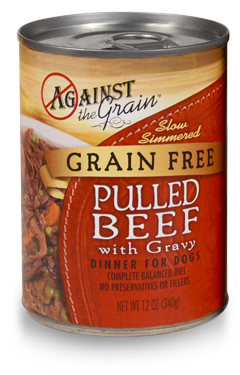
Against the Grain Pulled Beef with Gravy Dinner for Dogs
12 ounce can
Lot Number: 2415E01ATB12
UPC Code (second half): 80001
Expiration Date: December 2019
About Pentobarbital
Oral exposure to pentobarbital can cause side effects such as drowsiness, dizziness, excitement, loss of balance, nausea nystagmus (eyes moving back and forth in a jerky manner), inability to stand and coma.
To date, no complaints have been reported to Against the Grain for this single lot number nor any of Against the Grain’s pet foods.
Where Was It Distributed?
The recalled product was distributed (in 2015) to independent pet retail stores in the following states:
Maryland
Washington
The company has verified that the affected lot is no longer on any store shelves.
What to Do?
Consumers may return any can with the relevant lot number to their place of purchase and receive a full case of Against the Grain food for the inconvenience.
Customers with questions may contact the company at 800-288-6796 between 11 AM and 4 PM Central Time, Monday through Friday.
U.S. citizens can report complaints about FDA-regulated pet food products by calling the consumer complaint coordinator in your area.
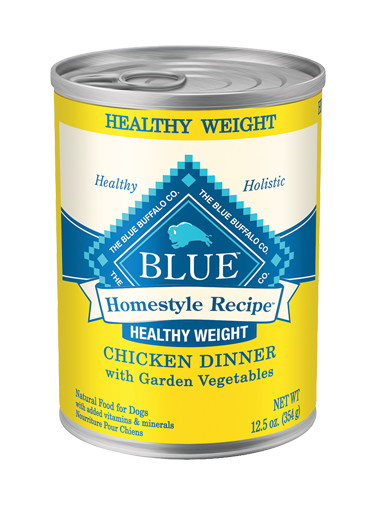
Blue Buffalo Homestyle Recipe Healthy Weight, Chicken Dinner with Garden Vegetables
12.5 ounce can
UPC: 8-40243-10017-0
Codes: Best By 08/03/2019
The “Best By” date is on the bottom of the can.
No other Blue Buffalo products are involved. The company has not received any reports of illness or injury as a result of the problems giving rise to this recall.
What to Do?
Customers are invited to return the impacted product to your local retailer for a full refund. For additional information, call 866-800-2917.
U.S. citizens can report complaints about FDA-regulated pet food products by calling the consumer complaint coordinator in your area.
(And please note my ‘excuse-me’ at the end of this post!)
The first:
PetSmart Grreat Choice Dog Food Recall of February 2017
February 8, 2017 — PetSmart has issued a voluntary recall of one production lot of Grreat Choice Adult Dog Food with Chicken and Rice Classic Ground due to possible metal contamination.1
What’s Recalled?
The recalled product includes:
Grreat Choice Adult Dog Food with Chicken and Rice Classic Ground
Size: 13.2 ounce cans
UPC: 7-3725726116-7
Best By Date: 8/5/19
Lot Code: 1759338
The Best By date is found on the bottom of the can.
What to Do?
The company writes:
Please stop feeding this product to your pet and bring any remaining cans affected by this recall to your nearest PetSmart for a full refund. We recommend the other varieties of Grreat Choice canned dog foods as alternate options until this product is once again available.
For more information, please contact PetSmart Customer Service at 1-888-839-9638.
U.S. citizens can report complaints about FDA-regulated pet food products by calling the consumer complaint coordinator in your area.
This came in late yesterday afternoon, Pacific Time.
This was the email that was sent out.
Evanger’s Dog and Cat Food Company of Wheeling, Illinois, has announced it is voluntarily recalling specific lots of its pet food due to its potential to be contaminated with pentobarbital.
To learn which products are affected, please visit the following link:
If one goes to that Evanger’s Recall Link then this is what you will read. It is republished in full.
ooOOoo
Evanger’s Dog Food Recall of February 2017
February 3, 2017 — Evanger’s Dog and Cat Food Company, Inc. of Wheeling, Illinois, is voluntarily recalling specific lots of its Hunk of Beef product due to potential contamination with the deadly drug, pentobarbital.
Pentobarbital can affect animals that ingest it, and possibly cause side effects such as drowsiness, dizziness, excitement, loss of balance or nausea — or in extreme cases, death.
What’s Being Recalled?
Although pentobarbital was detected in a single lot, the company is recalling all related Hunk of Beef products manufactured the week of June 6 through June 13, 2016.
The affected lots numbers that start with 1816E03HB, 1816E04HB, 1816E06HB, 1816E07HB, and 1816E13HB, and have an expiration date of June 2020.
The second half of the barcode reads 20109, which can be found on the back of the product label.
Where Was the Product Sold?
The affected products were sold both online and also distributed to retail locations only in the following states:
California
Florida
Georgia
Illinois
Indiana
Maryland
Massachusetts
Michigan
Minnesota
New York
Ohio
Pennsylvania
South Carolina
Washington
Wisconsin
About the Recall
The recall affects 5 lots of food that were produced from its supplier’s lot of beef, which is specifically used for the Hunk of Beef product and no other products.
To date, five dogs reportedly became ill. And one of the five dogs died after consuming the product with lot number 1816E06HB13. [Ed: My emphasis]
Evanger’s is proactively issuing a recall so as not to risk potential exposure to pentobarbital in the product.
According to Evanger’s, all suppliers of meat products are USDA approved.
The insists the beef supplier provides the company with beef chunks from cows that are slaughtered in a USDA facility.
Evanger’s continues to investigate how the contaminant entered its raw material supply.
Because it sources its meat products from suppliers that are USDA approved and since no other products have reported any problems, the company is not extending the recall to other supplier lots.
According to Evanger’s, this is the first recall event for the company in its 82 years of manufacturing.
What to Do?
Although it has been verified that little or no product remains on store shelves, consumers are asked to return recalled product to the place of purchase for a full refund.
Consumers with questions may contact the company at 847-537-0102 between 10 AM and 5 PM Central Time, Monday through Friday.
U.S. citizens can report complaints about FDA-regulated pet food products by calling the consumer complaint coordinator in your area.
I will, of course, continue to publish every dog food alert that comes into my in-box. But don’t let that stop you from signing up for recall alerts on your own account.
Finally, if any of you are users of Evanger’s Hunk of Beef dog food and want to share your experiences then I shall be very happy to publish them here for the wider benefit of every single person who loves dogs!
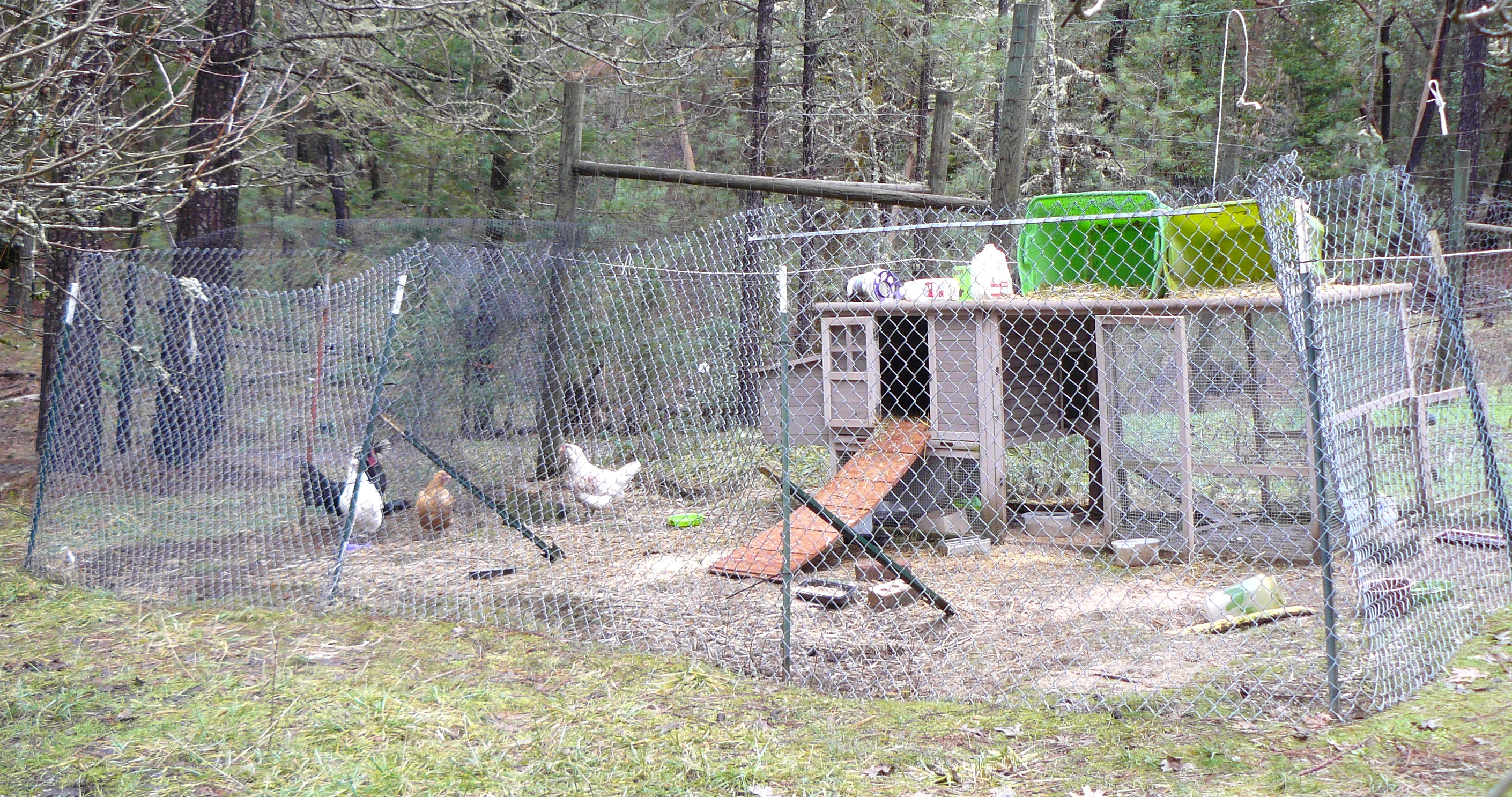
We have a rather run-down ‘home’ for our chickens close to the house. It was run-down before the snow fell and almost brought down the surrounding wire fence.
But, hopefully, this coming Thursday sees a new walk-in run being constructed for our birds so they are better protected.
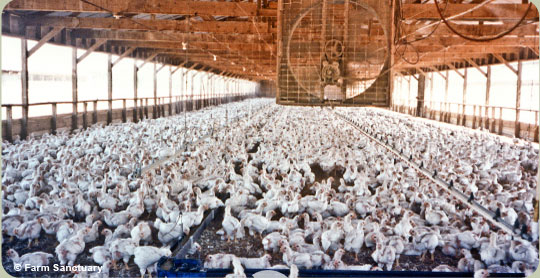
It’s time we started paying attention to chickens, one of the most misunderstood and ignored species on Earth.
There was a time when chickens were viewed as exotic, fascinating birds. Descendants of exotic Asian jungle fowl, they were revered for their ferocity and intelligence, and domesticated around 8,000 years ago, more for cockfighting than eating. But then, we humans began eating them in ever-larger quantities, until we reached the point where we are now, with 20 billion (mostly white) chickens living in dirty, crowded barns, awaiting slaughter.
Chickens have been a part of human lives for millennia, and yet they are one of the most misunderstood, if not ignored, species on Earth. Lori Marino, an American neuroscientist and animal intelligence researcher, wants to change this. She is intrigued by the fact that chickens are so rarely recognized for their cognitive abilities and frustrated that studies about birds almost always focus on other, less-domesticated species, like crows and parrots.
“Arguably even the scientific community has been influenced by public perceptions of chickens as cognitively simple… This asymmetry in the literature is likely a reflection of, as well as a contributor to, the disconnect scientists and the public have between chickens as commodities and who they actually are as individuals.”
Chickens deserve more attention, and here are some quirky, interesting facts to get you thinking about chickens less as food and more as fascinating co-inhabitants of our world. These come via Marino’s recent paper, “Thinking Chickens,” published online in Animal Cognition in January 2017.
1. Chickens are a sub-species of the red jungle fowl that hails from southeast Asia.
The red jungle fowl (galls gallus) inhabit the edges of fields, scrubland, and groves. Domestication was well established 8,000 years ago, but some records suggest it could have started as much as 58,000 years ago.
2. Domestic chickens are similar to their wild counterparts.
Despite the intense breeding and genetic manipulation of recent years, chickens have not been cognitively or behaviorally affected by domestication. This stands in contrast to dogs and wolves, for example, which have diverged significantly due to domestication. Nor have chickens become less aggressive toward predators through domestication, which is a common outcome; in fact, some chickens are more aggressive even than red jungle fowl.
3. A chicken’s beak is highly sensitive to touch.
The beak, with numerous nerve endings, is used to explore, detect, drink, preen, and defend. This also means that when a bird is de-beaked, as often happens in industrial farming, it experiences great pain, sometimes for months, which changes its behavior. Marino writes, “At the end of the beak is a specialized cluster of highly sensitive mechanoreceptors, called the bill tip organ, which allows chickens to make fine tactile discriminations.”
4. Chickens have finely tuned senses.
They can see long distance and close-up at the same time in different parts of their vision. They can see a broader range of colors than humans. They can hear at low and high frequencies at a variety of pressure levels. They possess well-developed senses of taste and smell. They can orient to magnetic fields, like many other birds.
5. Chickens are surprisingly good at math.
Three-day-old chicks are able to perform basic arithmetic and discriminate quantities, always opting to explore a set of balls with the greater number, even when an object was visibly transferred from one set to another. Five-day-old chicks have been found to track up to five objects.
“When they were presented with two sets of objects of different quantities disappearing behind two screens, they were able to successfully track which screen hid the larger number by apparently performing simple addition and subtraction.”
6. Chickens can exercise self-control.
In an experimental setting, chickens have been given the choice between 2-second delay with 6 seconds of access to food, versus a 6-second delay with 22-seconds of access to food. The hens waited for the longer reward, “demonstrating rational discrimination between different future outcomes while employing self-control to optimize those outcomes.” Self-control usually doesn’t appear in humans until four years of age.
These are just a few of the remarkable discoveries described in Marino’s study, a highly readable, entertaining paper. It’s an important reminder that chickens, arguably the most ubiquitous animals in our world, deserve far more respect than they currently receive. Hopefully this will lead to more people questioning the horrific conditions in which most of them are kept.
It’s easy to fall into the trap of looking for a humourous way to close today’s post. But a more responsible approach would be to repeat the words from the start of the article to serve as a reminder of trying, wherever possible, to think about the food we eat, especially when animals and birds have to be slaughtered to provide us with that food.
…. we reached the point where we are now, with 20 billion (mostly white) chickens living in dirty, crowded barns, awaiting slaughter.
But please don’t leave this page until you have watched the following video.
Published on Dec 3, 2014
After 22 years of raising chickens for Perdue, one brave factory farmer Craig Watts was at his breaking point and did something no one has done before. He invited us, as farm animal welfare advocates, to his farm to film and tell his story. Ask your supermarket for Better Chicken at http://better-chicken.org.
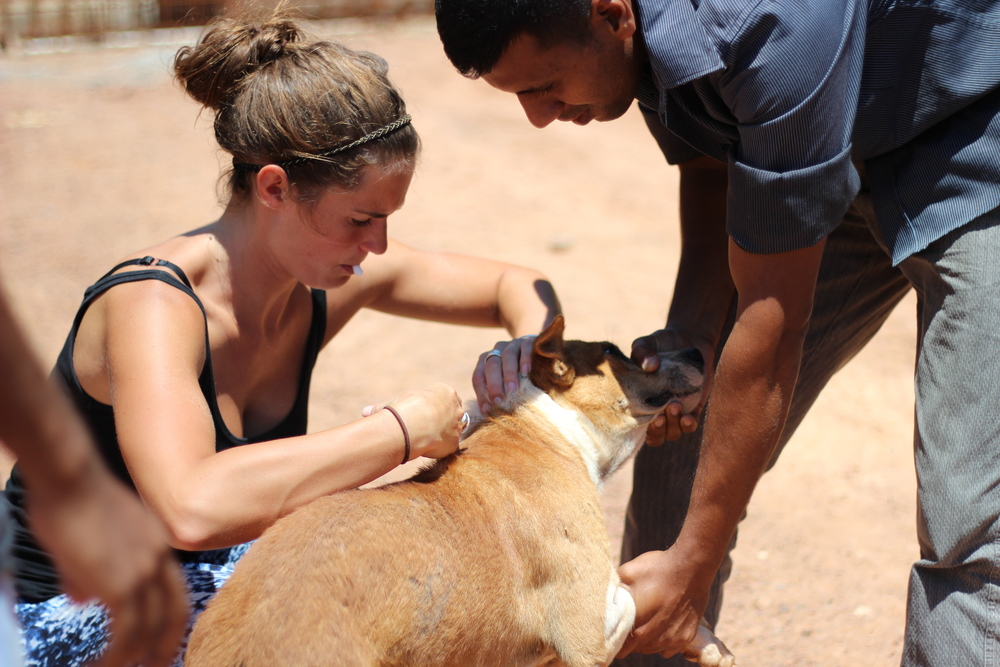
A vet has left behind her home in England to care for Sri Lanka’s street dogs.
Janey Lowes from Barnard Castle, County Durham, has spent the past two years caring for the neglected animals.
There are about three million street dogs on the island – about 60% of puppies born on the street do not survive to adulthood.
The 28-year-old set up charity WECare Worldwide to raise money to buy the equipment needed to treat the animals and to set up her own clinic in Talalla.
I am pleased that the video clip that was included in the BBC News story has found its way to YouTube.
Inevitably the charity WECare Worldwide has its own website: the home page is here. Then you can read on the charity’s ‘About’ page: (Note: CNVR is the acronym standing for catch-neuter-vaccinate-release.)
CNVR
CNVR is carried out as it is the most humane way to reduce roaming dog populations and reduce the number of unwanted puppies that are dumped on the streets at a very young age. It also allows the females that would inevitably spend their whole lives pregnant to only have to worry about number one when thinking about limited food resources and shelter options, which transforms their lives.
Vaccinating the dog population against Rabies is the most effective way to eliminate the disease in the human population. As an island nation, eradication of Rabies in the near future is a very real possibility and will change the future of both animals and humans here, allowing improved relationships between the two.
CNVR is the backbone of everything we are trying to achieve in Sri Lanka.
But that’s only one part of what they do. Again, as the website sets out:
We focus on 3 main areas here in Sri Lanka.
CNVR (catch-neuter-vaccinate-release)
Treatment of sick and injured animals
Education and training
I shall be making contact with the charity very soon .
Not only to pass on our respect and admiration for what she has accomplished but to see if there are other ways we can help them in what they are doing. I use the word ‘we’ to cover not only Jean and me but also all of you who are close to this blog and who, so frequently, show how much love you have for dogs!
WECare Worldwide will help by providing free veterinary treatment, alongside love, compassion and respectful care of the Ceylon dogs, who make up such a huge part of Sri Lankan heritage and culture, both in the past and the current day.
As released by Dog Food Advisor at 07:45 PST today.
Blue Ridge Beef of Eatonton, Georgia, has announced it is voluntarily recalling one lot of its raw frozen pet food due to its potential to be contaminated with Listeria monocytogenes bacteria.
To learn which products are affected, please visit the following link:
When one goes to that Blue Ridge web link this is what you will read:
ooOOoo
January 17, 2017 — Blue Ridge Beef of Eatonton, Georgia, has announced it is voluntarily recalling one lot of its Turkey with Bone raw frozen product due to its potential to be contaminated with Listeria monocytogenes.
What’s Being Recalled?
The affected product is sold in 2 pound chubs and can be identified with the following manufacturing codes:
Blue Ridge Beef Turkey with Bone
Size: 2 pound chubs
UPC Code 854298001887
Lot #103 mfdga12716
About Listeria
Listeria can affect animals eating the product.
And there is a risk to humans from handling contaminated pet products, especially if they have not thoroughly washed their hands after having contact with the products or any surface exposed to these products.
Healthy people infected with Listeria monocytogenes should monitor themselves for some or all of the following symptoms: nausea, vomiting, diarrhea or bloody diarrhea, abdominal cramping and fever.
Consumers exhibiting these signs after having contact with this product should contact their healthcare provider.
Where Was It Distributed?
The affected products were distributed to retail stores in the following states:
Florida
Georgia
North Carolina
South Carolina
What Caused the Recall?
This recall was initiated as a result of an FDA inspection and sampling of the product. This recall is being made with the knowledge of the US Food and Drug Administration.
What to Do?
Consumers who have purchased the above lot of Blue Ridge Beef Turkey with Bone raw frozen product are urged to stop feeding the product and return it to the place of purchase for a full refund.
Or dispose of the affected product immediately.
Those with questions can email the company at blueridgebeefga@yahoo.com
U.S. citizens can report complaints about FDA-regulated pet food products by calling the consumer complaint coordinator in your area.
(This was first posted on December 8th, 2016. It is being republished because of the mention of peanut butter in the article presented in my post that came out an hour ago.)
ooOOoo
Keep peanut butter away from your dogs!
Because it could kill your beloved companion.
Fellow author Judi Holdeman sent me an email that contained a warning that had been in a recent health newsletter from Jeff Reagan. Here’s the essence of that warning (and my emphasis in parts):
If your dog is anything like my dog, they probably love a good scoop of peanut butter.
As I’m writing this, my pup Ellie is actually snuggled up next to my leg and going to town on her peanut butter filled Kong. She’s in heaven…
But I want to warn you about a NEW problem with dogs and peanut butter.
There’s been a number of reports lately of dogs who are winding up dead because of their beloved peanut butter.
How is this happening?
It has to do with a new ingredient being used in certain peanut butters.
That ingredient is xylitol.
Xylitol is an artificial sweetener that you’ll recognize from things like gum and candy.
And while it’s generally “safe” for humans to eat, it can be deadly for dogs. Just a small amount of it can cause severe liver damage and can even kill your dog.
From my research, I’ve found 5 brands of peanut butter that have recently added xylitol to their ingredients. I’m listing these brands below…
– Go Nuts Co
– Hank’s Protein Plus Peanut Butter
– Krush Nutrition
– Nuts N More
– P28
Now luckily most of these are NOT the most popular brands.
These brands are usually sold at specialty shops or health food stores.
But I still wanted to alert you to this…
Because if your dog is anything like mine, they probably love peanut butter.
So make sure you’re staying away from the brands I listed above.
And double-check the label on your peanut butter to make sure it doesn’t have xylitol in it.
Feel free to forward this email on to your friends or family that have dogs so they are aware of this…
– Jeff Reagan. Editor, Patriot Health Alliance
Please, good people, do share this as far and wide as possible.
Smaller creatures taking a break!Larger creatures taking a break!
See what the coming week has in store! (Oh, we live in Josephine County!)
FLOOD WATCH
NATIONAL WEATHER SERVICE MEDFORD OR
151 PM PST SAT JAN 7 2017

...HEAVY RAIN WILL COMBINE WITH MELTING SNOW TO CAUSE POSSIBLE
LOCAL FLOODING LATE TONIGHT THROUGH SUNDAY...

.ANOTHER FRONT MOVES INTO THE REGION LATE TONIGHT WITH MODERATE
TO HEAVY RAINFALL RATES. SNOW LEVELS WILL RISE WELL ABOVE THE
VALLEY FLOORS AND WILL COMBINE WITH SNOW MELT TO INCREASE RUN-OFF
THROUGH THE DAY SUNDAY AND INTO SUNDAY NIGHT.
...FLOOD WATCH NOW IN EFFECT FROM LATE TONIGHT THROUGH SUNDAY
EVENING...

THE FLOOD WATCH IS NOW IN EFFECT FOR

* PORTIONS OF THE COOS AND CURRY COUNTY COASTS...EASTERN CURRY
  AND JOSEPHINE COUNTY IN OREGON...AND WESTERN SISKIYOU COUNTY IN
  NORTHERN CALIFORNIA.

* FROM LATE TONIGHT THROUGH SUNDAY EVENING.

* 1 TO 3 INCHES OF RAIN...WITH HIGHEST AMOUNTS NEAR THE COAST AND
  LOWEST NEAR GRANTS PASS...ARE EXPECTED ON SUNDAY. THIS MODERATE
  TO HEAVY RAIN COMBINED WITH SNOW MELT MAY CAUSE URBAN AND SMALL
  STREAM FLOODING. CURRY AND JOSEPHINE COUNTIES ARE THE PRIMARY
  AREAS OF CONCERN...HOWEVER...PORTIONS OF WESTERN SISKIYOU COUNTY
  MAY SEE LOCALIZED FLOODING AS WELL.

* RECENT BROKEN BRANCHES AND OTHER DEBRIS FROM THE HEAVY SNOW
  COMBINED WITH ICE MAY CLOG STORM DRAINS AND CULVERTS IN THE
  WATCH AREA. HEAVY RAIN MAY ALSO CAUSE SLIDES OR DEBRIS FLOWS ON
  THE GAP WILDFIRE BURN SCAR NEAR HORSE CREEK...POSSIBLY REACHING
  HIGHWAY 96 BELOW THE BURN SCAR.

PRECAUTIONARY/PREPAREDNESS ACTIONS...

LANDSLIDES AND DEBRIS FLOWS ARE POSSIBLE DURING THIS FLOOD EVENT.
PEOPLE...STRUCTURES AND ROADS LOCATED BELOW STEEP SLOPES...IN
CANYONS AND NEAR THE MOUTHS OF CANYONS MAY BE A SERIOUS RISK FROM
RAPIDLY MOVING LANDSLIDES. A FLOOD WATCH MEANS THERE IS A
POTENTIAL FOR FLOODING BASED ON CURRENT FORECASTS.










 Learning from Dogs