July 13th. 11:00 The second case that I sat in on was Linda bringing in Jefferson.
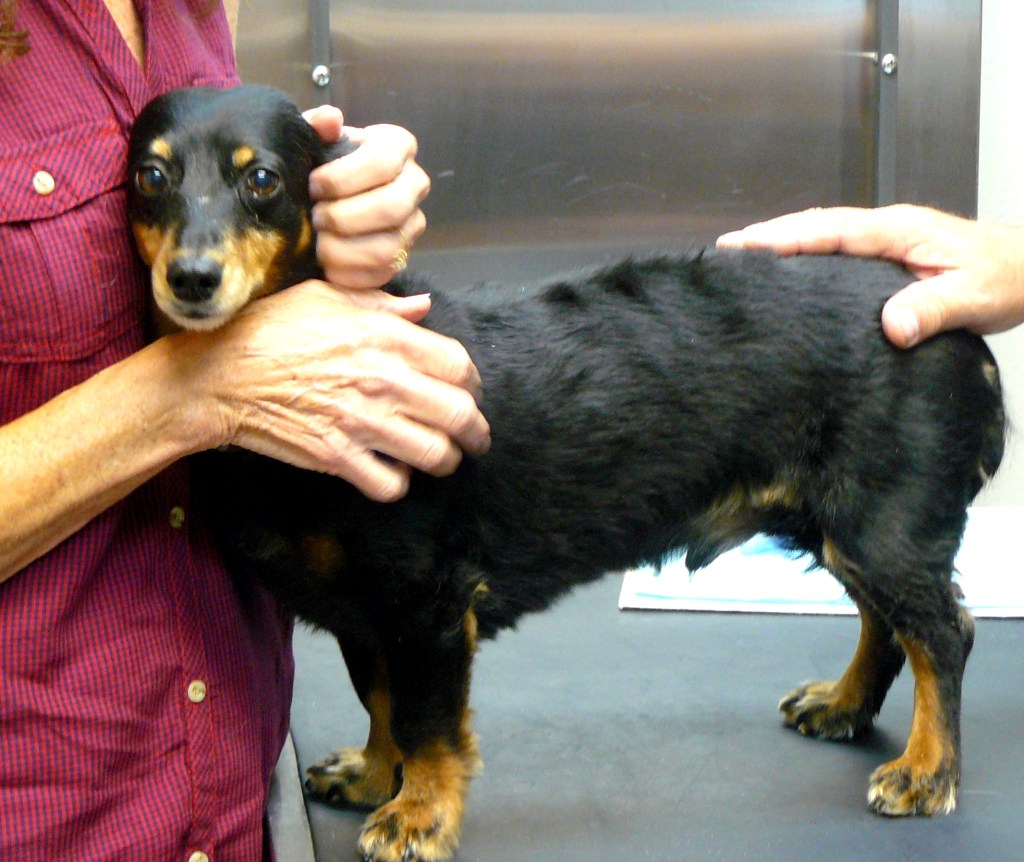
Jefferson is an eight-year-old long-haired male Dachshund. Linda had decided to bring her dog into Lincoln Road because recently Jefferson had started coughing but only when he was pulling on his leash.
Linda added that Jefferson seemed to be chewing on a number of pine cones just now.
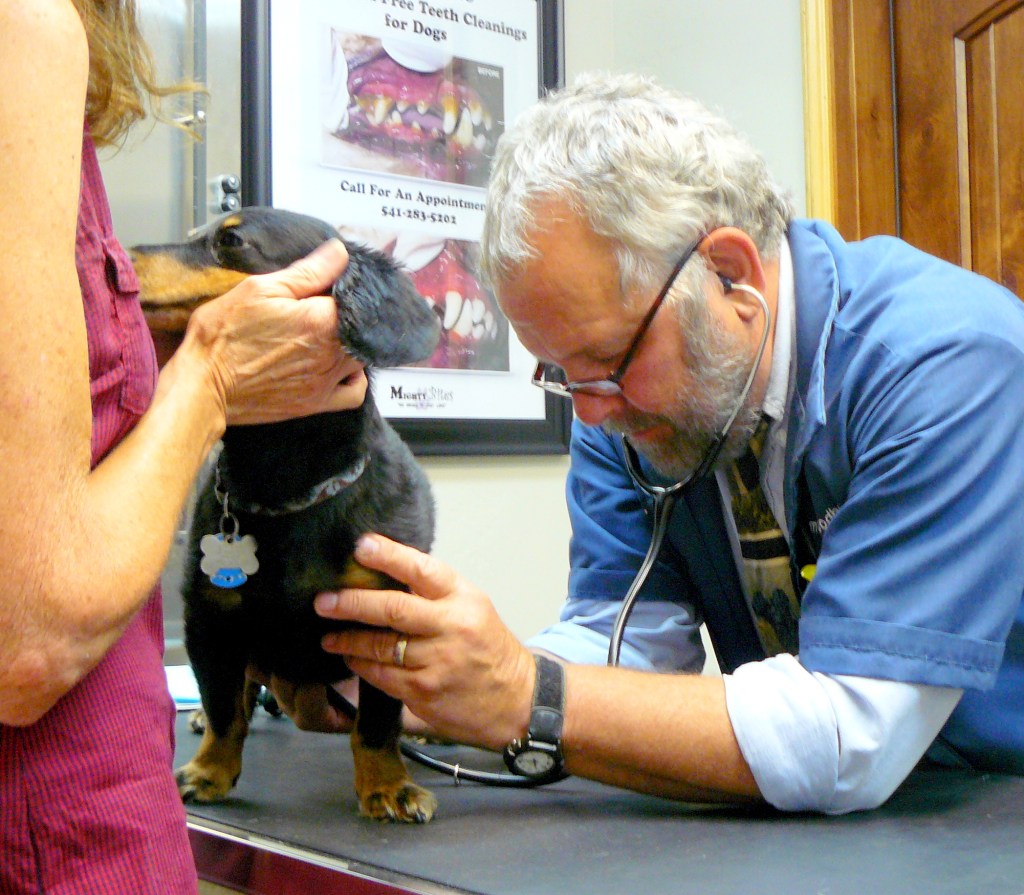
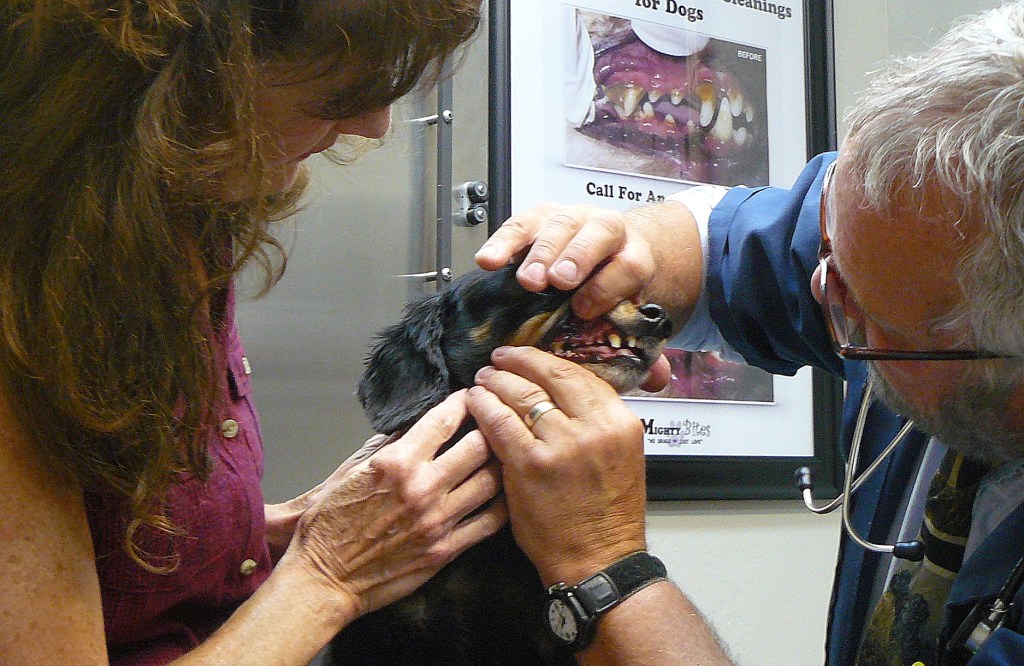
Jim examined Jefferson. First examining the dog’s lymph node and then listening to either side of the dog’s chest.
While everything sounded fine on Jefferson’s right side, Jim detected a very small heart murmur when listening to Jefferson’s left side.
Jim also noted that the lymph node was prominent but not enlarged. Dogs can get lymphoma.
Nothing arose to give cause for concern but in view of the chewing of pine cones, Jim thought that giving Jefferson an injection of ‘Lepto’ would be no bad thing.
It’s scary to think that a fun stroll through the woods or swim in a favorite watering hole can lead to a terrible illness, but it can –– for you as well as your dog. Leptospirosis is caused by a bacteria spread through soil, water, and the urine of infected animals, and if not caught early it can be deadly. There is a vaccine available for the most common subtypes of the bacteria that infect dogs, but it’s not always a recommended part of the routine vaccination protocol. Ask your veterinarian if the leptospirosis vaccine is right for your dog.
Overview
Leptospirosis is a potentially serious disease caused by the bacterium Leptospira interrogans. It affects dogs but can also infect a wide variety of domestic and wild animals as well as humans.
The organism is usually spread through infected urine, but contaminated water or soil, reproductive secretions, and even consumption of infected tissues can also transmit the infection. Introduction of the organism through skin wounds can also occur. Common carriers of the organism include raccoons, opossums, rodents, skunks, and dogs.
To be continued:
(Please note: These observations are mine alone and because of the busy environment it must be assumed that my interpretation of what was taking place might not be totally accurate. Nothing in this blog post should be used by a reader to make any medical judgment about an animal. If you have any concern about an animal do make an appointment to see a properly qualified veterinarian doctor.)
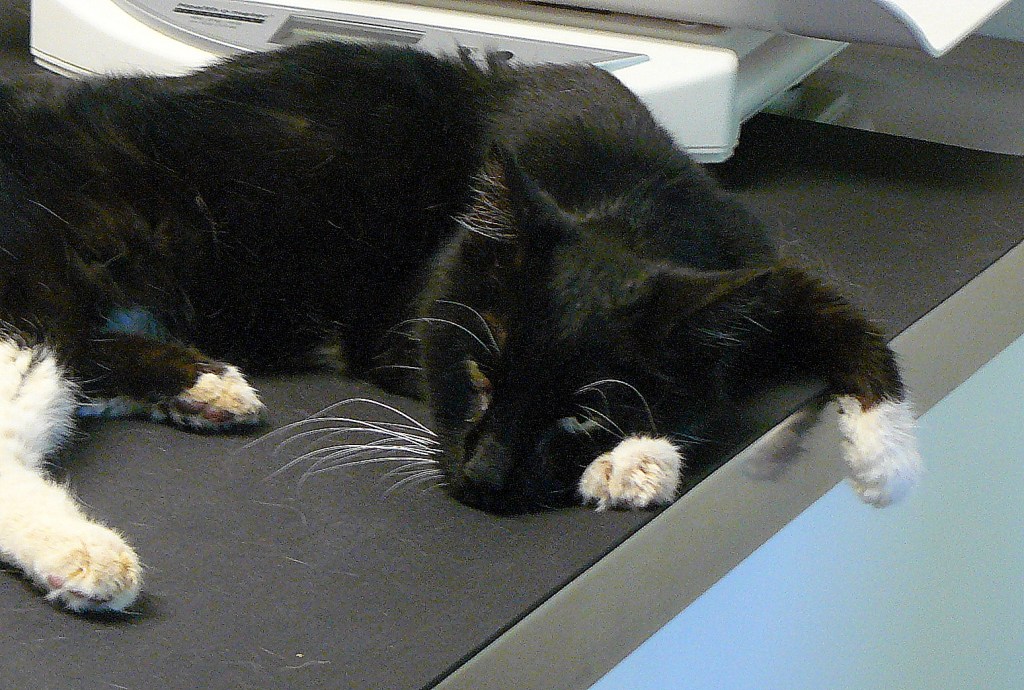
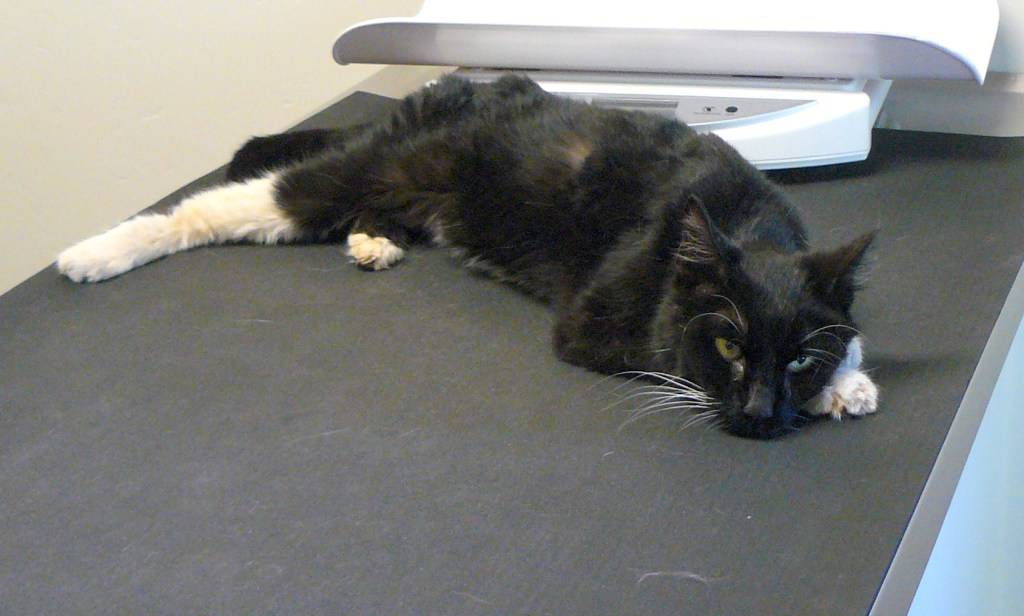
Jessica Louise is a 14-year-old cat that normally lives happily outside. But in recent times ‘Jessie’ has become very thin despite constantly eating and has now preferred to be inside the home even accounting for the fact of there being dogs in the house.
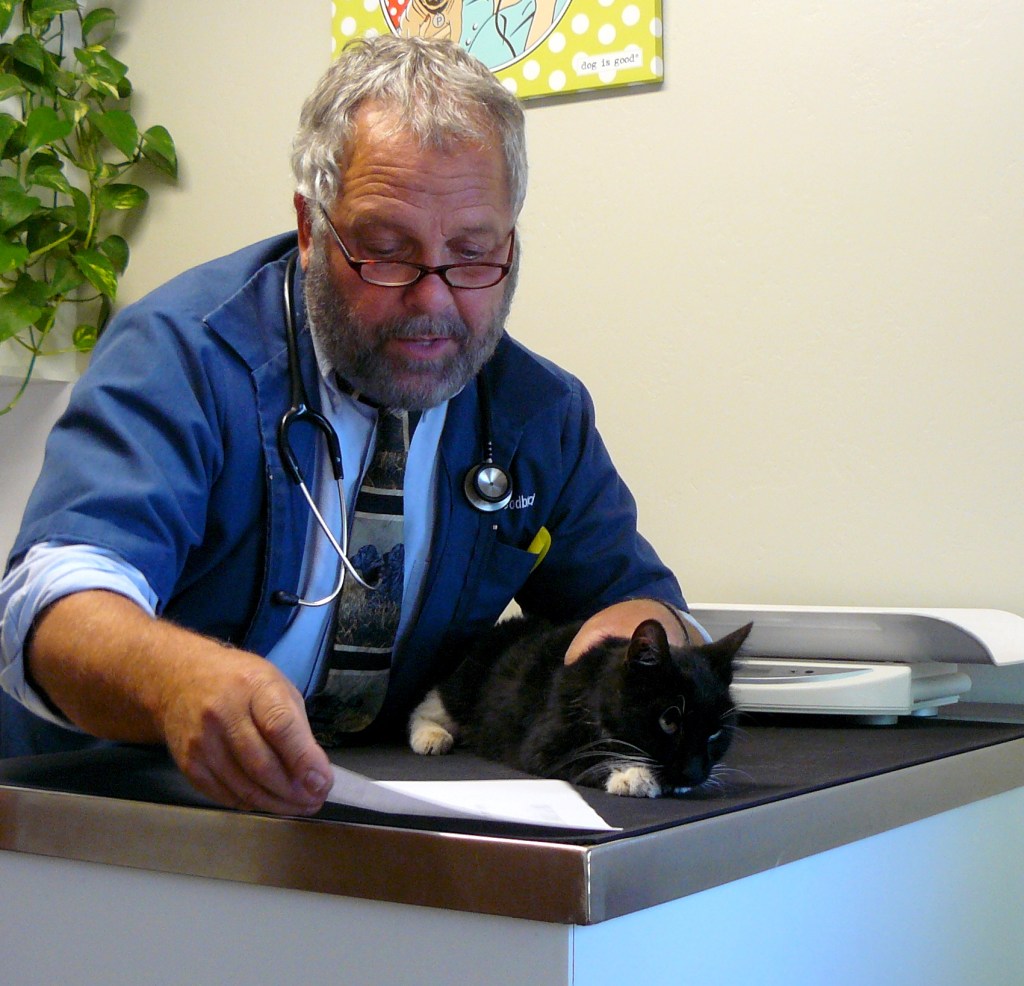
Jim’s pretty certain that he is looking at a cat with a hyperthyroid thyroid gland. No question that a blood test is needed and the blood sample is taken without delay.
The results are soon back and confirm that Jessie’s T4 readings of >8.00 mg/dL are very high, indeed beyond the upper limit of their testing equipment. Jim explains that the normal range for T4 is between 0.80 – 4.70 mg/dL.
The puzzled look on my face is seen by Jim and he takes a few minutes out to explain what a blood test accomplishes.
There are three parts to the blood test:
The Complete Blood Count (CBC), that is the cellular part of the test.
The chemistry of the blood, measuring the condition of the kidneys, liver, electrolytes, diabetic status as in blood glucose level, and more.
The optional Part, a test for T4 Total Thyroxine level.
A very quick web search found this from which one reads:
Your dog or cat’s T4 (Total T4) is a useful screening test to detect an under-active thyroid gland (hypothyroidism) in dogs or an over-active one (hyperthyroidism) in cats. But total T4 levels are a considerably more accurate way to diagnose an overly active thyroid gland in your cat than an under-active thyroid gland in your dog.
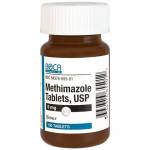
Methimazole is used to treat hyperthyroidism in cats. It has largely replaced propylthiouracil in this treatment process since it has a lower incidence of adverse side effects. Methimazole requires a prescription from your veterinarian, and is sold per tablet.
(This is only one of many products found online!)
Jim weighs Jessie and finds that she is 4lbs 12 oz. Her weight should be in excess of 8 lbs.
The clinic protocol is that Jessie should not be seen until at least 45 days has elapsed. But Dr. Jim underlines that Jessie should be brought back in to the clinic before then if there is no weight gain soon or, especially, if Jessie continues to lose weight.
10:05 All done.
To be continued:
(Please note: These observations are mine alone and because of the busy environment it must be assumed that my interpretation of what was taking place might not be totally accurate. Nothing in this blog post should be used by a reader to make any medical judgment about an animal. If you have any concern about an animal do make an appointment to see a properly qualified veterinarian doctor.)
ooooo
Good people, may I ask for your assistance.
Best explained by sharing part of a recent email sent to Yvonne D. who has offered her help with my book project. In past times, Yvonne was a Veterinary Technician.
Dear Yvonne,
My Visiting the Vet theme on Learning from Dogs has awakened within me the interest and passion to write my second book. Or, to put it more accurately, to switch away from the present theme that I have been struggling to get stuck into for months.
I spoke with Russel Codd at the clinic and he is really keen to support me.
The overall idea that is forming in my mind is to write a book that alternates, chapter by chapter, between observing the medical and clinical goings-on at a number of vet clinics in town, including specialist processes, surgery, cardiac, etc., and chapters that look deeply into the many different relationships that individuals have with their pets; primarily with dogs and cats.
I want to get into the ‘mindset’ of people who have pets in their lives across the whole range of feelings of those said people. From those who love their pets practically without any limit, to the homeless people (almost 100% men) whom one sees with a dog or two in tow alongside the highway. But also exploring those who seem so hateful. E.g. our pet sitter knows a man who threw his elderly dog away in some local woods. What causes someone to be like this? I want to find out!!
The book will be called: Of Pets, and Of People.
With very kind wishes,
Paul
Copyright (c) 2017 Paul Handover
Any feedback at all would be fabulous! What would you like to see in such a book? What would you most definitely not want to read?
We all know how good are the noses of our dogs. Yet, I suspect, many do not know how truly good is that nose. The Science ABC site has a detailed account of Why Do Dogs Have Such A Great Sense of Smell?
Here’s part of that article:
Dog Nose vs. Human Nose
When we try to smell something, we inhale air with our nose and we use the same passage in our nose to exhale that air. Therefore, all the smell that we get when we are inhaling is lost when we exhale that air. However, a dog has two different air passages, one for breathing and another for smelling. This means that dogs are able to store the smell in their nose even while breathing out the air!
When dogs exhale, they send air out through the slits of their nose, but the manner in which this air is exhaled through their nose helps the dogs to draw in new odor molecules. This also helps dogs capture more smells when sniffing.
You must have noticed that dogs’ noses are always wet, but have you ever wondered why? The mucus on the dog’s nose helps it smell by capturing scent particles. A dog also has the ability to smell independently from each nostril, this helps the dog to understand from which direction the smell is coming.
The passage through which dogs smell the air contains highly specialized olfactory receptor cells, which are responsible for receiving smells. A dog contains about 225-300 million smell receptors, as compared to just 5 million of these receptors being present in a human nose.
Dog Brain vs. Human Brain
By now, we clearly know that dogs have a nose that can smell about 1,000-10,000 times better than a human, but how are dogs able to remember all the different smells that they have sensed throughout their life?
The answer lies in the difference between the brains of dogs and humans. A human brain has a larger visual cortex than dogs, whereas a dog’s brain has a much larger olfactory cortex than humans. The visual cortex is responsible for processing visual information, whereas the olfactory cortex is responsible for processing the sense of smell. A dog’s olfactory cortex is about 40 times larger than that of a human.
Working dogs are an amazing asset not only for people, but for wildlife, endangered species and even threatened habitats. Expanding on the skills dogs have for tracking down scents and guarding something important, we humans have enlisted their help in many ways for conservation.
Here are five ways dogs are contributing to environmental protection efforts.
Smell for scat
It’s amazing the amount of information that can be sussed out of an animal’s poop. We can determine diet, health, genetics — even whether or not an animal is pregnant. Scat is really important to biologists studying elusive, sensitive or endangered species. Putting dogs on the track is an ideal solution.
Take cheetahs, for example. Scientists in Africa are using dogs and their unparalleled sniffing power to find cheetah poop, all in an effort to get an accurate count on the endangered big cats. (Only 7,000 cheetahs are left in the African wild, according to estimates.) And it’s working. Two trained dogs found 27 scats in an area of 2,400 square kilometers in western Zambia, according to a study published in the Journal of Zoology. Humans, looking for cheetah tracks over the same area, found none.
Groups like Conservation Canines (a handler and dog from the program pictured above), Working Dogs for Conservation and Green Dogs Conservation specialize in this area. Conservation Canines rescues highly energetic, “last chance” dogs from shelters and trains them to track down the scat of dozens of species, from wolves to moose to owl. Even things that are nearly impossible for humans to find — the minuscule scat of endangered pocket mice or orca scat floating on the ocean surface — dogs can track down. They are able to make huge contributions to scientific studies, all without ever bothering the wildlife being studied.
Sniff out problems for wildlife
Whether it’s sniffing out invasive species like giant snails in the Galapagos or detecting disease in beehives, dogs’ noses can be put to work in searching out what shouldn’t be there so that humans can act.
Dogs are able to sniff out particular plant species, pointing ecologists to tiny patches of invasive mustard so that the plants can be removed before they take over an area.
Conversely, dogs can sniff out rare or endangered native plants so that the species can be protected. Rogue is one such dog. The Nature Conservancy writes, “The 4-year-old Belgian sheepdog is part of a Nature Conservancy collaborative project to test the efficacy of using dogs to sniff out the threatened Kincaid’s lupine. The plant is host to the endangered Fender’s blue butterfly, found only in Oregon’s Willamette Valley.”
Surveying for the plant species is difficult work for people. It can only be done when the plant is in bloom so people can visually identify it. However, dogs like Rogue can sniff out the plant even when not in bloom, which can potentially double the length of the field season.
“More refined regional mapping of Kincaid’s lupine could promote the butterfly’s recovery and delisting — and contribute to larger habitat goals and wildlife impacts.”
Track down poachers
The trade in rare or endangered wildlife is a lot tougher for traffickers thanks to wildlife detector dogs. Trained to smell anything from tiger parts to ivory to South American rosewood, dogs are used in shipping ports, airports, border crossings and other locations to sniff out smuggled products.
It doesn’t stop there. Trained dogs can lead rangers to armed poachers in the wild, tracking down the culprits over long hours through heat and rain. They can catch poachers in the act, rather than just the products.
“Canine sleuths aren’t limited to the plains of East Africa, either,” reports National Geographic. “In the Democratic Republic of the Congo, bloodhounds are assisting in the fight against poaching in forested Virunga National Park, where the world’s last remaining mountain gorillas live. In South Africa, Weimaraner and Malinois dogs are helping to find wounded animals and track poachers on foot through the reserves around Kruger National Park.”
Guard endangered species
Dogs are also useful in putting their protective nature to use for endangered species.
Livestock protection dogs are trained to keep predators like cheetahs, lions and leopards safe, which then reduces conflict between ranchers and big cats and minimizes the instances of snaring or retaliatory killing of big cats. Cheetah Conservation Fund has a successful livestock protection dog program, which places Anatolian shepherd and Kangal dogs with ranchers. That not only has significantly reduced the number of livestock killed by predators but is also improving the attitude of local people toward cheetahs.
Sometimes the dogs are put to work guarding the endangered species themselves. One such successful program uses Maremma shepherd dogs to protect colonies of little penguins from foxes.
Keep bears wild
Karelian bear dogs are trained to keep bears from becoming too comfortable around people. A program by Wind River Bear Institute named Partners-in-Life uses a technique called bear shepherding. This specialized breed of hunting dog is used to scare bears away, and are an important part of the “adverse conditioning” work that keeps bears from becoming habituated. The ultimate goal is to protect bears from becoming habituated, a problem that leads to their being relocated or euthanized.
“Our Wind River Bear Institute mission, with the effective training and use of Karelian Bear Dogs, is to reduce human-caused bear mortality and conflicts worldwide to ensure the continued survival of all species of bears for future generations,” states the program.
This list is only a handful of ways that dogs help us with environmental conservation every day. More and more, we are figuring out new ways to put their skills to work, and more and more the dogs are proving they’re ready for the task!
Editor’s note: This story was originally published in July 2016 and has been updated with more recent information.
ooOOoo
Closing words from that Science ABC piece:
A dog does not care how you look or dress, but if he gets good vibes from your smell, then a dog will love you. The world is truly a better place because of these wonderful creatures that we are lucky enough to welcome into our lives.
Why not make the world smell a bit more beautiful for them?
Belay that!
Closing picture taken from the OregonLive website. A stunning picture of the “Fender’s blue butterfly, found only in Oregon’s Willamette Valley.”
Yet despite it being so obvious it hadn’t crossed my mind before.
I’m referring to the wonderful idea of using those people, who through circumstance have found themselves homeless, to care for animals via an animal shelter.
Glenn Greenwald Unveils New Project to Build Animal Shelter in Brazil Staffed by Homeless People
Published on May 10, 2017
http://democracynow.org – Pulitzer Prize-winning journalist Glenn Greenwald unveils his plans to build an animal shelter in Brazil with his husband David Miranda, a city council member in Rio de Janeiro. The shelter will be staffed by homeless people who live on the streets with abandoned pets.
ooOOoo
If you, like me, needed to be reminded as to Mr. Greenwald’s background there’s plenty online.
Glenn Greenwald is one of three co-founding editors of The Intercept. He is a journalist, constitutional lawyer, and author of four New York Times best-selling books on politics and law. His most recent book, No Place to Hide, is about the U.S. surveillance state and his experiences reporting on the Snowden documents around the world. Prior to co-founding The Intercept, Glenn’s column was featured at The Guardian and Salon. He was the debut winner, along with Amy Goodman, of the Park Center I.F. Stone Award for Independent Journalism in 2008, and also received the 2010 Online Journalism Award for his investigative work on the abusive detention conditions of Chelsea Manning. For his 2013 NSA reporting, he received the George Polk award for National Security Reporting; the Gannett Foundation award for investigative journalism and the Gannett Foundation watchdog journalism award; the Esso Premio for Excellence in Investigative Reporting in Brazil (he was the first non-Brazilian to win), and the Electronic Frontier Foundation’s Pioneer Award. Along with Laura Poitras, Foreign Policy magazine named him one of the top 100 Global Thinkers for 2013. The NSA reporting he led for The Guardian was awarded the 2014 Pulitzer Prize for public service.
It concerns possible contamination of food with Salmonella so please read and share as widely as you can.
ooOOoo
Smallbatch Dog and Cat Food Recall of May 2017
May 5, 2017 — Smallbatch Pets Inc. of Portland, OR, is voluntarily recalling two lots of its Smallbatch frozen chicken blend for dogs and cats due to the potential to be contaminated with Salmonella.
About Salmonella
Salmonella can affect animals eating the products and there is risk to humans from handling contaminated pet products, especially if they have not thoroughly washed their hands after having contact with the products or any surfaces exposed to these products.
Symptoms of infection in people include nausea, vomiting, diarrhea or bloody diarrhea, abdominal cramping and fever.
Rarely, Salmonella can result in more serious ailments, including arterial infections, endocarditis, arthritis, muscle pain, eye irritation, and urinary tract symptoms.
Consumers exhibiting these signs after having contact with this product should contact their healthcare providers.
Pets with Salmonella infections may be lethargic and have diarrhea or bloody diarrhea, fever, and vomiting.
Some pets will have only decreased appetite, fever and abdominal pain.
Infected but otherwise healthy pets can be carriers and infect other animals or humans.
If your pet has consumed the recalled product and has these symptoms, please contact your veterinarian.
No pet or consumer illnesses from this product have been reported to date. However, because of their commitment to safety and quality, Smallbatch Pets is conducting a voluntary recall of this product.
Consumers should also follow the Simple Handling Tips published on the Smallbatch Pets package when disposing of the affected product.
What’s Recalled?
The affected lots of 2 pound bags of Smallbatch Chicken Blend were distributed to retail pet food stores in the following states:
California
Colorado
Oregon
Washington
Two hundred eighty-two cases of this product were sold between the dates of 2/1/17 and 5/5/17.
The affected products are sold frozen in 2 pound bags.
The products affected by this recall are identified with the following manufacturing codes and “Best By” dates, located on the back of the package.
Lot: D032
UPC: 705105970974
Best By: 2/1/2018
Lot: E058
UPC: 705105970974
Best By: 2/27/2018
What Caused the Recall?
The recall was initiated after routine testing by the Food and Drug Administration of a 2 pound bag of Smallbatch Chicken Blend that was collected at a distributor revealed the presence of Salmonella.
This recall is being made with the knowledge of the U.S. Food and Drug Administration.
What to Do?
Consumers who have purchased the above lots of Smallbatch Chicken Blend are urged to stop feeding the product to their dogs or cats and to return product to place of purchase for a full refund.
Or dispose of them immediately.
Consumers with questions are asked to call the company at 888-507-2712, Monday through Friday, 9:00 AM to 4:00 PM PST.
Or via email at info@smallbatchpets.com.
U.S. citizens can report complaints about FDA-regulated pet food products by calling the consumer complaint coordinator in your area.
Last week, under the post title of Group Goodness, I put out a plea for anyone who felt so minded to make a donation to this fund. That donate page for this fund being here.
Now it’s very fair to say that there wasn’t a rush of donations. It would be more accurate to say that there were no donations for several days. In fact it is only in the last twenty-four hours that the amount donated has gone from 216 to 244 Australian dollars. (The fund will be transferring those Aussie dollars across to assist John Zande and his lovely wife soon. The currency being used is because it is the sister of John’s wife who is raising the money and she lives in Australia.)
Now it would be very wrong of me to seek the reasons why not a single follower or reader of this place chose not to make a donation. But I will offer this perspective. In that Jean and I wanted to make a second donation and it has taken several days to figure out why our gift wasn’t being processed; the reason being a rather cautious (our) bank attitude to debit card payments being made overseas. So if anyone else has tried to make a donation and the system has got in the way then please do find a solution.
Here’s why!
Because John and his wife, Dionete, are totally immersed in doing their best to help the homeless and abandoned dogs in Sao Paulo, Brazil.
Here are copies of recent emails that John and Dionete have sent me over the last few days.
20th. April
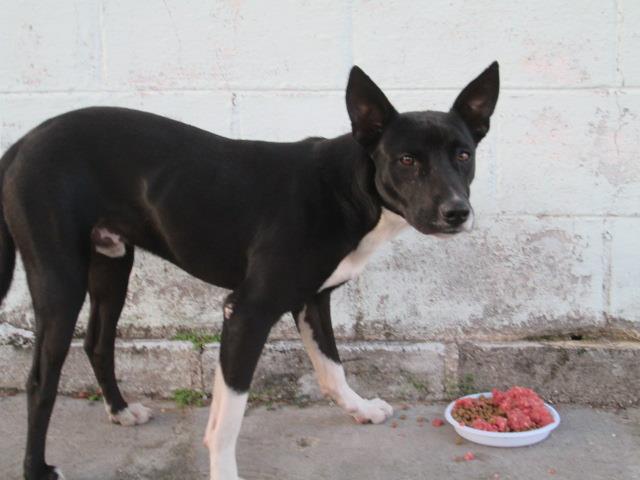
Morning Paul, I took a camera this morning just to show you the new boy I’m helping. Gorgeous fellow, and young. It never stops. They never stop showing up… which is something I’m sure Jean understands all too well from her work in Mexico.
Again, thank you for your help and posting the campaign.
I queried if this new boy had a name?
No name yet. Can you think of one? I found him on the corner of a street where I feed two (sometimes 3) cats every morning. G’s mum and dad used to live in that street and her dad would feed them. He loved cats, and after he died (and G’s mum moved closer to us) I’ve kept going back. It’s been over a year now that I go there every day, and despite every effort to capture them, I’ve failed. They’re quite feral, but I can’t bring myself to letting them to fend for themselves.
And these are those photos.
oooo
John then continued that same day:
Anyway, the boy showed up about 9 days ago, so on my daily run I feed and water him. G put his pictures on Facebook this morning and a girl (Luiza) responded saying she knows of another lady who’s also feeding him. I saw food there once, on day 2 I think, but none since, so I’m not sure what that’s all about. The girl who actually responded is a part of this loose Vista Verde group. I’ve never met her, but I know of her. We’re helping her as she took in a dog a few months ago that had been hit by a car and is paralysed, but, to her credit, she’s refused to give in and has him in physio (including water treadmills), which is actually showing some positive signs. That’s sort of how it all works. Here’s some pictures and video of that case. Gorgeous dog.
The boy is relatively safe where he is. He has shelter, and doesn’t appear to be in any mood to move on, which is good. If he stays put we can help. Finding a home for him is not easy, but after we can find some place as a temporary shelter we’ll get him into the vet, neutered, treated for whatever, then settled. The huge problem is, there simply aren’t any shelters we can just take him to, so we can’t get him off the street and into the vet immediately. Every shelter is over-full, and that makes rescues just that much harder. It’s not the case of simply finding a dog (or cat) and getting them to safety… which is heartbreaking. You just have to hope they stay put. A few times I’ve put a dog in the car and taken them from danger (like near a main road) and brought them up to our area where there are parks and plenty of shelter and people to help. It’s a safe place, and if they stay put we often have successes… But that takes time. But, as I said, he doesn’t seem to want to move on, and he’s starting to put on weight. He was desperately thin, but 500g of mince and a big bowl of dry food every day seems to be doing the trick.
Here’s hoping to a good ending for him.
In speaking with Jeannie about this poor dog she very quickly suggested the name of Socks. John happily went with Jean’s suggestion.
21st April
Hi Paul, just a quick update on socks. Luiza (the girl I mentioned yesterday) has found temporary shelter for Socks for one month. It’s not long, but will give us the chance to neuter him and do all necessary blood work. Finding him a home is the next hill, but I spent time with him this morning, just sitting with him, and he’s really a lovely, gentle fellow, so here’s hoping.
24th April
Socks update: His shelter home is ready today, we’ve been told. That, however, might now not be needed. Sunday I saw he now has a huge dog house on the footpath, with blankets, food and water. He wasn’t interested in the mince I brought him, so I just left some chewing treats. Same thing this morning (I’ve just gotten back). So, we’ll go back later today just to speak (again) to the people in the street (we don’t know who exactly put the dog house there), and it might be the case that he just goes straight to the vet for neutering, maybe a few days in the shelter for recovery, then back to his house while (if still needed) we look for a permanent home/family.
April 25th.
Hello Paul – I can see you’ve been playing “email tennis” with the gofundme staff – good to read they (finally) managed to sort it out.
We saw Socks today. Apparently a bunch of neighbours got together to feed and take care of him, albeit on the street (he was given a 2nd-hand doghouse & doona (oops, duvet)). One of the guys has been thinking of taking him to his country house; an acquaintance of mine knows of somebody who might adopt him. Yes, everything’s still in the air, but he has it much much better than other dogs we’ve found and helped.
Now we can book his neutering/vaccine.
As for me, I don’t have enough words to thank you & Jean. Truth to be told it feels a bit weird to be the beneficiary of a campaign. We’ve always helped others and suddenly seeing ourselves in this position is a tad uncomfortable, actually – which doesn’t mean this money is not welcome, considering all the cases we’ve had so far this year.
Fingers crossed it all works out for Socks. We’ll keep you posted.
So, good people, this is why I beseech you to please support what John, Dionete and his close group are doing on behalf of those dogs down in Brazil. Please make a donation!
April 17, 2017 — Party Animal, Inc. has announced it is recalling specific lots of two varieties of its Cocolicious canned dog foods because they have each tested positive for the euthanasia drug, pentobarbital.
What’s Being Recalled?
The following products are affected by the recall:
Cocolicious Beef and Turkey
Size: 12 ounce cans
Lot Number: 0136E15204 04
Best By Date: July 2019
Cocolicious Chicken and Beef
Size: 12 ounce cans
Lot Number: 0134E15 237 13
Best By Date: August 2019
What Caused the Recall?
According to a statement posted on the company’s website and its Facebook page:
The safety of pets is and always will be our first priority. We sincerely regret the reports of the discomfort experienced by the pet who consumed this food.
As pet parents ourselves, we take this matter seriously.
On April 13, a retailer in Texas notified us that their customer had presented samples of our Cocolicious Beef and Turkey Lot #0136E15204 04 and Cocolicious Chicken and Beef Lot #0134E15 237 13 to a testing lab, and that the results had tested positive for pentobarbital.
We have requested those results.
When we were notified, we immediately tracked the lot numbers of the food in question and determined that the food had been manufactured and distributed in 2015.
We then contacted the two probable retailers that had sold the customer the food and asked them to isolate all remaining cans from these lots.
We also requested that the retailers send all of the cans from those lots to us so that we can forward them on to an accredited independent laboratory for independent testing.
We expect to receive the receive the results in 7 to 10 days.
We first saw the formal report from the lab at Texas A&M regarding the customer’s samples, today, April 17.
Out of an abundance of caution, we are retrieving the remainder of these two lots nationwide.
We are working with our distributors and retailers to determine if any additional beef-flavored products manufactured during this 2015 production period remain on shelves and, if so, to retrieve them from shelves, immediately, as well.
What to Do?
Consumers with questions may contact the company by phone at 855-727-8926 or by email at info@partyanimalpetfood.com.
U.S. citizens can report complaints about FDA-regulated pet food products by calling the consumer complaint coordinator in your area.
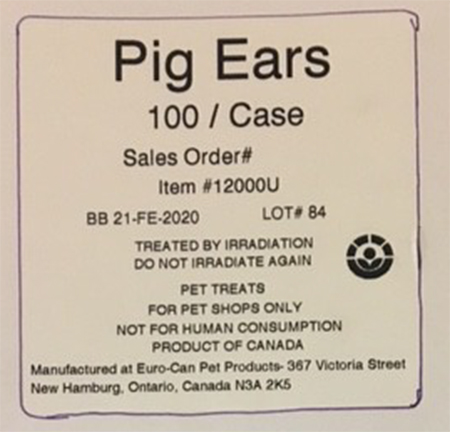
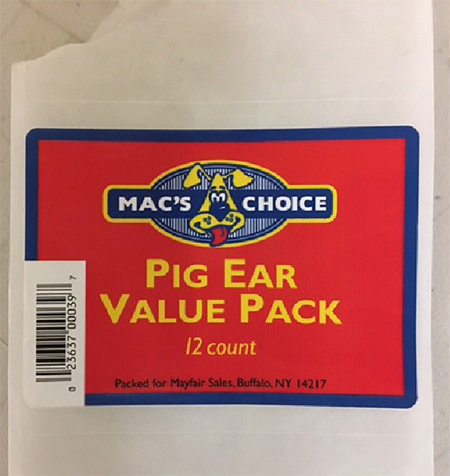
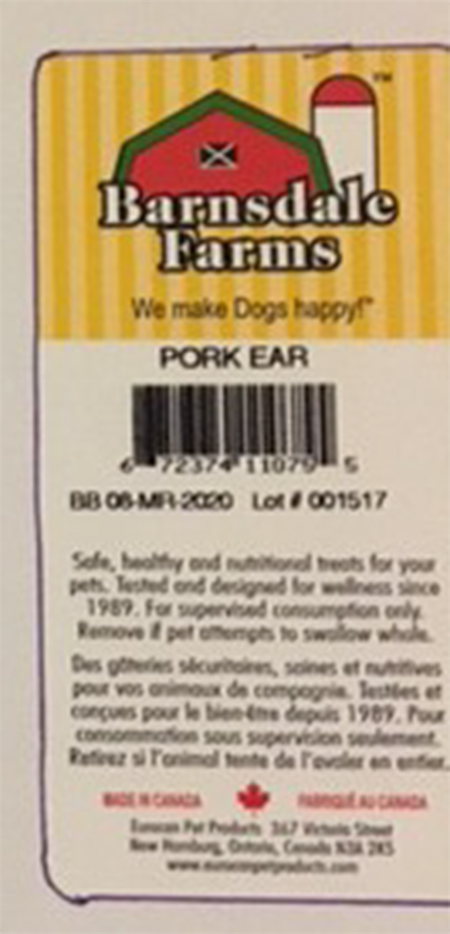
March 20, 2017 — EuroCan Manufacturing is voluntarily recalling one lot of its Barnsdale Farms, HoundsTooth and Mac’s Choice pig ears because they have the potential to be contaminated with Salmonella.
What’s Being Recalled?
The recalled pig ears were distributed throughout the U.S.A. and Canada.
The products were packaged as individually shrink-wrapped, 6-pack, 12-pack and 25-pack bags under the following brands:
Barnsdale Farms
Barnsdale Farms Select
Houndstooth
Mac’s Choice
The recalled products are from Lot 84.
No illnesses of any kind have been reported to date.
About Salmonella
Salmonella can affect animals eating the products and there is a risk to humans from handling contaminated pet products, especially if they have not thoroughly washed their hands after having contact with the products or any surfaces exposed to these products.
Healthy people infected with Salmonella should monitor themselves for some or all of the following symptoms: nausea, vomiting, diarrhea or bloody diarrhea, abdominal cramping and fever.
Rarely, Salmonella can result in more serious ailments, including arterial infections, endocarditis, arthritis, muscle pain, eye irritation, and urinary tract symptoms.
Consumers exhibiting these signs after having contact with this product should contact their healthcare provider.
Pets with Salmonella infections may be lethargic and have diarrhea or bloody diarrhea, fever and vomiting.
Some pets will have only decreased appetite, fever and abdominal pain.
Infected but otherwise healthy pets can be carriers and infect other animals or humans.
If your pet has consumed the recalled product and has these symptoms, be sure to contact your veterinarian.
About the Recall
The potential for contamination was noted after routine testing revealed the presence of Salmonella in the product.
The company has suspended distribution of the product while FDA and the company continue their investigation as to the source of the problem.
What to Do?
Consumers who have purchased any of the affected Barnsdale Farms pig ears should return the product to the place of purchase for a refund.
Those with questions may contact the company Monday to Friday from 9 AM to 5 PM ET Time at 888-290-7606.
U.S. citizens can report complaints about FDA-regulated pet food products by calling the consumer complaint coordinator in your area.
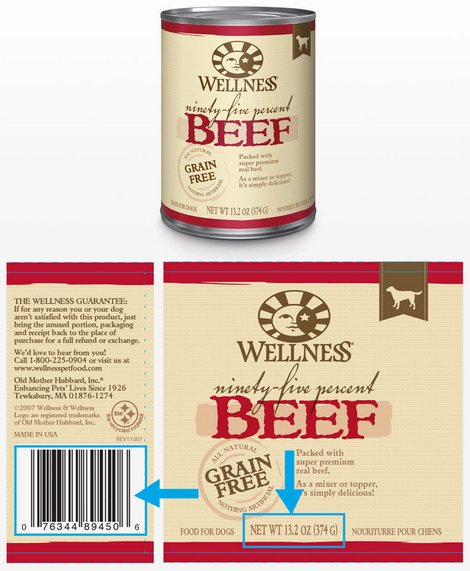
March 18, 2017 — Wellpet of Tewksbury, MA, is voluntarily recalling a limited amount of one canned dog food because it may contain elevated levels of naturally occurring beef thyroid hormone.
What’s Being Recalled?
Recalled product includes:
Wellness 95% Beef Topper for Dogs
Size: 13.2 ounce cans
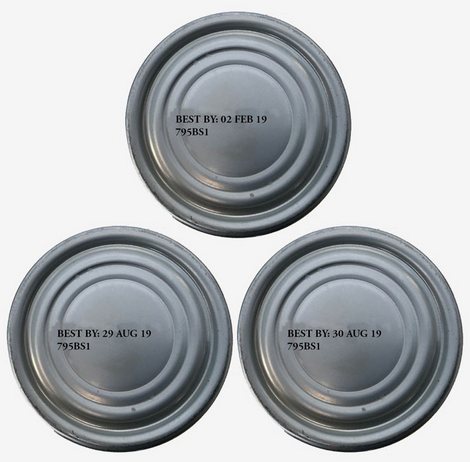
Best-By Dates: 02 FEB 19, 29 AUG 19 and 30 AUG 19
Best-By dates can be found on the bottom of each can.
No other Wellness products are affected.
About the Recall
Elevated levels of thyroid hormone may affect a dog’s metabolism and can be associated with increased thirst and urinary output, restless behavior and weight loss.
Multiple studies indicate that for the vast majority of pets, symptoms are reversible as soon as the pet stops eating product with elevated thyroid hormone.
Because the recipe is a mixer or topper and intended for intermittent or supplemental feeding only, the likelihood of a dog being affected is remote.
WellPet has received no reports of any health problems as a result of feeding the affected recipe.
However, the company is voluntarily recalling three best-by dates as an extra level of precaution.
What to Do?
If you have any of the 13.2 ounce cans of this specific recipe and marked with one of the three best-by dates, please email the company at wecare@wellpet.com
Or call the company at 877-227-9587.
U.S. citizens can report complaints about FDA-regulated pet food products by calling the consumer complaint coordinator in your area.
Blue Buffalo Dog Food Recall Event Number 2 of March 2017
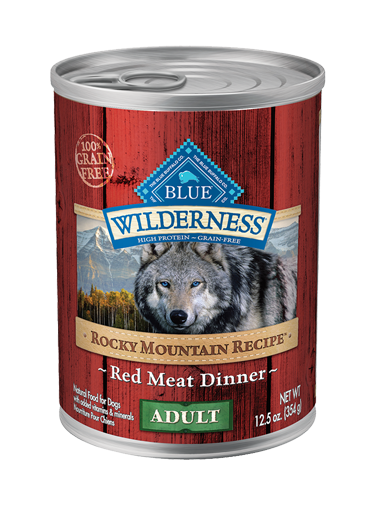
March 17, 2017 — Blue Buffalo Company is voluntarily recalling one production lot of BLUE Wilderness Rocky Mountain Recipe Red Meat Dinner Wet Food for Adult Dogs because the product may contain elevated levels of naturally occurring beef thyroid hormone.
What’s Being Recalled?
The recall is limited to one production lot of the following product:
BLUE Wilderness Rocky Mountain Recipe Red Meat Dinner Wet
Food for Adult Dogs
Size: 12.5 ounce can
UPC Code: 840243101153
Best-By Date: June 7, 2019 (bottom of can)
Affected products were distributed nationally through pet specialty and on-line retailers.
No other Blue Buffalo products are impacted by this issue.
About the Recall
Dogs ingesting high levels of beef thyroid hormones may exhibit symptoms such as increased thirst and urination, weight loss, increased heart rate and restlessness.
These symptoms may resolve when the use of the impacted food is discontinued.
However, with prolonged consumption these symptoms may increase in severity and may include vomiting, diarrhea, and rapid or difficulty breathing.
Should symptoms occur, contact your veterinarian immediately.
Although the Blue Buffalo Customer Care Resource Team has not received any reports of dogs exhibiting these symptoms from consuming this product, the FDA advised Blue Buffalo of a single consumer who reported symptoms in one dog, who has now fully recovered.
Blue Buffalo immediately began an investigation.
However, after working with the FDA, Blue Buffalo decided it would be prudent to recall the one production lot in question.
What to Do?
If your pet has consumed the product listed above and has exhibited any of these symptoms, please discontinue feeding and contact your veterinarian.
Consumers who have purchased the product subject to this recall should dispose of it or return it to the place of purchase for full refund.
Consumers with questions may contact Blue Buffalo at 866-201-9072 from 8 AM to 5 PM Eastern Time Monday through Friday.
Or by email at CustomerCare@bluebuffalo.com.
U.S. citizens can report complaints about FDA-regulated pet food products by calling the consumer complaint coordinator in your area.








 Learning from Dogs