Normally, there’s always a selection of bits and pieces in my LfD Blog folder from which to construct a new post.
But yesterday afternoon as I trawled a number of articles and blog sites I ended up feeling sick to the back teeth. Disgusted about the inequalities and injustices that seem to be in the news just now. (I use the word ‘news’ liberally!)
It started with me reading, even before I was out of bed, the latest essay from George Monbiot entitled The Shooting Party.
As the food queues lengthen, the government is giving our money to the super-rich.
Then I went back to re-read an essay from Patrice Ayme that came out on the 22nd called USA: Rich Plutos, Poor People. Here’s a snippet from there:
Plutocracy is a redistribution of wealth, power, income, from We The People to a small minority of controlling parasites. Plutocracy paralyzes the minds with a warped case of inverted decency. Plutocracy is neither optimal for the society, nor the economy.
Plutocracy affects the USA more than Europe, and the minds, even more than the stomachs. The fact that average Americans feel that they are much better off than in the rest of the world reinforces the plutocratization of the USA. Including astounding tolerance for the amazingly corrupt so called Supreme Court (Supremely plutocratic!).
On to another of Patrice’s essays. Or more specifically to a comment left by Eugen to a post from Patrice published yesterday.
I would like to share with you my thought about the major defaults of the economic system called “Market economy” or “Capitalism”, or in the language of this blog, the moral deficiency of the system run by Plutocracy.
The major problem of the contemporary economic system on the macro level is that it enabled on one hand to pour into the economy too much financial liquidity at times of boom and overheated economy, by investing too much money in wrong and too expensive assets, and on the other hand at times of bust, when the economy needs liquidity to sustain employment, the system is rather greedy with helping investments in the same assets for even very reduced price. This system a-priory has to cause bust and boom, situations.
The economist since the great depression of 1929-1933 which had disastrous consequences learned from the lesson, and since then the governments and the central banks took as their major task in economy (and be the price whatever it takes), to act as anti bust and boom instrument. This is why they made the economic stimulus of trillions that saved the banks and financial system from total collapse (luckily the collapse came during the time of republican presidency and they couldn’t resist this decision), and the quantitative easing that poured liquidity of government money into the economy as alternative to the private money from banks who stopped to borrow.
So if it is so easy to solve the economic crisis situations, what is the problem? Let the economy run on the waves of bust and boom, and whenever the bust comes the government interferes, and at the times of booms let the boys play and enjoy themselves. If economics would be only about mathematical formulas, probably it could work, but the truth is all the economic decisions have their moral-political aspects. [Ed. My emphasis] And here lies the problem.
Because it is morally and politically very hard to neglect the principle of punish those who do wrong and give tribute to those who has done good. And this is actually what happens when the government comes to rescue the “credit boomers”, the bankers who created a distorted financial system, that channeled the financial and material resources to wrong places to invest in wrong assets, and when the D day came, they did not have to pay the price for their wrong doings. The same happened to those who took the loans, without to ask themselves if and when are they going to pay them back.
These Financiers and their creditors, who get loans of other peoples’ money enjoy free lunch twice. Once when they give and get these loans with knowledge that it will never be repaid, and second time when they enjoy the debt reduction, when the governments come to rescue them.
On the other hand those who use the wealth generated at times of boom to accumulate reserves for the bad times have to pay twice. First time when they restrain their activities during the times of prosperity and reduce by it their profits, second time at times of bust, when still they have to fulfill all their obligations, and get no praise for their responsible behavior in the times of boom.
Of course this system of Boom and Bust causes with each wave a major shift of wealth from one sector to the other, and generally from the decent and responsible entrepreneurs to the irresponsible gamblers, who happen to make bid on other people’s money.
This is one of the reasons why the pension systems are all in deficit, the wages stagnate while the profits and mainly the rewards of corporate managers of publicly traded companies surge.
Plutocrats have a certain grudging respect for one another. Naturally, they would like to put each other out of business unless it impacted their own business adversely. So I conclude that Obama’s sanctions are an attempt to isolate Putin from his plutocratic supporters (although perhaps supporters is too strong a word; Putin keeps his plutocrats on a pretty tight leash, just ask Mikhail Khodorkovsky).
But what if under the table the West is inviting Putin’s plutocrats to join them, where the grass is greener and you don’t have old Vlad busting your chops. We’re not going to mention that we’re going to give you a haircut on the way, but are you really ready for the rebirth of the Soviet Union? The London bankers must certainly be for it.
On the other hand, you have the Chinese promising big business… but China’s biggest real estate investor is unloading everything as China replicates the Western real estate bubble and collapse….
It’s tough being a Russian plutocrat these days. It’s tough being a plutocrat anywhere, really, with all this talk that plutocrats are *too* wealthy (and are actually mass murdering their fellow humans with their insatiable greed by hording wealth and depriving others of health care, education and jobs).
Come to America! Come to the UK! Plutocrats rule! This is the subtext of what the Russian plutocrats are hearing.
Finally, an essay published on Naked Capitalism had me reaching for the bowl. It was by Rob Johnson on the Breakdown of Democracy. Read it. It included this video.
Published on Apr 26, 2014
Rob Johnson: The influx of additional campaign finance dollars and central bank policies have contributed to the destruction of democratic institutions
That was enough for me.
Couldn’t take any more. Certainly wasn’t feeling inspired and creative. Just wanted to go out and find a horse to kiss.
Sanity is a warm, loving horse!
Sorry! Hopefully back to being more positively creative tomorrow!
Today, and the next two days, I want to offer you three essays under the theme of Trust, truth and community.
As is so often the case, there was a series of outwardly unconnected experiences that seemed, well to my eyes anyway, to speak to a theme. You will have to wait until Friday to judge whether or not you agree with me!
Trust
This first essay was motivated by two disparate events: One very local and one as far removed from being local as one could imagine.
But first, what do we mean by trust? Roget’s Thesaurus defines the word (in part):
trust noun
Absolute certainty in the trustworthiness of another: belief, confidence, dependence, faith, reliance.
You will recall that just over three weeks ago, we welcomed two horses to our pastures; Ranger and Ben. Both horses had previously been treated badly by humans, especially Ben who had been starved and beaten by his ex-owners.
In the early days, Ben was very cautious of any sudden movement by me and would back away from any contact from me other than being offered a food treat.
But in just three weeks, Ben has gone a huge way towards trusting Jean and me.
Taken yesterday afternoon.
oooo
My face is closer than three inches to Ben’s nose.
oooo
Both Ben and Ranger in the background are now very comfortable with Jean and me.
Now, I don’t know about you, but my guess is that if a human had experienced the degree of cruelty from the hands of another person that these horses had, it would take very much longer than three weeks for that human victim to regain the same level of trust that Ben and Ranger now offer. Indeed, many persons would harbour anger and distrust forever.
That was the local example of trust
Now to the ‘non-local’ example of trust. It involves PayPal.
You must read it in full, especially if you are a PayPal user. Thanks to Wolf, I can offer you his opening paragraphs:
I Just Got PayPal’s New Absolutely-No-Privacy-Ever Policy
TUESDAY, APRIL 1, 2014 AT 1:00AM
Sunday, when people had other things to do and weren’t supposed to pay attention, PayPal sent its account holders an innocuous-sounding email with the artfully bland title, “Notice of Policy Updates.” PayPal didn’t want people to read it – lest they come away thinking that the NSA, which runs the most expansive spying dragnet in history, is by comparison a group of choirboys.
The email started with corporate blah-blah-blah on privacy, that PayPal was “constantly” changing things “to give you more of what you want and improve your experience using us.”
Do read the rest of the essay here. Here’s a comment from a reader of Wolf’s essay, republished with Wolf’s permission:
Concerning: I Just Got PayPal’s New Absolutely-No-Privacy-Ever Policy
I will relate an experience I had regarding Pay Pal that I believe has some relevance to your blog on Pay Pal’s privacy policy.
I am a retired old geezer living in NY State. About 4 years ago I looked at Ebay’s bidding process to place a bid on an item I wanted. However I discovered that I could not make such a bid without subscribing to pay pal. I provided pay pal with the information it required and made my bid. My bid was exceeded by other bids and I did not get the item. My credit card was not used at that time and I never used Ebay or pay pal after that.
Because I did not respond to ongoing emails from the 2 companies I believed that I had no further connection to either of them and that my single failed bid was the end of our relationship.
Then about 2-3 years ago I received a couple of emails from Best Buy: one thanking me for opening a new account, and the other thanking me for purchasing an expensive electronic item.
When I opened up that new Best Buy account I discovered that my address was stated to be in California in care of a person named Pham Pham and that the credit card that was used was one that had recently expired although the number was still in use on a subsequently issued card. I checked all my credit cards online and found that the charge was not pending. I also took some other measures to protect myself. Within hours I received another email from Best Buy cancelling the order because payment was not made by my credit card company.
This incident took a strange turn a couple of days later. Initially I had no idea as to the source of the credit information leak. But then 2-3 days afterwards I received an email from Pay Pal requesting an update of the credit card information in my Pay Pal account. Pay Pal’s email request for updated credit information so soon after the online theft attempt may be just a coincidence, but in my mind there is an undisclosed connection. Of course I have not complied with Pay Pay’s requests. To this day no company has informed me that their accounts were hacked and that my credit information was stolen.
If, when you have read Wolf’s report in full, you feel, as I do, that the time has come to cut the relationship with PayPal then go for it. Because only a customer base that is ‘voting with their feet’ will deliver the message.
What is that message?
Simply, if organisations want to be trusted by their customers, those organisations must behave with integrity. Now I am not accusing PayPal of a lack of integrity but it goes beyond that. It goes to operating with a genuine sensitivity for what is correct. PayPal’s privacy policy is anything but that. There are parts of their ‘new’ policy that stink of gross insensitivity to their feelings for their customers. Read it in full courtesy of Wolf Richter
Oh, want to know how to close a PayPal account?
To close your Payflow account:
If your partner is PayPal, VeriSign or CyberCash contact PayPal Merchant support at 1-888-883-9770 or via email at payflow-support@paypal.com. Be sure to include your login ID.
If your partner is with a Payflow partner, reseller, or merchant bank you will need to contact the partner, reseller, or bank directly to close your Payflow account.
For additional information, contact PayPal Merchant support at 1-888-883-9770 or via email at payflow-support@paypal.com.
Note: Once your Payflow account is terminated, you cannot access the PayPal Manager or any account data. If you need access to this data, you will be charged a fee.
If you are trying to close your PayPal account and not a Payflow account do the following:
Log in to your PayPal account.
Click Profile at the top of the page.
Click Close Account in the Account Information column and follow the steps listed.
My PayPal account was closed at 15:10 PDT yesterday.
Perhaps PayPal should take note of how humans witness trust offered by our dear animals!
HEIST: Who Stole the American Dream? is stunning audiences across the globe as it traces the worldwide economic collapse to a 1971 secret memo entitled Attack on American Free Enterprise System. Written over 40 years ago by the future Supreme Court Justice Lewis Powell, at the behest of the US Chamber of Commerce, the 6-page memo, a free-market utopian treatise, called for a money fueled big business makeover of government through corporate control of the media, academia, the pulpit, arts and sciences and destruction of organized labor and consumer protection groups.
But Powell’s real “end game” was business control of law and politics. HEIST’s step by step detail exposes the systemic implementation of Powell’s memo by BOTH U.S. political parties culminating in the deregulation of industry, outsourcing of jobs and regressive taxation. All of which led us to the global financial crisis of 2008 and the continued dismantling of the American middle class. Today, politics is the playground of the rich and powerful, with no thought given to the hopes and dreams of ordinary Americans. No other film goes as deeply as HEIST in explaining the greatest wealth transfer of our time. Moving beyond the white noise of today’s polarizing media, HEIST provides viewers with a clear, concise and fact- based explanation of how we got into this mess, and what we need to do to restore our representative democracy.
It’s an incredibly interesting film, but more of that later. For me, what was stunningly enlightening was at last understanding the powerful forces at work since Lewis Powell published ‘the memo’ back on August 23, 1971. Because for me over in Britain, the era of the ’70s’ and ’80s’ were incredibly fulfilling. First, as a salesman for IBM UK – Office Products Division, from 1970 through to 1978, and then forming and managing my own company through to 1986 when I succumbed to an attractive purchase offer. Then, when my company was sold, taking a few years off cruising a sailboat in the Mediterranean; based out of Larnaca, Cyprus.
Thus I was immune to the global money and power plays, albeit enjoying rising house prices! Only Lady Luck protected me from the collapse of 2008 in that I had sold my Devon home in early 2007 and was renting. Then Lady Luck arranging for me to meet Jean in Mexico, Christmas 2007 (we were born 23 miles apart in London) and subsequently moving out to Mexico with Pharaoh in September, 2008, to be with Jean and all her dogs. Lady Luck’s magic continued in that we came to Merlin, Oregon because we were able to take advantage of a bank-owned property; moving there in October, 2012.
Of course, the scale of the downturn was obvious and there were many instances of people that I knew losing jobs or homes, or both, and generally having a very rough time.
So back to the film. Here’s the official trailer.
Uploaded on Feb 17, 2012
Please watch the newly updated trailer for “Heist: Who Stole the American Dream?,” the new, explosive documentary from Frances Causey and Donald Goldmacher exposing the roots of the American economic crisis and the destruction of the American dream. Visit www.Heist-TheMovie.com for more information on how to see the feature film and how to Take Action in restoring democracy and economic justice in the United States.
But here’s another thing that now makes sense: The legitimate anger of so many people, especially those who have some insight into what had been taking place. No, amend that! What is still taking place!
Just one example of that legitimate anger, that of Patrice Ayme. Just go across and read his blog post of two days ago: American Circus.
My strong recommendation is that you take an evening off and watch the film. Here’s another preview:
Frances Causey, Co-producer & co-director-Heist & Donald Goldmacher, Co-producer & co-director-Heist join Thom Hartmann. Corporate America is the biggest Welfare reciepient in the country – but that wasn’t always the case. The makers of Heist will tell you how organized money has been able to pull off the biggest “Heist” of the American Dream!
The film also concludes by offering many ways in which individuals can take back control of their lives, reinvigorate local communities, actively show that people-power is unstoppable. As it always has been and always will be.
This post started with a quote and I’m going to close with another.
“The day the power of love overrules the love of power, the world will know peace.” -Mahatma Gandhi
How the foreclosure crisis was a boon for the super wealthy.
For some time now, must be quite a few years, I have subscribed to Yves Smith’s Naked Capitalism blog. I do so for a number of reasons.
Thus it was that a few days ago I read with a mixture of anger and disgust an article about the consequences of the foreclosure crisis on the wealthy. Within a few hours of me requesting by email permission to republish that article on Learning from Dogs came the reply from Yves granting such permission.
This is Naked Capitalism fundraising week. 53 donors [now well over 400, Ed.] have already invested in our efforts to shed light on the dark and seamy corners of finance. Join us and participate via our Tip Jar or another credit card portal, WePay in the right column, or read about why we’re doing this fundraiser and other ways to donate, such as by check, as well as our current goal, on our kickoff post.
It’s a welcome departure to see Adam Davidson’s weekly column in the New York Times, which usually puts a happy face on how the 1% are winning the class war in America, have a guest writer look at the other side of the story.
Catherine Rampell has a short but compelling piece on how the foreclosure crisis was wealth transfer from lower and middle income families to the rich. Her points are simple: the typical person who lost their home wasn’t a greedhead who bought too much house or refied to buy flat panel TVs and go on cruises (if you hang out with mortgage types, you’ll get a big dose of profligate consumer urban legend). The people who were like that (and there were some) for the most part were in subprime loans that reset in 2007 and 2008 and were in the early wave of foreclosures. The people who’ve lost their homes in later foreclosures were overwhelmingly people who had the bad fortune to buy late in the housing bubble (so when the bust hit, they had negative equity and couldn’t use lower rates to refi into cheaper payments) and took economic hits as a direct result of the crisis (hours cuts and job losses; other people who were hurt were in the more typical “shit happens” categories, like suffering medical problems, with their situation made much worse by their inability to sell or refinance their home).
Rampell’s contribution is to look at the phenomenon of investors, both big and small, and how they’ve bought properties at foreclosure and then flipped them. Separately, Josh Rosner recently released the astonishing statistic: that sales of owner-occupied properties showed only a 1% gain in the last 12 months. The gains that have been driving the indexes were all in investor owned properties. Some flipped to other investors. In hot markets, local investors have been doing “mini-bulks,” acquiring small portfolios to sell to private equity investors, some without renovating them, others with modest fix-ups. Others sold them to homebuyers.
Rampell uses the example of a couple who believed that renting was throwing away their money, and had the bad luck to buy a moderately-priced fixer-upper in early 2007. Each wage earner saw their income drop and unable to get a loan modification, they lost their home. Their $309,000 Seattle home went to an investor for $155,000 in the summer of 2011. That investor just sold it to a homeowner for $290,000, not far below what the hapless couple paid for it. But the new buyer paid all cash.
Rampell tells us:
Of the 87,062 foreclosures in the last five years that were bought by corporate investors and have been flipped, about a quarter were sold for at least $100,000 more than what the investor originally paid, according to [an online real estate listings site] Redfin (Although it’s impossible to know how much investors spent on upgrades or renovations.)….
The boom-bust-flip phenomenon is just one of the most obvious ways that research suggests the financial crisis has benefited the upper class while brutalizing the middle class. Rents have risen at twice the pace of the overall cost-of-living index, partly because middle-class families can’t get the credit they need to buy. That means “landlords can raise rents with impunity,” says Glenn Kelman, chief executive of Redfin. And according to a report by David Autor, the M.I.T. economist, job losses during and after the recession were concentrated in midskilled and midwage jobs, like white-collar sales, office and administrative jobs; and blue-collar production, craft, repair and operative jobs. Employment for higher-skilled workers, on the other hand, has grown substantially.
There is a second way foreclosures have served as a wealth transfer to the capitalist classes. Foreclosures don’t necessarily result in evictions. Banks often leave properties in a “zombie” state, starting foreclosures but not completing them, leaving the owner who thought he was foreclosed on still on the hook for property taxes. Another variant which is much less damaging is to leave the homeowner in place. I recently met an investor who is acquiring homes in Atlanta. The day after he buys a house, he goes to introduce himself to the former homeowner to see if he can work out a deal to keep them in place as tenant. In the overwhelming majority of cases, he can. “They were paying $1100 on their mortgage and the bank wouldn’t give them a mod. I’ll let them rent for $700, which is way above what they’d have gotten if they wrote the principal down to the price at which I bought the house. And I tell the tenants I’d be happy to sell the home to them.” We didn’t discuss details, but it sounded as if he’d be willing to structure rent to own deals (where part of the rent would go to a down payment on the house).
He was clear that his business depended on what he saw as value destroying behavior by banks. He described how he’d recently bought a home and when he went for his usual visit to the house, a well-dressed black man met him and invited him in, saying he’d be out in 30 days and assumed it wasn’t a problem. The new owner saw the house was in impeccable shape. He chatted with the owner a bit and found out he was a bodybuilder with a high-end training business. He asked the homeowner: “You look like you take good care of yourself and the house. You’d been paying on time. What happened?”
The trainer told him that he’d bought the house at the peak of the cycle for $160,000. The house was clearly now worth way less. He tried to get the bank to modify it to a principal balance of $100,000. The bank wouldn’t consider it. “So I bought a house which is comparable to this one for $50,000 and gave this one up.”
In this case, the homeowner had enough cash to arbitrage himself. The investor told me he’d bought the foreclosed home for $40,000. Had the bank cut a deal for $100,000 (and who knows, the homeowner might have accepted a higher number), it would have come out way ahead. But that also assumes that the bank owned the mortgage. It’s pretty much a given that the bank was a servicer, and as we’ve seen again and again, servicers don’t have the incentives or the infrastructure to do mods. So investor in the mortgages lose, homeowners lose. The winners are the banks as inefficient looters (the money they skim off the servicing is chump change relative to the damage done by negligent and predatory servicing) and the investors who profit by picking up the pieces. This is isn’t a well-functioning economic system, it’s rentier capitalism. And it’s looking more and more like a doomsday machine for what remains of the middle class.
oooOOOooo
Can’t add anything polite to this! Except, to say it’s a very long way from integrity!
Just a ship out of many thousands that ply the trade routes across our oceans. She was built in 2011 and is classified as a bulk carrier. Her gross tonnage is 40,142 tons. She is 738 feet long and 105 feet wide.
So what, you may ask?
To answer that question, let me turn to a recent post over on TomDispatch generously offered for republication on Learning from Dogs. (Thanks Tom.)
It was the stuff of fantasy, of repeated failed expeditions and dreams that wouldn’t die. I’m talking about the Northwest Passage, that fabled route through Arctic waters around North America. Now, it’s reality. The first “bulk carrier,” a Danish commercial freighter with a load of coal, just traveled from Vancouver, Canada, to Finland, cutting a week off its voyage, skipping the Panama Canal, and even, according to the Finnish steel maker Ruukki Metals, for whom the coal was intended, “reducing its greenhouse gas emissions because of fuel savings.”
When dreams come true, it’s time to celebrate, no? Only in this case, under the upbeat news of the immediate moment lies a far larger nightmare. Those expeditions from the fifteenth to the twentieth centuries failed to find the Northwest Passage because Arctic sea ice made the voyage impossible. There simply was no passage. No longer. Thanks to global warming, the melting of ice — glaciers are losing an estimated 303 billion tons of the stuff annually worldwide — staggers the imagination. The Greenland ice shield is turning into runoff ever more rapidly, threatening significant sea level rise, and all of the melting in the cold north has, in turn, opened a previously nonexistent Northwest Passage, as well as a similar passage through Russia’s Arctic waters.
None of this would have happened, as the prestigious Intergovernmental Panel on Climate Change pointed out in its latest report, if not for the way the burning of fossil fuels (like that coal the Nordic Orion took to Finland) has poured carbon dioxide into the atmosphere. In other words, we created that Arctic passage and made it commercially viable, thus ensuring that our world, the one we’ve known since the dawn of (human) time, will be ever less viable for our children and grandchildren. After all, the Arctic with its enormous reservoirs of fossil fuels can now begin to be opened up for exploitation like so much of the rest of the planet. And there can be no doubt about it: those previously unreachable reserves will be extracted and burned, putting yet more CO2 into the atmosphere, and anyone who tries to stop that process, as Greenpeace protestors symbolically tried to do recently at an oil rig in Arctic Russia, will be dealt with firmly as “pirates” or worse. That dream of history, of explorers from once upon a time, is now not just a reality, but part of a seemingly inexorable feedback loop of modern fossil-fuel production and planetary heating, another aspect of what Michael Klare has grimly termed the Third Carbon Age (rather than a new Age of Renewables).
If we don’t need a little perspective on ourselves and our world now, then when? Fortunately, TomDispatch regular Rebecca Solnit is here to offer us both that perspective and some hope for what we can do in the face of well-funded climate denialism and fossil-fuel company boosterism. Tom
Bigger Than That (The Difficulty of) Looking at Climate Change
By Rebecca Solnit
Late last week, in the lobby of a particularly unglamorous downtown San Francisco building, a group of passionate but polite activists met with a bureaucrat who stepped forward to hear what they had to say about the fate of the Earth. The activists wanted to save the world. The particular part of it that might be under their control involved getting the San Francisco Retirement board to divest its half a billion dollars in fossil fuel holdings, one piece of the international divestment movement that arose a year ago.
Sometimes the fate of the Earth boils down to getting one person with modest powers to budge.
The bureaucrat had a hundred reasons why changing course was, well, too much of a change. This public official wanted to operate under ordinary-times rules and the idea that climate change has thrust us into extraordinary times (and that divesting didn’t necessarily entail financial loss or even financial risk) was apparently too much to accept.
The mass media aren’t exactly helping. Last Saturday, for instance, the New York Times gave its story on the International Panel on Climate Change’s six-years-in-the-making report on the catastrophic future that’s already here below-the-fold front-page placement, more or less equal to that given a story on the last episode of Breaking Bad. The end of the second paragraph did include this quote:“In short, it threatens our planet, our only home.” But the headline (“U.N. Climate Panel Endorses Ceiling on Global Emissions”) and the opening paragraph assured you this was dull stuff. Imagine a front page that reported your house was on fireright now, but that some television show was more exciting.
Sometimes I wish media stories were organized in proportion to their impact. Unfortunately, when it comes to climate change, there is not paper enough on this planet to properly scale up a story to the right size. If you gave it the complete front page to suggest its import, you would then have to print the rest of the news at some sort of nanoscale and include an electron microscope for reading ease.
Hold up your hand. It’s so big it can block out the sun, though you know that the sun is so much bigger. Now look at the news: in column inches and airtime, a minor controversy or celebrity may loom bigger than the planet. The problem is that, though websites and print media may give us the news, they seldom give us the scale of the news or a real sense of the proportional importance of one thing compared to another. And proportion, scale, is the main news we need right now — maybe always.
As it happens, we’re not very good at looking at the biggest things. They may be bigger than we can see, or move more slowly than we have the patience to watch for or remember or piece together, or they may cause impacts that are themselves complex and dispersed and stretch into the future. Scandals are easier. They are on a distinctly human scale, the scale of lust, greed, and violence. We like those, we understand them, we get mired in them, and mostly they mean little or nothing in the long run (or often even in the short run).
A resident in a town on the northwest coast of Japan told me that the black 70-foot-high wave of water coming at him on March 11, 2011, was so huge that, at first, he didn’t believe his eyes. It was the great Tohoku tsunami, which killed about 20,000 people. A version of such cognitive dissonance occurred in 1982, when NASA initially rejected measurements of the atmosphere above Antarctica because they indicated such a radical loss of ozone that the computer program just threw out the data.
Some things are so big you don’t see them, or you don’t want to think about them, or you almost can’t think about them. Climate change is one of those things. It’s impossible to see the whole, because it’s everything. It’s not just a seven-story-tall black wave about to engulf your town, it’s a complete system thrashing out of control, so that it threatens to become too hot, too cold, too dry, too wet, too wild, too destructive, too erratic for many plants and animals that depend on reliable annual cycles. It affects the entire surface of the Earth and every living thing, from the highest peaks to the depths of the oceans, from one pole to the other, from the tropics to the tundra, likely for millennia — and it’s not just coming like that wave, it’s already here.
It’s not only bigger than everything else, it’s bigger than everything else put together. But it’s not a sudden event like a massacre or a flood or a fire, even though it includes floods, fires, heat waves, and wild weather. It’s an incremental shift over decades, over centuries. It’s the definition of the big picture itself, the far-too-big picture. Which is why we have so much news about everything else, or so it seems.
To understand climate change, you need to translate figures into impacts, to think about places you’ll never see and times after you’re gone. You need to imagine sea level rise and understand its impact, to see the cause-and-effect relations between coal-fired power plants, fossil-fuel emissions, and the fate of the Earth. You need to model data in fairly sophisticated ways. You need to think like a scientist.
Given the demands of the task and the muddle of the mainstream media, it’s remarkable that so many people get it, and that they do so despite massive, heavily funded petroleum industry propaganda campaigns is maybe a victory, if not enough of one.
Four months ago, two bombers in Boston murdered three people and injured hundreds in a way spectacularly calculated to attract media attention, and the media obeyed with alacrity. Climate change probably fueled the colossal floods around Boulder, Colorado, that killed seven people in mid-September, but amid the copious coverage, it was barely mentioned in the media. Similarly, in Mexico, 115 people died in unprecedented floods in the Acapulco area (no significant mention of climate change), while floods reportedly are halving Pakistan’s economic growth (no significant mention), and 166 bodies were found in the wake of the latest Indian floods (no significant mention).
Climate change is taking hundreds of thousands of lives in Africa every year in complex ways whose causes and effects are difficult to follow. Forest fires, very likely enhanced by climate change, took the lives of 19 firefighters facing Arizona blazes amid record heat waves in July. Again, climate change generally wasn’t the headline on that story.
(For the record, climate change is clearly helping to produce many of the bigger, more destructive, more expensive, more frequent disasters of our time, but it is impossible to point to any one of them and say definitely, this one is climate change. It’s like trying to say which cancers in a contaminated area were caused by the contamination; you can’t, but what you can say is that the overall rise in cancer is connected.)
Not quite a year ago, a climate-change-related hurricane drowned people when superstorm Sandy hit a place that doesn’t usually experience major hurricane impact, let alone storm surges that submerge amusement parks, the New York City subway system, and the Jersey shore. In that disaster, 148 people died directly, nearly that many indirectly, losses far greater than from any terrorist incident in this country other than that great anomaly, 9/11. The weather has now become man-made violence, though no one thinks of it as terrorism, in part because there’s no smoking gun or bomb — unless you have the eyes to see and the data to look at, in which case the smokestacks of coal plants start to look gun-like and the hands of energy company CEOs and well-paid-off legislators begin to morph into those of bombers.
Even the civil war in Syria may be a climate-change war of sorts: over the past several years, the country has been hit by its worst drought in modern times. Climate and Security analyst Francesco Femia says, “Around 75 percent of [Syrian] farmers suffered total crop failure, so they moved into the cities. Farmers in the northeast lost 80 percent of their livestock, so they had to leave and find livelihoods elsewhere. They all moved into urban areas — urban areas that were already experiencing economic insecurity due to an influx of Iraqi and Palestinian refugees. But this massive displacement mostly wasn’t reported. So it wasn’t factoring into various security analyses. People assumed Syria was relatively stable compared to Egypt.”
Column Inches, Glacial Miles
We like to think about morality and sex and the lives of people we’ve gotten to know in some fashion. We know how to do it. It’s on a distinctly human scale. It’s disturbing in a reassuring way. We fret about it and feel secure in doing so. Now, everything’s changed, and our imaginations need to keep pace with that change. What is human scale anyway? These days, after all, we split atoms and tinker with genes and can melt an ice sheet. We were designed to think about human-scale phenomena, and now that very phrase is almost as meaningless as old terms like “glacial,” which used to mean slow-moving and slow to change.
Nowadays glaciers are melting rapidly or disappearing entirely, and some — those in Greenland, for example — have gushing rivers of ice water eating through their base. If the whole vast Greenland ice sheet were to melt, it could raise global sea levels by 23 feet.
We tend to think about climate change as one or two or five things: polar ice, glaciers melting, sea-level rise, heat waves, maybe droughts. Now, however, we need to start adding everything else into the mix: the migration of tropical diseases, the proliferation of insect pests, crop failures and declining crop yields leading to widespread hunger and famine, desertification and flooded zones and water failures leading to mass population shifts, resource wars, and so many other things that have to do with the widest systems of life on Earth, affecting health, the global economy, food systems, water systems, and energy systems.
It is almost impossibly scary and painful to contemplate the radical decline and potential death of the oceans that cover 70% of the Earth’s surface and the dramatic decrease of plankton, which do more than any other type of organism to sequester carbon and produce oxygen — a giant forest in microscopic form breathing in what we produce, breathing out what we need, keeping the whole system going. If you want to read something really terrifying, take a look at the rise of the Age of Jellyfish in this review of Lisa-Ann Gershwin’s book Stung!: On Jellyfish Blooms and the Future of the Ocean. Maybe read it even if you don’t.
Only remember that like so much about climate change we used to imagine as a grim future, that future is increasingly here and now. In this case, in the form of millions or maybe billions of tons of jellyfish proliferating globally and devouring plankton, fish eggs, small fish, and bigger creatures in the sea we love, we know, we count on, we feed on, and now even clogging the water-intake pipes of nuclear power plants. In the form of seashells dissolving in acidic waters from the Pacific Northwest to the Antarctic Ocean. In the form of billions of pine-bark beetles massacring the forests of the American West, from Arizona to Alaska, one bite at a time.
It’s huge. I think about it, and I read about it, following blogs at Weather Underground, various climate websites, the emails of environmental groups, the tweets of people at 350.org, and bits and pieces of news on the subject that straggle into the mainstream and alternative media. Then I lose sight of it. I think about everything and anything else; I get caught up in old human-scale news that fits into my frameworks so much more easily. And then I remember, and regain my sense of proportion, or disproportion.
The Great Wall, Brick by Brick
The changes required to address climate change are colossal, but they are made up of increments and steps and stages that are more than possible. Many are already underway, both as positive changes (adaptation of renewable energy, increased energy efficiency, new laws, policies, and principles) and as halts to destruction (for example, all the coal-fired plants that have not been built in recent years and the Tar Sands pipeline that, but for popular resistance, would already be sending its sludge from Alberta to the Gulf of Mexico). The problem is planetary in scale, but there is room to mitigate the worst-case scenarios, and that room is full of activists at work. Much of that work consists of small-scale changes.
As Sierra Club Executive Director Michael Brune put it last week, “Here’s the single most important thing you need to know about the IPCC report: It’s not too late. We still have time to do something about climate disruption. The best estimate from the best science is that we can limit warming from human-caused carbon pollution to less than 3.6 degrees Fahrenheit — if we act now. Bottom line: Our house is on fire. Rather than argue about how fast it’s burning, we need to start throwing buckets of water.”
There are buckets and bucket brigades. For example, the movement to get universities, cities, churches, and other entities to divest their holdings of the top 200 fossil-fuel stocks could have major consequences. If it works, it will be achieved through dedicated groups on this campus or in that city competing in a difficult sport: budging bureaucrats. It’s already succeeded in some key places, from the city of Seattle to the national United Church of Christ, and hundreds of campaigns are underway across the United States and in some other countries.
My heroes are now people who can remain engaged with climate change’s complex and daunting facts and still believe that we have some leeway to determine what happens. They insist on looking directly at the black wall of water, and they focus on what we can do about the peril we face, and then they do it. They do their best to understand scale and science, and their dedication and clarity comes from connecting their hearts to their minds.
I hear people who are either uninformed or who are justifying disengagement say that it’s too late and what we do won’t matter, but it does matter, because a rise in the global temperature of two degrees Celsius is going to be very, very different from, say, five degrees Celsius for almost everything living on Earth now and for millennia to come. And there are still many things that can be done, both to help us adapt to the radical change on the way and to limit the degree of change to which we’ll have to adapt. Because it’s already risen .8 degrees and that’s been a disaster — many, many disasters.
I spent time over the last several months with the stalwarts carrying on a campaign to get San Francisco to divest from its energy stocks. In the beginning, it seemed easy enough. City Supervisor John Avalos introduced a nonbinding resolution to the Board of Supervisors, and to everyone’s surprise it passed unanimously in April on a voice vote. But the board turned out only to have the power to recommend that the San Francisco Retirement Board do the real work of divesting its vast holdings of fossil-fuel stocks. The retirement board was a tougher nut to crack.
Its main job, after all, is to ensure a safe and profitable pension fund and in that sense, energy companies have, in the past, been good investments. To continue on such a path is to be “smart about the market.” The market, in the meantime, is working hard at not imagining the financial impact of climate change.
The failure of major food sources, including fishing stocks and agricultural crops, and the resultant mass hunger and instability — see Syria — is going to impact the market. Retirees in the beautiful Bay Area are going feel it if the global economy crashes, the region fills with climate refugees, the spectacularly productive state agricultural system runs dry or roasts, and the oceans rise on our scenic coasts. It’s a matter of scale. Your investments are not independent of nature, even if fossil-fuel companies remain, for a time, profitable while helping destroying the world as humanity has known it.
Some reliable sources now argue that fossil-fuel stocks are not good investments, that they’re volatile for a number of reasons and due to crash. The IPCC report makes it clear that we need to leave most of the planet’s fossil fuel reserves in the ground in the coming decades, that the choice is either to fry the planet or freeze the assets of the carbon companies. Activists are now doing their best to undermine the value of the big carbon-energy corporations, and governments clued in to the new IPCC report will likely join them in trying to keep the oil, gas, and coal in the ground — the fossil fuel that is also much of the worth of these corporations on paper. If we’re lucky, we’ll make them crash. So divesting can be fiscally sound, and there is a very strong case that it can be done without economic impact. But the crucial thing here isn’t the financial logistics of divestment; it’s the necessity of grasping the scale of things, understanding the colossal nature of the problem and the need to address it, in part, by pressuring one small group or one institution in one place.
To grasp this involves a feat of imagination and, I think, a leap of faith: a kind of conviction about what matters, about living according to principle, about understanding what is too big to be seen with your own eyes, about correlating data on a range of scales. A lot of people I know do it. If we are to pull back from the brink of catastrophe, it will be because of their vision and their faith. You might want to thank them now, and while your words are nice, so are donations. Or you might want to join them.
That there is a widespread divestment movement right now is due to the work of a few people who put forth the plan less than a year ago at 350.org. The president has already mentioned it, and hundreds of colleges are now in the midst of or considering the process of divesting, with cities, churches, and other institutions joining the movement. It takes a peculiar kind of genius to see the monster and to see that it might begin to be pushed back by small actions — by, in fact, actions on a distinctly human scale that could still triumph over the increasingly inhuman scale of our era.
Hold up your hand. It looks puny in relation to the sun, but the other half of the equation of scale is seeing that something as small as that hand, as your own powers, as your own efforts, can matter. The cathedral is made stone by stone, and the book is written word by word.
If there is to be an effort to respond to climate change, it will need to make epic differences in economics, in ecologies, in the largest and most powerful systems around us. Though the goals may be heroic, they will be achieved mostly through an endless accumulation of small gestures.
Those gestures are in your hands, and everyone’s. Or they could be if we learned to see the true scale of things, including how big we can be together.
Rebecca Solnit writes regularly for TomDispatch, works a little with 350.org, and is hanging out a lot in 2013 with the newly arrived Martin, Thyri, Bija Milagro, and Camilo, who will be 80 in the unimaginable year of 2093. Her most recent book is The Faraway Nearby.
Day three of recognising the passing of 400 ppm atmospheric CO2.
In nearly four years of writing for Learning from Dogs, I can’t recall devoting three days of posts to a single subject. To put that into context, today’s post is number 1,683 since the first one was published on July 15th, 2009; not all of them from the brain of yours truly by any means you understand!
Today, I’m going to feature a recent essay written by George Monbiot finishing up three days of ‘reporting’ on the deeply disturbing, but fully anticipated, news that the planet’s atmosphere has reached a concentration of 400 ppm CO2.
Then yesterday, a post under the title of 400 ppm, as the BBC reported it. I closed with a reference to a remark made by Professor Sir Brian Hoskins, director of the Grantham Institute for Climate Change at Imperial College London; the remark being “A greater sense of urgency was needed.“
I wrote that those wishy-washy words were pathetic. That we needed the sort of words that George Monbiot penned a few days ago in the Guardian newspaper. There it was entitled “Climate milestone is a moment of symbolic significance on road of idiocy“.
But I think the title that Mr. Monbiot chose to use on his own blog was far more apt: Via Dolorosa. (Note that I haven’t formally requested permission to republish the essay but trust that the following is acceptable to both Mr. Monbiot and the Guardian newspaper.)
Here’s how it opened:
Via Dolorosa
May 10, 2013
Corruption and short-termism are pushing us along the path of sorrows.
By George Monbiot, published on the Guardian’s website, 10th May 2013
The records go back 800,000 years: that’s the age of the oldest fossil air bubbles extracted from Dome C, an ice-bound summit in the high Antarctic. And throughout that time there has been nothing like this. At no point in the pre-industrial record have concentrations of carbon dioxide in the air risen above 300 parts per million. 400 is a figure that belongs to a different era.
The difference between 399 and 400ppm is small, in terms of its impacts on the world’s living systems. But this is a moment of symbolic significance, a station on the Via Dolorosa of environmental destruction. It is symbolic of our collective failure to put the long term prospects of the natural world and the people it supports above immediate self-interest.
The symbolic significance of the planet’s atmospheric concentrations of CO2 passing 400ppm is that, I hope, with all the hope that my heart can summon up, it will bring us back from the brink. Then one ponders about this possibility as Monbiot’s next paragraph unfolds:
The only way forward now is back: to retrace our steps along this road and to seek to return atmospheric concentrations to around 350 parts per million, as the 350.org campaign demands. That requires, above all, that we leave the majority of the fossil fuels which have already been identified in the ground. There is not a government or an energy company which has yet agreed to do so.
“not a government or an energy company … has yet agreed to do so.”
I’m going to repeat that again, with emboldening; “not a government or an energy company … has yet agreed to do so.”
In fact, one could reasonable argue that having any hope for a turning back is utterly naive. Look what the essay goes on to say:
Just before the 400-mark was reached, Shell announced that it will go ahead with its plans to drill deeper than any offshore oil operation has gone before: almost three kilometres below the Gulf of Mexico.
A few hours later, Oxford University opened a new laboratory in its department of earth sciences. The lab is funded by Shell. Oxford says that the partnership “is designed to support more effective development of natural resources to meet fast-growing global demand for energy.” Which translates as finding and extracting even more fossil fuel.
The European Emissions Trading Scheme, which was supposed to have capped our consumption, is now, for practical purposes, dead. International climate talks have stalled; governments such as ours now seem quietly to be unpicking their domestic commitments. Practical measures to prevent the growth of global emissions are, by comparison to the scale of the challenge, almost non-existent.
As an example of the scale of the hypocrisy in which we are all immersed, last week’s The Economist magazine carried a full-age advertisement from Chevron on page 5 under the banner of ‘Protecting The Planet Is Everyone’s Job – We agree‘ and going on to explain:
We go to extraordinary lengths to protect the integrity of the places where we operate. Places all over the world, like Australia’s Barrow Island. It’s home to hundreds of native species of wildlife, including wallabies, ospreys, and perenties.
We’ve been producing energy on the island for more than 40 years, and it remains a Class A Nature Reserve.
Didn’t take me two moments to find this image:
Barrow Island, Australia. Taken from the Chevron Australia website.
To my mind this advertisement completely misses the point; deliberately or otherwise. Chevron and all other oil producing companies in the world are endangering the future of the entire planet by continuing to ‘produce energy’, aka oil. Period. Full stop.
Or to put it in the words of George Monbiot’s essay:
The problem is simply stated: the power of the fossil fuel companies is too great. Among those who seek and obtain high office are people characterised by a complete absence of empathy or scruples, who will take money or instructions from any corporation or billionaire who offers them, and then defend those interests against the current and future prospects of humanity. This new mark reflects a profound failure of politics, worldwide, in which democracy has quietly been supplanted by plutocracy. Without a widespread reform of campaign finance, lobbying and influence-peddling and the systematic corruption they promote, our chances of preventing climate breakdown are close to zero.
Thus the final sentence in GM’s essay carries a deep sadness.
So here we stand at a waystation along the road of idiocy, apparently determined only to complete our journey.
The title of today’s post comes from that silly anecdote as to why Planet Earth has never been visited by a species of intergalactic explorers from a far, distant world?
Answer: Because as they passed by and looked down upon our planet they saw no signs of intelligent life!
So what triggered all this?
Well last Wednesday, Christine over at 350 or bust published a review of the recently released film Greedy Lying Bastards. Christine offered an insightful review of the film but more importantly went on to reveal a whole raft of issues that deserve to be widely promoted. She has been generous in allowing me to republish her post on Learning from Dogs.
What has this to do with dogs? On the face of it, very little. But then again, everything. Because if humans reverted to the standards of trust, loyalty and openness that we see every day in our dogs then we wouldn’t be in the mess that we are in!
oooOOOooo
Greedy Lying Bastards: Exposing The Fossil Fools Who Put Profit Before Human Lives
GreedyLyingBastards.com
*
One of the few-and-far-between perks of being a climate blogger is that occasionally I get access to books and movies before the general public does. This past weekend I got to watch “Greedy Lying Bastards” before it hit movie screens across the U.S. on Monday. Sunday night I, along with some fellow Citizens Climate Lobby volunteers, got together to watch this 90 minute documentary. This movie exposes the American fossil fuel interests that have been blocking action on climate change for decades, taking a page – and some of the same PR firms and lobbyists – right out of the tobacco companies’ playbook. Like the tobacco lobby, these fossil fools have opposed government action on the science showing their product is harmful and have actively disseminated lies about the science.
After the movie, I surveyed group members for their responses; we all gave it 10 out of 10 for its topic, but for actual delivery the movie was rated between 6 to 8 out of 10.
Some of the comments were:
“I really appreciated the whistle-blowing, the naming of names. I also really appreciated first-hand accounts of people in the U.S. who are already suffering the consequences of climate change.”
“I haven’t watched a documentary about this topic before, and really appreciated the great graphics. They made the connections for me.”
Two viewers had recently watched “The Age of Stupid” and felt that it spelled out the greed and petro-corruption as well as the consequences of inaction on climate change more clearly than did GLB.
I enjoyed the movie. Of course as a climate hawk I’m thrilled that this corruption and interference in democracy is receiving more attention at this critical juncture in the planet’s history, and for that I want to give a big shout-out to writer and director Scott Rosebraugh and producer Darryl Hannah. Compared to “Age of Stupid” which totally overwhelmed and depressed me and my companion, GLB left me riled up and ready to fight back at these soulless corporate monsters. One critique I have is that the movie ended with a whimper. Rosebraugh offers – in 60 seconds – four actions for people to take in response to the information they’ve just heard (possibly for the first time). It’s not that the actions mentioned (boycotting Exxon & Koch products, asking your Congressional representatives to take action to curb greenhouse gases, “joining the campaign” to stop fossil fuel subsidies and campaigning to overturn Citizens United) aren’t important, they are but to spend 89 minutes of the movie focused on the fossil fools who are destroying U.S. democracy as well as our children’s future without giving viewers more information on taking action may well foster more futility and despair. And, frankly, just signing a petition or writing a letter to your congressperson isn’t going to cut it at this point. The movie doesn’t give enough specifics on responses; the shocking amount of fossil fuel subsidies companies are given every year ($4 Billion in the United States, $775 Billion globally) isn’t even mentioned even while people are encouraged to get active on this issue. To move people from outrage to action, more information and empowerment is necessary. For example, viewers should know that there are governments (Australia, and the Canadian province of British Columbia) who have enacted a tax on carbon pollution, one of the first actions that governments can take to counter the fossil fuel stranglehold on our democracies and our economies.There are groups like 350.org and Citizens Climate Lobby (to name the ones I’m most familiar with) who are working to mobilize people at the grassroots; these important resources are not mentioned in the movie or on the movie’s “take action” website. This silo mentality is one of the biggest stumbling blocks to climate action, so I would beg the fine people involved in GLB and its website to expand their resources and “take action” focus. For that reason I would give the movie a ranking of 7.5 out of 10. Having said that, get out and watch the movie if it’s showing in a theatre near you, and take some friends with you.
For my part as a Canadian, I’d like to add a few more GLBs to the rogues’ gallery compiled by Rosebraugh:
Tim Ball worked as a professor of geography at the University of Winnipeg for eight years between 1988 and 1996. I am personally offended by Mr. Ball because not only did he work at my alma mater, and employed a family member for several years as his research assistant, he has been quoted back to me by acquaintances of mine from rural Manitoba where he’s gone on paid lecturing junkets. I hear that he can be very persuasive, and he’s told these good people that climate change is nothing to worry about (“the climate has always changed”), and so they don’t worry, even while this inaction puts their children’s future at risk. He even lies about his credentials – in this 2007 movie that purports to debunk climate science, you can see he’s identified as being from a department that never existed, in the university that he left 11 years earlier. Now that’s what I call a GLB!
And this Canadian GLB gallery wouldn’t be complete without a portrait of our current prime minister, Stephen Harper, son (spawn? LOL) of an Imperial Oil employee who went on to work for the oil company himself. Harper and his party’s ties to Big Oil are well-documented and are clearly playing themselves out in the current federal government’s policy decisions (see Murray Dobbin’s “Stephen Harper and the Big Oil Party of Canada, or DesmogBlog’s new series, Blame Canada).
That pesky ‘law’ regarding the power of unintended consequences.
As many of you are aware, last week was an unusual format for Learning from Dogs in that the whole of the week was dedicated to republishing Dr. Samuel Alexander’s essay The Sufficiency Economy – Envisioning a Prosperous Way Down. If you missed that, the first chapter was a week ago today under the title of Where less is so much more.
Moving on. Many living in Northern California and South-West Oregon will have had a timely reminder that nature is tapping mankind on the shoulder in new and challenging ways. I’m referring to the massive storm that was featured in a recent Climate Crocks article that delivered over a foot of rainfall in recent days. Here in Southern Oregon we received over 10 inches! Hence the growing awareness that we have to do something!
So with those musings in mind, read the following essay written by Gail Tverberg of the website Our Finite World. Gail describes herself, thus:
I am an actuary interested in finite world issues – oil depletion, natural gas depletion, water shortages, and climate change. The financial system is also likely to be affected.
I’m very grateful to Gail for so promptly giving me written permission to republish her work. It is very relevant to all of us.
World leaders seem to have their minds made up regarding what will fix world CO2 emissions problems. Their list includes taxes on gasoline consumption, more general carbon taxes, cap and trade programs, increased efficiency in automobiles, greater focus on renewables, and more natural gas usage.
Unfortunately, we live in a world economy with constrained oil supply. Because of this, the chosen approaches have a tendency to backfire if some countries adopt them, and others do not. But even if everyone adopts them, it is not at all clear that they will provide the promised benefits.
Figure 1. Actual world carbon dioxide emissions from fossil fuels, as shown in BP’s 2012 Statistical Review of World Energy. Fitted line is expected trend in emissions, based on actual trend in emissions from 1987-1997, equal to about 1.0% per year.
The Kyoto Protocol was adopted in 1997. If emissions had risen at the average rate that they did during the 1987 to 1997 period (about 1% per year), emissions in 2011 would be 18% lower than they actually were. While there were many other things going on at the same time, the much higher rise in emissions in recent years is not an encouraging sign.
The standard fixes don’t work for several reasons:
1. In an oil-supply constrained world, if a few countries reduce their oil consumption, the big impact is to leave more oil for the countries that don’t. Oil price may drop a tiny amount, but on a world-wide basis, pretty much the same amount of oil will be extracted, and nearly all of it will be consumed.
2. Unless there is a high tax on imported products made with fossil fuels, the big impact of a carbon tax is to send manufacturing to countries without a carbon tax, such as China and India. These countries are likely to use a far higher proportion of coal in their manufacturing than OECD countries would, and this change will tend to increase world CO2 emissions. Such a change will also tend to raise the standard of living of citizens in the countries adding manufacturing, further raising emissions. This change will also tend to reduce the number of jobs available in OECD countries.
3. The only time when increasing natural gas usage will actually reduce carbon dioxide emissions is if it replaces coal consumption. Otherwise it adds to carbon emissions, but at a lower rate than other fossil fuels, relative to the energy provided.
4. Substitutes for oil, including renewable fuels, are ways of increasing consumption of coal and natural gas over what they would be in the absence of renewable fuels, because they act as add-ons to world oil supply, rather than as true substitutes for oil. Even in cases where they are theoretically more efficient, they still tend to raise carbon emissions in absolute terms, by raising the production of coal and natural gas needed to produce them.
5. Even using more biomass as fuel does not appear to be a solution. Recent work by noted scientists suggests that ramping up the use of biomass runs the risk of pushing the world past a climate change tipping point.
It is really unfortunate that the standard fixes work the way they do, because many of the proposed fixes do have good points. For example, if oil supply is limited, available oil can be shared far more equitably if people drive small fuel-efficient vehicles. The balance sheet of an oil importing nation looks better if citizens of that nation conserve oil. But we are kidding ourselves if we think these fixes will actually do much to solve the world’s CO2 emissions problem.
If we really want to reduce world CO2 emissions, we need to look at reducing world population, reducing world trade, and making more “essential” goods and services locally. It is doubtful that many countries will volunteer to use these approaches, however. It seems likely that Nature will ultimately provide its own solution, perhaps working through high oil prices and weaknesses in the world financial system.
Elastic Versus Inelastic Supply
It seems to me that many bad decisions have been made because many economists have missed the point that crude oil supply tends to be very inelastic, while other fuels are fairly elastic. Let me explain.
Elastic supply is the usual situation for most goods. Plenty of the product is available, if the price is high enough. If there is a shortage, prices rise, and in not too long a time, the market is well-supplied again. If supply is elastic, if you or I use less of it, ultimately less of the product is produced.
Coal and natural gas usually are considered to be elastic in their supply. To some extent, they are still “extract it as you need it” products. Supply of natural gas liquids (often grouped with crude oil, but acting more like a gas, so it is less suitable as a transportation fuel) is also fairly elastic.
Crude oil is the one product that is in quite short supply, on a world-wide basis. Its supply doesn’t seem to increase by more than a tiny percentage, no matter how high the price rises. This is a situation of inelastic supply.
Figure 2. World crude oil production (including condensate) based primarily on US Energy Information Administration data, with trend lines fitted by the author.
Even though oil prices have been very high since 2005 (shown in Figure 3, below), the amount of crude oil has increased by only 0.1% per year (Figure 2, above).
Figure 3. Historical average annual oil prices, (“Brent” or equivalent) in 2011$, from BP’s 2012 Statistical Review of World Energy.
In the case of oil, both supply and demand are quite inelastic. No matter how high the price, demand for oil doesn’t drop back by much. No matter how high the price of oil, world supply doesn’t rise very much, either.1
In a situation of inelastic supply, the usual actions a person might take appear to work when viewed on a local basis, but backfire on a world basis, if not everyone participates. When one country tries to conserve crude oil (whether through a carbon tax, gasoline tax, or higher automobile mileage requirement), it may reduce its own consumption, but there are still plenty of other buyers in the market for the oil that was saved. So the oil gets used by someone else, perhaps at a slightly lower price. World oil production remains virtually unchanged. Thus, a reduction in oil usage by an OECD country can translate to more oil consumption by China or India, and ultimately more development of all types by those countries.
Adding Substitutes Adds to Carbon Emissions
If we don’t have enough crude oil, one approach is to create substitutes. Because crude oil supply is inelastic, though, these substitutes aren’t really substitutes, though. They are “add ons” to world oil supply, and this is one source of our problem with increasing world emissions.
What do we use to make the substitutes? Basically, natural gas and coal, and to a limited extent oil (because we can’t avoid using oil). The catch is, that to make the substitutes, we need to burn natural gas and coal more quickly than we would, if we didn’t make the oil substitutes. Since the supply of coal and natural gas is elastic, it is possible to pull them out of the ground more quickly. Thus, making the substitutes tends to increase carbon dioxide emissions over what they would have been, if we had never come up with the idea of substitutes.
The increased use of coal and natural gas is pretty clear, if a person thinks about coal-to-liquids or gas-to-liquids. Here, we need to first build the plants used in production, and then with each barrel of substitute made, we need to use more natural gas or coal. So it is very clear that we are extracting a lot of additional coal and natural gas, to make a relatively smaller amount of oil substitute. There is often a substantial need for water to make the process work as well, adding another stress on the system.
But the same issue comes up with biofuels, and with other renewables. These too, are add-ons to the world oil supply, not substitutes. While theoretically they might produce energy with less CO2 per unit than fossil fuel systems, in absolute terms they lead to natural gas and coal being pulled out of the ground more quickly to be used in making fertilizer, electricity, concrete, and other inputs to renewables.2
Carbon Taxes and Competitiveness
Each country competes with others in the world market place. Adding a carbon tax makes products made by the local company less competitive in the world marketplace. It also signals to potential coal users that the countries adopting the carbon taxes are willing to a leave a greater proportion of world coal exports to those who are not adopting the tax, thus helping to keep the cost of imported coal down.
Asian countries already have a competitive edge over OECD countries in terms of lower wages and lower fuel costs (because of their heavy coal mix), when it comes to manufacturing. Adding a carbon tax tends to add to the Asian competitive edge. This tends to shift production offshore, and with it, jobs.
Figure 4. China’s energy consumption by source, based on BP’s Statistical Review of World Energy data.
China joined the World Trade Organization in 2001. Figure 4 shows clearly that its fuel consumption ramped up rapidly thereafter. It seems likely that the number of Chinese manufacturing jobs and spending on Chinese infrastructure increased at the same time.
Economists seem to have missed the serious worldwide deterioration in CO2 emissions in recent years by looking primarily at individual country indications, including CO2 emissions per unit of GDP. Unfortunately, this narrow view misses the big picture–that total CO2 emissions are rising, and that CO2 emissions relative to world GDP have stopped falling. (See my posts Is it really possible to decouple GDP growth from energy growth and Thoughts on why energy use and CO2 emissions are rising as fast as GDP. See also Figure 1 at the top of the post.)
Figure 5. Employment is the total number employed at non-farm labor as reported by the US Census Bureau. Energy consumption is the total amount of energy of all types consumed (oil, coal, natural gas, nuclear, wind, etc.), in British Thermal Units (Btu), as reported by the US Energy Information Administration.
There are several reasons why a connection between energy consumption and the number of jobs is to be expected:
(1) The job itself in almost every situation requires energy, even if it is only electricity to operate computers, and fuel to heat and light buildings.
(2) Equally importantly, the salaries that employees earn allow them to buy goods that require the use of energy, such as a car or house. (“Energy demand” is what people canafford; jobs allow “demand” to rise.)
(3) The lowest salaried people can be expected to spend the highest proportion of their salaries on energy-related services (such as food and gasoline for commuting). The wealthy spend their money on high priced goods and services, such as financial planning services and designer clothing that require much less energy per dollar of expenditure.
The thing I find concerning is the close timing between the ramp-up of Asian coal use and thus jobs using coal, and the drop-off of US employment as a percentage of US population, as illustrated in Figure 6 below. Arguably, the ramp up in world trade is just as important, but some aspects of programs that are intended to save CO2 emissions also seem to encourage world trade.
Figure 6. US Number Employed / Population, where US Number Employed is Total Non_Farm Workers from Current Employment Statistics of the Bureau of Labor Statistics and Population is US Resident Population from the US Census. 2012 is partial year estimate.
Of course, the US did not sign the Kyoto Protocol or enact a carbon tax, and it is its jobs that I show falling as a percentage of population. It is more that the CO2 solutions act as yet another way to encourage more international trade, and with it more “growth”, and more CO2.
Using More Biomass is Not a Fix Either
Burning more wood for fuel and creating “second generation” biofuels from biomass seems like a fix, until a person realizes that we are reaching limits there, as well.
In June 2012, twenty noted scientist published a paper in the journal Nature called Approaching a State Shift in the Earth’s Biosphere. This report indicates that humans have already converted as much as 43% of Earth’s land to urban or agricultural uses. In total, 20% to 40% of Earth’s primary productivity has been taken over by humans. The authors are concerned that we may now be reaching a tipping point leading to a state shift, because of loss of ecosystem services as use of biological products increases. With this state change would come a change in climate. Simulations indicate that this tipping point may occur when as little as 50% of land use is disturbed. This tipping point may be even lower, if world-wide synergies take place.
On Our Current Path – Lacking Good Solutions
While this list of problems relating to current proposed solutions is not complete, it gives a hint of the problems with reducing CO2 emissions using approaches suggested to date. There are many issues I have not covered.
While the problems noted in these articles are probably solvable, the cost of these solutions has not been built into energy balance analyses. Energy balances (or EROEI estimates) as currently reported do not vary with the proportion of intermittent renewables added to the grid. If energy balance analyses were adjusted to reflect the high cost of adding an increasing proportion of wind or solar PV to the grid, they would likely show a rapidly declining energy balance, above a certain threshold. This would indicate that while adding a little intermittent renewables (as we have done to date) can be a partial solution, adding a lot is likely to have serious cost and energy balance issues.
Another issue that is difficult to deal with is the fact that we are not dealing with a temporary problem with CO2 emissions. The idea is not to slow down the burning of fossil fuels, and burn more later; what we really need to do is to leave unburned fossil fuels in the ground for all time. This is a problem, because there is no way that we can impose our will on people living 10 or 50 years from now. The Maximum Power Principle of H. T. Odum would seem to indicate that any species will make use of whatever energy sources are available to it, to the extent that it can. Even if we temporarily defeat this tendency with respect to humans’ use of fossil fuels, I don’t see any way that we can defeat this tendency for the long term.
Considering all of these issues, it does not appear that most of the “standard” solutions will really work.3 What other options do we have?
Nature’s Solution
The Earth has been handling the problem of shifting conditions for over 4 billion years. The earth is a finite system. Nature provides that finite systems, such as the Earth, will cycle to new states of equilibrium over time, as conditions change. While we would like to defeat Earth’s tendency in this regard, it is not at all clear that we can. Part of this cycling to a new state is likely to be a change in climate.
A state change is a cause for concern to humans, but not necessarily to the Earth itself. The Earth has moved from state to state many times in its existence, and will continue to do so in the future. The changes will bring the Earth back into a new equilibrium. For example, if CO2 levels are high, species that can make use of higher CO2 levels (such as plants) are likely to become dominant, rather than humans.
Exactly how this state change might occur is subject to different views. One view is that changing CO2 levels will be a primary driver. The Nature article referenced previously suggested that increased disturbance of natural ecosystems (as with greater use of biomass) might force a state change. My personal view is that a financial collapse related to high oil price may be part of Nature’s approach to moving to a new state. It could bring about a reduction in world trade, a scale back in CO2 emissions, and a general contraction of human systems.4
However the change takes place, it could be abrupt. It will not be to many people’s liking, since most will not be prepared for it.
Steps That Might Work to Slow CO2 Emissions
It would be convenient if we could slow CO2 emissions by working to produce energy with less CO2. This option does not seem to be working well though, so I would argue that we need to work in a different direction: toward reducing humans’ need for external energy. In order to do this, I would suggest two major steps:
(1) Reduce the world’s population, through one-child policies and universal access to family planning services. This step is necessary because rising population adds to demand. If we are to reduce demand, lower population needs to play a role.
(2) Change our emphasis to producing essential goods locally, rather than outsourcing them to parts of the world that are likely use coal to produce them. I would suggest starting with food, water, and clothing, and the supply chains necessary to produce these items.
Changing our emphasis to producing essential goods locally will have a multiple benefits. It will (a) add local jobs, and (b) lead to less worldwide growth in coal usage, (c) save on transport fuel, and (d) add protection against the adverse impact of declining world oil supply, if this should happen in the not too distant future. It should also help reduce CO2 emissions. The costs of goods will likely be higher using this approach, leading to less “stuff” per person, but this, too, is part of reaching reduced CO2 emissions.
It is hard to see that the steps outlined above would be acceptable to world leaders or to the majority of world population. Thus, I am afraid we will end up falling back on Nature’s plan, discussed above.
Notes:
[1] Michael Kumhof and Dirk Muir recently prepared a model of oil supply and demand (IMF working paper: Oil and the World Economy: Some Possible Futures). In it, they assume a long run price-elasticity of oil supply of 0.03, and remark that a paper by Benes and others indicates a range of 0.005 to 0.02 for this variable. The long term price elasticity of oil demand is assumed to be .08 in the Kumhof and Muir analysis.
[2] I would argue that standard EROEI measurements are defined too narrowly to give a true measure of the amount of energy used in making a particular substitute. For example, EROEI measures do not consider the energy costs associated with labor (even though workers spend their salaries on clothing, and commuting costs, and many other good and services that use fossil fuels), or with financing costs, or of indirect impacts like wear and tear on the roads by transporting corn for biofuel.
Other types of analysis have ways of dealing with this known shortfall. For example, when the number of jobs that a new employer can be expected to add to a community is evaluated, the usual approach seems to be to take the number of jobs that can be directly counted and multiply by three, to estimate the full impact. I would argue that with substitutes, some similar adjustment is needed. This adjustment which would act to increase the energy use associated with renewables, and reduce the EROEI. For example, the adjustment might divide directly calculated EROEI by three.
A calculation of the true net benefit of renewables also needs to recognize that nearly the full energy cost is paid up front, and only over time is recovered in energy production. When renewable production is growing rapidly, society tends to be in a long-term deficit position. Typically, it is only as growth slows that society reaches as net-positive energy position.
[3] I obviously have not covered all potential solutions. Nuclear power is sometimes mentioned, as is space solar power. There are new solutions being proposed regularly. Even if these solutions would work, ramping them up would take time and require use of fossil fuels, so it is wise to consider other options as well.
[4] The way that limited oil supply could interfere with world trade is as follows: High oil prices cause consumers to cut back on discretionary goods. This leads to layoffs in discretionary sectors of the economy, such as vacation travel. It also leads to secondary effects, such as debt defaults and lower housing prices. The financial effects “concentrate up” to governments of oil importing nations, because they receive less tax revenue from laid-off workers at the same time that they pay out more in unemployment benefits, stimulus, and bank bailouts. (We are already at this point.)
Eventually, countries will find that deficit spending is spiraling out of control. If countries raise taxes and cut benefits, this is likely to lead to more lay offs and debt defaults. One possible outcome is that citizens will become increasingly unhappy, and replace governments with new governments that repudiate old debt. The new governments may have difficulty establishing financial relationships with other governments, given that most are major debt defaulters. Such issues could reduce world trade substantially. With the drop of world trade would come much more limited ability to maintain our current systems, such as electricity and long distance transport.
oooOOOooo
Reminds me of that old saying, “The best laid plans of mice and men …” Or as Robbie Burns wrote in 1785,
But Mousie, thou art no thy lane,
In proving foresight may be vain:
The best-laid schemes o’ mice an’ men
Gang aft agley,
An’ lea’e us nought but grief an’ pain,
For promis’d joy!
A few days ago, I published a delightful story sent to me by Richard Maugham about Helga’s Bar. It was a tongue-in-cheek look at the crazy world of finance and banking that we seem to be living in at present.
One of the regular readers of Learning from Dogs is Per Kurowski and he left a couple of comments. The first being,
As a former ED at the World Bank, 2002-2004, living close to Washington, writing articles and being an assiduous blogger, I’ve been in the middle of many discussions about those many of the challenges our world faces. And my friend, I am sorry to say, our prospects to solve these problems, do not seem good.
One of the main reasons for that negative outlook, is that I have been able to witness how the discussion of many of these problems, no matter how urgent these are, so often get hijacked by a political agenda, or by a group that decides making a business, or a living, out of it.
If we cannot break out of this mold, unfortunately, the world is toast, and this, not only from a global warming perspective.
which was then followed up by,
By the way, I managed to sit down a prominent and important bank regulator in my chair yesterday, though he was invisible and quite silent!
I then replied,
Per, just love that. Any chance of you penning a guest post that could set the background to that video in terms that make it easy for the punter to understand?
So here is Per’s interview (sound volume is a little low) and his views.
oooOOOooo
Paul… well here is “a brief summary of my thoughts on banks and risks”
Capital requirements for banks which are lower when the perceived risk of default of the borrower is low, and higher when the perceived risk is high, distort the economic resource allocation process. This is so because those perceptions of risk have already been cleared for, by bankers and markets, by means of interest rates and amounts of exposures.
All the current dangerous and obese bank exposures are to be found in areas recently considered as safe and which therefore required these banks to hold little capital. What was considered as “risky” is not, as usual, causing any problems. This is not a crisis caused by excessive risk taking by the banks, but by excessive regulatory interference by naïve and nanny type regulators.
And, if that distortion is not urgently eliminated, all our banks are doomed to end up gasping for oxygen and capital on the last officially perceived safe beach… like the US Treasury or the Bundesbank.
Bank regulators have no business regulating based on risk perceptions being right, their role is to prepare for when these perceptions turn out to be wrong.
A nation that cares more for history, what it has got, the haves, the “not-risky”, the AAA rated or the “infallible” sovereigns, than for the future, what it can get, the not-haves, the risky, the small businesses or the entrepreneurs, is a nation on its way down.
Per.
oooOOOooo
You may read more from Per on his blog here, and also read Per’s Tea with FT blog! So let me close by saying that Per’s summary seems like a blast of sanity in an otherwise crazy world!
Richard and I go back too many years! He has been a dear friend despite the obvious hurdle that when we first met, he declared that he was a typewriter salesman for Olivetti in the UK with me admitting that I was a typewriter salesman for IBM UK! Here’s the story.
oooOOOooo
WHAT WENT WRONG IN EUROPE – SIMPLY EXPLAINED!
Not Helga’s Bar!!
Helga is the proprietor of a bar. She realizes that virtually all of her customers are unemployed alcoholics and, as such, can no longer afford to patronize her bar. To solve this problem she comes up with a new marketing plan that allows her customers to drink now, but pay later.
Helga keeps track of the drinks consumed on a ledger (thereby granting the customers’ loans).
Word gets around about Helga’s “drink now, pay later” marketing strategy and, as a result, increasing numbers of customers flood into Helga’s bar. Soon she has the largest sales volume for any bar in town.
By providing her customers freedom from immediate payment demands, Helga gets no resistance when, at regular intervals, she substantially increases her prices for wine and beer – the most consumed beverages.
Consequently, Helga’s gross sales volumes and paper profits increase massively. A young and dynamic vice-president at the local bank recognises that these customer debts constitute valuable future assets and increases Helga’s borrowing limit. He sees no reason for any undue concern, since he has the debts of the unemployed alcoholics as collateral.
He is rewarded with a six figure bonus.
At the bank’s corporate headquarters, expert traders figure a way to make huge commissions, and transform these customer loans into DRINKBONDS. These “securities” are then bundled and traded on international securities markets.
Naive investors don’t really understand that the securities being sold to them as “AA Secured Bonds” are really debts of unemployed alcoholics. Nevertheless, the bond prices continue to climb and the securities soon become the hottest-selling items for some of the nation’s leading brokerage houses.
The traders all receive six figure bonuses.
One day, even though the bond prices are still climbing, a risk manager at the original local bank decides that the time has come to demand payment on the debts incurred by the drinkers at Helga’s bar. He so informs Helga. Helga then demands payment from her alcoholic patrons but, being unemployed alcoholics, they cannot pay back their drinking debts. Since Helga cannot fulfil her loan obligations she is forced into bankruptcy. The bar closes and Helga’s 11 employees lose their jobs.
Overnight, DRINKBOND prices drop by 90%. The collapsed bond asset value destroys the bank’s liquidity and prevents it from issuing new loans, thus freezing credit and economic activity in the community.
The suppliers of Helga’s bar had granted her generous payment extensions and had invested their firms’ pension funds in the BOND securities. They find they are now faced with having to write off her bad debt and with losing over 90% of the presumed value of the bonds. Her wine supplier also claims bankruptcy, closing the doors on a family business that had endured for three generations; her beer supplier is taken over by a competitor, who immediately closes the local plant and lays off 150 workers.
Fortunately though, the bank, the brokerage houses and their respective executives are saved and bailed out by a multibillion dollar no-strings attached cash infusion from the government.
They all receive a six figure bonus.
The funds required for this bailout are obtained by new taxes levied on employed, middle-class, non-drinkers who’ve never been in Helga’s bar……………………….!


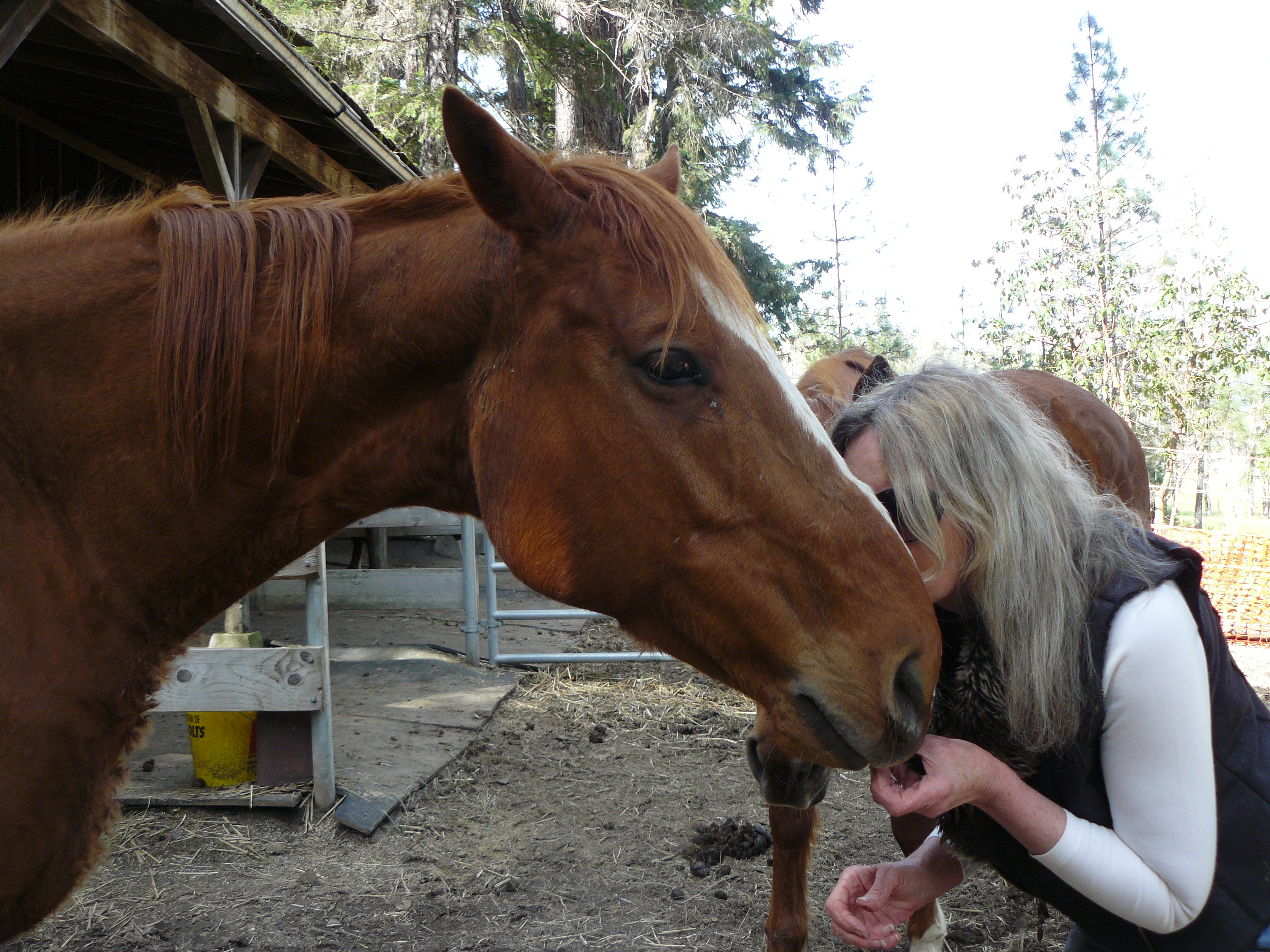


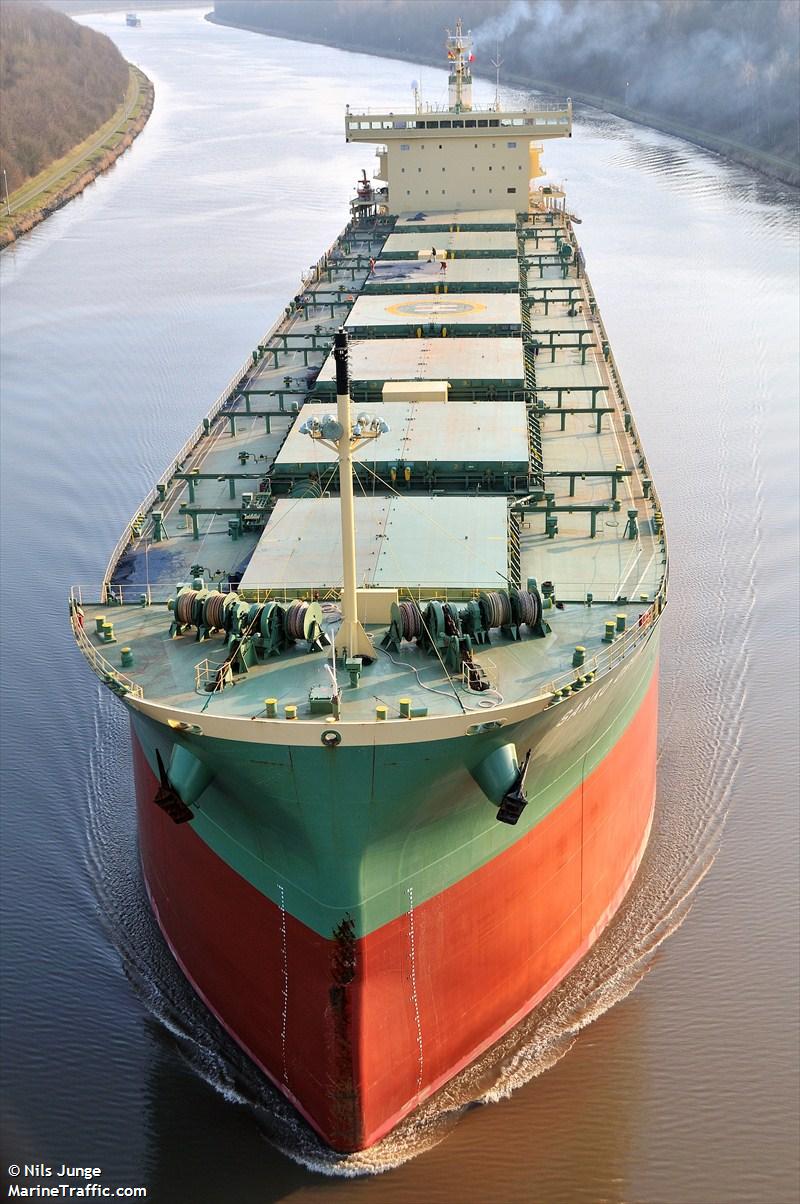
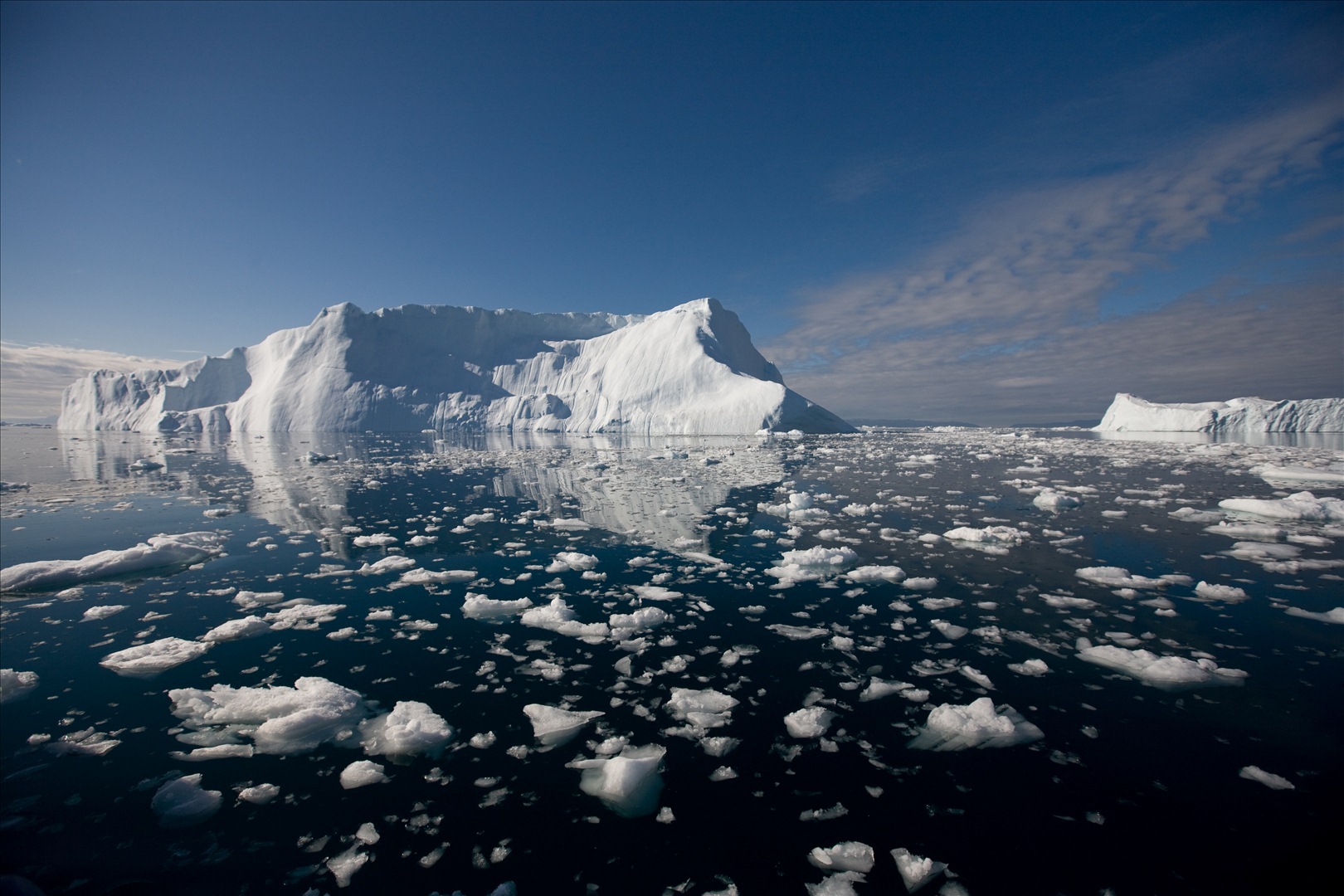
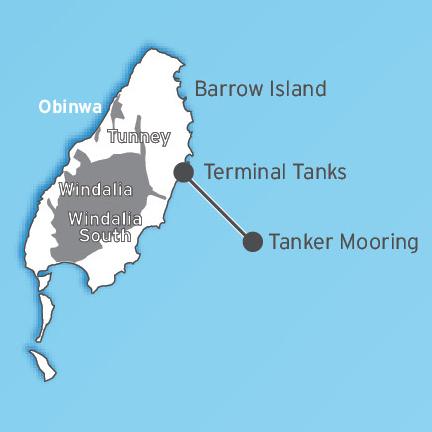


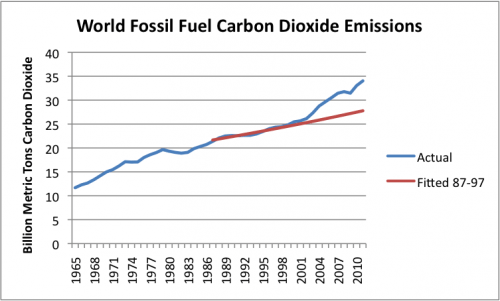
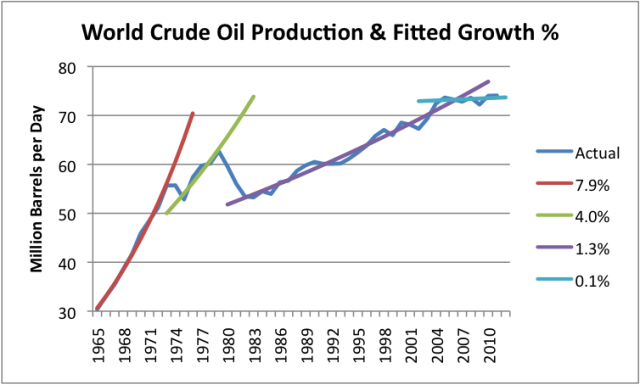

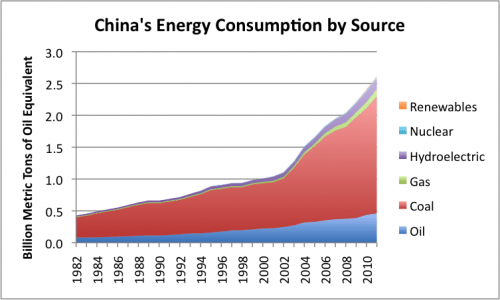

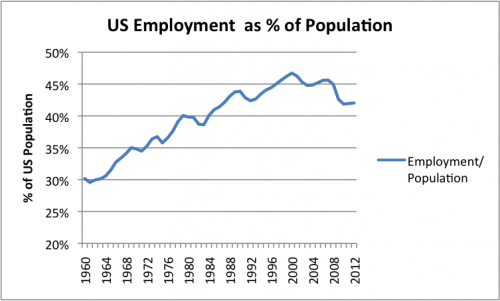

 Learning from Dogs