Note: As tomorrow’s post will explain, the next few weeks will be encroaching seriously on my blogging time. So it was very timely to receive this guest essay from John in the last couple of days and even more generous of him to give me permission to republish it.
It will make an interesting comparison to an item from Dan Gomez being published on Thursday.
ooOOoo
Notes on Dealing With Imminent Catastrophe
We know that our world economy is leveraged at least twenty-five times beyond any earthly material foundation. Regardless of this reality, we have made an artificial global economy more real than our physical world. This situation only makes sense when we recognize that we’re being encouraged to re-establish our awareness of reality. It’s a final exam time for a leading edge species of clever monkeys.
Nature has tolerated human activities for millions of years. Now that our demographics ravenously swarm the globe, belch poisons into the five mile band of air that sustains surface life on earth, dumps wastes and toxins into streams, rivers, lakes and oceans, and arrogantly refuses to understand obvious warnings; Nature is reacting.
For those who are inclined to either or choices, in accordance with the physical Law of Entropy, the decision is between pursuing constructive or destructive actions. For those who are more spiritually oriented, there is no question. In either case, we know what needs to be done.
Our first order of business is to stabilize our inclusive global economy through green initiatives that are operated for profit without damage to the eco-system. Yes, this sounds impossible the first time we think about it. Can we come up with a better plan? Not really, when we stop and honestly consider our situation. We’re poised on the brink of a material, economic and cultural collapse created by human beings.
Wars continue to be waged world wide over territory and rapidly diminishing fossil fuel resources. We have essentially lost trust in each other as equal members of a common community we call Earth. And, we are rapidly losing faith in the unsustainably inflated symbol of trust we call Money.
A green economy is our best solution for the multiple problems that plague us. Here’s why and a few suggestions about how we go about the process. Essentially, our critical need for renaissance is a process of education, formation and transformation.
When we return to the land as a global priority, the use of solar energy can replace massive industrial electrical generators running on fossil fuel derivatives. Most industrial generators may be easily converted to bio-diesel fuel. Industrial diesel generators worldwide can be converted to bio-fuel overnight. No mechanical adaptation is required.
Electric cars already set speed records at Europe’s classic racetracks. Solar electric cars are on the horizon. A bio-diesel engine to power a golf cart costs about $500 today and is available from Amazon.
There’s a natural need for co-operation when we return to the land and collectively re-establish our financial roots. First, we recognize that each of our actions affects the well being of the earth and its inhabitants. Second we realize that we are responsible for the well being of the Earth which sustains our being.
Third, we re-establish our natural connection with the unity of a living universe. We begin with the community gardens and farmer’s markets that are already operational, and rebuild accordingly.
When we are foolish, we act independently for our personal well being. When we are wise, we act together for the well being of the earth and each other. Growing our own food not only assures that what we eat will be free of chemical by-products; it also makes us aware of how fragile our consumer supply lines have become. Recycling our food waste as fertilizer completes a natural growth cycle.
By the way, a back yard greenhouse can produce enough bio-fuel to operate a diesel vehicle and a solar panel array can generate enough energy to charge your electric car. How much money does this save each year?
We don’t need nuclear reactors that sometimes melt down and sicken us with a continual stream of radiation carried by the tides and the winds of an integrated planet. We don’t need the wastes of nuclear reactors that poison the earth for millennium.
We don’t need nuclear weapons capable of destroying most, if not all, of the life on earth in an all out suicidal war. The only creatures to survive the holocaust of nuclear war would need to be radiation resistant; shielded deep underground or deep under the sea.
Harnessing wind, water and geothermal energy are wiser ways to keep our world energized in a green economy. A combination of habitats and communities powered by solar and geothermal energy will produce a new building boom as we shed the skin of our former infrastructure and a green architectural industry emerges.
Recycling the components of our technological world not only reduces our industrial waste, it decreases the cost of manufacture. Similarly, adapting and reusing what we already have decreases our personal expenses and reduces our demands on the earth.
These are only a few of the ideas which are already possible. Many more are already in the process of becoming our greater reality.
Still think such a massive transformation is impossible? If so, please know that you remain in our prayers.
There is hope for tomorrow. Science consistently opens new doors. Faith in the Nature of God of which we are each an infinitesimal part makes us unified and strong as a consciously aware biological species.
Another in the endless series of the strange affairs of man!
Regulars will know that frequently I republish essays from the stables of TomDispatch. Many of you will ask why, I don’t doubt. What have these essays got to do with learning from our closest animal companion; the dog?
Well, the answer is that it is about integrity. Dogs offer mankind a wonderful example of what flows from having a deep sense of integrity. And when it comes to examples of mankind’s ambivalence, to put it mildly, towards integrity, there is no better example than war!
Thus with no further ado, here is a recent essay from TomDispatch that illustrates the long-term relationship of the United States of America with war! Republished with both Tom Engelhardt’s and Peter Van Buren’s kind permission. (NB:In the original essay there are many links to other sources of information. The links were too many for me to ‘copy’ across so please go to the essay on TomDispatch if you wish to see and follow the links. Recommended follows, by the way.)
ooOOoo
Tomgram: Peter Van Buren, Back to the Future in Iraq
Posted by Peter Van Buren at 8:01am, September 23, 2014.
Follow TomDispatch on Twitter @TomDispatch.
On April 4, 1967, Martin Luther King delivered a speech at Riverside Church in New York City titled “Beyond Vietnam: A Time to Break Silence.” In it, he went after the war of that moment and the money that the U.S. was pouring into it as symptoms of a societal disaster. President Lyndon Johnson’s poverty program was being “broken and eviscerated,” King said from the pulpit of that church, “as if it were some idle political plaything on a society gone mad on war… We were taking the black young men who had been crippled by our society and sending them eight thousand miles away to guarantee liberties in Southeast Asia which they had not found in southwest Georgia and East Harlem. I could not be silent in the face of such cruel manipulation of the poor.” Twice more in that ringing speech he spoke of “the madness of Vietnam” and called for it to cease.
Don’t think of that as just a preacher’s metaphor. There was a genuine madness on the loose — and not just in the “free-fire zones” of Vietnam but in policy circles here in the United States, in the frustration of top military and civilian officials who felt gripped by an eerie helplessness as they widened a terrible war on the ground and in the air. They were, it seemed, incapable of imagining any other path than escalation in the face of disaster and possible defeat. Even in the years of Ronald Reagan’s presidency, when there was a brief attempt to paint that lost war in a more heroic hue (“a noble cause,” the president called it), that sense of madness, or at least of resulting mental illness, lingered. It remained embedded in a phrase then regularly applied to Americans who were less than willing to once again head aggressively into the world. They were suffering from, it was said, “Vietnam syndrome.”
Today, almost 25 years into what someday might simply be called America’s Iraq War (whose third iteration we’ve recently entered), you can feel that a similar “madness” has Washington by the throat. Just as King noted of the Vietnam era, since 9/11 American domestic programs and agencies have been starved while money poured into the coffers of the Pentagon and an increasingly bloated national security state. The results have been obvious. In the face of the spreading Ebola virus in West Africa, for instance, the president can no longer turn to civilian agencies or organizations for help, but has to call on the U.S. military in an “Ebola surge” — even our language has been militarized — although its forces are not known for their skills, successes, or spendthrift ways when it comes to civilian “humanitarian” or nation-building operations.
We’ve already entered the period when strategy, such as it is, falls away, and our leaders feel strangely helpless before the drip, drip, drip of failure and the unbearable urge for further escalation. At this point, in fact, the hysteria in Washington over the Islamic State seems a pitch or two higher than anything experienced in the Vietnam years. A fiercely sectarian force in the Middle East has captured the moment and riveted attention, even though its limits in a region full of potential enemies seem obvious and its “existential threat” to the U.S. consists of the possibility that some stray American jihadi might indeed try to harm a few of us. Call it emotional escalation in a Washington that seems remarkably unhinged.
It took Osama bin Laden $400,000 to $500,000, 19 hijackers, and much planning to produce the fallen towers of 9/11 and the ensuing hysteria in this country that launched the disastrous, never-ending Global War on Terror. It took the leaders of the Islamic State maybe a few hundred bucks and two grim videos, featuring three men on a featureless plain in Syria, to create utter, blind hysteria here. Think of this as confirmation of Karl Marx’s famous comment that the first time is tragedy, but the second is farce.
One clear sign of the farcical nature of our moment is the inability to use almost any common word or phrase in an uncontested way if you put “Iraq” or “Islamic State” or “Syria” in the same sentence. Remember when the worst Washington could come up with in contested words was the meaning of “is” in Bill Clinton’s infamous statement about his relationship with a White House intern? Linguistically speaking, those were the glory days, the utopian days of official Washington.
Just consider three commonplace terms of the moment: “war,” “boots on the ground,” and “combat.” A single question links them all: Are we or aren’t we? And to that, in each case, Washington has no acceptable answer. On war, the secretary of state said no, we weren’t; the White House and Pentagon press offices announced that yes, we were; and the president fudged. He called it “targeted action” and spoke of America’s “unique capability to mobilize against an organization like ISIL,” but God save us, what it wasn’t and wouldn’t be was a “ground war.”
Only with Congress did a certain clarity prevail. Nothing it did really mattered. Whatever Congress decided or refused to decide when it came to going to war would be fine and dandy, because the White House was going to do “it” anyway. “It,” of course, was the Clintonesque “is” of present-day Middle Eastern policy. Who knew what it was, but here was what it wasn’t and would never be: “boots on the ground.” Admittedly, the president has already dispatched 1,600 booted troops to Iraq’s ground (with more to come), but they evidently didn’t qualify as boots on the ground because, whatever they were doing, they would not be going into “combat” (which is evidently the only place where military boots officially hit the ground). The president has been utterly clear on this. There would be no American “combat mission” in Iraq. Unfortunately, “combat” turns out to be another of those dicey terms, since those non-boots had barely landed in Iraq when Chairman of the Joint Chiefs Martin Dempsey started to raise the possibility that some of them, armed, might one day be forward deployed with Iraqi troops as advisers and spotters for U.S. air power in future battles for Iraq’s northern cities. This, the White House now seems intent on defining as not being a “combat mission.”
And we’re only weeks into an ongoing operation that could last years. Imagine the pretzeling of the language by then. Perhaps it might be easiest if everyone — Congress, the White House, the Pentagon, and Washington’s pundits — simply agreed that the United States is at “war-ish” in Iraq, with boots on the ground-ish in potentially combat-ish situations. Former State Department whistleblower and TomDispatch regular Peter Van Buren spent his own time in Iraq and wrote We Meant Well: How I Helped Lose the Battle for the Hearts and Minds of the Iraqi People about it. Now, he considers the mind-boggling strangeness of Washington doing it all over again, this time as the grimmest of farces. Tom
Apocalypse Now, Iraq Edition
Fighting in Iraq Until Hell Freezes Over
By Peter Van Buren
I wanted to offer a wry chuckle before we headed into the heavy stuff about Iraq, so I tried to start this article with a suitably ironic formulation. You know, a déjà-vu-all-over-again kinda thing. I even thought about telling you how, in 2011, I contacted a noted author to blurb my book, We Meant Well: How I Helped Lose the Battle for the Hearts and Minds of the Iraqi People, and he presciently declined, saying sardonically, “So you’re gonna be the one to write the last book on failure in Iraq?”
I couldn’t do any of that. As someone who cares deeply about this country, I find it beyond belief that Washington has again plunged into the swamp of the Sunni-Shia mess in Iraq. A young soldier now deployed as one of the 1,600 non-boots-on-the-ground there might have been eight years old when the 2003 invasion took place. He probably had to ask his dad about it. After all, less than three years ago, when dad finally came home with his head “held high,” President Obama assured Americans that “we’re leaving behind a sovereign, stable and self-reliant Iraq.” So what happened in the blink of an eye?
The Sons of Iraq
Sometimes, when I turn on the TV these days, the sense of seeing once again places in Iraq I’d been overwhelms me. After 22 years as a diplomat with the Department of State, I spent 12 long months in Iraq in 2009-2010 as part of the American occupation. My role was to lead two teams in “reconstructing” the nation. In practice, that meant paying for schools that would never be completed, setting up pastry shops on streets without water or electricity, and conducting endless propaganda events on Washington-generated themes of the week (“small business,” “women’s empowerment,” “democracy building.”)
We even organized awkward soccer matches, where American taxpayer money was used to coerce reluctant Sunni teams into facing off against hesitant Shia ones in hopes that, somehow, the chaos created by the American invasion could be ameliorated on the playing field. In an afternoon, we definitively failed to reconcile the millennium-old Sunni-Shia divide we had sparked into ethnic-cleansing-style life in 2003-2004, even if the score was carefully stage managed into a tie by the 82nd Airborne soldiers with whom I worked.
In 2006, the U.S. brokered the ascension to power of Prime Minister Nouri al-Maliki, a Shia politician handpicked to unite Iraq. A bright, shining lie of a plan soon followed. Applying vast amounts of money, Washington’s emissaries created the Sahwa, or Sons of Iraq, a loose grouping of Sunnis anointed as “moderates” who agreed to temporarily stop killing in return for a promised place at the table in the New(er) Iraq. The “political space” for this was to be created by a massive escalation of the American military effort, which gained a particularly marketable name: the surge.
I was charged with meeting the Sahwa leaders in my area. My job back then was to try to persuade them to stay on board just a little longer, even as they came to realize that they’d been had. Maliki’s Shia government in Baghdad, which was already ignoring American entreaties to be inclusive, was hell-bent on ensuring that there would be no Sunni “sons” in its Iraq.
False alliances and double-crosses were not unfamiliar to the Sunni warlords I engaged with. Often, our talk — over endless tiny glasses of sweet, sweet tea stirred with white-hot metal spoons — shifted from the Shia and the Americans to their great-grandfathers’ struggle against the British. Revenge unfolds over generations, they assured me, and memories are long in the Middle East, they warned.
When I left in 2010, the year before the American military finally departed, the truth on the ground should have been clear enough to anyone with the vision to take it in. Iraq had already been tacitly divided into feuding state-lets controlled by Sunnis, Shias, and Kurds. The Baghdad government had turned into a typical, gleeful third-world kleptocracy fueled by American money, but with a particularly nasty twist: they were also a group of autocrats dedicated to persecuting, marginalizing, degrading, and perhaps one day destroying the country’s Sunni minority.
U.S. influence was fading fast, leaving the State Department, a small military contingent, various spooks, and contractors hidden behind the walls of the billion-dollar embassy (the largest in the world!) that had been built in a moment of imperial hubris. The foreign power with the most influence over events was by then Iran, the country the Bush administration had once been determined to take down alongside Saddam Hussein as part of the Axis of Evil.
The Grandsons of Iraq
The staggering costs of all this — $25 billion to train the Iraqi Army, $60 billion for the reconstruction-that-wasn’t, $2 trillion for the overall war, almost 4,500 Americans dead and more than 32,000 wounded, and an Iraqi death toll of more than 190,000 (though some estimates go as high as a million) — can now be measured against the results. The nine-year attempt to create an American client state in Iraq failed, tragically and completely. The proof of that is on today’s front pages.
According to the crudest possible calculation, we spent blood and got no oil. Instead, America’s war of terror resulted in the dissolution of a Middle Eastern post-Cold War stasis that, curiously enough, had been held together by Iraq’s previous autocratic ruler Saddam Hussein. We released a hornet’s nest of Islamic fervor, sectarianism, fundamentalism, and pan-nationalism. Islamic terror groups grew stronger and more diffuse by the year. That horrible lightning over the Middle East that’s left American foreign policy in such an ugly glare will last into our grandchildren’s days. There should have been so many futures. Now, there will be so few as the dead accumulate in the ruins of our hubris. That is all that we won.
Under a new president, elected in 2008 in part on his promise to end American military involvement in Iraq, Washington’s strategy morphed into the more media-palatable mantra of “no boots on the ground.” Instead, backed by aggressive intel and the “surgical” application of drone strikes and other kinds of air power, U.S. covert ops were to link up with the “moderate” elements in Islamic governments or among the rebels opposing them — depending on whether Washington was opting to support a thug government or thug fighters.
The results? Chaos in Libya, highlighted by the flow of advanced weaponry from the arsenals of the dead autocrat Muammar Gaddafi across the Middle East and significant parts of Africa, chaos in Yemen, chaos in Syria, chaos in Somalia, chaos in Kenya, chaos in South Sudan, and, of course, chaos in Iraq.
And then came the Islamic State (IS) and the new “caliphate,” the child born of a neglectful occupation and an autocratic Shia government out to put the Sunnis in their place once and for all. And suddenly we were heading back into Iraq. What, in August 2014, was initially promoted as a limited humanitarian effort to save the Yazidis, a small religious sect that no one in Washington or anywhere else in this country had previously heard of, quickly morphed into those 1,600 American troops back on the ground in Iraq and American planes in the skies from Kurdistan in the north to south of Baghdad. The Yazidis were either abandoned, or saved, or just not needed anymore. Who knows and who, by then, cared? They had, after all, served their purpose handsomely as the casus belli of this war. Their agony at least had a horrific reality, unlike the supposed attack in the Gulf of Tonkin that propelled a widening war in Vietnam in 1964 or the nonexistent Iraqi WMDs that were the excuse for the invasion of 2003.
The newest Iraq war features Special Operations “trainers,” air strikes against IS fighters using American weapons abandoned by the Iraqi Army (now evidently to be resupplied by Washington), U.S. aircraft taking to the skies from inside Iraq as well as a carrier in the Persian Gulf and possibly elsewhere, and an air war across the border into Syria.
It Takes a Lot of Turning Points To Go In a Circle
The truth on the ground these days is tragically familiar: an Iraq even more divided into feuding state-lets; a Baghdad government kleptocracy about to be reinvigorated by free-flowing American money; and a new Shia prime minister being issued the same 2003-2011 to-do list by Washington: mollify the Sunnis, unify Iraq, and make it snappy. The State Department still stays hidden behind the walls of that billion-dollar embassy. More money will be spent to train the collapsed Iraqi military. Iran remains the foreign power with the most influence over events.
One odd difference should be noted, however: in the last Iraq war, the Iranians sponsored and directed attacks by Shia militias against American occupation forces (and me); now, its special operatives and combat advisors fight side-by-side with those same Shia militias under the cover of American air power. You want real boots on the ground? Iranian forces are already there. It’s certainly an example of how politics makes strange bedfellows, but also of what happens when you assemble your “strategy” on the run.
Obama hardly can be blamed for all of this, but he’s done his part to make it worse — and worse it will surely get as his administration once again assumes ownership of the Sunni-Shia fight. The “new” unity plan that will fail follows the pattern of the one that did fail in 2007: use American military force to create a political space for “reconciliation” between once-burned, twice-shy Sunnis and a compromise Shia government that American money tries to nudge into an agreement against Iran’s wishes. Perhaps whatever new Sunni organization is pasted together, however briefly, by American representatives should be called the Grandsons of Iraq.
Just to add to the general eeriness factor, the key people in charge of putting Washington’s plans into effect are distinctly familiar faces. Brett McGurk, who served in key Iraq policy positions throughout the Bush and Obama administrations, is again the point man as Deputy Assistant Secretary of State for Iraq and Iran. McGurk was once called the “Maliki whisperer” for his closeness to the former prime minister. The current American ambassador, Robert Stephen Beecroft, was deputy chief of mission, the number two at the Baghdad embassy, back in 2011. Diplomatically, another faux coalition of the (remarkably un)willing is being assembled. And the pundits demanding war in a feverish hysteria in Washington are all familiar names, mostly leftovers from the glory days of the 2003 invasion.
Lloyd Austin, the general overseeing America’s new military effort, oversaw the 2011 retreat. General John Allen, brought out of military retirement to coordinate the new war in the region — he had recently been a civilian advisor to Secretary of State John Kerry — was deputy commander in Iraq’s Anbar province during the surge. Also on the U.S. side, the mercenary security contractors are back, even as President Obama cites, without a hint of irony, the ancient 2002 congressional authorization to invade Iraq he opposed as candidate Obama as one of his legal justifications for this year’s war. The Iranians, too, have the same military commander on the ground in Iraq, Qassem Suleimani, the head of the Iranian Revolutionary Guards Corps’s Quds Force. Small world. Suleimani also helps direct Hezbollah operations inside Syria.
Even the aircraft carrier in the Persian Gulf launching air strikes, the USS George H.W. Bush, is fittingly named after the president who first got us deep into Iraq almost a quarter century ago. Just consider that for a moment: we have been in Iraq so long that we now have an aircraft carrier named after the president who launched the adventure.
On a 36-month schedule for “destroying” ISIS, the president is already ceding his war to the next president, as was done to him by George W. Bush. That next president may well be Hillary Clinton, who was secretary of state as Iraq War 2.0 sputtered to its conclusion. Notably, it was her husband whose administration kept the original Iraq War of 1990-1991 alive via no-fly zones and sanctions. Call that a pedigree of sorts when it comes to fighting in Iraq until hell freezes over.
If there is a summary lesson here, perhaps it’s that there is evidently no hole that can’t be dug deeper. How could it be more obvious, after more than two decades of empty declarations of victory in Iraq, that genuine “success,” however defined, is impossible? The only way to win is not to play. Otherwise, you’re just a sucker at the geopolitical equivalent of a carnival ringtoss game with a fist full of quarters to trade for a cheap stuffed animal.
Apocalypse Then — And Now
America’s wars in the Middle East exist in a hallucinatory space where reality is of little import, so if you think you heard all this before, between 2003 and 2010, you did. But for those of us of a certain age, the echoes go back much further. I recently joined a discussion on Dutch television where former Republican Congressman Pete Hoekstra made a telling slip of the tongue. As we spoke about ISIS, Hoekstra insisted that the U.S. needed to deny them “sanctuary in Cambodia.” He quickly corrected himself to say “Syria,” but the point was made.
We’ve been here before, as the failures of American policy and strategy in Vietnam metastasized into war in Cambodia and Laos to deny sanctuary to North Vietnamese forces. As with ISIS, we were told that they were barbarians who sought to impose an evil philosophy across an entire region. They, too, famously needed to be fought “over there” to prevent them from attacking us here. We didn’t say “the Homeland” back then, but you get the picture.
As the similarities with Vietnam are telling, so is the difference. When the reality of America’s failure in Vietnam finally became so clear that there was no one left to lie to, America’s war there ended and the troops came home. They never went back. America is now fighting the Iraq War for the third time, somehow madly expecting different results, while guaranteeing only failure. To paraphrase a young John Kerry, himself back from Vietnam, who’ll be the last to die for that endless mistake? It seems as if it will be many years before we know.
Follow TomDispatch on Twitter and join us on Facebook. Check out the newest Dispatch Book, Rebecca Solnit’s Men Explain Things to Me.
Copyright 2014 Peter Van Buren
ooOOoo
This is not an easy essay to read; far from it! Let alone make wise reflections! I spent a number of minutes wondering how to close the post but, in the end, couldn’t think of anything useful to add. There was something overpoweringly sad about Peter’s essay. That something encapsulated in a sentence Peter wrote in the first half: “Revenge unfolds over generations, they assured me, and memories are long in the Middle East, they warned.“
I’m really showing my age and cultural upbringing through the choice of this title to today’s post.
For The Goon Show was an integral part of my ‘education’ during my formative years. Spike Milligan was an outstanding actor in The Goon Show, a comedy legend, along with Peter Sellers and Harry Secombe; not forgetting the narratives from Wallace Greenslade.
The Goon Show ran from 1951 to 1960 (I was born in 1944) broadcast by the BBC Home Service.
Spike Milligan after receiving his Order of the British Empire (OBE) in 1992.
What’s this all leading up to?
Simply that a recent speech by George Monbiot reveals such utter madness in the upper echelons of the United Kingdom that only reflecting on The Goon Show offers any meaning to this old Brit. Not that the USA escapes Mr. Monbiot’s analysis.
Here’s how the speech opens:
The Pricing of Everything
Ladies and gentlemen, we are witnessing the death of both the theory and the practice of neoliberal capitalism. This is the doctrine which holds that the market can resolve almost all social, economic and political problems. It holds that people are best served, and their prosperity is best advanced, by the minimum of intervention and spending by the state. It contends that we can maximise the general social interest through the pursuit of self-interest.
To illustrate the spectacular crashing and burning of that doctrine, let me tell you the sad tale of a man called Matt Ridley. He was a columnist on the Daily Telegraph until he became – and I think this tells us something about the meritocratic pretensions of neoliberalism – the hereditary Chair of Northern Rock: a building society that became a bank. His father had been Chair of Northern Rock before him, which appears to have been his sole qualification.
While he was a columnist on the Telegraph he wrote the following:
The government “is a self-seeking flea on the backs of the more productive people of this world. … governments do not run countries, they parasitize them.”(1) He argued that taxes, bail-outs, regulations, subsidies, interventions of any kind are an unwarranted restraint on market freedom. When he became Chairman of Northern Rock, Mr Ridley was able to put some of these ideas into practice. You can see the results today on your bank statements.
In 2007 Matt Ridley had to go cap in hand to the self-seeking flea and beg it for what became £27 billion. This was rapidly followed by the first run on a British bank since 1878. The government had to guarantee all the deposits of the investors in the bank. Eventually it had to nationalise the bank, being the kind of parasitic self-seeking flea that it is, in order to prevent more or less the complete collapse of the banking system. (2)
You can read the full transcript and look up the references over on the George Monbiot website.
However, a real bonus is that his speech (delivered without notes!), his SPERI Annual Lecture, hosted by the Sheffield Political Economy Research Institute at the University of Sheffield, was recorded on video.
Please set aside a quiet hour (and a tad) to listen to George Monbiot and wonder at the goon show that we are all acting out! In fact, watching his speech and his answers to a number of questions from the audience will give you something that the transcript just can’t convey. Watch it! You will be inspired!
(SPERI Annual Lecture by George Monbiot: “The Pricing of Everything” at the Octagon in Sheffield, UK, on 29th April 2014.)
Back to dear old Spike Milligan and to close with what seems like a very apt quote of his.
“All I ask is the chance to prove that money can’t make me happy.“
A powerful essay by Tom Engelhardt from his blogsite TomDispatch.
Regular readers of Learning from Dogs know that essays from TomDispatch often find their way onto these pages. They are republished with the generous permission of Tom and I endeavour to select those essays that shine a new light on a current issue. No less so than with today’s essay, first published over on TomDispatch on May 22nd, 2014.
Just a note before you start reading Tom’s very important essay. That there are many links to papers, articles and other references throughout the essay. (I know, they took me a couple of hours to set up!) Could I recommend strongly that you ‘click’ on each link and make a note of the references you wish to read at a later time. I shall be referring to some of them next week when I comment more generally on this fabulous essay.
ooOOoo
Tomgram: Engelhardt, Is Climate Change a Crime Against Humanity?
Who could forget? At the time, in the fall of 2002, there was such a drumbeat of “information” from top figures in the Bush administration about the secret Iraqi program to develop weapons of mass destruction (WMD) and so endanger the United States. And who — other than a few suckers — could have doubted that Saddam Hussein was eventually going to get a nuclear weapon? The only question, as our vice president suggested on “Meet the Press,” was: Would it take one year or five? And he wasn’t alone in his fears, since there was plenty of proof of what was going on. For starters, there were those “specially designed aluminum tubes” that the Iraqi autocrat had ordered as components for centrifuges to enrich uranium in his thriving nuclear weapons program. Reporters Judith Miller and Michael Gordon hit the front page of the New York Times with that story on September 8, 2002.
Then there were those “mushroom clouds” that Condoleezza Rice, our national security advisor, was so publicly worried about — the ones destined to rise over American cities if we didn’t do something to stop Saddam. As she fretted in a CNN interview with Wolf Blitzer on that same September 8th, “[W]e don’t want the smoking gun to be a mushroom cloud.” No, indeed, and nor, it turned out, did Congress!
And just in case you weren’t anxious enough about the looming Iraqi threat, there were those unmanned aerial vehicles — Saddam’s drones! — that could be armed with chemical or biological WMD from his arsenal and flown over America’s East Coast cities with unimaginable results. President George W. Bush went on TV to talk about them and congressional votes were changed in favor of war thanks to hair-raising secret administration briefings about them on Capitol Hill.
In the end, it turned out that Saddam had no weapons program, no nuclear bomb in the offing, no centrifuges for those aluminum pipes, no biological or chemical weapons caches, and no drone aircraft to deliver his nonexistent weapons of mass destruction (nor any ships capable of putting those nonexistent robotic planes in the vicinity of the U.S. coast). But what if he had? Who wanted to take that chance? Not Vice President Dick Cheney, certainly. Inside the Bush administration he propounded something that journalist Ron Suskind later dubbed the “one percent doctrine.” Its essence was this: if there was even a 1% chance of an attack on the United States, especially involving weapons of mass destruction, it must be dealt with as if it were a 95%-100% certainty.
Here’s the curious thing: if you look back on America’s apocalyptic fears of destruction during the first 14 years of this century, they largely involved three city-busting weapons that were fantasies of Washington’s fertile imperial imagination. There was that “bomb” of Saddam’s, which provided part of the pretext for a much-desired invasion of Iraq. There was the “bomb” of the mullahs, the Iranian fundamentalist regime that we’ve just loved to hate ever since they repaid us, in 1979, for the CIA’s overthrow of an elected government in 1953 and the installation of the Shah by taking the staff of the U.S. embassy in Tehran hostage. If you believed the news from Washington and Tel Aviv, the Iranians, too, were perilously close to producing a nuclear weapon or at least repeatedly on the verge of the verge of doing so. The production of that “Iranian bomb” has, for years, been a focus of American policy in the Middle East, the “brink” beyond which war has endlessly loomed. And yet there was and is no Iranian bomb, nor evidence that the Iranians were or are on the verge of producing one.
Finally, of course, there was al-Qaeda’s bomb, the “dirty bomb” that organization might somehow assemble, transport to the U.S., and set off in an American city, or the “loose nuke,” maybe from the Pakistani arsenal, with which it might do the same. This is the third fantasy bomb that has riveted American attention in these last years, even though there is less evidence for or likelihood of its imminent existence than of the Iraqi and Iranian ones.
To sum up, the strange thing about end-of-the-world-as-we’ve-known-it scenarios from Washington, post-9/11, is this: with a single exception, they involved only non-existent weapons of mass destruction. A fourth weapon — one that existed but played a more modest role in Washington’s fantasies — was North Korea’s perfectly real bomb, which in these years the North Koreans were incapable of delivering to American shores.
The “Good News” About Climate Change
In a world in which nuclear weapons remain a crucial coin of the realm when it comes to global power, none of these examples could quite be classified as 0% dangers. Saddam had once had a nuclear program, just not in 2002-2003, and also chemical weapons, which he used against Iranian troops in his 1980s war with their country (with the help of targeting information from the U.S. military) and against his own Kurdish population. The Iranians might (or might not) have been preparing their nuclear program for a possible weapons breakout capability, and al-Qaeda certainly would not have rejected a loose nuke, if one were available (though that organization’s ability to use it would still have been questionable).
In the meantime, the giant arsenals of WMD in existence, the American, Russian, Chinese, Israeli, Pakistani, and Indian ones that might actually have left a crippled or devastated planet behind, remained largely off the American radar screen. In the case of the Indian arsenal, the Bush administration actually lent an indirect hand to its expansion. So it was twenty-first-century typical when President Obama, trying to put Russia’s recent actions in the Ukraine in perspective, said, “Russia is a regional power that is threatening some of its immediate neighbors. I continue to be much more concerned when it comes to our security with the prospect of a nuclear weapon going off in Manhattan.”
Once again, an American president was focused on a bomb that would raise a mushroom cloud over Manhattan. And which bomb, exactly, was that, Mr. President?
Of course, there was a weapon of mass destruction that could indeed do staggering damage to or someday simply drown New York City, Washington D.C., Miami, and other East coast cities. It had its own efficient delivery systems — no nonexistent drones or Islamic fanatics needed. And unlike the Iraqi, Iranian, or al-Qaeda bombs, it was guaranteed to be delivered to our shores unless preventive action was taken soon. No one needed to hunt for its secret facilities. It was a weapons system whose production plants sat in full view right here in the United States, as well as in Europe, China, and India, as well as in Russia, Saudi Arabia, Iran, Venezuela, and other energy states.
So here’s a question I’d like any of you living in or visiting Wyoming to ask the former vice president, should you run into him in a state that’s notoriously thin on population: How would he feel about acting preventively, if instead of a 1% chance that some country with weapons of mass destruction might use them against us, there was at least a 95% — and likely as not a 100% — chance of them being set off on our soil? Let’s be conservative, since the question is being posed to a well-known neoconservative. Ask him whether he would be in favor of pursuing the 95% doctrine the way he was the 1% version.
After all, thanks to a grim report in 2013 from the Intergovernmental Panel on Climate Change, we know that there is now a 95%-100% likelihood that “human influence has been the dominant cause of the observed warming [of the planet] since the mid-20th century.” We know as well that the warming of the planet — thanks to the fossil fuel system we live by and the greenhouse gases it deposits in the atmosphere — is already doing real damage to our world and specifically to the United States, as a recent scientific report released by the White House made clear. We also know, with grimly reasonable certainty, what kinds of damage those 95%-100% odds are likely to translate into in the decades, and even centuries, to come if nothing changes radically: a temperature rise by century’s end that could exceed 10 degrees Fahrenheit, cascading species extinctions, staggeringly severe droughts across larger parts of the planet (as in the present long-term drought in the American West and Southwest), far more severe rainfall across other areas, more intense storms causing far greater damage, devastating heat waves on a scale no one in human history has ever experienced, masses of refugees, rising global food prices, and among other catastrophes on the human agenda, rising sea levels that will drown coastal areas of the planet.
From two scientific studies just released, for example, comes the news that the West Antarctic ice sheet, one of the great ice accumulations on the planet, has now begun a process of melting and collapse that could, centuries from now, raise world sea levels by a nightmarish 10 to 13 feet. That mass of ice is, according to the lead authors of one of the studies, already in “irreversible retreat,” which means — no matter what acts are taken from now on — a future death sentence for some of the world’s great cities. (And that’s without even the melting of the Greenland ice shield, not to speak of the rest of the ice in Antarctica.)
All of this, of course, will happen mainly because we humans continue to burn fossil fuels at an unprecedented rate and so annually deposit carbon dioxide in the atmosphere at record levels. In other words, we’re talking about weapons of mass destruction of a new kind. While some of their effects are already in play, the planetary destruction that nuclear weapons could cause almost instantaneously, or at least (given “nuclear winter” scenarios) within months, will, with climate change, take decades, if not centuries, to deliver its full, devastating planetary impact.
When we speak of WMD, we usually think of weapons — nuclear, biological, or chemical — that are delivered in a measurable moment in time. Consider climate change, then, a WMD on a particularly long fuse, already lit and there for any of us to see. Unlike the feared Iranian bomb or the Pakistani arsenal, you don’t need the CIA or the NSA to ferret such “weaponry” out. From oil wells to fracking structures, deep sea drilling rigs to platforms in the Gulf of Mexico, the machinery that produces this kind of WMD and ensures that it is continuously delivered to its planetary targets is in plain sight. Powerful as it may be, destructive as it will be, those who control it have faith that, being so long developing, it can remain in the open without panicking populations or calling any kind of destruction down on them.
The companies and energy states that produce such WMD remain remarkably open about what they’re doing. Generally speaking, they don’t hesitate to make public, or even boast about, their plans for the wholesale destruction of the planet, though of course they are never described that way. Nonetheless, if an Iraqi autocrat or Iranian mullahs spoke in similar fashion about producing nuclear weapons and how they were to be used, they would be toast.
Take ExxonMobil, one of the most profitable corporations in history. In early April, it released two reports that focused on how the company, as Bill McKibben has written, “planned to deal with the fact that [it] and other oil giants have many times more carbon in their collective reserves than scientists say we can safely burn.” He went on:
The company said that government restrictions that would force it to keep its [fossil fuel] reserves in the ground were ‘highly unlikely,’ and that they would not only dig them all up and burn them, but would continue to search for more gas and oil — a search that currently consumes about $100 million of its investors’ money every single day. ‘Based on this analysis, we are confident that none of our hydrocarbon reserves are now or will become “stranded.”‘
In other words, Exxon plans to exploit whatever fossil fuel reserves it possesses to their fullest extent. Government leaders involved in supporting the production of such weapons of mass destruction and their use are often similarly open about it, even while also discussing steps to mitigate their destructive effects. Take the White House, for instance. Here was a statement President Obama proudly made in Oklahoma in March 2012 on his energy policy:
Now, under my administration, America is producing more oil today than at any time in the last eight years. That’s important to know. Over the last three years, I’ve directed my administration to open up millions of acres for gas and oil exploration across 23 different states. We’re opening up more than 75% of our potential oil resources offshore. We’ve quadrupled the number of operating rigs to a record high. We’ve added enough new oil and gas pipeline to encircle the Earth and then some.
Similarly, on May 5th, just before the White House was to reveal that grim report on climate change in America, and with a Congress incapable of passing even the most rudimentary climate legislation aimed at making the country modestly more energy efficient, senior Obama adviser John Podesta appeared in the White House briefing room to brag about the administration’s “green” energy policy. “The United States,” he said, “is now the largest producer of natural gas in the world and the largest producer of gas and oil in the world. It’s projected that the United States will continue to be the largest producer of natural gas through 2030. For six straight months now, we’ve produced more oil here at home than we’ve imported from overseas. So that’s all a good-news story.”
Good news indeed, and from Vladmir Putin’s Russia, which just expanded its vast oil and gas holdings by a Maine-sized chunk of the Black Sea off Crimea, to Chinese “carbon bombs,” to Saudi Arabian production guarantees, similar “good-news stories” are similarly promoted. In essence, the creation of ever more greenhouse gases — of, that is, the engine of our future destruction — remains a “good news” story for ruling elites on planet Earth.
Weapons of Planetary Destruction
We know exactly what Dick Cheney — ready to go to war on a 1% possibility that some country might mean us harm — would answer, if asked about acting on the 95% doctrine. Who can doubt that his response would be similar to those of the giant energy companies, which have funded so much climate-change denialism and false science over the years? He would claim that the science simply isn’t “certain” enough (though “uncertainty” can, in fact, cut two ways), that before we commit vast sums to taking on the phenomenon, we need to know far more, and that, in any case, climate-change science is driven by a political agenda.
For Cheney & Co., it seemed obvious that acting on a 1% possibility was a sensible way to go in America’s “defense” and it’s no less gospel for them that acting on at least a 95% possibility isn’t. For the Republican Party as a whole, climate-change denial is by now nothing less than a litmus test of loyalty, and so even a 101% doctrine wouldn’t do when it comes to fossil fuels and this planet.
No point, of course, in blaming this on fossil fuels or even the carbon dioxide they give off when burned. These are no more weapons of mass destruction than are uranium-235 and plutonium-239. In this case, the weaponry is the production system that’s been set up to find, extract, sell at staggering profits, and burn those fossil fuels, and so create a greenhouse-gas planet. With climate change, there is no “Little Boy” or “Fat Man” equivalent, no simple weapon to focus on. In this sense, fracking is the weapons system, as is deep-sea drilling, as are those pipelines, and the gas stations, and the coal-fueled power plants, and the millions of cars filling global roads, and the accountants of the most profitable corporations in history.
All of it — everything that brings endless fossil fuels to market, makes those fuels eminently burnable, and helps suppress the development of non-fossil fuel alternatives — is the WMD. The CEOs of the planet’s giant energy corporations are the dangerous mullahs, the true fundamentalists, of planet Earth, since they are promoting a faith in fossil fuels which is guaranteed to lead us to some version of End Times.
Perhaps we need a new category of weapons with a new acronym to focus us on the nature of our present 95%-100% circumstances. Call them weapons of planetary destruction (WPD) or weapons of planetary harm (WPH). Only two weapons systems would clearly fit such categories. One would be nuclear weapons which, even in a localized war between Pakistan and India, could create some version of “nuclear winter” in which the planet was cut off from the sun by so much smoke and soot that it would grow colder fast, experience a massive loss of crops, of growing seasons, and of life. In the case of a major exchange of such weapons, we would be talking about “the sixth extinction” of planetary history.
Though on a different and harder to grasp time-scale, the burning of fossil fuels could end in a similar fashion — with a series of “irreversible” disasters that could essentially burn us and much other life off the Earth. This system of destruction on a planetary scale, facilitated by most of the ruling and corporate elites on the planet, is becoming (to bring into play another category not usually used in connection with climate change) the ultimate “crime against humanity” and, in fact, against most living things. It is becoming a “terracide.”
There are so many strong and fundamental points raised in this essay from Tom that I am going to return to them next week. (Will give it a rest for July 4th!)
When you are a WordPress user, as is Learning from Dogs, you can pay $30 a year to stop advertisements from appearing on one’s blogsite.
This is how WordPress explain their policy on advertising:
We sometimes display advertisements on your blog to help pay the bills. This keeps free features free! We only run them in limited places, and we do not show ads to logged-in readers, which means only a very small percentage of your page views will actually contain ads. To eliminate ads on your blog entirely, you can purchase the No-Ads Upgrade for a single blog (per year).
I choose not to pay that upgrade, despite the ads being annoying; of that I have no doubt.
For this reason.
WordPress pay an amount of their advertising income to the owner of the blog. Thus twenty-four hours ago, WordPress sent me an email:
Just thought you’d like to know WordPress.com sent you $106.23 USD.
I’m not sure but I think that covers the last twelve months.
That $106 will be divided into two with $53 staying with Jean and me and $53 going to our nearest humane society; Rogue Valley Humane Society.
A run of essays that, collectively, deeply disturb me.
My seventieth birthday is fewer than six months away. Indeed, it will be just a little over two weeks after we celebrate the second anniversary of our arrival to this beautiful homestead back on October 25th, 2012. Two years: Seventy years! Time seems to run through one’s fingers like the proverbial sand. It’s difficult to avoid the irony that comes with recognising the two journeys. The one journey bringing me to living here on our rural Oregonian acres, with stunning scenery, wonderful animals and so much love in the air. The other journey bringing me to the realisation that this is the Autumn of my life and the sense, the keen sense, of my own mortality.
What, may you ask, has brought this feeling, these words, to the surface?
Well, I’ll tell you.
It’s been the coincidence of essays from three authors across the ‘blogosphere’ that I have recently read. Taken together, they paint a picture that disturbs me. Very much so. They sing out to me that mankind is spiralling ever downwards to oblivion and that the dark forces of greed, power and control will never be stopped; well not by man that is!
Here are the links to those essays.
The first was from Tom Englehardt. It was an essay entitled: A Record of Unparalleled Failurepublished on June 10th. That opened:
The United States has been at war — major boots-on-the-ground conflicts and minor interventions, firefights, air strikes, drone assassination campaigns, occupations, special ops raids, proxy conflicts, and covert actions — nearly nonstop since the Vietnam War began. That’s more than half a century of experience with war, American-style, and yet few in our world bother to draw the obvious conclusions.
Given the historical record, those conclusions should be staring us in the face. They are, however, the words that can’t be said in a country committed to a military-first approach to the world, a continual build-up of its forces, an emphasis on pioneering work in the development and deployment of the latest destructive technology, and a repetitious cycling through styles of war from full-scale invasions and occupations to counterinsurgency, proxy wars, and back again.
The second was from another American, Jim Wright, who is the author of the blog Stonekettle Station. Jim describes himself as:
I’m a retired US Navy Chief Warrant Officer. Nowadays I live in Alaska where I spend most of my time working in my woodshop or fishing. I occasionally consult for the Military. I have delusions of becoming a full time writer – or conquering the universe, whichever is easier…
Thanks to Yves Smith’s Naked Capitalism, I followed a link to a recent essay from Jim under the title of Absolutely Nothing, published on the 14th June.
I’m not going to quote from it, not because I don’t approve of his essay, far from it, but because there are many tough, profane words and I do not wish inadvertently to upset my readers. But it is very strongly recommended.
The third essay is from fellow Englishman, George Monbiot, whose work has been regularly republished on Learning from Dogs.
While his essay is not specifically about war, unlike the other two, it does, nonetheless, contribute to my feelings of not wanting to engage with anything that is outside being a better husband, landowner and animal lover. It is called The Values Ratchet and is republished here with the generous permission of George Monbiot.
ooOOoo
The Values Ratchet
June 10th, 2014
How to ensure that nations slide ever further into selfishness, and ever further to the right.
By George Monbiot, published in the Guardian 11th June 2014
Any political movement that fails to understand two basic psychological traits will, before long, fizzle out. The first is Shifting Baseline Syndrome. Coined by the biologist Daniel Pauly, it originally described our relationship to ecosystems(1), but it’s just as relevant to politics. We perceive the circumstances of our youth as normal and unexceptional – however sparse or cruel they may be. By this means, over the generations, we adjust to almost any degree of deprivation or oppression, imagining it to be natural and immutable.
The second is the Values Ratchet (also known as policy feedback). If, for example, your country has a public health system which ensures that everyone who needs treatment receives it without payment, it helps instil the belief that it is normal to care for strangers, and abnormal and wrong to neglect them(2,3). If you live in a country where people are left to die, this embeds the idea that you have no responsibility towards the poor and weak. The existence of these traits is supported by a vast body of experimental and observational research, of which Labour and the US Democrats appear determined to know nothing.
We are not born with our core values: they are strongly shaped by our social environment. These values can be placed on a spectrum between extrinsic and intrinsic. People towards the intrinsic end have high levels of self-acceptance, strong bonds of intimacy and a powerful desire to help other people. People at the other end are drawn to external signifiers, such as fame, financial success, image and attractiveness(4). They seek praise and rewards from others.
Research across 70 countries suggests that intrinsic values are strongly associated with an understanding of others, tolerance, appreciation, cooperation and empathy(5,6,7). Those with strong extrinsic values tend to have lower empathy, a stronger attraction towards power, hierarchy and inequality, greater prejudice towards outsiders and less concern for global justice and the natural world(8,9). These clusters exist in opposition to each other: as one set of values strengthens, the other weakens(10,11).
People at the extrinsic end tend to report higher levels of stress, anxiety, anger, envy, dissatisfaction and depression than those at the intrinsic end of the spectrum(12,13,14). Societies in which extrinsic goals are widely adopted are more unequal and uncooperative than those with deep intrinsic values. In one experiment, people with strong extrinsic values who were given a resource to share soon exhausted it (unlike a group with strong intrinsic values), as they all sought to take more than their due(15).
As extrinsic values are strongly associated with conservative politics, it’s in the interests of conservative parties and conservative media to cultivate these values. There are three basic methods. The first is to generate a sense of threat. Experiments reported in the journal Motivation and Emotion suggest that when people feel threatened or insecure they gravitate towards extrinsic goals(16). Perceived dangers – such as the threat of crime, terrorism, deficits, inflation or immigration – trigger a short-term survival response, in which you protect your own interests and forget other people’s.
The second method is the creation of new frames, structures of thought through which we perceive the world. For example, if tax is repeatedly cast as a burden, and less tax is described as relief, people come to see taxation as a bad thing that must be remedied(17). The third method is to invoke the Values Ratchet: when you change the way society works, our values shift in response. Privatisation, marketisation, austerity for the poor, inequality: they all shift baselines, alter the social cues we receive and generate insecurity and a sense of threat.
Margaret Thatcher’s political genius arose from her instinctive understanding of these traits, long before they were described by psychologists and cognitive linguists: “Economics are the method; the object is to change the heart and soul.”(18) But Labour and the Democrats no longer have objects, only methods. Their political philosophy is simply stated: if at first you don’t succeed, flinch, flinch and flinch again. They seem to believe that if they simply fall into line with prevailing values, people will vote for them by default. But those values and baselines keep shifting, and what seemed intolerable before becomes unremarkable today. Instead of challenging the new values, these parties keep adjusting. This is why they always look like their opponents, with a five-year lag.
There is no better political passion killer than Labour’s Zero-Based Review(19). Its cover is Tory blue. So are the contents. It promises to sustain the coalition’s programme of cuts and even threatens to apply them to the health service(20). But, though it treats the deficit as a threat that must be countered at any cost, it says not a word about plugging the gap with innovative measures such as a Robin Hood tax on financial transactions, a land value tax, a progressively-banded council tax or a windfall tax on extreme wealth. Nor does it mention tax avoidance and evasion. The poor must bear the pain through spending cuts, sustaining a cruel and wildly unequal social settlement.
At the end of last month, Chris Leslie, Labour’s Shadow Chief Secretary to the Treasury, promised, like George Osborne, that the cuts would be sustained for “decades ahead”(21). He asserted that Labour’s purpose in government would be to “finish that task on which [the Chancellor] has failed”: namely “to eradicate the deficit”. The following day the shadow business secretary, Chuka Umunna, sought to explain why Labour had joined the political arms race on immigration. In doing so, he revealed that his party will be “radical in reforming our economy” in support of “a determinedly pro-business agenda”(22). They appear to believe that success depends on becoming indistinguishable from their opponents.
It’s not quite as mad as the old tactic among some Marxist groups of promoting inequality and injustice in the hope that popular fury would lead to revolution, but it’s not far off. Quite aside from the obvious flaw (what’s the sodding point of voting for a party that offers no substantial change in policy?), it evinces a near-perfect psychological illiteracy. When a party reinforces conservative values and conservative ideas, when it fails clearly to expound any countervailing values, when it refuses to reverse the direction of the Values Ratchet, what outcome does it expect, other than a shift towards conservatism?
1. Daniel Pauly, 1995. Anecdotes and the Shifting Baseline Syndrome of Fisheries. Trends in Ecology and Evolution 10. 10:430.
2. Stefan Svallfors, 2010 Policy feedback, generational replacement, and attitudes to state intervention: Eastern and Western Germany, 1990-2006, European Political Science Review, 2, 119-135.
5. Shalom H. Schwartz, 2006. Basic Human Values: Theory, Measurement, and Applications. Revue Française de Sociologie, 47/4. http://bit.ly/1hL1JFJ
6. Frederick Grouzet et al, 2005. The structure of goal contents across fifteen cultures. Journal of Personality and Social Psychology, 89, 800-816. http://psycnet.apa.org/journals/psp/89/5/800/
9. Kennon M. Sheldon and Charles P. Nichols, 2009. Comparing Democrats and Republicans on
Intrinsic and Extrinsic Values. Journal of Applied Social Psychology, 2009, 39, 3, pp. 589–623.
12. Tim Kasser, 2014. Changes in materialism, changes in psychological well-being: Evidence from three longitudinal studies and an intervention experiment. Motivation and Emotion, 38:1–22. doi: 10.1007/s11031-013-9371-4
20. “We will be cutting departmental spending in 2015-16 and not raising it, with no more borrowing to cover day-to-day spending”
“The fundamental principle of the Zero-Based Review is that all spending is in scope and all budgets will be challenged. The review will cover all areas of public spending, including those that have been protected in the current Spending Review such as health”.
Having our good friends, Andy and Trish, with us for a few days means, quite rightly, that time with them is top of our list; so to speak.
Thus I want to republish a recent post from Paul Gilding that seems to me to be right on the mark.
But first an apology. About 10 minutes ago (07:40 US PDT yesterday) I pressed the ‘reblog’ key over on Paul Gilding’s posting in error. Subscribers to Learning from Dogs will have been sent an email to that reblog and then discovered that I had deleted it, in favour of this approach!
Mr Paul Gilding.
ooOOoo
THE GLOBAL ENERGY MARKET’S MOMENT OF TRUTH
If you want to know what addressing climate change will really be like for business and investors, then take a look at today’s electricity and energy markets. Driven by climate policy, technology development, business innovation, NGO campaigns and investment risk analysis, creative destruction is inflicting itself upon the sector with a vengeance – and the process has just begun.
Value is being destroyed at an incredible scale with just one example being European utilities losing $750 billion in market cap in recent years. Another is the huge losses in value for coal companies and the cancellation of a large number of new coal mining projects around the world as the forecast growth in China and India evaporates. As I argued in my last Chronicle, Carbon Crash Solar Dawn, this is not a temporary market blip but a fundamental shift. Company strategies and business models that have been working for generations are collapsing. In parallel we see the creative side of the process, with new industries being built, entrepreneurs flourishing and massive wealth being created. Now the market is working, as it should, allocating capital to the places where risk and return are best aligned. It is at once a beautiful and brutal process to observe.
This is an important inflection point to acknowledge, with significant implications that should reframe our thinking about these issues.
For a start it means, climate policy and its economic consequences have now shifted from future forecasts to present reality. This reality, with all its brutality for existing businesses, give us important insights into what to expect as the world wakes up to climate change. Business is already waking up to what that means in a market economy – creative destruction unleashed to destroy slow responders.
This suggests that traditional corporate responsibility, which argued sustainability was good for all businesses, is outmoded and not helpful. We have moved into an era of win/lose rather than win/win, and with that, sustainability is shifting from ‘environmentalists vs business’ to ‘business vs business’ as I covered in this earlier Chronicle.
Taken together this means we need to change the way we talk and think about climate change and business. Sustainability is not good for many businesses – in fact it means they’ll have to go out of business. This is what sustainability at its core is all about – things that are unsustainable will stop.
While on the one hand this is blindingly obvious, it is a conversation many in business and politics don’t want to acknowledge. So when the previous Australian government brought in its carbon pricing scheme, it went to great lengths to argue that Australia would still have a healthy coal industry. And President Obama’s new regulations on CO2 emissions in the US power industry are likewise being positioned as being as much about health and air pollution as climate policy.
But as Michael Grunwald argues in this Time Magazine piece on “Obama’s War on Coal” – a phrase used by the coal industry to suggest this is unfair and unreasonable – it’s time to face up to the reality of climate action. It is a war on coal, pure and simple. Grunwald calls it the “just but undeclared war ”. But rather than “just” with its moral overtones, we could simply argue it is “necessary” based on any objective analysis of what’s good for the economy and for society. What is necessary is to move a range of companies out of the economy and replace them.
Coal is first in the firing line. As a major cause of CO2 emissions and with the lack of market support for Carbon Capture and Storage suggesting “clean coal” is either a delusion or at best an expensive PR campaign, coal simply has to go. That means coal companies will go out of business, and then oil companies and gas companies will follow them.
This is not a problem at all for the economy, as they will be replaced with new companies and new industries, which will create new jobs, new wealth and new innovations. But it is a major problem for the incumbents who will cease to exist and for their owners who will lose their money. Unless we have that conversation honestly and openly, we are setting ourselves up for pain and suffering we can easily avoid or at least minimise by thinking through the consequences and being better prepared for their departure.
Of course the best way to minimise the pain would be for fossil fuel companies to transition to new areas of business, to use the great wealth they have created to diversify into sustainable sources of profit. But most of them won’t. It’s not that they couldn’t – it’s just that they won’t. And it’s not just coal but also oil and gas who are, for the most part, in strong denial about what’s coming and so won’t be prepared, as well explained in this article by Giles Parkinson at RenewEconomy.
We shouldn’t be surprised. History shows how rare it is for companies to transform and survive major market and technology shifts. That’s why the average life expectancy of a successful multinational is only 40-50 years. And that’s why the financial markets – who act without ideology based on looking at the data – are rapidly responding. They are stripping value from fossil fuel exposed utilities and the resource companies that provide their fuel. They are also downgrading credit risk, with Barclays recently issuing a warning the investors should no longer see utilities as a “sturdy and defensive subset of the investment grade universe”. The report concluded: “We see near-term risks to credit from regulators and utilities falling behind the solar plus storage adoption curve.” No doubt Deutche Bank considered these risks when they recently announced they wouldn’t consider funding a major new coal port next to Australia’s Great Barrier Reef.
So while the idea of “war on coal” is in some ways an accurate summary of the momentous threats the industry faces from a range of forces that are consciously and deliberately coming after them, we could also just see this as how markets work.
Fossil fuels provide us with energy, but they also destroy value across the economy – by driving climate change, damaging health and increasing costs for taxpayers while imposing unmanageable risks on other companies who rely on a stable climate for their business success. So the market is simply doing its job, pricing in some of these costs using the proxies of regulatory, credit and technology risk.
The market is working …. and fossil fuels are losing.
ooOOoo
Hope you agree with me that it’s a great essay and, also, I hope you followed the links – they are all very interesting.
Those of you who are not familiar with Paul Gilding can find out more about him here. Plus the following TED Talk by Paul is highly recommended viewing.
On May 11th, Patrice Ayme published an essay entitled Science: Progressing Wisdom. I found it deeply engaging. At the same time, I was frustrated because there was a part of me that wanted to know more about “Patrice”.
For some time, I had known that Patrice Ayme was a nom-de-plume and that his, or her, identity was carefully protected. Still that part of me that wanted to relate to the real person, for want of a better description, still wouldn’t quieten down. I offered the following comment:
Patrice, you have demonstrated an amazing breadth of knowledge across your many essays. However, I did wonder if you would be happy to declare your educational experience? As in your specialisation at a degree or Doctorate level (I suspect you do hold a PhD!)? Best wishes, Paul
Patrice’s reply, which you are encouraged to read in full, opened, thus:
You are so funny, Paul! You have an Obsession-Compulsion about “qualifications”.
One of my main ideas, idea #956, is that the authority principle is severely abused. People with Philosophiae Doctor have nothing sacred about them. Goebbels had one (in humanities).
Do you think Goebbels’ authority in humanities is to be “declared”? There were even not just PhDs, but Nobel Laureates, who became Nazis, BEFORE Hitler (who had been sent to spy on them).
No doubt Hitler, a simple caporal, and gifted painter (he lived off it), was super-impressed when he met some of the most educated people in the world, and they were Nazis… Full of PhDs.
One should not confuse the message’s content and her bearer.
This site is about learning to think better. That’s why I go back to the basics.
The idea that, say, those with PhDs is Idionomics, are the only ones qualified to speak about idiocy, is, well, idiotic.
Another reader of Patrice’s essay, gmax, said this, in part:
You have to learn to judge knowledge, not just follow oligarchs like a bleating sheep to learn what’s true and what is not.
That really made me sit up and think! For the first time in my life (I’m 70 later this year), I realised that my own ragged educational experience, as offered yesterday, had left in its wake a personal insecurity over my education, and a consequential weakness in evaluating knowledge with me somehow needing to know the identity of anonymous authors. When Patrice wrote, “Please do not hesitate to make it a post, Paul! I was thinking of it myself, but, as it is, right now, I don’t seem to have the time.“, I couldn’t resist.
Here is my essay.
ooOOoo
Wisdom, knowledge and authority.
Abstract: Wisdom requires clarity of knowledge; no more and no less.
On Tuesday evening, Jean and I rented a movie. We watched the film American Hustle.
The film tells the story of brilliant con man Irving Rosenfeld, who along with his equally cunning and seductive British partner Sydney Prosser is forced to work for a wild FBI agent Richie DiMaso. DiMaso pushes them into a world of Jersey powerbrokers and mafia that’s as dangerous as it is enchanting. Jeremy Renner is Carmine Polito, the passionate, volatile, New Jersey political operator caught between the con-artists and Feds. Irving’s unpredictable wife Rosalyn could be the one to pull the thread that brings the entire world crashing down.
The film has received rave reviews (here’s a typical one in the Guardian newspaper) and was fun to watch; albeit somewhat confusing for much of the first half. At one point towards the end, the hero of the film, Irving Rosenfeld, reflects that, “People see and hear what they want to believe!“.
Bingo!
That is the challenge about accruing wisdom. How to be analytical and wise in learning new thinking and new ideas. In other words, in acquiring knowledge!
If the subject is simple (well on the surface!) as, for example, the effect of the Earth’s gravitational field then that’s fine and dandy. It’s easy to become wise to the fact that falling off a tall building is likely to kill you.
But take an extremely complex, and highly current matter, that of Planet Earth’s changing climate, and it is extremely difficult for the average person without a scientific background to determine the truth. Really, when I use the phrase “to determine the truth” in the context of this essay I should have written ‘to gain knowledge‘.
To illustrate that, my good Californian friend of more than 35 years, Dan Gomez, is highly sceptical about climate change as a product of man’s activities. Recently, I sent him an email with a link to the NBC News report: American Doomsday: White House Warns of Climate Catastrophes. This was Dan’s email reply:
Think about it, Paul.
1. Consider the source and the timing of these new headlines i.e. the left-thinking Obama regime and current unfavorable political challenges.
2. A deflection from mainline issues confronting us today i.e., jobs, economy, healthcare, upcoming elections, Benghazi and IRS political issues.
3. Major opportunity to raise taxes unilaterally without Congress involved.
4. Major opportunity to redistribute corporate wealth from private sector to public sector.
5. Refocus of competitive, free-market energy sector to controlled renewables managed by a few very wealthy political contributors. A lot of money at stake.
6. Man, is empowered via a political party to “save the world” by changing the Weather. The only problem is, there is no solution, no global will and no participants to make anything significant happen i.e., China, Southeast Asia and another billion people scattered about.
7. Euro Zone and USA have already cut CO2 emissions by over 30% each to no avail. In fact, they say it is getting worse after hundreds of billions of dollars already diverted from private sector to public sector with no results. They are now asking for trillions.
8. Average person is not willing to give up his car, nor spend more for battery power (peel back the onion on the battery manufacturing and recycling industry vis a vis CO2 contributions). Much fewer cars, trains, tractors, jets, etc. to make anything work. Sacrifice begins at home.
9. Cows vent 20 times the CO2 emissions in the form of methane than man-made artifacts. Just saying….
10. Check out the bacteria challenge facing Man. This will help put priorities in order for you.
As always, follow the money and you’ll get your answers…..
I am unable to respond to Dan in an analytical and precise manner. I am not sufficiently knowledgeable to so do. Having an emotional response is fine – but it does not advance my personal wisdom.
On the 6th May, I posted an item that featured a TED Talk by scientist Gavin Schmidt, a climate scientist no less. His view is that, “You can’t understand climate change in pieces. It’s the whole, or it’s nothing.” The TED Talk explains how the big picture of climate change illustrates the endlessly complex interactions of small-scale environmental events.
Just a few days ago, Jean and I had the pleasure of a couple of hours at the home of Leon Hunsaker, renowned meteorologist who has claimed that the 1862 Californian flood could happen again.
Leon Hunsaker has done the math, and he thinks Sacramento isn’t prepared for another series of storms like the ones that hit the state in January 1862.
Leon lives less than 5 minutes from us here in Southern Oregon. I asked him what he thought of climate change and he said that the planet’s atmosphere was like a large chocolate cake and man’s activities were no more than the icing on the cake.
So there you are: a range of opinions about this particular, potentially very important, subject. Although in my own (emotional) mind the weight of evidence is in favour of the argument that man is having a deepening and worsening effect on our planet.
Take, for example, the report issued yesterday about significant melting of Antarctica’s glaciers now unstoppable. (Patrice has just released an informative post on the subject!)
“People see and hear what they want to believe!” comes immediately back to mind. Dan wants to believe that the planet is going through normal cycles of change. I want to believe that mankind can make a difference; for the sake of my children and grandson.
Let me turn to the subject of anonymous authors, my Obsession-Compulsion about qualifications!
I have admitted the flaw in my thinking. Here’s the rationale for my change of opinion.
On December 1, 2012, I received my first communication from Edward Snowden, although I had no idea at the time that it was from him.
The contact came in the form of an email from someone calling himself Cincinnatus, a reference to Lucius Quinctius Cincinnatus, the Roman farmer who, in the fifth century BC, was appointed dictator of Rome to defend the city against attack. He is most remembered for what he did after vanquishing Rome’s enemies: he immediately and voluntarily gave up political power and returned to farming life. Hailed as a “model of civic virtue,” Cincinnatus has become a symbol of the use of political power in the public interest and the worth of limiting or even relinquishing individual power for the greater good.
The world now knows what Glenn Greenwald (and Laura Poitras, the documentary filmmaker) knew long before. That Snowden’s anonymity was critically important in the run-up to his knowledge being made widely known.
I was convinced. What is important is not the name and identity of the author of knowledge. What is important is the knowledge itself. No one would deny Snowden’s right to privacy. Indeed, millions of us would opt for email privacy if we fully realised the ease and extent with which our emails, indeed our communications in general, can be intercepted.
Many know that Patrice is a frequent, outspoken voice about the dangers of plutocracy and the slip-sliding away of democracy in the United States. His, or her, personal safety is the highest need of all. Patrice has a perfect right to privacy.
Which leads on to the final, obvious question. If we do not know the identity of the author of knowledge then how can we be certain that the knowledge is valid?
Answer: Through testing!
Of course!
In the best traditions of research, especially scientific research, testing the validity of a claim is the only certain way of determining the validity of knowledge; of being able to derive wisdom from that knowledge.
Let me give you a clear example.
Commercial aviation is incredibly safe. Many countries operate an equivalent to the UK’s Air Accidents Investigation Branch. That UK AAIB website proclaims:
The purpose of the AAIB is:
To improve aviation safety by determining the causes of air accidents and serious incidents and making safety recommendations intended to prevent recurrence …It is not to apportion blame or liability.
Keith Conradi, Chief Inspector
Critical to that purpose of improving safety (aka improving knowledge) is looking for trends. Any trends or patterns would be impossible to discover without testing and debate.
Thus what makes aviation safer is no different to what makes all of knowledge reliable: the testing of ideas and of the hypotheses behind those ideas. The identity of the author of those ideas, per se, is irrelevant.
Thus it is clear to me, clear now beyond doubt, that wisdom is the application of knowledge disconnected from the person who is the author of that knowledge. One might see it as a marriage of knowledge and intellect. Nothing more and nothing less!
All aspects of wisdom depend on trust, on the confidence that the knowledge is ‘reliable‘. Reliability gained from debate and testing.
Never forgetting that in the final analysis, as Patrice wrote it:
“Nature is the only authority worth respecting always.”
ooOOoo
In every which way that one can imagine, we have to return to the principles of fairness and balance so beautifully demonstrated to man by the breadth of Nature. We have to embrace Nature’s wisdom.
Last Friday I part-used a recent chilling essay on TomDispatch by Peter Van Buren to illustrate the madness and the associated dangers of how we humans are behaving at present. Here’s the balance of that essay.
ooOOoo
This Land Isn’t Your Land, This Land Is Their Land
An Empire in Decline (City by City, Town by Town)
By Peter Van Buren
The Most Exclusive Gated Community: U.S. Marine Corps Base, Camp Lejeune, North Carolina
I grew up in a fairly small Ohio town that, in the 1970s, was just crossing the sociological divide between a traditional kind of place and a proper bedroom suburb. Not everyone knew each other, but certain principles were agreed upon. A steak should be one inch thick or more. A good potluck solved most problems. Vegetables were boiled, faith rewarded. Things looked better in the morning. Kids drank chocolate milk instead of Coke. We had parades every Memorial Day and every Fourth of July, but Labor Day was just for barbecues because school began the next day and dad had to get up for work. In fact, that line — “I’ve got to get up for work” — was the way most social events broke up. This isn’t nostalgia, it’s history.
In 2014, you could travel significant parts of the decaying Midwest and not imagine that such a place had ever existed. But turn south on Interstate 95 and look for the signs that say “Welcome to U.S. Marine Corps Base Camp Lejeune,” in Jacksonville, North Carolina. Actually, welcome to almost any U.S. military base outside of actual war zones, where a homogeneous military population and generous government spending (re)creates the America of the glory days as accurately as a Hollywood movie. For a first-time visitor, a military base can feel like its own living museum, the modern equivalent of Colonial Williamsburg.
Streets are well maintained, shaded by tall trees planted there (and regularly pruned) for just that purpose. Road, water, and sewer crews are always working. There are no potholes. There is a single school with a prominent football field, and a single shopping area. The restaurants are long-time Department of Defense franchise partners and there’s always a pizza place with a fake-sounding Italian name. Those creature comforts on such bases in the U.S. and around the world come at a cost to taxpayers of billions of dollars a year.
Some of the places employ locals, some military spouses, some high school kids earning pocket money after school. The kids bag groceries. Everybody tips them; they’re neighbors.
The centerpieces of any base like Camp Lejeune are the Base Exchange and the Commissary. The former is a mini-Walmart; the latter, a large grocery store. Both are required by law not to make a profit and so sell products at near wholesale prices. Because everyone operates on federal property, no sales tax is charged. When a member of a Pentagon advisory board proposed shutting down some of the commissaries across the U.S., a step that would have saved taxpayers about $1.4 billion a year, World War III erupted in Congress and halted the idea.
Over in officers’ housing areas, everyone cuts their lawns, has a garage full of sports equipment and a backyard with a grill. Don’t keep up your assigned housing unit and you’ll hear from a senior officer. People get along — they’re ordered to do so.
The base is the whole point of Jacksonville, the town that surrounds it. The usual bars and strip clubs service the Marines, and Camp Lejeune is close to being the town’s sole employer like that old steel mill in Weirton or the gambling palaces in Atlantic City. The base shares another connection to places like Weirton: as men lost their health in the mills thanks to asbestos and other poisons, so Camp Lejeune’s drinking water was contaminated with trichloroethylene, a known carcinogen, between 1953 and 1987.
There, however, the similarities end.
Unlike the archipelago of American towns and cities abandoned to shrivel and die, the “city” inside Camp Lejeune continues to thrive, since its good times are fully covered by taxpayer money. The 23% of the national budget spent on defense assures places like Camp Lejeune of their prosperity.
The Department of Defense, with 3.2 million employees (albeit not all in uniform) is the world’s largest employer. It makes up more than two percent of the American labor force.
And the military pays well; no scrambling for a minimum wage at Camp LeJeune. With combat pay more or less standard since 9/11 (the whole world being a battlefield, of course), the Congressional Budget Office estimates that the average active duty service member receives a benefits and pay compensation package worth $99,000. This includes a livable pension after 20 years of service, free medical and dental care, free housing, a clothing allowance, and more. In most cases, dependents of service members continue to live on a base in the United States while their husbands or wives, fathers or mothers serve abroad. Unlike in the minimum-wage jobs many other Americans now depend on, service members can expect regular training and skills enhancement and a clear path to promotion. Nearly every year, Congress votes for pay increases. The arguments for military benefits may be clear — many service members lead difficult and dangerous lives. The point is, however, that the benefits exist, unlike in so many corporate workplaces today. The government pays for all of them, while Atlantic City and Weirton struggle to stay above water.
Small Town America in the Big Apple: Spanish Harlem
The number of Americans who have visited Harlem, even for a quick stop at a now-trendy restaurant or music club, is unknown but has to be relatively small. Even many lifetime New Yorkers riding the uptown subway under the wealthy upper east side are careful to hop off before reaching the 116th Street stop. Still, get off there, walk a few blocks, and you find yourself in a micro-economy that, in its own way, has more in common with America of the 1950s than 2014.
There are, of course, no shaded areas along the block I was visiting in what has traditionally been known as Spanish Harlem, no boyish Little League games. But what you do find are locally owned stores with hardly a franchised or corporately owned place in sight. The stores are stocked with a wondrous hodge-podge of what people in the area need, including South American root vegetables, pay-as-you-go cell phones, and cheap school supplies.
These stores could not exist in many other places. They are perfectly adapted to the neighborhood they are in. While the quality of goods varies, prices are wondrously below what similar things cost a half-dozen subway stops away in midtown Manhattan. In the stores, the employees of these family businesses speak the same languages as their mostly Dominican immigrant customers, and those who work there are eager to make suggestions and help you find things.
People actually chat with each other. Customer loyalty is important, so prices are often negotiable. When he discovered that his customer was also his neighbor, one shop owner helped carry purchases upstairs. Another store informally accepted and held package deliveries for neighbors.
The guy selling frozen ices on the sidewalk nearby did not work for a conglomerate and doled out healthy-sized servings to his regulars. He told me that he bought his raw materials in the very grocery store we were camped in front of.
Even at night, the sidewalks here are full of people. I never felt unsafe, even though I obviously wasn’t from the neighborhood. People seemed eternally ready to give me directions or suggest a local eatery I shouldn’t miss. The one established mega-corporate store in the area, a Rent-a-Center charging usurious prices for junk, had no customers inside on the day I visited. The shop next to it, with an impressive array of used TVs and small appliances from unknown Chinese manufacturers, seemed to be doing gangbuster business. The owner shifted among English, Spanish, and some sort of Dominican creole based on the needs of his customers.
Few things here are shiny or new. There are vacant lots, an uncomfortable sight at night. Homeless people, some near naked despite the weather and muttering to themselves, are more prevalent than in Midtown. The streets have more trash. I saw drug deals going on against graffiti-scarred walls. There is a busy methadone clinic on a busy street. Not everyone is the salt of the earth, but local businesses do cater to the community and keep prices in line with what people could pay. Money spent in the neighborhood mostly seems to stay there and, if not, is likely sent home to the Dominican Republic to pay for the next family member’s arrival in town — what economist John Maynard Keynes called the “local multiplier effect.” One study found that each $100 spent at local independents generated $45 of secondary local spending, compared to $14 at a big-box chain. Business decisions — whether to open or close, staff up or lay off — were made by people in the area face-to-face with those they affected. The businesses were accountable, the owners at the cash registers.
The stretch of Spanish Harlem I passed through is a galaxy away from perfect, but unlike Weirton, which had long ago given up, Atlantic City, which was in the process of doing so, or Camp Lejeune, which had opted out of the system entirely, people are still trying. It shows that an accountable micro-economy with ties to the community can still work in this country — at least in the short run. But don’t hold your breath. Target recently opened its first superstore not far away and may ultimately do to this neighborhood what cheap foreign steel imports did to Weirton.
Looking Ahead
I grew up in the Midwest at a time when the country still prided itself on having something of a conscience, when it was a place still built on hope and a widespread belief that a better future was anybody’s potential birthright. Inequity was always there, and there were always rich people and poor people, but not in the ratios we see now in America. What I found in my travels was place after place being hollowed out as wealth went elsewhere and people came to realize that, odds on, life was likely to get worse, not better. For most people, what passed for hope for the future meant clinging to the same flat-lined life they now had.
What’s happening is both easy enough for a traveler to see and for an economist to measure. Median household income in 2012 was no higher than it had been a quarter-century earlier. Meanwhile, expenses had outpaced inflation. U.S. Census Bureau figures show that the income gap between rich and poor had widened to a more than four-decade record since the 1970s. The 46.2 million people in poverty remained the highest number since the Census Bureau began collecting that data 53 years ago. The gap between how much total wealth America’s 1% of earners control and what the rest of us have is even wider than even in the years preceding the Great Depression of 1929. Argue over numbers, debate which statistics are most accurate, or just drive around America: the trend lines and broad patterns, the shadows of our world of regime change, are sharply, sadly clear.
After John Steinbeck wrote The Grapes of Wrath, he said he was filled with “certain angers at people who were doing injustices to other people.” I, too, felt anger, though it’s an emotion that I’m unsure how to turn against the problems we face.
As I drove away from Atlantic City, I passed Lucy the Elephant still at her post, unblinking and silent. She looks out over the Boardwalk, maybe America itself, and if she could, she undoubtedly would wonder where the road ahead will take us.
Let me pick up a sentence that Peter wrote in his penultimate paragraph. This one; “I, too, felt anger, though it’s an emotion that I’m unsure how to turn against the problems we face.“
Those feelings of anger are easy to feel and, of course, anger is a legitimate response to the terrible levels of inequity in many societies. But the answer is clear. We need to promote the role of integrity, honesty, love and trust in our affairs, from the top to the bottom of the peoples who make up a nation. As is explained in my sidebar Dogs and integrity,
Probably just now the most important lesson to be learnt from dogs! (read to the end!)
I have frequently written about the many growing stresses in societies so, in a sense, today’s post is nothing new. But the power of a recent essay over on TomDispatch was such that I couldn’t ignore it. Especially as Tom Engelhardt has given me permission to republish it. I’m referring to the essay by Peter Van Buren under the title of Regime Change in America.
However, while that essay is published wholly as one by Tom, I’m going to break it down into two posts; today and next Monday. Simply because it resonates so strongly with other items that I want to refer to.
But let me get started by offering you Tom’s introduction to Peter Van Buren’s essay.
The old words are on the rebound, the ones that went out in the last century when the very idea of a Gilded Age, and the plutocrats and oligarchy of wealth that went with it, left the scene in the Great Depression. Now, those three classic terms that were never to return (or so it once seemed) are back in our vocabularies. They’ve been green-lighted by society. (If they’re not on SAT tests in the coming years, I’ll eat my top hat.)
Of course, an inequality gap has been widening into an abyss for decades now, but when it comes to the present boom in old-fashioned words that once went with being really, really, obscenely wealthy and powerful, give the Occupy movement of 2011 credit. After all, they were the ones who took what should already have been on everyone’s lips — the raging inequality in American society — out of the closet and made it part of the national conversation. 1%! 99%!
Now, the stats on national and global inequality are everyday fare (and looking worse all the time). Meanwhile, the book of a French (French!) economist about how the U.S. is leading the way when it comes to inequality and possibly creating the basis for a future… yes!… oligarchy of inherited wealth is on the bestseller list and the talk of the town. And if that weren’t enough, a new study out of Princeton University suggests that, as Talking Points Memo put it, “Over the past few decades America’s political system has slowly transformed from a democracy into an oligarchy, where wealthy elites wield most power.” As the two authors of the study write, “The central point that emerges from our research is that economic elites and organized groups representing business interests have substantial independent impacts on U.S. government policy, while mass-based interest groups and average citizens have little or no independent influence.”
In an America where, when it comes to the political system, the Supreme Court has now granted the dollar the full right to speak its mind, and ever more of those dollars can be found in the pockets of… well, not to put a fine point on it, plutocrats, we need a new (that is, old) vocabulary to fit our changing circumstances.
In all of this, one thing missing has been the classic American observer, the keen reporter setting out on the road to catch the new look of a land in pain and misery. Today, TomDispatch aims to remedy that. Peter Van Buren, former State Department whistleblower and author of a new book on American inequality, Ghosts of Tom Joad: A Story of the #99Percent, has been traveling the ever-expanding, ever-rustier Rust Belt taking the temperature of a land with a significant fever. Here’s his account. Tom
But if you think this is an American problem, let me take you back a couple of days to my post that reflected the feeling that it was all getting too much: I just want to throw up! Reason? Because in that post I referred to a recent essay by George Monbiot called The Shooting Party. Here are the opening chapters (and you will have to go here to read the numbered references):
As the food queues lengthen, the government is giving our money to the super-rich.
By George Monbiot, published in the Guardian 29th April 2014
So now you might have to buy your own crutches, but you’ll get your shotgun subsidised by the state. A few days after False Economy revealed that an NHS group is considering charging patients for the crutches, walking sticks and neck braces it issues (1), we discovered that David Cameron has intervened to keep the cost of gun licences frozen at £50: a price which hasn’t changed since 2001 (2).
The police are furious: it costs them £196 to conduct the background checks required to ensure that shotguns are issued only to the kind of dangerous lunatics who use them for mowing down pheasants, rather than to the common or garden variety. As a result they – sorry we – lose £17m a year, by subsidizing the pursuits of the exceedingly rich (3). The Country Land and Business Association – the armed wing of the Conservative party – complains that it’s simply not fair to pass on the full cost of the licence to the owners of shotguns (4); unlike, say, the owners of passports or driving licences, who are charged on the basis of full cost recovery.
Three days later – on Friday – the government announced that it will raise the subsidy it provides for grouse moors from £30 per hectare to £56 (5). Yes, you read that right: the British government subsidises grouse moors, which are owned by 1% of the 1% and used by people who are scarcely less rich. While the poor are being forced out of their homes through government cuts, it is raising the payments – across hundreds of thousands of hectares – that some owners use to burn and cut the land (helping to cause floods downstream), shoot or poison hen harriers and other predators, and scar the hills with roads and shooting butts (6). While the rest of us can go to the devil, the interests of the very rich are ringfenced.
So with no further ado, back to the first half of Peter Van Buren’s essay.
ooOOoo
This Land Isn’t Your Land, This Land Is Their Land
An Empire in Decline (City by City, Town by Town)
By Peter Van Buren
As America’s new economy starts to look more like the old economy of the Great Depression, the divide between rich and poor, those who have made it and those who never will, seems to grow ever starker. I know. I’ve seen it firsthand.
Once upon a time, I worked as a State Department officer, helping to carry out the occupation of Iraq, where Washington’s goal was regime change. It was there that, in a way, I had my first taste of the life of the 1%. Unlike most Iraqis, I had more food and amenities than I could squander, nearly unlimited funds to spend as I wished (as long as the spending supported us one-percenters), and plenty of U.S. Army muscle around to keep the other 99% at bay. However, my subsequent whistleblowing about State Department waste and mismanagement in Iraq ended my 24-year career abroad and, after a two-decade absence, deposited me back in “the homeland.”
I returned to America to find another sort of regime change underway, only I wasn’t among the 1% for this one. Instead, I ended up working in the new minimum-wage economy and saw firsthand what a life of lousy pay and barely adequate food benefits adds up to. For the version of regime change that found me working in a big box store, no cruise missiles had been deployed and there had been no shock-and-awe demonstrations. Nonetheless, the cumulative effects of years of deindustrialization, declining salaries, absent benefits, and weakened unions, along with a rise in meth and alcohol abuse, a broad-based loss of good jobs, and soaring inequality seemed similar enough to me. The destruction of a way of life in the service of the goals of the 1%, whether in Iraq or at home, was hard to miss. Still, I had the urge to see more. Unlike in Iraq, where my movements were limited, here at home I could hit the road, so I set off for a look at some of America’s iconic places as part of the research for my book, Ghosts of Tom Joad.
Here, then, are snapshots of four of the spots I visited in an empire in decline, places you might pass through if you wanted to know where we’ve been, where we are now, and (heaven help us) where we’re going.
On the Boardwalk: Atlantic City, New Jersey
Drive in to Atlantic City on the old roads, and you’re sure to pass Lucy the Elephant. She’s not a real elephant, of course, but a wood and tin six-story hollow statue. First built in 1881 to add value to some Jersey swampland, Lucy has been reincarnated several times after suffering fire, neglect, and storm damage. Along the way, she was a tavern, a hotel, and — for most of her life — simply an “attraction.” As owning a car and family driving vacations became egalitarian rights in the booming postwar economy of the 1950s and 1960s, all manner of tacky attractions popped up along America’s roads: cement dinosaurs, teepee-shaped motels, museums of oddities, and spectacles like the world’s largest ball of twine. Their growth paralleled 20 to 30 years of the greatest boom times any consumer society has ever known.
Between 1947 and 1973, actual incomes in the United States rose remarkably evenly across society. Certainly, there was always inequality, but never as sharp and predatory as it is today. As Scott Martelle’s Detroit: A Biography chronicles, in 1932, Detroit produced 1.4 million cars; in 1950, that number was eight million; in 1973, it peaked at 12 million. America was still a developing nation — in the best sense of that word.
Yet as the U.S. economy changed, money began to flow out of the working class pockets that fed Lucy and her roadside attraction pals. By one count, from 1979 to 2007, the top 1% of Americans saw their income grow by 281%. They came to control 43% of U.S. wealth.
You could see it all in Atlantic City, New Jersey. For most of its early life, it had been a workingman’s playground and vacation spot, centered around its famous boardwalk. Remember Monopoly? The street names are all from Atlantic City. However, in the economic hard times of the 1970s, as money was sucked upward from working people, Boardwalk and Park Place became a crime scene, too dangerous for most visitors. Illegal drug sales all but overtook tourism as the city’s most profitable business.
Yet the first time I visited Atlantic City in the mid-1980s, it looked like the place was starting to rebound in the midst of a national economy going into overdrive. With gambling legalized, money poured in. The Boardwalk sprouted casinos and restaurants. Local business owners scrambled to find workers. Everyone and everything felt alive. Billboards boasted of “rebirth.”
Visit Atlantic City in 2014 and it’s again a hollowed-out place. The once swanky mall built on one of the old amusement piers has more stores shuttered than open. Meanwhile, the “We Buy Gold” stores and pawnshops have multiplied and are open 24/7 to rip off the easy marks who need cash bad enough to be out at 4 A.M. pulling off their wedding rings. On a 20-story hotel tower, you can still read the word “Hilton” in dirt shadow where its name had once been, before the place was shuttered.
Trump Plaza, a monument to excess and hubris created by a man once admired as a business magician and talked about as a possible presidential candidate, is now a catalog of decay. The pillows in the rooms smell of sweat, the corners of doors are chipped, many areas need a new coat of paint, and most of the bars and restaurants resemble the former Greyhound bus terminal a few blocks away. People covered with the street gravy that marks the homeless wander the casino, itself tawdry and too dimly lit to inspire fun. There were just too many people who were clearly carrying everything they owned around in a backpack.
Outside, along the Boardwalk, there are still the famous rolling chairs. They are comfortable, bound in wicker, and have been a fixture of Atlantic City for decades. They were once pushed by strong young men, maybe college students earning a few bucks over the summer break. You can still ride the chairs to see and be seen, but now they’re pushed by recent immigrants and not-so-clean older denizens of the city. Lots of tourists still take rides, but there’s something cheap and sad about paying workers close to my own age to wheel you around, just a step above pushing dollars into the G-strings of the strippers in clubs just off the Boardwalk.
One of the things I did while in Atlantic City was look for the family restaurant I had worked in 30 years earlier. It’s now a dollar store run by an angry man. “You buy or you leave,” he said. Those were the last words I heard in Atlantic City. I left.
Dark Side of the Moon: Weirton, West Virginia
The drive into Weirton from the east takes you through some of the prettiest countryside in Maryland and Western Pennsylvania. You cross rivers and pass through the Cumberland Gap along the way and it’s easy going into the town, because the roads are mostly empty during typical business hours. There’s nothing much going on. The surrounding beauty just makes the scarred remains of Weirton that much more shocking when you first come upon them. Take the last turn and suddenly the abandoned steel mills appear like a vision of an industrial apocalypse, nestled by the Ohio River.
In 1909, Ernest T. Weir built his first steel mill next to that river and founded what later became the Weirton Steel Corporation. In the decades to come, the town around it and the mill itself were basically synonymous, both fueled by the industrial needs of two world wars and the consumer economy created following the defeat of Germany and Japan. The Weirton mill directly contributed to wartime triumphs, producing artillery shells and raw steel to support the effort, while Weirton’s sons died on battlefields using the company’s products. (A war memorial across the street from the mill sanctifies the dead, the newest names being from the battlefields of Iraq and Afghanistan.)
At its peak, the Weirton Steel Corporation employed more than 12,000 people, and was the largest single private employer and taxpayer in West Virginia. The owners of the mill paid for and built the Weirton Community Center, the Weirton General Hospital, and the Mary H. Weir Library in those glory days. For years the mill also paid directly for the city’s sewers, water service, and even curbside garbage pickup. Taxes were low and life was good.
In the 1970s and early 1980s, however, costs rose, Asian steel gained traction and American manufacturing started to move offshore. For the first time since the nineteenth century, the country became a net importer of goods. Some scholars consider the mid-1970s a tipping point, when Congress changed the bankruptcy laws to allow troubled companies an easier path to dumping existing union contracts and employee agreements. It was then that Congress also invented individual retirement accounts, or IRAs, which were supposed to allow workers to save money tax-free to supplement their retirements. Most corporations saw instead an opportunity to get rid of expensive pensions. It was around then that some unknown steelworker was first laid off in Weirton, a candidate for Patient Zero of the new economy.
The mill, which had once employed nearly one out of every two people in town, was sold to its employees in 1984 in a final, failed attempt at resuscitation. In the end, the factory closed, but the people remained. Today, the carcass of the huge steel complex sits at one end of Main Street, rusting and overgrown with weeds because it wasn’t even cost-effective to tear it down. Dinosaur-sized pieces of machinery litter the grounds, not worth selling off, too heavy to move, too bulky to bury, like so many artifacts from a lost civilization. A few people do still work nearby, making a small amount of some specialty metal, but the place seems more like a living museum than a business.
Most of the retail shops on Main Street are now abandoned, though I counted seven bars and two strip clubs. There’s the Mountaineer Food Bank that looks like it used to be a hardware store or maybe a dress shop. The only still-thriving industry is, it seems, gambling. West Virginia legalized “gaming” in 1992 and it’s now big business statewide. (Nationally, legal gambling revenues now top $92.27 billion a year.)
Gambling in Weirton is, however, a far cry even from the decaying Trump Hotel in Atlantic City. There are no Vegas-style casinos in town, just what are called “cafes” strung along Main Street. None were built to be gambling havens. In fact, their prior history is apparent in their architecture: this one a former Pizza Hut, that one an old retail store with now-blacked out windows, another visibly a former diner.
One sunny Tuesday, I rolled into a cafe at 7 A.M., mostly because I couldn’t believe it was open. It took my eyes a minute to adjust to the darkness before I could make out three older women feeding nickels into slot machines, while another stood behind a cheap padded bar, a cigarette tucked behind her ear, another stuck to her dry lips. She offered me a drink, gesturing to rows of Everclear pure grain, nearly 99% pure alcohol, and no-name vodka behind her. I declined, and she said, “Well, if you can’t drink all day, best anyway that you not start so early.”
Liquor is everywhere in Weirton. I talked to a group of men drinking out of paper bags on a street corner at 8 A.M. They hadn’t, in fact, been there all night. They were just starting early like the cafe lady said. Even the gas stations were stocked with the ubiquitous Everclear, all octane with no taste or flavor added because someone knew that you didn’t care anymore. And as the state collects tax on it, everyone but you wins.
Booze is an older person’s formula for destruction. For the younger set, it’s meth that’s really destroying Weirton and towns like it across the Midwest. Ten minutes in a bar, a nod at the guy over there, and you find yourself holding a night’s worth of the drug. Small sizes, low cost, adapted to the market. In Weirton, no need even to go shopping, the meth comes to you.
Meth and the Rust Belt were just waiting for each other. After all, it’s a drug designed for unemployed people with poor self-images and no confidence. Unlike booze or weed, it makes you feel smart, sexy, confident, self-assured — before the later stages of addiction set in. For a while, it seems like the antidote to everything real life in the New Economy won’t ever provide. The meth crisis, in the words of author Nick Reding in Methland: The Death and Life of an American Small Town, is “as much about the death of a way of life as the birth of a drug.”
The effects of a lifetime working in the mill — or for the young, of a lifetime not working in the mill — were easy enough to spot around town. The library advertised free diabetes screening and the one grocery store had signs explaining what you could and could not buy with SNAP (food stamps, which have been called the Supplemental Nutrition Assistance Program since 2008). The local TV channels were chock-a-block full of lawyers’ ads urging you to call in if you have an asbestos-related illness. A lot of health was left behind in those mills.
There are some nice people in Weirton (and Cleveland, Detroit, or any of the other industrial ghost towns once inhabited by what Bruce Springsteen calls “steel and stories”). I’m sure there were even nicer parts of Weirton further away from the Main Street area where I was hanging out, but if you’re a stranger, it’s sure damn hard to find them. Not too far from the old mill, land was being cleared to make way for a new Walmart, a company which already holds the distinction of being West Virginia’s largest private employer.
In 1982 at the Weirton mill, a union journeyman might have earned $25 an hour, or so people told me. Walmart pays seven bucks for the same hour and fights like a junkyard dog against either an increase in the minimum wage or unionization.
Copyright 2014 Peter Van Buren
ooOOoo
OK, I opened today’s post with the sub-heading “Probably just now the most important lesson to be learnt from dogs!” Let me expand on that.
Dogs, like many other ‘pack’ animals, have a relatively flat hierarchy across their group. Typically, a wild dog pack numbered upwards of 30 animals although in modern times we have only the African Wild dog left to study. Nevertheless, the African Wild dog offers mankind the key lesson about cooperation and social equality. Here’s an extract from a National Geographic article [my emphasis]:
African Wild Dog Lycaon pictus
Known as African wild, painted, or Cape hunting dogs, these endangered canines closely resemble wolves in their pack-oriented social structure. Photograph by Chris Johns
The African wild dog, also called Cape hunting dog or painted dog, typically roams the open plains and sparse woodlands of sub-Saharan Africa.
These long-legged canines have only four toes per foot, unlike other dogs, which have five toes on their forefeet. The dog’s Latin name means “painted wolf,” referring to the animal’s irregular, mottled coat, which features patches of red, black, brown, white, and yellow fur. Each animal has its own unique coat pattern, and all have big, rounded ears.
African wild dogs live in packs that are usually dominated by a monogamous breeding pair. The female has a litter of 2 to 20 pups, which are cared for by the entire pack. These dogs are very social, and packs have been known to share food and to assist weak or ill members. Social interactions are common, and the dogs communicate by touch, actions, and vocalizations.
African wild dogs hunt in formidable, cooperative packs of 6 to 20 (or more) animals. Larger packs were more common before the dogs became endangered.
So back to the domesticated dog. There are just three ‘roles’ to be found: the female alpha dog, the male beta dog and the omega dog that can be of either gender. Even though in a group of dogs (we have eight here at home) the alpha and beta dogs are dominant and will eat first, there is no question of denying the other dogs in the group access to food, water and love from us humans.
The lesson we must learn from dogs is obvious and there’s no need for me to spell it out!
The second half of Peter Van Buren’s essay will be published here on Monday.

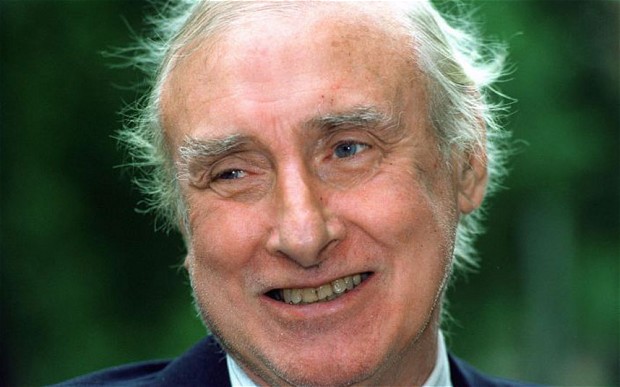


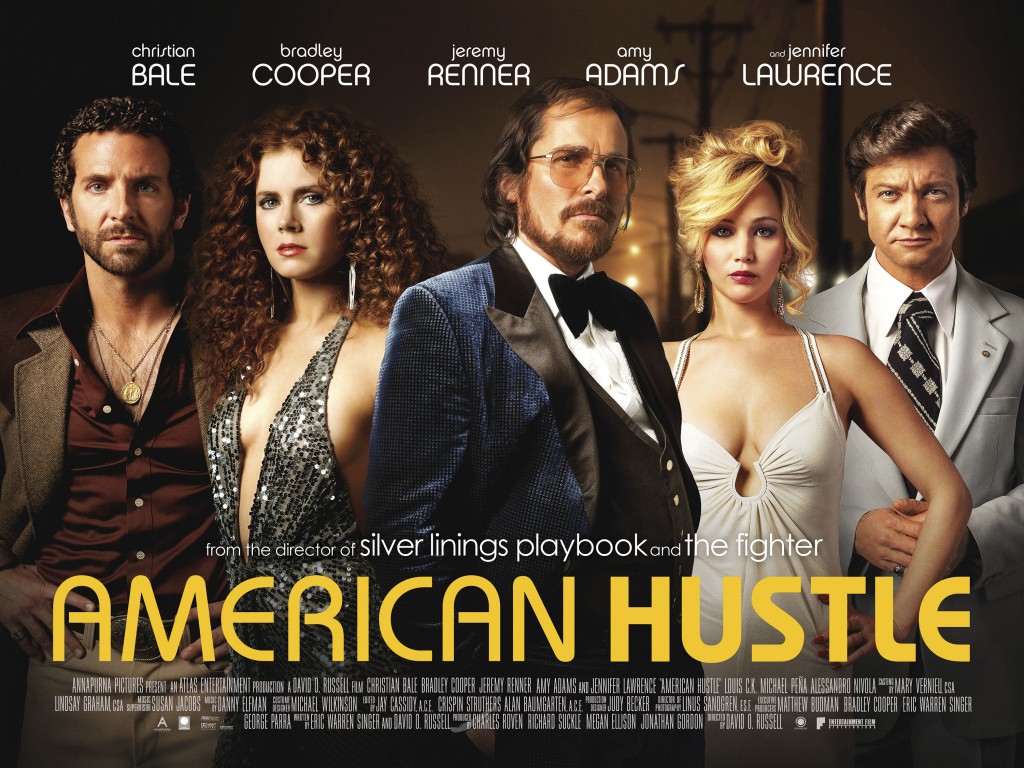
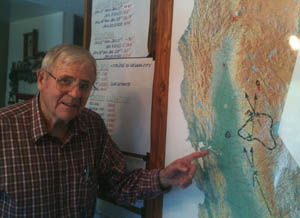


 Learning from Dogs