Last Monday, Jean and I had been living here in Merlin, Oregon for three years.
Why I am explaining this is because my day yesterday ended up being so busy that I ran out of time to focus on writing a fresh new post for you good people.
Thus, I decided to repost something that I published that first week we moved in to our Merlin home. Namely, a post published on the 16th October, 2012 under the heading of The death of the USA?.
So my apologies for you dear readers that recall this from three years ago, and welcome to the many new followers of this place that have signed up since then.
ooOOoo
“The reports of my death are greatly exaggerated!”Mark Twain.
Mark Twain
The Mark Twain quotation after hearing that his obituary had been published in the New York Journal.
Mistaken publications of obituaries aren’t as rare as you might expect. A recent example is of Dave Swarbrick, the British folk/rock violinist, who was killed off mistakenly by the Daily Telegraph in April 1999 when they reported that his visit to hospital in Coventry had resulted in his death. He did at least get the opportunity to read a rather favourable account of his life, not something we all get to do, and to deliver the gag “It’s not the first time I have died in Coventry”.
So why have I opened with this quote from Mark Twain? Read on and I hope all will be clear.
A little under a week ago, I published a couple of posts that proposed that the United States of America is an empire in decline. The first was What goes up? and the second Might just come down! As a Brit, I well know that aspect of British history!
However a recent conversation with a friend of many years back in England, who has also been a shrewd and wise entrepreneur for longer than I care to remember, argued that the evidence for the ‘end of the USA’ could be challenged.
He cited five reasons why he thought the USA would remain, more or less, in its dominant position. They were:
Spirit of innovation
Relaxed labour laws
The importance of Mexico
The uncertainty of China in terms of the next ’empire’
The likely energy self-sufficiency for the USA in the near-term.
So let me expand on each of those points.
Spirit of innovation
Let me quote from an article in TIME Magazine of the 5th June, 2011,
Innovation is as American as apple pie. It seems to accord with so many elements of our national character — ingenuity, freedom, flexibility, the willingness to question conventional wisdom and defy authority. But politicians are pinning their hopes on innovation for more urgent reasons. America’s future growth will have to come from new industries that create new products and processes. Older industries are under tremendous pressure. Technological change is making factories and offices far more efficient. The rise of low-wage manufacturing in China and low-wage services in India is moving jobs overseas. The only durable strength we have — the only one that can withstand these gale winds — is innovation.
Now there are plenty who would argue both ways in terms of the future innovation potential for the USA, as a recent article in The Atlantic does, see American Innovation: It’s the Best of Times and the Worst of Times. But the spirit of innovation will, nonetheless, be a powerful economic potential for the USA for many years to come.
Relaxed labour laws.
Definitely an area that I have little knowledge of except for the subjective notion that compared to many other nations, the laws in the USA are much less of a restraint on economic productivity than elsewhere.
The importance of Mexico.
The importance in the context of providing the USA with a source of cheaper manufacturing facilities. My English friend thought that this was a significant competitive advantage for the USA. Now, as it happens, we had a couple staying with us over the week-end of the 6th/7th October. The husband is a senior manager of Horst Engineering, an American firm based in Guaymas, Sonora County, Mexico. Here’s a picture from their website,
We are a contract manufacturer of precision machined components and assemblies for aerospace, medical, and other high technology industries. Our core processes include Swiss screw machining, turning, milling, thread rolling, centerless grinding, and assembly. Our extensive supply chain offers our customers a full service logistics solution for managing their precision product requirements. We are ISO9001:2008 and AS9100 registered and proud of our 66 year, three-generation legacy of quality and performance.
I was told that many American and British firms were using Mexico rather than China for a number of reasons. Not least because Chinese suppliers require full payment before shipment. Plus that taking into account that financial aspect together with shipping costs and other logistical issues, China wasn’t as ‘cheap’ over all. Here’s a recent announcement from Rolls Royce,
Rolls-Royce plans new Sonora hub
The burgeoning aerospace industry in Guaymas had its efforts validated recently when the venerable Rolls-Royce chose it as the site for its newest global purchasing office.
Surrounded by several of its aerospace manufacturing suppliers, London-based Rolls-Royce will move into a Guaymas industrial park owned by Tucson-based The Offshore Group to develop a supply hub for commercial jets and military aircraft around the globe.
“Rolls-Royce has very robust booking orders for the next 10 years,” said Joel Reuter, director of communications for Rolls-Royce in North America. “We need to double our production.”
Because a number of Rolls-Royce suppliers already operate in Guaymas, the city was a logical choice, Reuter said.
The uncertainty of China in terms of the next ’empire’
The point made in terms of China taking over ’empire’ status from the USA, as Simon Johnson argues over at Baseline Scenario, is countered by the fact that politically China is an unknown quantity. Until China endorses some form of democratic process, that unknowingness is not going to disappear.
The likely energy self-sufficiency for the USA in the near-term.
I can’t do better than to ask you to watch this video! Just 27-minutes long, it is a very interesting review of the energy future of the USA.
As the TED website suggests in terms of why you should listen to Amory Lovins,
Amory Lovins was worried (and writing) about energy long before global warming was making the front — or even back — page of newspapers. Since studying at Harvard and Oxford in the 1960s, he’s written dozens of books, and initiated ambitious projects — cofounding the influential, environment-focused Rocky Mountain Institute; prototyping the ultra-efficient Hypercar — to focus the world’s attention on alternative approaches to energy and transportation.
His critical thinking has driven people around the globe — from world leaders to the average Joe — to think differently about energy and its role in some of our biggest problems: climate change, oil dependency, national security, economic health, and depletion of natural resources.
So, don’t know about you, but I found those five points deeply convincing. How about you? Are the reports of the death of the USA greatly exaggerated? Do leave a comment.
ooOOoo
Now some three years later on, these five factors still seem to be valid.
It really is about good people refusing to let evil dominate our world.
The response to yesterday’s post was incredible and very gratifying.
For I was conscious that many would simply reject the proposition that I saw in John Zande’s book, namely that, “there was an evil origin to the universe and, more directly, that the deep, and growing, suffering of the pinnacle of evolution, us humans, can be traced back to that evil origin.”
The emotional challenge, of which I am acutely aware, is recognising that core proposition, that as we humans evolve so too does the capacity for human suffering, yet not wanting to give up on my personal core belief that better times ahead are possible, given sufficient people sharing that power of hope. Echoing what Sue wrote as a response to yesterday’s post that motivated me to reply, in part, thus:
If there was one sentence of yours that struck me as spot on, it was your declaration that what we think is what we create. Or as I often reflect, we are what we think.
Jean and I last night watched the latest BBC Panorama report about the migrant/refugee crisis in Europe. It was profoundly upsetting for reasons that many will understand.
George Monbiot’s essay that follows shortly is also profoundly upsetting.
But if hope is to be translated into a determination to make a difference, then it demands that we don’t ignore the pain but use our anger to fuel our passion to behave appropriately: We are what we think! Or in the much more eloquent words of Albert Einstein:
Learn from yesterday, live for today, hope for tomorrow. The important thing is not to stop questioning.
George Monbiot is to be saluted for his commitment to questioning and I am privileged to have his permission to republish the following.
There may be water on Mars. But is there intelligent life on Earth?
By George Monbiot, published in the Guardian 30th September 2015
Evidence for flowing water on Mars – this opens up the possibility of life; of wonders we cannot begin to imagine. Its discovery is an astonishing achievement. Meanwhile, Martian scientists continue their search for intelligent life on Earth.
We might be captivated by the thought of organisms on another planet, but we seem to have lost interest in our own. The Oxford Junior Dictionary has been excising the waymarks of the living world. Adders, blackberries, bluebells, conkers, holly, magpies, minnows, otters, primroses, thrushes, weasels and wrens are now surplus to requirements.
In the past four decades, the world has lost 50% of its vertebrate wildlife. But across the latter half of this period, there has been a steep decline in coverage. In 2014, according to a study at Cardiff University, there were as many news stories broadcast by the BBC and ITV about Madeline McCann (who went missing in 2007) as there were about the entire range of environmental issues.
Think of what would change if we valued terrestrial water as much as we value the possibility of water on Mars. Only three percent of the water on this planet is fresh, and of that two-thirds is frozen. Yet we lay waste to the accessible portion. Sixty percent of the water used in farming is needlessly piddled away by careless irrigation. Rivers, lakes and aquifers are sucked dry, while what remains is often so contaminated that it threatens the lives of those who drink it. In the UK, domestic demand is such that the upper reaches of many rivers disappear during the summer. Yet still we install clunky old toilets and showers that gush like waterfalls.
As for salty water of the kind that enthralls us when apparently detected on Mars, on Earth we express our appreciation with a frenzy of destruction. A new report suggests that fish numbers have halved since 1970. Pacific bluefin tuna, that once roamed the seas in untold millions, have been reduced to an estimated 40,000, yet still they are pursued. Coral reefs are under such pressure that most could be gone by 2050. And in our own deep space, our desire for exotic fish rips through a world scarcely better known to us than the red planet’s surface. Trawlers are now working at depths of 2000 metres. We can only guess at what they might be destroying.
A few hours before the Martian discovery was announced, Shell terminated its Arctic oil prospecting in the Chukchi Sea. For the company’s shareholders, it’s a minor disaster: the loss of $4 billion. For those who love the planet and the life it sustains, it is a stroke of great fortune: it happened only because the company failed to find sufficient reserves. Had Shell succeeded, it would have exposed one of the most vulnerable places on Earth to spills that are almost inevitable, where containment is almost impossible. Are we to leave such matters to chance?
At the beginning of September, two weeks after he granted Shell permission to drill in the Chukchi Sea, Barack Obama travelled to Alaska to warn Americans about the devastating effects that climate change, caused by the burning of fossil fuels, might catalyse in the Arctic. “It’s not enough just to talk the talk”, he told them. “We’ve got to walk the walk.” We should “embrace the human ingenuity that can do something about it.” Human ingenuity is on abundant display at Nasa, which released those astounding images. But when it comes to policy, the search for intelligent life goes on.
Let the market decide: this is the way in which governments seek to resolve planetary destruction. Leave it to the conscience of consumers, while that conscience is muted and confused by advertising and corporate lies. In a near-vacuum of information, we are each left to decide what we should take from other species and other people; what we should allocate to ourselves or leave to succeeding generations. Surely there are some resources and some places – such as the Arctic and the deep sea – whose exploitation should simply stop?
All this drilling and digging and trawling and dumping and poisoning – what is it for anyway? Does it enrich human experience, or stifle it? A couple of weeks ago, I launched the hashtag #extremecivilisation, and invited suggestions. They have flooded in. Here are just a few of the products my correspondents have found. All of them, as far as I can tell, are real.
An egg tray for your fridge, that syncs with your phone to let you know how many eggs are left. A gadget for scrambling them – inside the shell. Wigs for babies, to allow “baby girls with little or no hair at all the opportunity to have a beautifully realistic hair style”. The iPotty, that permits toddlers to keep playing on their iPads while toilet training. A £2000 spider-proof shed. A snow sauna, on sale in the United Arab Emirates, in which you can create a winter wonderland with the flick of a switch. A refrigerated watermelon case on wheels: indispensable for picnics. Or perhaps not, as it weighs more than the melon. Anal bleaching cream, for … to be honest, I don’t want to know. An “automatic watch rotator” that saves you the bother of winding your luxury wrist candy. A smart phone for dogs, with which they can take pictures of themselves. Pre-peeled bananas, in polystyrene trays covered in clingfilm. Just peel back the packaging …
Every year, clever new ways of wasting stuff are devised, and every year we become more inured to the pointless consumption of the world’s precious resources. With each subtle intensification, the baseline of normality shifts. It should not be surprising to discover that the richer a country becomes, the less its people care about their impacts on the living planet.
Our alienation from the world of wonders with which we evolved has only intensified since David Bowie described a girl stumbling through a “sunken dream”, on her way to be “hooked to the silver screen”, where a long series of distractions diverts her from life’s great questions. The song, of course, was Life on Mars.
Why we have to learn integrity from our dogs, and soon!
After yesterday’s post about the ice dagger poised to fall on the heads of humanity, I was hoping to offer something more cheerful for today. Indeed, I had a guest post ready for publication but then ran into a small technical hitch that stopped it being scheduled for today.
So I turned to this recent article that appeared on The Conversation blogsite that is, unfortunately, another reminder of these mad times. It is republished within the terms of articles that appear on The Conversation.
ooOOoo
How could VW be so dumb? Blame the unethical culture endemic in business.
Author: Edward L Queen, Director of Ethics and Servant Leadership Program, Emory University.
How much can corporate culture explain VW’s deception? Jim Young/Reuters
That far too much of the world’s corporate leadership is driven by moral midgets who have been educated far beyond their capacities for good judgment should be obvious after observing the events of the past week.
The financial industry-led economic collapse of 2008 should have taught us this lesson, but the specificity and clarity of it was brought home by news of price-gouging in the pharmaceutical industry and, even more blatantly, by the announcement that Volkswagen intentionally programmed thousands of its diesel automobiles to cheat emissions testing.
We should be outraged by such behavior and demand appropriate punishments and sanctions as well as restitution and correction. But we should not be shocked. As an ethicist who has looked at the behavior of individuals in business and corporations, I can point to a number of troubling trends that help explain these transgressions.
Impaired moral imaginations
For the past five to six decades, epigones of Milton Friedman have been emphasizing that the only duty of a corporation is return on investment (regularly ignoring his caveat of doing so within the law and social norms).
This lesson, drilled into generations of business school graduates, now drives tsunamis of corporate malfeasance. Data regularly demonstrate that business school students are more likely to cheat on examinations and assignments than their peers, although – and this is of interest for the Volkswagen case – they are closely followed by engineering students.
Are business school teaching the right values? mleiboff/flickr, CC BY-NC-ND
Additionally, some evidencesuggests that not only are business students more impaired in their moral judgments in a broader sense than are those in other majors and professional schools, but that business schools themselves may be responsible.
More disturbing, observational and anecdotal evidence suggests that business students are not only impaired in their moral judgments but that significant percentages of them have severely impaired moral imaginations. By this I mean not only do they make bad ethical decisions, but they actually are incapable of identifying an ethical situation when they are presented with one.
Numerous interviews with business ethics faculty I have had over the past decade suggest that when business students are presented with an ethics case, that is a case where they have been told that there is an ethical problem, 20% to 30% of the students cannot find or identify the ethical issue. This has been borne out by my personal experience when teaching business students.
Unmistakable malfeasance
With regards to the Volkswagen scandal, let us be clear about the nature of the company’s activities. This was not a mistake, an error, an ethical lapse or poor judgment. This was an intentionally designed and executed violation of the law in both its letter and its spirit. It also was an ethical violation of the highest level.
Volkswagen intentionally deceived those to whom it owed a duty of honesty. It fraudulently misrepresented its automobiles to be other than what they were. Most significantly, it intentionally chose to do so and went out of its way to commit the wrong.
This last fact may make it far more difficult for VW to recover from the reputational hit than it perhaps has been for GM or Toyota. Even though the latter’s product defects cost people their lives, they did not intentionally produce such parts.
The sheer brazenness and conniving that went into Volkswagen’s actions are probably what shocked people the most. This was a highly technical and sophisticated operation that basically taught the emissions system how to distinguish between road travel, typical idling and idling while undergoing an emissions test.
No spin can mitigate that fact. There is and can be no claims of confusion or misunderstanding, no failures to communicate. This will erode people’s trust in Volkswagen as a company to a degree that the failures of other companies may not have experienced. In the Volkswagen scandal, just like the story about price gouging in pharmaceuticals that broke the same week, consumers are confronted with the stark reality of corporate malfeasance.
In both instances, the wrongdoing was exacerbated by the responses of the companies’ CEOs. The now former CEO of Volkswagen, Martin Winterkorn, basically acknowledged his incompetence and failure of leadership by claiming that he was unaware of the actions taken by his employees. Martin Shkreli, the CEO of Turing Pharmaceuticals, in a series of tweets responding to criticisms of its pricing of the drug Daraprim demonstrated a level of knowledge of moral and social norms that can only be described as clueless.
Redefining success
These events – and others – make clear that there is a need to look at the broader cultural realities that drive unethical decisions in business, particularly the perception that the only way of determining value and worth is money.
This situation is not new – as early as 1906 William James wrote in a letter to H G Wells, “The moral flabbiness born of the exclusive worship of the bitch-goddess SUCCESS. That – with the squalid cash interpretation put on the word success — is our national disease.”
When a person’s worth is determined only by money, only by success as it is and can be monetized, when one has no sense of being without the BMW, the Rolex, the Armani suits, the yacht, etc, the moral flabbiness emerges. Indeed, it engulfs entire organizations and perhaps even entire societies.
ooOOoo
Those last two sentences of that essay need repeating over and over again. This may just be a blog about learning from our beloved dog companions but as my home page spells out, this is not some silly romantic notion:
As man’s companion, protector and helper, history suggests that dogs were critically important in man achieving success as a hunter-gatherer. Dogs ‘teaching’ man to be so successful a hunter enabled evolution, some 20,000 years later, to farming, thence the long journey to modern man. But in the last, say 100 years, that farming spirit has become corrupted to the point where we see the planet’s plant and mineral resources as infinite. Mankind is close to the edge of extinction, literally and spiritually.
Dogs know better, much better! Time again for man to learn from dogs!
Yesterday was the moment when Queen Elizabeth II became the longest-reigning UK monarch. As the BBC reported (in part) yesterday:
Queen Elizabeth II becomes longest-reigning UK monarch
The Queen has thanked well-wishers at home and overseas for their “touching messages of kindness” as she becomes Britain’s longest-reigning monarch.
Speaking in the Scottish Borders, the 89-year-old monarch said the title was “not one to which I have ever aspired”.
At 17:30 BST she had reigned for 23,226 days, 16 hours and approximately 30 minutes – surpassing the reign of her great-great-grandmother Queen Victoria.
David Cameron said the service the Queen had given was “truly humbling”.
Dressed in turquoise with her trusty black handbag at her side, the Queen spoke briefly to the gathered crowds earlier.
“Inevitably a long life can pass by many milestones – my own is no exception – but I thank you all and the many others at home and overseas for your touching messages of great kindness,” she said.
Newly released official photographs show the Queen with her official red box, containing the day’s policy papers, cabinet documents, Foreign Office papers and other letters.
Here’s a video that is worth viewing:
So that was the ‘good’ news.
Now here is the ‘ugly’ news; the latest essay by George Monbiot republished here with Mr. Monbiot’s kind permission.
ooOOoo
Britain’s Mafia State
8th September 2015
Where does legitimate business end and organised crime begin?
By George Monbiot, published in the Guardian 9th September 2015
Be reasonable in response to the unreasonable: this is what voters in the Labour election are told. Accommodate, moderate, triangulate, for the alternative is to isolate yourself from reality. You might be inclined to agree. If so, please take a look at the reality to which you must submit.
To an extent unknown since before the First World War, economic relations in this country are becoming set in stone. It’s not just that the very rich no longer fall while the very poor no longer rise. It’s that the system itself is protected from risk. Through bail-outs, quantitative easing and delays in interest rate rises, speculative investment has been so well cushioned that, as Larry Elliott puts it, financial markets are “one of the last bastions of socialism left on earth.”
Public services, infrastructure, the very fabric of the nation: these too are being converted into risk-free investments. Social cleansing is transforming inner London into an exclusive economic zone for property speculation. From a dozen directions, government policy converges on this objective. The benefits cap and the bedroom tax drive the poor out of their homes. The forced sale of high-value council houses creates a new asset pool. An uncapped and scarcely regulated private rental market turns these assets into gold. The freeze on council tax banding since 1991, the lifting of the inheritance tax threshold and £14 billion a year in breaks for private landlords all help to guarantee stupendous returns.
And for those who wish simply to sit on their assets, the government can help here too, by ensuring that there are no penalties for leaving buildings empty. As a result, great tracts of housing are removed from occupation. Agricultural land has proved an even better punt for City money: with the help of capital gains, inheritance and income tax exemptions, as well as farm subsidies, its price has quadrupled in 12 years.
Property in this country is a haven for the proceeds of international crime. The head of the National Crime Agency, Donald Toon, notes that “the London property market has been skewed by laundered money. Prices are being artificially driven up by overseas criminals who want to sequester their assets here in the UK.”
It’s hardly surprising, given the degree of oversight. Private Eye has produced a map of British land owned by companies registered in offshore tax havens. The holdings amount to 1.2 million acres, including much of our prime real estate. Among those it names as beneficiaries are a cast of Russian oligarchs, oil sheikhs, British aristocrats and newspaper proprietors. These are the people for whom government policy works, and the less regulated the system that enriches them, the happier they are.
The speculative property market is just one current in the great flow of cash that sluices through Britain while scarcely touching the sides. The financial sector exploits an astonishing political privilege: the City of London is the only jurisdiction in the UK not fully subject to the authority of parliament. In fact, the relationship seems to work the other way. Behind the Speaker’s chair in the House of Commons sits the Remembrancer, whose job is to ensure that the interests of the City of London are recognised by the elected members. (A campaign to rescind this privilege – Don’t Forget the Remembrancer – will be launched very soon). The City has one foot in the water: it is a semi-offshore state, a bit like the UK’s Crown dependencies and overseas territories, tax havens legitimised by the Privy Council. Britain’s financial secrecy undermines the tax base while providing a conduit into the legal economy for gangsters, kleptocrats and drug barons.
Even the more orthodox financial institutions deploy a long succession of scandalous practices: pension mis-selling, endowment mortgage fraud, the payment protection insurance con, Libor rigging. A former minister in the last government, Lord Green, ran HSBC while it engaged in money laundering for drugs gangs, systematic tax evasion and the provision of services to Saudi and Bangladeshi banks linked to the financing of terrorists. Sometimes the UK looks to me like an ever-so-civilised mafia state.
At next month’s Conservative party conference, corporate executives will pay £2,500 to sit with a minister. Doubtless, because we are assured that there is no link between funding and policy, they will spend the day discussing the weather and the films they have seen. If we noticed such arrangements overseas, we might be inclined to regard them as corruption. But that can’t be the case here, not least because the invitation explains that “fees associated with business day & dinner are considered a commercial transaction and therefore do not constitute a political donation.”
The government also insists that there is no link between political donations and seats in the House of Lords. But a study by researchers at Oxford University found that the probability of so many major donors arriving there by chance is 1.36 x 10-38: roughly “equivalent to entering the National Lottery and winning the jackpot 5 times in a row”. Why does the Lords remain unreformed? Because it permits plutocratic power to override democracy. Both rich and poor are kept in their place.
Governed either by or on behalf of the people who fleece us, we cannot be surprised to discover that all public services are being re-engineered for the benefit of private capital. Nor should we be surprised when governments help to negotiate, without public consent, treaties such as TTIP and CETA (the Comprehensive Economic and Trade Agreement), which undermine the sovereignty of both parliament and the law. Aesop’s observation that “we hang the petty thieves and appoint the great ones to public office” remains true in spirit, though hanging has been replaced by community payback.
Wherever you sniff in British public life, something stinks: I could fill this newspaper with examples. But, while every pore oozes corruption, our task, we are told, is merely to trim the nails of the body politic.
To fail to confront this system is to collaborate with it. Who on the left would wish to stand on the sidelines as this carve-up continues? Who would vote for anything but sweeping change?
Ma’am’s best friend: The Queen has owned corgis for more than 60 years. Picture seen in the UK’s Daily Mail newspaper.
Taking the two stories together, all that comes to mind is that we could do much better if the United Kingdom, and other countries, were governed by dogs!
After yesterday’s tribute to Pharaoh, a timely reminder came in from Suzann in an email about the many, many dogs in much less fortunate circumstances.
Let me first include what Su said in her email.
Pablo,
Here is Jax, a pup I rescued at 3 1/2 weeks old with one partial leg missing and bleeding.
I sent him to my amiga J9 and she has had him for a while now and is having a benefit for him to raise money for a prosthetic for him to save his back.
Is this the kind of thing that I can put on your website?
Let me know.
He is a precious little guy and needs this desperately to help him find a great home as well.
Let me know.
Suzann
I rang Su immediately and confirmed that this was perfect for Learning from Dogs.
What Su also included in her email was the following information.
So, please, share this post just as far and wide as you can. (And if you can spare a few pennies to help, then all the better!)
Jax’s Story:
Jax was living with his feral mom on the desert of Mexico and was only 3-1/2 weeks old when he got his leg stuck in some fencing. Mom tried and tried to free him… eventually chewing off his paw in order to save his life. Coyotes roamed the area and a small puppy would not have been able to protect himself from them. Thankfully, a wonderful man saw what had happened and rushed the bleeding puppy to the nearest rescue for care, which happened to be our sister organization in San Carlos, Mexico, Ambos Rescue.
Jax was taken to a local vet, who then determined that the pup’s lower leg needed to be amputated. This was done with the hopes that Jax would be able to receive a prosthetic leg in the future, which is why they did not do a full amputation, thus limiting his choices.
But now Jax runs the risk of throwing his back out with the little stub he flaps around… and he needs either a full amputation, or a prosthetic leg before he permanently does damage to his spine. Amputation is always an option but we would like to try a prosthetic first.
This Garage Sale is for Jax… PLEASE SUPPORT HIM!
Saturday, June 6th – 7:30 am
(Until 2:30… or maybe 3:00)
1010 Olympic Way, Nipomo, CA
Anyone who wishes to donate
directly to Jax’s Fund
can mail a check to:
P.O. Box 2952, Orcutt, CA 93457
Because some of the things we humans do are insanely stupid!
Here’s a picture of Oliver taken yesterday afternoon.
Becoming a dear, smart dog. (And those eyes!)
A few days ago, I was sitting in our living room on one of our settees (more or less where Oliver was sitting when the photograph above was taken) with my knees up against a low coffee table; the table separates our two settees.
On the settee to my left lay Cleo and on the floor across my feet slept Hazel.
It was clear that Oliver wanted to join me on the settee but couldn’t work out if there was room. I shifted about two feet to my left leaving an Oliver-sized gap to my right. However, Oliver couldn’t come past my knees, from left to right as it were, because of Hazel. He very quickly worked out to run around behind the settee and jump up into the space I had newly created to my right.
Don’t worry if I lost you!
The point I am making is that Oliver, who has grown into the most delightful young adult dog, with a gorgeous temperament, demonstrates daily a keen intelligence and a nose for working things out quickly.
All of which is a preamble for me wondering if among the list of qualities that we humans should learn from dogs we should add intelligence.
For there’s been a few items around the ‘blogosphere’ that have highlighted how silly we can be.
Take this item that recently was featured on Grist.
A giant, 150-foot roll of bubble wrap may not be your idea of an environmentally friendly product, but over at Walmart.com this one-pound ball of plastic now boasts a special “Sustainability Leaders” badge. It’s one of more than 3,000 products tagged with this new green label, which Walmart executives unveiled last week, together with a web portal where shoppers can find these items.
Dozens of news accounts hailed the giant retailer’s move as a significant step toward clearing up the confusion and misleading information that often greet consumers trying to make ecologically responsible choices. “The world’s largest retailer took a major and important step toward helping all of us shop more smartly,” declared corporate sustainability consultant Andrew Winston in Harvard Business Review. Triple Pundit concurred: “It’s about to get a lot easier for Walmart.com shoppers to make the responsible choice.”
Actually, a green-minded online shopper is likely to find Walmart’s new badge confusing, murky, and downright misleading. I searched the bubble wrap’s product page high and low for its secret sauce, the invisible feature that makes it a smarter choice amid the many seemingly less harmful packing options available, but found no explanation.
It turns out that the key to this mystery lies in a remarkable disclaimer tucked into the middle of the home page of Walmart’s sustainability shopping portal: “The Sustainability Leaders badge does not make representations about the environmental or social impact of an individual product.” (my emphasis)
You can read the full item here, and you should! It’s unbelievably stupid, apart from being highly misleading, to my mind because when the word gets around it will damage the trust that all retailers need from their customers. And don’t even bring up the notion of integrity!
Then over on George Monbiot’s blogsite, there is a recent essay about the UN and progress on climate change. Here’s how it starts (and I’m republishing it in full tomorrow):
Applauding Themselves to Death
If you visit the website of the UN body that oversees the world’s climate negotiations, you will find dozens of pictures, taken across 20 years, of people clapping. These photos should be of interest to anthropologists and psychologists. For they show hundreds of intelligent, educated, well-paid and elegantly-dressed people wasting their lives.
The celebratory nature of the images testifies to the world of make-believe these people inhabit. They are surrounded by objectives, principles, commitments, instruments and protocols, which create a reassuring phantasm of progress while the ship on which they travel slowly founders. Leafing through these photos, I imagine I can almost hear what the delegates are saying through their expensive dentistry. “Darling you’ve re-arranged the deckchairs beautifully. It’s a breakthrough! We’ll have to invent a mechanism for holding them in place, as the deck has developed a bit of a tilt, but we’ll do that at the next conference.”
Humans have the potential to be incredibly smart thinkers, and down the ages there have been many such thinkers.
But!
Over on the Patrice Ayme blogsite there have been a couple of recent essays that highlight examples of both stupid thinking and the rewards that flow from smart thinking. In one essay, Added Value in the XXI Century, Patrice writes:
SUPERIORITY OF THE WEST?
Why did the West become so superior? Or China, for that matter?
Technology. Superior technology. Coming from superior thinking. Both the Greeks and the Chinese had colossal contempt for barbarians. (In both cases it went so far that the Greeks lost everything, and the Chinese came very close to annihilation).
Around the year 1000 CE, the Vietnamese (it seems) invented new cultivars of rice, which could produce an entire crop, twice a year. The population of East Asia exploded accordingly.
A bit earlier, the Franks had invented new cultivars of beans. The Frankish Tenth Century was full of beans. Beans are nutritious, with high protein.
Homo is scientific and technological. Thus, two million years ago, pelt covered (tech!) Homo Ergaster lived in Georgia’s Little Caucasus, a pretty cold place in winter. And the population was highly varied genetically (showing tech and travel already dominated).
A GREATER OBSESSION WITH FREEDOM MADE THE WEST SUPERIOR:
Here is the very latest. Flour was found in England, in archeological layers as old as 10,000 years before present. It was pure flour: there were no husks associated. The milling had been done, far away. How far? Well the cultivation of wheat spread to Western Europe millennia later. The flour had been traded, and brought over thousands of miles. Most certainly by boat. Celtic civilization, which would rise 5,000 years later, was expert at oceanic travel.
What’s the broad picture? Not just that prehistoric Englishmen loved their flat bread, no doubt a delicacy. Advanced technology has permeated Europe for much longer than is still understood now by most historians. Remember that the iceman who died in a glacier, 5,000 years ago, was not just tattooed, and had fetched in the lowlands a bow made of special wood. More telling: he carried antibiotics.
Some say that correct thinking has to do with avoiding “logical fallacies”. That is, of course, silly. Imagine a pilot in a plane. Suppose she avoids all logical fallacies. Where does the plane go? Nowhere. Thinking correctly is more than avoiding logical “fallacies”.
One needs more than logic, to proceed: one needs e-motion, or motivation (both express the fact that they are whatever gets people to get into action; the semantics recognizes that logic without emotion goes nowhere).
There is another, related, fallacy in thinking that correct thinking is all about avoiding “logical fallacies”.
I don’t have the answers to the conundrum of stupid thinking a la Walmart and the United Nations (not an exclusive list; by far) but I do believe that the only way for humanity to overcome what looks like a very dangerous era ahead is through smarter thinking!
Oh, nearly forgot.
Oliver will be happy to run classes on smart thinking!
Last Thursday, I published a post under the title of Oil, money, banks, guns and blood.It was such a departure from my normal style of blog post that I anticipated that it would slide by without any comment. Wrong! It had the highest readership of the week and attracted some powerful and insightful replies. So much so that I expressed the desire to reflect on those replies before responding. Thus, today’s post is my response to your comments and feelings.
First, Hariod Brawn of the blogsite Contentedness responded, in part:
Now, where are we? Val’s words are a good place to begin: “Nothing is what is seems, or will ever be the same again.” Nobody knows for sure, but piecing together fragments of world events, my instinct (fwiw) tells me that we are in the incipient stages of the collapse of the 20th.c. paradigm. Neoliberalism has failed; further than that, Capitalism has failed – we have no free markets where it counts; they’re all rigged. Politics has failed too, having been bought out by the corporates. [There are over 30,000 lobbyists in Washington alone] All that Western Governments have to offer is a doomed re-run of failed practices (same with Japan actually). Worse still, they have gone down on their knees and begged the financial sector to create a fix. The private banks have been given access to vast sums of QE cash at virtually zero interest in order to continue rigging markets (via their agents) all to their benefit whilst also creating huge market distortions in asset bubbles. Has the wealth they created trickled down? Has it hell. Whilst all this is going on, and as the film so clearly demonstrates, the Middle East looks like fulfilling its promise of the last century as being the flashpoint for warfare on a vast scale. And of course, if by some miracle we escape financial collapse, and world peace is not threatened by warfare, then the environment is going down the pan because – guess what? – our politicians have failed us once again. I have said enough on this.
Hariod then went on to recommend the films of Chris Hedges that will be featured on Learning from Dogs at a future date.
Then Val Boyco, her blogsite being Find Your Middle Ground, wrote a response before viewing the film:
Without being informed yet … my thinking is that the world we live in is so complex, stressful and fast that we can’t absorb everything that happens. We simplify and label, in order to make sense. We chop and segment in order to understand, but we miss the full story and many have lost the ability to grasp the bigger picture…. or are too fearful of going against the expectations of others and becoming one of “them” instead of one of “us”.
Then reinforced by her comment after watching the film:
I just watched the movie Paul. It is powerful and very disturbing. As you say, it undermines what we believe is real. It also reveals the complexity – misunderstanding – manipulation – corruption – opium, oil and the struggle for power – naivety – chaos.
In the dualistic fairy tale world of good vs evil it has created a nightmare of errors.
Nothing is what is seems.
Or will ever be the same again.
Giant American global corporations, the 200 largest ones, do 100 billion dollars of tax evasion through Luxembourg alone. Each year. Many are media companies. Wonder why stories make no sense?
Juncker directed that. Now he is head of the European Commission, and insist Greece shall pay every single penny.
As it happened, my dad was among a European group of geologists working for the Afghan government, who discovered Afghanistan’s riches… In the 1970s. All hell broke loose shortly thereafter.
I write about these sorts of things, day in, day out. But most people prefer the opium of feel-good…
Patrice then went further in offering a post over on his own blog that carried the specific title of Great Bitter Lake. Let me quote a little from that:
“Bitter Lake” is about the conspiracy between American plutocracy and Saudi plutocracy. Plutocrat Roosevelt was freshly flown from Yalta, to the Great Bitter Lake, on the Suez Canal. The idea was to steal the Maghreb, and the Middle East from the French and the British, by making a theocratic alliance.
At Yalta, Roosevelt had given half of Europe to his Comrade Stalin. (Plutocrats of the world naturally unite!)
Never mind that Poland had fought the Nazis courageously the Nazis, at a time when the USA was militarily and diplomatically collaborating… with the Nazis (or maybe, precisely, the Poles had to be punished!) Roosevelt had to be strict: the French had successfully escaped from the military occupation (AMGOT) he had set-up for them.
The movie “Bitter Lake” exposes (some) of the American plutocracy led conspiracies which led to the devastation, among other things, of Afghanistan, and other constituencies, thanks to the Wahhabist Islam it unleashed on the world.
Readers of this site will be familiar with the general ambiance.
One caveat: all what is in the documentary and makes American plutocrats (Roosevelt) and their servants (Reagan) look bad, is correct. However the real situation, the real badness is way worse. (For example the secret, official USA intervention in Afghanistan was under Carter, on July 3, 1979. However the real even more secret intervention, through the Pakistani ISI was even earlier and even more vicious.
So what is my response?
It is this:
In 1887, Oscar Wilde said, referring to the differences between the British and the Americans: “We have really everything in common with America nowadays, except, of course, language.”
By way of example there is a saying back in my old country that when something is “… going to the dogs”, it means an irreversible decline in standards; the phrase usually aimed at an organisation or even a country.
Many, especially those of my age, might nod sagely and reflect that something ‘is going to the dogs‘ in terms of the wider Western world.
Let me be specific. There are destructive and dysfunctional issues in modern societies that I would list as: Selfishness; Power & Corruption; Short-termism; Materialism; Population growth; Greed, inequality and poverty. It’s not an exhaustive list!
Now many would argue the ‘whys’ and ‘wherefores’ about what precisely is wrong with Western societies in this 21st century but far fewer would argue with the underlying premise; that something is fundamentally wrong with today’s world.
Indeed, one of the things that is impossible to miss is the body language, the look on a face, the shrug of a shoulder, when one casually remarks that these are interesting times! From strangers and friends alike.
There is no question that what mankind has ‘enjoyed’ these last fifty years or so cannot be continued for very much longer. That the era since the 1960s of growth, materialism and consumption is running one very basic and fundamental resource dry. You know the one I am referring to: Planet Earth.
My hope is that the widely-felt feelings that something is fundamentally wrong with today, are the feelings man has always experienced, since time immemorial, when mankind has passed through the threshold between two eras.
My hope is that the new era, one that we quite possibly may now just be entering, a new era of sustainable living on this planet, of social and political changes to replace extreme levels of inequality, of stronger communities of like-minded persons, will be obvious to all, but especially obvious to our next generation, within the next ten years; possibly fewer than ten years.
One thing is for sure. The sharing of ideas and feelings as is the style of modern blogging is critical to the forming of the opinions that precede the changes that so many now see as unstoppable.
Turn aside if you are looking for a bright, optimistic start to the week.
Two separate experiences have come together to offer, well anyway for me, a sense of now not recognising the world I grew up in. The first was Episode One of a programme on BBC Television, broadcast last Thursday, and the second was an essay from Ann Jones on the TomDispatch site, published yesterday.
First, that BBC programme. Despite not being able to view it directly here in Oregon, both the programme details and a first-hand account from a British viewer confirm the essence of this two-part series. Here’s what is on the BBC iPlayer website:
The Super Rich and Us
First shown: 8 Jan 2015
Britain has more billionaires per head than any other country on earth, yet we’re also the most unequal nation in Europe. We were told the super-rich would make us richer too, so why hasn’t that happened, and what does the arrival of their astronomical wealth really mean for the rest of us? In programme one of this two-part series, Jacques Peretti looks at how the super-rich first exploited an obscure legal loophole to make Britain one of the most attractive tax havens on earth. He argues this was no accident. Wooing the super-rich was a deliberate strategy by government to reconfigure the British economy, under the belief their wealth would trickle down to the rest of us. But it didn’t. The OECD now say the British economy would have been 20 per cent bigger had we not pursued the super-rich. So who sold us the fallacy and why?
Jacques meets the super-rich themselves – from those buying premiership football clubs to the billionaires who are breaking ranks to criticise the decisions that made them richer and society more unequal.
Jacques challenges the architects of these policies, as well as tracking down the foreign multimillionaires who are buying up Britain and turning us from a nation of property owners to a nation of renters. He uncovers new research that shows growing inequality has been driven by this key factor of unaffordable property, and the far-reaching effect this will have on every aspect of our lives. Inequality is reshaping Britain into two simple classes: the 99 per cent and the one per cent. This is the story of how it happened and what it means for all of us.
While, for obvious reasons, the programme can’t be included in this post, one can get a flavour of the degree of inequality in Britain from this BBC News item from last May.
The second experience was reading the latest post published over on the TomDispatch site; an essay from Ann Jones (see bio at end). Some while ago, Tom Engelhardt, he of TomDispatch, was sufficiently generous to give a blanket permission for his essays to be republished on Learning from Dogs. Here is that essay from Ann. (NB: In the original there are numerous hyperlinks to other materials, too many for me to transfer across: Apologies.)
ooOOoo
Tomgram: Ann Jones, Answering for America
Posted by Ann Jones at 8:00am, January 11, 2015.
One of the grimmer small events of recent American life occurred just as 2014 was ending. A mother had her two-year old toddler perched in a shopping cart at an Idaho Wal-Mart. He reached into her purse, specially made for carrying a concealed firearm (and a Christmas gift from her husband), found his mother’s pistol in it, pulled it out, and shot and killed her. And she wasn’t the only victim of a child who came upon a loaded weapon. Between 2007 and 2011, at least 62 children 14 or younger died in similarly nightmarish accidents with loaded weapons.
Nor was this specific incident an anomaly. In fact, if you are an American, you are statistically in less danger of dying from a terrorist attack in this country than from a toddler shooting you. And by the way, you’re 2,059 times more likely to die by your own hand with a weapon of your choosing than in a terrorist attack anywhere on Earth. You’re also more than nine times as likely to be killed by a police officer as by a terrorist.
And remind me, how many American taxpayer dollars have gone into “security” from terrorism and how many into security from weaponry? You know the answer to that. In fact, guns of just about every variety seem to circulate ever more freely in this country as the populace up-armors itself in yet more ways. Think of it as a kind of arms race. Emboldened by the National Rifle Association (NRA), Americans are ever more weaponized. There were an estimated 300-310 million guns in the U.S. in 2009 (a figure that has undoubtedly risen), and up to four million Americans now own assault rifles — one popular weapon of choice, by the way, for mass killers. In the meantime, the percentage of Americans who favor a ban on handguns (25%) has fallen to an all-time low.
As for “carrying,” it’s now legal in every state in America and allowed in ever more situations as well. In the last year, for instance, Idaho, where that mother died, became the seventh state to green-light the carrying of concealed guns on college campuses. To put all this in perspective, less than two decades ago, fewer than a million concealed weapons were being legally carried in the U.S.; now, more than one million people are permitted to carry such weapons in Florida alone. In twenty-first-century America, the “right to bear arms” has been extended in every direction, while there has also been a “sharp rise” in mass killings.
Meanwhile — since what’s an arms race without a second party? — the police, mainlining into the Pentagon, have been up-armoring at a staggering pace. It’s no longer an oddity for American police officers to be armed with assault rifles and grenade launchers as if in a foreign war zone or to arrive on the scene with a mine-resistant ambush-protected vehicle previously used in our distant wars. And by the way, while much anger has been displayed, by the police in particular, over the recent murders of two patrolmen in Brooklyn by a disturbed man carrying a Taurus semiautomatic handgun, that anger seems not to extend to his ability to arm himself or to the pawnshop filled with weaponry that originally sold the gun (but not to him).
One mistake you shouldn’t make, however, is to imagine that Americans consider the right to bear arms universal. Just consider, for example, the CIA’s “signature drone strikes” in Pakistan and elsewhere. Over the last two presidencies, the Agency has gained the “right” to drone-kill young men of military age bearing arms — in societies where arms-bearing, as here, is the norm — about whom nothing specific is known except that they seem to be in the wrong place at the right time. The NRA, curiously enough, has chosen not to defend them.
If, to a visitor from Mars or even (as TomDispatch regular Ann Jones points out) Europe, all this might seem like the definition of madness, it’s also increasingly the definition of a way of life in this country. What was once the “tool” of law enforcement types, the military, and hunters is now the equivalent of an iPhone, a talisman of connection and social order. It’s something that just about anyone can put in a pocket, a purse, or simply strap on in the full light of day in a land where all of us, even toddlers, seem to be heading for the O.K. Corral. Jones, author of They Were Soldiers: How the Wounded Return From America’s Wars — The Untold Story, has seen her share of carnage and experienced her share of stress. Today, however, she considers another kind of stress, the pressure to explain to others a country whose citizens don’t even notice how inexplicable they are becoming. Tom
Americans who live abroad — more than six million of us worldwide (not counting those who work for the U.S. government) — often face hard questions about our country from people we live among. Europeans, Asians, and Africans ask us to explain everything that baffles them about the increasingly odd and troubling conduct of the United States. Polite people, normally reluctant to risk offending a guest, complain that America’s trigger-happiness, cutthroat free-marketeering, and “exceptionality” have gone on for too long to be considered just an adolescent phase. Which means that we Americans abroad are regularly asked to account for the behavior of our rebranded “homeland,” now conspicuously in decline and increasingly out of step with the rest of the world.
In my long nomadic life, I’ve had the good fortune to live, work, or travel in all but a handful of countries on this planet. I’ve been to both poles and a great many places in between, and nosy as I am, I’ve talked with people all along the way. I still remember a time when to be an American was to be envied. The country where I grew up after World War II seemed to be respected and admired around the world for way too many reasons to go into here.
That’s changed, of course. Even after the invasion of Iraq in 2003, I still met people — in the Middle East, no less — willing to withhold judgment on the U.S. Many thought that the Supreme Court’s installation of George W. Bush as president was a blunder American voters would correct in the election of 2004. His return to office truly spelled the end of America as the world had known it. Bush had started a war, opposed by the entire world, because he wanted to and he could. A majority of Americans supported him. And that was when all the uncomfortable questions really began.
In the early fall of 2014, I traveled from my home in Oslo, Norway, through much of Eastern and Central Europe. Everywhere I went in those two months, moments after locals realized I was an American the questions started and, polite as they usually were, most of them had a single underlying theme: Have Americans gone over the edge? Are you crazy? Please explain.
Then recently, I traveled back to the “homeland.” It struck me there that most Americans have no idea just how strange we now seem to much of the world. In my experience, foreign observers are far better informed about us than the average American is about them. This is partly because the “news” in the American media is so parochial and so limited in its views both of how we act and how other countries think — even countries with which we were recently, are currently, or threaten soon to be at war. America’s belligerence alone, not to mention its financial acrobatics, compels the rest of the world to keep close track of us. Who knows, after all, what conflict the Americans may drag you into next, as target or reluctant ally?
So wherever we expatriates settle on the planet, we find someone who wants to talk about the latest American events, large and small: another country bombed in the name of our “national security,” another peaceful protest march attacked by our increasingly militarized police, another diatribe against “big government” by yet another wannabe candidate who hopes to head that very government in Washington. Such news leaves foreign audiences puzzled and full of trepidation.
Question Time
Take the questions stumping Europeans in the Obama years (which 1.6 million Americans residing in Europe regularly find thrown our way). At the absolute top of the list: “Why would anyone oppose national health care?” European and other industrialized countries have had some form of national health care since the 1930s or 1940s, Germany since 1880. Some versions, as in France and Great Britain, have devolved into two-tier public and private systems. Yet even the privileged who pay for a faster track would not begrudge their fellow citizens government-funded comprehensive health care. That so many Americans do strikes Europeans as baffling, if not frankly brutal.
In the Scandinavian countries, long considered to be the most socially advanced in the world, a national (physical and mental) health program, funded by the state, is a big part — but only a part — of a more general social welfare system. In Norway, where I live, all citizens also have an equal right to education (state subsidized preschool from age one, and free schools from age six through specialty training or university education and beyond), unemployment benefits, job-placement and paid retraining services, paid parental leave, old age pensions, and more. These benefits are not merely an emergency “safety net”; that is, charitable payments grudgingly bestowed upon the needy. They are universal: equally available to all citizens as human rights encouraging social harmony — or as our own U.S. constitution would put it, “domestic tranquility.” It’s no wonder that, for many years, international evaluators have ranked Norway as the best place to grow old, to be a woman, and to raise a child. The title of “best” or “happiest” place to live on Earth comes down to a neighborly contest among Norway and the other Nordic social democracies, Sweden, Denmark, Finland, and Iceland.
In Norway, all benefits are paid for mainly by high taxation. Compared to the mind-numbing enigma of the U.S. tax code, Norway’s is remarkably straightforward, taxing income from labor and pensions progressively, so that those with higher incomes pay more. The tax department does the calculations, sends an annual bill, and taxpayers, though free to dispute the sum, willingly pay up, knowing what they and their children get in return. And because government policies effectively redistribute wealth and tend to narrow the country’s slim income gap, most Norwegians sail pretty comfortably in the same boat. (Think about that!)
Life and Liberty
This system didn’t just happen. It was planned. Sweden led the way in the 1930s, and all five Nordic countries pitched in during the postwar period to develop their own variations of what came to be called the Nordic Model: a balance of regulated capitalism, universal social welfare, political democracy, and the highest levels of gender and economic equality on the planet. It’s their system. They invented it. They like it. Despite the efforts of an occasional conservative government to muck it up, they maintain it. Why?
In all the Nordic countries, there is broad general agreement across the political spectrum that only when people’s basic needs are met — when they can cease to worry about their jobs, their incomes, their housing, their transportation, their health care, their kids’ education, and their aging parents — only then can they be free to do as they like. While the U.S. settles for the fantasy that, from birth, every kid has an equal shot at the American dream, Nordic social welfare systems lay the foundations for a more authentic equality and individualism.
These ideas are not novel. They are implied in the preamble to our own Constitution. You know, the part about “we the People” forming “a more perfect Union” to “promote the general Welfare, and secure the Blessings of Liberty to ourselves and our Posterity.” Even as he prepared the nation for war, President Franklin D. Roosevelt memorably specified components of what that general welfare should be in his State of the Union address in 1941. Among the “simple basic things that must never be lost sight of,” he listed “equality of opportunity for youth and others, jobs for those who can work, security for those who need it, the ending of special privileges for the few, the preservation of civil liberties for all,” and oh yes, higher taxes to pay for those things and for the cost of defensive armaments.
Knowing that Americans used to support such ideas, a Norwegian today is appalled to learn that a CEO of a major American corporation makes between 300 and 400 times as much as its average employee. Or that governors Sam Brownback of Kansas and Chris Christie of New Jersey, having run up their state’s debts by cutting taxes for the rich, now plan to cover the loss with money snatched from the pension funds of workers in the public sector. To a Norwegian, the job of government is to distribute the country’s good fortune reasonably equally, not send it zooming upward, as in America today, to a sticky-fingered one percent.
In their planning, Norwegians tend to do things slowly, always thinking of the long term, envisioning what a better life might be for their children, their posterity. That’s why a Norwegian, or any northern European, is aghast to learn that two-thirds of American college students finish their education in the red, some owing $100,000 or more. Or that in the U.S., still the world’s richest country, one in three children lives in poverty, along with one in five young people between the ages of 18 and 34. Or that America’s recent multi-trillion-dollar wars were fought on a credit card to be paid off by our kids. Which brings us back to that word: brutal.
Implications of brutality, or of a kind of uncivilized inhumanity, seem to lurk in so many other questions foreign observers ask about America like: How could you set up that concentration camp in Cuba, and why can’t you shut it down? Or: How can you pretend to be a Christian country and still carry out the death penalty? The follow-up to which often is: How could you pick as president a man proud of executing his fellow citizens at the fastest rate recorded in Texas history? (Europeans will not soon forget George W. Bush.)
Other things I’ve had to answer for include:
* Why can’t you Americans stop interfering with women’s health care?
* Why can’t you understand science?
* How can you still be so blind to the reality of climate change?
* How can you speak of the rule of law when your presidents break international laws to make war whenever they want?
* How can you hand over the power to blow up the planet to one lone, ordinary man?
* How can you throw away the Geneva Conventions and your principles to advocate torture?
* Why do you Americans like guns so much? Why do you kill each other at such a rate?
To many, the most baffling and important question of all is: Why do you send your military all over the world to stir up more and more trouble for all of us?
That last question is particularly pressing because countries historically friendly to the United States, from Australia to Finland, are struggling to keep up with an influx of refugees from America’s wars and interventions. Throughout Western Europe and Scandinavia, right-wing parties that have scarcely or never played a role in government are now rising rapidly on a wave of opposition to long-established immigration policies. Only last month, such a party almost toppled the sitting social democratic government of Sweden, a generous country that has absorbed more than its fair share of asylum seekers fleeing the shock waves of “the finest fighting force that the world has ever known.”
The Way We Are
Europeans understand, as it seems Americans do not, the intimate connection between a country’s domestic and foreign policies. They often trace America’s reckless conduct abroad to its refusal to put its own house in order. They’ve watched the United States unravel its flimsy safety net, fail to replace its decaying infrastructure, disempower most of its organized labor, diminish its schools, bring its national legislature to a standstill, and create the greatest degree of economic and social inequality in almost a century. They understand why Americans, who have ever less personal security and next to no social welfare system, are becoming more anxious and fearful. They understand as well why so many Americans have lost trust in a government that has done so little new for them over the past three decades or more, except for Obama’s endlessly embattled health care effort, which seems to most Europeans a pathetically modest proposal.
What baffles so many of them, though, is how ordinary Americans in startling numbers have been persuaded to dislike “big government” and yet support its new representatives, bought and paid for by the rich. How to explain that? In Norway’s capital, where a statue of a contemplative President Roosevelt overlooks the harbor, many America-watchers think he may have been the last U.S. president who understood and could explain to the citizenry what government might do for all of them. Struggling Americans, having forgotten all that, take aim at unknown enemies far away — or on the far side of their own towns.
It’s hard to know why we are the way we are, and — believe me — even harder to explain it to others. Crazy may be too strong a word, too broad and vague to pin down the problem. Some people who question me say that the U.S. is “paranoid,” “backward,” “behind the times,” “vain,” “greedy,” “self-absorbed,” or simply “dumb.” Others, more charitably, imply that Americans are merely “ill-informed,” “misguided,” “misled,” or “asleep,” and could still recover sanity. But wherever I travel, the questions follow, suggesting that the United States, if not exactly crazy, is decidedly a danger to itself and others. It’s past time to wake up, America, and look around. There’s another world out here, an old and friendly one across the ocean, and it’s full of good ideas, tried and true.
Ann Jones, a TomDispatch regular, is the author of Kabul in Winter: Life Without Peace in Afghanistan, among other books, and most recently They Were Soldiers: How the Wounded Return From America’s Wars — The Untold Story, a Dispatch Books project.
Follow TomDispatch on Twitter and join us on Facebook. Check out the newest Dispatch Book, Rebecca Solnit’s Men Explain Things to Me, and Tom Engelhardt’s latest book, Shadow Government: Surveillance, Secret Wars, and a Global Security State in a Single-Superpower World.
ANN JONES is a journalist, photographer, and the author of ten books of nonfiction. She has written extensively about violence against women. Since 2001, she has worked intermittently as a humanitarian volunteer in conflict and post-conflict countries in the Middle East, sub-Saharan Africa, and central and south Asia. From Afghanistan and the Middle East, she has reported on the impact of war upon civilians; and she has embedded with American forces in Afghanistan to report on war’s impact on soldiers. Her articles on these and other matters appear most often in The Nation and online at www.TomDispatch.com. Her work has received generous support from the Radcliffe Institute for Advanced Study at Harvard University, where she held the Mildred Londa Weisman Fellowship in 2010-11, the John Simon Guggenheim Memorial Foundation (2011-12), and the Fulbright Foundation (2012). She lives in Oslo, Norway, with two conversational cats.
oooo
My apologies if you, too, have been disheartened by today’s post. However, these fundamental issues about how nations serve their peoples really do need to be very widely broadcast.
Regular readers of this place will know that it is a rare couple of weeks without a republication of a George Monbiot essay. His voice seems so often to be a ray of common-sense shining into a dark cave of present-day madness. None more obvious than this essay that was published last Monday under the title of There Is An Alternative.
It’s a huge honour to be able to share this with you, dear readers.
ooOOoo
There Is An Alternative
December 8, 2014
The great political question of our age is what to do about corporate power. It’s time we answered it.
By George Monbiot, published in the Guardian 8th December 2014
Does this sometimes feel like a country under enemy occupation? Do you wonder why the demands of so much of the electorate seldom translate into policy? Why the Labour Party, like other former parties of the left, seems incapable of offering effective opposition to market fundamentalism, let alone proposing coherent alternatives? Do you wonder why those who want a kind and decent and just world, in which both human beings and other living creatures are protected, so often appear to find themselves confronting the entire political establishment?
If so, you have already encountered corporate power. It is the corrupting influence that prevents parties from connecting with the public, distorts spending and tax decisions and limits the scope of democracy. It helps to explain the otherwise inexplicable: the creeping privatisation of health and education, hated by almost all voters; the private finance initiative, which has left public services with unpayable debts(1,2); the replacement of the civil service with companies distinguished only by their incompetence(3); the failure to re-regulate the banks and to collect tax; the war on the natural world; the scrapping of the safeguards that protect us from exploitation; above all the severe limitation of political choice in a nation crying out for alternatives.
There are many ways in which it operates, but perhaps the most obvious is through our unreformed political funding system, which permits big business and multimillionaires effectively to buy political parties. Once a party is obliged to them, it needs little reminder of where its interests lie. Fear and favour rule.
And if they fail? Well, there are other means. Before the last election, a radical firebrand said this about the lobbying industry(4): “It is the next big scandal waiting to happen … an issue that exposes the far-too-cosy relationship between politics, government, business and money. … secret corporate lobbying, like the expenses scandal, goes to the heart of why people are so fed up with politics.” That, of course, was David Cameron, and he’s since ensured that the scandal continues. His lobbying act restricts the activities of charities and trade unions, but imposes no meaningful restraint on corporations(5).
Ministers and civil servants know that if they keep faith with corporations while in office they will be assured of lucrative directorships in retirement. Dave Hartnett, who, as head of the government’s tax collection agency HMRC, oversaw some highly controversial deals with companies like Vodafone and Goldman Sachs(6,7), apparently excusing them from much of the tax they seemed to owe, now works for Deloitte, which advises companies like Vodafone on their tax affairs(8). As head of HMRC he met one Deloitte partner 48 times(9).
Corporations have also been empowered by the globalisation of decision-making. As powers but not representation shift to the global level, multinational business and its lobbyists fill the political gap. When everything has been globalised except our consent, we are vulnerable to decisions made outside the democratic sphere.
The key political question of our age, by which you can judge the intent of all political parties, is what to do about corporate power. This is the question, perennially neglected within both politics and the media, that this week’s series of articles will attempt to address. I think there are some obvious first steps.
A sound political funding system would be based on membership fees. Each party would be able to charge the same fixed fee for annual membership (perhaps £30 or £50). It would receive matching funding from the state as a multiple of its membership receipts. No other sources of income would be permitted. As well as getting the dirty money out of politics, this would force political parties to reconnect with the people, to raise their membership. It will cost less than the money wasted on corporate welfare every day.
All lobbying should be transparent. Any meeting between those who are paid to influence opinion (this could include political commentators like myself) and ministers, advisers or civil servants in government should be recorded, and the transcript made publicly available. The corporate lobby groups that pose as thinktanks should be obliged to reveal who funds them before appearing on the broadcast media(10,11), and if the identity of one of their funders is relevant to the issue they are discussing, it should be mentioned on air.
Any company supplying public services would be subject to freedom of information laws (there would be an exception for matters deemed commercially confidential by the information commissioner). Gagging contracts would be made illegal, in the private as well as the public sector (with the same exemption for commercial confidentiality). Ministers and top officials should be forbidden from taking jobs in the sectors they were charged with regulating.
But we should also think of digging deeper. Is it not time we reviewed the remarkable gift we have granted to companies in the form of limited liability? It socialises the risks which would otherwise be carried by a company’s owners and directors, exempting them from the costs of the debts they incur or the disasters they cause, and encouraging them to engage in the kind of reckless behaviour that caused the financial crisis. Should the wealthy authors of the crisis, like Fred Goodwin or Matt Ridley, not have incurred a financial penalty of their own?
We should look at how we might democratise the undemocratic institutions of global governance, as I outlined in my book The Age of Consent(12). This could involve the dismantling of the World Bank and the IMF, which are governed without a semblance of democracy, and cause more crises than they solve, and their replacement with a body rather like the international clearing union designed by John Maynard Keynes in the 1940s, whose purpose was to prevent excessive trade surpluses and deficits from forming, and therefore international debt from accumulating.
Instead of treaties brokered in opaque meetings between diplomats and transnational capital (of the kind now working towards a Transatlantic Trade and Investment partnership), which threaten democracy, the sovereignty of parliaments and the principle of equality before the law, we should demand a set of global fair trade rules, to which multinational companies would be subject, losing their licence to trade if they break them. Above all perhaps, we need a directly elected world parliament, whose purpose would be to hold other global bodies to account. In other words, instead of only responding to an agenda set by corporations, we must propose an agenda of our own.
This is not only about politicians, it is also about us. Corporate power has shut down our imagination, persuading us that there is no alternative to market fundamentalism, and that “market” is a reasonable description of a state-endorsed corporate oligarchy. We have been persuaded that we have power only as consumers, that citizenship is an anachronism, that changing the world is either impossible or best effected by buying a different brand of biscuits.
Corporate power now lives within us. Confronting it means shaking off the manacles it has imposed on our minds.
“Money has never made man happy, nor will it, there is nothing in its nature to produce happiness. The more of it one has the more one wants.” Thus, it is reputed, spoke Benjamin Franklin, one of the Founding Fathers of the United States and who in many ways could be regarded as “the First American”.
In my previous chapter on short-termism, I quoted from an article by Larry Elliot, Economics Editor of The Guardian newspaper. The closing paragraphs of that article read:
“The premise of the Global Commission on the Economy and Climate is that nothing will be done unless finance ministers are convinced of the need for action, especially given the damage caused by a deep recession and sluggish recovery.
Instead of preaching to the choir the plan is to show how to achieve key economic objectives – growth, investment, secure public finances, fairer distribution of income – while at the same time protecting the planet. The pitch to finance ministers will be that tackling climate change will require plenty of upfront investment that will boost growth rather than harm it.”
“ …. the plan is to show how to achieve key economic objectives ……. while at the same time protecting the planet.” [My italics]
That those two paragraphs and the phrase “key economic objectives” seem perfectly reasonable statements to me and, I don’t doubt, many, many others, illustrates how deeply we are entrenched in the money, or materialistic, world.
I have spent my whole life hearing the term ‘Gross Domestic Product’, or GDP as it is commonly described, and never ever stopped to wonder about the history of this well-known measure. Thus I was genuinely surprised to learn that the term is not yet one hundred years old, by some years. On the website Foreign Policy one finds a brief history of GDP: “One stat to rule them all.” It offers the following:
Out of the carnage of the Great Depression and World War II rose the idea of gross domestic product, or GDP: the ultimate measure of a country’s overall welfare, a window into an economy’s soul, the statistic to end all statistics. Its use spread rapidly, becoming the defining indicator of the last century. But in today’s globalized world, it’s increasingly apparent that this Nobel-winning metric is too narrow for these troubled economic times.
1937: Simon Kuznets, an economist at the National Bureau of Economic Research, presents the original formulation of gross domestic product in his report to the U.S. Congress, “National Income, 1929-35.” His idea is to capture all economic production by individuals, companies, and the government in a single measure, which should rise in good times and fall in bad. GDP is born.
1944: Following the Bretton Woods conference that established international financial institutions such as the World Bank and the International Monetary Fund, GDP becomes the standard tool for sizing up a country’s economy.
1959: Economist Moses Abramovitz becomes one of the first to question whether GDP accurately measures a society’s overall well-being. He cautions that “we must be highly skeptical of the view that long-term changes in the rate of growth of welfare can be gauged even roughly from changes in the rate of growth of output.”
1962: But GDP evangelists reign. Arthur Okun, staff economist for U.S. President John F. Kennedy’s Council of Economic Advisers, coins Okun’s Law, which holds that for every 3-point rise in GDP, unemployment will fall 1 percentage point. The theory informs monetary policy: Keep growing the economy, and everything will be just fine. [My italics]
Keep growing the economy and everything will be fine! Thank goodness we have unlimited resources on this planet! Please forgive my irony!
Management thinker Peter Drucker is often quoted as saying that “you can’t manage what you can’t measure” but my understanding was that the saying came from William Edwards Deming; October 1900- December 1993. Deming was fundamentally an American statistician although his bio reveals many other talents: engineer; professor; author; lecturer; and management consultant.
Irrespective of the origins of the saying, it misses one fundamental point! That is of being certain that what you wish to manage is being measured appropriately. Not measuring pears if you wish to manage apples!
Stay with this idea for a while longer.
There is an organisation known as the Social Progress Imperative. The organisation is described on their website, as follows:
THE IMPERATIVE
Numerous studies have found a high correlation between economic growth and a wide variety of social indicators, yet there is growing awareness that economic measures alone do not fully capture social progress.
The Social Progress Imperative’s mission is to improve the quality of lives of people around the world, particularly the least well off, by advancing global social progress. The Social Progress Index provides a robust, holistic and innovative measurement tool to guide countries’ choices to enable greater social progress and foster research and knowledge-sharing on the policies and investments that will best achieve that goal. Social progress is defined as the capacity of a society to meet the basic human needs of its citizens, establish the building blocks that allow citizens and communities to enhance and sustain the quality of their lives, and create the conditions for all individuals to reach their full potential.
The Social Progress Index is a tool that we hope will be widely used to inform and influence policies and institutions around the world. The Index is founded on the principle that what we measure guides the choices we make. By measuring the things that really matter to people — their basic needs, their food, shelter and security; their access to healthcare, education, and a healthy environment; their opportunity to improve their lives — the Social Progress Index is an attempt to reshape the debate about development.
“…. what we measure guides the choices we make.” Pretty flippin’ obvious when you think about it! As is understanding the “things that really matter to people”!
Michael Green is the Chief Executive Office (CEO) of the Social Progress Imperative. He gave a TED Talk in November, 2014 that is introduced:
The term Gross Domestic Product is often talked about as if it were “handed down from god on tablets of stone.” But this concept was invented by an economist in the 1920s. We need a more effective measurement tool to match 21st century needs, says Michael Green: the Social Progress Index. With charm and wit, he shows how this tool measures societies across the three dimensions that actually matter. And reveals the dramatic reordering of nations that occurs when you use it.
As Michael Green said at the October, 2014 TED Global conference: “GDP is imperfect and incomplete: The world urgently needs a measurement revolution.”
If now writing about the BBC radio show, The Goon Show, suggests I have lost the plot, just hang in with me for a few more moments.
The Goon Show ran from 1951 to 1960 and was broadcast by what was then known as the BBC Home Service. It was hilariously funny and became a comedy legend. It starred Spike Milligan, Peter Sellers and Harry Secombe, not forgetting the wonderful narratives from Wallace Greenslade. The Goon Show was an integral part of my ‘education’ during my formative years; I was seven in November of 1951 and the radio was the source of news, current affairs, education, and humour. Spike Milligan was an outstanding actor in The Goon Show and became a comedy legend in his own right.
A quotation from dear, dear Spike seems a very fitting way to round off this chapter on materialism. Namely: “All I ask is the chance to prove that money can’t make me happy.“
Now although it is not part of the book, I was so impressed by Michael Green’s TED Talk, that it now follows. You will love it!
Published on Nov 11, 2014
The term Gross Domestic Product is often talked about as if it were “handed down from god on tablets of stone.” But this concept was invented by an economist in the 1920s. We need a more effective measurement tool to match 21st century needs, says Michael Green: the Social Progress Index. With charm and wit, he shows how this tool measures societies across the three dimensions that actually matter. And reveals the dramatic reordering of nations that occurs when you use it.
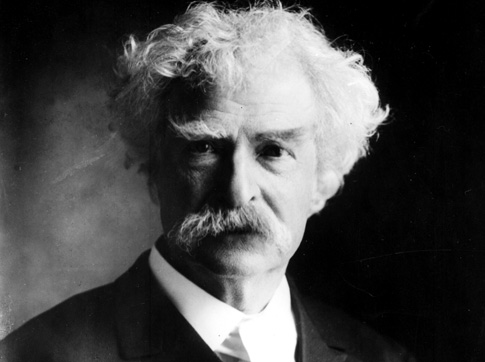



 In the early fall of 2014, I traveled from my home in Oslo, Norway, through much of Eastern and Central Europe. Everywhere I went in those two months, moments after locals realized I was an American the questions started and, polite as they usually were, most of them had a single underlying theme: Have Americans gone over the edge? Are you crazy? Please explain.
 Learning from Dogs