Category: Finance

More about consumer protection for financial products.

Many ideas are more complex that we appreciate.

One of the great bonuses in being part of the author group of Learning from Dogs is that we are all having to dig in deeper on issues than we might otherwise do.  Part of the weakness of our modern busy lives is that we run the risk of forming or reinforcing opinions ‘on the fly’.  The modern media tends towards this approach.  But on a Blog that strives to write about integrity it behoves us all to be more careful about what is correct if, indeed, there is a correct answer.

John Lewis first posed the idea of whether financial products should be regulated in terms of consumer safety, like your toaster!  Sherry Jarrell then replied to that as a comment which was worth being made a separate Post.  That Post then attracted comments and, again, in amongst them was another detailed reply from Sherry that has been made the subject of this Post.  As implied, many of today’s issues are far too important to be left to the headline writers.  Here’s Sherry:

Read more of Sherry’s views on this topic

Sherry responds to John

A Post published today by John Lewis raises the question of why not consumer protection for financial ‘products.

Sherry’s reply.

A great question, John: why do we not have a threshold level of safety for financial products, as we do with cars and toys?

Well, for one, if a financial product “fails,” the consequence is purely financial – it is not injury or death.  A financial product simply represents a financial investment today in exchange for financial payoffs tomorrow.

The less certain those payoffs, the higher the minimum required return on that investment. If the returns were certified or regulated in some way, risk would be reduced, and the required return would also fall.  Limiting risk exposure throws out the baby with the bath water:  less risk means lower returns on the investment.  Look at the real returns to U.S. Treasury Bills – they are almost zero!

There is a role for regulation in financial products and that is for disclosure of relevant information.  When we invest in a financial product, we are putting our money at risk in exchange for future expected cash flows.  We forecast those cash flows on the basis of material information about the firm, its products or services, and its management and strategy.

Even here there is a fine line between the right to know and proprietary information that enables a firm to invest its own funds in the hope of generating a large return in exchange for taking risks.

The Securities and Exchange Commission’s requirement for a 20-day window between the time a bidder makes a tender offer for a target and the time the target shareholders must decide whether to accept the offer or not is an example of a regulation that crosses the line, in my view.

In a misguided attempt to protect shareholders from fly-by-night tender offers, the SEC has created an environment where multiple competing bids can arise, driving down the return to the original bidder and limiting the incentives for firms to productively redeploy assets through tender offers.

By Sherry Jarrell

Zombie Stocks: Not for the faint of heart

Prof. Sherry Jarrell in the news

A news release by Wake Forest University has been picked up by at least one publication. It reads as follows:
Two weeks before Halloween, the Securities and Exchange Commission again warned investors against buying shares of bankrupt companies, but like those creatures in horror films that rise from the dead, so-called “zombie” stocks–shares of companies that failed during the financial crisis–are still on the march.zombies
Take, for example, Washington Mutual and Lehman Brothers. At the end of last year, their stocks traded at 2 cents and 3 cents per share, respectively. With no future earnings in sight, shares of Washington Mutual recently traded around 20 cents, and Lehman Brothers shares have hovered around 15 cents–spectacular gains fueled by what many consider nothing more than gambling.

Critics have called on the SEC to halt the trading of such stocks to protect unsophisticated investors who might be lured into unwise trades. But Professor Sherry Jarrell, who teaches a graduate-level class on investments and portfolio management in the Wake Forest University Schools of Business, disagrees.

While Jarrell doesn’t think investing in zombie stocks is a sure-fire profitable strategy, she doesn’t consider it gambling either, because there is an expectation of gain. Jarrell also doesn’t believe those who are trading zombie stocks are ignorant or unsophisticated. Jarrell says:

To outlaw these stocks means that you’ve truncated an avenue for people to express their different risk preferences. If someone wants to go on that haunted trail, let them. It’s not like they’re taking advantage of people on the other side of the trade.

Washington Mutual and Lehman Brothers lost their standing to be listed on stock exchanges, so traders have to keep up with prices through a quotation service known as the Over the Counter Bulletin Board, which unsophisticated investors are unlikely to access. Other troubled companies, such as Fannie Mae, Freddie Mac and AIG, whose shares are widely considered to be zombie stocks, are still listed on major exchanges. The federal government’s own backing of those companies weakens any argument against allowing individuals to invest in them, if they dare.

One project Jarrell assigns her students is to identify a publicly traded stock they believe the market has significantly mispriced. By definition, she says, the exercise requires the same calculation made by traders of zombie stocks–reaching a different conclusion about a stock’s future cash flows and risks than that of the market.

Jarrell points out that all investments carry a degree of risk proportional to potential returns, and investors have varying tolerances for risk. Some hide from risk; others seek it out.

She recalls a study some years ago that found striking similarities in the blood chemistry of day traders on Wall Street and jet fighter pilots. “It turns out they need a certain amount of danger to feel normal,” Jarrell says. “They seek risk in order to feel comfortable.”

By Sherry Jarrell

Consumer ‘safety’ for financial products

Are we missing a lesson that has been applied for years?

I have resisted any temptation to comment on the economic situation on Learning from Dogs. The contributions from others are based on far more knowledge and understanding of the subject then I will ever have.

However, I feel obliged to ask humbly for some clarification about something that bothers me. Are we putting the cart before the horse? Are we ignoring the relationship between provider and consumer in finance?

The regulatory regime applied to the vast majority of products which are allowed to be sold to the public is such that toasterthere are probably more stringent safety standards for an electric toaster than for most, if not all, financial products!

Much of the talk of regulation and restraint, in the current climate, seems to relate to remuneration of people working for financial organisations. But, why does it matter what they receive? In other fields, success is rewarded and the shareholders, admittedly fairly indirectly, have some say on the policy in that area. Why should they not pay what they wish?

On the other hand (to coin an economic phrase!),  the minimum standards of the products are set by regulators.

In other fields, if a supplier cannot demonstrate, to the satisfaction of the regulators, that its product meets specified safety standards, then that product is not allowed to be offered.

It is very simple! I am not referring to contracts, customer service, compensation and so on; I am referring to a threshold level of safety below which the product is not allowed to be sold or operated. Think: “cars”, “aeroplanes”, “electrical appliances”, “children’s toys”, and … well anything else!

To be even clearer, this is not about “perfect safety” which is, of course, not available at any price. This is not about blame. This is not about guarantees. It IS about inspection, testing, certification, regulation … oh and policing!

Can anyone explain why this approach cannot be applied to financial products? (Sherry attempts to here.)

By John Lewis

p.s. as chance would have it the image of the toaster at the head of this Post was taken from an article talking about a recall of the Viking Toaster – point made rather well, don’t you think?

More truth about this crisis

“Never in the field of financial endeavour has so much money been owed by so few to so many. And, one might add, so far with little real reform.”

Thus spoke Mervyn King, governor of the Bank of England, on Tuesday night, 20th October, to a group of Scottish

Mervyn King
Mervyn King

business people.  Echoing one of Churchill’s many famous sayings, Governor King is probably one of the highest ranking people around to state, at last, what everyone on the Clapham Omnibus (a London bus route) knows to be obvious.  Whether the forces can build to a point where common sense is applied by Governments before we enter another Great Depression is another matter.

Mention of the Great Depression (the last one) triggers a step back in time.

On June 16th 1933 Franklin Roosevelt signed into law the Glass-Steagall Act.  In fact that was the second Act signed

Senator Carter Glass
Carter Glass

into law, the first Act was passed by Congress in February 1932 and was largely designed to stop deflation.  The second Act was, in a sense, much more important because it set out to prevent bank holding companies from owning other financial institutions.  It was repealed on November 12th, 1999 by the Gramm-Leach-Bliley Act. Just a little under 10 years ago.  10 years which have seen the biggest boom-bust probably ever in modern history.  And has much of the Western world slipping into another great depression.

US Senator Carter Glass and US Congressman Henry B. Steagall must be turning in their graves

Steagall
Henry Steagall

But thank goodness for investigative journalism and the role of the Internet in creating a truly open ‘meeting place’.

Read more about this Post

Janet Tavakoli on Warren Buffet

The following is reproduced in full from the TSF website and is reprinted with the permission of Tavakoli Structured Finance, Inc.

It’s a fascinating tale about Warren Buffet in the midst of all the financial turmoil.  And in case you think that Tavakoli Finance is run by the grey suit brigade …

Janet Tavakoli
Janet Tavakoli

Read Tavakoli’s article about Buffet

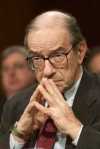
Greenspan being quite remarkable!

Fingers crossed this becomes a key political statement.

I am indebted to Baseline Scenario for drawing my attention to a recent article in Bloomberg.  Greenspan is voicing what many regard as so obvious we wonder why the present US Government haven’t been pushing for this for some time. (And if you want the answer to that question, read this)

Anyway, in the Bloomberg story Greenspan says:

“If they’re too big to fail, they’re too big,” Greenspan said today. “In 1911 we broke up Standard Oil — so what happened? The individual parts became more valuable than the whole. Maybe that’s what we need to do.”

Breathtaking!

And Greenspan goes on to say:

“Failure is an integral part, a necessary part of a market system,” he said. “If you start focusing on those greenspanwho should be shrinking, it undermines growing standards of living and can even bring them down.”

Amen to that!

By Paul Handover

Insulting us, postscript

Just a few figures that underline reality.

US rent indexes declined in September. Last time this happened was 1992.

US Consumer Price Index fell 1.3%, year on year, in September 2009. Note that it bottomed at -2.1% y/y in July 2009, making it the largest annual contraction since 1949.

September’s US food prices fell (-0.2%) in September, the first annual decline in over 40 years.

US industrial production, as of August, was down (-10.7%) compared to August 2008.

Just a US problem?

Japanese industrial production, as of August, was down (-22.7%) compared to August 2008.

Britain’s industrial production, as of August, was down (-9.3%) compared to August 2008.

Eurozone area industrial production, as of August, was down (-15.9%) compared to August 2008.

Meanwhile the banks steam ahead reporting huge profits ……

Crazy world!

By Paul Handover

Cash for Clunkers program a failure

The law of unintended consequences

It should come as no surprise to anyone that U.S. car companies are slumping once again.  The Cash for Clunkers program was a wasteful, inefficient publicity stunt or, worse, an actual attempt by the US Federal Government to stimulate the economy.  The worse part is that the program cost the economy jobs: many healthy, profitable dealerships had their company taken away from them by government edict under this program, never to return.  It’s almost criminal.

By Sherry Jarrell

The truth about this crisis – and it isn’t pretty!

The coincidence of events

Today started like most days in that after a breakfast with Jean it was time to switch on the PC and review the news that had come in over night and think about what material might be appropriate for the Blog.  But that’s as far as it went for a normal day.

Because a number of items came together in a way that left me reeling.  Not because it was necessarily new information but because together they represent the most compelling evidence as to why this economic crisis happened and, more importantly, the terrible likelihood that our leaders aren’t go to fix it and that the future will bring an even worse calamity.

Read more about this critically important subject