Category: Environment

The future of food.

Eating oil!

Yesterday’s introduction to today’s essay was predominantly the film made by Rebecca Hosking investigating how to transform her family’s farm in Devon into a low-energy farm for the future.  Rebecca discovering, unsurprisingly, that nature holds the key.

The film highlighted the degree to which our modern system of food production and distribution is dependent on oil.  I am sure that Jean and I were far from alone in not fully appreciating just how much oil is used in agriculture.  Let’s start with the UK.

Following the oil crisis in 1973, a book was published in 1978 by B.M. Green under the title of Eating Oil (1). In 2005, Norman Church wrote an essay over at the website 321energy.com in which he referred to that book.  Here’s some of what he wrote.

The aim of the book [Eating Oil] was to investigate the extent to which food supply in industrialised countries relied on fossil fuels. In the summer of 2000 the degree of dependence on oil in the UK food system was demonstrated once again when protestors blockaded oil refineries and fuel distribution depots. The fuel crises disrupted the distribution of food and industry leaders warned that their stores would be out of food within days. The lessons of 1973 have not been heeded.

Today the food system is even more reliant on cheap crude oil. Virtually all of the processes in the modern food system are now dependent upon this finite resource, which is nearing its depletion phase.

church040205

The article is a ‘must-read’ for anyone who wants to understand better the approaching crisis and the madness of present behaviours.  Take this, for example (my emphasis):

One indicator of the unsustainability of the contemporary food system is the ratio of energy outputs – the energy content of a food product (calories) – to the energy inputs.

The latter is all the energy consumed in producing, processing, packaging and distributing that product. The energy ratio (energy out/energy in) in agriculture has decreased from being close to 100 for traditional pre-industrial societies to less than 1 in most cases in the present food system, as energy inputs, mainly in the form of fossil fuels, have gradually increased.

However, transport energy consumption is also significant, and if included in these ratios would mean that the ratio would decrease further. For example, when iceberg lettuce is imported to the UK from the USA by plane, the energy ratio is only 0.00786. In other words 127 calories of energy (aviation fuel) are needed to transport 1 calorie of lettuce across the Atlantic. If the energy consumed during lettuce cultivation, packaging, refrigeration, distribution in the UK and shopping by car was included, the energy needed would be even higher. Similarly, 97 calories of transport energy are needed to import 1 calorie of asparagus by plane from Chile, and 66 units of energy are consumed when flying 1 unit of carrot energy from South Africa.

Just how energy inefficient the food system is can be seen in the crazy case of the Swedish tomato ketchup. Researchers at the Swedish Institute for Food and Biotechnology analysed the production of tomato ketchup (2). The study considered the production of inputs to agriculture, tomato cultivation and conversion to tomato paste (in Italy), the processing and packaging of the paste and other ingredients into tomato ketchup in Sweden and the retail and storage of the final product. All this involved more than 52 transport and process stages.

References:

1: Green, B. M., 1978. Eating Oil – Energy Use in Food Production. Westview Press, Boulder, CO. 1978.
2: Andersson, K. Ohlsson, P and Olsson, P. 1996, Life Cycle Assessment of Tomato Ketchup. The Swedish Institute for Food and Biotechnology, Gothenburg.

But, surprise, surprise, it’s no different here in the USA!

Dale Allen Pfeiffer
Dale Allen Pfeiffer

Dale Allen Pfeiffer‘s (1) book Eating Fossil Fuels: Oil, Food and the Coming Crisis in Agriculture makes it clear (my emphasis):

The miracle of the Green Revolution was made possible by cheap fossil fuels to supply crops with artificial fertilizer, pesticides, and irrigation. Estimates of the net energy balance of agriculture in the United States show that ten calories of hydrocarbon energy are required to produce one calorie of food. Such an imbalance cannot continue in a world of diminishing hydrocarbon resources.

References:

1: Dale Allen Pfeiffer is a geologist and writer from Michigan, U.S. who has investigated and written about energy depletion and potential future resource wars.

Over at The Wolf at the Door British website (1) author Paul Thompson, another Devonian, offered this article about peak oil and farming (and 1 hectare is 2.47 acres):

AGRICULTURE

When we think of the problems associated with peak oil, our first thoughts may turn to transport, electricity, or plastics. The use that tends not to come to mind, yet could be the most devastating of them all, is agriculture.

The Diesel Farm

tractor

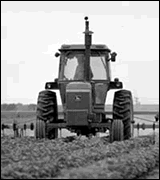
Tractor Oil and gas are essential to modern farming. The most obvious use is to run the tractors and machines. Car drivers can switch to public transport, lorries can move their goods (partially, at least) to railways, but the only option for a tractor or combine harvester is a horse or an ox. Clearly modern agriculture could not switch to an animal-power-based system and hope to continue with modern yields. A tractor can plough in an hour an area that a horse would take a day to (0.9–1 hectare). The horse also needs more skill and you have to put aside some of your crop to feed it. Imagine trying to gather the harvests of the vast fields of maize and wheat of the USA using only horse- and human-power.

But diesel is only one of the uses for oil and gas. Another, possibly more important use, is petrochemicals.

Petrochemicals

Nitrogen is one of the most important elements in fertilisers. In the most common method, the Haber-Bosch process, hydrogen is combined with nitrogen to form ammonia. It requires high temperatures and strong atmospheric pressure, therefore a great deal of energy. The nitrogen is taken from the atmosphere while the hydrogen is obtained from natural gas. The process became economical in the 1920s and since then, fertilisers have become indispensable. Worldwide use of commercial fertiliser more than doubled between the late 1960s and early 1980s.

The use of fertilisers allows farmers to grow the same crops each year, rather than rotating (previously farmers planted fields with legumes that restored nitrogen to the soil.)

Oil and gas are also used in the production of many herbicides and pesticides.
References:

1: There is a note from Paul on the home page, “I created this site several years ago and do not have the time any longer to keep it updated. Therefore you will find that the data is only relevant up to around 2006 and some of the links will no longer be correct. However the principles of peak oil still apply and I have left the site online as a useful introduction to the problem that hasn’t gone away.

Alright! That’s enough to upset anyone!

Thankfully, there are a number of positive moves going on all over the world and tomorrow I will conclude the essay with details of those positive happenings!

In the meantime, think about what you eat!

The future of food – introduction.

How food and carbon-based energy are irresistibly woven together.

Farm-for-Future

Jean and I watched this BBC Nature programme the other evening.  Not directly from the BBC but because it has been uploaded to YouTube and thence was promoted on Top Documentary Films.

The film is 48-minutes long and, frankly, there’s not much point in reading the rest of the post until you have viewed the film!

Wildlife film maker Rebecca Hosking investigates how to transform her family’s farm in Devon into a low energy farm for the future, and discovers that nature holds the key.

With her father close to retirement, Rebecca returns to her family’s wildlife-friendly farm in Devon, to become the next generation to farm the land. But last year’s high fuel prices were a wake-up call for Rebecca. Realising that all food production in the UK is completely dependent on abundant cheap fossil fuel, particularly oil, she sets out to discover just how secure this oil supply is.

Alarmed by the answers, she explores ways of farming without using fossil fuel. With the help of pioneering farmers and growers, Rebecca learns that it is actually nature that holds the key to farming in a low-energy future.

Nature holds the key!

So, rather than tempt you to read on and not watch the film, that’s all you are getting for today! 😉

Settle yourself down somewhere comfortable and watch the film.

Trust me, it will open your eyes!

My main essay follows tomorrow!

Not seeing the wood for the trees!

A postscript to the last two days.

This week is taking on a life of it’s own, so far as Learning from Dogs is concerned!

For when I penned Monday’s post, Running on Empty, I had not yet read George Monbiot’s essay Are We Bothered?. When I did so, it struck me as the perfect sequel to Monday’s post and formed the crux of yesterday’s post The nature of delusions.  That second post also included a personal account of my delusion with regard to ocean sailing and seemed sufficiently wordy not to be extended by my further reflections.

Thus the decision to run over to a third day!

Let me offer, first of all, my own reflections to George Monbiot’s concerns. That I distill, using his words, to: “The more we consume, the less we care about the living planet.” Expanded in his concluding paragraph:

So the perennially low level of concern, which flickers upwards momentarily when disaster strikes, then slumps back into the customary stupor, is an almost inevitable result of a society that has become restructured around shopping, fashion, celebrity and an obsession with money. How we break the circle and wake people out of this dreamworld is the question that all those who love the living planet should address. There will be no easy answers.

When I first read Mr. Monbiot’s essay, I found myself nodding in agreement. Yet, upon further reflection, I became less sure that “a society that has become restructured around shopping, fashion, celebrity and an obsession with money.” was the core of the issue.  I think it is a symptom.

Stay with me awhile I take a small deviation. To dogs, and other animals.

Many creatures have a powerful and instinctive means of assessing danger.  One only needs to observe the wild black-tailed deer that frequent our property to know that the slightest hint of danger or the unknown has them dashing away to safety.

A young black-tailed deer seen at home last September.

Dogs are the same in that they will run early on from a danger.

Humans also have the propensity to be cautious about a clear and present danger.  However, it’s my proposition that when the danger is unclear and when that danger threatens the very essence of who we are and the world that we have constructed around us, we can be blind to the point of madness. I can think of many examples in support of that thesis and I’m sure you can too.

Yes, we have “a society that has become restructured around shopping, fashion, celebrity and an obsession with money.” But I contend only because of the power of capitalism, of the power of modern marketing and advertising and the allure of being ‘one of the crowd’.

So back to my proposition.  It is this.

That when our lives are threatened by something unclear, complex and, ultimately, of devastating impact, we are very reluctant to embrace it and even more reluctant to both embrace it and escape to safety; whatever the latter implies.

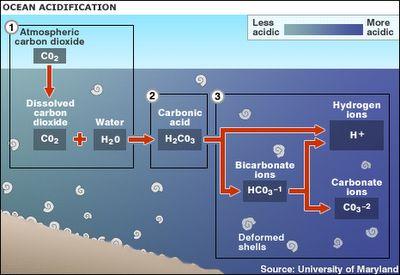
Mankind’s effect on the environment, the rising CO2 levels in the atmosphere, the increasing acidification of the oceans, the growing concerns about global weather, and on and on, are the most unclear, the most complex and the most devastating of futures to embrace.

(Thanks to Patrice for using this recently.)
(Thanks to Patrice for referring to this recently.)

So it really is no surprise to see mankind in general behaving as though this is a bit of a hangover, and an aspirin and a good night’s sleep will sort it! Especially when there is so much money and control invested in selling the same message; the message that there really is nothing to worry about.

There will be a so-called ‘tipping point’. A point in our awareness where the urgency to prevent the destruction of the biosphere will be paramount. And it will be a miracle if when that point arrives it isn’t far too late to save us.

I truly hope that I am wrong.

oooo

Remember what I wrote in yesterday’s post? About experiencing an Atlantic gale?

Fewer than 48-hours before my estimate of coming into Horta Marina on the Azores island of Faial, Songbird of Kent was struck by an early, fierce Winter gale. I seem to recall it was touching Force 10 Beaufort Scale (54 – 63 mph or 48 – 55 knots).

Anyway, it just about finished me off: literally as well as psychologically! I was so frightened, so utterly scared that I could think of nothing else other than getting to Horta and never going sailing again.

It revealed my delusion!

That was my ‘tipping point’ when it came to ocean sailing.

The gale subsided and I motor-sailed the 150-odd miles to Horta without any break for sleep or rest. Came into the harbour early in the morning after the second night since the gale. As soon as I was securely berthed, I closed the boat up and found a local hotel where a hot shower and a clean bed could restore a part of me.

Within a week, I had engaged a crew to sail the boat to Plymouth in South-West England and I flew back to England on a commercial airline.

Once Songbird of Kent arrived at Plymouth, she was put up for sale at a price that wouldn’t delay matters and that was that!

Oh, and I have never read any more books about single-handed ocean sailing. (But see my P.S.!)

oooo

P.S.

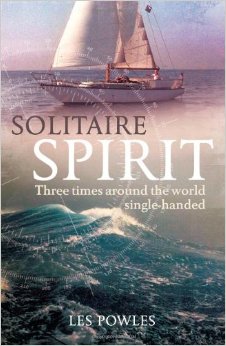
In yesterday’s post, I referred to Les Powells. Remember when I was in Larnaca, Cyprus? This is what I wrote:

Living on a boat close to me was Les Powles. Many will not have heard of Les but this quiet, softly-spoken man knows a thing or two about solo ocean sailing. As an article in The Guardian newspaper explained (in part):

In the 1980s and 90s a British man called Les Powles sailed three times round the world – always single-handedly, once non-stop. He couldn’t afford a radio transmitter, and on his greatest adventure he didn’t speak to anyone for 329 days. At 84, his ­circumnavigating days are now behind him, but he still lives on his boat, the Solitaire. What’s the ­appeal of sailing, I asked him. “It’s the solitude. When you’re out at sea on your own, there’s no government or bankers to worry about. You’re not ­responsible to anyone but yourself.”

Three times around the world – solo!

Thus getting to know Les was a great inspiration in getting me over the hurdle of can I really do this! (Les once said to me “the first three days are the worst!”)

Anyway, I have discovered that Les is living happily on his boat in Lymington, England and has written a book about his sailing life.

Les Powells book

It has been ordered and arrives today. This one will be read – from the comfort and safety of our rural home in Oregon!

Running on empty!

Is it just me?

It is my usual pattern to awake around 5am, sit upright in bed and browse the latest news on my tablet computer. Jean sleeps on most times next to me.

Thus it was last Friday morning that I am sitting in bed reading the latest goings on around the world.

But, unusually, that morning’s wanderings left a bleak mark on me. See if you feel the same way when I share the stories that I read.

From Naked Capitalism.

The Tragedy of the Soma Mine-Workers: A Crime of Peripheral Capitalism Unleashed

Posted on May 16, 2014 by Yves Smith

Yves here. This post explains how the horrific mine explosion in Western Turkey, which has officially claimed nearly 300 lives as the death count continues to rise, was not an accident but the direct result of privatization and circumvention of safety standards. And unlike the West, where industrial and mining accidents are met with short-term sympathy but little if any real change in working conditions, protests have broken out, not just in the mine town of Soma but also in major cities. As Mark Ames has pointed out, American has airbrushed out much of the history of labor’s struggles for safe workplaces and better pay. Violence against efforts to organize workers was common. Henry Ford had a private army of thugs for just this purpose. The tragedy in Turkey should serve as a reminder of what has been won, and how fragile those gains are.

By Erinç Yeldan, Dean of the faculty of Economics and Administrative Sciences, Yasar University and an executive directors of the International Development Economics Associates. Cross posted from Triple Crisis

One of the greatest work-crimes in mining industry occurred in Soma, a little mining village in Western Turkey. At noon-time on Tuesday, May 13, according to witnesses, an electrical fault triggered a transformer to explode causing a large fire in the mine, releasing carbon monoxide and gaseous fumes. (The official cause of the “accident” was still unknown, at this writing, after nearly 30 hours.) Around 800 miners were trapped 2 km underground and 4 km from the exit. At this point, the death toll has already reached 245, with reports of another 100 workers remaining in the mine, yet unreached.

Turkey has possibly the worst safety record in terms of mining accidents and explosions in Europe and the third worst in the world. Since the right-wing Justice and Development Party (AKP) assumed power in 2002, and up to 2011, a 40% increase in work-related accidents has been reported. The death toll from these accidents reached more than 11,000.

(Read the rest here.)

From the BBC News website:

In just over five years Britain will have run out of oil, coal and gas, researchers have warned.

A report by the Global Sustainability Institute said shortages would increase dependency on Norway, Qatar and Russia.

There should be a “Europe-wide drive” towards wind, tidal, solar and other sources of renewable power, the institute’s Prof Victor Anderson said.

The government says complete energy independence is unnecessary, says BBC environment analyst Roger Harrabin.

The report says Russia has more than 50 years of oil, more than 100 years of gas and more than 500 years of coal left, on current consumption.

‘Decisive action’

By contrast, Britain has just 5.2 years of oil, 4.5 years of coal and three years of its own gas remaining.

France fares even worse, according to the report, with less than year to go before it runs out of all three fossil fuels.

(Read the rest here)

Again from Naked Capitalism:

UK Survey Finds High Levels of Depression and Desperation Among the Young

Posted on May 16, 2014 by Yves Smith

If you’ve been keeping half an eye on economic news, the UK has of late been looking pretty spiffy relative to its advanced economy peers, with 2014 growth forecast at 3%. Even though unemployment in the UK is at its lowest level in five years, the young and the long-term unemployed haven’t benefitted to the same degree.

One issue that doesn’t get the attention that it merits is the destructive psychological impact of being out of work. Work doesn’t just provide money, as critical as that is. It provides a way of organizing your time, social interaction, and a place in society, even if that place is not really where you’d like to be. Being unanchored is extremely taxing. Recall that the Japanese get people to quit by giving them a desk and nothing to do. The lack of legitimacy, the implicit shaming of being isolated is sufficiently punitive as to induce workers to give up their pay and being able to tell their families they have a job.

The BBC reports on the results of a survey by the Prince’s Trust called the Macquarie Youth Index, which is based on a survey of roughly 2200 16 to 25 year olds. 13% were what the survey called Neet: not in employment, education, or training.

I will return to the terrible implications of this report after I declare a past interest.  Before I left England in 2008, I was an active volunteer with the Prince’s Trust. My years of being associated with the Trust taught me that helping young persons discover their strengths, enable them to maintain and defend a positive self-image, and offer them real hope for their future lives, was and is the most important role of society; without doubt!

Now back to that report:

The survey found high levels of suicidal thoughts and self harm among this group, and high levels of stress among the young generally. Key excerpts from the article:

The report found 9% of all respondents agreed with the statement: “I have nothing to live for”…

Among those respondents classified as Neet, the percentage of those agreeing with the statement rose to 21%.

The research found that long-term unemployed young people were more than twice as likely as their peers to have been prescribed anti-depressants.

One in three (32%) had contemplated suicide, while one in four (24%) had self-harmed.

The report found 40% of jobless young people had faced symptoms of mental illness, including suicidal thoughts, feelings of self-loathing and panic attacks, as a direct result of unemployment.

Three quarters of long-term unemployed young people (72%) did not have someone to confide in, the study found.

Martina Milburn, chief executive of the Prince’s Trust, said: “Unemployment is proven to cause devastating, long-lasting mental health problems among young people.

(Read the full report here and the BBC report here.)

Then there was the report from the NASA study team that key glaciers in West Antarctica are in an irreversible retreat. First seen by me on the BBC News website, from where the following photograph was taken.

Thwaites Glacier is a huge ice stream draining into the Amundsen Bay.

To really understand the message that Planet Earth is sending out to us humans, I would recommend reading Antarctica’s Glaciers Disintegrating over on Patrice Ayme’s blog.  Here’s how Patrice finishes that essay:

We imparted acceleration to the biosphere. We are pushing the biosphere around. And we know that the force we are applying is only augmenting. That means the acceleration, and even more the speed of the change, is going to get worse quick. That’s basic dynamics, first quarter of undergraduate physics.

Of course, neither the leaders of France, Great Britain, or the USA has taken such a course: they are basically ignoramuses at the helm (and Angela Merkel, who knows plenty of physics, made a risky bet she seems to be losing).

Clearly, we should instead apply the brakes to the maximum (instead of flooring the accelerator). What would be the price of this cautious? None, for common people: hard work to de-carbonize the world economy would require dozens of millions to be employed that way, in the West alone.

That, of course, is a scary thought for plutocrats, who much prefer us unemployed, impotent, and despondent.

Patrice Aymé

All of this is sending out a message. The message that if we are not very, very careful this could be the end-game for human civilisation on this Planet.

But do you know what really puzzles me?

It’s that this message is increasingly one that meets with nods of approval and words of agreement from more and more people that one sees going about one’s normal life.  Perhaps, because there’s more and more reporting from a wider and wider range of sources. Like The Permaculture Research Institute website recently publishing This Collapse is a ‘Crisis of Bigness’.  Like Grist publishing Walmart is the last place Obama should be making a clean energy speech.

Like Ian Welsh publishing Equal Rights to Profit from Impoverishing People and Causing a Great Extinction Event. Like Patrice in an essay last Friday about the way in which Main Stream Media is Manipulated. Viz:

Main Stream Media (MSM) has been the instrument of control of the People ever since there were oligarchies. It used to be about temples and priests, now it’s more about controlling papers, radio, TV, and the Internet.

and later on:

This crudeness, and vigilance of censorship by the owners [of the New York Times], is why the Obamas, Clintons, Krugmans, and Stiglitzs have to be careful. After all, they are just employees enjoying the perks of the system. Yes, they don’t own it. Ownership is everything. If the servants want to keep on thriving, those “leaders” will have to please the owners. So they “lead” where the real owners are willing us all, the herd, to be led.

Patrice rounds his essay off, thus:

The plutocracy focuses on direct control of the world imperial system, and that means controlling the giants (especially the three military leaders of the West). This is where the propaganda is the thickest.

The New York Times is considered to be the “newspaper of record” in the USA. However, the bottom line is that this is the third century during which it is owned and controlled by a particular family. How can these two elements be compatible? Why is that particular family “of record”?

Even in the Middle Ages, the most absolute kings there were, those of France, actually owned relatively little property. Francois I himself may have worn expensive clothes, but Italian bankers paid for his trips around France. Francois I did not own the media of the time.

What we have now is different. We have an ascending plutocracy that tries to grab the minds ever more. What Putin is doing in Russia is just a particular case, part of a whole.

Hopefully, people will see through this, and get their news from somewhere else than plutocratically owned media, thus bankrupting the MSM (the Internet can support journalists directly: see the successful Mediapart in France).

But I haven’t answered my earlier rhetorical question.  “But do you know what really puzzles me?” Implying that a growing number of people sense there is a problem with today’s world.

That question will be answered tomorrow. Do please return.

Picture parade forty-four.

The final set of Bob’s adorable bird photographs.

(First set here, second set is here; last week’s set here.)

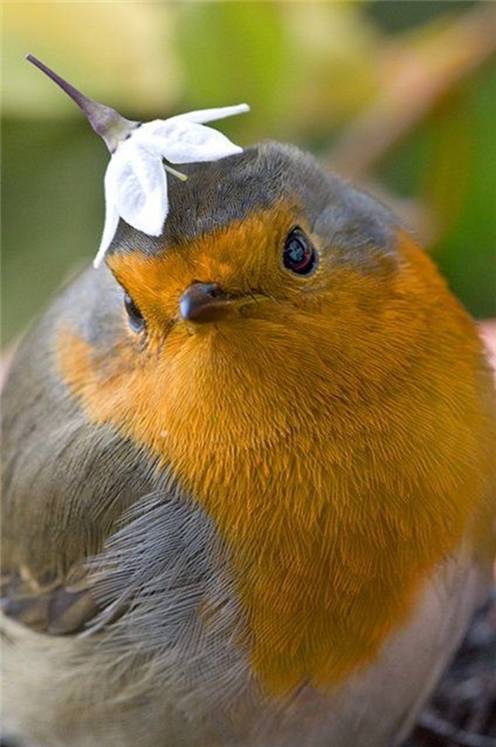
No, the brown part is not me, it is my “floatie cushion”.

oooo

bird25
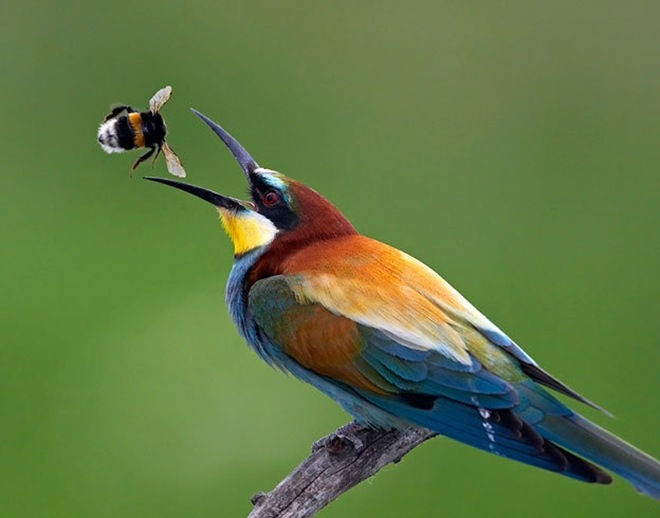
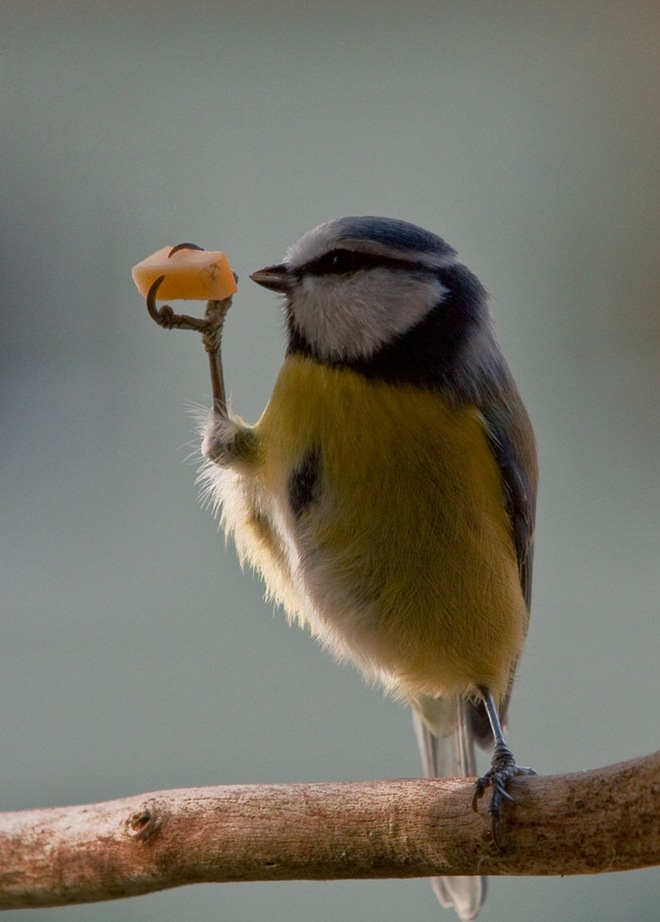
What an attractive hors d’oeuvre!

oooo

Were you eating blackberries when you sneezed on my wing?

oooo

Hey, don't blame me, my mother was a Cardinal and my father was a Magpie.
Hey, don’t blame me, my mother was a Cardinal and my father was a Magpie.

oooo

Oh WOW, what a hoot. You really bought the bit about us being wise?

oooo

Oh how I hate it when it itches there!

oooo

Really? My mother flew south without me?

oooo

You all have a good week!

Progressing Wisdom – the essay.

What is wisdom?

On May 11th, Patrice Ayme published an essay entitled Science: Progressing Wisdom.  I found it deeply engaging. At the same time, I was frustrated because there was a part of me that wanted to know more about “Patrice”.

For some time, I had known that Patrice Ayme was a nom-de-plume and that his, or her, identity was carefully protected. Still that part of me that wanted to relate to the real person, for want of a better description, still wouldn’t quieten down.  I offered the following comment:

Patrice, you have demonstrated an amazing breadth of knowledge across your many essays. However, I did wonder if you would be happy to declare your educational experience? As in your specialisation at a degree or Doctorate level (I suspect you do hold a PhD!)? Best wishes, Paul

Patrice’s reply, which you are encouraged to read in full, opened, thus:

You are so funny, Paul! You have an Obsession-Compulsion about “qualifications”.

One of my main ideas, idea #956, is that the authority principle is severely abused. People with Philosophiae Doctor have nothing sacred about them. Goebbels had one (in humanities).

Do you think Goebbels’ authority in humanities is to be “declared”? There were even not just PhDs, but Nobel Laureates, who became Nazis, BEFORE Hitler (who had been sent to spy on them).

No doubt Hitler, a simple caporal, and gifted painter (he lived off it), was super-impressed when he met some of the most educated people in the world, and they were Nazis… Full of PhDs.

One should not confuse the message’s content and her bearer.

This site is about learning to think better. That’s why I go back to the basics.

The idea that, say, those with PhDs is Idionomics, are the only ones qualified to speak about idiocy, is, well, idiotic.

Another reader of Patrice’s essay, gmax, said this, in part:

You have to learn to judge knowledge, not just follow oligarchs like a bleating sheep to learn what’s true and what is not.

That really made me sit up and think! For the first time in my life (I’m 70 later this year), I realised that my own ragged educational experience, as offered yesterday, had left in its wake a personal insecurity over my education, and a consequential weakness in evaluating knowledge with me somehow needing to know the identity of anonymous authors. When Patrice wrote, “Please do not hesitate to make it a post, Paul! I was thinking of it myself, but, as it is, right now, I don’t seem to have the time.“, I couldn’t resist.

Here is my essay.

ooOOoo

Wisdom, knowledge and authority.

Abstract: Wisdom requires clarity of knowledge; no more and no less.

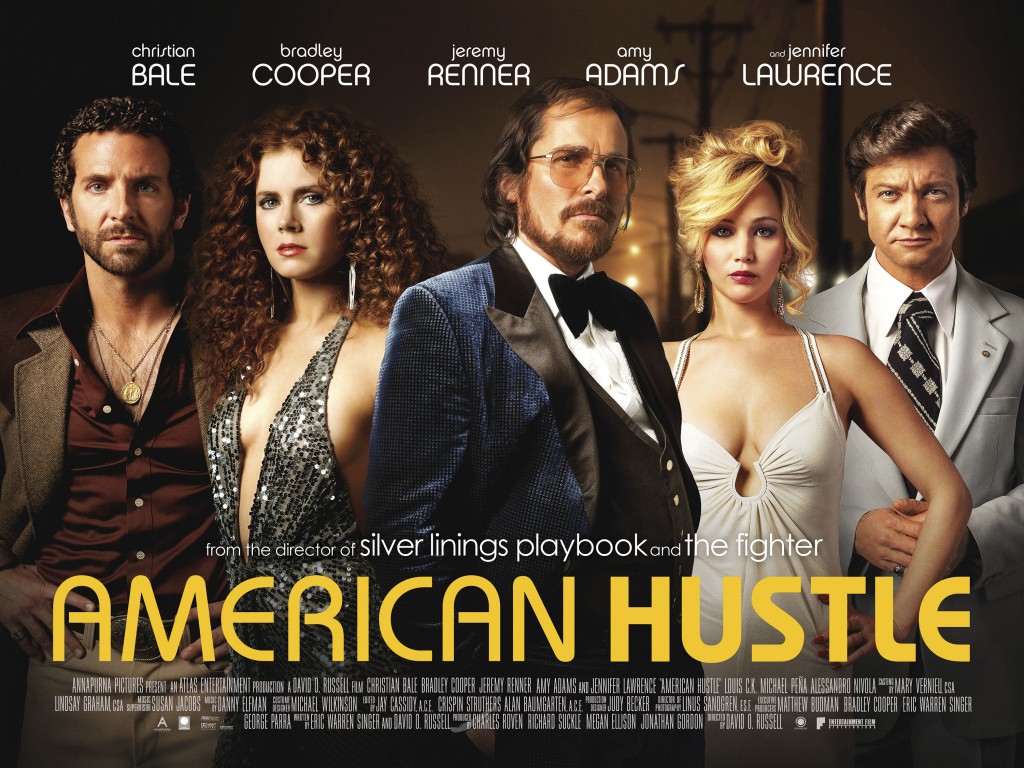
On Tuesday evening, Jean and I rented a movie.  We watched the film American Hustle.

american-hustle-poster
The film tells the story of brilliant con man Irving Rosenfeld, who along with his equally cunning and seductive British partner Sydney Prosser is forced to work for a wild FBI agent Richie DiMaso. DiMaso pushes them into a world of Jersey powerbrokers and mafia that’s as dangerous as it is enchanting. Jeremy Renner is Carmine Polito, the passionate, volatile, New Jersey political operator caught between the con-artists and Feds. Irving’s unpredictable wife Rosalyn could be the one to pull the thread that brings the entire world crashing down.

The film has received rave reviews (here’s a typical one in the Guardian newspaper) and was fun to watch; albeit somewhat confusing for much of the first half. At one point towards the end, the hero of the film, Irving Rosenfeld, reflects that, “People see and hear what they want to believe!“.

Bingo!

That is the challenge about accruing wisdom. How to be analytical and wise in learning new thinking and new ideas. In other words, in acquiring knowledge!

If the subject is simple (well on the surface!) as, for example, the effect of the Earth’s gravitational field then that’s fine and dandy.  It’s easy to become wise to the fact that falling off a tall building is likely to kill you.

But take an extremely complex, and highly current matter, that of Planet Earth’s changing climate, and it is extremely difficult for the average person without a scientific background to determine the truth.  Really, when I use the phrase “to determine the truth” in the context of this essay I should have written ‘to gain knowledge‘.

To illustrate that, my good Californian friend of more than 35 years, Dan Gomez, is highly sceptical about climate change as a product of man’s activities.  Recently, I sent him an email with a link to the NBC News report: American Doomsday: White House Warns of Climate CatastrophesThis was Dan’s email reply:

Think about it, Paul.

1. Consider the source and the timing of these new headlines i.e. the left-thinking Obama regime and current unfavorable political challenges.
2. A deflection from mainline issues confronting us today i.e., jobs, economy, healthcare, upcoming elections, Benghazi and IRS political issues.
3. Major opportunity to raise taxes unilaterally without Congress involved.
4. Major opportunity to redistribute corporate wealth from private sector to public sector.
5. Refocus of competitive, free-market energy sector to controlled renewables managed by a few very wealthy political contributors. A lot of money at stake.
6. Man, is empowered via a political party to “save the world” by changing the Weather. The only problem is, there is no solution, no global will and no participants to make anything significant happen i.e., China, Southeast Asia and another billion people scattered about.
7. Euro Zone and USA have already cut CO2 emissions by over 30% each to no avail. In fact, they say it is getting worse after hundreds of billions of dollars already diverted from private sector to public sector with no results. They are now asking for trillions.
8. Average person is not willing to give up his car, nor spend more for battery power (peel back the onion on the battery manufacturing and recycling industry vis a vis CO2 contributions). Much fewer cars, trains, tractors, jets, etc. to make anything work. Sacrifice begins at home.
9. Cows vent 20 times the CO2 emissions in the form of methane than man-made artifacts.  Just saying….
10. Check out the bacteria challenge facing Man. This will help put priorities in order for you.

As always, follow the money and you’ll get your answers…..

I am unable to respond to Dan in an analytical and precise manner. I am not sufficiently knowledgeable to so do. Having an emotional response is fine – but it does not advance my personal wisdom.

On the 6th May, I posted an item that featured a TED Talk by scientist Gavin Schmidt, a climate scientist no less.  His view is that, “You can’t understand climate change in pieces. It’s the whole, or it’s nothing.”  The TED Talk explains how the big picture of climate change illustrates the endlessly complex interactions of small-scale environmental events.

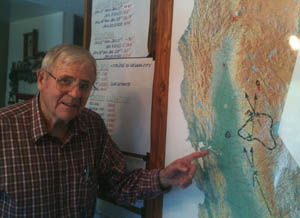
Just a few days ago, Jean and I had the pleasure of a couple of hours at the home of Leon Hunsaker, renowned meteorologist who has claimed that the 1862 Californian flood could happen again.

Leon Hunsaker has done the math, and he thinks Sacramento isn’t prepared for another series of storms like the ones that hit the state in January 1862.

Leon lives less than 5 minutes from us here in Southern Oregon. I asked him what he thought of climate change and he said that the planet’s atmosphere was like a large chocolate cake and man’s activities were no more than the icing on the cake.

So there you are: a range of opinions about this particular, potentially very important, subject. Although in my own (emotional) mind the weight of evidence is in favour of the argument that man is having a deepening and worsening effect on our planet.

Take, for example, the report issued yesterday about significant melting of Antarctica’s glaciers now unstoppable. (Patrice has just released an informative post on the subject!)

People see and hear what they want to believe!” comes immediately back to mind. Dan wants to believe that the planet is going through normal cycles of change.  I want to believe that mankind can make a difference; for the sake of my children and grandson.

Let me turn to the subject of anonymous authors, my Obsession-Compulsion about qualifications!

I have admitted the flaw in my thinking. Here’s the rationale for my change of opinion.

Just two days ago, Tom Engelhardt published his latest TomDispatch, a guest essay by Glenn Greenwald coinciding with the publication of Greenwald’s new book, No Place to Hide: Edward Snowden, the NSA, and the U.S. Security State. In that essay, Glenn Greenwald says:

On December 1, 2012, I received my first communication from Edward Snowden, although I had no idea at the time that it was from him.

The contact came in the form of an email from someone calling himself Cincinnatus, a reference to Lucius Quinctius Cincinnatus, the Roman farmer who, in the fifth century BC, was appointed dictator of Rome to defend the city against attack. He is most remembered for what he did after vanquishing Rome’s enemies: he immediately and voluntarily gave up political power and returned to farming life. Hailed as a “model of civic virtue,” Cincinnatus has become a symbol of the use of political power in the public interest and the worth of limiting or even relinquishing individual power for the greater good.

The world now knows what Glenn Greenwald (and Laura Poitras, the documentary filmmaker) knew long before.  That Snowden’s anonymity was critically important in the run-up to his knowledge being made widely known.

I was convinced. What is important is not the name and identity of the author of knowledge.  What is important is the knowledge itself. No one would deny Snowden’s right to privacy. Indeed, millions of us would opt for email privacy if we fully realised the ease and extent with which our emails, indeed our communications in general, can be intercepted.

Many know that Patrice is a frequent, outspoken voice about the dangers of plutocracy and the slip-sliding away of democracy in the United States. His, or her, personal safety is the highest need of all. Patrice has a perfect right to privacy.

Which leads on to the final, obvious question. If we do not know the identity of the author of knowledge then how can we be certain that the knowledge is valid?

Answer: Through testing!

Of course!

In the best traditions of research, especially scientific research, testing the validity of a claim is the only certain way of determining the validity of knowledge; of being able to derive wisdom from that knowledge.

Let me give you a clear example.

Commercial aviation is incredibly safe. Many countries operate an equivalent to the UK’s Air Accidents Investigation Branch. That UK AAIB website proclaims:

The purpose of the AAIB is:

To improve aviation safety by determining the causes of air accidents and serious incidents and making safety recommendations intended to prevent recurrence
…It is not to apportion blame or liability.

Keith Conradi, Chief Inspector

Critical to that purpose of improving safety (aka improving knowledge) is looking for trends. Any trends or patterns would be impossible to discover without testing and debate.

Thus what makes aviation safer is no different to what makes all of knowledge reliable: the testing of ideas and of the hypotheses behind those ideas. The identity of the author of those ideas, per se, is irrelevant.

Thus it is clear to me, clear now beyond doubt, that wisdom is the application of knowledge disconnected from the person who is the author of that knowledge. One might see it as a marriage of knowledge and intellect. Nothing more and nothing less!

All aspects of wisdom depend on trust, on the confidence that the knowledge is ‘reliable‘. Reliability gained from debate and testing.

Never forgetting that in the final analysis, as Patrice wrote it:

“Nature is the only authority worth respecting always.”

ooOOoo

In every which way that one can imagine, we have to return to the principles of fairness and balance so beautifully demonstrated to man by the breadth of Nature.  We have to embrace Nature’s wisdom.

In other words, we have to learn from dogs!

Picture parade forty-three.

Yet more of Bob’s fabulous bird photographs.

Carrying on from last week’s Picture parade forty-two.

Yeh, well your eyes would get big too if someone had their fuzzy hands all over your bod!

oooo

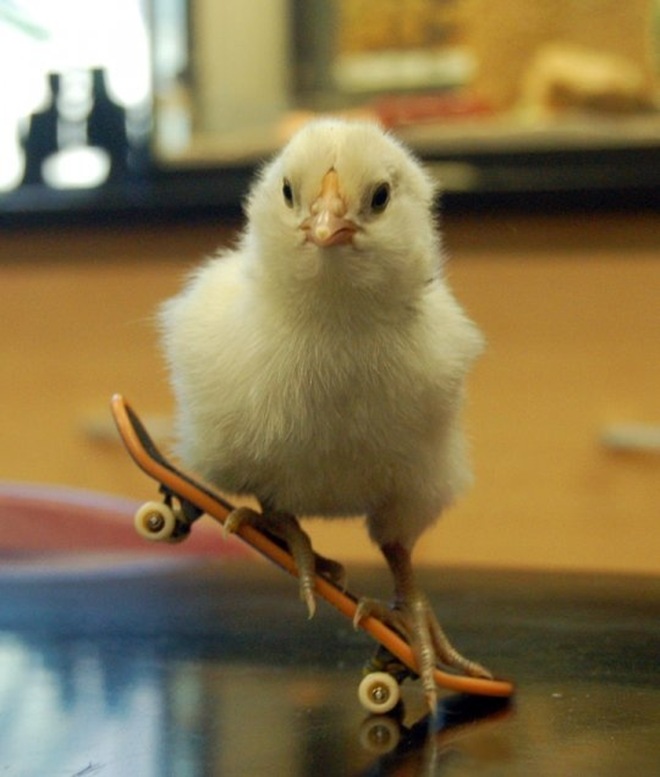
Which way did you say it was to the Xtreme Games?

oooo

With this disguise, they'll never figure out who robbed their nest!
With this disguise, they’ll never figure out who robbed their nest!

oooo

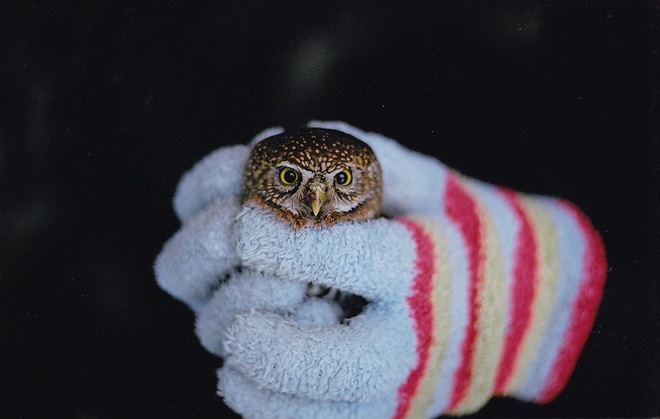
The doctor said it wasn't malignant but I think I'll get a second opinion.
The doctor said it wasn’t malignant but I think I’ll get a second opinion.

oooo

So sorry to have to ask all of you to help but I really do need that contact I dropped.

oooo

Don't look at me like that, haven't you ever heard of Santa Bird?
Don’t look at me like that, haven’t you ever heard of Santa Bird?

oooo

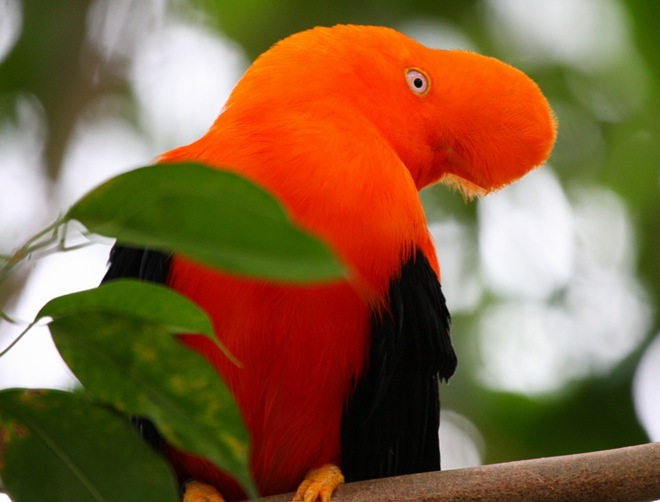
Oh, how I love government handouts!!

oooo

The final set of these fabulous photographs next Sunday.


It’s all in the eyes!

What makes a dog a dog and a wolf a wolf?

I can’t recall why it was many months ago that I came across the website of Frontiers in Science. But I did and, in particular, I came across a fundamental difference between the two species.  In an article entitled: A simple reason for a big difference: wolves do not look back at humans, but dogs do. I’m going to take a chance, as in not having formal permission to republish it, in reposting it in full here.  Because it means so much to me and other dog lovers!

ooOOoo

A simple reason for a big difference: wolves do not look back at humans, but dogs do.

Adám Miklósi, Enikö Kubinyi, József Topál, Márta Gácsi, Zsófia Virányi and Vilmos Csányi
Department of Ethology, Eötvös University, Budapest, Pázmány P. 1c, 1117, Hungary. miklosa@ludens.elte.hu

The present investigations were undertaken to compare interspecific communicative abilities of dogs and wolves, which were socialized to humans at comparable levels. The first study demonstrated that socialized wolves were able to locate the place of hidden food indicated by the touching and, to some extent, pointing cues provided by the familiar human experimenter, but their performance remained inferior to that of dogs. In the second study, we have found that, after undergoing training to solve a simple manipulation task, dogs that are faced with an insoluble version of the same problem look/gaze at the human, while socialized wolves do not. Based on these observations, we suggest that the key difference between dog and wolf behavior is the dogs’ ability to look at the human’s face. Since looking behavior has an important function in initializing and maintaining communicative interaction in human communication systems, we suppose that by positive feedback processes (both evolutionary and ontogenetically) the readiness of dogs to look at the human face has lead to complex forms of dog-human communication that cannot be achieved in wolves even after extended socialization.

ooOOoo

Actually, that article from the Department of Ethology at Eötvös University in Budapest is just an excuse for me to post three photographs confirming the good scientists results!

Young Cleo, May 12th, 2012.

oooo

Mr Pharaoh's look from June, 2007.
Mr Pharaoh’s look from June, 2007.

oooo

The second Cleo look from May, 2012.

oooo

There’s no question in my mind that millions of dog lovers across the world know the intimacy that is conveyed in a dog’s eyes!

Prediction is easy ….

…. unless it involves the future!

There was a recent TED Talk that really made me sit up and think.  Before I introduce the talk, let me offer a personal view.  I’m speaking about the changing nature of the Earth’s climate.

On balance I believe that the climate of our planet is changing and, again on balance, I believe that mankind’s activities especially with regard to CO2 emissions are the primary cause.

But here’s the rub! I’m not a scientist.

So when scientist Gavin Schmidt, a climate scientist no less, recently gave a twelve-minute TED Talk about the complexity of Planet Earth’s climate I found it compelling.

Here is is.

Published on May 1, 2014
You can’t understand climate change in pieces, says climate scientist Gavin Schmidt. It’s the whole, or it’s nothing. In this illuminating talk, he explains how he studies the big picture of climate change with mesmerizing models that illustrate the endlessly complex interactions of small-scale environmental events.

Then just two days later, on May 3rd, Alex Jones, he of the blog The Liberated Way, posted Unpredictable nature, that I have the pleasure in republishing in full.  Read it and then reflect on Alex’s post and the talk given by Gavin Schmidt.

ooOOoo

Unpredictable nature

Posted on May 3, 2014
Nature is always full of surprises.

Amber the fox reflects the unpredictable face of nature showing up in my garden by surprise on random days.

I went camping and woke to frost on the ground. I wrote yesterday that summer had arrived in Britain. A pool of water from recent rains had frozen over.

One thing you quickly learn about nature is its unpredictability. Everything in nature has its own free will, and will determine its own unpredictable path regardless of what humanity thinks. Those that are able to let go of control enjoy a nature full of surprises.

ooOOoo

Thanks to the modern-day internet, it takes only a moment to find a relevant quotation to close today’s post.

It is always wise to look ahead, but difficult to look further than you can see.Sir Winston Churchill.

Picture parade forty-two

More of Bob’s beautiful bird photographs!

For those of you that missed the first set a week ago, then they are here.  To the twenty-seven of you who ‘Liked’ last Sunday’s set; thank you.

Bird9
But Honey, what makes you think I had a little too much at the office party?

oooo

I would have sworn the package said Swiss.

oooo

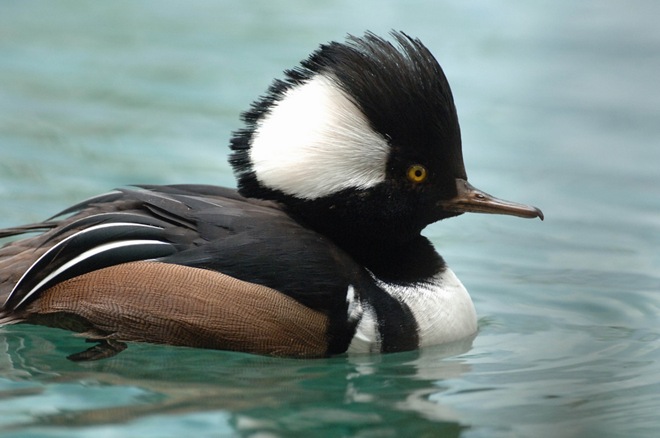
Hello, are you the photographer from Vogue?

oooo

Wow! That was one very elusive fish!

oooo

You idiot, don't you know you are supposed to pass on the left?
You idiot, don’t you know you are supposed to pass on the left?

oooo

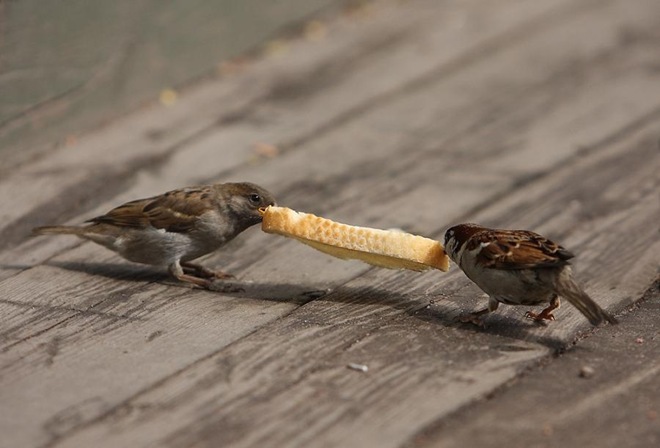
No, I didn't read the part in the Bible about breaking bread together so just let go.
No, I didn’t read the part in the Bible about breaking bread together so just let go.

oooo

OK girls, I think we are ready for "Dancing With The Birds".
OK girls, I think we are ready for “Dancing With The Birds”.

oooo

Come on Willard, quit acting like an NFL defensive back!

oooo

Yet more stunning bird photographs in a week’s time.

Again, thanks Bob.