Category: Environment

A Letter to the Moon

We live on such a fragile planet!

The idea of writing a letter to the moon is not a new one and it came to me when listening to an item yesterday morning, Pacific Time, broadcast by the BBC on Radio 4. The item was the news that Elon Musk has announced that:

Elon Musk’s company SpaceX has unveiled the first private passenger it plans to fly around the Moon.

Japanese billionaire and online fashion tycoon Yusaku Maezawa, 42, announced: “I choose to go to the Moon.”

The mission is planned for 2023, and would be the first lunar journey by humans since 1972.

So here is that letter!

ooOOoo

Dear Mr Moon,

I cannot believe how quickly the years roll by!

Who would have thought that yesterday, the 18th of September, 2018, was the anniversary of the day in September, 1977 when:

On September 18, 1977, as it headed toward the outer solar system, Voyager 1 looked back and acquired a stunning image of our Earth and moon.

You will surely remember that first image taken of the Planet Earth and your good self in the same frame.

Here is the 1st-ever photo of the Earth and moon in a single frame. Voyager 1 took the photo on September 18, 1977, when it was 7.25 million miles (11.66 million km) from Earth. Image Number: PIA00013 via NASA/JPL.

Now here we are some 41 years later and, my, how things have changed.

But something, dear Mr. Moon, has never changed for you. That is the sight of our most beautiful planet. Plus, I would go so far as to venture that what makes our planet such a beautiful sight, one that has captivated us humans when we have gone into space and looked back at home, is the magic of our atmosphere.

It is so thin!

Picture taken by a NASA satellite orbiting the earth some 200 miles above the planet’s surface.

So, so thin …. and so, so fragile.

It is akin to the thinness of the skin of an onion.

In fact, Mr. Moon, that layer that we earthlings call the troposphere, the layer closest to Earth’s surface varies from just 4 miles to 12 miles (7 to 20 km) thick. It contains half of our planet’s atmosphere!

Everything that sustains the life of air-breathing creatures, human and otherwise, depends on the health of this narrow layer of atmosphere above our heads. Now the thickness of that layer varies depending on the season and the temperature of the air. But let’s use an average thickness of 8 miles (say, 13 km) because I want to explore in my letter to you some comparisons.

In your infinite gaze down upon your mother planet you will have seen the arrival  of H. sapiens, out of ancestral H. erectus, that took place roughly 315,000 years ago.

You will also have seen from your lofty vantage point the growth of both CO2 levels in the planet’s atmosphere and the average land-ocean temperature. Forgive me quoting something at you, but:

OBSERVABLE CHANGES IN THE EARTH

SINCE THE INDUSTRIAL REVOLUTION

While politicians have been busy debating the merits of climate science, the physical symptoms of climate change have become increasingly apparent: since the industrial revolution, sea level has grown by 0.9 inches, the atmospheric concentration of carbon dioxide has risen to unprecedented levels, average global temperatures have increased by about 1.0 degree Celsius and, to top it off, the global population has jumped by nearly 600 percent; 15 of the 16 hottest years on record occurred in the 21st century, and 2016 is likely to be the warmest year ever recorded.

Now the Industrial Revolution was all but over back in 1840 and the last 178 years have seen an explosion in the way we use energy, in all its forms. Plus we have to accept that back then the global population was around 1 billion persons. It is now over 7 billion.

Between 1900 and 2000, the increase in world population was three times greater than during the entire previous history of humanity—an increase from 1.5 to 6.1 billion in just 100 years.

So on to my comparisons.

The radius of our beautiful planet is about 3,959 miles (6,371 km). The average thickness of the troposphere is 8 miles (13 km).

Thus the ratio of thickness of our liveable atmosphere to the radius of the planet is 8 divided by 3,959. That is a figure of 0.002! Our atmosphere is 1/1000th of the size of the radius of our planet.

Hang on that figure for a moment.

In the last 178 years humanity has transformed our consumption of energy and especially carbon-based fuels. H. sapiens has been around for 315,000 years.

Thus the ratio of these present ‘modern’ times (the last 178 years) to the arrival of us back then (315,000 years ago) is 178 divided by 315,000. That is a (rounded) figure of 0.0006. Our modern times are just 1/10,000th of the time that so-called modern man has been on this planet.

So, dear Mr. Moon, you must despair that in so short a number of years, proportionally ten times smaller than the ratio of the troposphere to the radius of our planet, we funny creatures have done so much damage to what we all depend on to stay alive – clean air!

Or maybe, my dear companion of the night sky, because you are celebrating your 4.1 billionth year of existence, what we humans are doing is all a bit of a yawn.

Sincerely,

This old Brit living in Oregon.

ooOOoo
My dear friends (and I’m now speaking to you dear reader, not the moon!) when you reflect on the fragility of our atmosphere, well the layer we depend on for life, you realise without doubt that each and every one of us must make this pledge.

“I promise to do everything possible to reduce my own personal CO2 output and to ensure that both to my near friends and my political representatives I make it clear that we must turn back – and turn back now!”

Or, as George Monbiot writes in closing a recent essay (that I am republishing tomorrow): “Defending the planet means changing the world.”
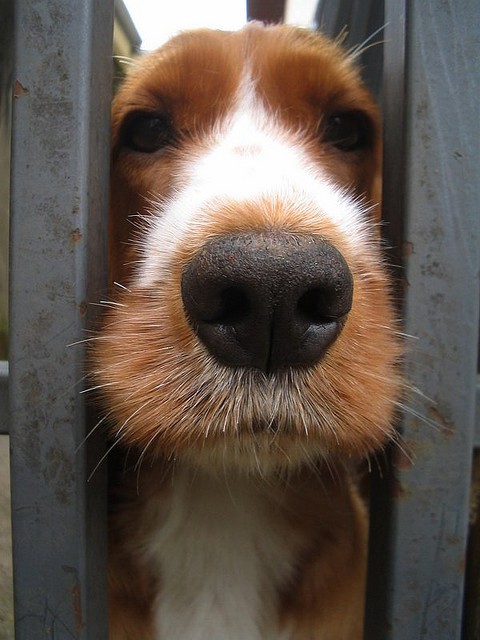
Picture Parade Two Hundred and Fifty-Six

More of those wonderful photographs sent to me by Su.

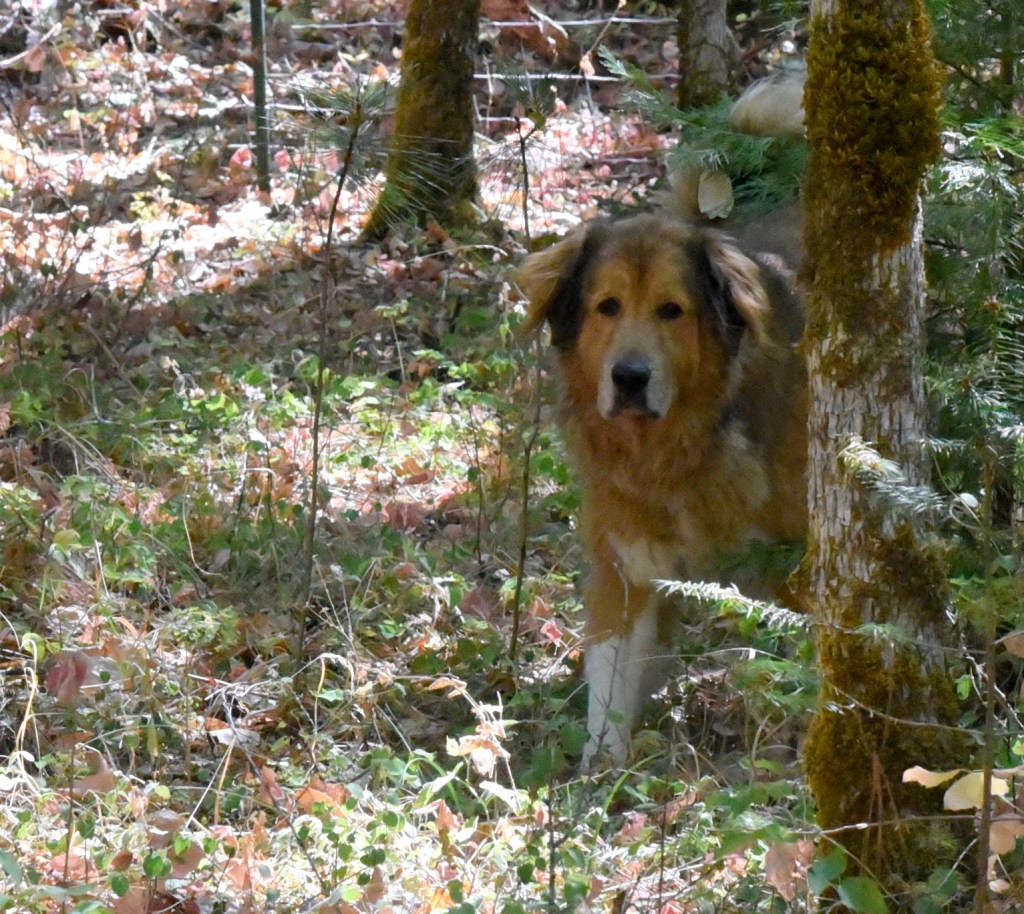
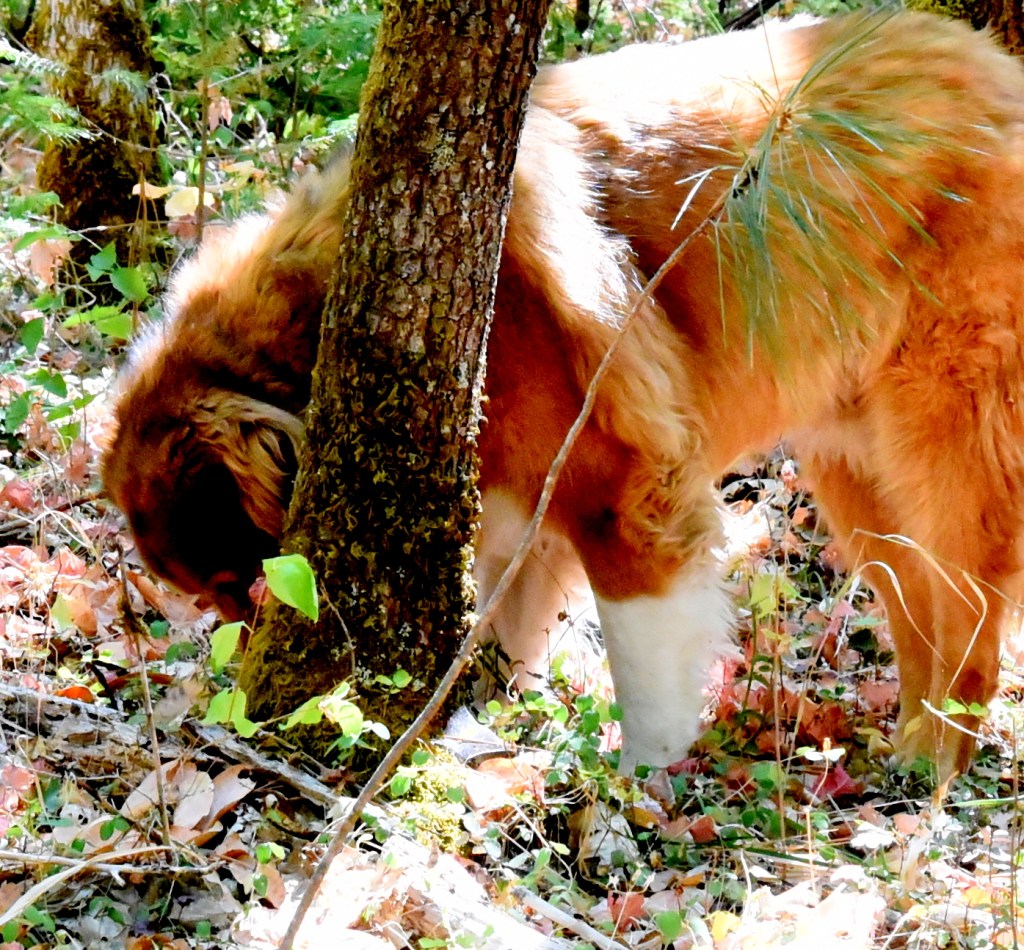
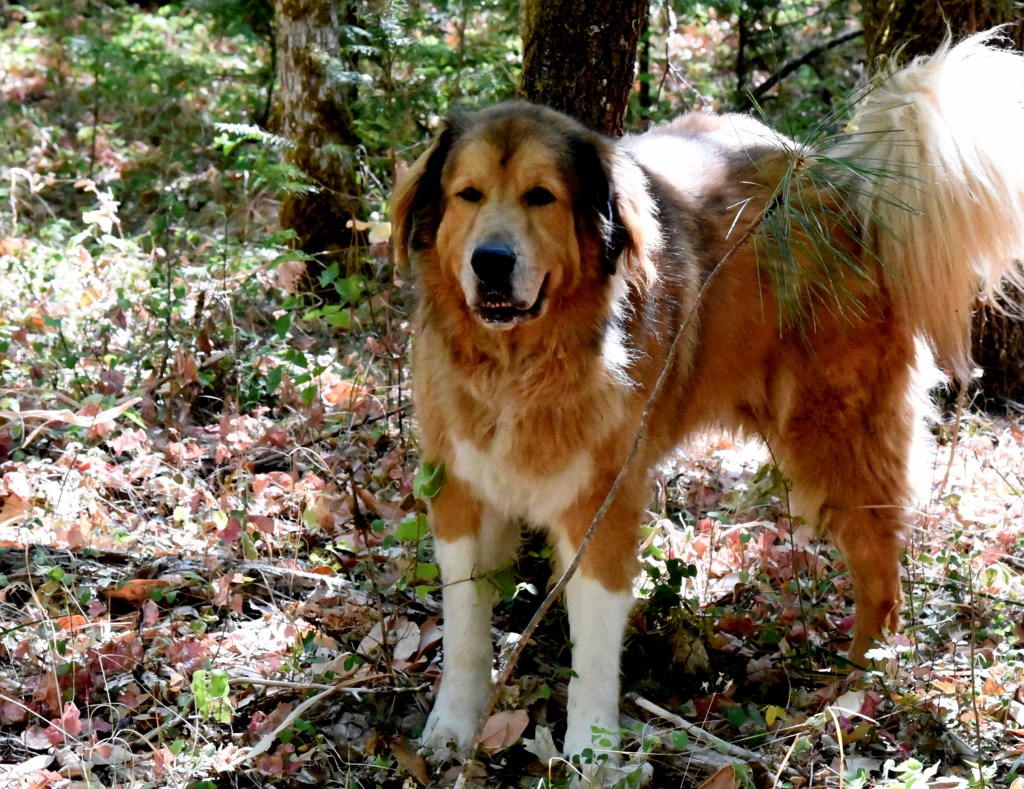
(Now moving beyond the world of dogs! But you will still love them!)

oooo

oooo

oooo

oooo

oooo

oooo

oooo

Come back in a week’s time for another set of these wonderful photos.

Thank you, Su!!

Trees and drought.

The scientific findings of how the height of trees affects their ability to cope with drought.

I subscribe to the online Physics World website and a recent article tickled my fancy. Because it was supported by what we see here at home.

That is that shorter and taller trees do not handle drought conditions as well as medium-height trees.

First the article and then some supporting evidence from home.

ooOOoo

ECOSYSTEMS
RESEARCH UPDATE

Medium-height trees survive drought best

04 Sep 2018

Courtesy iStock_MilosJokic.jpg

Forests with canopy heights of around 18 metres are more resistant to the effects of severe drought than those with shorter and taller trees, according to researchers in China and the US.

In the past, studies have disagreed on whether forests with lower or higher canopies will be more likely to make it through prolonged spells of hot, dry weather. The discrepancy has made it difficult for forest managers, who need to know which tree heights to encourage to ensure the highest growth and survival rates during extreme drought.

Study leader Peipei Xu at Beijing Normal University in China and her colleagues believe the issue is increasingly pressing. “Climate data indicate that warm areas of land are increasing, and the warmed areas are also drying,” says Chuixiang Yi at the City University of New York, US. “Hot-dry-induced forest mortality poses a significant global concern for the future as carbon dioxide continues to rise and the climate continues to warm.”

Xu, Yi and the rest of the team aimed to quantify the relationships between canopy height, growth and survival rates during drought accurately for the first time. They analysed data gathered during a severe drought in the southwestern US in 2002 that showed the effect on the ring widths of tree trunks, a useful indicator of their yearly growth. In addition, satellite data revealed how the density of vegetation changed over the course of the drought; the team used this to calculate both leaf growth and tree mortality rates.

The results revealed that trunk and leaf growth under drought conditions increased with canopy height for trees shorter than 18 metres but decreased with height for trees taller than 18 metres. “Our results indicate that both high and small trees have relatively low drought resistance,” says Yi.

After establishing these relationships, the researchers could determine the biological mechanisms governing tree growth and survival during drought.

“All organic matter in a tree is formed on the leaves at the top of the tree by photosynthesis,” Yi explains. “Tall trees have a longer water transport path from roots to leaves and [it’s] more difficult to overcome tissue resistance and … gravity, particularly under dry conditions. The roots of small trees are short, and their abilities to access water and nutrient supplies unavailable to the surface soil layer are extremely limited.”

The researchers believe that using their results to inform the active management of canopy structure could safeguard vulnerable forests. As climate models predict hotter, drier droughts becoming more commonplace, this could be essential to combat forest dieback – a phenomenon that will also drive climate change.

“Our findings provide insights into how to manage forests or plant what trees to increase forest drought resistance in facing hot-dry climate conditions to mitigate climate change,” says Yi.

The team reported the findings in Environmental Research Letters (ERL).

ooOOoo

So turning to home.

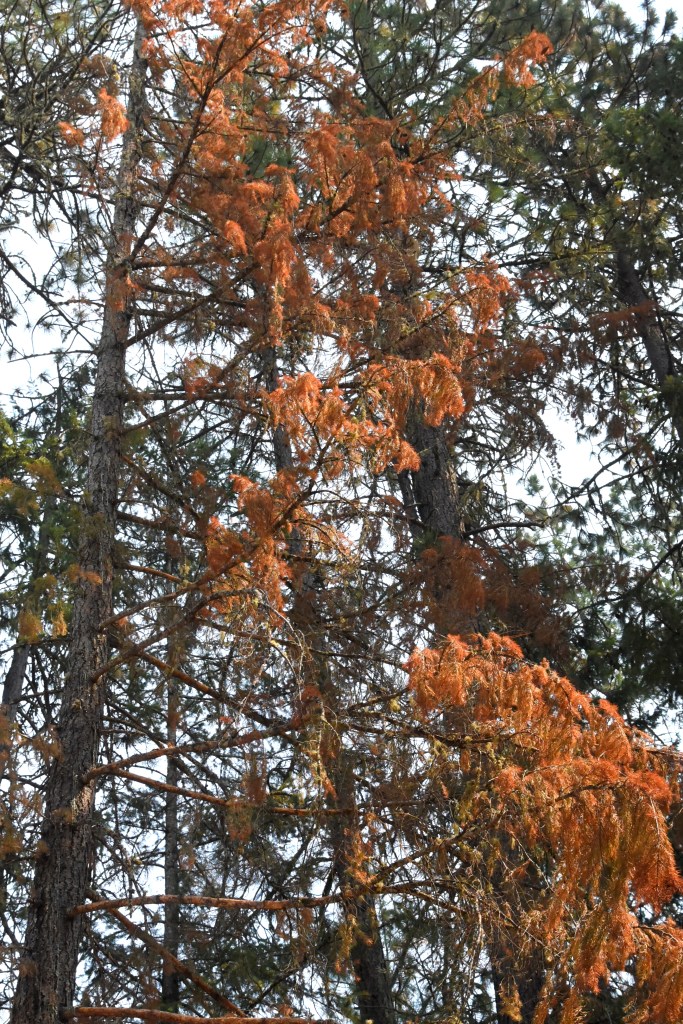
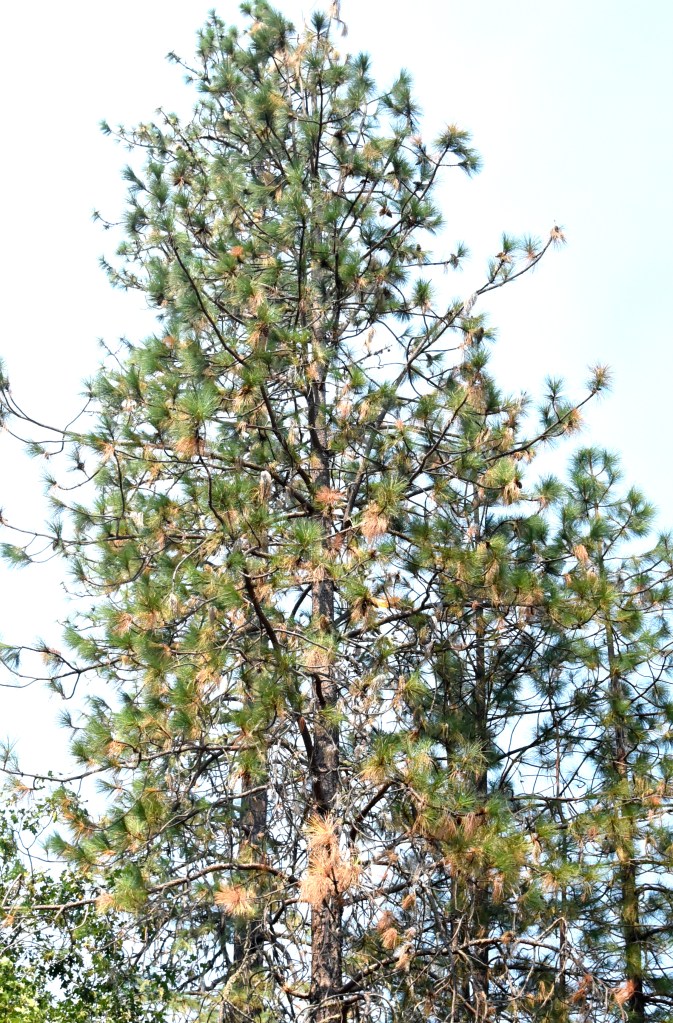
Here are a couple of photographs of tall trees to the Northern side of the house that are clearly showing some stress.

A tall fir tree that is due for removal because it is clearly dead.

oooo

Another tall tree, this time a pine, showing signs of stress.

oooo

Now in stark contrast look at the trees in the photo below. (Oh, that’s the smoky summit of Mount Sexton, elevation 3,829 ft., in the distance.)

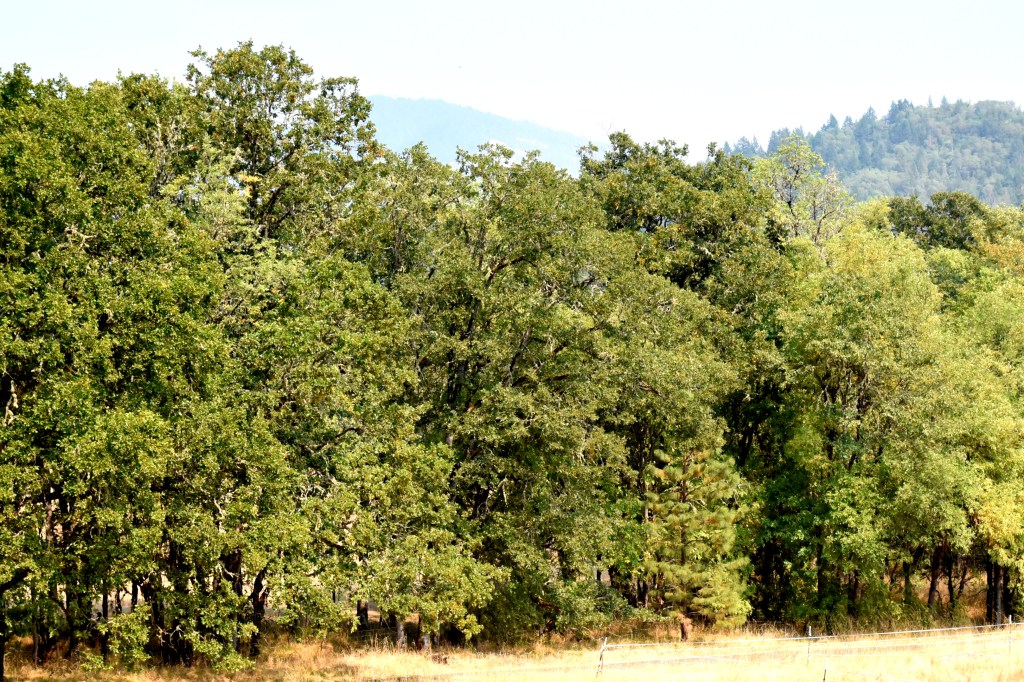
Medium-height trees that border the Northern side of our driveway from the road to the house.

As our taller trees are felled each year we are planting new young trees, two for every tree felled, in one of our grass fields.

Because it is not just Jeannie and me, and all the wild birds, who love our trees!

Do you know, I feel the need to pee!

oooo

This seems to have a good smell about it!

oooo

Ah! That’s so much better!

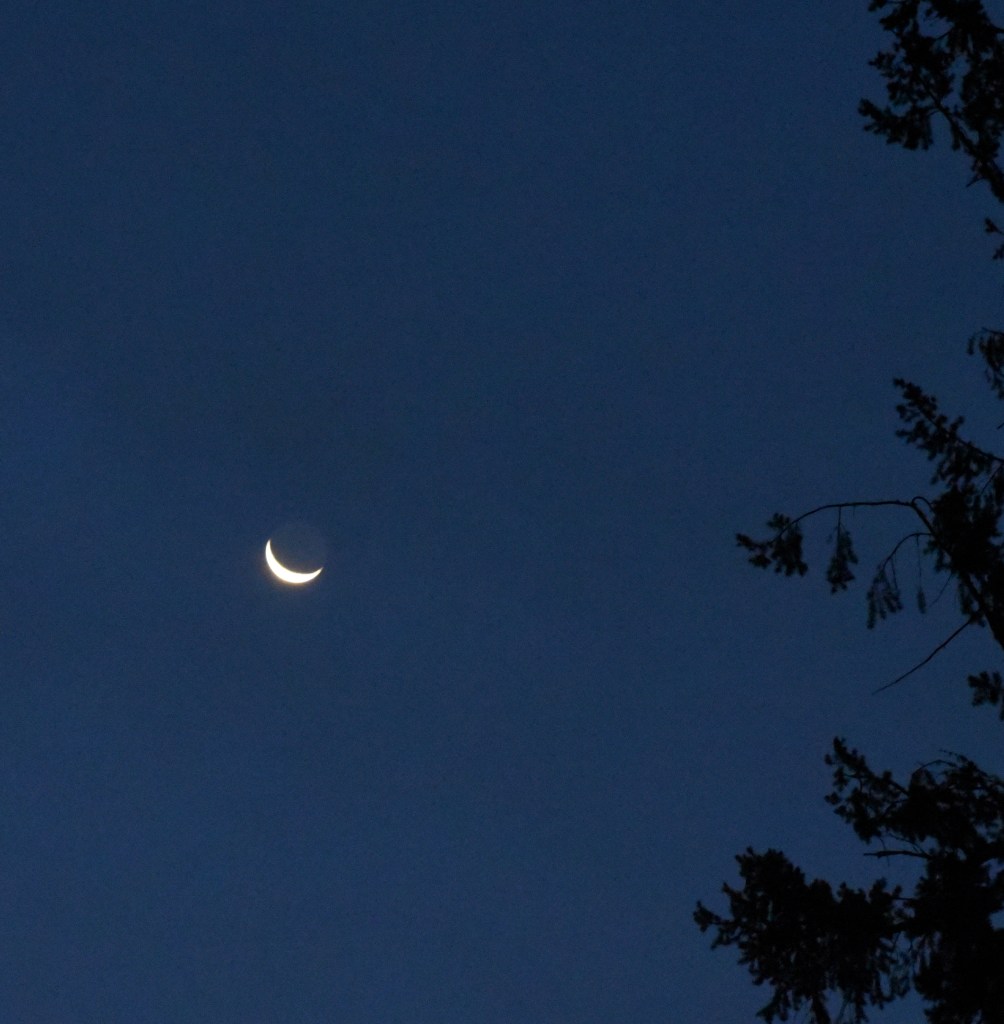
Will close with another photo with a tree in it taken a few nights ago.

We must never, ever lose our trees!

Saturday Sigh!

A sigh of relief!

Jeannie and me reacting to the last report on the Oregon Department of Forestry (ODF) Southwest website:

Hugo Road Fire FINAL Update 09/06/18

Quick Facts:

Incident Start Date: 09/02/2018 
Incident Start Time: Approx. 7:15 p.m.
Incident Type: Wildfire
Cause: Under Investigation
Incident Location: Hugo, which is roughly ten miles north-northwest of Grants Pass in Josephine County, Oregon
Land Threat: Private
Command Agency: ODF
Fire Size: 199 acres
Containment: 86%

Current Situation:This will be the final update for the Hugo Road Fire unless conditions significantly change.
Firefighters continue to boost containment on the Hugo Road Fire, now reaching 86 percent. The fire remains at 199 acres.

Overnight, crews were able to mop up 300 feet from the fire’s edge, adjacent to roadways, and surrounding the perimeter of homes. Within the mop up area, very few hot spots were found. All residences are at a Level 1 “Be Ready” evacuation notice, and will remain at such until Fire Season 2018 comes to a close, per the Josephine County Sheriff’s Office.

Local fire personnel will continue gridding the landscape for interior hot spots and conducting suppression repair throughout the next few days. It is normal to see light smoke during this process, but it is now well within the interior of the fire’s footprint which does not pose a threat to our community. There will still be fire apparatus present until the final mop up stages are complete. We encourage everyone to continue to use caution while traveling through the area.

Thank you again to every single partner agency and community member for the assistance and support throughout this firefight. It is an honor to serve and live in this community.

Evacuations:

Due to progress made by firefighters on the Hugo Road Fire all current evacuation levels are being downgraded to a Level 1 “BE READY” notice. Level 1’s will remain in effect until the end of the fire season.

For information regarding information, please contact the Josephine County Sheriff’s Office, or follow the Josephine County Emergency Management Facebook page as evacuation levels are anticipated to change shortly.

Assigned Resources:
Engines: 10
Water Tenders: 4
Helicopters: As needed
Hand Crews: 8
Dozers: 4
Total Personnel: 211
Air Tankers: As needed

All of which doesn’t negate in the slightest the fact that two homes were completely destroyed!
Or in the words of the Mail Tribune (September 3rd):
The fire was listed late Monday as 30 percent contained, but not before it destroyed two houses, 13 outbuildings two recreational vehicles and 11 vehicles, according to the Oregon Department of Forestry. Fire also damaged three other residences, two out-buildings and a vehicle, according to ODF.
It is easy to read those words and not be greatly affected by them.
But the reality of having to evacuate one’s home in a hurry and then subsequently returning to find it burnt to the ground is terrible beyond imagination. Everything lost. A wiping clean of one’s life. Having to start all over again. Dreadful, truly dreadful.
Roll on the Autumn rains!

Too close to home!

A post that involves dogs but not what I had in mind!

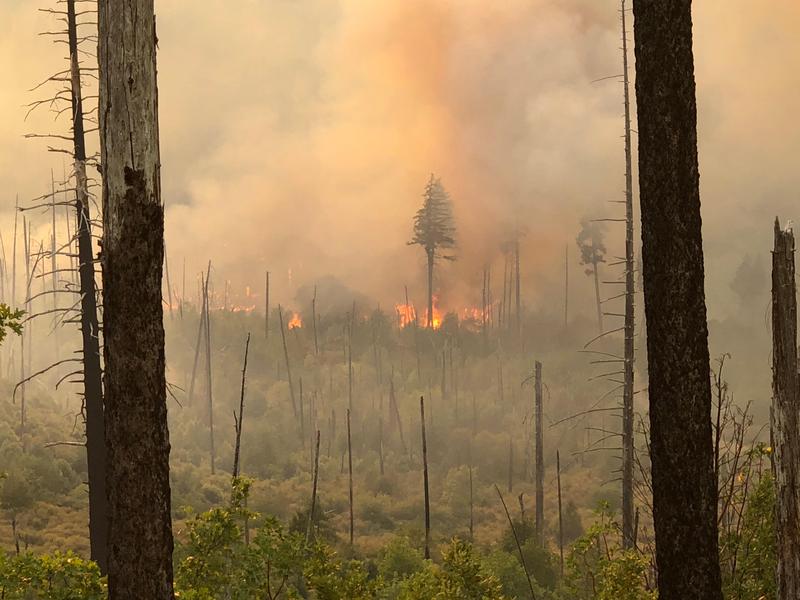
Last Saturday I published a post The burning of our forests! that included a photograph of the nearby Klondike fire.

Courtesy Jeffersen Public Radio

Then last Sunday I was speaking to Maija, my daughter back in England, and she was asking how the fires were and I distinctly recall saying: “Sweetheart, I think we are over the worst!

That same Sunday evening, around 9:45pm, in other words two evenings ago, one of our neighbours, Margo, who lives on 60 acres adjacent to the west of us, called with real alarm in her voice:

Paul, have you seen the fire that is burning just to the North-East of us?

I replied that I had not but immediately went to our deck that runs the whole Eastern length of our house. Mount Sexton is just a few miles to the North-East of us.

This is what I saw!

Taken on the 2nd September, 2018 at 21:44 PDT

Apparently, a short while previously the wind had blown down a tree that had fallen across some high-voltage power lines causing sparking that had, in turn, ignited the extremely dry grassland.

The fire was between Oxyoke Road and Three Pines Road and roughly 2 miles from us line of sight.

That explained why some thirty minutes before, in the last of the light of the setting sun, there had been a number of helicopter flights come across us en route to dropping fire retardant close by. It hadn’t occurred to me that it was an incident so close to us.

Many of us living nearby then called each other to spread the word.

Jeannie and I, in turn, drew up an evacuation checklist and started getting things ready. More importantly, getting ourselves psychologically prepared to have to vacate the property at very short notice: Jeannie and me: six dogs; two horses; two parakeets; three cats; two chickens!

Thankfully an order to evacuate did not come during the night.

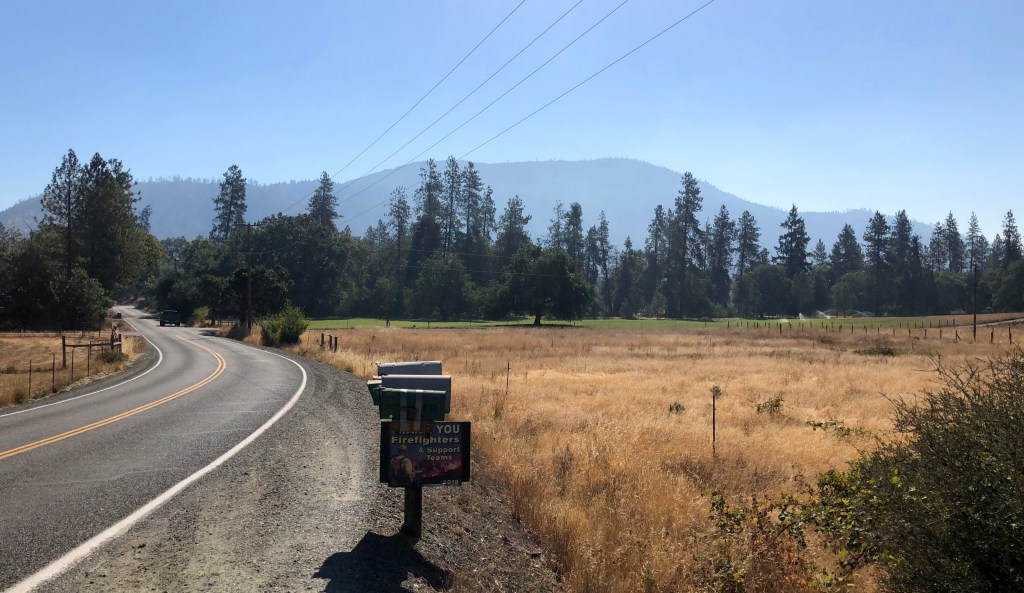
So yesterday morning I grabbed my bike and rode to Oxyoke Road. On the way I stopped to photograph the smoke in the air.

Three Pines Road looking to the East.

Once at Oxyoke Road I chatted to a search and rescue volunteer on duty controlling the traffic.

His report, as of 11:30 on September 3rd, was that the fire was just 15% contained, was “pretty active”, and that they were keeping an eye on the winds that were expected to be rather gusty later on that afternoon. I am writing this at 13:40 on the 3rd and the present winds are 6 mph, gusting 12 mph, from the North-West.

I rode back home to brief Jeannie and found her working her way through an idea for evacuating the dogs!

H’mmm! I am not sure Pedy is getting the message!

But a few words from Sweeny seemed to sort things out.

So there you are my good people, a post about dogs! Sort of!

Fingers crossed we will speak again tomorrow!

Assuming we don’t have a repeat of last night’s spectacular sights!!

Photo taken by Holmes Ariel of the Hugo Road Neighbourhood Watch group.

At least this rural living keeps one fit!

The burning of our forests!

But it is not a total wall-to-wall disaster.

The latest news is that our Klondike Fire is now burning an area larger than 100,000 acres. Or to use the words from the incident webpage(my emphasis):

The Taylor Creek and Klondike Fires were split into zones on Saturday, Aug. 18. The fires are now referred to as “Taylor Creek Fire” and “Klondike Fire East,” managed by the Northwest Incident Management Team 12 out of Lake Selmac, and “Klondike Fire West” managed by California Interagency Incident Management Team 4 out of Gold Beach. A transfer of command of the Klondike West Zone will occur at 6:00 AM Friday when the Southern Area Red Team who arrived on Wednesday will take over.

As of the morning of Aug. 30, the Taylor Creek Fire is estimated 52,839 acres and is 95 percent contained. The Klondike Fire is estimated at 100,996 acres and is 40 percent contained. There are 1,214 personnel working on the Klondike Fire and 126 personnel assigned to the Taylor Creek Fire.

Courtesy Jeffersen Public Radio

Then just over a week ago, The Conversation blogsite published a reminder that I wanted to share  with you today, under the permissions offered by The Conversation site.

ooOOoo

Many native animals and birds thrive in burned forests, research shows

By

Associate Research Professor of Biology, Pennsylvania State University

August 22nd, 2018

Interior Secretary Ryan Zinke is blaming this summer’s large-scale wildfires on environmentalists, who he contends oppose “active management” in forests.

But the idea that wildfires should be suppressed by logging the forest is far too simplistic. Most scientists agree that large hot wildfires produce many benefits for North American forests. Notably, they create essential habitat for many native species.

Fifteen years of research on Spotted Owls – a species that has played an oversized role in shaping U.S. forest management policies and practices for the past several decades – directly contradicts the argument that logging is needed to protect wildlife from fires. Wildlife biologists, including me, have shown in a string of peer-reviewed studies, that wildfires have little to no effect on Spotted Owls’ occupancy, reproduction or foraging, and even provide benefits to the owls.

Nonetheless, despite this steadily accumulating evidence, the U.S. Forest Service advocates logging in old-growth forest reserves and Spotted Owl critical habitat in the name of protecting Spotted Owls from forest fires. Zinke’s recent statements are just the latest and broadest iteration of the false viewpoint that logging benefits wildlife and their forest habitats.

Protecting Spotted Owl habitat

Spotted Owls are birds of prey that range from the Pacific Northwest to central Mexico. Because they nest in large old-growth trees and are sensitive to logging, in the 1980s they became symbols of the exceptional biodiversity found in old-growth forests.

The Northern Spotted Owl in the Pacific Northwest was listed as threatened under the Endangered Species Act in 1990. At that point, about 90 percent of U.S. old-growth forest had already been lost to logging. Every year in the 1980s the U.S. Forest Service sold about 7 to 12 billion board feet of public lands timber.

Figure 1. National forest timber sales (1905–2017). FY 1905-2017 National Summary Cut and Sold Data USDA Forest Service

Listing the owl drew attention to the dramatic decline of old-growth forest ecosystems due to 50 years of unsustainable logging practices. In response the U.S. Forest Service adopted new regulations that included fewer clearcuts, less cutting of trees over 30 inches in diameter and fewer cuts that opened up too much of the forest canopy. These policies, along with vast depletion of old-growth forests, reduced logging on Forest Service lands to about 2 billion board feet per year.

During the 1990s, national forest management policy for the Northern Spotted Owl included creating old-growth reserves and designating critical habitat where logging was restricted – mostly within half a mile of a Spotted Owl nest. In spite of these protections, populations of Northern Spotted Owls, as well as California and Mexican Spotted Owls, continued to decline on forest lands outside national parks. This was most likely due to ongoing logging outside of their protected nesting areas in the owls’ much larger year-round home ranges.

Fire and owls

Over the years the Forest Service shifted away from treating Spotted Owls as symbols of old-

Historical range (burgundy) of the Northern Spotted Owl, which also extended north into British Columbia. One hundred fifty years of logging, agriculture and urbanization have reduced the amount of old growth forest (potential Spotted Owl habitat) in this zone by 85-90 percent. NASA Earth Observatory

growth forest biodiversity, and instead started to cite them as an excuse for more logging. The idea that forest fires were a threat to Spotted Owls was first proposed in 1992 by agency biologists and contract researchers. In a status assessment of the California Spotted Owl, these scientists speculated that fires might be as damaging as clearcuts to the owls.

This perspective gained popularity within the Forest Service over the next 10 years and led to increased logging on public lands that degraded old-growth habitat for Spotted Owls.

Academic scientists, including some with Forest Service funding, published peer-reviewed studies of Spotted Owls and fire in 2002, 2009, 2011 and 2012. All four studies showed either no effects from fire or positive benefits from fire for Spotted Owls. Subsequent research on Spotted Owls in fire-affected forests has showed repeatedly that the owls can persist and thrive in burned landscapes.


(The U.S. Forest Service says wildfires harm wildlife habitat, but wildfires actually create rare and important habitat.)

Many wild species thrive in burned landscapes

I recently conducted a systematic review and meta-analysis that summarized all available scientific research on the effects of wildfires on Spotted Owl ecology. It found that Spotted Owls are usually not significantly affected by mixed-severity forest fire. Mixed-severity forest fire, which includes large patches with 100 percent tree mortality, is how wildfires in western forests naturally burn. The preponderance of evidence indicated that mixed-severity wildfire has more benefits than costs for Spotted Owls.

In 2017 I submitted an early version of this analysis with the same conclusions to the U.S. Fish and Wildlife Service during the agency’s peer-review process for its Conservation Objectives Report for the California Spotted Owl. My conclusions were not included in the final report.

Decades of science have shown that forest fires – including large hot fires – are an essential part of western U.S. forest ecosystems and create highly biodiverse wildlife habitat. Many native animals thrive in the years and decades after large intense fires, including deer, bats, woodpeckers and songbirds as well as Spotted Owls. Additionally, many native species are only found in the snag forest habitat of dead and dying trees created by high-severity wildfire.

Pileated woodpeckers excavate nests within snags, bringing life to charred forests in Oregon. NASA/S. Russell, CC BY-ND

Wildfires threaten homes, but wildlife and water supplies benefit

Studies have shown that wildfires are strongly influenced by a warming climate, and that logging to reduce fuels doesn’t stop the biggest, hottest fires. In my view, federal and state agencies that manage wildfires should devote significant resources towards making structures ignition-resistant and creating defensible space around homes to protect communities, rather than promoting ecologically damaging logging.

It is also time to reform Forest Service management goals to emphasize carbon capture, biodiversity, outdoor recreation and water supply as the most important ecosystem services provided by national forest lands. These services are enhanced by wildfires, not by logging.

ooOOoo

These last two paragraphs are key lessons: 1. Logging does not stop the biggest, hottest fires, and, 2. It is time to change the goals under which our forests are managed emphasising carbon capture, biodiversity, recreation and water supplies!

I won’t hold my breath!

A little birdie told me!

… not to be in such a hurry to shut the garage door!

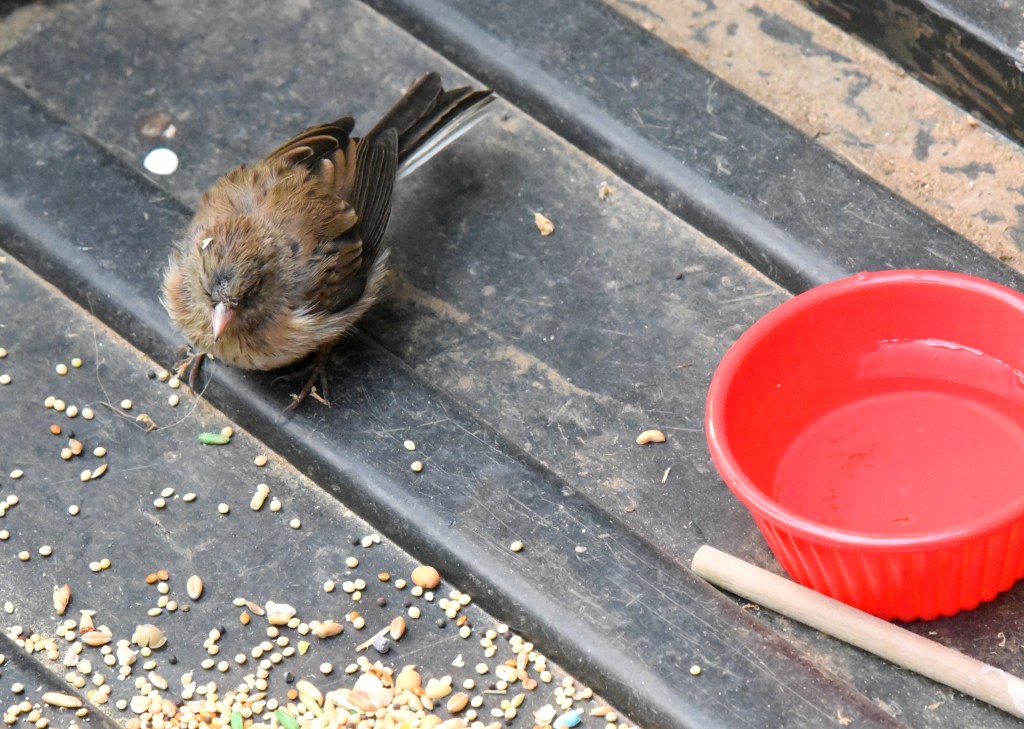
I went out to the garage yesterday morning to sort out a few things and found a small bird almost fast asleep in a trolley cart I use about the place.

It clearly had got caught inside the garage when I closed the electric door the previous evening. (Some of the local birds do come in to the garage to feast on insects and spiders that they come across.)

(That’s sawdust in the bottom of the cart.)

I called Jeannie to come out and look at the little chap and she had the brilliant idea of feeding the bird some of the bird food we give our two parakeets. Plus, she brought out a bowl of water.

It worked!

In next to no time the aforesaid bird had had sufficient to eat and it was time to relax in the warm air.

Twenty minutes later he had flown away!

OK!!

The real point of today’s post is to advise you that my son, Alex, and his longterm partner, Lisa, are staying with us for a few days and quite naturally blogging is going to be on the back-burner.

Rather than go ‘silent’ I am going to share with you over the next six days a beautiful series of posts on the clouds.

Will explain more tomorrow!

Summer crawlies …

…. and what they mean for our beloved dogs!

As frequently happens, recently I was sent an email from someone I hadn’t previously been in contact with. It was Sienna Penfold and this is what she wrote:

Hello Paul,
My name is Sienna, and I’m a full-time mom and a regular contributor to highstylife.com. Proud owner of two beautiful dogs (Coco & Hulk) and beautiful cat adopted from a shelter.
Since I’m equally passionate about my pets and my job I’ve decided to share my knowledge and experiences. I love the combination of sharing information and learning from others. Stories I like to write are mostly connected to pets and lifestyle.

You all know me well enough to know what my response was!!

So here is Sienna’s guest post.

ooOOoo

Be Prepared! Tips to Protect Your Dog and Your Family from Dangerous Parasites

by Sienna Penfold, August 21st., 2018

Every year during spring, summer, and most of fall, every pet parent becomes painfully aware of all the crawlies that enjoy the nice weather as much as our furry buddies do. From annoying fleas, which can also carry various diseases, all the way to worms, and ticks, the sunny days of the warm season come with a slew of responsibilities for every family – because, unfortunately, all these insects also pose a risk for us and our kids as well, not just for our pets.

Even if you do your best to prevent any type of an infection, you should also stay alert for any early signs of a flea infestation, and any presence of ticks and other parasites that can wreak havoc on your pooch’s as well as your own health. Let’s go through some of the key symptoms, preventative measures, and possible treatments to make your summers all the more comfortable and worry-free!
Keep an eye on your furball

Fleas and ticks are the most common external parasites that your pooch may have, and while it’s always best to focus on prevention, some dogs are more prone to having these pests and thus need more attention from you. Keep in mind that there are almost 2,000 species of fleas out there, and you may find some to be more resilient than others. The following are some of the simplest symptoms your dog will exhibit in case they have fleas:

  • Frequent scratching and skin irritations such as psoriasis, redness, and hair loss
  • Flea droppings in your dog’s coat (which you can check when grooming them and examining their hair against a contrasting surface such as a white piece of paper)
  • Excessive licking and biting
  • Pale gums

On the other hand, ticks are the next most common parasite found in nature, and its many species carry a wide range of diseases that can endanger your dog’s health or even life. These are the symptoms to keep an eye on:

  • Skin irritation and itchiness
  • Loss of appetite
  • Vomiting
  • Diarrhea
  • Lack of energy

A potential internal parasite infection, coming from a wide range of worms, heartworm included, may cause all of the above symptoms as well as the following issues:

  • Scooting, or dragging their rears against the floor
  • Coughing
  • A rounded belly
  • Visible parasites in fecal matter

The most effective preventative measures

Depending on your furry friend’s health and specific conditions (if any are present), you can mix and match several useful solutions to prevent any parasite issues. For example, regular grooming, including twice-a-day combing, regular baths with suitable shampoos, and even natural remedies as a part of their diet, such as a smidgen of garlic, and spraying apple cider vinegar mixed with water, can help.

Topical solutions come in various forms, from repellant collars to topicals, and are applied once a month, mostly on a dog’s back. However, you should keep in mind that not every form of protection is all-encompassing, meaning that they sometimes don’t include heartworm protection, which are transferred through mosquito bites.

A great option is a monthly spot-on topical such as Advocate dog flea treatment which also keeps your pooch safe against heartworms, and worms. Remember to weigh your pooch beforehand, because all of these treatments are used in different doses depending on how heavy your dog is.

Protecting your environment

Even though you cannot possibly keep your dog away from all risky spots, especially if you take them to natural spots such as rivers, mountains, and meadows, you can still decrease their risk with the right hygiene rules.

If your pooch lives indoors, make sure you vacuum and clean your home every day, or at least every other day, to remove any potential flea eggs. Removing carpets is one of the best ways to prevent an infestation, although your furniture still leaves plenty of room for them to bask in.

Using flea and tick-repellent substances such as apple cider vinegar in your homemade cleaning supplies, can also help you protect your rooms. Make sure to wash your own linens as well as your dog’s bedding on a regular basis, with items such as the Seventh Generation detergent with predominantly plant ingredients, which are perfectly pet and kids-safe. If you dress your dog, you can use the same detergent to wash their sweaters, and make sure they don’t harbor any unwanted pests!

Since all of these parasites transmit many diseases that can also come with all of the listed as well as with more severe symptoms, it’s best to check your dogs from head to toe, especially in those hidden nooks such as between their toes, behind and inside their ears and around their tails. However, it’s always a good idea to have your vet check with you on a regular basis, and make sure that whatever may be causing those symptoms is not a parasite, but a harmless issue, such as an upset stomach.

ooOOoo

Don’t know about you but we found that a very informative guest post!

Want some more?? Please let me know!

As always, I have no commercial interest in or knowledge of any the products and companies mentioned by Sienna.

People!

What a complex lot we are!

(And that’s putting it kindly!)

I wasn’t planning to publish a post for today. But then a recent post from Patrice Ayme spurred me to so do.

Let me explain.

Our nearest town, Grants Pass, has the wonderful Rogue River flowing through it and alongside it there is Riverside Park. To quote:

Riverside Park in Grants Pass was set aside by our founders for the enjoyment of our citizens and guests.

People come from all over to Riverside Park to watch the majestic Rogue River as it courses its’ way through our city.

As you can see it is a popular place for ducks and geese.

Last Tuesday, we had a contractor completing some new guttering for the house. Terry, the owner of TC Gutters, ran out of the coated aluminium he was folding into the correct shape using a rather cute machine!

Terry apologised and said that he would need to run back into Grants Pass to pick up some more of the sheeting.

He returned a little later and I went over to chit-chat with him.

He was unexpectedly downcast.

Terry, is there a problem?

Paul, when I was in town, down at the bottom of 6th Street near the bridge, there was a flock of ducks crossing the road.

Terry paused for quite a while; I stood there next to him with not a clue as to what was coming.

He sighed, and continued: “Instinctively, I slowed down along with a number of other drivers. But what really upset me was the fact that a few drivers were clearly gleefully driving into the ducks and killing them!

It hurt me to hear that; very much so!

Is it too strong for me to regard those drivers who thought it great fun to drive into those ducks as being evil?

A stock photo courtesy Alamy.

What do you think?

Rattlesnake Aversion Training

Following on from yesterday’s post.

In yesterday’s post that was about Dan’s dog, Lexi, Dan offered:

She had Rattlesnake aversion training last year in Palm Springs and did very well. She ran a gauntlet of four snakes to learn sound, site and smell.

The company that Dan used was Natural Solutions in Palm Springs.

I haven’t had the time yet to contact them to see if they can provide material of general interest to you.

But I did find the following video on YouTube that seemed to be interesting. (But note that I have no knowledge good or bad about the company and there are many other companies offering aversion training.)