This is how an excellent film by Rick Ray on the Dalai Lama is introduced. We watched the DVD a few evenings ago and it was heart-stirring and full of the extraordinary wisdom from one of the leading spiritual leaders alive today.
Do watch it if you can. Here’s the official trailer from YouTube:
As so often seems to be the case these days, there is a website for the movie here. And the Dalai Lama’s website is here.
Finally, I see that part of the film, where Rick Ray is having an audience with His Holiness, is available on YouTube. I’ll post links to the four videos over the next two days.
Each summer, high in the night skies of the far northern and southern hemispheres a unique phenonmenon occurs – noctilucent clouds. Little is known about them, but now an amateur astronomer from north Wales is trying to predict when they are likely to appear.
Here, John Rowlands, one of four finalists in the BBC’s search for the Amateur Scientist of the Year So You Want To Be A Scientist? – and his mentor, Professor Nick Mitchell from the University of Bath – take a closer look at these mysterious silver and blue waves at the edge of space.
John has his own Facebook page here with plenty more information.
And a quick Google images search found this:
Noctilucent clouds
And there’s still more. This delightful video on YouTube, courtesy of NASA.
Described thus:
The Aeronomy of Ice in the Mesosphere (AIM) mission will provide the first detailed exploration of Earth’s unique and elusive noctilucent or night shining clouds that are found literally on the “edge of space.” Located near the top of the Earth’s mesosphere (the region just above the stratosphere), very little is known about how these polar mesospheric clouds form or why they vary. They are being seen at lower latitudes than ever before and have been growing brighter and more frequent, leading some scientists to suggest that this recent increase may be the direct result of human-induced climate change. The mission is led by Dr. James Russell of the Center for Atmospheric Sciences at Hampton University.
By Paul Handover
(with thanks to the UK Flyer List for bringing this to my attention.)
“Fear paralyzes; curiosity empowers. Be more interested than afraid.” — Patricia Alexander, American educational psychologist.
This dropped into my email in-box the other day so I grabbed it to set this Post off on the right theme.
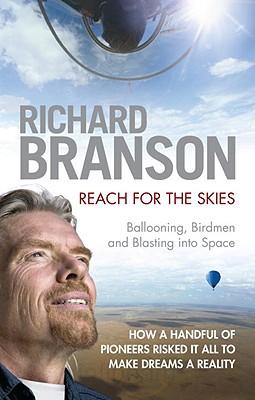
There is much around that can generate fear, touched on in my Post a couple of days ago where I quoted Richard Branson.
Prof. Lovelock
For an example of fear, many will have listened to the recent interview of Professor James Lovelock on the BBC Today programme and wondered just where we are all heading. ( The interview may be listened to here. – it’s 7 minutes long but listen to it!)
Here’s a YouTube video of Lovelock being interviewed in 2009. (Also worthy of watching for the full 13 minutes and note the connection between Lovelock and Branson.)
So if you listened and watched these two interviews then one could argue that there is more than enough to be fearful of our future.
Now go back to the opening quotation: “Fear paralyzes; curiosity empowers. Be more interested than afraid.”
Being fearful is not the answer – even if no alternative appears to be a rational way of mentally processing something.
Here’s a piece from Wayne Dyer’s book, There’s a Spiritual Solution to every Problem.
We are subjected to many illusions in our daily life. The greatest one is the one that keeps us trapped in giving our energy to what always has been.
The past is behind us. Predicting the future accurately, even by eminent scientists such as James Lovelock, is very, very unreliable. Thus all we have is today. So do not be afraid, be curious.
On July 15th, 2009 a post called Parenting lessons from Dogs started what has now become a bit of a ‘habit’. But more reflections tomorrow.
Reach for the Skies
Today I want to voice something that has been running around my mind for some time. It is whether we give in to the mounting doom and gloom at so many levels in our societies (and it can be a very compelling draw) or whether we see this as a painful but necessary period where slowly but surely the desires of ordinary people; for a fairer, more truthful, more integrous world are gaining power.
And I’m going to use Richard Branson to voice it for me!
(Now this is an unusually long Post so I’ve inserted the Read More divider to prevent the Post visually swamping your browser.)
“An ethic of kindness, benevolence and sympathy extended universally and impartially to all human beings.”WikiPedia
Introduction
Friedrich Nietzsche
I do not in any of this mean to say that humanitarianism is a negative thing, I am merely attempting to describe why humanitarianism exists in the world today in much larger proportion than it has in the past.
I hope also in some of this to disagree, hopefully intelligently, with Nietzsche’s claim that humanitarianism decreases the overall strength of the human race, or at least its higher echelons.
Self-interest
Human beings are either entirely or nearly entirely driven by self-interest, this much has been made clear by both ancient and modern philosophy.
Different philosophers have realized this point in different ways.
Mises said that all people are rational maximizers.
Nietzsche said that the natural human being attempts to exert his force upon the world surrounding him.
Plato said that all men desire good things, but each man has his own subjective opinion of the “good” which he came to via his own experiences (both during and before “life”.)
I highly doubt that human nature has changed a great deal in 100 years.
However, 100 years ago it was very common for European nations to do just about whatever they wanted to the rest of the world. In fact, human nature is in all likelihood not very different now than it was in the days of the early church, when Christians were wrapped in lambskin, covered in oil, and burned alive in order to serve as torches.
Stonehenge is one of Britain’s most famous historical sites, deservedly so because Stonehenge was one of the most important places in ancient Europe.
StonehengeProfessors Tim Darvill and Geoff Wainwright are the world-renowned archaeologists who believe they have cracked the conundrum of Stonehenge’s original purpose.
But evidence from a dig that was authorised in 2008 has shown that not only is Stonehenge a much older site of human habitation but that it’s purpose is altogether different to what has been assumed. It was, indeed, a healing place, possibly the most important in Europe.
Those living in the UK can watch the Timewatch programme on the BBC iPlayer. But for those living outside the UK then the following web site has reams of wonderfully fascinating information. That site is here.
I can’t recall how but I came across a web site that focuses on ‘translating’ data into pictures. As they say, a picture is worth a thousand words. The web site is called Information is Beautiful.
Anyhow, they have attempted to graphically portray the scale of the BP oil spill. (A thumbnail is below but please click on the link, or here, to see this as it was meant to be shown.)
Ouch!
But this image is an update of an earlier one here that is really powerful. Because it attempts to put the scale of the oil spill into context with global oil consumption.
If the Purdue University estimate of the oil spill is correct at 48,500 barrels a day (a barrel is approximately the equivalent of two car tankfuls of gas/petrol) and the spill is contained in 90 days then the total oil spilled will be:
90 x 48,500 = 4,365,000 barrels
That is an enormous quantity.
But have a guess as to how much that would represent in terms of hourly global oil consumption?
Any idea?
Well global oil consumption is 3,500,000 barrels an hour.
So 90 days at 48,500 barrels a day represents just 1 hour 15 minutes worth of global consumption!
If there was ever an argument for the world to wean itself off oil then this would appear to be it.
What has happened so far is tragic – tragic beyond measure. But if it turns out to be a ‘tipping point’ for nations to reconsider how we find and use energy then, perhaps, it will have been a horrible lesson that we all had to take.
And if the USA puts all it’s collective back into leading the world out of our addiction to oil then the damage and hardship will not have been in vain.
Despite the fact that we have now been living in Payson, Arizona, since the end of February and, therefore, a degree of familiarity exists in both directions, the local Saturday Farmers Market prompted this thought.
Why do I not feel a foreigner here?
There is no question that America, in general, and Arizona, in particular, is very different to England. In many ways the differences are far greater than, say, England and Australia, or England and New Zealand (I’m picking other English speaking countries to avoid to obvious difference between countries of different languages).
Local goats' cheese
I love Farmers Markets. They seem to encapsulate the wholeness of locals growing meat and produce for other locals. They seem to serve as a reminder of the integrity that is needed just as much in food as in all other areas of life.
Of course, I am not so naive to think that we could wind the food revolution back to before the days of supermarket chains – food is wonderful value nowadays especially for those families on tight incomes.
But I can’t be the only one that ponders what the long term effect of all those
Local jellies (jams to Brits!)
E-numbers and other strange ingredients that one reads on most packets of most items, and whether or not fruit is sprayed with anything that we should know about, and so on and so forth.
That’s why that place in my psyche is ‘stroked’ so well by wandering around the Farmers Market.
One would expect if there was going to be any place where yours truly, dressed and sounding like the Englishman that he is, is going to feel foreign, it would be at the Payson Farmers Market. I don’t even try to hide my origins, responding to a “Howdy folks” from the stall-holder with a quintessentially English “Good Morning!”
Inevitably there are reasons why I am made to feel welcome here in Payson, my hunch is that it is much to do with this being a pioneering town for most of the last 100 years, and therefore co-operation, collaboration and a welcoming attitude were key elements of sustaining a way of life, but, in the end, analysis is pointless.
What matters is how we are made to feel, and we are made to feel very welcome.
Indeed, Payson with it’s predominance of right-wing, independent thinking, tough ‘cow-boy’ inhabitants echoing a recent past, may have an important lesson for all of us, across the globe, as the forces of disconcerting change build and build: be local, think local, preserve local.
I’m very proud to be slowly but surely turning into a Payson local.
I can’t possibly add anything of substance to the hours and millions of words spoken about this tragic event.
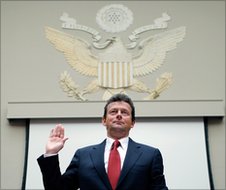
All I felt as I watched the Congressional Hearing live on CNN was both embarrassment and sadness as a fellow Englishman demonstrated how the lawyers have won.
Hayward, from the couple of hours that I saw, said nothing of substance, nothing of real value and nothing that recognised how the American people, and the world in general, deserved openness and in-depth answers.





 Learning from Dogs