I know that expression from my days as a private pilot. It makes such obvious sense, especially in a single-engined light aircraft with one pilot on board. It’s all about risk.
Frederick Herzberg, the famous American psychologist, coined the term ‘hygiene factor’. It was the second part of a two-factor approach to the management of people. According to Herzberg’s theory, people are influenced by two sets of factors, motivation factors and hygiene factors. More background on this aspect here.
To me, as I reflect on the messages offered in the Sceptical Voices article, Part One and Part Two, the concepts of risk and hygiene seem totally appropriate to the topic of AGW, Anthropogenic Global Warming.
Whether or not AGW is a valid theory behind the rapid change in global warming is utterly irrelevant. It is the risk to humanity that matters. There is absolutely no harm done from assuming that AGW is happening and that feedback processes run a grave risk of tipping planetary conditions out of control, and getting that wrong.
On the other hand, assume that AGW is such an uncertain concept that it really isn’t wise to adjust our life styles, and getting that wrong would endanger the human species.
Think of being on a commercial airline flight and you become aware that one of the two pilots in the cockpit is incapacitated through food poisoning. No doubt that you, with all your fellow passengers, would vote for an immediate diversionary landing. It’s to do with risk.
From the perspective of Herzberg, a co-ordinated program by the world’s leading governments to tackle AGW might also improve the overall motivation of their peoples in a whole manner of ways.
Yes, question all we want, yes, there are other important issues to resolve in the world, but WHAT IF “Climate Change/Global Warming“ is for real, what then?
Dan wrote also in that Part One piece,
And by “peel-back-the-onion”, I mean that any ardent, independent researcher should publish both sides of the story as a matter of course. Especially in regards to global warming.
But publishing both sides of the story is not the argument. The argument is the risk to humanity of doing nothing, and getting it wrong.
That well-respected weekly newspaper The Economist had a recent article about the melting of Arctic ice, from which is quoted,
Arctic sea ice is melting far faster than climate models predict. Why?
Sep 24th 2011 - from the print edition
ON SEPTEMBER 9th, at the height of its summertime shrinkage, ice covered 4.33m square km, or 1.67m square miles, of the Arctic Ocean, according to America’s National Snow and Ice Data Centre (NSIDC). That is not a record low—not quite. But the actual record, 4.17m square km in 2007, was the product of an unusual combination of sunny days, cloudless skies and warm currents flowing up from mid-latitudes. This year has seen no such opposite of a perfect storm, yet the summer sea-ice minimum is a mere 4% bigger than that record. Add in the fact that the thickness of the ice, which is much harder to measure, is estimated to have fallen by half since 1979, when satellite records began, and there is probably less ice floating on the Arctic Ocean now than at any time since a particularly warm period 8,000 years ago, soon after the last ice age.
That Arctic sea ice is disappearing has been known for decades. The underlying cause is believed by all but a handful of climatologists to be global warming brought about by greenhouse-gas emissions. Yet the rate the ice is vanishing confounds these climatologists’ models. These predict that if the level of carbon dioxide, methane and so on in the atmosphere continues to rise, then the Arctic Ocean will be free of floating summer ice by the end of the century. At current rates of shrinkage, by contrast, this looks likely to happen some time between 2020 and 2050.
Re-read the sentence, “The underlying cause is believed by all but a handful of climatologists to be global warming brought about by greenhouse-gas emissions.” In particular, “by all but a handful of climatologists” Think of risk.
That article, which should be read in full, concludes thus,
A warming Arctic will bring local benefits to some. The rest of the world may pay the cost.
Indeed, the rest of the world may pay the cost! As I wrote, it’s all about risk.
So whether or not one wants to believe every word of that Economist article is irrelevant. Or whether one should have believed, or not, the article in New York’s The Sun newspaper back in 2007,
By SETH BORENSTEIN, Associated Press | December 12, 2007
WASHINGTON — An already relentless melting of the Arctic greatly accelerated this summer, a warning sign that some scientists worry could mean global warming has passed an ominous tipping point. One even speculated that summer sea ice would be gone in five years.
Greenland’s ice sheet melted nearly 19 billion tons more than the previous high mark, and the volume of Arctic sea ice at summer’s end was half what it was just four years earlier, according to new NASA satellite data obtained by the Associated Press.
“The Arctic is screaming,” a senior scientist at the government’s snow and ice data center in Boulder, Colo., Mark Serreze, said.
Last year, two scientists surprised their colleagues by projecting that the Arctic sea ice was melting so fast that it could disappear entirely by the summer of 2040. This week, after reviewing his own new data, a NASA climate scientist, Jay Zwally, said: “At this rate, the Arctic Ocean could be nearly ice-free at the end of summer by 2012, much faster than previous predictions.”
So scientists in recent days have been asking themselves these questions: Was the record melt seen all over the Arctic in 2007 a blip amid relentless and steady warming? Or has everything sped up to a new climate cycle that goes beyond the worst case scenarios presented by computer models? “The Arctic is often cited as the canary in the coal mine for climate warming,” Mr. Zwally, who as a teenager hauled coal, said. “Now as a sign of climate warming, the canary has died. It is time to start getting out of the coal mines.” [My emphasis, PH]
So, in conclusion, scepticism is healthy and is an important aspect of open debate within an open society, part of determining truth, however challenging that simple concept might be.
But eventually one needs to take a position, to take a stand on the really important issues in life and in the case of climate change the risk of being too sceptical, too cautious is to put the lives of future generations at stake. For me, and I guess for tens of thousands of others, that is a risk too far.
My apologies but the demands on my time are a little challenging this week. All as a result of the creative writing course that is being undertaken at our local Gila Community College, a course that I am loving, by the way!
Last Saturday, John H. and I went down to Tempe, Phoenix to attend the nearest Moving Planet event. It was well-attended especially by people the right side of 40 years-old! After all it is the succeeding generation that is going to cope with the consequences of the present abuse of the planet’s resources.
The leader of the event down in Tempe was Doug Bland of Arizona Interfaith Power and Light and it was very encouraging to see such a strong ecumenical involvement.
Later this week, I want to respond to the views that came out in the first part of the Sceptical voices piece last week but for now let me just leave you with a 4-minute video that was shown to the group down in Tempe last Saturday. It is called Try not to Make Connections.
With great thanks to Dan G. for sending me the link.
Science educator James Drake built this amazing timelapse video from the perspective of the International Space Station as it flew over North and South America. He created this video by downloading a series of 600 photographs that were available online at theGateway to Astronomy Photograph of Earth, and then stitching them together into a complete video. You can see more of James work at his blog: infinity imagined.
With big thanks to Cynthia S. for sending me the pics.
GET OUT AND ENJOY NATURE
Don’t sit around the house . . . Get out and enjoy nature!
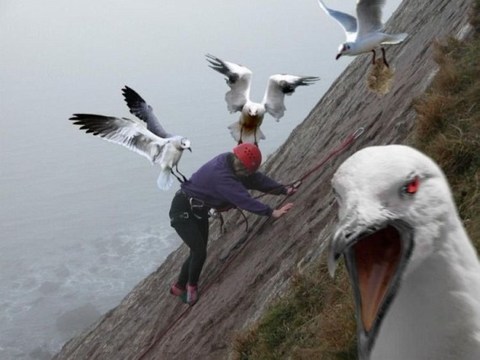
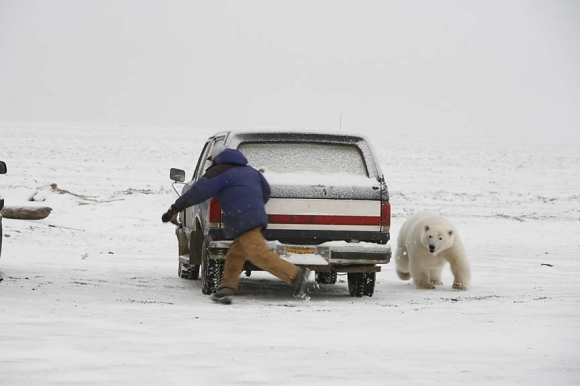
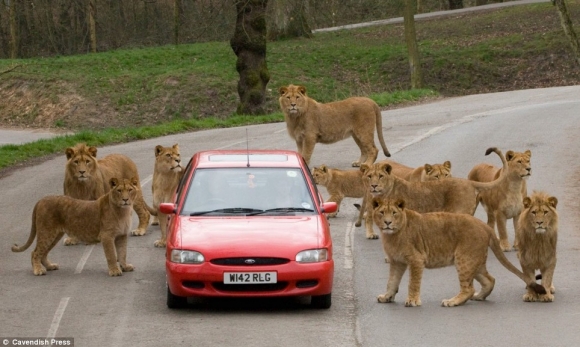
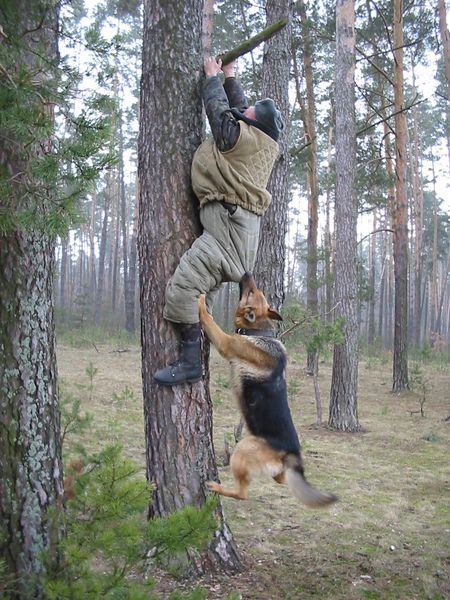
No! I'm not stealing your eggs!So much for offering him a biscuit!Hey! Gimme a fish!Just want our tummies rubbed!Hope you're being nice to my friend!What part of the word 'no' you have trouble with, mister?
Those who read yesterday’s part one will undoubtedly have seen the added comment from long-time friend of Learning from Dogs, Patrice Ayme. Yesterday, I promised to conclude Dan’s sceptical approach to climate warming with three articles that he had sent me. Here they are,
Global Warming
“Global warming” refers to the global-average temperature increase that has been observed over the last one hundred years or more. But to many politicians and the public, the term carries the implication that mankind is responsible for that warming. This website describes evidence from my group’s government-funded research that suggests global warming is mostly natural, and that the climate system is quite insensitive to humanity’s greenhouse gas emissions and aerosol pollution.
Believe it or not, very little research has ever been funded to search for natural mechanisms of warming…it has simply been assumed that global warming is manmade. This assumption is rather easy for scientists since we do not have enough accurate global data for a long enough period of time to see whether there are natural warming mechanisms at work.
The United Nation’s Intergovernmental Panel on Climate Change (IPCC) claims that the only way they can get their computerized climate models to produce the observed warming is with anthropogenic (human-caused) pollution. But they’re not going to find something if they don’t search for it. More than one scientist has asked me, “What else COULD it be?” Well, the answer to that takes a little digging… and as I show, one doesn’t have to dig very far.
But first let’s examine the basics of why so many scientists think global warming is manmade. Earth’s atmosphere contains natural greenhouse gases (mostly water vapor, carbon dioxide, and methane) which act to keep the lower layers of the atmosphere warmer than they otherwise would be without those gases. Greenhouse gases trap infrared radiation — the radiant heat energy that the Earth naturally emits to outer space in response to solar heating. Mankind’s burning of fossil fuels (mostly coal, petroleum, and natural gas) releases carbon dioxide into the atmosphere and this is believed to be enhancing the Earth’s natural greenhouse effect. As of 2008, the concentration of carbon dioxide in the atmosphere was about 40% to 45% higher than it was before the start of the industrial revolution in the 1800’s.
It is interesting to note that, even though carbon dioxide is necessary for life on Earth to exist, there is precious little of it in Earth’s atmosphere. As of 2008, only 39 out of every 100,000 molecules of air were CO2, and it will take mankind’s CO2 emissions 5 more years to increase that number by 1, to 40.
Earth's atmosphere
The “Holy Grail”: Climate Sensitivity Figuring out how much past warming is due to mankind, and how much more we can expect in the future, depends upon something called “climate sensitivity”. This is the temperature response of the Earth to a given amount of ‘radiative forcing’, of which there are two kinds: a change in either the amount of sunlight absorbed by the Earth, or in the infrared energy the Earth emits to outer space.
The ‘consensus’ of opinion is that the Earth’s climate sensitivity is quite high, and so warming of about 0.25 deg. C to 0.5 deg. C (about 0.5 deg. F to 0.9 deg. F) every 10 years can be expected for as long as mankind continues to use fossil fuels as our primary source of energy. NASA’s James Hansen claims that climate sensitivity is very high, and that we have already put too much extra CO2 in the atmosphere. Presumably this is why he and Al Gore are campaigning for a moratorium on the construction of any more coal-fired power plants in the U.S.
You would think that we’d know the Earth’s ‘climate sensitivity’ by now, but it has been surprisingly difficult to determine. How atmospheric processes like clouds and precipitation systems respond to warming is critical, as they are either amplifying the warming, or reducing it. This website currently concentrates on the response of clouds to warming, an issue which I am now convinced the scientific community has totally misinterpreted when they have measured natural, year-to-year fluctuations in the climate system. As a result of that confusion, they have the mistaken belief that climate sensitivity is high, when in fact the satellite evidence suggests climate sensitivity is low.
The case for natural climate change I also present an analysis of the Pacific Decadal Oscillation which shows that most climate change might well be the result of….the climate system itself! Because small, chaotic fluctuations in atmospheric and oceanic circulation systems can cause small changes in global average cloudiness, this is all that is necessary to cause climate change. You don’t need the sun, or any other ‘external’ influence (although these are also possible…but for now I’ll let others work on that). It is simply what the climate system does. This is actually quite easy for meteorologists to believe, since we understand how complex weather processes are. Your local TV meteorologist is probably a closet ’skeptic’ regarding mankind’s influence on climate.
Climate change — it happens, with or without our help.
And the next one,
Earth may be headed into a mini Ice Age within a decade
Physicists say sunspot cycle is ‘going into hibernation’
What may be the science story of the century is breaking this evening, as heavyweight US solar physicists announce that the Sun appears to be headed into a lengthy spell of low activity, which could mean that the Earth – far from facing a global warming problem– is actually headed into a mini Ice Age.
Ice skating on the Thames by 2025?
The announcement made on 14 June (18:00 UK time) comes from scientists at the US National Solar Observatory (NSO) and US Air Force Research Laboratory. Three different analyses of the Sun’s recent behaviour all indicate that a period of unusually low solar activity may be about to begin.
The Sun normally follows an 11-year cycle of activity. The current cycle, Cycle 24, is now supposed to be ramping up towards maximum strength. Increased numbers of sunspots and other indications ought to be happening: but in fact results so far are most disappointing. Scientists at the NSO now suspect, based on data showing decades-long trends leading to this point, that Cycle 25 may not happen at all.
This could have major implications for the Earth’s climate. According to a statement issued by the NSO, announcing the research:
An immediate question is whether this slowdown presages a second Maunder Minimum, a 70-year period with virtually no sunspots [which occurred] during 1645-1715.
As NASA notes [1]:
Early records of sunspots indicate that the Sun went through a period of inactivity in the late 17th century. Very few sunspots were seen on the Sun from about 1645 to 1715. Although the observations were not as extensive as in later years, the Sun was in fact well observed during this time and this lack of sunspots is well documented. This period of solar inactivity also corresponds to a climatic period called the “Little Ice Age” when rivers that are normally ice-free froze and snow fields remained year-round at lower altitudes. There is evidence that the Sun has had similar periods of inactivity in the more distant past.
During the Maunder Minimum and for periods either side of it, many European rivers which are ice-free today – including the Thames – routinely froze over, allowing ice skating and even for armies to march across them in some cases.
“This is highly unusual and unexpected,” says Dr Frank Hill of the NSO. “But the fact that three completely different views of the Sun point in the same direction is a powerful indicator that the sunspot cycle may be going into hibernation.”
Hill’s own research focuses on surface pulsations of the Sun and their relationship with sunspots, and his team has already used their methods to successfully predict the late onset of Cycle 24.
“We expected to see the start of the zonal flow for Cycle 25 by now,” Hill explained, “but we see no sign of it. This indicates that the start of Cycle 25 may be delayed to 2021 or 2022, or may not happen at all.”
Hill’s results match those from physicists Matt Penn and William Livingston, who have gone over 13 years of sunspot data from the McMath-Pierce Telescope at Kitt Peak in Arizona. They have seen the strength of the magnetic fields which create sunspots declining steadily. According to the NSO:
Penn and Livingston observed that the average field strength declined about 50 gauss per year during Cycle 23 and now in Cycle 24. They also observed that spot temperatures have risen exactly as expected for such changes in the magnetic field. If the trend continues, the field strength will drop below the 1,500 gauss threshold and spots will largely disappear as the magnetic field is no longer strong enough to overcome convective forces on the solar surface.
In parallel with this comes research from the US Air Force’s studies of the solar corona. Richard Altrock, in charge of this, has found a 40-year decline in the “rush to the poles” – the poleward surge of magnetic activity in the corona.
“Those wonderful, delicate coronal features are actually powerful, robust magnetic structures rooted in the interior of the Sun,” Altrock says. “Changes we see in the corona reflect changes deep inside the Sun …
“Cycle 24 started out late and slow and may not be strong enough to create a rush to the poles, indicating we’ll see a very weak solar maximum in 2013, if at all. If the rush to the poles fails to complete, this creates a tremendous dilemma for the theorists … No one knows what the Sun will do in that case.”
According to the collective wisdom of the NSO, another Maunder Minimum may very well be on the cards.
“If we are right,” summarises Hill, “this could be the last solar maximum we’ll see for a few decades. That would affect everything from space exploration to Earth’s climate.”
The effects on space exploration would be benign, as fewer or no solar storms would make space a much less hostile environment for human beings. At the moment, anyone venturing beyond the Earth’s protective magnetic field (the only people to have done so were the Apollo moon astronauts of the 1960s and ’70s) runs a severe risk of dangerous or fatal radiation exposure during a solar storm.
Manned missions beyond low Earth orbit, a stated aspiration of the USA and other nations, might become significantly safer and cheaper to mount (cheaper as there would be no requirement for possibly very heavy shielding to protect astronauts, so reducing launch costs).
The big consequences of a major solar calm spell, however, would be climatic. The next few generations of humanity might not find themselves trying to cope with global warming but rather with a significant cooling. This could overturn decades of received wisdom on such things as CO2 emissions, and lead to radical shifts in government policy worldwide.
And the last one,
On the Misdiagnosis of Surface Temperature Feedbacks from Variations in Earth’s Radiant Energy Balance
Roy W. Spencer * and William D. Braswell
ESSC-UAH, University of Alabama in Huntsville, Cramer Hall, Huntsville, AL 35899, USA
* Author to whom correspondence should be addressed.Received: 24 May 2011; in revised form: 13 July 2011 / Accepted: 15 July 2011 / Published: 25 July 2011
Abstract: The sensitivity of the climate system to an imposed radiative imbalance remains the largest source of uncertainty in projections of future anthropogenic climate change. Here we present further evidence that this uncertainty from an observational perspective is largely due to the masking of the radiative feedback signal by internal radiative forcing, probably due to natural cloud variations. That these internal radiative forcings exist and likely corrupt feedback diagnosis is demonstrated with lag regression analysis of satellite and coupled climate model data, interpreted with a simple forcing-feedback model. While the satellite-based metrics for the period 2000–2010 depart substantially in the direction of lower climate sensitivity from those similarly computed from coupled climate models, we find that, with traditional methods, it is not possible to accurately quantify this discrepancy in terms of the feedbacks which determine climate sensitivity. It is concluded that atmospheric feedback diagnosis of the climate system remains an unsolved problem, due primarily to the inability to distinguish between radiative forcing and radiative feedback in satellite radiative budget observations.
So back to me!
As you can see there is every opportunity to be confused. Not embracing contrary views to the ones that you believe, however, is not the way to determine the truth.
So let me close with a couple of my own contrary views.
We have a tiny window of opportunity to save something of the magnificence of the Earth so let’s all grab it, writes Bill McKibben, founder of 350.org
Asked to name the biggest thing that’s happened over Resurgence’s 45-year career, I think I’d have to say the melt of the Arctic. When this magazine began publishing, there was 40% more summer sea ice in the Arctic. Viewed from space, in those first pictures from the Apollo spacecraft, the planet looked very different than it does now. In recent summers both the north-west and the north-east passages have opened, allowing sailors to circumnavigate the Arctic through waters that no one thought, even a decade ago, humans would ever navigate.
Or maybe I would pick the rapid acidification of the planet’s seas – they’re 30% more acid than they were in 1966. Which means that the small creatures at the base of the marine food chain are having more trouble forming their shells, and that coral reefs – already stressed by warming waters – have a new trauma to deal with.
Another possibility: the Earth’s atmosphere is about 4% moister than it was 45 years ago, simply because warm air holds more water vapour than cold. This loads the dice for deluge, downpour, flood – it’s not surprising that we’re seeing record rainfall and unprecedented floods. Nor, since that water has to come from somewhere, should increasing drought and desertification come as much of a shock.
Here’s what I’m trying to say: when Resurgence began its run, we were still in the Holocene. Humans had altered much of the planet’s natural environment. We had dirty rivers and dirty air, spreading toxins and endangered species. But the basic operating system of the planet was running pretty much the same as it had for the 10,000 years of human civilisation.
Sometime in the intervening decades we moved out of that comfortable and remarkably stable world, and began the transition to What Comes Next?
Any date would be arbitrary, but if you wanted to pick one, you could say 1988. That was the year NASA scientist Jim Hansen warned the US Congress that global warming was indeed real – and it was the year that we passed the benchmark of 350 parts per million (ppm) of CO2 in the atmosphere. At the time we didn’t know it was a benchmark – it was 20 years later that scientists, again led by Hansen, declared that 350ppm was the absolute upper limit if we wanted a planet “similar to the one on which civilisation developed and to which life is adapted”. If we wanted, in other words, that older world we were born onto.
I could list at some length the various woes this new world is already causing: we see rising sea levels displacing farmers across the deltas of Bangladesh, and Aedes aegypti expanding its boundary and spreading dengue fever like wildfire. Speaking of wildfire, we see record amounts, in part because of more heat and drought, and in part because insects (once kept in check by cold weather) are now spreading.
We see millions still homeless from last year’s flood in Pakistan, and billions struggling to pay for food because a string of crop failures that began with last summer’s Russian drought have increased grain prices by 70–80%.
And I could list at even greater length the woes we expect as the century grinds on. After all, we’ve only raised the temperature about a degree so far, and the climatologists tell us to expect four or five unless we stop burning coal and oil and gas much faster than any government currently plans. Temperatures like that will guarantee the melt of Greenland; according to the agronomists they will cut grain harvests by a third or more; they’ll make current shortages of water seem barely worth mentioning.
But for the moment don’t think about consequences, current or future. Just think about the enormity of what we’ve managed to do: we’ve altered the most basic operations of the one planet we’ve got.
The air is profoundly different, the heat balance with our sun profoundly altered. It’s by far the biggest thing humans have ever done or ever contemplated doing, and were some alien watching from a great distance she’d be scratching her head-like appendage. It’s our head-like appendage that’s responsible, of course. That big brain turned out to be incredibly clever, and its cleverest trick was to figure out that buried carbon could make life easy. Everything that we know around us – the whole modern world – derives from that discovery. Much of it is good. But now we’re threatening to take down the good, and much else with it.
So here’s the question for the next 45 years of Resurgence: can the big brain bail us out?
It’s already provided us with the warnings we need, warnings that would not have been available at any other moment in human history. The scientific method, one of the greatest achievements of our civilisation, has produced a robust consensus on this difficult problem in chemistry and physics: since the mid-1990s the Intergovernmental Panel on Climate Change (IPCC) has said in unmistakably plain language that there is no doubt: we have to cut carbon, and quickly.
But so far that warning has had little or no effect: our national governments, with a few noble exceptions, have paid scant attention; our attempts at global governance have been pathetic failures. The chief reason, I think, is the remarkable power of the fossil-fuel industry to stifle change; for 200 years it has grown bigger and richer and more than able to deal with the threat that science now poses to its reign. It literally makes us stupid: earlier this winter the US House of Representatives, by a 60-vote margin, defeated a resolution that merely stated that global warming was real. Exxon has promoted its own version of physics and chemistry, and they’ve managed to fool a good many too.
The real question, then, is going to be: is there a big enough heart connected to that big brain? Will we be able to heed not only the warnings of science but those of our conscience? Will we, gazing out at the growing array of ‘natural disasters’, figure out that we’ve got to make change? Change in our personal lives, yes, but even more change in our political arrangements, since that’s the only chance that actual physics and chemistry really give us for meeting the deadlines they’ve set.
I think the answer is yes – a tentative and uncertain yes, but one based on just enough real-world data to give me hope.
Three years ago we founded 350.org, the first big global grassroots climate campaign. Rooted in science but expressed in imagination, it has grown to pretty mammoth size. Our first two big global days of action, in the waning months of 2009 and 2010, were what CNN called “the most widespread days of political action in the planet’s history”, with nearly 15,000 demonstrations in every country on Earth but North Korea.
And the good news is we didn’t really ‘organise’ it – our tiny staff worked feverishly, but ultimately it was like a potluck supper. People in every corner of the Earth heard the call and did the work, figuring out what would work in their place. (An underwater demonstration on the dying coral reefs of the Maldives; a giant image of King Canute, composed of thousands of volunteers, trying to hold the sea back on the Brighton seashore!)
It’s not enough yet to beat the fossil-fuel industry – our bodies don’t yet add up to their money. But we’re growing constantly (the next big chance to join us: 24 September 2011, a day we’re calling Moving Planet). And – sad, but true – the natural world is going to continue to give us openings to make the case more strongly. Sooner or later our leaders will listen – and we’re committed to making it sooner.
We’re not going to stop global warming: it’s already warmed and it will warm some more. Those Apollo images of our planet are forever sepia-toned. But we’ve got a tiny window left to save something of the Earth we were born onto – its beauty, its bounty, its safety.
That’s our task, and the next 45 years will tell the tale.
Bill McKibben wrote the first book for a general audience on climate change, The End of Nature, in 1989. He is a scholar in residence at Middlebury College in Vermont.
That value is 36% lower than the average minimum for 1979-2000.
NSIDC said the figure was preliminary, and that “changing winds could still push the ice extent lower” before final numbers are published in early October.
The preliminary value is 160,000 sq km – or 4% – above the record minimum seen in 2007.
The minimum level of cover is far below the average of 1979-2000
“While the record low year of 2007 was marked by a combination of weather conditions that favoured ice loss – including clearer skies, favourable wind patterns and warm temperatures – this year has shown more typical weather patterns but continued warmth over the Arctic,” they wrote.
“This supports the idea that the Arctic sea ice cover is continuing to thin.”
NSIDC director Mark Serreze said: “Every summer that we see a very low ice extent in September sets us up for a similar situation the following year.
“The Arctic sea ice cover is so thin now compared to 30 years ago that it just can’t take a hit any more. This overall pattern of thinning ice in the Arctic in recent decades is really starting to catch up with us.”
In fact, an analysis released last week by researchers at the University of Bremen in Germany, who use a different satellite to assess ice cover, indicated that 2011’s minimum was the lowest on record.
However, there is some controversy surrounding the result; the Bremen team’s higher-resolution data can detect small patches of water where the NSIDC team would not, but the Bremen record goes back only to 2003.
These analyses are for the extent, or area, of Arctic ice, but recent estimates released by the University of Washington’s Polar Science Center give an indication of the total amount of sea ice.
Their data indicate that the ice volume is at an all-time low for the second year in a row.
Analyses of Arctic ice in recent years consistently indicate a change in the nature of the ice itself – from one solid mass that melts and freezes at its edges towards more dispersed, piecemeal ice cover, and from robust “multi-year” ice toward seasonal floes that melt more easily.
The NSIDC data show ice cover extents consistently below earlier averages
You may want to refer to the worrying images of the Petermann Glacier that I published on the 14th September.
—oooOOOooo—
I hope this article, split over two days, has been useful. Hopefully, they underline the need to work it out for yourself and remain open-minded at all times.
Musings about the importance of challenging accepted wisdoms
Life is full of traps. In that sense our lives are little different to our ancient days of cavemen. But the traps are very different. They have changed from pits embedded with sharp sticks, covered with vegetation, to an avalanche of information, news and media output from which determining truth is challenging. The modern equivalent of the ancient pit trap.
My sense is that one way we embrace what we perceive as truthful is through pattern matching, a powerful aspect of the human brain. By pattern matching, I mean the tendency to place greater emphasis on information that matches our view of the world, that accords with our core beliefs, than that which doesn’t.
Thus if one is a liberal with leanings towards social engineering as a means of improving society then news and information that supports that philosophy will be accepted as validation of that view. Then again, if one is strong on the need for the individual to be independent and responsible for their own lives then the validation of that philosophy will be supported by a completely different stream of information.
A prologue to what follows.
Regular readers of Learning from Dogs will be clear that my view is that mankind is responsible for a range of issues that, if not resolved, will threaten the very ecology of Planet Earth that allows mankind to survive. My dear Californian friend of over 40 years, Dan, thinks otherwise. Let me add, Dan is not a mental slouch.
I wanted to share some articles that Dan recently sent me, not to prove who is right or wrong, but to underline the critical importance of never ceasing to question the truth of everything that is fundamental to our knowledge of the world, in the broadest sense, upon which we live.
New NASA Data Blow Gaping Hole In Global Warming Alarmism
NASA satellite data from the years 2000 through 2011 show the Earth’s atmosphere is allowing far more heat to be released into space than alarmist computer models have predicted, reports a new study in the peer-reviewed science journal Remote Sensing. The study indicates far less future global warming will occur than United Nations computer models have predicted, and supports prior studies indicating increases in atmospheric carbon dioxidetrap far less heat than alarmists have claimed.
Study co-author Dr. Roy Spencer, a principal research scientist at the University of Alabama in Huntsville and U.S. Science Team Leader for the Advanced Microwave Scanning Radiometer flying on NASA’s Aqua satellite, reports that real-world data from NASA’s Terra satellite contradict multiple assumptions fed into alarmist computer models.
“The satellite observations suggest there is much more energy lost to space during and after warming than the climate models show,” Spencer said in a July 26 University of Alabama press release. “There is a huge discrepancy between the data and the forecasts that is especially big over the oceans.”
In addition to finding that far less heat is being trapped than alarmist computer models have predicted, the NASA satellite data show the atmosphere begins shedding heat into space long before United Nations computer models predicted.
The new findings are extremely important and should dramatically alter the global warming debate.
This is not the full article, which may be read here.
I was interested in what had been published by Yahoo News and sought to verify it directly on NASA’s web site. I was unable to do so, and replied with links to two findings by NASA that man, indeed, was affecting global climate. One of those NASA links was here,
A new NASA-led study shows that human-caused climate change has impacted a wide range of Earth’s natural systems, from permafrost thawing to plants blooming earlier across Europe to lakes declining in productivity in Africa.
Cynthia Rosenzweig of NASA’s Goddard Institute for Space Science in New York and scientists at 10 other institutions have linked physical and biological impacts since 1970 with rises in temperatures during that period. The study, published May 15 in the journal Nature, concludes that human-caused warming is resulting in a broad range of impacts across the globe.
adding my own view that “There isn’t a serious scientist in the world who has published a peer-reviewed paper that disagrees with the core notion that man has affected the planet. ”
Dan responded thus,
Paul – This will be a good one.
The point I always try to make is that good science is always subject to change as new evidence is discovered. I believe that science is by nature, controversial; plus ça change and all that….
To state as a “Hard-Core Ideological Truth” that Anthropogenic Global Warming (now known as more PC “Climate Change”) is a fact is self-serving. To deny the disputative work of many highly regarded scientists and climatologists who challenge this construct, can only result in a politically charged and alarmist position serving, in the end, special-interests.
Being skeptical is a healthy process. This process should be followed in the “Climate Change” debate. Especially in the face of today’s political reality and the funding that special interest groups need to survive. Regarding the proclamations of “Man-Induced Global Warming/Climate Change Proponents” that Man is and will be single-handedly responsible for the global flooding of most of the world’s coastal cities, is arrogant, absurd and unprovable.
Moreover, to ask world governments to take billions and billions of dollars out of their economies to fund nutty programs like “Cap and Trade” in order to ostensibly “contradict” something that has been happening on its own for millions of years, is pretty much over the top.
For the last 2 million years, Earth cycles in and out of ice ages. It happens whether the planet supports 20 million people or 20 million dinosaurs. Glaciers grow and recede. Polar ice increases and decreases. The planet shifts its axis a few degrees and it gets cold. It shifts back, it gets hotter. Ocean currents change based on God’s unpredictable timetable causing local droughts and floods. A few volcanoes erupt and we get instant cloud cover drifting over the planet changing climatology drastically. The Sun, its relative position to Earth and its sunspot cycles adds a little flavor. How about putting the Earth’s wobble in the mix? Or, for that matter, without the Moon we would have no seasons?
Greenhouse gases are mostly water vapor. After that, CO2 and methane. All together, very small components of the Earth’s atmosphere. That should tell us something.
If you go to NASA scientist, Dr. Spencer’s website – http://www.drroyspencer.com -, you may find some interesting data from his studies that suggest that man-made caused CO2 entering the atmosphere is not all that important. At the very least, this is a controversial subject that should be treated that way and not as fact. And please, don’t tax me more to pay for unsubstantiated programs to make it snow more in the Arctic. What if it snows too much or get’s too cold and Hudson and the Thames freeze again. Rather be warm than cold.
And by “peel-back-the-onion”, I mean that any ardent, independent researcher should publish both sides of the story as a matter of course. Especially in regards to global warming.
For what it is worth, I personally believe that the “Anthropogenic Global Warming Crisis” is an attempt by “Political Man” to assign full blame to the “Global Industrial Sector” for increased CO2 emissions which, in turn, will rapidly create an atmospheric, hydrospheric and lithospheric catastrophe beyond anything Man has every seen (Love that one!). Once that blame can become an incontrovertible truth and that Man is proven Responsible, then the Industrial Enterprises of the Advanced Nations (they have all the money, or they used to) will pay billions to Create Government Managed Programs to Decrease CO2 Emissions and Prevent this World-Ending Catastrophe from ever taking place. Wow.
Instead, what we should really be focused on is something a little more banal like Jobs, freeing up Global Enterprises from regulations and taxes, adjusting our Social Entitlement Programs to fit revenues and paying back Debt. That’s the Red Meat of this era, in my humble opinion.
Paul, I gotta say, this is fun! See more below…..
Dan then included more background articles that will be the subject of Sceptical Voices, Part Two. Hope you can stay with it.
Our Planet is a living entity, which means…. well, allow Professor Klare to spell it out.
A few months back, specifically on the 3rd May, I reflected on views that the Planet Earth was a living entity responding to how it was treated. One of those views was the now-famous Gaia hypothesis from Prof. James Lovelock; the other idea, of an avenging planet, was from Michael T. Klare, a professor of peace and world security studies at Hampshire College.
Then in June, Tom Engelhardt, of TomDispatch fame, published a further article from Professor Michael Klare. Tom’s generosity allows me the permission to re-publish the article, which is riveting reading.
The Global Energy Crisis Deepens
Three Energy Developments That Are Changing Your Life
By Michael T. Klare
Here’s the good news about energy: thanks to rising oil prices and deteriorating economic conditions worldwide, the International Energy Agency (IEA) reports that global oil demand will not grow this year as much as once assumed, which may provide some temporary price relief at the gas pump. In its May Oil Market Report, the IEA reduced its 2011 estimate for global oil consumption by 190,000 barrels per day, pegging it at 89.2 million barrels daily. As a result, retail prices may not reach the stratospheric levels predicted earlier this year, though they will undoubtedly remain higher than at any time since the peak months of 2008, just before the global economic meltdown. Keep in mind that this is the good news.
As for the bad news: the world faces an array of intractable energy problems that, if anything, have only worsened in recent weeks. These problems are multiplying on either side of energy’s key geological divide: below ground, once-abundant reserves of easy-to-get “conventional” oil, natural gas, and coal are drying up;above ground, human miscalculation and geopolitics are limiting the production and availability of specific energy supplies. With troubles mounting in both arenas, our energy prospects are only growing dimmer.
Here’s one simple fact without which our deepening energy crisis makes no sense: the world economy is structured in such a way that standing still in energy production is not an option. In order to satisfy the staggering needs of older industrial powers like the United States along with the voracious thirst of rising powers like China, global energy must grow substantially every year. According to the projections of the U.S. Department of Energy (DoE), world energy output, based on 2007 levels, must rise 29% to 640 quadrillion British thermal units by 2025 to meet anticipated demand. Even if usage grows somewhat more slowly than projected, any failure to satisfy the world’s requirements produces a perception of scarcity, which also means rising fuel prices. These are precisely the conditions we see today and should expect for the indefinite future.
It is against this backdrop that three crucial developments of 2011 are changing the way we are likely to live on this planet for the foreseeable future.
Tough-Oil Rebels
The first and still most momentous of the year’s energy shocks was the series of events precipitated by the Tunisian and Egyptian rebellions and the ensuing “Arab Spring” in the greater Middle East. Neither Tunisia nor Egypt was, in fact, a major oil producer, but the political shockwaves these insurrections unleashed has spread to other countries in the region that are, including Libya, Oman, and Saudi Arabia. At this point, the Saudi and Omani leaderships appear to be keeping a tight lid on protests, but Libyan production, normally averaging approximately 1.7 million barrels per day, has fallen to near zero.
When it comes to the future availability of oil, it is impossible to overstate the importance of this spring’s events in the Middle East, which continue to thoroughly rattle the energy markets. According to all projections of global petroleum output, Saudi Arabia and the other Persian Gulf states are slated to supply an ever-increasing share of the world’s total oil supply as production in key regions elsewhere declines. Achieving this production increase is essential, but it will not happen unless the rulers of those countries invest colossal sums in the development of new petroleum reserves — especially the heavy, “tough oil” variety that requires far more costly infrastructure than existing “easy oil” deposits.
In a front-page story entitled “Facing Up to the End of ‘Easy Oil,’” the Wall Street Journal noted that any hope of meeting future world oil requirements rests on a Saudi willingness to sink hundreds of billions of dollars into their remaining heavy-oil deposits. But right now, faced with a ballooning population and the prospects of an Egyptian-style youth revolt, the Saudi leadership seems intent on using its staggering wealth on employment-generating public-works programs and vast arrays of weaponry, not new tough-oil facilities; the same is largely true of the other monarchical oil states of the Persian Gulf.
Whether such efforts will prove effective is unknown. If a youthful Saudi population faced with promises of jobs and money, as well as the fierce repression of dissidence, has seemed less confrontational than their Tunisian, Egyptian, and Syrian counterparts, that doesn’t mean that the status quo will remain forever. “Saudi Arabia is a time bomb,” commented Jaafar Al Taie, managing director of Manaar Energy Consulting (which advises foreign oil firms operating in the region). “I don’t think that what the King is doing now is sufficient to prevent an uprising,” he added, even though the Saudi royals had just announced a $36-billion plan to raise the minimum wage, increase unemployment benefits, and build affordable housing.
At present, the world can accommodate a prolonged loss of Libyan oil. Saudi Arabia and a few other producers possess sufficient excess capacity to make up the difference. Should Saudi Arabia ever explode, however, all bets are off. “If something happens in Saudi Arabia, [oil] will go to $200 to $300 [per barrel],”said Sheikh Zaki Yamani, the kingdom’s former oil minister, on April 5th. “I don’t expect this for the time being, but who would have expected Tunisia?”
Nuclear Power on the Downward Slope
In terms of the energy markets, the second major development of 2011 occurred on March 11th when an unexpectedly powerful earthquake and tsunami struck Japan. As a start, nature’s two-fisted attack damaged or destroyed a significant proportion of northern Japan’s energy infrastructure, including refineries, port facilities, pipelines, power plants, and transmission lines. In addition, of course, it devastated four nuclear plants at Fukushima, resulting, according to the U.S. Department of Energy, in the permanent loss of 6,800 megawatts of electric generating capacity.
This, in turn, has forced Japan to increase its imports of oil, coal, and natural gas, adding to the pressure on global supplies. With Fukushima and other nuclear plants off line, industry analysts calculate that Japanese oil imports could rise by as much as 238,000 barrels per day, and imports of natural gas by 1.2 billion cubic feet per day (mostly in the form of liquefied natural gas, or LNG).
This is one major short-term effect of the tsunami. What about the longer-term effects? The Japanese government now claims it is scrapping plans to build as many as 14 new nuclear reactors over the next two decades. On May 10th, Prime Minister Naoto Kan announced that the government would have to “start from scratch” in devising a new energy policy for the country. Though he speaks of replacing the cancelled reactors with renewable energy systems like wind and solar, the sad reality is that a significant part of any future energy expansion will inevitably come from more imported oil, coal, and LNG.
Read this book.
The disaster at Fukushima — and ensuing revelations of design flaws and maintenance failures at the plant — has had a domino effect, causing energy officials in other countries to cancel plans to build new nuclear plants or extend the life of existing ones. The first to do so was Germany: on March 14th, Chancellor Angela Merkelclosed two older plants and suspended plans to extend the life of 15 others. On May 30th, her government made the suspension permanent. In the wake of mass antinuclear rallies and an election setback, she promised to shut all existing nuclear plants by 2022, which, experts believe, will result in an increase in fossil-fuel use.
China also acted swiftly, announcing on March 16th that it would stop awarding permits for the construction of new reactors pending a review of safety procedures, though it did not rule out such investments altogether. Other countries, including India and the United States, similarly undertook reviews of reactor safety procedures, putting ambitious nuclear plans at risk. Then, on May 25th, the Swiss government announced that it would abandon plans to build three new nuclear power plants, phase out nuclear power, and close the last of its plants by 2034, joining the list of countries that appear to have abandoned nuclear power for good.
How Drought Strangles Energy
The third major energy development of 2011, less obviously energy-connected than the other two, has been a series of persistent, often record, droughts gripping many areas of the planet. Typically, the most immediate and dramatic effect of prolonged drought is a reduction in grain production, leading to ever-higher food prices and ever more social turmoil.
Intense drought over the past year in Australia, China, Russia, and parts of theMiddle East, South America, the United States, and most recently northern Europehas contributed to the current record-breaking price of food — and this, in turn, has been a key factor in the political unrest now sweeping North Africa, East Africa, and the Middle East. But drought has an energy effect as well. It can reduce the flow of major river systems, leading to a decline in the output of hydroelectric power plants, as is now happening in several drought-stricken regions.
By far the greatest threat to electricity generation exists in China, which is suffering from one of its worst droughts ever. Rainfall levels from January to April in the drainage basin of the Yangtze, China’s longest and most economically important river, have been 40% lower than the average of the past 50 years, according toChina Daily. This has resulted in a significant decline in hydropower and severe electricity shortages throughout much of central China.
The Chinese are burning more coal to generate electricity, but domestic mines no longer satisfy the country’s needs and so China has become a major coal importer. Rising demand combined with inadequate supply has led to a spike in coal prices, and with no comparable spurt in electricity rates (set by the government), many Chinese utilities are rationing power rather than buy more expensive coal and operate at a loss. In response, industries are upping their reliance on diesel-powered backup generators, which in turn increases China’s demand for imported oil, putting yet more pressure on global fuel prices.
Wrecking the Planet
So now we enter June with continuing unrest in the Middle East, a grim outlook for nuclear power, and a severe electricity shortage in China (and possibly elsewhere). What else do we see on the global energy horizon?
Despite the IEA’s forecast of diminished future oil consumption, global energy demand continues to outpace increases in supply. From all indications, this imbalance will persist.
Take oil. A growing number of energy analysts now agree that the era of “easy oil” has ended and that the world must increasingly rely on hard-to-get “tough oil.” It is widely assumed, moreover, that the planet harbors a lot of this stuff — deep underground, far offshore, in problematic geological formations like Canada’s tar sands, and in the melting Arctic. However, extracting and processing tough oil will prove ever more costly and involve great human, and even greater environmental, risk. Think: BP’s Deepwater Horizon disaster of April 2010 in the Gulf of Mexico.
Such is the world’s thirst for oil that a growing amount of this stuff will nonetheless be extracted, even if not, in all likelihood, at a pace and on a scale necessary to replace the disappearance of yesterday’s and today’s easy oil. Along with continued instability in the Middle East, this tough-oil landscape seems to underlie expectations that the price of oil will only rise in the coming years. In a poll of global energy company executives conducted this April by the KPMG Global Energy Institute, 64% of those surveyed predicted that crude oil prices will cross the $120 per barrel barrier before the end of 2011. Approximately one-third of them predicted that the price would go even higher, with 17% believing it would reach $131-$140 per barrel; 9%, $141-$150 per barrel; and 6%, above the $150 mark.
The price of coal, too, has soared in recent months, thanks to mounting worldwide demand as supplies of energy from nuclear power and hydroelectricity have contracted. Many countries have launched significant efforts to spur the development of renewable energy, but these are not advancing fast enough or on a large enough scale to replace older technologies quickly. The only bright spot, experts say, is the growing extraction of natural gas from shale rock in the United States through the use of hydraulic fracturing (“hydro-fracking”).
Proponents of shale gas claim it can provide a large share of America’s energy needs in the years ahead, while actually reducing harm to the environment when compared to coal and oil (as gas emits less carbon dioxide per unit of energy released); however, an expanding chorus of opponents are warning of the threat to municipal water supplies posed by the use of toxic chemicals in the fracking process. These warnings have proven convincing enough to lead lawmakers in a growing number of statesto begin placing restrictions on the practice, throwing into doubt the future contribution of shale gas to the nation’s energy supply. Also, on May 12th, the French National Assembly (the powerful lower house of parliament)voted 287 to 146 to ban hydro-fracking in France, becoming the first nation to do so.
The environmental problems of shale gas are hardly unique. The fact is that all of the strategies now being considered to extend the life-spans of oil, coal, and natural gas involve severe economic and environmental risks and costs — as, of course, does the very use of fossil fuels of any sort at a moment when the first IEA numbers for 2010 indicate that it was an unexpectedly record-breaking year for humanity when it came to dumping greenhouse gases into the atmosphere.
With the easily accessible mammoth oil fields of Texas, Venezuela, and the Middle East either used up or soon to be significantly depleted, the future of oil rests on third-rate stuff like tar sands, shale oil, and extra-heavy crude that require a lot of energy to extract, processes that emit added greenhouse gases, and as with those tar sands, tend to play havoc with the environment.
Shale gas is typical. Though plentiful, it can only be pried loose from underground shale formations through the use of explosives and highly pressurized water mixed with toxic chemicals. In addition, to obtain the necessary quantities of shale oil, many tens of thousands of wells will have to be sunk across the American landscape, any of one of which could prove to be an environmental disaster.
Likewise, the future of coal will rest on increasingly invasive and hazardous techniques, such as the explosive removal of mountaintops and the dispersal of excess rock and toxic wastes in the valleys below. Any increase in the use of coal will also enhance climate change, since coal emits more carbon dioxide than do oil and natural gas.
Here’s the bottom line: Any expectations that ever-increasing supplies of energy will meet demand in the coming years are destined to be disappointed. Instead, recurring shortages, rising prices, and mounting discontent are likely to be the thematic drumbeat of the globe’s energy future.
If we don’t abandon a belief that unrestricted growth is our inalienable birthright and embrace the genuine promise of renewable energy (with the necessary effort and investment that would make such a commitment meaningful), the future is likely to prove grim indeed. Then, the history of energy, as taught in some late twenty-first-century university, will be labeled: How to Wreck the Planet 101.
Michael T. Klare is a professor of peace and world security studies at Hampshire College, a TomDispatch regular, and the author, most recently, ofRising Powers, Shrinking Planet. A documentary movie version of his previous book, Blood and Oil, is available from the Media Education Foundation. To listen to Timothy MacBain’s latest TomCast audio interview in which Klare discusses the U.S., Saudi Arabia, and resource conflicts, click here, or download it to your iPod here.
Martin Luther King, (January 15, 1929-April 4, 1968)
One of the aspects of modern life that is deeply unsatisfactory is the way that politicians and leaders of democratic societies fudge the truth in the hope that trying to be all things to all men means wider acceptance of their messages.
Think of the quote from Martin Luther King, Jr., “A genuine leader is not a searcher for consensus but a molder of consensus. ”
These words serve as an introduction to some beautiful thoughts from a loyal American living here in Payson. This is a man who is deeply spiritual, who has fought for his country, and who is soft and gentle to the core. This is a man who is not afraid to offer a personal vision to the world. I regard it as a real bonus that Jean and I have his friendship.
Here is the first of two contributions from John H.
The Passion of Enlightenment
Enlightenment includes deep grief and a passion to leave life a bit better than we found it. Enlightenment has little practical value in a growing and constantly consuming cultural demographic. Consumers tend to spiritually disconnect when faced by a need for change or when morality becomes inconvenient.
Is God truth? What is the opposite of truth? We’ve lost our way as a species. Does God tell us to worship money? Does God tell us to ignore our finite earth? Does God tell us to kill each other? Does God tell us to ignore human history and the emerging network of scientific understandings?
Human wisdom has been far greater in the past than it is today. God is not known through empirical knowledge. Man is as limited as the finite planet which gave life to our species and sustains our existence. Matter and energy are interchangeable as fundamental forces. God is experienced through our inner being and understood through the wisdom tradition of our species.
Sustainability includes the well-being of our planet and the life it supports. Sustainability includes serving as caretakers rather than acting as owners. Sustainability includes surrendering our addictions, our illusions and our delusions. Surrendering includes the courage to speak the truth and walk as we talk. Surrendering assures our common well-being as a conscious component of God. We have nothing to fear.
Consider world leadership. Who are the aggressors? Who are the oppressed? Who serves God? Who serves Mammon? We each must search our heart, mind and soul to answer these questions honestly. We need to face our shame and guilt in order to redeem ourselves and make a sustained effort to change.
The roots of wisdom in a constantly changing world are God, nature, history, and science. We’ve come a long way since we first learned to use tools. What have we forgotten in the process? We can’t wait for the truth to become popular. We each need to help make the truth popular.
Yesterday, I referred to a piece on the Chris Martenson blog about Joel Salatin, proprietor of Polyface Farms. I want to stay with the theme of food, and the growing thereof, as this is yet another critically important aspect of how we all have to change our attitudes and behaviours in the face of a growing ecological disaster.
I’m using a recent item presented by Rob Hopkins of Transition UK fame. The link to the full piece is here but I am presenting some extracts and further links in this article.
A while ago I was sent a book called ‘SPIN farming basics: how to grow commercially on under an acre’ by Wally Satzewich and Roxanne Christensen. The book describes itself as a “step-by-step learning guide to the sub-acre production system that makes it possible to gross $50,000+ from a half-acre”. SPIN, which stands for‘SmallPlot Intensive’ (their website is here), has the feel of an important, big, and timely idea, and it is one that fits into Transition beautifully. So what is it?
At the moment, when contemplating urban food production, the models that are used tend to be allotments, community gardens, planting productive trees or forest gardens, private gardens or even, perhaps, rooftop gardens. Commercial urban market gardens tend to be thought of as needing to be on a larger scale and requiring significant infrastructure. SPIN is based on the idea of ‘patchwork farming’, of seeing unused areas of urban land as having the potential to be worked commercially, viewed through the eyes of a commercial grower rather than someone growing for a hobby. This is a profound shift of emphasis and one that I find very exciting. Here is a short talk by SPIN farmer Paula Sobie of City Harvest which gives her take on what SPIN farming is:
Let me quote how that article from Rob concludes,
‘SPIN farming basics’ is just one of the books that SPIN produce. It isn’t a step-by-step growing guide, rather it is an overview book on how to run such an operation. I have no way of gauging whether their figures are accurate and how they might translate into the UK context. I’m also not sure what they do about slugs. There is also, I guess, a distant danger that should this really take off it might edge out more egalitarian forms of urban land use, such as allotments and community gardens. But even if they are only half right about their potential yields, it is still an impressive approach, and it calls for a powerful shift in focus for urban growers. In the wake of the recent riots in a number of English cities, I am struck by the potential of this approach to shift thinking about how to create viable social enterprises and a sense of purpose for young people. It has certainly got my brain ticking over pretty rapidly.
As the authors put it, “once you put on SPIN glasses, you start seeing dollar signs all over vacant and underutilised patches of land”. As economic contraction worsens, and peak oil starts to bite, this form of land use will become the norm, as it has done every time in history that societies have faced similar sets of circumstances. The obstacle to getting started has always been how to make this stuff viable. That obstacle, thanks to the work of the SPIN folks, would appear to no longer exist, or at least to be greatly diminished. If you don’t do it someone else will, and they likely won’t do it in a way rooted in social justice, community benefit, food security and Transition. This is an important window in time to get moving on this.
This is a revolutionary text, an incendiary call to rethink urban land use in a way that ticks everyone’s boxes. I can’t recommend it too highly.
It is rather hard to tell from the SPIN website which of the books they offer is this one… so for the last time ever, here is a link to the book on Amazon…. it is quite pricey, but one to get and share with as many people as you can…
The SPIN Farming website is chock full of fantastic ideas, advice and guidance. Website is here. From which you will understand,
THINKING OF FARMING? THINK AGAIN.
There’s a new way to farm. It’s called SPIN, and it is causing people to re-think not only how to farm, but what it means to be a farmer today.
Some practice SPIN in their backyards in the city. Others do it on front lawns in the suburbs.
Some do it part-time, others full-time.
Some are young and just starting out, while others are older and on their third or fourth careers.
Some have more money than they know what to do with, and others have less than they need.
Some are convinced the world is doomed, while others are trying to save it.
What unites them all is a calling to farm.
If you want to follow your calling, follow the system that shows you how to make money farming.
It’s one of the many beams from that wonderful rainbow just over the horizon!










 Learning from Dogs