Category: Environment

Hope via Openness

Don Tapscott presents what might just be humanity’s salvation.

Millions of us, of all ages, are linked together in this new ‘wired’ world.  For old crusties such as myself, it’s all too easy to recall the days when the mention of the word ‘chip’ immediately brought to mind fried fish!  But we struggled into this new world and now can’t imagine how it was in those earlier days – anyone want to buy my old quill pen? 😉

There are huge benefits to this wonderful networked world and most days I read something on a website here or a blog there that opens my mind in unfathomable ways.  Not only that, but the number of friends, new and old, who co-operate with my attempts to show how integrity is the only way forward is humbling.

Thus it was that an old friend of many years, Lee C., sent me a link to a recent TED talk that revealed in just 17 minutes a message of hope for all of us.  It reminded me that our younger generation have their own knowledge, their own aspirations, their own fears and dreams.

Without more ado, watch it now!

The recent generations have been bathed in connecting technology from birth, says futurist Don Tapscott, and as a result the world is transforming into one that is far more open and transparent. In this inspiring talk, he lists the four core principles that show how this open world can be a far better place.

And weren’t those flocks of starlings just breathtaking?

Lee also sent me this:

Don Tapscott’s recent TED talk ends with footage of starlings in vast numbers which is referred to as a ‘murmuration’. I watched it just two nights or so ago. Tonight I went outside for a breath of fresh air (ok a call of nature) and this is part of what I saw. So pleased to have had my mobile phone in my shirt pocket.

Finally, I hadn’t come across Don Tapscott before but thanks again to this amazing world of shared information, a quick Google search finds Don’s own website here.

Options for the future

That damn edge, embrace it or ….. or what?

It’s some ago that I read Lester Brown’s book World on the Edge but I still recall the effect it had on me.  Namely, this is not some environmentalist’s ‘willy waving’ but something that has the potential to hurt, I mean HURT!  Since the book was published the stream of information and evidence has turned into a flood of awareness that if we don’t change our ways soon then we, as in the vastness of human life, will go over the edge.

So it was a good reminder to come across a recent extract on the Earth Policy Institute website that is republished in full, as follows:

No previous civilization has survived the ongoing destruction of its natural supports. Nor will ours. Yet economists look at the future through a different lens. Relying heavily on economic data to measure progress, they see the near 10-fold growth in the world economy since 1950 and the associated gains in living standards as the crowning achievement of our modern civilization. During this period, income per person worldwide climbed nearly fourfold, boosting living standards to previously unimaginable levels. A century ago, annual growth in the world economy was measured in the billions of dollars. Today, it is measured in the trillions. In the eyes of mainstream economists, our present economic system has not only an illustrious past but also a promising future.

Mainstream economists see the 2008–09 global economic recession and near-collapse of the international financial system as a bump in the road, albeit an unusually big one, before a return to growth as usual. Projections of economic growth, whether by the World Bank, Goldman Sachs, or Deutsche Bank, typically show the global economy expanding by roughly 3 percent a year. At this rate the 2010 economy would easily double in size by 2035. With these projections, economic growth in the decades ahead is more or less an extrapolation of the growth of recent decades.

But natural scientists see that as the world economy expanded some 20-fold over the last century, it has revealed a flaw—a flaw so serious that if it is not corrected it will spell the end of civilization as we know it. At some point, what had been excessive local demands on environmental systems when the economy was small became global in scope.

A study by a team of scientists led by Mathis Wackernagel aggregates the use of the earth’s natural assets, including carbon dioxide overload in the atmosphere, into a single indicator—the ecological footprint. The authors concluded that humanity’s collective demands first surpassed the earth’s regenerative capacity around 1980. By 2007, global demands on the earth’s natural systems exceeded sustainable yields by 50 percent. Stated otherwise, it would take 1.5 Earths to sustain our current consumption. If we use environmental indicators to evaluate our situation, then the global decline of the economy’s natural support systems—the environmental decline that will lead to economic decline and social collapse—is well under way.

How did we get into this mess? Our market-based global economy as currently managed is in trouble. The market does many things well. It allocates resources with an efficiency that no central planner could even imagine, much less achieve.

However the market, which sets prices, is not telling us the truth. It is omitting indirect costs that in some cases now dwarf direct costs. Consider gasoline. Pumping oil, refining it into gasoline, and delivering the gas to U.S. service stations may cost, say, $3 per gallon. The indirect costs, including climate change, treatment of respiratory illnesses, oil spills, and the U.S. military presence in the Middle East to ensure access to the oil, total $12 per gallon. Similar calculations can be done for coal.

We delude ourselves with our accounting system. Leaving such huge costs off the books is a formula for bankruptcy. Environmental trends are the lead indicators telling us what lies ahead for the economy and ultimately for society itself. Falling water tables today signal rising food prices tomorrow. Shrinking polar ice sheets are a prelude to falling coastal real estate values.

Beyond this, mainstream economics pays little attention to the sustainable yield thresholds of the earth’s natural systems. Modern economic thinking and policymaking have created an economy that is so out of sync with the ecosystem on which it depends that it is approaching collapse. How can we assume that the growth of an economic system that is shrinking the earth’s forests, eroding its soils, depleting its aquifers, collapsing its fisheries, elevating its temperature, and melting its ice sheets can simply be projected into the long-term future? What is the intellectual process underpinning these extrapolations?

We are facing a situation in economics today similar to that in astronomy when Copernicus arrived on the scene, a time when it was believed that the sun revolved around the earth. Just as Copernicus had to formulate a new astronomical worldview after several decades of celestial observations and mathematical calculations, we too must formulate a new economic worldview based on several decades of environmental observations and analyses.

The archeological record indicates that civilizational collapse does not come suddenly out of the blue. Archeologists analyzing earlier civilizations talk about a decline-and-collapse scenario. Economic and social collapse was almost always preceded by a period of environmental decline.

For past civilizations it was sometimes a single environmental trend that was primarily responsible for their decline. Sometimes it was multiple trends. For Sumer, rising salt concentrations in the soil, as a result of an environmental flaw in the design of their otherwise extraordinary irrigation system, led to a decline in wheat yields. The Sumerians then shifted to barley, a more salt-tolerant crop. But eventually barley yields also began to decline. The collapse of the civilization followed.

For the Mayans, it was deforestation and soil erosion. As more and more land was cleared for farming to support the expanding empire, soil erosion undermined the productivity of their tropical soils. A team of scientists from the National Aeronautics and Space Administration has noted that the extensive land clearing by the Mayans likely also altered the regional climate, reducing rainfall. In effect, the scientists suggest, it was the convergence of several environmental trends, some reinforcing others, that led to the food shortages that brought down the Mayan civilization.

Although we live in a highly urbanized, technologically advanced society, we are as dependent on the earth’s natural support systems as the Sumerians and Mayans were. If we continue with business as usual, civilizational collapse is no longer a matter of whether but when. We now have an economy that is destroying its natural support systems, one that has put us on a decline and collapse path.

The reality of our situation may soon become clearer for mainstream economists as we begin to see some of the early economic effects of overconsuming the earth’s resources, such as rising world food prices. On the social front, the most disturbing trend is spreading hunger.

As rapid population growth continues, cropland becomes scarce, wells go dry, forests disappear, soils erode, unemployment rises, and hunger spreads. As environmental degradation and economic and social stresses mount, the more fragile governments are losing their capacity to govern. They become failing states—countries whose governments can no longer provide personal security, food security, or basic social services, such as education and health care. As the list of failing states grows longer each year, it raises a disturbing question: How many states must fail before our global civilization begins to unravel?

How much longer can we remain in the decline phase, whether measured in natural asset liquidation, spreading hunger, or failing states, before our global civilization begins to break down? We are dangerously close to the edge. Peter Goldmark, former Rockefeller Foundation president, puts it well: “The death of our civilization is no longer a theory or an academic possibility; it is the road we’re on.”

Adapted from World on the Edge by Lester R. Brown.  The message is clear.

But if you haven’t read the book it’s available online, for free!  Just go here and not only will you find the link to the book but also links to other valuable materials.

Founder and President of the Earth Policy Institute, Lester Brown, speaks about his new book World on the Edge: How to Prevent Environmental and Economic Collapse. The issues, says Brown, are critical — and the big question is whether we can change direction before “we go over the edge.” Among his points: solar, wind and geothermal energy, with energy efficiency, can provide all the power we need, but a massive effort must be made now to fully shift to these clean, safe, renewable energy technologies. He strongly rejects nuclear power.

Letting go; a dog lesson.

Some of us think holding on makes us strong; but sometimes it is letting go. Hermann Hesse

Nuneaton in Warwickshire is a town about 100 miles North-West of London.  It’s firmly in that part of England known as the Midlands, encircled by such places as Birmingham, Coventry, Rugby and Leicester.  It is also the home of the Nuneaton & Warwickshire Wildlife Sanctuary  So what, you might ask?

Watch this!

On the Wildlife Sanctuary’s website, there is the story of Jasmine,

Jasmine was a rescue dog who lived at the sanctuary until her passing in 2011. She was no ordinary rescue dog, she was the most amazing greyhound in the world!

She was only a young pup when she was locked in a shed and abandoned. When she was discovered by the police many days later she was emaciated, mange ridden and terrified. She was taken to the RSPCA quarters in Coventry where Geoff just happened to be visiting several weeks later. They were introduced and as they say ‘the rest is history’. She came to live with Geoff at the sanctuary. Each day her confidence grew and her personality flourished. But the most amazing thing was yet to come….

It turned out Jasmine was a natural ‘Mother hen’. One day a young fox cub was brought in to the sanctuary. She had been tied to railings and left to die. She was very small and weak and the outlook wasn’t bright. That was until Jasmine sauntered over to the fox cub’s basket and started to lick her. Geoff was immediately concerned, followed by bemusement, followed by amazement as he saw before his eyes the fox responding to Jasmine’s touch. He quickly realised that Jasmine was acting in the same way the fox cub’s mother would have done in the wild!

Over the next few days Jasmine continued to ‘mother’ the fox cub who Geoff had named Roxy. Roxy grew strong and grew up. She lives at the sanctuary with Jasmine who is mum and best friend all rolled into one.

Jasmine was truly one of a kind. She mothered many of the sanctuary’s residents back to health including Bramble the roe deer, Humbug the badger and two of the other sanctuary dogs, just to mention a few.

Sadly Jasmine passed away in 2011. She is greatly missed by all at the sanctuary.

So what’s Geoff’s story?  That is beautifully explained here,

In February 2001, an injured swan was taken to a veterinary clinic in Warwickshire. The swan was injured, but needed only a week of rest before it was able to be released back into the wild. However, there was nowhere in the area for the swan to rest and receive care, so it was put to sleep. This was when Geoff decided to set up the sanctuary.

Geoff had worked as a security guard for many years but was injured at work and forced to retire. He used his savings to transform his garden into a haven for wildlife and has never looked back.

Geoff, all the caring people in the world salute you!

As of 2011, the Sanctuary has been open for ten years, and has had 6,500 birds and 4,250 animals.

The Sanctuary relies on the work of our dedicated team of volunteers; who accompany us on fundraising events, talks, and shows to help raise money for the Sanctuary.

So let me close by thanking Suzann for sending me the video link to this beautiful story.  And do make a note to look in on Learning from Dogs next Saturday to marvel at yet another example of the way dogs (and Geoff!) throw off their pasts and rejoice in the present.

In the end these things matter most:

How well did you love?

How fully did you love?

How deeply did you learn to let go?

The Buddha

Dear George!

The sad story of the death of Lonesome George, a giant tortoise.

When you’re gone, you’re gone, it is said.  But in the case of this example of the beauty of Mother Nature, the idea of being gone is as final as it comes; George was the last of his species.

Here’s how the BBC reported the story,

Last Pinta giant tortoise Lonesome George dies

Staff at the Galapagos National Park in Ecuador say Lonesome George, a giant tortoise believed to be the last of its subspecies, has died.

Scientists estimate he was about 100 years old.

Park officials said they would carry out a post-mortem to determine the cause of his death.

With no offspring and no known individuals from his subspecies left, Lonesome George became known as the rarest creature in the world.

For decades, environmentalists unsuccessfully tried to get the Pinta Island tortoise to reproduce with females from a similar subspecies on the Galapagos Islands.

Park officials said the tortoise was found dead in his corral by his keeper of 40 years, Fausto Llerena.

While his exact age was not known, Lonesome George was estimated to be about 100, which made him a young adult as the subspecies can live up to an age of 200.

Lonesome George was first seen by a Hungarian scientist on the Galapagos island of Pinta in 1972.

Environmentalists had believed his subspecies(Chelonoidis nigra abingdoni) had become extinct.

Lonesome George became part of the Galapagos National Park breeding programme.

After 15 years of living with a female tortoise from the nearby Wolf volcano, Lonesome George did mate, but the eggs were infertile.

He also shared his corral with female tortoises from Espanola island, which are genetically closer to him than those from Wolf volcano, but Lonesome George failed to mate with them.

He became a symbol of the Galapagos Islands, which attract some 180,000 visitors a year.

Galapagos National Park officials said that with George’s death, the Pinta tortoise subspecies has become extinct.

They said his body would probably be embalmed to conserve him for future generations.

Tortoises were plentiful on the Galapagos islands until the late 19th century, but were later hunted for their meat by sailors and fishermen to the point of extinction.

Their habitat furthermore suffered when goats were introduced from the mainland.

The differences in appearance between tortoises from different Galapagos islands were among the features which helped the British naturalist Charles Darwin formulate his theory of evolution.

Some 20,000 giant tortoises of other subspecies still live on the Galapagos.

Continuing the tribute, Chris Mazzarella had some stunning photographs on his wonderful photographic blogsite Fast Forward. (Do take a look!) I held my breath and asked Chris for permission to republish his article and was delighted to be given his approval.  Thanks Chris, thanks very much.

oooOOOooo

An Ode To George

To pay tribute to our late friend Lonesome George, I thought it would be appropriate to write a post in celebration of turtles. George was the last tortoise of the subspecies Chelonoidis nigra abingdoni from Pinta Island in the Galapagos. Sadly George passed yesterday at the tender age of 100 years. This could be considered middle aged for the tortoise who’s counterparts can live beyond 200 years.

This is easily the smallest one I’ve seen all year. To give you some perspective, this lily pad is about eight inches across.

In Vermont, we have seven species of turtles, and I run into many of them while kayaking around the state. The one I see most often is the painted turtle. I spot these guys by the dozen basking in the sun while I’m paddling throughout the northeast. They are very cooperative subjects, but will head for a swim if you get too close. I don’t like spoiling anyone’s sunbath so I do my best to keep a respectable distance out on the water.

You can check out the biggest turtle I’ve seen all year in an April post entitled Snappers.

I’ve read that snapping turtles are the most common turtle in Vermont, yet I do not see quite as many in my travels. When I do see them, they are usually trolling underwater, covered in algae.

I have encountered a few snappers above the surface this year. I found this old guy lounging on a log in Bradford, Vermont a few days ago.

One of the rarer species of turtle I encountered this spring was a wood turtle in Magalloway Brook. I didn’t have much time to prepare for this shot before he launched off the log and into the water. It was a brief meeting, but certainly a memorable one as this is the only wood turtle I’ve ever photographed.

While turtles are not known for their speed they do offer unique challenges for photographers, particularly when shooting in the sun. Their reflective carapace makes them easy to spot, but difficult to expose for. A polarizing filter is sometimes necessary to reduce the glare on their wet shells. While this will help, the ideal situation is to shoot them under overcast skies.

Another thing to keep in mind is the angle of your shot. The kayak makes a great vehicle for wildlife photography because it keeps you low on the water. I often try to shoot wildlife at eye level. This gives you the same perspective from which the animal views the world. It’s much more interesting than a bird’s eye view, for example, and embodies the subject with the sense of pride that it deserves.

George’s passing marks the end of an important legacy, as the Galapagos turtles played a very important role in the foundation of Darwin’s theory of Natural Selection.

To learn more and see photos of George check out this great article by Jess Zimmerman at Grist.org.

We salute you George!

oooOOOooo

What stunningly beautiful photographs.  Once again, Chris, thanks for your permission to republish your Ode.

Finally, going back to 2009 there’s a BBC video of Simon Reeve visiting Lonesome George while visiting the Galapagos islands.

Göbekli Tepe

The most amazing ancient site, possibly in the world.

I know this is a bit of a giant leap from yesterday’s Post but bear with me.  A short while ago, my friend Suzann sent me a link to some information about the archaeological site in Eastern Turkey known as Göbekli Tepe.  Suzann, as many regular readers will know, was the person who caused me to meet Jeannie back in December 2007 when Su invited me to spend Christmas with her and Don, her husband, at their home down in San Carlos, Mexico.

Before I go on to write about Göbekli Tepe let me also muse on another fascinating connection between Suzann and me.  That is that Su and I were sharing the same waters in the Eastern Mediterranean around 1991.  Here’s an extract from a recent email from Su.,

Don’s brother’s boat was Hana Ho.from Honolulu, Hawaii, a Tayana 55…gorgeous thing! They sailed in the Med for years around that time…it is possible you could have run into them…..

When we first flew in to Cyprus June of 1991, Bob’s boat was up on the hard. It took another 5 days to finish, and we had to climb straight up and down a steep, rickety ladder each time we went out, because we slept on the boat every night….was it ever hot and muggy! and no bathroom facilities in use!! But had a lovely time in Cyprus and really got out and saw things there. Delicious food!!

Then we sailed over toward the Turkey/Syrian border area and then gunk-holed west along the coast, ending up at Izmer, after visiting places like Antalya, Kekova Roads,Fethiya and the magnificent Rock Tombs, Marmaris, Bodrum, Kisadasi, Ephesus to name a few….

I, too, was living on a yacht, over-wintering in Cyprus, and cruising the Turkish and Greek coasts during the summer.  Anyway, enough of these musings.

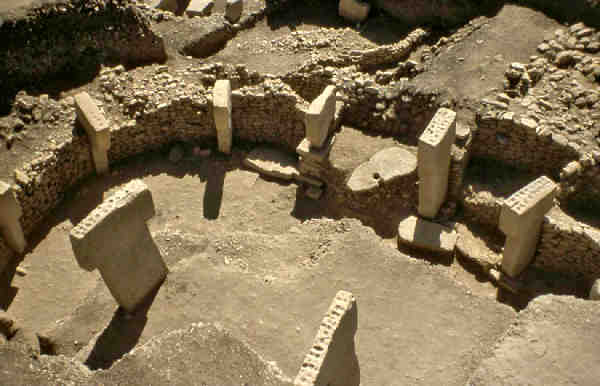
A scene from Gobekli Tepe

Göbekli Tepe is old.  I mean seriously old.  For example, I’m very familiar, being an Englishman, with the mystery and antiquity of Stonehenge.  But even the revised estimates of Stonehenge’s age, now believed to be 3,000 B.C., don’t measure up to the age of Göbekli Tepe.

The Smithsonian website explains much in a fascinating article about Gobekli Tepe, (do click on that link as the Smithsonian article is extremely interesting).

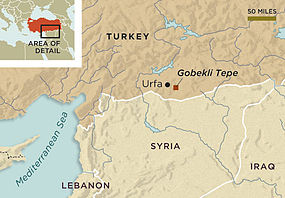
Six miles from Urfa, an ancient city in southeastern Turkey, Klaus Schmidt has made one of the most startling archaeological discoveries of our time: massive carved stones about 11,000 years old, crafted and arranged by prehistoric people who had not yet developed metal tools or even pottery. The megaliths predate Stonehenge by some 6,000 years. The place is called Gobekli Tepe, and Schmidt, a German archaeologist who has been working here more than a decade, is convinced it’s the site of the world’s oldest temple.

[my italics]

Imagine, there are fewer years between today and the building of Stonehenge than there are between the construction of Göbekli Tepe and Stonehenge!  Think about that!

Anyway, enjoy this video,

and if that grabs your interest then there is a longer 25-minute radio broadcast by Klaus Schmidt that is on YouTube, see below:

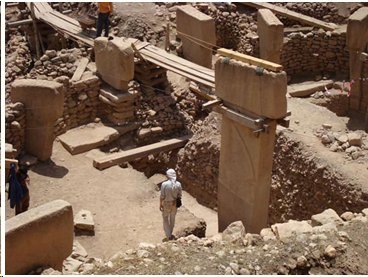
German archeologist Klaus Schmidt, from the German Archaeological Institute, who has been working as the head archeologist at Göbekli Tepe, a temple site located in southeastern Turkey close to the boarder to Syria. Klaus has been excavating there since 1994 and he joins us to talk about the excavation work, and to give us his impressions and theories about the site and the people who built it and worshiped at this ancient temple site. The temple is believed to have been erected in the 10th millennium BC (about 11,500 years ago). It is believed to be the oldest human-made place of worship, it’s even been called the Garden of Eden. Only about 3-5% of the site has been excavated so far, which has unveiled several stone circle rooms, only one of which has been dug down to the floor. As many as 20 such structures are thought to exist under the ground at the site, these have been detected by radar scans. These stone circles have large T-shaped pillars, some of the heaviest stones weigh up to 50 tons. The monoliths are decorated with carved reliefs of animals, abstract pictograms, sacred symbols and similarities to Neolithic cave paintings have been pointed out. The carefully carved figurative reliefs depict lions, bulls, boars, foxes, gazelles, donkeys, snakes and other reptiles, insects, arachnids, and birds, particularly vultures and water fowl. Göbekli Tepe means “Hill with a potbelly” although there already exists other interpretations of the name, connected to the word “Zep Tepi” or “The First Time” a period in beliefs of a mythological golden age when the gods lived amongst humanity together with half-divine offsprings of gods and humans. Is Göbekli Tepe the Garden of Eden? June 24, 2010

If you want more to read then I can do no better than recommend the article that Suzann linked to in her email.  It’s here and it starts thus,

Gobekli Tepe: 12,000 Years Old and Rewriting Human History

“This time what came first was the temple and then the city.”

– Klaus Schmidt, Ph.D., German Archaeological Institute

12,000-year-old circles of limestone columns weighing from 7 to 15 tons or more have been excavated in Gobekli Tepe, Turkey, about 6 miles northeast of Urfa.

Older than Egypt, Sumeria and Stonehenge, 40 standing T-shaped columns have so far been uncovered in four circles 98 feet (30 meters) in diameter. To date, no metal tools have been found since meticulous digging and dating began in 1994. Only 5% of the temple complex in repeating circles has been uncovered.

Ground-penetrating radar surveys indicate there might be at least 250 more standing stones in 18 still-buried circles. Finely honed reliefs and some 3-dimensional sculptures on the limestone columns depict boars, foxes, lions, birds, snakes, scorpions, vultures, reptiles, humans and other figures.

You’ll have to read the rest of the article here.

Sort of puts the history of man into perspective!

Unintended consequences

That law of unintended consequences strikes again.

With thanks to Rich S. for including me on his circulation of this,

ALERT!!!

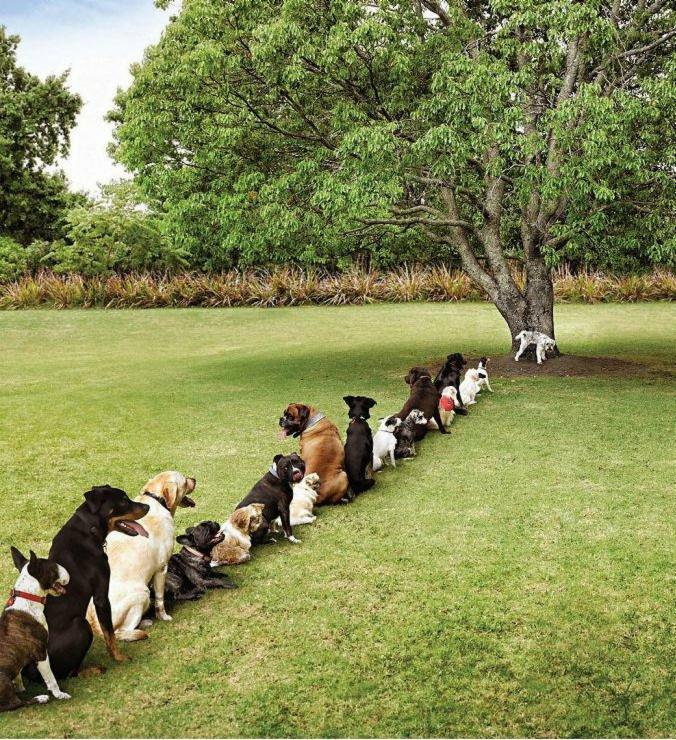
Look what happens when we cut down too many trees.

Global warming is one thing, but look at what might happen if we continue to clear our forests!

We have to stop cutting down trees! This is getting serious!

An insight into health

What we can learn about healthy lifestyles.

I am indebted to Schalk Cloete who has been leaving some very thoughtful comments on Learning from Dogs.  Schalk writes the blog, One in a Billion and more information about him can be learned here.  One of the very generous aspects of Schalk’s Blog is that his material is free from copyright, so I gratefully offer the following from his blog.

oooOOOooo

Perfect health the traditional way

There are a number of very special traditional communities around the world that enjoy amazing health and longevity completely without the help of modern medicine. People still contribute actively to their communities in their 80′s and 90′s and often surpass the magical age of 100 sometimes without ever visiting a doctor.

The most well-documented of these communities is the Okinawa islands in Japan, but a number of other such communities also exist. These include the region of Abkhasia in the Soviet Union, the Symi island in Greece, the Italian village Campodimele, and the mountain communities of Hunza in Pakistan, Vilcabamba in Ecuador and Bama in China.

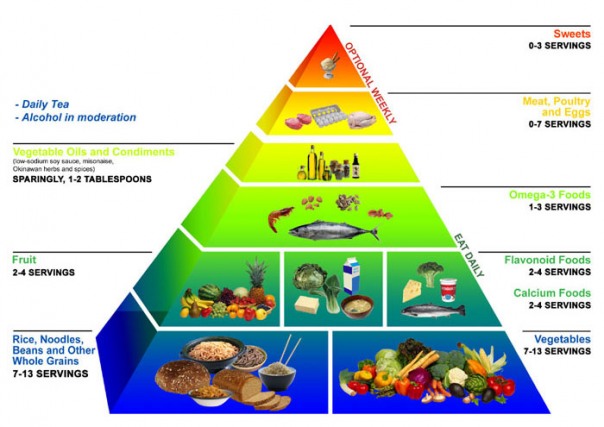
So, what are the secrets of these amazingly healthy people? Well, I don’t really think we can call them “secrets”, but here they are: these people simply eat a healthy, nutrient dense and predominately plant-based diet (Okinawan food pyramid given below), they never over-eat, they live very active lifestyles and they have a very strong sense of community.  Basically, they live the polar opposite of the modern western lifestyle.

These healthy lifestyle choices have some pretty impressive results. One fun statistic about Okinawa is that they boast 15% of the world’s confirmed super-centenarians (those over 110) while having only 0.0002% of the worlds people, thereby giving them a concentration of super-elders close to 100,000 times greater than the rest of the world. Wow…

In John Robbins’ excellent book “Healthy at 100″, he discloses a lot of well documented research on Okinawa, stating that they are about 15% as likely to die of heart disease and cancer as Americans. They also live 5 years longer on average.

When it comes to healthcare spending, Okinawa has the lowest healthcare costs in all of Japan, which already has a three times smaller per-capita healthcare expense than the USA. Thus, they have about a 7 times smaller chance of dying from degenerative disease and live 5 years longer, all while incurring about 5 times fewer healthcare expenses. Not bad, I’d say.

Unfortunately, the younger generation of Okinawans are rapidly screwing up these awesome stats by succombing to the American lifestyle brought by the US troops stationed on Okinawa.  It really is quite sad how many grandparents have to bury their grandchildren in Okinawa nowadays.

But this just shows how alluring our modern consumerist lifestyle really is. These young Okinawans saw the vibrant health of their parents and grandparents first hand, but still chose to consume their bodies into oblivion. Unthinking consumerism is indeed a very powerful enemy…

oooOOOooo

Fascinating article from Schalk, as I’m sure you will agree.

It’s really quite simple.

David Roberts of Grist offers a very clear message.

But before going to the piece, just let me say why there’s been a preponderance of climate change articles on Learning from Dogs.  Two reasons come to mind.  The first one is that this blog’s primary theme is integrity.  The idea of writing about what we can learn from the closest species to man, the domesticated dog, came out of the understanding that dogs are integrous creatures.  As I concluded in the Purpose of this blog,

Or, possibly, it’s more accurate to say that our civilisation is under threat and the time left to change our ways, to embrace those qualities of integrity, truth and consciousness for the very planet we all live on, is running out.

So what has this to do with dogs? Simply that man’s best friend, a relationship that goes back tens of thousands of years, is still a wonderful example of the many qualities that we need now for the very survival of the human species.

The second reason is that as many will be aware it is the G20 gathering this week and the more that millions around the world add their demand for common-sense and reason the better that will be.  Again, honesty and integrity, values not usually associated with the world’s political leaders, must come to the fore.

So now to the recent piece from Grist.

Climate change is simple: We do something or we’re screwed

By David Roberts

Back in April, The Evergreen State College invited me to speak at a TEDx event called “Hello Climate Change: Rethinking the Unthinkable.” Videos from the event are now online.

My talk was called “Climate change is simple.” I’m proud to say that I used only 17 of my allotted 15 minutes.

I’ve put an annotated version of my slideshow beneath the video, linking to sources and adding thoughts. The only thing I’ll say about the video itself is that I’ve always thought these things would be better with a soundtrack. If anybody out there on the web wants to make a mashup with it, add some good beats, be my guest.

This is the video of David’s talk.

And in case you think this is all green paranoia, then spend a couple of minutes watching this,

A group of scientists from around the world who are part of The Berkeley Initiative in Global Change Biology (BiGCB) is warning that an ever-growing population and widespread destruction of natural ecosystems may be driving Earth toward a planet-wide tipping point, an irreversible change in the biosphere with unpredictable consequences. Anthony Barnosky, professor of integrative biology at the University of California, Berkeley, is the lead author of a review paper about this issue in the journal Nature.
For full story: NewsCenter.berkeley.edu
Video by Roxanne Makasdjian, UC Berkeley Media Relations

NB. I found the sound levels on these videos to be rather low – hope you can hear them clearly.

Changing our fuel would be a great move.

A recommendation to watch this film.

I’m talking about the film Fuel which Jean and I watched on Monday night.

Here’s the trailer,

This movie trailer gives insight into the impeding oil dependency problem and hints at the biofuel solution. The Fuel Film raises awareness of 9/11, global warming, and moreover, how we can switch to an alternative fuel called biofuel. It is based on renewable sources such as algae or ethanol, costs less, and combats the impeding destruction of the environment.

But Top Documentary Films has the full film available, the link is here. (And see below)  TDF describe the film, thus,

Eleven years in the making, FUEL is the in-depth personal journey of filmmaker and eco-evangelist Josh Tickell, who takes us on a hip, fast-paced road trip into America’s dependence on foreign oil.

Combining a history lesson of the US auto and petroleum industries and interviews with a wide range of policy makers, educators, and activists such as Woody Harrelson, Sheryl Crow, Neil Young and Willie Nelson.

Animated by powerful graphics, FUEL looks into our future offering hope via a wide-range of renewable energy and bio-fuels. Winner of the Sundance Audience Award.

The events of Sept. 11 and Hurricane Katrina factor in both visually and thematically, providing provocative anchors for the movie’s indictment of what Tickell believes is the Big Oil-cozy, ecologically indifferent Bush administration.

Johnny O’Hara’s WGA Award-nominated script doesn’t dwell on muckraking, however; it’s more focused on broadly inspiring viewers than preaching to the converted.

Interviews with a wide range of environmentalists, policy makers and educators, along with such “green” celebrities as Woody Harrelson, Sheryl Crow and Larry Hagman offer serious fuel for thought – as well as for action.
Smartly animated interstitials, memorable archival material and a lively soundtrack round out the fast-paced proceedings.

Have to say that the film was powerful and compelling and a great reminder that a sustainable way of life for all of us doesn’t mean the end of the world as we know it.  Far from it; the word ‘sustainable’ is the clue here!

Here’s the full film,

Director Josh Tickell takes us along for his 11 year journey around the world to find solutions to America’s addiction to oil. A shrinking economy, a failing auto industry, rampant unemployment, an out-of-control national debt, and an insatiable demand for energy weigh heavily on all of us. Fuel shows us the way out of the mess we’re in by explaining how to replace every drop of oil we now use, while creating green jobs and keeping our money here at home. The film never dwells on the negative, but instead shows us the easy solutions already within our reach.

Finally, a little footnote for all you Planet watchers out there.  Summer starts, as in the summer solstice, today (the 20th) in North America at 7:09 P.M. EDT (UTC -4 hours) or 4:09 P.M. MST (UTC -7 hours) and in the UK at 23:09 UTC.