How a good breakfast is as relevant to dogs as it is to humans.
A little over three weeks ago, on the 10th October to be precise, there was a fascinating article on Nature news from the BBC. This was how it opened,
Dogs’ breakfasts boost search performance, says study
By Jeremy Coles
Reporter, BBC Nature
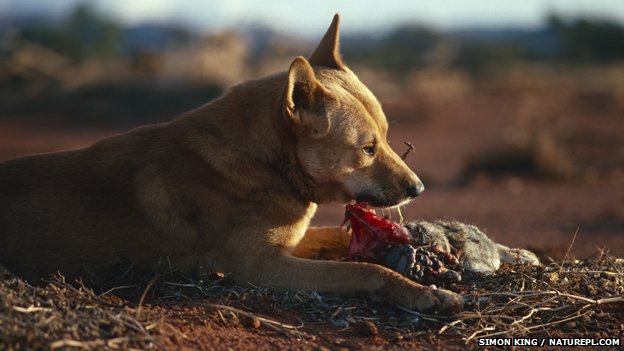
How important is breakfast for a wild dog?
Eating a morning meal increases search accuracy in dogs, a new study suggests.
Researchers at the University of Kentucky tested the search performance of trained dogs after either consuming breakfast or fasting.
The study found the canines searched more accurately 30 minutes after a meal than those that searched when hungry.
Findings from the research by Dr Holly Miller and colleague Charlotte Bender were recently published in the journal Behavioural Processes.
Studies demonstrating that children do better in cognitive exercises when they have eaten breakfast led Dr Miller to “wonder if a breakfast would also improve performance by dogs”.
So how on earth does one ‘study’ such a behaviour in a scientific manner?
So Dr Miller and Ms Bender tested trained domestic dogs’ (Canis familiaris) accuracy when finding hidden food, after either eating a morning meal or completing the task without eating.
To ensure that all dogs had depleted energy levels before the search test began, the dogs were required to exhibit self-control for 10 minutes in a ‘sit and stay’ exercise.
A previous study by Dr Miller demonstrated that the exertion of self-control depletes dogs’ energy levels as well as their ability to perform certain tasks.
The dogs were shown a treat that was subsequently hidden in one of six containers. Dogs that had eaten breakfast 30 minutes beforehand navigated to the treat more accurately than those that hadn’t eaten for 12 hours.
“The key finding here is rather simple: breakfast can aid performance by dogs,” Dr Miller told BBC Nature.
But is the same true for their wild relatives – the closely related wolves, coyotes and jackals?
“Here is where it gets a bit complicated,” she said.
A well-balanced diet
When “dogs eat a diet that is rich with carbohydrates [such as commercial dog food], their brains are more dependent on glucose and more affected by fluctuations in glucose levels,” explained Dr Miller.
But with a diet of hunted meat, where the carbohydrate level is low but fat content is high, the brain switches to its secondary fuel source of ketone bodies instead of the preferential glucose.
“If these animals are consuming a natural diet, that is not scavenged from the dump, they are probably in a state of ketosis where energy for neural processes does not fluctuate much,” Dr Miller explained.
This means that a single small meal may not have a big effect on problem-solving and may make “wolves and coyotes less impulsive and more cautious”.
But Dr Miller continued, “When hungry they become less able to control their behaviour and this might be why, when hungry, they are so much more dangerous and unpredictable.”
Operation Migration has played a leading role in the reintroduction of endangered Whooping cranes into eastern North America since 2001. In the 1940s the species was reduced to just 15 birds.
Operation Migration is a founding partner of the Whooping Crane Eastern Partnership (WCEP), the coalition of non-profit organizations and government agencies behind the project to safeguard the endangered Whooping crane from extinction.
This post appeared first on Lack of Environment on Monday; and is re-published here today with the permission (and active editorial co-operation!) of Martin Lack. If you have not signed the Avaaz petition already, you will find links to it embedded in the email message at the end of this post (from Hollywood megastar Leonardo diCaprio).
————-
I must admit that I thought the Antarctic Treaty System protected the species living in the Great Southern Ocean – by virtue of the 1982 Convention for the Conservation of Antarctic Marine Living Resources (CCMLR). However, it would seem that, in the same way that the Convention on International Trade in Endangered Species (CITES) has not eliminated trade in ivory (etc), it may be that the CCMLR is failing to protect endangered species in the Antarctic. The key to this paradox may therefore be in the word “Conservation”. If so, what the Antarctic Ocean would need is an equivalent to the Protocol on Environmental Protection to the Antarctic Treaty (1991). However, looking at that Protocol it already appears to include the entire Southern Ocean above a Latitude of 60 Degrees South. If so, then you might conclude that 1991 Protocol is not working or not being enforced effectively. Sadly, it would appear to be more sinister than that.
Some of the parties to the existing CCMLR are clearly trying to subvert it!
Following receipt of an email from Leonardo diCaprio (writing on behalf of Avaaz) – appended below – I have retrieved the information below from the website of the Antarctic Ocean Alliance, which provides some useful background…
The oceans around Antarctica are some of the most precious in the world. They’re one of the last places on Earth still relatively untouched by human activity.
1. This beautiful, icy ocean environment is home to almost 10,000 species, many of which can be found nowhere else on the planet.
2. Adelié and emperor penguins, Antarctic petrels and minke whales, Ross Sea killer whales, colossal squid and Weddell seals all thrive in this inhospitable climate.
3. While many other marine ecosystems in other parts of the world have been devastated by development, pollution, mining, oil drilling and overfishing, Antarctica’s Ross Sea remains the most intact marine ecosystem on the planet.
4. About 70% of our earth’s surface is ocean, yet less than 1% of it is fully protected from human development.
5. 85% of the world’s fisheries are classified as over exploited, fully exploited, depleted or recovering from depletion, so commercial fishing vessels are moving to remote waters such as Antarctica’s in search of fish (according to the UN’s Food and Agriculture Organisation).
6. Antarctica’s species are now under increasing pressure from commercial fishing for the slow-growing and long-lived Antarctic and Patagonian toothfish, (also known in parts of the world as the Chilean sea bass). These toothfish have become an expensive delicacy, sold in high-end restaurants as well as speciality seafood markets, primarily in the United States, Japan and Europe.
7. Fishing by illegal, unregulated and unreported (IUU) vessels, often using “flags of convenience” is on the rise. In some parts of the Southern Ocean, unsustainable fishing methods such as deep sea gillnets are in use in some areas. These gillnets can reach more than 100 kilometres in length and are a threat to almost all marine life, including marine mammals and non-targeted fish species such as rays.
8. Then there’s krill – an essential part of the food chain that supports the region’s whales, penguins, seals, fish and birdlife. Growing demand for krill as a health supplement and as food for fish farms has put it at risk. Climate change has already been linked to a significant decline in krill numbers – up to 80% in one region around the Scotia Sea (Atkinson et al 2004).
9. Poor management and the large-scale removal of toothfish and species like krill would threaten the very balance of Antarctica’s unique and fragile ocean ecosystems.
10. In 1991, the international community made a courageous decision to protect the Antarctic region as a natural reserve for peace and science. This included a ban on mining but this protection does not extend to Antarctica’s magnificent marine environment, leaving it at risk.
———–
I shall leave it to Leonardo diCaprio to explain the whole story:
Dear friends,
I’m writing to ask for your help. Within days, governments could begin turning wide stretches of the Antarctic ocean into the world’s largest marine sanctuary, saving the habitat of whales, penguins, and thousands of other polar species from industrial fishing fleets. But they won’t act unless we speak out now.
Most countries support the sanctuary, but Russia, South Korea and a few others are threatening to vote it down so they can plunder these seas now that others have been fished to death. This week, a small group of negotiators will meet behind closed doors to make a decision. A massive people-powered surge could break open the talks, isolate those attempting to block the sanctuary, and secure a deal to protect over 6 million square kilometers of the precious Antarctic ocean.
The whales and penguins can’t speak for themselves, so it’s up to us to defend them. Let’s change negotiators’ minds with a massive wave of public pressure — Avaaz will surround the meeting with hard-hitting ads, and together we’ll deliver our message to delegates via a deafening cry on social networks. Sign this urgent petition and share it with everyone you know:
More than 10,000 species call these remote Antarctic waters their home, including blue whales, leopard seals, and emperor penguins, and many are found nowhere else on Earth. Climate change has already taken a cruel toll on their fragile habitat, but they will come under further threat from the industrial fishing fleet’s mile-long nets cast over these precious waters. Only a marine sanctuary will increase their odds for survival.
The 25-member governing body that regulates the Antarctic oceans has already committed to creating these marine protected areas. But the two plans being negotiated — one to protect part of the fragile Ross Sea and one for East Antarctica — are at risk of dilution or delay. Shockingly, the talks have been off the media’s radar and countries like Russia and South Korea are betting their opposition will go unnoticed, but if we cast a public spotlight on the talks we can force them to back off, and encourage champions like the US and EU to push for even stronger protections.
The future of the Southern ocean is in our hands. Let’s unleash a massive surge of global pressure and ensure governments don’t put profits before our planet. Please sign and share this petition with everyone you know:
The Avaaz community has come together time and time again to protect our oceans. We’ve already helped win two of the largest marine reserves in the world. But the threats to our oceans continue, and one by one species are coming closer to the brink. Join me in saving the Antarctic ocean before it’s too late.
Carrots in the car park. Radishes on the roundabout. The deliciously eccentric story of the town growing ALL its own veg
Admittedly, it sounds like the most foolhardy of criminal capers, and one of the cheekiest, too.
Outside the police station in the small Victorian mill town of Todmorden, West Yorkshire, there are three large raised flower beds.
If you’d visited a few months ago, you’d have found them overflowing with curly kale, carrot plants, lettuces, spring onions — all manner of vegetables and salad leaves.
Today the beds are bare. Why? Because people have been wandering up to the police station forecourt in broad daylight and digging up the vegetables. And what are the cops doing about this brazen theft from right under their noses? Nothing.
Follow the links on the left to see in detail what we’re up to. Or you can get involved yourself. Our growing around town is organised by our community growers’ group: find out about that here.
From our beginnings with herb gardens, we’ve taken to planting and growing veggies and trees round town we’ve planted several orchards and there are more to come, and we’re working with public bodies round town to use their land – like the fire station and the railway station – or to work with them on their own Incredible ideas – like social landlord Pennine Housing.
We’re reaching back into local memories and knowledge with our History project.
Our campaigns aim to make different futures happen, through local campaigns like Every Egg Matters, and by spreading the word locally, regionally and nationally.
We hope to make a difference with major projects. We now have Lottery funding for our food hub at Tod High School and are just waiting for the final planning permission. That bid included the work of a food-inspirer a position now held by Sally.
We have also branched out to greenfield sites, working on donated land in Walsden to create a major resource for growing and learning, and on donated land in Gorpley to develop ideas about hill-top farming. More about them here
Growing herbs at the Station – of course!
What an absolutely fabulous example to the rest of the world!
Hopefully, you were able to watch the Amory Lovins talk in yesterday’s post? If not, then do find time to watch how Professor Lovins sets out the powerful argument that the USA could soon, relatively speaking, be energy self-sufficient.
So on top of the Lovins presentation, I wanted to draw your attention to an item on Climate Crocks last October 5th.
One of the great stories untold in the American media is the ongoing revolution in one of the world’s most advanced economies – as Germany undertakes a bold and serious transition from powering a great engine of prosperity on fossil fuels, to plentiful and inexhaustible renewable energy.
Listening to Mitt Romney double and triple down on the bogus Fox/Fossil narrative about “clean coal” and failed renewables, it might be well to consider how one of our toughest manufacturing competitors is going all-in on the high stakes renewable energy revolution of the new century.
The article is a detailed analysis of how Germany is powering ahead, pardon the pun, in the provision of non carbon-based power, as this reference illustrates,
German use of coal to generate electricity has declined steadily from 1990 to 2011, according to readily available statistics on the German electricity system. The percentage of coal-fired electricity in German electricity generation has fallen from 56.7% in 1990 to 43.5% last year–a decrease of more than 10% despite a increase in total electricity generation during the same period of about 10%. At the same time the share of renewable energy in the electricity mix has increased from 3.6% to 19.9%, mostly due to the rapid development of wind energy and biomass.
Here is one for you- http://www.solarroadways.com/intro.shtml – the idea is totally leftfield, but it fulfils certain issues such as distribution, decentralisation of power and offers a recharge network for electric cars and it has received a big chunk of government funding. It is so out there that I wonder if it could possibly be the answer but you never know.
Very quickly one finds that Solar Roadways are involved in something VERY interesting, namely,
Years ago, when the phrase “Global Warming” began gaining popularity, we started batting around the idea of replacing asphalt and concrete surfaces with solar panels that could be driven upon. We thought of the “black box” on airplanes: We didn’t know what material that black box was made of, but it seemed to be able to protect sensitive electronics from the worst of airline crashes.
Suppose we made a section of road out of this material and housed solar cells to collect energy, which could pay for the cost of the panel, thereby creating a road that would pay for itself over time. What if we added LEDs to “paint” the road lines from beneath, lighting up the road for safer night time driving? What if we added a heating element in the surface (like the defrosting wire in the rear window of our cars) to prevent snow/ice accumulation in northern climates? The ideas and possibilities just continued to roll in and the Solar Roadway project was born.
Now watch this!
and then watch this, as nearly 1.5 million others have!
The Solar Roadways project is working to pave roads with solar panels that you can drive on. Co-founder Scott Brusaw has made some major steps forward since our first visit back in 2007, so we visited him again for an exclusive update on the project, including the first ever video recorded of the Solar Roadways prototype! For more information visit http://www.solarroadways.com . This Solar Roadway project is highlighted as one of many planet-friendly solutions in the feature film by YERT – Your Environmental Road Trip. To learn more about YERT, visit http://yert.com .
I started writing this post back on the 25th September. Why so far back? Because that day something came into my in-box that deserved the widest circulation. It’s an event being held just under a month from today, November 14th. But it seemed worthwhile to give this amount of notice. However, the reason why I wanted to start it back in September was because in the last 24 hours of that day, the 25th, the UK offered very good evidence of the significant increase in severe weather.
From the UK’s Met Office blog on the 25th September, 2012, (I have included the inches equivalent of the mm figures)
Rainfall figures: over a month’s worth of rain in two days
Rainfall totals for the past few days – from 1:00 am Sunday morning to 8:00 am this morning [Tuesday] – show some areas have already had more than twice their usual September rainfall. Ravensworth, in North Yorkshire, has seen the highest total, with 107.8 mm [4.24 in] falling, over 200 % of its average September rainfall.
The rainfall has been widespread, with many areas across the United Kingdom receiving large totals. Killylane, in Antrim Northern Ireland saw 98.2 mm [3.87 in], and high totals were also recorded in the south-west, with 72.4 mm [2.85 in] in Filton and 65.2 mm [2.57 in] at Dunkeswell Aerodrome.
Dunkeswell Aerodrome in Devon was where I used to fly our group-owned Piper Super Cub, still in military markings.
Piper Super Cub at Dunkeswell AerodromeA carriage made for two!
Anyway, back to the plot!
Also on that day (September 25th) the website Think Progress released this item,
Markey/Waxman Report: Carbon Pollution Creating A ‘Cocktail Of Heat And Extreme Weather’
By Climate Guest Blogger and Stephen Lacey on Sep 25, 2012 at 3:31 pm
by Katie Valentine and Stephen Lacey
Two House Democrats have released a report that aims to connect the dots on climate change and extreme weather events.
The staff report, issued by Henry Waxman (D-Calif.) and Edward Markey (D-Mass.), outlines the past year’s record-setting temperatures, storms, droughts, water levels and wildfires, and is being circulated in an attempt to rebuild congressional momentum to address climate change.
“The evidence is overwhelming — climate change is occurring and it is occurring now,” said Rep. Waxman, a Ranking Member of the Energy and Commerce Committee, in a statement.
The report outlines the stunning array of record-breaking extreme weather events throughout 2012 within five categories:
Extreme temperatures
July was the hottest month ever recorded in the continental U.S. Some areas were 8 degrees warmer than average, with the average temperature in the lower 48 states at 77.6 degrees Fahrenheit, 3.3 degrees above the 20th century average.
Spring 2012 saw the warmest March, third-warmest April and second-warmest May in history, and was approximately 5.2 degrees Fahrenheit above average overall.
Through late June 2011, daily record highs were outnumbering daily record lows by 9-to-1.
Drought
As of September, 64 percent of the continental U.S. is experiencing drought, with August and September 2012 comparable to the worst months of the 1930s Dust Bowl.
By the beginning of August, more than half the counties in the U.S. had been designated disaster zones because of drought.
As of August, 51 percent of corn and 38 percent of soybeans grown in the U.S. were rated as poor or very poor by the U.S. Department of Agriculture. Some states’ corn fared worse – Indiana had 70 percent of its corn rated as poor or very poor, and Missouri had 84 percent.
Wildfires
This fire season 8.6 million acres – roughly the size of Connecticut and New Jersey combined – have burned in the U.S., with fires still burning in parts of the West.
Wildfires in Colorado have killed six people, destroyed 600 homes and caused about $500 million in property damage.
There has been nearly a four-fold increase in large wildfires in the West in recent decades, with fires burning longer and more intensely and wildfire seasons lasting longer.
Storms
Tropical Storm Debby caused Florida to have its wettest June on record. The storm killed at least seven people and also damaged more than 7,500 homes and businesses.
In July, the “derecho” storm system killed at least 23 people and left more than 3.7 million people without power.
In August, Hurricane Isaac caused storm surges of up to 15 feet in some places and contributed to Louisiana and Mississippi experiencing their second-wettest August on record and to Florida experiencing its wettest summer on record.
Extreme water levels and water temperatures
In July, water in the Great Lakes reached temperatures of 60 and 65 degrees Fahrenheit – more than 10 degrees warmer than the same time last year.
In August, water temperatures of up to 97 degrees and low water levels caused tens of thousands of fish to die in Midwestern lakes and rivers.
Low water levels in the Mississippi watershed have caused some barge companies to reduce their loads by 25 percent and have caused harbor closures in Tennessee, Missouri, Arkansas and Mississippi.
According to the report, 2012 natural disasters (not including wildfires or drought) have caused $22 billion in insured losses and more than 220 deaths as of August. The full cost of 2012’s extreme weather events isn’t yet known, but it’s expected to rival 2011’s record-breaking $55 billion.
The document outlines what scientists following the link between extreme weather and climate change have been saying for years: more carbon pollution adds extra energy in the atmosphere, thus warming the planet and making extreme weather events more likely.
We’ll move between our home studio in New York City and into each region of the world, bringing voices, news and multimedia content across all 24 time zones. We’ll feature videos from around the globe, man-on-the-street reports, music, and most importantly, stories from communities moving forward with solutions.
Most of all, we’ll generate new energy and urgency around the fact that we must — and we can — work together to address the climate crisis.
GET INVOLVED
Sign up today to be a part of the global community taking part in 24 Hours of Reality. RSVP on Facebook. Share this event with your friends. Submit your own videoabout the impacts of climate change where you live. And keep checking this page: We’ll post further details as the event draws closer.
Millions of people around the world know that the weather, their climate is changing. But if you can take some more powerful evidence of just how it’s all changing then go and read a recent report on the Grist website, entitled ‘Deadly connection: New report on extreme weather and climate change’
For every case of cruelty towards animals there is an example of boundless love.
I first saw this story on the popular Grist website, from which I quote,
Watch rescued ducks discover the water for the first time in this heartwarming video
These ducks were rescued from a hoarder, who was keeping over 160 fowl in filthy, overcrowded conditions. The neglected birds had never even seen a pond. But the Woodstock Farm Animal Sanctuary has nursed them back to health, repairing infections, injured feet, and nutritional deficiencies — and now you can watch these newly rehabilitated duckies learn to swim. They’re a bit confused about it at first, but eventually, they take to it like a … well, you know.
Just be warned that the embedded link to that story about the hoarder is a tough read. Although it does have a happy ending, a very happy ending.
Rescue: Over 130 Neglected Birds from Hoarding Case
Almost a year after our initial efforts to rescue over 160 ducks, geese, turkeys and chickens that were living with a hoarder in appalling conditions, we were finally able to bring them to safety. They are now enjoying sunshine on their feathers, water to swim in, clean bedding, warmth, grass under their feet and room to roam for the very first time. Initially, we tried working with their owner towards an amicable surrender, pleading with her to consider the quality of life for the birds and used many of our own resources to help provide a cleaner environment for them. The hoarder’s initial intentions were good and her love for the animals apparent, but she neglected to see how their overcrowding, over-breeding, lack of shelter and space and filthy conditions were hurting them. She also continued to buy chicks and ducklings online and mail ordered to her.
We are treating all of their health issues by providing veterinary care, nutritional supplements, quality food and vitamins daily in their water. They are beginning to thrive with their new freedom. It’s a joy for us to see and we’re so happy to be able to give these animals the lives they deserve. YOUR SUPPORT helps in many cases like this and give them life-long shelter and the care and love they need and so deserve.
Much gratitude to the ASPCA for a grant to help to care for all of these very-deserving animals.
Many of these birds are up for adoption, please contact us if interested.
So back to the ducks!
Probably my favorite part is when the ducks keep running away from the water in what, as one Woodstock worker points out, looks just like a Benny Hill routine. Or maybe it’s the part where the sanctuary workers go for the “tough love uncle” approach to swimming lessons, and just chuck the birds in the pond. Or maybe it’s watching that first duck figure out that the water is amazing. Or maybe it’s watching ALL of them figure out that the water is amazing! What I’m saying is that I could, and will, watch this video all day.
Civilizations die from suicide, not by murder. Arnold J Toynbee
I’m not sure where to start but as a result of finishing a particular book, plus a recent essay on Tom Dispatch, then another recent essay from Simon Johnson of Baseline Scenario fame, there were so many thoughts bumping around this aged brain that I had no alternative than to offer them to you, dear reader. You should also be warned that this is going to be two posts, covering today and tomorrow.
So let’s start with the book: The United States of Fear by Tom Engelhardt. To be brutally honest, I purchased the book more as a gesture of support to Tom who has been very supportive of Learning from Dogs, in particular allowing me permission to reproduce any essays that were published on TomDispatch, as a number have so been. What an error of judgment! Tom’s book provided another one of those rare but inspirational occasions where you know the world will never look quite the same again!
The back cover page of the book sets out the theme, thus,
Published 2011
In 2008, when the US National Intelligence Council issued its latest report meant for the administration of newly elected President Barack Obama, it predicted that the planet’s “sole superpower” would suffer a modest decline and a soft landing fifteen years hence. In his new book The United States of Fear, Tom Engelhardt makes clear that Americans should don their crash helmets and buckle their seat belts, because the United States is on the path to a major decline at a startling speed. Engelhardt offers a savage anatomy of how successive administrations in Washington took the “Soviet path”—pouring American treasure into the military, war, and national security—and so helped drive their country off the nearest cliff.This is the startling tale of how fear was profitably shot into the national bloodstream, how the country—gripped by terror fantasies—was locked down, and how a brain-dead Washington elite fiddled (and profited) while America quietly burned.
Think of it as the story of how the Cold War really ended, with the triumphalist “sole superpower” of 1991 heading slowly for the same exit through which the Soviet Union left the stage twenty years earlier.
One of the fascinating aspects of the book is that it was put together from 32 essays previously published online by Tom; the complete list with titles and dates is on pps. 205 & 206. So giving you a real feel for the book is easy! I’m going to do that by linking to one of those essays available in the archives of TomDispatch here. That essay was called Washington’s Echo Chamber and appears in the book starting on page 170 under the sub-heading of Five Ways to Be Tone Deaf in Washington. Let me quote you a little,
So much of what Washington did imagine in these last years proved laughable, even before this moment swept it away. Just take any old phrase from the Bush years. How about “You’re either with us or against us”? What’s striking is how little it means today. Looking back on Washington’s desperately mistaken assumptions about how our globe works, this might seem like the perfect moment to show some humility in the face of what nobody could have predicted.
It would seem like a good moment for Washington — which, since September 12, 2001, has been remarkably clueless about real developments on this planet and repeatedly miscalculated the nature of global power — to step back and recalibrate.
As it happens, there’s no evidence it’s doing so. In fact, that may be beyond Washington’s present capabilities, no matter how many billions of dollars it pours into “intelligence.” And by “Washington,” I mean not just the Obama administration, or the Pentagon, or our military commanders, or the vast intelligence bureaucracy, but all those pundits and think-tankers who swarm the capital, and the media that reports on them all. It’s as if the cast of characters that makes up “Washington” now lives in some kind of echo chamber in which it can only hear itself talking.
As a result, Washington still seems remarkably determined to play out the string on an era that is all too swiftly passing into the history books. While many have noticed the Obama administration’s hapless struggle to catch up to events in the Middle East, even as it clings to a familiar coterie of grim autocrats and oil sheiks, let me illustrate this point in another area entirely — the largely forgotten war in Afghanistan. After all, hardly noticed, buried beneath 24/7 news from Egypt, Bahrain, Libya, and elsewhere in the Middle East, that war continues on its destructive, costly course with nary a blink.
That was published by Tom a little over 18 months ago! Seems as relevant today as then! Let me stay with perspectives from 2011.
Chomsky, visiting Vancouver, Canada in March 2004
On the 24th August 2011 Noam Chomsky wrote an essay entitled American Decline: Causes and Consequences. Chomsky, as Wikipedia relates, is Professor (Emeritus) in the Department of Linguistics & Philosophy at MIT, where he has worked for over 50 years. Here is how that essay opens,
In the 2011 summer issue of the journal of the American Academy of Political Science, we read that it is “a common theme” that the United States, which “only a few years ago was hailed to stride the world as a colossus with unparalleled power and unmatched appeal — is in decline, ominously facing the prospect of its final decay.” It is indeed a common theme, widely believed, and with some reason. But an appraisal of US foreign policy and influence abroad and the strength of its domestic economy and political institutions at home suggests that a number of qualifications are in order. To begin with, the decline has in fact been proceeding since the high point of US power shortly after World War II, and the remarkable rhetoric of the several years of triumphalism in the 1990s was mostly self-delusion. Furthermore, the commonly drawn corollary — that power will shift to China and India — is highly dubious. They are poor countries with severe internal problems. The world is surely becoming more diverse, but despite America’s decline, in the foreseeable future there is no competitor for global hegemonic power.
So, according to Chomsky, it’s not as ‘black and white’ as Engelhardt sets out. But do read the full essay.
Nevertheless, the idea that the USA is ‘fiddling while Rome burns’ is supported in an essay published by Mattea Kramer on TomDispatch on the last day of September. I’m going to end Part One by republishing the essay in full. (Note that this is being published here after the first ‘debate’ had taken place.)
oooOOOooo
Tough Talk for America
A Guide to the Presidential Debates You Won’t Hear
By Mattea Kramer
Five big things will decide what this country looks like next year and in the 20 years to follow, but here’s a guarantee for you: you’re not going to hear about them in the upcoming presidential debates. Yes, there will be questions and answers focused on deficits, taxes, Medicare, the Pentagon, and education, to which you already more or less know the responses each candidate will offer. What you won’t get from either Mitt Romney or Barack Obama is a little genuine tough talk about the actual state of reality in these United States of ours. And yet, on those five subjects, a little reality would go a long way, while too little reality (as in the debates to come) is a surefire recipe for American decline.
So here’s a brief guide to what you won’t hear this Wednesday or in the other presidential and vice-presidential debates later in the month. Think of these as five hard truths that will determine the future of this country.
1. Immediate deficit reduction will wipe out any hope of economic recovery: These days, it’s fashionable for any candidate to talk about how quickly he’ll reduce the federal budget deficit, which will total around $1.2 trillion in fiscal 2012. And you’re going to hear talk about the Simpson-Bowles deficit reduction plan and more like it on Wednesday. But the hard truth of the matter is that deep deficit reduction anytime soon will be a genuine disaster. Think of it this way: If you woke up tomorrow and learned that Washington had solved the deficit crisis and you’d lost your job, would you celebrate? Of course not. And yet, any move to immediately reduce the deficit does increase the likelihood that you will lose your job.
When the government cuts spending, it lays off workers and cancels orders for all sorts of goods and services that would generate income for companies in the private sector. Those companies, in turn, lay off workers, and the negative effects ripple through the economy. This isn’t atomic science. It’s pretty basic stuff, even if it’s evidently not suitable material for a presidential debate. The nonpartisan Congressional Research Service predicted in a September report, for example, that any significant spending cuts in the near-term would contribute to an economic contraction. In other words, slashing deficits right now will send us ever deeper into the Great Recession from which, at best, we’ve scarcely emerged.
Champions of immediate deficit reduction are likely to point out that unsustainable deficits aren’t good for the economy. And that’s true — in the long run. Washington must indeed plan for smaller deficits in the future. That will, however, be a lot easier to accomplish when the economy is healthier, since government spending declines when fewer people qualify for assistance, and tax revenues expand when the jobless go back to work. So it makes sense to fix the economy first. The necessity for near-term recovery spending paired with long-term deficit reduction gets drowned out when candidates pack punchy slogans into flashes of primetime TV.
2. Taxes are at their lowest point in more than half a century, preventing investment in and the maintenance of America’s most basic resources: Hard to believe? It’s nonetheless a fact. By now, it’s a tradition for candidates to compete on just how much further they’d lower taxes and whether they’ll lower them for everyone or just everyone but the richest of the rich. That’s a super debate to listen to, if you’re into fairy tales. It’s not as thrilling if you consider that Americans now enjoy the lightest tax burden in more than five decades, and it happens to come with a hefty price tag on an item labeled “the future.” There is no way the U.S. can maintain a world-class infrastructure — we’re talking levees, highways, bridges, you name it — and a public education system that used to be the envy of the world, plus many other key domestic priorities, on the taxes we’re now paying.
Anti-tax advocates insist that we should cut taxes even more to boost a flagging economy — an argument that hits the news cycle nearly every hour and that will shape the coming TV “debate.” As the New York Times recently noted, however, tax cuts might have been effective in giving the economy a lift decades ago when tax rates were above 70%. (And no, that’s not a typo, that’s what your parents and grandparents paid without much grumbling.) With effective tax rates around 14% for Mitt Romney and many others, further cuts won’t hasten job creation, just the hollowing out of public investment in everything from infrastructure to education. Right now, the negative effects of tax increases on the most well-off would be small — read: not a disaster for “job creators” — and those higher rates would bring in desperately-needed revenue. Tax increases for middle-class Americans should arrive when the economy is stronger.
Right now, the situation is clear: we’re simply not paying enough to fund the basic ingredients of prosperity from highways and higher education to medical research and food safety. Without those funds, this country’s future won’t be pretty.
3. Neither the status quo nor a voucher system will protect Medicare (or any other kind of health care) in the long run: When it comes to Medicare, Mitt Romney has proposed a premium-support program that would allow seniors the option of buying private insurance. President Obama wants to keep Medicare more or less as it is for retirees. Meanwhile, the ceaseless rise in health-care costs is eating up the wages of regular Americans and the federal budget. Health care now accounts for a staggering 24% of all federal spending, up from 7% less than 40 years ago. Governor Romney’s plan would shift more of those costs onto retirees, according to David Cutler, a health economist at Harvard, while President Obama says the federal government will continue to pick up the tab. Neither of them addresses the underlying problem.
Here’s reality: Medicare could be significantly protected by cutting out waste. Our health system is riddled with unnecessary tests and procedures, as well as poorly coordinated care for complex health problems. This country spent $2.6 trillion on health care in 2010, and some estimates suggest that a staggering 30% of that is wasted. Right now, our health system rewards quantity, not quality, but it doesn’t have to be that way. Instead of paying for each test and procedure, Medicare could pay for performance and give medical professionals a strong incentive to provide more efficient and coordinated care. President Obama’s health law actually pilot tests such an initiative. But that’s another taboo topic this election season, so he scarcely mentions it. Introducing such change into Medicare and the rest of our health system would save the federal government tens of billions of dollars annually. It would truly preserve Medicare for future generations, and it would improve the affordability of health coverage for everyone under 65 as well. Too bad it’s not even up for discussion.
4. The U.S. military is outrageously expensive and yet poorly tailored to the actual threats to U.S. national security: Candidates from both parties pledge to protect the Pentagon from cuts, or even, in the case of the Romney team, to increase the already staggering military budget. But in a country desperate for infrastructure, education, and other funding, funneling endless resources to the Pentagon actually weakens “national security.” Defense spending is already mind-numbingly large: if all U.S. military and security spending were its own country, it would have the 19th largest economy in the world, ahead of Saudi Arabia, Taiwan, and Switzerland. Whether you’re counting aircraft carriers, weapons systems, or total destructive power, it’s absurdly overmatched against the armed forces of the rest of the world, individually or in combination. A couple of years ago, then-Secretary of Defense Robert M. Gates gave a speech in which he detailed that overmatch. A highlight: “The U.S. operates 11 large carriers, all nuclear powered. In terms of size and striking power, no other country has even one comparable ship.” China recently acquired one carrier that won’t be fully functional for some time, if ever — while many elected officials in this country would gladly build a twelfth.
But you’ll hear none of this in the presidential debates. Perhaps the candidates will mention that obsolete, ineffective, and wildly expensive weapons systems could be cut, but that’s a no-brainer. The problem is: it wouldn’t put a real dent in national defense spending. Currently almost one-fifth of every dollar spent by the federal government goes to the military. On average, Americans, when polled, say that they would like to see military funding cut by 18%.
Instead, most elected officials vow to pour limitless resources into more weapons systems of questionable efficacy, and of which the U.S. already owns more than the rest of the world combined. Count on one thing: military spending will not go down as long as the U.S. is building up a massive force in the Persian Gulf, sending Marines to Darwin, Australia, and special ops units to Africa and the Middle East, running drones out of the Seychelles Islands, and “pivoting” to Asia. If the U.S. global mission doesn’t downsize, neither will the Pentagon budget — and that’s a hit on America’s future that no debate will take up this month.
5. The U.S. education system is what made this country prosperous in the twentieth century — but no longer: Perhaps no issue is more urgent than this, yet for all the talk of teacher’s unions and testing, real education programs, ideas that will matter, are nonexistent this election season. During the last century, the best education system in the world allowed this country to grow briskly and lift standards of living. Now, from kindergarten to college, public education is chronically underfunded. Scarcely 2% of the federal budget goes to education, and dwindling public investment means students pay higher tuitions and fall ever deeper into debt. Total student debt surpassed $1 trillion this year and it’s growing by the month, with the average debt burden for a college graduate over $24,000. That will leave many of those graduates on a treadmill of loan repayment for most or all of their adult lives.
Renewed public investment in education — from pre-kindergarten to university — would pay handsome dividends for generations. But you aren’t going to hear either candidate or their vice-presidential running mates proposing the equivalent of a GI Bill for the rest of us or even significant new investment in education. And yet that’s a recipe for and a guarantee of American decline.
Ironically, those in Washington arguing for urgent deficit reduction claim that we’ve got to do it “for the kids,” that we must stop saddling our grandchildren with mountains of federal debt. But if your child turns 18 and finds her government running a balanced budget in an America that’s hollowed out, an America where she has no chance of paying for a college education, will she celebrate? You don’t need an economist to answer that one.
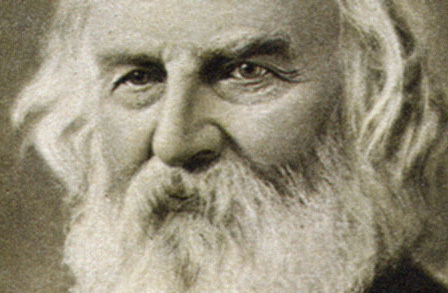
“Lives of great men all remind us, we can make our lives sublime, and, departing, leave behind us, footprints on the sands of time.” Longfellow.
Longfellow, the only American writer honored in the Poets’ Corner of Westminster Abbey.
Longfellow has been dead for 130 years, as of last March, but of his many wonderful words that have stayed with us over the last century and more, these must be some of the more familiar. (Or am I showing my appalling lack of literary knowledge?)
Following on from yesterday’s post about the scary mathematics of climate change, this really is the ONE thing that we have to learn from dogs; from nature. If we don’t live in harmony with our planet pretty damn soon, then this particular civilisation is not far from extinction. Let me remind you of a key paragraph from yesterday,
It’s simple math: we can burn 565 more gigatons of carbon and stay below 2°C of warming — anything more than that risks catastrophe for life on earth. The only problem? Fossil fuel corporations now have 2,795 gigatons in their reserves, five times the safe amount. And they’re planning to burn it all — unless we rise up to stop them.
Ergo, we do not have endless time available to us!
Otherwise the footprints left on those sands of time will be nothing more than the next civilisation pondering from time to time why those Atlantacists that sunk beneath the waves were unable to do anything to save their world!
If you think I’m being a tad excitable, then see what Rob Hopkins wrote recently over at Transition Culture.
New Economics Foundation’s ’100 Months’ campaign today reaches its midway point. It was launched in August 2008 based on the understanding that the time that remains to us to avoid the likelihood of runaway climate change is limited, and based on the science at the time, there was a closing window of opportunity to do something meaningful about it.
Then adding,
“The question here is “what should we do differently?” The answer is “pretty much just about everything”. Nationally and internationally, while the scale and pace of climate change are accelerating, meaningful responses are dwindling. Part of our collective paralysis comes from the fact that we struggle to imagine a world with less energy, less consumerism, less annual GDP growth. What will it look like, sound like, feel like? Does it inevitably mean that you should start seeking out your cave on Dartmoor [Devon in South-West England, PH] as we speak, and developing a taste for slugs? Of course not.
Shortly before the 100 Months campaign began, I was part of initiating an experiment to see what a self-organised response to climate change might look like, one based on rebuilding community, on the belief that what is needed is people, everywhere, making their communities happier, healthier, lower-carbon, and more resilient, in a huge variety of ways.
Rob Hopkins was also asked to write a piece for the UK’s Guardian Newspaper in recognition that we are half-way through that 100-month campaign. Here’s how Rob concluded that piece,
Transition Bath set up an energy company which has raised £250,000 in shares from local people. Transition town Totnes’ Transition Streets programme has enabled almost 700 local householders to reduce their carbon emissions while rediscovering a sense of community on their streets. Bristol soon sees the launch of the Bristol Pound, the UK’s first citywide transition complementary currency. Transition Brixton’s Brixton Energy is installing community-owned renewables supported by local people. Check out transitionnetwork.org to get a sense of the amazing projects under way.
At its core, this is about the belief that our best way forward is for communities to build local resilience in order to be able to better face the shocks of the present and the uncertainties of the future, from economic crisis to climate change, seeing increased community resilience as economic development. It’s a process of plugging the leaks in our local economies, seeing every leak as a potential new business, new livelihood, new apprenticeship opportunity.
Of course we need government responses, and international responses, but all of those will struggle without a vibrant bottom-up movement of ordinary people showing what’s possible and how thrilled they are by those possibilities. So although the answer is “pretty much just about everything”, I would argue that seeing this as a once-in-a-lifetime opportunity for entrepreneurship, vision and action is where our successful navigation of the next 50 months lies.
Just one small step for Felix Baumgartner, and some step!
Felix Baumgartner
I was speaking with my son, Alex, in England about an hour ago and he brought to my attention a feat that is breath-taking, in the fullest meaning of that expression. I had to share the details with you as I’m sure that many, like me, were not aware of what is happening in a little under twelve hours time, subject to everything being in place.
A free-fall commencing from an altitude of 120,000 feet! (Oh,that’s just about 23 miles up!)
The website to go to is the Red Bull Stratus site. But if like me you are not really aware of who Felix is then on Wikipedia one can read this,
Felix Baumgartner (born 20 April 1969) is an Austrian skydiver and a BASE jumper. He is renowned for the particularly dangerous nature of the stunts he has performed during his career. Baumgartner spent time in the Austrian military where he practiced parachute jumping, including training to land on small target zones.
The Wikipedia entry goes on to explain,
He was born on 20 April 1969 in Salzburg, Austria.
In 1999 he claimed the world record for the highest parachute jump from a building when he jumped from the Petronas Towers in Kuala Lumpur, Malaysia. On 31 July 2003, Baumgartner became the first person to skydive across the English Channel using a specially made carbon fiber wing.
Baumgartner set the world record for the lowest BASE jump ever (95 feet), from the hand of the Christ the Redeemer statue in Rio de Janeiro.
He became the first person to BASE jump from the completed Millau Viaduct in France on 27 June 2004 and the first person to sky dive onto, then BASE jump from, the Turning Torso building in Malmö, Sweden on 18 August 2006.
On 12 December 2007 he became the first person to jump from the 91st floor observation deck, then went to the 90th floor (about 390 m (1,280 ft)) of the then tallest completed building in the world, Taipei 101, Taipei, Taiwan.
But to my mind, none of those previous jumps compare to this mission,
Red Bull Stratos, a mission to the edge of space, will attempt to transcend human limits that have existed for 50 years. Supported by a team of experts Felix Baumgartner plans to ascend to 120,000 feet in a stratospheric balloon and make a freefall jump rushing toward earth at supersonic speeds before parachuting to the ground. His attempt to dare atmospheric limits holds the potential to provide valuable medical and scientific research data for future pioneers.
The Red Bull Stratos team brings together the world’s leading minds in aerospace medicine, engineering, pressure suit development, capsule creation and balloon fabrication. It includes retired United States Air Force Colonel Joseph Kittinger, who holds three of the records Felix will strive to break.
Joe’s record jump from 102,800 ft in 1960 was during a time when no one knew if a human could survive a jump from the edge of space. Joe was a Captain in the U.S. Air Force and had already taken a balloon to 97,000 feet in Project ManHigh and survived a drogue mishap during a jump from 76,400 feet in Excelsior I. The Excelsior III mission was his 33rd parachute jump.
Although researching extremes was part of the program’s goals, setting records wasn’t the mission’s purpose. Joe ascended in helium balloon launched from the back of a truck. He wore a pressurized suit on the way up in an open, unpressurized gondola. Scientific data captured from Joe’s jump was shared with U.S. research personnel for development of the space program. Today Felix and his specialized team hope to take what was learned from Joe’s jumps more than 50 years ago and press forward to test the edge of the human envelope.
So if you are able and would like to watch the event live then this is the appropriate link.



 Learning from Dogs