Category: Electronics

Assessment by machine

We have ways of making you listen!


It is quite normal now to have diagnosis in hospital, by machine, the same as we have come to accept for cars and aircraft, but how about English Language Proficiency testing?

In aviation, the international language is English, and in 1997 the International Civil Aviation Organization recognised the need to establish a level of English Proficiency as it had been established that there had been numerous accidents and incidents as a result of a poor level of understanding between Pilots and Air Traffic controllers.

As of March 2008, a system of testing was introduced covering Comprehension, Pronunciation, Fluency, Structure, Vocabulary, and Interaction, with a rating of 1-6 where Level 4 is considered Operational. If of Level 5 you gain an extended period of 6 years between testing; and at Level 6 you are considered an expert, and the validity period is indefinite.

The method of testing is by an on-line computer voice activated exercise. You have a headset, and computer screen, and a keyboard, and a series of activities lasting around 30 minutes, and at the end you are marked by the machine and given your result.

The program is of American origin, my invigilator was from the Philippines, and the person in charge of the testing was German. Continue reading “Assessment by machine”

Humour is alive and well!

The Toyota Prius recall gets a few laughs.

2010 model Prius

Most of the readers of Learning from Dogs will be aware of the global embarrassment that Toyota is facing as a result of the recall of the Toyota Prius model.  As described partly on the UK website of Toyota:

Toyota have announced a recall on the latest, third-generation Prius built before 27 January 2010. This will involve 8,500 cars in the UK.

To date, there have been no accidents linked to this issue reported in Europe. No other Toyota or Lexus models are affected by this latest recall action in Europe.

Toyota GB would like to apologise to its customers for any concern this issue has caused.

The recall is being taken in response to reports of inconsistent brake feel during slow and steady braking on bumpy or slick road surfaces when the anti-lock braking system (ABS) is actuated.

Well a few days ago, a friend of mine sent me a text message on my cell phone.  It read, “Just driving my new Toyota Prius. Chat later, Can’t stop.

And I see the Jeremy Clarkson/James May team from BBC’s Top Gear programme are also having a little poke at Toyota.  James May was reported to have said:

‘You have to laugh a bit don’t you,’

‘Maybe if you’re going to try to save the world through your car you have to accept that some sacrifices have to be made and one of them is stopping.’

James May

Are you really sure about your cell phone?

Society may be cooking up one hell of an issue.

Like most people if most western nations, for many years I had a cell phone, or a mobile phone as they are known in the UK.

I can recall a few years ago there being a scare in the UK about the microwave radiation hazard involved in using a cell phone but it certainly passed me by in terms of not really worrying about it.

Now a recent report in GQ Magazine seems to be gathering some momentum: once again, it’s about how your cell phone may be hazardous to your health.  It would be too easy just to dismiss this as just another poke at a very successful technology but something about this article caused me to write this Post – make of it what you will.

Here’s an extract:

Earlier this winter, I met an investment banker who was diagnosed with a brain tumor five years ago. He’s a managing director at a top Wall Street firm, and I was put in touch with him through a colleague who knew I was writing a story about the potential dangers of cell-phone radiation. He agreed to talk with me only if his name wasn’t used, so I’ll call him Jim. He explained that the tumor was located just behind his right ear and was not immediately fatal—the five-year survival rate is about 70 percent. He was 35 years old at the time of his diagnosis and immediately suspected it was the result of his intense cell-phone usage. “Not for nothing,” he said, “but in investment banking we’ve been using cell phones since 1992, back when they were the Gordon-Gekko-on-the-beach kind of phone.” When Jim asked his neurosurgeon, who was on the staff of a major medical center in Manhattan, about the possibility of a cell-phone-induced tumor, the doctor responded that in fact he was seeing more and more of such cases—young, relatively healthy businessmen who had long used their phones obsessively. He said he believed the industry had discredited studies showing there is a risk from cell phones. “I got a sense that he was pissed off,” Jim told me. A handful of Jim’s colleagues had already died from brain cancer; the more reports he encountered of young finance guys developing tumors, the more certain he felt that it wasn’t a coincidence. “I knew four or five people just at my firm who got tumors,” Jim says. “Each time, people ask the question. I hear it in the hallways.”

Continue reading “Are you really sure about your cell phone?”

Pocket computing – innovation in an expanding market

On a more professional note …

In the various posts that I have contributed here on the “Learning from Dogs” blog, my approach to the general topic of integrity has been broadly related to people, their behaviour and their contribution. However, it is noticeable that I have barely mentioned any professional interests; so, this post relates to an area which I have usually discussed elsewhere: it is reproduced from my personal blog.


Go, Nokia, go!

You have nothing to fear and everything to gain!

The mobile internet is becoming mainstream, so the smartphone market is booming. Nokia occupy the strongest position in the smartphone market, has loyal customers and a reputation for phones that, relative to other mainstream phones, are user friendly.

So what is happening?

Continue reading “Pocket computing – innovation in an expanding market”

Growth of eBooks

Expansion or replacement of the traditional book?

My guess is that most people still value the convenience and sheer pleasure of holding and reading a traditional paper book.  It is difficult to think of a more pleasurable activity than browsing the shelves of a book-store or library.  But the eBook also is carving out a valuable niche, it appears.

Thus it was a delight to come across a ‘store’ devoted to eBooks.  Based in Paris, that virtual store is called Mobipocket.  New to me but, perhaps, not to many others (I can sometimes be a little behind the new technology drag-curve!)

Nevertheless, a veritable labyrinth of virtual book shelves with prices often well below print prices.  Here’s the WikiPedia background.

By Paul Handover (who has no commercial interest in promoting Mobipocket, not even a cent is earnt if you click through.)

CCTV cameras in Britain!

Britain’s excessive use of CCTV cameras and the shocking waste of money.

Even before leaving England a year ago, this was a subject that made me feel uneasy, to say the least.

Anyway, a recent article in The Daily Telegraph pointed out just what a complete cock-up this ‘investment’ in cameras CCTV camerahas been.

Britain has 1 per cent of the world’s population but around 20 per cent of its CCTV cameras!  Scary.

And don’t even think about the implications of RFID – Radio Frequency Identification.

G’rrrr.

By Paul Handover

Cell phones and cancer

Is the mobile telephone industry being honest?

A report released by the International EMF Collaborative last week has some disturbing information in it; that cell phones (mobile phones in Europe) are more likely than not to be a causative factor in some cancers, most notably brain cancers.

That information will not come as a surprise to anyone as rumours have been circulating for many years.  What is driving-while-on-cell-phoneworse (if brain cancer wasn’t bad enough) is a growing view that the cell phone industry may have been trying to skew the results in favour of the industry.  If proven, that sort of corporate behaviour underlines the value of integrous living as the only way of creating a society fit for all.
The International EMF Collaborative claims that the Interphone study, which begun in 1999, was “intended to determine the risks of brain tumors, but its full publication has been held up for years. Components of this study published to date reveal what the authors call a ’systemic-skew’, greatly underestimating brain tumor risk.”

Know of young people using cell phones? Then read more and pass this Post on to them.

Read more about this study

Technology and electronics, a personal muse.

The amazing development of electronics over 50 years.

The calendar reliably informs me that this is my 65th year.  My brain, of course, lags somewhat in accepting this!

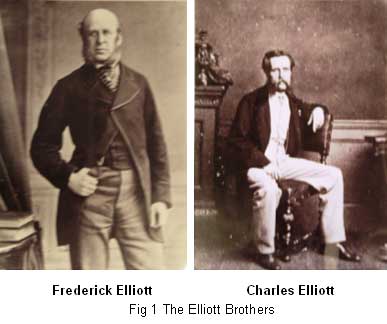
My step-father during my early teenage years worked for Elliott Brothers (the link goes to an interesting history of the firm that started in 1804) in Borehamwood, just north of London.  He encouraged me to fiddle with ‘steam’ radios and

Frederick and sa Elliot

try and understand how these basic circuits worked.  It was then a small step to deciding to become a radio amateur, popularly known as a radio ham!  In those days it was a case of some pretty intensive studying to pass a Theory exam as well as being able to pass an exam in sending and receiving Morse code.

Read more of this Post