Category: Education

One of the numerous effects of a warming climate.

An article that I wanted to share with you!

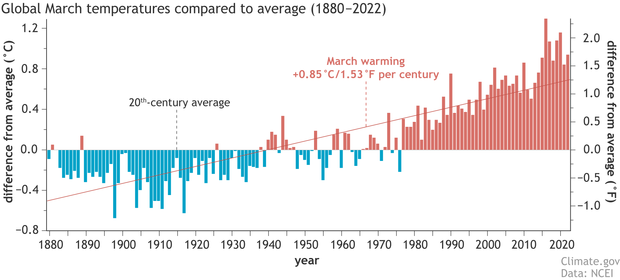
There is no question that we are warming the world, and in my mind, there’s very little doubt that it is us older persons who are the cause. Take this chart, for example, where the effects of populations in the 1980’s – 2000’s had a dramatic impact on the worsening trend:
The reason for today’s post is to share an article that writes of the science of precipitation.

ooOOoo

THE PHYSICS OF PRECIPITATION
IN A WARMING CLIMATE

WRITTEN BY DR ASHLEIGH MASSAM

The scientific consensus on climate change is that atmospheric temperatures are rising and will continue to rise. Mean global temperatures are already 1˚C warmer than preindustrial times (relative to 1850–1900), predominantly due to human activity increasing the amount of greenhouse gases in the atmosphere (IPCC, 2018a). The 2020 Paris Conference of Parties (COP) agreed on the aim of a 1.5˚C cap on climate change-induced warming, although without rapidly introducing measures to reduce carbon and greenhouse gas emissions, global warming could easily go beyond this limit. 

In fact, the Intergovernmental Panel on Climate Change (IPCC) warns that even a mean global temperature increase of 1.5˚C will lead to an increase in the frequency and intensity of rainfall events. But what links a warmer climate to an increase in intense rainfall events? This blog post will explain the physics behind the changes to precipitation rates in a warming climate.

A SIMPLE OVERVIEW OF THE PHYSICS

Climate projections simultaneously warn of higher annual mean surface temperatures, higher rates of intense rainfall and more frequent intense rainfall events. The atmospheric moisture content increases with respect to a change in temperature – essentially, the warmer the atmosphere, the more water is held in the atmosphere, and therefore higher rates of precipitation can be expected.

This is explained by the Clausius-Clapeyron relationship between surface temperature and water vapour. According to the Clausius-Clapeyron relationship, atmospheric water content increases by between 6 and 7% per 1 °C. Therefore, even just an increase of 1.5°C could result in ~9% more water in the atmosphere, which could have a major impact on storm systems and subsequent rainfall.

Storm systems travelling across oceans will have an increased moisture content from water evaporated from the sea surface, forming a larger storm system and therefore more precipitation. JBA has recently discussed the risk of flooding from intensifying rainfall due to climate change and this will be explored in respect to storm systems later in this blog.

HOW PRECIPITATION IS FORMED

In meteorology, precipitation can be liquid or solid water that falls from the atmosphere and reaches the Earth’s surface. Types of precipitation include rain, sleet, or snow, depending on the temperature of the atmosphere. During the water cycle (fig. 1), water evaporates from the surface into the atmosphere, and changes state from liquid to vapour. The water vapour forms cloud droplets, which join together until the heavy droplets fall from the clouds as precipitation. Several processes affect this simple view of the journey from evaporation to precipitation.

Figure 1: A diagram of the water cycle showing the connections between water masses, the atmosphere and the transpiration and condensation of water vapour.

THE SURFACE TEMPERATURE – PRECIPITATION RELATIONSHIP IN MORE DEPTH

The connection between precipitation and surface temperature is defined by the Clausius-Clapeyron equations. The Clausius-Clapeyron equations calculate the energy required to cause a chemical reaction at a given pressure. In terms of precipitation, the Clausius-Clapeyron equations can be used to calculate the thermal energy required to condense water vapour into droplets when the atmospheric pressure is known. 

When water droplets are evaporated into the atmosphere, they travel upwards. As the Clausius-Clapeyron relationship is dependent on atmospheric pressure, the thermal energy requirement for a phase change is lower at a lower pressure. As the water droplets travel upwards, two things happen: 

  1. The atmospheric pressure decreases, and 
  2. The atmospheric temperature cools (this is known as the temperature lapse rate and is typically estimated at -6.5°C per kilometre). 

When the water vapour reaches an elevation where the atmospheric pressure and temperature satisfy the Clausius-Clapeyron relationship, the water vapour condenses into cloud droplets. 

IMPACTS OF A WARMING CLIMATE ON THE SURFACE TEMPERATURE – PRECIPITATION RELATIONSHIP

The release of carbon dioxide, and other greenhouse gases, into the atmosphere by humans has already led to climate change in the form of atmospheric warming. Long-term measurements show that the atmosphere has already warmed by 1°C since 1900. IPCC projections suggest that additional warming is inevitable, and attempts are being made to keep global atmospheric warming to under 1.5°C. Although, as previously mentioned, this could still increase the frequency and intensity of rainfall (IPCC, 2018b). To understand how an increase in annual mean surface temperature will influence rainfall events, we can apply the Clausius-Clapeyron relationship in a geographical context. 

As the Clausius-Clapeyron equations define the relationship between vapour and pressure, they can also be used to define the saturation vapour pressure with respect to temperature. In meteorology, the saturation vapour pressure is the maximum pressure of water vapour, at a given temperature, before it condenses. Therefore, the pressure required to condense a water droplet increases exponentially with respect to a change in temperature. 

This means that the Clausius-Clapeyron relationship can be used to determine the moisture content of the atmosphere. Warmer atmospheric temperatures will increase the atmospheric moisture content before condensation because the atmospheric pressure will not be affected by climate change in the same way as temperature. This results in the previously mentioned calculation that moisture content will increase by ~6.5% in the atmosphere per 1°C increase in temperature and means that atmospheric warming of 1.5°C will yield an increase in atmospheric moisture content of ~9%.

THE EFFECT ON STORMS AND PRECIPITATION

This ~9% increase has an impact on storm systems and therefore rainfall. Hurricane Harvey made landfall on the coast of Texas in August 2017. Over seven days, areas of Texas including Galveston and Houston experienced nearly 1.5 metres of rainfall. 

Research published since the event suggests that the intensity of Hurricane Harvey is attributable to a combination of the storm stalling over one location and climate change. The Gulf of Mexico, the source of moisture for Hurricane Harvey, has experienced anthropogenic-induced sea-surface temperature warming of 1°C since preindustrial times (Pall et al., 2017; Trenberth et al., 2018). Comparing Hurricane Harvey’s precipitation records with an equivalent event from 1950, extreme value analysis concluded that climate change contributed to a 5-7% increase in rainfall rates covering the full region affected by the hurricane (Risser and Wehner, 2017). 

With an increase in rainfall events and the wider impacts of climate change, it’s important for organisations to think about the potential risk to their business. JBA’s UK Climate Change Flood Model assesses and quantifies future flood risk in the UK under a warming climate and complements our range of global Climate Change Analytics, helping clients to understand and manage the effects of climate change on their assets and to enable long-term planning.

For more information on our climate change work, including bespoke consultancy services offered by our expert team, get in touch.

REFERENCES

IPCC, 2018a: Summary for Policymakers. In: Global warming of 1.5°C. An IPCC Special Report on the impacts of global warming of 1.5°C above pre-industrial levels and related global greenhouse gas emission pathways, in the context of strengthening the global response to the threat of climate change, sustainable development, and efforts to eradicate poverty [Masson-Delmotte, V., P. Zhai, H.-O. Pörtner, D. Roberts, J. Skea, P.R. Shukla, A. Pirani, W. Moufouma-Okia, C. Péan, R. Pidcock, S. Connors, J.B.R. Matthews, Y. Chen, X. Zhou, M.I.Gomis, E. Lonnoy, T.Maycock, M.Tignor, and T. Waterfield (eds.)].]. World Meteorological Organization, Geneva, Switzerland.

IPCC, 2018b. Impacts of 1.5ºC Global Warming on Natural and Human Systems. In: Global Warming of 1.5°C. An IPCC Special Report on the impacts of global warming of 1.5°C above pre-industrial levels and related global greenhouse gas emission pathways, in the context of strengthening the global response to the threat of climate change, sustainable development, and efforts to eradicate poverty [Masson-Delmotte, V., P. Zhai, H.-O. Pörtner, D. Roberts, J. Skea, P.R. Shukla, A. Pirani, W. Moufouma-Okia, C. Péan, R. Pidcock, S. Connors, J.B.R. Matthews, Y. Chen, X. Zhou, M.I.Gomis, E. Lonnoy, T.Maycock, M.Tignor, and T. Waterfield (eds.)]. World Meteorological Organization, Geneva, Switzerland.

Pall, P., Patricola, C.M., Wehner, M.F., Stone, D.A., Paciorek, C.J., Collins, W.D. 2017. Diagnosing conditional anthropogenic contributions to heavy Colorado rainfall in September 2013. Weather and Climate Extremes, 17, pp 1-6.

Risser, M.D., Wehner, MF. 2017. Attributable human-induced changes in the likelihood and magnitude of the observed extreme precipitation during Hurricane Harvey. Geophysical Research Letters¸ 44(24), doi: 10.1002/2017GL075888.

Trenberth, K.E., Cheng, L., Jacobs, P., Zhang, Y., Fasullo, J. 2018. Hurricane Harvey links to ocean heat content and climate change adaptation. Earth’s Future, 6(5), doi: 10.1029/2018EF000825

ooOOoo

The IPCC states what is clearly known in science circles; a warmer atmosphere equals more moisture in the air and that translates into more rainfall.

It comes down to warmer atmospheric temperatures increasing the atmospheric moisture content before condensation, simply because the atmospheric pressure will not be affected by climate change in the same way as temperature, as was described earlier in the paper. The reference to Hurricane Harvey was very powerful.

The world has to focus on climate change in an urgent manner. Because there isn’t a great deal of time, something like 10 years, at most, to bring about huge changes in the way we consume energy.

Being a responsible dog owner

A guest post from Souvik Ghosh.

From time to time various persons are in touch asking if I will accept a guest post. As long as the author is not connected to a commercial organisation then I am more than willing to accept.

ooOOoo

The Benefits of Spaying or Neutering Your Puppy

By Souvik Ghosh.

Spaying is the removal of a dog’s reproductive organs, while neutering is the removal of a dog’s testicles. Both of these procedures are usually completed between the ages of six to nine months old. The decision to spay or neuter your puppy is an important one, and one that every pet parent should consider carefully. Spaying or neutering your puppy can have many benefits; both for your pet, and for pet owners. In this article, we will explore the many benefits of spaying or neutering your puppy.

1. Cost Benefits

A. Lower veterinary expenses

 By sanctioning spaying or neutering your puppy, you can spare yourself incurring costly veterinary bills. Not only that, but spayed and neutered pets often require fewer vet visits overall than unaltered animals, thus resulting in further financial savings.

B. Avoidance of unwanted litters and associated costs

 Opting to spay or neuter your puppy will avoid the costs associated with an unwanted or unexpected litter. Having a litter of puppies can involve additional health care expenses, such as vaccinations or deworming, as well as other costs such as food, housing supplies, and potential vet visits due to complications or illness. What’s more, finding homes for each of the puppies can take a considerable amount of time and money. If a litter is born and is not able to be cared for or placed in a permanent home, euthanasia may also become a cost consideration.

C. Reduced potential for destructive behaviors

 Spayed and neutered pets are less likely to display destructive behaviors associated with hormones, such as urine spraying, marking territory, escaping from the house, stray breeding, and aggression. Dealing with these behaviors can involve costly fence repair, kenneling, veterinary bills, and in extreme cases even legal fees. By taking preventative measures and having your puppy spayed or neutered, you can save yourself considerable financial hardship in the long-run.

2. Health Benefits

A. Reduced risk of certain cancers

 Spaying or neutering your pet has many potential health benefits for your pup. First, spaying or neutering your puppy can reduce their risk of certain cancers. Spayed females are at almost no risk for certain types of ovarian and uterine cancer, while neutered males are at a reduced risk of developing prostate cancer.

B. Decreased risk of infections and diseases

 In addition to curbing cancer risk, spayed or neutered puppies also have decreased risk of bacterial and viral infections, as well as other dog diseases, such as Urinary Tract Infection or “cherry eye.” Unneutered male dogs are a lot more likely to develop testicular tumors, while unspayed female pups are more likely to get vaginal infections or mammary tumors.

C. Prevention of reproductive issues

 Spaying or neutering your puppy can also prevent reproductive issues such as false pregnancies, proestrus, and ovarian cysts. Spaying can also reduce “hump” behavior – or the act of mounting other animals – as well as “marking” their territory by urinating on objects or other animals. If a male dog hasn’t been neutered, these behaviors may continue into adulthood.

3. Behavioral Benefits

A. Reduced aggression and territorial tendencies

 One of the primary behavioral benefits is that spayed or neutered puppies will have reduced aggression and territorial tendencies. Unneutered animals are more likely to attempt to protect their territory, which often manifests as aggressive behavior. By removing the instinct to mate and reproduce, these issues can be avoided.

 B. Decreased likelihood of wandering or escaping

 Another advantage is that spaying or neutering your puppy can decrease the likelihood of them wandering or escaping from home. Unneutered animals are more likely to attempt to find a mate, and as a result may be more tempted to roam. By removing this instinct, your puppy can enjoy a safe and secure living space.

C. Less marking and mounting behaviors

 Spaying or neutering your pet can help them to avoid certain sexual impulses. Unneutered animals are more likely to engage in marking and mounting behaviors, which can be embarrassing and bothersome. This can be avoided by removing the unneutered dog’s natural urges to seek out a mate.

4. Community Benefits

A. Control over population and homelessness

 The most obvious benefit of spaying or neutering your puppy is that it helps to control the overall population and reduce homelessness. When dogs reproduce without consequence, the population grows dramatically and shelters become overwhelmed with strays. These strays can be quite disruptive to the community, especially if they’re aggressive or overly vocal. By having your pet spayed or neutered, your community benefits significantly by avoiding this population surge.

B. Reduced noise and nuisance behaviors

 You can also reduce the amount of noise and nuisance behaviors that can plague a community. Dogs can become territorial if they haven’t been neutered or spayed, which can affect their overall behavior. Un-neutered dogs are more likely to bark more, roam, and even become aggressive. This can be a nuisance to neighbors, and even other pet owners in the area. By having your puppy spayed or neutered, your pup won’t be as prone to these behaviors, making it easier to live in harmony with your surrounding community.

C. Improved relationships with neighbors and other pet owners

 Having your puppy spayed or neutered can improve relationships with your neighbors as well as other pet owners. It can help ensure it’s better behaved when around people, making it much easier for neighbors or other pet owners to interact with your dog. It may even help build a friendlier, less fearful relationship between people and your pup, making it easier for your neighbor to come over for a visit. And better relations with pet owners in the area can help strengthen the bond between community members.

Conclusion

 Spaying or neutering your pet can have numerous benefits, both medically and behaviorally, and it is important to consider if it is the right fit for you and your pet. We would encourage all pet owners to take the steps needed in order to be responsible pet owners, and spay or neuter their pup. By doing so, you can help ensure your pet lives a long and healthy life, while contributing to a kinder, more compassionate society.

ooOOoo

That last sentence says it all. I quote, “By doing so, you can help ensure your pet lives a long and healthy life, while contributing to a kinder, more compassionate society.

Who doesn’t want a kinder and more compassionate society!

A post on preventing dog bites.

This article from the ASPCA is being shared.

Luckily dogs that have behaviour problems are unknown in our home. But that doesn’t mean that a primer on preventing dog bites is not called for. The following seems like a primer!

ooOOoo

Dog Bite Prevention

Increasing Safety, Reducing Risks

To reduce the number of injuries from dog bites, adults and children should be educated about bite prevention, and dog owners should practice responsible dog ownership.

Understanding dog body language is a key way to help avoid being bitten for people of all ages. Know the signs that dogs give to indicate that they’re feeling anxious, afraid, threatened or aggressive, and be sure to respect the dog’s feelings about interacting with or being touched by strangers.

  • An aggressive dog may try to make themselves look bigger. Their ears may be up and forward, the fur on their back and tail may stand on end or puff out, and their tail may be straight up—it may even wag. They may have a stiff, straight-legged stance and be moving toward or staring directly at what they think is an approaching threat. They may also bare their teeth, growl, lunge or bark.
  • An anxious or scared dog may try to make themselves look smaller. They may shrink to the ground in a crouch, lower their head, repeatedly lick their lips, put their tail between their legs, flatten their ears back and yawn. They may look away to avoid direct eye contact. The dog may stay very still or roll on their back and expose their stomach. Alternatively, they may try to turn away or slowly move away from what they think is an approaching threat.
  • Many dogs can show a mixture of these body postures, indicating that they feel conflicted. Remember to avoid any dog showing any of signs of fear, aggression or anxiety—no matter what else the dog is doing. It’s important to realize that a wagging tail or a crouching body doesn’t always mean friendliness.
  • Ask first before petting a dog. When meeting an unfamiliar dog, don’t reach out to pet them. First, ask their pet parent, “May I pet your dog?” A strange hand in a dog’s face may scare them, leading to a bite.
  • If you receive permission to pet a dog, let them sniff your closed hand. Then, you may proceed to pet their shoulders or chest. Avoid petting the top of the dog’s head. If the dog looks uncomfortable, speak happily to the dog and casually remove your hand. Resist moving abruptly or jerkily.
  • Avoid dogs who are barking or growling. It is also best to steer clear of dogs who are loose, behind a fence or tied up.
  • If an unknown dog approaches you, stay quiet and still. Do not run or scream.
  • Always supervise children and dogs. Never leave a baby or young child alone with a dog. Teach your children to treat your dog gently and with respect, giving the dog their own space and opportunities to rest.
  • When in public, always keep your dog on a leash for the safety of your dog and those around them.

Recommendations for Pet Parents

Although you can’t guarantee that your dog will never bite someone, there are many ways that you can significantly reduce the risk.

  • Adopt from a well-managed animal shelter whose staff and volunteers can fill you in on the dog’s background, personality and behavior in the shelter.
  • Socialize your dog! Well-socialized dogs make enjoyable, trustworthy companions. Undersocialized dogs are a risk to their owners and to others because they can become frightened by everyday things—which means they are more likely to aggress or bite. Socializing is the opposite of isolating. It’s important for puppies to meet, greet and enjoy a variety of people, animals, places and things. Done properly, socializing helps puppies feel comfortable and friendly in various situations, rather than uncomfortable and potentially aggressive. The main rule for effective socializing is to let your dog progress at their own pace and never force them to be around someone or something when they’re clearly fearful or uncomfortable.
  • Take your dog to humane, reward-based training classes—the earlier the better. We recommend starting your puppy in puppy kindergarten classes as early as eight weeks, right after their first set of vaccinations. Early training opens a window of communication between you and your dog that will help you consistently and effectively teach them good behavior.
  • Always supervise your dog while they’re outdoors—even in a fenced yard. Don’t allow your dog to roam alone.
  • Don’t wait for a serious accident to happen. The first time your dog shows aggressive behavior toward anybody, even if no injury occurs, seek professional help from a Certified Applied Animal Behaviorist (CAAB), a veterinary behaviorist (Dip ACVB), or a qualified Certified Professional Dog Trainer (CPDT). Please see our article, Finding Professional Behavior Help, for information about finding an expert in your area. Your animal shelter may also offer or be able to refer you to helpful services.
  • Err on the safe side. Be aware of common triggers of aggression, including pain, injury or sickness, the approach of strangers or strange dogs, the approach of people in uniforms, costumes or unusual attire (especially hats), unexpected touching, unfamiliar places, crowds and loud noises like thunder, wind, construction, fireworks and appliances. If possible, avoid exposing your dog to these triggers. If they seem stressed or panicked in crowds, leave them at home. If they overreact to visitors or delivery personnel, keep them in another room when they come to your house. Work with a qualified behavior and training professional to help your dog become more comfortable with these and other situations.
  • License your dog as required by law and provide regular veterinary care, including rabies vaccinations.

ooOOoo

This appears to be very good advice, and I hope there’s no-one out there that has suffered from the consequences of dog aggression. If there’s a reader who has something to share with you all, then read my Interaction page.

Dogs foraging!

A plant list from the ASPCA.

This list came in from the ASPCA recently and I though it worth sharing with you. But just before I do that let me select from the About Us page on the ASPCA website.

We Are Their Voice

The American Society for the Prevention of Cruelty to Animals® (ASPCA®) was the first humane society to be established in North America and is, today, one of the largest in the world.

Our organization was founded on the belief that animals are entitled to kind and respectful treatment at the hands of humans and must be protected under the law. Headquartered in New York City, the ASPCA maintains a strong local presence, and with programs that extend our anti-cruelty mission across the country, we are recognized as a national animal welfare organization. We are a privately funded 501(c)(3) not-for-profit corporation, and are proud to boast more than 2 million supporters across the country.

The ASPCA’s mission, as stated by founder Henry Bergh in 1866, is “to provide effective means for the prevention of cruelty to animals throughout the United States.”

Plus there is a YouTube video.

Now to that plant list. It is a long list and I am going to only show you the first few dozen plants. If you want to see more of the list then you are going to have to go here and look it up for yourself.

ooOOoo

Toxic and Non-Toxic Plant List – Dogs

Plants Toxic to Dogs

Adam-and-Eve (Arum, Lord-and-Ladies, Wake Robin, Starch Root, Bobbins, Cuckoo Plant) | Scientific Names: Arum maculatum | Family: Araceae 

African Wonder Tree () | Scientific Names: Ricinus communis | Family:

Alocasia (Elephant’s Ear) | Scientific Names: Alocasia spp. | Family: Araceae 

Aloe () | Scientific Names: Aloe vera | Family: Liliaceae 

Amaryllis (Many, including: Belladonna lily, Saint Joseph lily, Cape Belladonna, Naked Lady) | Scientific Names: Amaryllis spp. | Family: Amaryllidaceae 

Ambrosia Mexicana (Jerusalem Oak, Feather Geranium) | Scientific Names: Chenopodium botrys | Family:Chenopodiaceae 

American Bittersweet (Bittersweet, Waxwork, Shrubby Bittersweet, False Bittersweet, Climbing Bittersweet) | Scientific Names: Celastrus scandens | Family: Celastraceae 

American Holly (English Holly, European Holly, Oregon Holly, Inkberry, Winterberry) | Scientific Names: Ilex opaca | Family: Aquifoliaceae 

American Mandrake (Mayapple, Indian Apple Root, Umbrella Leaf, Wild Lemon, Hog Apple, Duck’s Foot, Raccoonberry) | Scientific Names: Podophyllum peltatum | Family: Berberidaceae 

American Yew (Canada Yew, Canadian Yew) | Scientific Names: Taxus canadensus | Family: Taxaceae 

Andromeda Japonica (Pieris, Lily-of-the-Valley Bush) | Scientific Names: Pieris japonica | Family: Ericaceae 

Angelica Tree (Hercules’ Club, Devil’s Walking Stick, Prickly Ash, Prickly Elder) | Scientific Names: Aralia spinosa | Family:Araliaceae 

Apple (Includes crabapples) | Scientific Names: Malus sylvestrus | Family: Rosaceae 

Apricot (Group also includes Plum, Peach, Cherry) | Scientific Names: Prunus armeniaca | Family: Rosaceae 

Arrow-Head Vine (Nephthytis, Green Gold Naphthysis, African Evergreen, Trileaf Wonder) | Scientific Names: Syngonium podophyllum | Family: Araceae 

Arum (Cuckoo-pint, Lord-and-Ladies, Adam-and-Eve, Starch Root, Bobbins, Wake Robin) | Scientific Names: Arum maculatum | Family: Araceae 

Arum Lily (Calla Lily, Pig Lily, White Arum, Trumpet Lily, Florist’s Calla, Garden Calla) | Scientific Names: Zantedeschia aethiopica | Family: Araceae 

Asparagus Fern (Asparagus, Emerald Feather, Emerald Fern, Sprengeri Fern, Plumosa Fern, Lace Fern, Racemose Asparagus, Shatavari) | Scientific Names: Asparagus densiflorus cv sprengeri | Family: Liliaceae 

Australian Ivy Palm (Schefflera, Umbrella Tree, Octopus Tree, Starleaf) | Scientific Names: Brassaia actinophylla | Family:Araliaceae 

Australian Nut (Macadamia Nut, Queensland Nut) | Scientific Names: Macadamia integrifolia | Family: Proteaceae 

Autumn Crocus (Meadow Saffron) | Scientific Names: Colchicum autumnale | Family: Liliaceae 

Azalea (Rosebay, Rhododendron) | Scientific Names: Rhododendron spp | Family: Ericaceae 

Baby Doll Ti Plant (Ti-Plant, Good-Luck Plant, Hawaiian Ti Plant) | Scientific Names: Cordyline terminalis | Family:Agavaceae 

Barbados Aloe (Medicine Plant, True Aloe) | Scientific Names: Aloe barbadensis | Family: Aloaceae 

Barbados Lily (Amaryllis, Fire Lily, Lily of the Palace, Ridderstjerne) | Scientific Names: Hippeastrum spp. | Family:Amaryllidaceae 

Barbados Pride (Peacock Flower, Dwarf Poinciana) | Scientific Names: Caesalpinia pulcherrima | Family:

Barbados Pride 2 (Bird of Paradise, Poinciana, Brazilwood) | Scientific Names: Poinciana gilliesii | Family: Leguminosae 

Bay Laurel (Sweet Bag, Bay Tree, Tree Laurel, Laurel Tree, Laurel) | Scientific Names: Laurus nobilis | Family: Lauraceae 

Bead Tree (China Ball Tree, Paradise Tree, Persian Lilac, White Cedar, Japanese Bead Tree, Texas Umbrella Tree, Pride-of-India, Chinaberry Tree) | Scientific Names: Melia azedarach | Family: Meliaceae 

Begonia (Over 1,000 species and 10,000 hybrids) | Scientific Names: Begonia spp. | Family: Begoniaceae 

Bergamot Orange (Bergamot, Citrus bergamia) | Scientific Names: Citrus Aurantium | Family: Rutaceae 

Bird of Paradise (Peacock Flower, Barbados Pride, Poinciana, Pride of Barbados) | Scientific Names: Caesalpinia gilliesii | Family: Leguminosae 

Bird of Paradise 2 (Peacock Flower, Barbados Pride, Poinciana, Pride of Barbados) | Scientific Names: Poinciana gilliesii | Family: Leguminosae 

Bird of Paradise Flower (Crane Flower, Bird’s Tongue Flower) | Scientific Names: Strelitzia reginae | Family: Strelitziaceae 

Bird’s Tongue Flower (Bird of Paradise Flower, Crane Flower) | Scientific Names: Strelitzia reginae | Family: Strelitziaceae 

Bishop’s Weed (Greater Ammi, False Queen Anne’s Lace) | Scientific Names: Ammi majus | Family: Apiaceae 

Bitter Root (Dogbane Hemp, Indian Hemp) | Scientific Names: Apocynum androsaemifolium | Family: Apocynaceae 

Black Calla (Solomon’s Lily, Wild Calla, Wild Arum) | Scientific Names: Arum palestinum | Family: Araceae 

Black Cherry () | Scientific Names: Prunus serotina | Family: Rosaceae 

Black Laurel (Dog Hobble, Dog Laurel, Fetter Bush, Sierra Laurel) | Scientific Names: Leucothoe spp. | Family: Ericaceae 

Black Nightshade (Nightshade, Deadly Nightshade) | Scientific Names: Solanum nigrum | Family: Solanaceae 

Black Walnut () | Scientific Names: Juglans nigra | Family: Juglandaceae 

Bobbins (Arum, Lord-and-Ladies, Adam-and-Eve, Starch Root, Wake Robin, Cuckoo Plant) | Scientific Names: Arum maculatum | Family: Araceae 

Bog Laurel (Pale Laurel, Bog Kalmia) | Scientific Names: Kalmia poliifolia | Family: Ericaceae 

Borage (Starflower) | Scientific Names: Borage officinalis | Family: Boraginceae 

Boxwood () | Scientific Names: Buxus spp. | Family: Buxaceae 

Branching Ivy (English Ivy, Glacier Ivy, Needlepoint Ivy, Sweetheart Ivy, California Ivy) | Scientific Names: Hedera helix | Family: Araliaceae 

Brazilwood (Bird of Paradise, Poinciana, Barbados Pride) | Scientific Names: Poinciana gilliesii | Family: Leguminosae 

Bread and Butter Plant (Indian Borage, Spanish Thyme, Coleus, Maratha, Militini, East Indian Thyme) | Scientific Names:Coleus ampoinicus | Family: Labiatae 

Brunfelsia (Yesterday, Today, Tomorrow, Kiss-Me-Quick, Lady-of-the-Night, Fransiscan Rain Tree) | Scientific Names:Brunfelsia species | Family: Solanaceae 

Buckeye (Horse Chestnut) | Scientific Names: Aesculus spp | Family: Hippocastanaceae 

Buckwheat () | Scientific Names: Fagopyrum spp. | Family: Polygonaceae 

Buddhist Pine (Yew Pine, Japanese Yew, Southern Yew, Podocarpus) | Scientific Names: Podocarpus macrophylla | Family: Podocarpaceae 

Burning Bush (Wahoo, Spindle Tree) | Scientific Names: Euonymus atropurpurea | Family: Celastraceae 

Buttercup (Butter Cress, Figwort) | Scientific Names: Ranunculus spp. | Family: Ranunculaceae 

Butterfly Iris (Spuria Iris) | Scientific Names: Iris spuria | Family: Iridaceae

ooOOoo

That was only the ‘A’ and ‘B’ selection!

I did say it was a long list. Again, if you want to go there here is the link.

If by sharing this information one dog’s life is saved then it was worthwhile.

Keeping dogs from fighting each other.

A video courtesy of Zak George’s Dog Training Revolution.

I was in a bit of a hurry yesterday and looked through my folder of blog posts and came across this video.

ooOOoo

The words that accompanied the video are also presented:

Discover the secrets to successful dog training in a multi-dog household! We delve into the challenges and rewards of training multiple dogs, offering practical tips and expert advice to help you create a harmonious home. From establishing routines and managing individual training sessions to addressing common behavioral issues, we’ve got you covered in this informative and insightful video. I’ll guide you through essential techniques for managing multiple dogs, including establishing boundaries, promoting positive reinforcement, and tailoring training approaches to each dog’s unique personality and needs. Whether you’re a seasoned dog owner or new to multi-dog households, these expert tips will help you transform potential chaos into a well-coordinated, stress-free environment. Don’t miss out on this valuable resource for training multiple dogs effectively and efficiently. Be sure to like, share, and subscribe to our channel for more dog training tips and tricks. We’d love to hear about your own experiences with multi-dog households and training, so leave a comment below to join the conversation!

Sponsored by PupBox! Get your first PupBox for ONLY $5!!! Use code: ZAK5 at https://pupbox.com

ooOOoo

Needless to say I have no affiliation with PupBox.

An invitation from SOUND UK.

To apply to the UK’s Sound Generator.

This is the company that my daughter helps to run. She is Maija and together with Polly and Chloe they run Sound UK. I want to promote a recent item that appeared on their website.

ooOOoo

WHAT IS SOUND GENERATOR?

Now in its third year, Sound Generator is Sound UK’s research and development (R & D) programme that supports artists and seeds the development of an ambitious new project.

Each year six early career music and sound artists spend six months developing and testing their project, supported by mentoring from a range of experts.

By the end of the programme artists will have thoroughly explored their initial idea and tested that they can make it work, ready for the next stage of full commissioning and public engagement.

During the process artists will be able to try out new approaches, learn from others, increase their network and develop their practice.

Projects can be:
• For indoors or outdoors
• Suitable for venue touring or site specific
• Digital, installation or live
• Music, sound or multi-disciplinary
• Designed to reach a new audience, work with a specific community or respond to the world we live in.

Following an open call, six artists will each receive an award of £2200 to research and develop their idea across six months (June to November 2023).

In addition to £2200, the programme includes access to the Sound Generator Network with support sessions from a range of exceptional mentors, plus opportunities to connect with other artists on the programme.

The R & D will culminate in the creation of a short audio or video sample of the project, and a proposal for its delivery. These will be presented by each artist at a sharing event at the end of the programme and sent out to a wide network of industry contacts.

WHO IS IT FOR?

• UK* creators that reflect the full cultural diversity and gender spectrum of the UK
• Creators with 5 – 10 years professional experience
• Creators who want to develop a new idea that extends their practice, with public interaction in mind.
• Artists pushing the boundaries of contemporary music. Working within, but not exclusively, jazz, sound, folk, classical and electronic music, plus all points in between.

*we define a UK artist as someone who has been based and working in the UK for more than 5 years.

Find out more about our 2022 Sound Generator artists and our 2021 Sound Generator artists.

“We learnt so much and mentoring + support was very helpful in furthering our ideas. I think it also puts us in a better position to get further funding and for potential future collaborations.”
Daphnellc & Ambra, Sound Generator 2022

ooOOoo

Hopefully this is read by some people who either want to help share the message or want to apply.

Either way it was worth sharing!

A treasure of a dog story

A guest post from Connie Hart.

This is a most amazing story about Connie’s dogs and was sent to me as a guest post.

You will love it!

ooOOoo

A Dog Story

by Connie Hart, March 14th., 2023

Having been raised by my father from the age of three, I spent many hours sitting on his lap as he read to me. Often, as he read, I looked up at his face, and into his eyes. It was always a marvel to me. As an adult, I know it as heterochromia, or different colored eyes. He had one brown eye, and one blue.

This is a condition that is very rare in humans; only 1% have this. But it was something that I, as a child, loved about my father.

In dogs, heterochromia is more common, but still rare. It occurs 3.5% of the time in dogs. That being said, here is my story;

This is Bernie:

Bernie is 145 lbs. of pure love. He was a gift from a friend, after a tragic loss of two of my sweet dogs. I still had one old dog, Bo. But even he passed when Bernie was about a year old. So we took Bernie to the County Shelter, and let him pick out a new friend. Hence, Rosie came into our lives.

oooo

But two years later, unfortunately, we lost Rosie.

We moved after that, but Bernie was not to be alone. Believe it or not, the people who moved out of the house we bought, moved from Oregon to Arizona and left behind their dog, Endy. Endy was a sweet, old dog. When I inquired about him, the owners simply said, ‘Oh, he can fend for himself.”

I was horrified. I couldn’t believe it as I watched those people drive out, leaving Endy crying on the porch.

But we made it up to him. We loved him and played with him. He and Bernie became inseparable. But, alas, time and age forced a sad good-bye.

Again, we took Bernie to the County Shelter to pick out a new friend. With Bernie in the ‘meet and greet’ yard, I went through and picked out a handful of dogs I liked, first. One in particular, struck me. A Shepard/Pyrenees mix, with one blue eye and one brown.

One at a time, each dog was taken out to the yard to meet Bernie. Some, he barely even sniffed, some, he totally ignored. But when the heterochromatic dog was put in the yard, there was instant frolic!

Bernie had lost three of his besties and we didn’t want him to have to go through that again. This dog, Cassie, was young and vibrant, in so many ways. They romped and played while I went in to do the paperwork. While looking through the paperwork, I noticed her birthdate. November 23….

She and my beloved father have the same birthday!

ooOOoo

This is a lovely story.

For those that want more information on Heterochromia, I took from the Mount Sinai website the following:

Heterochromia is the presence of different colored eyes in the same person. Heterochromia in humans appears either as a hereditary trait unassociated with other disease, as a symptom of various syndromes or as the result of a trauma.

What an unusual, but pretty, condition in her face.

Thank you, Connie.

Getting older and older!

An interesting post for all of us, albeit, those on the right side of 70? will find this less important.

It is very difficult for me to add anything useful to this article so I will not try.

Except to say that the author, Aditi Gurkar, is Assistant Professor of Geriatric Medicine at the University of Pittsburgh so she should know what she is talking about!

ooOOoo

Are you a rapid ager? Biological age is a better health indicator than the number of years you’ve lived, but it’s tricky to measure

Healthspan measures incorporate quality of life in ways that lifespan does not. Ira T. Nicolai/The Image Bank via Getty Images

Aditi Gurkar, University of Pittsburgh

Do you ever wake up some days and think, “When I was younger, I could survive on just four hours of sleep, but now it seems like I need 10”? Or have you ever walked out of the gym and “felt” your knees?

Almost everyone experiences these kinds of signs of aging. But there are some people who seem to defy their age. The late U.S. Supreme Court Justice Ruth Bader Ginsberg stayed on the bench until her death at age 87. The “Great British Bake Off” judge Mary Berry, now in her 80s, continues to inspire people all over the world to bake and enjoy life. And actor Paul Rudd was named People magazine’s “Sexiest Man Alive” in 2021 at age 52 while still looking like he’s in his 30s. Is age just a number then?

Researchers have focused a lot of attention on understanding the causes and risk factors of age-related diseases like Alzheimer’s, dementia, osteoporosis and cancer. But many ignore the major risk factor for all of these diseases: aging itself. More than any individual risk factor such as smoking or lack of exercise, the number of years you’ve lived predicts onset of disease. Indeed, aging increases the risk of multiple chronic diseases by up to a thousandfold.

However, no two people age the same. Although age is the principal risk factor for several chronic diseases, it is an unreliable indicator of how quickly your body will decline or how susceptible you are to age-related disease. This is because there is a difference between your chronological age, or the number of years you’ve been alive, and your biological age – your physical and functional ability.

As the author notes in her TED Talk, aging is not just a number.

I am a scientist interested in redefining “age.” Instead of benchmarking chronological age, my lab is invested in measuring biological age. Biological age is a more accurate measure of healthspan, or years lived in good health, than chronological age, and doesn’t directly correlate with wrinkles and gray hairs. Rapid agers experience a faster rate of functional deterioration relative to their chronological age.

My grandmother, who lived to be 83 but was bedridden and could not remember who I was for the last few years of her life, was a rapid ager. My grandfather, on the other hand, also lived until he was 83, but he was active, functional and even did my homework with me until he passed away – he was a healthy ager.

With the unprecedented growth of the world’s aging population, I believe that figuring out ways to measure biological age and how to maintain or delay its advance is critical not only for individual health, but also for the social, political and economic health of our society. Detecting rapid agers early on presents an opportunity to delay, change or even reverse the trajectory of biological aging.

Genetics and biological age

Biological aging is multifaceted. It arises from a complex mix of genetic traits and is influenced by factors like microbiome composition, environment, lifestyle, stress, diet and exercise.

Genetics were once thought to have no influence on aging or longevity. However, in the early 1990s, researchers reported the first studies identifying genes that were able to extend the lifespan of a small roundworm. Since then, multiple observations support the influence of genetics on aging.

For example, children of long-lived parents and even those with long-lived siblings tend to live longer. Researchers have also identified multiple genes that influence longevity and play a role in resilience and protection from stress. These include genes that repair DNA, protect cells from free radicals and regulate fat levels.

However, it is clear from studies in identical twins – who share the same genes but not the same exact lifespans – that genes are not the only factor that influences aging. In fact, genes probably account for only 20% to 30% of biological age. This suggests that other parameters can strongly influence biological aging.

Environmental and lifestyle effects

Researchers have found that environmental and lifestyle factors heavily influence biological age, including social connectedness, sleeping habits, water consumption, exercise and diet.

Social connectedness is essential for well-being throughout life. But social connections can be challenging to maintain over time due to loss of family and friends, depression, chronic illness or other factors. Several studies have reported a strong link between social isolation and increased stress, morbidity and mortality.

Three women dancing together in a park
Social connectedness and physical activity are linked to well-being throughout life. Filippo Bacci/E+ via Getty Images

Similarly, diet and exercise are strong influencers of biological age. Blue zones, which are areas around the world where people live long lives, attribute their successful aging to diet, exercise and social connectedness. Mostly plant-based meals and spurts of activity throughout the day are well-known “secrets” of healthspan and longevity. Although newer studies on the effects of diet interventions such as intermittent fasting and time-restricted feeding on longevity have not been rigorously tested, they do show multiple health benefits, including better glucose and insulin regulation

While genetics is difficult to control, diet and exercise can be modified to delay biological aging.

How to measure biological age

Currently, there is no effective test to predict an individual’s health trajectory early enough in life in order to intervene and improve quality of life with age. Scientists are interested in identifying a molecule that is sensitive and specific enough to serve as a unique fingerprint for biological age.

Considering the health and resilience of the individual instead of focusing solely on disease state is important in discussions on biological age. Resilience is the state of adapting and bouncing back from a health challenge and is often more predictive of functional health. A molecular aging fingerprint may provide a tool to help identify people who are less resilient and require more aggressive monitoring and early intervention to preserve their health and help reduce gender, racial and ethnic health disparities.

There are several promising molecular markers that may serve as biological age fingerprints.

One of these markers are epigenetic clocks. Epigenetics are chemical modifications of DNA that control gene function. Several scientists have found that DNA can get “marked” by methyl groups in a pattern that changes with age and could potentially act as a readout for aging.

It is important to note, however, that while epigenetic clocks have been valuable in predicting chronological age, they do not equate to biological age. In addition, it is unclear how these epigenetic marks work or how they contribute to aging.

Older adult holding gold balloons of the number 70 in a backyard
Age is so much more than a number. Klaus Vedfelt/DigitalVision via Getty Images

Another well-regarded marker of biological age is the build-up of dysfunctional cells called senescent or zombie cells. Cells become senescent when they experience multiple types of stress and become so damaged that they cannot divide anymore, releasing molecules that cause chronic low-grade inflammation and disease.

Animal studies have shown that getting rid of these cells can improve healthspan. However, what clearly defines senescent cells in humans is still unknown, making them challenging to track as a measure of biological age.

Lastly, the body releases unique metabolites, or chemical fingerprints, as byproducts of normal metabolism. These metabolites play a dynamic and direct role in physiological regulation and can inform functional health. My lab and others are figuring out the exact makeup of these chemicals in order to figure out which can best measure biological age. A lot of work still remains on not only identifying these metabolites, but also understanding how they affect biological age.

People have long sought a fountain of youth. Whether such an elixir exists is still unknown. But research is starting to show that delaying biological age may be one way to live healthier, fuller lives.

Aditi Gurkar

This article is republished from The Conversation under a Creative Commons license. Read the original article.

ooOOoo

There is no arguing the fact that more and more great articles are appearing online. Indeed, the whole world is changing radically in many areas.

Onwards and upwards! 😉

Footnote: This appeared online on the Inspiring Quotes website. The link is here, from which I reproduce the following:

Growing older is one of the most pervasive preoccupations of humankind. The passing of time is, after all, an inescapable part of the human condition. And aging, like love, is one of the most common themes in literature, be it the calm of poet Robert Brownings’ “Grow old along with me! The best is yet to be,” or poet Dylan Thomas’ raging against the dying of the light. 

Dogs and cats

A guest post from Ashly Brown

This is a great post. As I just said a guest post that covers an important question; for those that have cats and dogs read on!

ooOOoo

How to Stop a Dog Aggression Towards Cats

By Ashly Brown.

Meta Description

Learn how to stop dog aggression towards cats with these helpful tips and techniques. Discover how to train and manage your dog to live peacefully with cats and prevent any dangerous incidents.

How to Stop a Dog Aggression Towards Cats

Dogs and cats are known to be natural enemies, and it’s not unusual for dogs to act aggressively towards cats. Even though it’s natural for a dog to feel territorial or defensive around a cat, this can be dangerous for the cat and stressful for the owner. So, it’s important to do something to stop a dog from being mean to cats. Here are some tips:

  • Watch out for your dog around cats.

The first thing you can do to stop your dog from being mean to cats is to always watch your dog when it’s around cats. Even if you think your dog is friendly towards cats, you should never leave your dog alone with a cat. Dogs can be hard to predict, and their instincts to hunt can come out at any time.

  • Slowly get your dog used to the cat.

It’s important to go slowly and carefully when bringing a new cat into your home or letting your dog meet a cat for the first time. Keep your dog on a leash and let your cat come up to it at its own speed. Give your dog treats for being good, and keep a close eye on them at all times.

  • Teach your dog the basic commands for obedience.

If you teach your dog basic obedience commands like “sit,” “stay,” and “leave it,” it will be less likely to attack cats. By teaching your dog to do what you say, you can take its mind off the cat and keep it from chasing or hurting it.

  • Give your dog and cat separate places to live.

If your dog and cat don’t get along, you may need to give them each their own place to live. This could mean putting your cat in a different room or putting a baby gate between your cat and dog. Make sure your cat’s separate living space has a place to eat, drink, and go to the bathroom.

  • Use training with positive reinforcement

Positive reinforcement is a great way to teach your dog how to behave well. When your dog acts well around your cat, praise them or give them treats. This will make them more likely to keep behaving well and make them feel good about the cat behavior.

  • Think about asking an expert.

If your dog is very mean to cats, you may need to get help from a professional dog trainer or behaviorist. They can help you come up with a plan for training your dog that fits its needs and habits. They might also be able to give you more advice on how to stop your dog from being mean to cats.

  • Think About Medications

In some cases, a dog may need to be put on medicine to stop being mean to cats. Talk to your vet about whether your dog can take a certain medicine. They might be able to give you medicine to help your dog feel less anxious or less likely to attack cats.

  • Be steady and patient.

Stopping a dog from being mean to a cat can take a long time and patience and consistency. Don’t stop working with your dog if you don’t see results right away. You can teach your dog to get along with cats if you give it time and work at it.

  • Figure out the cause

Find out what makes your dog act mean towards cats. This can help you stop the behavior. It could be a certain sound or smell, or it could be something the cat does. You can work to get rid of the trigger or get your dog used to it if you know what it is.

  • Desensitize Your Dog

Desensitizing your dog means slowly exposing them to the thing that makes them aggressive towards cats, while keeping them far away. This can help them feel less scared or worried about the trigger and keep them from getting angry. Start by showing the trigger to your dog from a distance where they don’t show any signs of aggression. Over time, you can slowly get closer.

  • Use a muzzle or head collar.

Putting your dog in a head collar or giving it a muzzle can help keep it from attacking the cat. Dog bark collars can help you keep your dog from moving around too much, and muzzles can stop them from biting or attacking. It’s important to know how to use these tools right and to never leave your dog alone while they are on.

  • Manage Your Dog’s Environment

Taking care of your dog’s environment can help stop your dog from being mean to cats. This could mean keeping your dog on a leash when there are cats around or putting up baby gates to keep them apart. It’s important to give your dog and cat a safe and secure place to live.

Conclusion 

In conclusion, it is possible to stop a dog from being mean to a cat, but it takes time, patience, and consistent work on the part of the owner. Understanding why your dog is mean to cats is very important for coming up with a good plan to stop the behavior. You should never punish or hurt your dog physically if he or she is mean to cats. This can make the problem worse and cause fear and anxiety.

Focus instead on training with positive reinforcement, desensitization, and management techniques like making a safe space and using head collars or muzzles. Your dog can learn to live peacefully with cats with consistent training and management. This can prevent any dangerous or harmful situations from happening.

It’s important to remember that every dog is different, and what works for one dog might not work for another. Talking to a professional dog trainer or behaviorist can help you come up with a custom plan to stop your dog from being mean to cats.

Author Bio:

Ashly Brown is an experienced writer and pet enthusiast who loves to share her knowledge and insights on the latest trends in pet care. As a dedicated pet cat owner, Ashley understands the importance of finding the best gadgets to keep your feline friend healthy, happy, and entertained in the pet cats world. With her expertise in technology and pet care, Ashley provides valuable information and advice to help cat owners make informed decisions about the latest gadgets for their furry friends

ooOOoo

Ashly shows her experience as a pet lover and being a writer; in spades!

There will be many that have cats and dogs who take her advice with great interest and many of you that will find in Ashly’s tips some very educational ideas.

Thank you, Ashly!

There’s more to water than one might think.

This post attracted me and I wanted to share it with you.

Here in Oregon we are lucky because the ground water is of a high quality and there is plenty of it. At home we drink our water straight from our well without any filtering or chlorination. Have been doing that ever since we moved in back in 2012.

But water is a much deeper subject than I tend to think of and this article is an in-depth review of the topic. It is an article from The Conversation.

ooOOoo

Water in space – a ‘Goldilocks’ star reveals previously hidden step in how water gets to planets like Earth

The star system V883 Orionis contains a rare star surrounded by a disk of gas, ice and dust.
A. Angelich (NRAO/AUI/NSF)/ALMA (ESO/NAOJ/NRAO), CC BY

John Tobin, National Radio Astronomy Observatory

Without water, life on Earth could not exist as it does today. Understanding the history of water in the universe is critical to understanding how planets like Earth come to be.

Astronomers typically refer to the journey water takes from its formation as individual molecules in space to its resting place on the surfaces of planets as “the water trail.” The trail starts in the interstellar medium with hydrogen and oxygen gas and ends with oceans and ice caps on planets, with icy moons orbiting gas giants and icy comets and asteroids that orbit stars. The beginnings and ends of this trail are easy to see, but the middle has remained a mystery.

I am an astronomer who studies the formation of stars and planets using observations from radio and infrared telescopes. In a new paper, my colleagues and I describe the first measurements ever made of this previously hidden middle part of the water trail and what these findings mean for the water found on planets like Earth.

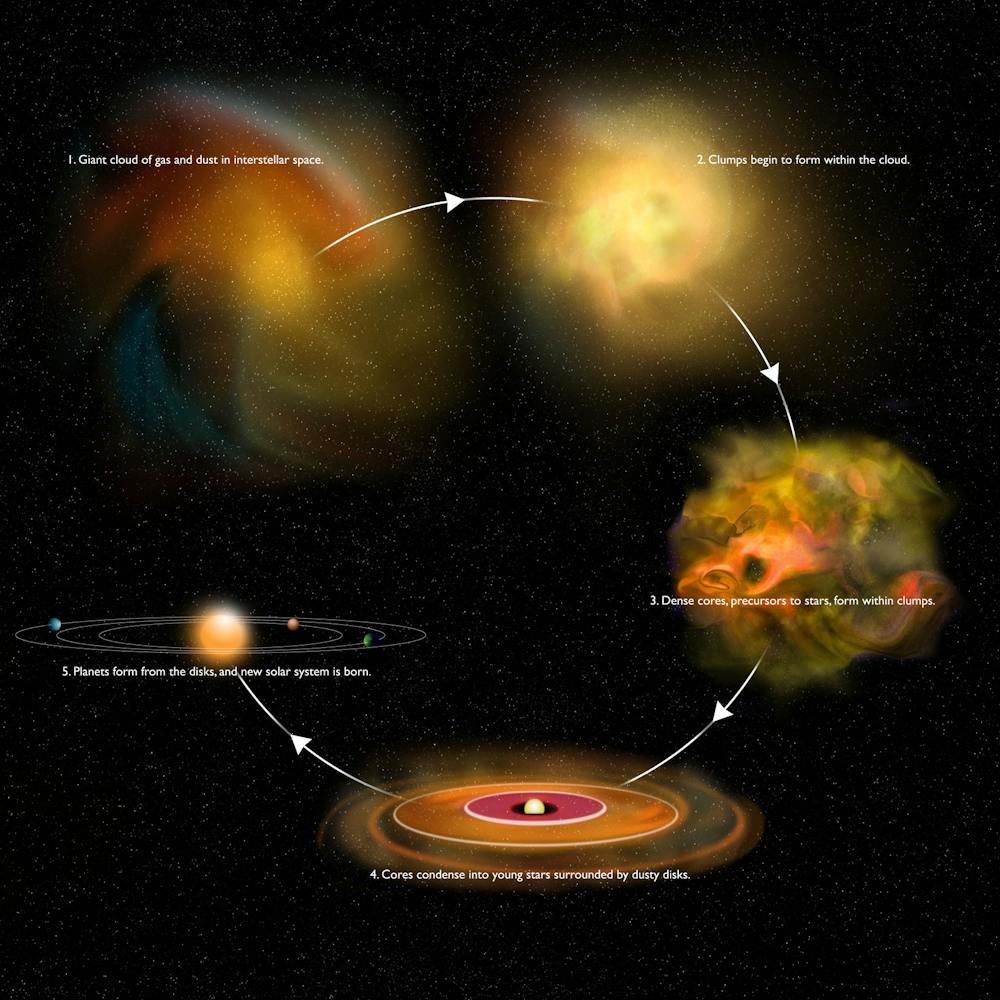
The progression of a star system from a cloud of dust and gas into a mature star with orbiting planets.

Star and planet formation is an intertwined process that starts with a cloud of molecules in space.
Bill Saxton, NRAO/AUI/NSF, CC BY

How planets are formed

The formation of stars and planets is intertwined. The so-called “emptiness of space” – or the interstellar medium – in fact contains large amounts of gaseous hydrogen, smaller amounts of other gasses and grains of dust. Due to gravity, some pockets of the interstellar medium will become more dense as particles attract each other and form clouds. As the density of these clouds increases, atoms begin to collide more frequently and form larger molecules, including water that forms on dust grains and coats the dust in ice.

Stars begin to form when parts of the collapsing cloud reach a certain density and heat up enough to start fusing hydrogen atoms together. Since only a small fraction of the gas initially collapses into the newborn protostar, the rest of the gas and dust forms a flattened disk of material circling around the spinning, newborn star. Astronomers call this a proto-planetary disk.

As icy dust particles collide with each other inside a proto-planetary disk, they begin to clump together. The process continues and eventually forms the familiar objects of space like asteroids, comets, rocky planets like Earth and gas giants like Jupiter or Saturn.

A cloudy filament against a backdrop of stars.

Gas and dust can condense into clouds, like the Taurus Molecular Cloud, where collisions between hydrogen and oxygen can form water.
ESO/APEX (MPIfR/ESO/OSO)/A. Hacar et al./Digitized Sky Survey 2, CC BY

Two theories for the source of water

There are two potential pathways that water in our solar system could have taken. The first, called chemical inheritance, is when the water molecules originally formed in the interstellar medium are delivered to proto-planetary disks and all the bodies they create without going through any changes.

The second theory is called chemical reset. In this process, the heat from the formation of the proto-planetary disk and newborn star breaks apart water molecules, which then reform once the proto-planetary disk cools.

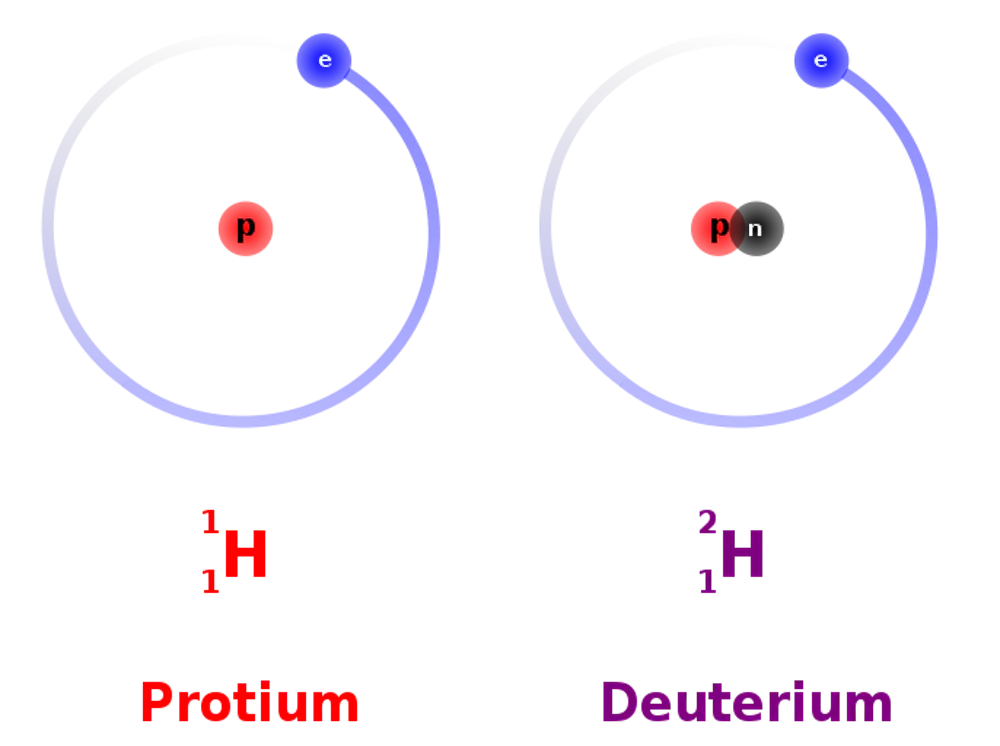
Models of protium and deuterium.

Normal hydrogen, or protium, does not contain a neutron in its nucleus, while deuterium contains one neutron, making it heavier.
Dirk Hünniger/Wikimedia Commons, CC BY-SA

To test these theories, astronomers like me look at the ratio between normal water and a special kind of water called semi-heavy water. Water is normally made of two hydrogen atoms and one oxygen atom. Semi-heavy water is made of one oxygen atom, one hydrogen atom and one atom of deuterium – a heavier isotope of hydrogen with an extra neutron in its nucleus.

The ratio of semi-heavy to normal water is a guiding light on the water trail – measuring the ratio can tell astronomers a lot about the source of water. Chemical models and experiments have shown that about 1,000 times more semi-heavy water will be produced in the cold interstellar medium than in the conditions of a protoplanetary disk.

This difference means that by measuring the ratio of semi-heavy to normal water in a place, astronomers can tell whether that water went through the chemical inheritance or chemical reset pathway.

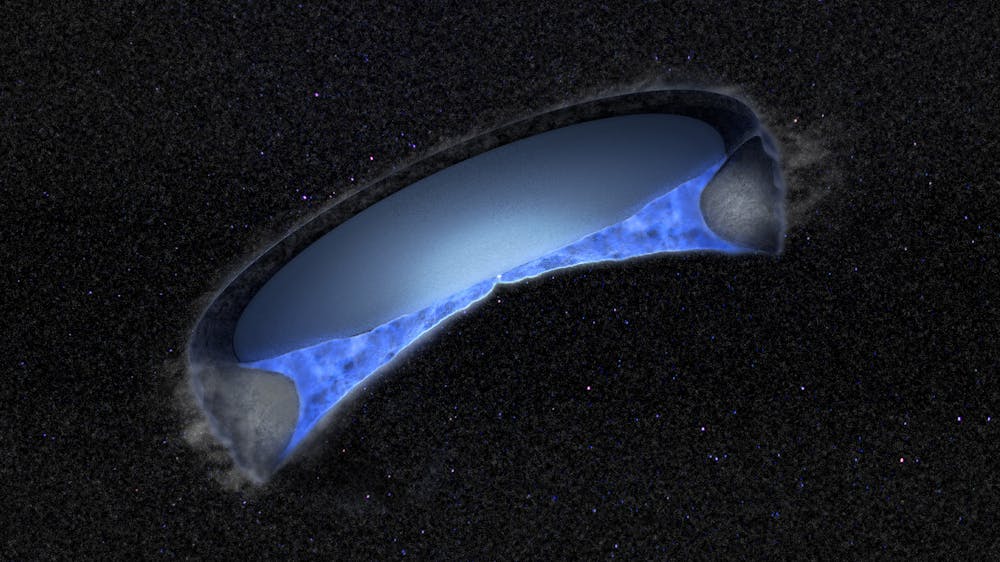
A star surrounded by a ring of gas and dust.

V883 Orionis is a young star system with a rare star at its center that makes measuring water in the proto-planetary cloud, shown in the cutaway, possible.
ALMA (ESO/NAOJ/NRAO), B. Saxton (NRAO/AUI/NSF), CC BY

Measuring water during the formation of a planet

Comets have a ratio of semi-heavy to normal water almost perfectly in line with chemical inheritance, meaning the water hasn’t undergone a major chemical change since it was first created in space. Earth’s ratio sits somewhere in between the inheritance and reset ratio, making it unclear where the water came from.

To truly determine where the water on planets comes from, astronomers needed to find a goldilocks proto-planetary disk – one that is just the right temperature and size to allow observations of water. Doing so has proved to be incredibly difficult. It is possible to detect semi-heavy and normal water when water is a gas; unfortunately for astronomers, the vast majority of proto-plantary disks are very cold and contain mostly ice, and it is nearly impossible to measure water ratios from ice at interstellar distances.

A breakthrough came in 2016, when my colleagues and I were studying proto-planetary disks around a rare type of young star called FU Orionis stars. Most young stars consume matter from the proto-planetary disks around them. FU Orionis stars are unique because they consume matter about 100 times faster than typical young stars and, as a result, emit hundreds of times more energy. Due to this higher energy output, the proto-planetary disks around FU Orionis stars are heated to much higher temperatures, turning ice into water vapor out to large distances from the star.

Using the Atacama Large Millimeter/submillimeter Array, a powerful radio telescope in northern Chile, we discovered a large, warm proto-planetary disk around the Sunlike young star V883 Ori, about 1,300 light years from Earth in the constellation Orion.

V883 Ori emits 200 times more energy than the Sun, and my colleagues and I recognized that it was an ideal candidate to observe the semi-heavy to normal water ratio.

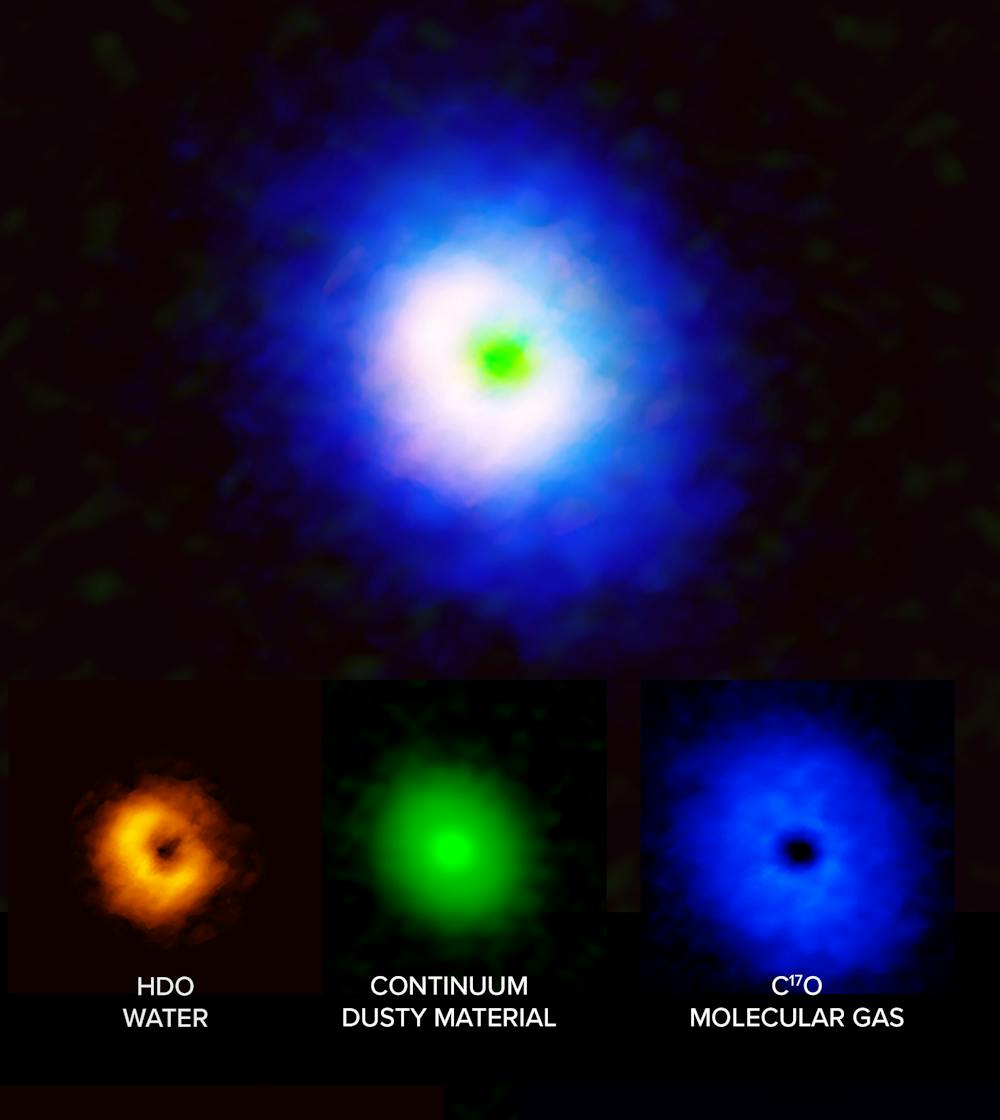
A radio image of the disk around V883 Ori.

The proto-planetary disk around V883 Ori contains gaseous water, shown in the orange layer, allowing astronomers to measure the ratio of semi-heavy to normal water.
ALMA (ESO/NAOJ/NRAO), J. Tobin, B. Saxton (NRAO/AUI/NSF), CC BY

Completing the water trail

In 2021, the Atacama Large Millimeter/submillimeter Array took measurements of V883 Ori for six hours. The data revealed a strong signature of semi-heavy and normal water coming from V883 Ori’s proto-planetary disk. We measured the ratio of semi-heavy to normal water and found that the ratio was very similar to ratios found in comets as well as the ratios found in younger protostar systems.

These results fill in the gap of the water trail forging a direct link between water in the interstellar medium, protostars, proto-planetary disks and planets like Earth through the process of inheritance, not chemical reset.

The new results show definitively that a substantial portion of the water on Earth most likely formed billions of years ago, before the Sun had even ignited. Confirming this missing piece of water’s path through the universe offers clues to origins of water on Earth. Scientists have previously suggested that most water on Earth came from comets impacting the planet. The fact that Earth has less semi-heavy water than comets and V883 Ori, but more than chemical reset theory would produce, means that water on Earth likely came from more than one source.The Conversation

John Tobin, Scientist, National Radio Astronomy Observatory

This article is republished from The Conversation under a Creative Commons license. Read the original article.

ooOOoo

Now this was a long article and I hope some of you stayed with John’s piece until the very end.

It really shows how the water trail is a much greater and longer journey than I assumed.