Thanks to a small piece on AOPA Online (Aircraft Owners and Pilots Association), a wonderful insight into a hitherto unheard of organisation and a most charming story.
That organisation is Mawson’s Huts Foundation, an Australian organisation that describes itself as:
The Mawson’s Huts Foundation has been established to conserve in perpetuity for the Australian people the unique, historical buildings known as Mawson’s Huts, base for one of the most significant expeditions in Antarctic history. The Foundation’s website provides a variety of resources concerning current and future efforts to conserve the huts and information about the archaeology and heritage of the site.
Sir Douglas Mawson was an Australian Antarctic explorer and geologist born in 1882. More background from the Mawson’s Huts website:
Sir Douglas Mawson, a geologist, who led the Australasian Antarctic Expedition of 1911, landed a party of
Sir Douglas Mawson
18 at Cape Denison on Commonwealth Bay in January, 1912, and remained there until December 1913. The site was not visited again until Mawson returned in 1931 with the British, Australian and New Zealand Antarctic Research Expedition and then not again until the 1950’s. Only a concerted public campaign would save and conserve this historic site for all Australians, and the Mawson’s Huts Foundation was formed in 1996 for this purpose.
This is a wonderful work and should be a set book for all “A” level schoolkids. There are chapters on:
Brain Gym
Homeopathy
the Placebo Effect
Mainstream Medicine
How the Media Promote the Public Misunderstanding of Science
Medical “trials”
the Pharmaceutical Companies
Bad Stats
Health Scares
the Media’s MMR Hoax
…. plus several others on various very rich charlatans in the field of alternative medicine and other areas. It also contains a concise and terrible account of the insanity of Thabo Mbeki’s nutty ideas on HIV and AIDS, which killed tens of thousands of people. Continue reading “Identifying Bullshit in Science”→
John S Denker is both a scientist and pilot. Now, I have no doubt that there are many scientists who are pilots, and that many of them combine these interests in a variety of ways. So in what way is he “remarkable”?
Experts as communicators
Sometimes experts dedicate considerable effort to communicate their understanding for the benefit of people who are much less knowledgeable. It is probably important that this happens, because it is the main means by which substantial topics are understood in any depth by other people. Without the experts’ thorough knowledge of a specific subject area, very little understanding is likely to be transferred. Continue reading “Remarkable people: John S Denker”→
There is a very interesting Post on the Blog TechCrunch. Let me quote a little from that Post:
Last week two bloggers, Steven Frischling and Chris Elliot, were visited by TSA agents and threatened with jail time if they did not reveal their source of the TSA Travel Directive that they each published shortly after the attempted terrorist attack on Christmas day. Frischling caved immediately and handed over his computer. Elliot did not. Since then the Department of Homeland Security has dropped the subpoenas, but there is a bigger issue here. The protection of sources is a cornerstone of our freedom of speech.As bloggers, we have a duty of confidentiality to our sources. And that means keeping information confidential even if threatened with the tyranny of government. And even if the legislatures and courts haven’t decided that as bloggers we have real rights protecting us from that tyranny.
I’ll never be surprised by a tyrannical government. In a sense, it’s their job. It’s our job as bloggers to stand up to that tyranny, even if our liberty has been threatened. Journalists have gone to jail rather than disclose their sources. If bloggers want the same level of respect, and protection from government by the courts, they need to stand up for what’s right.
British governmental ‘skills’ now being applied to British universities
THE GOLDEN GOOSE … Greed and the City killed off the financial golden goose – at terrible cost to ordinary people and the economy as a whole. With the problem compounded by government folly, Britain now faces years of debt and austerity to pay for it all. For the moment, the City is reeling, but at least we still have our Higher Education system, don’t we?
Well, errrrmmmm …… yes, we still have it for the moment.
Oxford University
We do – or perhaps did – have a great reputation for having world class universities. Rich foreign parents – including, of course, a good many whose source of income is highly dubious – naturally seek a good education for their children, which Britain in the past was able to provide and their country presumably couldn’t. For decades, a British degree was seen as a precious cachet of excellence in the international paper-chase.
“The time to begin writing an article is when you have finished it to your satisfaction. By that time you begin to clearly and logically perceive what it is you really want to say.” ~Mark Twain
It is a bit intimidating to try to write a piece on the importance of good writing. I feel self-conscious about my writing as I write about good writing. After all, a post on good writing should be written especially well. Then again, maybe a poorly written post will do even more to illustrate the importance of good writing. I will have to leave that up to you, the reader.
I have been teaching graduate and undergraduate students for over twenty years now. I have read and graded thousands of papers and essays during that time. I can count on two hands the number that were exceptionally well written. In each case, I sought out the students to compliment their writing, and to encourage them to keep honing their writing skills.
I doubt my words of encouragement had much effect. This, I know from personal experience.
Years ago, in my third year of graduate school, I got a paper back from a professor with the words “You write well” written in the margin. I was crushed. I had worked so hard on that paper: reviewing the existing literature, developing the research design, and trying to make a substantive contribution to my field. I yearned to hear something tangible about the quality of the research, the cleverness of the method, or the importance of the findings. Instead, I got “you write well.” I honestly thought that the professor had said that because he couldn’t think of anything positive to say about the content of the paper.
Years later, something happened that made me realize how wrong I was. I had taken a teaching job at Southern Methodist University in Dallas, Texas, even though I had yet to defend my doctoral thesis; it’s called “ABD,” or “all but
Merton Miller
dissertation.” I had traveled to Chicago to meet with Merton Miller, my thesis chairman, about polishing up my dissertation and scheduling the defense. As I waited outside his office door, I couldn’t help but notice how distracted Professor Miller seemed. He had always stood at a tall wooden lectern to write, but this day he paced to and from that lectern, rubbing his head, adjusting his shirt sleeves, writing, erasing, then erasing some more.
He was at the lectern when I entered his office for our meeting. I congratulated him again for winning the first Nobel Prize in financial economics and asked him about the upcoming trip to Stockholm. He was taking his wife and daughters on the trip, who were very excited. He, on the other hand, was not ready for the trip. He was worried, he said, because he was not going to have sufficient time to revise his acceptance speech. He had only edited it seven times thus far, and his magic number was eight. Not six, not seven, but eight rewrites were what he needed to be satisfied with his writing.
Professor Miller was known as one of the most gifted writers in all of economics. His writing was disarmingly simple and clear. It flowed like a piece of music. It seemed effortless. Everyone, myself included, assumed that he was just a naturally talented writer, lucky to have been blessed with that skill. Everyone was wrong. I learned that day that Professor Miller worked hard at writing well. He was well into his 60’s, had written hundreds of articles and had won the Nobel Prize, but he was still working at writing well.
Then I remembered the comment that a teacher had written in the margin of my paper years earlier. The teacher was Merton Miller. And now I knew how much it really meant, coming from him. So now when I see the rare student who writes really well, I make it a point to tell them. Not that it means as much coming from me as it did coming from Professor Miller. But it still means something, because good writing is very important, and it’s worth working for.
Not really understanding but knowing it’s important!
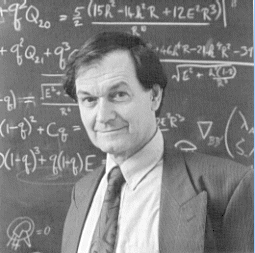
I recently read a glowing review of the latest book by Sir Roger Penrose, the eminent mathematical physicist, called The Road To Reality. Having previously read his book The Emperors’ New Mind and just understanding it, I thought
Roger Penrose
his next one would be a welcome companion for long winter evenings. Wrong!
I managed to the bottom of the third page of the preface before “According to the mathematician’s “equivalence class” notion …..” had me grasping for meaning. Well over a 1,000 pages of content was destined to gather dust on the bookshelf.
But wrong again!
The idea of matter out there in the universe that is essential to the universe as we know it but is unseen has been sufficiently fascinating for the popular media to refer to it from time to time. Most people are familiar with the term even if like me don’t really have a clue as to what dark matter is all about.
So a recent press release in a popular English newspaper suggesting that dark matter has been ‘discovered’, if discover is the appropriate term, had me reaching out for Penrose’s book again. There under the chapter headed Speculative theories of the early universe was, on page 773, a few sentences that almost made sense. Let me quote them:
For many years, it had become clear that the dynamics of stars within galaxies does not make sense, according to standard theory unless there is a good deal of more material in the neighbourhood of the galaxy than is directly seen in stars. A similar comment applies to the dynamics of individual galaxies within clusters. Overall, there seems to be about 10 times more matter than is perceived in ordinary baryonic form. This is the mysterious dark matter whose actual nature is still not agreed upon by astronomers, and which may even be of some material different from any that is definitely known to particle physicists – though there is much speculation about this at the present time.
A primer from Prof. Jarrell on this important subject
Macroeconomics is the study of aggregate supply and demand, and looks both internally to the workings of the economy and externally to how a domestic economy interacts with others worldwide.
Macro builds on the principles of microeconomics, which is the study of prices and quantities of individual goods and the markets where these goods are produced and sold.
In macro, “price” refers to some index of the prices of domestic goods and services, and “quantity” refers to some measure of the value of domestic production or “output.” One common measure of output is gross domestic product (“a measure of the productive activity of a country computed on the basis of the ownership of the factors of production”). A country’s standard of living is usually directly correlated with its real output, or the value of total output corrected for inflation.
John M Keynes
Unlike microeconomics, macroeconomics started with the idea that prices and markets do not continuously resolve all of the coordination requirements of a modern economy. Such “failures of coordination” (Keynes) seem likely when one views the economy as the collective sum of thousands of microeconomic markets.
For example, although most economies around the world have experienced generally positive trends in their gross domestic product, short run positive and negative deviations (recessions and, in more dramatic examples of the failure of coordination, depressions) around the trend line, or “business cycles,” are common.
Inflation is the rate of change of the average level of prices, where the price level is usually measured as a price index. Inflation rates are typically quoted in annualized percentages. In normal times, the inflation rate is procyclical: it rises in periods of high growth and declines in periods of slow growth. Unemployment, by contrast, is usually countercyclical. The U. S. inflation rate was as likely to be negative as it was positive before World War II; since then, price levels have risen fairly consistently.
Yesterday, a Post was published a Post about Greg Craven. It made the point that social media was becoming a very real force in influencing opinions and how that threatened traditional politics. Here’s an extract:
I was doing some research for an earlier Post about Copenhagen and came across a YouTube video created by Greg. More details and links later after making a more fundamental point.
This video of Greg’s has had 2,704,000 viewings! The information on that YouTube ‘page’ has had over 7,500,000 viewings. Greg has now written a book and so on, and so on.
Now I want to return to the core subject of how we deal with very complex issues that have the power to decimate humanity, e.g. global warming.
The fact is that the majority of people who think about such issues as global warming don’t have the skills and knowledge to determine what to do for the best. It comes down to determining risks, which was the theme of an earlier Post acknowledging the work of Peter L Bernstein.
That’s also the theme of Greg Craven’s video on YouTube. It’s a noble effort by a concerned citizen of Planet Earth. Watch it.
For those readers who are not regular BBC television viewers, the Beeb has for many years run an excellent factual/science & nature series under the name of Horizon. Just recently there was a programme with the title of How Many People Can Live on Planet Earth?
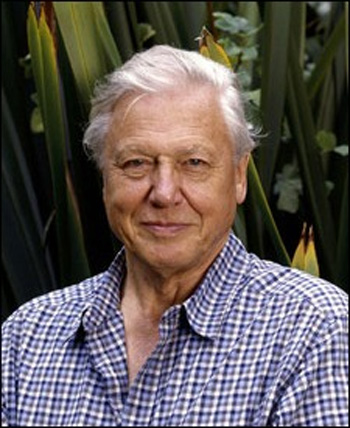
Sir David Attenborough
It was presented by that familiar face on the BBC in terms of the natural world, Sir David Attenborough. It was an appropriate and worthy person to present the information.
But before getting into some of the details underpinning the programme, there seems to been an enormous and unspoken omission at Copenhagen – why no debate about global population trends?
Luckily the media noticed the rather obvious exclusion. Here’s the UK Daily Telegraph newspaper (online version) of the 8th December, 2009. An extract:
Population growth is the one issue accused of causing driving climate change that no one at the Copenhagen climate summit dares to talk about.
The argument is that more people consume more resources, therefore producing more greenhouse gases that cause global warming.
The global population is currently at 6 billion and could rise to 11 billion by 2050 if fertility rates continue, not only threatening the climate, but food shortages and conflict as well.
Organisations like the Optimum Population Trust, that is backed by Sir Jonathan Porritt, Dame Jane Goodall and Sir David Attenborough, advocate birth control as a way of slowing climate change.
As Sir David has said: “I’ve never seen a problem that wouldn’t be easier to solve with fewer people, or harder, and ultimately impossible, with more.”
A study by the London School of Economics found contraception is almost five times cheaper as a means of preventing climate change than conventional green solutions such as investing in green technology.




 Learning from Dogs