Acceptance of what has happened is the first step to overcoming the consequences of any misfortune.
William James, January 11th, 1842 - August 26th, 1910
The above is a quotation attributed to the late American philosopher, William James, comprehensively written about on the Stanford Encyclopaedia of Philosophy.
When drafting this post last Wednesday, I used the quotation and reference to William James to soften, as it were, me reproducing an item on Yves Smith’s fabulous blog, Naked Capitalism.
I did have second thoughts about including the video below and the summary of what was written by Yves. The second thoughts were around me not wanting Learning from Dogs to stray into sensationalism or hot pop topics.
The reason I did publish this post was that maybe, just maybe, young Mr. Alessio Rastani is saying it how it really is. How we all have been lulled over the years into believing so much rubbish from so many movers and shakers in the world of power and politics. Whereas, in truth, most people who stop and reflect on the world we are presently living in, intuitively sense, that something has broken.
The good news that may be interpreted from Mr. Rastani’s predictions is that we are now living through a period of change, the end of an era, and that the opportunity for a better, more caring world is wide open.
Introduced on the Naked Capitalism site, as follows,
This segment on BBC may not go viral, but it seems to be getting traction, based on the e-mails (hat tip readers Paul S and Marcus) and alerts in the comments section.
This is not an entertaining Rick Santelli-style rant, it’s a cool assessment of how the Euromarket crisis is likely to end, which he thinks is very badly. The flummoxed reaction of the BBC host suggests that the trader, Alessio Rastani, was a booking mistake.
But consider his second message: that Goldman and people rule the world and like him don’t care about what happens to the real economy. A depression is just a great investment opportunity if you see it coming and position yourself accordingly. Rastani is the bland, reasonable face of predatory capitalism.
But in the best interests of scepticism and balance, I also reproduce what was published in the UK’s Telegraph newspaper on the 27th September,
The soundbites won Mr Rastani instant fame. He became a viral hit and was trending on Twitter. BBC business editor Robert Peston was among the fans. “A must watch if you want to understand the euro crisis and how markets work,” he told his army of 82,000 followers on Twitter on Tuesday.
The interview contained such gems as “Governments don’t rule the world, Goldman Sachs rules the world [and] Goldman Sachs does not care about the rescue package.”
But on Tuesday night the BBC was left facing questions about just how qualified Mr Rastani is to speak about the markets.
In the interview Mr Rastani described himself as an independent trader. Elsewhere he claims he’s an “investment speaker”. Instead of operating from a plush office in Canary Wharf Mr Rastani works and lives with his partner Anita Eader in a £200,000 semi in Bexleyheath, south London. The house, complete with a mortgage from Royal Bank of Scotland, belongs to her not him.
He is a business owner, a 99pc shareholder in public speaking venture Santoro Projects. Its most recent accounts show cash in the bank of £985. After four years trading net assets are £10,048 – in the red.
How a man who has never been authorised by the Financial Services Authority and has no discernible history working for a City institution ended up being interviewed by the BBC remains a mystery.
The incongruity led to some commentators speculating Mr Rastani was a professional hoaxer. The BBC denied the allegation: “We’ve carried out detailed investigations and can’t find any evidence to suggest that the interview with Alessio Rastani was a hoax.”
However, the BBC declined to comment on what checks, if any, it had done prior to the interview.
Mr Rastani was a little more forthcoming.
“They approached me,” he told The Telegraph. “I’m an attention seeker. That is the main reason I speak. That is the reason I agreed to go on the BBC. Trading is a like a hobby. It is not a business. I am a talker. I talk a lot. I love the whole idea of public speaking.”
So he’s more of a talker than a trader. A man who doesn’t own the house he lives in, but can sum up the financial crisis in just three minutes – a knack that escapes many financial commentators.
“I agreed to go on because I’m attention seeker,” he said on Tuesday. “But I meant every word I said.”
I must immediately volunteer the fact that the thrust of this article is the result of a programme that we watched last Thursday night. It was a programme originally featured on the UK BBC 4 channel in 2008. Called High Anxieties, The Mathematics of Chaos, it is a fascinating examination into the way that mathematicians have fundamentally adjusted their views, from the certainty of Newtonian principles to the certain uncertainty offered by mathematicians such as Henri Poincare and Alexander Lyapunov. The 60-minute documentary, directed by David Malone, is wonderfully interesting and much more relevant to the uncertainty surrounding all our lives than one might anticipate from any references to mathematicians! It puts the collapse of Lehman Brothers, some 2 years ago, last Thursday, into an interesting perspective.
Here’s the first 9 minutes as offered on YouTube, introduced thus,
David Malone http://golemxiv-credo.blogspot.com author of The Debt Generation, directs and presents this film, It is the first part of a documentary first shown on BBC4 Television in the UK in September 2008. The film was first broadcast 2 days after the collapse of Lehman brothers at the start of the financial crisis. It looks at the discoveries in mathematics during the 20th Century which have challenged the view that the world is an essentially knowable and therefore controllable place. The film focuses on the economy and the environment and suggests that ideas about unpredictability, the butterfly effect and tipping points, stemming from mathematics, are part of what underlie some modern anxieties about the world we live in.
If this first part grabs your attention then finding the other 8 parts is easy on YouTube. Alternatively, the complete set of videos is linked together as one film on Top Documentary Films, click High Anxieties: The Mathematics of Chaos. where it is described as follows,
The documentary looks at the modern advances in mathematics and how they affect our understanding of physics, economics, environmental issues and human psychology.
The film looks at how developments in 20th Century mathematics have affected our view of the world, and particularly how the financial economy and earth’s environment are now seen as inherently unpredictable.
The film looks at the influence the work of Henri Poincare and Alexander Lyapunov had on later developments in mathematics. It includes interviews with David Ruelle, about chaos theory and turbulence, the economist Paul Ormerod about the unpredictability of economic systems, and James Lovelock the founder of Gaia theory about climate change and tipping points in the environment.
As we approach tipping points in both the economy and the climate, the film examines the mathematics we have been reluctant to face up to and asks if, even now, we would rather bury our heads in the sand rather than face harsh truths.
Very, very interesting and rather puts the pictures of the Petermann Glacier shown here into context.
Yesterday, I referred to a piece on the Chris Martenson blog about Joel Salatin, proprietor of Polyface Farms. I want to stay with the theme of food, and the growing thereof, as this is yet another critically important aspect of how we all have to change our attitudes and behaviours in the face of a growing ecological disaster.
I’m using a recent item presented by Rob Hopkins of Transition UK fame. The link to the full piece is here but I am presenting some extracts and further links in this article.
A while ago I was sent a book called ‘SPIN farming basics: how to grow commercially on under an acre’ by Wally Satzewich and Roxanne Christensen. The book describes itself as a “step-by-step learning guide to the sub-acre production system that makes it possible to gross $50,000+ from a half-acre”. SPIN, which stands for‘SmallPlot Intensive’ (their website is here), has the feel of an important, big, and timely idea, and it is one that fits into Transition beautifully. So what is it?
At the moment, when contemplating urban food production, the models that are used tend to be allotments, community gardens, planting productive trees or forest gardens, private gardens or even, perhaps, rooftop gardens. Commercial urban market gardens tend to be thought of as needing to be on a larger scale and requiring significant infrastructure. SPIN is based on the idea of ‘patchwork farming’, of seeing unused areas of urban land as having the potential to be worked commercially, viewed through the eyes of a commercial grower rather than someone growing for a hobby. This is a profound shift of emphasis and one that I find very exciting. Here is a short talk by SPIN farmer Paula Sobie of City Harvest which gives her take on what SPIN farming is:
Let me quote how that article from Rob concludes,
‘SPIN farming basics’ is just one of the books that SPIN produce. It isn’t a step-by-step growing guide, rather it is an overview book on how to run such an operation. I have no way of gauging whether their figures are accurate and how they might translate into the UK context. I’m also not sure what they do about slugs. There is also, I guess, a distant danger that should this really take off it might edge out more egalitarian forms of urban land use, such as allotments and community gardens. But even if they are only half right about their potential yields, it is still an impressive approach, and it calls for a powerful shift in focus for urban growers. In the wake of the recent riots in a number of English cities, I am struck by the potential of this approach to shift thinking about how to create viable social enterprises and a sense of purpose for young people. It has certainly got my brain ticking over pretty rapidly.
As the authors put it, “once you put on SPIN glasses, you start seeing dollar signs all over vacant and underutilised patches of land”. As economic contraction worsens, and peak oil starts to bite, this form of land use will become the norm, as it has done every time in history that societies have faced similar sets of circumstances. The obstacle to getting started has always been how to make this stuff viable. That obstacle, thanks to the work of the SPIN folks, would appear to no longer exist, or at least to be greatly diminished. If you don’t do it someone else will, and they likely won’t do it in a way rooted in social justice, community benefit, food security and Transition. This is an important window in time to get moving on this.
This is a revolutionary text, an incendiary call to rethink urban land use in a way that ticks everyone’s boxes. I can’t recommend it too highly.
It is rather hard to tell from the SPIN website which of the books they offer is this one… so for the last time ever, here is a link to the book on Amazon…. it is quite pricey, but one to get and share with as many people as you can…
The SPIN Farming website is chock full of fantastic ideas, advice and guidance. Website is here. From which you will understand,
THINKING OF FARMING? THINK AGAIN.
There’s a new way to farm. It’s called SPIN, and it is causing people to re-think not only how to farm, but what it means to be a farmer today.
Some practice SPIN in their backyards in the city. Others do it on front lawns in the suburbs.
Some do it part-time, others full-time.
Some are young and just starting out, while others are older and on their third or fourth careers.
Some have more money than they know what to do with, and others have less than they need.
Some are convinced the world is doomed, while others are trying to save it.
What unites them all is a calling to farm.
If you want to follow your calling, follow the system that shows you how to make money farming.
It’s one of the many beams from that wonderful rainbow just over the horizon!
Want a brilliant idea for tomorrow? Stay in the present!
Dogs do this wonderfully. I am told that followers of Zen Buddhism discover peace and grace from embracing the present. But is there more to this? Is there some deeper psychology involved? Does our species have an intrinsic challenge in terms of staying in the present?
My musings on this arise from a couple of recent conversations.
The first was with Peter McCarthy from the Bristol area of West England. Peter and I go back a few years (at my age, everything goes back a few years!) and at one stage I did some work for Peter’s company, Telecom Potential. Just a quick aside, Peter’s company was based in the magnificent Clevedon Hall, a mansion built in 1853 as a family home for Conrad William Finzel, a German-born businessman. Here’s a picture of one of the rooms,
A room at Clevedon Hall
Peter, like me, is sure that the period in which the world now appears to be, is not some cyclical downturn, not some temporary departure from the national growth and employment ambitions promoted by so many countries. No! This one is different.
Peter is sure that a major transition is under way, as big as any of the great societal upheavals of the past. And, for me, a fascinating comment from Peter was his belief that the key attitude required for the next years would be innovation. Peter reminded me that we tend to think of innovation as applying to things physical, scientific and technical. But Peter sensed that it would be in the area of social innovation where key changes would arise and, from which, these large societal changes would flow.
Then a day later I was chatting with one of the founders of a brilliant new authentication process, Pin Plus. It is a very smart solution to a major global problem, the weaknesses of traditional password user-authentication systems.
On the face of it, Pin Plus is obviously a better and more secure way of authenticating users, and a number of key test customers have borne this out. Jonathan C was speaking of the challenges of convincing companies to have faith in this new process. This is what he said,
More than once, indeed many times, I am told by prospects something along the lines that the IT world has been looking so hard and so long for a password solution that a solution can’t possibly exist.
Let’s ponder that for a moment. Are we saying that a far-sighted approach to the potential for change is not an easy place for some, probably many, human brains?
Indeed, Jonathan and I mused that here we were, both speaking via Skype, an internet telephony service, both of us looking at different web sites in support of many of the points that we were discussing and totally dependent, in terms of our mentoring relationship, on the technology of the internet, a multi-node packet-switched communications system that was a direct result of the American shock of seeing the Russians launch the world’s first artificial satellite, Sputnik 1, into low earth orbit on the 4th October, 1957.
Launch of Sputnik 1
At that time, it would have seemed impossible for anyone on the planet to see that the American response to Sputnik 1 would eventually lead to the vast packet-switched network that is now the modern Internet.
But why do we regard the ability to look into the future so utterly out of reach of the common man? Look at this, the Internet Timeline here. Look how quickly the response to Sputnik1 gathered pace. See how Leonard Kleinrock of MIT way back in May, 1961, presented a paper on the theory of packet-switching in large communications networks.
So maybe there’s a blindness with humans. A blindess that creates the following bizarre characteristics,
Whatever is going on in our lives at present we assume will go on forever. I.e. the boom times will never end, or the period of doom and gloom is endless.
Our obsession with how things are now prevents us from reflecting on those signs that indicate changes are under way, even when the likely conclusions are unmistakeable. The ecological and climatic changes being the most obvious example of this strange blindness that mankind possesses.
Yet, unlike animals and some spiritual groups of humans, truly living in the present appears incredibly difficult for man.
However, the history of mankind shows that our species is capable of huge change, practically living in constant change for the last few millennia, and that a very small proportion of a society, see yesterday’s article, is all that is required to create a ‘tipping point’.
I want to continue with this theme but conscious that there is still much to be written. So, dear reader, I shall pause and pick this up tomorrow.
A President with more speech writers than one could imagine.
Got a vested interest or a strong view? Then draft a speech for the President of the United States of America. Many do. Some are clearly very tongue-in-cheek, some are pertinent. The following from CASSE fits into the latter category. Enjoy.
President Obama’s (Hoped for) “Amaze Speech”
Speechwriter: Brian Czech
President Obama’s hoped-for speech first appeared in the Daly News on August 7. We reprint it this week in anticipation of the President’s September 8th speech.
Pres. Obama
Fellow Americans, this evening I have a special message for you. It’s an unprecedented and surprising message, but ultimately it will resonate with your common sense, good will, and patriotic spirit. It turns out that the recessionary cloud we’re under does have an extremely valuable silver lining. I know; it sounds like something only a politician would say, but wait. I think you’ll be surprised to hear my explanation.
Now before I elaborate on the silver lining, I want to make it clear that the cloud has some rain, too. As a nation, we are struggling with debt, credit ratings, and worst of all, the painful experience of unemployment. The last thing I want is to mislead you into thinking these are problems I take lightly, or problems that will be automatically solved by the markets or policy makers. These problems were many years in the making — decades in fact — and it’s going to take years of diligence and readjustment to solve them.
Yet none of these problems can deny us the silver lining, which is this: the economic turmoil we experience today will change the course of history in such a way as to secure the future for American posterity, starting with our children and grandchildren. Let me reiterate, our own kids and grandkids — the most precious American treasure — will have a secure future as a result of the problems we face today. Here’s why…
Far from the trading floors of Wall Street and the policy meetings of the Federal Reserve, crucial discoveries have been made by scientists, economists, anthropologists, historians, and others collaborating under a broad umbrella called “sustainability science.” No, they haven’t discovered an unlimited energy source, a pollution-free car, or a method to stabilize our climate at optimum conditions. They’ve discovered something far more important and exciting: the key to permanent economic security.
For the past few years, as time has allowed, I and my economic advisors, with the assistance of numerous scholars, have studied this key to economic security. The theory and evidence for it is absolutely irrefutable. The only reason this key to security hasn’t broken into public dialog is because it serves no short-term vested interests; no wealthy corporations, think tanks, or political parties that would stand to profit before the next shareholders meeting or election cycle. But that’s also the beauty of it: the key to security is a non-partisan, scientifically sound approach to the long-run interests of all, especially our kids and grandkids. Fortunately for us, it’s surprisingly simple as well.
What is this key to a secure future? We could coin a new phrase to get credit for the idea or to improve its political flavor, but I believe the clearest term is what the scientists already call it: the “steady state economy.” Political advisors think it’s a bit on the dry side, but after what we’ve been through – stock market crashes, insurance crises, banker bailouts, panic over the debt ceiling, having our credit downgraded — doesn’t a “steady state economy” sound like just what the doctor ordered?
In the coming weeks and months, I and my Cabinet will be helping to introduce fellow Americans to the basics of steady state economics, especially what it means for producers, consumers, and public policy. We’ll do this through a series of public announcements, publications, and townhall meetings. Meanwhile, this evening, I’ll provide a brief summary, first by noting what a steady state economy is not.
A steady state economy is not communism, Marxism, or anything at odds with the Constitution of the United States. A steady state economy is not a stagnant, flat-lined economy but is rather continuously dynamic and creative. A steady state economy is not established overnight with draconian policies; instead it evolves as a matter of consumer preference and prudent policy. Most importantly, a steady state economy is in no way opposed to jobs and full employment. To the contrary, a steady state economy is the only economy that can ensure full employment, for your kids and theirs.
The most fundamental feature of the steady state economy is stability. The idea is to stabilize good conditions; stable agriculture, stable manufacturing, stable services, stable production and consumption, stable currency, stable markets, stable international trade, stable impact on the environment, stable air and water, stable climate… You get the picture, and remember, all this stability is at a good level — a level that ensures life, liberty and happiness for us and future generations. At this point in history, the steady state economy is the right goal, and the first step in getting there is recognizing it.
Perhaps you find this amazing. I think you should be amazed. After all, I haven’t said a word about economic growth; in fact I’ve called growth into question. The closest thing to this in presidential history is when President Carter encouraged Americans to consume a little less after the OPEC oil embargo. But President Carter was before his time, and his speech was maligned as the “malaise speech.”
Well, at this point in history, we can no longer afford — literally or figuratively — to pull out all the stops for economic growth. Therefore, tonight you’re hearing the “amaze speech,” the speech that introduces our nation to steady state economics, the alternative to growth.
I understand the adjustment in thinking that this will entail. I’ve gone through it myself. With the exception of President Carter in 1979, my predecessors for over 50 years have prioritized economic growth in their speeches, campaigns, and policies. None even mentioned steady state economics in a speech. Yet with every new president, the pursuit of economic growth has become less realistic, less sustainable, and even less desirable.
Earlier I mentioned the profound developments in sustainability science. Among the sustainability scholars are behavioral scientists and psychologists who have found compelling evidence that economic growth stopped contributing to a happier United States somewhere from the 1950′s to the 1970′s. After that, our gross domestic product continued to rise, but our happiness did not. If you’re like me — meaning old enough to remember — this probably resonates with you. Somewhere along the line the brighter lights, bigger houses and fancier cars stopped making us better off. In fact, all the new “stuff” started working against us. Now we struggle to find enough oil, water, “green space,” solitude, free time, and the peace of mind that comes with a stable climate. It’s all the sign of an economy grown too big.
They say the definition of insanity is doing the same thing over and over again and expecting a different result. I think we’ve all done some crazy things in life, but I don’t want to go down in history as the insane president who kept trying every trick in the book to “stimulate the economy,” when stimulating the economy was neither bound to work nor even desirable by that point in history. I don’t want to oversee more banker bailouts, more stimulus spending, more loosening of environmental protections in a vain attempt to increase GDP growth. That would be insane. Instead, I’m going to tell it like it is: the pursuit of economic growth has become a dangerous obsession that we must overcome. I say this with the backing of sound science, the lessons I’ve learned, and the concern I have for the future of America.
I’m going to test your common sense now. Do you think there is a limit to economic growth? Remember, economic growth is increasing production and consumption of goods and services. It means more and more people, more and more stuff. It takes more energy, water, space to operate in, and places to put out the trash.
Now as a politician, I can assure you that, in the coming days, well-paid pundits will conjure up magical concepts of perpetual growth based on “dematerializing” the economy. Well when they’re ready to dematerialize it, maybe they can beam us up. Meanwhile, the rest of us in the real economy know what perpetual GDP growth would take: evermore people, evermore stuff. And we know we’re running out of evermore room, resources, and patience for unreal notions of evermore growth.
I know that for some, and perhaps for many, this is hard to swallow. For decades we Americans have been encouraged to believe in the notion of continual economic growth. But look at it this way: to think there is no limit to economic growth on Earth is like thinking we could fit a stabilized economy into a perpetually shrinking area. For example, with computers, robots, nanotechnology and the like, we could squish the $70 trillion global economy into North America, then the United States, then Iowa, then into the foyer of the Des Moines Chamber of Commerce, leaving the rest of the world as a designated wilderness area! It’s a ludicrous notion, and it’s precisely as ludicrous as thinking there’s no limit to economic growth in Des Moines, the United States, or Earth.
Now, let’s consider some of the problems we will face if we continue pulling out all the stops for economic growth. The first is inflation. Typically we use monetary policy — such as increasing the money supply — to stimulate growth. But when the real economy isn’t meant to grow as easily as increasing the money supply, the result is inflation. Nothing could be more harmful to our economy at this point than inflation, which is like a devastating tax on the nation.
Another problem is debt. As you know, my Administration injected a major fiscal stimulus into the economy. It helped somewhat and spun off some jobs, but it did not produce the wave of jobs we’d get in an economy with plenty of room to grow. Meanwhile, it added to our deficit and ultimately our debt. Now our credit is coming into question, as with so many nations in a global economy bumping up against the limits to growth.
Of course, there is no shortage of special interests to pounce on the news of faltering fiscal policy. The answer, they say, is to turn over as much as possible to Wall Street. “Take care of national security,” they say, “and let the markets take care of the economy.” The problem with that approach is that national security is about more than having the biggest military. National security starts with a sustainable economy, which requires a stable environment to support the agricultural, fishing, logging, mining, and ranching activities that have always been and always will be the foundation of the American and global economy. Our manufacturing and service sectors — the best in the world — are the best because we have the biggest and best agricultural and extractive sectors. And we have those because we have protected the environment from overuse, pollution, and displacement.
Consider what will happen if we take an unbalanced approach and prioritize economic growth even more over environmental protection. Does anyone really question whether we will have more environmental problems, including devastating problems? More oil spills in the Gulf of Mexico and Gulf of Alaska, more mountaintop mining in the Appalachians, more scraping for shale oil in the Rockies, more nuclear waste, more endangered species, more greenhouse gas emissions, and all the while less water, less fish and wildlife, less wilderness, less nature, less beauty. Does anyone question whether such trends diminish the quality of life for future generations? No, the problems caused by economic growth are unquestionable. It’s just that, for much of American history, the benefits of increasing GDP outweighed the costs. That’s no longer the case, and I’m confident that most of us can sense it.
In fact, the more I thought about this speech, the more amazed I became. Why did it take us so long, in America, to have an open discussion of limits to growth and alternatives to growth? The principles are irrefutable. Neither growth nor recession is sustainable in the long run; a steady state economy is the obvious policy for long-run security. Yet based on the politics of the past 50 years, you’d think economic growth had supplanted apple pie as the companion to motherhood.
Well, now we’re entering a new era of dealing squarely with sustainability. It turns out that economic growth was not a good companion to motherhood, not in the long run. We want apple pie back. We want loving homes for our children, quality time with family and friends, the occasional escape to the great outdoors, and peace. That’s the American dream in a nutshell, and it’s too valuable to sacrifice for economic growth.
So let’s roll up our sleeves and wash our hands of the dirty business of growth at all costs. We know what the right goal is, and malaise won’t get us there. We have work to do to stabilize the economy for our children and grandchildren. Our decisions — what we eat, what we drive, what we build, and frankly how many kids we have — all these will determine the quality of life for the kids that we do have. Meanwhile, those of us privileged to hold public office are responsible for developing the policies to help you thrive in a steady state economy, and for avoiding the policies that force us onto an unsustainable pathway of evermore growth. You could say we are tasked now with “steady statesmanship.”
To conclude, my fellow Americans, do stay tuned. In the coming days and weeks we’ll be discussing the details of transitioning from growth to a steady state. We’ll be talking with you about employment, population growth, stock markets, the banking system, and more. Don’t fear any shocks to the system; you’ve seen most of the shocks already as the policies of economic growth have failed. One by one, we’re going to turn these “failures” into steady state successes.
The latest announcement continues to show dogs in very good light!
Before I plunge into this Post, just an apology. I’m trying hard to get out of what feels like a recent pattern of ‘re-publishing’ stuff rather than posting material that is primarily my own creative output. Ironically, it’s become a little harder to achieve since starting a creating writing course last Tuesday 23rd (every Tuesday evening for 12 weeks!). The course requires several thousand words of ‘homework’ each week.
Then I lost the plot and published two posts yesterday, when one of them should have been scheduled for today! Thus making it almost impossible to be fully creative today!
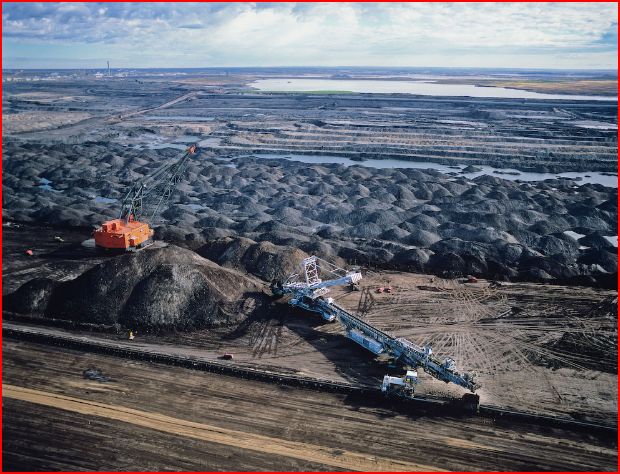
Anyway, to today’s theme. Which comes very close on the heels of my post on Monday about the antics of the big oil companies and ‘recovering’ oil from tar sands in Canada.
We all know that some of the most ecologically and environmentally fragile places on the planet are the polar regions. Of the two polar regions, the more sensitive one is the North Polar region. The Arctic ice cap is forecast to be clear of ice each Summer by 2030 assuming the huge annual run-off of fresh water doesn’t screw up the existing ocean currents before then. (Indeed, a fascinating film about the complexity of the weather systems as a result of very long heating and cooling cycles was seen recently on YouTube – link at the end of this post.)
So continued madness over our love affair with oil is just that: madness. Don’t get me wrong. Jean and I drive gasoline-powered vehicles but at least we are conscious of the damage we are doing and will change just as soon as it becomes viable for us to so do.
So with all that in mind, here’s a recent announcement from Exxon first seen on the BBC News website.
US oil major Exxon Mobil has clinched an Arctic oil exploration deal withRussian state-owned oil firm Rosneft.
The venture seemingly extinguishes any remaining chance of BP reviving its own deal, which lapsed in May.The agreement was signed on Tuesday in the presence of Prime Minister Vladimir Putin, a Rosneft spokesman said.
Prime Minister Putin said that it would also allow Rosneft to develop fields in the Gulf of Mexico and Texas, according to local media reports.
“New horizons are opening up. One of the world’s leading companies, Exxon Mobil, is starting to work on Russia’s strategic shelf and deepwater continental shelf,” he said.
‘Big win
‘Under the agreement, the two firms will spend $3.2bn on deep-sea exploration in the East Prinovozemelsky region of the Kara Sea, as well as in the Russian Black Sea.
Exxon described these areas as “among the most promising and least explored offshore areas globally, with high potential for liquids and gas”.
The two companies will also co-operate on the development of oil fields in Western Siberia.
Exxon spokesman Alan Jeffers told the BBC: “[The Russian Arctic] is among the most promising and least explored regions for oil, that is why we are very interested.
Cynic mode on: “The Russian Arctic is among the most promising and least explored regions for oil …” Well that’s alright then!
If one follows that link in the BBC news item, it goes to the ExxonMobil press release where one can quickly read the following key points,
US $3.2 billion exploration program planned for Kara Sea and Black Sea
Establishment of a joint Arctic Research and Design Center for Offshore Development in St. Petersburg
Rosneft participation in ExxonMobil projects in the U.S. and other countries with a focus on building offshore and tight oil expertise
Joint operations to develop Western Siberia tight oil resources
Companies form partnership to undertake projects in the Russian Federation and internationally
Thus this is not some small sideline – it’s potentially very big business for both partners.
The Kara Sea, an extension of the Arctic Ocean, is located off the coastline of Siberia in far northwestern Russia.
It’s separated from the Barents Sea (in the west) by the Kara Strait and Novaya Zemlya – and the Laptev Sea (in the east) by the Taymyr Peninsula and Severnaya Zemlya. The northern border (shown) is a mapping opinion.
It has an estimated area of 880,000 sq km (340,000 sq mi), an average depth of 128 m (420 ft) and a maximum depth of 620 m (2,034 ft).
Ice-bound for most of the year, the sea is generally navigable only during August and September.
The main ports are Dikson (Dickson) and Novyy Port, and they are heavily used during the two-month (lucrative) fishing season. They will also be distribution points when the petroleum and natural gas discovered here is brought to the surface.
Just look at that map again and see how far North of the Arctic Circle is the Kara Sea.
Dad, where's the ice gone?
Let’s go back to dogs. When dogs were primarily wild animals, really when they were still carrying all the ‘habits’ of the Grey Wolf, from which dogs are genetically descended, they were very territorial, as indeed domestic dogs are towards their domestic area. WikiPedia explains, ‘The core of their territory is on average 35 km2 (14 sq mi), in which they spend 50% of their time.‘ (That’s a great article on WikiPedia about the Grey Wolf, by the way.)
Anyway, the wolves, like practically all other animal species, live in harmony within their territory and only move or amend their territorial boundaries if the survival of the pack is threatened.
So when, oh when, is mankind going to learn that our territory is Planet Earth. We have no other territory to move to. I still remember my form teacher way back in my first English school saying to me, “There are two ways you can learn this lesson, the easy way or the hard way!” Same applies to us all! Let’s urgently learn this lesson from dogs and move on from oil.
Finally, that YouTube video. Less than an hour long, it has some interesting facts about climate change over many thousands of years and a rather interesting conclusion.
The powerful anti-democratic forces that will threaten civilisation.
In one sense this post today carries an underlying political message – and in another sense, it does not. It does in the sense that if every American voter truly understood the risks of a continued relationship with oil then the tar-sands projects wouldn’t have a prayer of a chance of being allowed.
In the other sense, it does not. Because the influence and power of ‘behind-the-scenes’ oil and money is beyond imagination and, just possibly, outside the reach of democracy.
So what’s got me so agitated?
Well first is that I have been quietly reading The Transition Handbook by Rob Hopkins, he of Transition Totnes fame. Most readers will be aware that Totnes was the first Transition Town in the world and started what is becoming the greatest social movement of the 21st century.
In Rob’s book, on page 51, there is a diagram showing the relative energy returns from the energy invested to produce that energy – hope that makes sense! Let me explain further. For example, for every unit of energy invested in building tidal-range generators, there are eighty-seven units of energy returned. I.e. this is a great investment for mankind in terms of the net benefit.
If we look at the generation of electricity from solar photo-voltaic (PV) panels then the return is about eight units from every unit invested.
The worst return of them all is from Tar sands: just one unit returned from every unit invested. Investment and humanitarian madness!
Then next I came across this item about Tar sands on The Ecologist magazine website,
Emissions from tar sands seriously underestimated
Governments and companies making no effort to quantify the real climate impacts
Greenhouse gas emissions from tar sands operations are being significantly under-reported according to new research by Global Forest Watch Canada.
The report, ‘Bitumen and Biocarbon‘, says oil companies and governments are not accounting for emissions from deforestation. It says that when boreal forest is destroyed for tar sands development, significant amounts of greenhouse gases are emitted.
‘Governments and companies are working hard to downplay the impacts of tar sands operations, but it turns out that they don’t even know the full extent of the problem,’ said Christy Ferguson, Greenpeace climate and energy coordinator.
‘What’s worse, they’re doing nothing to find out. Denial is not a climate strategy.’
In addition, the report shows that biological carbon stored in living and decaying plants is lost when natural ecosystems are disturbed or destroyed through mining of bitumen and construction of roads, pipelines or facilities.
‘Peatlands are one of the world’s most important storehouses of soil carbon. Industrial activity in the tar sands is destroying peatlands, releasing carbon and eliminating a crucial natural mechanism.
‘Even if peatlands are reclaimed, the carbon released through industrialisation won’t be replaced for thousands of years,’ said Ferguson.
Finally, today (25th) I received in my in-box the latest TomDispatch offering. (I am indebted to Tom Engelhardt for, once again, giving me permission to reproduce in full this TomGram.)
Tom’s latest piece is written by Bill McKibben (with an introduction by Tom) and I strongly urge you to read it – the implications are global. If you read an earlier TomDispatch article by Bill re-published on Learning from Dogs on the 18th July, The Great American Carbon Bomb, today’s piece will surely make you sit up and fume; as it did me! Here it is in full.
Tomgram: Bill McKibben, Jailed Over Big Oil’s Attempt to Wreck the Planet
What might have happened if John McCain had won the presidency in 2008? One thing is certain: there would have been a lot more protest from Democrats, progressives, and the left. Take it as an irony of his election, but Barack Obama has proved remarkably effective in disarming the antiwar movement, even as the use of war in American policy in the Greater Middle East has only grown. That Obama, the supposed anti-warrior of the 2008 campaign, has paid less than no attention to his antiwar critics is no news at all. It’s now practically a cliché as well that he seems to feel no need to feed his political “base” and that, generally speaking (and explain it as you will), his base has not yet pushed back.
This has been particularly true of Obama’s wars, especially the disastrous, never-ending one in Afghanistan. Had Afghanistan been “McCain’s war,” you would surely have seen growing waves of protest, despite the way 9/11 ensured that the Afghan War, unlike the Iraq one, would long be the unassailable “good war.” Still, as American treasure surged into the ill-starred enterprise in Afghanistan, while funds for so much that mattered disappeared at home, I think the streets of Washington would have been filling. What protest there has been, as John Hanrahan of the Nieman Watchdog website reported recently, tends to be remarkably ill-covered in the mainstream media.
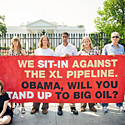
Obama, only two points ahead of Ron Paul in the latest Gallup Poll in the race for 2012, is a beyond-vulnerable candidate. (Somewhere there must be some Democratic pol doing the obvious math and considering a challenge, mustn’t there?) Fortunately, in another area at least as crucial as our wars, demonstrators against a Big Oil tar-sands pipeline from Canada that will help despoil the planet are now out in front of the White House — you can follow them here — and they haven’t been shy about aiming their nonviolent protests directly at Obama. Will he or won’t he act like the climate-change president that, on coming into office, he swore he would be? Time will tell. Meanwhile, let Bill McKibben, TomDispatch regular, an organizer of the protests, and just out of a jail cell, fill you in. Tom
Arrested at the White House
Acting as a Living Tribute to Martin Luther King
By Bill McKibben
I didn’t think it was possible, but my admiration for Martin Luther King, Jr., grew even stronger these past days.
As I headed to jail as part of the first wave of what is turning into the biggest civil disobedience action in the environmental movement for many years, I had the vague idea that I would write something. Not an epic like King’s “Letter from a Birmingham Jail,” but at least, you know, a blog post. Or a tweet.
Heros
But frankly, I wasn’t up to it. The police, surprised by how many people turned out on the first day of two weeks of protests at the White House, decided to teach us a lesson. As they told our legal team, they wanted to deter anyone else from coming — and so with our first crew they were… kind of harsh.
We spent three days in D.C.’s Central Cell Block, which is exactly as much fun as it sounds like it might be. You lie on a metal rack with no mattress or bedding and sweat in the high heat; the din is incessant; there’s one baloney sandwich with a cup of water every 12 hours.
I didn’t have a pencil — they wouldn’t even let me keep my wedding ring — but more important, I didn’t have the peace of mind to write something. It’s only now, out 12 hours and with a good night’s sleep under my belt, that I’m able to think straight. And so, as I said, I’ll go to this weekend’s big celebrations for the openingof the Martin Luther King Jr. National Memorial on the Washington Mall with even more respect for his calm power.
Preacher, speaker, writer under fire, but also tactician. He really understood the power of nonviolence, a power we’ve experienced in the last few days. When the police cracked down on us, the publicity it produced cemented two of the main purposes of our protest:
Eaarth
First, it made Keystone XL — the new, 1,700-mile-long pipeline we’re trying to block that will vastly increase the flow of “dirty” tar sands oil from Alberta, Canada, to the Gulf of Mexico — into a national issue. A few months ago, it was mainly people along the route of the prospective pipeline who were organizing against it. (And with good reason: tar sands mining has already wrecked huge swaths of native land in Alberta, and endangers farms, wild areas, and aquifers all along its prospective route.)
Now, however, people are coming to understand — as we hoped our demonstrations would highlight — that it poses a danger to the whole planet as well. After all, it’s the Earth’s second largest pool of carbon, and hence the second-largest potential source of global warming gases after the oil fields of Saudi Arabia. We’ve already plumbed those Saudi deserts. Now the question is: Will we do the same to the boreal forests of Canada. As NASA climatologist James Hansen has made all too clear, if we do so it’s “essentially game over for the climate.” That message is getting through. Witness the incredibly strong New York Times editorial opposing the building of the pipeline that I was handed on our release from jail.
Second, being arrested in front of the White House helped make it clearer that President Obama should be the focus of anti-pipeline activism. For once Congress isn’t in the picture. The situation couldn’t be simpler: the president, and the president alone, has the power either to sign the permit that would take the pipeline through the Midwest and down to Texas (with the usual set of disastrous oil spills to come) or block it.
Barack Obama has the power to stop it and no one in Congress or elsewhere can prevent him from doing so. That means — and again, it couldn’t be simpler — that the Keystone XL decision is the biggest environmental test for him between now and the next election. If he decides to stand up to the power of big oil, it will send a jolt through his political base, reminding the presently discouraged exactly why they were so enthused in 2008.
That’s why many of us were wearing our old campaign buttons when we went into the paddy wagon. We’d like to remember — and like the White House to remember, too — just why we knocked on all those doors.
But as Dr. King might have predicted, the message went deeper. As people gather in Washington for this weekend’s dedication of his monument, most will be talking about him as a great orator, a great moral leader. And of course he was that, but it’s easily forgotten what a great strategist he was as well, because he understood just how powerful a weapon nonviolence can be.
The police, who trust the logic of force, never quite seem to get this. When they arrested our group of 70 or so on the first day of our demonstrations, they decided to teach us a lesson by keeping us locked up extra long — strong treatment for a group of people peacefully standing on a sidewalk.
No surprise, it didn’t work. The next day an even bigger crowd showed up — and now, there are throngs of people who have signed up to be arrested every day until the protests end on September 3rd. Not only that, a judge threw out the charges against our first group, and so the police have backed off. For the moment, anyway, they’re not actually sending more protesters to jail, just booking and fining them.
And so the busload of ranchers coming from Nebraska, and the bio-fueled RV with the giant logo heading in from East Texas, and the flight of grandmothers arriving from Montana, and the tribal chiefs, and union leaders, and everyone else will keep pouring into D.C. We’ll all, I imagine, stop and pay tribute to Dr. King before or after we get arrested; it’s his lead, after all, that we’re following.
Our part in the weekend’s celebration is to act as a kind of living tribute. While people are up on the mall at the monument, we’ll be in the front of the White House, wearing handcuffs, making clear that civil disobedience is not just history in America.
We may not be facing the same dangers Dr. King did, but we’re getting some small sense of the kind of courage he and the rest of the civil rights movement had to display in their day — the courage to put your body where your beliefs are. It feels good.
So perhaps you understand why every American reading this should make sure your voice is heard. And in the last few minutes – 1.30pm MT 25th August – Reuters have just put out this news release,
Nation’s Leading Environmental NGOs Unified Against Tar Sands Pipeline
Update on Day 5 of Tar Sand Pipeline Protest at the White House
See past update and background.
275 people have been arrested so far and many have been released. Today, the largest environmental groups in the US joined to send a letter to President Obama voicing their unified opposition to the Keystone pipeline and asking him to block it.
Why is this important? “For those of us out there in front of the White House, the best thing about this ringing statement is that the administration won’t be able to play one group off against another by making small concessions here and there”; says protest organizer Bill McKibben.
“There’s only one way to demonstrate to the environmental base the rhetoric of Obama’s 2008 campaign is still meaningful – and that’s to veto this pipeline. Since he can do it without even consulting Congress, this is one case where we’ll be able to see exactly how willing he is to match the rhetoric of his 2008 campaign.”
The letter says:
Dear President Obama,
Many of the organizations we head do not engage in civil disobedience; some do. Regardless, speaking as individuals, we want to let you know that there is not an inch of daylight between our policy position on the Keystone Pipeline and those of the very civil protesters being arrested daily outside the White House.
This is a terrible project – many of the country’s leading climate scientists have explained why in their letter last month to you. It risks many of our national treasures to leaks and spills. And it reduces incentives to make the transition to job-creating clean fuels.
You have a clear shot to deny the permit, without any interference from Congress. It’s perhaps the biggest climate test you face between now and the election.
If you block it, you will trigger a surge of enthusiasm from the green base that supported you so strongly in the last election. We expect nothing less.
Sincerely,
Fred Krupp, Environmental Defense Fund
Michael Brune, Sierra Club
Frances Beinecke, Natural Resources Defense Council
Phil Radford, Greenpeace
Larry Schweiger, National Wildlife Federation Erich Pica, Friends of the Earth
Rebecca Tarbotton, Rainforest Action Network
May Boeve, 350.org
Gene Karpinski, League of Conservation Voters
Margie Alt, Environment America
New York Times Also Opposes Pipeline
In an August 21 editorial, the NY Times took a opposition against the pipeline, citing two main concerns: the risk of oil spills along the pipeline, which would traverse highly sensitive terrain, and the fact that the extraction of petroleum from tar sands creates far more greenhouse emissions than conventional production does.
Building the pipeline would clear the way for Canada to double tar sands production over the next decade to more than 1.8 million barrels a day. To do that, some 740,000 acres of boreal forest – a natural carbon reservoir – would be destroyed.
In addition to the emissions produced by tar sands extraction, would be emissions from the loss of this vast, crucial carbon sink, [editor’s note: not to mention the biodiversity it harbors.] Read the editorial:
Website: here with permission from Sustainable Business
Ernst Friedrich “Fritz” Schumacher (16 August 1911 – 4 September 1977)
Ernst Friedrich "Fritz" Schumacher
It seems amazing to realise both that this far-sighted man was born a century ago this day and that his incredibly influential book, Small is Beautiful, was published 38 years ago.
The book has been hugely influential. Indeed, my gut sense is that it probably started the whole ‘green’ movement. The Times Literary Supplement of October 6, 1995 regarded E.F. Schumacher’s 1973 book Small Is Beautiful: a study of economics as if people mattered as among the 100 most influential books published since the end of the Second World War.
Just a personal note that for many years I lived just a few miles from Dartington in Devon (UK) where Schumacher College was founded in 1991. Named after the great man, it provided, and still does, learning for sustainable living. Perhaps no surprise at all that nearby Totnes became the world’s first ‘transition town’.
Want to find out more? Then go to the New Economics Institute website here and discover,
The New Economics Institute is a US organization that uniquely combines vision, theory, action, and communication to effect a transition to a new economy — an economy that gives priority to supporting human well-being and Earth’s natural systems. Our multidisciplinary approach employs research, applied theory, public campaigns, and educational events to describe an alternative socio-economic system that is capable of addressing the enormous challenges of our times. Our premise is that a fair and sustainable economy is possible and that ways must be found to realize it.
The Institute, formerly the E. F. Schumacher Society, is working in close partnership with the New Economics Foundation from London to add the programs and experience developed in the UK to its own work in the US.
Finally, to get a flavour of this wonderful man and the amazing legacy that he has left the planet, watch this short video of E.F. Schumacher answering a question from the moderator about whether or not Buddhist Economics can work in the West. (Question & Answer Panel at Great Circle Center, 3/19/77. Peter Gillingham Collection, E. F. Schumacher Library Archives.)
In Paul Gilding’s book, The Great Disruption, there is a chapter called When the Dam of Denial Breaks. On page 121 Paul Gilding writes this,
To argue we are naturally greedy and competitive and can’t change is like arguing that we engage naturally in murder and infanticide as our forebears the chimps do and therefore as we did. We have certain tendencies in our genes, but unlike other creatures we have the proven capacity to make conscious decisions to overcome them and also the proven ability to build a society with laws and values to enshrine and, critically, to enforce such changes when these tendencies come to the surface.
So don’t underestimate how profoundly we can change. We are still capable of evolution, including conscious evolution. This coming crisis is perhaps the greatest opportunity in millennia for a step change in human society.
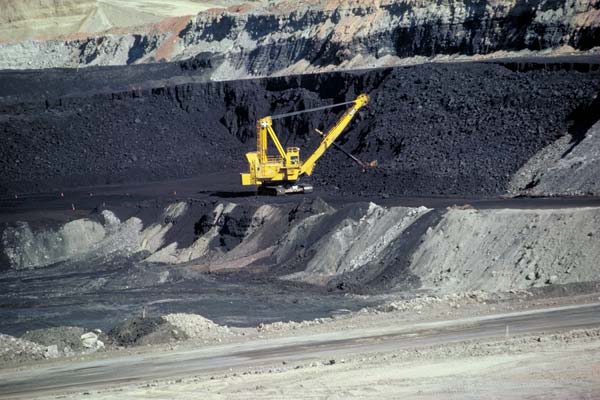
The United States of America gets a lot of stick, rightly so, for it’s greedy consumption of energy, especially the use of coal. According to the World Coal Association, the USA in 2010 produced 932 million tons of hard coal, second in the world to China that produced 3,162 million tons.
Coal mine in Wyoming
But the one thing that the USA has shown time and time again is that it has the capacity to change very quickly, especially when the country, from its leaders to its entrepreneurs, senses a global leadership opportunity. With that in mind, read the latest release from the Earth Policy Institute, reproduced below,
AUGUST 10, 2011 A Fifty Million Dollar Tipping Point?
Lester R. Brown
At a press conference on July 21, New York City Mayor Michael Bloomberg announced that he was contributing $50 million to the Sierra Club’s Beyond Coal Campaign. Michael Brune, head of the Sierra Club, called it a “game changer”. It is that, but it also could push the United States, and indeed the world, to a tipping point on the climate issue.
It is one thing for Michael Brune to say coal has to go, but quite another when Michael Bloomberg says so. Few outside the environmental community know who Michael Brune is, but every business person knows Michael Bloomberg as one of the most successful business entrepreneurs of his generation.
The Sierra Club’s Beyond Coal Campaign has two main goals. The first is to prevent the permitting and construction of new coal-fired power plants. So far 153 proposed power plants have been taken off the board. The second goal is to close the 492 existing plants. The Sierra Club lists 71 plants already scheduled for total or partial closure, most of them by 2016.
The efforts to stabilize climate will be won or lost with coal, the world’s largest source of carbon emissions. The effort to phase out coal is now well under way in the United States, the world’s second ranking coal user after China.
There are likely to be many ripple effects from the Bloomberg grant. To begin with, it may encourage other philanthropists to invest in climate stabilization.
The prospect for investment in coal, already deteriorating, will weaken even faster. In August 2010, the Rainforest Action Network (RAN) announced that several leading U.S. investment banks, including Bank of America and J.P. Morgan, had ceased lending to companies involved in mountaintop removal coal mining. Now with Bloomberg’s opposition, investors will be even more wary of coal.
The Bloomberg-Sierra initiative again focuses attention on the 13,200 lives lost each year in the United States due to air pollution from burning coal. If deaths from black lung disease among coal miners are included the number climbs even higher. The number of coal-related deaths in one year dwarfs total U.S. fatalities in the Iraq and Afghanistan wars. We invest heavily in protecting the lives of our troops in the Middle East, and rightly so. Bloomberg is saying let’s do the same for our people at home.
In addition, this initiative brings attention to the health care costs to society of burning coal. These are currently estimated at more than $100 billion per year, roughly $300 for every person in the United States or $1,200 for a family of four. These costs are real, but it is the American people, not the coal companies, who shoulder the burden.
Further reinforcing the urgency of phasing out coal are the more extreme weather events that climate scientists have been warning about for decades. During the first half of 2011 we watched TV news channels become weather channels. First it was a record number of tornadoes in one month, including the one that demolished Tuscaloosa, Alabama. Then, a few weeks later, an even more powerful tornado demolished Joplin, Missouri. As drought and heat sparked record or near-record wildfires in Arizona, New Mexico, and Texas, the lower Mississippi Basin was flooding. Searing heat waves scorched the southern Great Plains, the Midwest, and the East Coast. Intense heat has continued to break records across the country as Texas suffers its most severe one-year drought on record.
For coal, the handwriting is on the wall. Between 2007 and 2010, coal use in the United States dropped 8 percent. (See data.) Meanwhile, more than 300 new wind farms came online, totaling over 23,000 megawatts of generating capacity—the electricity output equivalent of 23 coal-fired power plants.
When people were asked in a national poll where they would like to get their electricity from, only 3 percent opted for coal. Despite the coal industry’s heavy expenditures to promote “clean coal,” it is still a loser in the public mind.
In addition to the Sierra Club, RAN, and a talented team of Earthjustice lawyers, the anti-coal movement also has allies in Friends of the Earth and Greenpeace, the latter with its highly developed capacity to focus public attention on environmental issues. This was evident in May when a Greenpeace team of eight daring activists scaled the 450-foot Fisk coal plant smokestack located in Chicago and painted “Quit Coal” on it. They were drawing public attention to the deadly air pollution in the city coming from the plant.
As the United States closes its coal-fired power plants, it sends a message to the world. With Michael Bloomberg’s grant bolstering the Sierra Club’s well-organized program to phase out coal, we can now imagine a coal-free United States on the horizon. The United States could again become a world leader, this time in stabilizing climate.
“The United States could again become a world leader, this time in stabilizing climate.” That would be a dream come true, a dream of unimaginable consequences.
“Everyone thinks of changing the world, but no one thinks of changing himself.” Leo Tolstoy
I am going to refer to some ideas before explaining from whom they came, and when.
Try this: the term “future shock” is defined as a certain psychological state of individuals and entire societies. The shortest definition for the term is a personal perception of “too much change in too short a period of time”.
Or try this: society is undergoing an enormous structural change, a revolution from an industrial society to a “super-industrial society”. This change will overwhelm people, the accelerated rate of technological and social change leaving them disconnected and suffering from “shattering stress and disorientation” – future shocked. It was stated that the majority of social problems were symptoms of the future shock.
Stay with me a little longer as I pose a few questions. How do you feel at the moment? Slightly unsure of where the world is going right now? Feeling a little unsettled?
Why those questions? With the Dow Jones index heading down through 11,130 (at the time of writing on the 8th) and ‘chaos across markets’ headlines all over the place these are very unsettling times
Last week’s edition of The Economist had five pages about the present uncertain times in the USA.
The numbers keep being revised inexorably downwards
The rough news did not end there. The Bureau of Economic Analysis (BEA) revised its numbers back through the recession, revealing a downturn more serious than previously understood. The BEA’s first estimate of output in the fourth quarter of 2008, published in January of 2009, showed a contraction of 3.8%, later revised to a 6.8% drop. The new numbers change the figure yet again, to a shocking 8.9% fall in GDP. For 2009 as a whole, the American economy shrank by 3.5% rather than the previously reported 2.6%. American output has yet to reattain its 2007 peak. On a per-person basis, inflation-adjusted GDP stands at virtually the same level as in the second quarter of 2005. America is six years into a lost decade. [my emphasis]
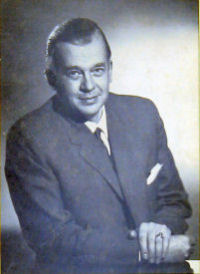
So back to those comments about ‘future shock’. They come from a gentleman known across the world for his writings as a futurist, Alvin Toffler. His website is here and there is a good review of the man and his works on Wikipedia.
Alvin Toffler, born 1928
Toffler’s book, Future Shock, from 1970 was prescient in forecasting …. well here’s how it is written on Wikipedia,
Toffler argues that society is undergoing an enormous structural change, a revolution from an industrial society to a “super-industrial society“. This change will overwhelm people, the accelerated rate of technological and social change leaving them disconnected and suffering from “shattering stress and disorientation” – future shocked. Toffler stated that the majority of social problems were symptoms of the future shock. In his discussion of the components of such shock, he also popularized the term “information overload.”
But there’s an aspect that wasn’t even on the horizon when Toffler was writing that book in the late 60s – the end of growth. That is creating a whole new level of change and ‘information overload’, in my opinion.
Just a few days ago, I reviewed the Paul Gilding book The Great Disruption. I quoted this extract from the very start of the book,
This means things are going to change. Not because we will choose change out of philosophical or political preference, but because if we don’t transform our society and economy, we risk social and economic collapse and the descent into chaos. The science on this is now clear and accepted by any rational observer. While an initial look at the public debate may suggest controversy, any serious examination of the peer-reviewed conclusions of leading science bodies shows the core direction we are heading in is now clear. Things do not look good.
These challenges and the facts behind them are well-known by experts and leaders around the world, and have been for decades. But despite this understanding, that we would at some point pass the limits to growth, it has been continually filed away to the back of our mind and the back of our drawers, with the label “Interesting – For Consideration Later” prominently attached. Well, later has arrived.
Indeed, ‘later’ has arrived. The ‘future’ is now here!
Watch the first 10 minutes of the Future Shock film made back in 1972 and ponder.
The following four parts are easily found on YouTube.
God grant me the serenity to accept the things I cannot change, the courage to change the things I can, and the wisdom to know the difference. Reinhold Niebuhr








 Learning from Dogs