Category: Dogs

Puppy Mills, Part Two

Part Two of this guest post from Monika.

ooOOoo

One of the more alarming facts surrounding the audit was a lack of enforcement against violators. Enforcement has been ineffective, particularly against the worst of the worst where little or no action against a majority of violators resulted. Of the enforcement decisions for 68 sampled violators, 71% (48) resulted in no action taken, 6%  (4) received a “Letter of Information,” 19% (13) received an Official Warning and 4% (3) resulted in Stipulation. In 2007 the AC discontinued using Letter of Information as an enforcement option. Only 20 of 68 dealers (nearly 30%) were cited for repeat violations.

States with Animal Cruelty Laws

Only 5 states have a subsequent-offense felony cruelty law (Arkansas, Idaho, North & South Dakota, Mississippi); and 5 States have a misdemeanor cruelty law (Alaska, Iowa, Nevada, Ohio, Pennsylvania, the remaining 40 states have a first-offense felony cruelty law.

We all know that puppy mills put profit over the health and well-being of the dogs but here are a few of the worst examples cited in the Audit.

Example No. 1. With 83 adult dogs, a Oklahoma breeder was sited with 20 violations during 5 inspections from April 2006 to December 2007. Lack of adequate vet care for 3 dogs hair-loss over their entire bodies and raw, irritated spots on their skins. Despite continuing violations, no enforcement actions were taken due to the agency’s lenient practices against repeat violators.

During another visit, AC cited breeder for another 11 violations (one involving a dog that had been bitten by another and left untreated for at least 7 days which resulted in the flesh around the wound rotting away to the bone! The inspector required the dog be taken to a local vet who immediately euthanized it. The case was referred to IES for investigation but only after another violation was documented. AC recommended a stipulation, yet as of early June 2009 (11 months following visit), violator had not been fined.

Example No. 2 was another OK facility with 219 adult dogs. Breeder was cited for 29 violations (including 9 repeats) during 3 inspections from February 2006 to January 2007. Yet the AC did not take enforcement action, but did request an investigation in November 2007 when another inspection revealed five dogs were found dead and other starving dogs resorted to cannibalism. When asked why dogs were not confiscated when the first dead and starving dogs were discovered, inspector cited its own regulations require violator be given opportunity to correct condition before confiscation can occur. Despite those conditions, the AC did not immediately confiscate the survivors, resulting in another 22 dogs dying before the breeder’s license was revoked and surviving dogs were rehomed within a year.

Example No. 3  involved a Ohio facility with 88 adult dogs. Breeder was cited for 23 violations including 7 repeats during 3 inspections from August 2005 to January 2008. An official warning was sent in July 2007 and in a subsequent visit in January 2008, found the same violations with another official warning sent rather than a more severe penalty. When asked by a more serious action was not taken, the regional manager indicated ‘breeder was making progress’ with a ‘reasonable opportunity’ to comply. National instructions state official warning can be sent if no other action was taken against a violator in the previous 3 years. Four months later in June 2008, breeder was cited for another 9 violations (4 repeats) yet the inspector recommended no enforcement action. Upon re-inspection 4 months later, breeder was cited for 4 more violations (including 3 repeats); AC took no enforcement action noting violator was “making credible progress.”

The USDA accompanied 19 of the 99 inspectors to observe dealer facility inspections. While many inspectors are highly committed, inspections are conducted timely and thoroughly and significant efforts are made to improve humane treatment of covered animals, it was noted that at least 6 inspectors did not correctly report direct or repeat violations. Some inspectors did not always document violations with sufficient evidence and direct violations were not reported. The Agency Guide defines a direct violation as one that “has a high potential to adversely affect the health and well-being of the animal” which include: “infestation with large numbers of ticks, fleas, or other parasites” and “excessive accumulations of fecal or other waste material to the point where odors, disease hazards, or pest control problems exist.” In such cases, a facility must be re-inspected within 45 days to ensure that the violator has taken timely actions to treat the suffering animals. By contrast, an indirect violation is one that “does not have a high potential to adversely affect the health and well-being of the animal.” Minor violations include: “inadequate records” and “surfaces not resistant to moisture.” In such cases, a re-inspection may not occur for up to a year.

Major deficiencies of the APHIS administration of the AWA cited in the Audit included:

  • AC’s enforcement process was ineffective against problematic dealers.
  • AC inspectors failed to cite or document violations properly to support enforcement actions.
  • AC inspectors failed to Cite or document violations properly to support enforcement actions.
  • APHIS’ new penalty worksheet calculated minimal penalties. Although APHIS previously agreed to revise its penalty worksheet to produce “significantly higher” penalties for violators of AWA, the agency continued to assess minimal penalties that did not deter violators. This occurred because the new worksheet allowed reductions up to 145 percent of the maximum penalty.
  • APHIS misused guidelines to lower penalties for AWA violators. In completing penalty worksheets, APHIS misused its guidelines in 32 of the 94 cases we reviewed to lower the penalties for AWA violators. Specifically, violations were inconsistently counted and applied “good faith” reductions without merit. A reduction in “no history of violations” when there was a prior history; and  arbitrarily changed the gravity of some violations and the business size. AC assessed lower penalties as an incentive to encourage violators to pay a stipulated amount rather than exercise their right to a hearing.
  • Some large breeders circumvented AWA by selling animals over the Internet. Large breeders that sell AWA-covered animals over the Internet are exempt from AC’s inspection and licensing requirements due to a loophole in AWA resulting in an increasing number of unlicensed breeders are not monitored for their animals’ overall health and humane treatment.

While the USDA does not advocate assessing maximum penalties, at a time when Congress tripled the authorized maximum penalty to “strengthen fines for violations,” actual penalties were down 20 percent less through the use of a new worksheet as compared to the one previously used.

I could go on, but to do so belies cold hard facts that trying to stem puppy mills is a bit like playing a ‘Whack-A-Mole.”

Bottom line, what the Audit tells us is: (1) red tape saddles agencies with convoluted regulations that are difficult to implement or monitor, due in part to (2) the sheer number of puppy mills and (3) a lack of adequate number of inspections conducted.

No doubt resources are limited but until such time as the economics of keeping puppy mills in business is reduced, they will continue to operate with impunity. The resulting advice is make sure your breeder is legit and don’t succumb to adorable puppy faces in pet shop windows.

I shudder to think how many of Elsa’s pups are out there because who easily resists puppies? It makes me wonder how many of them have genetic diseases due to poor breeding practices (in Elsa’s case epilepsy which was diagnosed just two weeks following her adoption), but other dogs seized at the same mill with her suffered from Sebaceous Adenitis (which is also most likely an autosomal recessive inherited disease), Addison’s Disease and one whose severe aggressive behavior (due to lack of socialization) was deemed so severe, he was considered unable to be rehabilitated in any way as to place him and heartbreakingly was euthanized. Bottom line, please adopt, don’t shop (or only use a reputable breeder). Only then can the sheer numbers of puppy mill facilities be reduced and heartbreaking stories like Elsa’s be stemmed.

Live, love bark! 🐾
Tails Around the Ranch

ooOOoo

We must spread the word far and wide that puppy mills have to be brought down by publicity and  lack of business.

Only when the last puppy mill goes out of business can we relax.

Finally, here’s a picture of a million miles from a puppy mill!

Melissa Lentz

Puppy Mills, Part One!

A guest post from Monika McDonald

If there’s one thing that raises the blood pressure of an animal lover, especially a dog lover, it’s a puppy mill.

I am very grateful for Monika to have sent me this piece, and for it to be her first guest post.

Here it is!

ooOOoo

Puppy Mills

By Monika McDonald

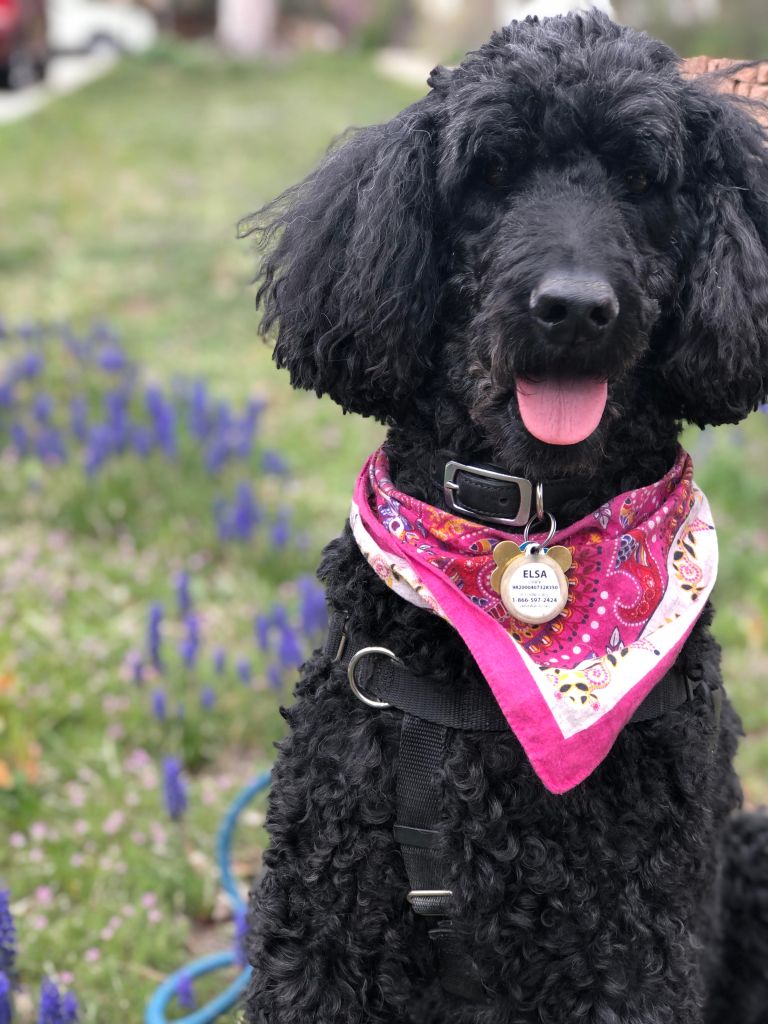
Puppy Mills…a topic that’s near and dear to my heart. Elsa, a Standard Poodle who probably lived 4 years or more in a mill, was rescued from a Northern Colorado puppy mill along with 8 other Standards (you can  read her story at the link). She was basically feral, shy but very sweet and curious and showed signs there was a lovely sweet companion beneath the matted filthy hair.

Recently I was given the opportunity to write a guest post for Paul at Learning from Dogs. Hold on to your hankies while I share some of the more disturbing facts uncovered from various sources. After much negative media coverage concerning large-scale dog dealers (i.e. breeders and brokers) failing to adequately monitor humane treatment for the animals under their care, the United States Department of Agriculture conducted an audit in 2010, some findings of which are noted below. Although Elsa was rescued through the local poodle rescue organization, I’m also featuring another group, the National Mill Dog Rescue group, headquartered in Colorado Springs, Colorado.

It is estimated there may be as many as 15,000 mills throughout the country, with a large number located in the heartland of the US. Simply put, puppy mills are dog breeding operations that put profit over the health and well-being of the dogs.

They can be a large or small operation, licensed by the USDA or unlicensed. It should be noted that in order to sell to a pet store, a breeder must be licensed, though many violate that requirement. According to the USDA, breeders…breed and raise animals on the premises whereas brokers negotiate or arrange for the purchase, sale or transport of animals in commerce. Puppy mills may house anywhere from hundreds to thousands of dogs, however smaller does not necessarily mean better.

Elsa was rescued from a very small mill with the same horrific conditions as the large ones. Puppy mills are everywhere, but a large concentration is located in the Midwest. Missouri has the largest number of puppy mills in the United States. Amish and Mennonite communities (particularly in Ohio, Indiana, and Pennsylvania) also run a large number of puppy mills.

Breeding parents spend their lives in 24-hour confinement in cages often stacked on top of each other. Protection from heat, cold, or inclement weather is rare and dogs live in filthy, unsanitary conditions receiving little or no veterinary care (some puppy mill owners often provide veterinary care without anesthesia or vet training). Female dogs are bred every heat cycle and are killed (or offered at auction) when they can no longer produce litters. Puppies are often taken from their mothers too young and can develop serious health or behavioral issues due to the conditions in which they are bred and shipped. Genetic diseases often result from the over-breeding. The bottom line is that puppy mills are all about profits. Any money spent on veterinary care, quality food, shelter, or staff to care for the dogs cuts into the profit margin.

Where are puppy mill puppies sold? Two primary sales outlets for puppies bred in  mills are pet stores, and the Internet. Nearly all puppies sold at pet stores come from puppy mills. Pet stores are the primary sales outlet for puppy mills and are essential for keeping puppy mills in business. Both licensed and unlicensed mills sell to pet stores with many mills selling to pet stores without the required license and not held accountable. Puppies are bred in mills and then shipped all over the country. Shipping conditions are inhumane. They can be forced to go up to 12 hours without food or water, and confined in a small space where diseases can be easily transmitted. Many puppies do not survive.

Background Info. In 1966, Congress passed Public Law 89-544, known as the Laboratory Animal Welfare Act, to regulate the humane care and handling of dogs, cats, and other laboratory animals. In 1970 the law was amended (Public Law 91-579), changing the name to Animal Welfare Act (with subsequent amendments passed in 1970, 1976, 1985, 1990, 2002, 2007, and 2008). In 2010 the USDA conducted an audit of the Animal and Plant Health Inspection Service’s (APHIS) Animal Care unit (AC) who are responsible for enforcing the act (the “Audit)”. Data cited is compiled from that Audit.

Inspections Conducted in FYs 2006-2008

Years

2006

2007

2008

No. of Inspectors

99

101

99

No. of Inspections*

17,978

16,542

15,722

Average Inspections Per Inspector

182

164

159

* These numbers include inspections on all licensees (i.e., dealers and exhibitors) and registrants (i.e., research facilities) under AWA.
ooOOoo
Tomorrow I will publish Part Two of Puppy Mills.

Offering a clue

A republication of an earlier post from The Smithsonian

Those who read yesterday’s post will find today’s post highly interesting.

A copy of an article from two years ago in The Smithsonian.

ooOOoo

New Study Has a Bone to Pick With Dog Domestication Findings

Contrary to past research, a new DNA study suggests fido was only tamed once

One wave of domestication or two? The debate rages on. (Dageldog/iStock)

By Jason Daley
smithsonian.com
July 19, 2017

Though dogs are humanity’s oldest and most consistent animal friend, scientists have long struggled to figure out just how Canis familiaris came to be. Though researchers agree dogs are descended from wild wolves, they aren’t sure when and where domestication occurred. And as Tina Hesman Saey at Science News reports, a new study has revived the debate, suggesting that dogs were domesticated one time between 20,000 and 40,000 years ago.

Dog domestication has gotten a lot of attention in recent years. In 2016, researchers looked at the mitochondrial DNA of modern and ancient dog species, determining that dogs come from two different wolf populations, one found in Europe and one found in Asia. That means that wolves would have been domesticated in two different places, with the two lineages eventually mixing in modern dogs.

But this latest research contradicts the double-domestication hypothesis. According to Ben Guarino at the Washington Post, researchers looked at the well-preserved DNA of two ancient dogs found in Germany, one 7,000 years old and one 4,700 years old, as well as the complete genomes of 100 modern dogs and snippets of DNA from 5,600 other wolves and dogs.

They traced the rate of mutations in the over time in the dog genomes. This technique, which creates a “molecular clock,” indicates that dogs diverged from wolves 36,900 years ago to 41,500 years ago in a single domestication event. But they can’t determine exactly where the split occurred. About 20,000 years later, the molecular clock indicates dogs split into European and Asian groups. They published their results in the journal Nature Communications

Not everyone is convinced by the study. Greger Larson, Oxford evolutionary biologist and author of the earlier domestication study, tells Guarino that the latest research does not explain the “ridiculously deep split” between the genetics of ancient European and Asian dogs. He also points out that while ancient dog bones have been found in far eastern Asia and western Europe, the middle of Eurasia seems to be empty of dog bones, suggesting that there were two ancient populations, separated by vast distances.

Krishna Veeramah, a palaeogeneticist at Stony Brook University and author of the new study says he doesn’t anticipate that the paper will put the issue to rest. “More ancient dog DNA from genomes will ultimately solve the problem,” he tells Rachael Lallensack at Nature. Researchers are hoping to find more geographically diverse DNA from dogs as well as samples from different time periods.

Whether it happened once or twice, how and why did domestication occur?

As Veeramah​ tells Helen Briggs at the BBC that it’s likely dogs evolved from wolves that began hanging around human camps, scavenging their scraps. ”Those wolves that were tamer and less aggressive would have been more successful at this,” he says. “While the humans did not initially gain any kind of benefit from this process, over time they would have developed some kind of symbiotic relationship with these animals, eventually evolving into the dogs we see today.”

One early benefit of domesticated dogs may have been that they could help transport meat from carcasses or hunt dangerous game like cave bears and cave lions, Saey writes in an earlier Science News article.

For now, however, exactly when and where Fido first approached humans will remain a mastiff question.

ooOOoo

For my money the origins of the domestic dog are as Krishna Veeramah puts it: ”Those wolves that were tamer and less aggressive would have been more successful at this,” he says. “While the humans did not initially gain any kind of benefit from this process, over time they would have developed some kind of symbiotic relationship with these animals, eventually evolving into the dogs we see today.”

When did we come together?

A cache of animal bones 11,500 years old suggests an answer.

Brigit Katz of The Smithsonian wrote an article in January that revealed that dogs and humans hunted together many thousands of years ago.

Here it is:

ooOOoo

Humans and Dogs May Have Hunted Together in Prehistoric Jordan

Bones at a settlement called Shubayqa 6 show clear signs of having been digested—but were much too large to have been eaten by humans

Selection of gazelle bones from Space 3 at Shubayqa 6 displaying evidence for having been in the digestive tract of a carnivore. ( Credit: University of Copenhagen)

By Brigit Katz
SMITHSONIAN.COM
JANUARY 17, 2019

When and where dogs came to be domesticated is a subject of scientific debate, but there is a wealth of research that attests to the long, intertwined history of humans and their best animal buddies. One theory about the early origins of this relationship posits that dogs were used to help early humans hunt. And, as Ruth Schuster reports for Haaretz, a new study suggests that this may have been the case among prehistoric peoples of what is now Jordan.

A team of archaeologists from the University of Copenhagen and University College London studied a cache of animal bones at an 11,500-year-old settlement called Shubayqa 6, which is classified as “Pre-Pottery Neolithic A,” or belonging to the first stage of Neolithic culture in the Levant. In the Journal of Anthropological Archaeology, the researchers write that they found bones from a canid species, though they could not identify which one because the remains were poorly preserved. They also unearthed the bones of other animals that had been butchered. But perhaps most intriguing were the bones of animals—like gazelle, for instance—that bore clear signs of having passed through a digestive tract.

These bones were too big for humans to have eaten, leading the researchers to surmise that they “must have been digested by dogs,” says lead study author Lisa Yeomans, a zooarchaeologist at the University of Copenhagen. And the researchers don’t think this was a case of wild carnivores sneaking into the settlement to grab a bite.

For one, archaeological evidence indicates that Shubayqa 6 was occupied year-round, suggesting that “dogs were allowed to freely roam around the site picking over the discarded waste, but also defecating in the vicinity of where humans were inhabiting,” the study authors write.

There was also a noticeable surge in hare bones around the time that dogs started to appear at the site, and the researchers think this may be because the dogs were helping humans hunt small prey. Previously, the people of Shubayqa 6 might have relied on tools like netting to catch hares and other animals, says Yeomans, but it wouldn’t have been very effective. Dogs, on the other hand, could selectively target elusive prey.

Humans and dogs thus appear to have forged a reciprocal relationship in Jordan more than 11,000 years ago. There is in fact evidence to suggest that dogs were domesticated by humans in the Near East as early as 14,000 years ago, and some of that evidence seems to point to dogs being used during hunts. Rock art from a site near Shubayqa, for instance, seems to show dogs driving gazelle into a trap.

In light of such archaeological finds, “it would be strange not to consider hunting aided by dogs as a likely explanation for the sudden abundance of smaller prey in the archaeological record,” Yeomans says. Among the ancient peoples of Jordan, in other words, the complex history of dog domestication may have been well underway.

ooOOoo

That scientific debate mentioned in the first line of the article has been published in this place before. But I’m going to republish it tomorrow as it so perfectly goes with today’s post.

Picture Parade Two Hundred and Ninety-Two

The final set of photographs from Dordie.

oooo

oooo

oooo

oooo

oooo

oooo

oooo

oooo

oooo

oooo

oooo

oooo

oooo

What a wonderful collection of photographs. I would have a great deal of trouble picking out by favourite even for this week let alone the whole of the series.

Happy days!

Picture Parade Two Hundred and Ninety-One

As promised, more from Dordie.

oooo

oooo

oooo

oooo

oooo

oooo

And, yes, another set from Dordie in a week’s time.

Stay safe out there!

Protect dogs in this hot weather.

It’s all too easy to forget that a dog can’t cope with hot weather.

As in too hot. Especially in a car!

I want to republish a post that appeared on The Dodo blog site recently. It is about a dog trapped in a car when it was far too hot.

ooOOoo

Guy Sees Puppy In Hot Car And Realizes What He Has To Do

Photo Credit: Jason Minson

Jason Minson, an Army veteran who runs a landscaping business, was out on a job in Norfolk, Virginia, on Tuesday when the first of several unusual things happened.

Minson was inspecting a tree in a yard when he heard a bang on the street.

When he went to check, he realized that a car driving by had bumped another car parked on the street. If that hadn’t happened, Minson probably never would have approached the parked car and discovered what was inside.

A black Labrador puppy was sprawled out on the floor of the vehicle — the noise and shudder seemed to have woken him up for a moment.

And he was incessantly panting.

“It was the kind of panting that was the last effort a dog does to try to cool himself off,” Minson told The Dodo.

Photo Credit: Jason Minson

Minson immediately called 911.

The police dispatched a unit to come help the dog — but they also informed Minson that breaking the window of the car to free the dog is a crime. (The law varies depending where you are.)

Minson watched the panting puppy from behind the pane of glass. He brought one bottle of water to the sliver of opened window and the dog jumped up on the seat and started drinking from it.

The dog went through the whole bottle. And then another.

“I’m usually a pretty cool, level-headed person but I was kind of fed up,” Minson said.

Photo Credit: Jason Minson

An animal control officer arrived and she started to try to pry the door open, but it wasn’t working. And nearly 20 minutes had passed since Minson had found the dog — and he was worried they were already out of time.

“The dog had laid back down on the floor of the car and wasn’t panting as quickly,” Minson said.

“I honestly didn’t think this pup was going to make it,” Minson wrote.

That’s when he took matters into his own hands.

“Charge me,” he can be heard saying in one of the videos he shot, “I don’t give a sh*t at this point.”

Using the baton from the animal control officer, Minson smashed the window and opened the door.

The animal control officer rushed the dog over to her van and took him to the vet for urgent care. And the owner of the dog was charged by the police. Minson received a call from the police, too — but to be a witness at the hearing about the incident.

The following day, Minson went to visit the pup at the facility where he’s recovering. Already, the dog seemed to be much stronger.

Photo Credit: Jason Minson

Minson, who has a Great Dane, hopes that if someone saw his dog in trouble in any way that they would do something about it.

“This is REAL talk people,” Minson wrote on Facebook after the dog was saved. “It’s hot out and if you leave an animal in your car [he’s] going to die from the heat … Take care of your fur babies.”

ooOOoo

I can’t think of a more dramatic way of telling you about the perils of dogs in cars in hot weather!

It really does kill dogs!

Picture Parade Two Hundred and Ninety.

Some of these are repeats.

Thanks to Dordie for passing the email on.

oooo

oooo

oooo

oooo

oooo

oooo

More courtesy of Dordie next Sunday.

America’s lost dogs

A fascinating story.

A wild dog.

I am a member of AAAS, the American Association for the Advancement of Science, and pulled a story from their Science journal and to my amazement found that I did this nearly a year ago.

The article, by Linda Goodman and Elinor K. Karlsson, is unavailable for complete republishing owing to copyright.

But on the AAAS website there is a summary, as follows:

Summary

Few traces remain of the domesticated dogs that populated the Americas before the arrival of Europeans in the 15th century. On page 81 of this issue, Ní Leathlobhair et al. (1) shed light on the origins of the elusive precontact dog population through genetic analysis of ancient and modern dogs. Building on earlier work, they show that American dogs alive today have almost no ancestry from precontact dogs, a monophyletic lineage descended from Arctic dogs that accompanied human migrations from Asia. Instead, the authors found that their closest remaining relative is a global transmissible cancer carrying the DNA of a long-deceased dog. It remains unclear why precontact dogs survived and thrived for thousands of years in the Americas only to swiftly and almost completely disappear with the arrival of Europeans.

From the article I would add:

It is unclear why there is so little evidence today of this thriving precontact dog population. Early European colonists may have discouraged the sale and breeding of native dogs, or even actively persecuted them (10). Yet, cultural preferences alone seem insufficient to explain their rapid decline. Most dogs worldwide are free-breeding scavengers, with minimal human control and high reproductive rates (11); native American dogs were likely similar.

There is a chart in the same article that shows the first human sites in the Americas were about 15,000 years ago with the oldest dog remains, also in America, being about 10,000 years ago.

Fascinating stuff!

Breathing problems in certain dogs

This is of interest to many but especially lovers of bulldogs and similar.

There was an article on May 17th in The Smithsonian that caught my eye. So much so that I wanted to republish it for you.

Here it is.

ooOOoo

Breathing Problems in Pugs and Bulldogs Might Have a Genetic Component

It might not be their smushed-up snouts after all

They’re all good dogs. ( Frank Gaglione / Getty)

By Jason Daley

smithsonian.com
May 17, 2019
Smushed-up faces are what make certain dog breeds, like French and English bulldogs or pugs, so ugly-cute. But those good looks come with a cost. Many dogs in these breeds suffer from a disease called Brachycephalic Obstructive Airway Syndrome (BOAS). The compact architecture of their skull results in deformation, which make their nostrils or soft palate too small, obstructing airflow and leaving the pups gasping for breath. Researchers long thought that the main cause was their shortened faces. But genes found in another breed suggest that the shortness of breath might be in their DNA, according to a new study published in the journal PLOS Genetics.

Ed Cara at Gizmodo reports that veterinarians began to notice that another small breed of dog, the Norwich terrier, was increasingly coming down with similar respiratory symptoms, a disease called upper airway obstructive syndrome. Unlike flat-faced pugs and bulldogs, however, the Norwich—bred for chasing rodents—has a nice, proportional skull. That got study author Jeffrey Schoenebeck, a veterinary scientist at the University of Edinburgh, wondering if the breathing problems in all the small dogs were genetic.

“That made us wonder if there was something similar shared across these different breeds, or if we were seeing two different diseases that just looked very similar,” he says.

Schoenebeck and his team decided to dig into the terrier’s DNA to find out. The team assessed 401 Norwich terriers for signs of the airway syndrome and also examined their genomes. Cassie Martin at Science News reports the researchers discovered one gene mutation in particular, ADAMTS3, was associated with the breathing disorder. Dogs with two copies of the mutation showed signs of fluid retention and swelling around the lungs. They had worse breathing scores than dogs with just one copy of the mutation or the normal gene.

When the team examined the genome of bulldogs and pugs, they also found that ADAMTS3 was common, meaning their funky faces might not be the only cause of BOAS.

“BOAS is a complex disease. Although skull shape remains an important risk factor, our study suggests that the status of ADAMTS3 should be considered as well,” Schoenebeck says in a press release. “More studies are needed to dissect the complex nature of this devastating disease.”

Cara reports that Norwich terrier breeders are already inadvertently combating the mutation. In Switzerland, Schoenebeck’s team has been working with breeders to give dogs breathing tests, identifying pups likely to develop the disease. As a result, the younger generation of terriers is less like to develop the disease than older dogs.

“In the 90s, something like 80 percent of the Norwich terriers that came into their clinic had poor breathing and this mutation,” Schoenebeck tells Cara. “But it’s decreasing further and further over time. They didn’t know it at the time, but they were actually selecting against this thing that we think is causing this disease.”

The genetic finding means that researchers can now screen directly for the mutation, and perhaps rid the terrier population of the disease.

The problem in flat-faced breeds may not be quite as simple to deal with. Wonky skull shape still makes the risk of developing BOAS higher, and the gene mutation adds to that risk. The team needs to do a similar study with bulldogs to figure out how much of their breathing problems come from their genes and how much comes from their cute little smushed-up skulls.

Smushed-up faces are what make certain dog breeds, like French and English bulldogs and pugs, so ugly-cute. But those good looks come with a cost. Many dogs in these breeds suffer from a disease called Brachycephalic Obstructive Airway Syndrome (BOAS). The compact architecture of their skull results in deformation, that make the nostrils or soft palate too small, obstructing airflow and leaving the pups gasping for breath. Researcher long thought that the main cause was their shortened faces. But genes found in another breed suggest that the shortness of breath might be in their DNA.

Ed Cara at Gizmodo reports that veterinarians began to notice that another small breed of dog, the Norwich Terrier, was increasingly coming down with similar respiratory symptoms, a disease called Upper Airway Syndrome. Unlike flat-faced pugs and bulldogs, however, the Norwich, bred for chasing rodents, has a nice, proportional skull. That got Jeffrey Schoenebeck of the Roslin Institute at the University of Edinburghand and lead author of the study in the journal PLOS Genetics wondering if the breathing problems in all the small dogs were genetic.

“That made us wonder if there was something similar shared across these different breeds, or if we were seeing two different diseases that just looked very similar,” he says.

Schoenebeck and his team decided to dig into the terrier’s DNA to find out. The team assessed 401 Norwich Terriers for signs of the airway syndrome and also examined their genomes. Cassie Martin at Science News reports the researchers discovered one gene mutation in particular, ADAMTS3, was associated with the breathing disorder. Dogs with two copies of the mutation showed signs of fluid retention and swelling around the lungs. They had worse breathing scores than dogs with just one copy of the mutation or the normal gene.

When the team examined the genome of bulldogs and pugs, they also found that ADAMTS3 was common, meaning their funky faces might not be the only cause of BOAS.

“BOAS is a complex disease. Although skull shape remains an important risk factor, our study suggests that the status of ADAMTS3 should be considered as well,” study leader Jeffrey Schoenebeck says in a press release. “More studies are needed to dissect the complex nature of this devastating disease.”

Cara reports that Norwich Terrier breeders are already inadvertently combating the mutation. In Switzerland, Schoenebeck’s co-authors have been working with breeders to give dogs breathing tests, identifying doggos likely to develop the disease. As a result, the younger generation of terriers is less like to develop the disease than older dogs.

“In the 90s, something like 80 percent of the Norwich Terriers that came into their clinic had poor breathing and this mutation,” Schoenebeck tells Cara. “But it’s decreasing further and further over time. They didn’t know it at the time, but they were actually selecting against this thing that we think is causing this disease.”

The genetic finding means that researchers can now screen directly for the mutation, and perhaps rid the terrier population of the disease.

The problem in flat-faced breeds may not be quite as simple to deal with. Wonky skull shape still makes the risk of developing BOAS higher, and the gene mutation adds to that risk. The team needs to do a similar study with bulldogs to figure out how much of their breathing problems come from their genes and how much comes from their cute little smushed-up skulls.

Jason Daley is a Madison, Wisconsin-based writer specializing in natural history, science, travel, and the environment. His work has appeared in Discover, Popular Science, Outside, Men’s Journal, and other magazines.

ooOOoo

How great it would be if the problem facing these flat-faced breeds was slowly done away with.