As promised, more from Dordie.

oooo
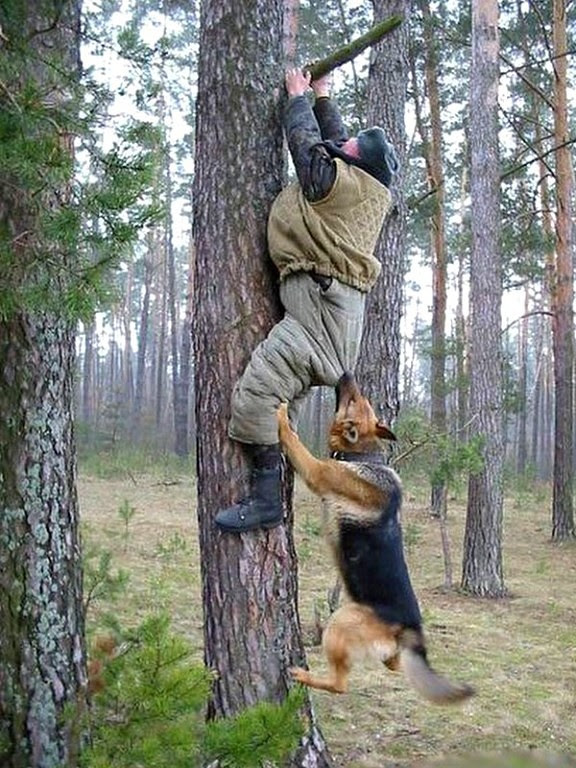
oooo

oooo

oooo

oooo

oooo

And, yes, another set from Dordie in a week’s time.
Stay safe out there!
Dogs are animals of integrity. We have much to learn from them.
Category: Dogs
As promised, more from Dordie.
oooo
oooo
oooo
oooo
oooo
oooo
And, yes, another set from Dordie in a week’s time.
Stay safe out there!
It’s all too easy to forget that a dog can’t cope with hot weather.
As in too hot. Especially in a car!
I want to republish a post that appeared on The Dodo blog site recently. It is about a dog trapped in a car when it was far too hot.
ooOOoo

Jason Minson, an Army veteran who runs a landscaping business, was out on a job in Norfolk, Virginia, on Tuesday when the first of several unusual things happened.
Minson was inspecting a tree in a yard when he heard a bang on the street.
When he went to check, he realized that a car driving by had bumped another car parked on the street. If that hadn’t happened, Minson probably never would have approached the parked car and discovered what was inside.
A black Labrador puppy was sprawled out on the floor of the vehicle — the noise and shudder seemed to have woken him up for a moment.
And he was incessantly panting.
“It was the kind of panting that was the last effort a dog does to try to cool himself off,” Minson told The Dodo.

Minson immediately called 911.
The police dispatched a unit to come help the dog — but they also informed Minson that breaking the window of the car to free the dog is a crime. (The law varies depending where you are.)
Minson watched the panting puppy from behind the pane of glass. He brought one bottle of water to the sliver of opened window and the dog jumped up on the seat and started drinking from it.
The dog went through the whole bottle. And then another.
“I’m usually a pretty cool, level-headed person but I was kind of fed up,” Minson said.

An animal control officer arrived and she started to try to pry the door open, but it wasn’t working. And nearly 20 minutes had passed since Minson had found the dog — and he was worried they were already out of time.
“The dog had laid back down on the floor of the car and wasn’t panting as quickly,” Minson said.
“I honestly didn’t think this pup was going to make it,” Minson wrote.
That’s when he took matters into his own hands.
“Charge me,” he can be heard saying in one of the videos he shot, “I don’t give a sh*t at this point.”
Using the baton from the animal control officer, Minson smashed the window and opened the door.
The animal control officer rushed the dog over to her van and took him to the vet for urgent care. And the owner of the dog was charged by the police. Minson received a call from the police, too — but to be a witness at the hearing about the incident.
The following day, Minson went to visit the pup at the facility where he’s recovering. Already, the dog seemed to be much stronger.

Minson, who has a Great Dane, hopes that if someone saw his dog in trouble in any way that they would do something about it.
“This is REAL talk people,” Minson wrote on Facebook after the dog was saved. “It’s hot out and if you leave an animal in your car [he’s] going to die from the heat … Take care of your fur babies.”
ooOOoo
I can’t think of a more dramatic way of telling you about the perils of dogs in cars in hot weather!
It really does kill dogs!
Some of these are repeats.
Thanks to Dordie for passing the email on.
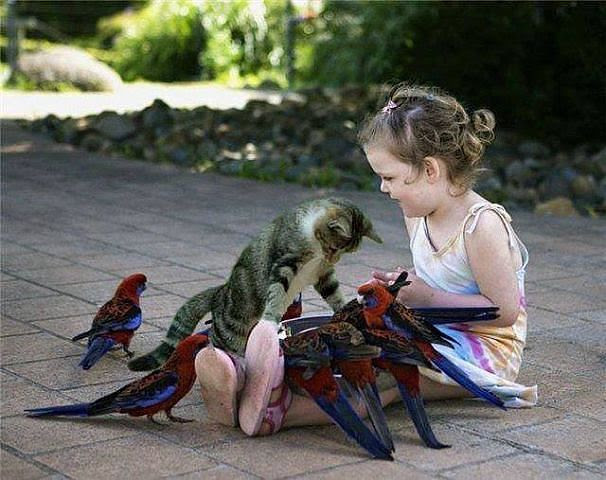
oooo
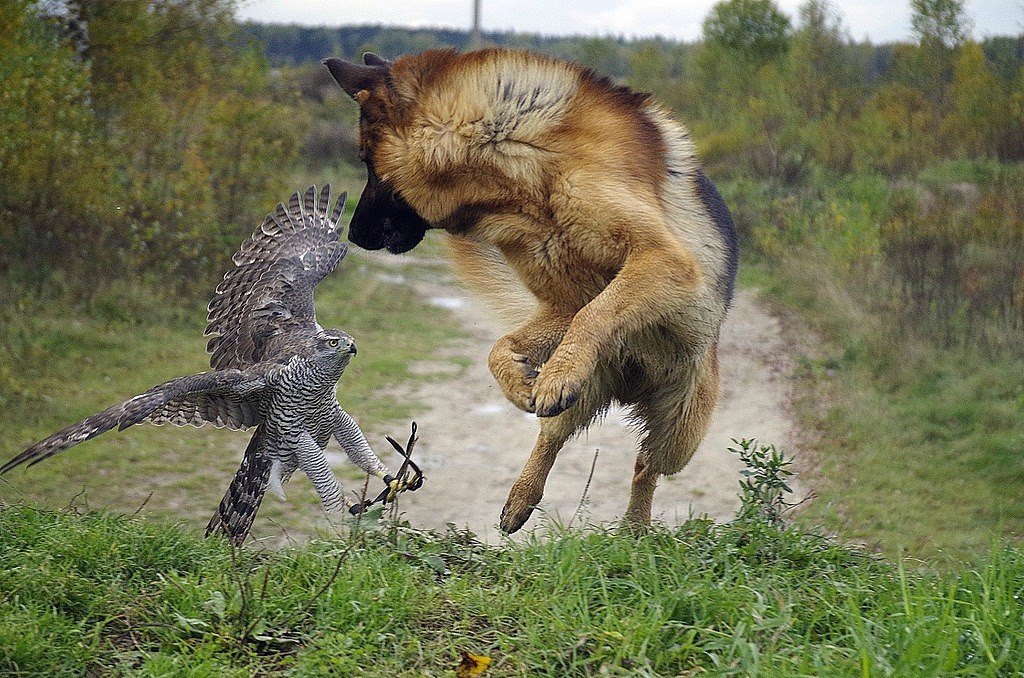
oooo

oooo
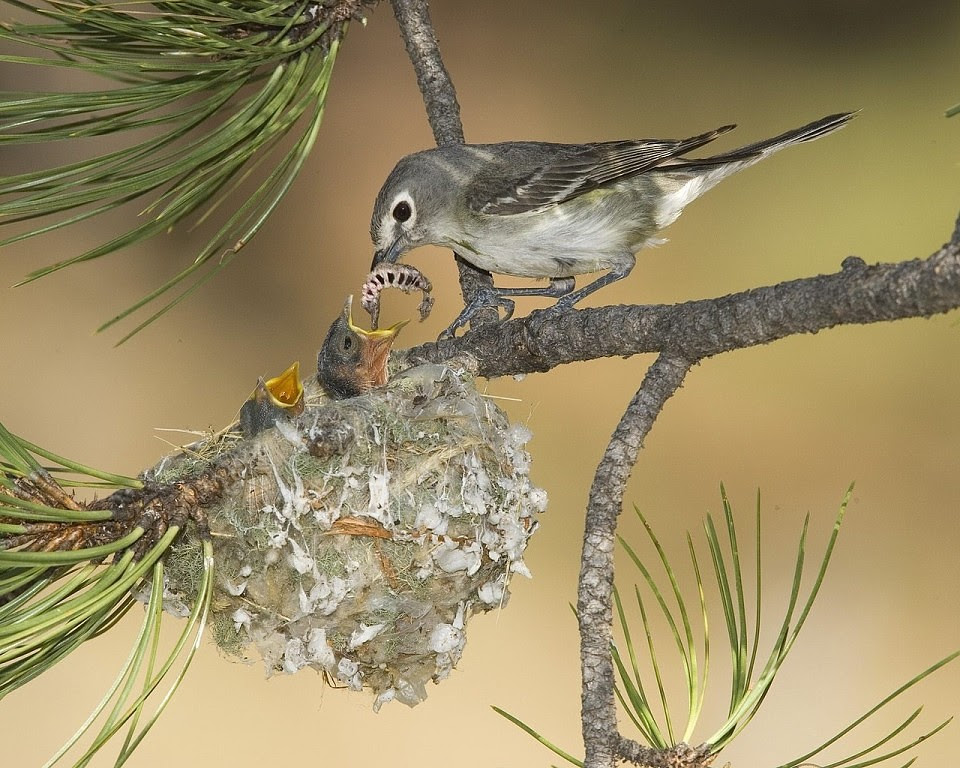
oooo
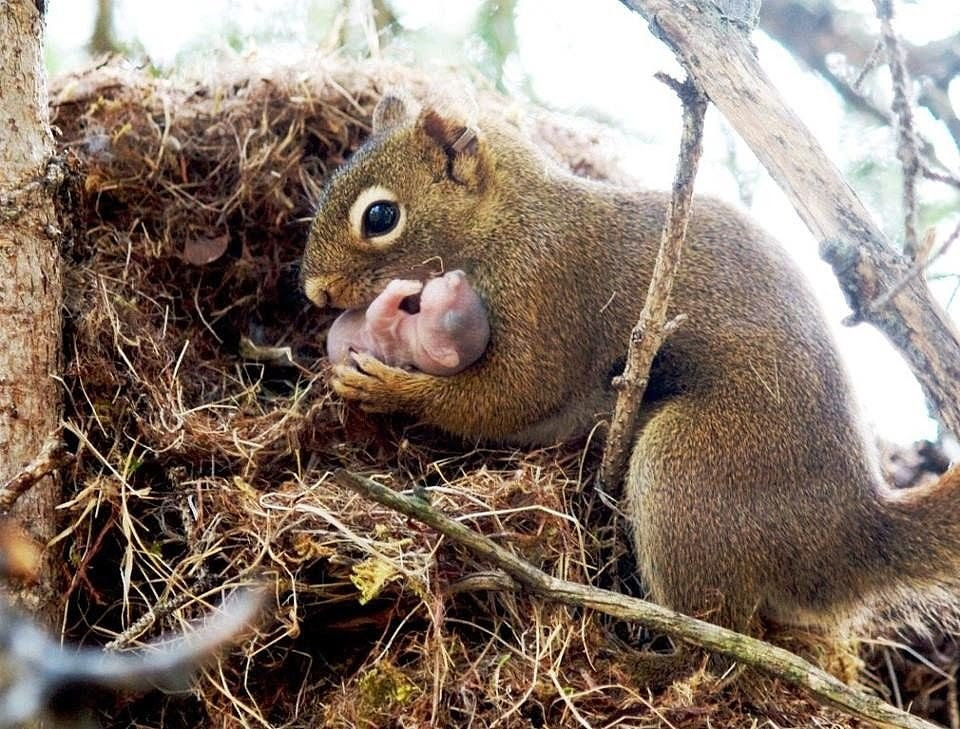
oooo

oooo
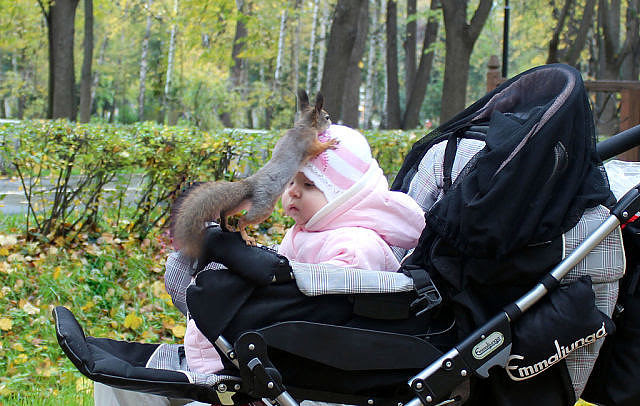
More courtesy of Dordie next Sunday.
A fascinating story.

I am a member of AAAS, the American Association for the Advancement of Science, and pulled a story from their Science journal and to my amazement found that I did this nearly a year ago.
The article, by Linda Goodman and Elinor K. Karlsson, is unavailable for complete republishing owing to copyright.
But on the AAAS website there is a summary, as follows:
Summary
Few traces remain of the domesticated dogs that populated the Americas before the arrival of Europeans in the 15th century. On page 81 of this issue, Ní Leathlobhair et al. (1) shed light on the origins of the elusive precontact dog population through genetic analysis of ancient and modern dogs. Building on earlier work, they show that American dogs alive today have almost no ancestry from precontact dogs, a monophyletic lineage descended from Arctic dogs that accompanied human migrations from Asia. Instead, the authors found that their closest remaining relative is a global transmissible cancer carrying the DNA of a long-deceased dog. It remains unclear why precontact dogs survived and thrived for thousands of years in the Americas only to swiftly and almost completely disappear with the arrival of Europeans.
From the article I would add:
It is unclear why there is so little evidence today of this thriving precontact dog population. Early European colonists may have discouraged the sale and breeding of native dogs, or even actively persecuted them (10). Yet, cultural preferences alone seem insufficient to explain their rapid decline. Most dogs worldwide are free-breeding scavengers, with minimal human control and high reproductive rates (11); native American dogs were likely similar.
There is a chart in the same article that shows the first human sites in the Americas were about 15,000 years ago with the oldest dog remains, also in America, being about 10,000 years ago.
Fascinating stuff!
This is of interest to many but especially lovers of bulldogs and similar.
There was an article on May 17th in The Smithsonian that caught my eye. So much so that I wanted to republish it for you.
Here it is.
ooOOoo
It might not be their smushed-up snouts after all

By Jason Daley
smithsonian.com
May 17, 2019
Smushed-up faces are what make certain dog breeds, like French and English bulldogs or pugs, so ugly-cute. But those good looks come with a cost. Many dogs in these breeds suffer from a disease called Brachycephalic Obstructive Airway Syndrome (BOAS). The compact architecture of their skull results in deformation, which make their nostrils or soft palate too small, obstructing airflow and leaving the pups gasping for breath. Researchers long thought that the main cause was their shortened faces. But genes found in another breed suggest that the shortness of breath might be in their DNA, according to a new study published in the journal PLOS Genetics.
Ed Cara at Gizmodo reports that veterinarians began to notice that another small breed of dog, the Norwich terrier, was increasingly coming down with similar respiratory symptoms, a disease called upper airway obstructive syndrome. Unlike flat-faced pugs and bulldogs, however, the Norwich—bred for chasing rodents—has a nice, proportional skull. That got study author Jeffrey Schoenebeck, a veterinary scientist at the University of Edinburgh, wondering if the breathing problems in all the small dogs were genetic.
“That made us wonder if there was something similar shared across these different breeds, or if we were seeing two different diseases that just looked very similar,” he says.
Schoenebeck and his team decided to dig into the terrier’s DNA to find out. The team assessed 401 Norwich terriers for signs of the airway syndrome and also examined their genomes. Cassie Martin at Science News reports the researchers discovered one gene mutation in particular, ADAMTS3, was associated with the breathing disorder. Dogs with two copies of the mutation showed signs of fluid retention and swelling around the lungs. They had worse breathing scores than dogs with just one copy of the mutation or the normal gene.
When the team examined the genome of bulldogs and pugs, they also found that ADAMTS3 was common, meaning their funky faces might not be the only cause of BOAS.
“BOAS is a complex disease. Although skull shape remains an important risk factor, our study suggests that the status of ADAMTS3 should be considered as well,” Schoenebeck says in a press release. “More studies are needed to dissect the complex nature of this devastating disease.”
Cara reports that Norwich terrier breeders are already inadvertently combating the mutation. In Switzerland, Schoenebeck’s team has been working with breeders to give dogs breathing tests, identifying pups likely to develop the disease. As a result, the younger generation of terriers is less like to develop the disease than older dogs.
“In the 90s, something like 80 percent of the Norwich terriers that came into their clinic had poor breathing and this mutation,” Schoenebeck tells Cara. “But it’s decreasing further and further over time. They didn’t know it at the time, but they were actually selecting against this thing that we think is causing this disease.”
The genetic finding means that researchers can now screen directly for the mutation, and perhaps rid the terrier population of the disease.
The problem in flat-faced breeds may not be quite as simple to deal with. Wonky skull shape still makes the risk of developing BOAS higher, and the gene mutation adds to that risk. The team needs to do a similar study with bulldogs to figure out how much of their breathing problems come from their genes and how much comes from their cute little smushed-up skulls.
Smushed-up faces are what make certain dog breeds, like French and English bulldogs and pugs, so ugly-cute. But those good looks come with a cost. Many dogs in these breeds suffer from a disease called Brachycephalic Obstructive Airway Syndrome (BOAS). The compact architecture of their skull results in deformation, that make the nostrils or soft palate too small, obstructing airflow and leaving the pups gasping for breath. Researcher long thought that the main cause was their shortened faces. But genes found in another breed suggest that the shortness of breath might be in their DNA.
Ed Cara at Gizmodo reports that veterinarians began to notice that another small breed of dog, the Norwich Terrier, was increasingly coming down with similar respiratory symptoms, a disease called Upper Airway Syndrome. Unlike flat-faced pugs and bulldogs, however, the Norwich, bred for chasing rodents, has a nice, proportional skull. That got Jeffrey Schoenebeck of the Roslin Institute at the University of Edinburghand and lead author of the study in the journal PLOS Genetics wondering if the breathing problems in all the small dogs were genetic.
“That made us wonder if there was something similar shared across these different breeds, or if we were seeing two different diseases that just looked very similar,” he says.
Schoenebeck and his team decided to dig into the terrier’s DNA to find out. The team assessed 401 Norwich Terriers for signs of the airway syndrome and also examined their genomes. Cassie Martin at Science News reports the researchers discovered one gene mutation in particular, ADAMTS3, was associated with the breathing disorder. Dogs with two copies of the mutation showed signs of fluid retention and swelling around the lungs. They had worse breathing scores than dogs with just one copy of the mutation or the normal gene.
When the team examined the genome of bulldogs and pugs, they also found that ADAMTS3 was common, meaning their funky faces might not be the only cause of BOAS.
“BOAS is a complex disease. Although skull shape remains an important risk factor, our study suggests that the status of ADAMTS3 should be considered as well,” study leader Jeffrey Schoenebeck says in a press release. “More studies are needed to dissect the complex nature of this devastating disease.”
Cara reports that Norwich Terrier breeders are already inadvertently combating the mutation. In Switzerland, Schoenebeck’s co-authors have been working with breeders to give dogs breathing tests, identifying doggos likely to develop the disease. As a result, the younger generation of terriers is less like to develop the disease than older dogs.
“In the 90s, something like 80 percent of the Norwich Terriers that came into their clinic had poor breathing and this mutation,” Schoenebeck tells Cara. “But it’s decreasing further and further over time. They didn’t know it at the time, but they were actually selecting against this thing that we think is causing this disease.”
The genetic finding means that researchers can now screen directly for the mutation, and perhaps rid the terrier population of the disease.
The problem in flat-faced breeds may not be quite as simple to deal with. Wonky skull shape still makes the risk of developing BOAS higher, and the gene mutation adds to that risk. The team needs to do a similar study with bulldogs to figure out how much of their breathing problems come from their genes and how much comes from their cute little smushed-up skulls.
Jason Daley is a Madison, Wisconsin-based writer specializing in natural history, science, travel, and the environment. His work has appeared in Discover, Popular Science, Outside, Men’s Journal, and other magazines.
ooOOoo
How great it would be if the problem facing these flat-faced breeds was slowly done away with.
Now this is interesting!
I first received notice of this story from a news release put by Uppsala University. That news release is what I publish as it is a short-form of the full scientific report. But I will also include an extract of the report as there may be some of you that will want to go further into this.
ooOOoo
NEWS RELEASE
UPPSALA UNIVERSITY
A team of Swedish and British scientists have studied the heritability of dog ownership using information from 35,035 twin pairs from the Swedish Twin Registry. The new study suggests that genetic variation explains more than half of the variation in dog ownership, implying that the choice of getting a dog is heavily influenced by an individual’s genetic make-up.
Dogs were the first domesticated animal and have had a close relationship with humans for at least 15,000 years. Today, dogs are common pets in our society and are considered to increase the well-being and health of their owners. The team compared the genetic make-up of twins (using the Swedish Twin Registry – the largest of its kind in the world) with dog ownership. The results are published for the first time in Scientific Reports. The goal was to determine whether dog ownership has a heritable component.
“We were surprised to see that a person’s genetic make-up appears to be a significant influence in whether they own a dog. As such, these findings have major implications in several different fields related to understanding dog-human interaction throughout history and in modern times. Although dogs and other pets are common household members across the globe, little is known how they impact our daily life and health. Perhaps some people have a higher innate propensity to care for a pet than others.” says Tove Fall, lead author of the study, and Professor in Molecular Epidemiology at the Department of Medical Sciences and the Science for Life Laboratory, Uppsala University.
Carri Westgarth, Lecturer in Human-Animal interaction at the University of Liverpool and co-author of the study, adds: “These findings are important as they suggest that supposed health benefits of owning a dog reported in some studies may be partly explained by different genetics of the people studied”.
Studying twins is a well-known method for disentangling the influences of environment and genes on our biology and behaviour. Because identical twins share their entire genome, and non-identical twins on average share only half of the genetic variation, comparisons of the within-pair concordance of dog ownership between groups can reveal whether genetics play a role in owning a dog. The researchers found concordance rates of dog ownership to be much larger in identical twins than in non-identical ones – supporting the view that genetics indeed plays a major role in the choice of owning a dog.
“These kind of twin studies cannot tell us exactly which genes are involved, but at least demonstrate for the first time that genetics and environment play about equal roles in determining dog ownership. The next obvious step is to try to identify which genetic variants affect this choice and how they relate to personality traits and other factors such as allergy” says Patrik Magnusson, senior author of the study and Associate Professor in Epidemiology at the Department of Medical Epidemiology and Biostatistics at Karolinska Insitutet, Sweden and Head of the Swedish Twin Registry.
“The study has major implications for understanding the deep and enigmatic history of dog domestication” says zooarchaeologist and co-author of the study Keith Dobney, Chair of Human Palaeoecology in the Department of Archaeology, Classics and Egyptology at the University of Liverpool. “Decades of archaeological research have helped us construct a better picture of where and when dogs entered into the human world, but modern and ancient genetic data are now allowing us to directly explore why and how?”
ooOOoo
Now here’s the full report as published by Nature.com. And below I present the Introduction.
ooOOoo
Scientific Reports 9, Article number: 7554 (2019)
Introduction
The relationship between humans and dogs is the longest of all the domestic animals, yet the origin and history of perhaps our most iconic companion animal remains an enigma, and a topic of much ongoing scientific debate1. Decades of archaeological and more recent genetic investigations across the world have so far failed to resolve the fundamental questions of where, when and why wolves formed the transformational partnership with humans that finally resulted in the first domestic dog.
Although recent claims for the existence of so-called “Palaeolithic dogs”2,3,4,5 as early as 30,000 years ago remain controversial6,7, there is incontrovertible evidence for the existence of domestic dogs in pre-farming hunter-gatherer societies in Europe at least 15,000 years ago, the Far East 12,500, and the Americas 10,000 years ago8,9,10.
Over the subsequent millennia this ‘special relationship’ developed apace throughout most cultures of the world and is as strong and complex today as it has ever been. Dogs have long been important as an extension to the human ‘toolkit’, assisting with various tasks such as hunting, herding, and protection, as well as for more social activities such as ritual and companionship. The diverse roles that dogs fulfilled most likely introduced a range of selective advantages to those human groups with domesticated dogs. The anthropologist Dr. Pat Shipman went so far as to suggest that the close connection between dogs, other animals and their domesticators had a significant and tangible influence on our bio-cultural history – the animal connection hypothesis11. A number of experimental studies demonstrate that the view of dogs and other animal stimuli influence human behavior and interest from early childhood onward implicating innate mechanisms12,13, whilst others conversely highlight innate adverse responses to spiders and snakes in humans, indicating the evolutionary benefits of avoiding snakes and spiders14.
Inspired by assumed physical and psychosocial benefits of dog ownership, pet dogs are now increasingly being used in interventions for the rehabilitation of prisoners15, in-patient care16 and during pediatric post-surgical care17. A large number of studies have shown dog owners to be more physically active18,19,20, leading to acquisition of a dog being recommended as an intervention to improve health. There is also evidence that dog-owners feel less lonely21 and have an improved perception of wellbeing, particularly with regard to single people and the elderly22,23,24. We have previously shown that dog ownership is associated with longevity25 and lower risk of childhood asthma26. However, there are studies showing no relation (or even an inverse one) between dog ownership and these health outcomes27,28,29. One of the important limitations of the available evidence regarding health effects of dog ownership is that it is uncertain whether health differences between dog owners and non-dog owners reflect effects of dog ownership itself, or underlying pre-existing differences in personality, health and genetics. Such factors may impact the choice to acquire a dog in adult life as well as health outcomes – although these factors are difficult to disentangle.
Previous research has indicated that exposure to pets during childhood is positively associated with more positive attitudes towards pets30 and ownership in adulthood31,32, but it is unclear if genetic differences between families contribute to this association. The heritability of a trait can be estimated from studies comparing concordance of the trait in monozygotic (MZ) and dizygotic twins (DZ) using structural equation modeling. These estimations rely on the underlying assumptions that MZ and DZ twin pairs share environment to a similar degree, that MZ twins share their entire genome, and that DZ twins on average share 50% of their segregating alleles33. A previous study of twin pairs aged 51–60 indicated that genetic factors account for up to 37% of the variation in the frequency of pet play and that less than 10% is attributable to the shared childhood environment34 indicating a strong contribution of genetic factors to the amount of playful interaction with pets.
Increased understanding of a potential genetic adaption towards dog ownership would support theories of co-evolution of humans and dogs and could also aid the understanding of differences in health outcomes today. However, there are no empirical data supporting a genetic contribution to dog ownership, likely due to lack of information on dog ownership in large twin cohorts. However, it is now possible to study this using register data in Sweden. It is mandatory by law that every dog in Sweden is registered with the Swedish Board of Agriculture. Moreover, all dogs sold with a certified pedigree are also registered with the Swedish Kennel Club. A survey conducted by Statistics Sweden in 2012 estimated that 83% (95% confidence interval (CI), 78–87) of dogs are registered in either or both of the two registers35. In this study, we aimed to estimate the heritability of dog ownership in the Swedish Twin Registry, the largest twin cohort in the world.
ooOOoo
If you wish to follow up the references that appear above then please go here.
Also if you wish to examine the Tables and Figure 1 that appear in the Results then you also need to go to the same place.
Now let me close with a picture!
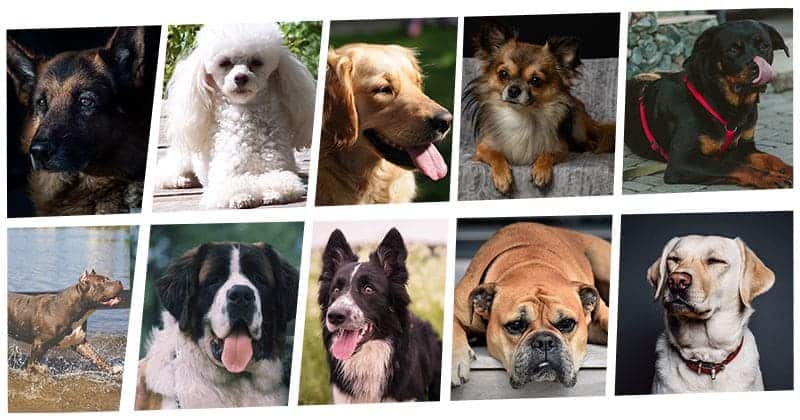
An unusual finding from a recent survey.
As Yves says: “Yves here. Wow, this is a finding I would never have expected. Shows what I know about dogs, or more accurately, dog owners.”
She was commenting on a recent post published on Naked Capitalism.
ooOOoo
Posted on May 24, 2019
By Yves Smith
By Sarah Mayorga-Gallo, Assistant Professor of Sociology, University of Massachusetts Boston. Originally published at The Conversation
Cities in the United States are getting less segregated and, according to a recent national survey, most Americans value the country’s racial diversity.
But the demographic integration of a neighborhood doesn’t necessarily mean that neighbors of different races are socializing together.
Diverse urban areas remain socially segregated in part because white gentrifiers and long-time residents have differing economic interests. And the racial hierarchies of the United States are simply not erased when black and white people share the same space.
White residents of multicultural areas tend to overlook inequality in their neighborhoods, studies show. That further reinforces racial barriers.
My sociological research in one such multicultural neighborhood identifies a more surprising vehicle of racial segregation: dogs.
‘A Very Doggie Neighborhood’
I spent 18 months studying Creekridge Park, a diverse and mixed-income area of Durham, North Carolina, to understand how black, white and Latino residents interacted with each other. Between 2009 and 2011, I interviewed 63 residents, attended neighborhood events and conducted a household survey.
I learned that white, black and Latino residents led rather separate social lives in Creekridge Park. Eighty-six percent of white people said their closest friends were white, and 70% of black residents surveyed reported that their best friends were black.
One black resident lamented that neighbors weren’t as “friendly as I had hoped and thought that they would be – or at least, this image I had in my head of what ‘friendly’ would be like.”
White, black and Latino people in Creekridge Park even had different experiences with something as seemingly innocuous as pet ownership.
Many white residents described friendships growing as a result of walking their dogs around the neighborhood, with chance encounters on the sidewalk turning into baseball games, dinners and even vacations together.
“It’s the dogs that are our connectors,” said Tammy, a white homeowner in her fifties. “That’s how a lot of us have gotten to know each other.”
Such positive interactions did not necessarily happen across racial boundaries. More often, I found, dogs reinforced boundaries.
When Jerry, a black homeowner in his sixties, stopped to chat with some dog-owning customers, who were white, in the outdoor seating area of a neighborhood bakery, the staff asked him to leave.
“I owned some dogs like that at one particular time. And I was just speaking to them. All of a sudden, I’m a panhandler,” Jerry said, incredulous and hurt.
Jerry is a black disabled veteran who was wearing his old army uniform that day. He figures they thought he was begging for money.
The dogs didn’t create the interracial boundaries at the bakery, which caters to a primarily white, middle-class clientele. In fact, the dogs presented an avenue to connect black and white neighbors. But they gave bakery staff a reason to intervene, to maintain interracial boundaries.
Neighborhood Watch
The treatment of dogs in Creekridge Park also divided neighbors of different races.
Tammy, the same resident who said dogs served as “connectors” in the neighborhood, disliked that her Latino neighbors wouldn’t let their dog into the house, leaving her tied up in the backyard.

One day, when she heard her neighbor’s dog barking, she decided to monitor their backyard with binoculars, to make sure the dog was OK. When the father spotted her doing her surveillance, Tammy lied. She said she was looking at a different dog.
Tammy was not, however, embarrassed when recounting this story. She felt she was justified in considering the dog’s well-being. She offered the family a bigger dog house and began to take the dog on hour-long walks twice a day. Eventually, she adopted the dog as her own.
Tammy said that she always intervened whenever she saw dogs mistreated in the neighborhood. However, the only examples she shared during our interview involved Latino families.
Latino families are not the only Creekridge Park residents who tied up their dogs. The practice is common enough across Durham that a local group was formed in 2007 to build free dog fences.
Police Come ‘Almost Immediately’
Several white residents of Creekridge Park have even reported their neighbors to the police for suspected animal abuse.
Emma, a white homeowner in her thirties, called the police when she thought her neighbors were involved in dog fighting.
They “came almost immediately,” she said.
Generally, Emma told me, if she knows her neighbors, she will confront them directly about problems she perceives. Otherwise, she prefers to call the police.
Given how segregated friendship networks are in Creekridge Park, this seemingly non-racial distinction between “known” and “unknown” neighbors means that in practice Emma involved police in conflicts only with black and Latino neighbors.

How White People Enforce Their Rules
This white willingness to report non-white neighbors for “unruly” behavior recalls numerous recent incidents nationwide in which white people have called the police on black people for perfectly legal activities.
In July 2018 a white woman in San Francisco threatened an 8-year-old black girl for “illegally selling water without a permit.” A few months before, a white woman dubbed by internet users as “BBQ Becky” called the cops on a black family barbecuing in an Oakland park for using an “unauthorized” charcoal grill.
Other examples of white people using police to enforce their unspoken social norms have occurred at Starbucks, a Yale University dorm and a Texas swimming pool.
In U.S. neighborhoods, middle- and upper-class white residents enjoy a privileged social position by virtue of their race and class. They understand that police, local businesses and government agencies exist to serve them – the same social institutions that often underserve or even target racial minorities.
By drawing arbitrary lines between right and wrong, insider and outsider – even good pet owner and bad – white people like Tammy and BBQ Becky use that power to try to shape diverse neighborhoods into their preferred mold.
As a result of white residents’ focus on their own comfort in diverse places, racial inequality can pervade everyday life – even, my research shows, when walking the dog.
ooOOoo
I have to say that it’s not entirely clear if dog ownership leads to social cohesion or the opposite.
I need to read the article again but what do readers offer.
The last set from Dan Gomez.

oooo

oooo

oooo

oooo

oooo

oooo

That’s it, folks!
On to next Sunday and who knows what!
Dogs and humans go back a long, long way!
We like to think of our relationship with dogs as a moderately recent affair. Not the time since dogs and humans have mixed together, that was a very long time ago, but having a dog as a pet.
But even that view needs to be updated.
Try 4,000 years ago!
ooOOoo
Analysis of the remains of 26 dogs found near Barcelona suggest the dogs had a close relationship with ancient humans

SMITHSONIAN.COM
FEBRUARY 14, 2019
Humans have enjoyed a long history of canine companions. Even if it’s unclear exactly when dogs were first domesticated (and it may have happened more than once), archaeology offers some clues as to the nature of their relationship with humans.
The latest clue suggests that humans living in Southern Europe between 3,600 to 4,200 years ago cared for dogs enough to regularly share their gravesites with them. Barcelona-based researchers studied the remains of 26 dogs from four different archaeological sites on the northeastern Iberian Peninsula.
The dogs ranged in age from one month to six years old. Nearly all were buried in graves with or nearby humans. “The fact that these were buried near humans suggests there was an intention and a direct relation with death and the funerary ritual”, says lead author Silvia Albizuri, a zooarchaeologist with the University of Barcelona, in a press release.
To better understand the dogs’ relationship with the humans they joined in the grave, Albizuri and her colleagues analyzed isotopes in the bones. Studying isotopes—variants of the same chemical element with different numbers of neutrons, one of the building blocks of atoms—can reveal clues about diet because molecules from plants and animals come with different ratios of various isotopes. The analysis showed that very few of the dogs ate primarily meat-based diets. Most enjoyed a diet similar to humans, consuming grains like wheat as well as animal protein. Only in two puppies and two adult dogs did the samples suggest the diet was mainly vegetarian.
This indicates that the dogs lived on food fed to them by humans, the team reports in the Journal of Archaeological Science. “These data show a close coexistence between dogs and humans, and probably, a specific preparation of their nutrition, which is clear in the cases of a diet based on vegetables,” says study co-author Eulàlia Subirà, a biological anthropologist at the Autonomous University of Barcelona.
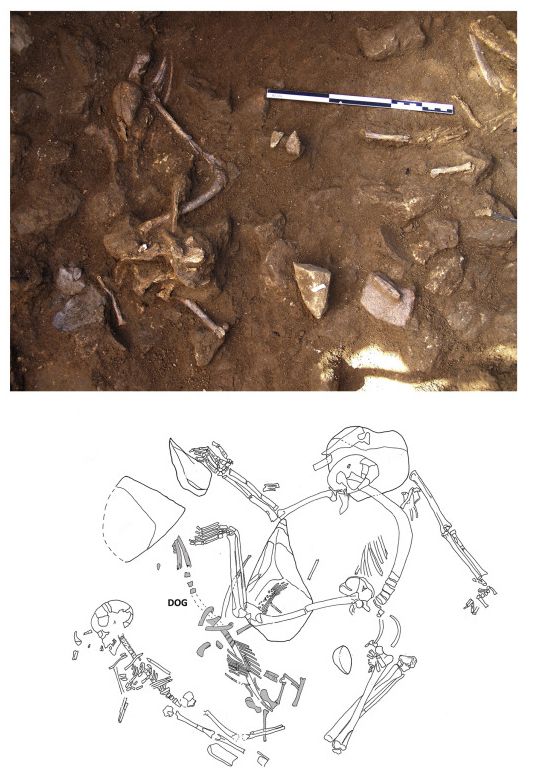
The archaeological sites all belong to people of the Yamnaya Culture, or Pit Grave Culture. These nomadic people swept into Europe from the steppes north of the Black and Caspian Seas. They kept cattle for milk production and sheep and spoke a language that linguists suspect gave rise to most of the languages spoken today in Europe and Asia as far as northern India.
The buried dogs aren’t the oldest found in a human grave. That distinction belongs to a puppy found in a 14,000-year-old grave in modern-day Germany. The care given to that puppy to nurse it through illness was particularly intriguing to the researchers who discovered it. “At least some Paleolithic humans regarded some of their dogs not merely materialistically, in terms of their utilitarian value, but already had a strong emotional bond with these animals,” Liane Giemsch, co-author on a paper about the discovery and curator at the Archäologisches Museum Frankfurt, told Mary Bates at National Geographic in 2018.
The fact that the researchers in the new study found so many dogs in the region they studied indicates that the practice of burying dogs with humans was common at the time, the late Copper Age through the early Bronze Age. Perhaps the canine companions helped herd or guard livestock. What is certain is that ancient humans found the animals to be important enough to stay close to even in death.
ooOOoo
That last sentence is precious. “What is certain is that ancient humans found the animals to be important enough to stay close to even in death.”
As far back as 14,000 years!
Please take note.
ooOOoo
Recall Updated 5/22/2019
March 20, 2019 — Hill’s Pet Nutrition is expanding its voluntary recall of canned dog food products due to elevated levels of vitamin D.
This recall expansion relates to the same vitamin premix that led to the January 31 voluntary recall previously announced on The Dog Food Advisor website.
Update: Additional expansion announced by the FDA May 20, 2019.
Vitamin D, when consumed at very high levels, can lead to serious health issues in dogs including kidney dysfunction.


The following products and lot numbers are affected by the recall.
Items marked with * are new product SKUs that were added to the list on March 20, 2019. The item marked with ** is one additional lot code of recalled product updated on May 15, 2019.

Click here to view a text-based follow-up bulletin posted by the U.S. F.D.A. at a later date.
About Excessive Levels of Vitamin D
While vitamin D is an essential nutrient for dogs, ingestion of elevated levels can lead to potential health issues depending on the level of vitamin D and the length of exposure.
Dogs may exhibit symptoms such as vomiting, loss of appetite, increased thirst, increased urination, excessive drooling, and weight loss.
Pet parents with dogs who have consumed any of the products listed and are exhibiting any of these signs should contact their veterinarian.
In most cases, complete recovery is expected after discontinuation of feeding.
For More Complete Information
On March 21, 2019, the U.S. Food and Drug Administration published an announcement containing more complete information about this recall.
What to Do?
If your SKU, Date and Lot codes are found in the list above, you have an affected product.
You should stop feeding it and should return to the place of purchase for a full refund.
If you have questions, you may contact Hill’s Consumer Affairs at 800-445-5777.
U.S. citizens can report complaints about FDA-regulated pet food products by calling the consumer complaint coordinator in your area.
Or go to https://www.fda.gov/petfoodcomplaints.
Canadians can report any health or safety incidents related to the use of this product by filling out the Consumer Product Incident Report Form.
Get Dog Food Recall Alerts by Email
Get free dog food recall alerts sent to you by email. Subscribe to The Dog Food Advisor’s emergency recall notification system.
ooOOoo
Please, please read this and share it with your friends and colleagues who have dogs.
 Learning from Dogs