Category: Dogs

A plea!

A republication of shared angst

I haven’t been a follower of Cara’s blog Who Will Let The Dogs Out?  for a very long time but her posts are powerful and good. I have every intention of remaining a follower.

Especially when one reads posts this one that speaks of the stream of unwanted animals.

Cara has given me permission to republish it.

ooOOoo

A Neverending Stream of Unwanted Animals

We are home and settled in for the holiday week, but in some ways, I feel like I’m still in Tennessee. The pull is so strong. The stories down there break my heart but they also fire up my desire to fix this situation.

It is SO fixable. It does not need to be happening. There are more than enough of us to help the women struggling to help the dogs in western Tennessee. Once more, there are more than enough homes for those dogs, too.

From Kim Kavin’s excellent, well-researched book, The Dog Merchants:

“The notion that America’s homeless dogs face an ‘overpopulation problem’ does not match up against the available statistics. Supply is not exceeding demand. Americans want about 8 million dogs a year as new pets, while only about 4 million dogs are entering shelters….If just half the Americans already getting a dog went the shelter route, then statistically speaking, every cage in US animal control facilities could be emptied. Right now.”

And Tabi and Amber and Kim and Anne and Laura wouldn’t spend their every waking moment fighting to keep animals alive.

I’m not trying to guilt those of you who chose to buy your dog, particularly if you bought that dog from a reputable breeder and/or intend to show your dog. What I am saying is that if the next time you decide you’d like another pet (especially a cat), you’d consider looking at your local shelter or rescue.

And the next time a friend of yours or just an acquaintance tells you they adopted a dog from a shelter or rescue, thank that person for choosing to save a dog.

I’ve been home for five days now and already I’ve heard of more heartbreaking stories landing in the lap of both Karin’ 4 Kritters and Red Fern. Puppies abandoned and struggling, three dogs rescued by a woman who has them kenneled on her front porch to keep neighbors from poisoning them, dogs and puppies simply dumped. I can’t keep count of how many are in desperate need of rescue, so I asked for a summary from Laura (who handles transports from the area for OPH and many other rescues across our country).

The list here of calls for help in one day is:

– 3 pups dumped at Red Fern (that may go to Greenfield pound) – the picture of the ear with ticks is one of these puppies.

– 2 choc pups dumped in the country that they put at the city pound for now

– 2 pittie teens they’re being asked to take. (Crockett and Tyke)

– 3 strays in Sharon, TN that a lady caught because the neighbors were threatening to poison them because they’ve been running loose for months.

– pittie pup in Greenfield that the owner wants to surrender because it’s getting to be “too much”

– 2 three month old pups someone is asking her to take

– a 6 month injured beagle. The owner was going to “put it on the street” so her brother went and picked it up but he thinks it has a broken rib and it’s in pain and he doesn’t have money to treat it so he wants to dump it on Tabi.


That’s just in a day. Multiply that times all the little towns and counties all over western Tennessee that rely on rescues like Red Fern and Karin’ 4 Kritters and their minimalist dog pounds. Places where there is no safety net and dogs are suffering and dying daily. Places where there is no real, reasonable, low-cost access to spay/neuter. Places where dogs (and cats) are not valued or loved, and where their local government will not spend money because it’s ‘just a dog’ or ‘just a cat.’

We seem to have ‘solved’ the problem in the northeast and many metropolitan areas, but we are far from a solution in the rural south and Midwest. We cannot forget them.

The need is so real. Something has got to change. Someone has got to let these dogs out.

Thanks for reading and for caring.

Blessings,

Cara

If you’d like to help, page back through these posts for contact information, but if you’d really like to help, TELL someone. Spread the word – I remain convinced, that the problem is not that people don’t care, it’s that they don’t know. Please help us tell them.

ooOOoo

Bear in mind that the above list is for One Day!
Is it true that people don’t know about this?

Well those that read this blog certainly do now.

The 20 Best Dry Dog Foods

Following on from yesterday’s post.

This was a link in the post and I thought it valuable to present the information.

ooOOoo

Best Dry Dog Foods 2019

The best dry dog foods listed below have been selected by The Dog Food Advisor because of their exceptional ingredient quality, nutritious design, and the superior safety practices of their manufacturers.

In addition, the labels of these products reveal…

  • Above-average meat content
  • Safe fat-to-protein ratio
  • Moderate carb levels
  • No high-risk ingredients
  • No anonymous meat

Tip: Please don’t overlook our 4-star selections. Many are made by some of the best companies in the industry. They also offer exceptional value for those on a budget.

The Best Dry Dog Foods
July 2019

Here are The Dog Food Advisor’s top 20 best dry dog foods for July 2019.

Dr. Tim’s Pursuit Active Dog Formula

Rating: *****

Dr. Tim’s Pursuit Active Dog Formula is one of 8 recipes included in our review of Dr. Tim’s dog food.

  • First 5 ingredients: Chicken meal, brown rice, chicken fat, whole oat groats, dried beet pulp
  • Type: Grain-inclusive (contains grain)
  • Profile: All life stages
  • Best For: All adults and small/medium breed puppies
  • See all 8 available recipes

Dr. Tim’s Pursuit Active Dog Formula derives the bulk of its animal protein from chicken meal. Our dry matter label analysis reveals the recipe contains 33% protein, 22% fat and 36% estimated carbs… creating a fat-to-protein ratio of about 67%.

Check Price at an Online Retailer

Read Our Full Brand Review

oooo

Instinct Original with Real Beef Dry Dog Food

Rating: *****

Instinct Original with Real Beef is one of 6 recipes included in our review of Instinct Original dog food.

  • First 5 ingredients: Beef, chicken meal, white fish meal, peas, chicken fat
  • Type: Grain-free
  • Profile: All life stages
  • Best For: All adults and puppies
  • See all 6 available recipes

Instinct Original with Real Beef derives most of its animal protein from beef, chicken meal and fish meal. Our dry matter label analysis reveals the recipe contains 40% protein, 21% fat and 31% estimated carbs… producing a fat-to-protein ratio of about 53%.

Check Price at an Online Retailer

Read Our Full Brand Review

oooo

Victor Hi-Pro Plus Formula Dry Dog Food

Rating: *****

Victor Hi-Pro Plus is one of 4 recipes included in our review of Victor Classic dog food.

  • First 5 ingredients: Beef meal, grain sorghum, chicken fat, pork meal, chicken meal
  • Type: Grain-inclusive (contains grain)
  • Profile: All life stages
  • Best For: All adults and small/medium breed puppies
  • See all 4 available recipes

Victor Hi-Pro Plus derives the majority of its animal protein from beef meal. Our dry matter label analysis reveals the recipe contains 33% protein, 22% fat and 37% estimated carbs… which results in a fat-to-protein ratio of about 67%.

Check Price at an Online Retailer

Read Our Full Brand Review

oooo

Annamaet Ultra Dry Dog Food

Rating: *****

Annamaet Ultra is one of 7 recipes included in our review of Annamaet dog food.

  • First 5 ingredients: Chicken meal, brown rice, chicken fat, whole dry eggs, herring meal,
  • Type: Grain-inclusive (contains grain)
  • Profile: All life stages
  • Best For: All adults and puppies
  • See all 7 available recipes

Annamaet Ultra derives most of its animal protein from chicken meal. Our dry matter label analysis reveals the recipe contains 36% protein, 22% fat and 34% estimated carbs… yielding a fat-to-protein ratio of about 63%.

Check Price at an Online Retailer

Read Our Full Brand

oooo

Canidae Pure Real Salmon and Sweet Potato

Rating: *****

Canidae Pure Real Salmon and Sweet Potato is one of 11 recipes included in our review of Canidae Grain-Free Pure dog food.

  • First 5 ingredients: Salmon, salmon meal, menhaden fish meal, sweet potatoes, peas
  • Type: Grain-free
  • Profile: Maintenance
  • Best For: Adults only (not for puppies)
  • See all 11 available recipes

Canidae Pure Real Salmon and Sweet Potato derives the bulk of its animal protein from salmon. Our dry matter label analysis reveals the recipe contains 36% protein, 20% fat and 36% estimated carbs… resulting in a fat-to-protein ratio of about 56%.

Check Price at an Online Retailer

Read Our Full Brand Review

oooo

Wellness Complete Health Adult Dry Dog Food

Rating: ****

Wellness Complete Health Adult is one of 14 recipes included in our review of Wellness Complete Health dog food.

  • First 5 ingredients: Deboned chicken, chicken meal, oatmeal, ground barley, peas
  • Type: Grain-inclusive (contains grain)
  • Profile: Maintenance
  • Best For: Adults only (not for puppies)
  • See all 14 available recipes

Wellness Complete Health Adult derives most of its animal protein from chicken. Our dry matter label analysis reveals the recipe contains 27% protein, 13% fat and 52% estimated carbs… which yields a fat-to-protein ratio of about 50%.

Check Price at an Online Retailer

Read Our Full Brand Review

oooo

Orijen Original Dry Dog Food

Rating: *****

Orijen Original is one of 8 recipes included in our review of Orijen dog food.

  • First 5 ingredients: Deboned chicken, deboned turkey, Atlantic flounder, cage-free eggs, whole Atlantic mackerel
  • Type: Grain-free
  • Profile: All life stages
  • Best For: All adults and puppies
  • See all 8 available recipes

Orijen Original derives the majority of its animal protein from deboned poultry and Atlantic fish. Our dry matter label analysis reveals the recipe contains 43% protein, 21% fat and 28% estimated carbs… which produces a fat-to-protein ratio of about 47%.

Check Price at an Online Retailer

Read Our Full Brand Review

oooo

Diamond Naturals Extreme Athlete

Rating: *****

Diamond Naturals Extreme Athlete is one of 12 recipes included in our review of Diamond Naturals dog food.

  • First 5 ingredients: Chicken meal, chicken, ground white rice, chicken fat, cracked pearled barley
  • Type: Grain-inclusive (contains grain)
  • Profile: Maintenance
  • Best For: Adults only (not for puppies)
  • See all 12 available recipes

Diamond Naturals Extreme Athlete derives the bulk of its animal protein from chicken. Our dry matter label analysis reveals the recipe contains 36% protein, 28% fat and 29% estimated carbs… resulting in a fat-to-protein ratio of about 78%.

Check Price at an Online Retailer

Read Our Full Brand Review

oooo

Nature’s Logic Canine Chicken Meal Feast

Rating: *****

Nature’s Logic Canine Chicken Meal Feast is one of 9 recipes included in our review of Nature’s Logic dog food.

  • First 5 ingredients: Chicken meal, millet, chicken fat, pumpkin seed, yeast culture
  • Type: Grain-inclusive (contains grain)
  • Profile: All life stages
  • Best For: All adults and puppies
  • See all 9 available recipes

Nature’s Logic Canine Chicken Meal Feast derives most of its animal protein from chicken meal. Our dry matter label analysis reveals the recipe contains 40% protein, 17% fat and 36% estimated carbs… which creates a fat-to-protein ratio of about 42%.

Check Price at an Online Retailer

Read Our Full Brand Review

oooo

Nulo Freestyle Adult Turkey and Sweet Potato

Rating: *****

Nulo Freestyle Turkey and Sweet Potato is one of 8 recipes included in our review of Nulo Freestyle dog food.

  • First 5 ingredients: Deboned turkey, turkey meal, salmon meal, chickpeas, chicken fat
  • Type: Grain-free
  • Profile: Maintenance
  • Best For: Adults only (not for puppies)
  • See all 8 available recipes

Nulo Freestyle Turkey and Sweet Potato derives the bulk of its animal protein from poultry meal and salmon meal. Our dry matter label analysis reveals the recipe contains 37% protein, 20% fat and 35% estimated carbs… creating a fat-to-protein ratio of about 55%.

Check Price at an Online Retailer

Read Our Full Brand Review

oooo

Nutro Ultra Adult Dry Dog Food

Rating: ****

Nutro Ultra Adult is one of 10 recipes included in our review of Nutro Ultra dog food.

  • First 5 ingredients: Chicken, chicken meal, whole brown rice, brewers rice, rice bran
  • Type: Grain-inclusive (contains grain)
  • Profile: Maintenance
  • Best For: Adults only (not for puppies)
  • See all 10 available recipes

Nutro Ultra Adult derives most of its animal protein from chicken and chicken meal. Our dry matter label analysis reveals the recipe contains 28% protein, 16% fat and 49% estimated carbs… producing a fat-to-protein ratio of about 56%.

Check Price at an Online Retailer

Read Our Full Brand Review

oooo

Go! Solutions Carnivore Chicken, Turkey and Duck

Rating: ****

Go! Solutions Carnivore Chicken, Turkey and Duck is one of 5 recipes included in our review of Go! Solutions Carnivore dog food.

  • First 5 ingredients: Chicken meal, turkey meal, salmon meal, de-boned chicken, de-boned turkey
  • Type: Grain-free
  • Profile: Maintenance
  • Best For: Adults only (not for puppies)
  • See all 5 available recipes

Go! Solutions Carnivore Chicken, Turkey and Duck derives the majority of its animal protein from poultry meal, salmon meal and deboned poultry. Our dry matter label analysis reveals the recipe contains 38% protein, 18% fat and 36% estimated carbs… yielding a fat-to-protein ratio of about 47%.

Check Price at an Online Retailer

Read Our Full Brand Review

oooo

Eagle Pack Power Adult Dry Dog Food

Rating: *****

Eagle Pack Power Adult is one of 7 recipes included in our review of Eagle Pack dog food.

  • First 5 ingredients: Chicken meal, pork meal, ground brown rice, peas, chicken fat
  • Type: Grain-inclusive (contains grain)
  • Profile: Maintenance
  • Best For: Adults only (not for puppies)
  • See all 7 available recipes

Eagle Pack Power Adult derives most of its animal protein from chicken meal and pork meal. Our dry matter label analysis reveals the recipe contains 33% protein, 21% fat and 38% estimated carbs… resulting in a fat-to-protein ratio of about 63%

Check Price at an Online Retailer

Read Our Full Brand Review

oooo

Wellness Core Original Formula Dry Dog Food

Rating:

Wellness Core Original is one of 12 recipes included in our review of Wellness Core dog food.

  • First 5 ingredients: Deboned turkey, turkey meal, chicken meal, peas, potatoes
  • Type: Grain-free
  • Profile: Maintenance
  • Best For: Adults only (not for puppies)
  • See all 12 available recipes

Wellness Core Original derives the bulk of its animal protein from chicken. Our dry matter label analysis reveals the recipe contains 38% protein, 18% fat and 36% estimated carbs… which produces a fat-to-protein ratio of about 47%.

Check Price at an Online Retailer

Read Our Full Brand Review

oooo

Whole Earth Farms Adult Recipe

Rating: ****

Whole Earth Farms Adult Recipe is one of 2 recipes included in our review of Whole Earth Farms dog food.

  • First 5 ingredients: Chicken meal, turkey meal, brown rice, oatmeal, barley
  • Type: Grain-inclusive (contains grain)
  • Profile: Maintenance
  • Best For: Adults only (not for puppies)
  • See both available recipes

Whole Earth Farms Adult Recipe derives the majority of its animal protein from poultry meal. Our dry matter label analysis reveals the recipe contains 29% protein, 15% fat and 48% estimated carbs… resulting in a fat-to-protein ratio of about 50%.

Check Price at an Online Retailer

Read Our Full Brand Review

oooo

Blue Buffalo Life Protection Chicken and Brown Rice

Rating: ****

Blue Buffalo Life Protection Chicken and Brown Rice is one of 23 recipes included in our review of Blue Buffalo Life Protection dog food.

  • First 5 ingredients: Deboned chicken, chicken meal, brown rice, barley, oatmeal
  • Type: Grain-inclusive (contains grain)
  • Profile: Maintenance
  • Best For: Adults only (not for puppies)
  • See all 23 available recipes

Blue Buffalo Life Protection Chicken and Brown Rice derives the majority of its animal protein from deboned chicken and chicken meal. Our dry matter label analysis reveals the recipe contains 27% protein, 16% fat and 50% estimated carbs… which creates a fat-to-protein ratio of about 58%.

Check Price at an Online Retailer

Read Our Full Brand Review

oooo

Holistic Select Grain-Free Adult and Puppy Health

Rating: ****

Holistic Select Grain-Free Adult and Puppy Health is one of 10 recipes included in our review of Holistic Select Grain-Free dog food.

  • First 5 ingredients: Salmon, anchovy and sardine meal, potatoes, peas, menhaden fish meal
  • Type: Grain-free
  • Profile: All life stages
  • Best For: All adults and small/medium breed puppies
  • See all 10 available recipes

Holistic Select Grain-Free Adult and Puppy Health derives most of its animal protein from salmon and fish meal. Our dry matter label analysis reveals the recipe contains 32% protein, 16% fat and 44% estimated carbs… producing a fat-to-protein ratio of about 48%.

Check Price at an Online Retailer

Read Our Full Brand Review

oooo

Blackwood 3000 All Life Stages Everyday Diet Dry Dog Food

Rating: ****

Blackwood 3000 All Life Stages Everyday Diet is one of 5 recipes included in our review of Blackwood Everyday Recipes.

  • First 5 ingredients: Lamb meal, brown rice, oat groats, millet, chicken meal
  • Type: Grain-inclusive (contains grain)
  • Profile: All life stages
  • Best For: All adults and puppies
  • See all 5 available recipes

Blackwood 3000 All Life Stages Everyday Diet derives the majority of its animal protein from lamb meal. Our dry matter label analysis reveals the recipe contains 27% protein, 16% fat and 50% estimated carbs… creating a fat-to-protein ratio of about 58%.

Check Price at an Online Retailer

Read Our Full Brand Review

oooo

Sport Dog Food Active Series Tracking Dog

Rating: ****

Sport Dog Food Active Series Tracking Dog is one of 5 recipes included in our review of Sport Dog Active Series dog food.

  • First 5 ingredients: Buffalo meal, oatmeal, dried sweet potato, pork meal, coconut oil
  • Type: Grain-inclusive (contains grain)
  • Profile: Maintenance
  • Best For: Adults only (not for puppies)
  • See all 5 available recipes

Sport Dog Active Series Tracking Dog derives most of its animal protein from buffalo meal. Our dry matter label analysis reveals the recipe contains 33% protein, 22% fat and 37% estimated carbs… yielding a fat-to-protein ratio of about 67%.

Check Price at an Online Retailer

Read Our Full Brand Review

oooo

Natural Balance Synergy Dry Dog Food

Rating: ****

This sole recipe is included in our review of Natural Balance Synergy dog food.

  • First 5 ingredients: Chicken, chicken meal, brown rice, chicken fat, dried beet pulp,
  • Type: Grain-inclusive
  • Profile: Maintenance
  • Best For: Adults only (not for puppies)

Natural Balance Synergy derives the bulk of its animal protein from chicken and chicken meal. Our dry matter label analysis reveals the recipe contains 31% protein, 18% fat and 43% estimated carbs… which results in a fat-to-protein ratio of about 57%.

Check Price at an Online Retailer

Read Our Full Brand Review

You May Also Like

oooo

Important FDA Alert

The FDA is investigating a potential link between grain-free diets and heart disease in dogs. Click here for details.

A Final Word

The Dog Food Advisor is privately owned and is not affiliated (in any way) with pet food manufacturers. We do not accept money, gifts, samples or other incentives in exchange for special consideration in preparing our reviews.

However, we do receive an affiliate fee from certain online retailers when readers click over to their website from ours. This policy helps support the operation of our blog and keeps access to all our content free to the public.

In any case, it is always our intention to remain objective, impartial and unbiased when conducting our analysis.

For complete information, please visit our Disclaimer and Disclosure page.

ooOOoo

Now a couple of cautions.

  1. I couldn’t copy the ratings properly and some of the four-star ratings were actually four and a half stars.
  2. I couldn’t copy and paste the section at the end of each review that had key points under the title of Why We Like This Brand so please consider reading the Full Brand Review.

Nonetheless, I sincerely hope you find this useful.

UPDATE

In response the Irene’s question, that you will find in the comments section, I have now had a reply to my email. It is posted below.

Hi Paul,

Thanks for your message. I understand your concerns about grain free diets.

Please keep in mind, the FDA`s latest update regarding its investigation into the possible link between grain free dog food and DCM is still not conclusive. So, we`re just as anxious as you are to know the true causes behind these cases.

In case you haven`t already done so, please take a moment to check out our most recent update about this important topic.

Still, the FDA reminds readers in its most recent report…

“It’s important to note that the reports include dogs that have eaten grain-free and grain containing foods and also include vegetarian or vegan formulations. They also include all forms of diets: kibble, canned, raw and home-cooked.

“Therefore, we do not think these cases can be explained simply by whether or not they contain grains, or by brand or manufacturer.”

“… the FDA has received reports of about 560 dogs diagnosed with DCM suspected to be linked to diet. Tens of millions of dogs have been eating dog food without developing DCM.”

So at this time, we`re still including BOTH grain-inclusive and grain-free recipes on every “best” dog foods list.
If you`re still concerned, simply choose one of the grain-inclusive options on one of our many “Best Dog Foods” pages.
Hope this helps.

Jackie B.
Community Support
The Dog Food Advisor

Yet another dog food alert

This came in yesterday.

The Food and Drug Administration has named 16 dog food brands with an increased risk of a type of canine heart disease known as dilated cardiomyopathy… or DCM.

To learn which dog food brands are affected and 8 things you can do right now to lower your dog’s risk, please visit the following link:FDA Investigating Possible Link Between Diet and Heart Disease in Dogs

Important Best Dry Dog Foods Update

We’ve recently updated our Best Dry Dog Foods page to reflect the FDA’s latest report. Here are 5 of The Advisor’s Top 20 Best Dry Dog Foods for July 2019.

  • Wellness Complete Health Dog Food
  • Victor Hi-Pro Plus Formula
  • Nulo Freestyle Dog Food
  • Eagle Pack Natural Dog Food
  • Canidae Grain-Free Pure

Please be sure to share the news of this alert with other pet owners.

Mike Sagman, Editor
The Dog Food Advisor

Now if one goes to that first link then you will read the following.

ooOOoo

FDA Investigating Potential Link Between Diet and Heart Disease in Dogs

This Report Has Been Updated

June 27, 2019 — The FDA has published its third status report regarding a potential connection between grain-free diets and a type of heart disease in dogs known as dilated cardiomyopathy… or DCM.

The Dog Food Advisor initially alerted readers about this issue on July 12, 2018, the day it was first announced by the FDA… and continues to update this report on an ongoing basis.

About DCM

DCM is a disease of a dog’s heart muscle that results in weakened contractions and poor pumping ability…

Which can lead to an enlarged heart and congestive heart failure.

Even death.

Which Breeds Are Affected?

Although the root cause of DCM remains unknown

And even though initially the condition appeared to be more common in certain breeds…

The FDA has received reports of DCM in a wide range of breeds, including many not genetically prone to the disease.

Likely Linked to Diet

Since announcing its investigation in July 2018…

FDA researchers have observed that most of these DCM cases were associated with animals eating dry dog foods.

However…

Dogs eating raw, semi-moist, and wet diets were also affected.

What Types of Dog Food?

Researchers found that over 90 percent of the reported recipes were grain-free.

And that…

Most of these animals ate diets that appeared to contain high concentrations of peas, chickpeas, lentils… or various types of potatoes.

Yet some dogs consumed diets that contained grain, too.

Which Brands?

Brands named most frequently in these reports are depicted in the following FDA graphic…

The FDA reminds readers…

“It’s important to note that the reports include dogs that have eaten grain-free and grain containing foods and also include vegetarian or vegan formulations. They also include all forms of diets: kibble, canned, raw and home-cooked.

“Therefore, we do not think these cases can be explained simply by whether or not they contain grains, or by brand or manufacturer.

The Agency goes on to assure dog owners…

“To put this issue into proper context, the American Veterinary Medical Association estimates that there are 77 million pet dogs in the United States.

“As of April 30, 2019, the FDA has received reports about 560 dogs diagnosed with DCM suspected to be linked to diet. Tens of millions of dogs have been eating dog food without developing DCM.”

The FDA also makes the following logical observation

The prevalence of reports in dogs eating a grain-free diet might correlate also to market share: these products have become exceedingly popular over the last several years.

Which would certainly explain the higher number of DCM cases associated with these same brands.

What’s the Cause?

Based on its latest update…

The FDA has still not discovered why certain dog foods may be associated with the development of DCM. In fact, the Agency now believes the connection between diet and DCM is a complex scientific issue involving multiple factors.

Still…

Even though it’s not clear exactly what it is about these diets that may be connected to DCM in dogs, there are a number of possible causes.

For example…

Taurine deficiency is a well-documented, potential cause of some cases of DCM. Yet it’s not likely to be the only cause.

In fact…

According to Dr. Lisa Freeman, a veterinary nutritionist at Tufts University, “most dogs being diagnosed with DCM do not have low taurine levels”.

Which means…

It’s not reasonable to assume a taurine deficiency is the definitive cause of DCM.

The One Common Thread

According to the FDA, researchers have uncovered one dietary feature common to a large number of DCM cases…

“The common thread appears to be legumes, pulses (seeds of legumes), and/or potatoes as main ingredients in the food. This also includes protein, starch and fiber derivatives of these ingredients…

“Some reports… indicate that the pets were not eating any other foods for several months to years prior to exhibiting signs of DCM.

Editor’s comment: As previously noted, most of these animals appeared to eat diets that contain high concentrations of plant-based protein “boosters”. These include items like pea protein, dried peas, and potato protein. Or a number of legumes (ingredient splitting) located near the top of the ingredients list.

8 Things You Can Do Right Now to Lower Your Dog’s Risk

Until the FDA completes its study and releases its final report…

The Dog Food Advisor believes it makes good sense to apply science and logic to all your feeding decisions.

So, consider these commonsense tips

  1. Since vegetable protein tends to be incomplete (deficient in certain essential amino acids needed by a dog to sustain life), avoid brands that derive most of their protein from legumes and other plant-based protein boosters
  2. Don’t avoid any brand just because it contains peas, legumes or potatoes. In reasonable amounts, studies have not found these ingredients to be toxic
  3. Avoid brands that list pea protein, potato protein, or other plant-based protein concentrates among their first few ingredients
  4. Avoid brands that use the deceptive practice of ingredient splitting to hide the fact their recipes are dominated by non-meat components… like corn, rice or legumes
  5. Consider switching your dog to a quality grain-inclusive product
  6. Focus on the recipe. Not the brand. To satisfy consumer demand, companies sometimes replace the meat in certain products with cheaper plant-based alternatives. Yet they still offer other recipes with superior, meat-rich designs
  7. Don’t put all your eggs in one basket. Diversify. Since no dog food can ever be perfect, consider using diet rotation to lower the risk of endlessly feeding your pet the same imperfect product
  8. Need help? Consider switching your dog’s current diet to one of the many found on our best dog foods lists

What We’re Doing to Help

Since the FDA’s latest status report was published on June 27, 2019, The Dog Food Advisor research team has been working on 3 important projects

  1. We’re updating all our Best Dog Foods lists to reflect the FDA’s latest findings. This process is tedious and time-consuming. So, please allow up to 3 weeks
  2. We’re revisiting all our grain-free dog food reviews and making changes (when appropriate). You can expect most recipes to retain their current ratings while others will be lowered by up to 1-star
  3. We’re creating a list of “Best Dog Foods with Grain” to help pet parents find a sensible alternative to grain-free diets

There are hundreds of painstakingly prepared reviews and lists that need to be manually edited. You should expect this total project to take months to complete.

The Bottom Line

Final results are still not available.

And there’s no way to know how long the FDA’s investigation will take. Yet the Agency is hopeful that as more data becomes known, its scientists will gain a better understanding of the possible connection between diet and DCM.

Until we know the answer…

Be patient.

Don’t overreact.

And don’t be frightened by all the well-meaning yet misguided advice you’ll surely encounter on the Internet.

Even from uninformed professionals.

Base your feeding decisions on facts and science.

Including accurate label analysis.

Keep in mind…

The Dog Food Advisor has never favored any recipe just because it’s grain free.

Nor should you.

Instead…

Our ratings are heavily weighted in favor of our estimate of each recipe’s apparent meat content.

In fact…

Ratings are automatically reduced anytime we find excessive amounts plant-based protein “boosters” (like peas, legumes or non-meat protein concentrates) too close to the top of any ingredients list.

Finally…

Many of the very best dog foods on the market are grain free…

And they’re made by some of the most respected companies in the USA and Canada.

We’re confident the industry will quickly adapt its recipes to any decisive conclusions reached by the FDA’s future findings.

And of course, we’ll make any relevant adjustments to our content as needed to reflect these scientific findings (once they become available).

In the meantime…

Our Very Best Advice

Since there’s no such thing as a perfect dog food

And because built-in flaws tend to be magnified when the same food is fed endlessly… day after day for a lifetime.

You may wish to consider diet rotation when feeding your pet.

Most importantly…

Stay informed.

Keep in mind…

We can update you the moment the FDA releases its findings.

Get free dog food recall alerts sent to you by email. Subscribe to The Dog Food Advisor’s emergency recall notification system.


Protect Your Dog

Get Free Dog Food Recall Alerts
Sent to You by Email
Click Here to Sign Up Now


What rubbish!

No dog is ever ugly!

There was a recent item on The Smithsonian ‘Smart News’ that spoke of a dog winning the prize as the world’s ugliest dog!

I’m sure it was to gain headlines because no dog can be described as ugly.

Read the article yourself.

ooOOoo

Meet Scamp the Tramp, the World’s Ugliest Dog

Scamp took home the top prize in an annual competition that seeks to promote dog adoption

Yvonne Morones embraces her dog Scamp the Tramp after he wins the World’s Ugliest Dog contest. (Photo by Justin Sullivan/Getty Images)

By Brigit Katz
smithsonian.com
June 24, 2019
Nineteen canine competitors flocked to California’s Sonoma County last Friday, all pawing for the coveted title of World’s Ugliest Dog. Among them was Willie Wonka, an American Staffordshire Terrier mix born with twisted legs and deformed front paws; Rascal Deux, a hairless, dentally challenged “mutant”; and Josie, an eight-time veteran of the contest, which has been taking place for nearly three decades, with bulging eyes and a too-long tongue. But only one pooch could be crowned the ugliest of them all. And that pooch was Scamp the Tramp.

Scamp, according to Derrick Bryson Taylor of the New York Times, is a dog of unknown breeding, with a plump body and two-inch-long legs. He has Yoda-like ears and wild hair that grows naturally in dreadlocks. His tongue lolls perpetually. Now, Scamp and his human, Yvonne Morones, are the recipients of a towering trophy and $1,500.

“He’s Scamp the Champ, no longer Scamp the Tramp,” Morones quips in an interview with Andrew Beale of the Santa Rosa Press-Democrat.

The Ugliest Dog Contest’s pool of competitors was especially strong this year, so much so that the judges had a hard time picking just one pup. Once they had narrowed the contestants down to four, the judges asked the audience to cheer loudly for their favorite. Scamp was the clear winner.

Climbing to the top of the ugliest dog totem pole is no easy feat. Boasting a wonky appearance isn’t enough; dogs must also impress the judges and audience with their personalities and accomplishments. Scamp, according to his biography, regularly visits a local senior center and volunteers as a “reading dog,” letting first-graders read stories to him. His favorite book, his bio notes, is Go Dog Go.

“I think the audience saw his beautiful spirit and everything he’s given back to the community,” Morones tells Beale.

The competition’s second-place honor went to Wild Thang, a bushy-haired Pekingese who once contracted distemper, a viral disease that left Wild Thang with slight paralysis of the jaw and a front leg that never stops paddling. Tostito, a chihuahua who lacks teeth and a lower jaw, won third place and the Spirit Award, according to John Rogers of the Associated Press. As champion, Scamp joins the ranks of previous competition winners including Zsa Zsa the English bulldog and Martha the Neapolitan mastiff.

Scamp was found wandering the streets of Compton—“licking Taco Bell wrappers,” according to Taylor of the Times—and was adopted by Morones in 2014.

“It was on the way home that I knew I made the right choice,” she says. “There we were, two strangers in a car on the way home to a new start. Bob Marley was playing … and I looked over and little Scamp was bobbing his head. It was like he knew he had found his forever home.”

The Ugliest Dog Contest is without a doubt entertaining, but it also hopes to impart a serious message: Even dogs without a pedigree, or dogs that don’t quite measure up to standards of conventional canine beauty, are worthy of love and celebration. Many of the contestants, according to the competition’s website, have been rescued from shelters or puppy mills, and the contest organizers seek to promote adoption as an option for potential pet owners—“no matter [the dogs’] physical detractions.”

As part of their prize, Morones and Scamp were flown to New York for an appearance on NBC’s “Today Show.” There, Morones revealed that she was the owner of two previous Ugliest Dog winners—one of whom, Nana, took home the title six times.

In her opinion, Morones said, she doesn’t believe that her latest prize-winning pooch is ugly at all.

“He’s absolutely adorable,” she said. “When people first meet him, they go, ‘Oh, he’s kind of scary’ and then he wins them over with his sparkling personality.”

ooOOoo

Now that is not a particularly good photograph of Scamp in the article so I looked for an alternative.

Scamp the Tramp won the World’s Ugliest Dog Contest Friday evening in Petaluma.

Now he is not smart as in smooth-coated but he is a long way from being ugly. Reminds me a little of our own Sweeny.

Here’s a video of the champion.

Welcome to July!

How a dog saved a family

This is a story of a very real emergency.

I have taken it from BoredPanda, not a site that I frequent, but this is such a marvellous account of how dogs make, every day, a real difference to the lives of people.

It’s been taken from a Twitter account so my apologies for the ‘staccato’ effect.

ooOOoo

Man Shares A Heartwarming Story About How His Dog Saved His House From Burning Down

Dogs… if only there was a word that would show how much we adore these adorable creatures that we get to call our most loyal friends and also beloved family members. Here at Bored Panda, dogs (amongst other animals) have a very special place, despite the fact that they can do the worst things, we still adore them. Also, today’s story teaches us that just because your puppy did something wrong, don’t be too quick to punish them since they might compensate it by doing something truly heroic.

Recently, one Twitter user shared a heartwarming story about his dog Hank saving his entire family from fire

Hank even got some presents dedicated to his heroic act

People online were not only touched by this story, but they also think Hank deserves to chew all of the shoes in the world.

ooOOoo

What would we do without our dear dogs!

Being a lover of dogs shows no constraints!

Try a pharmacist from Turkey!

I love this recent story from the Daily Dodo.

It concerns a Turkish pharmacist who is also a dog lover.

Look, here’s the story:

ooOOoo

Pharmacist Sees Stray Dog At The Door And Realizes She’s Asking For Help”

“She was saying, ‘I trust you.'”

Back to those eyes!

A recent item on Healthy Pets offers some more information.

Yesterday Belinda, who is local to us in Merlin, Oregon, sent me a link to a further article about dogs’ eyes.

In an email to me, Belinda wrote:

I read your blog on a dog’s eyes and now I know why they have such expressive eyes.  I read this and didn’t know if you have any interest in a follow-up to that blog.

Well of course we do! 🙂

The only comment I would make is whether or not Dr. Becker is up-to-date with the latest science.

But here is the article.

ooOOoo

What does it mean when your dog gives you the ‘side-eye’?

by Dr. Karen Shaw Becker

June 25, 2019

Story at-a-glance

  • The term side-eye denotes a greater amount of “white” in a dog’s eyes, which is more pronounced when the dog averts his head slightly, but keeps his eyes fixed on something or someone at the same time
  • Some dogs, particularly brachycephalic dogs (dogs with short muzzles), appear to show the whites of their eyes most of the time, which doesn’t necessarily mean they’re feeling anything in particular
  • The side-eye may be a way for dogs to say “Back off,” and may precede some sort of aggression, especially if they’ve been guarding something like a toy — or food — and suddenly feel threatened
  • In studies of other types of canines, dingoes were found to initiate eye contact with a familiar human more often than wolves, but the duration was found to be shorter than the eye contact between humans and dogs
  • Dogs’ demeanor might appear to be excitement when they bark, whine, pant or pace, so it’s important to know your dog but also assess the situation that might be causing it

It’s been called the “whale eye,” that sidelong glance your dog gives you that communicates very strongly that something’s up. Also called the “side-eye,” it’s when the color white appears in a half-moon shape on either the right or left side of their eyes.

You may have seen dogs and their cute side-eye looks on social media. They can be quite comical, especially when the accompanying expressions match the captions. Nevertheless, it’s wise to know what your dog’s body language is trying to tell you, because as much as dogs might want to speak in human terms, they’re not able to.

So what does the whale eye mean? Trainers are said to use the term to describe a greater amount of “white” in a dog’s eyes as a means to communicate. It’s more pronounced when the dog averts his head slightly, but keeps his eyes fixed on something or someone at the same time.

Some dogs, particularly brachycephalic dogs (dogs with short muzzles), appear to show the whites of their eyes most of the time, which doesn’t necessarily mean they’re feeling anything in particular. Other examples of a dog’s body language, especially if you know what to look for, signify very specific things. Depending on the situation, you might be able to discern what it means fairly quickly.

Side-eye may be a way for dogs to say “Back off,” and usually precedes some sort of aggression, especially if they’ve been guarding something like a toy — or food — and suddenly feel threatened.1 According to Bark Post:

“This is pretty common behavior for dogs to exhibit. Obviously, that doesn’t mean we want them to keep doing it, but it’s important to realize this doesn’t mean you have a defective pup. He’s still the adorable, hilarious, wonderful … little guy or girl you love.

When coming across this sort of behavior, you should definitely give your pup the space they’re asking for. Back up and analyze the situation. Did you get too close to the bone they’ve been hiding for 72 hours?”2

Signs your dog is trying to tell you something

If your dog is giving the side-eye to another person the dog may not be familiar with, experts advise dog owners to be aware of the behavior and try to diffuse it. “Much of what’s required in mitigating this behavior is just removing the cause from the situation.”3

If your dog’s side-eye response is accompanied by a rigid stance or visible tension, it happens more than once and it’s evident it’s not just a sidelong glance, it could be stress-related, and it wouldn’t hurt to contact a positive dog trainer or behaviorist. In many ways, like people, there are a number of ways dogs communicate stress, tension and anxiety.

Sometimes their demeanor might appear to be excitement, such as behavior like barking, whining, panting or pacing. Dogs that feel uncomfortable or nervous might communicate it by hiding, relieving themselves in the house, cowering or shaking. At times, however, the signs may be much more subtle, such as if you notice them blinking, yawning, licking, swallowing or shedding more than usual.

If your pup shows the side-eye or other signs of stress, petting him gently with long, smooth strokes from their chest, shoulder and base of their tail will help relax him.4,5 It helps relieve tension and could even serve as a sort of “maintenance” to help keep them calm in out-of-the-ordinary situations.

How eye contact in other canine species denotes communication

While wolves (Canis lupus) and coyotes (Canis latrans) may not seem to have much in common with domestic dogs (Canis familiaris), experts place them in the same species. That great Danes and Chihuahuas are related to each other, not to mention these feral varieties, seems hard to believe, but domestic dogs came from wolves, and scientists say some wolf varieties may be coyote hybrids.

Dingoes, placed for years in the same canine designation as dogs, wolves and coyotes, have been deemed their own distinct species. They’re now formally called Canis dingo,6 even though they bear a remarkable resemblance to other canines. Over the last few centuries, their scientific names, such as Canis lupus dingo and Canis familiaris dingo, wrongly related them to the others.

Interestingly, a study7 on the origins of dog and human eye contact included all of the above species. It determined that dingoes establish eye contact less often than dogs do, but more often than wolves. In addition, dingoes were found to initiate eye contact with a familiar human more often than wolves, but the duration was found to be shorter than the eye contact between humans and dogs.

While words are the preferred mode of communication between humans, your dog may pay more attention to your posture, gestures and eye contact, possibly because they often use body language to communicate more than any other tool. They’re also in tune with your tone, and pick up from you more of your mindset than you might imagine.

Dogs’ body language changes around humans

Not only do dogs communicate with their humans with body language, they also do so with other dogs, especially when there’s more than one dog or several in a household. But the journal Nature cited a study8 showing that a dog literally “produces” more facial expressions when they’re looking straight at their significant humans. In fact, it:

“Support(s) for the idea that dogs do indeed produce facial expressions to communicate with people — although perhaps just to engage us, rather than to manipulate us. The dogs in the study produced more than twice as many facial expressions (‘puppy dog eyes’ was one of the most common) when a researcher was facing them than when she was turned away …

(It) adds to a growing body of work that shows how sensitive dogs are to human attention. It also provides the first evidence in a non-primate species that facial expressions can be used actively to communicate.”9

Psychology Today affirms that eyes are the “window to the soul.”10 If you’re a dog lover, you know you can share thoughts and feelings just by looking into your beloved pet’s eyes. It’s one of the signs that the bond between you is strong, and communicates mutual respect, as well. One more thing those eyes reveal is that the love your dog has for you is unconditional. Just watch out for those side-eyes.

ooOOoo

The numbered references do not appear to relate to any further details as a footnote to the article. Maybe one has to be a subscriber to gain access to them?

Anyway, the article was of interest and follows on very nicely to the article published on June 22nd: Those Eyes.

Picture Parade Two Hundred and Ninety-Three

These photographs are a few that were carried by The Guardian.

Thanks to Neil.

A selection of works at the exhibition Photographic Dog Show includes images from some of the world’s finest photographers, including Elliott Erwitt, Bruce Weber, Martin Usborne among others, who all happen to have a love of canines

  • Christ Church & St Stephen, Battersea Park Road, London, from 20-23 June. Proceeds go to Battersea Dogs
Maus
Photograph: Martin Usborne

oooo

John Boorman at the Museum of the Moving Image
Photograph: Barry Lewis

oooo

My neighbor John Hoiland and his dog, Zippy, McLeod, Montana 1997
Photograph: Bruce Weber

oooo

Sex workers keeping a lookout for their pet terrier playing outside their brothel which faced the Krupp works, Rhur Valley, Germany, 1985
Photograph: Barry Lewis

oooo

South Beach, Miami: a polecat is held up to a labrador by a woman as her daughter looks on
Photograph: Barry Lewis/Network

oooo

Tony Lambrianou, enforcer for the Krays with his dog outside his mum’s flat in the Elephant & Castle where he was staying in 1983 after his release from 15 years in prison
Photograph: Barry Lewis

oooo

Dog waiting in car, North Circular Road, Wembley, 1979
Photograph: Barry Lewis

oooo

Old Hastings pier
Photograph: Richard Hamilton

oooo

Dolly and Nora
Photograph: Rory Carnegie

Beautiful photographs!

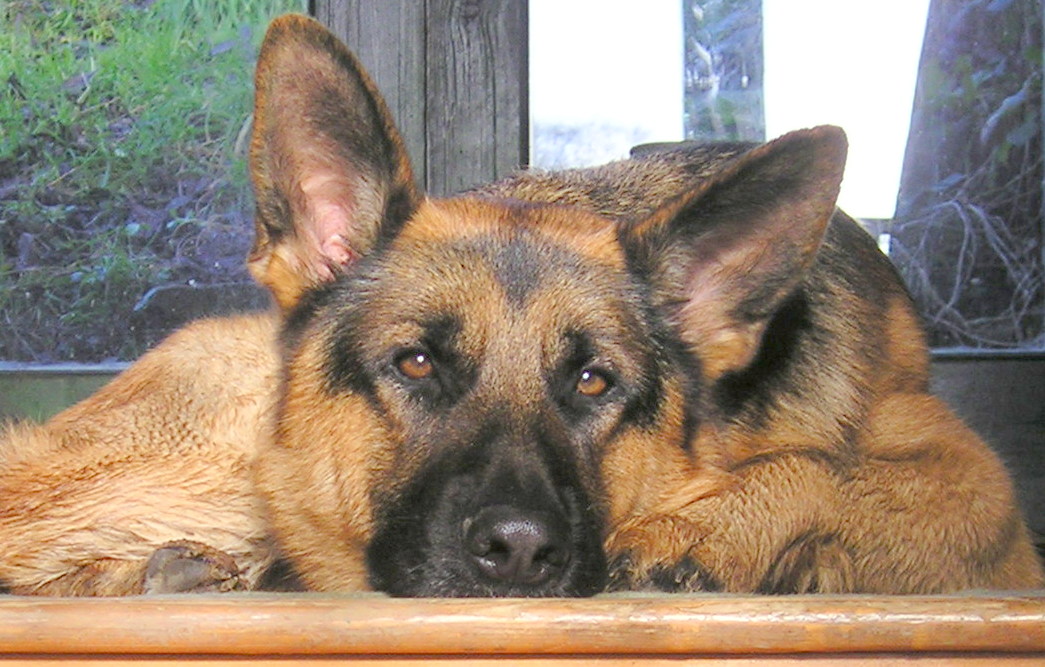
Those eyes!

The science.

This story has been carried by numerous magazines and journals and well it should.

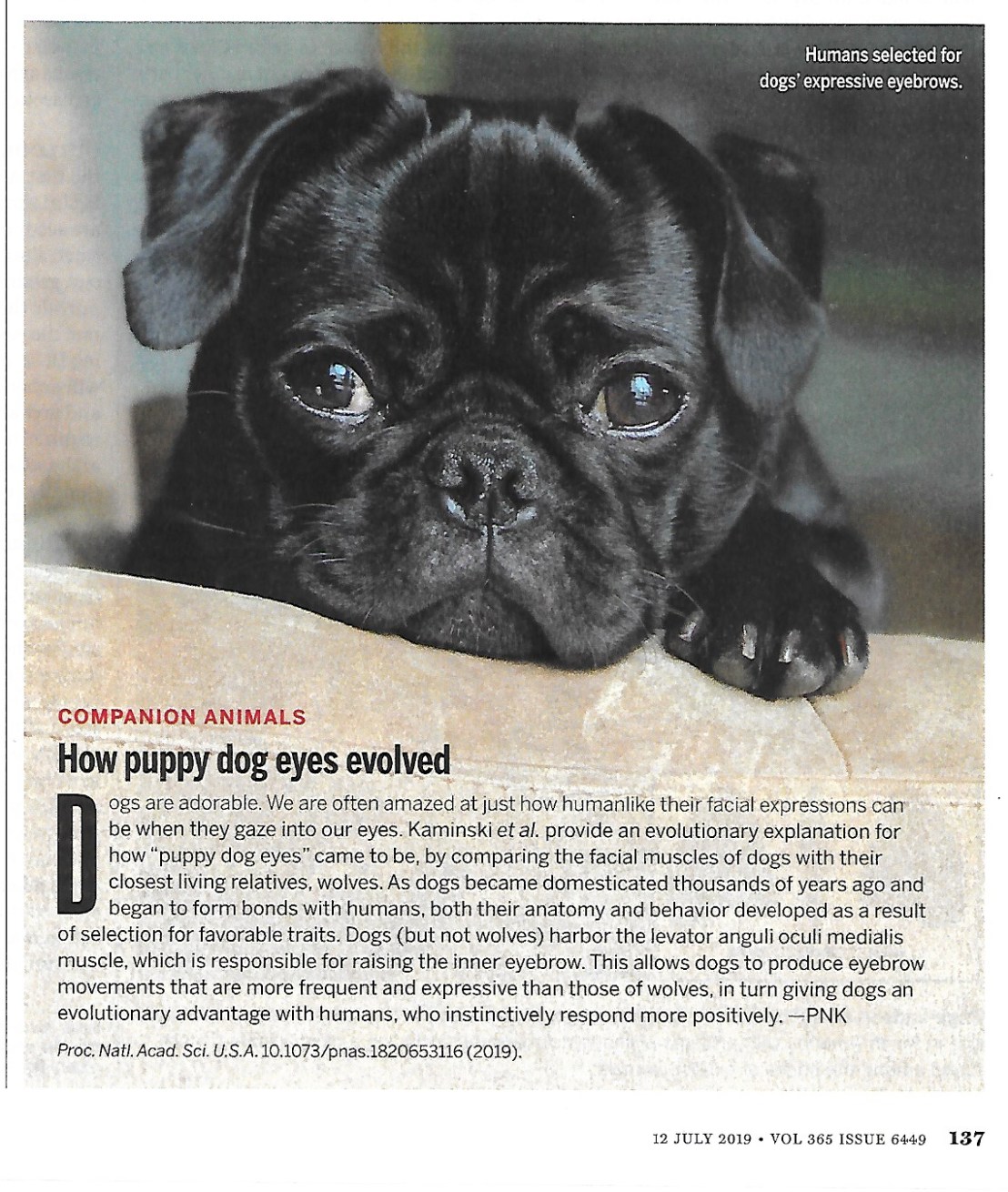
It reveals that the eyes that dogs have are an evolution as a result of their long association with humans.

But let me shut up and let The Atlantic carry on with the account.

ooOOoo

Dogs’ Eyes Have Changed Since Humans Befriended Them

Two specialized muscles give them a range of expression that wolves’ eyes lack.

HALEY WEISS

JUN 17, 2019

English Springer spaniel dog called Twiglet poses on June 30, 2016 in Sydney, Australia. JAMES D. MORGAN / GETTY

Dogs, more so than almost any other domesticated species, are desperate for human eye contact. When raised around people, they begin fighting for our attention when they’re as young as four weeks old. It’s hard for most people to resist a petulant flash of puppy-dog eyes—and according to a new study, that pull on the heartstrings might be exactly why dogs can give us those looks at all.

A paper published today in the Proceedings of the National Academy of Sciences found that dogs’ faces are structured for complex expression in a way that wolves’ aren’t, thanks to a special pair of muscles framing their eyes. These muscles are responsible for that “adopt me” look that dogs can pull by raising their inner eyebrows. It’s the first biological evidence scientists have found that domesticated dogs might have evolved a specialized ability used expressly to communicate better with humans.

For the study, a team at the University of Portsmouth’s Dog Cognition Centre looked at two muscles that work together to widen and open a dog’s eyes, causing them to appear bigger, droopier, and objectively cuter. The retractor anguli oculi lateralis muscle and the levator anguli oculi medialis muscle (mercifully known as RAOL and LAOM) form two short, straight lines, which connect the ring of muscle around a dog’s eye to either end of the brow above.

These researchers have long been interested in the ways dogs make eye contact with humans and, in particular, how they move their eyebrows. In 2017, Juliane Kaminski, the lead author of the new paper, found that dogs moved their eyebrows more often while a human paid attention to them, and less often when they were ignored or given food (which, sorry to say, is a more exciting stimulus for them than human love). That suggested the movement is to some degree voluntary. On our side of these longing glances, research has also shown that when dogs work these muscles, humans respond more positively. And both man and mutt benefit from a jolt of oxytocin when locked in on each other.

This isn’t simply a fortuitous love story, in which the eyes of two species just so happen to meet across a crowded planet. Like all the best partnerships, this one is more likely the result of years of evolution and growth. If dogs developed their skill for eyebrow manipulation because of their connection to humans, one way to tell would be to look for the same capacity in wolves. Because dogs split off from their wolf relatives—specifically, gray wolves—as many as 33,000 years ago, studying the two animals is a bit like cracking open a four-legged time capsule. Divergence between the two species marked the start of dogs’ domestication, a long evolutionary process influenced—and often directly driven by—humans. Today, researchers can identify and study differences between the species to gain an understanding of exactly how dogs have changed over time.

In this case, those eyebrow-raising muscles do appear to be an addition to dogs’ anatomy. In the four gray wolves the researchers looked at, neither muscle was present. (They did find bundles of fibers that could be the precursors to the RAOL and LAOM.) In five of the six breeds of dogs the researchers looked at, both muscles were fully formed and strong; in the Siberian husky, the wolflike, oldest breed of the group, the researchers were unable to locate a RAOL.

Sometimes, the origins of changes like these aren’t immediately apparent. Certain physical dog traits—including floppy ears and short snouts—likely originate from the same set of developmental cells that code for tameness, a preferable trait in household pets, for instance. In the case of this new research, though, the connection between the physical trait and the related behavior is a bit more direct. “Previous work—and much of it by these same authors—had shown that these muscles were responsible for enhancing positive responses in humans,” Brian Hare, the director of Duke University’s Canine Cognition Center and the editor of the paper, told The Atlantic via email, “but the current suggests the origin of these facial expressions is after dogs split from wolves.”

By evolutionary standards, the time since this split has been remarkably short for two new facial muscles to have developed. For a species to change that quickly, a pretty powerful force must be acting on it. And that’s where humans come in. We connect profoundly with animals capable of exaggerating the size and width of their eyes, which makes them look like our own human babies and “hijacks” our nurturing instincts.

Research has already demonstrated that humans prefer pets with more infantlike facial features, and two years ago, the authors of this latest study showed that dogs who made the facial movement enabled by the RAOL and LAOM muscles—an expression we read as distinctly humanlike—were more likely to be selected for adoption from a shelter than those who didn’t. We might not have bred dogs for this trait knowingly, but they gained so much from having it that it became a widespread facial feature. “These muscles evolved during domestication, but almost certainly due to an advantage they gave dogs during interactions with humans that we humans have been all but unaware of,” Hare explained.

Tim Smith

“It’s such a classically human system that we have, the ways we interact with our own infants,” says Angie Johnston, an assistant professor at Boston College who studies canine cognition and was not involved with the study. “A big theme that’s come out again and again in canine cognition and looking at the domestication of dogs is that it seems like they really just kind of dove right into our society in the role of being an infant or a small child in a lot of ways. They’re co-opting existing systems we have.”

The same humanlike facial gestures could also be a dog’s way of simply securing attention in the first place. Eyebrow raising is one of the most well-understood examples of what researchers call ostensive cues, a family of nonverbal signals (often facial movements and expressions) humans send one another to convey their intention to directly communicate. Dogs’ uncanny ability to mimic this human expression likely leads us to project certain human emotions onto them in ways we don’t with other animals, regardless of what they might actually be feeling.

The movement of the RAOL and LAOM muscles is particularly open to interpretation. “In different contexts we’ll call that something different,” says Alexandra Horowitz, a senior research fellow at the Barnard College Dog Cognition Lab. “In one case, I might say it’s sad, but in another case I’ll say, He’s really paying attention. It can look wry, like a questioning or unbelieving look.” According to Horowitz, dogs are the only animals aside from our primate cousins that are expressive in this eerily familiar way. Horses alone share the ability to twist their eyes into the same doleful shape, but their overall expressions don’t strike us as humanlike in the same way that dogs’ do. With dogs, Horowitz points out, we’re so driven to connect that we often search for “smiles” in the shapes of dogs’ mouths. The new research, she says, “makes me think it’s more about being able to move the face in a way that humans move the face. We don’t like unexpressive faces.”

Both Horowitz and Johnston suggested that similar studies looking at populations of dingoes (which Johnston researches) and Siberian foxes could provide yet another time capsule of sorts for understanding eyebrow movements and other evolutionary traits. Both species live near humans and are some of the closest living relatives to the earliest dogs. Why did they stay wild while dogs drifted into domestication? “Anything to do with getting to the bottom of why we as a species picked out this one animal can carry a huge amount of information,” Horowitz says. “In some ways, it’s discovering something about ourselves.”

ooOOoo

There is only one way to close this post!

Puppy Mills, Part Two

Part Two of this guest post from Monika.

ooOOoo

One of the more alarming facts surrounding the audit was a lack of enforcement against violators. Enforcement has been ineffective, particularly against the worst of the worst where little or no action against a majority of violators resulted. Of the enforcement decisions for 68 sampled violators, 71% (48) resulted in no action taken, 6%  (4) received a “Letter of Information,” 19% (13) received an Official Warning and 4% (3) resulted in Stipulation. In 2007 the AC discontinued using Letter of Information as an enforcement option. Only 20 of 68 dealers (nearly 30%) were cited for repeat violations.

States with Animal Cruelty Laws

Only 5 states have a subsequent-offense felony cruelty law (Arkansas, Idaho, North & South Dakota, Mississippi); and 5 States have a misdemeanor cruelty law (Alaska, Iowa, Nevada, Ohio, Pennsylvania, the remaining 40 states have a first-offense felony cruelty law.

We all know that puppy mills put profit over the health and well-being of the dogs but here are a few of the worst examples cited in the Audit.

Example No. 1. With 83 adult dogs, a Oklahoma breeder was sited with 20 violations during 5 inspections from April 2006 to December 2007. Lack of adequate vet care for 3 dogs hair-loss over their entire bodies and raw, irritated spots on their skins. Despite continuing violations, no enforcement actions were taken due to the agency’s lenient practices against repeat violators.

During another visit, AC cited breeder for another 11 violations (one involving a dog that had been bitten by another and left untreated for at least 7 days which resulted in the flesh around the wound rotting away to the bone! The inspector required the dog be taken to a local vet who immediately euthanized it. The case was referred to IES for investigation but only after another violation was documented. AC recommended a stipulation, yet as of early June 2009 (11 months following visit), violator had not been fined.

Example No. 2 was another OK facility with 219 adult dogs. Breeder was cited for 29 violations (including 9 repeats) during 3 inspections from February 2006 to January 2007. Yet the AC did not take enforcement action, but did request an investigation in November 2007 when another inspection revealed five dogs were found dead and other starving dogs resorted to cannibalism. When asked why dogs were not confiscated when the first dead and starving dogs were discovered, inspector cited its own regulations require violator be given opportunity to correct condition before confiscation can occur. Despite those conditions, the AC did not immediately confiscate the survivors, resulting in another 22 dogs dying before the breeder’s license was revoked and surviving dogs were rehomed within a year.

Example No. 3  involved a Ohio facility with 88 adult dogs. Breeder was cited for 23 violations including 7 repeats during 3 inspections from August 2005 to January 2008. An official warning was sent in July 2007 and in a subsequent visit in January 2008, found the same violations with another official warning sent rather than a more severe penalty. When asked by a more serious action was not taken, the regional manager indicated ‘breeder was making progress’ with a ‘reasonable opportunity’ to comply. National instructions state official warning can be sent if no other action was taken against a violator in the previous 3 years. Four months later in June 2008, breeder was cited for another 9 violations (4 repeats) yet the inspector recommended no enforcement action. Upon re-inspection 4 months later, breeder was cited for 4 more violations (including 3 repeats); AC took no enforcement action noting violator was “making credible progress.”

The USDA accompanied 19 of the 99 inspectors to observe dealer facility inspections. While many inspectors are highly committed, inspections are conducted timely and thoroughly and significant efforts are made to improve humane treatment of covered animals, it was noted that at least 6 inspectors did not correctly report direct or repeat violations. Some inspectors did not always document violations with sufficient evidence and direct violations were not reported. The Agency Guide defines a direct violation as one that “has a high potential to adversely affect the health and well-being of the animal” which include: “infestation with large numbers of ticks, fleas, or other parasites” and “excessive accumulations of fecal or other waste material to the point where odors, disease hazards, or pest control problems exist.” In such cases, a facility must be re-inspected within 45 days to ensure that the violator has taken timely actions to treat the suffering animals. By contrast, an indirect violation is one that “does not have a high potential to adversely affect the health and well-being of the animal.” Minor violations include: “inadequate records” and “surfaces not resistant to moisture.” In such cases, a re-inspection may not occur for up to a year.

Major deficiencies of the APHIS administration of the AWA cited in the Audit included:

  • AC’s enforcement process was ineffective against problematic dealers.
  • AC inspectors failed to cite or document violations properly to support enforcement actions.
  • AC inspectors failed to Cite or document violations properly to support enforcement actions.
  • APHIS’ new penalty worksheet calculated minimal penalties. Although APHIS previously agreed to revise its penalty worksheet to produce “significantly higher” penalties for violators of AWA, the agency continued to assess minimal penalties that did not deter violators. This occurred because the new worksheet allowed reductions up to 145 percent of the maximum penalty.
  • APHIS misused guidelines to lower penalties for AWA violators. In completing penalty worksheets, APHIS misused its guidelines in 32 of the 94 cases we reviewed to lower the penalties for AWA violators. Specifically, violations were inconsistently counted and applied “good faith” reductions without merit. A reduction in “no history of violations” when there was a prior history; and  arbitrarily changed the gravity of some violations and the business size. AC assessed lower penalties as an incentive to encourage violators to pay a stipulated amount rather than exercise their right to a hearing.
  • Some large breeders circumvented AWA by selling animals over the Internet. Large breeders that sell AWA-covered animals over the Internet are exempt from AC’s inspection and licensing requirements due to a loophole in AWA resulting in an increasing number of unlicensed breeders are not monitored for their animals’ overall health and humane treatment.

While the USDA does not advocate assessing maximum penalties, at a time when Congress tripled the authorized maximum penalty to “strengthen fines for violations,” actual penalties were down 20 percent less through the use of a new worksheet as compared to the one previously used.

I could go on, but to do so belies cold hard facts that trying to stem puppy mills is a bit like playing a ‘Whack-A-Mole.”

Bottom line, what the Audit tells us is: (1) red tape saddles agencies with convoluted regulations that are difficult to implement or monitor, due in part to (2) the sheer number of puppy mills and (3) a lack of adequate number of inspections conducted.

No doubt resources are limited but until such time as the economics of keeping puppy mills in business is reduced, they will continue to operate with impunity. The resulting advice is make sure your breeder is legit and don’t succumb to adorable puppy faces in pet shop windows.

I shudder to think how many of Elsa’s pups are out there because who easily resists puppies? It makes me wonder how many of them have genetic diseases due to poor breeding practices (in Elsa’s case epilepsy which was diagnosed just two weeks following her adoption), but other dogs seized at the same mill with her suffered from Sebaceous Adenitis (which is also most likely an autosomal recessive inherited disease), Addison’s Disease and one whose severe aggressive behavior (due to lack of socialization) was deemed so severe, he was considered unable to be rehabilitated in any way as to place him and heartbreakingly was euthanized. Bottom line, please adopt, don’t shop (or only use a reputable breeder). Only then can the sheer numbers of puppy mill facilities be reduced and heartbreaking stories like Elsa’s be stemmed.

Live, love bark! 🐾
Tails Around the Ranch

ooOOoo

We must spread the word far and wide that puppy mills have to be brought down by publicity and  lack of business.

Only when the last puppy mill goes out of business can we relax.

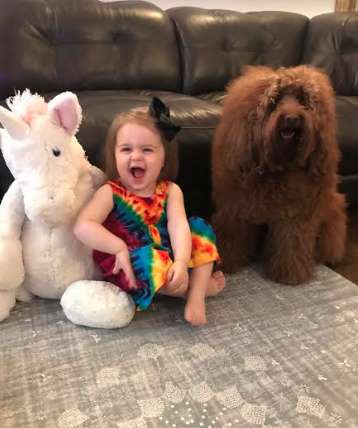
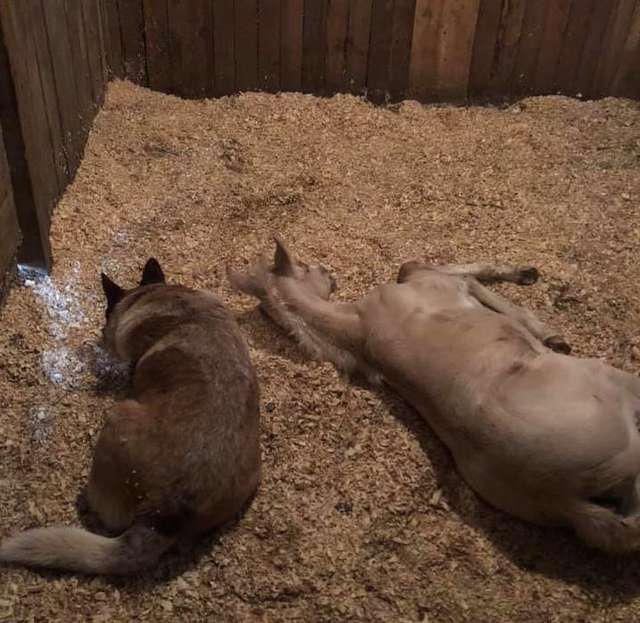
Finally, here’s a picture of a million miles from a puppy mill!

Melissa Lentz