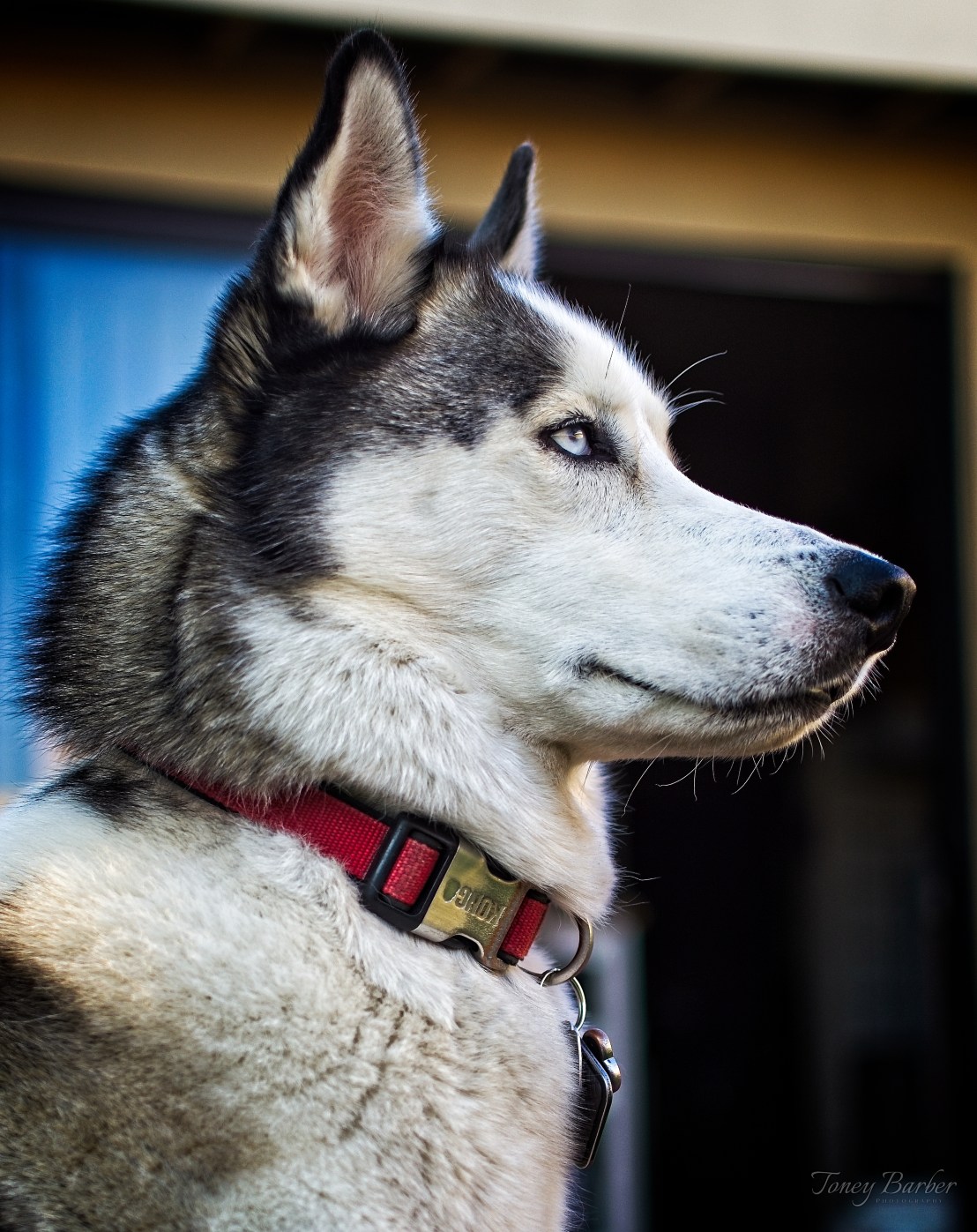
Just a quick hello before heading out for our morning walk – my dog walks me 5 miles a day! Thanks for having this great space for sharing and learning from others. I am new to the art and looking forward to achieving pro status in the years ahead. I enjoy landscape photography but am experimenting with other genres too.
I replied:
Tony, what a fabulous dog.
What’s his or her name?
And soon came the answer:
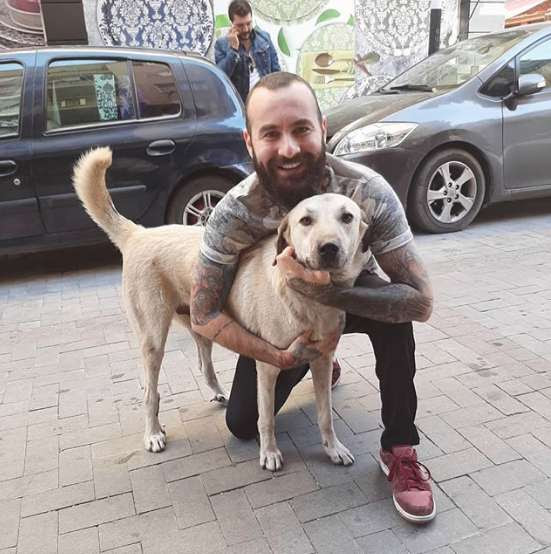
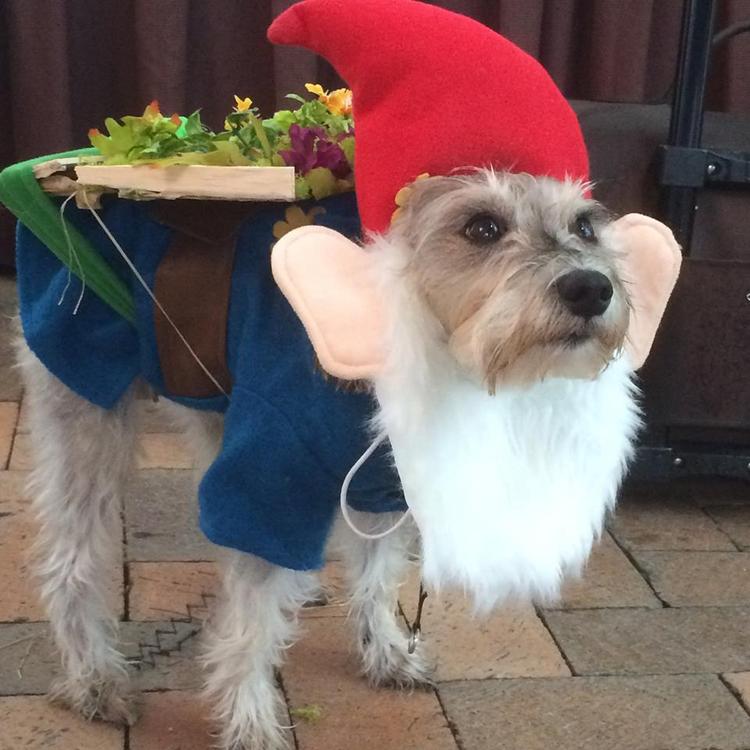
His name is Loki and he lives up to his namesake without question. He is a rescue and when I first saw him in his cage, his back was leaning against the gate, his back toward me, staring over his shoulder at me. His gaze was one of relief, and it felt like he was saying “I knew you’d come”. Two and a half years ago this awesome dog came home with me and, well, as they say, “the rest is history”.
Back to the photograph that came with the original entry:
Isn’t he gorgeous! And that’s an understatement!
I then asked Toney if I might republish the photograph.
Again, in time, Toney replied:
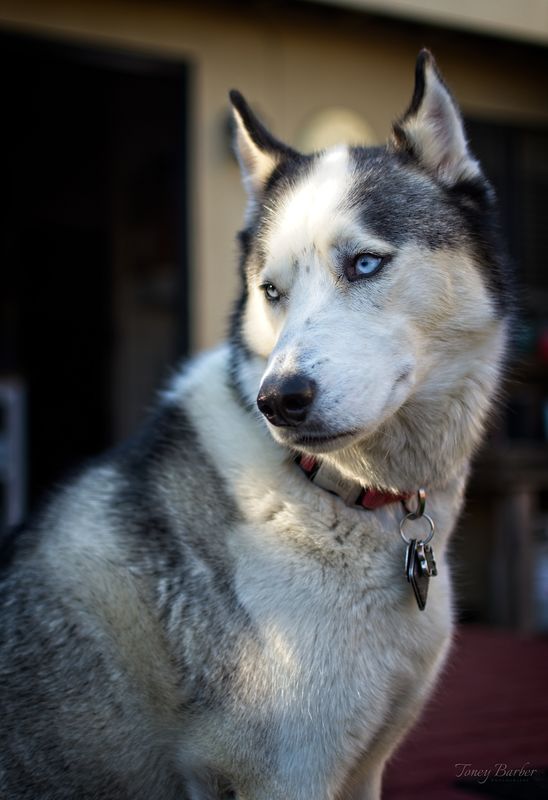
Of course. I’m attaching another shot from the same session. Shoot me a link to your blog. I’de love to check it out.
And this is that second photograph of beautiful, handsome Loki!
(Please note that permission has been specifically granted to me to republish the above two photographs and that there is no authority whatsoever for the photographs to be copied from this blogpost. I need to say that!)
But I will close by saying that I am extremely grateful to Toney for allowing me to republish these photographs of the very beautiful Loki!
The problem with coming up to the age of 75, and aware that I am close to the average life expectancy in the US, is that one increasingly worries about stuff. Such as it seems like the world is becoming more unsettled. But then it is put down to age!
But this article does imply that it is a more unsettled world and we should take notice. Republished with permission.
ooOOoo
5 tips for surviving in an increasingly uncertain world
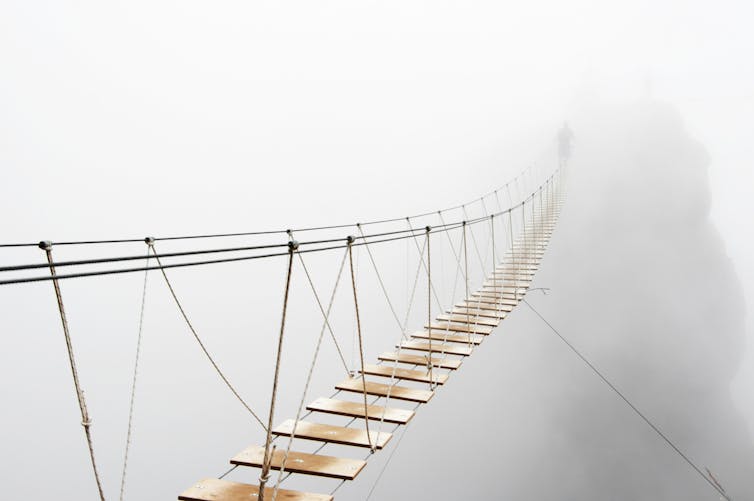
What does the future hold – and how will you handle what comes next? Svetlana Lukienko/Shutterstock.com
The U.S. presidential impeachment inquiry has added another layer of uncertainty to an already unstable situation that includes political polarization and the effects of climate change.
As a clinical psychologist in the Washington, D.C. area, I hear people report being stressed, anxious, worried, depressed and angry. Indeed, an American Psychological Association 2017 survey found that 63% of Americans were stressed by “the future of our nation,” and 57% by the “current political climate.”
Humans dislike uncertainty in most situations, but some deal with it better than others. Numerous studies link high intolerance of uncertainty to anxiety and anxiety disorders, obsessive-compulsive disorder, depression, PTSD and eating disorders.
While no one person can reduce the uncertainty of the current political situation, you can learn to decrease intolerance of uncertainty by implementing these scientifically sound strategies.
When unsure how to best proceed with a work assignment, you might either immediately seek help, over-research or procrastinate. As you prepare for the day, uncertainty about the weather or traffic is quickly short-circuited by checking a phone. Similarly, inquiries about family or friends’ whereabouts or emotions can be instantly gratified by texting or checking social media.
Tolerance for uncertainty is like a muscle that weakens if not used. So, work that muscle next time you face uncertainty.
Start gradually: Resist the urge to reflexively check your GPS the next time you are lost and aren’t pressured for time. Or go to a concert without Googling the band beforehand. Next, try to sit with the feelings of uncertainty for a while before you pepper your teenager with texts when he is running late. Over time, the discomfort will diminish.
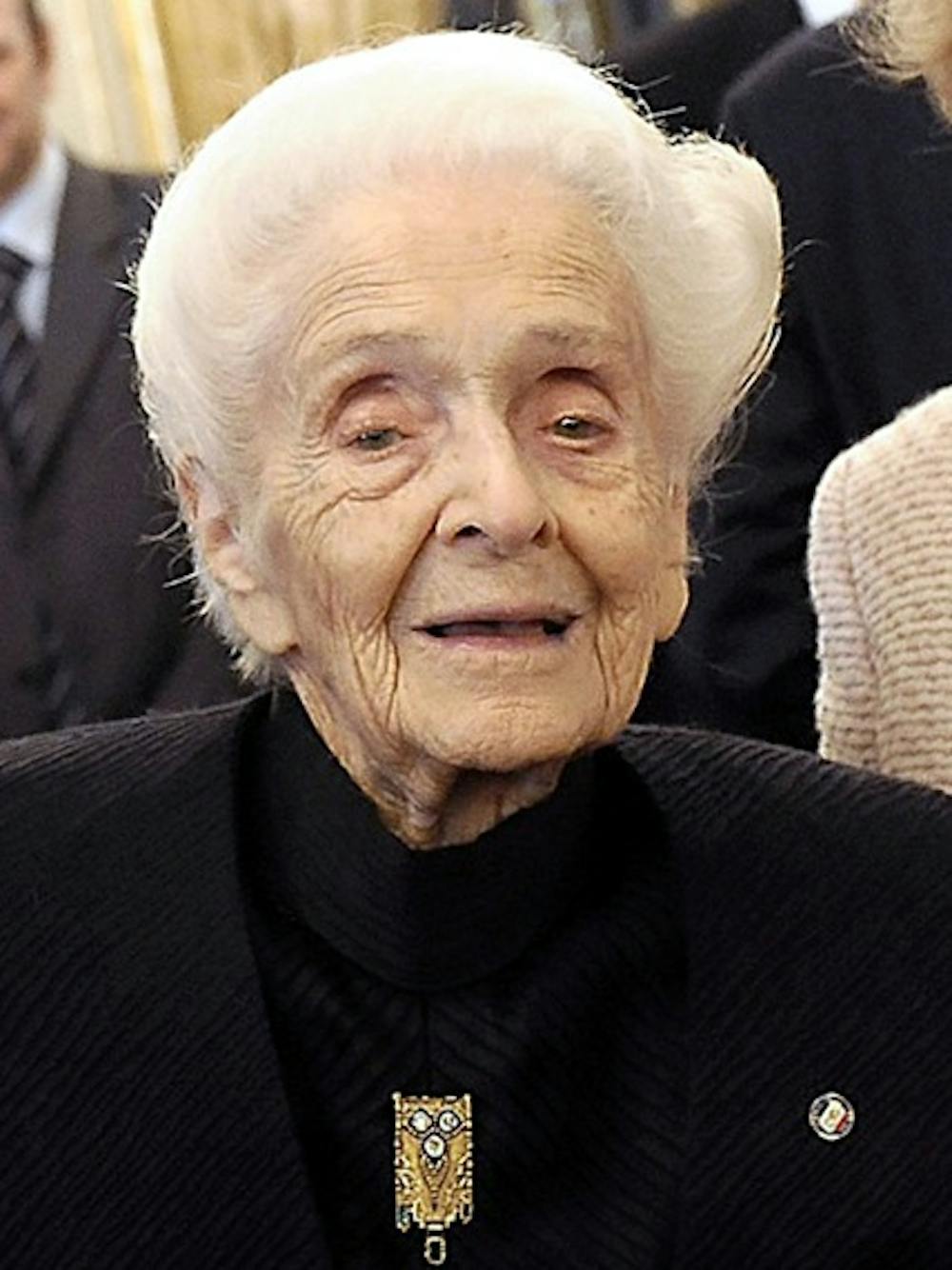
Rita Levi-Montalcini was a promising young Jewish scientist when fascists came to power in Italy and she had to go into hiding. As World War II was raging, she set up a secret lab in her parents’ bedroom, studying cell growth. She would later say that the meaning that she derived from her work helped her to deal with the evil outside and with the ultimate uncertainty of whether she would be discovered.
Focusing on what can transcend finite human existence – whether it is religion, spirituality or dedication to a cause – can decrease uncertainty-driven worry and depression.
3. Don’t underestimate your coping ability
You might hate uncertainty because you fear how you would fare if things went badly. And you might distrust your ability to cope with the negative events that life throws your way.
It turns out that humans are generally resilient, even in the face of very stressful or traumatic events. If a feared outcome materializes, chances are you will deal with it better than you could now imagine. Remember that the next time uncertainty rears its head.
4. Bolster resilience by increasing self-care
You have probably heard it many times by now: Sleep well, exercise and prioritize social connections if you want to have a long and happy life.
Possibly the best tool for coping with uncertainty is making sure that you have an active and meaningful social life. Loneliness fundamentally undermines a person’s sense of safety
and makes it very hard to deal with the unpredictable nature of life.
In spite of civilization’s great progress, the fantasy of humankind’s absolute control over its environment and fate is still just that – a fantasy. So, I say to embrace the reality of uncertainty and enjoy the ride.
This is a post that you will have to settle down to watch; it’s 1 hour and 20 minutes long. (But see note underneath.)
The link was provided by my good friend of many years, Dan Gomez, and I haven’t yet watched the video. That will be the night of the 22nd when Jeannie and I will watch it.
But I sense it’s a good video!
Enjoy!
21:15 We watched the video. It is very interesting but at the 40-minute mark it comes to the end and then restarts. So you only need to watch it for about 40 minutes.
This is about a dog that lives near a golf course.
This was a story that appeared on The Dodo website in September. Unfortunately I can’t seem to republish the video nor the entry in Instagram but it is still a cute story and worth sharing with you all.
ooOOoo
Friendly Dog Who Lives Near Golf Course Loves Begging For Pets
Loni Gaisford was out golfing with her family last Sunday at the Mick Riley Golf Course in Murray, Utah, when she saw something unusual by the fourth hole.
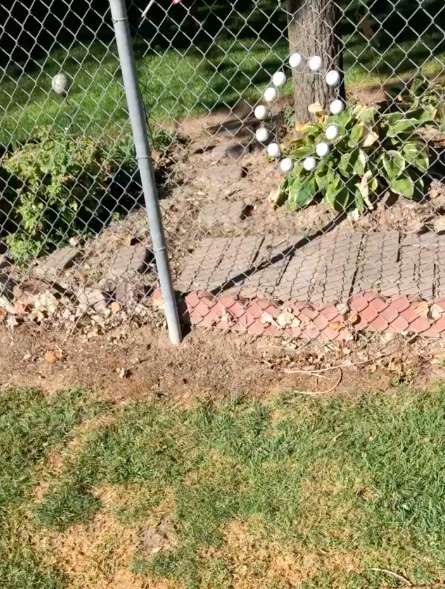
Golf balls were attached in a ring to the metal fence separating the green from a neighboring house. Gaisford decided to investigate, curious why someone would make such a strange display.
Loni Gaisford
“When we pulled up to the tee box … we noticed the golf ball ring in the fence with a sign next to it,” Gaisford told The Dodo. “I walked over to read the sign thinking it was a memorial for someone.”
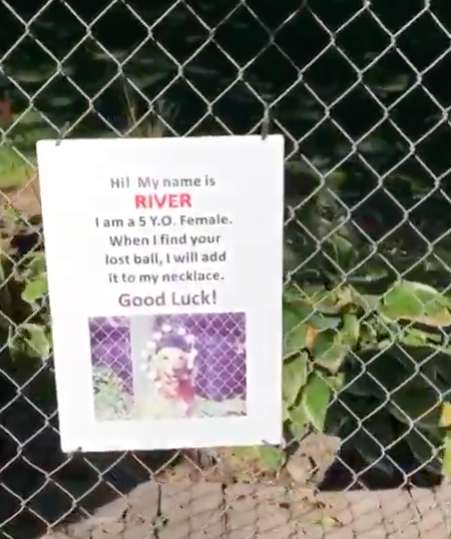
The sign read: “Hi! My name is River. I’m a 5 Y.O. female. When I find your lost ball, I will add it to my necklace. Good luck!”
Loni Gaisford
Gaisford finally understood the hilarious meaning behind the golf ball ring — and then she spotted the dog from the photo, playing nearby.
“We noticed River was in the backyard with a toy,” Gaisford said. “[She] walked over to the hole in the fence but the toy was too big to stick her head through the window so she just let us rub her back.”
After Gaisford teed off, she returned to say goodbye to River. The dog suddenly dropped the toy and stuck her head through the “necklace” to receive a few head scratches
Gaisford posted the video to her Instagram later that night, and as the comments came in, she realized that River was something of a local celebrity. “Every time I play that course she never does that … Jealous,” one commenter wrote.
Another commenter couldn’t resist making a few golf puns: “What’s the best type of fence for a dog who lives next to a golf course!? A fence with a hole in one!”
When the video made it to Reddit, more golf lovers shared stories of their own special experiences with the pup: ”One day, I was at McRiley and the owner of that dog was walking her (no leash) and she jumped right into our cart and sat down,” la_fern72 wrote on Reddit. “She was super friendly.”
Gaisford couldn’t be happier that her video has reached so many people — including those who will never set foot on a golf course. “Meeting River brightened my day,” Gaisford said, “and I knew the internet would love meeting River as much as I did.”
ooOOoo
Well I tried ever so hard to find a way of showing you the video, and unfortunately it is not on YouTube, so you are going to have to go across to the website to watch it. Sorry!
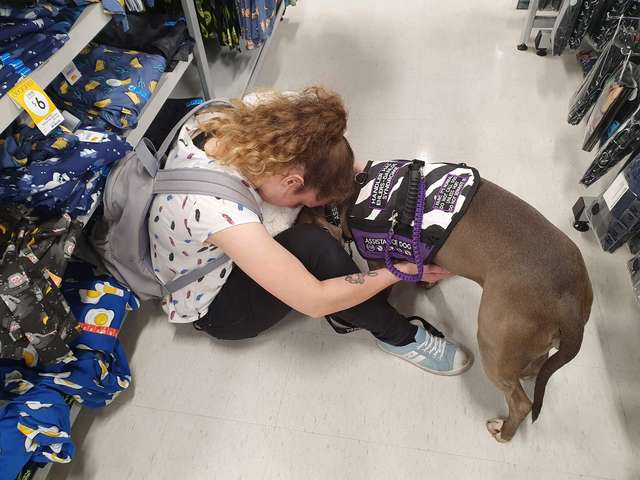
When Shauna Darcy first brought Ruby home, the plan was to have Ruby act as a service dog to help her with anxiety, depression and agoraphobia. Ruby was an incredible service dog and companion from the very beginning — and quickly showed Darcy just how far she would go to help her.
Shauna Darcy
“While she was training to be a service dog I noticed that she started picking up on changes in my heart rate and would act funny — for example, paw at me, try to get my attention, get on top of me, etc.,” Darcy told The Dodo.
Picking up on Ruby’s cues, Darcy went to the doctor and discovered she had health issues she hadn’t known about, including a rare heart condition called vascular Ehlers-Danlos syndrome. Ruby had known something was wrong even before Darcy did, and her main focus as a service dog quickly switched to Darcy’s cardiac issues.
Shauna Darcy
Every day, Ruby helps her mom with things like monitoring her heart rate and blood pressure, helping her during panic attacks and retrieving emergency medications. She also carries groceries, picks up dropped items and gets things her mom can’t reach, and is trained in deep pressure therapy.
“When I pass out she gets on top of me and applies all her pressure on me and licks my hands and face until I come around,” Darcy said.
Shauna Darcy
Ruby is there for her mom every single day — even when she doesn’t realize she needs her.
Last week, when Ruby started alerting her mom that something was wrong, she had no idea why. At that point, Darcy was feeling fine, but decided to trust Ruby and call an ambulance anyway, just in case.
“It turns out my heart was going into atrial fibrillation,” Darcy said. “By the time the paramedics came, I was in pain and barely conscious.”
Shauna Darcy
As the paramedics rushed Darcy to the hospital, she realized that Ruby had saved her life that day.
While Darcy was in the hospital and the doctors worked to get her stable again, Ruby refused to leave her mom’s side. Even while Darcy was unconscious, Ruby lay in her hospital bed, pressed up against her, hoping her mom could sense she was there and that her presence would make her feel safe.
Shauna Darcy
During their stay at the hospital, so many people stopped by to meet Ruby. She’s always very popular whenever she and her mom are at the hospital and loves saying hi to everyone — but also makes sure that she’s never too far away from her mom. She loves her so much, and her mom loves her just as much right back.
Shauna Darcy
Without Ruby, Darcy’s life would be very different. Ruby helps her mom stay healthy and safe every single day, and her mom is so grateful for everything she’s done for her.
“I wouldn’t be alive without her,” Darcy said.
ooOOoo
“I wouldn’t be alive without her,”
I’m emboldening that last statement.
This is a wonderful story.
For Darcy has articulated what millions of other dog lovers know in their hearts. That the relationship between a dog and a human is extra special!
I was pondering that I really should return to sharing stories about dogs. After all this is a blog that is called Learning from Dogs.
Then I recently saw this story from Turkey. It’s about a stray dog and it is in Turkey and it’s from The Dodo so is republished with permission.
That did it!
ooOOoo
Security Camera Catches Man Sharing Adorable Moment With Stray Dog
Photo Credit: Twitter/bendemistim
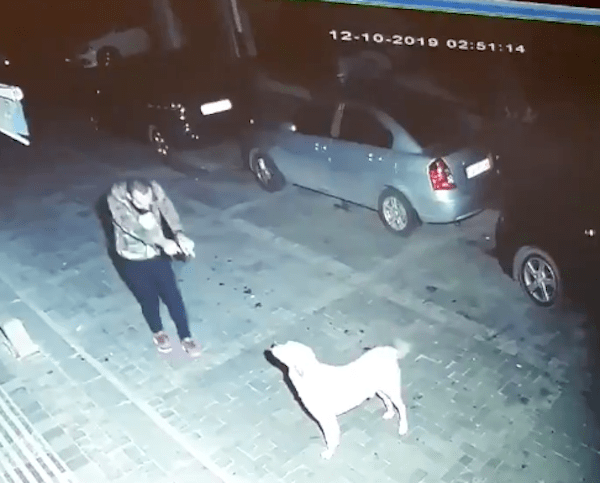
In the early hours of Saturday morning, Metin Can Şener was walking home along a street in Turkey when a figure emerged from the darkness in front of him.
It was a pup — his tail wagging eagerly at the sight of Şener approaching.
Şener had seen the dog before, but apparently only during the day; he often hangs out at Şener’s local coffee shop, where this random encounter at 2:51 a.m. took place.
“He comes to that street all the time,” Şener told The Dodo. “I always see him by the café.”
Photo Credit: Twitter/bendemistims
On this particular early morning, however, Şener and the dog became much better acquainted. As if compelled by the same joyful spirit upon seeing a familiar face on that empty street, the two of them reacted in the sweetest way: “We started dancing,” Şener said.
The adorable moment was captured on video.
Şener and the dog were passing strangers no longer.
“We became good friends,” Şener said. “I already have four dogs, so I couldn’t take him home.”
Fortunately, despite apparently living as a stray, the dog appears to be well-fed — perhaps having endeared himself to people in the area. Their random meeting this particular morning certainly had that effect on Şener.
Photo Credit: Twitter/bendemistims
Neither Şener nor the dog knew at the time that their heartwarming encounter had been caught on film. The owner of the café had evidently reviewed the security footage and shared it with Şener the next day.
And since posting it online, the happy scene has gone viral.
“I was surprised to see it had been caught on camera. I thought it was so much fun,” Şener said. “I always like to dance with animals like this. I love animals even more than people.”
ooOOoo
The video on YouTube follows. But before I go let me comment about that last photograph, the one just above, because this is what having a dog in your life is all about!
We have had a taste of this a week-and-a-half ago.
We were truly alone when we went to Utah.
But then again, one of the privileges of being on 13 acres, 13 very rural acres, here in Southern Oregon is that being alone is not that far away!
I don’t want to underplay the importance of this posting, republished from The Conversation website (with permission), because we live in so busy times.
Written by three professors, it’s a very wise and profound article.
ooOOoo
Spending time alone in nature is good for your mental and emotional health
Associate Professor of Outdoor Education, Montreat College
Today Americans live in a world that thrives on being busy, productive and overscheduled. Further, they have developed the technological means to be constantly connected to others and to vast options for information and entertainment through social media. For many, smartphones demand their attention day and night with constant notifications.
As a result, naturally occurring periods of solitude and silence that were once commonplace have been squeezed out of their lives. Music, reality TV shows, YouTube, video games, tweeting and texting are displacing quiet and solitary spaces. Silence and solitude are increasingly viewed as “dead” or “unproductive” time, and being alone makes many Americans uncomfortable and anxious.
We study and teach outdoor education and related fields at several colleges and organizations in North Carolina, through and with other scholars at 2nd Nature TREC, LLC, a training, research, education and consulting firm. We became interested in the broader implications of alone time after studying intentionally designed solitude experiences during wilderness programs, such as those run by Outward Bound. Our findings reveal that time alone in nature is beneficial for many participants in a variety of ways, and is something they wish they had more of in their daily life.
On an average day in 2015, individuals aged 15 and over spent more than half of their leisure time watching TV. Bureau of Labor Statistics, Americans Time Use Survey
Reflection and challenge
We have conducted research for almost two decades on Outward Bound and undergraduate wilderness programs at Montreat College in North Carolina and Wheaton College in Illinois. For each program, we studied participants’ experiences using multiple methods, including written surveys, focus group interviews, one-on-one interviews and field notes. In some cases, we asked subjects years later to look back and reflect on how the programs had affected them. Among other questions, our research looked at participant perceptions of the value of solo time outdoors.
Our studies showed that people who took part in these programs benefited both from the outdoor settings and from the experience of being alone. These findings build on previous research that has clearly demonstrated the value of spending time in nature.
Scholars in fields including wilderness therapy and environmental psychology have shown that time outdoors benefits our lives in many ways. It has a therapeutic effect, relieves stress and restores attention. Alone time in nature can have a calming effect on the mind because it occurs in beautiful, natural and inspirational settings.
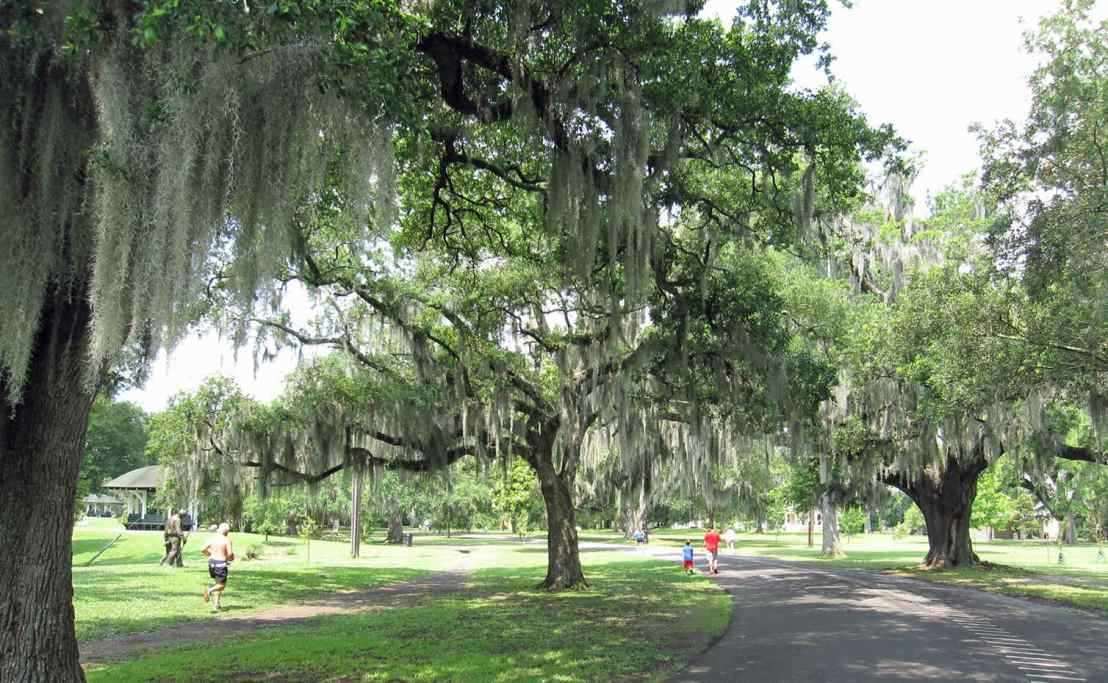
Spending time in city parks like Audubon Park in New Orleans provides some of the same benefits as time in wilderness areas, including reduced stress levels and increased energy levels. InSapphoWeTrust, CC BY-SA
Nature also provides challenges that spur individuals to creative problem-solving and increased self-confidence. For example, some find that being alone in the outdoors, particularly at night, is a challenging situation. Mental, physical and emotional challenges in moderation encourage personal growth that is manifested in an increased comfort with one’s self in the absence of others.
Being alone also can have great value. It can allow issues to surface that people spend energy holding at bay, and offer an opportunity to clarify thoughts, hopes, dreams and desires. It provides time and space for people to step back, evaluate their lives and learn from their experiences. Spending time this way prepares them to re-engage with their community relationships and full work schedules.
Putting it together: The outdoor solo
Participants in programmed wilderness expeditions often experience a component known as “Solo,” a time of intentional solitude lasting approximately 24-72 hours. Extensive research has been conducted on solitude in the outdoors because many wilderness education programs have embraced the educational value of solitude and silence.
Solo often emerges as one of the most significant parts of wilderness programs, for a variety of reasons. Alone time creates a contrasting experience to normal living that enriches people mentally, physically and emotionally. As they examine themselves in relation to nature, others, and in some cases, God, people become more attuned to the important matters in their lives and in the world of which they are part.
Solo, an integral part of Outward Bound wilderness trips, can last from a few hours to 72 hours. The experience is designed to give participants an opportunity to reflect on their own thoughts and critically analyze their actions and decisions.
Solitary reflection enhances recognition and appreciation of key personal relationships, encourages reorganization of life priorities, and increases appreciation for alone time, silence, and reflection. People learn lessons they want to transfer to their daily living, because they have had the opportunity to clarify, evaluate and redirect themselves by setting goals for the future.
For some participants, time alone outdoors provides opportunity to consider the spiritual and/or religious dimension of life. Reflective time, especially in nature, often enhances spiritual awareness and makes people feel closer to God. Further, it encourages their increased faith and trust in God. This often occurs through providing ample opportunities for prayer, meditation, fasting, Scripture-reading, journaling and reflection time.
Retreating to lead
As Thomas Carlyle has written, “In (solitary) silence, great things fashion themselves together.” Whether these escapes are called alone time, solitude or Solo, it seems clear that humans experience many benefits when they retreat from the “rat race” to a place apart and gather their thoughts in quietness.
In order to live and lead effectively, it is important to be intentional about taking the time for solitary reflection. Otherwise, gaps in schedules will always fill up, and even people with the best intentions may never fully realize the life-giving value of being alone.
ooOOoo
I would modify that advice from Thomas Carlyle and that is to include a dog.
For in my experience when one is in the mood for a bit of solitary reflection your dog seems to sense it as well.
As soon as we were on our way, first thing was to find a bed for the night in the area of the Capitol Reef NP. This was a popular time of the year and so many places were full. Our ‘fall-back’ position was to sleep in the truck but I really hoped it wouldn’t come to that.
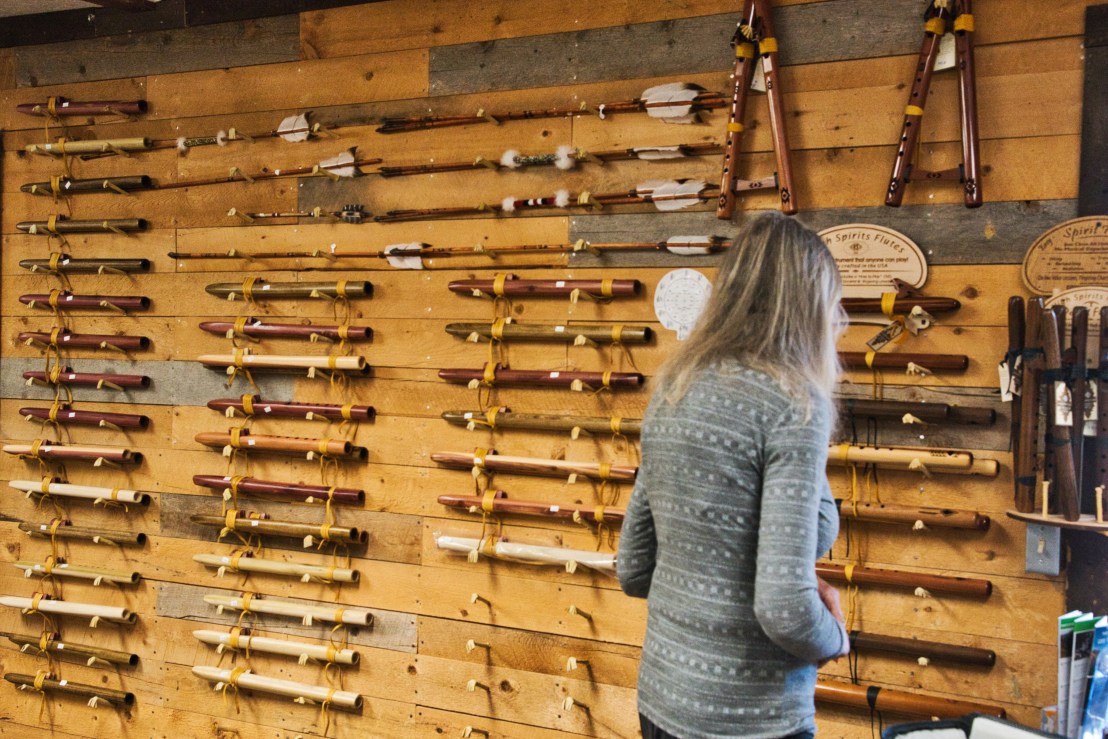
Eventually we found a room for just tonight in The Flute Shop and Motel in Torrey, just 10 miles from the National Park. Run by Vance and Elaine Morrill it was more than just a motel, it was a scene of much fascination. For Vance made flutes the American Indian way.
But more of that later.
Oh, and there’s a dog story as well. Again, I’m writing that up as a separate post.
On to the Capitol Reef Park.
Or rather a pause before we descended off the heights that surrounded this part of Utah down to the park.
The pause was to take a photograph of an intense rain storm that had a spot quite close where the remnants of a rainbow could just be made out. It’s hardly visible in the above picture.
It was simply stunning.
Beyond words.
I promised you a little more about Vance Morrill and his flutes. But apart from the photograph I will delay that for a while (until the draft of the post has been approved by Vance).
Here is Jean looking at them.
Finally, Vance promised to draw some routes in the morning to some of the lesser known spots in Capitol Reef.
I have been catching up on my emails and saw that two had come in; one from the 24th September and one from the 25th September.
Here they are.
ooOOoo
September 25th, 2019
Hill’s Pet Nutrition confirms the company has discontinued production and sale of its Hill’s Ideal Balance dry and wet dog foods. No reason for this action has been given.
oooo
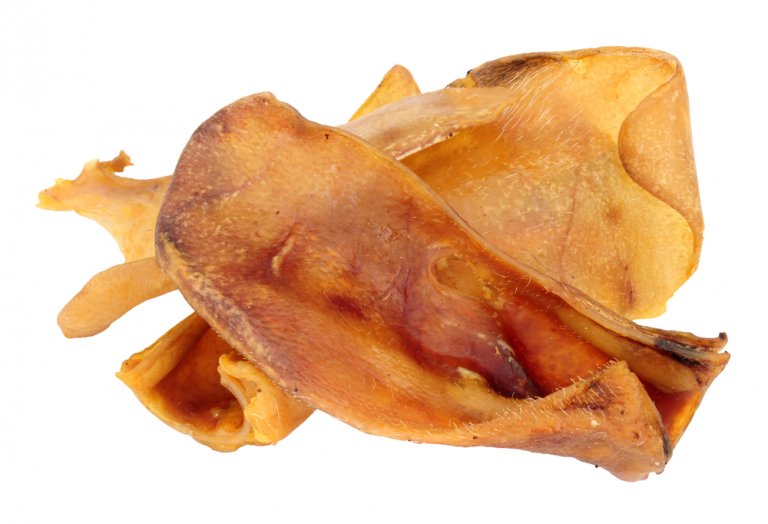
TDBBS Recalls USA-Made Pig Ear Pet Treats
September 24, 2019 — TDBBS of Richmond, VA, is recalling a limited distribution of 2 pig ear pet treat products sold via Amazon.com due to possible contaminationwith Salmonella bacteria.
What’s Recalled?
The affected products were shipped to customers between April 22, 2019, and August 13, 2019.
Customers are advised to dispose of any USA Thick Pig Ear 8 Pack and USA Thick Pig Ear 20 Pack from the following shipments.
All UPCs, Best By Dates and Lot Codes are located on the package back.
A sample image of one of the product labels is posted below. See above table for specific lot numbers and Best By dates.
Why the Recall?
This recall is the result of routine sampling conducted by the Michigan Department of Agriculture and Rural Development.
The sample package tested positive for Salmonella. No illnesses have been reported. And according to the company, “the amount of affected product is minimal”.
About Salmonella
Salmonella can affect animals eating the products, and there is risk to humans from handling contaminated pet products, especially if they have not thoroughly washed their hands after having contact with the products or surfaces exposed to these products.
Healthy people infected with Salmonella should monitor themselves for some or all the following symptoms: nausea, vomiting, diarrhea or bloody diarrhea, abdominal cramping and fever.
Rarely, Salmonella can result in more serious ailments, including arterial infections, endocarditis, arthritis, muscle pain, eye irritation, and urinary tract symptoms.
Consumers exhibiting these signs after having contact with this product or a pet that has eaten the product should contact their healthcare providers.
Pets with Salmonella infections may be lethargic and have diarrhea or bloody diarrhea, fever, and vomiting.
Some pets will have only decreased appetite, fever and abdominal pain.
Infected but otherwise healthy pets can be carriers and infect other animals or humans.
“TDBBS treats and chews are produced to robust safety and quality standards, using the most advanced food safety protocols. Our team is committed to doing its part to caring for the pets who enjoy our products. We regret the concern and inconvenience this recall creates for our customers.
“Our company has ceased the production and distribution of this product as we, in cooperation with the FDA, continue to investigate the situation further. TDBBS’s product safety team is conducting its own stringent review to identify what measures can be established to prevent this situation from recurring.
“Our safety teams have been rigorously testing our products and raw materials, working with independent testing firms and conducting an internal investigation within our supply chain to determine how this situation occurred. Nevertheless, we believe it is appropriate out of an abundance of caution to conduct this voluntary recall in cooperation with our customer.”
What to Do?
If your pet has consumed the recalled product and has these symptoms, please contact your veterinarian.
Consumers may contact customer service at 877-483-5853, Monday to Friday 9 to 5 PM or email TDBBS at customerservice@tdbbsllc.com.
U.S. citizens can report complaints about FDA-regulated pet food products by calling the consumer complaint coordinator in your area.
















 Learning from Dogs
