Just click on the word Dog!
Have a peaceful day, good people!
Dogs are animals of integrity. We have much to learn from them.
Category: Dogs
Just click on the word Dog!
Have a peaceful day, good people!
Beautiful images that will make appreciate the majesty of wild animals.
First a big thank you to Mary and Ed G. for passing me an email that contained fabulous photographs of the polar bear playing with a husky dog. From that email it was the matter of a few moments to find more on the Internet.
Let’s start with a YouTube video of a short talk by Stuart Brown called Animals at Play.
Then another YouTube video that is from FirstScience TV, which appears to be a defunct website.
Here’s Norbert Rosing’s website and here’s the website for the charity, Polar Bears International.
Enjoy your week-end.
These charming pictures were taken by renowned nature photographer Norbert Rosing, whose work has appeared inNational Geographic and other magazines, as well as several books including The World of the Polar Bear (Firefly Books, 1996), in which Rosing recounts the story of how these particular photographs came to be taken.
The location was a kennel outside Churchill, Manitoba owned by dog breeder Brian Ladoon, who kept some 40 Canadian Eskimo sled dogs there when Rosing visited in 1992. A large polar bear showed up one day and took an unexpected interest in one of Ladoon’s tethered dogs. The other dogs went crazy as the bear approached, Rosing says, but this one, named Hudson, “calmly stood his ground and began wagging his tail.” To Rosing and Ladoon’s surprise, the two “put aside their ancestral animus,” gently touching noses and apparently trying to make friends.
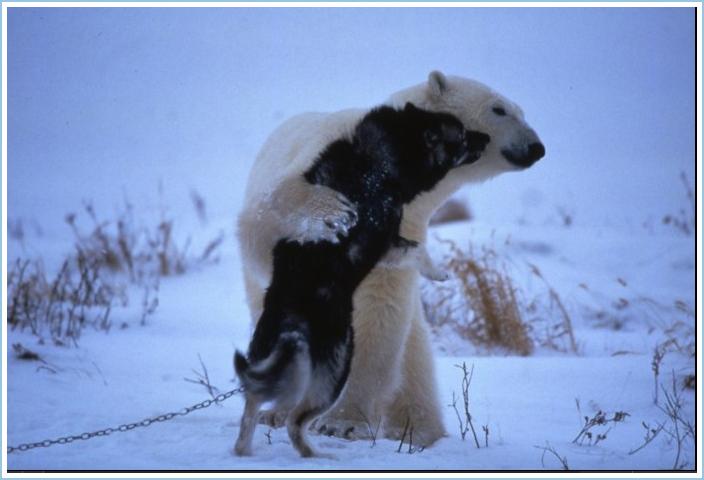
If you want to watch the whole sequence of photographs including background notes to each picture, click here.
As was mentioned yesterday, taking things really easy this week-end.
Here’s a poem for today.

FOUR FEET
I have done mostly what men do,
And pushed it out of my mind;
But I can’t forget, if I wanted to,
Four-Feet trotting behind.Day after day, the whole day through–
Wherever my road inclined–
Four-Feet said, ‘I am coming with you!’
And trotted along behind.Now I must go by some other round–
Which I shall never find–
Some where that does not carry the sound
Of Four-Feet trotting behind.— Rudyard Kipling —
Please forgive me but this week-end I am taking things easy. Jean and I want to savour the beautiful weather here in Payson and just enjoy the special life up here at 5,000 feet in Arizona.
Here’s something to reflect upon; another one tomorrow. Normal service returns on Monday 😉
“A Native American Elder once described his own inner struggles in this manner: Inside of me there are two dogs. One of the dogs is mean and evil. The other dog is good. The mean dog fights the good dog all the time. When asked which dog wins, he reflected for a moment and replied, ‘the one I feed the most.'” – — George Bernard Shaw
Keep feeding your good Dog!
Things do not change; we change. Henry David Thoreau
To a great extent, my thoughts in this article will make less sense if one hasn’t watched the Rupert Sheldrake video included in the Post on the 10th January, 2011. It’s 1 hour 20 minutes long but every minute will captivate you, trust me.
But if, for whatever reason, you don’t watch that video then the following YouTube videos are offered where Sheldrake speaks of the evidence supporting telepathy between cats and dogs and humans. The demonstration of a dog knowing when their owner is coming home is enthralling.
The science behind this link between, for example, the dog and its owner, is what Dr. Sheldrake calls an example of Morphic Fields.
I must confess that if someone had said to me, say 10 or even 5 years ago, that some form of energy field links the brains of dogs and their owners, or of cats and their owners, I would have been at least confused, at best very skeptical. Then comes the evidence, statistically valid, that being rung on the ‘phone by someone close to you can be anticipated frequently before the phone is picked up creates even more uncertainty.
Settle down and listen to these videos (they are sound recordings only but nonetheless fascinating),
The Extended Mind, Part One
The Extended Mind, Part Two
The Extended Mind, Part Three, final part.
“It is better to travel well than to arrive.” Buddhist quote.
Those of you who are regular readers of Learning from Dogs, and I am flattered at how many there are now, will recall that on March 8th I posted an announcement of the Rev. Terry Hershey coming to Payson to give a couple of seminars based around his best-selling book, Soul Gardening. Jean and I had the honour of having Terry stay with us for a couple of nights.
Anyway, on Monday morning, the day Terry was to give his talks, four of us took a couple of hours off in the morning to take a walk around the majestic granite boulders, a couple of miles on from our house. These great boulders give rise to the name of the road that we live on; Granite Dells Rd. Most afternoons, Jean and I take Pharaoh and his little pack of dogs for this three-mile walk so today was no different other than the walk being in the morning.
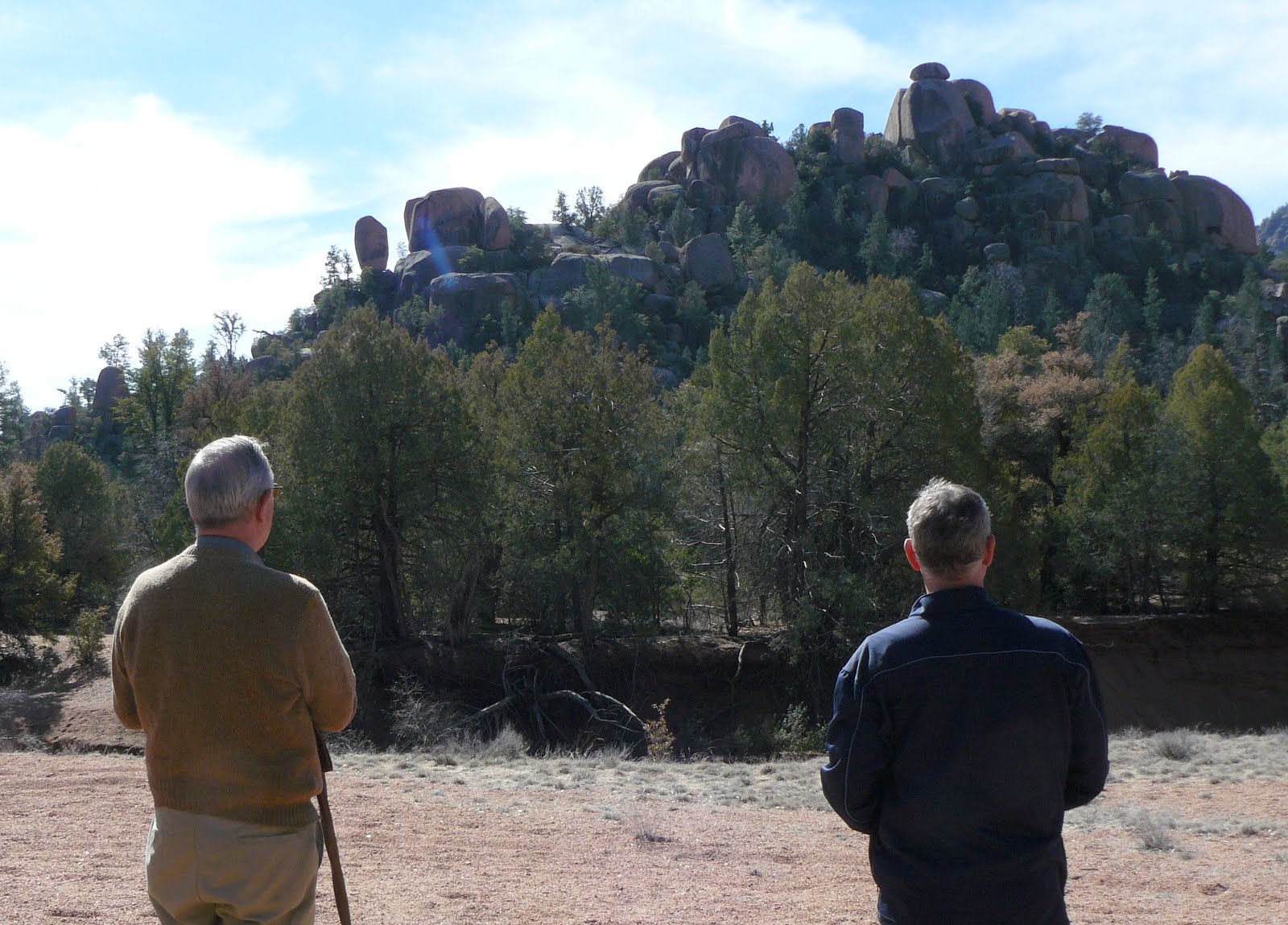
However, one of the benefits of having Terry with us on the walk was that he pointed out something really obvious that, so far, Jean and I had just taken for granted, i.e. missed!
It’s this. That dogs, when out for a walk off-leash, never travel the same journey, however many times they go on the same walk. All dog-owners will be aware of this.
Dogs are all over the place, scurrying here and there, following sweet scents, totally absorbed in the intimacy of their relationship with their immediate experience. There’s no ‘purpose’ to their behaviour, there’s no ‘clock’ running in their head as to what time it is and when they have to be somewhere else. It is the epitome of travelling well, as from the quote at the start of this article.
The metaphor of how dogs journey as a comparison to how so many of us humans travel with eyes closed, never stopping to smell the roses, was mentioned by Terry when we stopped for group photo towards the end of the walk. Terry also touched on the importance of living in the present, as dogs do so very, very well, many times during his later talks.
As soon as we make our happiness conditional on ‘getting’ somewhere in the future, our journey rather becomes pointless.
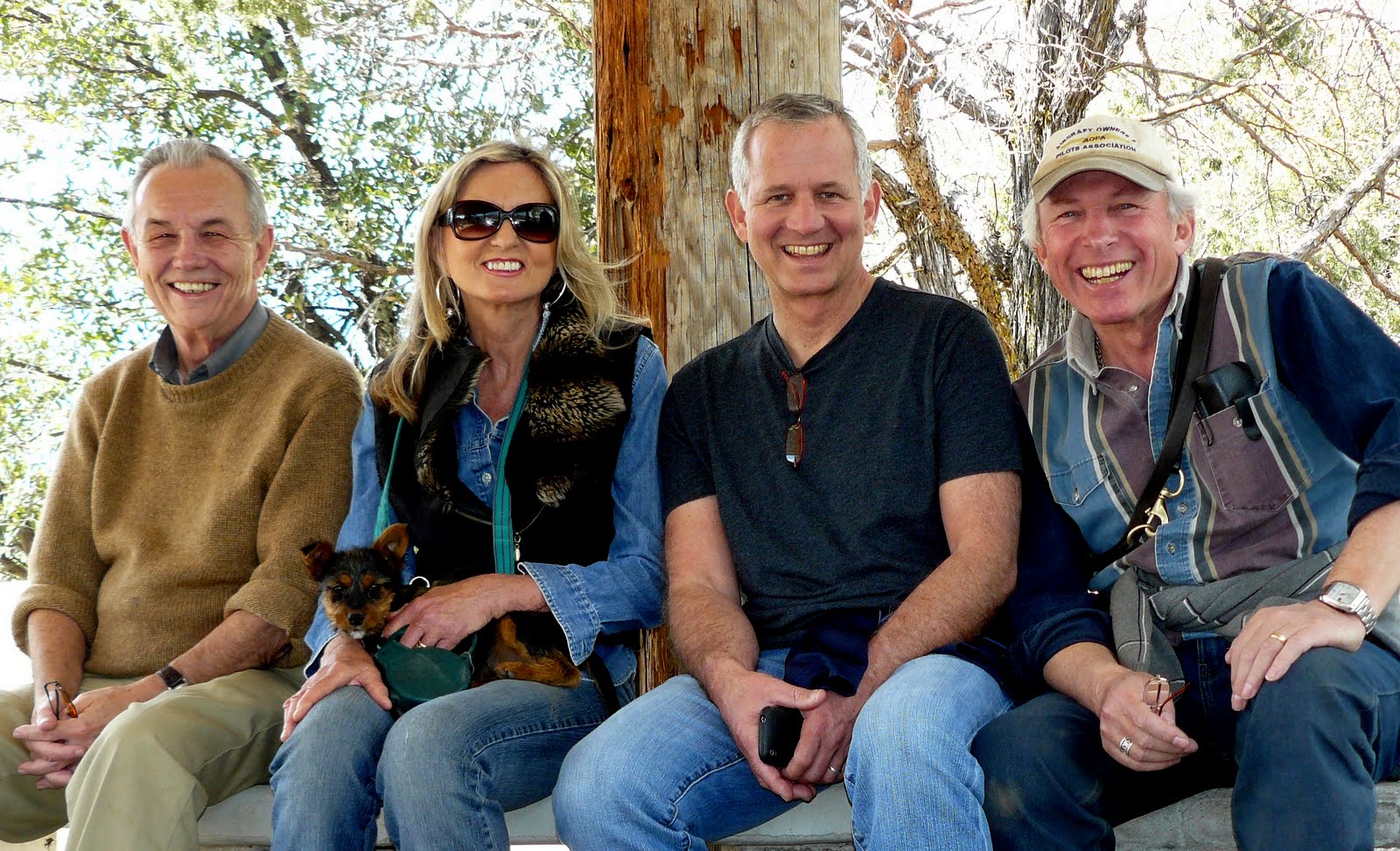
What a wonderful day this Monday was.
The body of a soldier who died along with his dog in Afghanistan last week has returned home to the UK.
Most days when I’m sitting in front of my PC I tend to drop in on the BBC New website. Today (last Thursday) was no exception. However I did not expect to be so moved by a story of the death of a British soldier in Afghanistan together with his sniffer dog. Here’s how the BBC reported it.
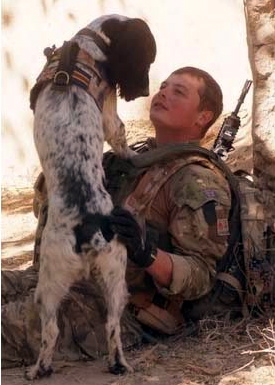
The body of a soldier who died along with his record breaking sniffer dog in Afghanistan last week has returned home to the UK.
Lance Corporal Liam Tasker, from Kirkcaldy in Fife, was shot dead while on patrol in Helmand province.
The ashes of the 26-year-old’s dog Theo were flown home on the same plane.
L/Cpl Tasker, who was called a “rising star” by Army chiefs, was shot by Taliban snipers and Theo died of a seizure shortly after his master.
The soldier and his 22-month-old dog had made 14 finds in five months while on the frontline.
The pair’s successes at uncovering so many explosions and weapons had resulted in their tour of Afghanistan being extended by a month.
Just three weeks ago, springer spaniel Theo was praised as a record breaking Army sniffer dog.
The body of L/Cpl Tasker and the ashes of Theo were flown to RAF Lyneham in Wiltshire at lunchtime, before a cortege passed through Wootton Bassett, the Wiltshire town which has built up a tradition of welcoming back fallen heroes.
But what the BBC report doesn’t make clear is that Theo, L/Cpl Tasker’s dog, did not die in the action that killed Liam but of a seizure just three hours later. Here’s how the British newspaper The Daily Telegraph reported the sad event.
Hundreds of mourners lined the main street through the Wiltshire town to honour Lance Corporal Liam Tasker, of the Royal Army Veterinary Corps, who was shot while on patrol in Helmand province, Afghanistan on March 1.
The crowds were swelled by family pets and a dozen police and Prison Service dogs at the repatriation ceremony for the 26-year-old soldier, whose dog Theo died from a seizure three hours after his master was killed.
L/Cpl Tasker’s family said they believe the dog died from a broken heart.
The body of L/Cpl Tasker, from Kirkcaldy, Fife, and the ashes of Theo had earlier been flown back to RAF Lyneham in the same aircraft.
L/Cpl Tasker was the subject of the repatriation ceremony but Theo’s ashes will be presented in private to his family.
So a silent prayer this Sunday for Liam and Theo and for all those who knew them both. Finally, if anyone wants to share a thought on the UK Forces in Afghanistan Blog then here’s the link to the Post that mentions the death of these two brave soldiers.
I’m talking about dogs, of course!
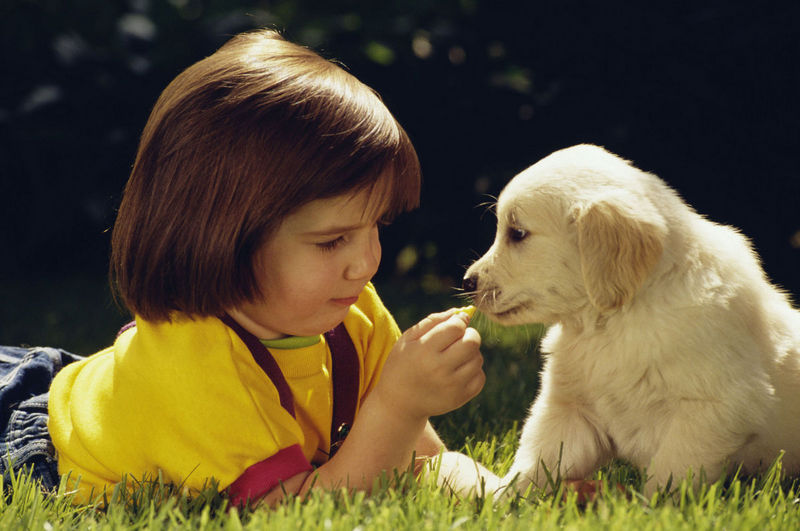
Don’t know where today has gone but my plans to write a long, thoughtful piece have evaporated much like the snow that fell over the week-end.
So I am taking the liberty of reproducing a piece on About.com showing the health benefits that come from being close to dogs and cats.
When thinking of ways to reduce stress in life, usually techniques like meditation, yoga and journaling come to mind. These are great techniques, to be sure. But getting a new best friend can also have many stress relieving and health benefits. While human friendsprovide great social support and come with some fabulous benefits, this article focuses on the benefits of furry friends: cats and dogs! Research shows that, unless you’re someone who really dislikes animals or is absolutely too busy to care for one properly, pets can provide excellent social support, stress relief and other health benefits—perhaps more than people! Here are more health benefits of pets:
Pets Can Improve Your Mood:
For those who love animals, it’s virtually impossible to stay in a bad mood when a pair of loving puppy eyes meets yours, or when a super-soft cat rubs up against your hand. Research supports the mood-enhancing benefits of pets. A recent study found that men with AIDS were less likely to suffer from depression if they owned a pet. (According to a press release, men with AIDS who did not own a pet were about three times more likely to report symptoms of depression than men who did not have AIDS. But men with AIDS who had pets were only about 50 percent more likely to report symptoms of depression, as compared to men in the study who did not have AIDS.)Pets Control Blood Pressure Better Than Drugs:
Yes, it’s true. While ACE inhibiting drugs can generally reduce blood pressure, they aren’t as effective on controlling spikes in blood pressure due to stress and tension. However, in a recent study, groups of hypertensive New York stockbrokers who got dogs or cats were found to have lower blood pressure and heart rates than those who didn’t get pets. When they heard of the results, most of those in the non-pet group went out and got pets!Pets Encourage You To Get Out And Exercise:
Whether we walk our dogs because they need it, or are more likely to enjoy a walk when we have companionship, dog owners do spend more time walking than non-pet owners, at least if we live in an urban setting. Because exercise is good for stress management and overall health, owning a dog can be credited with increasing these benefits.Pets Can Help With Social Support:
When we’re out walking, having a dog with us can make us more approachable and give people a reason to stop and talk, thereby increasing the number of people we meet, giving us an opportunity to increase our network of friends and acquaintances, which also has great stress management benefits.Pets Stave Off Loneliness and Provide Unconditional Love:
Pets can be there for you in ways that people can’t. They can offer love and companionship, and can also enjoy comfortable silences, keep secrets and are excellent snugglers. And they could be the best antidote to loneliness. In fact, research shows that nursing home residents reported less loneliness when visited by dogs than when they spent time with other people! All these benefits can reduce the amount of stress people experience in response to feelings of social isolation and lack of social support from people.Pets Can Reduce Stress—Sometimes More Than People:
While we all know the power of talking about your problems with a good friend who’s also agood listener, recent research shows that spending time with a pet may be even better!Recent research shows that, when conducting a task that’s stressful, people actually experienced less stress when their pets were with them than when a supportive friend or even their spouse was present! (This may be partially due to the fact that pets don’t judge us; they just love us.)It’s important to realize that owning a pet isn’t for everyone. Pets do come with additional work and responsibility, which can bring its own stress. However, for most people, the benefits of having a pet outweigh the drawbacks. Having a furry best friend can reduce stress in your life and bring you support when times get tough.
Sources:
Evenson RJ, Simon RW. Clarifying the Relationship Between Parenthood and Depression. Journal of Health and Social Behavior. December 2005.
Siegel JM, Angulo FJ, Detels R, Wesch J, Mullen A. AIDS diagnosis and depression in the Multicenter AIDS Cohort Study: the ameliorating impact of pet ownership. AIDS Care. April 1999.
Want more? Then go to this article on The Huffington Post published last December
The great gift that dogs grant us.
That is the ability to feel in our hearts and souls what unconditional love really is. Both the giving and receiving of that unconditional love.
As regular readers know there has been a number of articles on Learning from Dogs in recent times about the relationship that we humans have with this genetic off-shoot of wolves with an origin literally in the mists of time. So it is an honour to share with you all, a poem about a very special dog, written by the grandniece of a good friend of ours here in Payson.
That grandniece is Meg and her dog’s name is Siku. Here is Meg’s love poem.
SIKU
My best friend in the whole world is Siku.
Siku is a smelly, thick-fur, cute type of dog.
Siku has a wet nose, round eyes and pointy ears like shark teeth.
She is a happy-go-lucky free-minded smart dog and I am so lucky to have her in my life.
She also is a fun-funny, hip-happy type of dog.
Siku is a run-running, camp-camping, playing games type of dog.
Siku loves to train with me, go sledding with me, and she loves to catch the squirrels and torture our poor little stressed-out cats.
When I am with Siku I feel like the whole world loves me.
I feel smart, cool, funny and loved.

The pain of losing Poppy dissolves with the love of Sweeny.
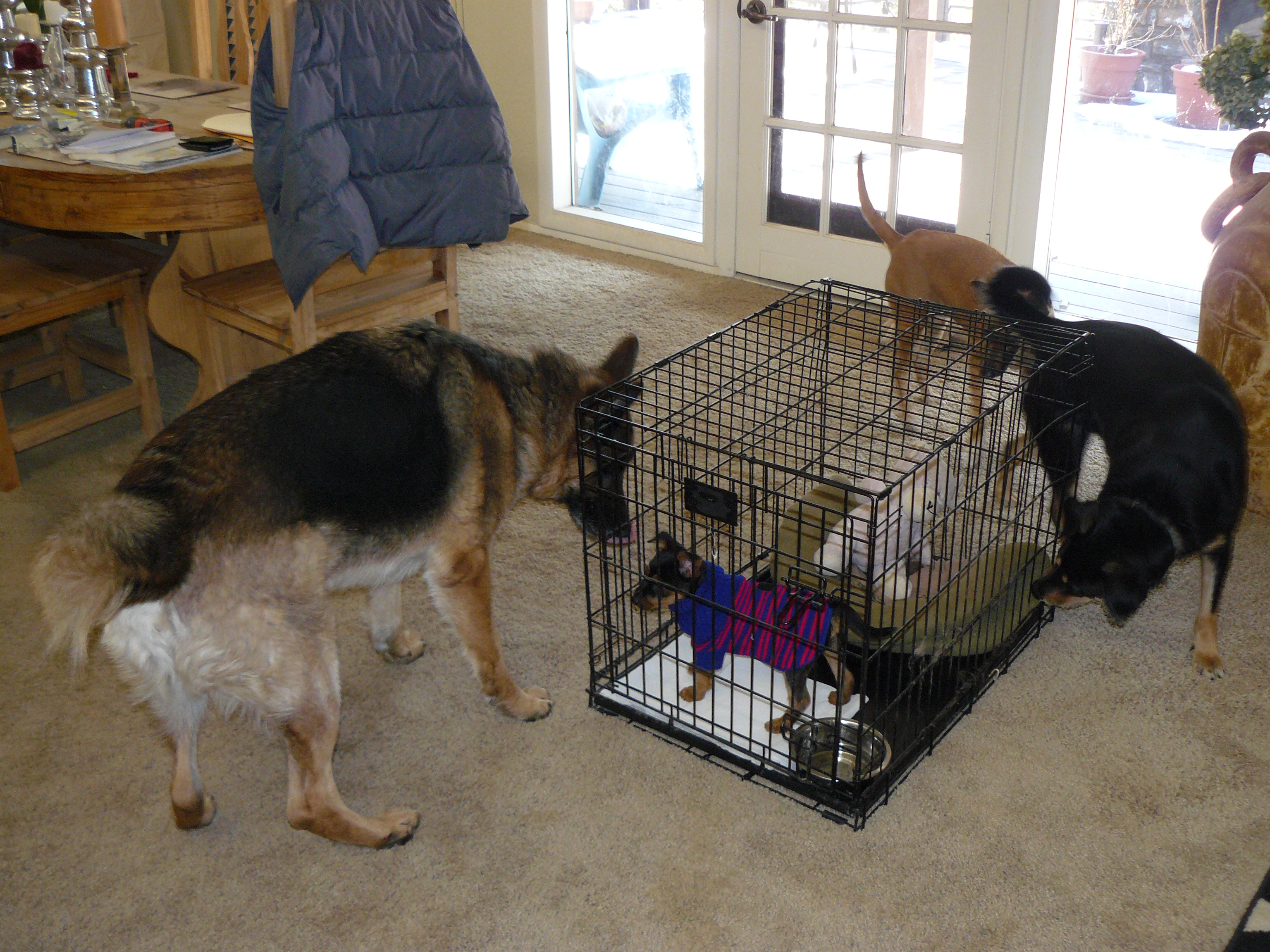
Regular followers of this funny old Blog will recall that last Friday we lost our sweet little Poppy out in the forest on one of our regular walks. Jeannie has been in such pain since then despite trying very hard to move on really because Poppy was the only dog that she could cuddle and call her baby. Even though Jean has no issues with not having been a mother in her life, it was clear that this tiny little dog had been answering Jean’s needs to nurture something that could be held close to her.
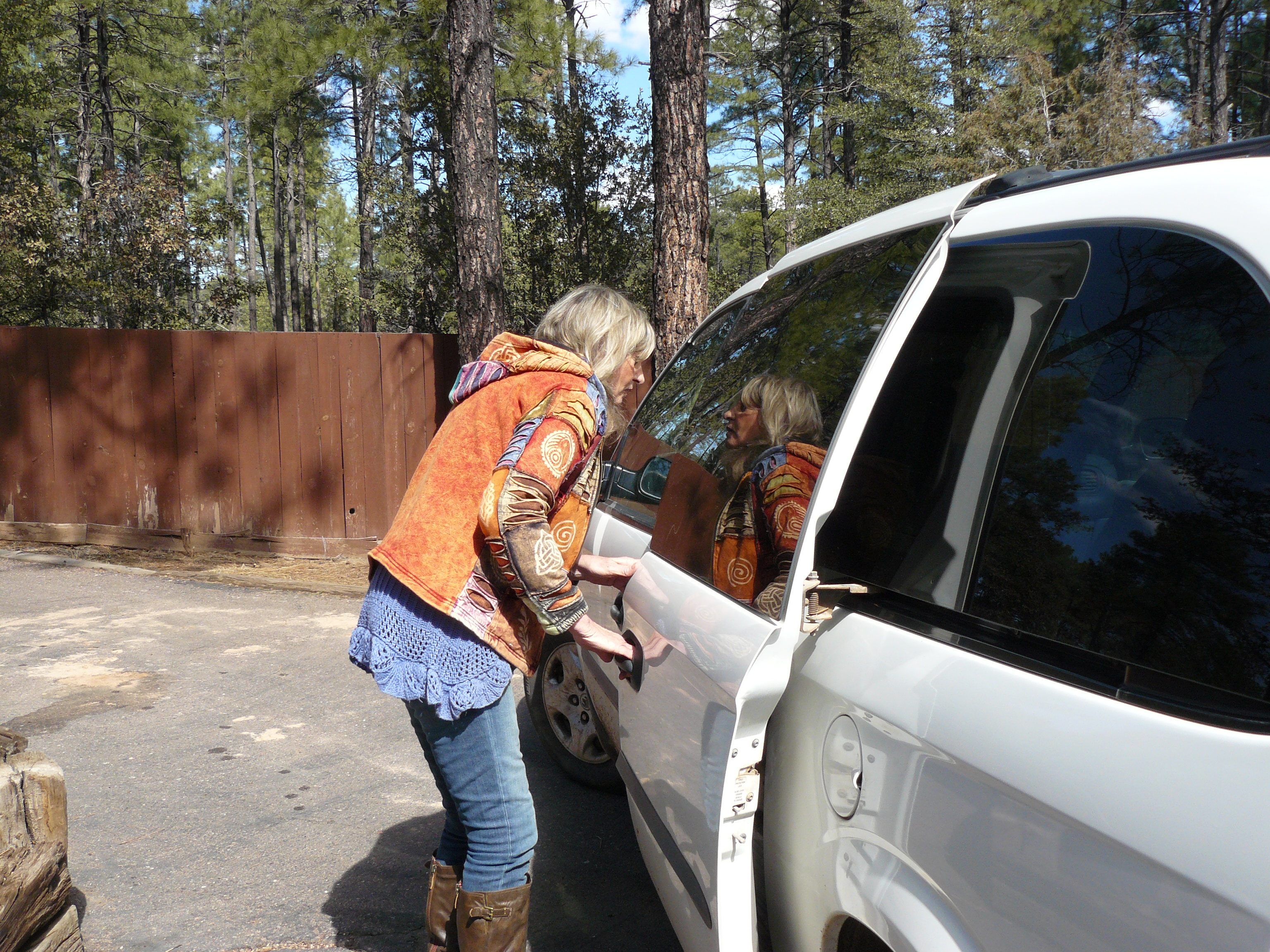
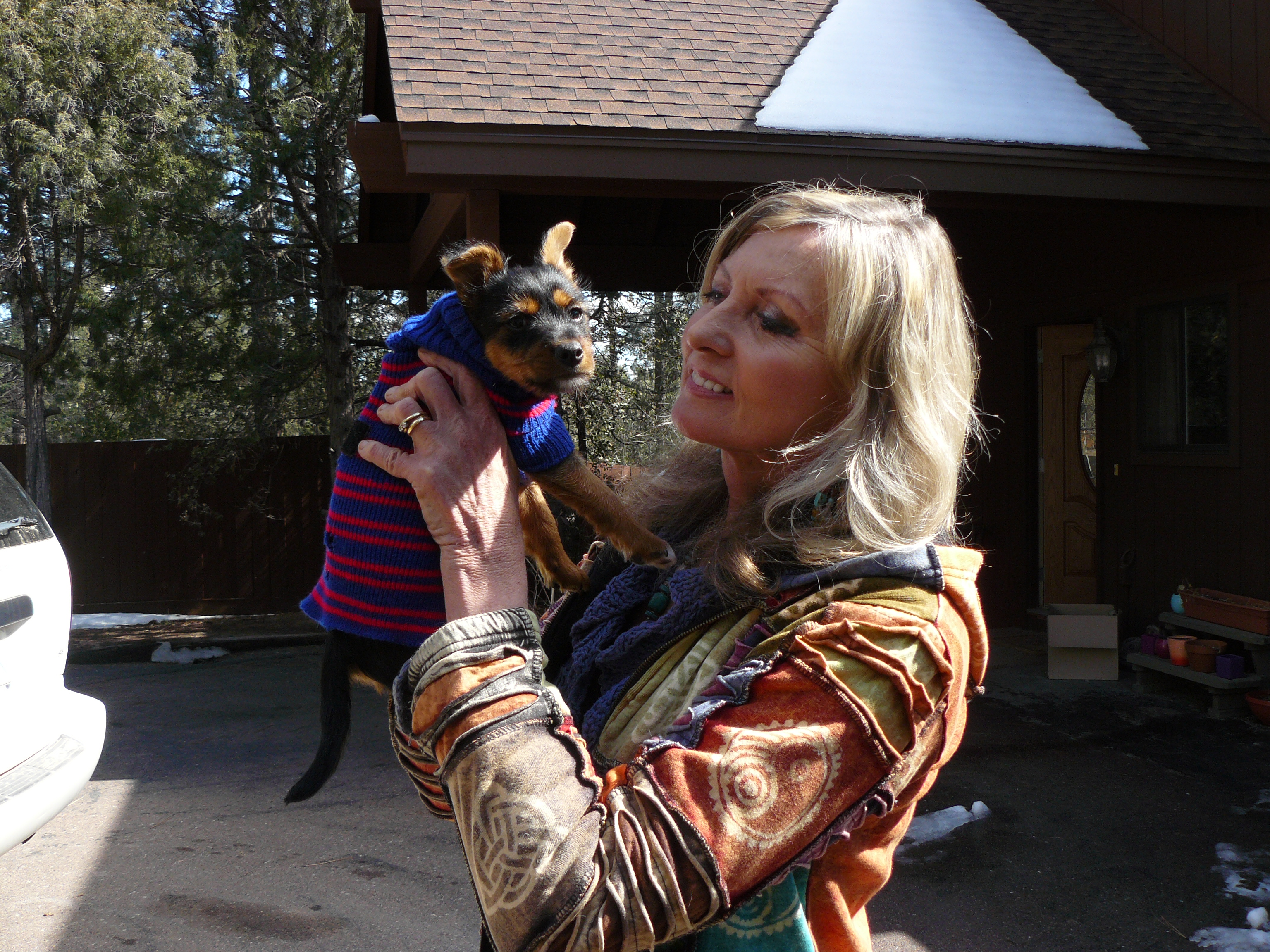
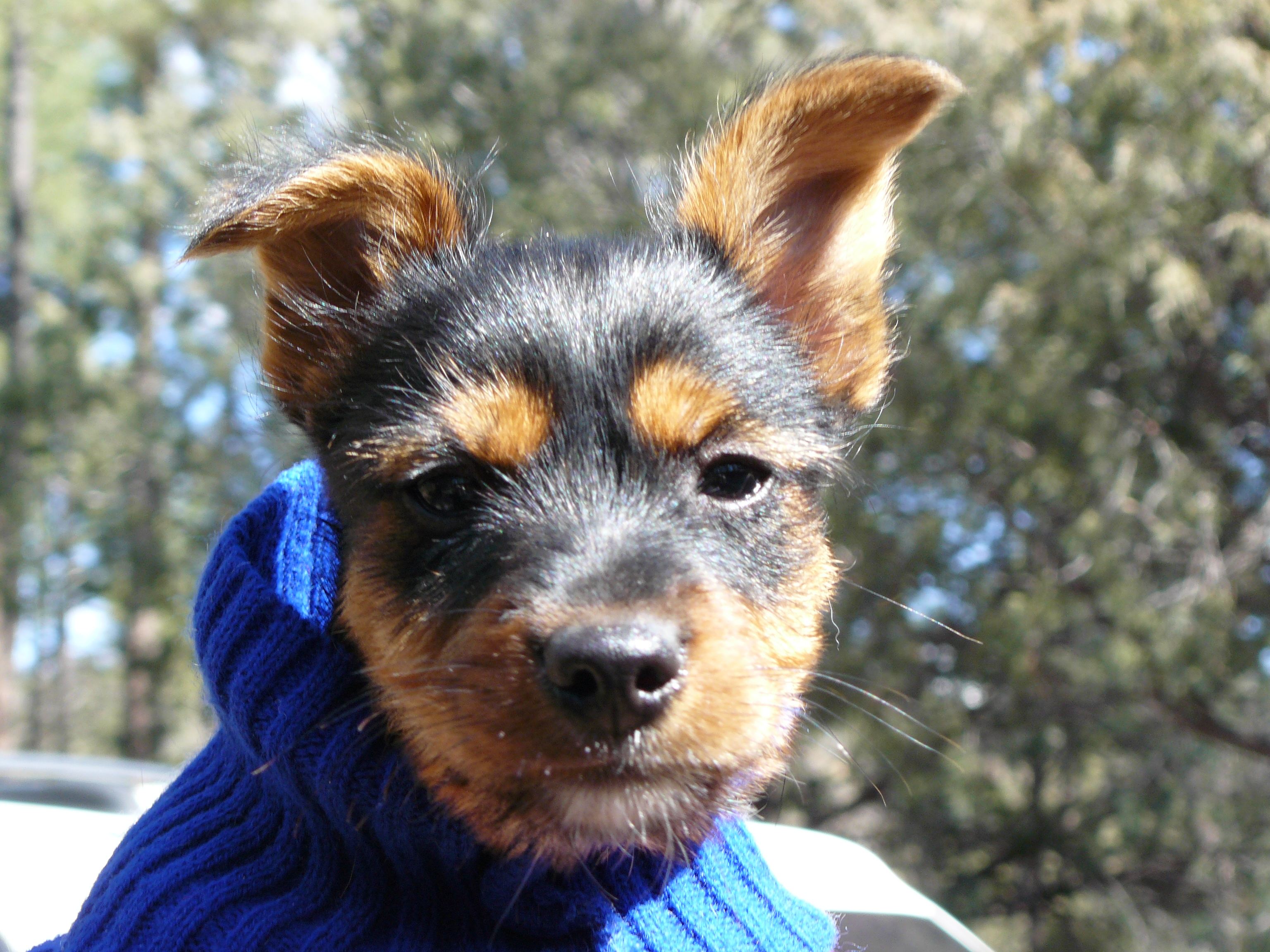
So today (Wednesday) we have been to our local humane society and found a little fella who can fill the void in our lives. He is a puppy with the name of Sweeny.
And due to being very short on time just now, I trust you will accept a few pictures for today’s Post.
 Learning from Dogs