Category: Dogs

Tess, be in peace

The sad loss of our dog, Tess.

Over a couple of months ago, Tess was diagnosed with bone cancer, in the shoulder joint of her right front leg.  The vet thought that she might have only a very few weeks to live, this particular form of cancer being aggressive.

As it happened, Tess kept going for much, much longer.  But this morning (Wednesday at the time of writing) Jean made the agonising decision to end the pain for Tess.  Despite a daily dose of strong pain-killer tablets, this morning Tess was breathing more laboriously and showing clear signs of tiring.  It was time.

For me it was the first time that I had been with a loved animal that had to be euthanised and it was hard.

A few pictures to keep her memory alive.

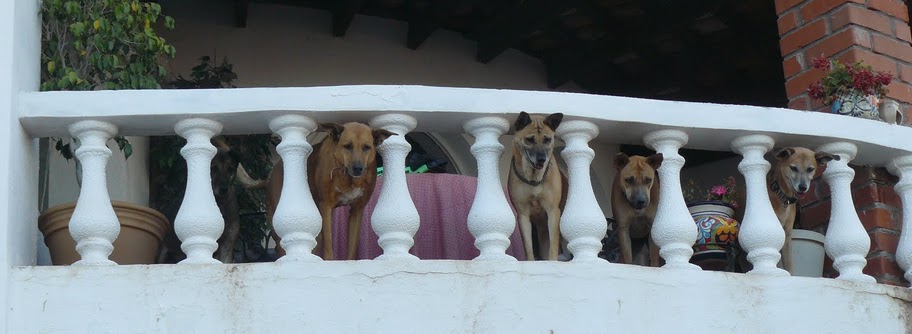
Tess, far left (next to the plant pot), and friends
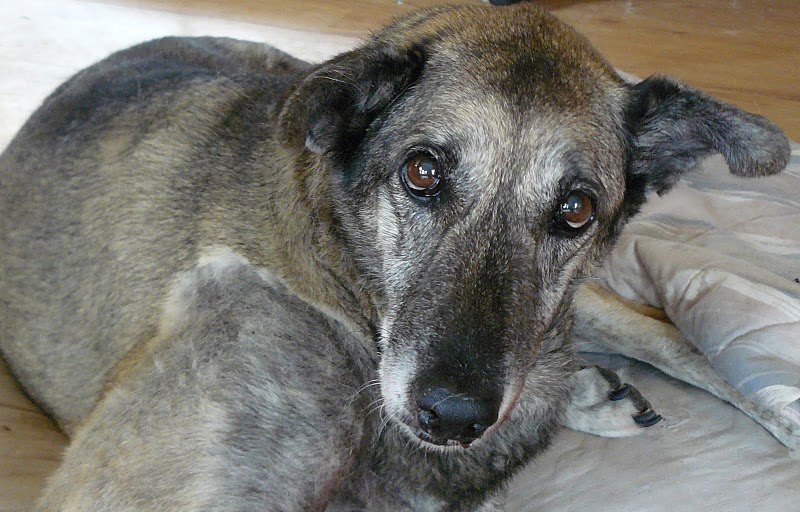
Jean & Tess, a few moments before leaving.
Dear Tess, you are out of pain and at peace.

Let me close with the same poem that was published when we lost our little Poppy,

“There is one best place to bury a dog.
“If you bury him in this spot, he will
come to you when you call – come to you
over the grim, dim frontier of death,
and down the well-remembered path,
and to your side again.

“And though you call a dozen living
dogs to heel, they shall not growl at
him, nor resent his coming,
for he belongs there.

“People may scoff at you, who see
no lightest blade of grass bent by his
footfall, who hear no whimper, people
who may never really have had a dog.
Smile at them, for you shall know
something that is hidden from them,
and which is well worth the knowing.

“The one best place to bury a good
dog is in the heart of his master.”

Ben Hur Lampman —
from the Portland Oregonian Sept. 11, 1925

Why we have cats and dogs!

Author Sue Miller perfectly articulates our relationship with dogs and cats.

As a rest to the number of non-fiction books that I have been reading over the past few months, Jean recommended a novel she recently finished, While I Was Gone, by Sue Miller.  It’s featured on Oprah’s Book Club, from which I quote,

About the Book

A decade ago she put a face on every mother’s worst nightmare with her phenomenal best-seller The Good Mother. Now, Sue Miller delivers a spellbinding novel of love and betrayal that explores what it means to be a good wife.

In the summer of 1968, Jo Becker ran out on the marriage and the life her parents wanted for her, and escaped–for one beautiful, idyllic year–into a life that was bohemian and romantic, living under an assumed name in a rambling group house in Cambridge. It was a time of limitless possibility, but it ended in a single instant when Jo returned home one night to find her best friend lying dead in a pool of blood on the living room floor.

Now Jo has everything she’s ever wanted: a veterinary practice she loves, a devoted husband, three grown daughters, a beautiful Massachusetts farmhouse. And if occasionally she feels a stranger to herself and wonders what happened to the freedom she once felt, or how she came to be the wife, mother, and doctor her neighbors know and trust–if at times she feels as if her whole life is vanishing behind her as she’s living it–she need only look at her daughters or her husband, Daniel, to recall the satisfactions of family and community and marriage.

But when an old housemate settles in her small town, the fabric of Jo’s life begins to unravel: seduced again by the enticing possibility of another self and another life, she begins a dangerous flirtation that returns her to the darkest moment of her past and imperils all she loves.

While I Was Gone is an exquisitely suspenseful novel about how quickly and casually a marriage can be destroyed, how a good wife can find herself placing all she holds dear at risk. In expert strokes, Sue Miller captures the precariousness of even the strongest ties, the ease with which we abandon each other, and our need to be forgiven. An extraordinary book, her best, from a beloved American writer.

Have to say that even though there’s an obvious gender difference between me, the heroine and the author, I found the book tough reading , as in emotional, from time to time.  Especially, the euthanasia of Arthur the dog towards the end of Chapter 7 – Jo is a vet.  A few paragraphs I just couldn’t read .  But then on page 137 in Chapter 8, comes this,

Pure bliss.

I stood in the center of the yard for a moment and tilted my head back to let the soft snow touch my face.  The dogs pranced and rolled for pure joy in the pale, gray-brown light.  They chased each other wildly.  I made snowballs and threw them; the dogs leapt and bit at where they’d disappeared.  As they played, their muzzles whitened, their paws pilled up.

I left them reluctantly and came back in.  Watson trailed me around as I did my chores, watching me soberly.  I shut him out of the cat room, where we had only two boarders.  I let one of them out to roam and use the litter pan while I checked its cage.  I put more food down.  Then I went back out and worked my way through the dogs’ cages.  Two of them had had accidents, so I cleaned up and changed their bedding.  Several of them had their own food, in cans – those dishes needed to be washed.  Water refreshed, kibbles set out for the others.

I went to the cat room, put the first cat back and let the other one out.  Then I called the reluctant dogs in.  Watson greeted each one like a tiny worried mother, licking at their snow, fussing about how they smelled.  Slowly I recaged them.  I released Lucky and let him go outside for his solitary run while I refilled his food and water dishes.  Three dogs needed medications.  I put the last cat back in, called Lucky inside, locked up.

And while I did all this, I thought only of them, of the dogs and cats, of their requests for affection, of their comical or passionate relationships to one another, of the performance of their bodily functions.  I was taken up by them and their life and energy, by what they needed and asked of me.  I let go of everything difficult or complex in my life.

It reminded me of my days at Dr. Moran’s, caring for the dogs and cats he boarded and treated.  It reminded me of what a comfort it had been to me, even just physical escape into the lives of animals.  As I was driving home, I thought of all this, and it seemed to me that I’d chosen work which offered me daily the presence of pure innocence, a forgiveness for all my human flaws.

the presence of pure innocence, a forgiveness for all my human flaws Impossible to add anything; so I won’t!

Butting in!

With thanks to Jean who gave me a photocopy of this image!

First we see just an ordinary dog ….

Just a dog.

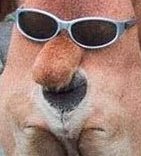
then we see something that you can’t quite make out …

Sure I recognise this face??

Continue reading “Butting in!” →

Lord of the Ants

A passing visit to the American biologist, E. O. Wilson

E O Wilson

Edward Osborne Wilson was born in June 1929 thus making him, at this time of writing, just into his 82 year.  His biological specialty is myrmecology.  Got that?  Myrmecology.  And if you, like me, didn’t have a clue as to what  myrmecology is and had to look it up, it is the study of ants.  Blow me down, there is even a myrmecology blogsite!

So where is this all heading?

One of the things that we do know about dogs, especially if we go way back into the dim and distant times when they behaved more like the grey wolf, from which the species ‘dog’ genetically originates 100,000 years ago, is that their social order, their pack behaviour, was highly stable.  As an aside, when Jean was rescuing dogs in San Carlos, Mexico during the years that she lived there with her late husband she readily observed that the stray dogs, of which there were too many, had a natural propensity to group up into their historic pack formations.  (And as an aside to my aside, Jean’s close friend of many years, Dan’s sister Suzann, today carries on the splendid work of looking after stray dogs from her San Carlos house!)

OK, back to the plot!

E O Wilson’s study of ants has revealed much about social order and organisation.  The following YouTube video was from a PBS programme, aired in May, 2008, from which I quote (that is the PBS website),

Program Description

At age 78, E.O. Wilson is still going through his “little savage” phase of boyhood exploration of the natural world. In “Lord of the Ants,” NOVA profiles this soft-spoken Southerner and Harvard professor, who is an acclaimed advocate for ants, biological diversity, and the controversial extension of Darwinian ideas to human society.

Actor and environmentalist Harrison Ford narrates this engaging portrait of a ceaselessly active scientist and eloquent writer, who has accumulated two Pulitzer Prizes among his many other honors. Says fellow naturalist David Attenborough: “He will go down as the man who opened the eyes of millions ’round the world to the glories, the values, the importance of—to use his term—biodiversity.”

It’s a fascinating film, truly engaging, so do settle down for a relaxing 53 minutes and watch,

Now there’s more to this and I do want to continue with the theme of this Post tomorrow.

So for now, look in on the E O Wilson Biodiversity Foundation’s website and I’ll see you tomorrow.

Social intelligence of dogs

Underlining what 30,000 years of domestication produces!

This video, just under 6 minutes long, may well be ‘old news’ to many dog owners but still very much worth a viewing.

Scamp

And while I think about, if you didn’t see the video about Scamp and his ability to identify, and then comfort, humans very close to death, when it first appeared on Learning from Dogs, then do drop back to here and watch it.  It’s from the Extraordinary Animals series from Channel Five on British television and just 22 minutes long.

Just another dog post!

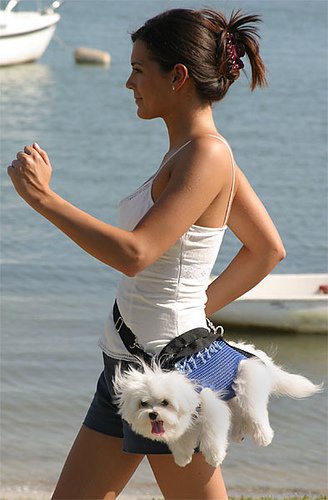
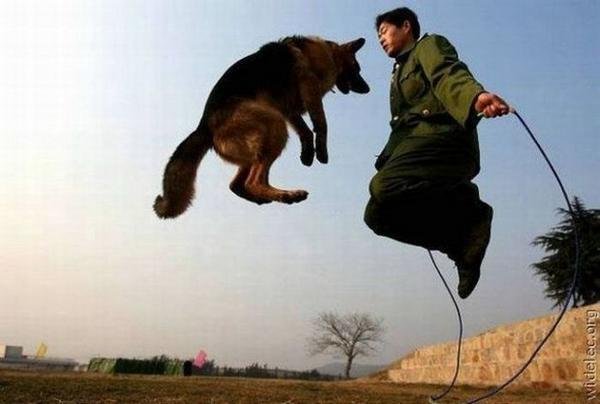
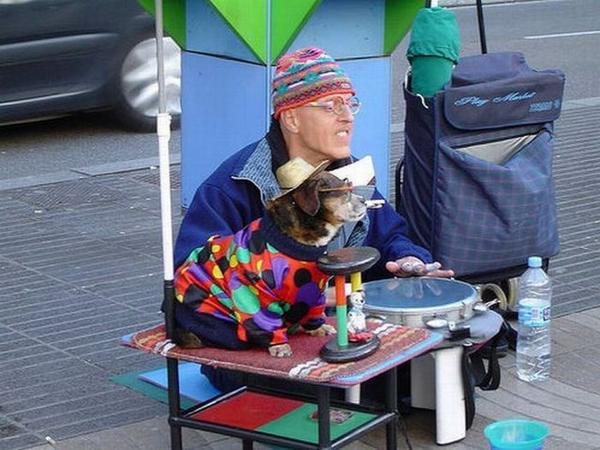
Just some wonderful pictures of people and their pet dogs!

It’s 2pm Mountain Time on the 28th.  I wanted to get a deeper post written for tomorrow (today as you are reading this!) but somehow too many things have been happening today.

So I’m ‘cheating’ and using a recent email sent to me by Cynthia Gomez, Dan’s lovely wife, that was called When your dog is your best friend. It contained some fabulous photographs of people and their pet dogs.  A quick Google search showed that they came from a website devoted to finding homes for pets, Just One More Pet.  Enjoy the pics.

Cute dog!
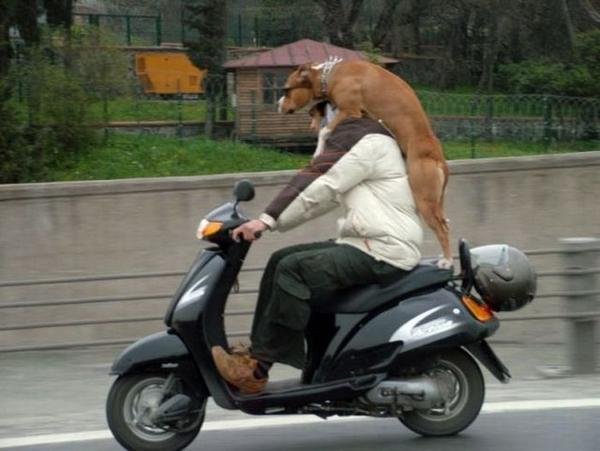
Even matching helmets!
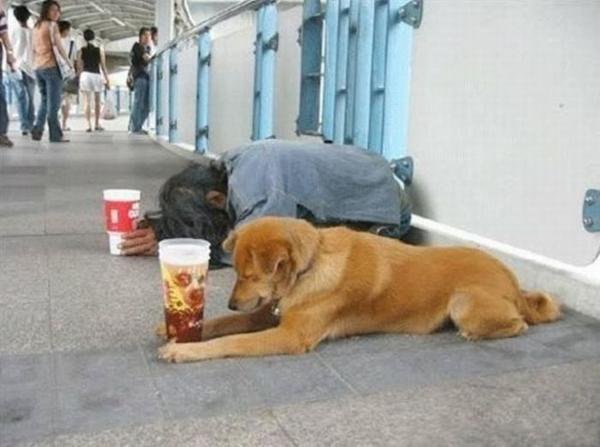
Makes your heart skip as well!
A team of two.
Cool rider, man!
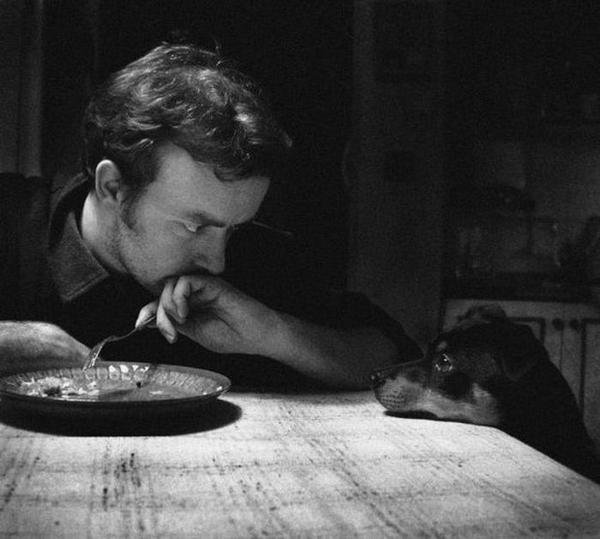
Difficult to resist!
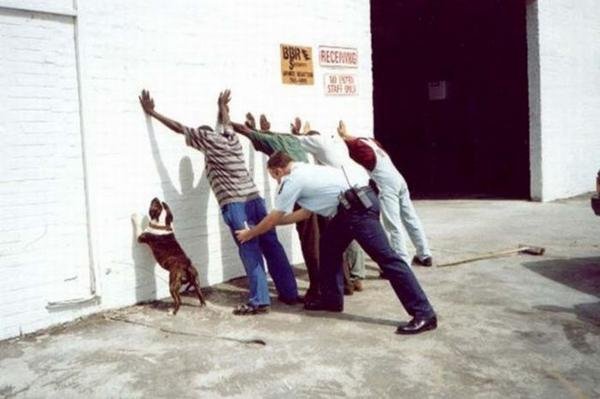
I love a good frisk!
A beautiful bond - always!

Thanks Cynthia for sharing those – heart-melting stuff!

Sixth sense? Of course, say dogs!


Science is catching up with dogs!

Those of you who have come across Rupert Sheldrake and, in particular his book Dogs That Know When Their Owners Are Coming Home will really not be surprised at what is coming, in terms of the rest of this Post.  Because most dog owners know, from countless observations, that dogs have an uncanny ability to see the world around them in a more deeper and intuitive manner than we can explain.

I wrote of Sheldrake’s book on the 1st June including touching on a report of Mason, a small terrier mix …

On April 27th, Mason was hiding in his garage in North Smithfield when the storm picked him up and blew him away. His owners couldn’t find him and had about given up when they came back Monday to sift through the debris, and found Mason waiting for them on the porch.

A few evenings ago, we watched a documentary from the website Top Documentary Films from the series Through The Wormhole.  This particular documentary was entitled Is There a Sixth Sense? Here’s how that film was introduced,

Sight, hearing, smell, taste and touch are the tools most of us depend on to perceive the world. But some people say they also can perceive things that are outside the range of the conventional senses, through some other channel for which there is no anatomical or neurological explanation. Scientific researchers who study such abilities call them extrasensory perception (ESP), but lay people often refer to them as the sixth sense.

Either term really is a catch-all for a variety of different purported abilities that vary from person to person. Some people claim the power of telepathy – that is, the ability to perceive others’ thoughts, without having them communicated verbally or in writing. Others claim to have the power of clairvoyance, which is the ability to perceive events and objects that are hidden from view because of barriers or distance. Still others claim to be gifted with precognition, which enables them to look into the future and glimpse what hasn’t yet occurred.

The belief in ESP or the sixth sense dates back thousands of years. The Greek historian Herodotus wrote that Croesus, who ruled a kingdom in what is now Turkey in the sixth century B.C., consulted oracles – that is, groups of priests claimed to be able to predict the future — before he went to war. In ancient India, Hindu holy men were believed to possess the power to see and hear at a distance, and to communicate through telepathy.

In the late 1700s, the Viennese physician Franz Mesmer claimed that he could give people ESP powers by hypnotizing them. Just before his assassination in 1865, President Abraham Lincoln told friends that he’d dreamed of his own body lying in state in the White House. In the 20th century, Edgar Cayce and Jean Dixon attracted wide followings by claiming that they could foresee future events. During the Cold War, U.S. military and intelligence agencies, spurred by reports that the Soviets had psychics at their disposal, even tried to utilize clairvoyants who claimed remote-viewing powers for espionage purposes.

As well as watching it directly from the Top Documentary Films website, it is also available from YouTube.  Here are the four links.  It is a most fascinating review of the scientific findings in this area.  If you have a dog with you when you watch the videos, don’t be surprised if he or she fall asleep!  Nothing new for dogs in all this!

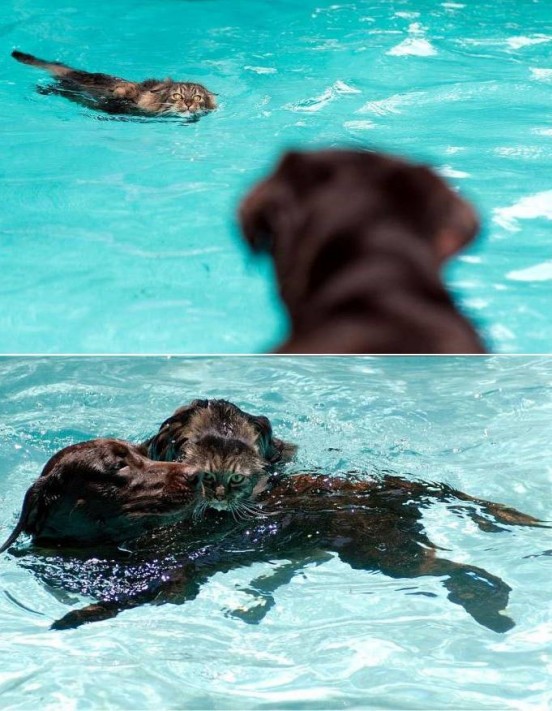
Taking a dip!

Another one of those ‘cute’ moments.

I subscribe to Naked Capitalism, as many of you will be aware, and in their 20th July release were the following photos,

In fact, a quick Google search reveals that the photographs have been widely circulated over recent years and in all probability the source and original story are long lost by now.

Enjoy the rest of the day!

Until Tuesday by Luis Carlos Montalvan

A book review

While being born an Englishman in 1944 has me slightly ahead of the so-called Baby Boomer period, which in American terms, ergo the U.S. Census Bureau, is defined as those born between January 1st, 1946 and December 31st, 1964, American and British people born in those ‘boomer’ years after WWII share many attitudes.

However, there is one stark difference between the UK and the USA regarding that period; the Vietnam War.

U.S. military advisors arrived beginning in 1950 and that U.S. involvement escalated in the early 1960s, with U.S. troop levels tripling in 1961 and tripling again in 1962.

Many good young Americans paid the ultimate price for that involvement (58,220 U.S. service members died in the conflict).

Why do I mention this?  Because just as so many Americans have no idea of the scale of enemy bombing that England suffered during WWII, just as many Brits have no idea of the scale of the ‘draft’ (i.e. conscription) that was employed by the U.S. Government as the Vietnam involvement grew.

Now keep that in mind as a means of adding context to what follows.

Until Tuesday is a book of many extremes.  It is a powerful book, a disturbing book, and a book about the beauty, dignity and, sadly, the madness of man.

I have been talking to a good friend of my life-long Californian pal, Dan Gomez.  Let me just call him Tom.  Tom saw service in Vietnam.  This is how Tom describes his early experiences.

I was young and keen for some adventure.  I had watched many war movies so I knew exactly what war was all about.  So I enlisted as a soldier and was shipped out to Vietnam.  After 60 days, I had experienced sufficient to know that things were not as they were portrayed by the media and the reality of Vietnam was very different to those movies. I had seen enough and was ready to come home.

Except that it didn’t work that way. I was there for a full tour of duty.

It became increasingly apparent by our behavior that we were not there to liberate the masses. We were there because some politicians had a theory and because of it didn’t want the locals to have a democratic election.  So good people were put into harm’s way, died or were severely injured for no other reason than some politicians had a theory – that proved to be false in the end.

Through it all, the biggest pain that I suffered was to see my Government operating under false pretences, with no integrity and no dignity.   It left me with a deep anger and mistrust of government that is still deep inside me.

Tom’s very personal and intimate sharing of his experiences of Vietnam resonates powerfully with what Captain Montalvan experienced in Iraq.  Here’s an extract from the book,

I am an American soldier.  I am an expert and I am a professional.

But at the same time, I was coming unmoored, my mind dwelling on the hand-to-hand struggle for my life, the Syrian ambush, the sandstorms, the riots, and Ali, Emad and Maher, the men left behind.

I am a guardian of freedom and the American way of life.

The wife of one of my best men from Al-Waleed had become pregnant during his midtour leave.  The foetus was fatally deformed, but Tricare, the army’s health service, doesn’t provide abortions under any circumstances, and she was forced to carry the child to term.  I will never accept defeat.  Little Layla was born without a nose and several internal organs.  Her parents had no financial resources on a soldier’s pay to provide her comfort.  I emailed everyone I knew for help – hundreds of dollars were sent to the sergeant and his family.  Nevertheless, it was heartbreaking, absolutely heartbreaking, to hold Layla in my hands.  I will never quit.  She lived eight weeks, and the difficulty of her life, and the inhumanity of forcing that existence not only from her but her parents too – I will never leave a fallen comrade – fuelled my downwards drive.

I was angry with the army. Not on the surface, but underneath, in the depth of my mind.  Why did Layla and her parents have to endure that pain, especially after everything they had already endured?  Why were they forcing our regiment back to Iraq just ten months after our return?  Why weren’t they helping us cope with our pain?  We were badly banged up.  We were undermanned and underequipped.  The army didn’t care.  They were churning us through.  They cared more about getting us back to Iraq and making the numbers than they did about our health and survival.

It was the summer of 2004.  Victory was slipping away.  Everyone could see that, but the media kept pounding the message: ‘The generals say there are enough men.  The generals say there is enough equipment.  The generals say everything is going well.’  It was a lie. The soldiers on the line knew it because we were the ones suffering.  We were the ones who endured days of enemy mortar fire when we arrived in Iraq without weapons or ammunition, as my eighty troopers had in Balad in 2003; we were the ones going back in 2005 without adequate recovery time or armour for our Humvees.  And that is the ultimate betrayal: when the commanding officers care more about the media and the bosses than about their soldiers on the ground. [Chapter 5, An American Soldier, pps 88-89]

So the first thing that most definitely comes out of the pages of Until Tuesday is the depth of disconnect between Montalvan as an active soldier in the front line and his nation.  Just like Tom in Vietnam!

It’s not until Chapter 8, The Thought of Dogs, that the author moves on from his obsessiveness about his military experiences to his future world.  Please realise that when I use the word ‘obsessiveness’, in no way is it used as a derogatory term.  One of the symptoms of mental insecurity is the ease with which we can obsess on things in our lives.

Here’s how Chapter 8 starts,

I can’t tell you how much my life changed when I read the email on 1 July 2008. (A Tuesday, I just realised.  I’ll have to add that to my list of fake reasons for Tuesday’s name.)  The Wounded Warrior Project, the veteran service organisation I went with to the Bruce Springsteen concert, forwarded the message.  They forwarded messages every day, actually, but I usually didn’t read them.  This tagline intrigued me: ‘WWP and Puppies Behind Bars’.  Puppies behind bars?

The message was almost as simple: ‘Dear Warriors, please note below.  Puppies Behind Bars has 30 dogs a year to place, free of charge, with veterans from Iraq or Afghanistan who are suffering from PTSD, traumatic brain injuries or physical injuries.  I’ve attached the Dog Tags brochure which explains the programme, as well as the Dog Tags application.’

As soon as I read the attached description, I knew the programme was for me.  I suffered from debilitating social anxiety, and the dogs were trained to understand and soothe emotional distress.  I suffered from vertigo and frequent falls, and a dog could keep me stable.  Because of my back I could barely tie my own shoes, and a dog could retrieve and pick things up for me.  I was the perfect candidate.  I was down, but I was working towards a future.  I was a leader, so I would never give up.  And I was lonely.  Terribly, terribly lonely.

From this point onwards the remaining 189 pages of Until Tuesday are about Luis Montalvan’s recovery built upon the foundation of his beautiful relationship with Tuesday, his service dog.

Of course there are ups and downs, as there are in all our lives, but the overall message is clear.  A dog loves a human in the most beautiful and purest fashion of all.  That unconditional, undemanding love for the humans in that dog’s life unlock even the most damaged souls.  Tuesday unlocked the private hell that Captain Montalvan endured for so long.

In the privacy of a deep hug of your dog lays release.  From that release comes peace, understanding and the desire to re-connect with the larger world.  There is no greater gift than that.

So standing back in terms of reviewing this book (I reviewed the UK edition) here are my thoughts.

  • It’s a deeply moving book which many, but especially dog owners, will be touched by.
  • It’s a book that offers real hope and inspiration, most certainly for those who are going through their own private hell.
  • It’s a very American book and, at times, when reading it I did wonder if some UK readers might find themselves culturally disconnected.
  • Overall, this is a book that needs to be read.

Perhaps I should close by saying this.  I didn’t have to pay for the book, it was sent to me on a complimentary basis once I had agreed to do the review.  In the UK Until Tuesday is published by Headline Publishing.  However, having read the book I realise that to have missed the opportunity of reading it would have left my life a little poorer.

Footnote

A note for all those that have been good enough to read to the end!  This post published today is the 1,000th post since Learning from Dogs first saw the light of day on July 15th, 2009.  That it has reached this point is a direct result of the number of readers and the support that so many of you give to this rather crazy enterprise!  Thank you all!