Category: Dogs

Picture parade seventy-four

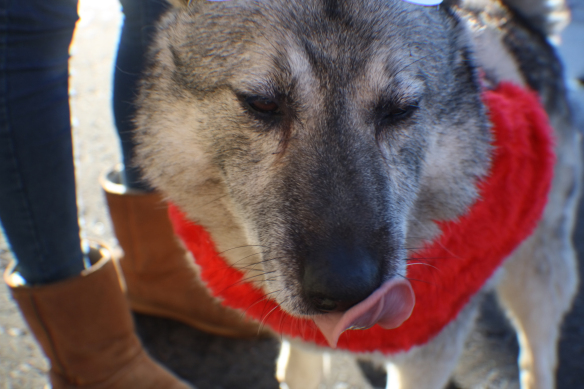
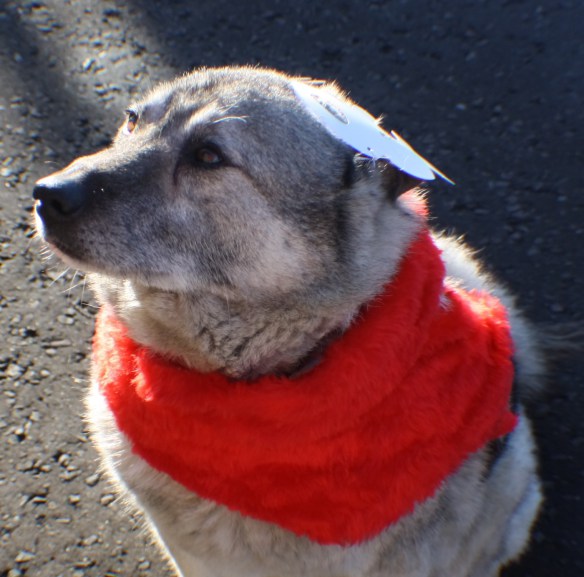
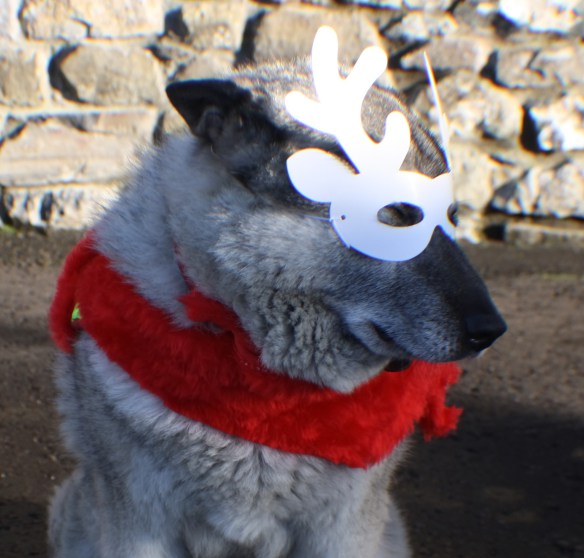
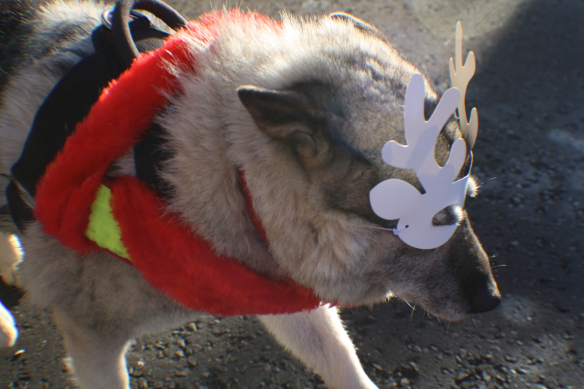
The second set of wonderful pictures from Tricia.

(If you missed last week’s set they are here.)

Trish6

 oooo

Trish7

oooo

Trish9

oooo

Trish10

oooo

Trish11

oooo

Trish12

oooo

Trish13

oooo

What incredible, wonderful, loving animals they are!

The book! Part Five: Honesty.

In one very real sense, a chapter about the quality of honesty in dogs is bizarre. Surely, honesty, and dishonesty, are terms that exclusively describe human tendencies. When the term “dishonest” is used to describe a person, most often we are describing an effort by that person to deceive another. It is a description of someone who intentionally is trying to mislead or misinform us.

But in terms of honesty, or dishonesty, what I am about to say probably applies to all animals; I don’t know. Namely, that if there was one animal on Planet Earth that is incapable of guile or deceit, it has to be the dog. There is no doubt in my mind that dogs remain one of the most beautiful gifts nature has bestowed upon us humans.

Now that last bold statement is not to imply that dogs don’t try to manipulate us humans; far from it. Their attempts at manipulation would impress any three-year-old child! But there’s nothing dishonest about a dog trying to manipulate its owner into giving the dog whatever it wants; they are far too obvious in their motives and methods. As I read somewhere, dogs are: “Just scavengers looking for a way to get something with minimal effort.

Thus I think we can take it as a given that dogs are honest; fundamentally so.

OK, dear reader, you have no way of knowing that after writing that last sentence, I sat staring at the screen for a good ten minutes. I didn’t know how to continue the theme. I couldn’t think of anything to add to what every “good person and true” knows, and has known since time immemorial: honesty is a fundamental aspect of being a good person; the enviable of all titles, as George Washington is reputed to have said.

What was exercising my brain was to come at the subject of honesty in a way that offered a compelling reason for being honest; over and above the natural assumption about honesty, that it is so blindingly obvious not to require being spelt out; in a manner of speaking. It struck me that honesty is very different to the majority of the other qualities that we need to learn from dogs.
Different in the sense that the other qualities are open to being embraced as something that may be learnt, with clear rewards from so doing, whereas honesty seems a fundamental, core way of relating to the world around one. Mind you, there was a tiny voice in my head that was nagging away at me that said that honesty may not be so ‘black and white’. For example, the question of ‘white lies’. But, at heart, I was still lost as to how to proceed.

So, I spent another thirty minutes exploring the web looking for clarity; looking for some inspiration. Yet those web searches just ended up confusing me more. About the least confusing item I came across, more or less at random, was a section from an article read[1] on the website The New Atlantis. The full article was entitled: The truth about human nature.

The section that I read, and is reproduced below, seemed to confirm in my mind that honesty; something that, by rights, should be so fundamentally understood, was anything but simple.

Since Nietzsche, the choice of which version of ourselves we identify with has been widely understood as a choice between lying and truth-telling — to ourselves as much as to others. The moral ideal has become authenticity — a particular kind of honesty. Of course, just about any philosophical ideal is grounded in some sort of honesty: the search for Truth requires truth. Yet Aristotle describes honesty as a virtue only of self-presentation — the balance between self-deprecation and boastfulness. And Plato never lists honesty as a virtue at all, and even distinguishes between “true lies” and useful or noble lies. From the modern to the post-modern era, honesty and authenticity shifted to become much of the telos[2] of life, where before they had been but means in our progress toward that end.

Here was me looking for clarity only to find anything but that!

So what to make of all this?

I am going to fall back on the ideas expressed in the chapter on community. Rather on the closing words of that chapter, “… the power of sharing, of living a local community life, may just possibly be the difference between failure and survival of us humans.

There’s a sense of hope in me that we are heading for an era of new localism that will, in and of itself, reinforce a culture of honesty in one’s life. Why such hope? Because there are signs. Such as this one: the growing concern about factory farming, surfacing as increasingly more vibrant local food movements, demonstrating that people are really scrutinising where their food comes from. More than that! There are increasing concerns as to where our medicines are made and the possible side-effects, and a dawning awareness of how we are living on the backs of exploited third world workers (and poorly paid service workers here at home). Possibly all under a global umbrella of awareness that big government is no longer working as it should be; evidenced by falling voter turnout numbers at key elections in the USA and many other countries.

My hope is that this growing ‘honesty’ about the reality of our present world and where it appears to be heading is at the heart, in my opinion, of an expanding local consciousness permeating the hearts and minds of many people, leading them to want to become more “local.”

Should this come about, and I hope that it does in my lifetime, then an honesty of thought and deed will be, nay, has to be, a core attribute of life in a well-functioning local community.

982 words. Copyright © 2014 Paul Handover

[1] http://www.thenewatlantis.com/publications/the-truth-about-human-nature
[2] As in an end or purpose of life

The book! Part Five: Play

So what can we learn from dogs from the way that they play?

It’s a fair question yet one where it might be perfectly reasonable to wonder if we humans have anything to learn from the playing of dogs. The answers may surprise.

But first, let’s examine what is known about the playing of dogs.

Marc Bekoff, Professor Emeritus of Ecology and Evolutionary Biology at the University of Colorado, Boulder, is referred to extensively in The Washington Post; May 19th, 2014, in an article written by David Grimm, author of a new book: Citizen Canine.

David Grimm writes about the research undertaken by Marc Bekoff, who studies dog play and that, “studying dog play reveals more than the animals’ emotional lives. It could ultimately shed light on the evolution of human emotions and how we came to build a civilisation based on laws and co-operation, empathy and altruism.

Now that is a fascinating idea; that understanding why dogs play might help our understanding of how our emotions evolved. Up until this point, it had never occurred to me that our emotions evolved in just the same way that the rest of who we are today evolved. Sort of common-sense, I guess!

David Grimm goes on to write in that Washington Post article: “All of this suggests that dogs have a kind of moral code — one long hidden to humans until a cognitive ethologist named Marc Bekoff began to crack it.

As I read the article it started to dawn on me that possibly the reason that we humans devote so much time, energy, and frequently money, in playing, may have much deeper roots, as with our dogs.

Few people had studied animal play, but Bekoff was intrigued. “Play is a major expenditure of energy, and it can be dangerous,” he says. “You can twist a shoulder or break a leg, and it can increase your chances of being preyed upon. So why do they do it? It has to feel good.

Suddenly, Bekoff wasn’t interested just in behaviour; he was interested also in emotions and, fundamentally, what was going on inside these animals’ heads.

As the article reveals, Professor Bekoff, “wasn’t the first scientist to become intrigued by the canine mind”, reminding us that Charles Darwin was sure that dogs could engage in abstract thought, owned a sense of morality and used language. In Darwin’s lifetime he had thirteen dogs so had plenty of opportunity to become aware of what most of today’s dog owners know: that we humans and dogs can communicate with each other.

But back to emotions.

Back to David Grimm’s article:

Even morality hints at something deeper, however. To enforce moral conduct, dogs must be able to experience a spectrum of emotions, from joy to indignation, guilt to jealousy. They must also be able to read these emotions in others, distinguishing accident from intent, honesty from deceit. And indeed, recent studies by other scientists have shown evidence of these abilities (confirming what many dog owners already feel about their pets).

Scientists have found, for example, that dogs trained to shake hands with humans will stop shaking if they notice that they aren’t being rewarded for the trick although a nearby dog is — a sign, the researchers suggested, that dogs can sense inequity.

Thus from the playing of dogs (and wolves) comes great insight into the emotions and social conduct of humans. I will return to that idea at the end of the chapter.

Like millions of other dog lovers, I know from strong personal experience that dogs have a great sensitivity to how I am behaving and feeling. Even almost taking it for granted that when I yawn, the chances are that one of our dogs will yawn. Or believing, without any doubt, that dogs show empathy for us humans; I can easily recall my Pharaoh licking tears from my face. What I didn’t realise until reading the Washington Post article is that empathy is a rarely documented trait in the animal kingdom.

We know what our dogs are feeling from their behaviour and their vocal sounds. Know instinctively that when a dog nudges me awake in the early hours of the morning, it is because it needs to go outside for a ‘call of nature’ and can’t wait until the normal waking hour.

Our dogs know what we are feeling from our behaviours, our body ‘language’ and our vocal sounds.

We all, all of us dog owners that is, know this and take it for granted. Perhaps not quite in the clarity of Professor Bekoff’s recent work that “suggests another remarkable canine skill: the ability to know what another animal is thinking — a so-called “theory of mind.””

Back to play. Science is suggesting that play, as initially researched with dogs, is very important, incredibly so, to our species. That without play, us humans would have had an impossible task of learning or interacting with the world around us. That our insight into our human emotions and the way we conduct ourselves, in a social context, flows down from learning from dogs.

Leaving one inescapable conclusion, one that so perfectly links to community: never stop playing. Never stop playing with others; humans and dogs alike.

872 words Copyright © 2014 Paul Handover

The book! Part Five: Community

Dogs offer many beautiful examples of the benefits of community. For the powerful reason that their genes, from the days of wild dogs, still guide their behaviours. When dogs lived in the wild, their natural pack size was around fifty animals. As was explained in more detail in the chapter Understanding the dog’s world, only three dogs held positions of status. The leader of the pack, the female alpha dog, the ‘second-in-command’, the male beta or teaching dog, and the ‘omega’ dog, a dog of either gender whose role was to be the clown dog, keeping the pack happy and playful. It should be added that all three dogs of status were born into their respective roles. Their position in the pack was instinctive.

All the other dogs in that natural grouping would be equal participants with no ambitions to be anything else. There was no such thing as competition for a role, as how a dog fitted into his or her pack was a product of birth.

When we see how dogs are as the domesticated animals we humans know and love, we still come across, from time to time, a dog that is an alpha, beta or omega role dog. At the time of writing this, we have nine dogs in the house. Of those nine, two have an instinctive status. Lilly, a very old female dog, was born an alpha dog, and Pharaoh, was born a beta dog.

Let me explain more about Pharaoh and him being a beta or teaching dog.

In my early days of having Pharaoh in my life, I wondered if Pharaoh was an aggressive dog. My uncertainty with regard to Pharaoh followed a number of occasions when walking him in a public area, with other dogs around, and he had been very threatening, both in voice and posture, towards some of those other dogs.

I was put in contact with an Angela Stockdale who for years had helped owners with aggressive dogs. Helped them by retraining their dogs. This is what she arranged. I took Pharaoh up to her place at Wheddon Cross, near Minehead in Somerset. When we arrived, Angela was standing just by a gate that led into a fenced paddock, maybe a half-acre in size. In the far corner of the paddock were two dogs.

Angela asked me to bring Pharaoh to the gate and let him off the leash. It was clear that the intention was to let Pharaoh into the paddock. I cautioned that Pharaoh could be quite a handful with other dogs and, perhaps, it would be better that I walked him into the area still on his lead. Angela replied that it wouldn’t be necessary. So, as she held the gate open sufficient for Pharaoh to enter the paddock, I unclipped the lead from his neck chain and backed away, as requested.

Pharaoh had hardly taken two or three paces into the grassy paddock when Angela called out, “Paul, there’s nothing wrong with him!

I was astounded and stammered, “Er, er, how can you tell so quickly?

Because my two dogs haven’t taken any notice!”, came Angela’s immediate reply.

As we both watched the interaction taking place, Angela explained that in the paddock were her female Alpha dog, Leda, and her male Beta dog, whose name now escapes me. In other words, these two dogs were number one and two in terms of status, so far as dogs see other dogs.

In fact, Pharaoh was utterly subservient to these dogs, in a way that I had never witnessed before. Later on, as Pharaoh relaxed and started playing, Angela said that she thought that Pharaoh was a Beta dog and later was able to confirm that.

Anyone who has the privilege of owning a group of dogs will know without doubt that they develop a community strength that is an incredible model for us humans.

So now to turn to how we can learn from this aspect of dogs.

Many people think more and more that nations, governments, call it what you will, are less and less effective at understanding the needs of their people. I’m not even going to go down the road of the corruption of our leaders, both big ‘C’ and little ‘c’, in terms of power and money. No, I’m thinking of the top echelons in many societies being very disconnected from the needs and aspirations of their people. The widespread sense that representative democracy, as a process, is broken. As a quick aside, I must add an amusing comment that came from a neighbour: If one can bank online, we can certainly vote online! Does make one think about new ways of governing ourselves in this online world of ours.

Yet it would be very wrong to imagine that mankind has no experience of community living. Erik D. Kennedy wrote an essay: On the Social Lives of Cavemen[1]. Under the sub-heading of The Tribe, he offers:

Human beings are no strangers to group living. Call it a family trait. Our closest animal relatives spend a good bulk of their time eating bugs off their friends’ backs. While I’m overjoyed we’re not social in that manner, I’m less pleased that we’re not social more to that degree. In study after study, having and spending time with close friends is consistently correlated with happiness and well-being. And yet, the last few decades in America have seen a remarkable decline in many things associated with being in a tight-knit social circle — things like family and household size, club participation, and number of close friends. Conversely, we’ve seen an increase in things associated with being alone — TV, commutes, and the internet, for example.

This trend is quite unhealthy. It’s no surprise that humans are social animals — but it may be surprising that we’re such social animals that merely joining a club halves your chance of death in the next year — or that living in a close-knit town of three-generation homes can almost singlehandedly keep you safe from heart disease.

Thus, a sharing, community life is not just some cosy idea, it could be core to the sort of healthy society we need to return to. Erik’s essay continues to expand this idea by quoting the particular case of Roseto in Pennsylvania[2]:

In 1950’s Roseto, the incidence of heart disease in men over sixty-five was half the national average (and suicide, alcoholism, drug addiction, and serious crime were also basically unheard of [ii[3]]). Bewildered doctors searched for solutions in genetics, diet, exercise, and geography, but finding nothing, reached the conclusion that it was the close-knit social life of the community that kept its residents so healthy. Dinners with grandma, friendly chats between neighbors, and a precocious level of civic involvement were the driving factors in the health of a town that nothing but old age could kill.

The circumstances behind the remarkable and uncharacteristic happiness and health for the residents of Roseto came down to one fact: “The whole reason Roseto was an outlier is because it was a town whose inhabitants more or less collectively moved from rural Italy to the middle of Pennsylvania over a few decades.

That, essentially, Roseto became “an Italian village in the American countryside.

One doesn’t need to reflect for very long before the obvious question arises: If fifty dogs is the optimum number for a pack of dogs, is there a limit to the number of people we can have in the human equivalent of our pack?

Well, says anthropologist Robin Dunbar, that number is about 150 persons. Robin Dunbar achieved fame by drawing a graph that plotted primates’ social group size as a function of their brain sizes. He inputted the average human brain size into his model, and up came the number 150. Beyond that number is past the upper bounds for both hunter-gatherer tribes and Palaeolithic farming villages. More than that, it appears that everything from startup employee counts to online social networks show this number as a fairly consistent maximum for the number of close social ties.

Back to Erik Kennedy:

Regardless of the specific implementation, the point is this: we stand to gain a lot from living in larger, closer groups. That’s how we were kicking it in the monkey days; that’s how we should be kicking it now. I say that not because of a romantic attachment to our Palaeolithic forbearers, but because of the fact that a good deal of health and happiness is ripe for our picking.

Erik Kennedy offers advice as to how to translate that into practical actions. Such as watch less television, live in a bigger group, for example, dine with the same people more often, and always resolve any disputes that you have with close friends. Also, have your children spend more time with trusted adults and, in turn, spend time with the kids of adults who trust you. Not forgetting to mix up age groups and stay close to your parents and grand-parents.

In essence, adopting such a lifestyle is not without precedent; paleo-social lives are common all over the world. In fact, paleo-social lives may not only be common but an age-old wisdom in many other parts of the globe. However, in many parts of the ‘Western’ world chances are good that we have seen very few people living in anything vaguely resembling a tribe; to use the more common vernacular for the term paleo-social.

For one thing is clear: isolation and loneliness is taxing on our mental health. Humans are not designed to be alone.

Just another important way of living to learn from our dogs: the power of sharing, of living a local community life, may just possibly be the difference between failure and survival of us humans.

1,642 words Copyright © 2014 Paul Handover

[1] http://www.erikdkennedy.com/essays/social-lives-cavemen.php
[2] Referred to by Malcolm Gladwell in his book Outliers.
[3] I believe one of the surest signs that your lifestyle is aligned with your physiology in some way is that the benefits come in clumps.  Just as the paleo diet helps people with weight, energy levels, digestion, complexion, resistance to illness, and other areas of health, it’s no surprise that a proper paleo social life would be a holistic boon to health.

One clever man and his dog!

A reposting of a fascinating item regarding Ra Paulette.

As is the way of our interconnected world, I clicked on a link in a recent post over on Sue Dreamwalker’s blog that then took me to an item on a new blog site from Vision Keeper called World Metamorphosis. The item was about an American, Ra Paulette, who …

The American artist Ra Paulette has spent the last 10 years carving wondrous creations in the walls of a cave located in Northern New Mexico. For many years now, Paulette has walked to work into the hot desert, with only his faithful dog by his side. After much hard work, Paulette has finally allowed the public to view the incredible masterpiece he has been working on all of this time.

It all began with a mile long walk into the wilderness where Paulette discovered the cave. He has since transformed the everyday limestone walls into gorgeous hallways and spaces that are surprisingly full of light. Learn more about the man behind the carvings and check out the magnificent cave artwork here! (Source: Phoenix is Risen)

Caves1


Then it was a ‘hop, skip and a jump’ to go across to Ra Paulette’s website, where one reads such glorious details as:

Process

Process

Manual labor is the foundation of my self expression. To do it well, to do it beautifully, is a “whole-person” activity, engaging mental and emotional strengths as well as physical strength.

When digging and excavating the caves I break down all the movements into their simplest parts and reassemble them into the most efficient patterns and strategies that will accomplish the task while maintaining bodily ease. Like a dancer, I “feel” the body and its movement in a conscious way.

I’m fond of calling this “the dance of digging”, and it is the secret of how this old man can get so much done.

Then words that are more poem than anything else:

The Present

LUMINOUS CAVES
the world within the earth and ourselves

My final and most ambitious project is both an environmental and social art project that uses solitude and the beauty of the natural world to create an experience that fosters spiritual renewal and personal well being. It is a culmination of everything I have learned and dreamed of in creating caves.

A mile walk in the wilderness becomes a pilgrimage journey to a hand dug, elaborately sculpted cave complex illuminated by the sun through multiple tunneled windows. The cave is both a shared ecumenical shrine and an otherworldly venue for presentations and performances designed to address issues of social welfare and the art of well being.

In social art, creating the work of art is not the objective in itself, as in an exhibit, but is a means to bring about social change. The response to the artwork is not merely left to its audience as an endpoint in the process but is an element in a larger encompassing creative process. In the analogy of art being one of the colors on the social artist’s palette, the canvas would be society itself, its social conditions in a particular location. In using the aesthetic to address societal suffering, social art is not content with merely decorating the world; its intent is to change it.

Changing the world is a tall order. Art doesn’t attempt to force change through direct action but to catalyze it by affecting the emotional basis from which change can occur.

Begging the question, “How can we change what we do before we change how we feel?” Its underlying premise is that when through wonder and the sense of beauty we move from the emotional realm of our desires and fears to the more expansive and deeper feelings of thanksgiving and appreciation of life with a sense of its sacredness, our actions will automatically be modified, creating a better world – ‘like magic’.

This is the magic of art, music, theatre, and of the beauty of the natural world. We need for that magic to play a more direct role in our lives.

Please, please read the rest of these wonderful thoughts and ideas

Will close with another photograph of Ra working inside the caves.

Cave2

The book! Part Five: How humans view dogs.

The remaining chapters in Part Five are the essence of my story. That our dogs offer us a wonderful vision of how mankind needs to change, element by element, to stand a reasonable chance of surviving as a viable species into the distant future.

The writing of this book has been fuelled and motivated by an enormous amount of research, as has been mentioned previously. In general, what I have read has supported my overall hypothesis that I expressed in the opening paragraph above.

Then I read Jean Donaldson’s book The Culture Clash [1] almost when I had completed the first draft of this book. Whoops! This is what came at me in the first chapter [page 10] of her book:

One reason for our astonishingly poor understanding of dogs might be extremely slow trickle down from experts: trainers educating one owner or one class at a time rather that something on the scale of public service announcements or spots on Oprah.

But there’s a second reason for the slow acceptance of realistic interpretations of dog behavior: simple reluctance to let go of anthropomorphism.

Reinforced on the following page by these two sentences, “Our bond with dogs is obviously strong. But they are not human and so now we are stuck explaining the bond.

The book was a very interesting read and I can highly recommend it to anyone seeking a greater clarity about dogs, especially about dog training. As the back cover announces: “The most thought-provoking book ever written on dog behavior and training.”

The reason I reacted earlier with a ‘whoops’ was that the vision of what we need to learn from dogs, explored in detail in the following chapters, does, without question, leave me guilty of a “simple reluctance to let go of anthropomorphism.”

It doesn’t in any way, well to my mind it doesn’t, however reduce the central proposition of the book. That whether one sees dogs anthropomorphically or not, they represent wonderful and inspiring creatures, creatures that have proved their ability to live in harmony on the planet and that’s a track record that man can only dream of at present.

[1] Published by James & Kenneth, CA. USA. 2nd Ed. 2005

354 words. Copyright © 2014 Paul Handover

Faithful dog Masha.

Another wonderful dog story, courtesy of Chris Snuggs.

Over four years ago, I published a post under the title of Faithful dog Hachikō. It was the heart-wrenching story of a Japanese Akita dog called Hachi, Hachikō in Japanese, that continued to wait for his master’s return, Hidesaburō Ueno, for years after the professor’s death.  Here’s an extract from that post:

In 1924, Hidesaburō Ueno, a professor in the agriculture department at the University of Tokyo took in Hachikō as a pet. During his owner’s life Hachikō saw him out from the front door and greeted him at the end of the day at the nearby Shibuya Station. The pair continued their daily routine until May 1925, when Professor Ueno did not return on the usual train one evening. The professor had suffered from a cerebral hemorrhage at the university that day. He died and never returned to the train station where his friend was waiting. Hachikō was loyal and every day for the next nine years he waited sitting there amongst the town’s folk.

Hachikō was given away after his master’s death, but he routinely escaped, showing up again and again at his old home. Eventually, Hachikō apparently realized that Professor Ueno no longer lived at the house. So he went to look for his master at the train station where he had accompanied him so many times before. Each day, Hachikō waited for Professor Ueno to return. And each day he did not see his friend among the commuters at the station.

The permanent fixture at the train station that was Hachikō attracted the attention of other commuters. Many of the people who frequented the Shibuya train station had seen Hachikō and Professor Ueno together each day. They brought Hachikō treats and food to nourish him during his wait.

This continued for nine years with Hachikō appearing precisely when the train was due at the station

A few days ago, Chris sent me details of a faithful dog story that appeared in the English Daily Telegraph newspaper on the 26th November. The story was headed: Loyal dog waits for owner who will never return at hospital for two years. It opened, thus:

A loyal dog has shown up every day for two years at a hospital where her master passed away.

Masha appears at the Siberian hospital’s reception area every morning, the Siberian Times reports.

Her owner was admitted to the hospital in Novosibirsk region, south western Siberia, two years ago after falling ill.

Masha is well cared for by staff who make sure she has a warm bed and food every night. The faithful canine was the elderly man’s only visitor, staff say, and used to run home every night to stand guard before returning the next morning.

If we then go across to that Siberian Times story, we see that the wonderful Masha is linked to Hachikō.

Heartbroken little dog becomes Siberia’s own ‘Hachiko’

By Kate Baklitskaya and Derek Lambie – 24 November 2014

For past year devoted Masha has been waiting in a hospital for the beloved owner who will never return.

'One day, and we very much want this day to come soon, our Masha will trust somebody.' Picture: Svyatoslav Odarenko
‘One day, and we very much want this day to come soon, our Masha will trust somebody.’ Picture: Svyatoslav Odarenko

A little dog that waits in vain at a Siberian hospital for the owner who has already died has been dubbed Russia’s own Hachiko. Heartbroken Masha has been turning up looking for her beloved master every day since he passed away at the facility in Novosibirsk last year.

It is a tale mirroring that of the famously loyal Akita dog Hachiko in Japan, who arrived at a train station every evening for 10 years to greet its owner even though he had died.

Masha has become a well-known, and much loved, figure at the Novosibirsk District Hospital Number One, where patients and workers ensure she has a warm bed and food to eat.

But, aware of her obvious sadness at being unable to find her owner, staff are hoping an animal lover will come forward to adopt her and give her a new home.

Chief doctor Vladimir Bespalov told Novosibirsk Vesti TV: ‘You see her eyes, how sad they are – it’s not the usual shiny eyes for when a dog is happy. You can see this in animals in the same way as with people.

‘There is nothing medicine can do for her here, but we are still hoping that Masha will be able to find another owner. One day, and we very much want this day to come soon, our Masha will trust somebody.’

Masha, who looks like a dachshund with short legs, has been coming into the reception at the hospital in Koltsovo every day for the past two years since her owner was admitted. The man, a pensioner from the village of Dvurechie several kilometres away, had fallen ill and had turned up with his pet.

There are three heart-rending photographs of Masha that you really must look at. The article then concludes:

Whilst he was staying on the ward, Masha was his only visitor and she even trotted off home to guard the house before returning to the hospital in the morning.

Sadly he died a year ago but the loyal dog has continued to turn up every day, perhaps because she has nowhere to live, or because she believes her master is still there.

Nurse Alla Vorontsova said: ‘She is waiting for him, for her owner. Just recently a family tried to adopt her, but Masha ran away and returned to the hospital. She was taken on Friday evening, and at 3am on Saturday she was back here.’

Masha’s story is similar to that of the famous Japanese dog Hachiko, who used to greet his master on his return from work at the Shibuya train station in Tokyo.

When his owner, agricultural science professor Hidesaburo Ueno, died in 1925 he continued to visit the station every night for 10 years still expecting to meet him off his 4pm train.

In 1935 the dog’s body was found in a Tokyo street and his remains were stuffed, mounted and put on display in Japan’s National Science Museum, while a bronze statue was erected outside Shibuya. A Hollywood movie of the sad story, starring Richard Gere, was released in cinemas in 2010.

There are also similarities to Greyfriars Bobby, a little Scottish terrier who was unwilling to leave his dead master’s grave in Edinburgh, Scotland, for 14 years in the 19th century.

What wonderful, loyal, loving friends dogs are to us humans.

The book! Part Four: What do we mean by integrity?

Integrity.

Just another of those words, like hope, that we use so often yet so rarely stop and reflect on the fullest meaning of the word; its deepest meaning. In the strictest sense, as in the definition of the word, it has much to do with moral and ethical principles. Sound ones, I hasten to add! (I am, of course, not including the meaning of integrity as one of physical soundness; as in the soundness of a ship’s hull.)

Yet, and I hesitate to write this, terms such as moral and ethical principles don’t slap me around the face with any force. One person’s ethical principles may not necessarily match another person’s ethical principles.

So more digging around the web, looking for some personal clarity of the meaning of the word. I came across this view of integrity: Integrity starts with the soul. Now that did engage me immediately and felt like that metaphorical slap on the face. Then a few moments later, my web search turned up a Zen Buddhist quote: “Be master of mind rather than mastered by mind.

That stirred some ancient part of the old memory cells and I turned to a notebook that I have long used to jot down things that warranted being remembered. Yes, there it was: “Faith is to believe what we do not see; and the reward of this faith is to see what we believe.

Thus drawing together these separate strands leads me to see integrity as a key foundation of change. Not exclusively, but equally vital a foundation of change as hope and goodness. Perhaps, foundation of change isn’t the most apt mental image. Foundation is too static an idea. Better, perhaps, is Professor Kaufman’s use of the term, and image, of vehicles. As in my previous chapter on The importance of hope: “Important psychological studies show that ability is important, but it’s the vehicles that actually get people where they want to go.”

In other words, our change in thoughts, our own internal deliberations to be the change that we need to be, sit on hope, goodness and integrity. We all remember that old saying about not being able to give away what one doesn’t own!

Now is this some cosy, self-indulgent line of introspection? No! Emphatically no!

I say this from a belief that the lifting of the importance of integrity is key to our survival. I am going to open up that bold statement by turning to my blog, that carries the same name as this book: Learning from Dogs. The blog was started on July 15th, 2009.

When I started Learning from Dogs I was initially rather vague about the purpose of the blog yet knew that the blog should reflect the growing need for greater integrity and mindfulness in our planetary civilisation. Some of my early musings indicate where I was coming from: “Show that integrity delivers better results … integrity doesn’t require force … the networking power of a group … demonstrate the power of intention … cut through the power of propaganda and media distortion …”

Then further reflections on the purpose of the blog: “Promulgate the idea that integrity is the glue that holds a just society together … urgent need as society under huge pressures …. want a decent world for my grandchildren … for all our grandchildren …. feels like the 11th hour….”

Because, while it may sound a tad grandiose and pompous, if society doesn’t eschew the games, the half-truths and selfish attitudes of the last, say, 30 years or more, then civilisation, as we know it, could be under threat.

Or, possibly, it’s more accurate to say that our civilisation is under threat and the time left to change our ways, to embrace those qualities of integrity, truth and consciousness for the very planet we all live on, is fast running out.

That’s why the concept of integrity is so critically vital. So vital that there is a return to integrity.

I going to enlarge this chapter, from the strict investigation into what we mean by the word integrity and its relevance to this present time, to a more philosophical view, and I am going to do so by returning to my blog.

For in September, 2013 I published a post under the title of Our broken ways. I wrote about climate change, the way our forests across the world were being fragmented and the impact on wild life in terms of increasing rates of the extinction of mammals; concluding with my criticism of money and power.
There was a comment left by Alex Jones, himself an active blogger with a blog called The Liberated Way. His words in his comment cannot be bettered by me and, consequently, here they are in full:

Hi Paul, what you highlight are examples of disconnection between humanity and nature and with each other. I have on my own blog highlighted a concept of Ubuntu – “I am because we are” – which is only possible when the self realises that they are part of an inter-connected network of life. Your example of islands of fragmented forest where disconnected wildlife are dying out is how it is with disconnected humanity, we are doomed to destruction because we are cut off from the life-giving connection to nature.

All the problems you highlight are symptoms of the disease of disconnection, and until there is reconnection to nature none of these symptoms can be successfully addressed.

War is an integral part of nature, when people seek to dismiss this then they add to the disconnection from nature. I was stung in the face by a drunken wasp a few days ago, this is how it is with nature; it is beautiful but also brutal. Peace and balance are illusions; one might say that life is in a becoming because of unbalance and strife. I advocate harmony, like a downhill skier we do not seek to control our surroundings, but instead act in harmony by moving around the obstacles such as the rocks and trees.

Disconnection can be as large as destroying whole forests by ignorant energy policies to those idiots who kicked a puffball to pieces before I could harvest it, or the new owners of my former home who have taken a chainsaw to all the trees and bushes in the garden. People who are disconnected do not consider how their actions impact nature or impact people, contrary to the philosophy of Ubuntu.

The only way for species man to survive on this planet is for every element of man’s existence on this planet to be rethought of in terms of the natural order. The integrity of the natural order.

“I am because we are!” Each and every one of us is where we are today, for good or ill, because of what we are: part of Nature. It’s so incredibly obvious – we are a natural species – yet who reading this wouldn’t admit at times to behaving “as though we are a species utterly divorced from Nature.

Millions of us have pets that we love. Yet we still miss the key truth of our relationship with our pets. That we, just as much as our pets, are a part of Nature and subject to Natural order. We have so much to learn from our animals.

A close friend, John, wrote in a recent email to me that, “We are spiritual bankrupt. We spend too much of our time thinking about ourselves and what we want and too little of our time thinking about other people and what we all need.” Continuing in that email to add, “this spiritually bankruptcy had preceded our moral and economical bankruptcy.”

John closed his email by emphasising that the solution to our moral and financial problems, as well as our salvation as individuals, and as a species, is spiritual. “We simply need to love the Nature of God, the earth and each other regardless of what we may believe God to be.

Now whether you are a religious soul, or a heathen, or somewhere in the middle, it matters not. For if we continue to defy Nature and the natural laws of this planet we are going to be dust before the end of this century.

We have been blessed by an evolution that has allowed mankind to achieve remarkable things. Even to the point of leaving the confines of our planet and setting foot on the Moon, sending probes from out of our Solar System, and even landing on a comet. There’s a sense, a distinctly tangible sense, that man has conquered all; that we have broken the link from being part of Nature; from being of Nature.

And now Mother Earth is reminding all of her species, every single one of them including species man, that everything is bound by her Natural Laws.

Thus rests my argument for not only what do we mean by integrity per se but how it is intimately and irrevocably a function of our relationship with Nature.

Indeed, understanding the power that comes from leading truthful lives and how an individual’s power and level of consciousness can be enhanced through greater integrity, understanding, and compassion could be the most remarkable discovery that any one person could ever make.

There is nothing to fear except the persistent refusal to find out the truth, the persistent refusal to analyse the causes of happenings.” Dorothy Thompson.

1565 words. Copyright © 2014 Paul Handover

Speaking dog!

An interesting article that appeared in the New Scientist.

Well I managed to write the 50,000 words required of me to be a ‘winner’ of NaNoWriMo14. I was validated in at 53,221 words, albeit the book is not yet completed. Together with my writings from 2013, I am within 10,000 words, give or take, of finishing the draft. Then the fun starts: the big edit!

Anyway, moving on!

The UK’s New Scientist magazine emailed me recently an article that they fathomed would be of interest. Presumably, hoping I would immediately sign up to be a subscriber. Well if that was there presumption, I will be disappointing them. But the article was certainly of interest and, as it was sent to me without my invitation, I don’t feel too bad about republishing it in full.

ooOOoo

Dog head-turning shows they do understand what you say

YOU’RE just so right-side. The left hemisphere of our brains seems to tune into the phonemes in speech that combine to form words, and the right hemisphere focuses on the rhythm and intonation of words, which can carry emotional information. Animals may do the same when processing sounds of their own species, and perhaps even when hearing humans speak.

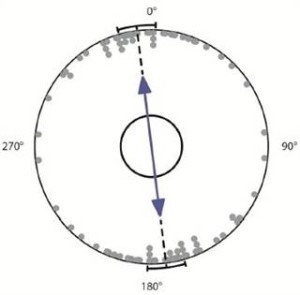
To test whether domestic dogs have learned to process human speech as we do, Victoria Ratcliffe and David Reby at the University of Sussex in Falmer, UK, placed 25 dogs between two speakers. They played them snippets of speech, such as the command “come on then” (Current Biology article link). The assumption, based on previous research, was that an animal primarily using the left hemisphere to process a sound will turn its head to the right, and vice versa.

When a command was delivered in a flat emotionless tone, 80 per cent of the dogs turned their heads to the right, suggesting they were concentrating on the words, not the emotion. If the commands were said in an emotional tone but some consonants were removed to make the words unintelligible, most of the dogs turned to the left. This suggests that dogs, like us, process different components of human speech in different parts of the brain.

Ratcliffe and Reby’s work suggests that dogs have learned to recognise a handful of human words that carry meaning. So a dog really does listen to its master’s voice.

“It would be extremely exciting to see the neural background of these orienting asymmetries,” says Attila Andics of the Eötvös Loránd University in Budapest, Hungary, who is running functional MRI brain experiments in dogs to probe this further.

This article appeared in print under the headline “Dogs really do understand what you say”

ooOOoo

Don’t know about dogs recognising, “a handful of human words”, the dogs here in Oregon seem to know far more than ‘a handful’; way far more!

In fact, Jean and I have developed a sign language to communicate those intentions that our dogs need know verbal prompting for!  Years ago, the dogs got so excited at the mention of the word ‘walk’ that we changed to spelling it out: w-a-l-k. That worked for a couple of weeks; at most! Then we tried, “Shall we take the dogs for a wa?” No better!

So now it is a subtle sign between Jean and me, such sign hidden from the eyes of the dogs!

Picture parade seventy-two.

The final set of parenting pictures.

Just wish I had many more to share with you as they have been so well received over the previous two Sundays. My thanks to Jim and Janet for sending them to me so that they could be shared. If you missed the first two sets, then you will find links after the last picture.

JG15


oooo

JG16

oooo

JG17

oooo

JG18

oooo

JG19

oooo

JG20

oooo

JG21

oooo

The first of photographs was published on the 16th and the second on the 23rd.