Another fabulous lesson we can learn from our dogs.
Stillness. It is a very simple, single word yet, somehow, it sounds as though it belongs to a different age. As though stillness is a very long way from the modern society that millions and millions of us subscribe to.
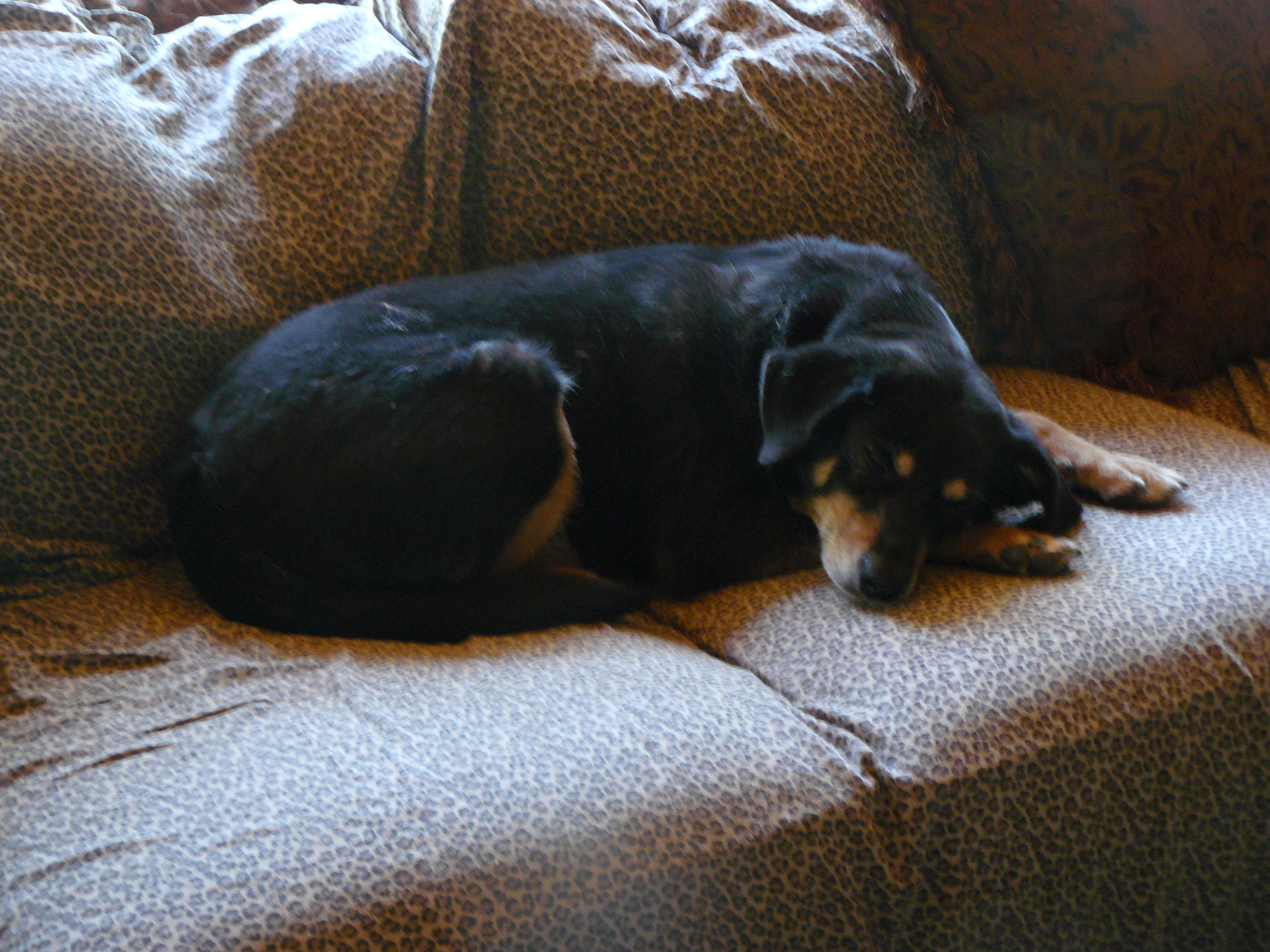
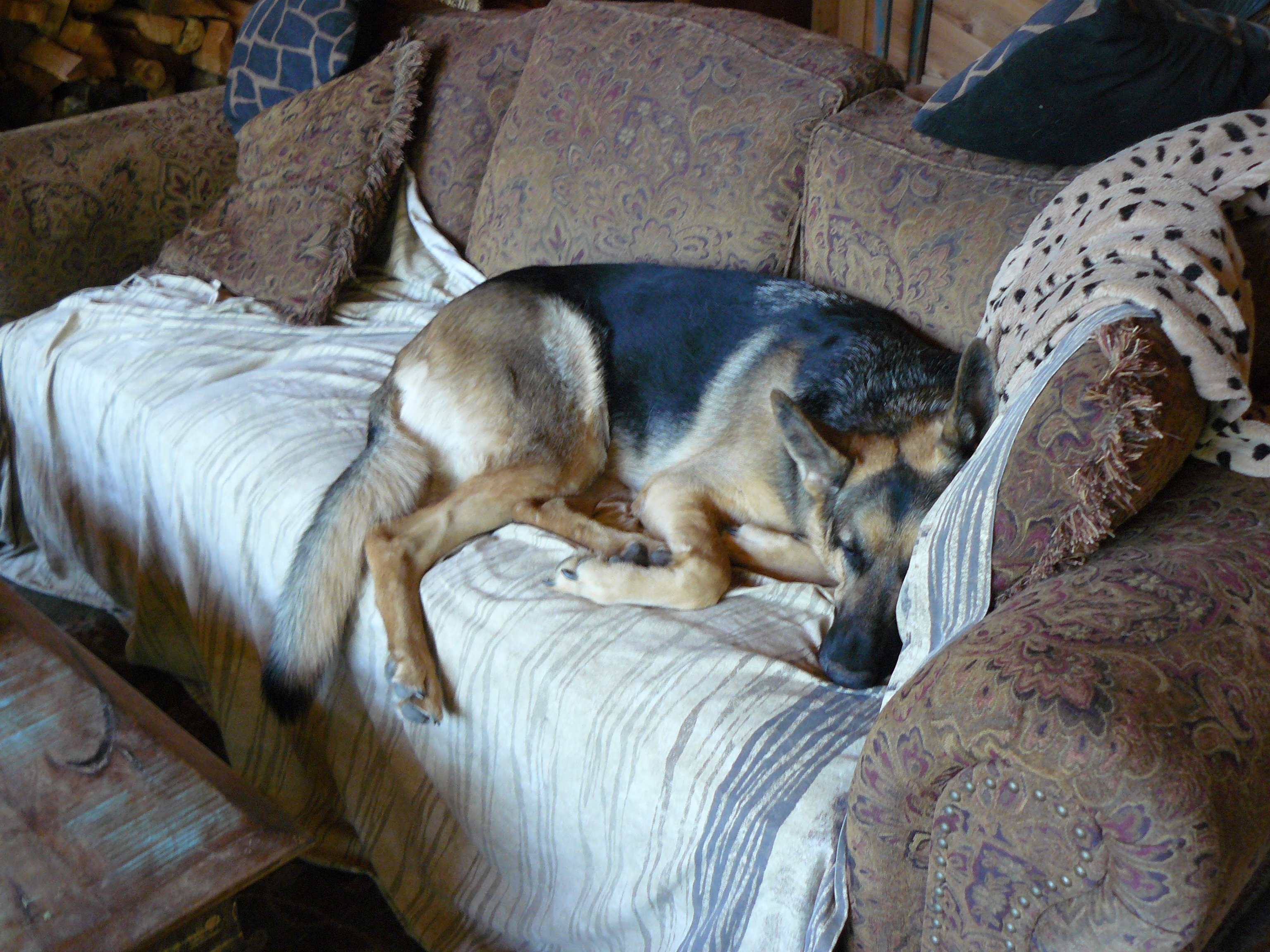
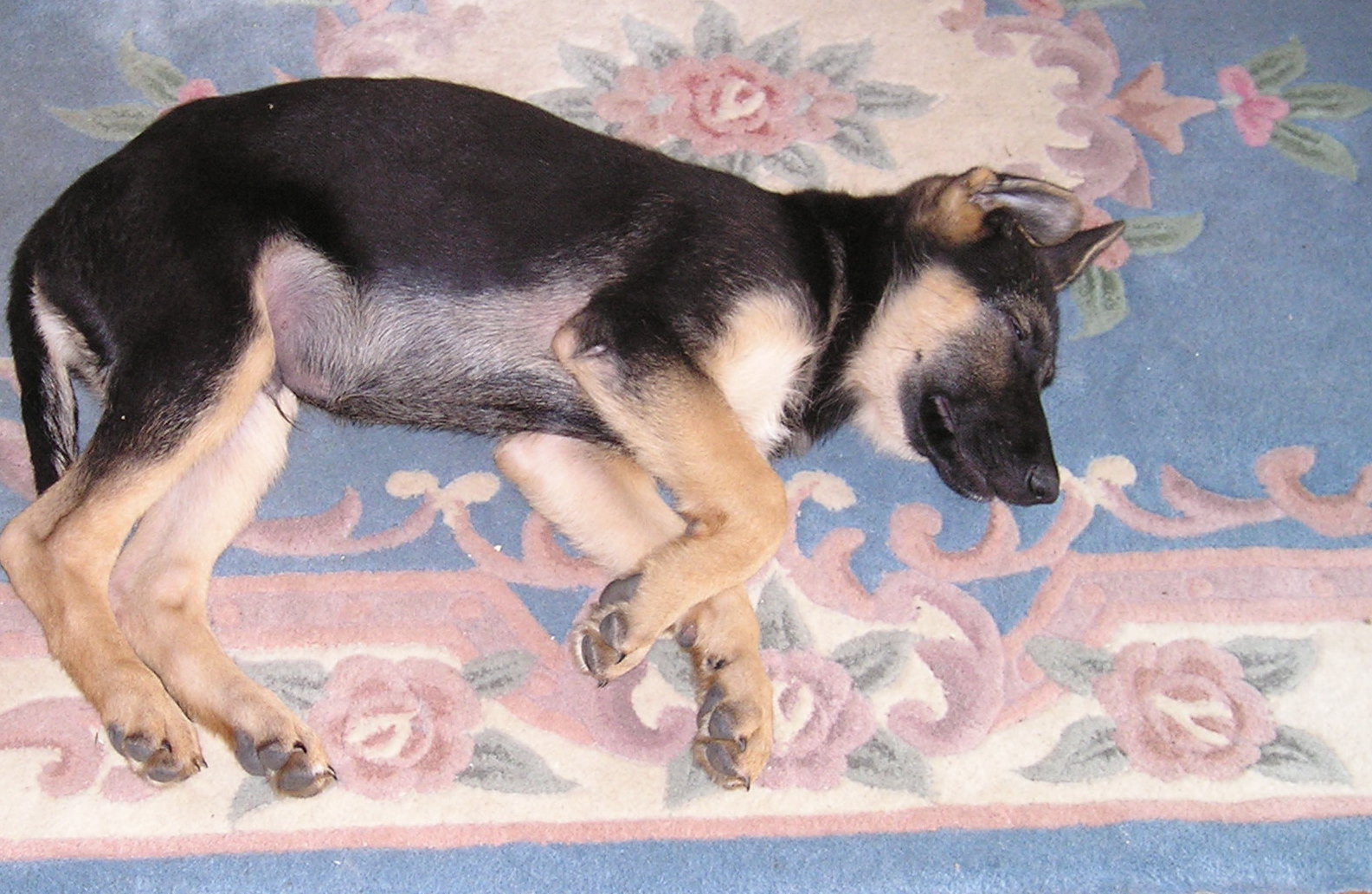
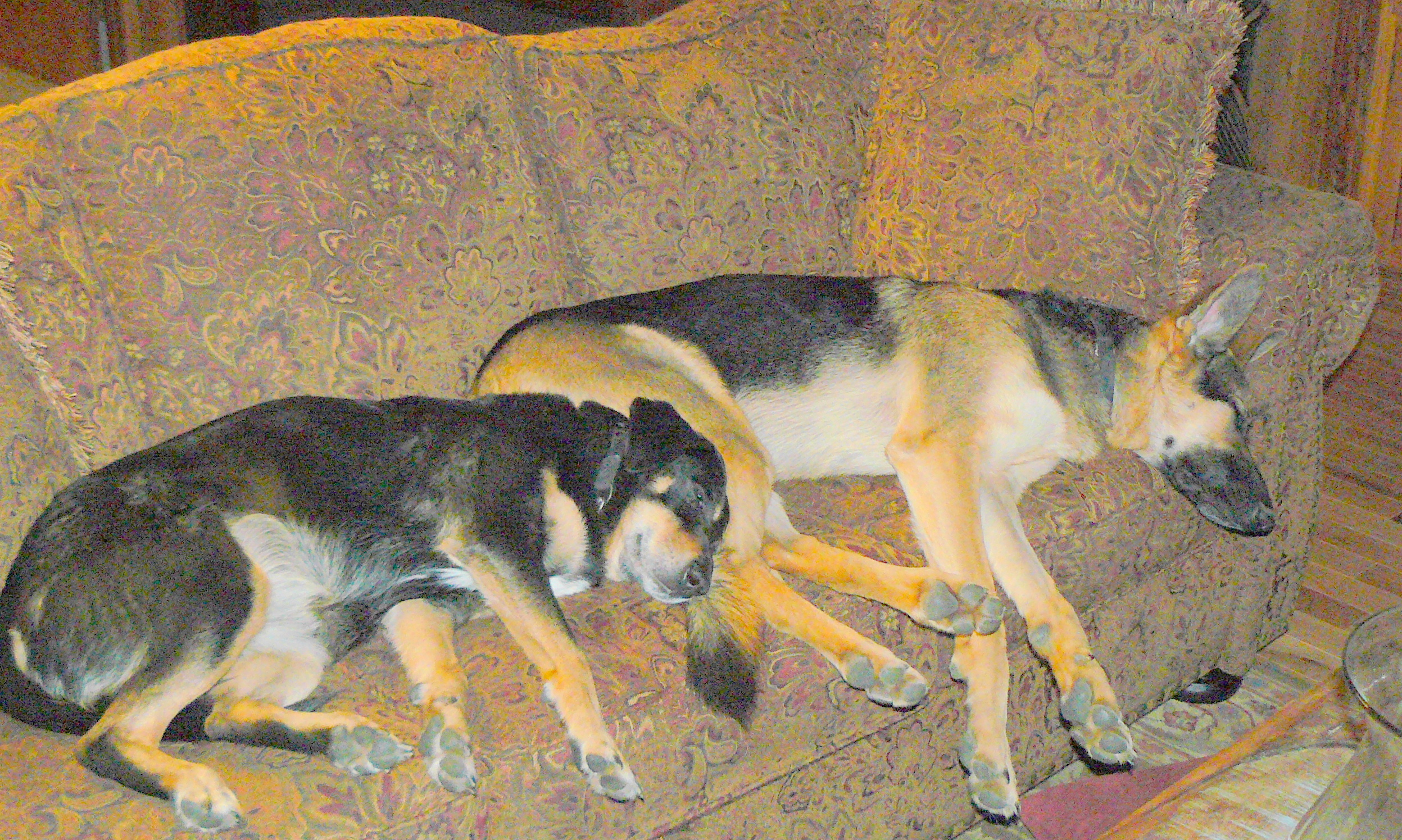
The dog is the master of being still. Being still, either from just laying quietly watching the world go by, or being still from being fast asleep. The ease at which they can find a space on a settee, a carpeted corner of a room, the covers of a made-up bed, and stretch out and be still, simply beggars belief. Dogs offer us humans the most wonderful quality of stillness that we should all practice. Dogs reveal their wonderful relationship with stillness.
Now watch this entrancing talk from Pico Iyer.
Published on Nov 26, 2014
The place that travel writer Pico Iyer would most like to go? Nowhere. In a counterintuitive and lyrical meditation, Iyer takes a look at the incredible insight that comes with taking time for stillness. In our world of constant movement and distraction, he teases out strategies we all can use to take back a few minutes out of every day, or a few days out of every season. It’s the talk for anyone who feels overwhelmed by the demands for our world.
Why you should listen.
Acclaimed travel writer Pico Iyer began his career documenting a neglected aspect of travel — the sometimes surreal disconnect between local tradition and imported global pop culture. Since then, he has written ten books, exploring also the cultural consequences of isolation, whether writing about the exiled spiritual leaders of Tibet or the embargoed society of Cuba.
Iyer’s latest focus is on yet another overlooked aspect of travel: how can it help us regain our sense of stillness and focus in a world where our devices and digital networks increasing distract us? As he says: “Almost everybody I know has this sense of overdosing on information and getting dizzy living at post-human speeds. Nearly everybody I know does something to try to remove herself to clear her head and to have enough time and space to think. … All of us instinctively feel that something inside us is crying out for more spaciousness and stillness to offset the exhilarations of this movement and the fun and diversion of the modern world.”
What others say
“[Iyer] writes the kind of lyrical, flowing prose that could make Des Moines sound beguiling.” — Los Angeles Times
We rarely get to know what a rescue dog has been through.
Of the ten dogs that we have here at home, two are pedigree dogs purchased from breeders, that’s Pharaoh and Cleo, two are rescue dogs that came from known sources, Oliver from neighbours who couldn’t cope with him and Pedy from the local Merlin dog pound, and the rest are all ex-rescue dogs that Jean took from the streets of San Carlos, Mexico.
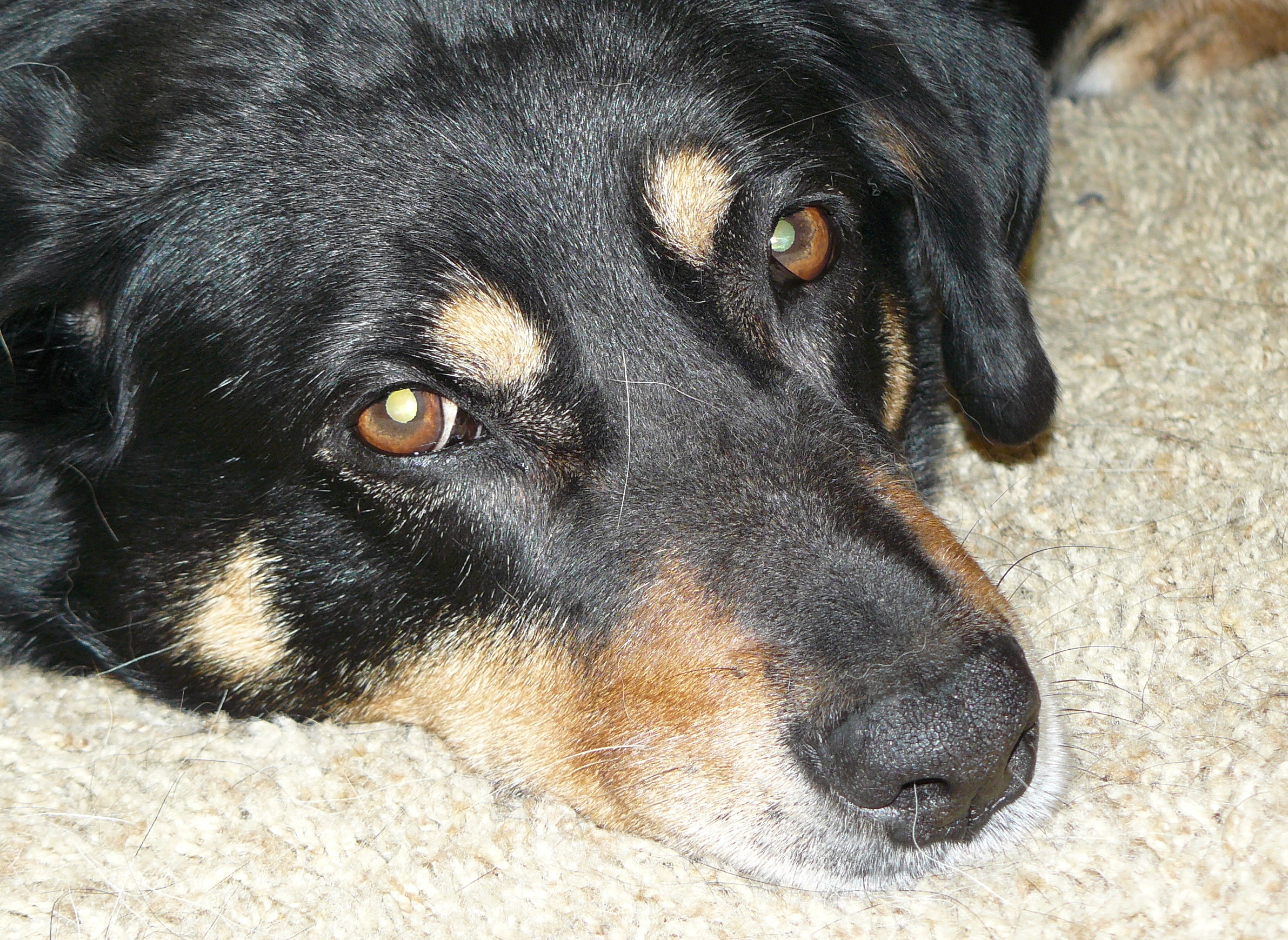
The last rescue dog to be taken in by Jean before we both left Mexico was Hazel who was abandoned outside Jean’s house in San Carlos a few weeks before we left for Arizona. The picture below is of Hazel taken in March 2014.
Hazel is the most loving and adorable of dogs and the love that I feel coming from her towards me is real, tangible and precious. Yet this is a mother dog who very shortly before she was deposited in front of Jean’s house in Mexico had had all her puppies removed from her as Hazel was still in milk. (The poor in San Carlos frequently sell young puppies for a few Pesos.) It’s beyond the comprehension of us humans, especially women, to imagine what it must be like for a mother to so catastrophically lose her young babies.
That’s why a recent article over on Mother Nature Network really reached out to me. We never know what homeless dogs have to contend with before they find loving homes.
ooOOoo
Why our Great Dane is so scared to be alone
Most of us will never know what our rescue dogs have been through. We found out.
By: Ali Berman, August 12, 2015
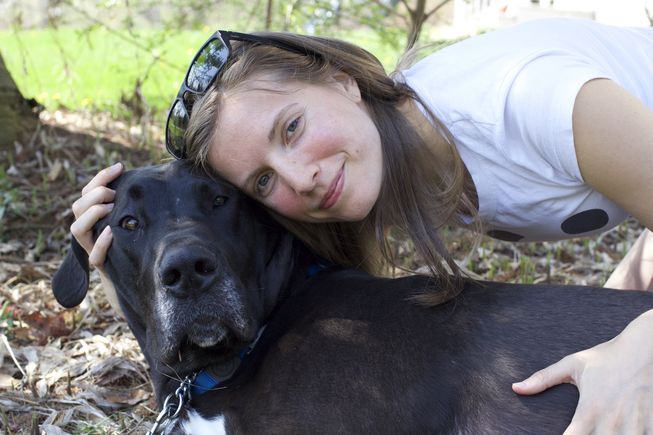
Author Ali Berman discovered she had a new shadow when she met Cooper. (Photo: Ali Berman)
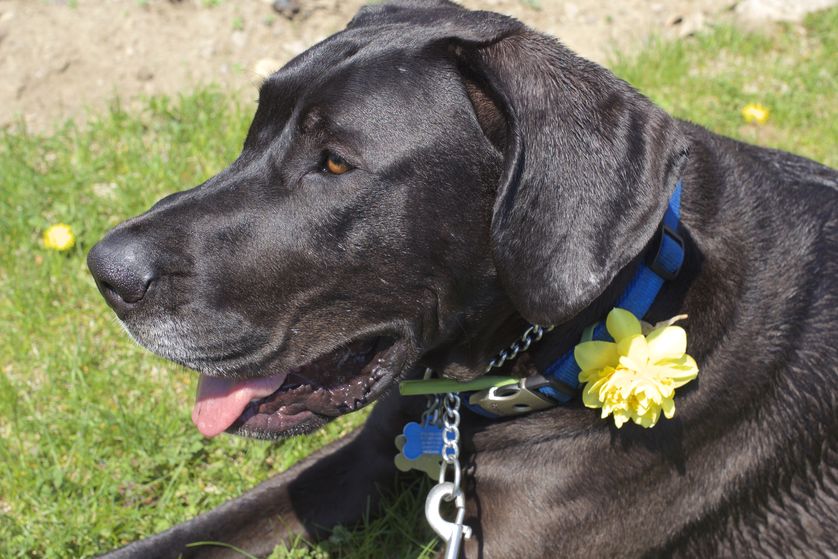
In February 2015, David and Glenda Berman — that’s my mom and dad — drove from New York to Connecticut to meet Cooper, a 13-month-old Great Dane. When they were introduced, 100-pound Cooper rushed over to give them an enthusiastic greeting, burying his head in their legs, leaning on them, and asking to be petted. My mom and dad fell in love, and Cooper took the two-hour drive back to their house, the place that would become his forever home.
During those first few weeks, my parents got to know Cooper. They went for walks in the snow, played together, and snuggled. (He’s a major snuggler.) But, in addition to those normal doggy behaviors, they noticed something else. Cooper was reluctant to leave their sides. If they left the room, he went with them. He took trip after trip to the kitchen, to the bathroom, to the laundry room. When they moved, he moved.
I didn’t believe the extent of it until I got the chance to meet him myself. I traveled back to New York to visit my family in May. For me and Coop, it was love at first sight. We played, we ran, we cuddled, and by the end of the first day, I found myself with a 115-pound shadow. As soon as I showed any sign of movement, his head perked up and he was ready to follow me. In the morning when he opened his eyes, he went directly to my room to wake me up. When I napped in the afternoon, he came with me, opting to sleep right next to the bed. And when I went out to dine with a friend, my parents distracted him so he wouldn’t see that I was leaving.
Now, when a small dog follows you everywhere, it’s not a big deal. But when a Great Dane follows you around, it’s not stealthy. Seeing how much he craved to be near people, I welcomed him wherever I went — even the bathroom. Still, I wondered: Why was he so reluctant to be alone? Did he not believe we’d come back?
If there’s a hug going on, Cooper wants to be a part of it. (Photo: Ali Berman)
Thinking we knew the full story behind his upbringing, we all wrote it off as him being a little insecure. In just over a year he had experienced four different homes. After he left the breeder (his first home), Cooper went to live with a young woman who loved him very much. Unfortunately, they learned that while Cooper enjoys meeting other dogs on his walks, he has trouble living with other dogs. He got into fights with another pooch in the house and with great difficulty, the young woman sent Cooper to live with her uncle. As he also had animals at home, the problem repeated itself.
Cooper needed to live with a one-dog family. The uncle — who could easily have sold purebred Cooper for a handsome sum — instead decided to put him up for adoption to find the best family possible. My parents had been looking for a Great Dane to adopt, so they sent their references, along with pictures with their previous Great Dane who had died two years before, and a heartfelt message. They were chosen to be Cooper’s new and final family.
Because Cooper was loved and well treated in all of his homes, my parents thought the insecurity came from the many moves.
But that wasn’t the full story. Not even close.
In an email from the woman who originally took Cooper in, my mother learned the truth. Cooper had been born with the rest of his litter in the home of an Iowa breeder. One night, when the breeders were out bowling, their home caught on fire. Everything went up in flames. Cooper’s mother and siblings all tragically perished. Baby Cooper was found alone in the debris in the yard. In just one night, he had lost his entire family, suffering more trauma in an instant than most experience in a lifetime.
After the fire, the breeders had to rebuild their lives, so they put Cooper up for adoption. That’s when he started to move from house to house, finally finding his perfect match with my parents. Now, he starts out every day with a multi-mile walk, a nap in the office while my dad works, and then Cooper spends an hour or two playing with his friends in the dog park in the afternoon. If he’s not snoozing or walking, he’s out in the garden with my mom soaking up the sun.
Some serious trauma as a puppy made Cooper never want to be alone. (Photo: Ali Berman)
Just part of the story
When we rescue an animal, most of the time we never get to know their complete history. Why do some cry when their humans leave the house? Or some bark and growl at men who wear hats? Like people, animals remember the various difficulties and tragedies they have suffered. Those scars go through life with them, just like our own scars follow us. The only difference is they can’t tell us their fears, and we can’t explain to them that they are safe. The best we can do is show them they are loved and hope with enough repetition, they’ll get the message.
In an ideal world, every dog would only have good memories. Their first Frisbee catch or trip to the beach, their favorite person who knows how to pet the ears just right, and the safety of a single home where they will live their life right through to ripe old age. That’s not the case for every dog. Some need a little extra help from us as they learn to trust, move on from the past and accept that their new reality is the one they can count on.
With time, Cooper might just learn to keep snoozing while his mom or dad goes to get a cup of tea. Until then, we’ll all keep showing him that he’s loved, and that this home and this family are forever.
ooOOoo
When one thinks of how dogs, Cooper, Hazel and tens of thousands of others, so beautifully offer their unlimited love to us humans it is just a great shame that we humans haven’t emulated our beloved dogs across mankind in such a widespread manner.
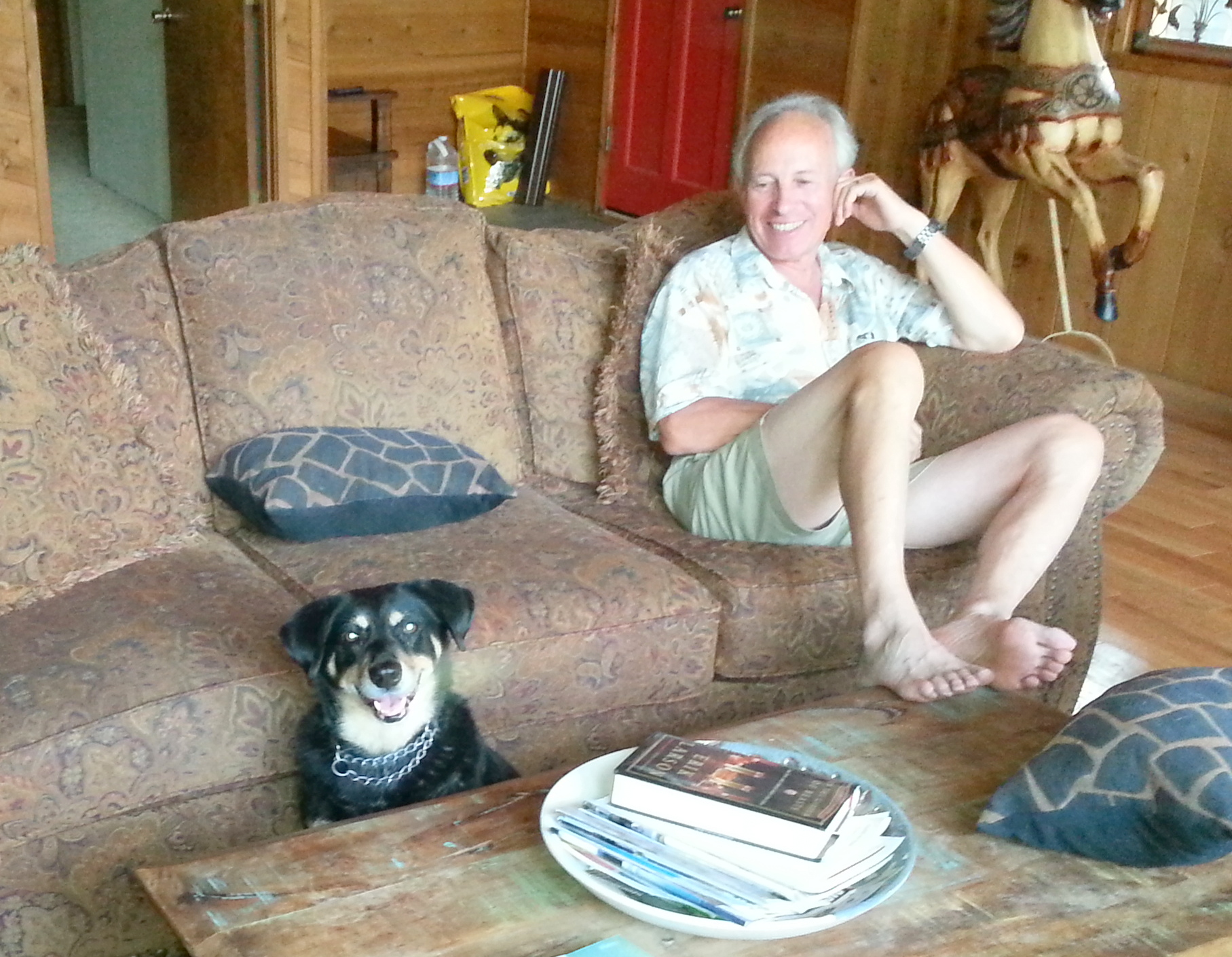
Picture taken by our guest Don Reeve of Hazel (and me) Wednesday afternoon.
Gorgeous Hazel. Who would have thought from that smiling face of hers that she had ever suffered the catastrophic loss of her puppies that she had.
Integrity really is at the heart of all that we are – or it should be.
The fundamental premise behind this blog is my discovery back in 2007, when I was living in South Devon, England with Pharaoh, that dogs are creatures of integrity. As is written elsewhere in this place:
Dogs are part of the Canidae, a family including wolves, coyotes and foxes, thought to have evolved 60 million years ago. There is no hard evidence about when dogs and man came together but dogs were certainly around when man developed speech and set out from Africa, about 50,000 years ago. See an interesting article by Dr. George Johnson.
Because of this closeness between dogs and man, we (as in man!) have the ability to observe the way they live. Now I’m sure that scientists would cringe with the idea that the way that a dog lives his life sets an example for us humans, well cringe in the scientific sense. But man seems to be at one of those defining stages in mankind’s evolution where the forces bearing down on the species homo sapiens have the potential to cause very great harm. If the example of dogs can provide a beacon of hope, an incentive to change at a deep cultural level, then the quicker we ‘get the message’, the better it will be.
value and cherish the ‘present’ in a way that humans can only dream of achieving
are, by eons of time, a more successful species than man.
And have poetry written for them:
Inner Peace
If you can start the day without caffeine,
If you can always be cheerful, ignoring aches and pains,
If you can resist complaining and boring people with your troubles,
If you can eat the same food every day and be grateful for it,
If you can understand when your loved ones are too busy to give you any time,
If you can take criticism and blame without resentment,
If you can conquer tension without medical help,
If you can relax without liquor,
If you can sleep without the aid of drugs,
You are probably the family dog!
So an essay that I came across in undertaking research for ‘the book’ really struck a chord. An essay written by Stephanie Staples (see footnote), and you can learn more about her at this place. Her essay was entitled Reflections On The Value of Integrity and is republished here with Stephanie’s very kind permission.
ooOOoo
Your Life, Unlimited
Stephanie Staples
Reflections on The Value of Integrity?
Integrity comes into play in everything we do. In fact, it’s more than everything we do, it’s everything we are.
Having a high level of integrity is one of the most important characteristics we can possess. It is a core value, a choice, and something we can nurture. Integrity is modeled all around us, yet its value in our society seems to be underrated.
Coming from a place of integrity means being truthful and honest. It means being reliable. It means trying to build rather than break, help rather than hurt, connect rather than crumble. Coming from a place of integrity means being authentic—the same you, whether people are watching or not.
We will not always be right or do right, but when we have integrity, we step up; we accept responsibility for our actions, we feel remorse, we have an understanding of what went wrong and why it happened so that we can put a plan in place to ensure it won’t happen again.
You know how a bad reputation follows you around? Well, the fabulous thing about living life brimming with integrity is that it actually precedes you. If you tell the truth even when you don’t have to, do the right thing even when nobody is around to notice, honestly do your best, keep your promises, etc., then that is what people will assume of you. Your actions define your character. This comes in handy so when you do make a mistake, people tend to give you the benefit of the doubt, and perhaps forgive more easily. You see how the reputation comes first? Can you see how it could work in reverse as well? If you lack integrity, people will not trust, value or respect you.
Think about how integrity plays a role in your life, in the life of your family, and in your career. Think about what sort of values you are modeling, how you are modeling them, and how you can live a life of integrity.
This could mean being honest and saying your son is 12, even if he looks 11, and 12 years olds have to pay. This may mean answering a call light of a patient who is not ‘yours.’ It might mean accommodating a request even if you don’t want to. Perhaps it is giving credit where credit is due? What might it mean to you?
If you are not getting what you want out of your life, then look inside and see exactly what’s going on in your life. I know if you focus on being a person of integrity, your character will be strengthened, your relationships at home and at work will be strengthened, and your life will be strengthened. Start by being honest and true to yourself, and the rest will follow.
One final point—it is not just the big things that count, it is the hundreds of little things we do every day that mould our character, that develop our integrity, and that help us live our lives, unlimited!
ooOOoo
Of all the qualities that we have to learn from dogs, the one of integrity is the most important, by a mile. Stephanie’s essay gets to the heart of what integrity really means in a way that I have not previously come across. I am very grateful to have been given her permission to republish it.
Footnote
Stephanie Staples is a member of Rockford Kingsley’s Advisory Board
and is a proud Canadian coach and speaker who helps audiences
around North America shift their perspective and kick up the quality of their life!
Very grateful to Chris Snuggs for sending this on to me. As seen on the BoredBug website:
ooOOoo
They Told This Little Boy His Dog Was Going To Be Put Down. His Response STUNNED Them.
On Belker’s last day, Shane seemed calm, petting the old dog as if he understood that he was saying a last “goodbye”. Within minutes, Belker slipped peacefully away. Shane seemed to accept Belker’s transition without any difficulty or confusion.
They all sat together after Belker’s death, wondering aloud how sad it is that animals lives are shorter than humans. Shane, who had been listening quietly, spoke ”I know why! People are born so that they can learn how to live a good life, like loving everybody all the time and being nice, right?” The six-year-old continued, ”Well, dogs already know how to do that, so they don’t have to stay as long.”
The way a dog focuses on the immediate task holds a very important lesson for us.
It’s a safe bet to claim that any dog owner has, from time to time, envied the way a dog so perfectly lives in the present. Then let’s not even go to the comparison between dogs and humans when it comes to relaxing!
Hazel taking a mid-morning break on Tuesday.
These opening thoughts were prompted by a recent article that was published on The Conversation. The article criticised, rightly in my opinion, the madness (my word) of how many of us live these days, and with particular respect to ‘multi-tasking’. It’s a sobering reminder of the value of letting go and is republished here within the terms of essays published on The Conversation.
ooOOoo
The value of unplugging in the Age of Distraction
July 7, 2015 4.59am EDT
Author: John Rennie Short – Professor, School of Public Policy at University of Maryland, Baltimore County.
Small device, but very demanding. aciej_ie/flickr, CC BY-NC-ND
A common experience: you are walking down the street and someone is walking in the opposite direction toward you. You see him but he does not see you. He is texting or looking at his cellphone. He is distracted, trying to do two things at the same time, walking and communicating.
There is also the telltale recognition of a car driver on a phone; she’s driving either too slowly or too fast for the surrounding conditions, only partly connected to what is going on around her. Connected to someone else in another place, she is not present in the here and now.
These types of occurrences are now common enough that we can label our time as the age of distraction.
A dangerous condition
The age of distraction is dangerous. A recent report by the National Safety Council showed that walking while texting increases the risk of accidents. More than 11,000 people were injured last year while walking and talking on their phones.
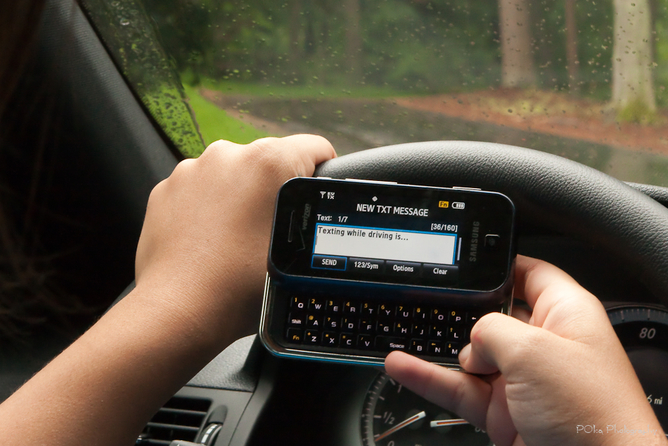
Really bad idea: texting while driving. Paul Oka/flickr, CC BY-NC
Even more dangerous is the distracted car driver. Distracted drivers have more fluctuating speed, change lanes fewer times than is necessary and in general make driving for everyone less safe and less efficient.
Texting while driving resulted in 16,000 additional road fatalities from 2001 to 2007. More than 21% of vehicle accidents are now attributable to drivers talking on cellphones and another 5% were text messaging.
Cognitive impairment
Multitasking relatively complex functions, such as operating handheld devices to communicate while walking or driving, is not so much an efficient use of our time as a suboptimal use of our skills.
We are more efficient users of information when we concentrate on one task at a time. When we try to do more than one thing, we suffer from inattention blindness, which is failing to recognize other things, such as people walking toward us or other road users.
Digital devices, which are proliferating in our lives, encourage multitasking, but does this really help our performance? Thomas Hawk/flickr, CC BY-NC-SA
Multitaskers do worse on standard tests of pattern recognition and memory recall. In a now classic study, researchers at Stanford University found that multitaskers were less efficient because they were more susceptible to using irrelevant information and drawing on inappropriate memories.
Multitasking may not be all that good for you either. A 2010 survey of over 2,000 8- to 12-year-old girls in the US and Canada found that media multitasking was associated with negative social indicators, while face-to-face contact was associated with more positive social indicators such as social success, feelings of normalcy and hours of sleep (vital for young people).
Although the causal mechanism has yet to be fully understood – that is, what causes what – the conclusion is that media multitasking is not a source of happiness.
Distraction-seeking creatures?
There are a number of reasons behind this growing distraction.
One often-cited reason is the pressure of time. There is less time to accomplish all that we need to do. Multitasking then is the result of the pressure to do more things in the same limited time. But numerous studies point to the discretionary use of time among the more affluent, and especially more affluent men. The crunch of time varies by gender and class. And, paradoxically, it is less of an objective constraint for those who often articulate it most.
Although the time crunch is a reality, especially for many women and lower-income groups, the age of distraction is not simply a result of a time crunch. It may also reflect another form of being. We need to reconsider what it means to be human, not as continuous thought-bearing and task-completing beings but as distraction-seeking creatures that want to escape the bonds of the here-and-nowness with the constant allure of someone and somewhere else.
Media theorist Douglas Rushkoff asserts that our sense of time has been warped into a frenzied present tense of what he calls “digiphrenia,” the social media-created effect of being in multiple places and more than one self all at once.
There is also something sadder at work. The constant messaging, emailing and cellphoning, especially in public places, may be less about communicating with the people on the other end as about signaling to those around that you are so busy or so important, so connected, that you exist in more than just the here and now, clearly a diminished state of just being.
There’s greater status in being highly connected and constantly communicating. This may explain why many people speak so loudly on their cellphones in public places.
Reactions
The age of distraction is so recent we have yet to fully grasp it. Sometimes art is a good mediator of the very new.
A video art installation by Siebren Verstag is entitled Neither There nor There. It consists of two screens. On one side a man sits looking at his phone; slowly his form loosens as pixels move to the adjacent screen and back again. The man’s form moves from screen to screen, in two places at one time but not fully in either.
One study that looked at the effect of banning cellphones in schools found that student achievement improved when cellphones were banned, with the greatest improvements accruing to lower-achieving students, who gained the equivalent of an additional hour of learning a week.
On many college campuses, faculty now have a closed-laptop policy after finding students would use their open laptops to skim their emails, surf the web and distract their neighbors. This was confirmed by studies that showed that students with open laptops learned less and could recall less than students with their laptops closed.
We are witnessing a cultural shift occurring with the banning of devices, cellphone usage being curtailed in certain public places and policies banning texting while driving. This is reactive. We also need a new proactive civic etiquette so that the distracted walker, driver and talker have to navigate new codes of public behaviors.
Many coffee stores in Australia, for example, do not allow people to order at the counter when they are on the cellphone, more golf clubs are banning the use of cellphones while on the course and it is illegal in 38 states in the US for novice drivers to use a cellphone while driving.
There is also the personal decision available to us all, one foreshadowed by writer and social critic Siegfried Kracauer, who lived from 1889 to 1966. In a newspaper article on the impact of modernity, first published in 1924, he complained of the constant stimulation, the advertising and the mass media that all conspired to create a “permanent receptivity” that prefigures our own predicament in a world of constant texting, messaging and cellphones.
One response, argued Kracauer, is to surrender yourself to the sofa and do nothing, in order to achieve a “kind of bliss that is almost unearthly.”
One radical response is to unplug and disconnect, live in the moment and concentrate on doing one important thing at a time. Try it for an hour, then for a day. You can even call your friends to tell them about your success – just not while walking or driving, or working on your computer screen or speaking loudly in a public place.
ooOOoo
Oh, did someone mention unplugging and disconnecting?
A young Pharaoh already embracing contentment. September, 2003.
Sidney Bloch, who is Emeritus Professor in Psychiatry at the University of Melbourne, recently published an essay over on the blogsite The Conversation. (Greatly recommended, by the way.)
His essay was about happiness versus contentment and certainly touched a few spots in this old Englishman’s psyche, contented as I am in this rural part of Oregon. However, until now I had never stopped to think about the difference between being happy and being contented.
So, I think you are going to enjoy Professor Bloch’s views, that now follow. His essay is republished, with permission, just as it was presented on The Conversation.
ooOOoo
Happiness is an illusion, here’s why you should seek contentment instead.
June 29, 2015 4.07pm EDT
Feeling content means having a deep-seated, abiding acceptance of oneself and one’s worth, together with a sense of self-fulfilment, meaning and purpose. James Theophane/Flickr, CC BY-SA
I want to share a personal view of what it is to be happy and how it differs from feeling content. Let me begin with a clinical story.
They met at a party; it was love at first sight just like one reads about in romantic novels. They married following an exhilarating courtship, and since they shared an eagerness to raise a family, Jennifer soon announced the joyful news of her pregnancy. They called their baby Annie after Adam’s late mother.
They felt blessed; every moment since their first encounter had been nothing but pleasurable. Everyone who knew them concurred that their lives as a couple had been replete with happiness.
Tragically, it was not to endure. Their first setback occurred only days after Annie’s birth. She was sleeping fitfully and her colic stubbornly persisted. Jennifer felt utterly demoralised as a new mother. Her mounting sense of guilt and melancholy led to her admission to a psychiatric ward (her first ever encounter with psychiatry); the fear of her harming Annie or herself spread through the family and circle of friends.
And then, quite shockingly, despite the most diligent medical and nursing care, Jennifer met her death after jumping off a second floor balcony. Her family and friends plunged into deep grief; the medical professionals who had looked after her were similarly bereft.
An elusive goal
Having worked as a psychiatrist for over four decades and got to know dozens of men, women, and children of diverse backgrounds and with unique life stories, I have witnessed many a sad narrative, although suicide has mercifully been a rare event.
These experiences, in tandem with a lifelong fascination with what makes people tick, have led me most reluctantly to the judgement that while we may savour happiness episodically, it will invariably be disrupted by unwelcome negative feelings. Still, most of humankind will continue to harbour the expectation of living happily and remain oblivious that this wishful fantasy is an unconscious way of warding off the threat of psychic pain.
Rather than confront and demoralise those who have sought my help, I have gently but honestly responded to their plaintive yearning (“all I want is just to be happy”), by highlighting an inherent human sentiment. Namely that clinging to the fiction of being able to avoid suffering and enjoying a continuing state of pleasure is tantamount to self-deception.
I have offered them the hope – but not a guarantee – that they have the potential to lead a more fulfilling life than hitherto by participating in a challenging, and at times even distressing process of self-exploration whose purpose is to enhance self understanding and acceptance of the reality-bound emotional state I call contentment.
You may retort: “But you treat people who are miserable, pessimistic and self-deprecating, surely you must be hopelessly biased.” I would readily understand your reaction but suggest that all of us, not just those in treatment, crave happiness and are repeatedly frustrated by its elusiveness.
Most of humankind continues to harbour the expectation of living happily and remains oblivious that this wishful fantasy is an unconscious way of warding off the threat of psychic pain. Kate Ter Haar/Flickr, CC BY-SA
As the father of psychoanalysis Sigmund Freud emphasised in his 1930 essay, Civilization and Its Discontents, we are much more vulnerable to unhappiness than its opposite. That’s because we are constantly threatened by three forces: the fragility of our physical self, “doomed” by ageing and disease; the external world, with its potential to destroy us (through floods, fires, storms and earthquakes, for example); and our unpredictably complicated relationships with other people (regarded by Freud as the most painful source of unhappiness).
So, am I simply a misanthrope? I hope not but I am inclined to agree with Elbert Hubbard, the American artist and philosopher, who said, “Life is just one damn thing after another“.
We only have to think about the 50 million people who are currently displaced and unlikely to find a secure haven anytime soon, or the 2.2 billion people – including millions of children – who live on less than US$2 a day to appreciate the validity of that remark.
A better option
Given the formidable obstacles to chasing after happiness or promoting its sustainability if we are lucky enough to come by it, what options do human beings have? I have not come across any meaningful approach to this question, even from the unswervingly confident proponents of the contemporary school of positive psychology.
So, I espouse the following: given that we have the means to distinguish between happiness and contentment, we can examine how they differ and, in so doing, identify an alternative to the futile pursuit of happiness.
Happiness, derived from the Norse word hap, means luck or chance; the phrase happy-go-lucky illustrates the association. Many Indo-European languages similarly conflate the feeling of happiness and luck. Glück in German, for instance, can be translated as either happiness or chance, while eftihia, the Greek word for happiness, is derived from ef, meaning good, and tixi, luck or chance.
Thus, a mother may have the good fortune to feel ecstatic when responding to her infant’s playfulness, only to see it evaporate a couple of years later and be replaced by the initial features of autism. In the story we started this article with, Jennifer may have persevered had her baby slept peacefully and not been assailed by colicky pain in her first few weeks of life.
Contentment is derived from the Latin contentus and usually translated as satisfied. No multiple meanings here to confuse us. In my view, feeling content refers to a deep-seated, abiding acceptance of one’s self and one’s worth together with a sense of self-fulfilment, meaning and purpose.
And, most critically, these assets are valued and nurtured whatever the circumstances, or even especially when they are distressing or depressing.I have had the privilege of knowing men and women who suffered grievously as children in the ghettoes and concentration camps of Nazi Europe but emerged from their nightmare to face the challenge of seeking strengths, emotional and spiritual, within themselves. With the passage of time, many succeeded in achieving a sense of deep-seated contentment.
What these survivors have clearly demonstrated is that accepting and respecting oneself, coupled with determining what is personally meaningful, stand a greater chance of accomplishment, even if never completed, than a relentless and ultimately futile pursuit of happiness. What’s more, contentment has the potential to serve as a robust foundation upon which episodes of joy and pleasure can be experienced and cherished.
ooOOoo
I read the essay on The Conversation out aloud to Jeannie yesterday morning and we both found it a very wise and insightful reflection.
Seems to me that there’s another aspect of life that we could learn from our wonderful dogs!
Believers and non-believers alike owe Pope Francis a giant ‘thank you’.
As regular followers of this place will have heard before, one of the roles of the ‘alpha’ dog, or more accurately referred to these days as the Mentor dog, in other words the female dog that in the days before domestication was the leader of her pack, was to move her pack if she intuited that the pack’s home range was not sustaining them. (Her other role was pick of the male dogs!)
Thus the title of today’s post came to me as just possibly the metaphorical equivalent. That the global human ‘pack’ has been sharply reminded by one of the world’s key religious leaders that ‘more of the same’ isn’t going to work for much longer.
Quite rightly, there has been a huge amount of reporting and analysis of last week’s Papal Encyclical. But one of the most beautiful and profoundly eloquent came from the writer Jennifer Browdy. If you haven’t come across her before then do drop across to her website; you will love what she presents! I have been a subscriber to her blog posts for some time and that was how I came across her post called: And the Walls Came Tumbling Down: Pope Francis Shows Us the Way. Jennifer very kindly gave me permission to republish her post today.
ooOOoo
And the Walls Came Tumbling Down: Pope Francis Shows Us the Way
By Jennifer Browdy
The Encyclical on climate change and the environment released by Pope Francis this week has all the magic of the fall of the Berlin Wall in 1991. Back then, the antagonism between the U.S. and the U.S.S.R. seemed implacable and unresolvable, a fight to the death. And then suddenly the wall came down and the world walked through, marveling, into a new era.
Now we have another abrupt shift, this time of a religious order. The leaders of the Catholic Church can hardly be accused of being “radical tree-huggers.” And yet here is Pope Francis, solemnly exhorting his flock of a billion Catholics worldwide to be respectful to Mother Earth and all the living beings she supports. In the blink of an eye, the language of Native American spirituality has been taken up by the same Catholic Church that once tortured and executed indigenous peoples precisely because of their different religious beliefs.
I urge you to read the entire Encyclical for yourself. It is a truly remarkable document, worth serious study. Of many passages I’d like to underline, here are two:
228 Care for nature is part of a lifestyle which includes the capacity for living together and communion. Jesus reminded us that we have God as our common Father and that this makes us brothers and sisters. Fraternal love can only be gratuitous; it can never be a means of repaying others for what they have done or will do for us. That is why it is possible to love our enemies. This same gratuitousness inspires us to love and accept the wind, the sun and the clouds, even though we cannot control them. In this sense, we can speak of a “universal fraternity”.
229 We must regain the conviction that we need one another, that we have a shared responsibility for others and the world, and that being good and decent are worth it. We have had enough of immorality and the mockery of ethics, goodness, faith and honesty. It is time to acknowledge that light-hearted superficiality has done us no good. When the foundations of social life are corroded, what ensues are battles over conflicting interests, new forms of violence and brutality, and obstacles to the growth of a genuine culture of care for the environment.
Here we find spiritual ecology enshrined as Catholic doctrine. And one thing about the Catholic Church—it is big on obedience. For believers, to ignore the Pope is to risk hellfire and damnation. In this case, though, the hellfire and damnation will be earthly, if we do not listen to the wise advice of Pope Francis and curb the insanity of industrial growth that goes beyond the limits of the planet to support.
Scientists appeal to our sense of reason, presenting compelling evidence that if we continue on our present path of wasteful consumption of the Earth’s resources, we will destroy our own future as a flourishing species. Religious leaders appeal to human beings’ moral conscience in invoking the responsibility of current parents and grandparents to leave a livable world to our descendants. It is up to the politicians, though, to translate vision into practice.
For too long, Christian conservatives in the U.S. have played the role of the ideological wing of Big Business, using money, manipulation and scare tactics to buy politicians and votes. In the face of the new Papal Encyclical, can American Christians really continue in good conscience to support the worst of the planet’s polluters and plunderers? Can they continue to elect mercenary politicians who hold our country hostage to the highest bidder?
If all good people who love our Earth and its creatures were to translate our love into action, as Pope Francis has just done so forcefully, I have no doubt the seemingly invincible wall of the industrial growth society we’ve been living with these past 200 years would melt away, revealing the path into a green, prosperous future.
“Where there’s a will, there’s a way,” the saying goes. Pope Francis has just shown us the will, and the way. It is now the task of us ordinary citizens to break the stranglehold of Big Business on politics and insist that our politicians follow his lead.
I close with an excerpt from the Pope’s “Christian Prayer in Union with Creation,” a vision of ecological interdependence if ever there was one:
“Triune Lord, wondrous community of infinite love,
teach us to contemplate you
in the beauty of the universe,
for all things speak of you.
“Awaken our praise and thankfulness
for every being that you have made.
Give us the grace to feel profoundly joined to everything that is.
God of love, show us our place in this world
as channels of your love
for all the creatures of this earth,
for not one of them is forgotten in your sight.
Enlighten those who possess power and money
that they may avoid the sin of indifference,
that they may love the common good, advance the weak,
and care for this world in which we live.”
Amen.
And the meek shall inherit the Earth…. Photo by J. Browdy, 2015
ooOOoo
I am sure that, whatever your religious or spiritual persuasion, you will agree with me with regard to the beauty of Jennifer’s essay. I know there are millions and millions of people who will want to look back in a few years time and see how Pope Francis’ legacy literally saved our lives.
Loving the animals on this planet must be more than a romantic notion.
Before you read on, take a small break in your busy day and watch the following:
On December 8, 2013 Michael Mountain spoke on “”I Am Not an Animal” — The Signature Cry of our Species” at the Personhood Beyond the Human conference at Yale University.
Michael Mountain is Past President and one of the founders of Best Friends Animal Sanctuary, the nation’s largest sanctuary for abused and abandoned animals.
Abstract: The past 50 years have seen enormous growth in the animal protection movement. But the situation for nonhuman animals in every sphere, with the exception of homeless pets, continues to deteriorate. Any small advances remain incremental. Animal rights and welfare groups find themselves at a loss to explain their inability to influence the general public. But the work of Ernest Becker (The Denial of Death) and of psychologists in the field of Terror Management Theory (TMT) offer essential insight.
In this talk, we discuss how our need, as humans, to proclaim that “I am not an animal!” and to deny personhood to other animals affects our relationship with them at a fundamental level. We argue that to be effective, the animal protection movement needs to understand TMT and take it into account. And we conclude that a new kind of relationship to the world of nature in the 21st Century is not only essential to the mitigation of the catastrophic effects of the Sixth Great Extinction, but that it also holds the key to Becker’s still-unanswered question of how we can begin to relate positively to our own terror of personal mortality — and therefore our own future as a species.
Me spending time becoming better acquainted with the subject of rights for other animals besides us humans coincided with a recent item published over on The Conversation and republished here within their rights.
ooOOoo
May 19 2015, 4.05pm EDT
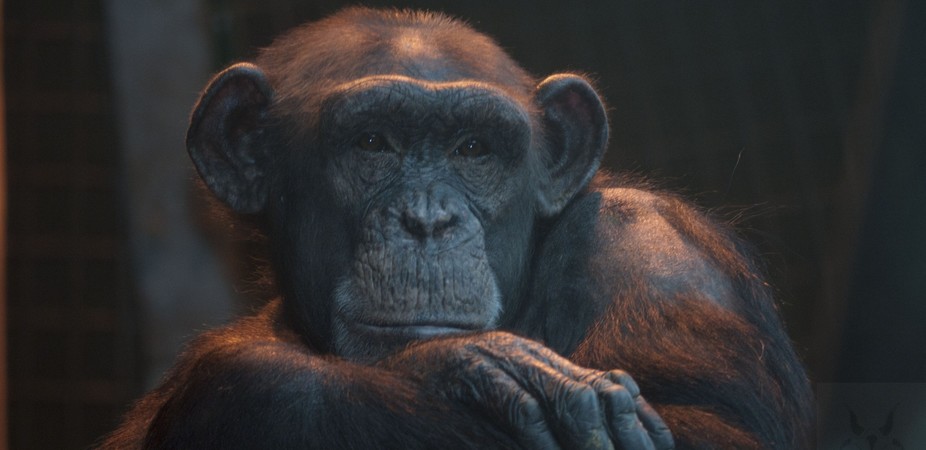
Climbing the tree: the case for chimpanzee ‘personhood’
Should primates such as chimpanzees be given rights normally reserved for humans? phil/Flickr, CC BY-NC-SA
Hercules and Leo don’t know it, but a decision about their future has made history. In granting an order to show cause on whether Hercules and Leo (who just happen to be chimpanzees) are illegally imprisoned, a Supreme Court judge in Manhattan has kept open the possibility that some nonhuman animals will be granted legal rights under common law.
The plaintiffs are currently used for biomedical research at New York’s Stony Brook University. What the lawyers running the case hope to show is that Hercules and Leo shouldn’t be treated as if they were just things or property, but should instead be given the status of persons.
Showing that any animal has what is needed for legal personhood is a difficult task. But chimpanzees seem promising candidates as there is a wealth of scientific evidence showing they possess complex cognitive abilities, like self-awareness and autonomy.
The order to show cause on the issue of habeas corpus is the first step in a process which Steven Wise and the Nonhuman Rights Project (NhRP) hope will secure Hercules and Leo’s bodily liberty and integrity.
If the court were to find in their favour, the chimpanzees would no longer be kept for research and could be moved to a sanctuary in Florida.
NhRP was founded by Wise in 2007 and after years of research it filed its first cases back in December 2013. To date it has brought three cases on behalf of chimpanzees held in captivity in the state of New York. But NhRP is ambitious, aiming to run as many cases on behalf of animals as it can fund.
If it can find suitable plaintiffs, NhPR hopes to mount cases for the personhood of elephants, whales and dolphins too.
Different perspectives on personhood for animals
Reactions to treating nonhuman animals as persons vary widely. Some people think it is ridiculous to even entertain the idea. Persons have to be human – end of story.
For philosophers, this is not very satisfactory. It tries to answer the question of whether animals can be persons by asserting a definition rather than offering an argument. It gets more interesting when people give reasons to support their view.
One approach to defending the idea that only humans are persons involves saying that persons need to participate in society. Society is founded on reciprocity; you can’t just take rights without also assuming responsibilities. And animals like chimpanzees can’t take on responsibilities, so they can’t have rights.
Another tactic is to suggest that there is a whole heap of criteria that one has to meet to be a person. And although humans meet these criteria, nonhuman animals don’t. These criteria could include things like being rational, self-aware, autonomous, having culture and being able to communicate.
The problem is neither of these kinds of arguments stand up to interrogation. There are lots of humans who get the benefit of rights without living up to reciprocal responsibilities, such as young children and people with certain physical or mental impairments.
There are similar difficulties when using a criteria based approach. Just as there are many humans who don’t meet certain criteria for personhood, there are some nonhuman animals who do.
This is known as the “problem of marginal cases”. Taking a consistent approach would mean treating some animals, but not all humans, as worthy of moral consideration.
This is known as the “problem of marginal cases”. Taking a consistent approach would mean treating some animals, but not all humans, as worthy of moral consideration.
There are other people who are sympathetic towards giving greater ethical consideration to animals, but who don’t think using personhood is the best approach. Utilitarians, for example, worry about the capacity to suffer. If a chimpanzee – or for that matter a dog, cat or rat – can experience pleasure and pain, then they matter regardless of whether they meet a test for personhood.
Implications of nonhuman animals as persons
If Wise and the NhRP win their case it will be a significant precedent and other cases will surely follow. Chimpanzees in jurisdictions where successful cases are mounted will no longer be permitted to be used in research or kept in zoos and circuses.
However, less charismatic animals – ones that don’t look like us or where it is not in our interests to grant them rights – won’t be so fortunate. Historically, there is a deep inconsistency in how we treat different types of animals that is not easily overturned, even in the face of compelling legal and ethical arguments.
The case of Hercules and Leo also has connections to Australia. Wise was inspired to practice animal law back in the 1980s after reading the work of Australian philosopher, Peter Singer. The hearing of the case in New York was actually interrupted due to Wise’s long-standing commitment to visit Australia and deliver the 2015 Voiceless Animal Law Lecture Series.
The hearing is now scheduled for 10:30am Wednesday May 27 at the New York County Supreme Court. Those interested in seeking rights for nonhuman animals keenly await the outcome.
ooOOoo
Towards the end of that piece, one sentence stood out. This one: “Historically, there is a deep inconsistency in how we treat different types of animals that is not easily overturned, even in the face of compelling legal and ethical arguments.“
Well it has to be overturned if mankind is to have any future on this planet!
Yet another aspect of our lives where taking a lesson from our dogs would do us no harm.
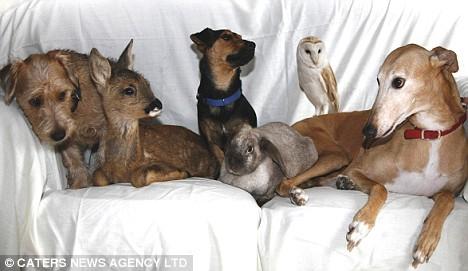
Pictured left to right are: “Toby”, a stray Lakeland dog; “Bramble”, orphaned roe deer; “Buster”, a stray Jack Russell; a dumped rabbit; “Sky”, an injured barn owl; and “Jasmine”. All told a mother’s heart doing best what a caring mother does.
This could be the most important lesson we learn from our dear dogs.
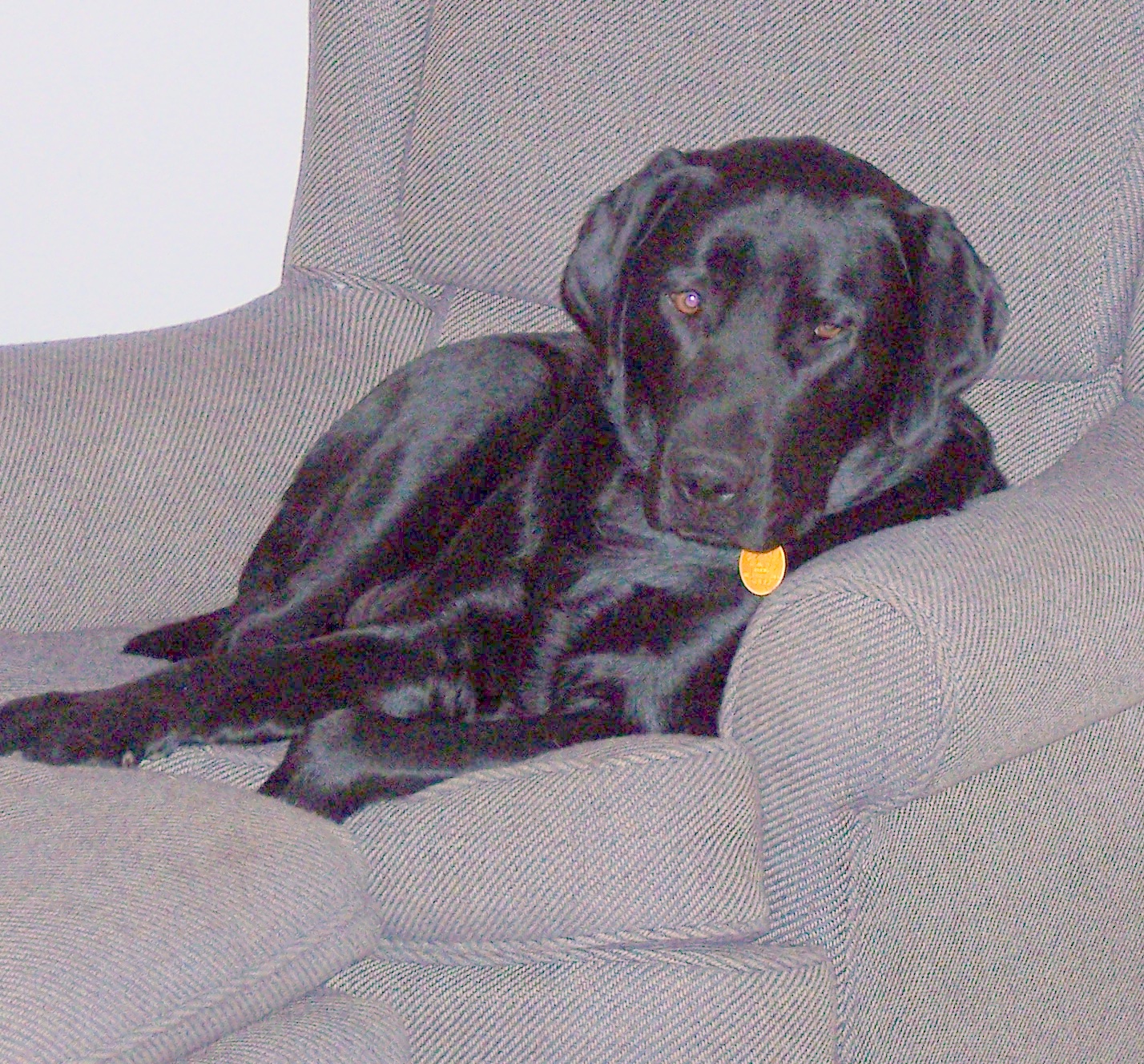
Reclining Clyde
Our immediate neighbours to the South of us, Larry and Janell, lost one of their dogs last Saturday. Here’s the email that was sent out by Larry:
Bad day at the ranch
We lost Clyde today. A neighbor who is a veterinarian came by this morning and did the deed. He had cancer in his shoulder, we had a tumor removed a couple of months ago but there must have been some left because his left front became totally unusable and then his left rear started to go too. We tried everything that the vets could come up with but it was starting to eat him up.
He was born in central South Dakota at a cattle ranch where I got him in April 2004, a six week old black bundle of wrinkles. He learned his manners from Barney, who we lost a little over 2 years ago from cancer as well. Barney and Clyde, what a GREAT pair!!
We still have Baxter the Aussie, who has pretty well recovered from getting hit by a car and severely injured the beginning of last month and Bob the cat.
I will miss Clyde terribly, just like I have ALL my labs! They are wonderful dogs. Just thinking that I’ll probably never have another big floppy eared pal like that makes me want to just cry my eyes out!!
One of the fondest memories of my life is/was going bird hunting, especially ducks, and having a well mannered lab as my partner!! I’ve shared time and my lunch with some good ones!! I so very much wish/hope that there really is a “RAINBOW BRIDGE”!!
Jean and I obviously knew Clyde and can confirm that he was the most gentle, kind-hearted dog one could find.
I wanted to treasure the memory of Clyde, on behalf of all the dear dogs in the world, and asked Larry and Janell if they would be comfortable with me publishing the email. They replied without hesitation that it was fine and then sent me some photographs of Clyde to include in this post.
———-
So the easy course for this post would be to leave it at this and move on. (And, please, if you are not up for a degree of introspection from yours truly, then do stop reading at this point!)
———-
But when I awoke this morning (Tuesday), a little after 5am, Jean still asleep next to me, three dogs likewise across the bed, and knowing I would be writing about Clyde later on in the day, I started to reflect on life and death and was there a lesson for us humans in the death of our beloved dogs. When Jean awoke an hour later, I asked her how many of her dogs had died over the years. She replied that there had been at least twenty dogs that had died and that she could remember each and every one of them.
That then opened up a much deeper reflection on death and whether our dogs really can offer us a lesson in this regard. For I’m not ashamed to admit that at times I feel scared about the future. I’m 70-years-old, seeing the signs of what the medics call ‘cognitive ageing’, have a few minor challenges in the areas of prostate, blood pressure, thyroid, and know how terribly unprepared I am for the second of life’s two certainties: death.
Jean’s view was that dogs have the ability to live so perfectly in the present that, except in very rare occasions, they don’t grieve for the loss of a loved one. Clearly, a significant difference between dogs and us humans.
Then it was clear that we humans only grieve for the death of someone we knew. That within the family that rarely extended back beyond our grand-parents. That seemed to offer some philosophical help. For if it comes down to the memories that others will have of us, after we have died, then it behoves us to live the best life we can, doing our best at every stage in our lives. Accepting that it is impossible not to make mistakes and end up with regrets, yet so long as we try to be true to ourselves then that’s all that matters.
It was then a very small onward step to love and the potential for the greatest learning from our dogs. For dogs so frequently show us the magic of unconditional love.
Back to Clyde.
Here are two other photographs of dear Clyde, separated by the words in Larry’s covering email.
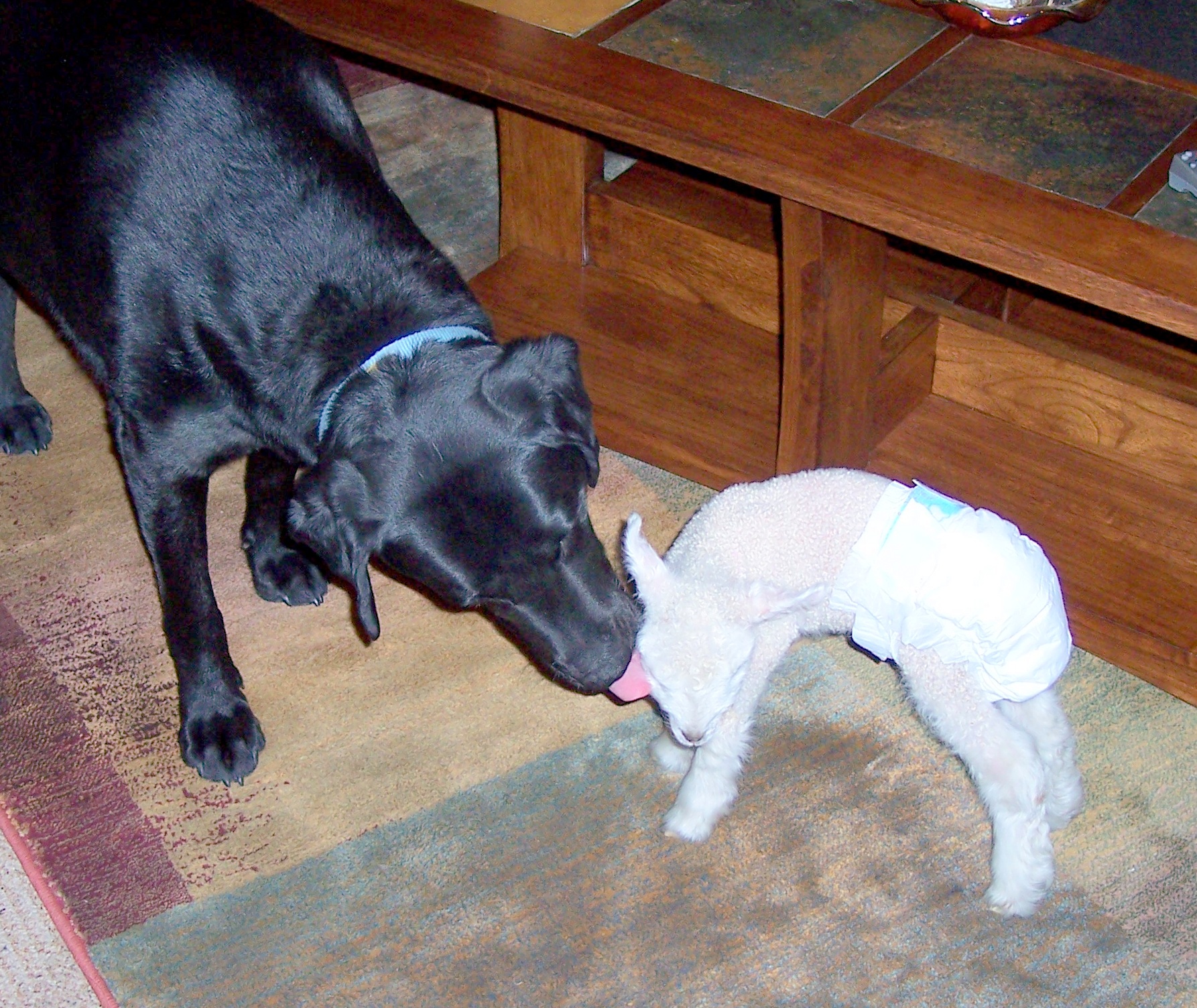
Clyde cleaning Pearl the lamb.
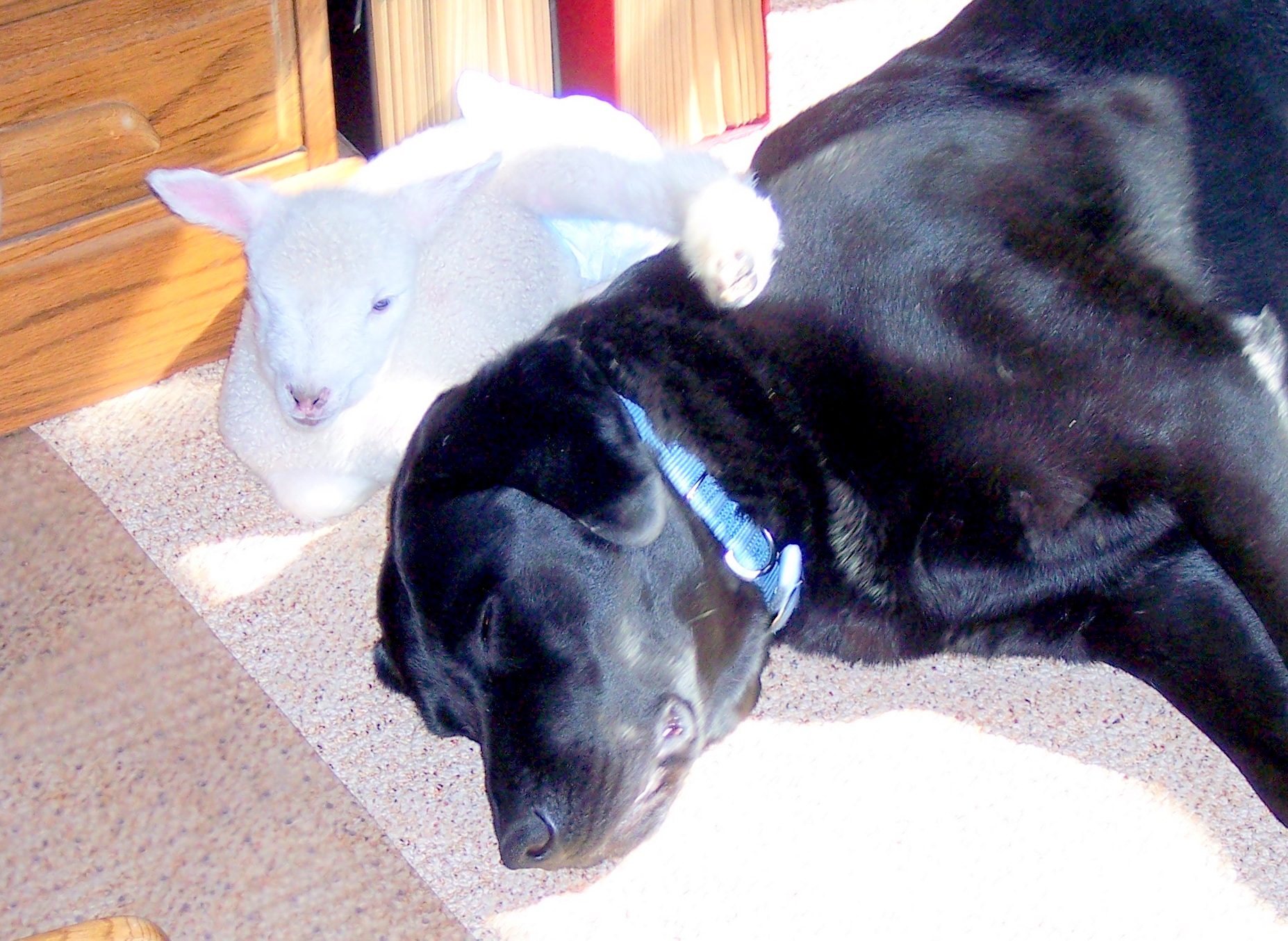
Paul, here are a few pictures of Clyde. Feel free to use what you like. We always said Clyde had a big heart, big stomach and no ambition as evidenced by these pictures! At one time we were nursing an orphan lamb in the house, Clyde adopted the lamb, Pearl, and looked after her, Larry.
Clyde and Pearl demonstrating a dear friendship.
I know that when our Lilly dies, she is 17, Jean will weep many tears.
I know that when our Pharaoh dies, he is soon to be 12, I will weep many tears.
But those pictures of Clyde remind all of us that it is in life that it is important to love. Important, almost beyond words, to be kind to others, to offer and receive love, and to treasure the present.
So, yes, we must shed a few tears of the heart yet thereafter we must treasure the memories.
“For if we cry at losing the sun, our tears will hide the light of the stars.”
Just a very beautiful true story. (And I am indebted to Suzann for sending it on to me.) One couldn’t ask for a better post to follow on from yesterday’s Picture Parade theme on parenting.
ooOOoo
The Greyhound
In 2003, police in Warwickshire, England, opened a garden shed and found a whimpering, cowering dog. The dog had been locked in the shed and abandoned. It was dirty and malnourished, and had quite clearly been abused.
In an act of kindness, the police took the dog, which was a female greyhound, to the Nuneaton Warwickshire Wildlife Sanctuary, which is run by a man named Geoff Gruecock, and known as a haven for animals abandoned, orphaned, or otherwise in need.
Geoff and the other sanctuary staff went to work with two aims: to restore the dog to full health, and to win her trust. It took several weeks, but eventually both goals were achieved. They named her Jasmine, and they started to think about finding her an adoptive home.
Jasmine
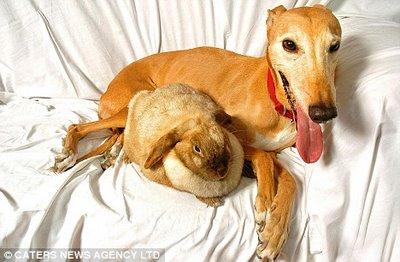
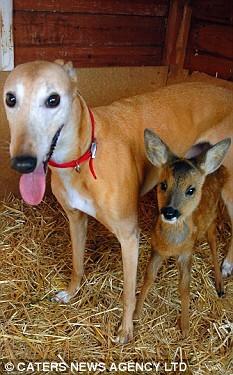
Jasmine, however, had other ideas. No one quite remembers how it came about, but Jasmine started welcoming all animal arrivals at the sanctuary. It would not matter if it were a puppy, a fox cub, a rabbit or, any other lost or hurting animal. Jasmine would just peer into the box or cage and, when and where possible, deliver a welcoming lick. Geoff relates one of the early incidents. “We had two puppies that had been abandoned by a nearby railway line. One was a Lakeland Terrier cross and another was a Jack Russell Doberman cross. They were tiny when they arrived at the centre, and Jasmine approached them and grabbed one by the scruff of the neck in her mouth and put him on the settee. Then she fetched the other one and sat down with them, cuddling them.” “But she is like that with all of our animals, even the rabbits. She takes all the stress out of them, and it helps them to not only feel close to her, but to settle into their new surroundings. She has done the same with the fox and badger cubs, she licks the rabbits and guinea pigs, and even lets the birds perch on the bridge of her nose.” Jasmine, the timid, abused, deserted waif, became the animal sanctuary’s resident surrogate mother, a role for which she might have been born. The list of orphaned and abandoned youngsters she has cared for comprises five fox cubs, four badger cubs, fifteen chicks, eight guinea pigs, two stray puppies and fifteen rabbits – and one roe deer fawn. Tiny Bramble, eleven weeks old, was found semi-conscious in a field. Upon arrival at the sanctuary, Jasmine cuddled up to her to keep her warm, and then went into the full foster-mum role. Jasmine the greyhound showers Bramble the roe deer with affection, and makes sure nothing is matted. “They are inseparable,” says Geoff. “Bramble walks between her legs, and they keep kissing each other. They walk together round the sanctuary. It’s a real treat to see them.” Jasmine will continue to care for Bramble until she is old enough to be returned to woodland life. When that happens, Jasmine will not be lonely. She will be too busy showering love and affection on the next orphan or victim of abuse. Pictured left to right are: “Toby”, a stray Lakeland dog; “Bramble”, orphaned roe deer; “Buster”, a stray Jack Russell; a dumped rabbit; “Sky”, an injured barn owl; and “Jasmine”. All told a mother’s heart doing best what a caring mother does.
ooOOoo
It was but a moment to find a video about Jasmine over on YouTube:
We are completely self funded. We receive no financial backing and so have to raise every single penny towards the upkeep of the sanctuary. It costs on average £360 per week to keep the sanctuary open, and a further £120 per week on food and bedding for the animals in our care. Please help us continue to rescue and rehabilitate Britain’s wildlife.
If you go to this link you can see what would be the best donation method for you. Plus, because the Sanctuary is not open for callers on Sundays I will call today (Monday) * and see if there are more details about the best way to offer support from those living outside the UK. Unconditional love is so perfectly demonstrated by our incredible dogs.
* I did call and speak with Catherine who recommended PayPal as the best means of donating to their cause, especially for those outside the UK.










 Learning from Dogs